


Elon Musk: Tesla Can Sell Cars at Zero Profit If Autonomous Driving Succeeds
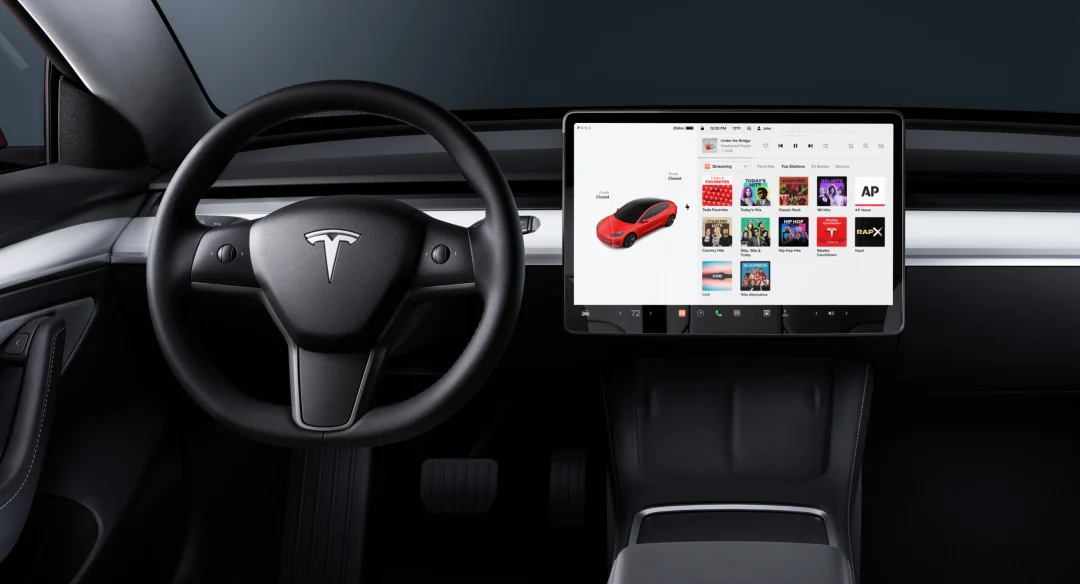
Amid the Shanghai Auto Show, Tesla released its first-quarter 2023 financial results.
A prerequisite event for this earnings release was that Tesla implemented widespread price cuts globally during the quarter. In particular, in the Chinese market, prices for its core models, the Model 3 and Model Y, dropped to RMB 230,000 and RMB 260,000 respectively at the beginning of the year, reaching their respective historical lowest price levels.
Meanwhile, as major automakers worldwide accelerate their transition to new energy vehicles, Tesla faces increasingly fierce external competition.
In this context, Tesla’s Q1 performance serves as an effective illustration of Elon Musk’s planned strategic direction for the company.
Declining Profits: A Proactive Strategy
Overall, Tesla’s Q1 2023 financial report appears precarious on the surface but remains fundamentally healthy.
Let’s examine revenue and net profit first:
Total revenue was USD 23.329 billion, up 24% year-over-year and down 4% quarter-over-quarter.
Automotive business revenue was USD 19.963 billion, up 18% year-over-year and down 6% quarter-over-quarter.
Total gross profit was USD 4.511 billion, down 17% year-over-year and down 22% quarter-over-quarter.
Overall gross margin was 19.3%, down 9.77 percentage points year-over-year and down 3.49 percentage points quarter-over-quarter.
Per-vehicle gross margin was 18.9%, down 11% year-over-year and down 5% quarter-over-quarter.
Cost of sales was $18.818 billion, up 49% year over year and up 1% quarter over quarter.
Net profit was USD 2.513 billion, down 24% year-over-year and down 32% quarter-over-quarter.
Net margin was 10.77%; for comparison, net income exceeded 19.2% in the first quarter of 2022, and the profit margin was 16% in the fourth quarter of 2022.
Although Tesla reported 24% revenue growth in the first quarter, key metrics such as gross profit, gross margin, and per-vehicle gross margin all saw year-over-year declines of varying degrees. Most notably, net profit dropped by 24%.
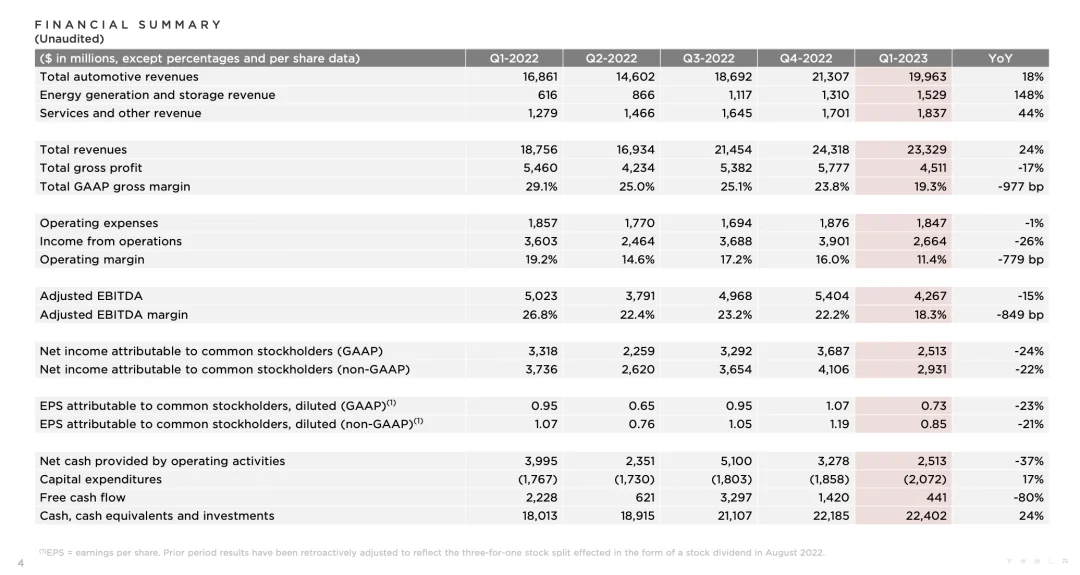
This financial performance is clearly the direct result of Tesla's significant price cuts in the first quarter.
It should be noted that despite the sharp year-over-year decline in net profit margin during the first quarter, Tesla's 10.77% net profit margin remains an excellent level for the automotive industry. During the earnings call, Tesla CEO Elon Musk stated: "Tesla's operating margin is still the best in the industry."
In response to this earnings report, Elon Musk emphasized during the call that these results were a deliberate outcome of Tesla sacrificing some profit to pursue sales volume. He said:
We believe that driving higher production and greater sales volume is the right choice compared to lower output and higher margins. Over time, we expect our vehicles to generate substantial profits through autonomous driving. Therefore, we believe what we are doing is laying the groundwork for the future—delivering a large number of cars at lower margins now, so we can reap profits later as we refine our autonomous driving capabilities.
Elon Musk specifically stressed that this strategy is extremely important.
Additionally, Elon Musk pointed out during the call that the current macroeconomic environment remains unstable, influencing consumers' decisions when purchasing big-ticket items like cars. This implies that Tesla's price-cutting strategy in the first quarter was also based on considerations of the broader economic landscape.
Notably, Tesla’s solar and energy storage businesses outside of automotive also saw significant growth, with energy storage deployments surging 360% in the first quarter.
As a result, Tesla's non-automotive business has also reached its highest revenue share in history.
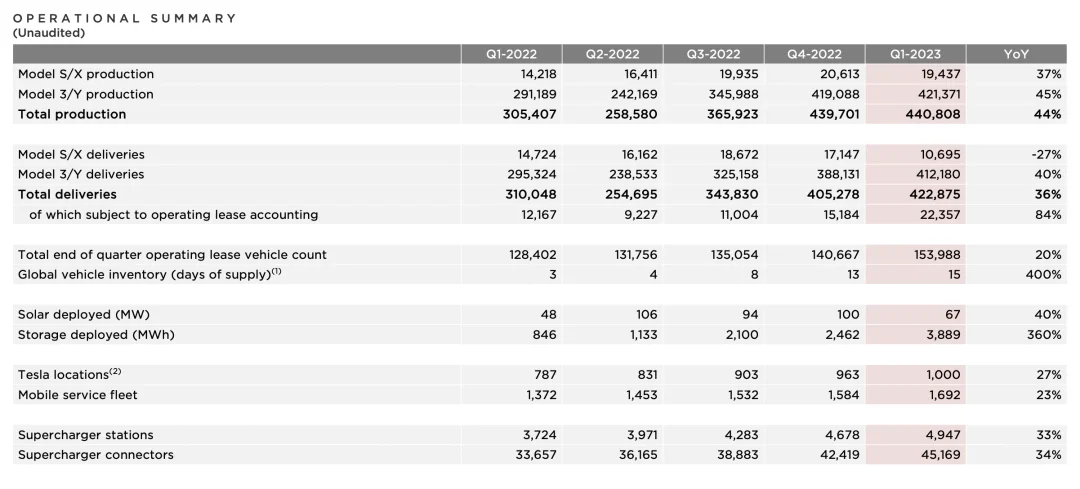
Beyond these key figures, Tesla reported several other important metrics for Q1:
Cash, cash equivalents, and investments totaled USD 22.402 billion, up 24% year-over-year and 2% quarter-over-quarter.
Research and development expenses were USD 771 million, down 10% year-over-year and 5% quarter-over-quarter.
Sales, general and administrative expenses amounted to USD 1.076 billion, up 8% year-over-year and 4% quarter-over-quarter.
Overall, compared to Tesla’s own performance in Q1 2022, profitability metrics this quarter did show some decline. However, from an industry perspective, this remains a solid financial report, particularly regarding revenue generation and profit margins.
In response, Tesla CFO Zachary Kirkhorn summarized that Tesla’s financial performance remains healthy.
Elon Musk: The Best Service Is No Service
For Tesla, achieving its vehicle sales targets for the year amid economic uncertainty is a critical issue.
In fact, Tesla’s sales performance in the just-concluded first quarter was overall excellent, with several highlights. For example:
Total deliveries of all models in the first quarter reached 422,875 units, a 36% year-over-year increase and a record high;
Global deliveries of the Model 3 and Model Y totaled 412,180 units, up 40% year over year;
Tesla vehicles sold for lease-operational purposes reached 22,357 units, an 84% year-over-year increase;
The Model Y was the best-selling model in Europe and the best-selling non-pickup vehicle in the United States (a point Elon Musk specifically emphasized in the opening remarks of the earnings call).
However, to achieve the vehicle sales target of 1.8 million to 2 million units that Elon Musk has long set, Tesla needs to take additional measures beyond its first-quarter results.
One key measure is naturally the delivery of new products.
During the earnings call, Elon Musk stated that Cybertruck deliveries will begin in the third quarter. The Tesla Texas factory is currently completing assembly of the vehicle. He emphasized that Cybertruck is a good product and that production will follow an S-curve: starting slowly before accelerating, driven by substantial overall demand.
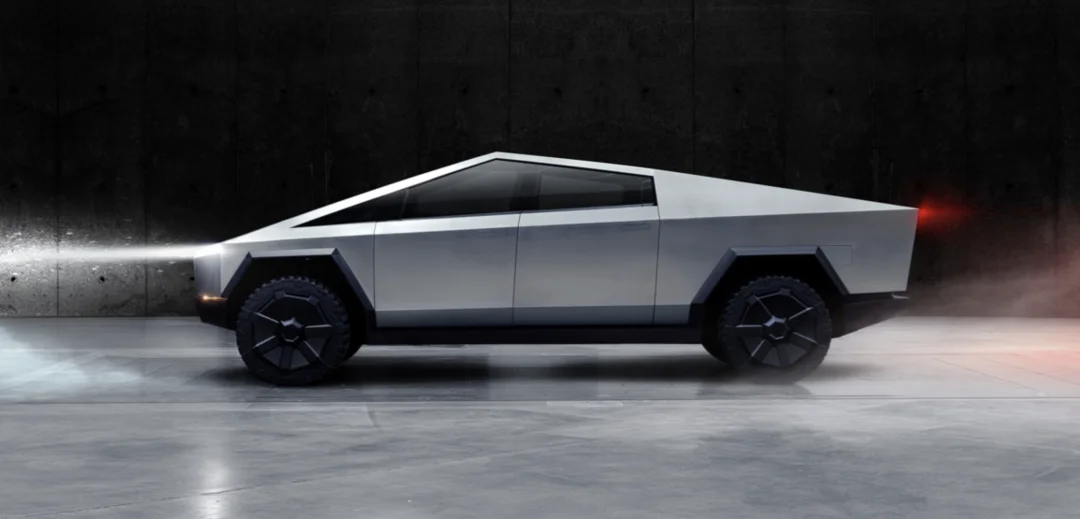
He specifically noted that Tesla’s car order volume has already exceeded production capacity.
In addition to delivering new models, Elon Musk stressed that Tesla aims to expand into new markets worldwide. While some markets may not be singularly massive, they share commonalities. He stated it is now time for Tesla to operate vehicles in other regions globally. Notably, Tesla officially began vehicle deliveries to the Thai market in the first quarter of 2023, primarily with Model 3 and Model Y units sourced from the Shanghai Gigafactory.
Despite these measures to boost sales, Elon Musk also discussed the impact of the broader macroeconomic environment on Tesla during the earnings call.
He identified two main factors influencing this environment, one being interest rates. Each Federal Reserve rate hike effectively increases vehicle prices, making cars less affordable.
Another factor is economic uncertainty. He stated that when facing economic uncertainty, people typically postpone large expenditures such as buying a new car. This is a natural human reaction; especially when people read news about layoffs in the media, they may worry about being fired and are thus more hesitant than others to purchase a new car. This is precisely the nature of the automotive industry.
Elon Musk stated that under economic uncertainty, many people's car-buying demands will be suppressed. However, he also predicted that this economic storm will last for about one year, but conditions may clear up starting next spring.
Additionally, during the earnings conference call, when asked whether Tesla would continue to adhere to its direct-sales model, Elon Musk stated:
Our direct-sales model is currently running well. Of course, we will encounter some pain as our sales volume grows. Tesla's growth rate is faster than that of any company in history that has manufactured large, complex products, so it is inevitable that it will face challenges during its expansion. However, we believe that obtaining user feedback on service is helpful; this allows us to identify user pain points and subsequently design vehicles that require less maintenance.
Elon Musk stated that the best service is no service—the best outcome for consumers is a car that requires no maintenance.
Tesla's Only Competitor Is Itself
During the earnings call, in addition to the cars themselves, what Elon Musk kept emphasizing was autonomous driving.
He stated that Tesla has already completed over 150 million miles of testing on FSD Beta, and this figure is growing exponentially, representing a competitive advantage that other players do not have. Elon Musk emphasized that Tesla is also highly focused on improving its neural network training capabilities, which is key to achieving full autonomous driving.
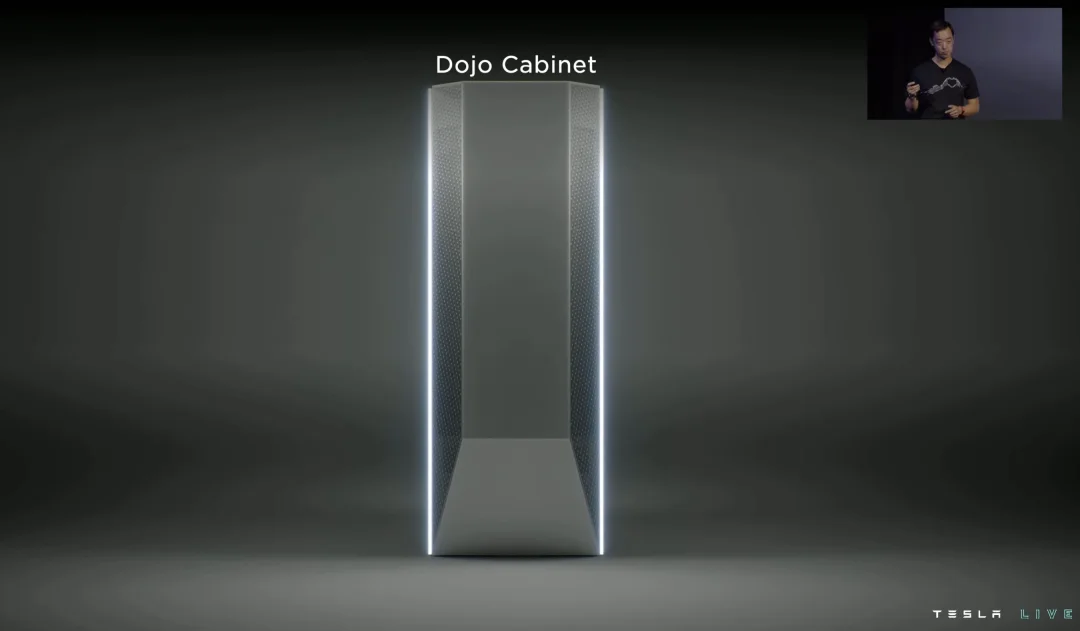
For this reason, Tesla will continue to purchase large quantities of NVIDIA GPUs and invest heavily in its Dojo supercomputer, which can improve model training costs by an order of magnitude.
Notably, Elon Musk mentioned that the Dojo supercomputer could evolve into a service model sold externally, similar to Amazon's AWS. During the earnings call, he stated that Dojo is a long-term project with significant returns, potentially generating hundreds of billions of dollars in long-term value.
At a more distant horizon, Elon Musk remains steadfast in his belief regarding the realization of autonomous driving and the resulting business model innovation.
He noted that Full Self-Driving (FSD) faces a tricky pricing challenge because the value of autonomous vehicles is immense. In a sense, the current price of FSD represents the option value of autonomous driving. Users of the FSD beta version have observed significant improvements in autonomous capabilities—the trend is clear and moving toward full autonomy.
Regarding next-generation vehicles, Elon Musk stated:
We are developing a next-generation vehicle, but it is not yet time to discuss product details; internally, we refer to it as Robotaxi. However, all vehicles equipped with HW3.0—which includes most of the cars we sell—will achieve full autonomy. Both Model 3 and Model Y can serve as Robotaxis. To my knowledge, all our current hardware is capable of supporting full autonomy.
Therefore, during the call, Elon Musk even suggested that Tesla could sell vehicles at 'zero profit'.
He stated:
Tesla is in a uniquely strong strategic position. Because we are the only company that produces cars from a technological dimension—we could even sell at zero profit right now and then generate massive economic benefits through autonomous driving in the future, which others cannot do.
I'm not sure how many people will grasp the depth of what I just said, but it is very important.
However, Elon Musk also emphasized that whatever pricing strategy Tesla adopts is not intended to undermine competitors. He stated:
Our pricing strategy is not intended to deliberately undermine competitors. We are simply considering whether users like the product, how to make it better, and how to improve services.
In fact, we possess this unique strategic advantage. We are manufacturing a vehicle such that, with autonomous driving capabilities, the asset's future value to the user after purchase will be significantly higher than its current value—therefore, technically, it is possible to sell it at zero profit.
Written by: 308 Edited by: 308