


Huawei Light Field Screen: A Challenge to Traditional Automotive Displays?
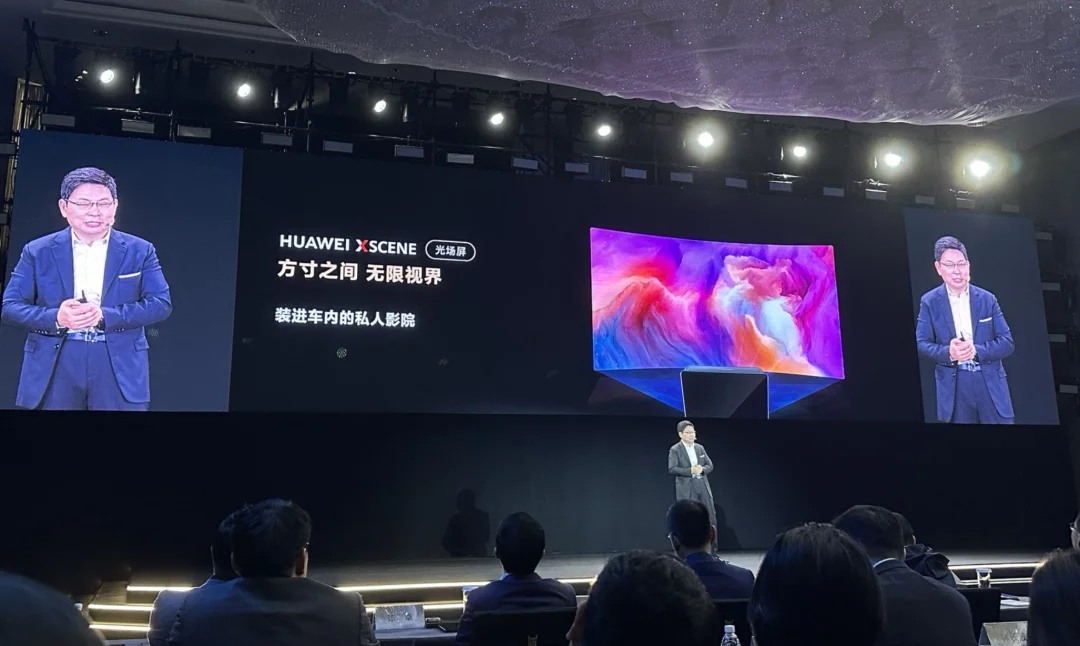
Just ahead of the Shanghai Auto Show, Huawei released a major new initiative.
On April 16, Huawei held its Smart Car Solution Press Conference, which 42HOW Auto attended. Richard Yu, Executive Director of Huawei, CEO of Consumer Business Group, and CEO of the Intelligent Automotive Solution BU, appeared at the event and announced multiple intelligent product solutions for the automotive industry, covering areas such as smart driving, smart cockpits, and smart in-vehicle optics.
Among these solutions, the one that sparked our strongest curiosity was the HUAWEI xScene Light Field Screen introduced by Huawei. We conducted an in-depth hands-on experience with the product on-site and engaged in close discussions with Huawei representatives regarding its underlying technical principles and product logic.
The overall impression after this round of evaluation is clear: Huawei’s smart in-vehicle optics technology is not to be underestimated.
A Private Cinema Inside the Vehicle, Stunning Effects
The first word that came to mind upon seeing the Huawei Light Field Screen was 'stunning.'
The reason is that, within the extremely limited space of a car cabin, the Huawei optical field screen can present a cinematic visual effect with a sense of three-dimensionality, despite its modest physical size.
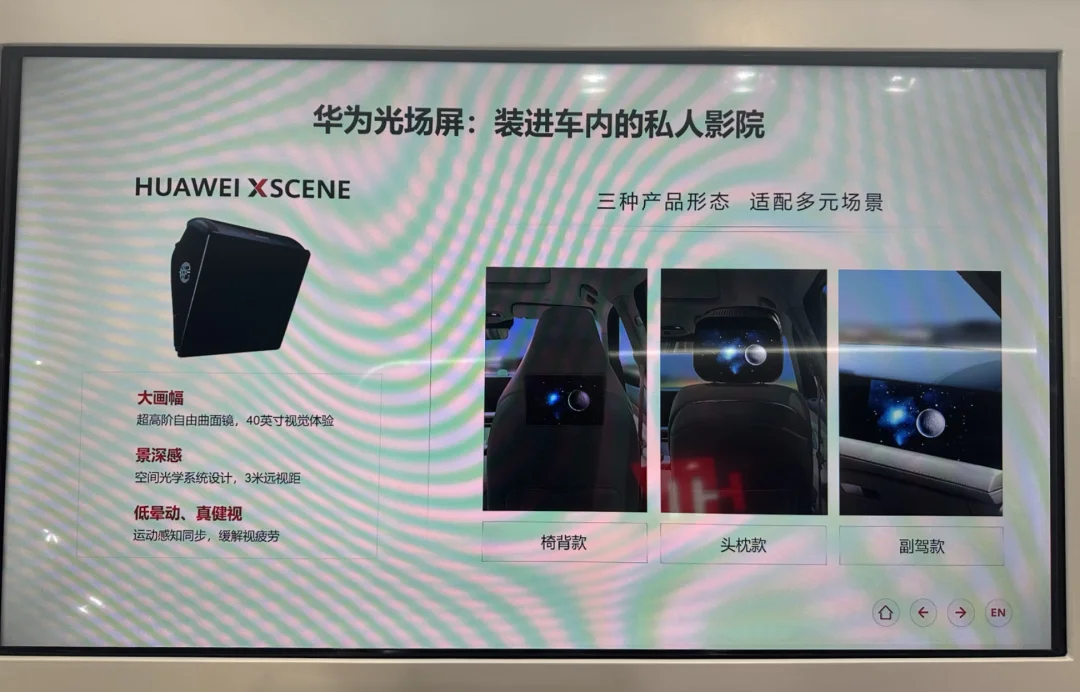
Specifically, the highlights of the Huawei light-field screen experience are as follows:
Strong sense of depth. Upon sitting in front of the light-field screen, one immediately experiences a pronounced sense of depth. The perceived distance between the human eye and the screen is approximately 0.5 meters, while the displayed image visually extends inward from the screen. According to on-site staff, the visual distance between the eye and the projected image is 3 meters.
Large apparent size. Based on the long-distance imaging effect at 3 meters, the light-field screen presents an apparent display size of 40 inches, effectively enhancing the in-car movie-watching experience.
High clarity. Despite the 3-meter visual distance between the eye and the screen content, the actual viewing experience reveals clear and detailed image quality, with very smooth video playback and transitions. Staff indicated that the screen’s resolution reaches 90 PPD (Pixels Per Degree), exceeding the normal human eye’s resolution limit of approximately 50 to 60 PPD.
Reduced eye fatigue. Due to the aforementioned display characteristics, passengers watching the forward-projected light-field screen can fully relax their ciliary muscles by focusing on distant objects, effectively alleviating visual fatigue. Viewing the screen feels relatively effortless, requiring no intense concentration, which helps prevent eye strain.
Not prone to motion sickness. Watching smartphones, tablets, or rear-seat LCD screens in a moving vehicle often induces motion sickness; however, during our ten-plus-minute test of the light-field screen, we could simultaneously perceive external scene changes caused by vehicle movement while watching content. This allows peripheral vision to capture motion cues from outside the windows, aligning with vestibular perception and helping the eyes and brain better adapt to environmental changes, thereby reducing the risk of motion sickness. Additionally, due to the long-distance display effect, when the vehicle encounters bumps, the perceived image does not shake with corresponding amplitude, resulting in no noticeable dizziness.
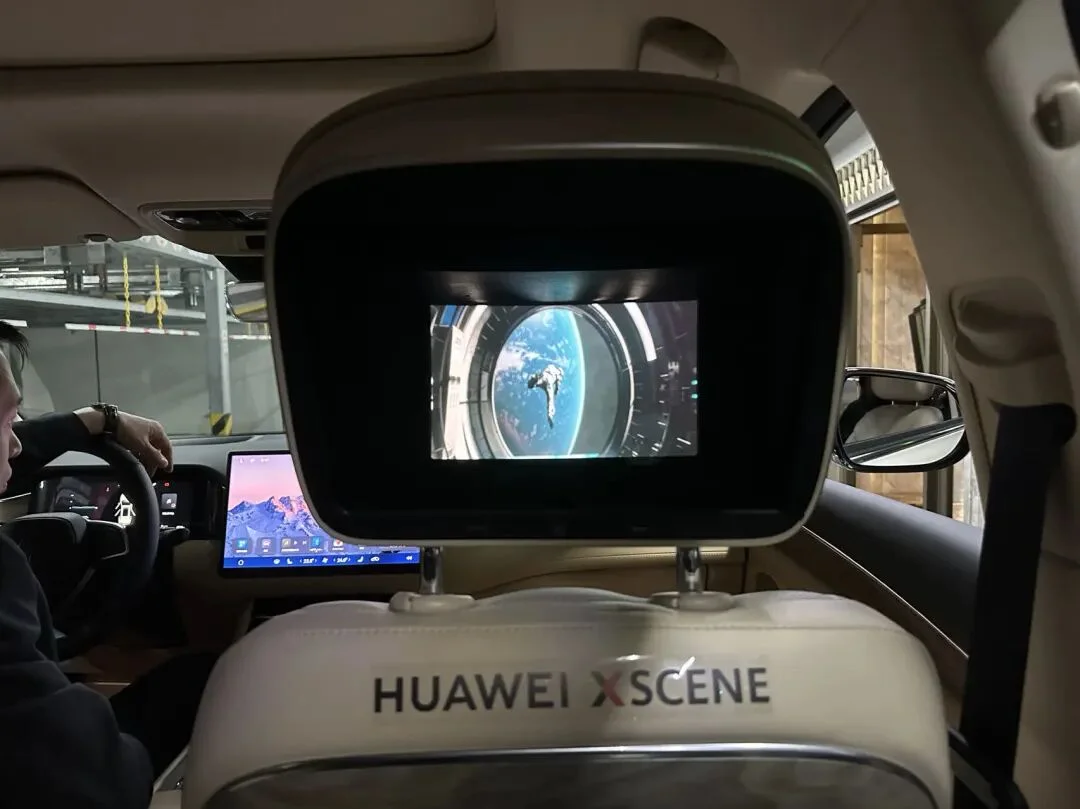
Beyond visual effects, the Huawei light-field screen offers several other highlights in its usage scenarios.
The image is rendered by a built-in optical engine, meaning light from the display does not scatter outward through the screen. This effectively protects the privacy of the content; viewers can only see the playback when facing the light-field screen directly, while passengers in adjacent seats cannot.
In terms of interaction, the content on the light-field screen is not controlled via touch. Instead, it will connect to users' mobile apps or the vehicle's infotainment system via methods such as NFC, tailored to specific model designs. This approach aligns more closely with users' daily interaction habits.
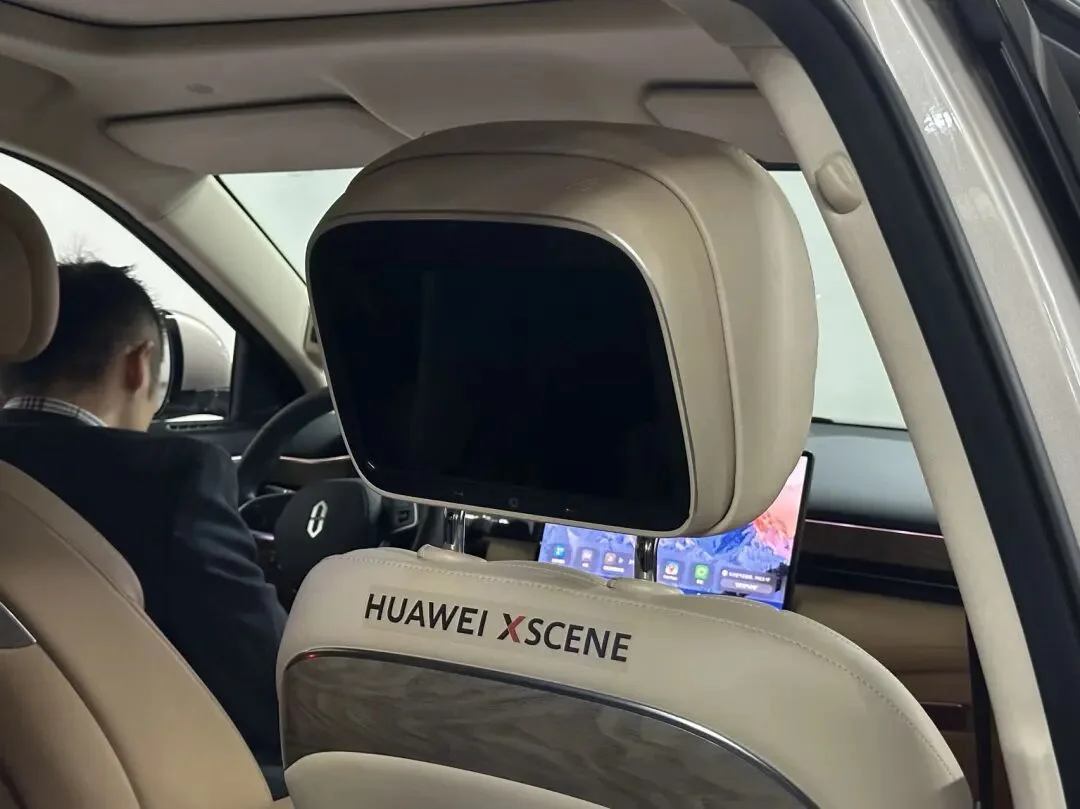
Notably, in application scenarios, the Huawei light-field screen can significantly enhance the immersion of in-car movie watching or gaming experiences when paired with audio systems. It also meets the needs for long-term entertainment or learning for children inside the vehicle. Additionally, it better satisfies privacy requirements for in-car meeting scenarios.
After experiencing the device, our perception of the Huawei light-field screen is that the overall innovative solution has a high degree of completion. However, since we tested a modified prototype vehicle, there is still room for optimization in the actual experience. This requires collaboration between Huawei, seat manufacturers, and original equipment manufacturers (OEMs) to realize.
Nevertheless, the overall impression of the Huawei light-field screen was unexpectedly positive. From an industry perspective, what the Huawei light-field screen inspires us with is even greater:
Compared to traditional rear-seat LCD screens, the HUAWEI xScene light-field screen delivers a visually superior experience—a 'dimensional reduction strike.' Moreover, this globally first automotive light-field screen released by Huawei has the potential to disrupt the current landscape of in-car display experiences, opening up a new track for automotive visual experiences.
How Does the Light Field Screen Deliver a Disruptive Experience?
After experiencing the effects of the Huawei light field screen, our primary question was: how is it achieved?
At the launch event, we held an in-depth discussion with staff from Huawei’s Intelligent In-Vehicle Optical Solutions team. The conclusion was that the newly launched HUAWEI xScene light field screen not only leverages numerous cutting-edge technologies from Huawei’s optical product line but also reflects Huawei’s high regard for human factors engineering and extensive professional research.
On the technical front, to address several key challenges in display performance, the Huawei team employed several significant technological innovations. Specifically:
To overcome the difficulty of achieving long viewing distances, the Huawei team adopted a three-dimensional spatial optical system design. This approach maps human factors experience parameters to corresponding optical physical quantities, enabling the precise design of ultra-high-order freeform surfaces. This ensures the light field screen can produce a visual image at a distance of 3 meters from the viewer’s eyes.
To achieve a clear and pure picture quality for the light field screen, the Huawei team adopted a phase-free polarization medium design. After testing more than 100 types of media and validating over 300 solution combinations, they refined both the design and manufacturing processes to ensure precise alignment of wave phases between media, ultimately achieving the effect of eliminating halos and preventing glare.
To enhance image transparency and immersion, Huawei’s ODP-S image source processor utilizes a collimated backlight design. This reduces internal stray light by 50% and decreases the impact of ghosting brightness by 80%, resulting in a pure, impurity-free image. Additionally, this design keeps the beam divergence angle below 30 degrees and increases axial brightness by 1.8 times, ensuring the image remains bright and clear even when viewed from a distance.
Furthermore, to support multi-angle full-frame viewing and adapt to various scenarios such as entertainment and office work, the Huawei light field screen employs light engine processing algorithms. These algorithms eliminate optical distortion in real time and allow for clear adjustment of text and graphics.
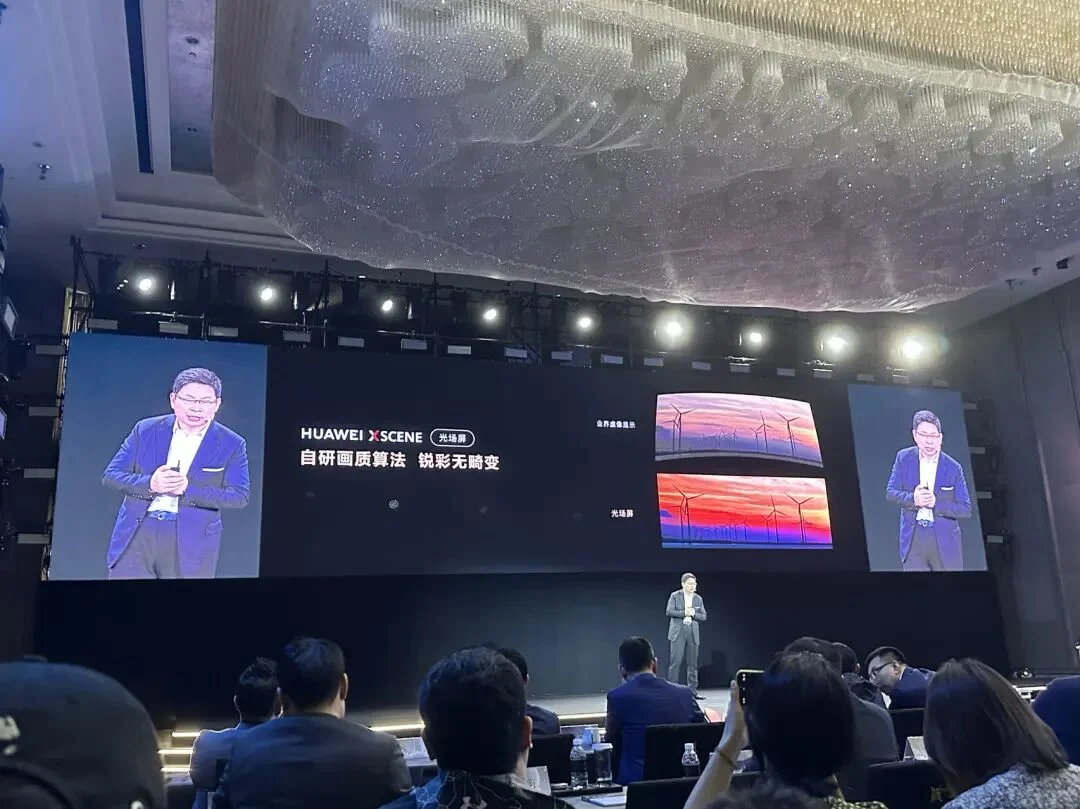
Huawei’s light-field display represents an integrated solution spanning from the underlying processor and algorithms to optical imaging design, requiring profound expertise in both software and hardware.
More importantly, beyond technical capability, this solution reflects Huawei’s extreme emphasis on human-centric experience.
We understand that the initial project proposal for Huawei’s light-field display stemmed from the Huawei Intelligent In-Vehicle Light team’s insights into current pain points in in-vehicle screen usage. According to relevant Huawei executives, the project underwent countless rounds of research and validation from its inception to its release.
During development, guided by human-centric design principles, the Huawei team collaborated with multiple third-party organizations for in-depth research and validation to identify the most critical human-experience parameters and verify their practical impact.
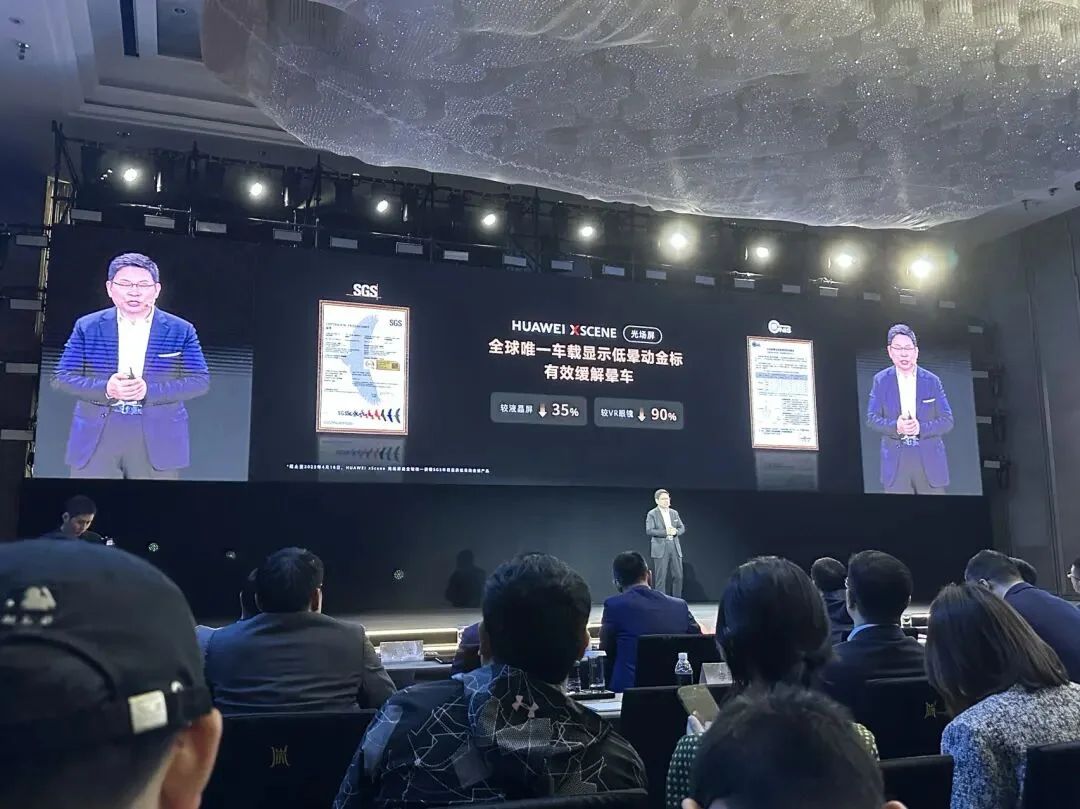
Specifically, the Huawei team conducted certification tests for motion sickness experiences associated with light-field displays in collaboration with SGS (General Certification Services Co., Ltd.) and Zhongguobiaozhunhuayanjiuyuanrenyinyugongxiaoxuezhongdianshiyanshi, comparing them against current types of in-vehicle screens. Through joint testing using subjective SSQ dizziness scale differentials and objective EEG data, the results indicated:
In in-vehicle scenarios, compared to other electronic display products listed (smartphones, tablets, and in-vehicle LCD screens), Huawei’s light-field display offers significant advantages. It is also the world’s only product to receive the Gold Standard certification for in-vehicle display motion sickness from SGS.
Overall, the stunning effect of Huawei’s light field display is not only due to Huawei’s comprehensive technological capabilities but also relies heavily on its focus on real-world user experience and professional research into human factors.
The Strong Backing Behind Huawei’s Light Field Display
It is important to emphasize that the team behind Huawei’s light field display project has a formidable pedigree.
Huawei’s light field display stems from its intelligent in-vehicle optical business, which is a key focus area within Huawei’s Optical Applications division. This division, in turn, is supported by Huawei’s robust Optical Industry ecosystem.
A brief background: Huawei has accumulated over 30 years of foundational expertise in optical technology. It has established 13 R&D and innovation centers globally and has led more than 100 international standards for the optical industry, including key technologies such as laser light sources, spatial optics, and optical algorithms. Huawei continues to invest in and innovate across algorithm development, material processes, and device modules.
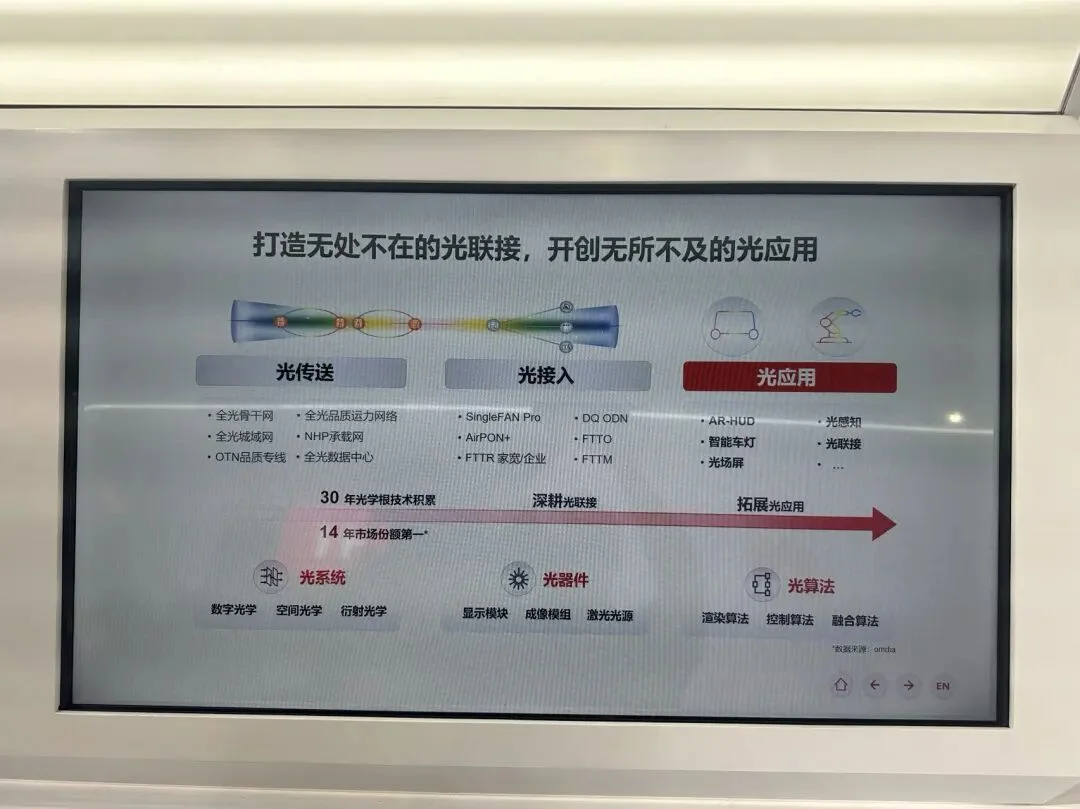
As Huawei expands its footprint in the automotive sector, its optical technology naturally extends to the automotive industry. By integrating ICT optical technology with automotive engineering, Huawei has developed its Intelligent In-Vehicle Optical Solutions.
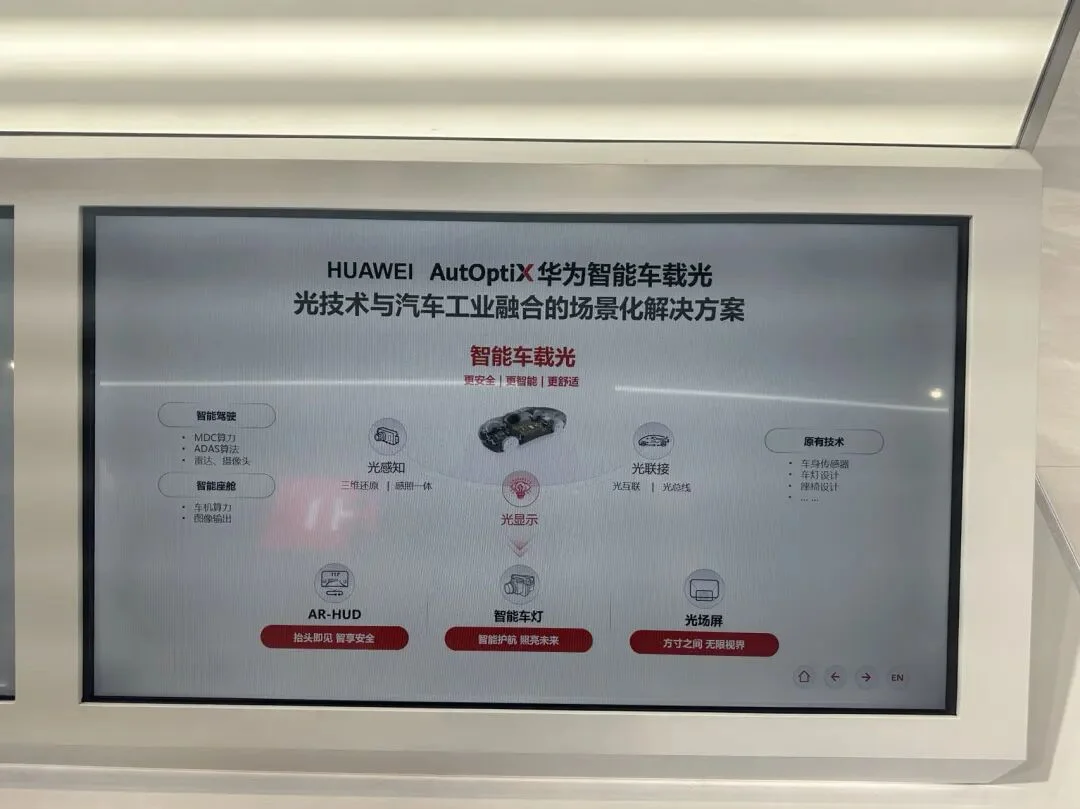
In fact, in addition to the light field display, Huawei's Intelligent In-Vehicle Optical Solutions product series, such as smart headlights and AR-HUDs, were also unveiled at the April 16 press conference. Specifically:
The HUAWEI xPixel smart lighting solution delivers dual-lamp projection at 2.6 megapixels and features the industry’s only dual-lamp precise fusion algorithm. It enables Adaptive Driving Beam (ADB) technology that keeps high beams on without dazzling other drivers, enhancing safety for two-way traffic. Additionally, the solution pioneers intelligent light carpet scenarios such as indicating vehicle width, blind-spot interaction, and illumination, offering strong practical utility.
The HUAWEI xHUD AR-HUD solution employs the industry’s first in-house developed 2K automotive-grade optical imaging module. It can not only replace but surpass traditional instrument clusters, enabling innovative applications such as visible autonomous driving assistance, lane-level navigation, rearview camera display, digital avatars, and large-screen movie viewing. Particularly with AR-HUD-based autonomous driving functions, visuals are aligned with preceding vehicles and road surfaces, strengthening drivers’ trust and sense of security in these systems.
Overall, leveraging Huawei’s deep accumulation in optical technology, Huawei’s smart in-vehicle optical solutions and products focus on key features such as safety-assisted driving, intelligent interaction, and ultimate experience. They aim to support independent innovation in automotive intelligence and connectivity, meeting consumers’ growing demands for in-vehicle displays.
Notably, Huawei has collaborated with 16 entities, including the China Intelligent Connected Vehicle Industry Innovation Alliance (CAICV), Hongqi, BYD, Shangqi, Guangqi, Geely, Changcheng, SERES, and Tencent Smart Mobility, to jointly establish the CAICV Smart In-Vehicle Optical Display Task Group. Its goal is to promote cooperation among upstream and downstream enterprises in the intelligent connected vehicle industry chain, enrich innovative optical applications in vehicles, and further enhance the intelligence and safety of intelligent connected cars.
This also demonstrates Huawei’s significant determination and momentum in investing in the in-vehicle optical field.
From a broader perspective, the development of Huawei’s in-vehicle optical business and its technological product breakthroughs serve as an example of how it empowers China’s smart automotive industry through its own technical accumulation and robust product capabilities. From 42HOW Auto’s viewpoint, however, China’s automotive industry, amid its transformation toward electrification and intelligence, needs enablers like Huawei to fully leverage their software and hardware strengths in the ICT sector, jointly driving automotive industry development and satisfying user needs.
Nevertheless, to make such high-technology products truly accessible to ordinary consumers, Huawei’s relevant teams must continue to work on reducing technical costs, improving product experience, and achieving commercial implementation. Closer collaboration with original equipment manufacturers (OEMs) and Tier 1 suppliers is also essential. After all, any technology only demonstrates its commercial value when it reaches the market.
Commercial deployment is emerging as a key breakthrough point for Huawei Intelligent In-Car Light; if successful, it will unlock significant market opportunities. We wait and see.
Written by: 308 Edited by: 308