


NIO ET7 Wins Auto Bild Golden Steering Wheel Award; Meizu Unveils FlymeAuto Design Philosophy
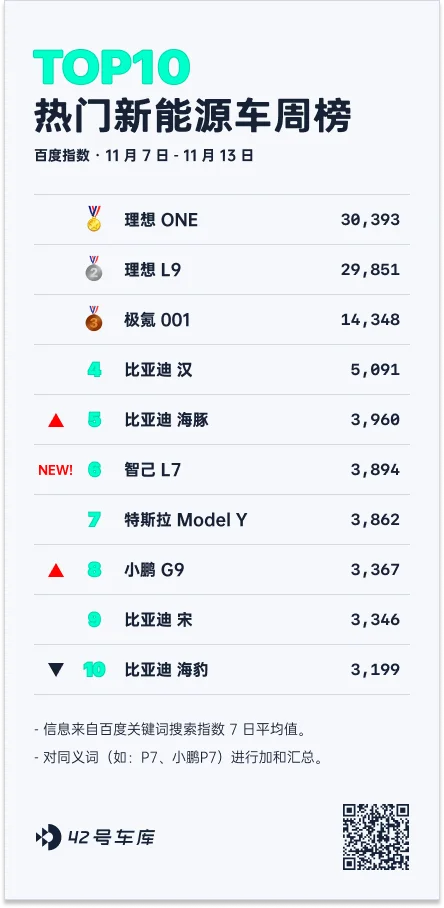
01Weekly Index
02Weekly News
NIO ET7 Wins 'Golden Steering Wheel' Award
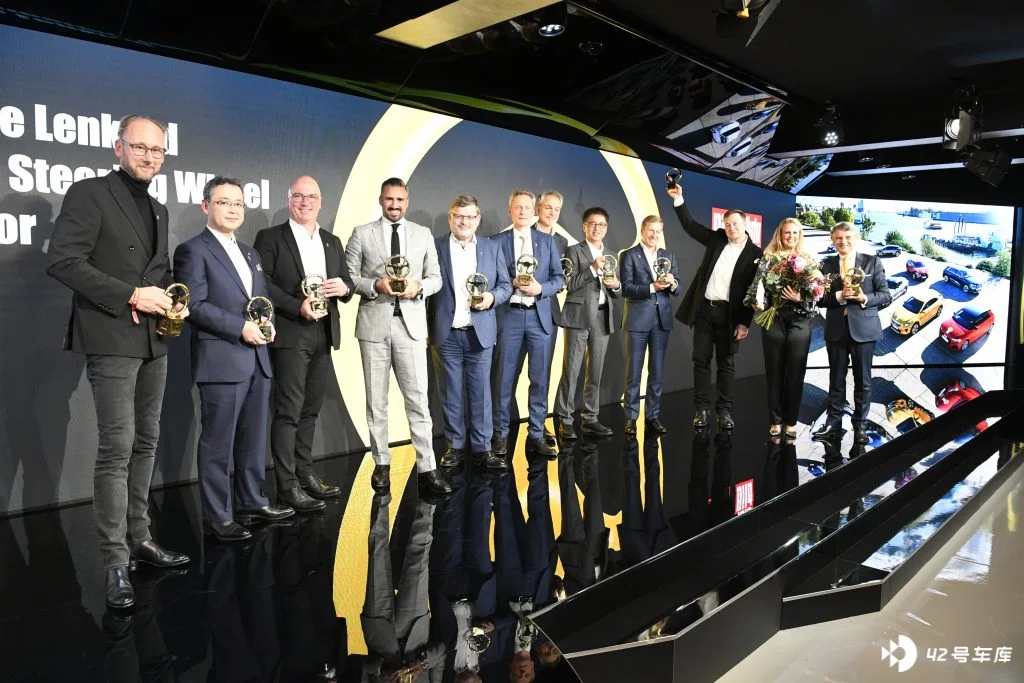
On November 9, German publications Auto Bild and Bild am Sonntag announced the winners of the 2022 Golden Steering Wheel awards. The NIO ET7 won the championship in the mid-to-large sedan category, marking the first time a vehicle from a Chinese brand has received this honor.
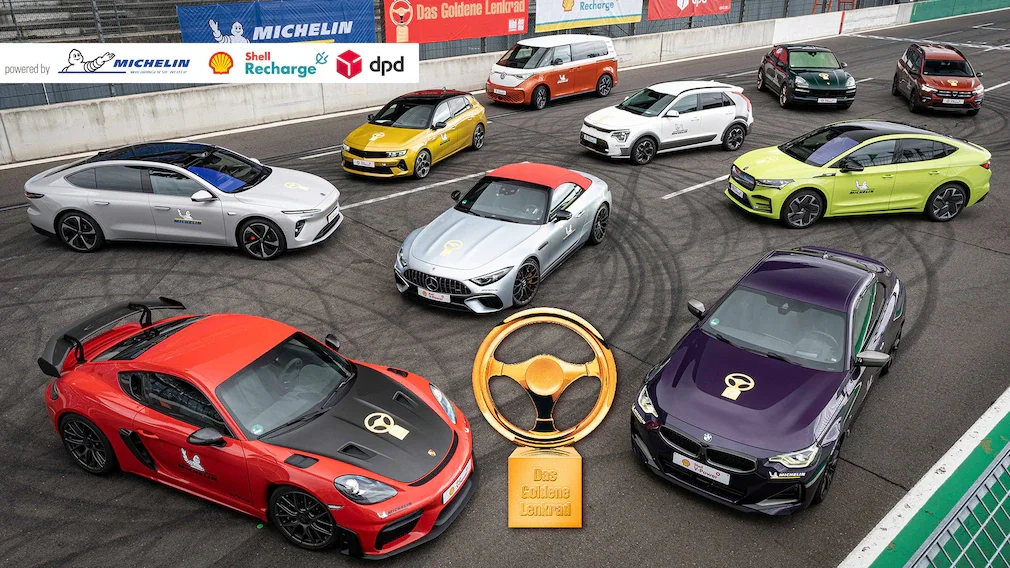
Since 1976, BILD am SONNTAG and AUTO BILD have annually awarded the Golden Steering Wheel to the best new cars on the market, under the direction of publishing magnate Axel Springer.
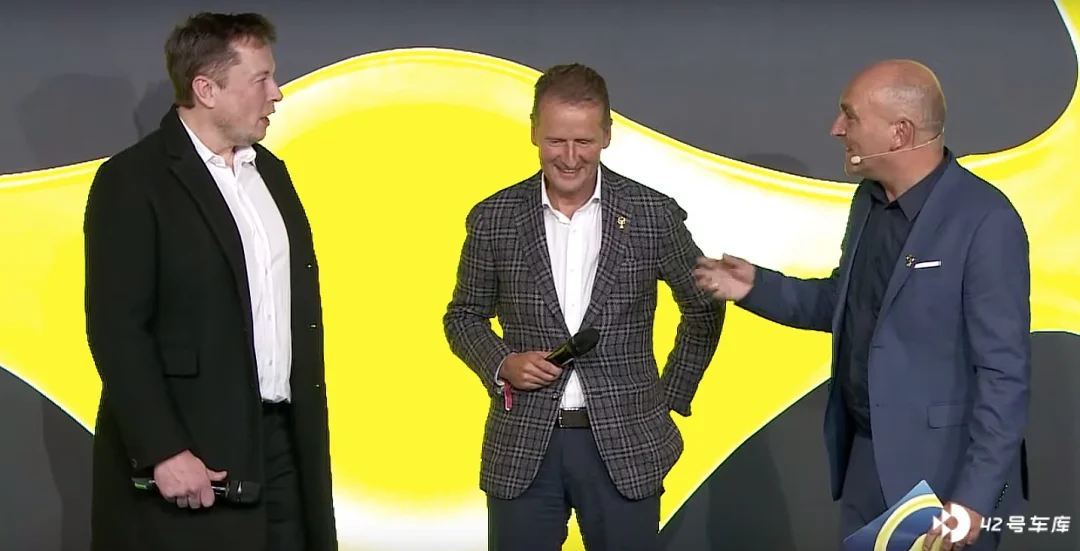
During the 2019 Golden Steering Wheel ceremony, Di Si served as the presenter and handed the award to Elon Musk, creating a highly comedic atmosphere. As the birthplace of the automobile, the impact brought by the Model 3 intensified in the following years, with Tesla even beginning production at its Gigafactory Berlin.
Regarding the selection process, a basic requirement for eligible vehicles is that they must be launched and available for sale in the current year. Editors then pre-select a shortlist of newly released models for readers to vote on in the first round.
Readers vote to select the top three models in each segment based on the highest number of votes. These finalists then advance to the final round.
The expert review panel for the finals, comprising editors-in-chief, automotive designers, car enthusiasts, technical personnel, digital experts, racing drivers, and others, delivered the final results.
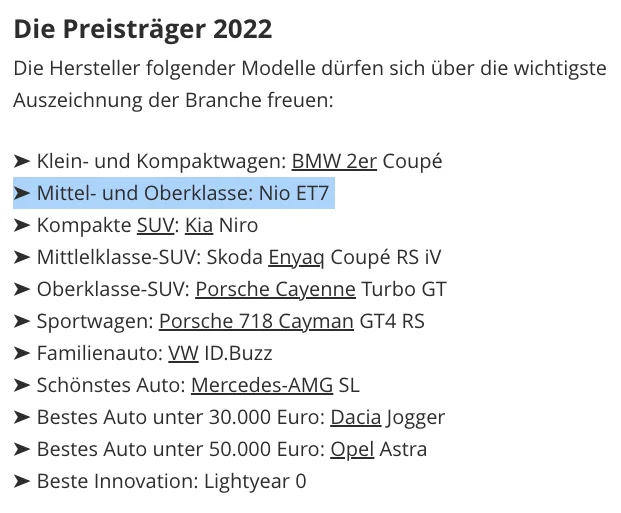
This year, 47 cars were shortlisted across 11 categories. In the mid-to-large sedan category, the ET7 competed against the Mercedes-Benz EQE and took first place. NIO’s battery swap stations were also nominated for an 'Innovation' award.
Quick Review:
Following the Tesla Model 3’s win of the Golden Steering Wheel Award, the NIO ET7 has also received this honor. The ET7’s competitor was the EQE, Mercedes-Benz’s flagship product in its electrification transformation.
For a highly competitive domestic market and brands expanding overseas, NIO’s recent award provides confidence. European users are not resistant to excellent products from China; in plain terms, it means: 'If you’ve survived the intense competition at home, going abroad is no problem!'
For Germany, and indeed the entire European continent, this marks a turning point: Chinese automotive brands represented by NIO are pushing back into the birthplace of the automobile industry, and this trend is expected to expand.
Revenue of RMB 13.002 billion, Gross Margin 13%, NIO Releases Q3 2022 Financial Report
On the evening of November 10, NIO released its financial results for the third quarter of 2022. The specific details are as follows:
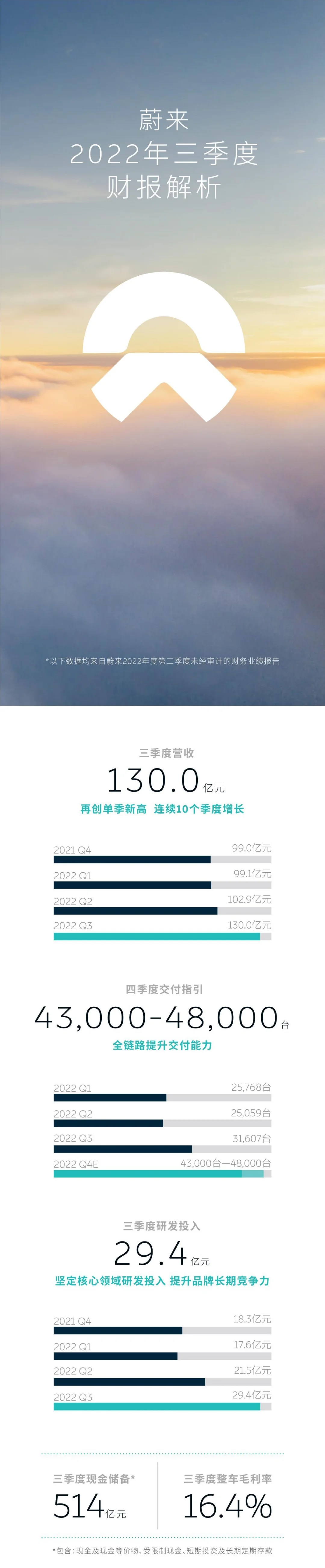
Total revenue was RMB 13.002 billion, up 33% year-over-year and 26% quarter-over-quarter;
Automotive business revenue was RMB 11.933 billion, up 38% year-over-year and 25% quarter-over-quarter;
Total gross profit was RMB 1.735 billion, down 13% year-over-year and up 29% quarter-over-quarter;
The overall gross margin was 13%, compared with 20% in the same period last year and 13% in the previous quarter;
Gross margin per vehicle was 16%, down from 17% in the previous quarter;
Cost of sales was RMB 11.267 billion, up 44% year-over-year and 26% quarter-over-quarter;
Net loss of RMB 4.111 billion, compared to a net loss of RMB 2.758 billion in the previous quarter;
Cash reserves (including cash and cash equivalents, restricted cash, time deposits, and short-term investments) stood at RMB 51.4 billion, down from RMB 54.4 billion in the previous quarter;
NIO’s third-quarter research and development expenses totaled RMB 2.945 billion, a 37% increase quarter-over-quarter, accounting for 23% of total quarterly revenue;
Sales and administrative expenses reached RMB 2.713 billion, up 49% year-over-year and 19% quarter-over-quarter.
2022Q4 expected vehicle deliveries of 43,000 to 48,000 units, representing an increase of approximately 72% to 92% compared to 2021Q4;
For 2022Q4, total revenue is expected to be between RMB 17.368 billion and RMB 19.225 billion, representing an increase of approximately 75% to 94% compared to 2021Q4.
During the subsequent earnings call, William Li highlighted several key points:
NIO expects to achieve break-even status by Q4 next year; the current imbalance is primarily attributed to high lithium carbonate prices.
NIO has secured the Orin X chip, maintains a close relationship with NVIDIA, and possesses sufficient A100 chip inventory, ensuring no issues in its chip supply chain. Vehicle production capacity is also set to increase gradually.
NIO targets the global market, with Europe as its initial focus for overseas expansion.
NIO's current model sales have not been affected by Tesla's price cuts. The company will launch five new models next year.
Quick Review:
Financial report data indicates that NIO is developing positively overall. Meanwhile, NIO's global strategy is beginning to yield results, with the ET7 winning the Golden Steering Wheel Award being just the start.
With the delivery of the hit model ET5 beginning, as long as factory capacity is guaranteed, NIO's monthly deliveries exceeding 10,000 should not be a problem in the future, and even a monthly delivery volume of 1.5 W or higher is not out of reach.
Design sketches for BYD's premium brand Yangwangqiche exposed! Does it feature LiDAR?
Design sketches for BYD's premium brand Yangwangqiche have been revealed. The most eye-catching aspect is the front-end design of this rugged SUV. At first glance, one notices a square emblem positioned in the center of the grille. Yangwangqiche has not yet officially released its brand logo, so readers are encouraged to use their imagination.
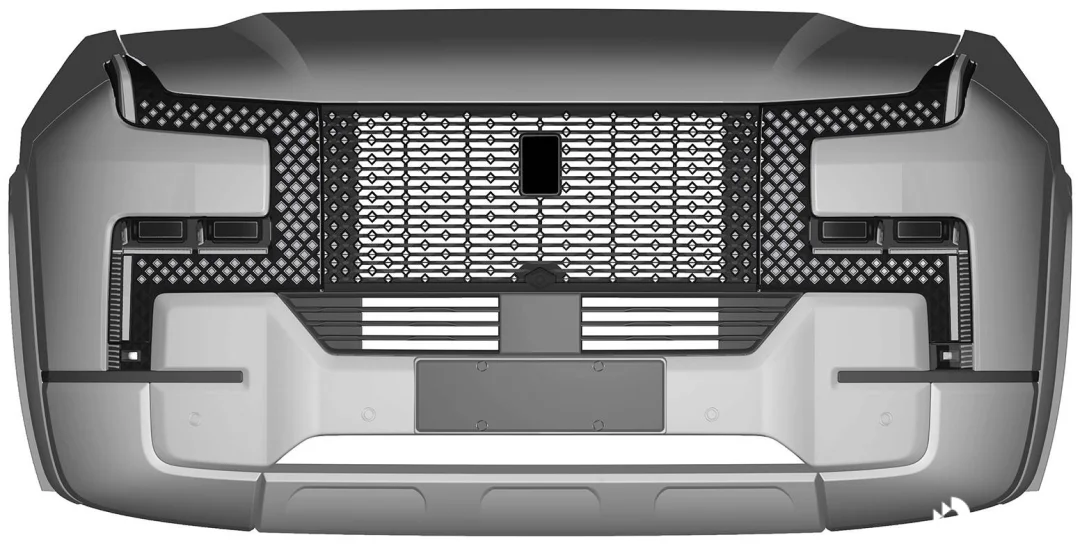
Many users report that the front grille's extensive diamond-shaped dot-matrix pattern can be overwhelming for those with trypophobia. However, since this model follows the DM PHEV route, it requires a large front grille for cooling. The design sketch features a white background; switching to a black mesh on the actual vehicle should significantly improve the visual effect.
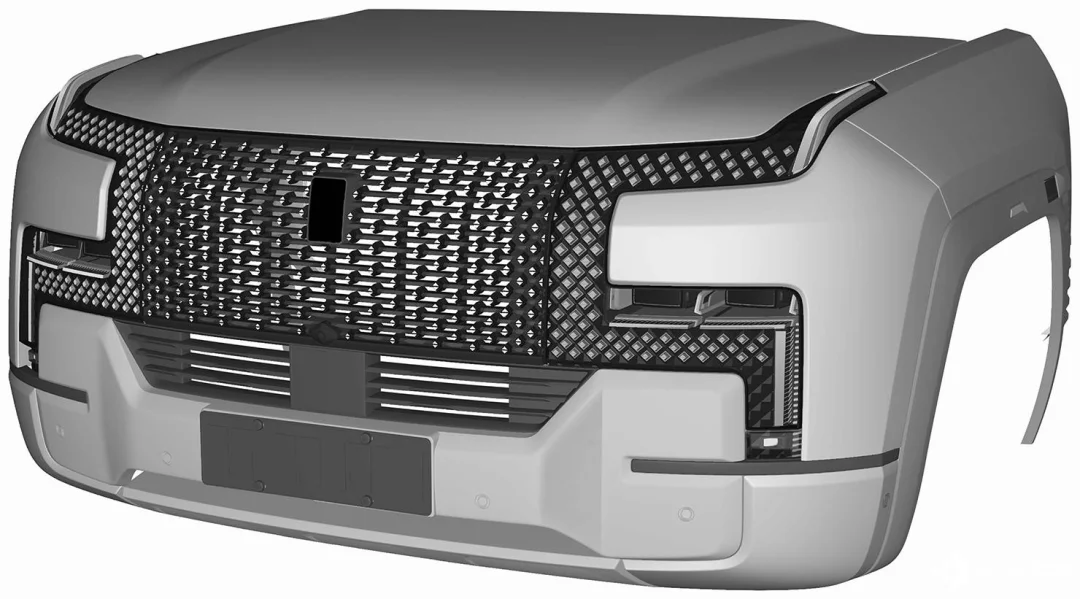
Additionally, the diamond dot-matrix patterns located above and below the headlights on both sides of the front fascia likely serve as interactive light clusters. When unlit, their appearance can be compared to HiPhi's design language.
The front end maintains a relatively flat and upright angle with a large frontal impact area, avoiding the low-drag styling popular among current pure electric vehicles. Considering the heat dissipation needs of hard-core off-road vehicles and the more relaxed requirements for energy consumption efficiency, this design prioritizes practicality.
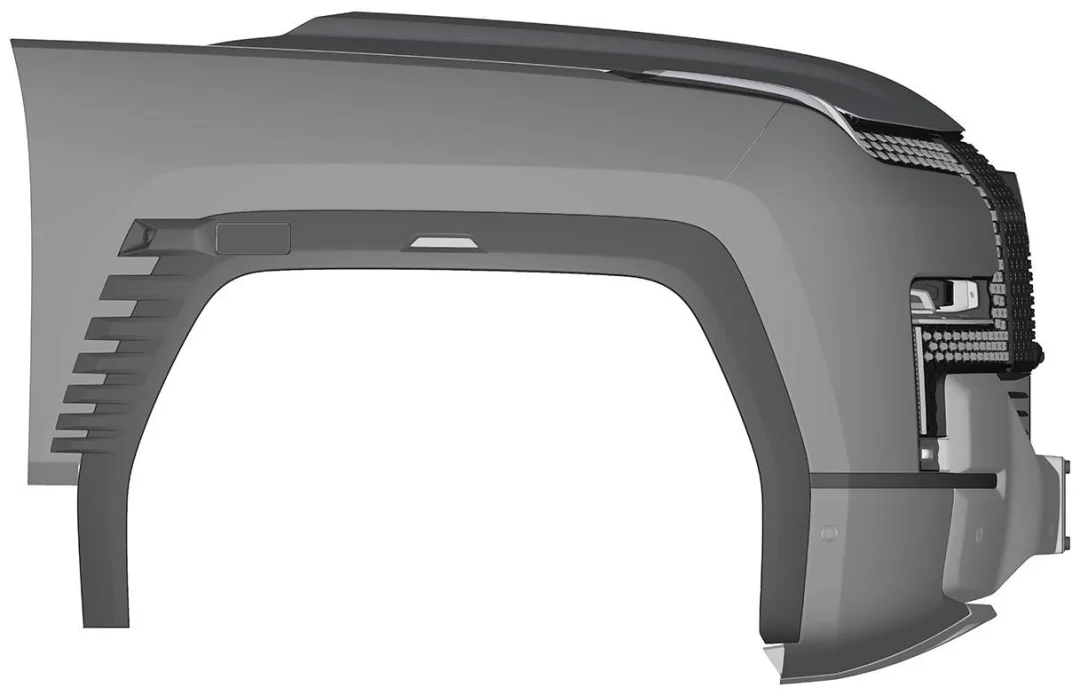
In the side profile of the design sketch, laser radar modules are integrated into the wheel arch cladding, while rear-facing camera modules are blended into the gear-like structure of the trim.
The entire front hood features a prominent upward bulge, which is expected to enhance the vehicle's muscular aesthetic in production.
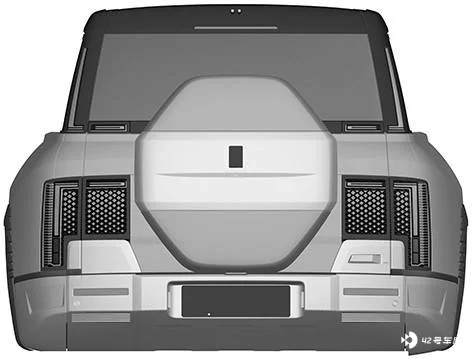
The rear features a prominent central spare-tire carrier, with flat, straight taillights and an interactive light cluster that echoes the front design.
A handle is located on the rear right side; it appears to open by sliding left rather than flipping up. This configuration is more practical for off-road enthusiasts, as flip-up doors can be cumbersome. Given the estimated price of over RMB 800,000, all doors are likely equipped with soft-close mechanisms.
For those interested in the complete exterior design details, please refer to the following:
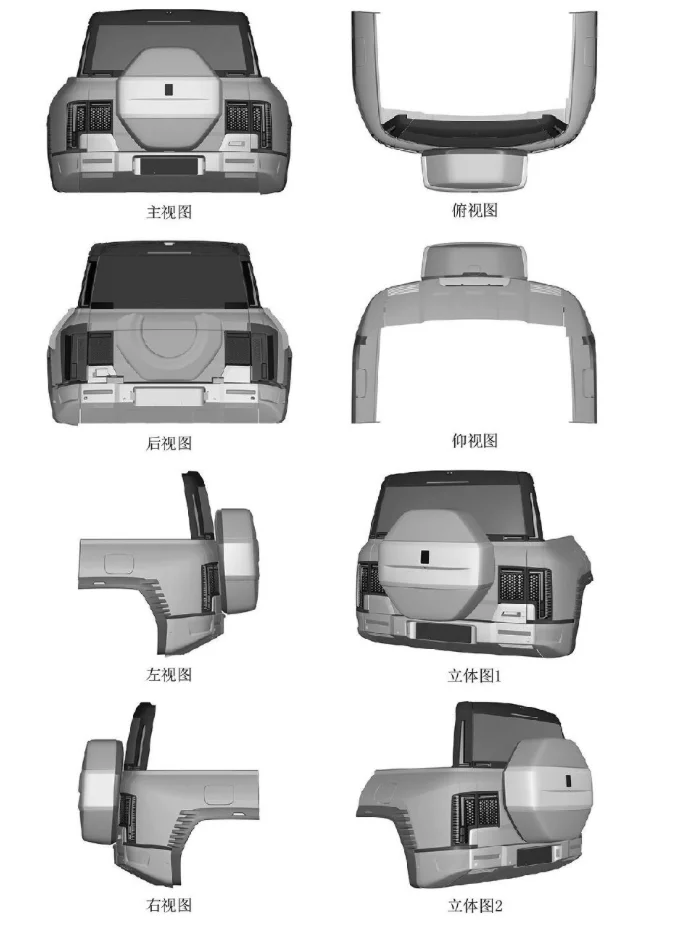
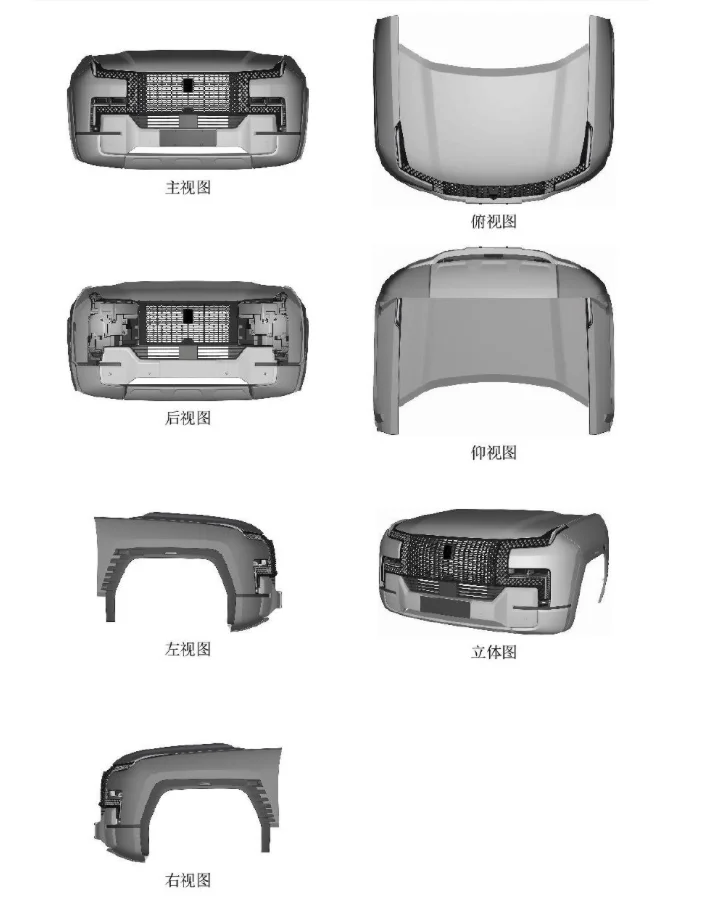
In May this year, Li Yunfei, General Manager of BYD’s Brand and Public Relations Division, outlined several key business segments of the BYD Group on Weibo.
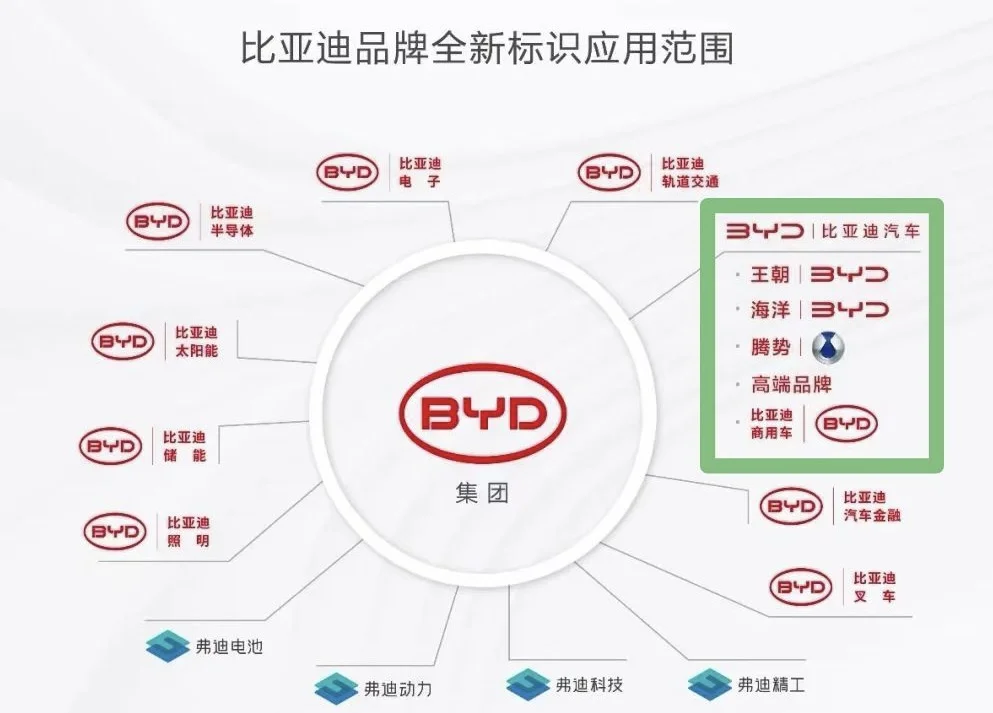
The report explicitly states that BYD's passenger vehicle business comprises Wangchao, Haiyang, DENZA, and a new high-end brand. With the exception of DENZA, which is a joint venture between BYD and Mercedes-Benz, all other sub-brands are wholly owned and operated by BYD.
It was also announced that this high-end brand will unveil its identity and logo in the third quarter of this year, followed by a global launch of its first model—a rugged off-roader—in the fourth quarter, with sales to commence in the first half of 2023.
The high-end brand will leverage BYD’s most cutting-edge automotive technologies, representing the company’s peak capabilities in electrification and intelligence. The expected price range for the brand is RMB 800,000 to RMB 1.5 million. It will be entirely new and independent in terms of branding, products, sales and service networks, and operational teams.
Quick Review:
No specific details about this rugged SUV have been released by official sources. Beyond the lidar and camera multi-sensor fusion perception scheme visible in the design images, the configuration of interactive light clusters can also be observed.
Undoubtedly, this rugged SUV will be equipped with DM technology. However, the 1.5T engine currently used in the DENZA D9 is already the heaviest product in the DM system, with a curb weight of 2,665 kg.
Therefore, it is more likely that this rugged SUV will feature a larger-displacement engine and a more powerful motor.
Of course, commanding an RMB 800,000 price tag requires more than just a new product. Under the BYD umbrella, how the luxury value of the Yangwang brand will be embodied and perceived by consumers remains to be seen.
Meizu Unveils FlymeAuto Design Philosophy: The Familiar Flyme Is Back!
On the morning of November 11, Meizu announced on its official Flyme Weibo account some of the Alive Design concepts for the FlymeAuto infotainment system. Continuing the design philosophy from Flyme's mobile OS, the large-screen infotainment system introduces three core features: Smart Bar, small window mode, and holiday desktops, making the user experience more akin to using a smartphone and lowering the learning curve.

According to official statements, the Alive Design philosophy aims to imbue functionality, visuals, and interactions with a sense of "life." This core concept, originally derived from mobile operating systems, has not only been perfectly replicated in FlymeAuto but has also undergone further evolution tailored for vehicle usage scenarios. As a result, features such as the Smart Bar, small window mode, and holiday-themed desktops within the smart cockpit are now more aesthetically pleasing, efficient, and user-friendly.
Regarding the three core functions, the new Smart Bar adds dynamic adaptive interaction on top of the traditional Dock bar. It intelligently matches different scenario needs, intuitively presents key information, and does not obstruct the main screen display.
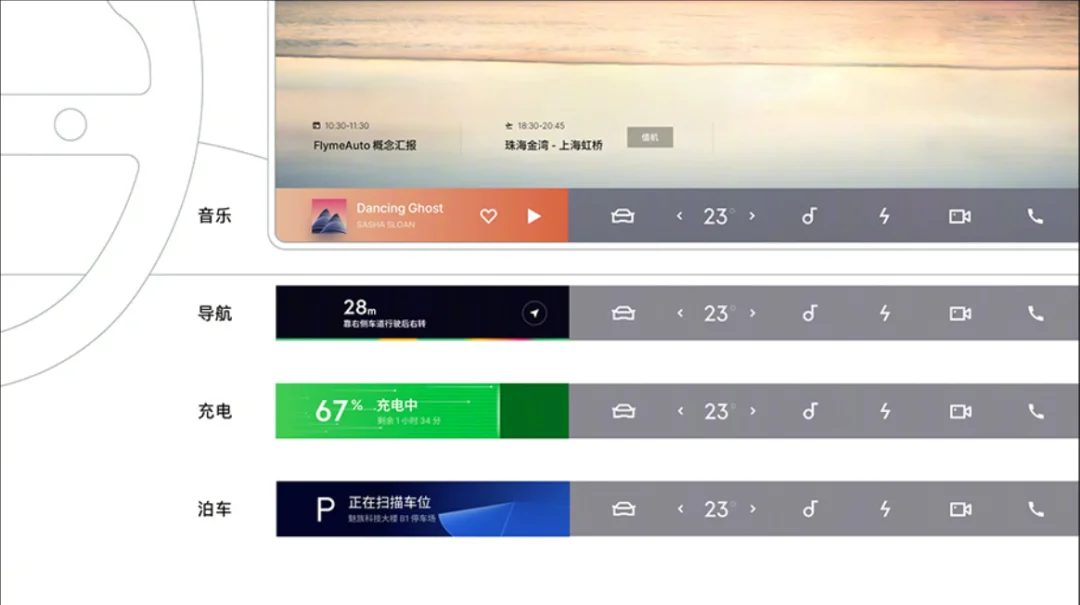
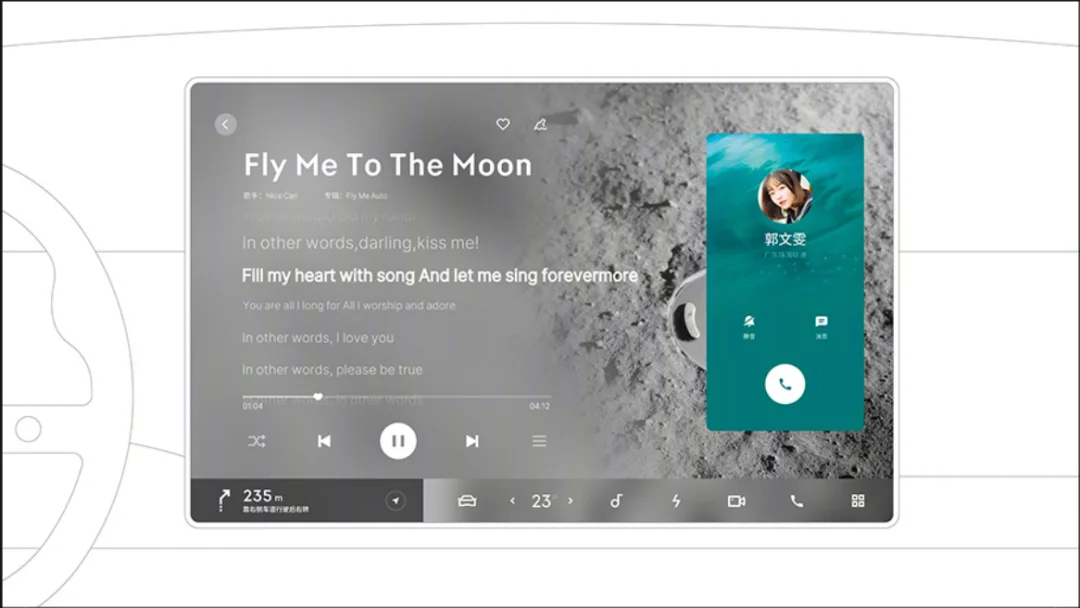
The small-window mode, a feature once highly praised on Meizu phones, addresses numerous "temporary" interaction needs by allowing lightweight app launches, temporary interventions, and flexible navigation. Through a more efficient in-screen multitasking display solution, it reduces the frequency of repeatedly switching between applications—a benefit I have personally experienced as a Meizu user.
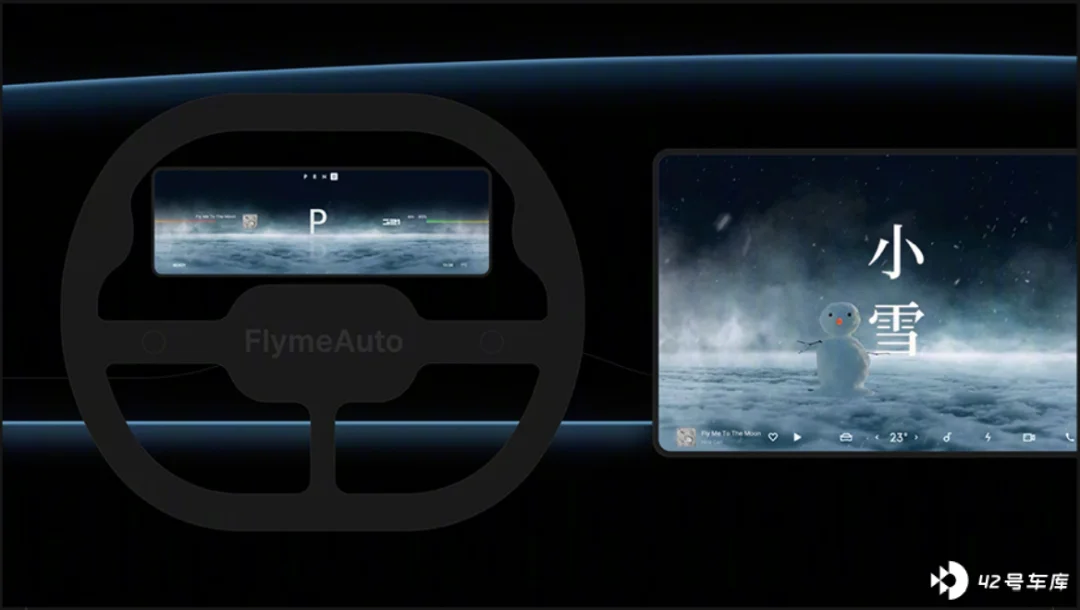
The holiday desktop feature is not merely a dynamic wallpaper; it is a fully 3D-rendered scene that updates in real time according to the current holiday, paired with interactive easter eggs for special occasions to create a more immersive festive atmosphere.
Meizu’s FlymeAuto infotainment system is described as an extension of Flyme into the smart cockpit. Meizu states that FlymeAuto will carry forward the Alive Design philosophy, acting as a companion that perceives and understands user needs, establishing connectivity between people, objects, and devices, and ultimately achieving a multi-terminal, full-scenario, immersive integrated experience.
The company also emphasized that simplicity, efficiency, and intelligence are key attributes Meizu hopes to impart to FlymeAuto, distinguishing it from traditional car systems with a sense of agility and vitality. Meizu aims to bring an unprecedented smart mobility experience to its users and broader intelligent vehicle owners in the near future.
Quick Review:
I have previously used three different Meizu smartphones as my primary devices sequentially over a period of about five years, and I still keep a Meizu 16s as a backup phone today.
As a long-time Meizu enthusiast, often referred to as a 'coal oil' (a pun on Meizu's Chinese name), I have always been saddened by the brand's decline. In the past, Meizu stood out by refusing to adopt the notch screen trend that other Android manufacturers blindly copied, instead insisting on a symmetrical top-and-bottom design. This commitment, combined with the clean and user-friendly Flyme operating system, was a major reason I remained loyal to Meizu phones.
However, after Huang Zhang stepped back from specific business operations, Meizu lost much of its original design conviction. Consequently, many enthusiasts left the brand for others. Regardless of the quality of its recent hardware, Flyme’s design aesthetics have remained strong, a testament to the efforts of former Flyme head Yang Yan.
Ever since Meizu was acquired by Geely subsidiary Hubeixingjishidai, I have been anticipating that Meizu would apply its Flyme design philosophy to in-car infotainment systems, aiming to rescue Zeekr’s chaotic user interface. It now appears that day is drawing closer.
Although no test demo has been released yet, I believe that with Meizu’s accumulated experience in the Flyme system, diligent R&D will ultimately yield results surpassing most infotainment systems currently on the market.
Written by: JOJO Edited by: Kai Xiang