


ONVO Launch Date Set for May 15; Zeekr Surges 34.57% on Listing Day; Xingjiyuan ET Debuts Globally | E-Week Highlights
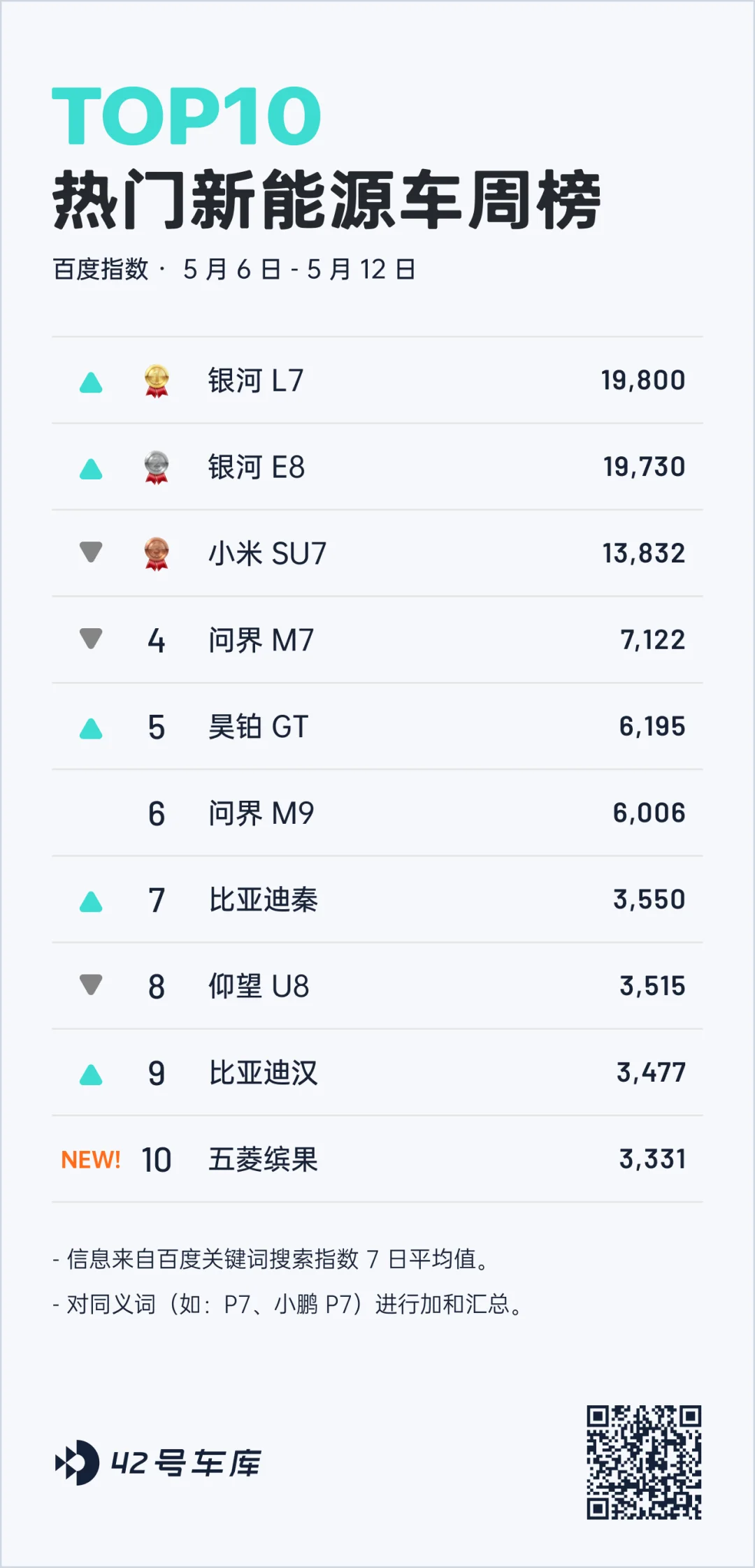
01 Weekly Indices
02 Weekly Highlights
NIO ONVO to Launch on May 15
On May 9, NIO held a ceremony at its second factory in the Hefei Xinqiao Intelligent Electric Vehicle Industrial Park in Anhui province to mark the production of its 500,000th mass-produced vehicle, represented by the ES8.
During the event, William Li also announced that NIO’s second brand, ONVO, would be unveiled on May 15, International Family Day, aiming to accelerate the milestone of NIO’s 1 millionth mass-produced vehicle.
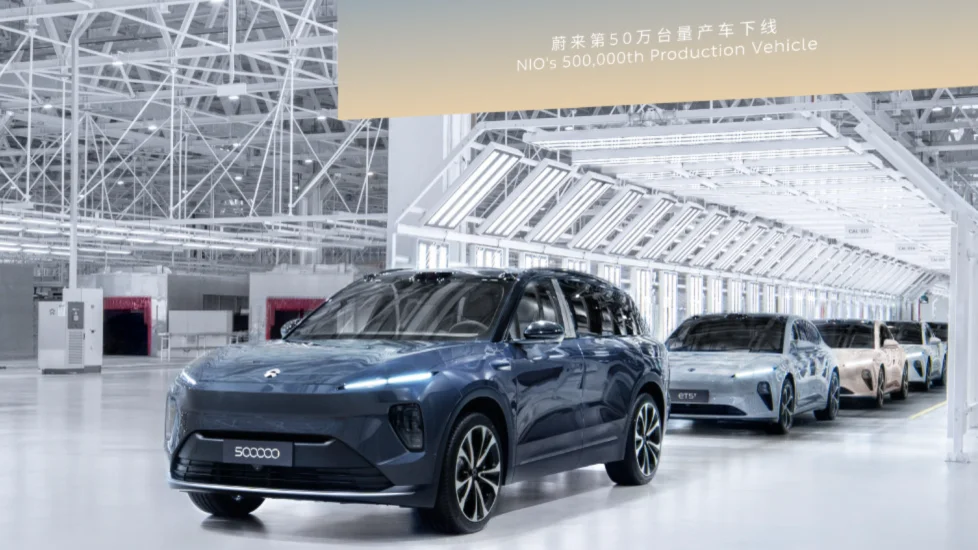
Producing 500,000 units in the premium pure electric segment above RMB 300,000 was no easy feat for NIO, which navigated significant pacing fluctuations and adjustments along the way.
On May 27, 2018, three and a half years after its founding, NIO rolled out its first mass-produced vehicle, the original ES8, from its facility in Hefei, Anhui. Over the following two to three years, NIO launched and delivered the first-generation ES6 and EC6 models.
On April 7, 2021, NIO celebrated the rollout of its 100,000th mass-produced car at the JAC-NIO Advanced Manufacturing Base in Hefei, Anhui. This milestone came 1,046 days—nearly three years—after the first mass-produced vehicle.
At that time, NIO’s lineup consisted of the “866” trio based on the NT1.0 platform, while the ET7, the company’s first pure electric sedan based on the NT2.0 platform, had been officially launched in January but had not yet entered mass production or delivery.
In fact, NIO did not deliver any new models to customers throughout 2021. However, during a review session, William Li noted that the year was actually one where NIO “fared quite well,” citing high gross margins, limited losses, and positive operating cash flow.
William Li emphasized that at that time, "NIO was running according to its own pace."
One year later, on April 26, 2022, with a NIO ET7 in Antarctic Blue slowly rolling off the production line at the JAC NIO Hefei Advanced Manufacturing Base, NIO's 200,000th mass-produced vehicle was officially launched. As a result, NIO became the first among China's new automotive forces to have its 200,000th mass-produced vehicle launched.
Just seven months later, on December 12, 2022, the 300,000th mass-produced NIO vehicle rolled off the line at NIO's second advanced manufacturing base. This achievement was driven by rising delivery volumes for three new models on the NIO NT2.0 platform: the ET7, ES7, and ET5.
On September 8, 2023, the 400,000th mass-produced NIO vehicle officially came off the line. By then, NIO had basically completed the launch of its second generation of seven models. The final model based on the NT2.0 platform, the all-new NIO EC6, was launched just seven days later on September 15.
However, when reviewing NIO's performance in 2022 and 2023, William Li believed it was not good.
The reason is that as the first and second models on the NT2.0 platform, the NIO ET7 and ET5 had the potential to "soar," but both were severely impacted by the pandemic. In particular, after the ET5 received 100,000 orders, the factory was locked down, and rising battery prices increased the cost per vehicle by thirty thousand to forty thousand yuan.
Therefore, William Li admitted that NIO's pace over the past two years had not been properly adjusted.
Nevertheless, starting from the second half of 2023, NIO began to adjust its rhythm. William Li stated that a key focus was improving sales efficiency. By March this year, with the support of the Battery-as-a-Service (BaaS) policy and the launch of the 2024 models, NIO had entered a positive rhythm, making this year one with very favorable momentum.
Against this backdrop, NIO’s sales performance over the past few months has shown a degree of steadiness. Supported by this stability, NIO’s 500,000th mass-produced vehicle officially rolled off the assembly line on May 9, 2024, following the completion of the formal transition to the 2024 model year for all eight models built on its second-generation NT2.0 platform.
Reflecting on this milestone, William Li stated, 'If you view this as a marathon, what is the best and most comfortable segment? It is the victory of rhythm.'
For an automotive company like NIO, reaching 500,000 units is certainly a celebratory milestone. However, alongside marking this achievement, NIO has already shifted its business focus for the remainder of the year toward its second brand, ONVO.
In fact, prior to this event, extensive information regarding the ONVO brand had already circulated online, with many details confirmed or addressed by the company. The ONVO website is now live, teasing the brand’s first model, the ONVO L60. The announcement that the ONVO brand would be unveiled in May is also widely known.
A key message William Li sought to convey at this event was that the ONVO brand will officially launch on May 15, International Day of Families. Choosing this date aligns with and emphasizes ONVO’s brand positioning targeting family users.
Notably, during the media briefing, in addition to William Li and Qin Lihong, Ai Tiecheng, President of the ONVO brand, made an appearance and addressed several key questions regarding the brand.
Regarding Ai Tiecheng’s joining NIO, William Li explained that because ONVO aims to target the family market, it required a leader capable of deeply understanding the nuanced needs of family users. Before joining NIO, Ai Tiecheng was the behind-the-scenes head of Shanghai Disneyland, possessing extensive expertise in creating joyful family atmospheres.
Consequently, at William Li’s invitation, Ai Tiecheng crossed industries to join NIO.
Ai Tiecheng stated that he first came into contact with NIO in 2015 and became the brand’s 107th owner early on, giving him firsthand experience of NIO’s users, brand, culture, and customer experience. He joined NIO in 2020 at William Li’s invitation to lead the second brand, and has now been with the company for nearly four years.
He will appear at the ONVO brand launch event on May 15.
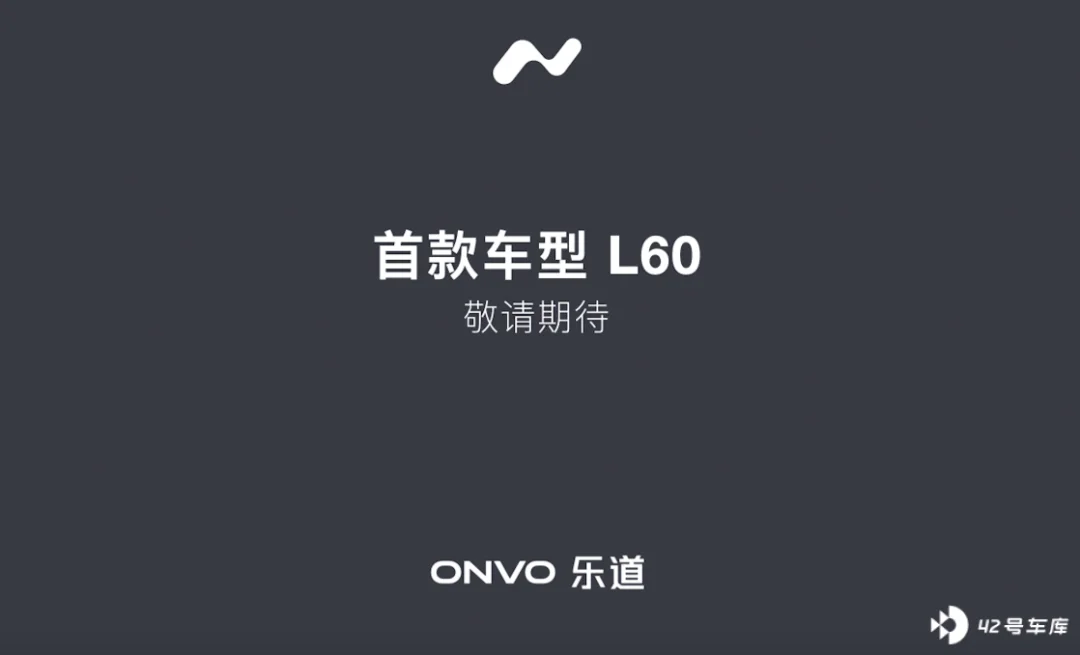
Regarding external concerns about the energy consumption of ONVO’s first model, the L60, William Li emphasized that the ONVO brand places significant emphasis on efficiency, unlike NIO’s own lineup. He explained that family vehicles require careful budgeting, so lower energy consumption translates to reduced electricity costs—a practical approach reflected in the product’s definition.
William Li noted that achieving strong energy efficiency for the ONVO L60 relies on substantial technical support, including high-voltage architecture, electric drive efficiency, and aerodynamic drag coefficients, involving numerous detailed engineering efforts.
He stressed that the ONVO L60’s energy consumption performance is designed to surpass that of Tesla.
On NIO’s internal positioning of the ONVO brand, William Li said that over the past decade, NIO has essentially completed its transition from zero to one in building its product and technology systems, a milestone marked by the release of the NIO ET9. ONVO signifies NIO’s entry into a phase of scaling from one to ten, or even one to one hundred, as the brand aims to reach a broader user base.
William Li added that the NIO brand has always pursued pioneering innovation, including full-stack self-research, charging and battery-swap infrastructure, and global expansion, which form the foundation of its premium brand identity.
Regarding ONVO's advantages, William Li stated that ONVO aims to 'dare to be late,' meaning it will offer mature technologies and services through more cost-effective solutions and reasonable prices to a broader user base. It is not an endeavor from zero to one, so it naturally leverages NIO's existing strengths, including its established battery-swap network and service system.
Qin Lihong emphasized that the newly launched ONVO brand can immediately access over 1,000 battery-swap stations, an advantage many competitors lack. Consequently, its systemic maturity exceeds expectations—what he termed 'born mature.'
Commentary:
From the perspective of NIO's overall development, the rollout of its 500,000th mass-produced vehicle carries significant transitional importance.
On one hand, it can be seen as a phased summary of NIO's development over the past decade.
Specifically, under its high-end pure-electric strategy supported by full-stack self-research and the battery-swap system, NIO has successfully achieved a volume of nearly 500,000 units in the Chinese automotive market through persistence. This has helped elevate the price range for Chinese independent brands—and stands out uniquely in the premium pure-electric segment above RMB 300,000.
On the other hand, it marks the starting point for NIO's next phase. Leveraging the ONVO brand as a pivot, NIO must apply its inherent advantages in technology, products, organization, and services to enter lower-priced segments with larger market sizes but fiercer competition. This signifies that NIO is entering a multi-brand development stage—a new beginning indeed.
Of course, from the perspective of commercial essence, there is another undeniable fact: behind the delivery of these 500,000 mass-produced vehicles, NIO has invested more than RMB 43 billion in research and development over the past ten years while consistently operating at a loss. Now, with the ONVO brand arriving, it is time for NIO to replenish its finances by securing larger market sales volumes.
Zeekr Surges 34.57% on First Day of NYSE Listing
On May 10, Zeekr officially listed on the New York Stock Exchange under the ticker symbol "ZK."
For this listing, Zeekr issued 21 million American Depositary Shares (ADS) at a price of $21 per share, hitting the top end of the previously stated range of $18–$21 in its prospectus. The company raised USD 441 million and secured more than five times oversubscription. Based on the $21 offering price, Zeekr’s market capitalization stood at approximately USD 5.2 billion.
Notably, on its first day of trading, Zeekr opened at $26 and closed at $28.26, representing a 34.57% increase from the offering price and an 8.7% rise from the opening price. Its market capitalization reached USD 6.898 billion.
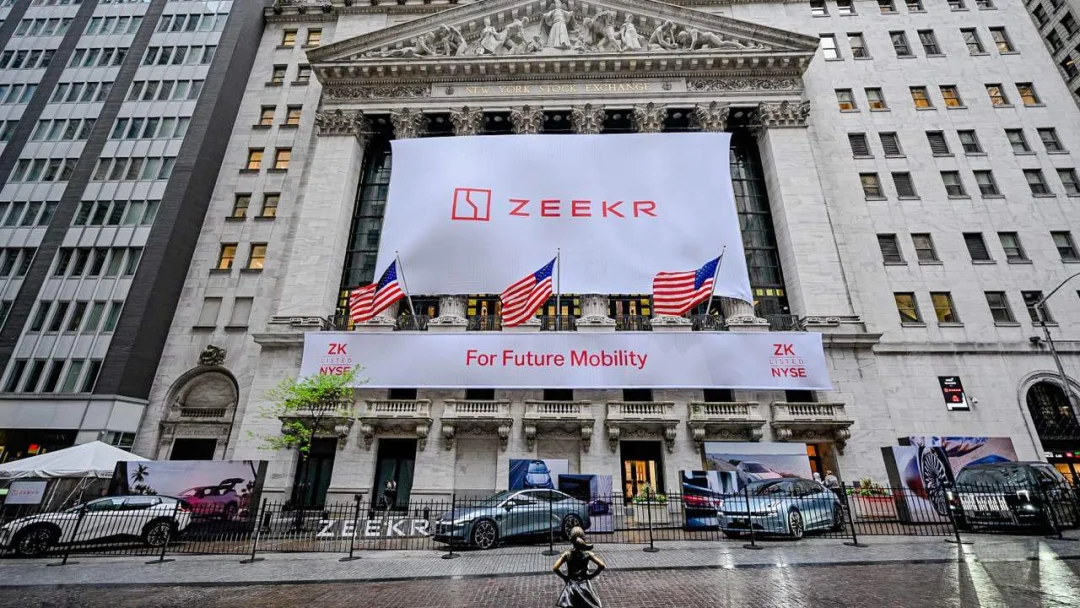
With its successful listing on the New York Stock Exchange, Zeekr has officially become the fourth Chinese new-energy automaker to list on U.S. exchanges, following NIO, XPeng, and Li Auto. It also became the fastest new-energy vehicle company to go public in history.
In reality, both the "Wei-Xiao-Li" trio and Zeekr achieved their U.S. listings by riding favorable trends. However, while the momentum for NIO, XPeng, and Li Auto was largely driven by broader era-defining shifts, Zeekr’s momentum was self-created.
In fact, Zeekr had been actively seeking opportunities to list.
It is well known that Zeekr was born in Rome. Backed by the vast resources of Geely, Zeekr acquired 100% equity in Geely’s China-Europe Automotive Technology Center for RMB 800 million upon its establishment, purchased a 30% stake in Haoxian Energy for RMB 9 million, and brought Ningbo Winray, which specializes in the research and manufacturing of batteries and electric motors, under its subsidiary umbrella.
According to reports, even before the launch of the Zeekr 001, a significant portion of Zeekr’s revenue came from selling components such as batteries and electric motors to Geely. To this day, sales of these components to brands within and outside the Daji system continue to drive Zeekr’s revenue growth. For instance, in 2023, more than one-third of Zeekr’s revenue came from non-vehicle sales, primarily battery-related businesses.
Furthermore, data disclosed in the prospectus shows that as the brand’s sales have surged since its inception, Zeekr’s revenue has doubled annually. From 2021 to 2023, Zeekr’s total annual revenues were RMB 1.5443 billion, RMB 19.6712 billion, and RMB 33.9118 billion, respectively.
However, the trend of increasing losses alongside higher sales has also affected Zeekr. From 2021 to 2023, Zeekr’s annual net losses were RMB 4.5143 billion, RMB 7.6551 billion, and RMB 8.2642 billion, respectively. By the end of 2023, Zeekr’s cash and cash equivalents stood at only RMB 3.2607 billion.
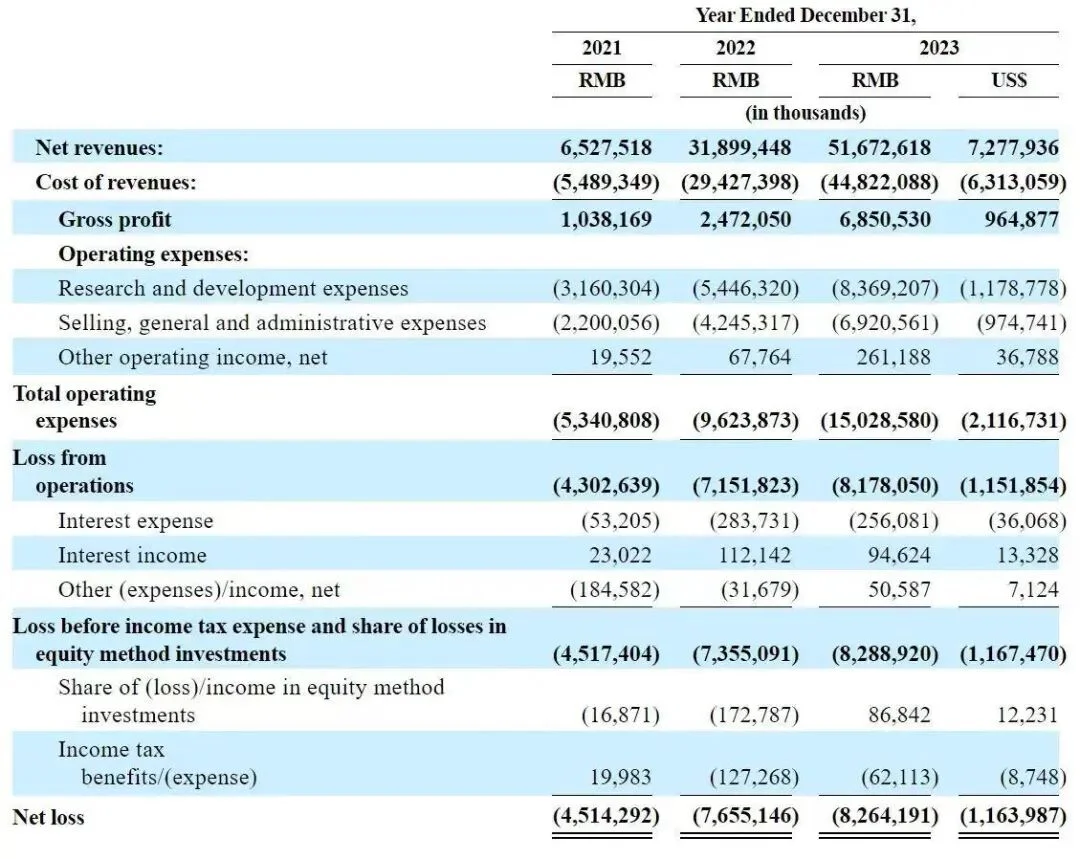
Meanwhile, beyond developing new products, Zeekr is working to maintain its comprehensive competitive advantage. On one hand, it is vigorously advancing an energy replenishment layout with a scale of thousands of stations and tens of thousands of charging piles; on the other, it continues to intensify efforts in intelligence, including self-developed autonomous driving technology, collaboration with Mobileye, and procurement of NVIDIA DRIVE Thor chips.
This means Zeekr must spend substantial funds on technology R&D, channel expansion, energy infrastructure rollout, and marketing. Historical data indicates that in 2023 alone, Zeekr spent RMB 8.2642 billion on product R&D.
To address funding issues, Geely had already announced plans for Zeekr’s separate listing in October 2022. At that time, the chosen listing venue was not the U.S. stock market but Hong Kong. However, due to various considerations, Zeekr ultimately decided to pivot to the U.S. market.
In November last year, Zeekr formally submitted its IPO application documents to the U.S. Securities and Exchange Commission (SEC), planning to list on the New York Stock Exchange under the ticker symbol "ZK," but the plan was temporarily shelved.
The reason at that time was that Zeekr had not yet reached the robust development stage it enjoys now; an early listing would have accelerated the exposure of its problems. If it had chosen to go public prematurely, the only entity capable of supporting Zeekr in crafting a compelling capital narrative would have been its parent company, Geely. However, capital markets are not places where loyalty to a "parent" is the sole criterion.
Additionally, besides preparing to address funding issues through an IPO, Zeekr conducted two rounds of financing in August 2021 and February 2023.
The first round raised USD 500 million, invested by Intel Capital, CATL, Bilibili, Hongsang Group, and Boyu Capital, valuing Zeekr at approximately USD 9 billion post-investment. The second round raised USD 750 million, invested by Mobileye founder and CEO Amnon Shashua, CATL, Yuexiu Industrial Fund, Tongshang Fund, Quzhou Xin'an Intelligent Manufacturing Fund, among others, valuing Zeekr at approximately USD 13 billion post-investment.
However, as market space becomes increasingly crowded and competition intensifies, Zeekr will inevitably need more capital support to maintain its competitive advantage over the long term.
Therefore, for Zeekr, going public is almost certainly the best path to resolve funding issues.
Now, having received capital infusion from the markets and with ample resources, Zeekr is gearing up to become stronger and more formidable. According to official information, the funds raised by Zeekr through the IPO will be allocated to the following three areas:
Approximately 45% will be used to develop more advanced electric vehicle technologies and expand its product portfolio;
Approximately 45% will be allocated to sales and marketing, as well as expanding Zeekr’s service and charging networks.
Approximately 10% will be used for general corporate purposes (including working capital needs) to support Zeekr’s business operations and development.
In short, the listing provides Zeekr with another opportunity for high-quality growth.
Commentary:
For Zeekr, the listing marks a new starting point. According to Zeekr’s plans, it will launch the Zeekr MIX and an yet-unrevealed pure electric SUV this year, bringing its total product lineup to seven models. The company aims to achieve its target of 230,000 annual sales based on these seven vehicles.
Additionally, listing on the U.S. stock market serves as a catalyst for the continuous evolution of Zeekr’s internal systems. As a publicly traded company, Zeekr must subject all its information and developments to the scrutiny of the market, which raises the bar for its financials, management, products, and technology.
At the same time, the U.S. listing offers Zeekr an excellent opportunity to boost its brand visibility both domestically and internationally. Zeekr’s target markets extend beyond China to broader global regions. It has already entered markets in Europe, the Middle East, and Southeast Asia, and is set to expand into Singapore and the Hong Kong and Macao regions by the third quarter of this year. Looking ahead, Zeekr also plans to enter the U.S. Robotaxi market.
Furthermore, Zeekr’s U.S. listing helps relieve Geely from potential financial drag, allowing Zeekr to act as the vanguard of the Daji system and drive Geely’s transition toward new energy vehicles.
Celebrating too early is not a strategy for Zeekr. Moving forward, the company should efficiently leverage its resources to transition toward a healthier operational state, thereby securing more long-term competitive advantages in the evolving market and industrial landscape.
Xingjiyuan ET Global Launch
On May 9, the Xingjiyuan ET was officially launched.
The Xingjiyuan ET is available in both extended-range electric vehicle (EREV) and pure electric powertrain options, spanning eight trim levels.
In the extended-range segment, the Xingjiyuan ET includes:
Plus at RMB 189,800;
Pro at RMB 205,800;
Pro+ at RMB 225,800.
In the pure electric segment, Xingjiyuan ET includes:
Pro RMB 229,800;
Pro AWD: RMB 239,800;
Pro urban intelligent driving RMB 249,800;
Max RMB 279,800;
Ultra RMB 319,800.
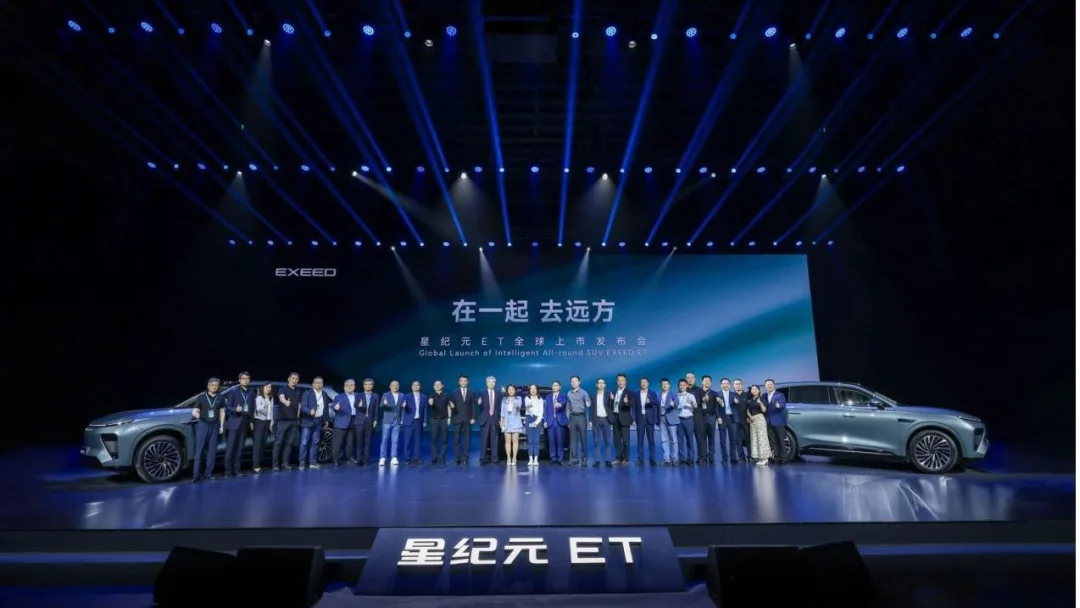
The Xingjiyuan ET extended-range model is equipped with a dedicated engine independently developed by Chery, achieving a thermal efficiency of 44.5%, which demonstrates higher energy efficiency compared to the industry average. Under full fuel and battery conditions, the model can achieve a comprehensive range of 1,518 kilometers. The pure electric version offers a maximum range of 760 kilometers and can replenish 475 kilometers in just 11.5 minutes, reflecting advancements in fast-charging technology.
In terms of safety, the Xingjiyuan ET employs a comprehensive safety system featuring active and passive protection, as well as battery safety measures. It has received certification under the NESTA Six-Dimensional Electric Safety standard. Notably, the vehicle underwent a drop test from a height of 31.9 meters; the results showed that the vehicle structure remained intact, with no leakage, smoke, or fire from the battery pack, demonstrating its robust safety performance.
Regarding comfort and luxury, the Xingjiyuan ET offers a spacious body with an interior volume of 3.45 cubic meters and a panoramic sunroof with a light-transmitting area of 1.57 square meters. The cabin features seats upholstered in premium Nuprima micro-suede matte leather and includes high-end amenities such as a driver’s seat audio headrest and multi-way power-adjustable seats, enhancing the ride experience.
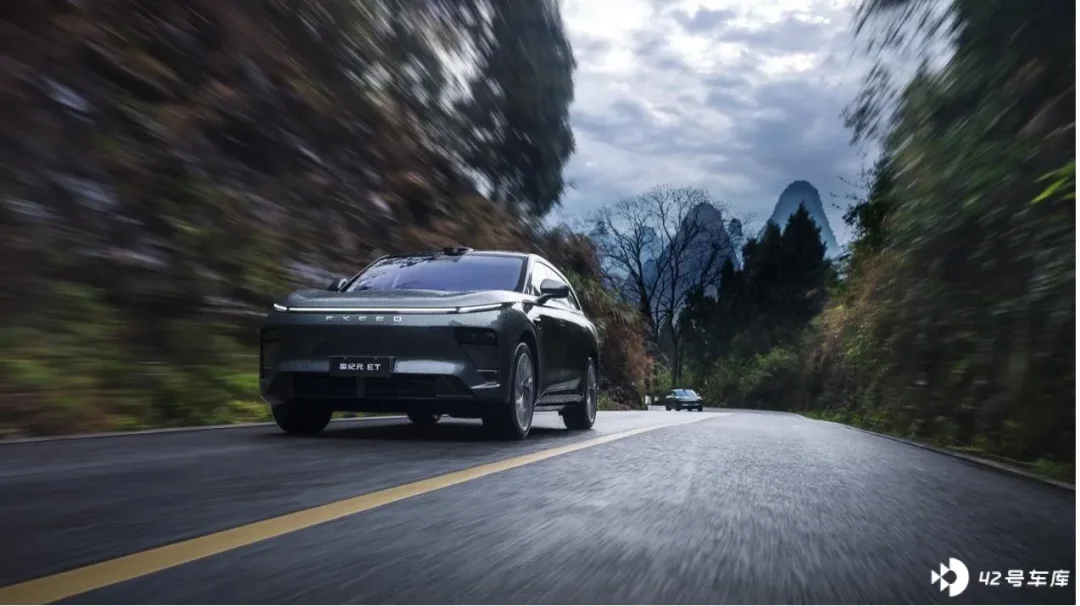
Regarding power performance, the Xingjiyuan ET is equipped with a gimbal intelligent chassis, IAS intelligent air suspension, and a CDC electromagnetic damping system, providing a stable and comfortable driving experience. The vehicle's braking system features six-piston fixed calipers, achieving a hundred-kilometer-per-hour braking distance of 34.8 meters, while also demonstrating excellent performance in turning radius and wading depth.
Technological innovation is another key highlight of the Xingjiyuan ET. Built on Chery’s Qiyán EEA 5.0 electronic and electrical architecture, the vehicle is fitted with 30 sensors and NVIDIA DRIVE ORIN chips, supporting advanced intelligent driving and smart cockpit functions, reflecting the latest advancements in artificial intelligence and autonomous driving.
Yin Tongyue, Party Secretary and Chairman of Chery Holding Group, stated at the launch event: 'As Chery’s first product to launch globally with both pure electric and extended-range powertrains simultaneously, the Xingjiyuan ET has demonstrated exceptional capabilities since its debut. It was warmly welcomed during the pre-sale phase and possesses super capabilities in safety, intelligence, comfort, and long range. With the market entry of models like the Xingjiyuan ET, I believe our new energy vehicle sales will soon enter the industry’s top three, fulfilling our commitment from last year. This year, we will not hold back in the new energy market.'
From this perspective, the Xingjiyuan ET serves not only as the vanguard of Chery’s product lineup but also bears the important mission of leading the brand’s upward trajectory and gaining popularity in global markets.
Commentary:
The Xingjiyuan ET is Chery’s most critical recent product, tasked with boosting the brand’s sales volume and market presence in the new energy vehicle (NEV) sector.
Therefore, whether viewed from the Xingjiyuan ET's positioning as a mid-to-large extended-range family SUV or its starting price of RMB 189,800—which avoids the fierce competition in the RMB 200,000 to RMB 300,000 segment—it is evident that Chery is going all out to create a resounding hit product in the new energy vehicle market.
The Xingjiyuan ET has lived up to expectations; according to data shared by Huang Zhaogen, head of the Exeed Marketing Center, on Weibo, orders for the model had surpassed 26,000 units by noon on May 11.
However, whether the Xingjiyuan ET can truly sustain Chery’s growth in the NEV market will depend on its ability to maintain stable deliveries. Meanwhile, as more competitive products continue to enter the NEV landscape, the Xingjiyuan ET must remain vigilant and ready for intense, close-quarters competition.
Written by: Isaiah Edited by: Isaiah