


Starting at RMB 528,000: Why NIO Founders' Edition Owners Call It 'So Cheap'? (With Photos)
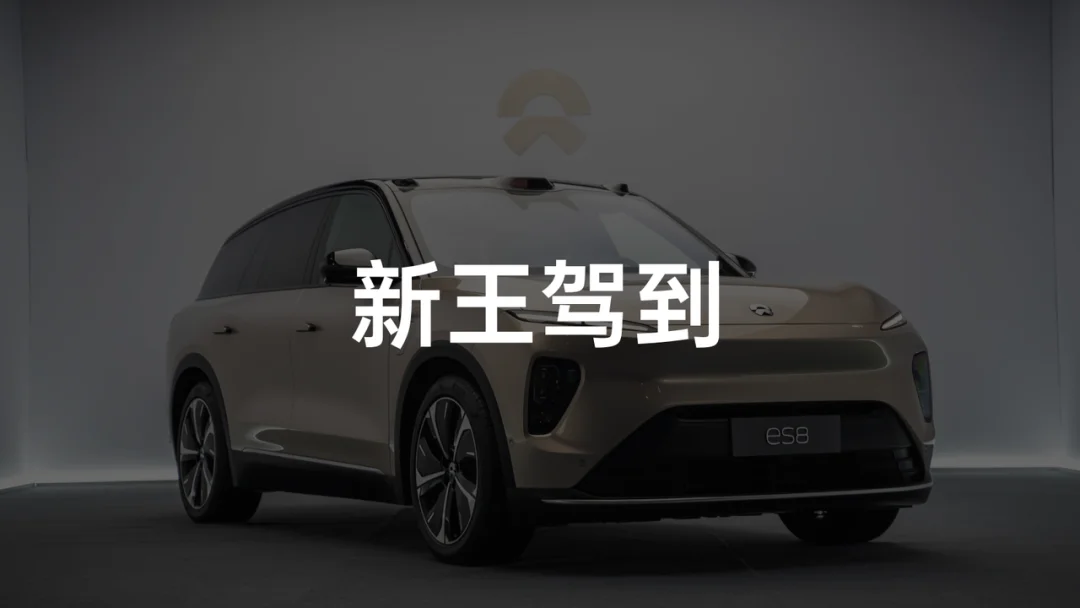
On December 16, 2017, at NIO's inaugural "NIO Day," the company officially launched its then-unique NIO Power energy service system and unveiled its first model under this system: the ES8, which marked NIO's first true consumer-facing vehicle.
The initial batch of "Founders Edition" models were priced at RMB 548,000 (before subsidies), while the base version was listed at RMB 448,000 (before subsidies). At the time, as a student, I found these prices somewhat out of reach and even harbored doubts about the pioneering deployment of battery swapping technology.
Over more than five years, William Li has worn and shed the title of "the most unfortunate person." The company's vehicle lineup and battery swap stations have both iterated to their second generations, and it has even planned two entirely new sub-brands in one go.
It has also been over five years since the ES8 reached nearly 65,000 units in sales before undergoing its major generational update.
We had the opportunity to be among the first to experience the static features of the pre-production prototype of the all-new NIO ES8.
01NIO's Most Elegant SUV
The NT 2.0 exterior design was first revealed earlier last year with the ET7. Currently, the NIO ET7, ES7, and ET5 all adopt this "Design for AD" philosophy, so the ES8's exterior does not carry the same sense of surprise.
But "elegant" is the best word I can think of to describe the new ES8, this mid-size SUV.
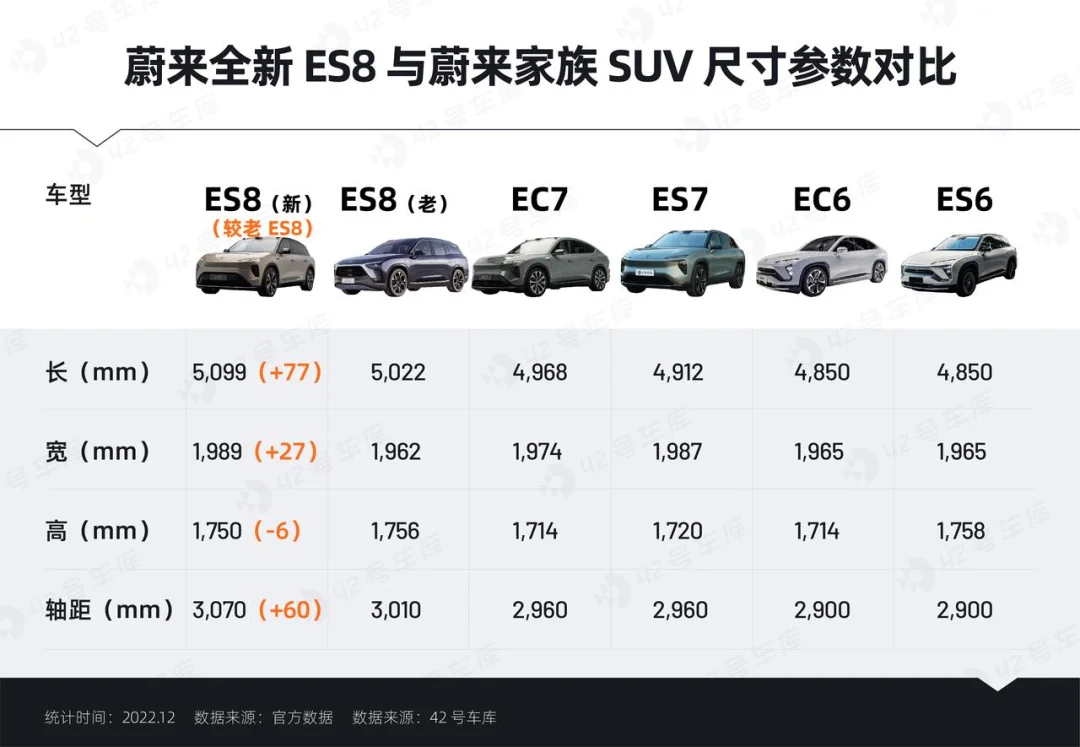
Although the new ES8 is longer and wider than the old one, and slightly shorter in height, it has taken over the old ES8's title as the largest vehicle in NIO's entire lineup.
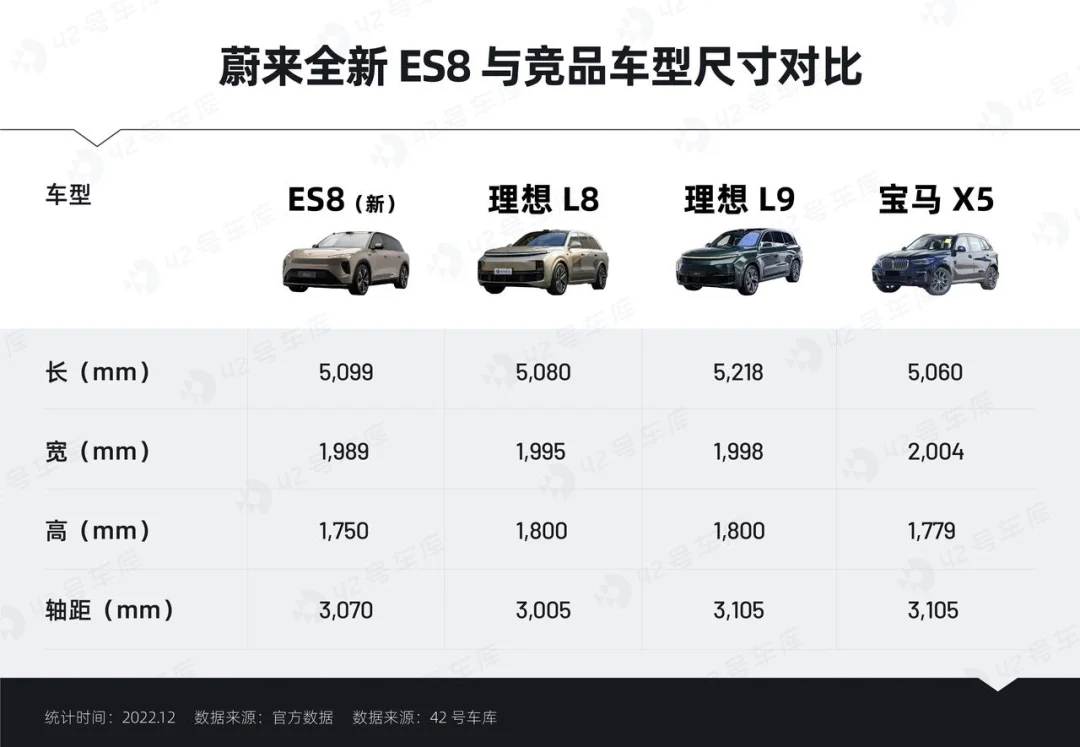
Compared with the Li L9, the new ES8 is noticeably smaller. In fact, its size is closer to that of the Li L8, but its wheelbase is 65 mm longer than the L8's.
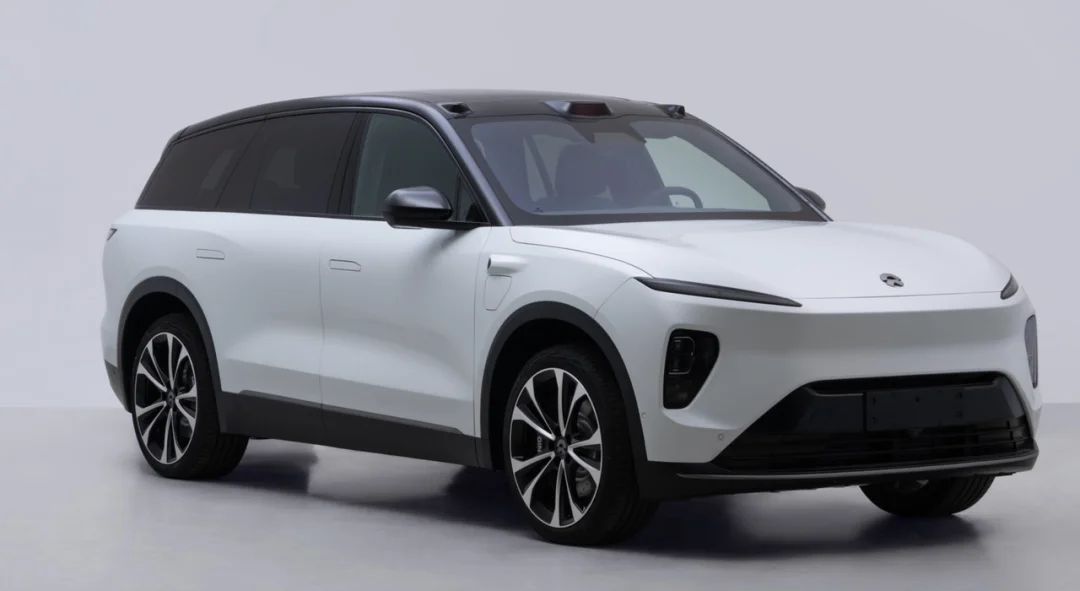
Seeing the new ES8 in person for the first time feels much better than the images released by Gongxinbu on the 14th. The chubby look from Gongxinbu's official photos is gone, and the body lines appear more refined under the light and shadow.
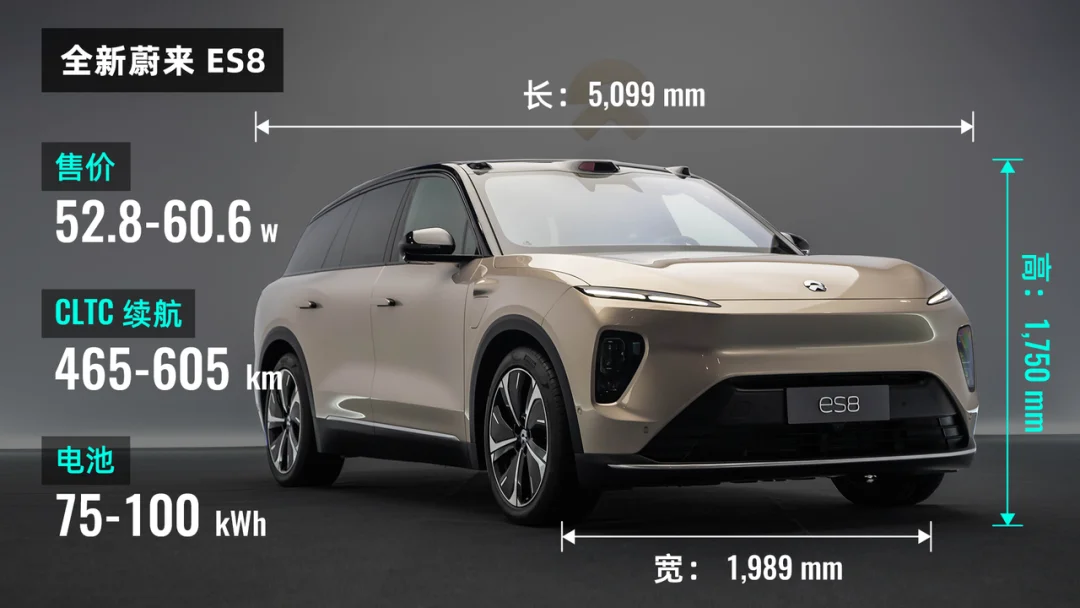
The vehicle we photographed features the 2023 annual color scheme, "Sunlight Gold," which lends a more steady appearance to the car. It is also equipped with the Sun trim version.
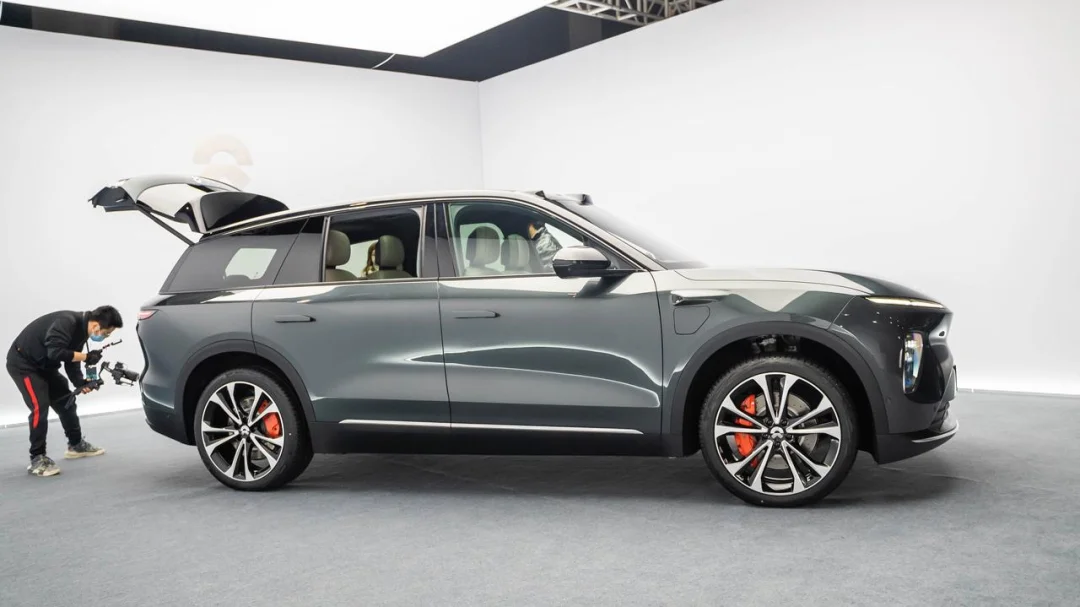
Of course, you can choose the ES8's exclusive color—Star Green—to highlight its unique character. However, I need to say a few more words about this Nebula Green. Even under the high-brightness studio lights, my first impression was that it was a multicolored black. Only upon closer inspection could one appreciate the dark green within it. The overall feeling is quite understated.
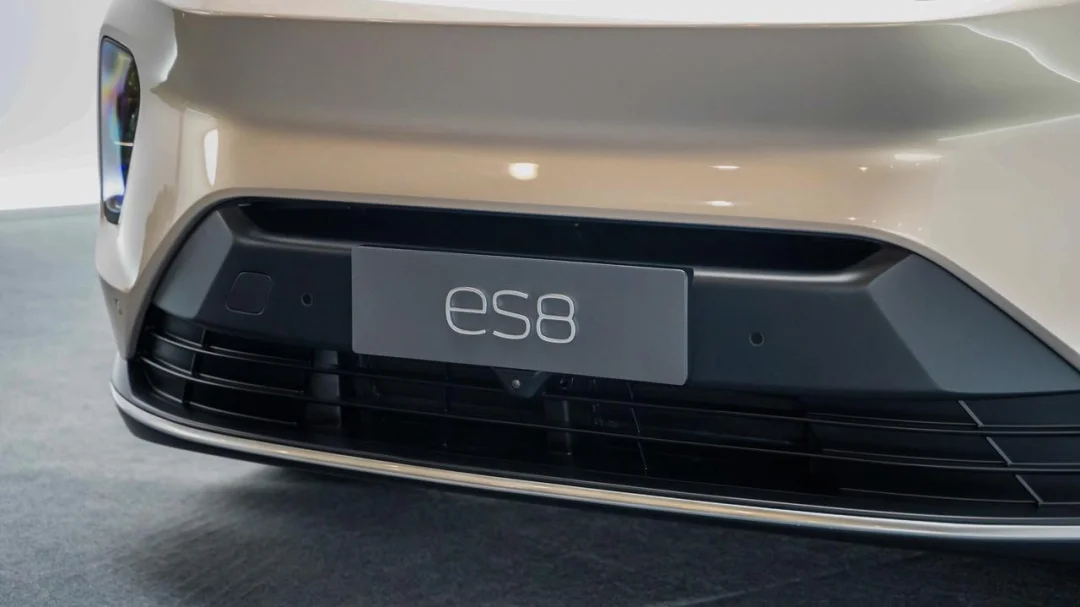
The new ES8's front grille adopts an upper-and-lower layered design, with the license plate holder dividing the front face into two distinct openings. This visually enriches the front elements without appearing bulky. Compared to the ES7 and EC7, where the license plate frame is directly spliced with the vehicle's front paintwork, I personally prefer the design of the new ES8.
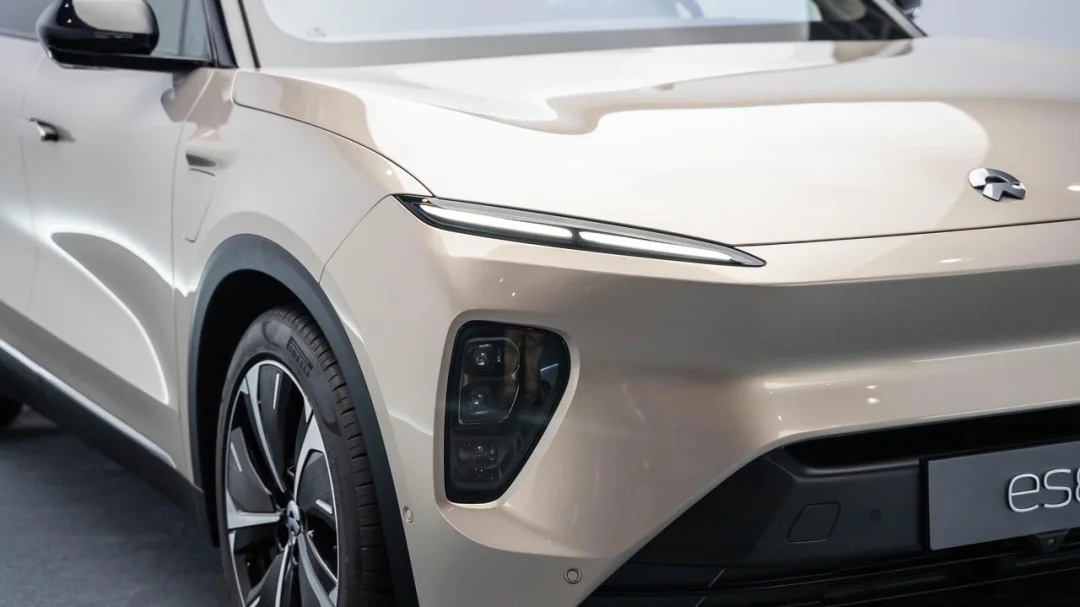
The new ES8 has upgraded to ABD intelligent multi-beam headlights with a pixel density of 100, capable of intelligently switching between high and low beams and adjusting the illumination range.
The particularity of these headlights lies in their integration: rather than matching the headlights with cameras as traditional automakers do, they are directly matched with the LiDAR. The benefit of this approach is that due to the higher detection precision of the LiDAR, the application precision of the lighting system is also enhanced.
Viewed from the side, the new ES8 features a straighter character line than its predecessor. As the window line tapers toward the rear, the vehicle's dynamic, 'yacht-like' profile is further emphasized.
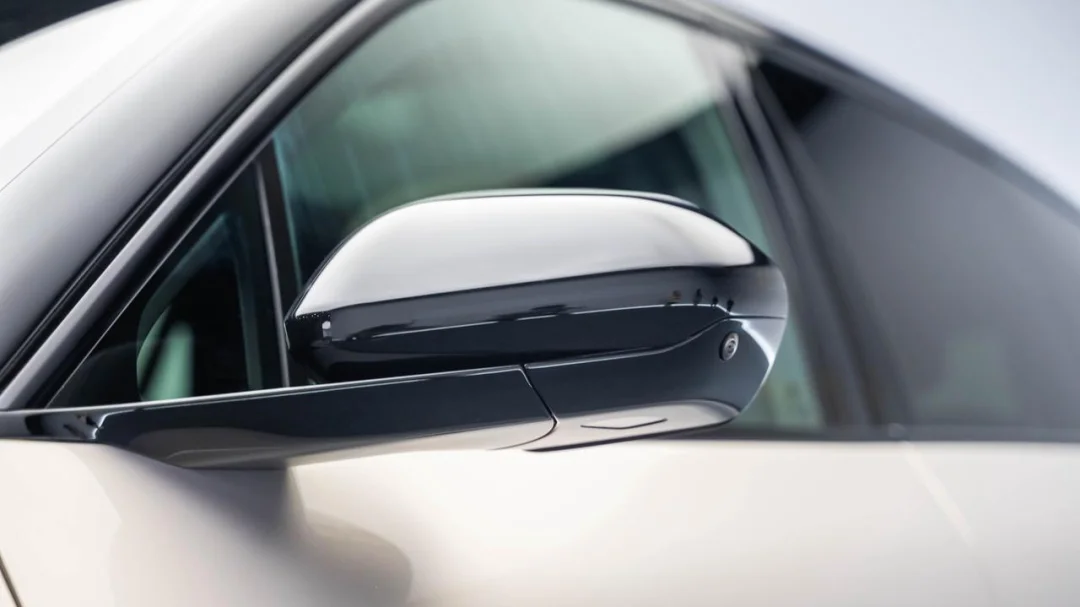
The new ES8 also employs 'hidden' exterior mirrors. Paired with the car's black roof, this design choice enhances visual cohesion.
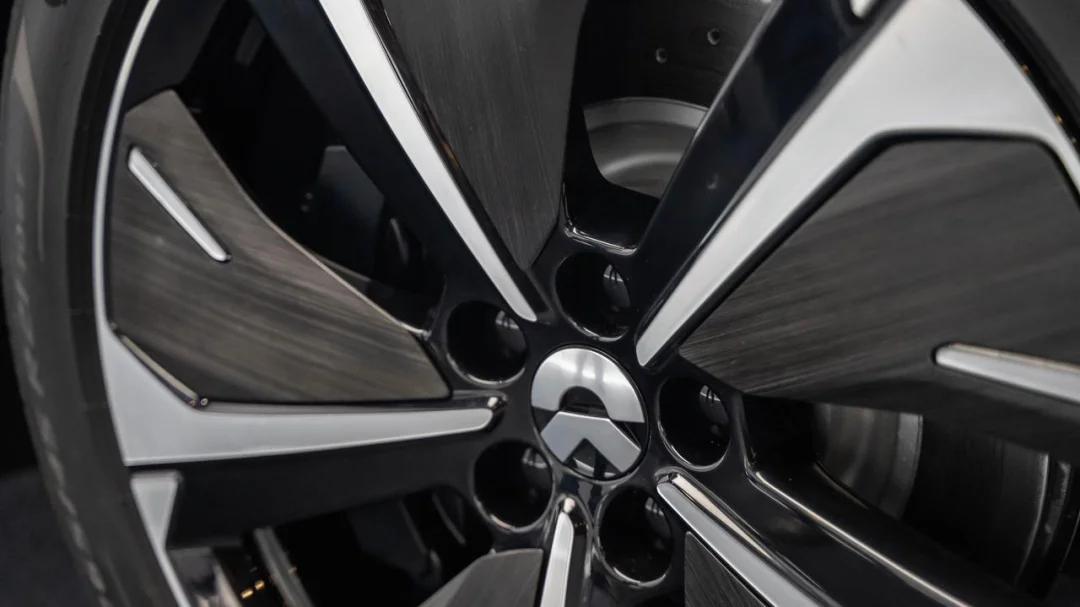
The model we photographed was not the top-spec variant of the new ES8; it featured 21-inch five-spoke carbon fiber wheels paired with black-finished six-piston brake calipers, resulting in a subdued overall appearance.
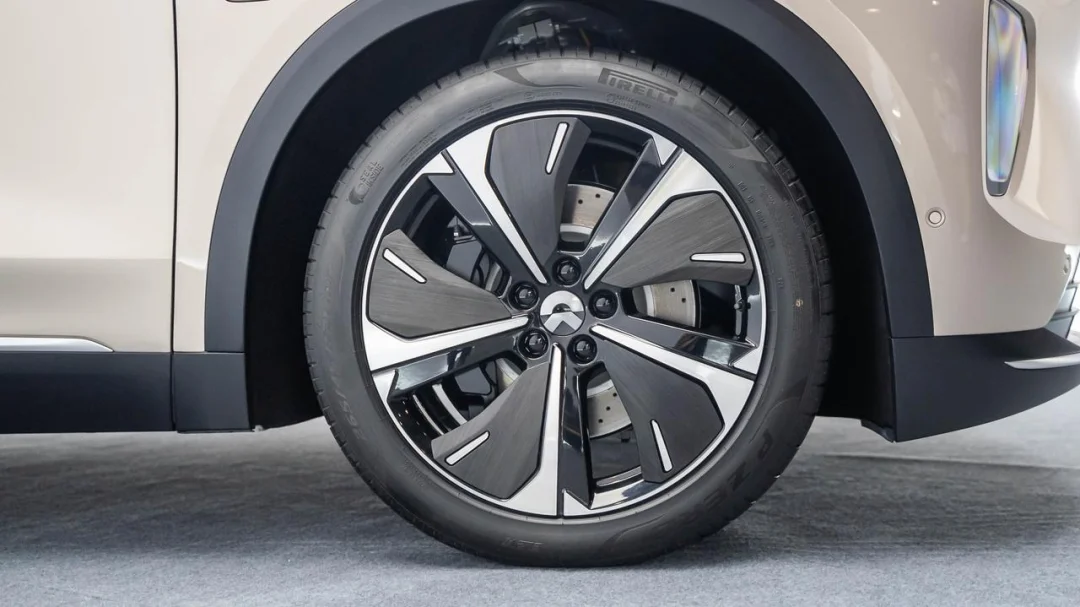
The tires are P Zero series by Beinaili, with specifications of 265/45 R21.
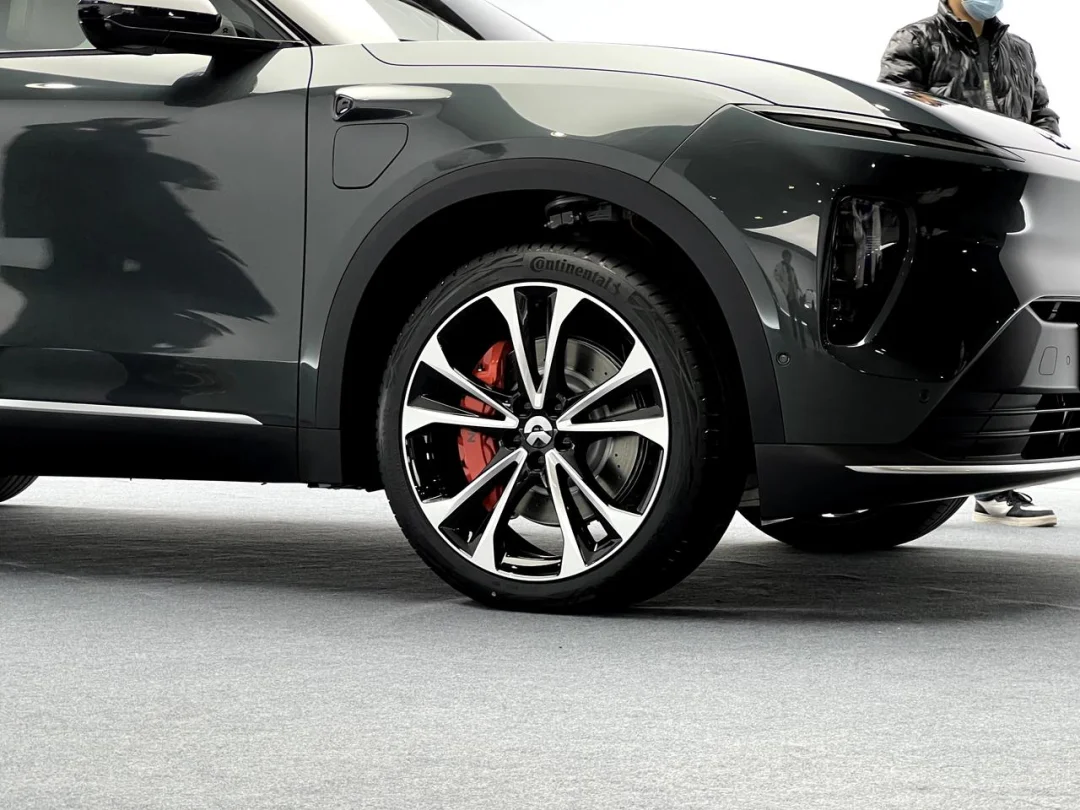
The specifications are further upgraded on the top trim. You can get 22-inch forged high-gloss wheels, calipers in Aurora Orange, and tires from Dalu sized 265/40 R22.
A 45 aspect ratio with 21-inch wheels is already quite extreme for an SUV. It is hard to imagine how such large 22-inch wheels would handle.
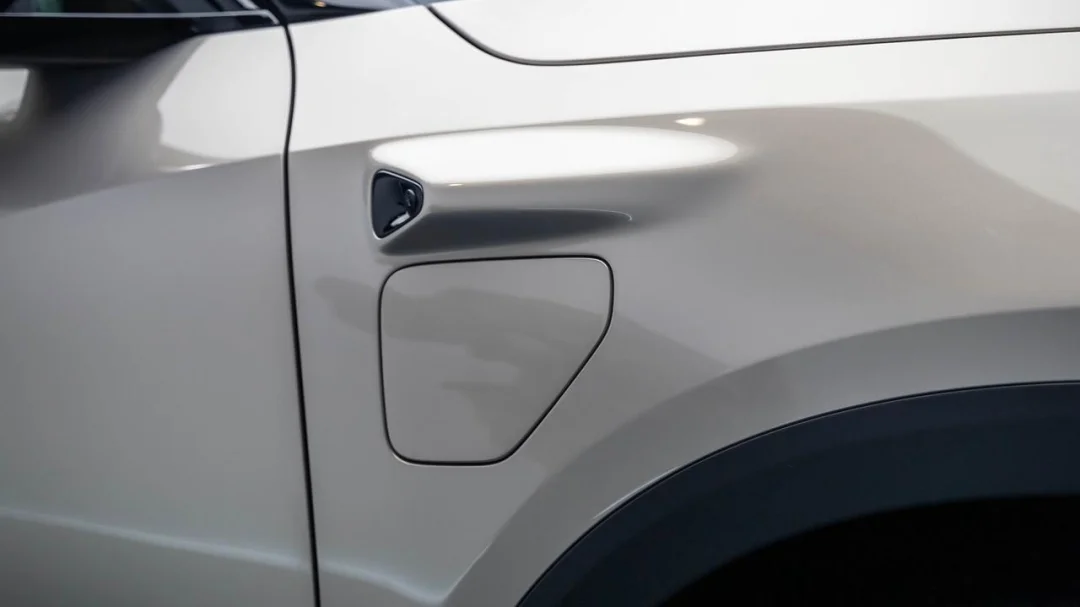
Keen-eyed readers have likely noticed the biggest change on the side: the position of the side-view camera. It has moved from the plastic wheel arch trim on the ES7 to the upper sheet metal of the fender.
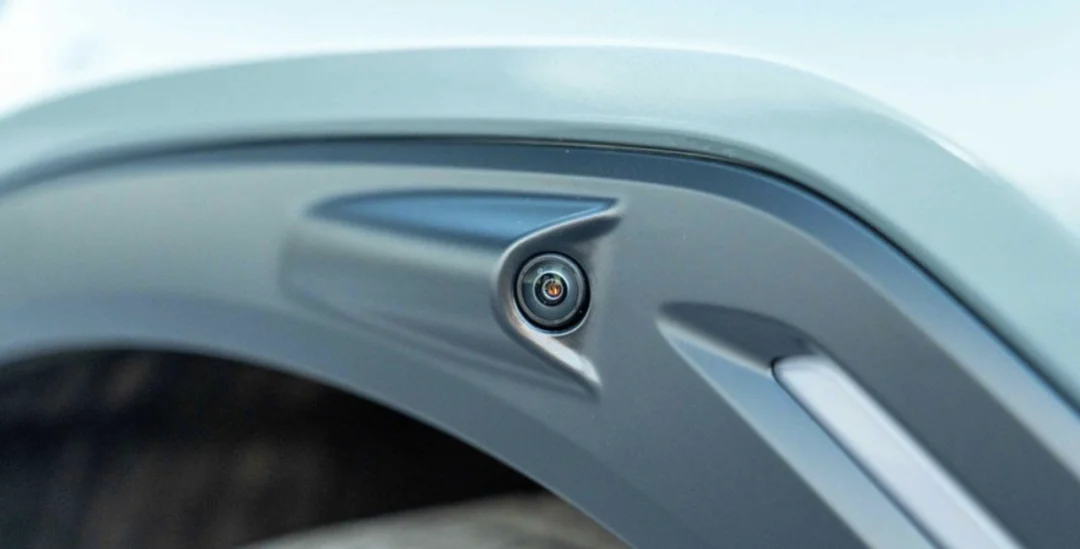
We previously criticized placing it on the plastic wheel arch trim because it was too close to the tire. This proximity could increase the risk of lens contamination from mud or snow/rain conditions. Additionally, its protruding design increases the risk of damage during minor collisions.
This relocation on the new ES8 eliminates those risks without compromising the vehicle's overall aesthetic integrity.
Of course, the charging port location of the new ES8 remains exactly the same as that of the ES7 on the NT 2.0 platform, with the sole fast-charging port placed at the front left. But no matter how many battery-swapping scenarios you have, whenever you charge once, you will find the inconvenience brought by the charging port at the front of the car.
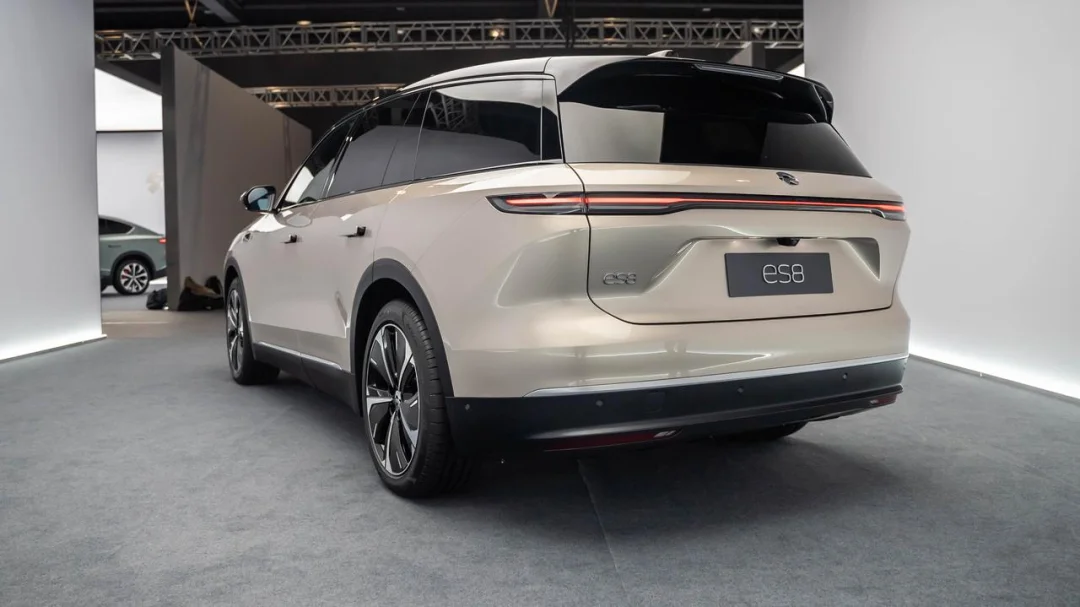
The rear design of the new ES8 is largely similar to that of the ES7, but with more refined details across its elements.
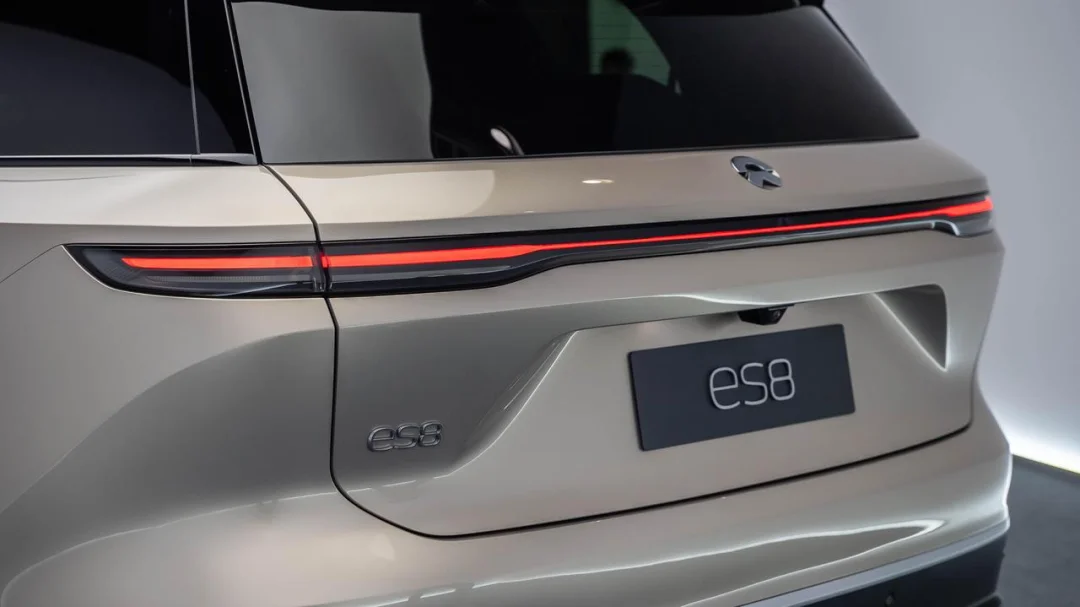
For instance, the new ES8's taillights abandon the upward-sweeping angle at the vehicle's side found on the ES7, resulting in a straighter overall profile. This aligns well with the flat window line and the larger body size.
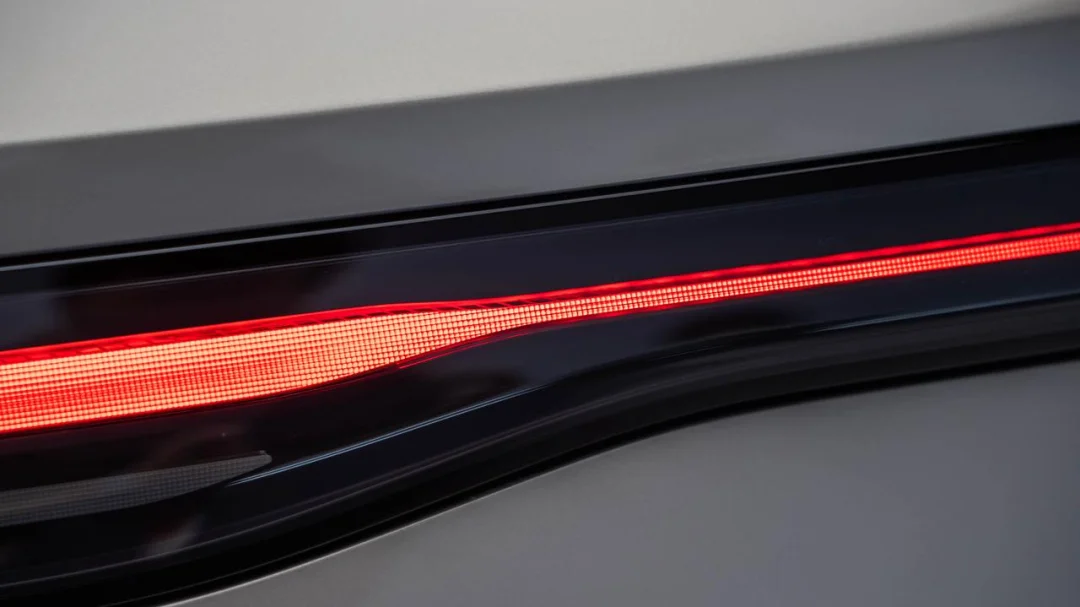
More detailed areas need to be magnified; we can see that the taillight strip of the new ES8 becomes thinner near the logo. According to the official information, the taillights using light guide crystals are as thin as 3 mm at their narrowest point.
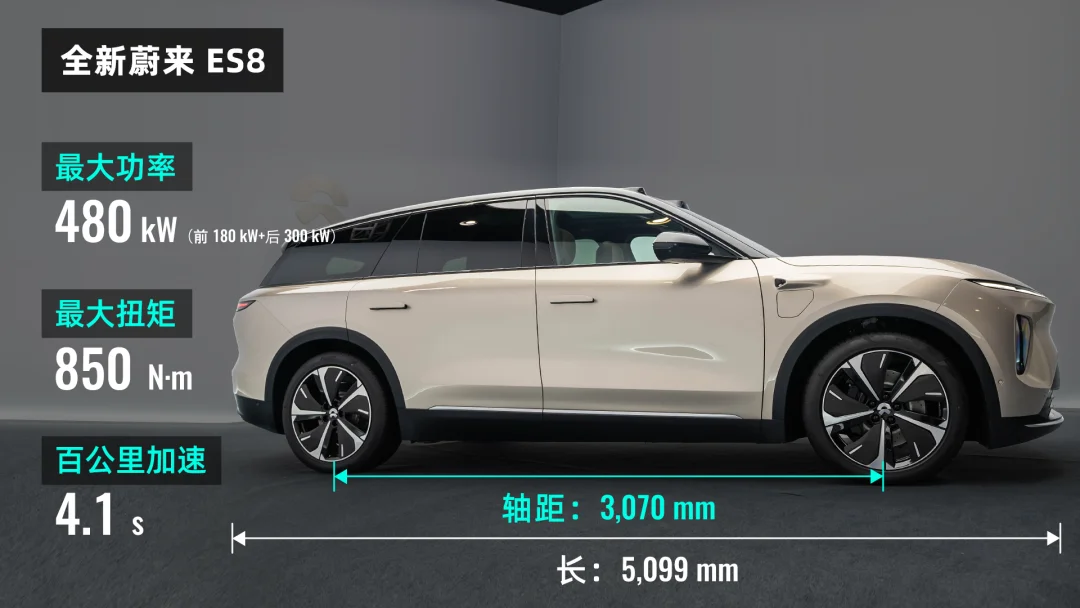
In terms of powertrain, the new ES8 matches the ES7, delivering a maximum output of 480 kW (180 kW front + 300 kW rear) and 850 N·m of torque, with a zero-to-100 km/h acceleration time of 4.1 seconds under half-load conditions. Given NIO's history of conservative performance claims, actual acceleration may be even quicker.
Despite the larger size, which appears less "elegant," the all-new ES8 features more refined detailing in areas such as the grille, window line, side-view positioning, mirrors, and taillights. Combined with exclusive color options, these elements give this mid-to-large SUV a unique character: a blend of technology and elegance.
02Interior Returns to Human-Centric Design
I want to make a preliminary statement: since the prototype used for our static experience will be transported to the NIO Day venue in Hefei after our review, we are unable to sit inside the ES8 to experience it.
And because the prototype is not the final mass-production version, you don't need to nitpick the interior details; focus instead on the styling and materials. Our test vehicle featured a Sepia brown interior.
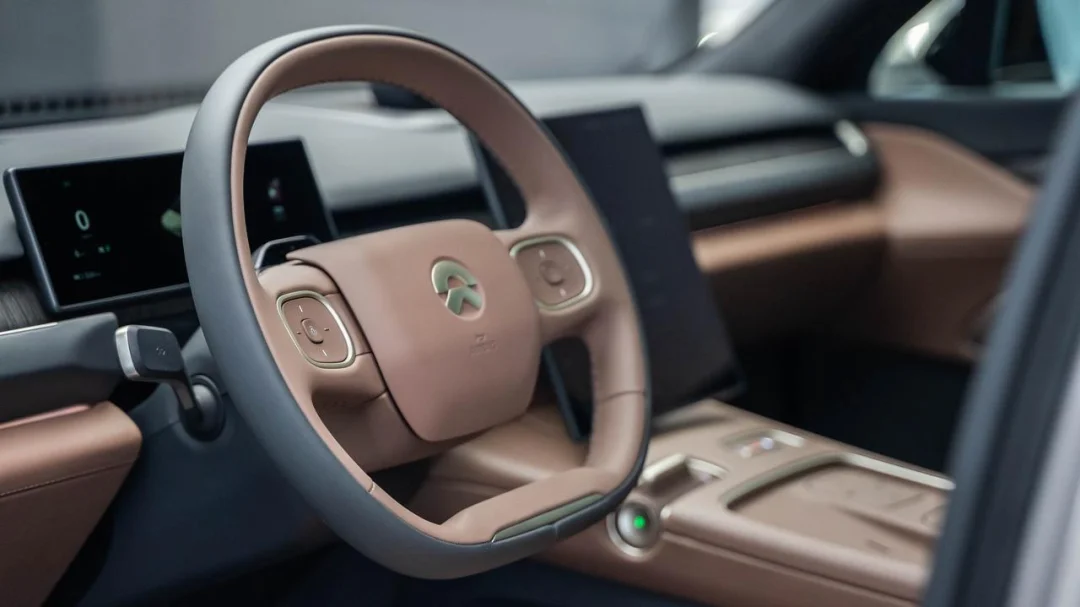
The front-row layout remains largely consistent with that of the ES7, though the steering wheel differs. The new ES8 features a two-spoke steering wheel with a thickened design at the 6 o'clock position.
However, a closer look reveals that the new ES8's steering wheel lacks protruding designs at the 3 and 9 o'clock positions to better fit human hand grip; it remains unclear whether these will be added back on the production model.
Additionally, the new ES8 uses soft-gold decorative components for interior metal trim pieces, such as buttons and logos. The most distinctive feature of this material is its environmental friendliness, although it also comes at a higher cost.
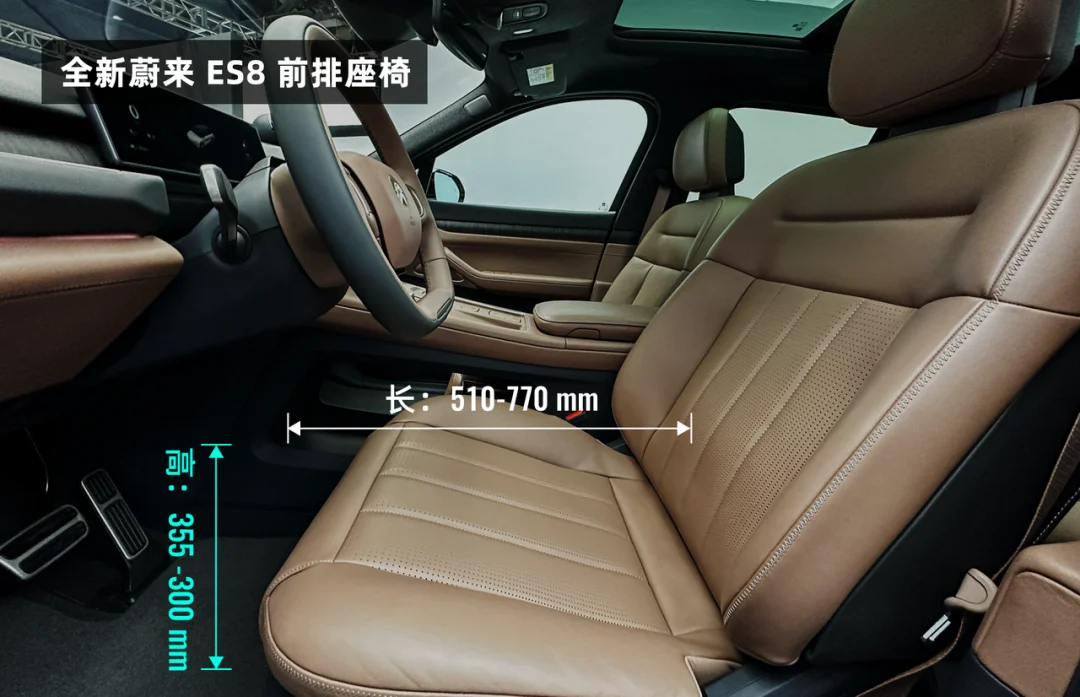
Following the "seat controversy," the new ES8 has finally become the first model to feature NIO's self-developed seat frame platform. From now on, all of NIO's new models will be equipped with this self-developed seat frame platform. In terms of styling, the seats are overall wider and thicker. The only pity is that we did not have the opportunity to sit in them to experience the comfort.
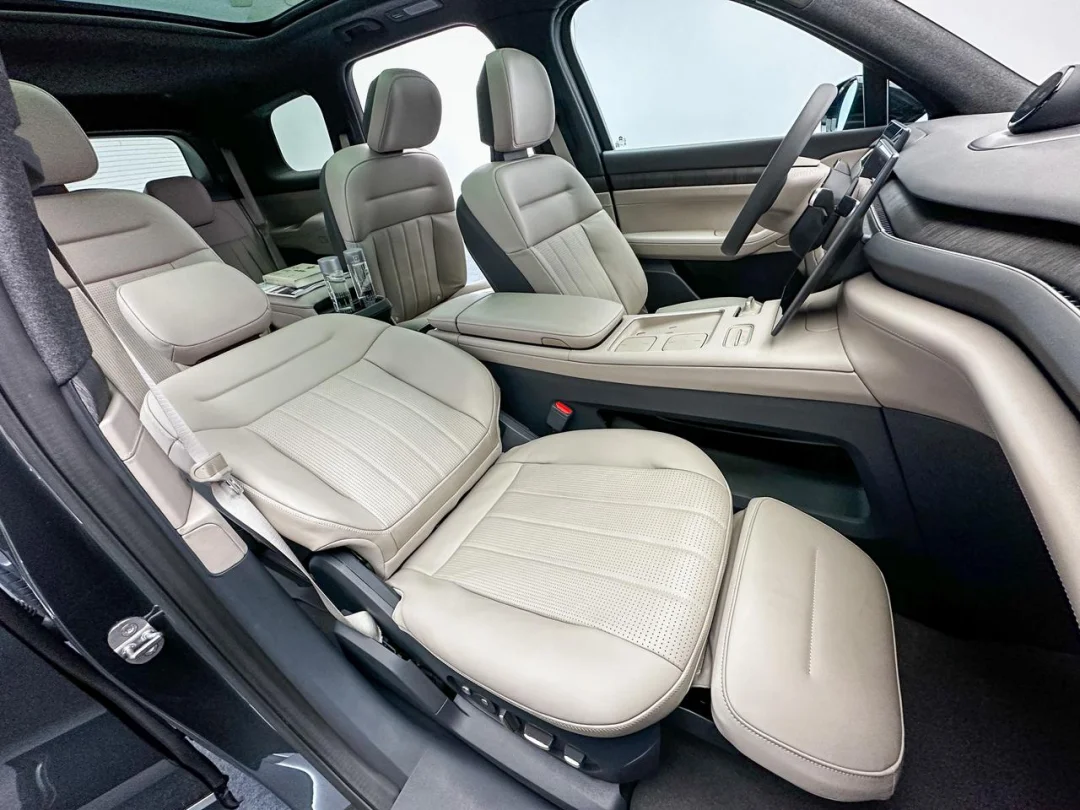
Of course, the co-pilot's "Queen Seat" cannot be absent. It supports a one-touch function to adjust the seatback to 135°, with the rear of the cushion automatically lifting.
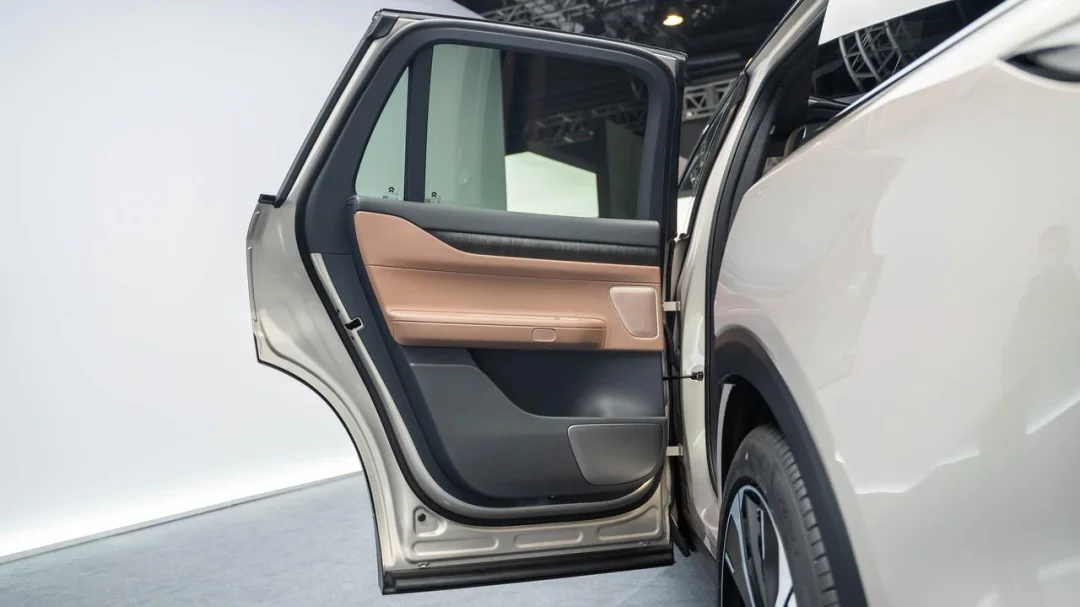
The second-row seats feature a wide armrest at the center console position, and there are also armrests on the second-row door panels for resting.
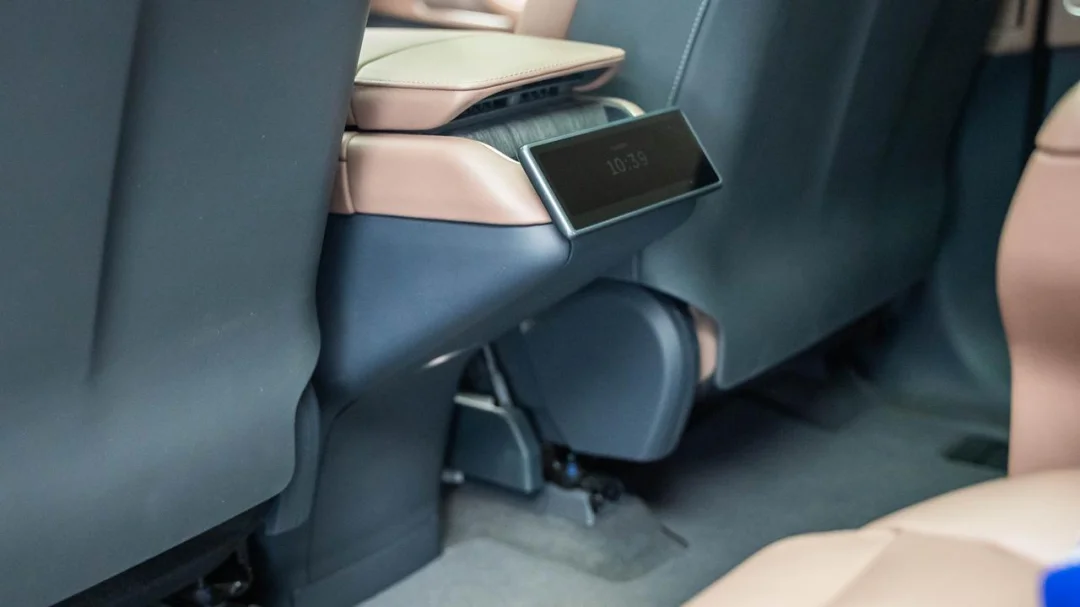
The center armrest in the front row features a suspended design, which increases legroom for passengers in the second row. NIO also installed an atmosphere light here called "Fireside Chat," with the light directed downward onto the carpet to mimic the glow of a fire.
I personally feel that if the air vents could direct airflow downward in alignment with the lights, the visual and thermal experience would be more cohesive.
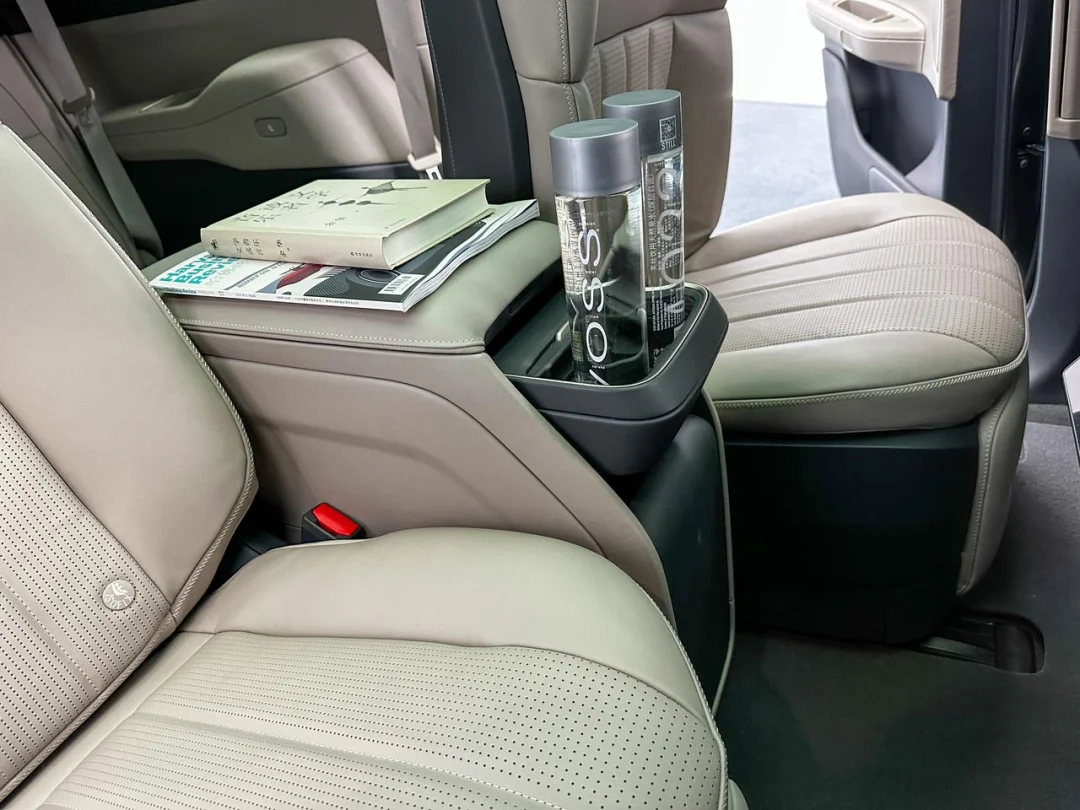
You can also spot an 'executive center console' in the new ES8, which serves as the second-row entertainment hub.
This console features a two-tier design: the upper digital layer uses a drawer mechanism with electric extension, includes two cup holders at the front, and offers three wireless charging pads. The horizontal charging pad is dedicated to the NIO Phone. Additionally, you can opt for a built-in refrigerator with 5 liters of capacity, enough to hold eight cans of cola.
The console also supports native AR/VR video output with anti-shake stabilization across the entire vehicle for the first time, allowing up to four people to watch simultaneously, and comes standard with the N-BOX entertainment host.
Regarding the audio experience, the new ES8 is equipped with an enhanced 7.1.4 immersive sound system. Featuring 23 speakers delivering 2,230 watts of power and Dolby Atmos support, the system has been tuned by Dirac Pro.
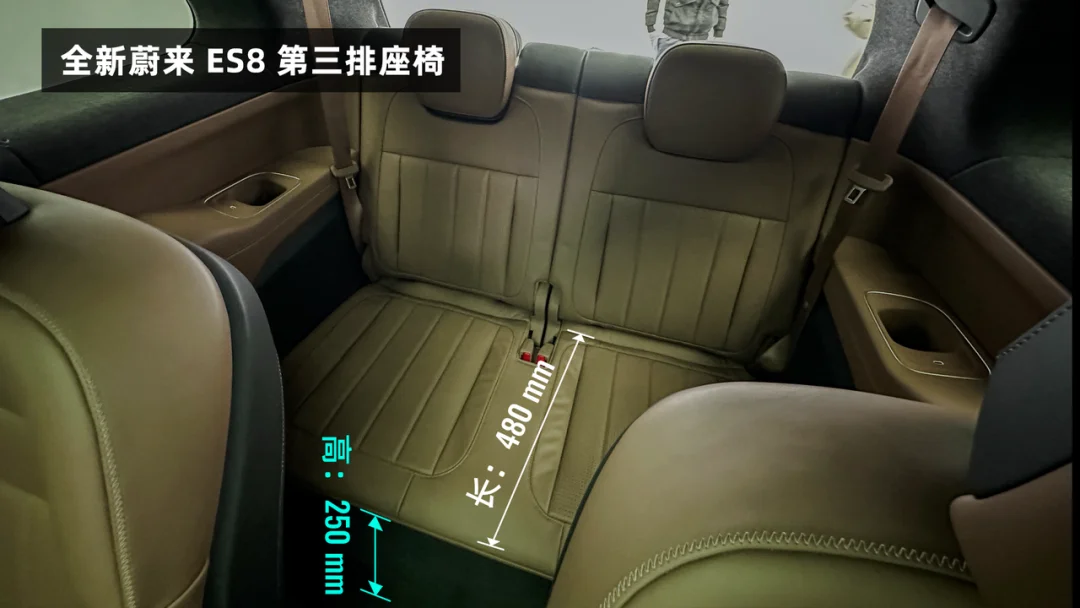
The third-row seats also support heating and electric adjustment, featuring independently hidden air vents, cup holders, and Type-C charging ports. However, if the vehicle is equipped with an executive center console, the second-row seats must be moved to access the third row.
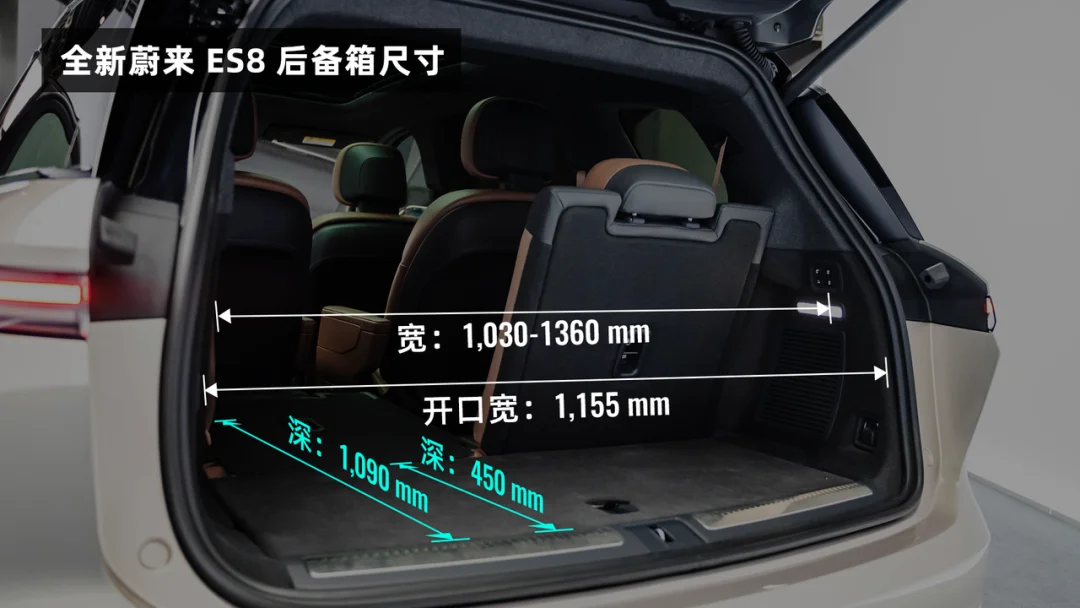
The new ES8 also features a well-equipped cargo area, supporting electric folding of the third-row seats. Additionally, in Comfort mode, the trunk sill lowers to approximately 780 mm above ground level. By pressing the "One-Touch Easy Loading" button, the rear suspension height reduces by 50 mm to 730 mm.
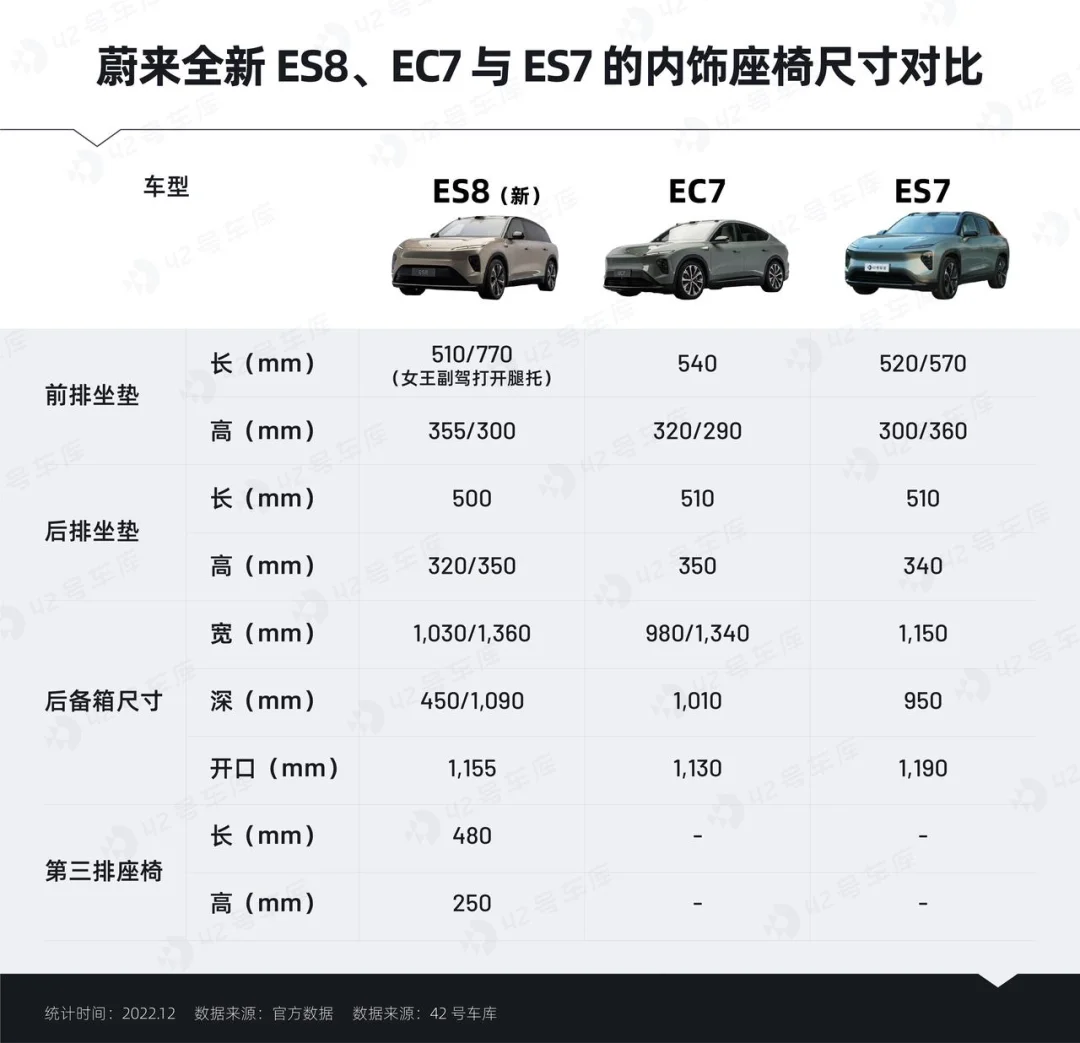
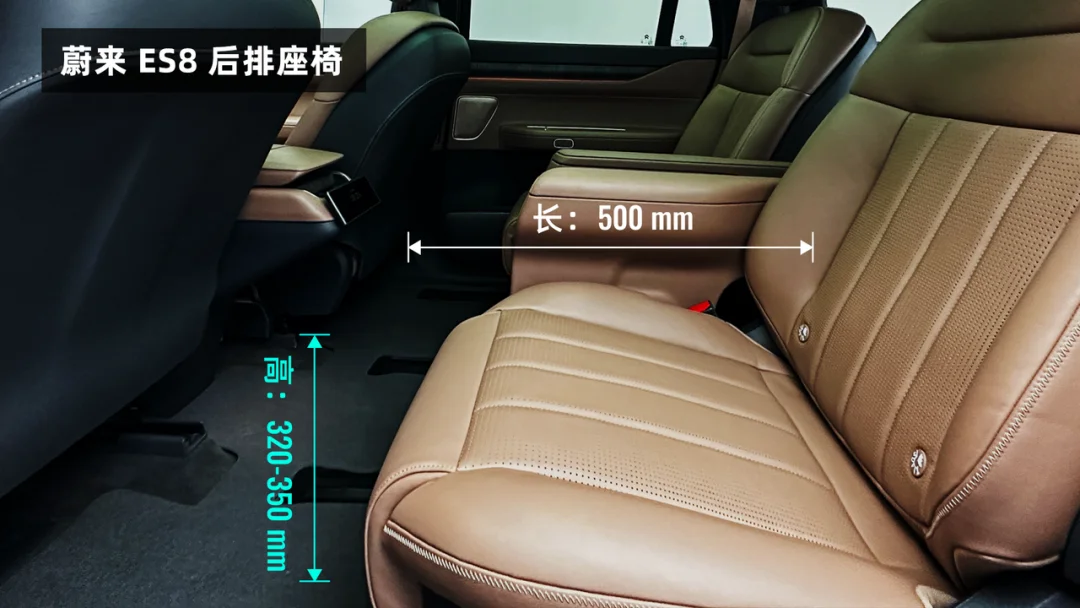
We measured the dimensions of the new skeleton seats equipped in the new ES8. The data shows that the dimensions are not significantly different from those of the ES7.
Overall, the new ES8 has seen significant improvements in interior materials, seats, and entertainment features, continuing to build on its previous strengths. For instance, the central console's integration of mobile phones and the entertainment system generates high expectations.
03Final Thoughts
Among NIO's entire lineup, the all-new ES8 built on the NT2.0 platform is the "new king," but it doesn't offer many surprises; what impressed me most was the central island console.
However, in finer details such as tires, headlights, seats, side-view camera placement, and the use of eco-friendly materials for the exterior and interior, NIO has polished the all-new ES8 with greater care.
Compared to its predecessor, the ES8’s upgrades are evident across nearly every aspect: exterior and interior styling, dimensions, seating, and the hardware and software for driver assistance.
Thus, as NIO’s new flagship, the new ES8 is undoubtedly deserving of the title. We can circle back to the opening and take a guess at how long it will take this generation of ES8 to reach sales of 65,000 units?
Written by: Liu Guangding Edited by: Liu Guangding