


VOYAH’s NCA Battery Passes Thermal Runaway Test Without Smoke or Fire
We recently conducted a brief user survey on power battery safety. Among the 195 respondents, 145 were certified electric vehicle owners. Of these, 96 users (49.4%) stated that power battery safety is a factor capable of influencing their final purchase decision. Another 98 users (50.5%) believed that battery safety holds equal priority to vehicle price and performance during the buying process, while 59 users (30.4%) ranked it as their top priority.
Additionally, in our survey, 127 users (65.4%) considered rigorous battery safety tests—such as nail penetration and fire resistance—as positive indicators of battery safety.
However, 74 users (38.1%) noted that although lithium iron phosphate (LFP) batteries are safer, they prefer ternary lithium batteries due to their superior performance.
The survey results clearly indicate that battery safety remains a critical consideration for consumers purchasing pure electric vehicles. Driven by the trend toward automotive electrification, consumers have developed a preliminary understanding of this issue. Even with LFP batteries offering greater safety, a significant portion of users still favor ternary lithium batteries for their performance advantages.
01Battery Safety Is Inescapable
Safety Has Standards
The primary concern regarding power battery safety is battery fires. These incidents are typically caused by systemic thermal runaway triggered by factors such as system short circuits, excessive temperatures, or physical compression of the battery structure.
So, if certain measures can prevent a battery from experiencing systemic thermal runaway, the overall safety of the battery system can be significantly improved.
In recent years, while vigorously promoting new energy vehicles through policy, China has also been actively driving industry attention to battery safety. The GB 38031-2020 standard, issued last year, includes mandatory provisions regarding battery thermal runaway. The document states:
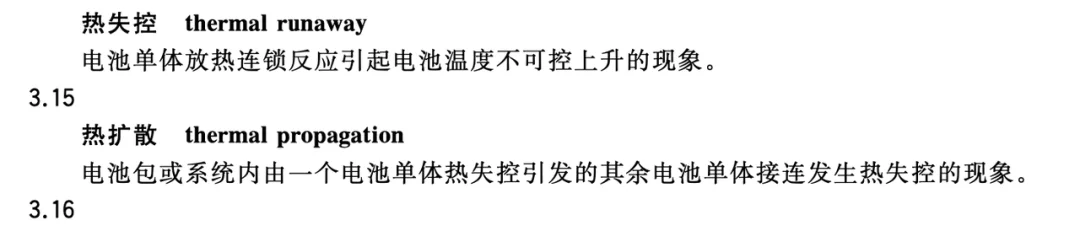
Thermal runaway refers to the phenomenon where an exothermic chain reaction in a single cell causes an uncontrollable rise in battery temperature.
Thermal propagation is the phenomenon where thermal runaway in one cell within a battery pack or system triggers consecutive thermal runaway in other cells.
Starting from January 1, 2021, all non-nickel-hydrogen battery packs must undergo 'thermal propagation occupant protection analysis and verification' in accordance with section 8.2.7.2.

The national standard requires that 'a thermal event warning signal should be provided at least 5 minutes before the battery pack or a single cell's thermal runaway leads to thermal propagation and subsequently endangers the passenger compartment.'

If thermal propagation within this 5-minute window does not endanger occupants—specifically by causing open flames—the system’s safety is considered to meet the requirement.
This mandatory national safety standard has clearly and rigorously established the baseline for power battery safety, and many excellent enterprises in our industry have responded positively.
Last year, BYD conducted nail penetration tests on lithium iron phosphate (LFP) cells. During the test, the cells did not catch fire. Shangqi R Pinpai also stated at its launch event that its battery pack can prevent thermal propagation for 30 minutes during a fire-induced thermal runaway test, far exceeding the national mandatory 5-minute standard.
Later, at the NIO 100 kWh battery pack launch event, it was stated that their battery pack would "only emit smoke, no fire" after thermal runaway. Recently, Guangqi also conducted nail penetration tests on its "Maze Battery," which uses ternary lithium cells, and the battery system similarly "only emitted smoke, no fire."
Also recently, VOYAH claimed that its ternary lithium battery pack could achieve "no smoke at all" during thermal runaway tests. Curious and skeptical, I carefully examined the details of their test procedure.
Thermal Runaway Test with No Smoke
The battery pack VOYAH used for this thermal runaway test is the one installed in the VOYAH FREE pure electric production model. The cell chemistry is NCA (nickel-cobalt-aluminum) ternary lithium, using 2170 cylindrical cells supplied by Samsung.
I was surprised to learn these details. First, the battery used for the test employed a high-energy-density NCA chemistry, which, in my understanding, imposes stricter requirements on thermal runaway mitigation measures.
Secondly, VOYAH adopted cylindrical cells. Few manufacturers have the confidence to use battery systems composed of cylindrical cells due to manufacturing complexities and the difficulty of battery management. Tesla is the most prominent example. The 2170 cells used by VOYAH are reportedly the second-generation cylindrical cells optimized by Tesla after balancing heat dissipation and specific energy.
Regarding the thermal runaway test, VOYAH followed the national standard method of inducing thermal runaway in a cell via heating. During discussions with the manufacturer's technical staff, they explained that during battery pack assembly, a miniature heating device was installed on one of the cylindrical cells, and temperature sensors were arranged around it as required by the national standard.
The test battery pack was at 100% state of charge (SOC). During the test, VOYAH personnel controlled the pre-installed miniature heating device to heat the cell up to 300°C, triggering thermal runaway in that single cell while monitoring the status of the entire battery pack.


The result showed that throughout the test, no further cascading thermal runaway occurred in any other cells within the battery pack besides the thermally runaway cell. Even the innermost ring of cells closest to the runaway cell maintained a maximum temperature of approximately 70°C during the test.
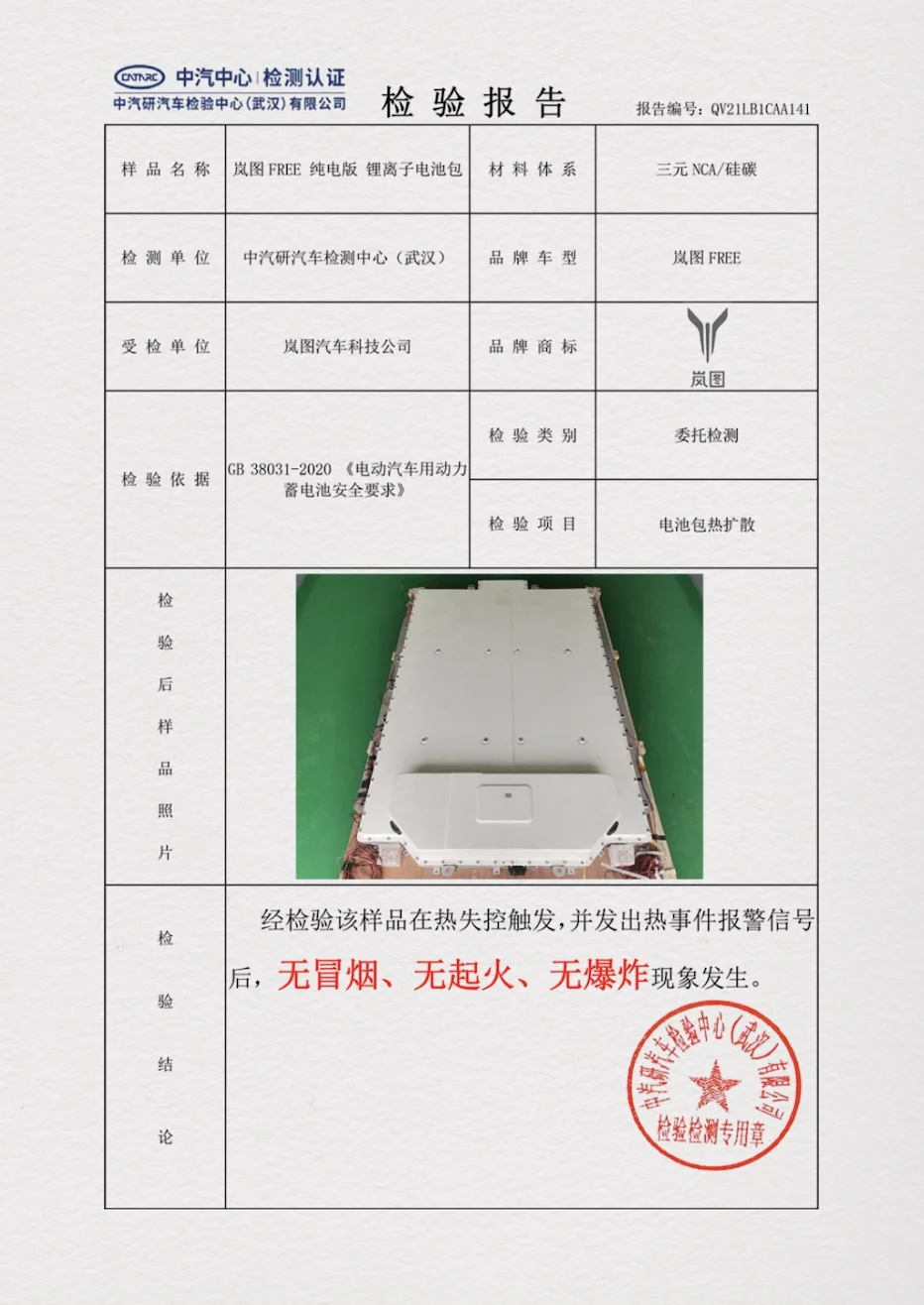
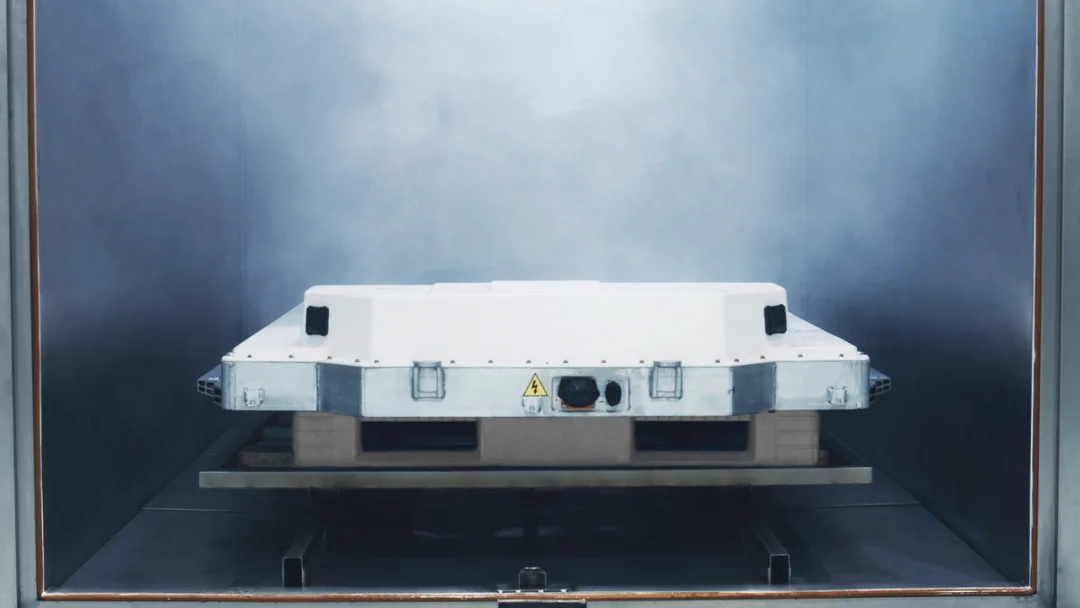
From the outside, the battery pack showed virtually no change throughout the test: there was no explosion, no fire, and, as the official statement noted, not even a wisp of smoke.
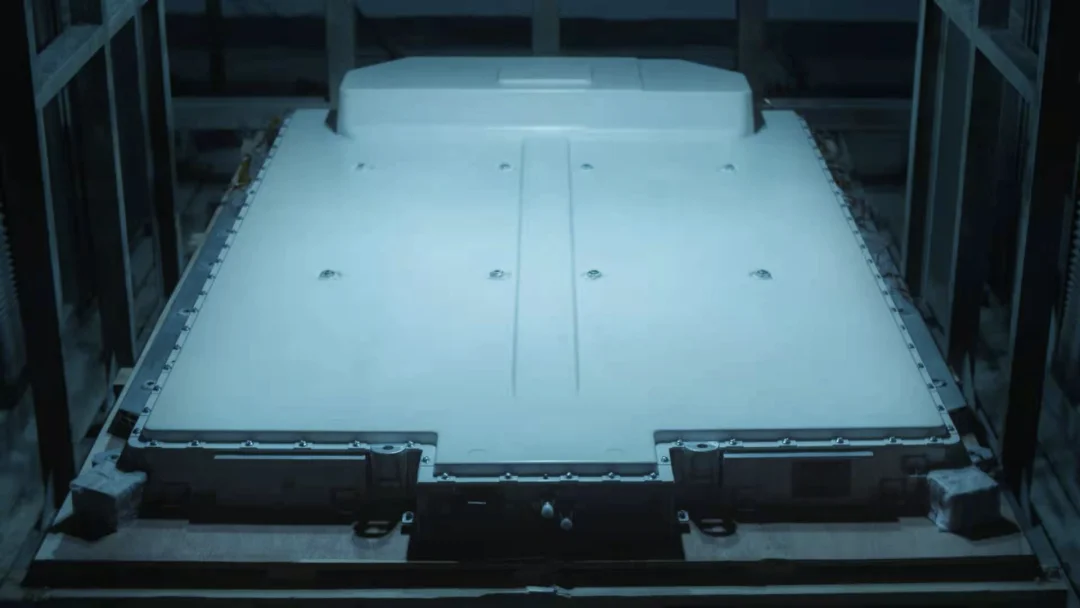
The battery pack during the test
02The Battery Pack That Doesn't 'Burn'
Cell-Level Comprehensive Fire-Retardant Barriers
Currently, the vast majority of prismatic cells in the industry use a cell-to-module-to-pack (CTP) assembly method. To increase packing density, cells are often placed tightly adjacent to one another. Although individual cells have their own fire-retardant designs, more robust structural fire protection is typically not applied to every single cell.
On the other hand, because prismatic cells have large individual volumes and battery packs have limited thickness, fire-retardant structures are usually arranged only in horizontal and vertical directions.
As mentioned earlier, VOYAH's battery pack used in this test employs 2170 cylindrical cells. In further details, I learned that VOYAH implemented cell-level fire-retardant protection during the packaging process: apart from the areas where cells connect to the battery pack's electrical system and liquid cooling temperature control system, every cell inside the pack was completely wrapped and isolated with high-polymer fire-retardant materials.
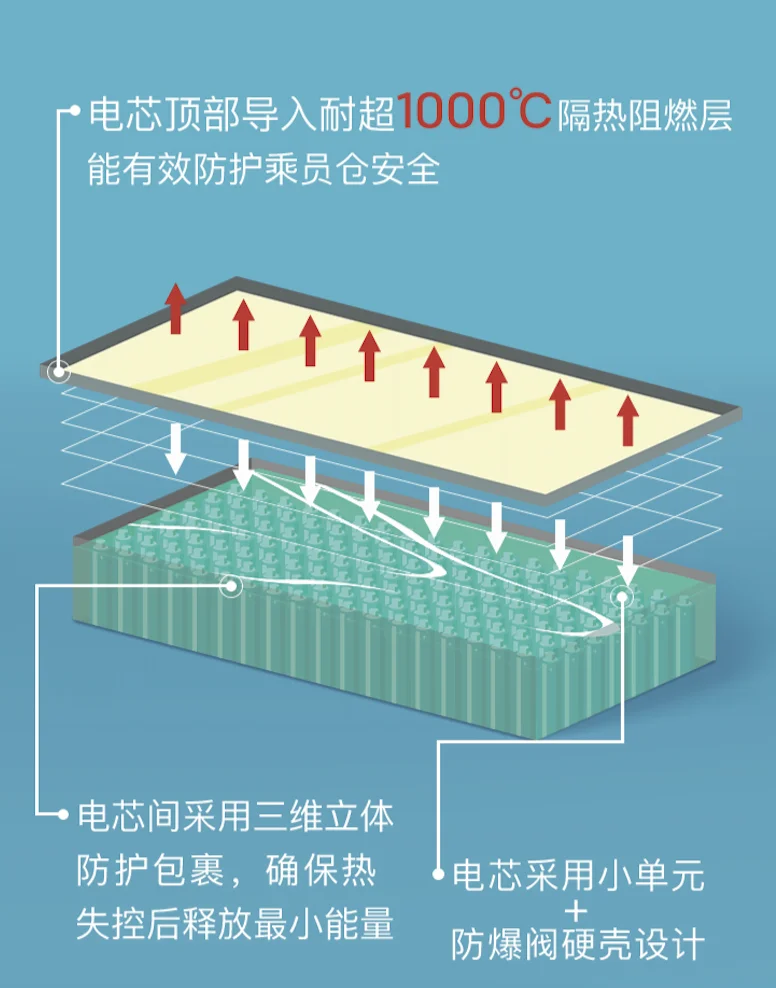
The green layer represents a three-dimensional wrap at the cell level, and there is also a heat-resistant flame-retardant layer on top of the battery pack. When each individual cell is isolated within a polymer flame-retardant material "compartment," thermal runaway in a single cell becomes difficult to spread to adjacent cells.
However, this refers to extreme scenarios where heating devices are manually placed on individual cells to induce thermal runaway, representing the final line of defense for battery safety. To ensure the overall safety of the battery system, it is certainly not possible to rely on a single measure alone.
IP X9K Sealing, 200 kN Compression Resistance: This Battery Pack Is Hard to Break
Preventing thermal runaway in individual cells makes the battery pack system a critical hardware component. First is sealing: if a battery pack located at the chassis bottom lacks sufficient sealing, it may take on water when wading.
To ensure sealing integrity, VOYAH subjected the battery pack to two rigorous tests during its development. One test involved submerging the powered battery in seawater 1 meter deep for 2 hours. The other was a spray sealing test using hot water at 85°C under pressure equivalent to 100 atmospheres.
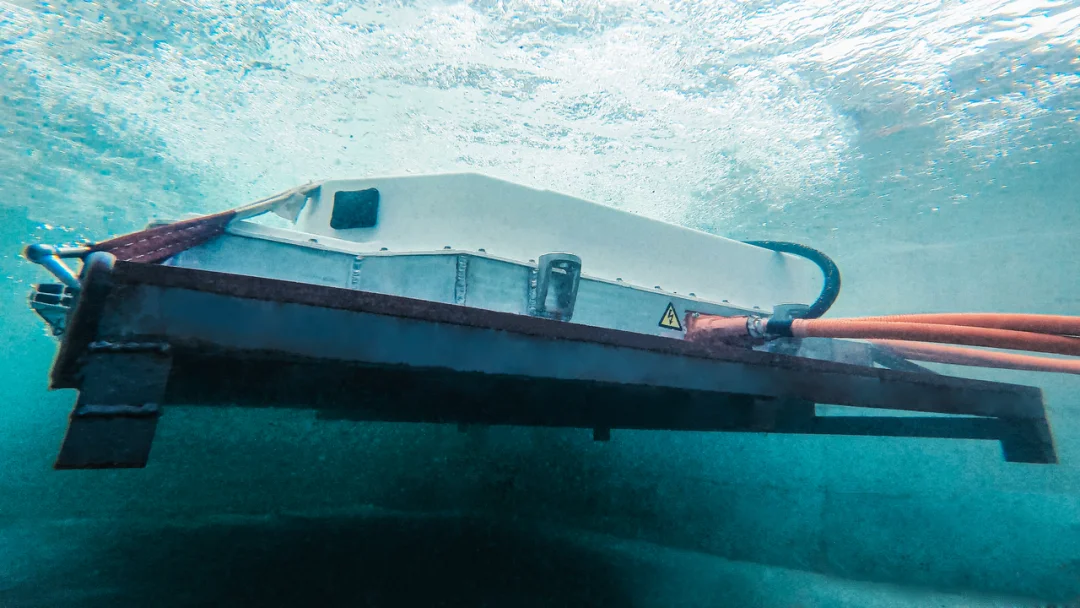
Seawater immersion test under energized conditions
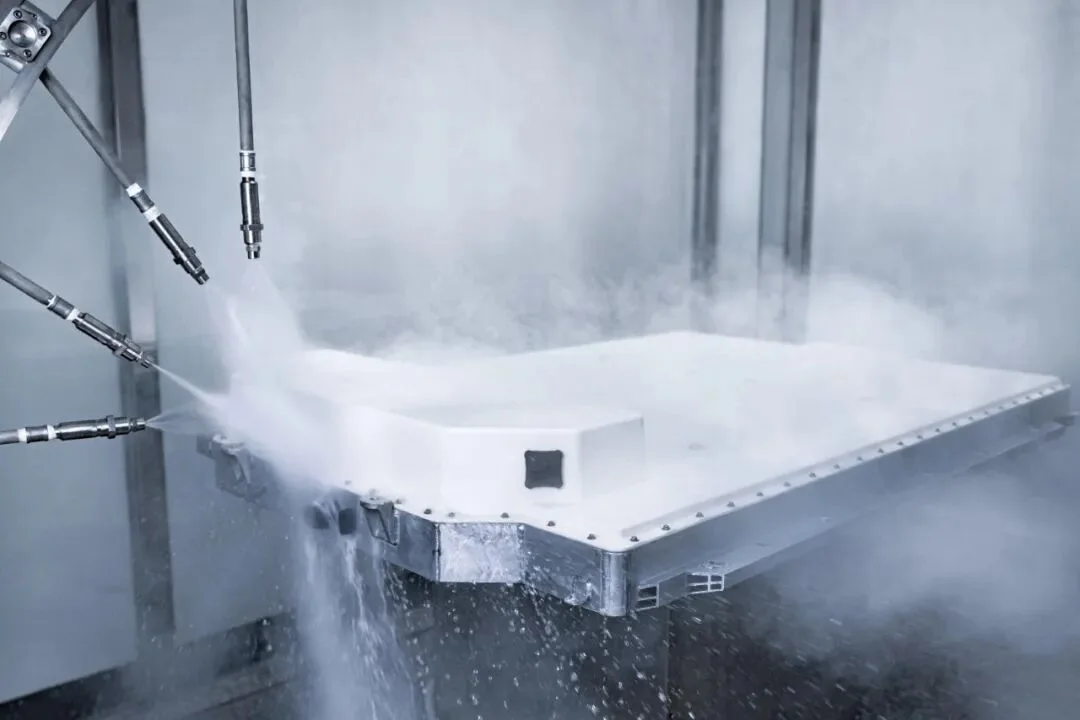
IP X9K High-Temperature, High-Pressure Jet Test After passing the tests to achieve the industry-leading IP X9K sealing standard, this battery pack undergoes a corrosion resistance salt spray test. This simulates natural corrosion during use to ensure the battery pack's sealing integrity holds up over time.
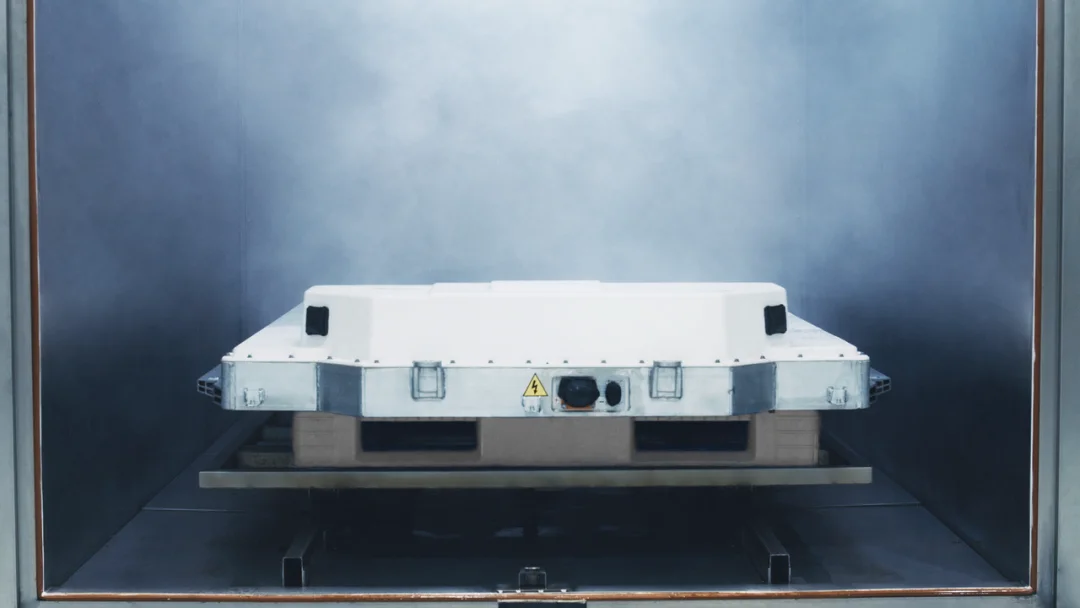
Beyond sealing, structural strength is critical. Multiple incidents have occurred where battery packs deformed and caught fire after chassis impacts. To address this, VOYAH has made significant considerations regarding the structural strength of its battery packs. The material used is high-strength aluminum alloy, and the structure features multiple reinforcing ribs. The final result can withstand 200 kN of compression, equivalent to 20 tons of pressure.
With this level of strength design, even after the most threatening vehicle-to-pole crash test for battery packs—75°, 32 km/h—the deformation of this battery pack did not compress the internal cells. This demonstrates the effectiveness of its protective capabilities.
In addition, tests such as vibration, insulation, water immersion, multi-directional mechanical impact, and high-low temperature cycling are often conducted on the same battery pack simultaneously during development.
According to VOYAH's R&D personnel, vehicles in the real world encounter diverse environments, meaning battery packs face multidimensional and combined challenges. Therefore, conducting continuous, multi-item combination tests on a single battery pack effectively evaluates the comprehensive protection level of the battery.
03Safety Comes at a Cost
After countless efforts in R&D and testing, the battery pack equipped on the VOYAH FREE pure electric model achieved 150 product safety standards that exceed national requirements during its development phase.
Take the cell flame-retardant thermal barrier mentioned earlier. Its thermal expansion performance R&D cycle took one year. To ensure full gap filling and reduce air bubbles, they pioneered a module hole-opening process. They tried more than ten types of flame-retardant materials, conducted hundreds of tests, and consumed dozens of battery packs.
A complete test cycle for the entire battery pack takes more than 150 days. The cost for this was an R&D budget overrun of over 50% and a development timeline extension of eight months.
For VOYAH, a state-owned enterprise, money is certainly not an issue; if the R&D budget is exceeded, it is exceeded. However, given the current pace of industry development, eight months are incredibly valuable to any new EV maker. VOYAH, which clearly needs to move quickly, understands this well. But in their view, such a price is worth paying if it results in a higher level of safety.
Remember, This Is a Ternary Lithium Battery Pack
Safety is undoubtedly important, but it is not the entirety of power batteries. Users may rarely perceive the manufacturer's massive investment in battery safety design in daily use. What users feel more directly is battery performance.
It must be said that compared to lithium iron phosphate (LFP) batteries, this is a strength inherent to the chemical characteristics of ternary lithium batteries. Ternary lithium batteries generally offer superior charge and discharge characteristics compared to LFP, allowing the battery system to have greater power input and output capabilities. Compared to LFP batteries, the flatter discharge curve of ternary lithium batteries is more conducive to monitoring and prediction by the BMS. Furthermore, higher energy density has positive implications for both vehicle body lightweighting and overall vehicle range.
And most importantly for cold-climate regions, the low-temperature performance of ternary lithium batteries is superior to that of lithium iron phosphate (LFP) batteries.
VOYAH refuses to compromise on battery safety, yet it has also made no compromises on performance with this high-density ternary lithium battery.
Final Thoughts
Looking back at the new energy vehicle industry’s development over the past few years, battery technology has advanced visibly alongside continuously increasing range figures. However, rapid growth has also exposed a certain superficiality among some companies.
In repeated incidents of electric vehicles catching fire or spontaneously combusting, the impact extends beyond the involved automakers and battery suppliers; it affects society’s overall concern and resistance toward new energy vehicles.
Eliminating this negative impact requires long-term, concerted efforts from the entire industry. In this process, the companies leading the way deserve respect. At this juncture, I am pleased to see VOYAH, entering the premium new energy market as a state-owned enterprise, standing among them.
Finally, I would like to quote this saying: 'Top-tier experts compete on slowness, clumsiness, and solidity—putting in hard work even when smarter shortcuts exist. Choosing the narrow path, working steadily, and creating value for society and users will eventually make the world step aside.'
Written by: Leinharte Fannao Edited by: Daji