


Pure-Visual Algorithms, Full-Stack R&D: Leapmotor’s Zhu Jiangming on Autonomous Driving Algorithms Surpassing Tesla in 3 Years
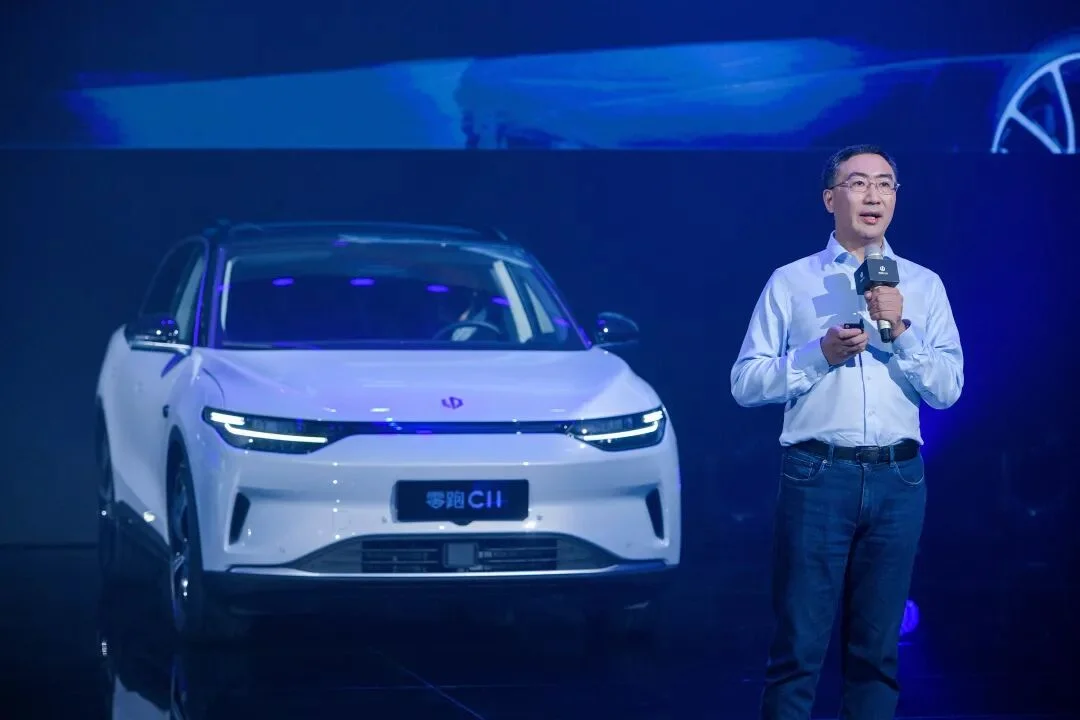
At its inception, Leapmotor was viewed with skepticism by many new EV startups. Some even claimed it "wouldn't survive a year." After four years of testing, Leapmotor has survived. On September 28, Leapmotor launched its most significant product to date, the C11. Following the launch event, we participated in a group interview with Leapmotor CEO Zhu Jiangming. The interview included numerous questions about the C11, as well as inquiries regarding Leapmotor's self-developed technologies and intelligent driving capabilities.
01Summary of Zhu Jiangming Interview
Regarding the C11
Q: Dahua Technology possesses such strong AI capabilities. Why is the driver assistance system in the Leapmotor C11 not yet considered leading?
Zhu Jiangming: We exclusively use domestically produced chips. There is a maturation process for both the underlying driver software and ADAS algorithms. Additionally, there are internal factors on our part that may have caused slight delays. However, this entire system is developed in-house by us.
Q: What is the C11's main competitor?
Zhu Jiangming: The C11 has no direct competitors. We have our own market positioning and brand philosophy. Our goal is to build high-quality vehicles that ordinary people can afford, which sets us apart from traditional competitive benchmarks.
Q: Will the C11 use lithium iron phosphate (LFP) batteries?
Zhu Jiangming: The C11 will use LFP batteries in the 510 km range Luxury trim, offering better cost-effectiveness and safety.
Q: Among current orders, which C11 trim is the best-selling?
Zhu Jiangming: Currently, orders for the Premium trim account for about 50 percent, while the Luxury and Performance trims each account for 25 percent. Optional packages make up around 70 to 80 percent of orders.
Q: After the C11 launch, some users reported inconsistent standards for additional fees. How will this be managed going forward?
Zhu Jiangming: We are holding an emergency meeting today to coordinate all dealerships to achieve a unified standard. For services such as license plate registration, we will strive to meet user satisfaction with consistent standards.
Q: What proportion of current C11 orders come from Leapmotor T03 users?
Zhu Jiangming: The share of Leapmotor T03 users is around 10 percent, primarily consisting of additional purchases.
Q: So what is the initial delivery expectation for the C11?
Zhu Jiangming: This year, our goal for the C11 is to strive for more than 6,000 units.
On In-House Development
Q: What advantages does full-stack in-house development bring us?
Zhu Jiangming: The main advantages of in-house development are quality control and cost. For components such as seats and infotainment systems, the most critical factor is establishing seamless communication between controllers. If we were to purchase these from external suppliers rather than developing them ourselves, it would be significantly more difficult, making it hard to control both quality experience and costs.
Q: Why do you insist on in-house development?
Zhu Jiangming: Take headlights as an example. The gross margin for externally purchased headlights is 15%–20%. By developing the headlight assemblies for the C11 in-house, we save RMB 600 per vehicle. Once we achieve scale, this advantage becomes very pronounced.
Q: Will Leapmotor develop battery cells in-house?
Zhu Jiangming: Battery cells are standard components, so we do not need to manufacture them ourselves. Our focus will be more on intelligent technologies.
Q: Will the self-developed chips undergo iterations?
Zhu Jiangming: Currently, the chips are co-developed with Dahua Technology and can meet the AI requirements of Dahua Technology's devices as well as L2-level driver assistance. For future L4-level autonomous driving, we plan to procure third-party hardware platforms, a process that is already underway.
Q: Will the automatic driver assistance system shift toward a pure vision approach?
Zhu Jiangming: The more sensors are fused, the greater the difficulty, unless all sensors have passed validation, because this operates like an AND gate. At this stage, the maturity of LiDAR is lower than that of millimeter-wave radar. However, in terms of vision technology, Dahua Technology has been conducting research since 1992, allowing these technologies to build upon one another. Therefore, our accumulated experience and potential for future development make us competitive against Tesla, and I am fully confident in this.
About Leapmotor
Q: Is the sales target of 800,000 units in 2025 a matter of life or death?
Zhu Jiangming: Actually, it is not. We might survive even if we sell only 500,000 vehicles, but we still strive to achieve the goal of 800,000 units.
Q: Financing exceeds RMB 8.8 billion. How will it be allocated next?
Zhu Jiangming: We secured financing primarily for three areas: factory construction, research and development, and market expansion. To achieve a production capacity of 800,000 units, we need at least two or three factories. The Jinhua plant will expand its capacity in the second half of this year, with a maximum output of 240,000 units next year. In the future, we need to invest more to make intelligent driving a core competitive advantage by building a higher-computing-power platform through high-quality autonomous data collection.
Q: How is the IPO progressing?
Zhu Jiangming: Our goal is next year.
Q: What is Leapmotor's strategy regarding users?
Zhu Jiangming: This year, we specifically established a user operations department as a first-level division within the company, and it is still under continuous construction. Regarding user operations, we are primarily divided into several levels. First, how to provide good product services, which is the foundation. Second, how to help users make better use of the products. Third, establish communication platforms to enrich users' lives beyond vehicle usage. Fourth, build a co-building and sharing platform to share good products from users through Leapmotor certification.
Q: Will Leapmotor build its own charging infrastructure?
Zhu Jiangming: I have always believed that charging is a societal issue, not something a single automaker can solve. It requires interoperability and more resources, including government support. Charging is a bidirectional energy management system; it cannot be perfected by just one automaker. Therefore, we currently have no plans to build our own infrastructure.
Q: Mr. Zhu, could you please introduce your plans for the sales channels?
Zhu Jiangming: The sales channels currently have 174 operational outlets, with 73 under construction. Among these, 21 are direct-operated stores, primarily located in first-tier cities. Meanwhile, we will extensively deploy brand image stores within shopping malls, mainly to showcase products and the brand image. By the end of this year, we expect to have more than 270 such stores, with the first one settling in Wuxi.
Q: Will the Pilot Assist feature use a subscription model?
Zhu Jiangming: We are still evaluating the final format.
02Final Remarks
Like Tesla, Leapmotor remains committed to a pure vision-based approach but has chosen to equip vehicles with LiDAR in 2023. From Zhu Jiangming’s perspective, he personally favors vision-only solutions over multi-sensor fusion. This preference is understandable given that its parent company, Dahua Technology, has spent years building expertise in image recognition and possesses extensive experience in visual algorithms. However, Leapmotor has not yet adopted a fully vision-based system because there are too few Leapmotor vehicles on the road to accumulate sufficient real-world driving data. Therefore, it has opted to include LiDAR as a redundancy measure to ensure safety.
The advantage of backing from Dahua Technology is that chip R&D costs can be shared with Dahua Technology, while Leapmotor’s role is largely limited to specifying requirements. However, given the relatively low demand for chips within Dahua Technology, there will be corresponding issues in chip iteration. From its inception, Lingxin 01 was designed to meet automotive-grade chip standards for vehicle use as well as the requirements for Dahua Technology’s smart security devices. Based on these dual development objectives, future iterations of Leapmotor’s chips will face greater challenges. The current Lingxin 01 is capable of handling L2-level driver assistance; however, for L4-level autonomous driving, Leapmotor must choose a third-party hardware platform.
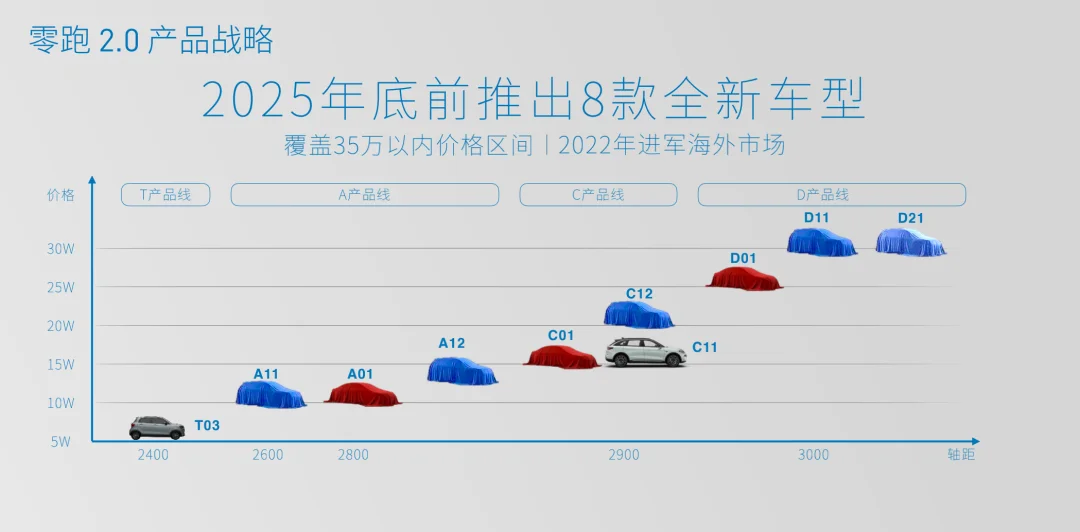
The Leapmotor C11 shows that the company is also "transforming," moving toward higher-end products. Zhu Jiangming stated that Leapmotor will continue to produce "luxury cars" affordable for ordinary people in the future, improving cost-effectiveness while continuously upgrading its products. To achieve a sales target of 800,000 units by the end of 2025 alongside the launch of eight additional models, Leapmotor needs every product in its lineup to perform well; it cannot rely solely on one key model.
By Jiang Xiaohei Edited by Lai Yinhate