


XPENG Tech Day Under Pressure: Wu Xinzhou Announces Major Progress on Chengshi NGP
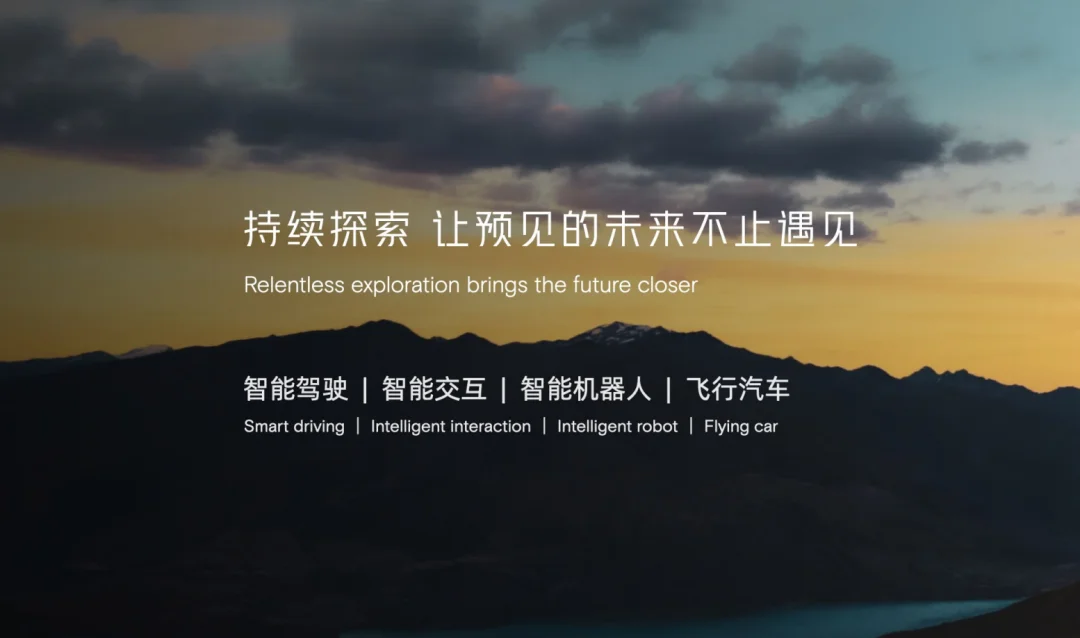
At 8 p.m. last night, XPENG’s 1024 Technology Day proceeded as scheduled, featuring four core themes:
Autonomous Driving
Intelligent Interaction
Intelligent Robots
Flying Cars
Our primary focus was naturally on "autonomous driving." During the event, Dr. Wu Xinzhou directly announced the rollout timeline for XNGP.
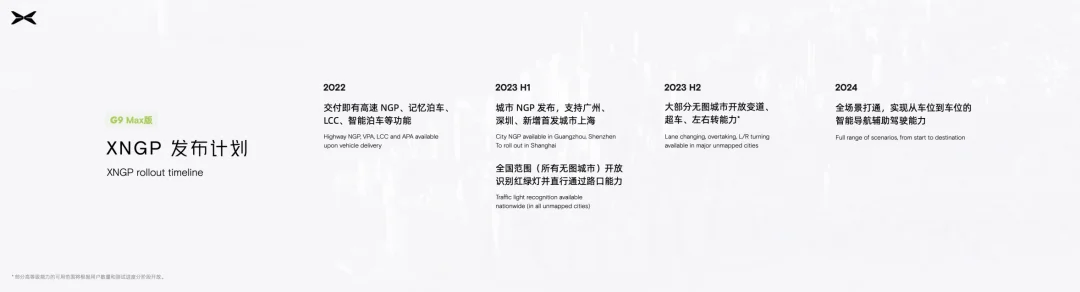
XNGP Release Plan for G9 Max:
2022: Delivery with Gaosu NGP, Jiyiboche and other features;
First half of 2023: Chengshi NGP release, supporting Guangzhou and Shenzhen, with Shanghai added as a new launch city. Nationwide rollout of traffic light recognition and straight-through intersection capability;
Second half of 2023: Most map-free cities will enable lane changing, overtaking, and left/right turn capabilities;
2024: Full scenario integration, achieving smart navigation assistance from parking space to parking space.
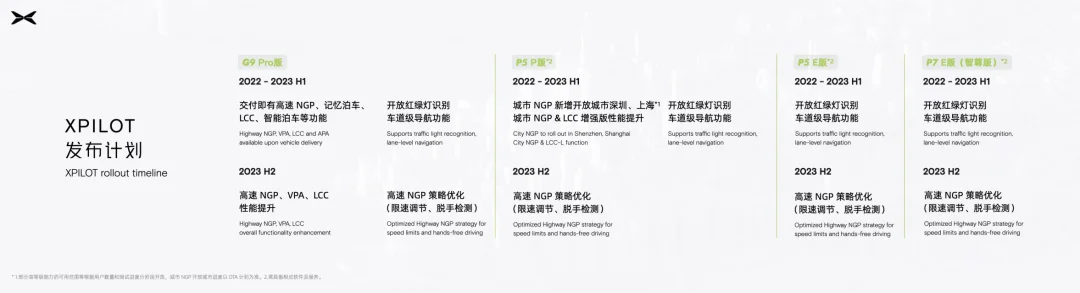
XPILOT Release Plan for P5 E Ban & P7 E Ban:
In the first half of 2022–2023, features including traffic light recognition and lane-level navigation were enabled;
2023 second half Gaosu NGP strategy optimization (speed limit adjustment, hands-off detection, etc.).
The biggest highlight is the push for Chengshi NGP on the G9 Max variant in the first half of 2023, with support for Shanghai. This timeline gives it a lead of more than one year over other new forces like NIO and Lixiang, which actually made me want to place an order for the G9 after watching the presentation.
With the upcoming iteration plan clarified, let's return to the press conference to see what XPENG will use to support its future update roadmap.
01The difficulty is high, but we still have to do it
At this year's launch event, the first question posed by Dr. Wu Xinzhou was: Why tackle urban driving scenarios that are more than a hundred times harder?
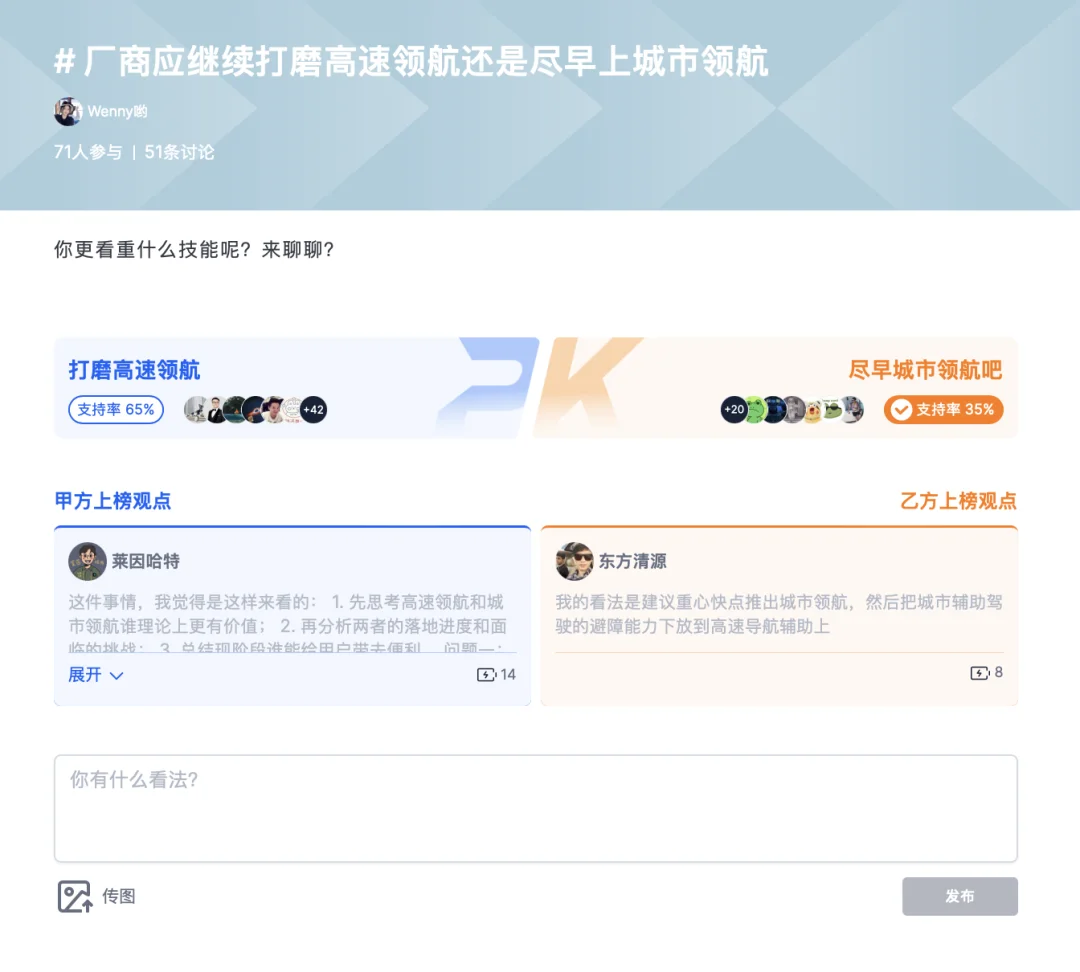
Coincidentally, we discussed this issue in the community back in September: whether to continue refining highway navigation or to launch urban navigation as soon as possible.
72 people participated, with 65% supporting continued refinement of the highway navigation assist and 35% supporting an early launch of urban navigation assist.
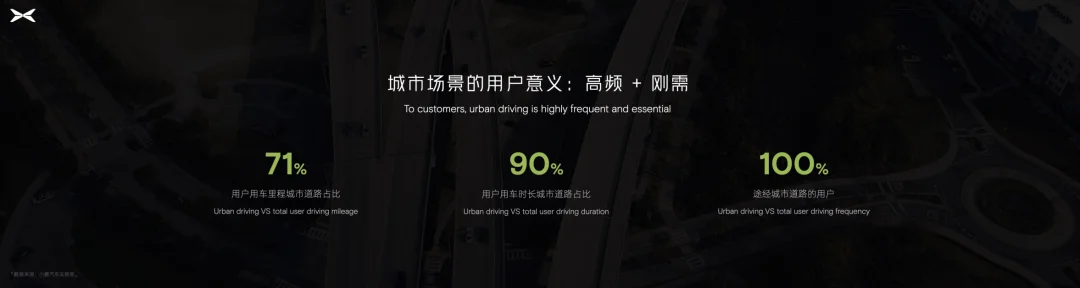
At the event, Dr. Wu Xinzhou presented a set of data:
Urban roads account for 71% of users' driving mileage.
Users spend 90% of their driving time on urban roads.
100% of users pass through urban roads
This is a statistical summary of users' total vehicle usage scenarios.
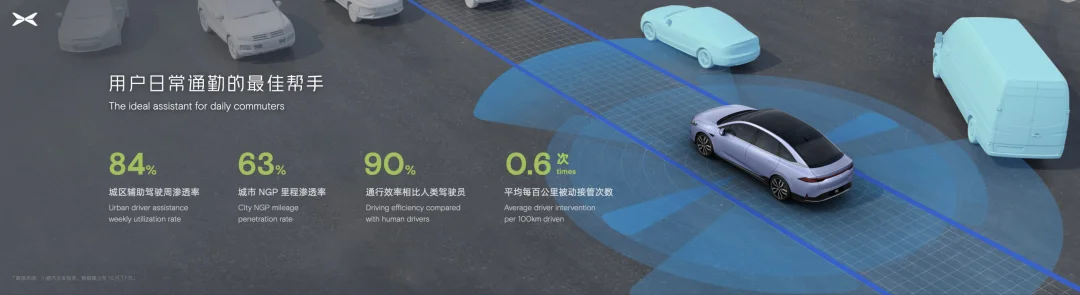
Urban ADAS weekly penetration rate: 84%
Chengshi NGP mileage penetration rate: 63%
Traffic efficiency compared to human drivers: 90%
Average number of passive interventions per 100 km: 0.6
These figures were generated after the rollout of XPENG P5 Chengshi NGP. The data shows that for every 100 km driven on roads where Chengshi NGP is available, the system was active for 63 km.
Clearly, urban scenarios represent high-frequency and essential use cases for users. So why does everyone continue to focus on refining highway navigation features?
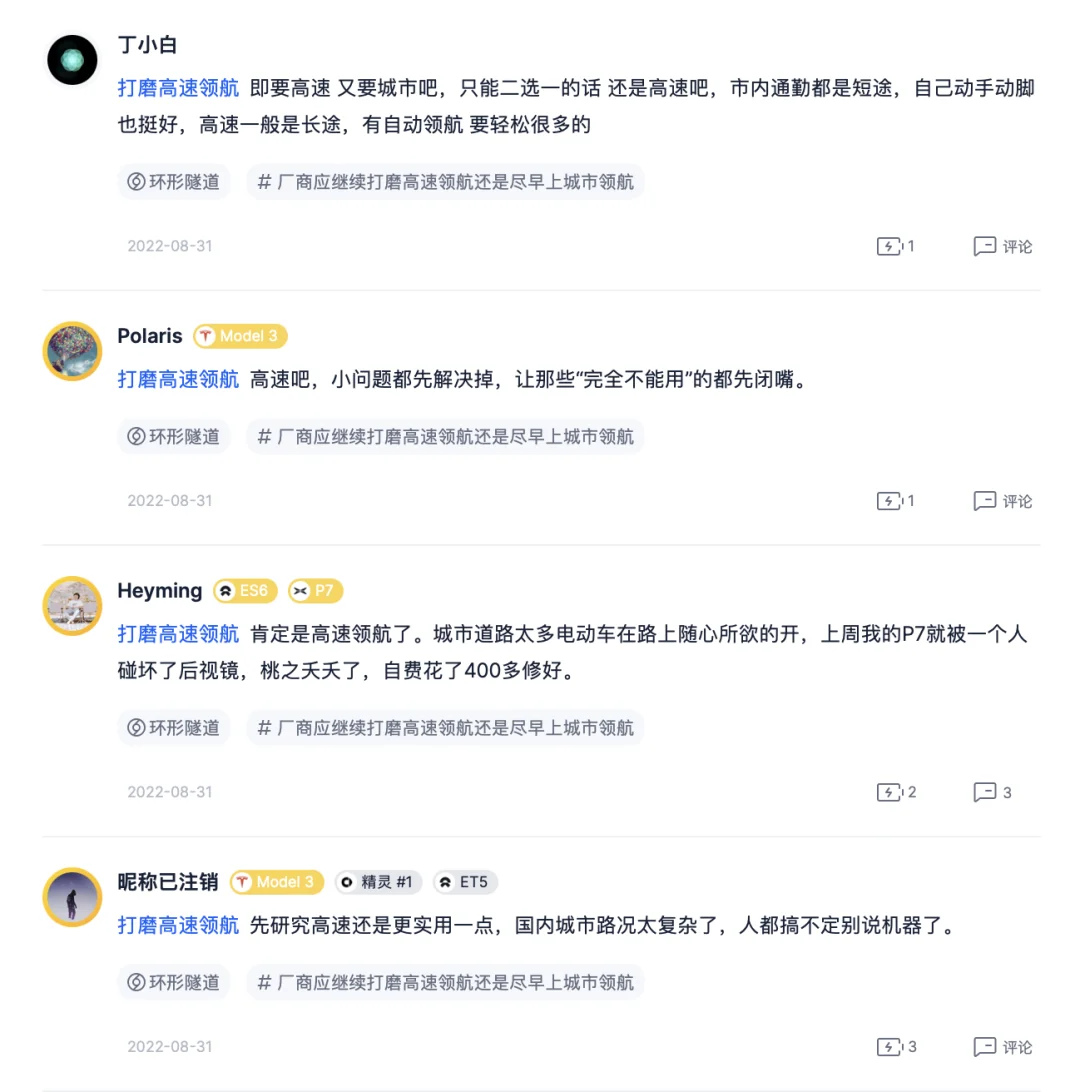


Comments from most users reveal that their desire to further refine the highway navigation feature stems from a preconceived stance: because urban scenarios are too complex, current technology cannot make urban navigation usable, so it is better to focus on improving highway navigation.
Under this logic, refining highway navigation seems like a reasonable move. However, looking back at the data above, the issue is not that we do not need it, but rather that we believe it is currently unachievable.
Whether Tesla or XPENG, when deciding to tackle urban scenarios, their goal is inevitably to launch a "high-quality urban navigation" feature.
It is precisely this endgame-oriented thinking that allows them to face difficulties head-on and strive to overcome them.
Like choosing between an easy path and a difficult but correct one, both Tesla and XPENG have chosen the difficult but correct path.
Regarding the level of difficulty, Dr. Wu Xinzhou provided a set of relatively quantified data:
The codebase for Chengshi NGP is six times larger than that of Gaosu NGP;
The data used for the Chengshi NGP perception model is four times that of Gaosu NGP;
The code related to prediction, planning, and control is 88 times that of Gaosu NGP.
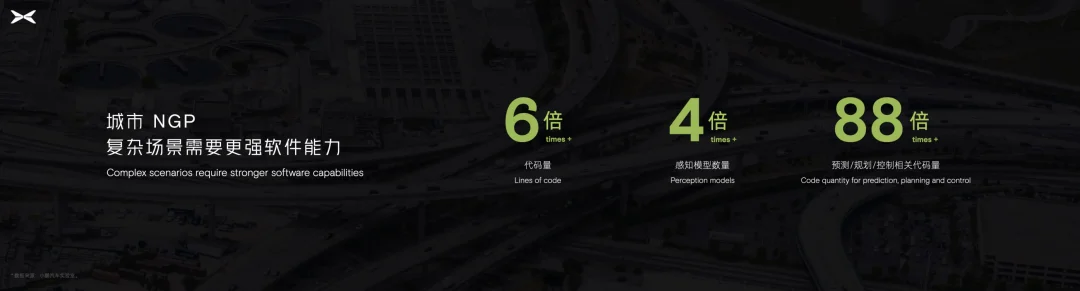
These figures represent a comparison under conditions where high-definition maps are available. XPENG has also explicitly stated its goal to achieve lane-changing, overtaking, and left- and right-turn capabilities on unstructured urban roads without HD maps by the second half of next year.
To address the myriad complex scenarios in urban environments, XPENG begins solving problems at the source: perception.
At the press conference, Wu Xinzhou revealed for the first time that XPENG will adopt the all-new XNet perception architecture on the G9.
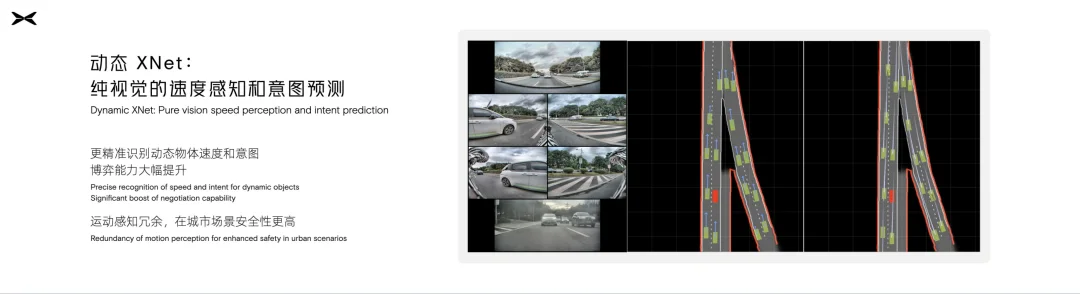
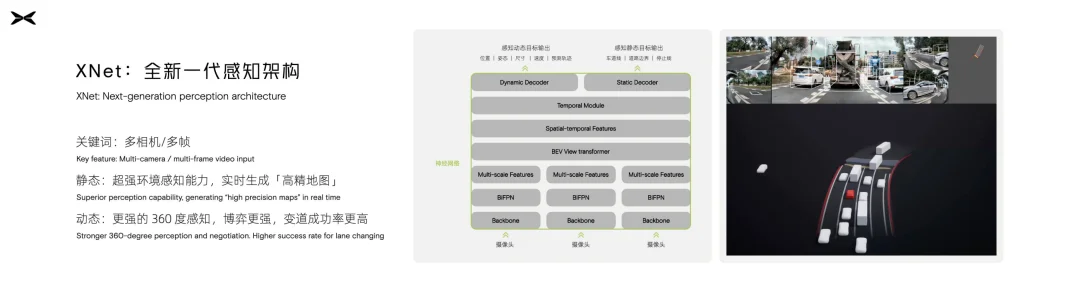
The approach mirrors Tesla’s: both systems feed perception data from surrounding cameras into a Transformer neural network for multi-frame temporal early fusion, outputting 4D information for dynamic objects and 3D information for static objects in a Bird's-Eye View (BEV).
In simpler terms, the previous technical framework required perceiving the world through multiple perspectives with only vague positional correlations—like interpreting a series of comic-strip images—and predicting surrounding vehicles’ speeds to forecast their trajectories.
Even an experienced driver would find such perception results extremely difficult to interpret.
Under the new framework, the system directly outputs a god’s-eye view containing dynamic information about surrounding vehicles.
This approach significantly improves the accuracy of monitoring 3D information for static objects. As Wu Xinzhou stated, 'This perception architecture has the capability to generate high-definition maps in real time.'
More precise 4D information for dynamic objects also enables the system to achieve stronger lane-changing capabilities and game-theoretic decision-making skills.
Of course, this powerful large-model neural network does not appear out of nowhere.
At the event, Dr. Wu Xinzhou revealed that the powerful XNet relies on the latest Transformer network architecture. To deploy this large model smoothly, it requires 500,000 to 1 million short videos for training and optimization; without such optimization, direct deployment would consume more computing power than a single Orin-X chip.
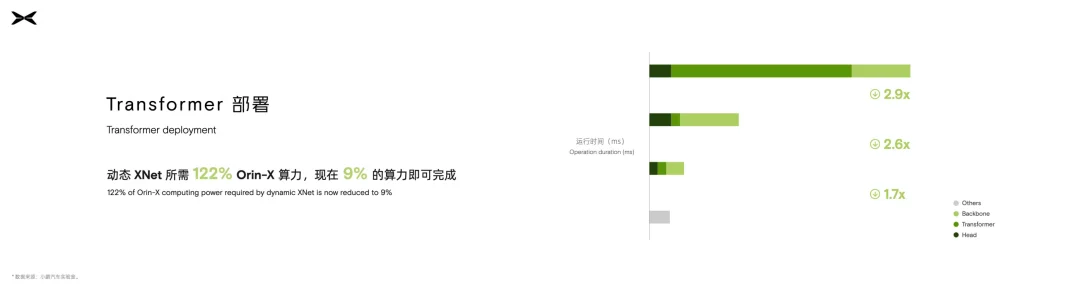
However, the number of dynamic objects in these videos runs into the hundreds of millions. Annotating them manually would require at least 2,000 people working for one year.
To solve this problem, XPENG’s autonomous driving team developed an 'automatic annotation system,' compressing the annotation time to just 16.7 days.
Next came the training phase.
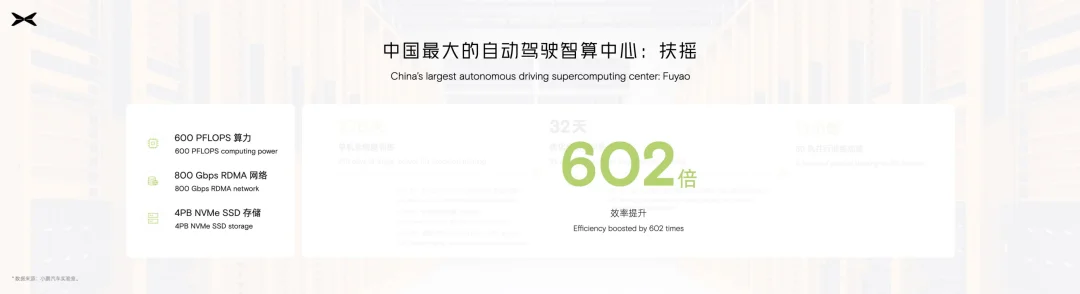
In August this year, XPENG announced the completion of 'Fuyao,' China's largest autonomous driving intelligent computing center in Wulanchabu, dedicated to autonomous driving model training. It delivers 600 PFLOPS of computing power, improving efficiency by 602 times compared to previous systems.
XPENG will continue to refine this model through ongoing cycles of data collection, annotation, training, and deployment.
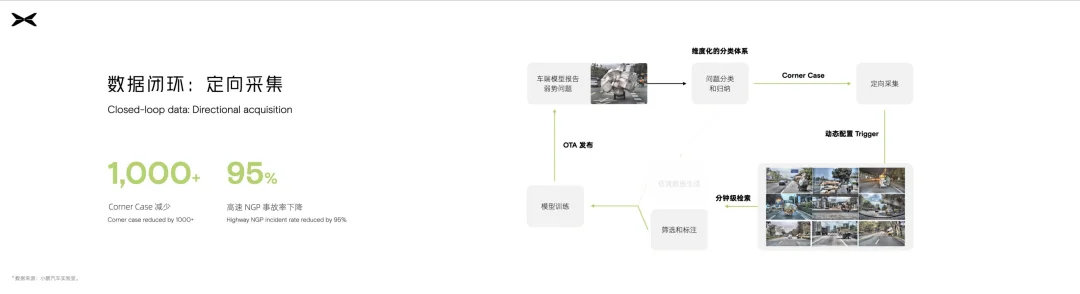
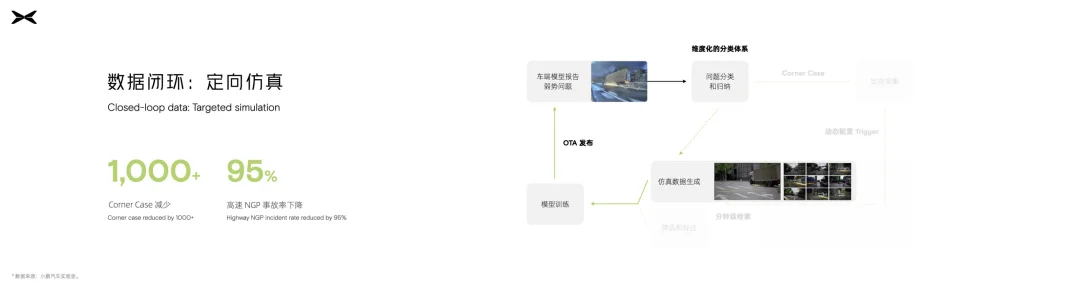
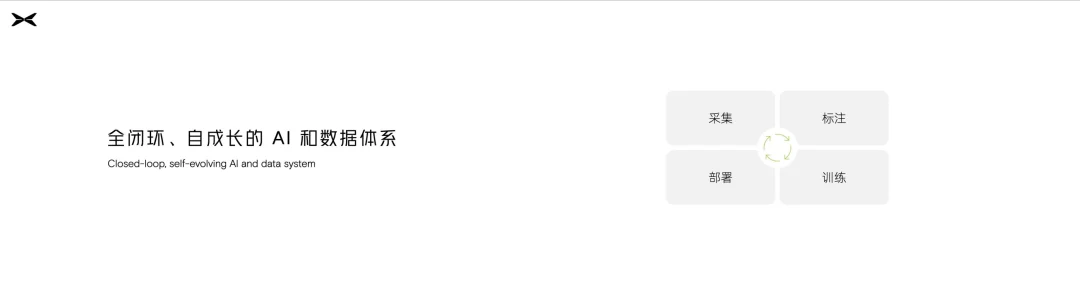
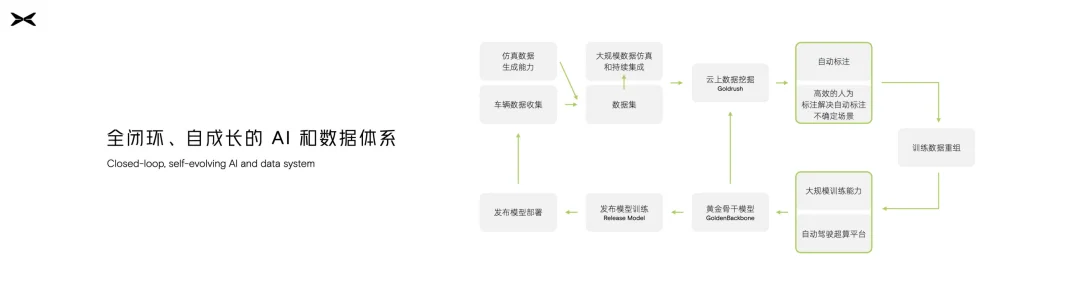
According to Dr. Wu Xinzhou, XPENG currently has nearly 100,000 vehicles with users capable of data collection. These vehicles are equipped with more than 300 trigger signals on board. The system can determine which corner cases are useful for the system and upload them. The collected data includes dynamic and static objects outside the vehicle, as well as full-stack data.
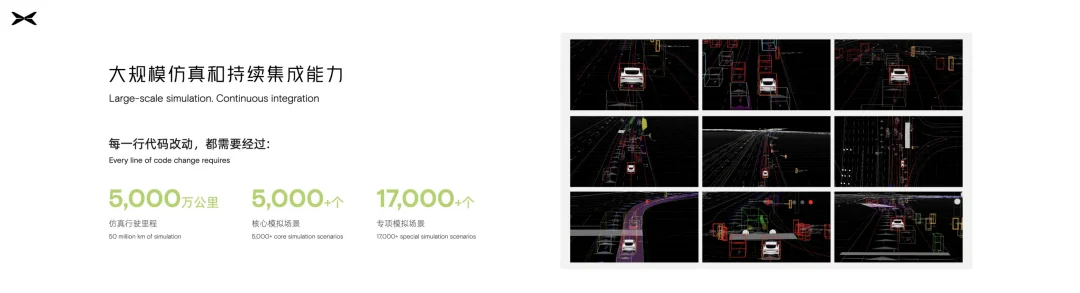
Finally, XPENG introduced a new concept: "Quanchangjingfuzhujiashi" (Full-Scenario Auxiliary Driver) — XNGP. Compared to the current XPilot, it offers stronger capabilities and a broader coverage range. XPENG's goal is to make the experience of Chengshi NGP in mapless areas infinitely close to that in mapped areas.
Returning to the topic of whether to continue refining highway navigation assist or launch urban navigation assist as soon as possible, the answer is obvious. Under the current technical route, although the experience of urban navigation assist driving can be polished to a good state, it is destined not to achieve urban navigation assist.
If we use building a house as an analogy, your goal is to build a 100-story skyscraper, while XPENG is working on reconstructing the foundation that can support the 100-story height.
Car companies still refining highway navigation-assisted driving are more like those working on a foundation that can only bear three stories. They may decorate these three floors luxuriously, but no matter how good the decoration is, they still need to rebuild from the ground up.
02'Delivering on Promises'
The second focus of this year's 1024 event is 'Quanchangjingyuyin'.
In 2020, XPENG first introduced the concept of Quanchangjingyuyin. The company's goal was to make voice interaction the new standard, capable of replacing physical buttons.
By 2020, this system already supported features such as 'what you see is what you say,' continuous dialogue, and multi-zone conversation. These capabilities elevated in-car voice assistants from unusable to functional, and soon became models for many other automakers to imitate. This year, XPENG aims to move voice interaction from 'usable' to 'excellent.'
We have already provided a detailed review of this system during previous test drives. The clear conclusion is: it is currently the most capable voice system available and will once again set the benchmark for the industry.
The specific highlights can be summarized in the following four points.
Wake-Free Interaction
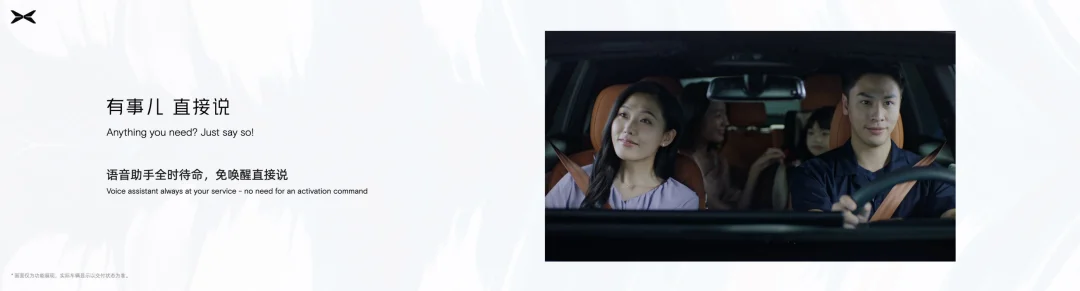
For people with social anxiety, the biggest barrier to using voice assistants—whether in a car or at home—is the need to "wake" them. When you're driving with passengers or hosting friends at home, there's often significant hesitation before activating the assistant.
But can't voice assistants operate without a wake word?
Yes, but it's difficult.
With a wake word, the system clearly knows that your following sentence is directed at it.
Without a wake word, the system must determine which of your ten sentences are meant for the front passenger and which are for the assistant. This requires not only excellent recognition capabilities but also semantic judgment abilities akin to human cognition.
The XPENG G9 supports wake-free voice interaction across all four seats in the vehicle.
Multi-Zone Simultaneous Dialogue
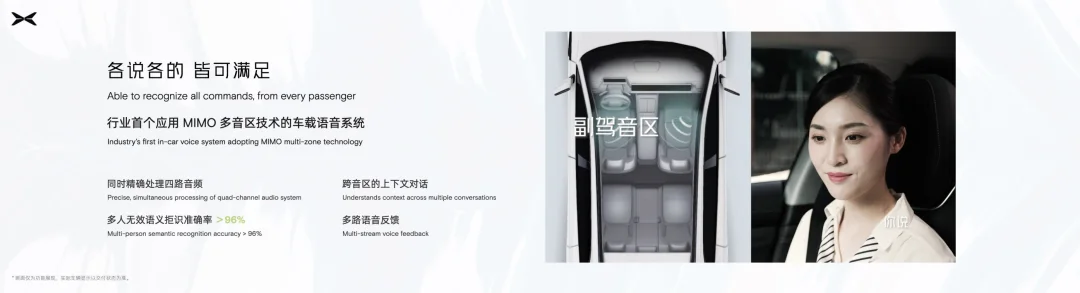
We first experienced multi-zone voice recognition in the 2020 Li ONE. However, constrained by computing power and technology, the Li ONE’s multi-zone system could only handle four input channels with a single execution channel—meaning only one person in the entire vehicle could use voice commands at a time.
In the G9, XPENG achieved true four-channel simultaneous processing: all four occupants can issue commands to Xiao P at the same time, and Xiao P executes all four instructions concurrently. This creates the sensation that Xiao P has split into four distinct entities.
Speed
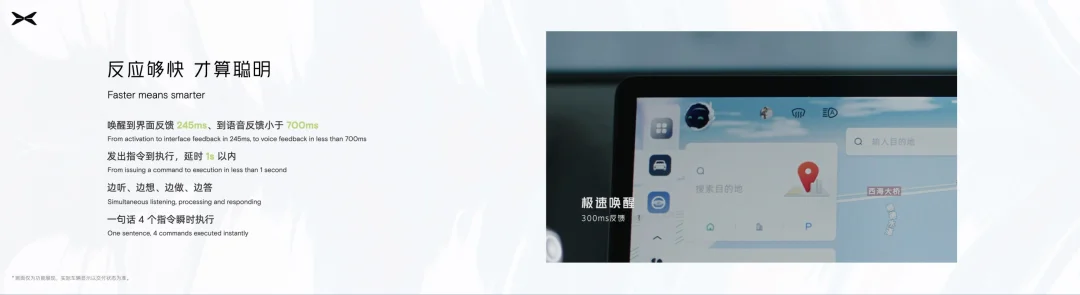
According to official XPENG data, the response time from wake-up to interface feedback is 245 ms, and from wake-up to voice feedback is 700 ms.
With traditional voice assistants, passengers must finish speaking their command before the system begins recognition; only after obtaining the recognized text does the system proceed to understand and execute the instruction.
On the G9, XPENG adopted a human-like thinking approach: Xiao P can simultaneously recognize text, comprehend it in real time, and query data. By the moment a passenger finishes speaking, all understanding is already complete; this is streaming comprehension.
Under this logic, interaction efficiency naturally surpasses that of the previous method.
Usable Without Internet
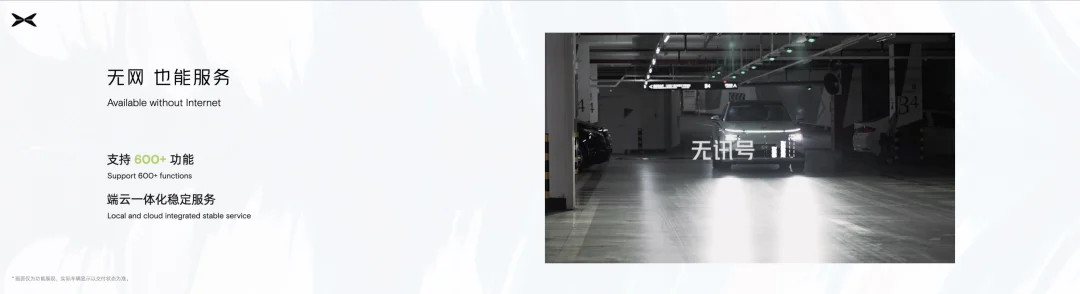
Current voice assistants require uploading all text recognition tasks to the cloud via the network. Consequently, in environments with poor connectivity such as highways, tunnels, or underground parking garages, voice control becomes entirely unusable.
Leveraging the greater computing power of the 8155 chip, XPENG implemented edge computing on the G9, enabling the vehicle’s onboard hardware to recognize and execute user commands independently.
In one sentence, these four objectives boil down to lowering the barrier to entry for human users.
03Final Thoughts
After seeing XPENG’s roadmap for Chengshi NGP at the 1024 event, I posted on Weibo: “The G9 Max will deliver Chengshi NGP in the first half of 2023. The launch cities include Shanghai. Because of this, I was quite keen to buy a G9.”
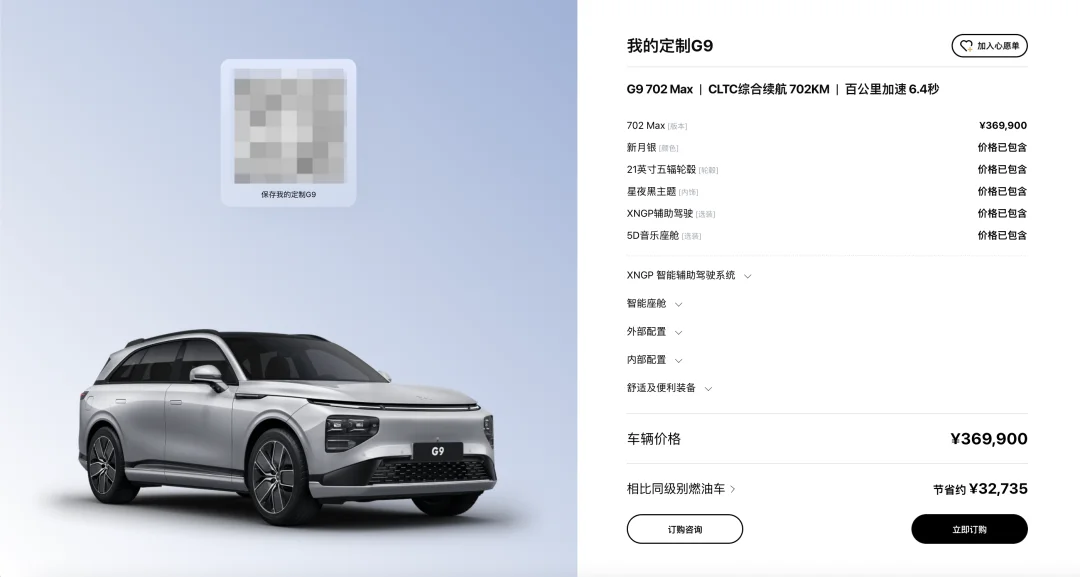
A colleague then commented: “The G9’s intelligent features are very attractive, but the car itself is not.”
On reflection, while the G9 certainly isn’t unattractive, its appeal lies more in its intelligent technology than in the vehicle as a whole.
This year’s 1024 was undoubtedly the most hardcore 1024 in XPENG’s history, and it is without question that XPENG’s technical capabilities have reached a new height.
Compared with previous years, however, it has also been XPENG’s most complex period. From the initial delay of the G9 launch to post-launch SKU adjustments and subsequent organizational restructuring, each event has highlighted XPENG addressing one problem after another.
From a pessimistic perspective, XPENG indeed faces numerous challenges. But viewed optimistically, as the company resolves these issues one by one, it is steadily improving.
Given the current hardware costs and R&D expenditures for driver assistance systems, a “premium” priced vehicle is inevitably required to carry these technologies at this stage.
Given the G9's specifications, it fully justifies its price point and can even be considered highly cost-effective. However, once the price exceeds RMB 300,000, brand positioning becomes a factor that consumers cannot easily overlook.
From the perspective of a former P7 owner, XPENG must elevate its brand tone through improvements in service and design in the coming period.
Written by: Liu San Edited by: Liu San