


Feifan's 'Screen King' Claim Highlights the New Era of In-Cabin Display Competition
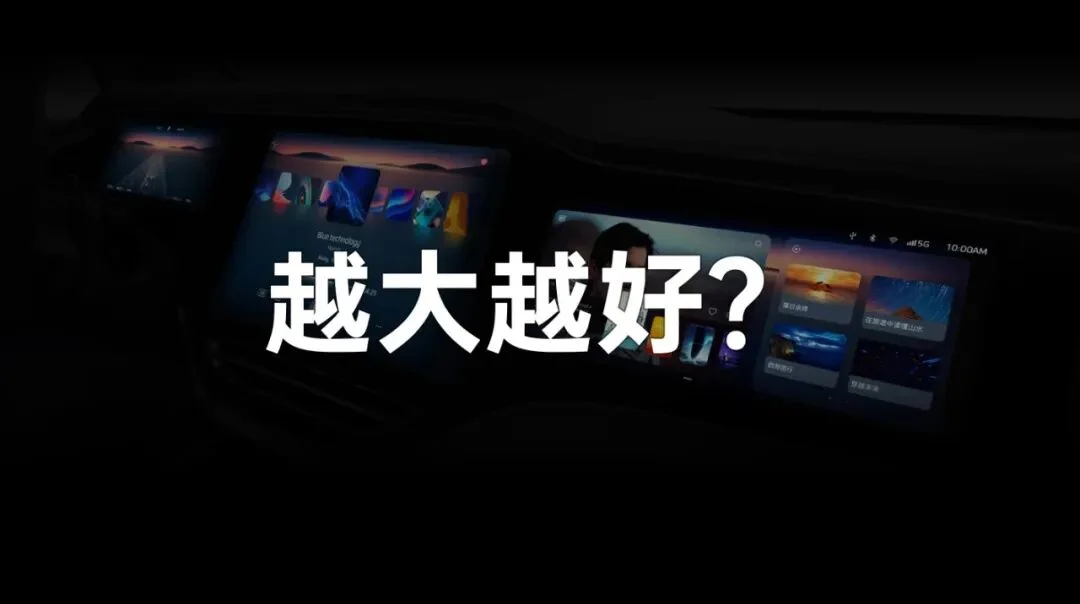
Yesterday, the question of whether "bigger car screens are always better" sparked heated discussion on Weibo and our app. Feifan, an automaker, joined the conversation and adopted the slogan "Screen King."
We will address later whether Feifan truly deserves the "Screen King" label. In this debate, opinions on large screens were mixed.
Some argued: "Obviously, bigger is better. Steve Jobs said 3.5 inches was the ideal size for phones, yet the most popular iPhone 13 Pro Max features a 6.7-inch display. Compared to the Li L9's 15-inch passenger screen, the ONE's 10-inch secondary screen seems inferior. Provided the operating system and safety standards are equal, a larger screen is undeniably superior."

Some netizens even recalled Baiteng's large-screen strategy from years past.

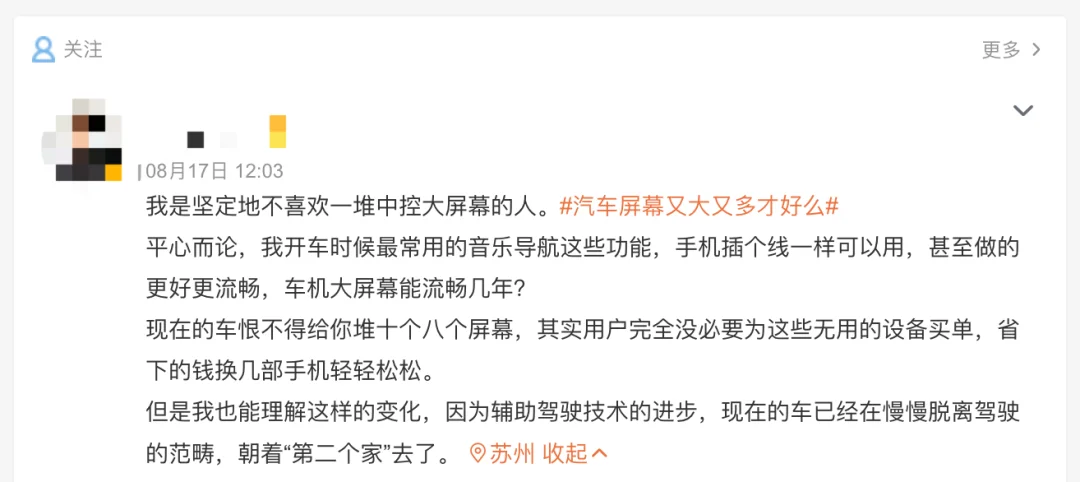
Others remained firmly opposed: "I strongly dislike vehicles equipped with multiple central control screens. To be fair, I use music and navigation apps on my phone via a cable while driving; they often perform better and more smoothly than in-car systems. How long can a large car screen remain responsive?"
Many have also rationally analyzed our actual need for screens.
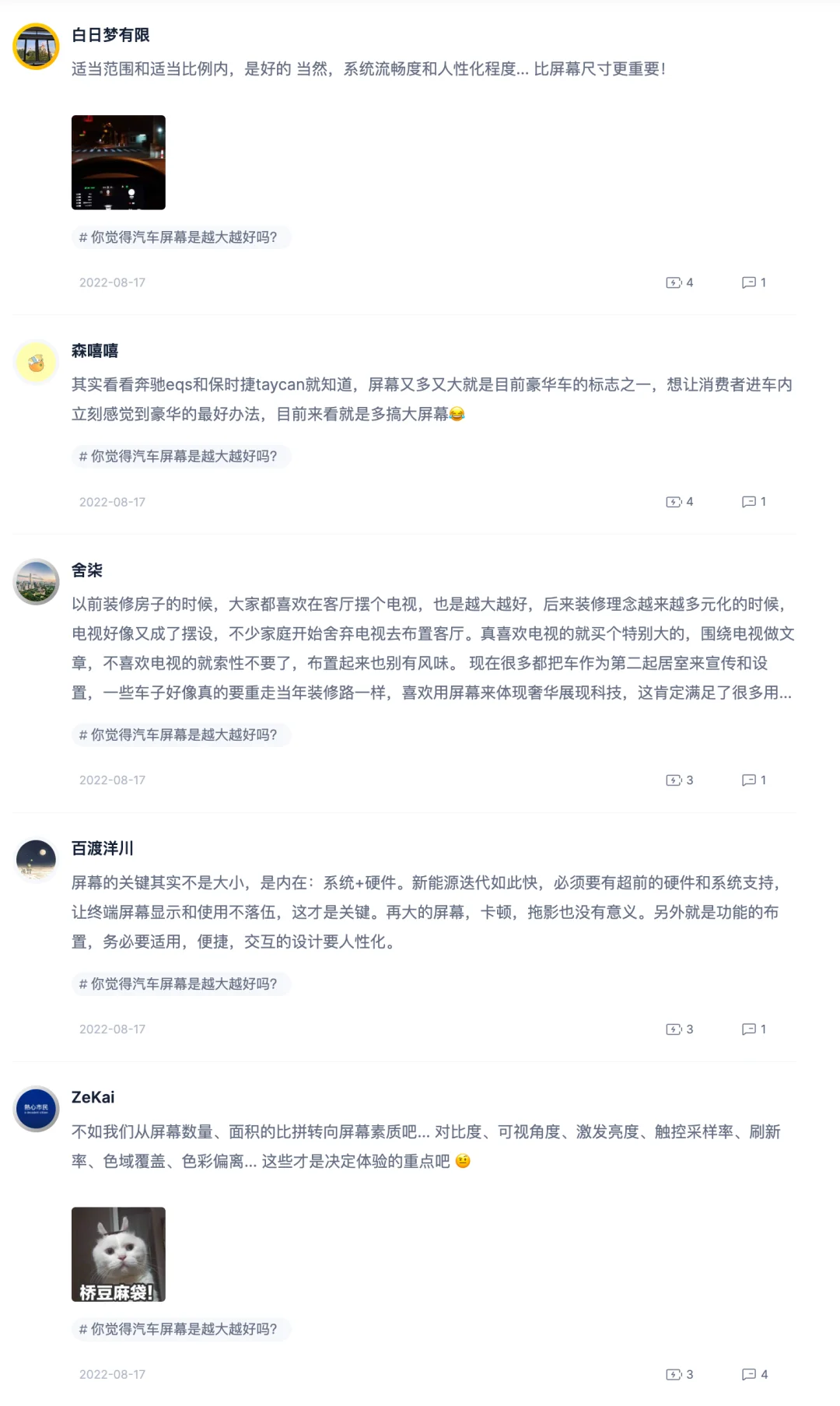
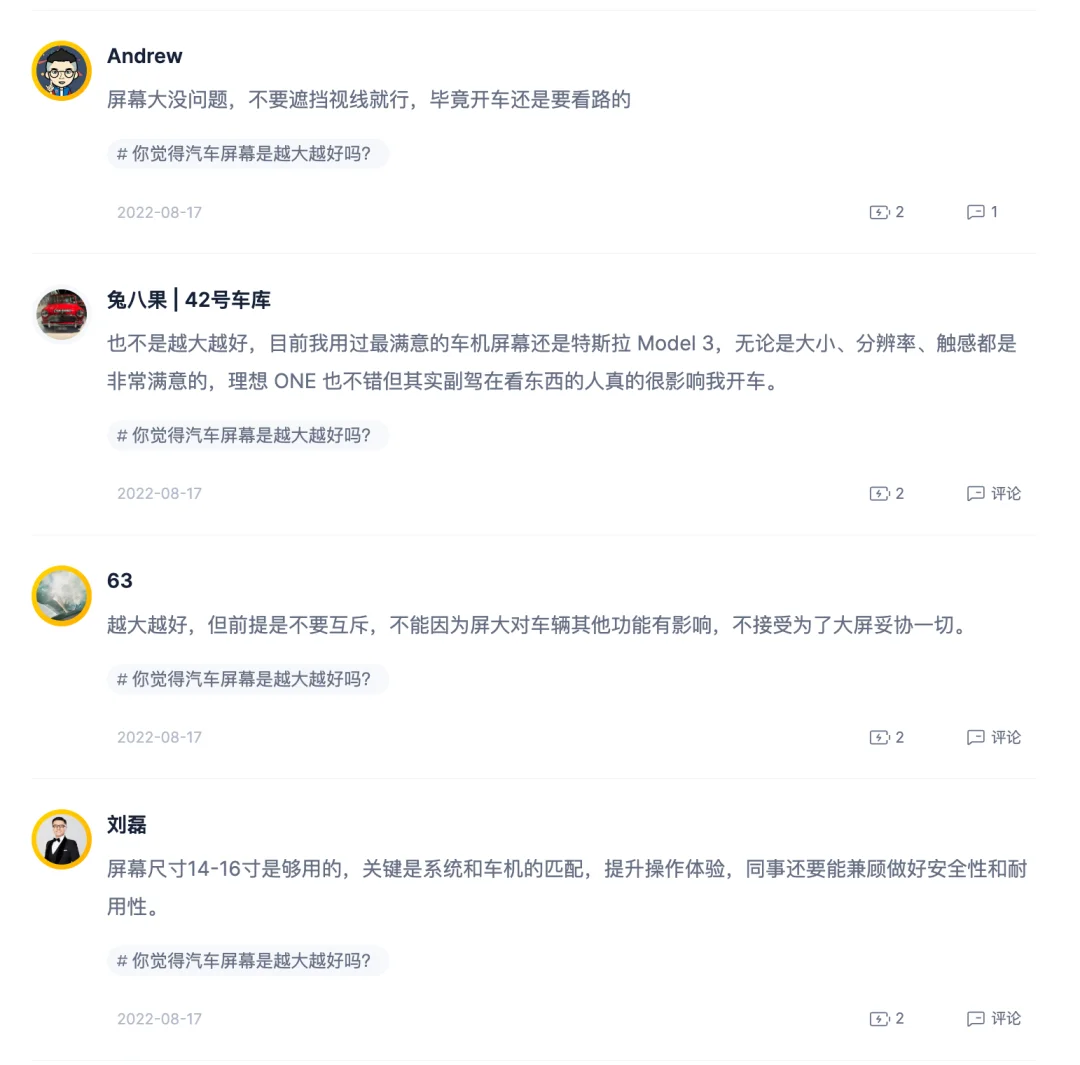
Regardless of whether people agree with the "large screen" trend, a clear reality is that new-energy brands like Lixiang and XPENG are installing large screens, traditional automakers such as Mercedes-Benz and BMW are doing the same, and even Tesla—the originator of the single-screen interior—is adding a rear-seat display to the Model S's instrument cluster and center console.
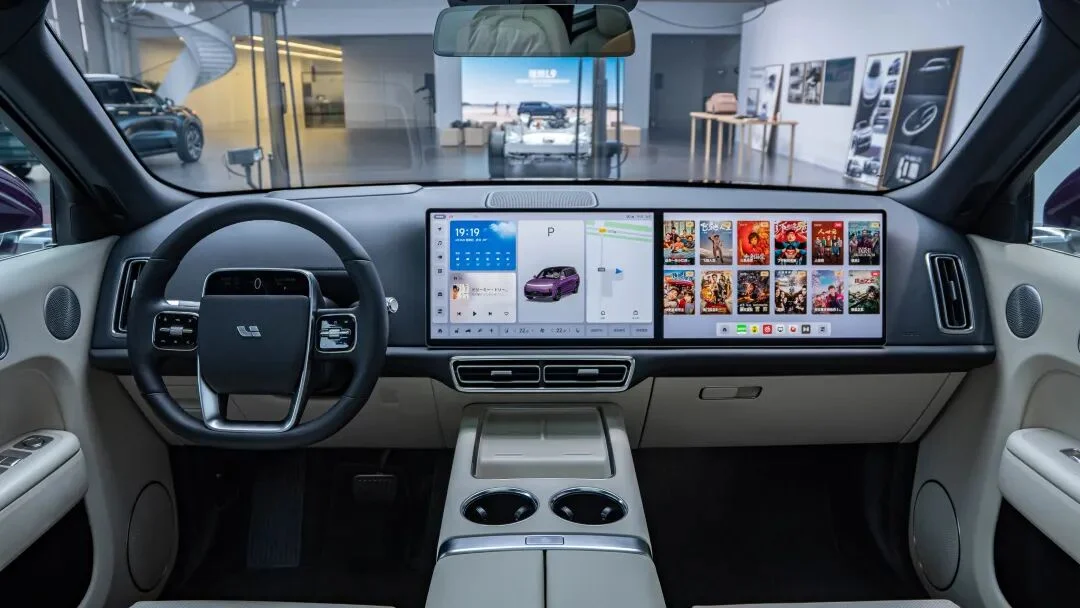
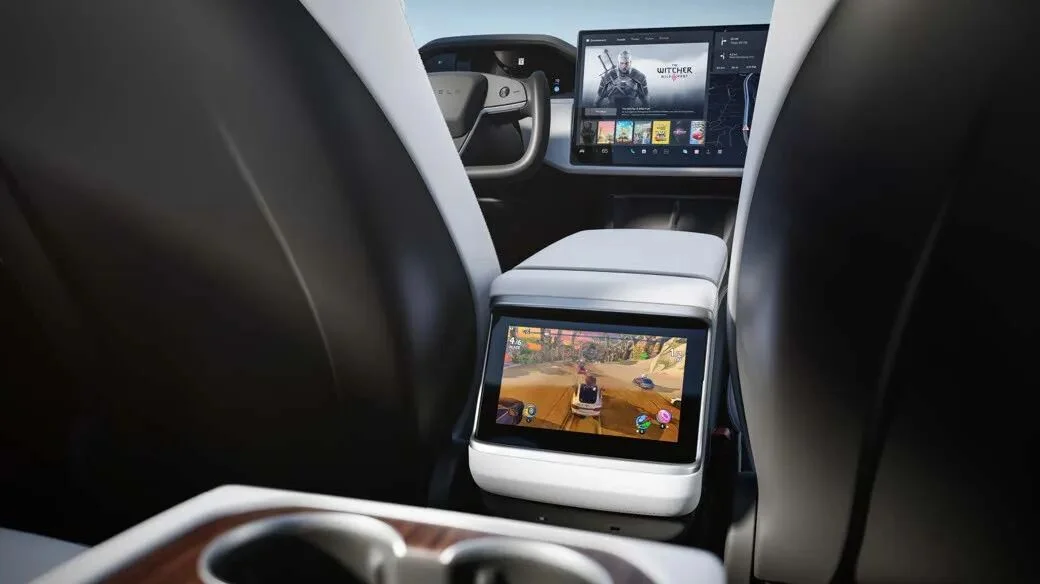
From the earliest 1 central control large screen, to the central and passenger 2 large screens, and then to the rear 3 large screens, the in-car screens are not only getting larger in size but also increasing in quantity, which is a clear development trend.
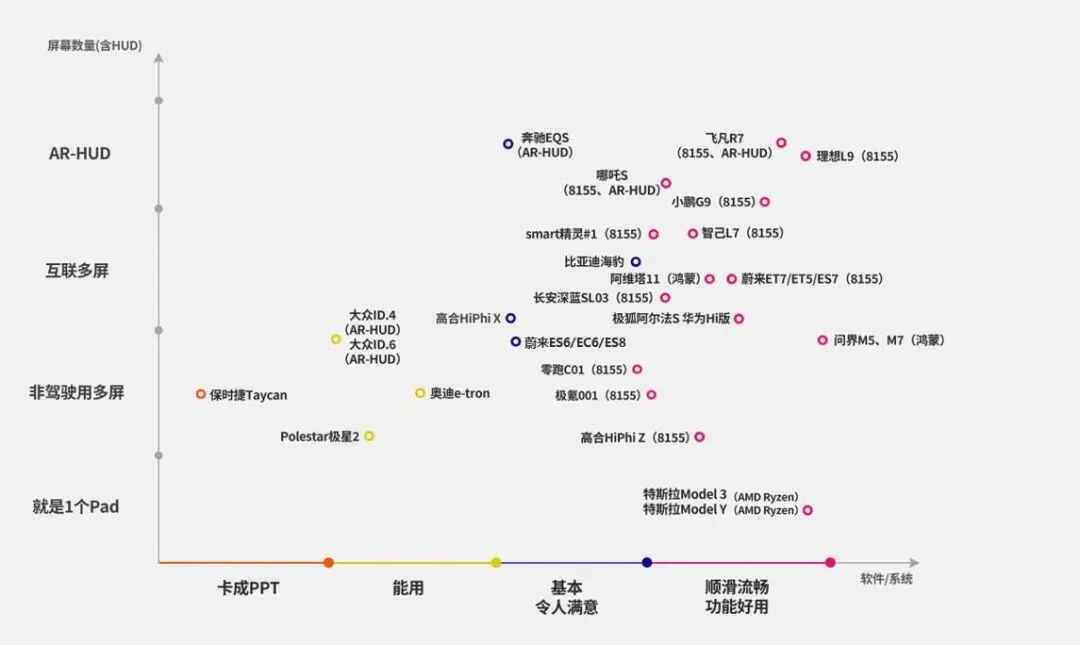
What deserves more discussion here is: what kind of screens do we actually need?
Before analyzing what kind of screens we need, we must first clarify a key point: Do cars really need large screens?
01Do Cars Really Need Large Screens?
The answer is yes.
Putting cars aside for now, let's focus on home furniture. The refrigerator from 20 years ago had only one adjustable function: temperature. The washing machine from 20 years ago also offered only a few functions, such as capacity selection, washing, rinsing, and spinning.
In that context, a few buttons and indicator lights were sufficient to meet human-machine interaction needs.
However, as functions expanded, refrigerators and washing machines gained dozens of features. The limited number of buttons and indicators from the past could no longer support these capabilities, which is why screens eventually appeared on these appliances.
The same logic applies to the shift back in the cabin: screens are replacing buttons because physical controls can no longer accommodate the growing complexity of in-car functions, making the rise of displays inevitable.
Another driver for this inevitability is the surge in demand for 'information display.'
Whether it is navigation, video playback, or visualization of driver assistance systems, information must be conveyed to occupants through a medium; vision is the human sense that processes information most directly and rapidly.
Research indicates that approximately 83% of human information intake comes from vision, making screens the most effective channel for vehicles to communicate with users.
Furthermore, as screens become the dominant element of interior design, their versatile display capabilities allow interior styling to switch between luxurious and technological aesthetics in tandem with changes in the infotainment UI.
Having established the necessity of large screens, let us now discuss what kind of large screens we actually need.
02What Kind of Screens and Cabins Do We Need?
First, we can categorize needs based on user roles into two groups: 'drivers' and 'passengers.' Additionally, we can distinguish between two vehicle states based on usage environments: 'driving' and 'parked.'
This allows for the construction of three dimensions: "driver needs while driving," "passenger needs while driving," and "passenger needs while parked."
Driver Needs While Driving
The first priority for a vehicle cabin is to meet driver needs while driving. A brief analysis reveals that these needs center on four dimensions:
Display of vehicle-related information;
Vehicle settings and adjustments;
Navigation;
Multimedia.
In traditional vehicles, drivers obtain vehicle information via analog gauges and indicator lights; adjust settings such as air conditioning and seats using physical buttons; fulfill navigation needs via smartphones; and access multimedia through CD players or Bluetooth connections.
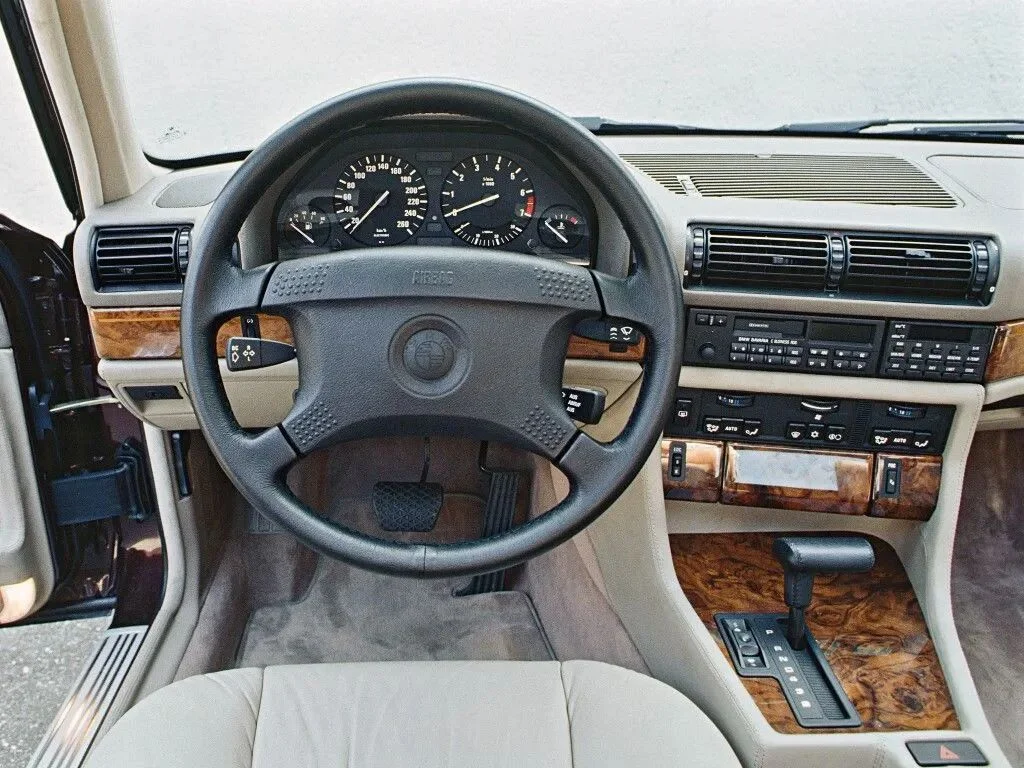
In 2016, when the first wave of large screens arrived, analog dials and indicator lights were replaced by LCD displays. However, the visual presentation remained unchanged—still mimicking needles—and only the medium had shifted.
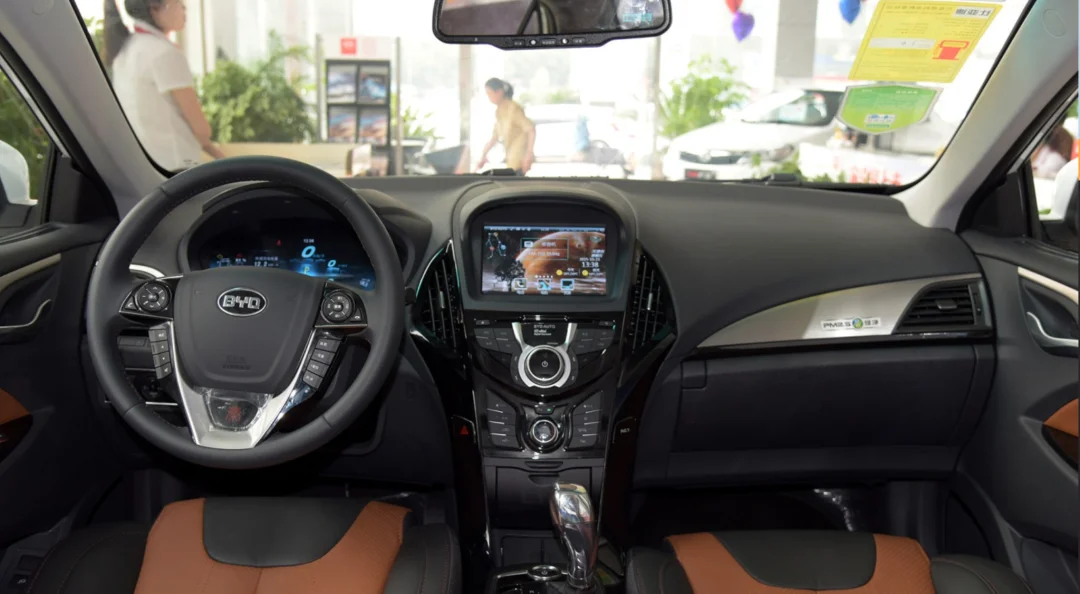
Although center console screens grew significantly larger, physical air-conditioning buttons were removed. Consequently, operations that previously required a single step now took three, reducing efficiency rather than improving it.
While center consoles began supporting navigation, they did not integrate mainstream apps like Amap or Baidu Maps. This made interaction cumbersome, and map updates lagged behind those on smartphones.
Additionally, to meet automotive-grade standards, screens often suffered from low resolution, thick bezels, insufficient brightness, and poor responsiveness.
Clearly, automakers had not yet clarified the purpose of "large screens." Against this backdrop, no one held a positive impression of installing them in vehicles.
After new-vehicle startups emerged in 2020, engineers identified the friction between drivers and screens and addressed these issues one by one. Only then did large screens begin to gain acceptance.
In 2022, new energy vehicle startups launched their second-generation products, pushing cabin competition to a new height commonly referred to as "involution." At this same juncture, traditional brands began making their moves. This provides an opportunity to examine where each player is focusing its efforts.
Vehicle Information Display
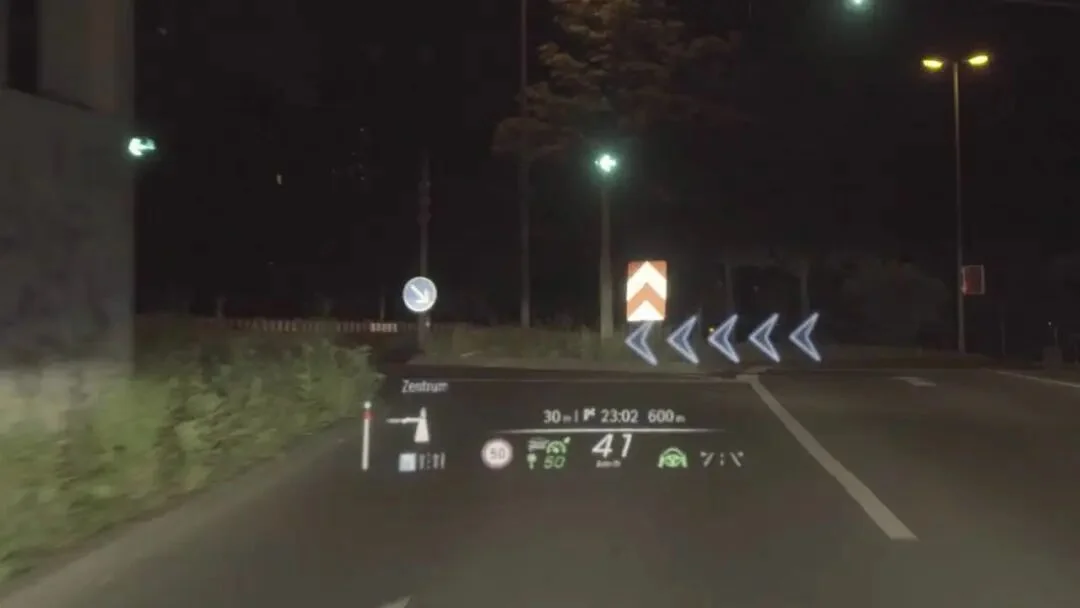
To facilitate easier reading of information while driving, heads-up displays (HUDs) and augmented reality HUDs (AR-HUDs)—which allow drivers to access vehicle data without looking down—have become the mainstream development direction for automakers.
Mercedes-Benz equipped its all-new S-Class with a 77-inch AR-HUD. The display not only fulfills all instrument cluster requirements but also integrates navigation visuals using AR functionality.
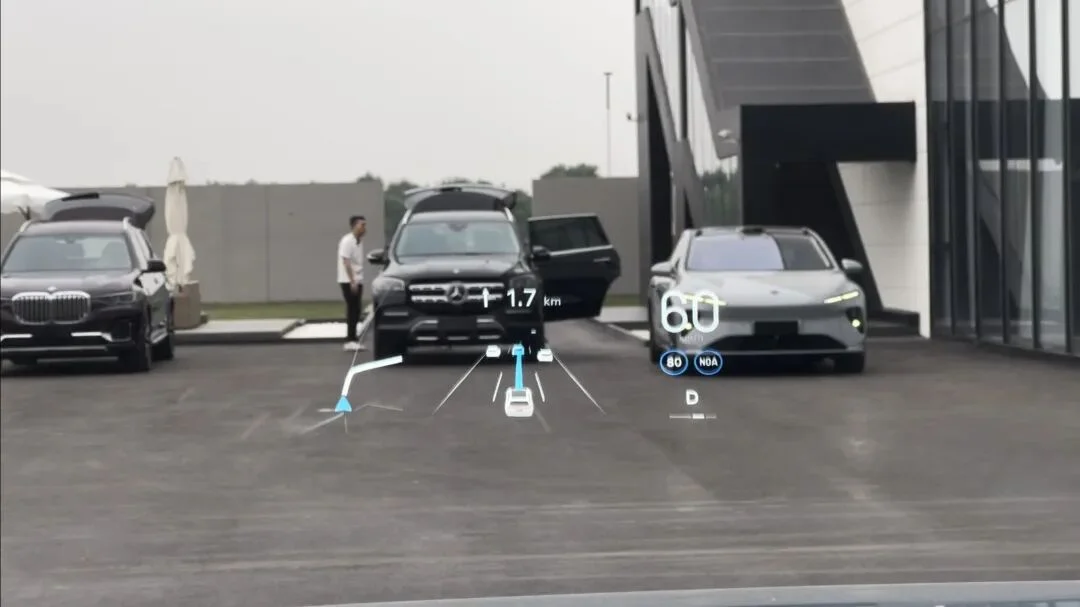
Lixiang took a more aggressive approach by removing the instrument cluster entirely from the L9, replacing it with a HUD featuring a display area of 13.35 inches.
Feifan debuted Huawei’s AR-HUD in the R7. This screen is formidable: it boasts the largest field of view at 13°×5°, offering a wider interface range and richer content compared to the Mercedes-Benz EQS and Li L9.
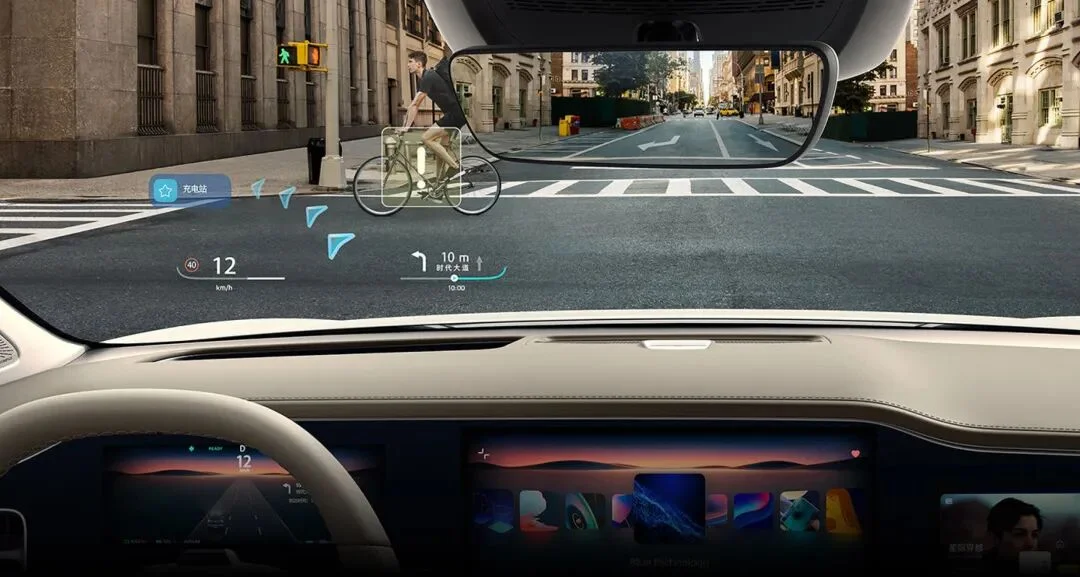
Additionally, in terms of display capabilities, the system not only presents information intuitively and efficiently while driving but also projects a massive 70-inch screen when parked. According to Feifan’s demonstration video, it is even capable of playing movies.
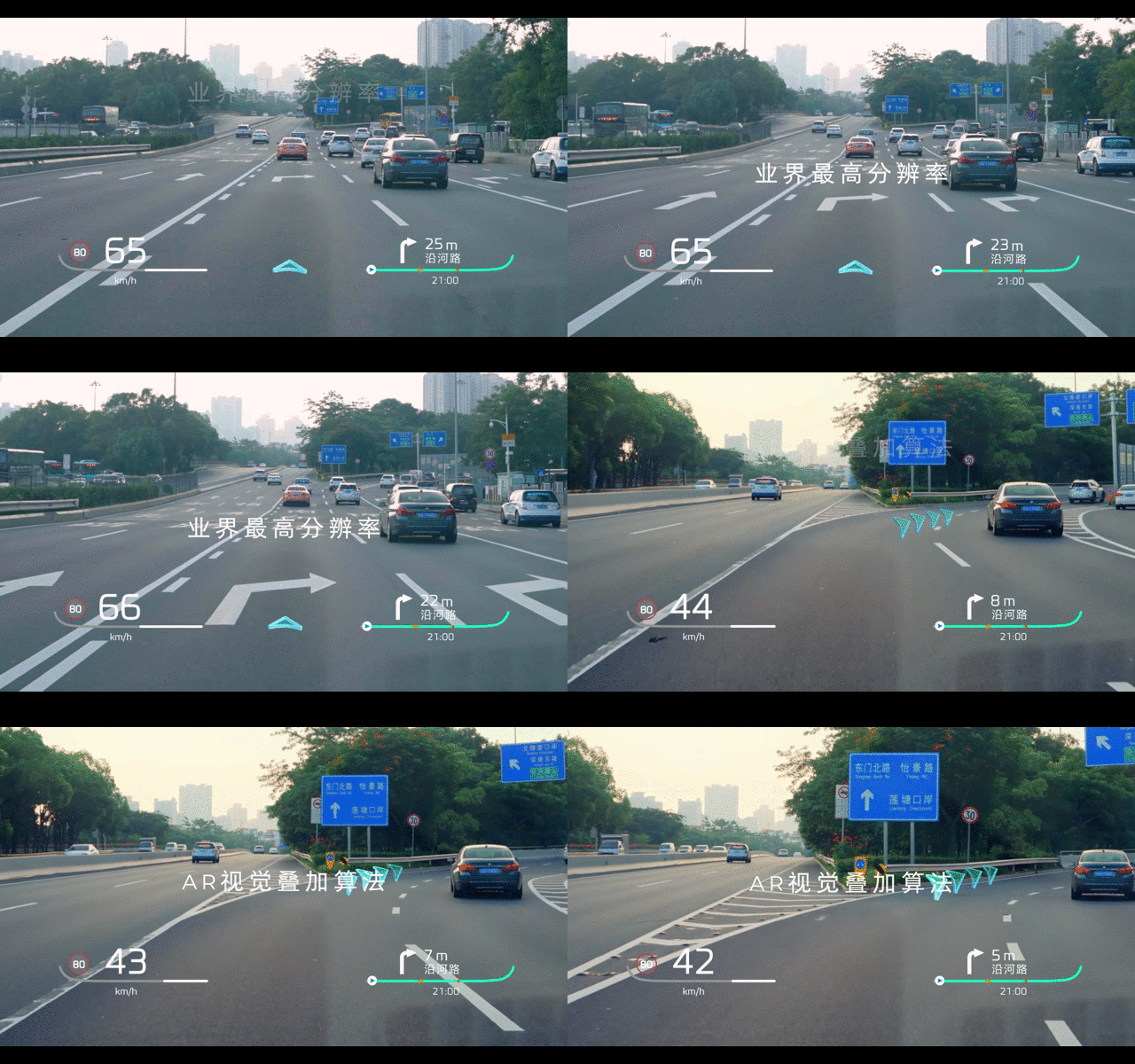
However, after using the AR-HUD myself, I identified an issue: although the displayed content is sufficiently rich, excessive information at night can obstruct the view of the road. Until this problem is fully resolved, the current best configuration remains a combination of instrument cluster and AR-HUD, each fulfilling its specific role.
Vehicle-Related Settings and Adjustments
First, when discussing in-car large-screen operations, there is a fundamental difference compared to smartphones or tablet screens. When using a phone, you can devote your full attention to the device. In a car, however, the primary objective is driving.
In such an environment, 'blind operation'—managing controls without looking—is inevitable. Undoubtedly, well-designed physical buttons offer superior convenience for blind operation compared to well-designed touch interfaces.
We do not oppose physical buttons; however, as mentioned above, the reason for removing them from the cabin is that physical buttons can no longer accommodate the increasingly complex array of functions.
So, the challenge for current in-cabin designs is to eliminate physical buttons while still ensuring convenient vehicle adjustments.
The approach is becoming clearer: retain essential physical buttons and replace touch controls with voice commands.
Regarding the retention of physical buttons, most automakers such as XPENG, Lixiang, NIO, and Kaidilake have kept basic physical buttons for seat and window adjustments.
However, some have overcorrected. For instance, the Volkswagen ID. series retains only one set of window control buttons for the driver; adjusting rear windows requires switching via a touch button. The Nezha S has gone further by eliminating physical buttons for seat adjustment entirely.
In replacing touch with voice, Lixiang, NIO, XPENG, and Feifan have introduced features like 'what you see is what you say,' continuous dialogue, and multi-zone voice recognition to enhance the user experience—a major trend at present.
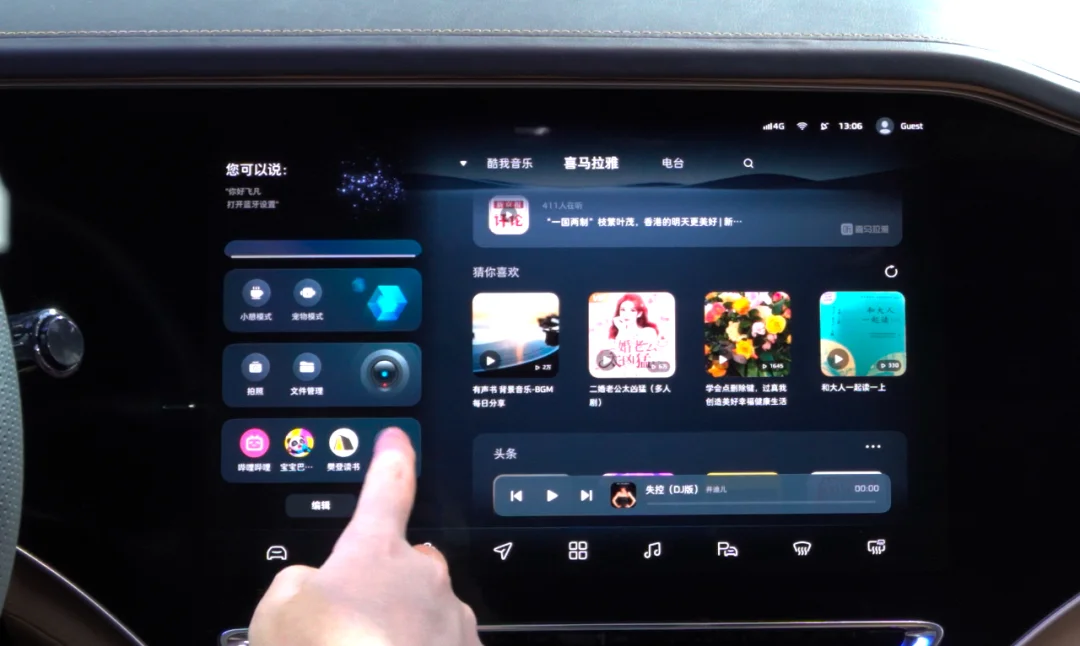
Regrettably, traditional automakers Volkswagen, Mercedes-Benz, and BMW have not performed well in this area. If large screens are deployed without supporting 'accompanying' systems, they will naturally fail to win user favor.
Beyond voice, another key factor is whether the infotainment UI design facilitates operation. This differs fundamentally between cars and smartphones.
For example, on a smartphone you can make buttons small as long as they are tappable, but in-car interfaces require larger touch targets to ensure accuracy during vehicle vibration.
Smartphones allow four to six menu levels, with deep-hidden features being acceptable; in cars, all frequently used functions must be accessible within two menu levels because every additional click while driving increases risk.
This is why intuitive car interfaces place navigation on the home screen and keep common functions in the primary dock bar.
Passenger Needs While Driving vs. While Parked
We combine these needs since their purpose is identical: without driving tasks, passengers primarily seek entertainment.
When NIO launched the ES8 in 2018, it introduced the 'Queen's Co-pilot' concept, expanding seat recline ranges and adding leg rests and footrests to enhance comfort.
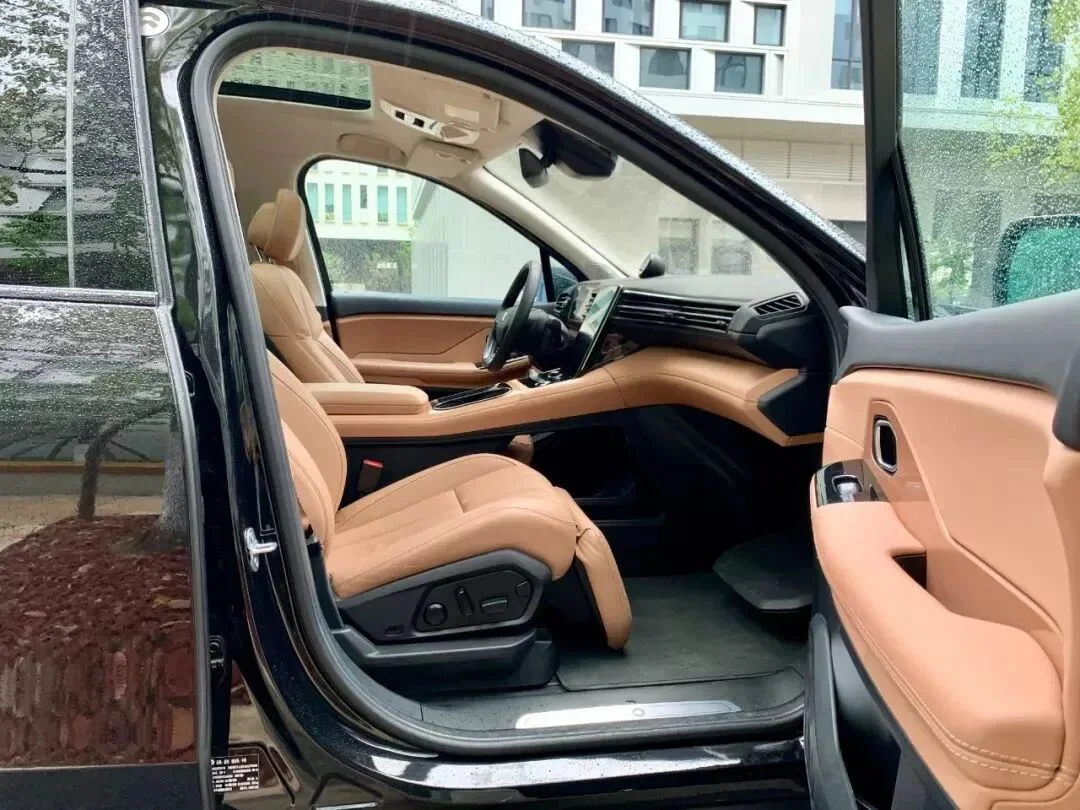
In 2019, Lixiang added a co-pilot screen to its ONE model to meet in-transit entertainment needs, and by 2022, more automakers had followed suit with co-pilot displays.
But as more models come equipped with passenger-seat screens, a new question arises: what is the differentiating factor? This is where the intense competition among automakers becomes evident.
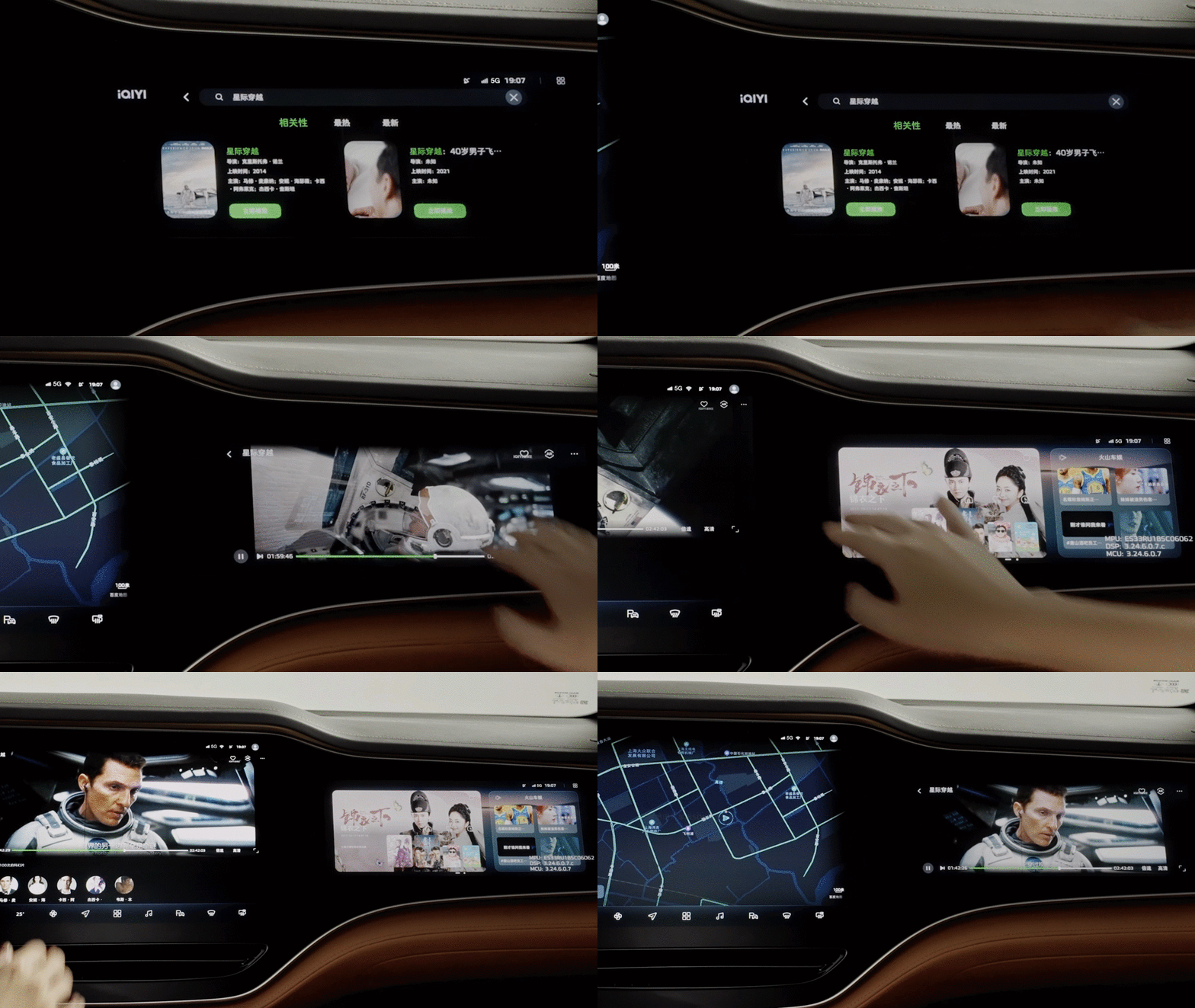
XPENG and Lixiang have upgraded to larger screens, even adding rear-seat displays. The Feifan R7, in addition to its passenger-screen upgrade, features a 'Queen' passenger seat with massage functions, catering not only to entertainment needs but also to comfort.
Furthermore, once integrated with the central control screen, passengers can set navigation routes on their screen that sync to the main display, enabling shared entertainment information between the driver and front passenger.
03Competition Extends Beyond Features
The previous discussion focused primarily on functional aspects. Equally noteworthy is the iteration of hardware.
NIO first introduced mini-LED technology into automotive cabins with the ET7. The Li L9's driver-assistance safety screen, the Kaidilake Lyriq's infotainment system, and the FeifanR7 instrument cluster have all adopted mini-LED materials.
Taking the FeifanR7's display as an example, compared to standard LCD screens, mini-LED can achieve a peak brightness of 1,000 nits, matching the latest iPad Pro. As Apple states, 'mini-LED delivers bright highlights, subtle details, and deep blacks.'
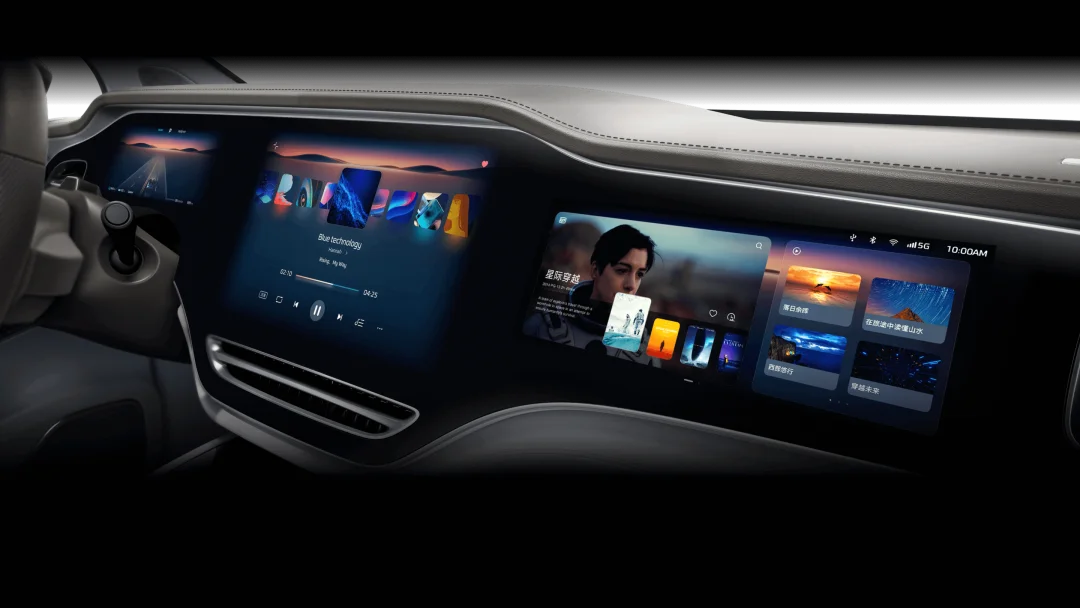
Higher brightness means that the FeifanR7 can clearly display instrument cluster content even under the scorching sun, without adding an extra sunshade.
At the same time, it is evident that leading models released this year share several common characteristics:
Larger screens;
Narrower bezels;
Improved screen quality;
More powerful infotainment chips;
Enhanced audio experiences.
This year, Lixiang, NIO, and Feifan have all integrated OLED screens into their cabins. The most immediate impact is significantly narrower bezels, bringing automotive displays in line with consumer-grade devices while offering wider viewing angles, higher brightness, and superior color reproduction.
The benefits are clear: because OLED pixels do not emit light when displaying black, this technology prevents the 'graying' of dark areas on screens during night driving.
Superior color performance enhances the experience of watching movies and TV shows. As automakers place greater emphasis on in-car entertainment, the color accuracy of infotainment screens is becoming an increasingly important factor for consumers.
According to supplier information, the adoption of mini-LED and OLED technologies in vehicles is entering a phase of rapid growth.
04Conclusion
Beyond debating whether larger screens are desirable, it is crucial to understand the current stage of in-cabin display development and to experience the practicality of large screens in real-world driving conditions.
Last year's competition in smart features led to widespread adoption of LiDARs in new models. This year's rivalry over cabin technology has resulted in interior displays with significantly improved specifications.
From an automaker's perspective, this arms race is undoubtedly painful. However, from the consumer's standpoint, it is hardly a bad thing.
The Feifan R7, labeled the "screen king," is also a representative of "new brands from traditional automakers." In terms of hardware, the Feifan R7 undoubtedly belongs to the first tier. Its UI also gives a fresh feeling, similar to the Feifan brand itself. As for whether it is actually easy to use, we will provide a final conclusion after experiencing it during the Chengdu Auto Show.
Written by: Lu San Edited by: Lu San