


China's EV Market Booms, but Automakers Face Shrinking Margins in Prolonged Price War

AITO’s new M7 starts at RMB 249,800, a direct cut of RMB 40,000 from the previous model’s starting price of RMB 289,800; the 2024 G9 starts at RMB 263,900, down RMB 46,000 from the old model’s RMB 309,900...
No one would have expected that a price war launched early in the year would persist to this point, with no signs of ending. I’ve even heard claims that the price war will continue until the end of next year, lasting until certain brands are driven out of business.
In such a protracted standoff, the price war has clearly evolved from a simple, brute-force battle over prices into a comprehensive conflict spanning traffic, production volume, and capital.
No one knows what heavier discounts or other lethal tactics competitors might deploy in the coming days, nor who will be the first to buckle under pressure and leave the table—but everyone hopes it won’t be themselves.
Meanwhile, as national subsidies gradually phase out, China’s new energy vehicle market is transitioning from policy-driven growth to market-driven dynamics.
During this transition, Chinese new energy automakers can no longer rely on being 'fed' like infants in swaddling clothes; instead, they must be 'free-range' like grown wild children, left to fend for themselves.
In this free-range survival mode, facing an endless price war, Chinese new energy automakers are forced to go all-in, betting their entire fortunes.
01Making a Crazy Decision with Rationality
What kind of features can you get for around RMB 250,000 when buying a new energy vehicle (NEV) today?
Standard equipment now includes front and rear five-link suspensions, ventilated/massaged/heated seats, a 35.6-inch large connected screen, 800 V fast charging, and a CLTC range of 700 km.
In short, many configurations that were previously impossible at this price point are now becoming standard. Carmakers seem to be fighting fiercely under the banner of 'cost-performance' — it's just about price, so cut it; it's just about features, so pile them on. Who is afraid of whom?
Of course, carmakers know all too well that a price war is a helpless move that may not necessarily hurt the enemy by a thousand but will inevitably cost them eight hundred themselves. However, once a price war erupts, whether the self-inflicted damage is eight hundred or a thousand, they must grit their teeth and execute price cuts with rational clarity. After all, for carmakers, 'truth' lies only within sales figures.
Currently, to cope with this price war, carmakers have roughly employed two major tactics:
Implementing straightforward price cuts or enhancing benefits, using real money to attract users.
Launching new versions based on existing models, lowering the selling price while simultaneously enhancing product strength.
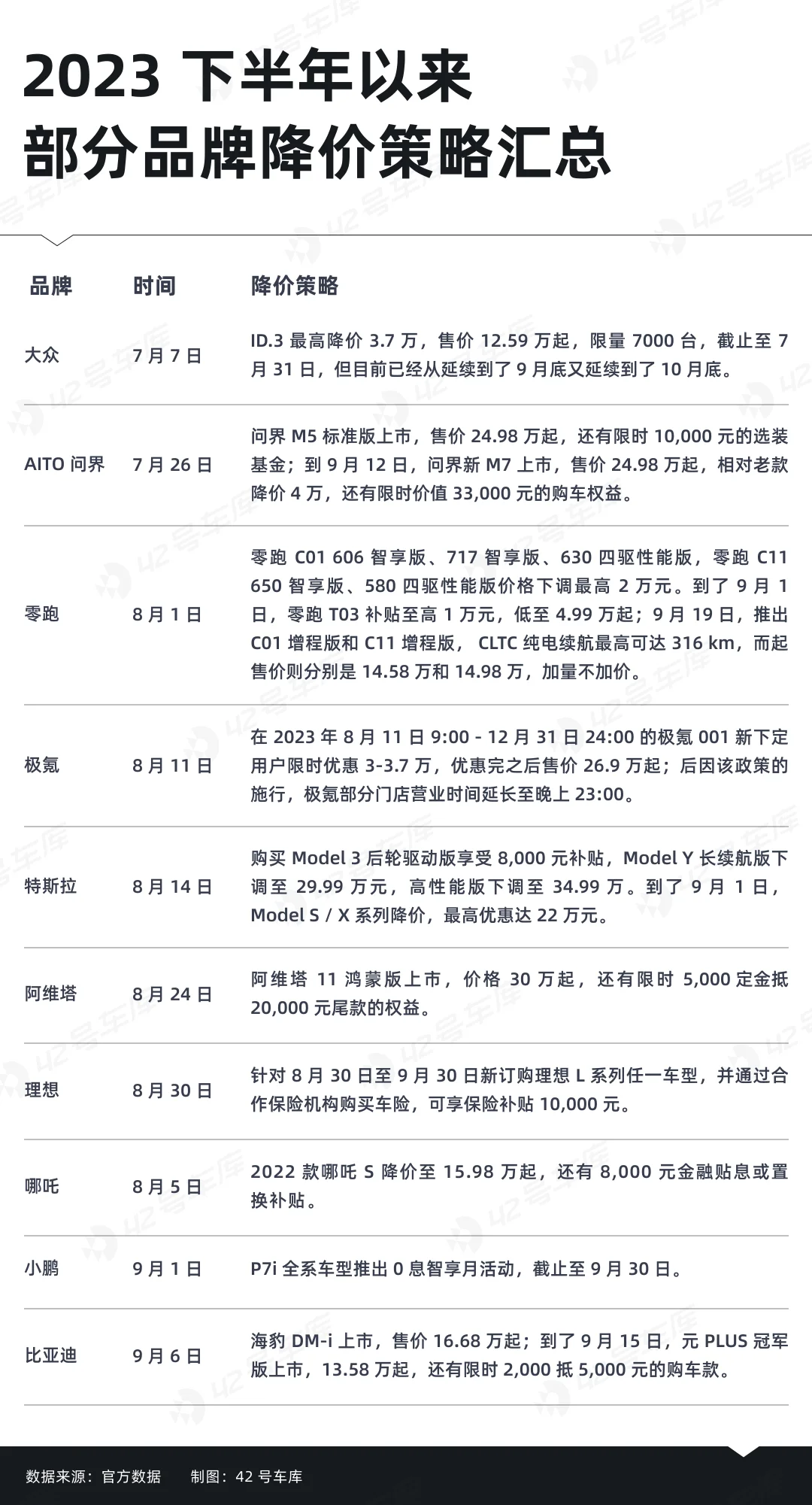
By leveraging these two tactics, automakers have managed to navigate the traditional sales slump of July and August through incentive policies, while also making longer-term strategic moves to prepare for future uncertainties amid an unclear timeline for the end of the price war.
However, this is far from enough. To convert tactical advantages into actual sales volume, a crucial weapon is required: speed.
In the current new energy vehicle (NEV) market, brands are numerous and models are abundant.
Although the NEV market appears to be flourishing with diverse offerings, a closer look reveals that most products are nearly identical, suffering from severe homogenization. While consumers have more choices than ever, high-quality options remain scarce.
Therefore, automakers must not only compete on price but also accelerate their pace to break free from homogenization, creating unique value propositions to become users' preferred premium choice.
As Wang Chuanfu stated, "We are in an era where fast fish eat slow fish, not big fish eat small fish."
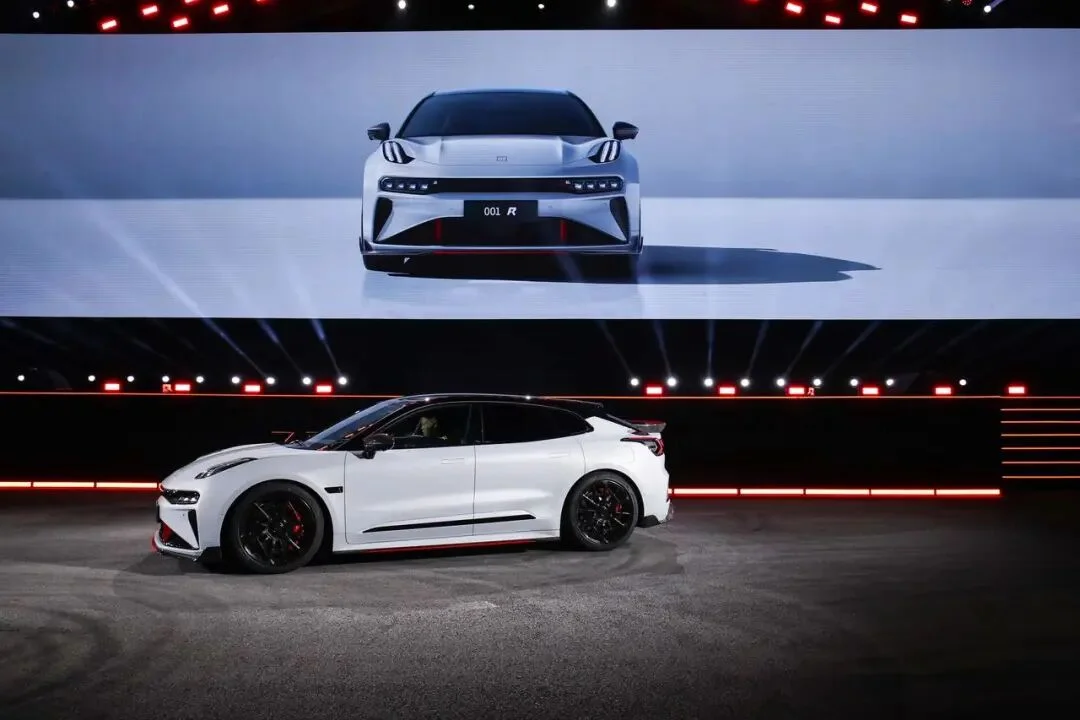
Consequently, we see Zeekr launching the Zeekr 001 FR to push pure-electric performance to its limits; AITO announced it will enable nationwide autonomous driving without high-definition maps by year-end, gaining early visibility in the mass deployment of smart driving; and Leapmotor introduced the range-extended version of the Leapmotor C01, which offers a CLTC-rated pure electric range of up to 316 km, allowing range-extended vehicles to operate without using fuel when unnecessary...
The efforts these automakers have made to create scarce value are already yielding immediate returns:
The Zeekr 001 FR, limited to 99 units per month, sold out within 15 seconds of opening reservations;
AITO's new M7 saw more than 50,000 firm orders in less than a month after its launch;
Leapmotor's September deliveries continued to climb, reaching 15,800 units, a 30% increase from the previous month.
In fact, once price cuts become the norm, they lose their appeal and often encourage consumers to wait on the sidelines, prolonging their decision-making process.
To counter this hesitation, offering high-quality products with scarce value is the most effective strategy, while setting an attractive price point acts as the trigger that fires it.
Notably, after so many rounds of price wars, many of these triggers have already been pulled to their limit.
Industry sources told us that the bill of materials (BOM) cost for the Zeekr 001 alone has already reached over two hundred thousand, while the current starting price of the Zeekr 001 is only 269,000; the BOM cost for the XPENG G6 is also relatively high compared to its starting price of 209,900, reaching seventeen or eighteen ten-thousand.
When the Leapmotor C01 extended-range version launched, it unusually did not announce any purchase benefits. Zhu Jiangming stated regarding this move that the price had reached the bottom line.
Like Zeekr, XPENG, and Leapmotor, despite their significant market presence, these companies are showing signs similar to Xiaomi’s assertion that hardware net profit margins will not exceed 5%.
For most new energy vehicle manufacturers currently engaged in a price war, the reality is hovering just on the edge of losing money while generating buzz.
However, judging from the current competitive landscape, this may already be a relatively rational decision made by automakers after assessing the situation, based on their own capability boundaries and market demand—even if the decision appears crazy.
02An Expected Beginning, an Unexpected End
In any industry, the outbreak of a price war is hardly surprising.
For the new energy vehicle market, Tesla was undoubtedly the instigator of this price war. However, even without Tesla, such a price war would likely have been unavoidable.
Price Cuts Follow Cost Reductions
There is no doubt that the new energy vehicle (NEV) industry in China has entered a period of rapid growth, taking another significant step toward maturity.
Data from Zhongqixie shows that NEV penetration rate reached 31.6% in September this year, with the cumulative penetration rate for January through September at 29.8%. This stands in sharp contrast to the end of 2020, when the NEV penetration rate was just 5.4%.
In other words, within a short three-year span, the NEV penetration rate has increased approximately sixfold.
From the consumer perspective over these three years, acceptance of NEVs has grown significantly, with buyers increasingly favoring them during purchase decisions.
From a product standpoint, capabilities in electrification and intelligence have strengthened considerably. Safety issues that once sparked frequent debate are now rarely discussed.
On the manufacturing side, technologies such as integrated die-casting and battery-chassis integration have advanced rapidly, substantially lowering production costs for automakers.
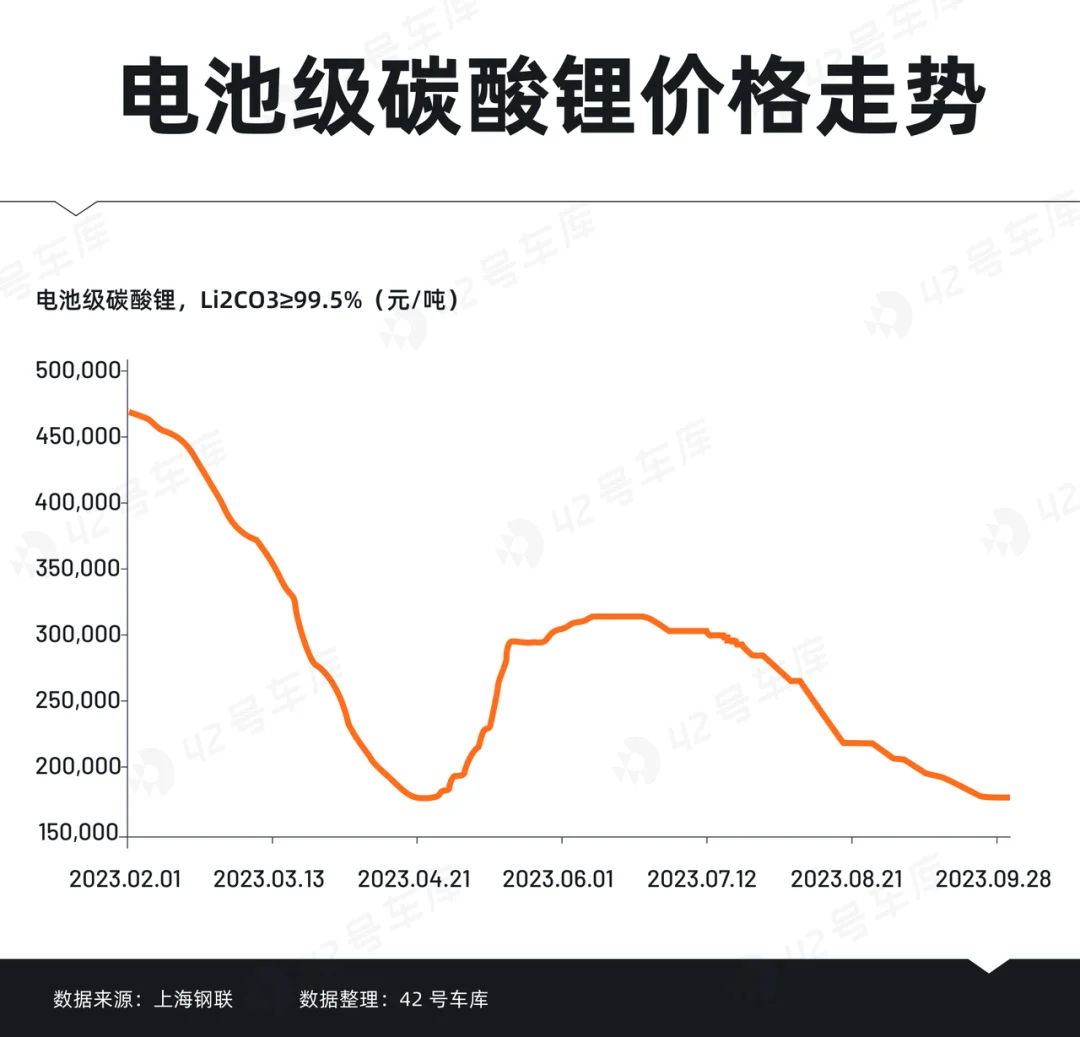
At the same time, as batteries constitute the largest portion of NEV costs, prices for raw materials have continued to decline.
According to data from Shanghaiganglian, the price of battery-grade lithium carbonate had fallen to RMB 178,500 per ton as of October 9. In early February this year, the price stood at RMB 469,000 per ton, and in November last year it neared RMB 600,000 per ton.
With the rapid growth in market penetration, the scale of new energy vehicles has reached a new level.
In July, China’s new energy vehicle market officially entered the 20 million-unit tier. Among them, Tesla China has reached a scale of 2 million units, while BYD has already hit 5 million units.
The effects of economies of scale are beginning to take hold, with overall costs significantly lower than before. Consequently, automakers lowering prices to boost sales and further expand their scale is a natural outcome.
The Automotive Darwinism Game
Survival of the fittest: new energy vehicles and internal combustion engine vehicles are engaged in an automotive Darwinism game.
As noted earlier, within just three years, the penetration rate of new energy vehicles increased approximately sixfold. Against the backdrop of China’s auto market entering a stock phase, it is undeniable that the growth of new energy vehicles primarily comes at the expense of the internal combustion engine market.
According to Zhongqixie, monthly fuel-vehicle sales have been declining year-over-year for most of the year so far. The 65.2% year-on-year growth in April, a typically slow sales month, was largely driven by collective price cuts from fuel-vehicle manufacturers in March.
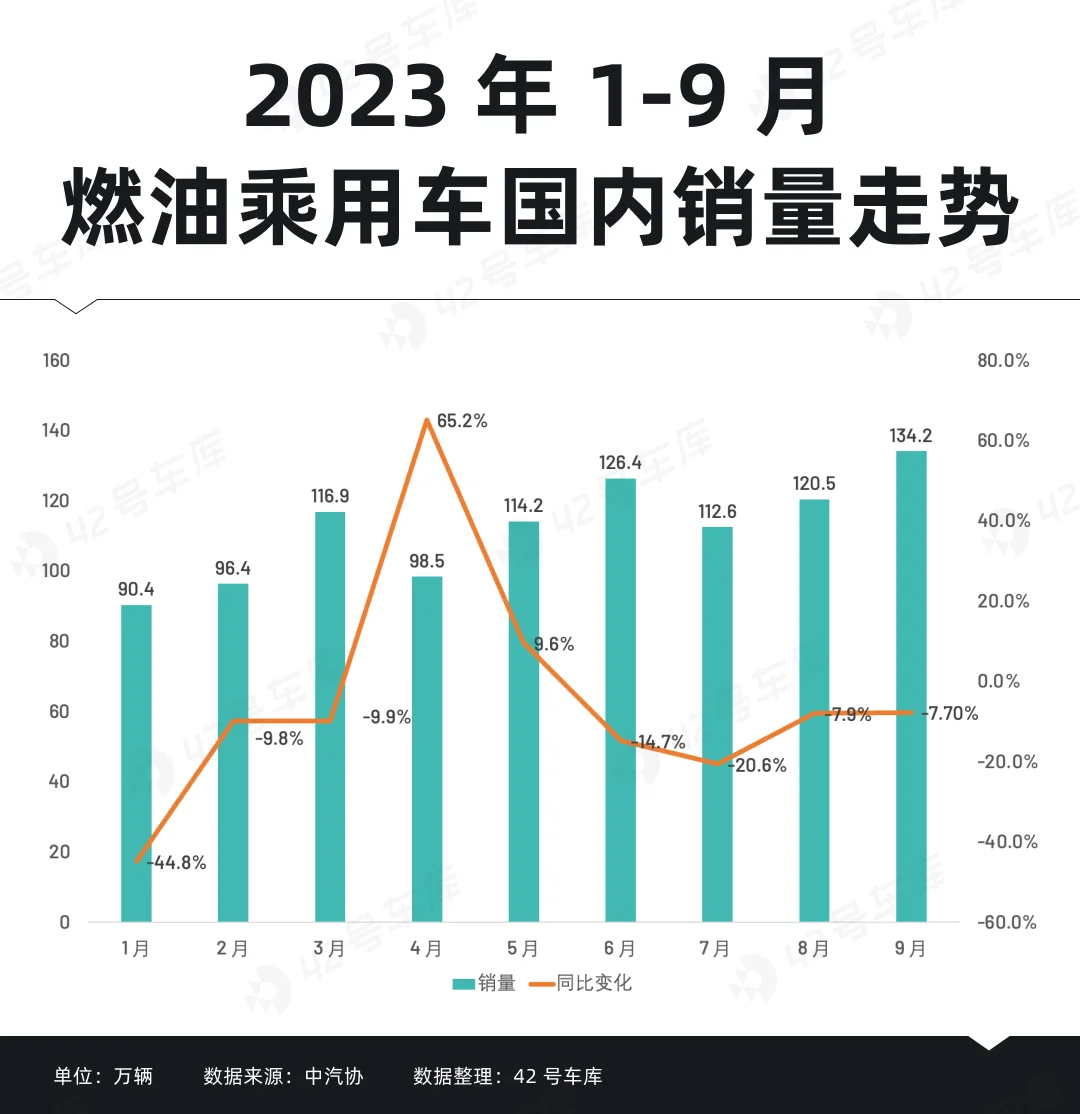
This indicates that while new-energy vehicles (NEVs) represent the long-term trend, fuel vehicles remain highly attractive in the mainstream consumer market as long as prices are low enough. As one popular internet meme put it: "A C6 costing 200,000 RMB looks old-fashioned; a C6 costing 120,000 RMB looks dignified and steady."
Even with fuel vehicles already seeing price drops measured in tens of thousands of yuan, the downward pricing pressure is likely to continue. The key reason is overcapacity.
Data published on the personal official account of Chenglianhui Secretary-General Cui Dongshu shows that China’s annual capacity utilization rate stood at only 72.7% by the end of Q2. According to international standards, a utilization rate below 75% signals severe overcapacity.
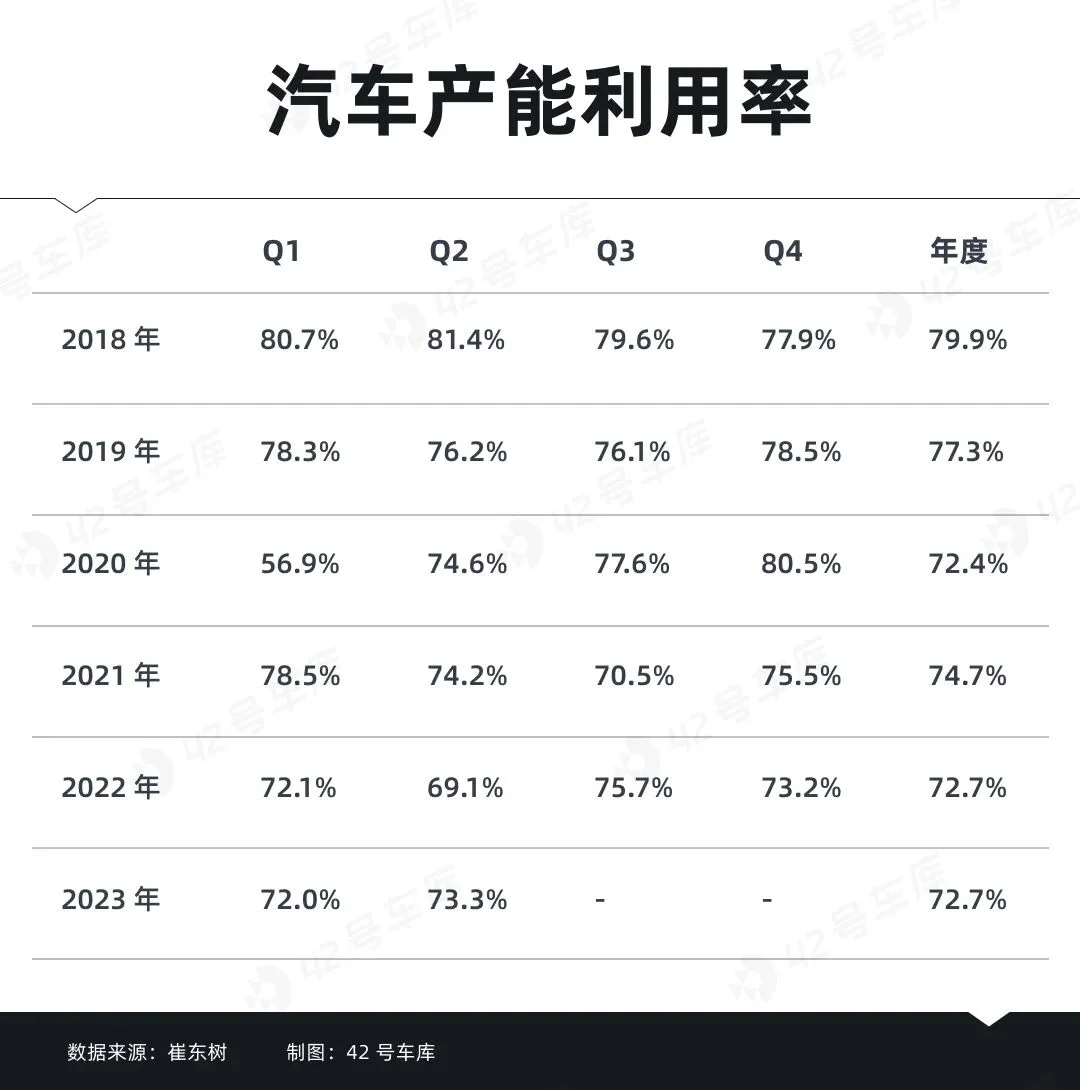
When severe overcapacity occurs, structural imbalances among automakers arise, and dealer inventory pressures mount. The inevitable result is further aggressive discounting.
For fuel vehicles, facing both the rising tide of NEVs and legacy production capacity that has been slow to transform, price promotions seem like the only option. For NEV makers relying on capturing fuel-vehicle market share for growth, they have little choice but to follow suit if fuel vehicles slash prices aggressively.
The Conflict Between Survival and Transformation
Internal contradictions within the new energy vehicle (NEV) sector are a major catalyst for the ongoing price war.
The growth of the NEV market has given rise to a large number of new automakers. However, after years of fierce competition and consolidation, only a handful—such as NIO, XPENG, Li Auto, Leapmotor, and Neta—retain significant market influence.
Others have fled across the ocean in an attempt to rebuild their fortunes, sought alternative livelihoods through overseas exports, or are on the verge of collapse while desperately searching for acquirers.
Although new automakers like NIO, XPENG, and Li Auto have fought their way through numerous challenges to survive, most still face existential crises. According to official financial reports, NIO’s gross margin in Q2 was merely 1%, while XPENG and Leapmotor reported negative gross margins for the same quarter.
To make matters worse, new automakers lack the backing of traditional manufacturers. Poor financial performance prevents them from delivering satisfactory results to their primary source of funding—the capital markets. Isolated and unsupported, they resort to trading price for volume as a lifeline.
While new automakers bear the heavy burden of survival, traditional manufacturers face immense pressure to transform.
On one hand, their past successes in the internal combustion engine (ICE) market have become liabilities during transformation, creating constant constraints and forcing them to watch helplessly as new entrants seize the initiative.
On the other hand, traditional automakers inherently lack the marketing momentum of new EV startups. Despite extensive exploration in the new energy vehicle market—including launching dedicated EV sequences or brands—their sales performance has generally remained lukewarm.
For traditional automakers to successfully complete their transformation and regain a foothold in the EV market, establishing a price advantage is undoubtedly a critical strategy. Unlike new EV startups, traditional automakers still generate substantial profits from their internal combustion engine (ICE) vehicles, allowing them to withstand financial pressure for a certain period. New EV startups, however, may not have that luxury.
The Catfish Hasn't Died; It's Just Resting
For a considerable period, price wars will likely remain influenced by Tesla.
Taking the domestic Model 3 Rear-Wheel Drive version as an example, since its launch, the domestic Model 3 Rear-Wheel Drive version has been subject to frequent price adjustments. Each adjustment has caused significant market fluctuations. Prior to the release of the Refreshed version, the cumulative price reduction for the domestic Model 3 Rear-Wheel Drive version had reached as much as 100,000.
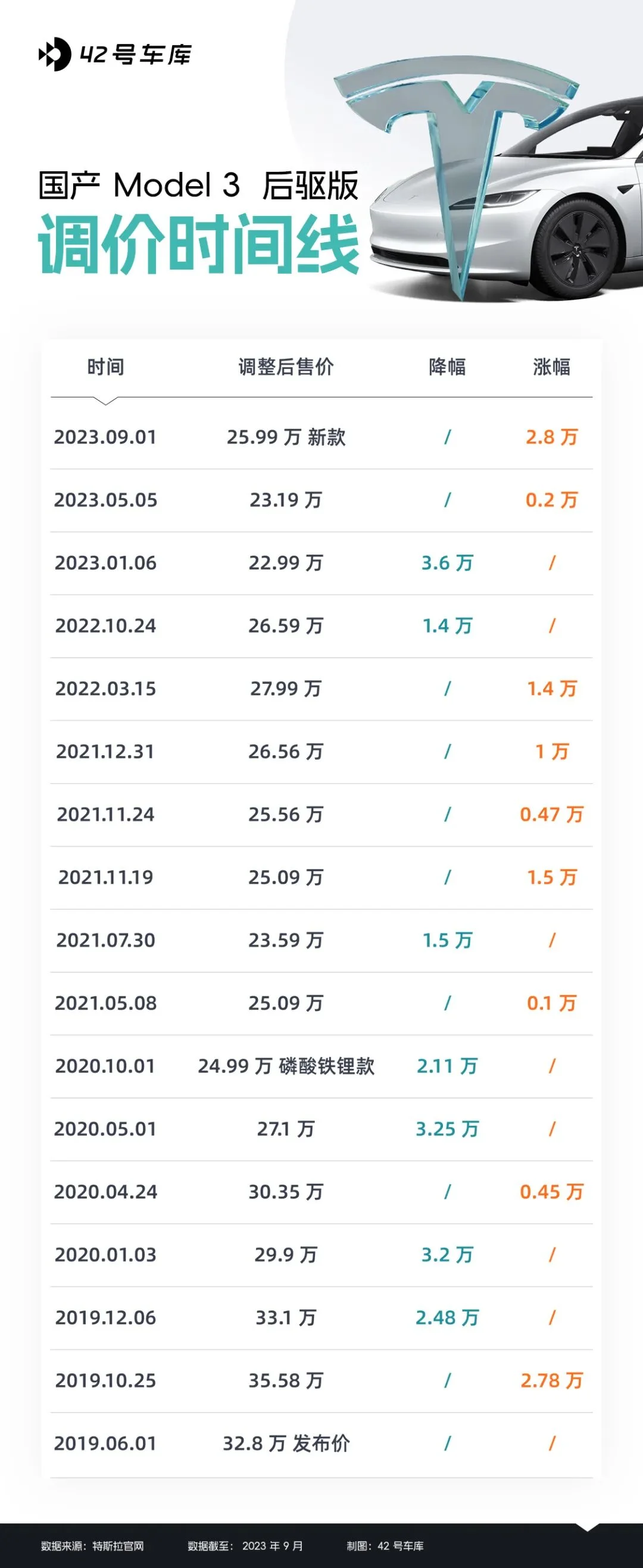
Meanwhile, although prices for Tesla models have dropped repeatedly like the Model 3 RWD, Tesla’s Q2 earnings report indicates a gross margin of 18.2%. This means that compared to most other new energy vehicle manufacturers, Tesla still has considerable room to lower prices further.
Additionally, driven by his obsession with expanding sales volume and scale to build a closed-loop software-and-hardware ecosystem and achieve a software-driven profit model, Elon Musk has expressed that Tesla is willing to sell cars at zero profit if necessary to boost sales figures.
Therefore, until its commercial targets are met, Tesla will likely adjust prices at some point to stimulate sales and scale growth. Even if a prolonged price war like today’s does not occur, short-term skirmishes or blitzkrieg-style moves remain hard to avoid.
As the undisputed giant among new energy vehicle (NEV) makers, Tesla’s impact is unavoidable for most other companies when it cuts prices, even if it has no specific target in mind.
Like Tesla, BYD, another giant in the NEV market, influences market shifts with every move it makes.
Currently, BYD continues to launch Champion Edition models. Meanwhile, through DENZA, Fang Cheng Bao, and Yangwang, BYD is intensifying its efforts in the mid-to-high-end market, positioning itself to cover virtually all price segments.
Facing BYD’s offensive, few NEV makers—including Tesla—can afford to rest easy.
In summary, the price war is a natural outcome of the NEV market’s development and is becoming normalized.
When this price war will end remains unclear. Industry insiders note that while some companies do not wish to engage in the current price war, others cannot afford to stop. The duration will depend on trends observed in the third and fourth quarters.
03Market Changes Amid Normalized Price Wars
Amid the normalization of price wars, changes unlike anything seen in previous automotive markets are unfolding in China's new energy vehicle (NEV) sector.
Product R&D / Iteration Cycles Shorten
As noted above, automakers are racing to build their unique value propositions quickly. A direct consequence is that product development and iteration cycles are shrinking.
From recent developments, XPENG Automobile is "fighting G9 again" less than a year later, avoiding some pitfalls encountered by the old G9 and enhancing the value perception of the 2024 G9. Facts have also proven that the 2024 G9 might be another hit for XPENG after the G6 — within half a month, the number of large orders for the 2024 G9 exceeded 15,000 units.
Similarly, AITO released the new M7 roughly a year after its initial launch. In less than a month on the market, fixed orders surpassed 50,000 units, reversing a period of sluggish sales. Richard Yu even posted on WeChat Moments, saying, 'Bringing it back from the brink was not easy.'

However, for some brands, a one-year cycle remains too long.
Zhiji launched the LS7 in February and announced the LS6 for release on October 12; Geely launched the Galaxy L7 at the end of May, followed by the Galaxy L6 just four months later; DENZA launched the N7 in July, with the N8 arriving barely a month later.
The principle that 'in martial arts, speed is the ultimate weapon' seems to be taking hold in the new energy vehicle (NEV) market as well.
Interestingly, as automakers roll out new products one after another, a term that was rarely seen before has begun to appear with high frequency at launch events: delivery upon listing.
This means that automakers are no longer competing solely on product research and development or iteration cycles; they are also vying for production capacity, delivery speed, and overall system capabilities spanning manufacturing, sales, and distribution channels.
In this way, automakers can seize scarce value for users ahead of competitors, break free from homogenization, and find a new breakthrough point for sales volume and scale. This helps build a more stable profit structure and expands their room to maneuver in price wars.
Reconstructing the New Order of the Auto Market
As domestic brands rise strongly in China's NEV market and intensify the price war, the presence of some international brands has been steadily diminished. The concept of 'winning effortlessly' has gradually become a relic of history in the auto market.
Facing silence in China's NEV market, some international brands have chosen to join rather than fight. The most typical example is the collaboration between Volkswagen and XPENG.
On July 26, Volkswagen announced a partnership with XPENG. Volkswagen invested USD 700 million to acquire approximately 4.99% of XPENG's equity at a price of USD 15 per ADS (American Depositary Share). XPENG will provide the G9 platform and intelligent technologies. The two companies will jointly develop two models under the Volkswagen brand, which are planned for launch in 2026.

Through cooperation, XPENG not only secured investment from Volkswagen but also bolstered market confidence. Upon the announcement of the partnership between XPENG and Volkswagen, XPENG's US-listed shares surged by more than 37% in early trading. For Volkswagen, aligning with XPENG helps amplify its presence in the new energy vehicle (NEV) market and builds core product competitiveness amid the broader trend toward automotive intelligence.
The collaboration between XPENG and Volkswagen is undoubtedly a win-win scenario.
Additionally, Audi has partnered with Shangqi; there are whispers of an undisclosed connection between Mercedes-Benz and NIO; and Leapmotor announced it is advancing cooperation with two unnamed foreign automakers. Leapmotor has not disclosed which companies these are, stating only that the process is ongoing.
Regarding collaborations between established brands and new EV startups, Zhu Jiangming noted that many companies lack proprietary technology yet wish to enter the NEV sector. Leapmotor can offer an Original Design Manufacturer (ODM) model, achieving mutual benefits by expanding its network of partners.
The current reality aligns with Zhu Jiangming’s assessment: many enterprises, particularly international brands, seek to transition to new energy vehicles but lack technical capabilities, while domestic brands possess technology but face constrained market space. Such partnerships enable resource exchange and complementary strengths.
In the short term, cooperation allows both legacy and new brands to navigate the challenges of price wars. In the long term, it prepares both parties for future competition.
The Value Hierarchy Amidst Chaos
Under the pressure of price wars, the conventional value system that had long been established in the internal combustion engine (ICE) vehicle sector is being upended.
In the past, a distinct hierarchy of value emerged within the automotive market, largely defined by hardware capabilities such as 0-100 km/h acceleration and driving dynamics. This structure made it virtually impossible for consumers to purchase a mid-size sedan like the Leapmotor C01—measuring 5.05 meters in length with a 2.93-meter wheelbase—for just RMB 150,000 starting from the compact car segment.
However, with battery packs replacing engines, achieving 0-100 km/h acceleration in five or six seconds has become commonplace and, in many cases, quite inexpensive. Furthermore, batteries are not controlled by automakers but are sourced from a limited number of suppliers.
Compared to ICE vehicles, the hardware performance gaps between new energy vehicles (NEVs) are narrowing.
Simultaneously, driven by advancements in intelligent technologies, software-defined vehicles have become the new industry standard. The influence of smart driving and smart cockpit features on consumer purchasing decisions is growing significantly, fundamentally altering the criteria users apply when evaluating a vehicle compared to the ICE era.
In other words, the innovation brought by NEVs is reshaping how consumers perceive automotive value.
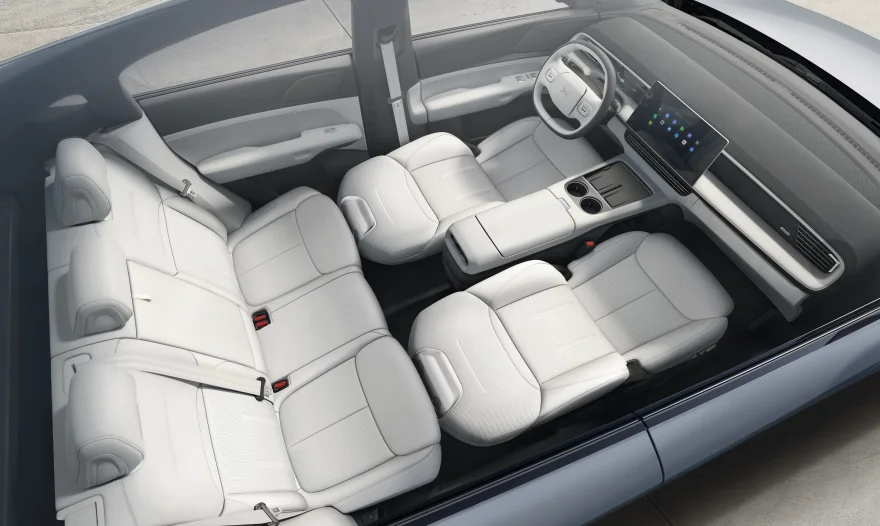
Additionally, the erosion of brand premiums is further disrupting the traditional ranking of vehicle worth.
Because the new energy vehicle (NEV) sector is a completely new track, both emerging brands and traditional imported or domestic automakers are starting from scratch. Brand equity holds little inherent value in this context. Even premium marques like Mercedes-Benz, Audi, and BMW (BBA), which command significant premiums in the internal combustion engine market, have seen their brand value erode sharply when entering the NEV space, with some even being jokingly referred to as "no-name" electric vehicles.
With brand premiums effectively neutralized, manufacturers are left with no choice but to pile on features regardless of cost.
To scale up through price competitiveness, NEV makers are eager to equip vehicles priced around RMB 100,000 with configurations previously reserved for luxury cars costing hundreds of thousands of yuan. Whether this strategy can eventually generate brand premiums—and if so, how much—remains to be seen.
Overseas Expansion Opens a Pressure Valve
Faced with intense price wars in the domestic market, an increasing number of NEV manufacturers are turning their attention overseas.
Recent market developments highlight this shift: XPENG announced its entry into the German market in 2024, with the G9 (International Version) and P7i (International Version) set to launch in Israel in Q4 this year; Leapmotor launched its global strategy at the Munich Motor Show, announcing plans to sell five globally targeted models simultaneously across Europe, Asia-Pacific, the Middle East, and the Americas within the next two years; and in September, Zeekr announced partnerships with four Gulf Cooperation Council countries in the Middle East, expecting to enter eight major international markets and regions by year-end.
Overall, according to data from Zhongqixie (China Association of Automobile Manufacturers), NEV exports totaled 727,000 units from January to September this year, representing a year-on-year growth of 110%. In April alone, export volume surged by 840% compared to the same period last year.
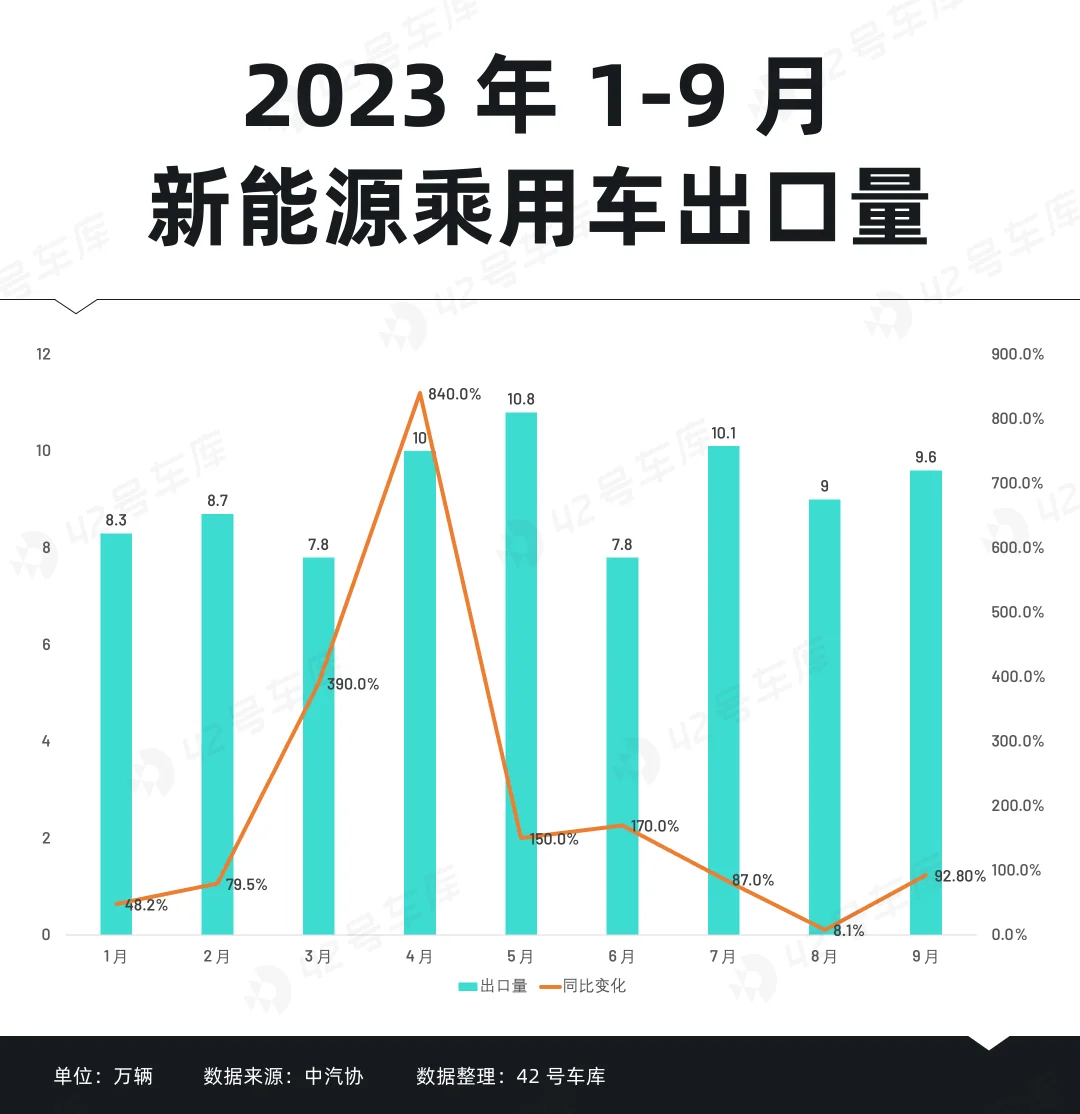
In the current wave of going global, Chinese new energy vehicle (NEV) brands are now ubiquitous in markets such as Southeast Asia, the Middle East, and Europe. According to the latest data from Zhongqixie (China Association of Automobile Manufacturers), Belgium, Thailand, and the United Kingdom were the top three export destinations for Chinese NEVs from January to August.
However, precisely because of the rapid growth in Chinese NEV exports, automakers are facing new pressures abroad.
On October 4, the Oumengweiyuanhui (European Commission) officially launched an anti-subsidy investigation into Chinese battery electric vehicles, creating a hurdle for Chinese NEVs exporting to Europe. In response, Cui Dongshu, Secretary-General of Chenglianhui (China Passenger Car Association), stated on his personal WeChat official account:
This is an inevitable byproduct of the growing strength of China's new energy vehicle industry. It is only when they become powerful that they attract attention and make some feel uncomfortable.
While price wars have prompted automakers to seek new opportunities, these opportunities come with new challenges. Whether domestically or internationally, the path for NEV automakers remains long and arduous.
04Conclusion
As September comes to a close, many NEV automakers reported another increase in sales. On the last day of the National Day holiday, Cui Dongshu, Secretary-General of Chenglianhui, published an article on his official account titled "China Accounted for 65% of the World's NEV Share in August 2023".
In short, the market appears to be a scene of celebration, akin to "drums beating and firecrackers ringing."
But as the saying goes, only the drinker knows whether the water is hot or cold. Behind the rise in sales figures, it is only the automakers themselves who truly know how much they have sacrificed and what pressures they are bearing in the intense price war.
Since the new energy vehicle market began its explosive growth, China's NEV sector has expanded rapidly and led the world, achieving overwhelming success. Yet, amid intense internal competition, Chinese NEV automakers have not yet enjoyed a quality of life commensurate with the broader industry's celebratory achievements.
Today, the vicious competition continues unabated, and the price war shows no signs of stopping. Chinese new energy vehicle companies seem to be universally in a state akin to drinking poison to quench thirst. As Lei Ping, Deputy General Manager of Zhongguodiyiqichejituanyouxiangongsi, stated:
The new energy vehicle market continues to maintain high growth momentum, but the vast majority of new energy automakers are facing the awkward situation of "increased volume and revenue without increased profits."
The reality is not as celebratory as it may appear on the surface, but viewed from a longer-term perspective, new energy vehicles are still in their early stages of growth. The current situation is merely an inevitable growing pain on the path toward maturity for the new energy vehicle market.
During this period of pain, new energy vehicle makers must choose to endure the hardship and move forward. After all, the new energy track is crowded with people; only those who first break out of the price war will have the chance to secure their ticket to the future.
Note: Cover image from Saving Private Ryan
Written by: Isaiah Edited by: 308