


Tesla HW 4.0 Hardware Leaked: New Radar, Camera Upgrades and Higher Power Draw
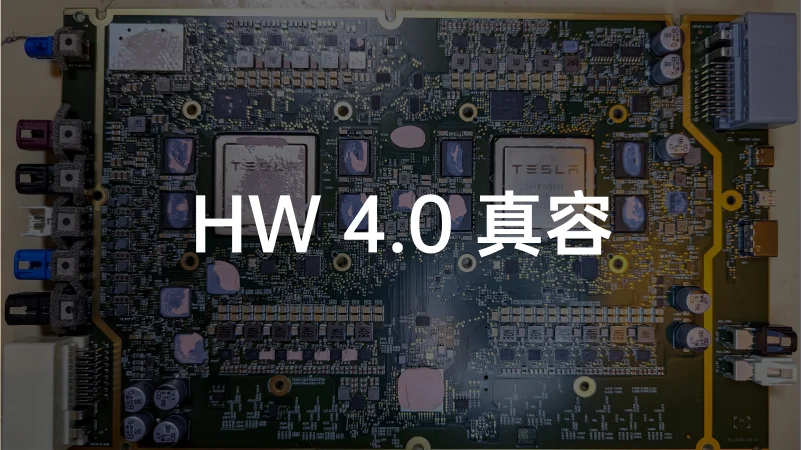
In the first half of 2020, Tesla officially equipped all its models with HW 3.0 hardware, marking the beginning of its "3.0 era." Just a few months later, we began to see leaks regarding HW 4.0.
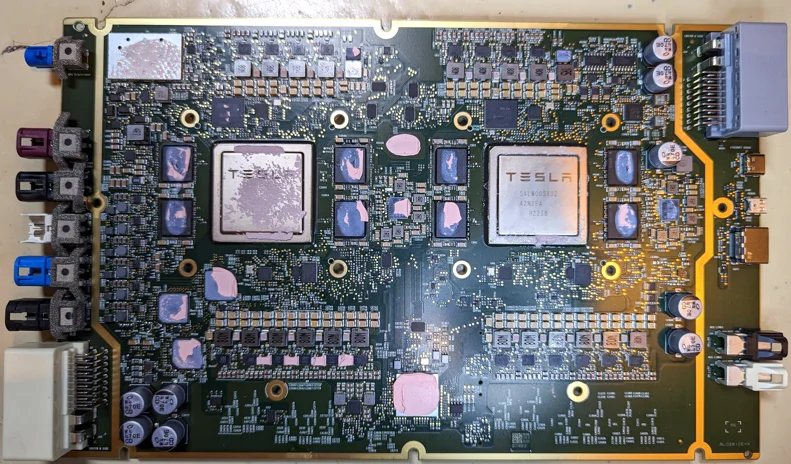
On February 16, Twitter leaker green, who has previously shared multiple details about Tesla's hardware, provided high-resolution leaked photos of HW 4.0, offering a glimpse into Tesla's next-generation hardware platform.
Source: Twitter
01How does HW 4.0 compare to HW 3.0?
green obtained the complete computing hardware module. The image above shows the disassembled mainboard of the HW 4.0 computing core, while the two images below show HW 4.0 in its assembled state. Visually, compared to the HW 3.0 computing hardware that was upgraded for MCU computing performance, HW 4.0 is noticeably larger.
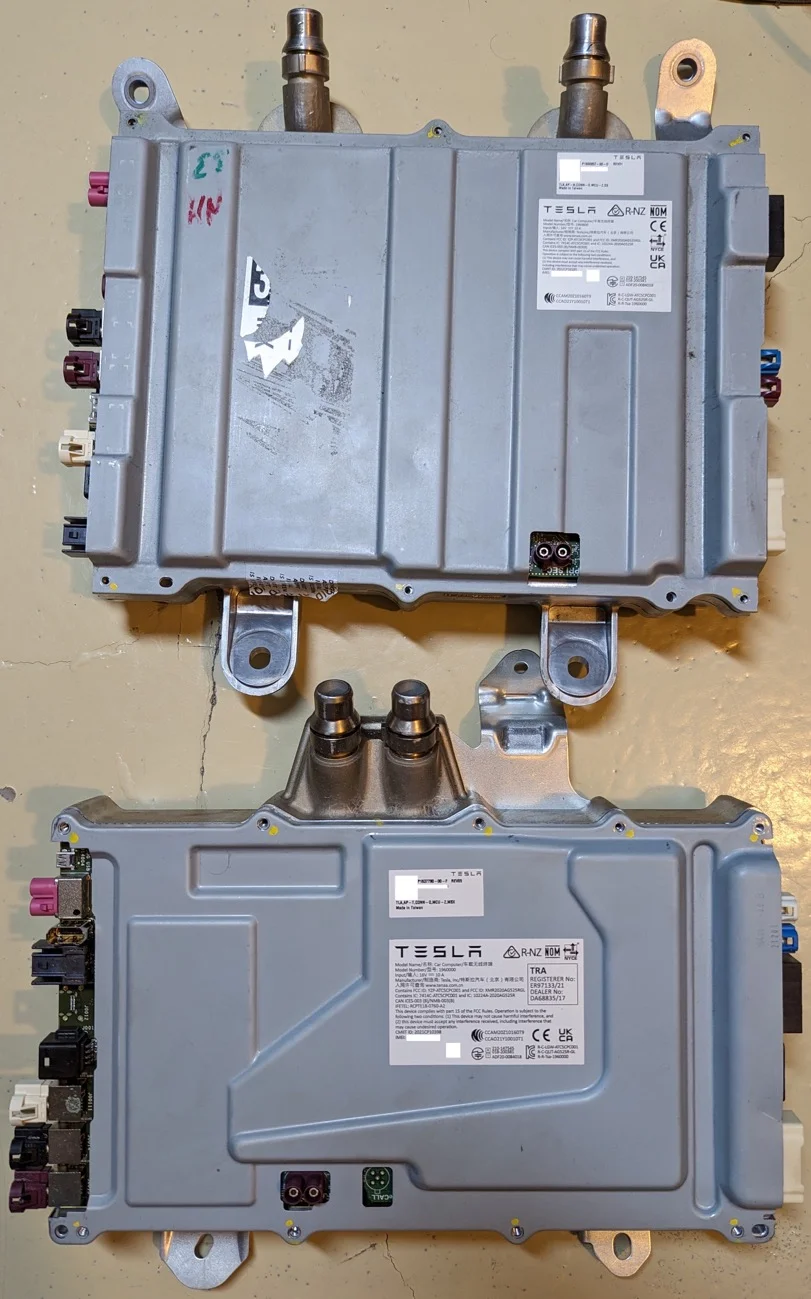
Source: Twitter, top is HW 4.0, bottom is HW 3.0
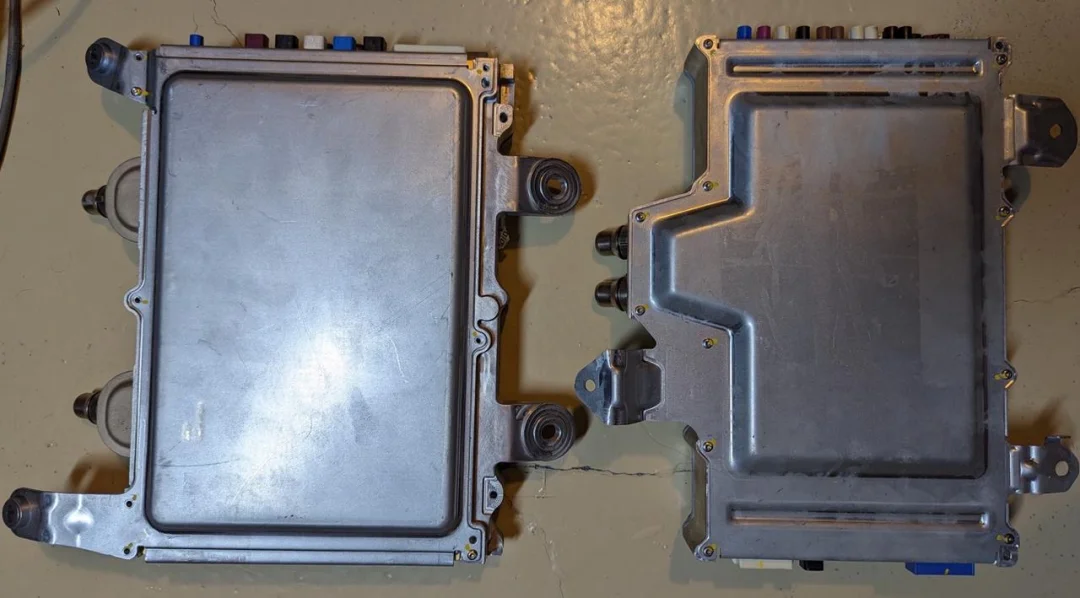
Source: Twitter, left is HW 4.0, right is HW 3.0 Combined with the interface comparison of the two hardware sets below, it is easy to understand why Elon Musk stated that existing models cannot be upgraded to HW 4.0 due to the high cost and difficulty of the upgrade. The radically different sensor layouts mean that while existing models can accommodate this hardware, they ultimately cannot alter the peripheral sensor layout of the vehicle.
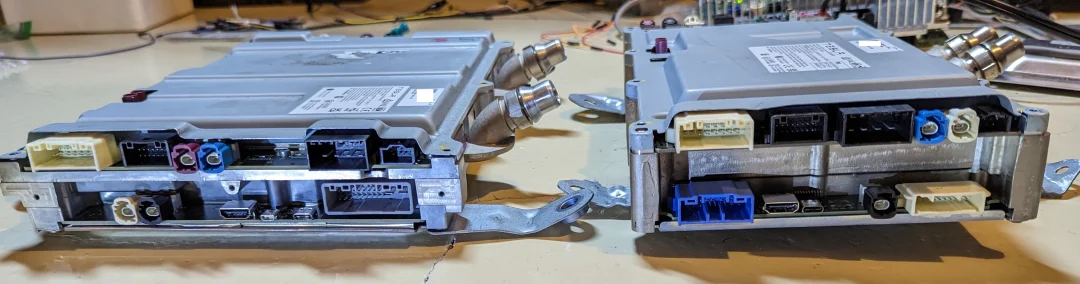
Source: Twitter, left is HW 4.0, right is HW 3.0 Below are comparisons of the front and back sides of the HW 4.0 and HW 3.0 mainboards, revealing significant differences in their circuit layouts.
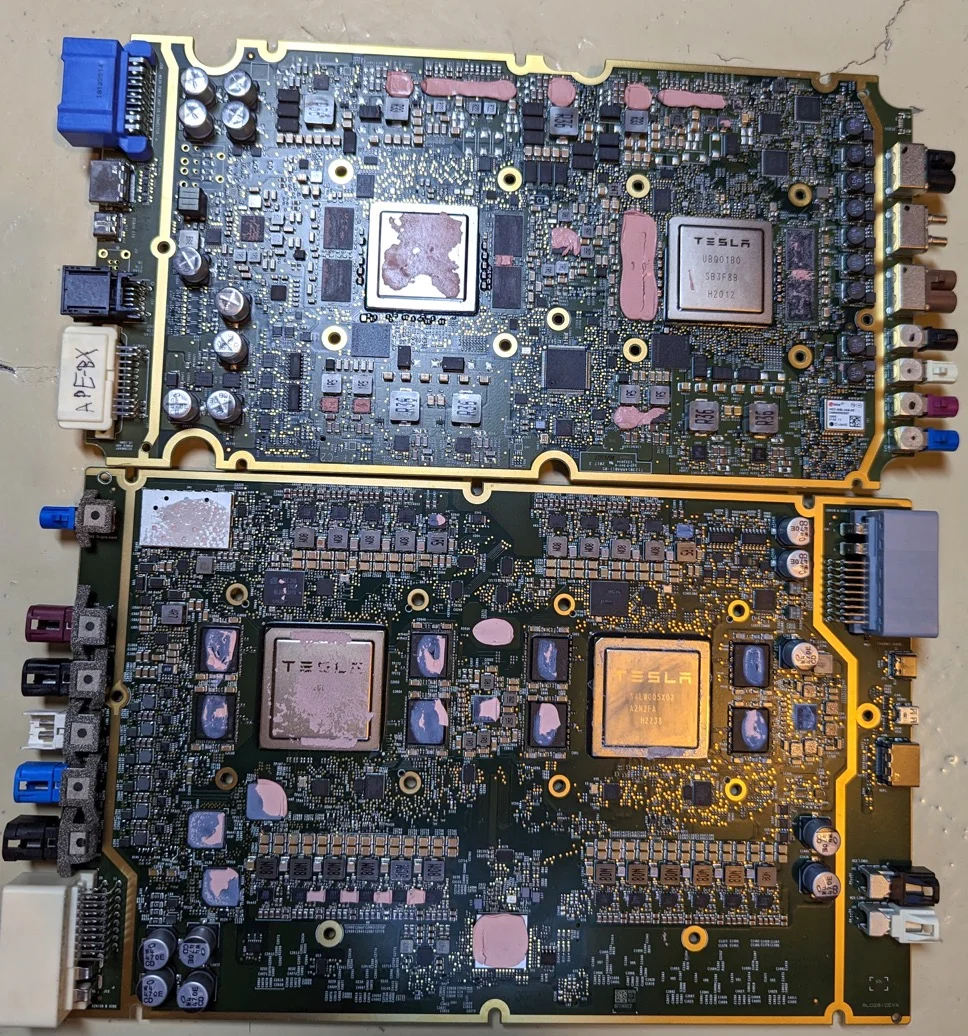
Source: Twitter, top is HW 3.0, bottom is HW 4.0
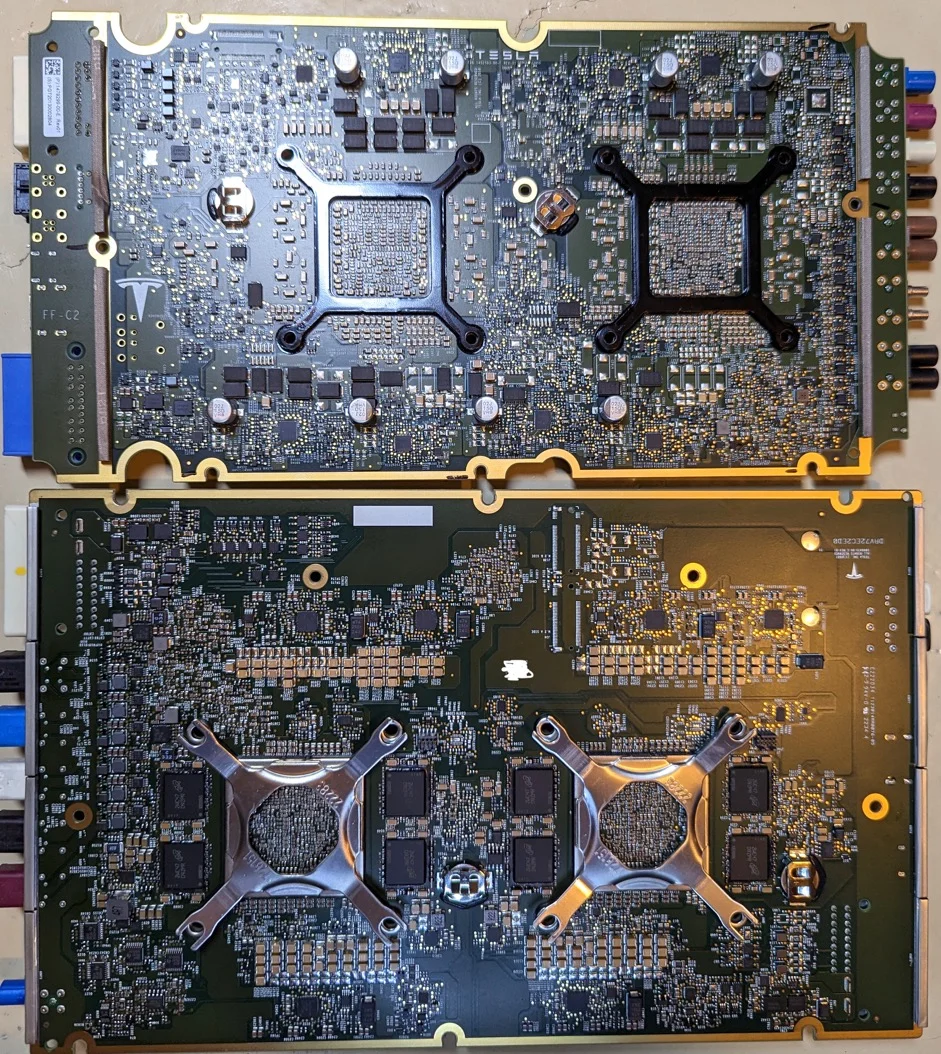
Image source: Twitter, with HW 3.0 at the top and HW 4.0 at the bottom. The most obvious difference this time is that the GPU no longer has a separate small board as it did in HW 3.0; instead, it shares a mainboard directly with the CPU. This increases the integration of the entire mainboard and frees up space for autonomous driving-related chips, allowing for greater flexibility in the mainboard's design.
For the MCU alone, HW 4.0 and 3.0 use completely identical hardware:
It continues to use the same model of AMD CPU and GPU;
16 GB of memory;
256 GB NVMe solid-state flash memory;
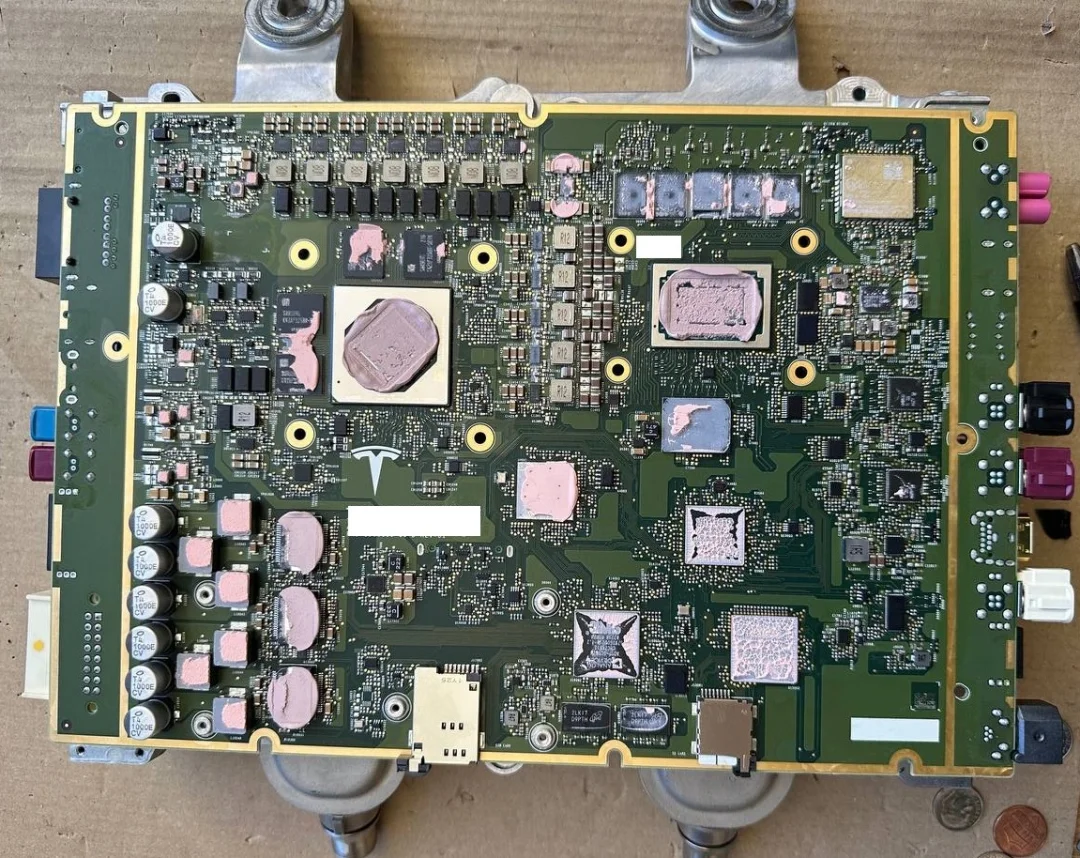
Image source: Twitter
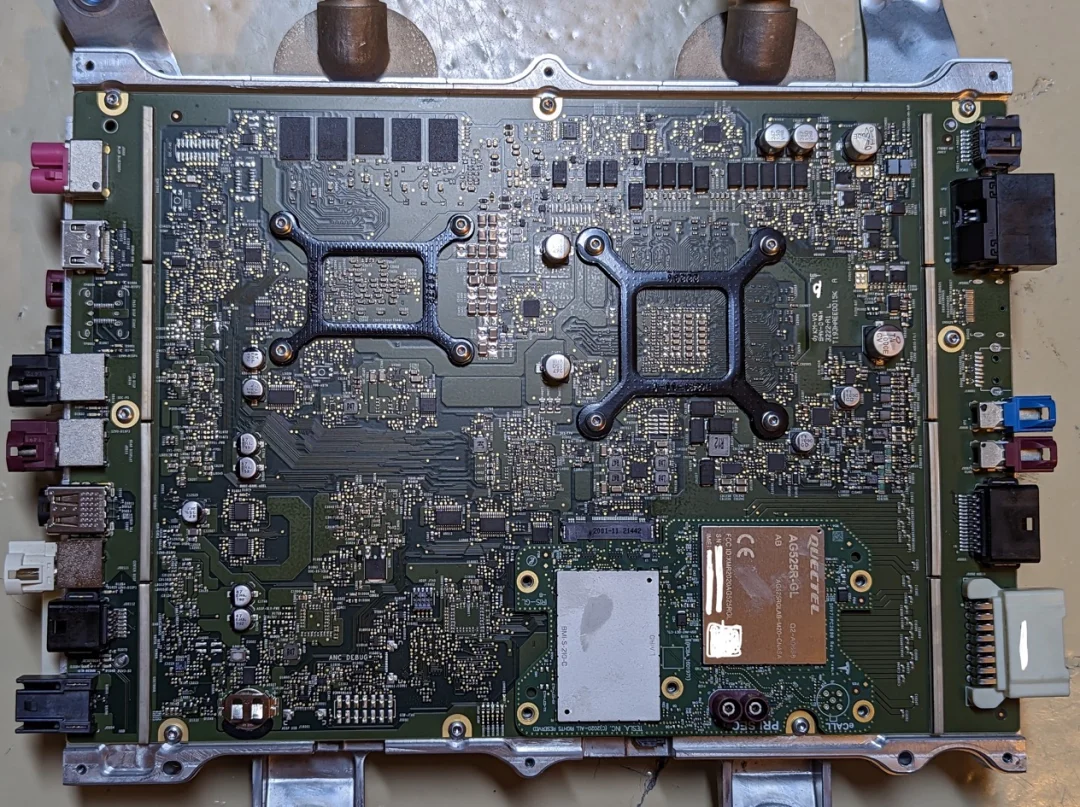
Image source: Twitter The new FSD chip appears to be a modest incremental update, possibly linked to Jim Keller’s departure. The chip still relies on Samsung’s Exynos architecture. The CPU core count increases from 12 to 20, with a maximum frequency of 2.35 GHz and a low-power frequency of 1.37 GHz. The number of TRIP cores rises from two to three, reaching a peak frequency of 2.2 GHz. Total computing power is expected to reach 300–500 TOPS.
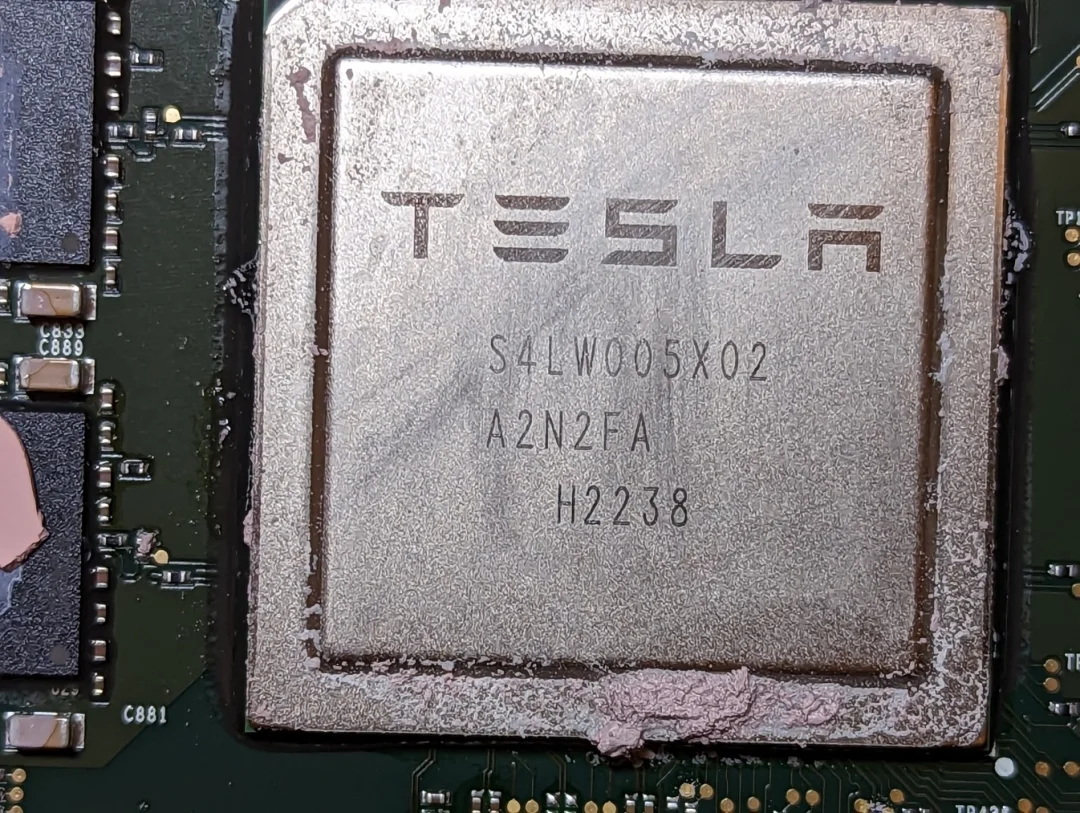
Image source: Twitter HW 4.0 provides two FSD chips per vehicle, doubling the computing power while allowing one chip to serve as redundant capacity. However, HW 4.0 does not yet achieve true full redundancy. If power fails on one side, it can still disrupt data connections for the entire system. The PCB layout is symmetrical, featuring identical power interfaces on both sides and connection modules for two MCUs.
HW 4.0 supports 12 camera inputs but will actually accommodate only 11 cameras, as one position is reserved for a backup camera.
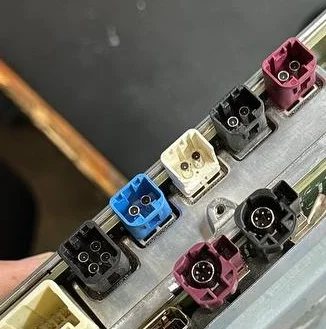
Image source: Twitter Each interface is labeled with its corresponding camera position. Visible labels include F-SVC, L-SVC, R-SVC, L-FF-Rear, and R-FF-Rear.

Image source: Twitter
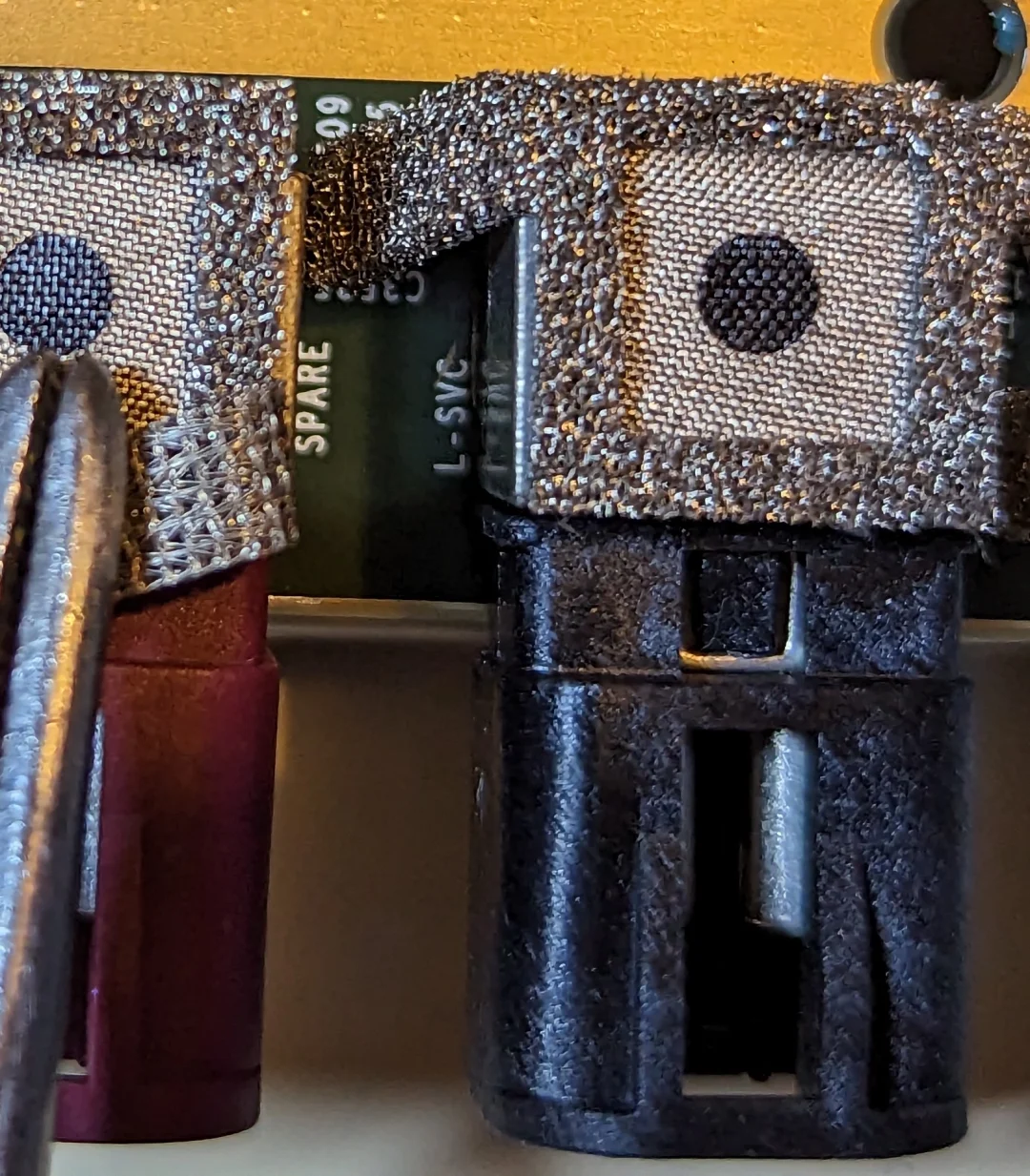
Image source: Twitter
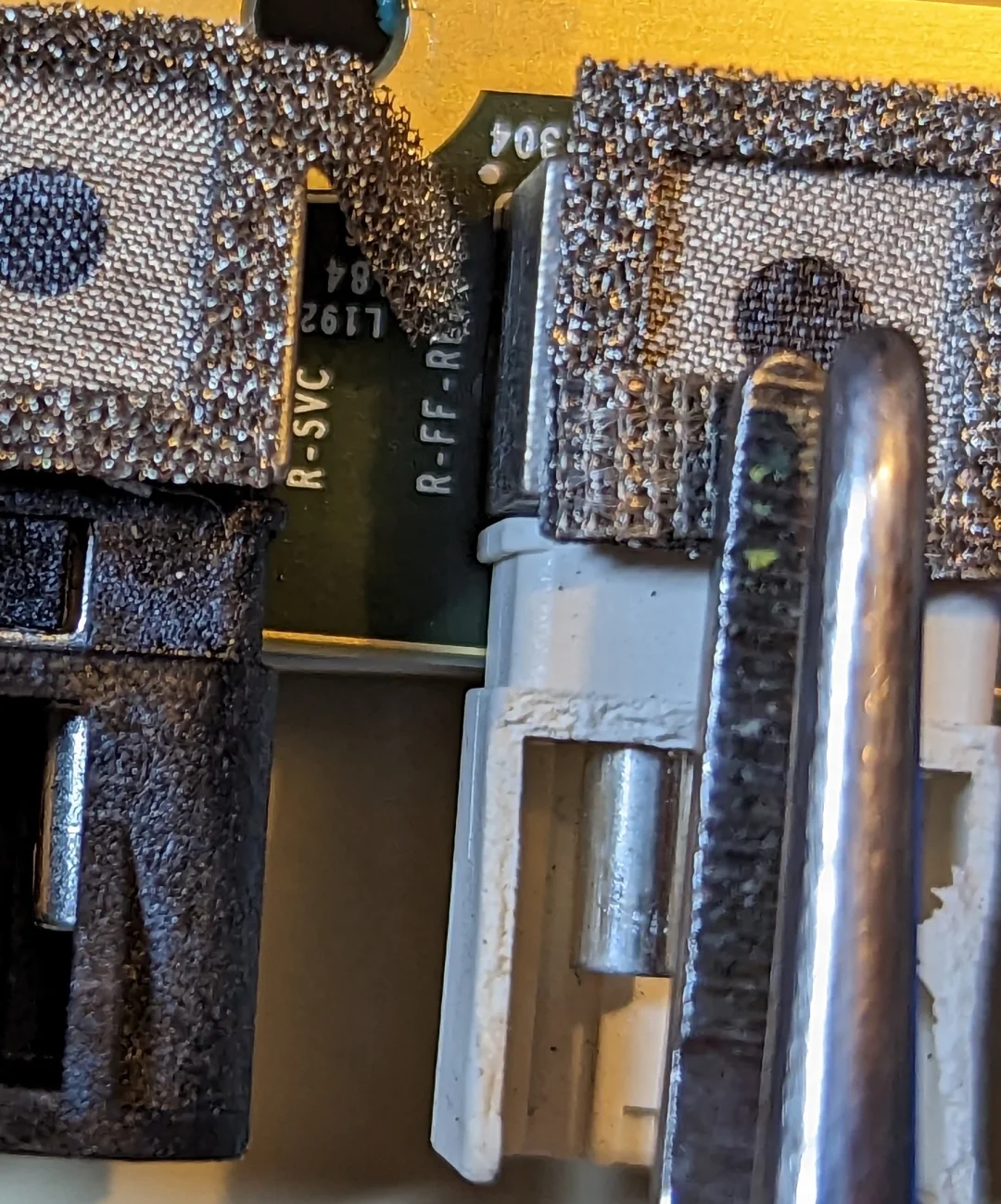
Image source: Twitter
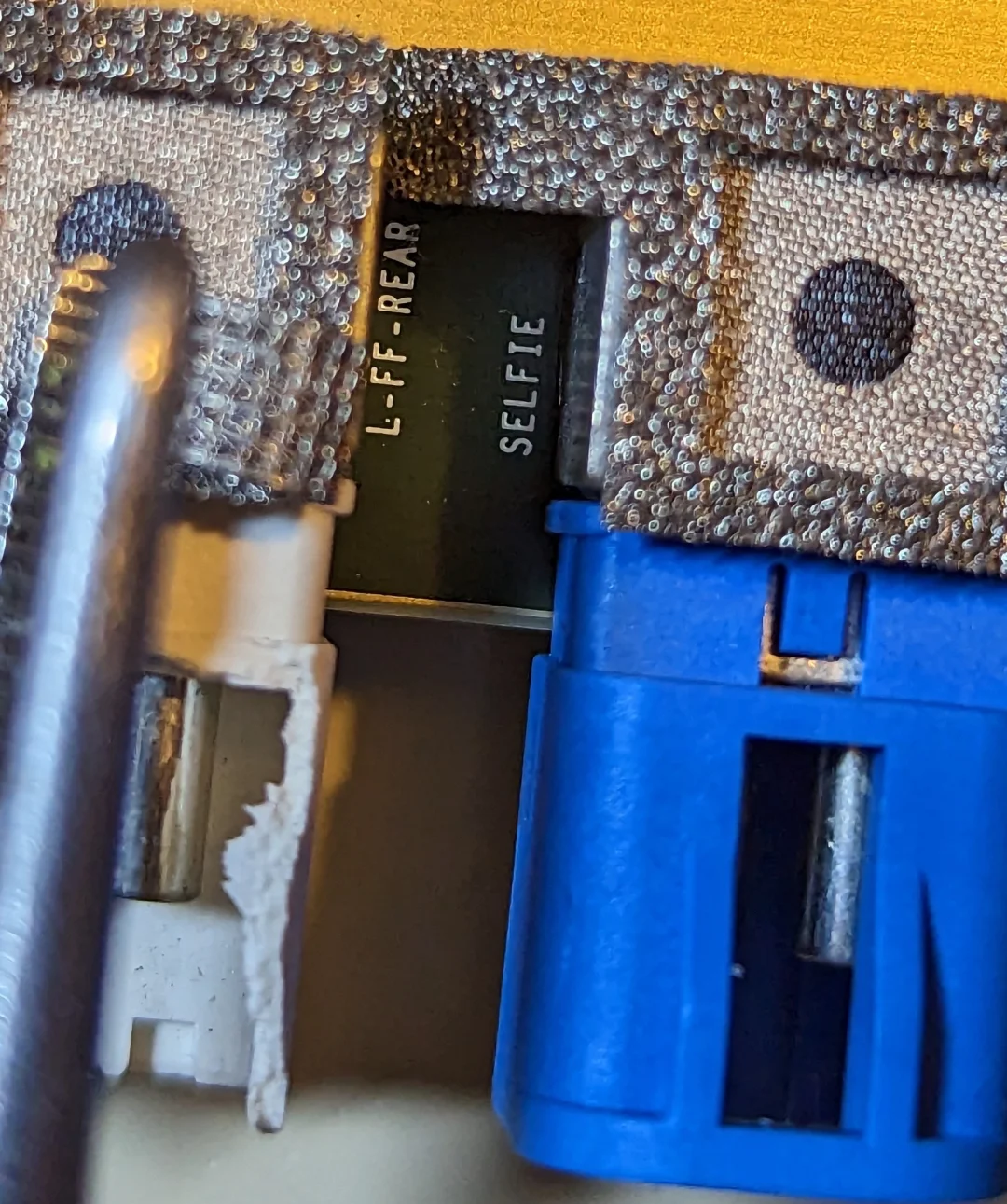
Image source: Twitter Based on spy shots of the facelifted Model 3 captured previously, the forward-facing camera setup has changed from a triple-lens configuration to a dual-lens one. According to earlier reports, HW 4.0 utilizes a forward-facing camera with 5.4 megapixels and a resolution of 2,896 x 1,876, whereas HW 3.0’s camera had only 1.2 megapixels. The higher-resolution camera allows Tesla to eliminate the need for a telephoto lens in forward perception, while a DMS (Driver Monitoring System) camera inside the cabin continues to monitor the driver.
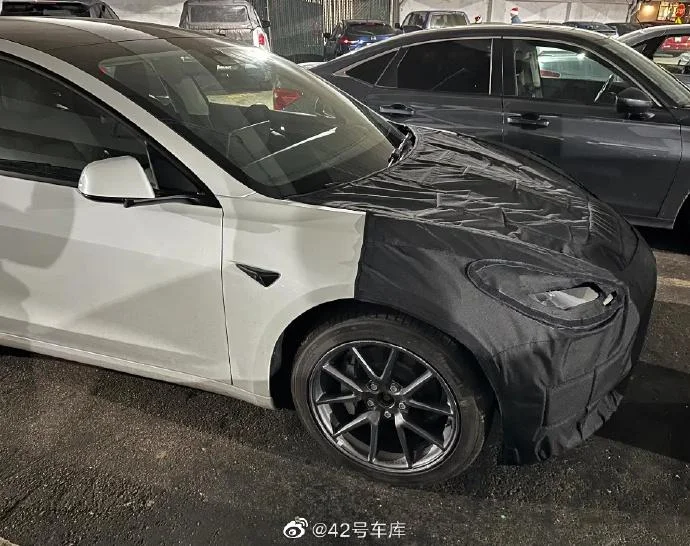
Image source: Weibo Additionally, Tesla has added an SVC camera. Information from Tesla’s Electronic Parts Catalog (EPC) indicates that the SVC designation corresponds to the vehicle’s bumper. Combined with dark spots above the headlights in previous spy shots—suspected to be cameras—it is highly likely that Tesla has added blind-spot cameras at this location. With these two new cameras, Tesla can effectively address blind spots around the front corners of the vehicle, potentially enabling true 360-degree surround-view assistance.
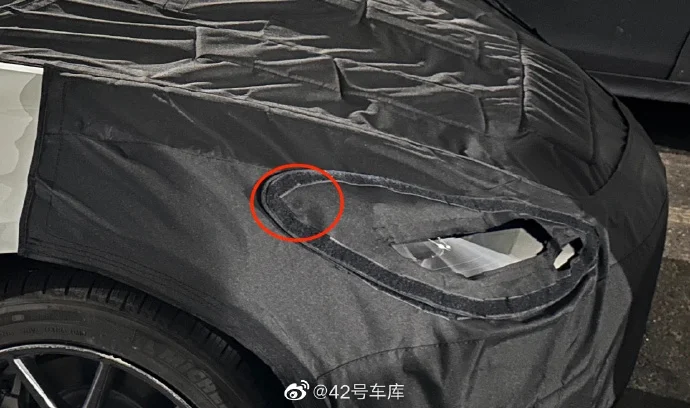
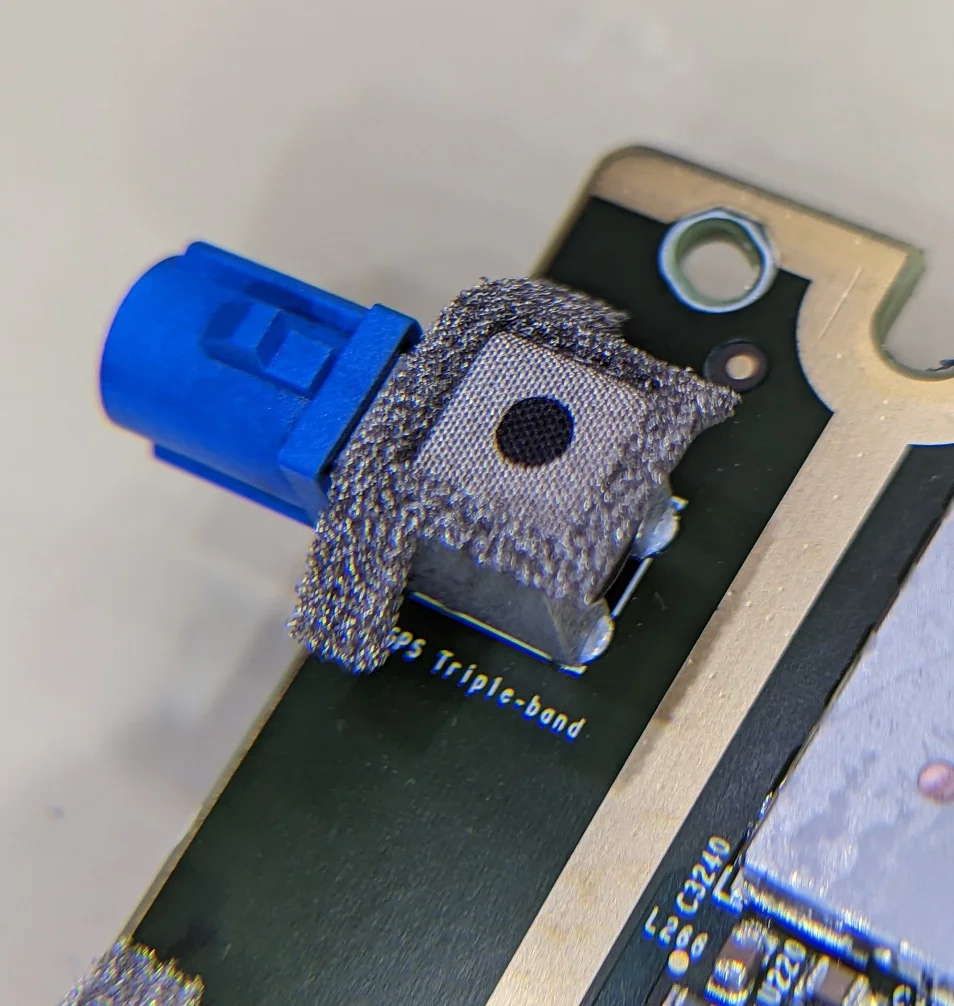
Source image: Weibo Tesla has also updated its GPS module, adopting a tri-band GPS antenna with higher performance and more precise positioning. Previous filing documents for the European market included relevant details indicating that the new positioning module not only enhances GPS capabilities but also strengthens compatibility with other global navigation satellite systems.
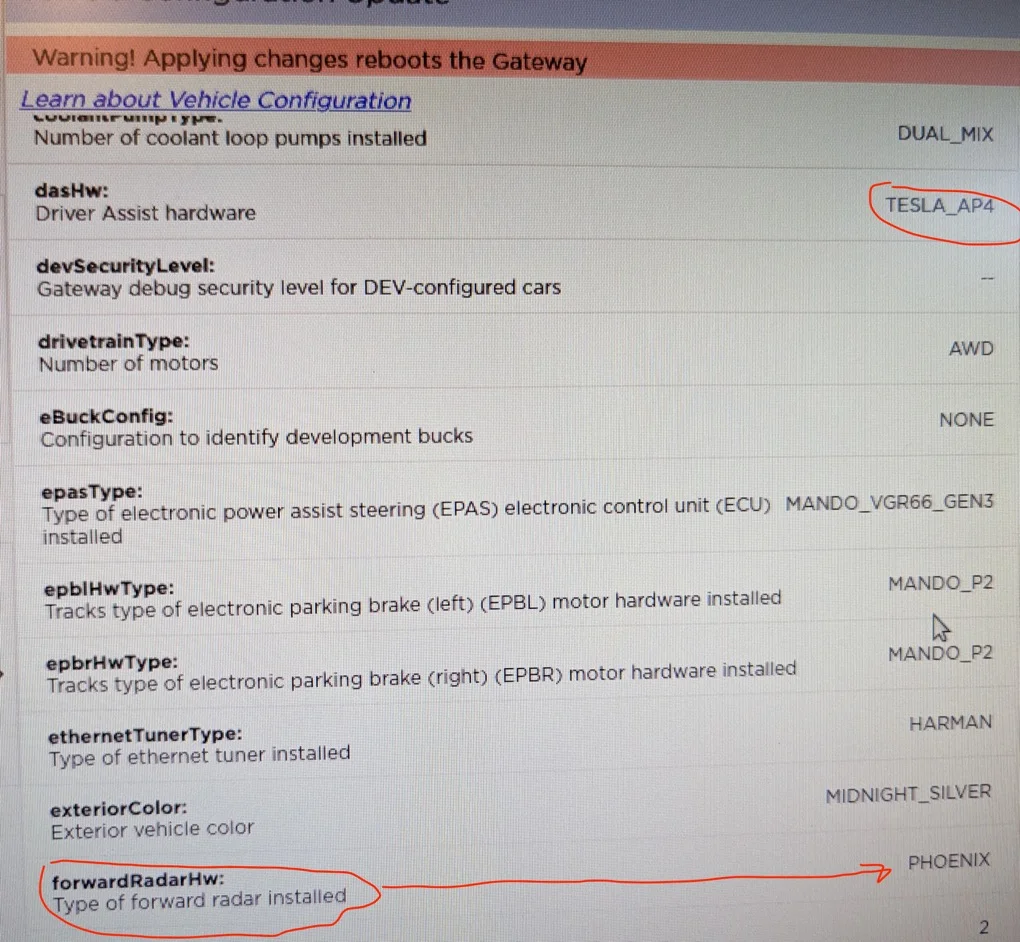
Source image: Twitter Here comes the big news. In the software interface leaked by green, a forward-looking radar codenamed "PHOENIX" appeared, equipped with a heater! Just a few months ago, Tesla removed ultrasonic radars from the Model 3 and Model Y sold in several overseas regions, retaining only eight visual cameras.
Source image: Twitter
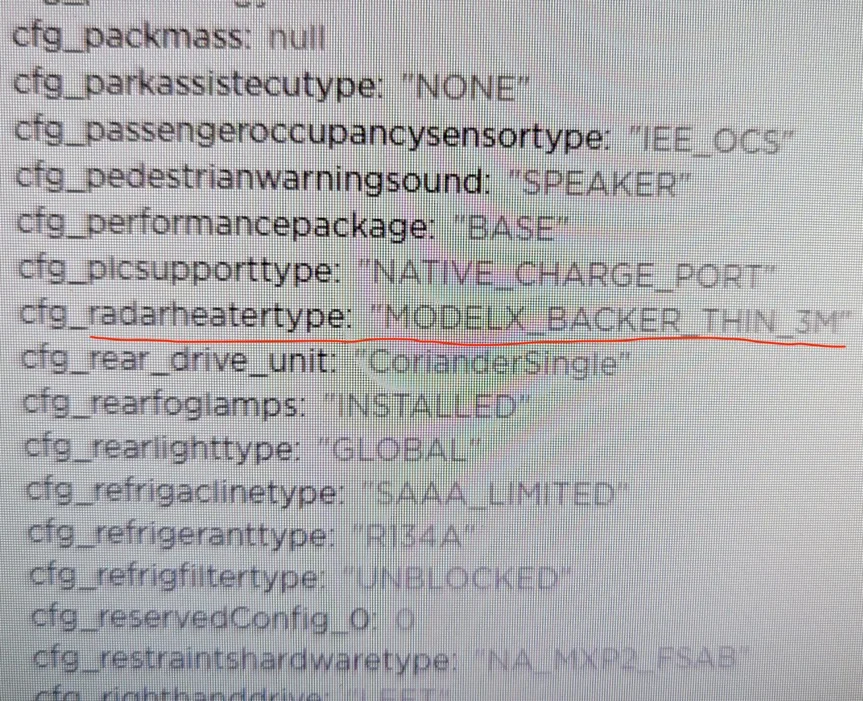
Source image: Twitter According to Elon Musk, who previously stated that he is "not opposed to using radar, but will not use unnecessary radar," this forward-looking radar codenamed "PHOENIX" is likely a 4D millimeter-wave radar.
As performance increases, the power consumption of the entire hardware suite also rises. Green indicates that HW 4.0's power consumption is approximately double that of HW 3.0, with idle power reaching up to 80 W. It remains unclear how this new hardware will ultimately affect vehicle range. Consequently, Tesla has adopted a new power interface for HW 4.0 to support higher power delivery.
02How far is HW 4.0 from mass production and vehicle integration?
During Tesla’s fourth-quarter earnings call, Elon Musk explicitly stated that HW 4.0 would debut on the Cybertruck. However, the Cybertruck remains in the prototype trial-production phase, making a mass-production launch this year unlikely.
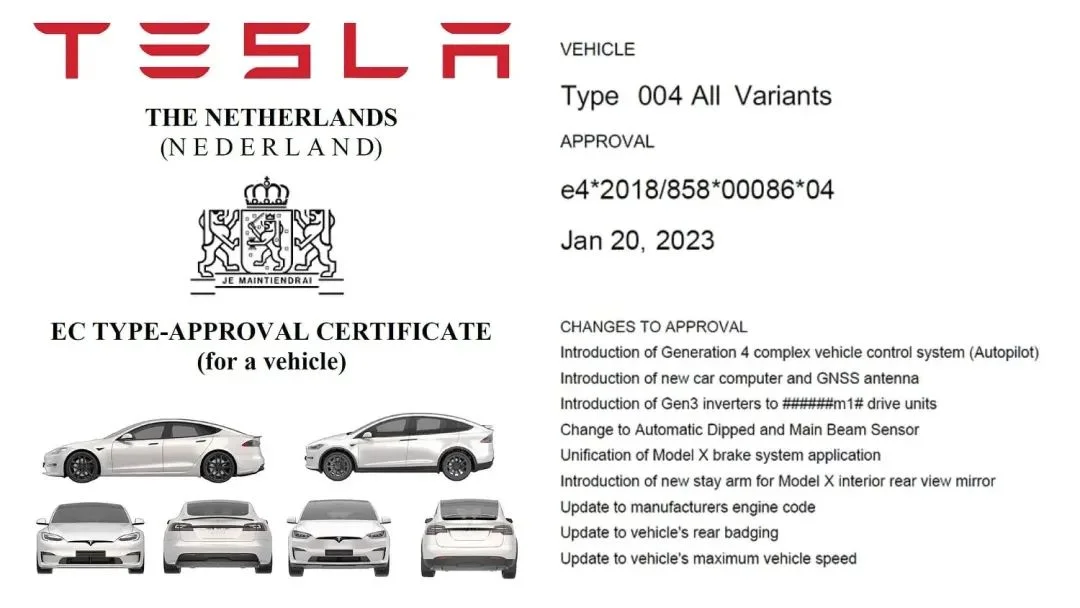
Source: Foreign media According to previously leaked documents filed by Tesla with European regulators, Tesla is also adding HW 4.0-related hardware to the Model S and Model X.
It seems that if the Cybertruck fails to achieve mass production this year, we might experience the changes brought by HW 4.0 hardware on the next-generation Model S and Model X. With Tesla’s 3.1 Investor Day approaching, Tesla is expected to announce more information regarding HW 4.0 at that time.
03Conclusion
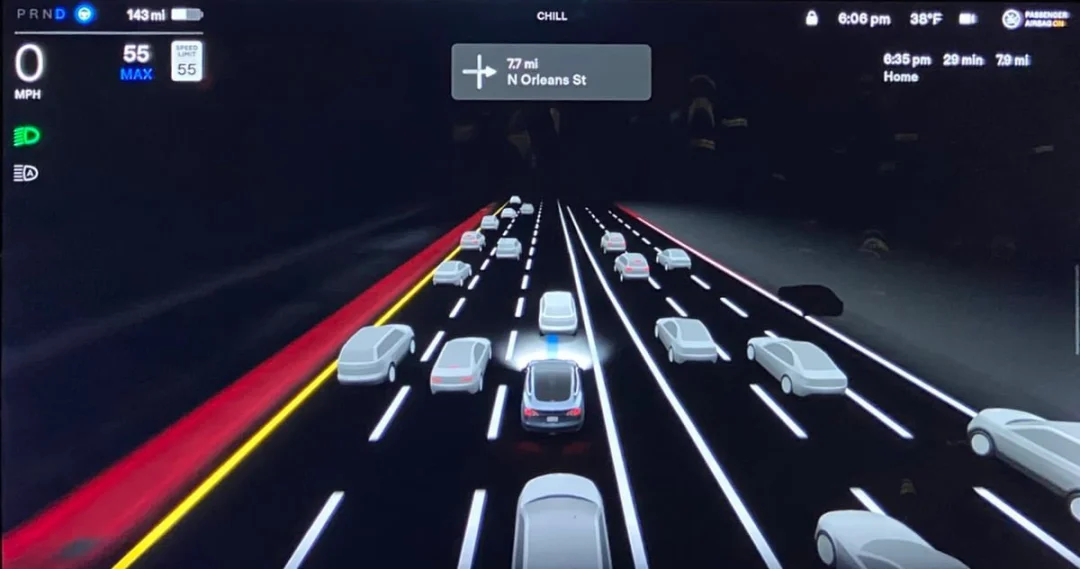
Image source: Foreign media, FSD visualization interface When HW 3.0 was released, its computing power of 144 TOPS had few rivals at the time. With FSD’s full public beta launch in North America last year, Tesla has entered a new stage in autonomous driving. As FSD software becomes increasingly powerful, I am more eager to see whether it can make further progress with the support of HW 4.0.
The situation for Tesla in China is less optimistic. For various reasons, FSD has yet to be launched domestically. Meanwhile, Chinese new energy vehicle manufacturers have taken advantage of Tesla’s stagnation, equipping their vehicles with two or even four Orin-X chips, delivering up to 1,016 TOPS of computing power. Coupled with powerful perception hardware such as LiDAR, their hardware capabilities have comprehensively surpassed Tesla’s.
Although Tesla achieves an extremely stable basic driver assistance experience thanks to its robust software algorithms, its NOA (Navigation on Autopilot) performance leaves much to be desired. In our latest 42Mark tests, Jihu and NIO—both under Huawei’s ecosystem—have achieved highway driver assistance that requires almost no human intervention, offering an impressive experience.
I cannot yet definitively state whether Tesla models equipped with HW 4.0 will reach the top tier of advanced driver assistance currently offered by domestic manufacturers. However, if FSD ever enters the Chinese market, I look forward to seeing Tesla return to the 42Mark testing arena to compete head-to-head with Chinese brands.
Written by: JOJO Edited by: Mingming