


Li Yinan’s Journey in Car Manufacturing: No Stories, Deliveries Next Year
Yes, after Jidu, Xiaomi, OPPO, and Foxconn, another brand has officially entered the new energy vehicle market.
Looking at the lineup of automakers, one figure holds a blue flag. Upon closer inspection, the flag displays bilingual Chinese and English text: 'Ziyoujia NIUTRON'.
That’s right—the man behind two-wheeled electric vehicles has finally, following several waves of rumors, officially announced his entry into car manufacturing.
Entering the field at this late stage requires more than just enthusiasm; it demands substantial capability.
01Two wheels and four wheels are not the same thing
To discuss Niuchuangxinnengyuan, one must mention Li Yinan, the man frequently labeled a 'genius'.

At age 15, Li Yinan entered the Youth Class at Huazhongligongdaxue (now Huazhongkejidaxue). In his second year of graduate studies, he interned at Huawei. By age 26, he had become Executive Vice President of Huawei. During his tenure, he helped Huawei’s revenue surge from RMB 400 million to RMB 20 billion. At one point, industry rumors named Li Yinan as Huawei’s “crown prince.”
In 2008, Li Yinan became CTO of Baidu, leading the development of projects such as Baidu’s Alading. He subsequently served as CEO of 12580, a company under Zhongguoyidong, and as a partner at Jinshajiangchuangtou. In 2014, he founded Niudiankeji, entering the transportation sector.
During Li Yinan’s seven-year hiatus from the public eye, products from Niudiankeji rapidly appeared on streets across China and expanded aggressively overseas. According to Niudiankeji’s latest third-quarter financial report, global sales of Xiaoniudiandong reached 397,000 units in the third quarter, up 58.3% year over year.
To date, Niudiankeji has more than 2 million global users and a cumulative global riding distance of 10 billion kilometers. It operates 2,686 franchise stores in China, and its international sales network covers 41 dealers in 49 countries.
Many people confuse Niudiankeji with Niuchuangxinnengyuan, lumping them together under the brand name Xiaoniudiandong. This is incorrect. During a media group interview on December 15, Li Yinan responded directly: “The two companies are completely separate, with different brands and operating in different categories.”
He went further to state: “The complexity of the automotive industry is not on the same order of magnitude as that of two-wheeled vehicles. It is not two orders of magnitude higher; it is three orders of magnitude higher. Therefore, although I would like to leverage my experience from the two-wheeler business, it simply cannot be transferred.”
Clues about Li Yinan’s venture into car manufacturing can be traced back to 2014. Seven years ago, Li Yinan already had the idea to build cars and estimated that USD 3 billion would be sufficient to initially complete the project.
Preparations for the vehicle project began in November 2018. Three full years have passed since then. On December 15, Niuchuangxinnengyuan officially unveiled its English brand name "NIUTRON" and its Chinese brand name "Ziyoujia." The company announced that its first product, a high-end SUV named Ziyoujia NV, will be launched and open for reservations in the first half of 2022, with deliveries beginning in September of the same year.
Below is a comprehensive summary of all currently known information about Niuchuangxinnengyuan.
02About the Ziyoujia NV
This is a mid-to-large size SUV with a length of approximately 5 meters and seating for five passengers. It offers two powertrain options: extended-range electric and pure electric. The vehicle features a body construction combining steel on top and aluminum on the bottom, with a price point above RMB 300,000.
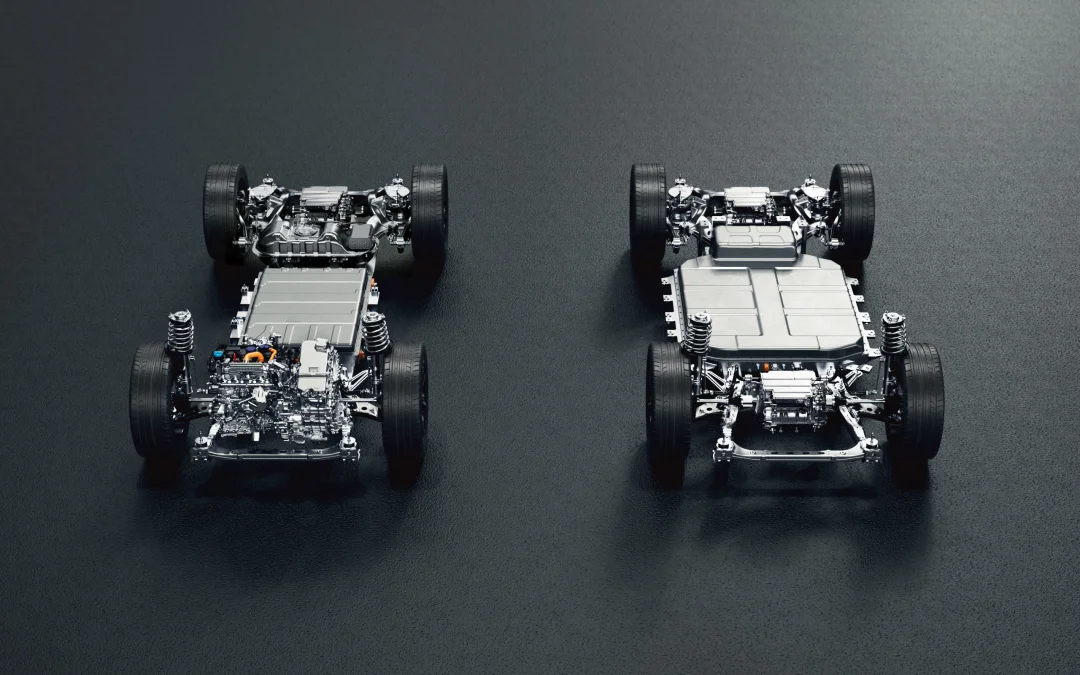
Gemini Shuangzipingtai Range figures will follow the CLTC standard, but calibration is still ongoing. The battery packs are sourced from third-party suppliers; Niuchuangxinnengyuan has not disclosed the specific supplier names.
Exterior Design
According to official statements, Ziyoujia adopts an "Urban Exploring" design philosophy aimed at creating a "city-off-road fusion style." As Li Yinan described it, the vehicle is "first and foremost an urban mobility vehicle, but it also possesses certain exploring capabilities."
Niuchuangxinnengyuan President Yang Jingyi stated, "In the future, [off-road capability] will be among the better options on the market, with several parameters that customers can clearly perceive." In other words, the vehicle is primarily designed for comfortable commuting while also being capable of handling light off-pavement terrain.
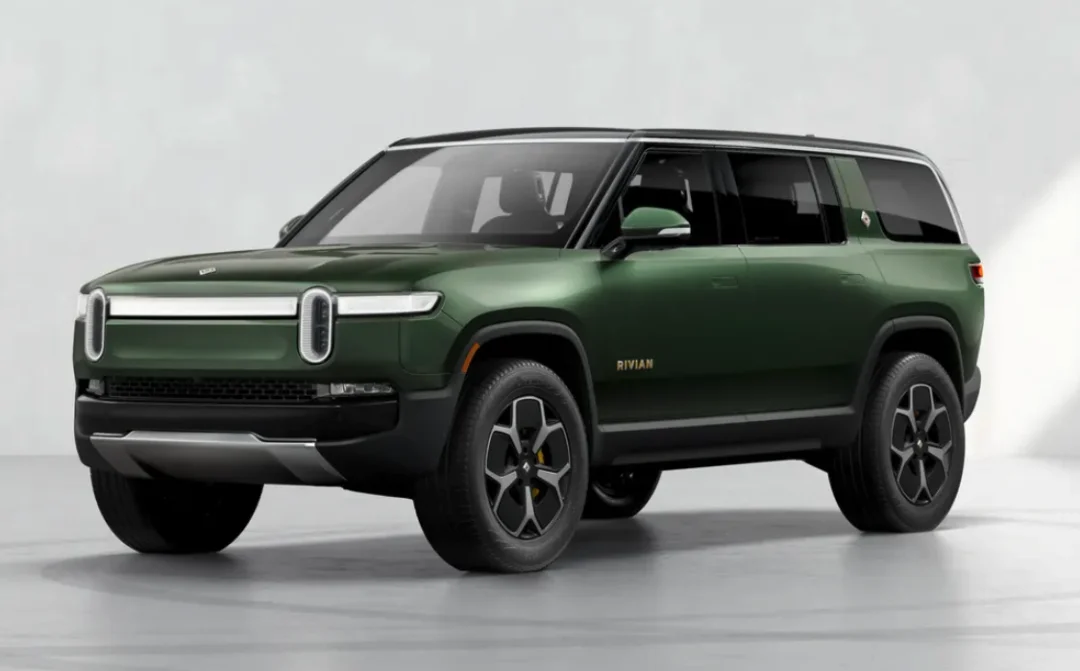
In terms of overall styling, it resembles Rivian’s current lineup. During this visit, Niuchuangxinnengyuan did not permit photography. Regarding the exterior design, we provide a textual description instead.
The body lines are relatively rugged. The headlights feature a circular ring design, with a dot-matrix light strip spanning the front fascia. The taillights are also a dot-matrix through-type design. There is a roof rack on the vehicle’s top. The display model features a two-tone paint scheme; the first color option will include dark green.
Interestingly, the charging port is located at the rear. On either side of the C-pillar area are the fuel filler cap and the charging port. Five rectangular light bars on the C-pillar indicate the charging status.
Cabin
In the cabin, the Ziyoujia NV centers around a 12.3-inch instrument cluster and a vertically oriented 15.6-inch central control screen. It lacks a traditional start/stop button found in conventional internal combustion engine vehicles and uses a column-mounted shifter.
Below the central control screen is a row of physical buttons integrating functions such as defogging, drive mode selection, and hazard lights. The center armrest features a split-opening design. Mounted at the rear of the armrest is a dedicated rear-seat screen, which allows control over the independent rear air conditioning settings.
Turning our attention back to the driver’s steering wheel, it features a roller on each side. Aside from this, there are no other physical buttons on the steering wheel. However, we noticed that the Ziyoujia NV adjusts its rearview mirrors via dedicated buttons on the door panel armrest, rather than assigning additional functions to the steering wheel rollers as Tesla does.
An interesting design highlight is that a small horizontal air quality display screen is installed on the air conditioning vents for both the driver and front passenger.
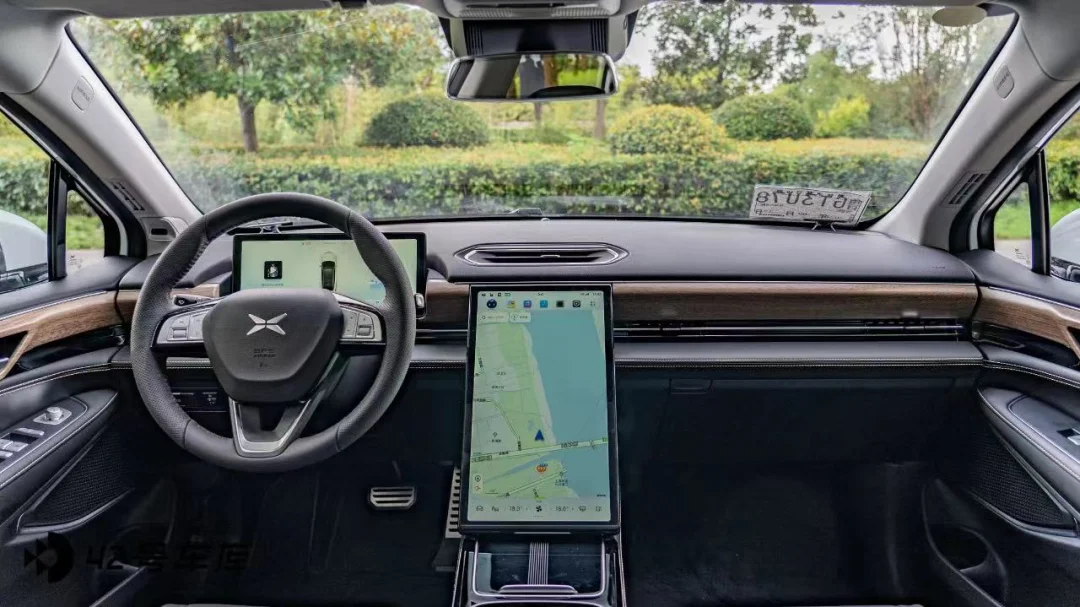
P5 Interior Images However, looking at the overall layout of the smart cockpit, it is similar to that of the P5. The current consensus approach is to minimize the arrangement of physical buttons inside the vehicle while centering the overall concept around in-car infotainment interactions (touch and voice). However, how this actually performs requires us to wait for an opportunity to experience the real-world interaction.
In terms of actual ride experience, the seat support is acceptable, but it remains to be seen how the production version will perform. Legroom in the front passenger seat is significantly compromised by intrusion from the wheel arches. When we verified this with a representative from Niuchuangxinnengyuan, they explained that the longitudinal beam layout affects space here due to crash safety considerations, but they plan to make changes later.
Driver Assistance
Regarding the driver assistance part, Niuchuangxinnengyuan adopts a method of defining its own standards and then cooperating with Tier 1 suppliers to implement it, with capabilities at the L2 level. We understand that this ADAS system solution may be built by Freetech (Furuitaikezhinengxitong) based on the Dipingxianzhengcheng 2 chip, and will not be equipped with auxiliary driving perception hardware such as LiDAR.
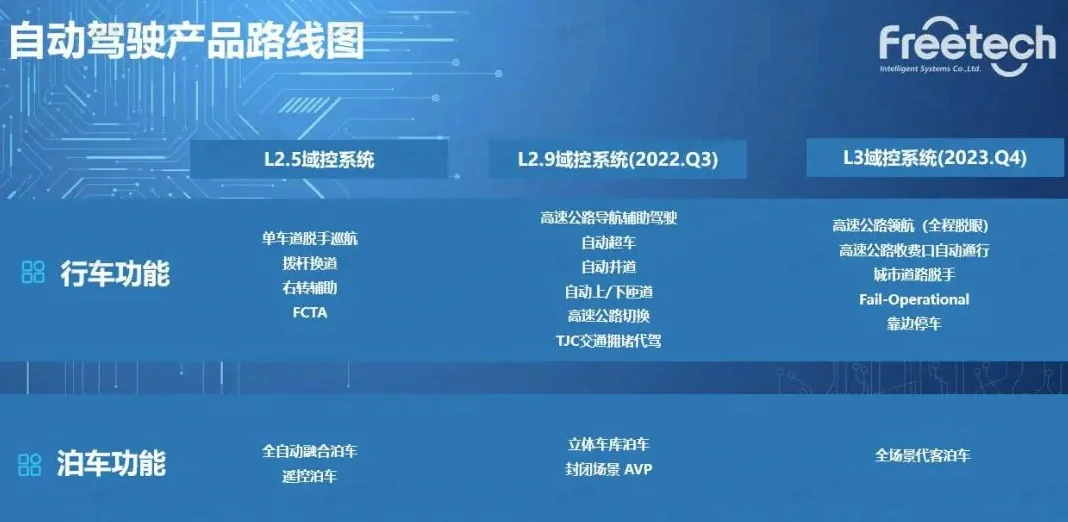
Many may not be familiar with this company, but Freetech was founded in 2016. It has achieved technical breakthroughs in both algorithms and computing platforms. In the fourth quarter of this year, its first-generation domain controller will reach Start of Production (SOP), enabling L2.5-level driver assistance.
Currently, new EV brands are focusing heavily on highway navigation functions, and even city navigation features. Facing the strong marketing claims from leading companies regarding their assisted driving capabilities, if Ziyoujia NV were to adopt the aforementioned solution, its assisted driving capability would indeed be insufficient to compete with the current batch of leading new forces that are fully equipped with L4 hardware. However, if Ziyoujia NV, which is scheduled to begin deliveries in the second half of next year, can optimize and improve the user experience of L2, it would be a more prudent approach.
Ziyoujia NV has so far completed three rounds of engineering prototypes, with R&D testing covering more than one million kilometers. The first round of winter and summer tests is complete, and the second round of winter testing is currently underway. With the manufacturing base renovation finished, Ziyoujia NV expects to begin small-batch production in March 2022 and deliver vehicles to its first batch of users in September.
03Other Circumstances
In this section, we will introduce the factory's production planning, the current status of the team, and our sales model and user operations.
Factory
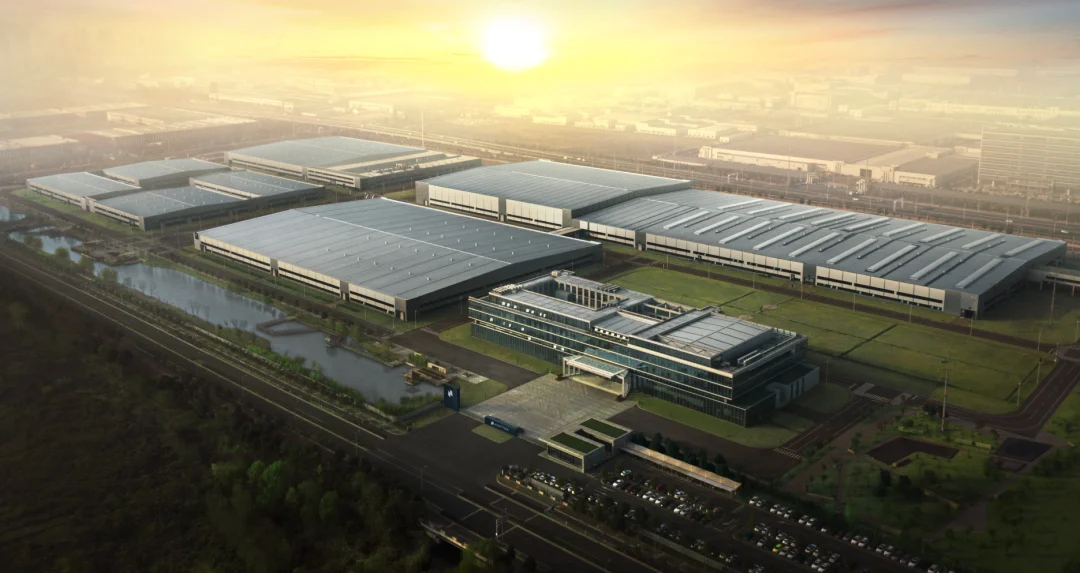
Currently, Niuchuang’s Changzhou factory is leased from Dacheng; it will be fully purchased next year, becoming a genuine self-owned facility. This 770,000-square-meter plant is currently undergoing renovation and is expected to be completed by March next year. Once construction is finished, the factory will support an annual production capacity of 180,000 units, with a maximum potential of 200,000 units, capable of producing four models across two platforms.
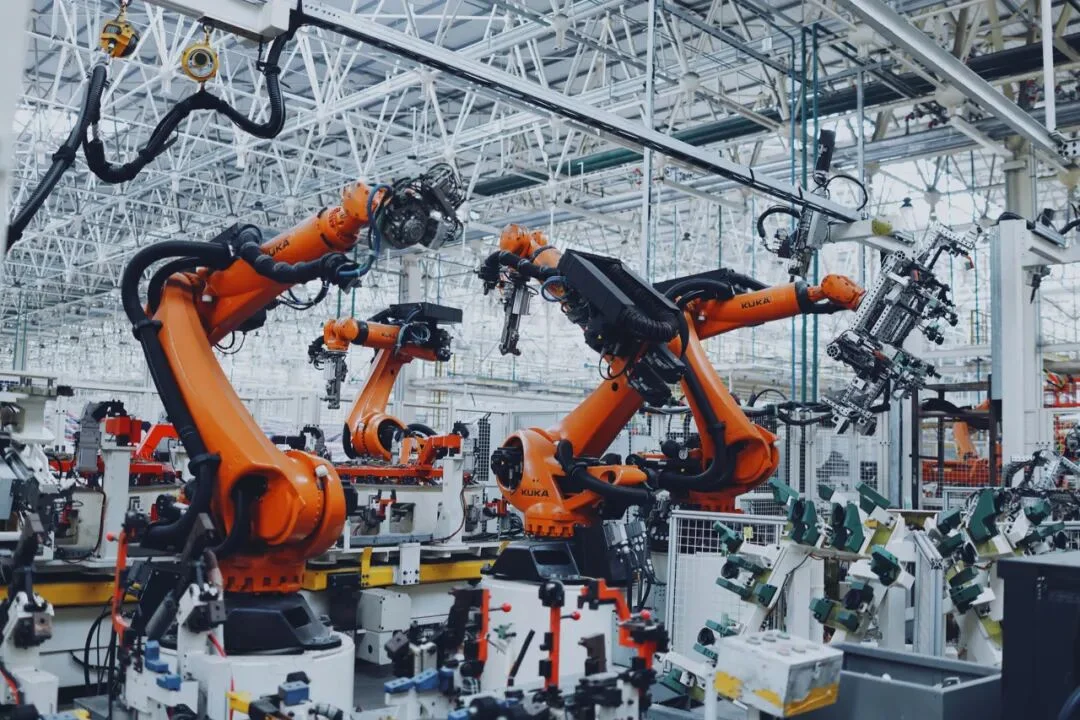
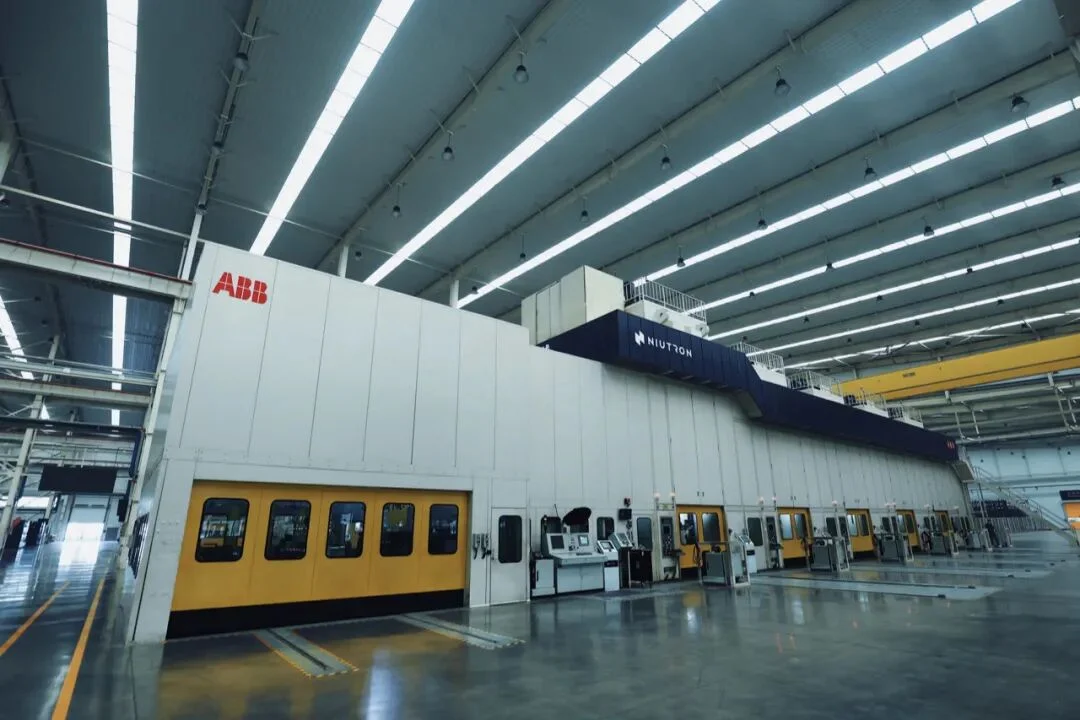
We were also fortunate to visit the factory currently under renovation. The stamping shop has ABB seven-axis robots in place, capable of completing 12 cycles per minute. The welding shop currently has 344 Kuka robots; this number will increase to more than 360 after construction is completed.
Team and Financing
Niuchuang currently employs nearly 1,000 core R&D personnel. The brand headquarters and most talent are located in Beijing, responsible for developing driver assistance and smart cockpit systems. A research and development center in Shanghai focuses primarily on design work, while engineering and manufacturing are based in Changzhou. Li Yinan noted that the main recruitment of executives was completed in 2019.
Niuchuang has secured a USD 500 million Series A funding round, with participation from globally recognized institutions such as IDG Ziben and COATUE.
Sales Model and User Operations
Niuchuang will adopt a direct-sales model for promotion and sales. In terms of user operations, a team is already in place, handling tasks such as identifying key opinion consumers (KOCs) and establishing a points system.
04Final Thoughts
On the timeline for vehicle production, many people might ask if this is too late. In a group interview, Li Yinan’s answer was quite interesting: he frankly admitted, 'Yes, we are late, no need to argue about it,' but added, 'Time is the only correct answer.'
Is it too late to enter the car-making business now?
It seems so, given that the sales and product lines of the top three players are expanding rapidly, and advantageous resources have already been concentrated.
But is it really too late?
Jidu, Xiaomi, and even Apple’s vehicles are far from mass production. The new energy market’s product categories are far from being fully filled, and the market is still calling for more imaginative entrants.
So, what will Li Yinan’s car be like? We truly need to let the bullets fly for a while, and then 'let time tell us the correct answer.'
05Group Interview Summary
The following is a curated summary of the group interview content, allowing readers to appreciate the unique charm radiating from Mr. Li’s demeanor and speech:
Interviewees: Li Yinan, founder of Niuchuangxinnengyuan; Yang Jingyi, president of Niuchuangxinnengyuan.
Li: Our overall design concept is called Urban Exploring. From our perspective, from day one we were very clear that we designed this vehicle as an electric car, in terms of both its platform architecture and its exterior and interior styling.
Whether it is a range-extended electric vehicle (EREV) or a pure battery-electric vehicle (BEV), the exterior appearance is identical. The exhaust pipe on the EREV version is also completely hidden; you cannot see it from about 8 meters away. We joke internally that our EREV is actually 'electricity converted to oil'—it’s essentially an electric vehicle with an internal combustion engine added.
Q: What preparations have been made over three years for building a car? How do you view the previous talk of 'billions to build a car,' and what are your plans for fund usage?
Li: Indeed, we started working on this in November 2018. I believe we haven’t slacked off for a single day throughout the process, nor have we ever lacked funds. People feel we’ve moved quite slowly, and I agree we aren’t fast enough. But I think good products are polished out. Any product, especially a car, may seem simple on the surface, but its workflow is very clear—you must follow these steps. However, there are countless details involved. It requires balancing broad aspects while managing myriad details, involving extensive work from designers, engineers, and many others. So I feel our schedule has been quite tight. That’s what I want to say, though perhaps others are far stronger than us.
In terms of time and financing, I believe the automotive industry undoubtedly has a high capital threshold. I believe this is why people ask why we didn’t do cars before and only now consider it. In 2014, I judged that I wouldn’t be able to raise $3 billion USD to do this. Now, I feel there is a high probability I can raise that amount to pursue this project.
Q: What is the positioning and target audience for the Ziyoujia NV? How does your team manage and allocate talent?
Li: First, let me talk about our models. I believe the biggest characteristic of the automotive industry is that there is no shortage of reference vehicles; for anything you make, there are many similar products in the market. You then ask about our target audience. Personally, I don’t think we want to define our target audience rigidly. As we’ve repeatedly said, our slogan is Exploration, Refinement, and Joy.
I think we should at least explore whether a single person, a couple, or a family of three or four can buy our car. I believe all these scenarios are viable. We do not wish to define our target demographic, nor do we intend to restrict our age range or compare ourselves with anyone else. The most important thing is whether owners or drivers of the Ziyoujia NV feel a sense of pride in their vehicle. Of course, we cannot guarantee that our car will be without any issues. No car is perfect; it is an industrial product. Such a complex industrial item will inevitably encounter various problems during production and may face recalls of one kind or another. Although we strive to make it as good as possible, defects are unavoidable.
Overall, what matters most to us is whether the vast majority of our users feel proud to own or drive this product. That is our primary focus, and we do not care about comparisons with others.
Regarding talent: although automotive manufacturing requires core personnel closely related to vehicles, our development teams for autonomous driving and smart cockpits are based in Beijing, design work is primarily conducted in Shanghai, and engineering teams are located in Changzhou. We began recruiting, including senior executives, in 2019. At that time, hiring was relatively straightforward, and we did not encounter significant difficulties. Jing Yi may wish to add further details.
Yang: I agree. I first met Brother Nan in early 2019, by which time he had already made up his mind to build cars. There was no unnecessary talk; we immediately began discussing products. Brother Nan’s personal charm, combined with his pragmatic approach focused on product and brand, attracted many solid, hardworking, and ambitious mid-level managers from the industry to join our team. Thus, our team was assembled during a period when talent was abundant in 2019.
Q: What is your core development strategy and philosophy on building cars? What are the highlights of the Ziyoujia NV’s intelligence features?
Li: You have actually stumped me with the first question. As I just mentioned, our most important development strategy is to bring happiness to our customers and make them proud to own Ziyoujia products. This is the foundation of everything we do. Our starting point is always whether we can provide a better experience for potential users or the users we envision. We do not aim to pursue a specific direction for its own sake.
Regarding the smart cockpit, we developed it in-house. For autonomous driving, we define the requirements ourselves and collaborate with partners for development.
Q: Which details on the Ziyoujia NV reflect exploration, refinement, and joy? How is its actual off-road capability?
Li: I’ll briefly answer the last two questions first, and leave the first question to Jing Yi, okay?
Second, as we mentioned earlier, our design philosophy is Urban Exploring. This means it is a vehicle for urban mobility, not an off-road vehicle. This addresses questions about performance: it meets all needs while retaining certain exploring capabilities.
There is no difference in sales channels. I believe everyone agrees that for a new brand, the most important thing is how to make potential consumers aware of it. Therefore, building stores is the only way forward.
Yang: Let me briefly introduce the models we are exhibiting today, which you can all see. These two models were produced quickly after our styling was frozen early on, primarily to confirm our color, texture, and materials. Therefore, their fidelity to the production vehicle is essentially 100 percent. From an interior perspective, there are many details I believe you have already noticed, including the use of embroidery techniques, stitching processes, and components that customers touch frequently, such as buttons, handles, and switches. These employ a black chrome plating process commonly used by most luxury brands. The three keywords just mentioned are integrated into these details. As Brother Nan said earlier, for durable consumer goods, there is much refinement needed in the details. This gradually coalesces into a brand and product definition.
To add to that, regarding passability, we have several internal parameters, including selection criteria. These are the key metrics that will be most noticeable to customers on the market and allow them to clearly perceive the vehicle's off-road capability. We will gradually release these details in line with our overall development schedule.
Q: Compared to your time at Niudiankeji, what are your reflections on this new venture?
Li: Actually, no, really no. Sorry about that.
Q: Is it too late to build cars and launch products now? How do you differentiate between the labels "Niuchuangxinnengyuan" and "Niudiankeji"? What is your IQ?
Li: For the third question, my IQ is probably average, just like everyone else's.
The first point I want to make is that we are late, which goes without saying. How you understand this matter depends on your perspective. Let me give an example, although this example might be completely inaccurate and the scenario may differ: Japan is a powerhouse in the automotive industry. During the growth of Japanese enterprises, we know that Bentian entered the automotive industry 30 years later than Toyota and Richan. Within those intervening 30 years, I do not believe there were no others in the Japanese industrial sector attempting this; it was only after 30 years that Bentian emerged. Perhaps Bentian was the last large-scale automotive enterprise to succeed, and after Bentian, did none others follow? I think there is a very high probability that many others existed during those intervening 30 years.
The situation in Japan is different from China. Like the saying goes, 'the new waves push the old waves.' Which wave will succeed, or at what specific time point, or which particular wave will work, might only become clear in hindsight. We are in the midst of it. I think many people have their own judgments, but time is the only correct answer. We do not proceed simply because an investor believes it can work, nor do we think we can succeed just because someone has invested, nor do we think we cannot succeed just because others refuse to invest. I think we should just try. We are not claiming to be the first explorers; we are at least trying to explore and making efforts to ensure things go well. We will see how it turns out.
Second, our two companies are completely separate, with different brands and different product categories.
Q: How was the five-seat layout of the Ziyoujia NV considered during design? As a product developer, would you consider parallel development of multiple models? Is the current design style continued?
Li: First, the NV only has a large five-seat configuration. When people ask why we didn’t do six seats, seven seats, or four seats, I’d say that given our scale, we want to provide our customers with a relatively comfortable and relaxed feeling. Why squeeze so many seats into such a small, relatively compact volume? If you are a family with three children, this car might not suit you, unless you have multiple vehicles. If this is your only car, we may not be able to meet your requirements. We did not intend to try to satisfy everyone’s needs.
To answer your second question, the automobile industry is highly personalized; different people have different needs. Therefore, it is impossible for one car to meet everyone’s needs, or even most people’s needs. So, of course, we are working on multiple models simultaneously. Saying 'Jingjin' does not mean producing only one car. We are working on several cars simultaneously. Jingjin, I feel, is reflected in whether you persistently strive to improve at something.
Third, the design style certainly cannot be different. Some cars will continue to adhere to the design style, while for others, it is not suitable.
Q: The Ziyoujia NV does not feature LiDAR hardware. After delivery next year, many competitors on the market will have strong hardware advantages. How do you view this?
Li: I believe autonomous driving is a revolutionary technology that artificial intelligence brings to the automotive industry, but this revolution requires considerable time for continuous evolution. The arrival of new technology must be premised on improving user experience and ensuring absolute safety. There are multiple reasons why we chose not to equip LiDAR on our first model, the Ziyoujia NV. I don’t wish to explain them one by one, but we simply feel that this is a relatively good choice for us at this stage. As for our users, if they consider LiDAR a mandatory requirement, then we may not be able to meet their needs. Regarding competitiveness, I think competitiveness is the least important thing; what matters most is what we can bring to our customers.
I’ve also forgotten the second question about user operations, so to be honest, I can’t answer it right now.
Q: How do you shape your brand image? Why did you choose Changzhou for your factory?
Li: First, building a brand is not an overnight success. It’s not just about promoting ourselves heavily, saying how awesome we are, and then having the brand rise. I believe it happens step by step. We need to polish our products well ourselves, and we also need full communication and exchange with media professionals. Most importantly, it involves our users—the actual usage and experience of those who truly get these cars. I feel all these elements are intertwined and definitely require a long time. It cannot be achieved overnight, and we have no intention of doing so. Since we started this project, we’ve been hammering away for three years without seeing a clear result yet. To be honest, I’m not too anxious. Even if I were anxious, it wouldn’t help. Building a brand is harder than making a car, and I think it requires even more time to do slowly.
As for choosing Changzhou, I was originally in Changzhou during my two-wheeler days, so I naturally became familiar with it. That’s the reason. I certainly considered many other places and visited many locations, but there’s no need to mention those I didn’t choose. In the end, we settled here.
Q: What is your corporate culture?
Li: Corporate culture, I believe, should be the same inside and outside the company. You can’t present one face to the public and another internally. The exploration, refinement, and joy we mentioned earlier are what we adhere to, and we hope to maintain this internally as well. No matter what we do, there are always different possibilities. At least, we can think about them, right? And when we do something, we still do it seriously. Most importantly, whether we are working or not, everyone should still be happy. Coming to work every day with bitterness and resentment just to earn that salary is not what we want.
Q: What is your assessment of the future landscape of new energy vehicle manufacturing, and what is Ziyoujia's positioning?
Li: Let's start with the second question, which is easier. We are definitely high-end; that is beyond doubt. But being high-end doesn't necessarily mean luxury or extravagance. We want to give customers a sense of luxury. However, we aren't actually a luxury brand, because as everyone knows, luxury brands require history.
Regarding the first question, I think we all in this industry are learning and paying attention to this issue. I do not have a definitive opinion because my car has not yet been released. I have not even taken the stage, so I am not qualified to say whether we will rank third, fifth, or survive at all. I cannot answer such questions, so I am not qualified to do so. Those who say there will only be three players left in the world are claiming the third spot; those who say five are claiming the fifth. Therefore, I am neither qualified nor interested in discussing this. Overall, the automotive industry is a massive sector. Only within China’s unique supply chain environment do we have the preliminary conditions for survival. If one imagines a market with only three players, the supply chain would be entirely consumed by them. How could a fourth, fifth, or sixth player exist? The fourth would be very difficult, the fifth even more so, and the sixth unimaginable.
Q: Will Ziyoujia pursue full-stack self-research?
Li: Answering your question is like solving a high school math problem. A single problem can have multiple solutions. The world does not offer only one correct way to solve a problem. There may be many methods that work, or other approaches may fail. Even the method considered most reliable might ultimately prove unworkable. Who knows? My point is that there is no single, absolutely correct path or method. I use this analogy to answer you, so I will not comment on whether this approach is mandatory or unnecessary. What I want to emphasize is that in the autonomous driving industry, we see many companies striving in different directions. Everyone is working hard; it is not just one group making efforts. At least in China, twenty groups are working on this, with at least twenty companies raising over USD 400 million to develop these technologies.
Q: What sales strategy will Niuchuangxinnengyuan adopt in the future?
Li: Our primary sales model is direct-operated stores. When a brand is initially unknown to consumers, this is the only viable method.
Q: Can the success experience of Xiaoniudiandong be replicated in car manufacturing?
Li: I may disappoint you again, but the answer is no. The automotive industry’s complexity is not on the same scale as that of two-wheeled vehicles; it is not a difference of two orders of magnitude, but three. Therefore, while I would like to borrow from that experience, I simply cannot manage it.
Q: Why choose December 15 for the factory visit and brand launch? What do you estimate is the probability of success for Ziyoujia?
Li: We are indeed in preparation. This does not mean we are falling behind schedule; all timelines have been carefully calculated, so the specific date is not critical. I still believe in the professional capabilities of experts. We have reached this point of launching because we have nearly finalized all conditions. We want to communicate with media representatives and potential consumers who may be interested in us through their voices. For any ultra-high-value durable good like a car, consumer decision cycles are very long.
I believe the timing is appropriate. We aim to start production (SOP) and deliver to customers by September next year. It is now late December, which is about nine months in advance. Nine or eight months seems reasonable compared to other players in this industry. However, if I were an exceptionally mature company ready to go on sale immediately, I might only need to announce three months in advance rather than nine.
Q: Is there a delivery volume threshold that determines whether your business survives or fails?
Li: What happens if the enterprise fails? Do you expect me to commit suicide? If it fails, I will first repay suppliers and pay employee wages. I will not worry about anything else.
Written by: Liu Guangding Edited by: Daji