


Your LFP Battery Is in Production
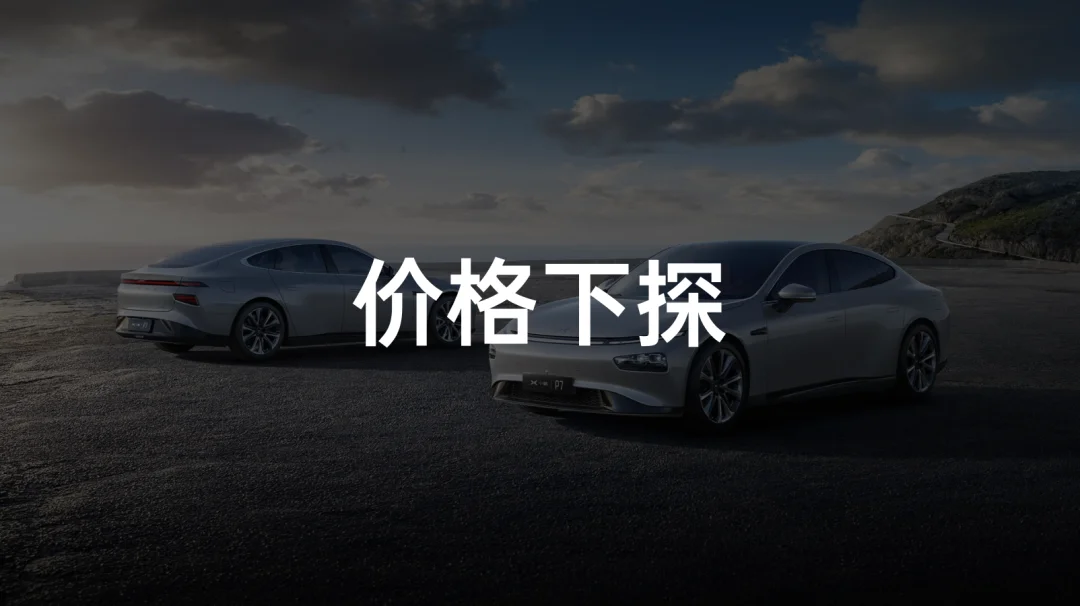
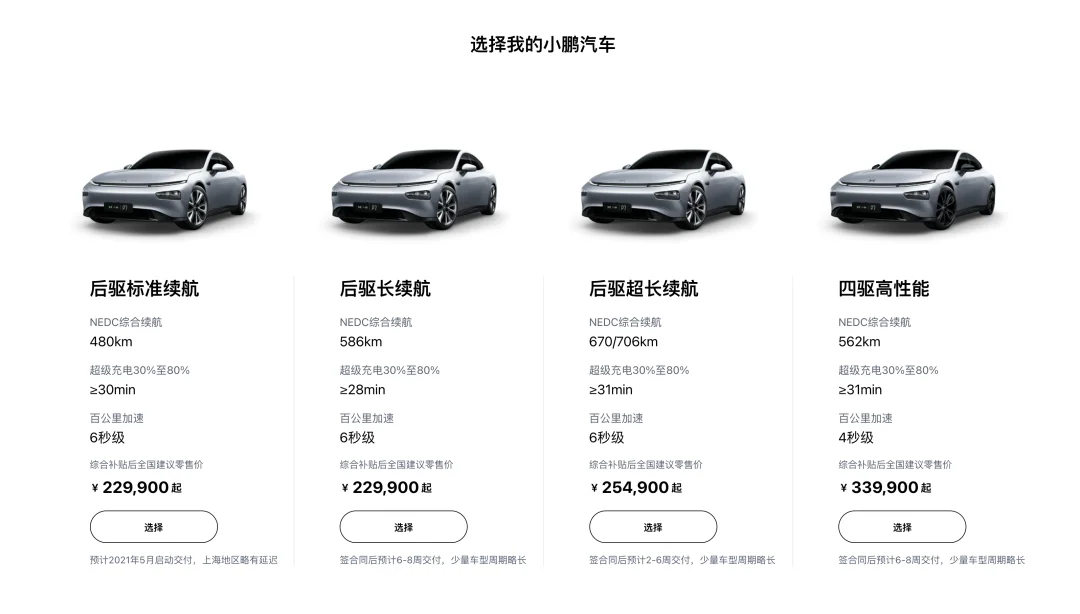
On March 3, XPENG officially launched the P7 equipped with CATL lithium iron phosphate (LFP) batteries. The battery capacity is 60.2 kWh, with a NEDC range of 480 kilometers and a starting price of RMB 229,900 after subsidies.
In terms of pricing, the rear-wheel-drive standard-range P7 matches the rear-wheel-drive long-range P7. However, the standard-range model comes standard with XPILOT 2.5 driver assistance. Upgrading to XPILOT 3.0 costs only RMB 239,900.
According to data XPENG previously disclosed in its financial reports, 98% of P7 buyers opted for models equipped with XPILOT 2.5 or 3.0 driver assistance capabilities.
For many consumers who value XPENG’s advanced driver assistance features, this significantly lowers the entry barrier for accessing XPILOT 2.5 or 3.0, which is sure to further boost the overall sales volume of the P7.
The key enabler behind this shift is the lithium iron phosphate battery.
01The Return of Lithium Iron Phosphate Batteries
2020 was unquestionably the "second coming" year for lithium iron phosphate (LFP) batteries.
Looking back at the history of China's new energy vehicle (NEV) development, it is clear that as early as 2015, mainstream electric vehicles on the market used LFP batteries, with only a small minority using ternary lithium batteries.
However, the energy density threshold for government NEV subsidies continued to rise. Limited by electrochemical properties, LFP batteries have an energy density of only about 120 Wh/kg, meaning they hold 33.3% less capacity than high-nickel ternary lithium batteries of the same weight.
With subsidy policies and consumer demand for energy density and range remaining high, ternary lithium batteries gradually became the more popular choice.
Of course, thanks to policy support, ternary lithium batteries also experienced rapid growth during this period.
Before 2020, the market share of LFP batteries dropped steadily from 68.6% in 2015 to 32.0% in 2019, while the market share of ternary lithium batteries rose from 28.4% to 61.7%.
But this trend reversed in 2020.
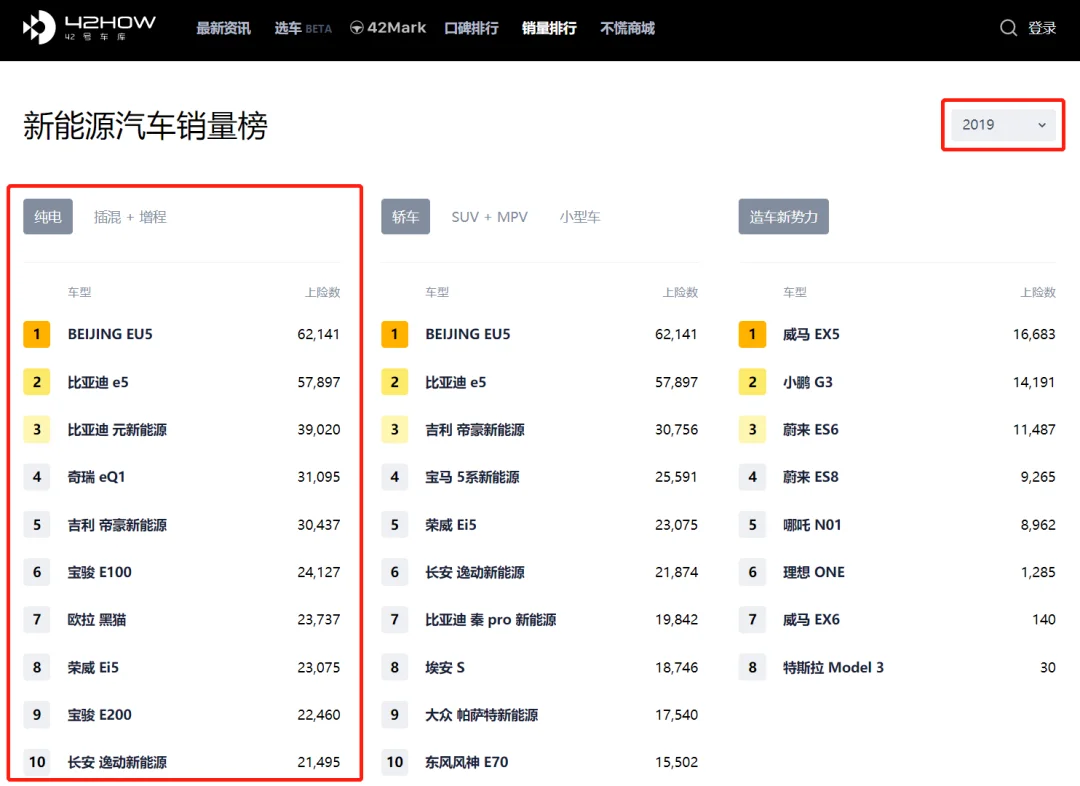
According to the insurance registration volume rankings on 42HOW Auto's official website, all top 10 best-selling domestic pure electric vehicles in 2019 were equipped with ternary lithium batteries.
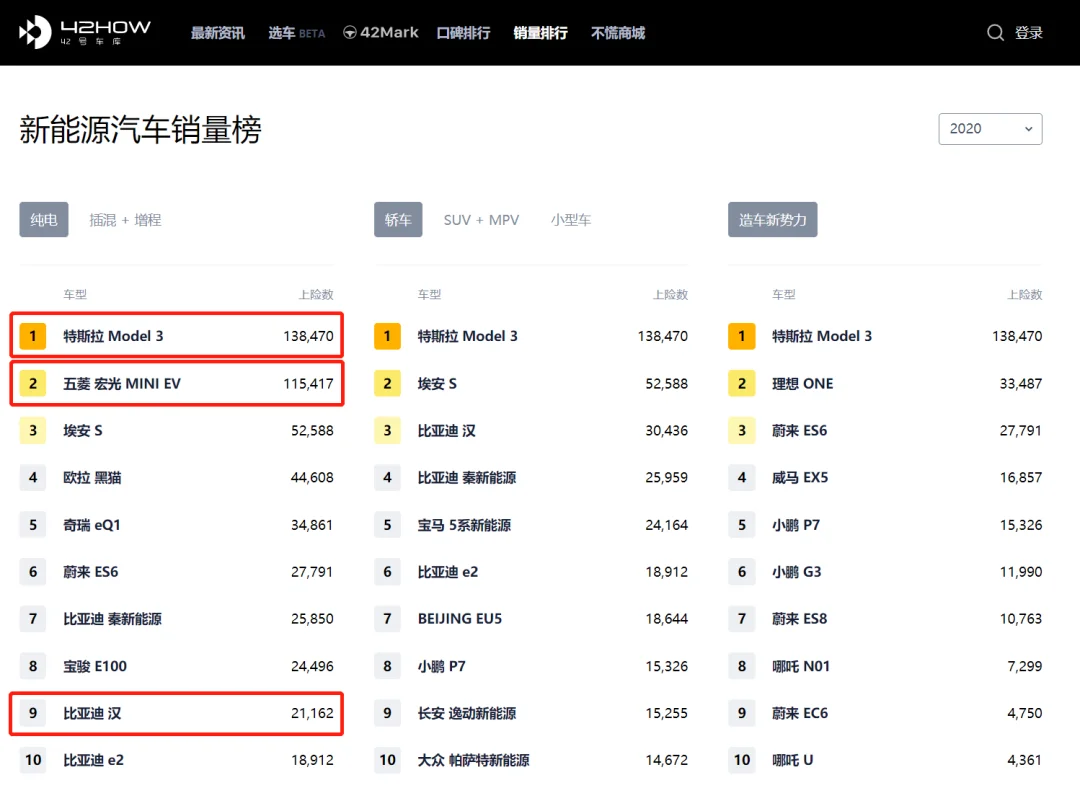
However, three of the top 10 best-selling models in 2020 offered versions equipped with lithium iron phosphate (LFP) batteries.
According to data from Gongxinbu, among the 115 models in the first batch of promoted vehicles in 2021, 85 were equipped with LFP batteries, accounting for 73.9 percent.
Clearly, LFP batteries have once again emerged as a parallel technological route alongside ternary lithium batteries.
The reasons can be primarily attributed to two factors: advancements in LFP battery technology and their absolute price advantage.
02Addressing the Hardships of LFP Batteries
In 2020, the development of ternary lithium batteries gradually slowed down, while LFP batteries made rapid progress.
Low energy density and poor low-temperature performance have long been the Achilles' heels of lithium iron phosphate (LFP) batteries. While these electrochemical characteristics are difficult to change, they can be mitigated with auxiliary technologies.
At the end of 2019, CATL officially released its CTP (Cell To Pack) technology. In simple terms, this technology alters the internal layout structure of the battery pack by eliminating modules and assembling cells directly into a pack.
This module-free structure increases the volume utilization rate of the battery pack by 15–20%, improves energy density by 10–15%, reduces the number of components by 40%, and boosts production efficiency by 50%.
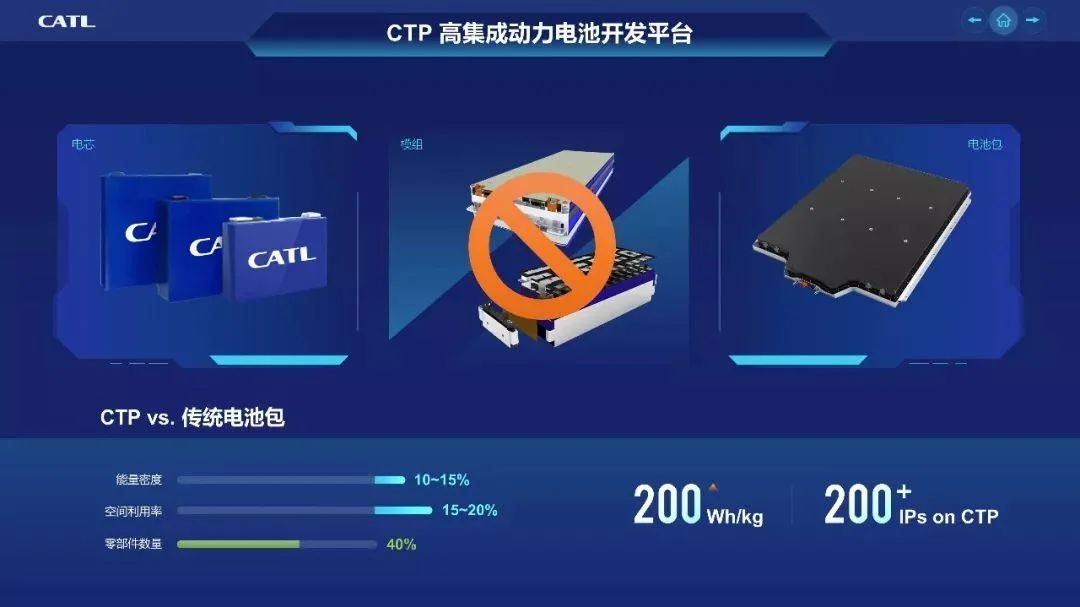
As a result, the system energy density of LFP batteries can exceed 160 Wh/kg, successfully meeting the threshold for government subsidies. This is a critical prerequisite: if LFP batteries fail to meet subsidy requirements, they cannot achieve their cost-reduction goals, making it preferable to continue using ternary lithium batteries.
BYD, which has consistently focused on the LFP battery field, employs similar technology. In early 2020, BYD officially released Daopiandianchi. Its principle is very similar to CATL’s CTP technology: both eliminate battery modules to fit more cells within the limited space of the battery pack, thereby improving the overall energy density of the pack.
However, the LFP battery pack using the Daopiandianchi version in the BYD Han achieves an energy density of only 140 Wh/kg, which is less impressive than the 160 Wh/kg achieved by CATL’s CTP-version LFP battery packs.
From an application perspective, under the same weight, CTP technology allows for a larger battery, providing greater driving range.
To address another major pain point of lithium iron phosphate batteries—poor low-temperature performance—CATL also released a cell self-heating technology in 2019. By using BMS control algorithms and the vehicle powertrain architecture, it can control the cells to undergo rapid charge and discharge cycles in a short period. This allows the cells to generate heat from within, achieving a self-heating effect.
Under experimental test conditions, a heating rate of 2 °C per minute can be achieved, and the temperature difference between cells does not exceed 4 °C throughout the heating process.
In addition to improvements in the batteries themselves, advancements in infrastructure have also been a key driver for lithium iron phosphate (LFP) batteries.
According to data released by the Zhongguodiandongqichechongdianjichusheshicujinlianmeng, as of the end of December 2020, the number of charging piles nationwide reached 1.681 million units, including 807,000 public charging piles, a year-on-year increase of 56.4%; and 874,000 private charging piles, a year-on-year increase of 24.3%.
As charging becomes increasingly convenient, users' sensitivity to range is gradually declining. This has created a significant opportunity for the adoption of lithium iron phosphate (LFP) batteries.
The core issue that has been resolved regarding the "fatal flaw" of LFP batteries, and the primary reason why battery manufacturers and automakers proactively adopt LFP batteries, is: low cost!
03Absolute Price Advantage
Tesla is the first automaker to take the lead.
In October 2020, Tesla officially launched the Model 3 equipped with CATL lithium iron phosphate batteries. The standard-range version saw its NEDC range increase from the previous 445 km to 468 km, while the price dropped from RMB 271,500 to RMB 249,900, further lowering the barrier to entry for buyers.
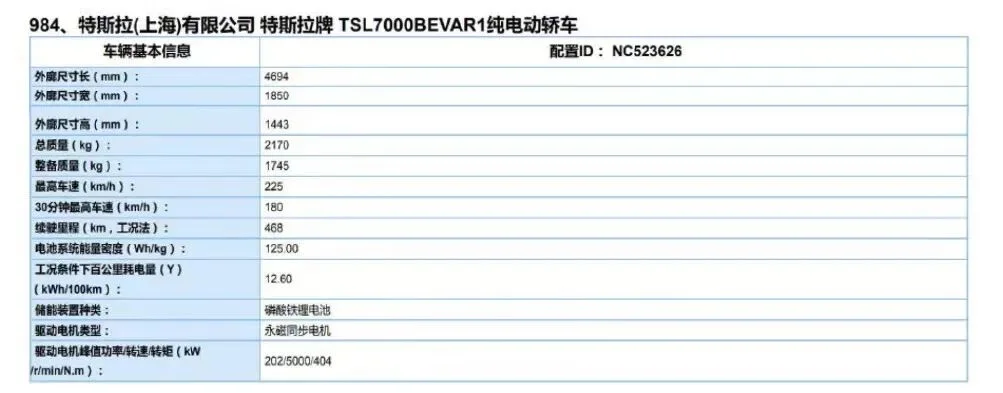
This marks the second time Tesla has chosen to use a domestic Chinese supplier, and the first time it has used a battery chemistry other than ternary lithium.
The steadily increasing sales and the export of Model 3 produced at the Shanghai Gigafactory to European and Japanese markets demonstrate that Tesla has fully recognized lithium iron phosphate batteries from China, and intends to leverage the price advantage of these batteries to dominate more overseas markets.
Zeng Yuqun also stated in a media interview: "We do not rule out the possibility of supplying to Tesla's Berlin factory."
According to the battery report released by BNEF in December 2020, the cost of battery packs in 2020 was approximately USD 137 per kilowatt-hour, a 13% decrease compared to 2019. The price of battery cells was USD 102 per kilowatt-hour.
BNEF forecasts that the cost of lithium iron phosphate batteries will drop to a minimum of USD 80 per kilowatt-hour by 2021, and is expected to fall to USD 50 per kilowatt-hour in 2023.
From the models currently on sale, it can also be seen that the launch of the XPENG P7 lithium iron phosphate battery version has reduced the ownership cost of XPILOT by 20,000 yuan. In the low-end vehicle segment, Wulinghongguang MINIEV fully adopts lithium iron phosphate batteries, allowing its price to drop to around 30,000 yuan.
The rise of lithium iron phosphate (LFP) has significantly reduced the overall BOM cost of electric vehicles, enabling them to reach more consumers interested in trying pure EVs with a higher price-to-performance ratio.
Shipments of lithium iron phosphate batteries also surged accordingly.
In 2020, the installed capacity of ternary lithium batteries was 38.9 GWh, a year-on-year decline of 4.1%, while the installed capacity of lithium iron phosphate batteries was 24.4 GWh, a year-on-year increase of 20.6%.
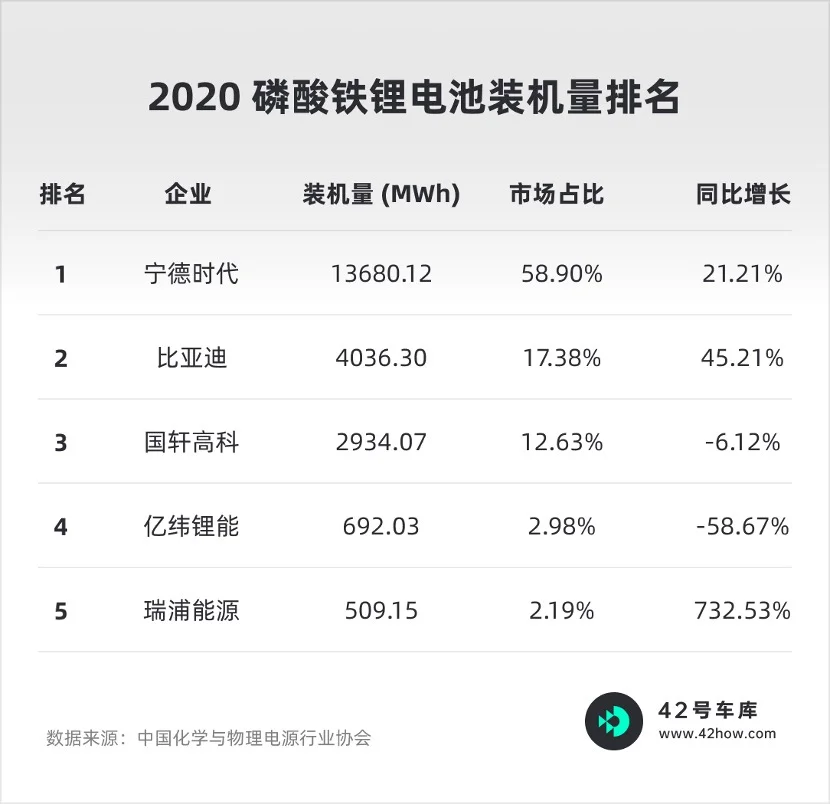
In 2020, the top three companies in lithium iron phosphate battery installed capacity were CATL, BYD, and Guoxuangaoke.
CATL accounted for 58.9% of the market share, with total installed capacity reaching 13,680.12 MWh, a year-on-year increase of 21.21%. For comparison, BYD held a market share of 17.38% last year, with an installed capacity of 4,036.3 MWh, representing a year-on-year growth of 45.21%.
04The Market Needs Diversity
Although the preceding text highlighted the outstanding advantages of lithium iron phosphate batteries and their rising market share, this is not a signal that ternary lithium batteries are in decline.
As policies are rolled out incrementally, the new energy vehicle (NEV) industry is gradually returning to a market-driven era.
It can be observed that the Tesla Model 3 Standard Range Plus, XPENG P7 Standard Range, and Wulinghongguang MINIEV—vehicles mentioned above that use lithium iron phosphate (LFP) batteries—share several common characteristics: they do not demand high driving range, and they have extremely tight BOM cost constraints.
As consumer acceptance of electric vehicles continues to rise, LFP batteries indeed enable more people to purchase pure electric vehicles at lower prices.
However, relatively low battery energy density and weaker low-temperature charge/discharge performance remain unavoidable weak points for LFP batteries in certain scenarios.
On November 2, 2020, the Guowuyuanbangongting issued the "New Energy Vehicle Industry Development Plan (2021–2035)," which stated that by 2025, NEVs would account for approximately 25% of new car sales in China, corresponding to a sales volume of 8 million units.
In the just-concluded year of 2020, China’s NEV production and sales were 1.366 million and 1.367 million units, respectively, representing year-on-year growth of 7.5% and 10.9%, setting historical highs for both production and sales.
This means that over the next four years, NEV sales will increase by a factor of 5.8.
To sell such a large volume of new energy vehicles, it is essential to ensure that NEVs can cover a wider range of users’ driving scenarios.
Lithium iron phosphate (LFP) batteries, leveraging lower costs, have replaced some ternary lithium battery applications among price-sensitive consumers. For range-sensitive buyers, however, ternary chemistry remains the optimal choice.
In 2019, CATL was the first to launch a ternary lithium battery with an 811 formula, enabling many models to achieve ranges of 600 km or even 700 km. Last year, CATL also introduced large-module prismatic cells using a 523 formula, achieving an energy density of 180 Wh/kg through higher module efficiency while utilizing safer 523 cells.
The increasing energy density of ternary lithium batteries has made electric vehicles more acceptable to a growing number of consumers. NIO’s development over recent years serves as a prime example.
When the ES8 launched in mid-2018, it was equipped with a 70 kWh CATL battery pack that delivered only 355 km of range. In 2019, after switching to higher-energy-density NCM 811 cells, the same-sized battery pack accommodated 84 kWh. By 2020, through structural optimization by CATL, the same pack held 100 kWh, allowing the same model to achieve a 500 km range.
There is no absolute superiority between LFP and ternary lithium batteries in today’s market; rather, they are complementary products addressing a diverse consumer base.
Much like in the internal combustion engine era, vehicles sold in the Middle East require larger radiators for cooling, while those in the Far East need larger PTC heating components.
Batteries also require more extreme value extraction.
Looking back, CATL, which leads domestic shipments in both LFP and ternary lithium batteries, emerges as the biggest winner of this era.
By Lu San Edited by Daji