


Huawei Unveils Huawei XLight Smart Headlamp Solution at Auto Lighting Expo
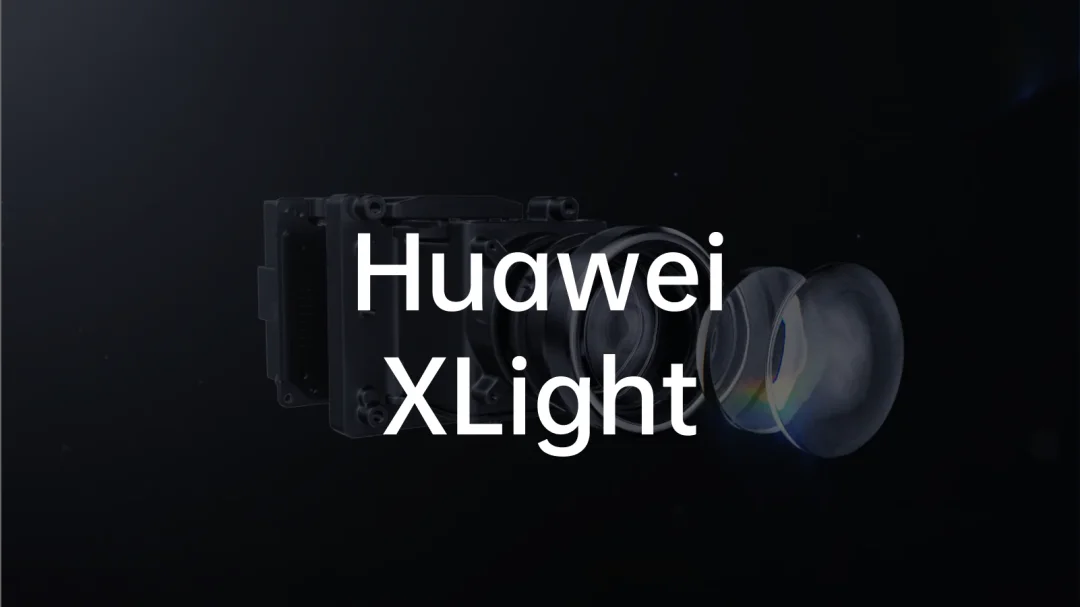
As Huawei deepens its exploration in the smart vehicle sector, its involvement in niche areas continues to expand.
On November 10, at the 17th Automotive Lighting Industry Development Technology Forum and the 8th Shanghai International Automotive Lighting Exhibition (ALE), Huawei unveiled its latest achievements in automotive optics: the intelligent headlight solution, Huawei XLight.
01Further Exploration in Optics
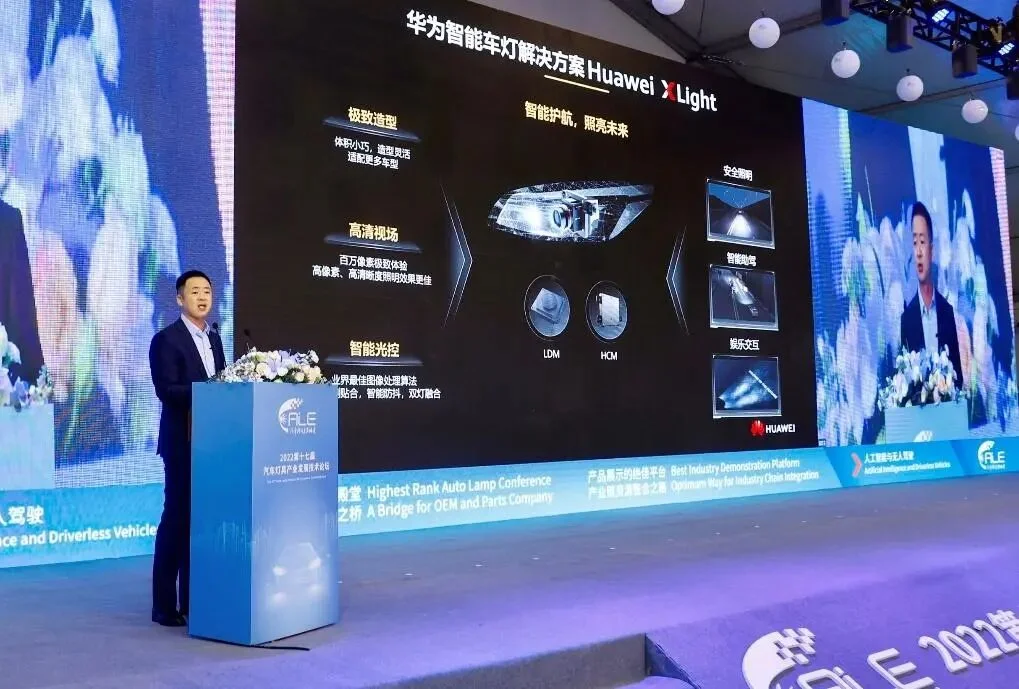
Huawei actually entered the optical field more than two decades ago. To date, it has accumulated a substantial portfolio of optical patents, including spatial optics, laser light sources, optical algorithms, and optical sensing. The current intelligent headlight product, Huawei XLight, represents another step in this ongoing exploration, built upon Huawei’s continuous research into optical technologies.
Huang Zhiyong, President of Huawei’s Optical Application Division, stated: 'The Huawei Intelligent Headlight Solution, Huawei XLight, will provide automakers with an integrated system combining safe illumination, intelligent driving assistance, and entertainment interaction, delivering an ultimate user experience.'
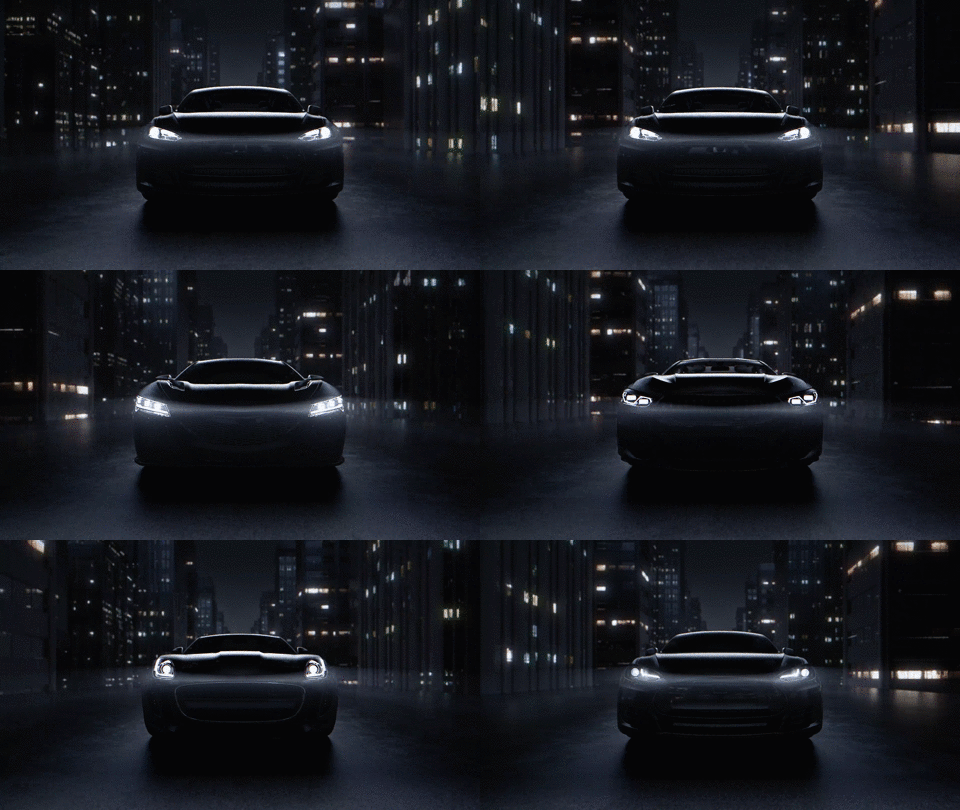
The first hardware product of this solution is Huawei's self-developed intelligent headlight module, along with the LDM (driver board) and HCM (control board) two hardware components paired with the headlights in the solution. With supporting algorithms, this setup can enable a wide range of intelligent functions, such as watching movies or projecting a zebra crossing for pedestrians.
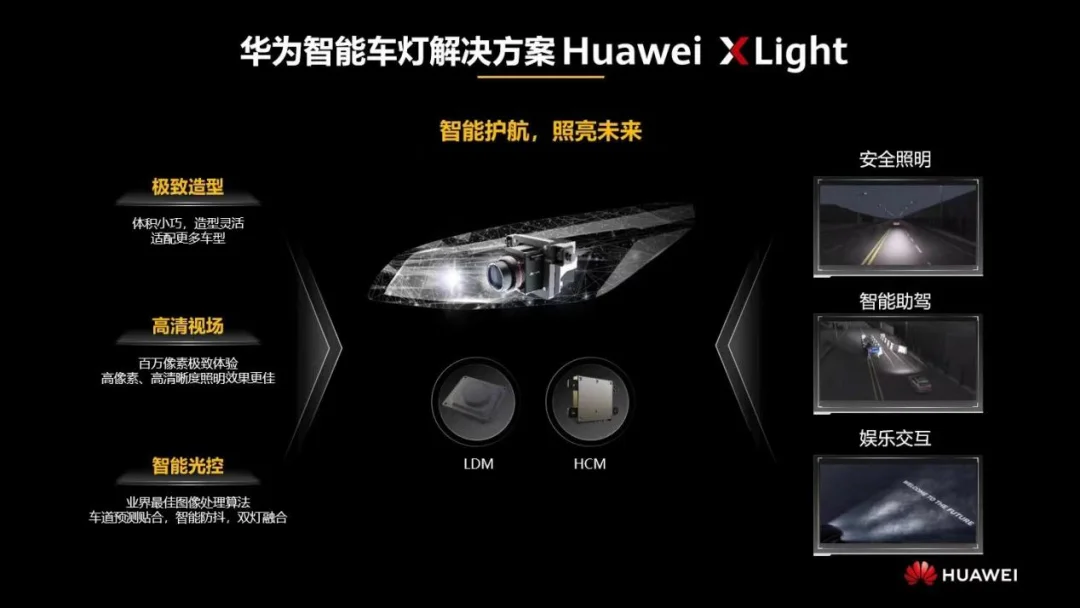
So why doesn't Huawei manufacture complete headlamps itself, but instead acts as a Tier 2 supplier collaborating with specialized lighting manufacturers?
In Huang Zhiyong's view, lights are the most variable element in a car's styling and the least platformized. Huawei's philosophy is to help lighting manufacturers produce high-quality lights by providing core modules and algorithms, while allowing automakers to freely design the appearance of the complete light assembly. This represents both Huawei's approach to manufacturing lights and its boundaries.
02Higher specifications, lower costs
What characteristics should a lighting system possess to best meet the vehicle design requirements of automakers?
If the headlamp assembly needs to accommodate a wider variety of exterior designs, it must be small enough in volume to ensure that design is not compromised by engineering constraints. Therefore, from the outset of its development, the Huawei XLight solution prioritized miniaturization as one of its key R&D directions.
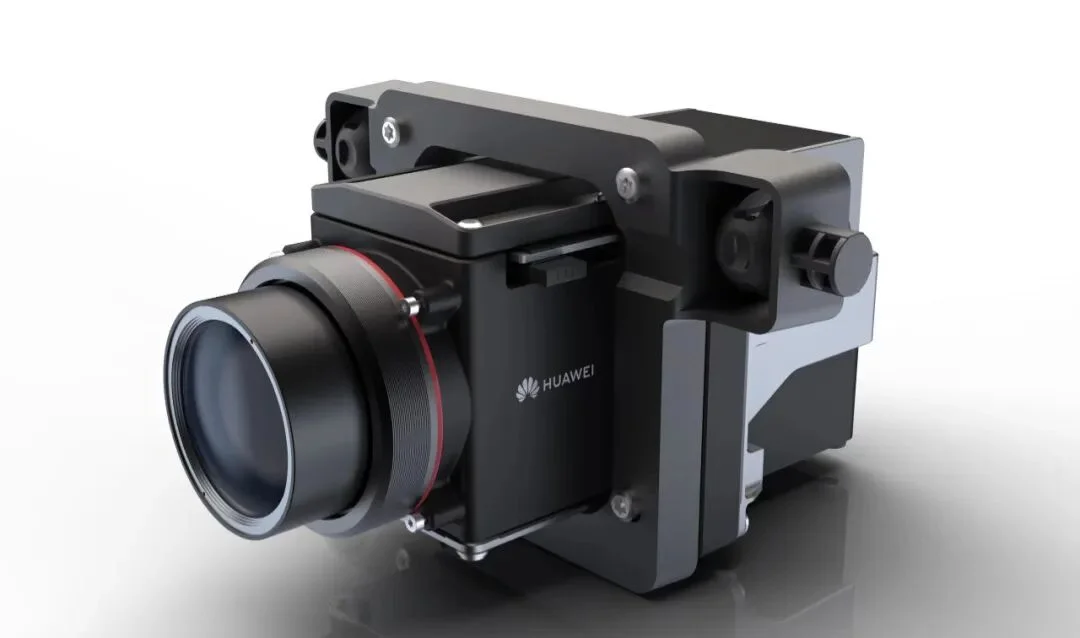
In the past, vehicle headlamps were bulky. During the halogen era, massive reflectors were required to achieve high directionality and brightness. Even later xenon lamps with lenses remained large because their light-generation principle necessitated substantial module volume.
The most prominent feature of the current Huawei XLight product form is its ultra-compact lamp assembly. Huawei reduces overall optical complexity through a simple, compact, and streamlined optical path design. By folding the optical path to enable reuse, the module’s optical volume is reduced by 8%.
According to the introduction, an ultra-high-brightness light source reflects once onto a digital micromirror array (DMD). An imaging lens group then refracts the light to project a real image at a distance.
This design achieves both high brightness and an extremely small module volume.
Another advantage of the simplified structure is lower cost; fewer internal components significantly reduce the unit cost of each module. This is essential for the development of the intelligent headlamp industry. Huang Zhiyong even expressed hope that Huawei can equip every car with high-pixel, high-brightness intelligent headlamps in a short time.
03Pixels, Lasers, Intelligence
At a media sharing session, Huang Zhiyong mentioned that Huawei's view on the future of automotive lighting lies in three directions: pixelation, laserization, and intelligence. These three directions correspond to three key metrics for automotive lighting: 2.6 million pixels, ultra-high brightness, and intelligent algorithms.
In short, Huawei aims to integrate all three.
High Pixel Count
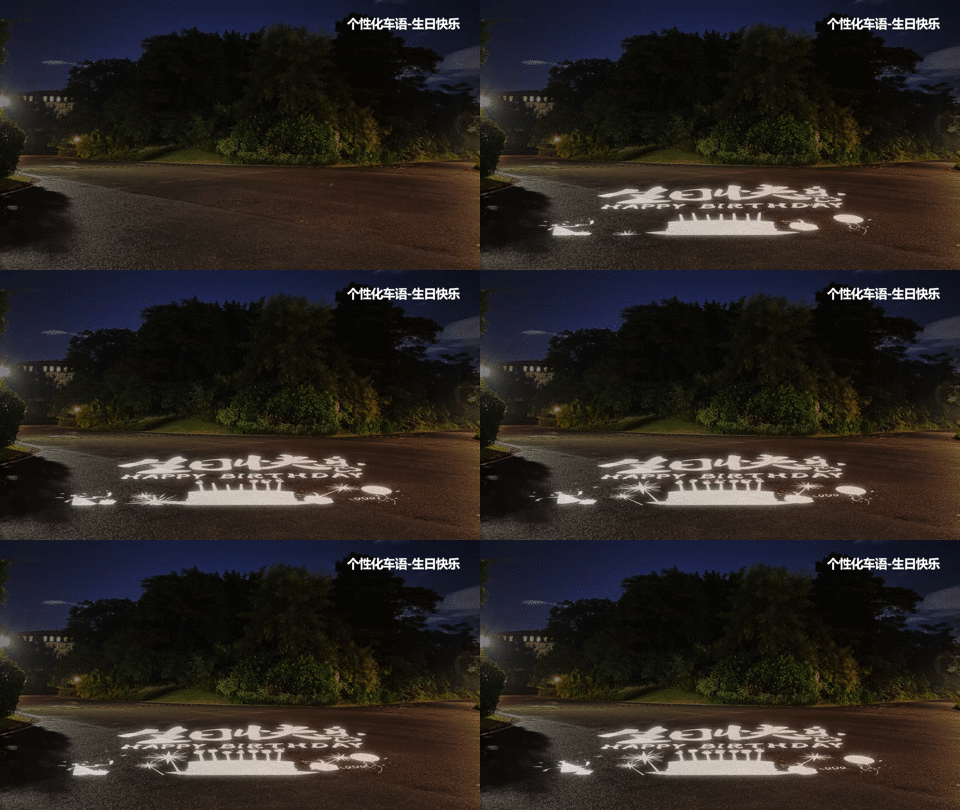
The currently released headlight modules achieve a resolution of 2.6 megapixels by combining the left and right headlights, each with 1.3 megapixels. This pixel level essentially reaches 2K quality in display hardware. Therefore, it can project highly customizable content similar to a projector. The most basic function—up-and-down locking welcome light effects—can create personalized lighting activation effects for different users simply by designing the image.
Laser Light Source
The first-generation product does not yet fully utilize laser light sources, but Huawei plans to implement laser-based designs in the future by replacing the currently released ultra-high-brightness light sources with higher-brightness laser alternatives. Once the light sources are converted to lasers, the headlight apertures will become smaller, and the entire module's volume will shrink to a fraction of its current size, allowing it to blend almost seamlessly with the daytime running lights. This is good news for the currently popular split-headlight design.
Entertainment App with Infinite Possibilities
Before being officially applied to mass-produced vehicles, the R&D department of Huawei's intelligent in-vehicle optical solution developed some highly imaginative entertainment applications and pioneering features.
The advantage of having 2.6 million pixels is that it allows for the direct projection of high-resolution black-and-white video images onto the ground or walls, meaning that theoretically, when the vehicle is stationary, there will be a wide variety of possibilities for using the headlights.
For example, projecting Christmas-themed content to create a festive atmosphere.
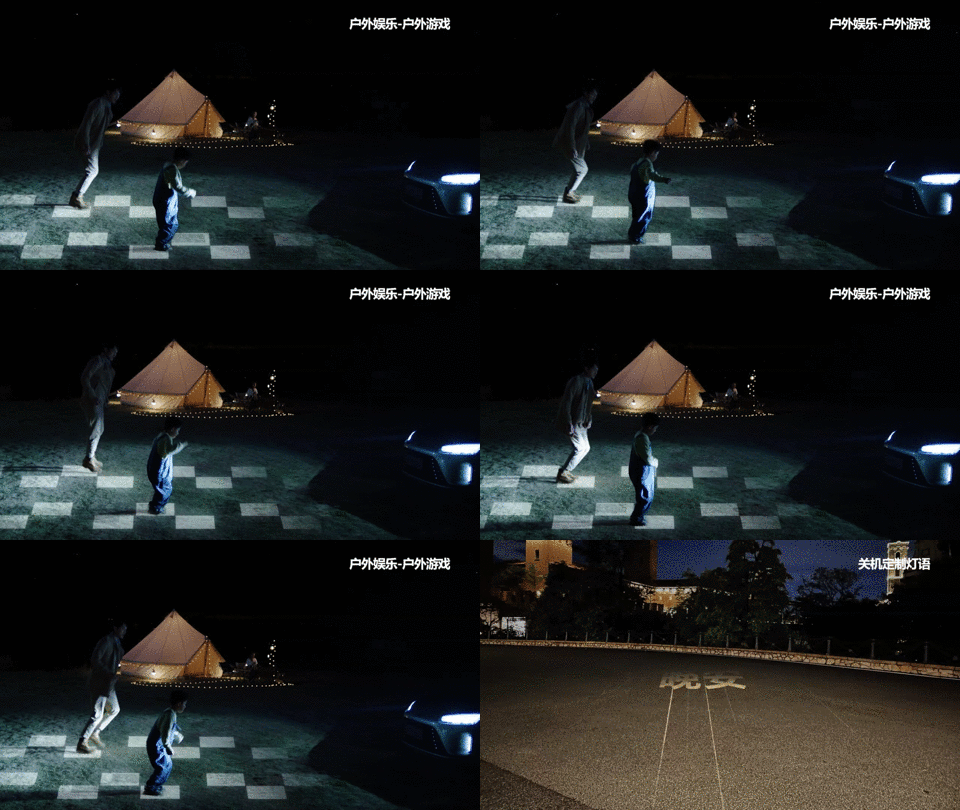
It can also project interactive fitness mini-games, adding fun to outdoor camping.
These are just some of the ways to use headlights as projectors; theoretically, their functional development potential is vast. Currently, they only project white light, but if color projection is achieved in the future, all projector-based features could be applied to headlights—for example, projecting a giant screen for an outdoor movie. Compared to traditional projectors, the contrast provided by headlight brightness would be unmatched.
Expanding Functional Applications
If used solely as a projector, such headlights would lack significant technical highlights. Therefore, the Huawei XLight solution is primarily intended for information interaction with pedestrians, vehicles, and other road users while the car is in motion, which can enhance safety for all participants to some extent.
Width-indicating Interaction
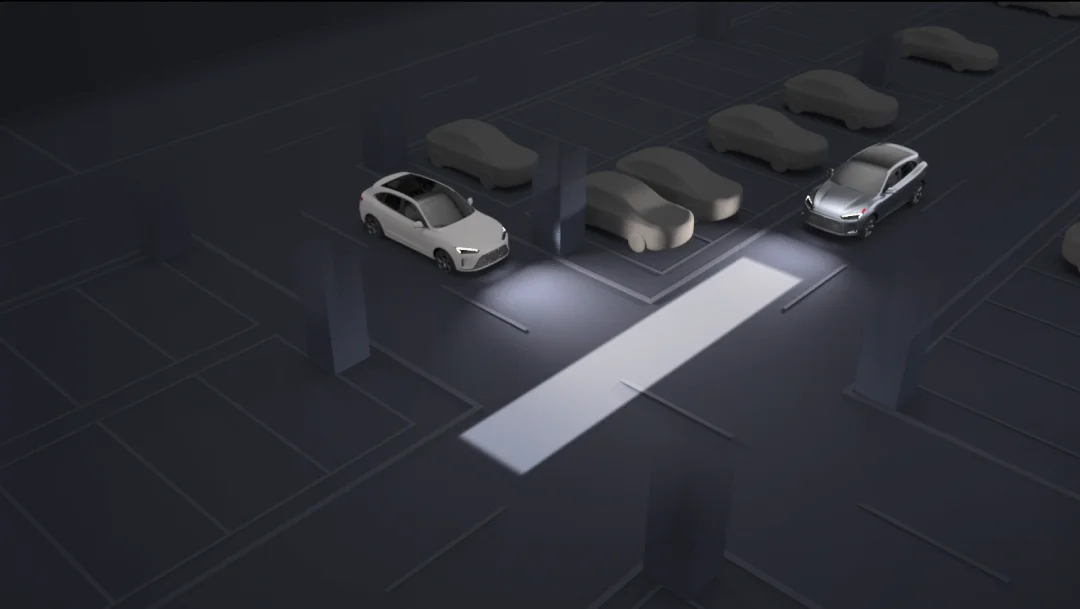
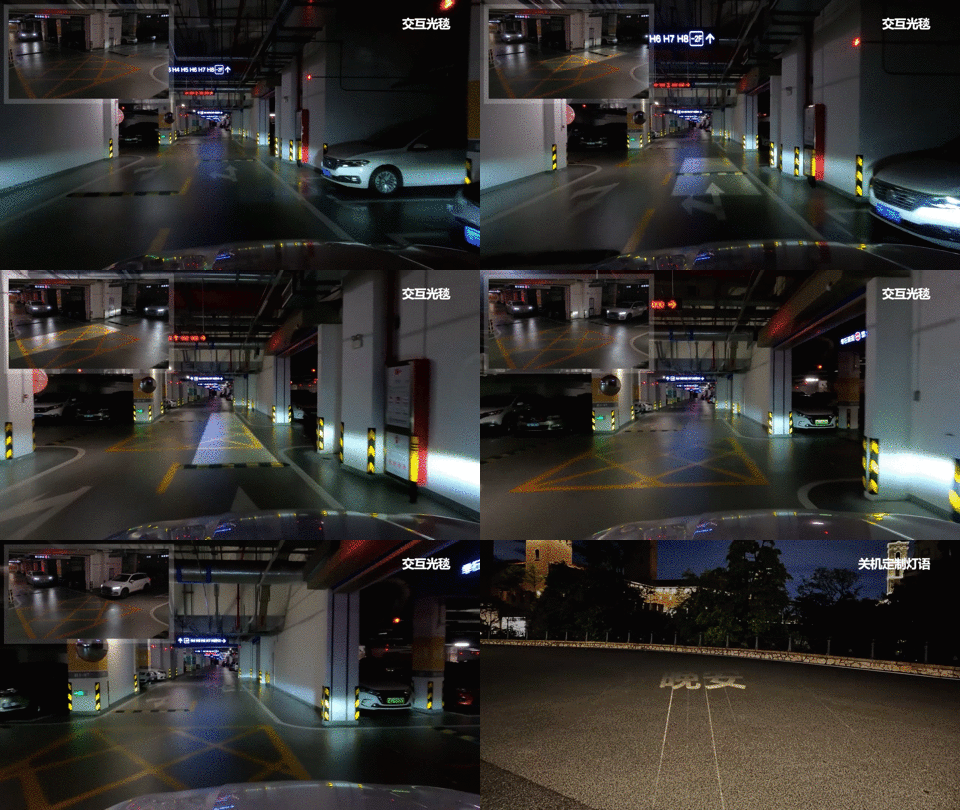
A "light carpet" is projected directly in front of the vehicle, matching its actual width. This feature assists with navigating narrow roads and serves as a warning to external observers.
Pedestrian Guidance
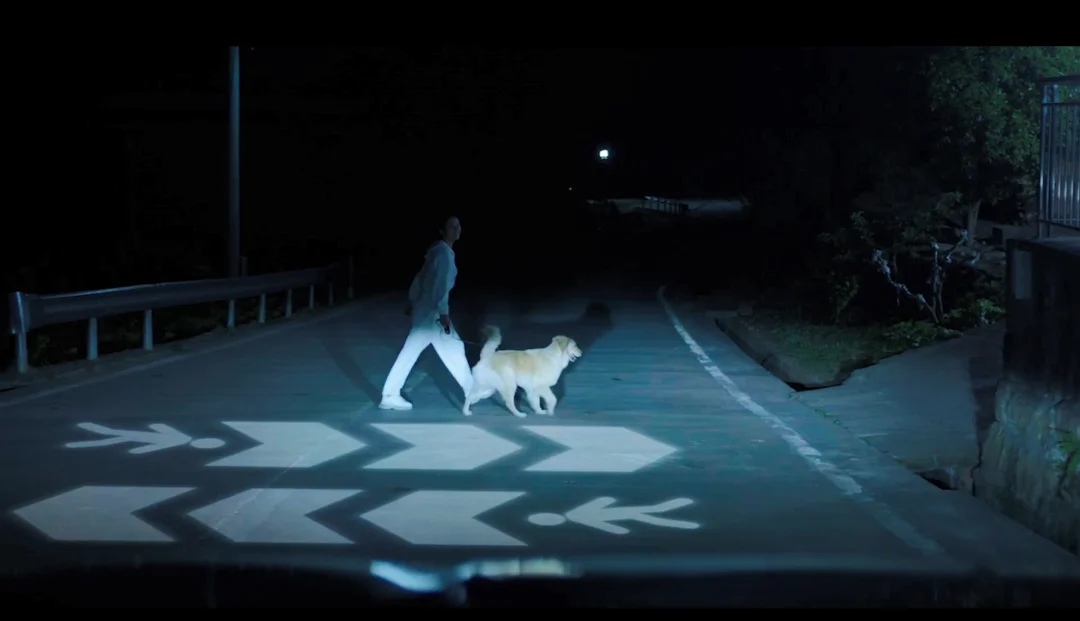
When pedestrians cross the road, projecting yielding zebra crossings on the ground can signal drivers to yield.
It Has to Be the Algorithm
The Huawei XLight solution integrates LDM and HCM driver control boards, enabling direct execution of Huawei's proprietary algorithms to enhance performance. It can also directly access the vehicle's ADAS perception hardware data at the perception level, eliminating the need for additional perception hardware. This simplifies the composition of the Huawei smart headlight module.
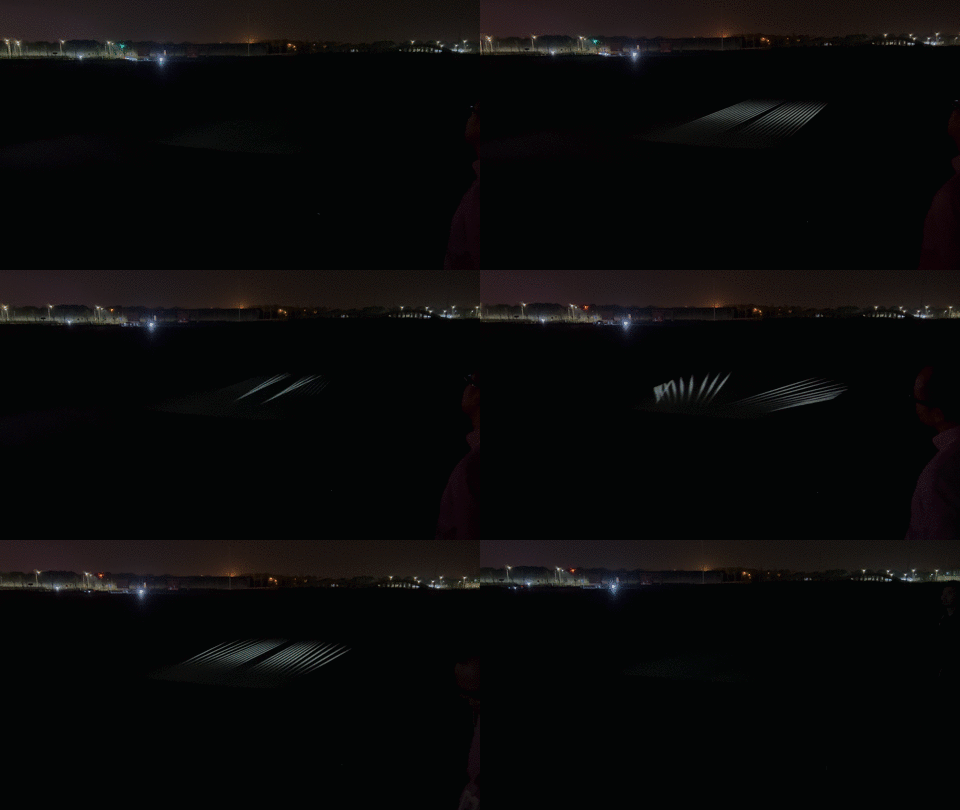
In mass-produced vehicles, slight angular deviations are inevitable between the left and right modules after installation, and these deviations become more pronounced at long projection distances. The Huawei XLight solution does not rely on mechanical structures to correct these misalignments; instead, it uses pixel-level control to align both lights, automatically detecting the projection deviation of the two modules and calculating a complete merged beam state.
Another unavoidable issue over the vehicle's entire lifecycle is that prolonged operation causes slight displacement and loosening of various components, which can disrupt the alignment of the left and right headlights. Consequently, automatic correction algorithms maintain their effectiveness longer than static factory calibrations.
As road users, drivers and pedestrians are often blinded by direct exposure to vehicle headlights, leading to temporary vision loss. National regulations strictly govern the use of high beams, permitting them only in extreme circumstances to avoid dazzling other vehicles.
During driving, avoiding other vehicles with smart headlights is a basic requirement due to their high brightness. However, avoiding pedestrians is equally critical, as they are central participants in most traffic scenarios.
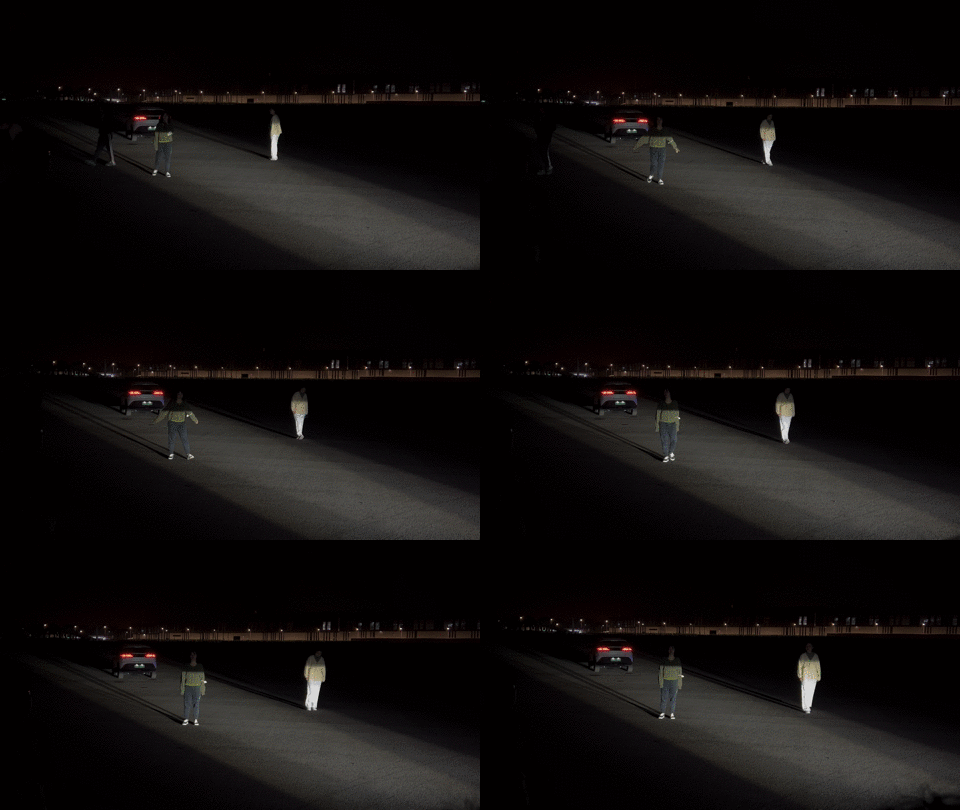
Huawei has developed its own Adaptive Driving Beam (ADB) masking algorithm for this purpose. Using driver assistance hardware to perceive pedestrian posture, the system precisely controls the headlights to automatically mask illumination above shoulder level. This marks pedestrians for visibility while protecting them from glare.
This algorithm complements the use of laser light sources mentioned earlier: by preventing glare for other road users, higher-brightness light sources can be used to achieve superior illumination.
Ecosystem Support
Huawei has launched the first mass-produced AR-HUD in the Feifan R7, enabling a wide range of information to be projected onto the heads-up display. If this technology can eventually integrate with intelligent headlights for interactive information sharing—for instance, displaying navigation details on the HUD that remain private from others while simultaneously projecting lane-level intersection guidance onto the road surface—this dual-channel information flow would achieve a high degree of integration. This capability likely represents the most formidable aspect of Huawei’s automotive hardware ecosystem.
04Conclusion
The application of pixelated headlights at the current stage remains somewhat fragmented. For example, regarding the pedestrian interaction features mentioned earlier, if the industry lacks a standard definition for these graphics, pedestrians receiving the signals may struggle to understand their meaning, rendering such interactions meaningless.
Unlike traffic lights and crosswalks, which are part of common public knowledge, these light-based signals are not universally understood. Therefore, Huawei hopes to collaborate with industry partners and relevant authorities to advance the standardization of these graphics, ensuring that intelligent light-based interactions can be truly implemented in the future.
Furthermore, as more vehicles equipped with pixelated smart headlights hit the road, the projection of numerous graphics could cause a certain degree of light and information pollution on public roads. This scenario highlights the need for operational conditions and standards within the pixelated smart headlight industry, issues that require collective industry effort to address and resolve in the future.
Relevant standards and regulations must be continuously drafted, refined, and implemented, spanning from underlying technological innovation to complete lamp manufacturing and final user experience integration. The widespread adoption of high-pixel smart headlights still requires sustained joint development and iteration across the entire automotive intelligent lighting industry.
From integrated headlamps to the currently popular split-headlamp designs—which aim to make the front daytime running light clusters more sculpted and linearized—the trend suggests that once sufficiently compact main beam units can be practically applied, the two components may merge again. They could fuse into a single, smaller unit better suited for design integration, potentially offering new possibilities for future automotive styling.
When it comes to new technologies and applications, there is still significant room for growth for automakers and the industry. Although currently realized features may lack immediate practicality, these innovations are designed for the future; why limit our vision of the infinite future with today's finite perspective?
Written by: Yisong Edited by: Bo Bo