


Faw-Volkswagen ID.7 VIZZION: Localized Upgrades Target Past Shortcomings
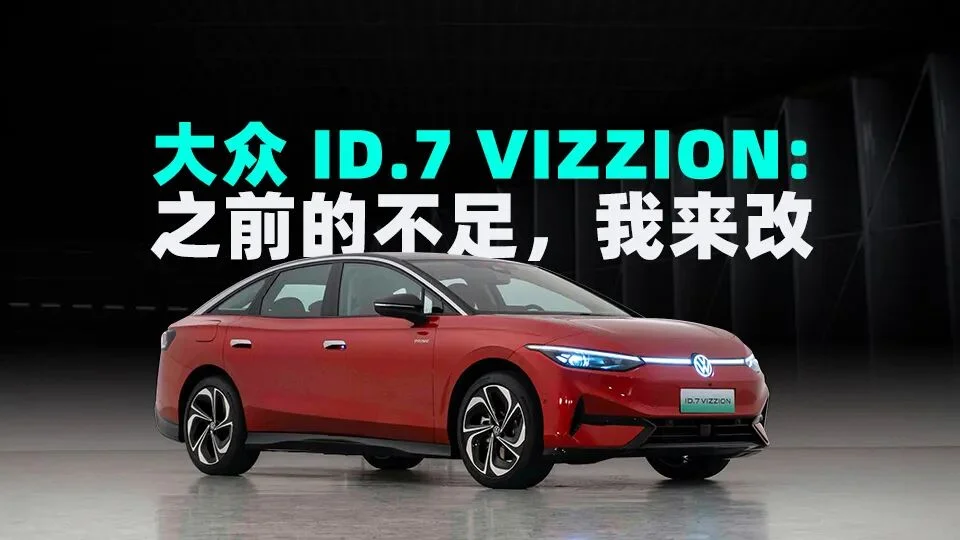
On January 4 this year, Volkswagen unveiled the sixth model in its ID. family at CES: the ID.7, a mid-size pure electric sedan. Overseas, the ID.7 is positioned to fill market gaps and capture share. In China, however, the selection of mid-size EVs is extensive; without addressing its shortcomings, it would be difficult for Volkswagen to satisfy domestic consumers.
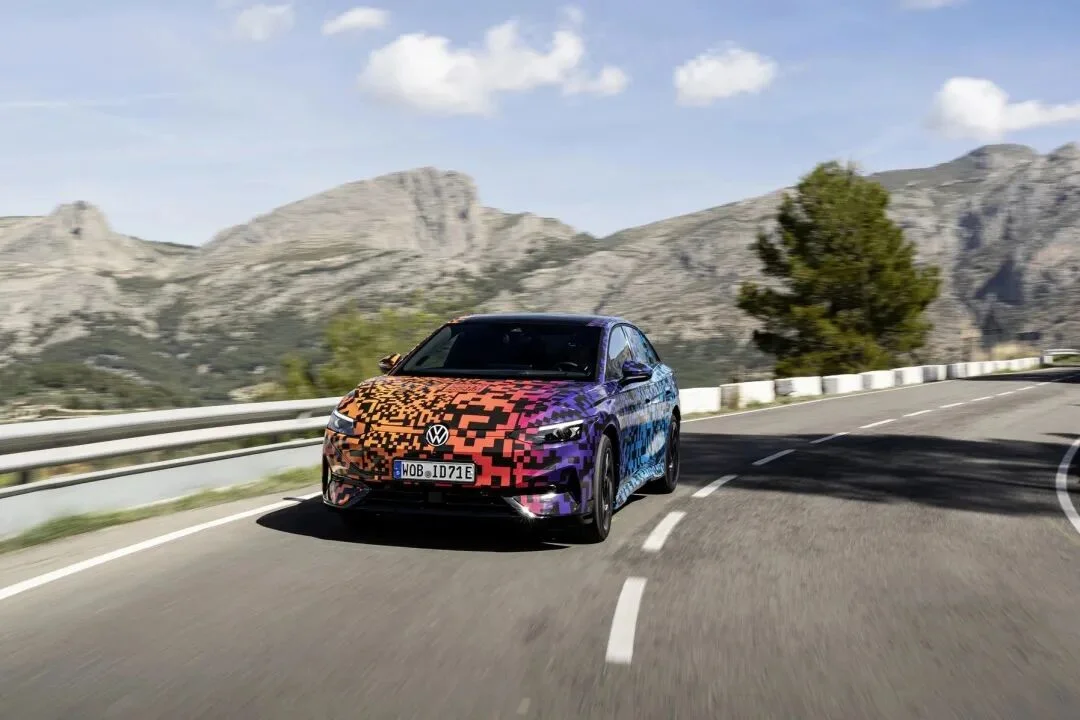
Consequently, the ID.7 features an improved infotainment system, enhanced build quality, and optimized range. After FAW-Volkswagen introduced the ID.7, the company preserved the original design while implementing numerous localized improvements tailored for the Chinese market.

The FAW-Volkswagen ID.7 VIZZION made its debut in China on the 17th, and before its official launch, we got an early look at several upgrades on the ID.7. In this article, I will also examine from the perspective of an ID. owner whether the improvements to the ID.7 truly hit the mark, and assess its competitiveness after arriving in the domestic market.
01Exterior: Positioned as B+ Class
The FAW-Volkswagen ID.7 VIZZION was launched simultaneously with the global version of the ID.7. Therefore, Langyi is not merely a "German-style" local adaptation; rather, the FAW-Volkswagen ID.7 remains a pure "German-spec" model. Because no changes were required to the exterior or interior, the FAW-Volkswagen ID.7 was released earlier than SAIC Volkswagen's offerings.
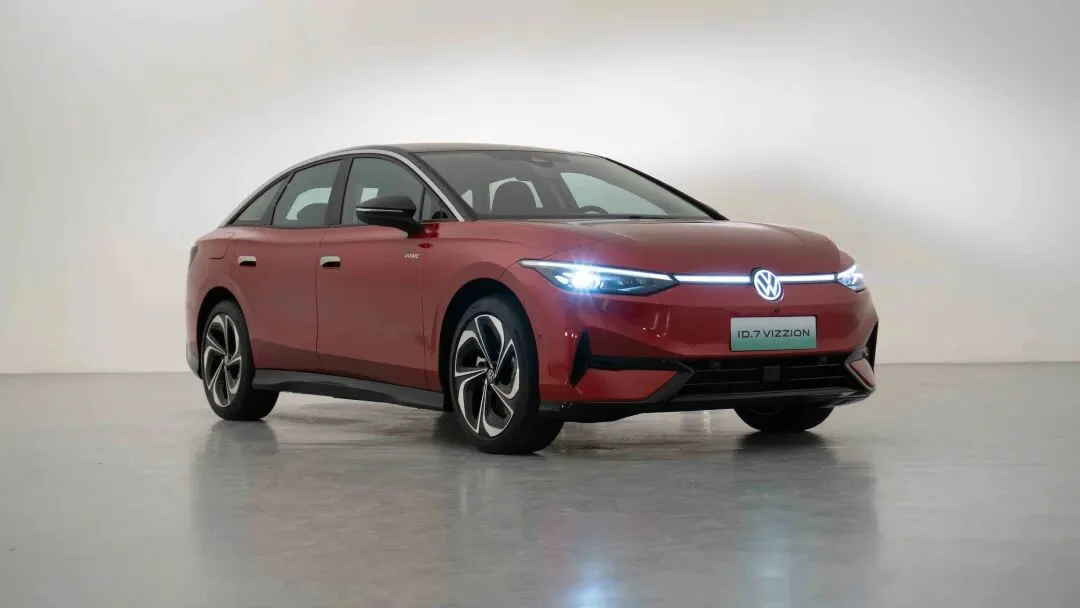
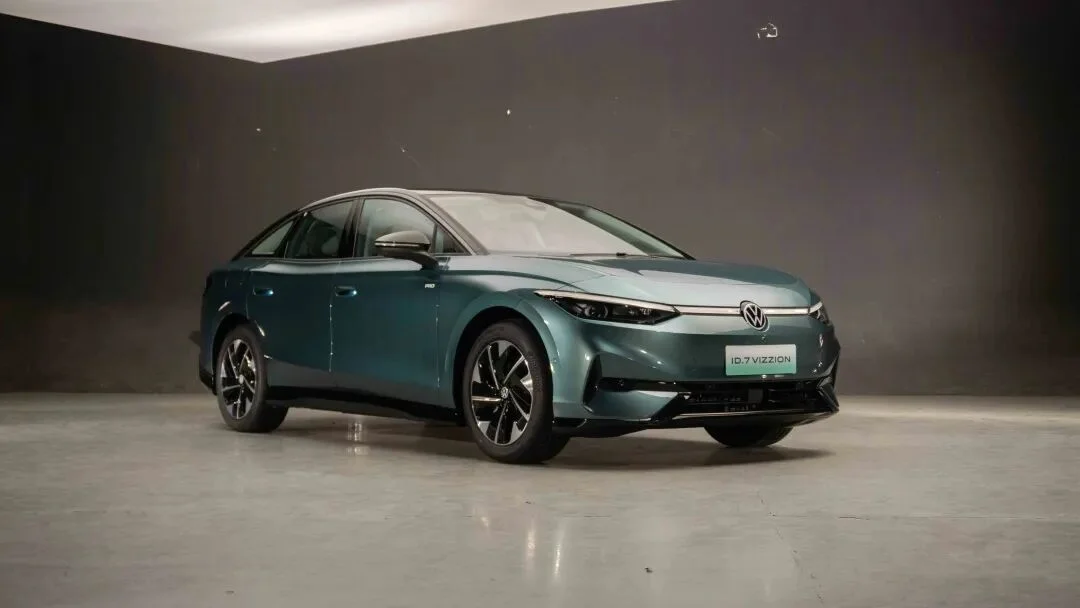
The overall design language of the Volkswagen ID.7 is completely consistent with that of the currently on-sale ID.3 and ID.4 CROZZ, with relatively rounded body lines. Additionally, due to its sedan configuration, the ID.7 achieves a drag coefficient of 0.23. For electric vehicles, low drag is crucial for range; this figure is not among the top in its class, but it is certainly not poor.
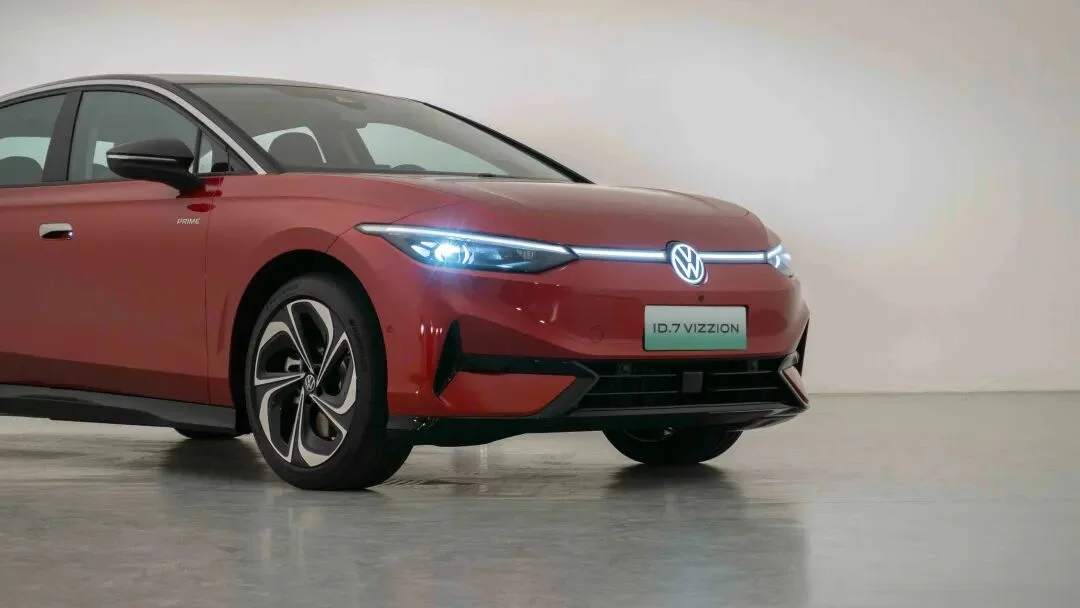
The front fascia adopts a conservative and minimalist design. The Volkswagen logo is flanked by the brand’s signature daytime running light strips. The left and right headlights feature IQ.Light matrix adaptive functionality, with 18 independently controllable LED sources delivering 900 lumens of brightness. The headlight shape resembles human eyes; their movement gives the car a sense of vitality. Upon arriving in China, the ID.7 features an illuminated Volkswagen badge, making the vehicle easily recognizable from a distance.
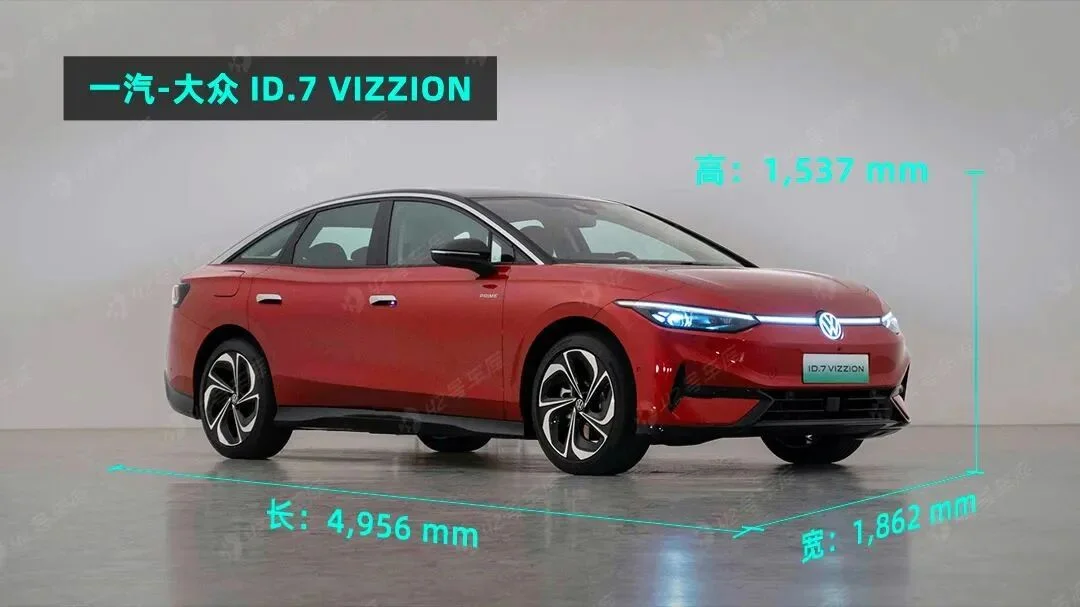
Many people say the ID.7 is the pure-electric version of Pasate/Maiteng, but in terms of body dimensions, the ID.7 is significantly larger than these two fuel-powered predecessors by a whole circle, sitting in the standard B+ class. Its 2,965 mm wheelbase is exactly the same as the currently on-sale ID.6, which is also the benefit of the MEB modular platform. You have to know that the ID.6 is a mid-to-large SUV with 6/7 seats; for the ID.7 with the same wheelbase, there was no need to extend the wheelbase.
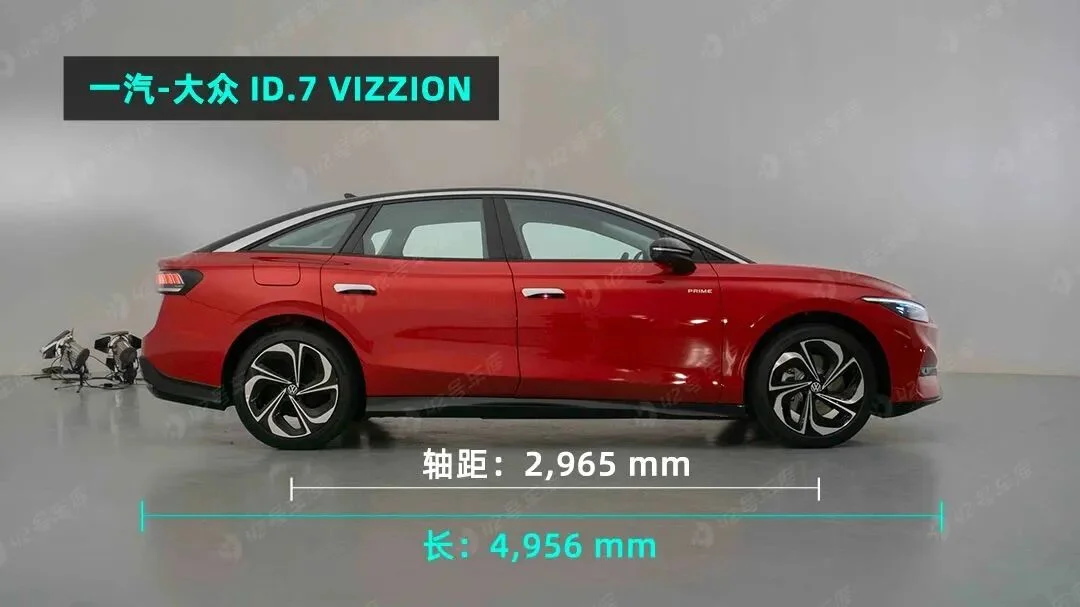
The side profile of the ID.7 does not solely pursue a low-slung body; it must simultaneously accommodate the battery under the chassis and headroom inside the cabin. The ID.7's height reaches 1,538 mm, making its side view appear relatively substantial. To lower the visual center of gravity, the ID.7 employs 20-inch large wheels, black side skirts, a floating roof design, and a vehicle length approaching 5 meters, so overall it remains quite harmonious.
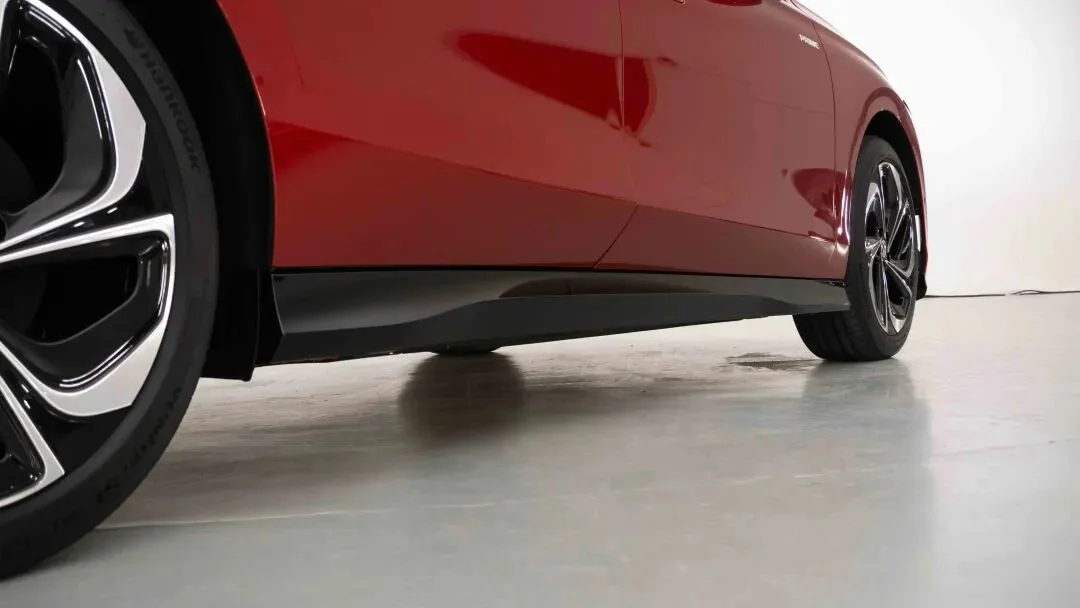
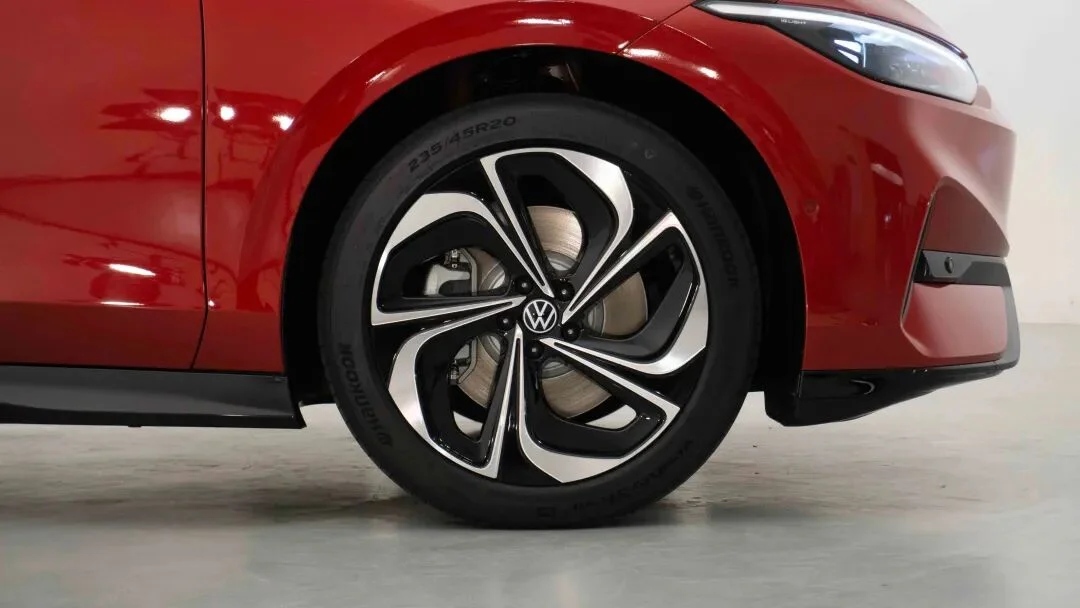
The FAW-Volkswagen ID.7 VIZZION offers four wheel designs across three sizes: 18, 19, and 20 inches. Our test vehicle was equipped with the 20-inch wheels, which I consider the most aesthetically pleasing. The tires are sized 235/45 R20 on both axles, using the Hantaiwanshitu S1 evo 3, a model designed specifically for electric vehicles. These tires feature low rolling resistance and provide good dry-weather grip. At approximately RMB 1,600–2,000 per tire, they are not inexpensive.
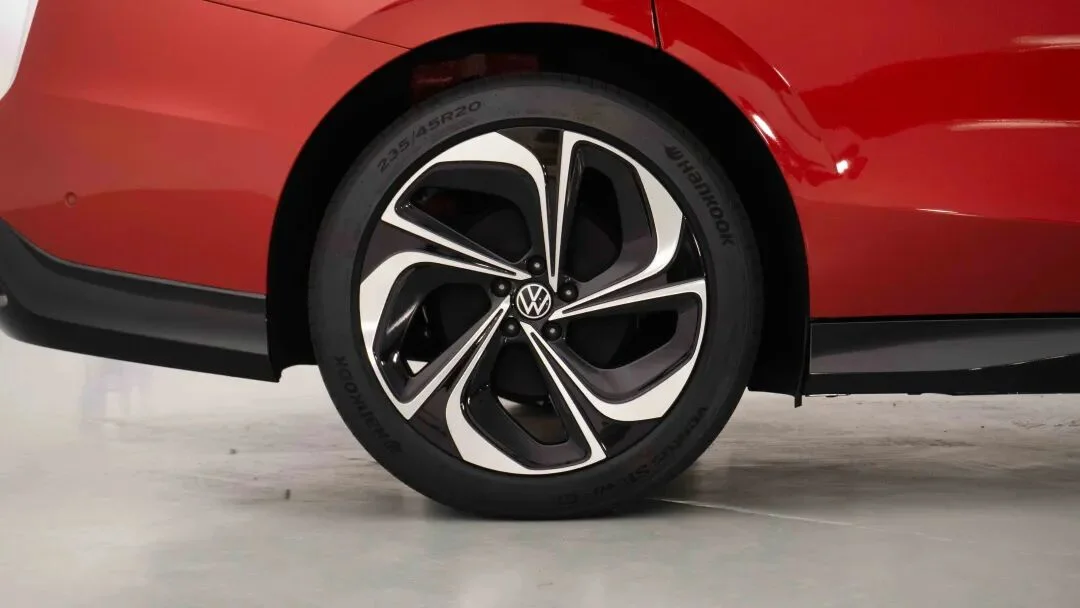
This time, both front and rear tire widths are 235 mm. In terms of tire specifications, this is less aggressive than the rear 255/265 used on the ID.4/6, indicating that the Volkswagen ID.7 is starting to prioritize range.
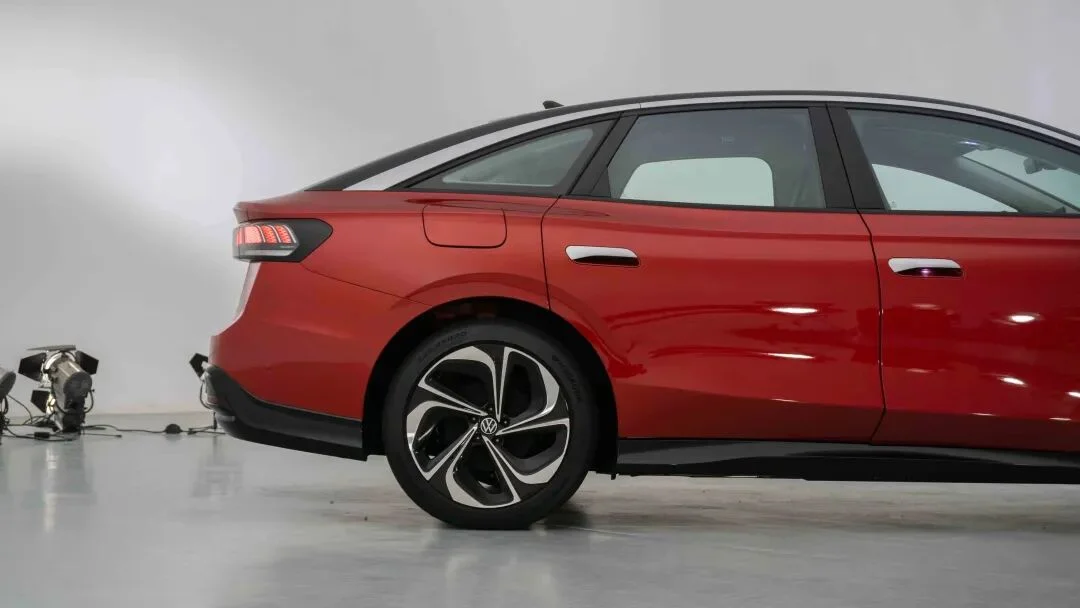
At the rear, the ID.7’s roofline does not terminate in the sharp angles typical of traditional sedans. Instead, it transitions smoothly into the tailgate. This design makes the rear appear shorter while adding a sense of substance and weight.
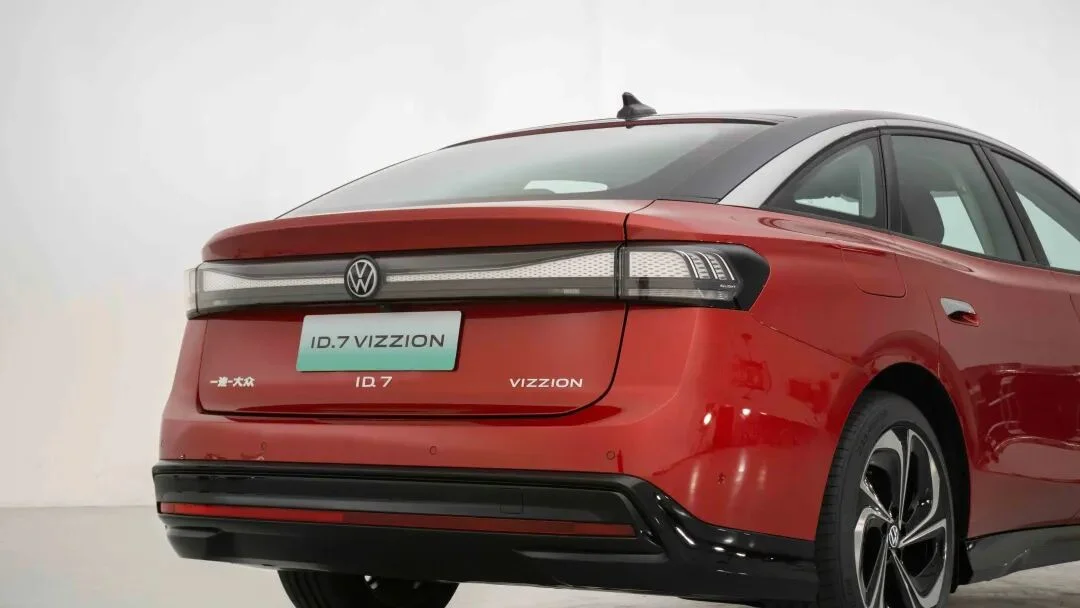
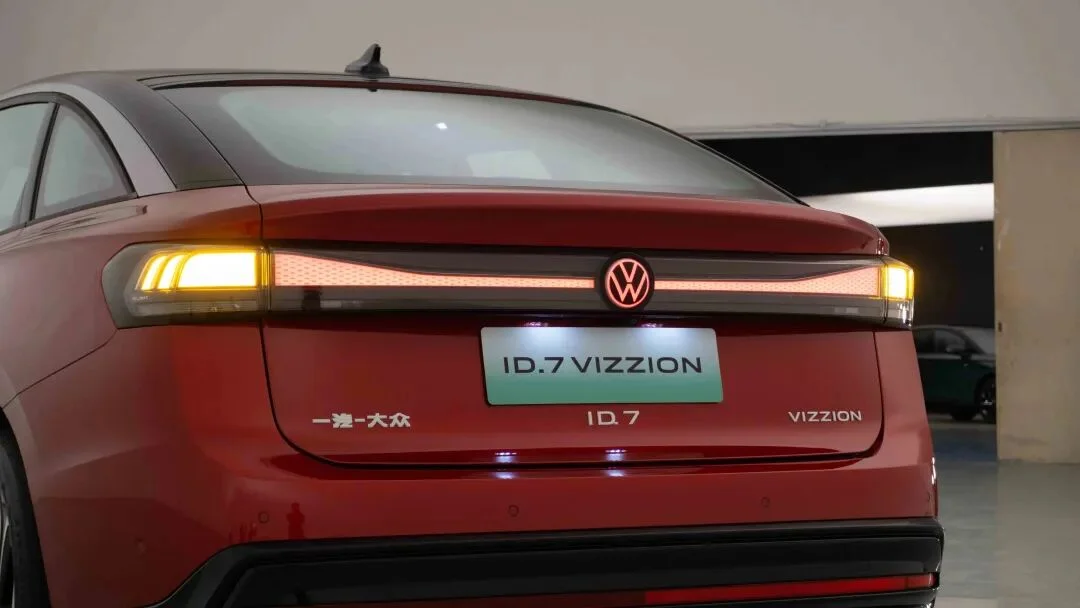
The taillight design of the ID.7 is, in my opinion, one of its most outstanding features. Officially called the Surface LED three-dimensional floating taillights, they appear white when not illuminated and turn red when lit, offering multiple illumination animations that give it a strong sense of technological sophistication.
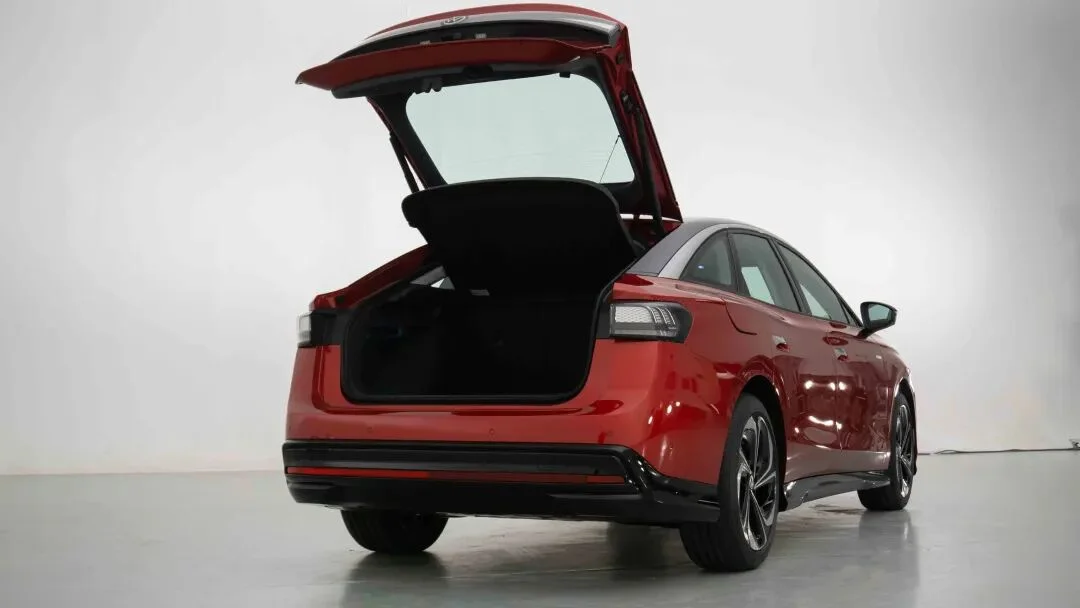
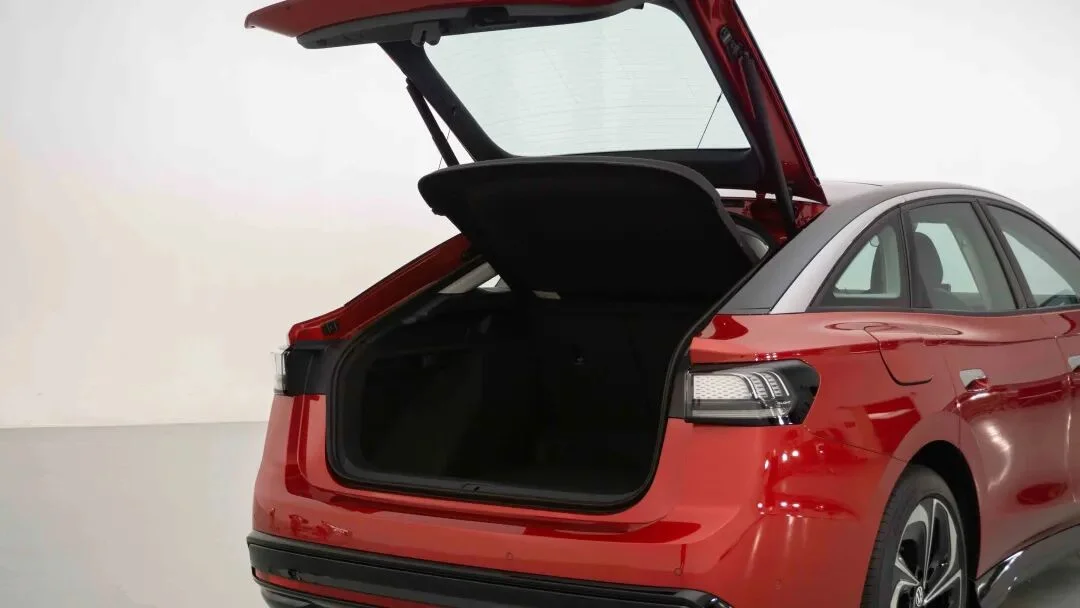
What surprised me most about this car is that the ID.7 is actually a hatchback sedan. With its large tailgate opening angle and the depth of the sedan body, the ID.7's trunk space of over 500 L becomes highly practical.
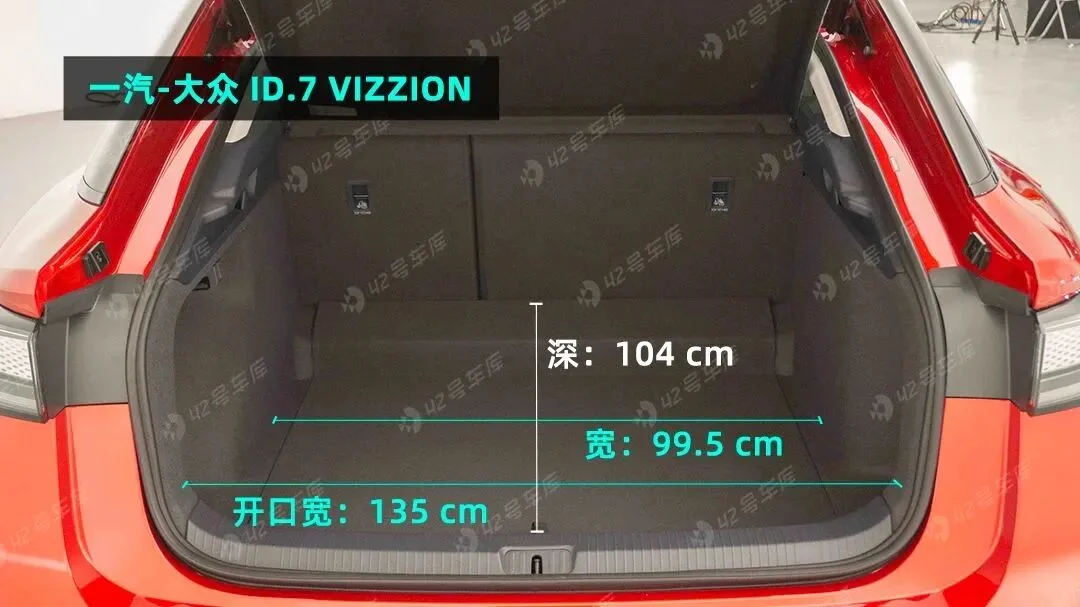
Our measurements show the ID.7’s trunk depth is 1,040 mm and width is 995 mm, easily accommodating large items. Additionally, the rear seats can be folded down in a 4/6 split to expand cargo capacity.
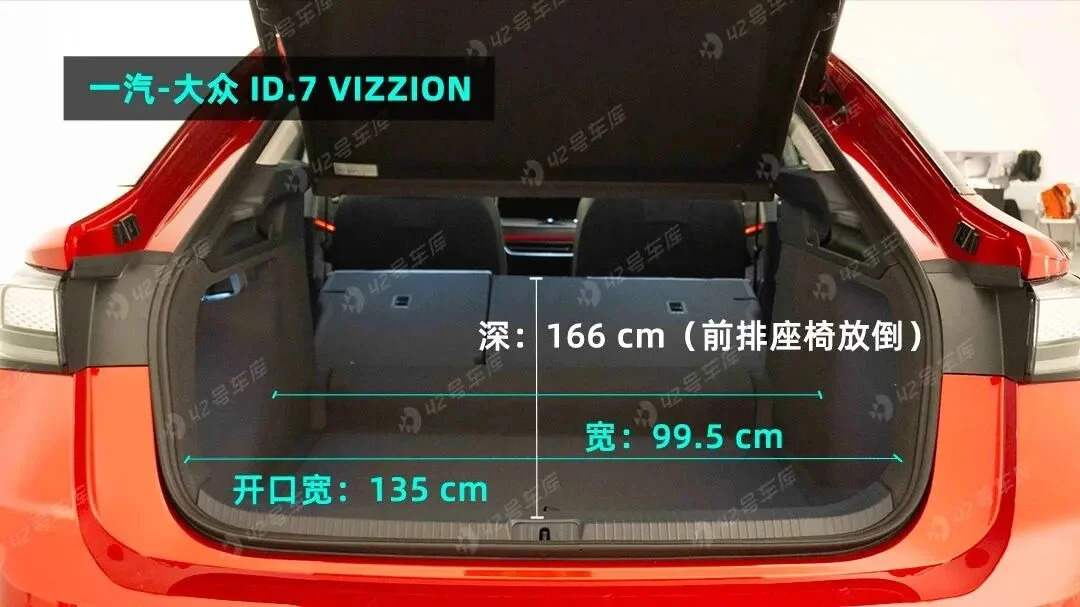
However, the FAW-Volkswagen version does not come equipped with a flat-filling cover from the factory. According to engineers, a pure-flat floor between the rear seats and trunk may later be available as an accessory through the brand’s online store.
Overall, the FAW-Volkswagen ID.7 VIZZION did not disappoint in its exterior design. It retains Volkswagen’s ID. series family design language while achieving a low drag coefficient of 0.23. The large wheels, waistline, and coordinated side skirts and roof keep the 1,538 mm-tall ID.7 from looking bulky.
If you are still unsatisfied with the current exterior, an SAIC Volkswagen version of the ID.7 is expected later, so we can look forward to seeing how a more localized ID.7 might look.
02Key to Addressing Weaknesses Lies in the Interior
The overall interior design style of the ID.7 VIZZION continues to follow the ID. series’ family language. However, as the flagship model of the ID. lineup, it offers significant improvements over the ID.3/4/6 in terms of ambiance, material quality, and infotainment system.
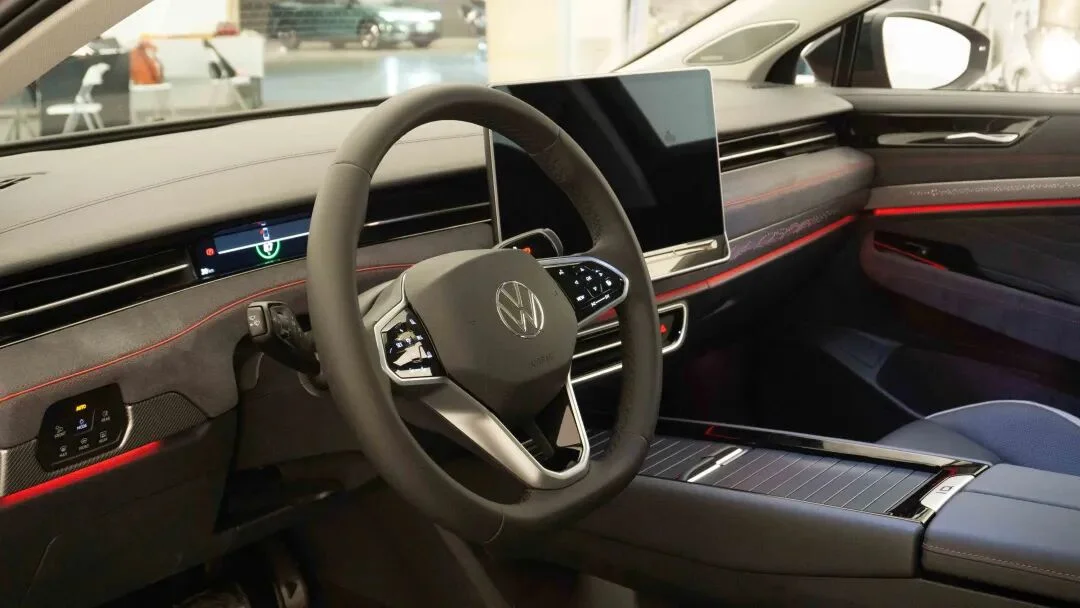
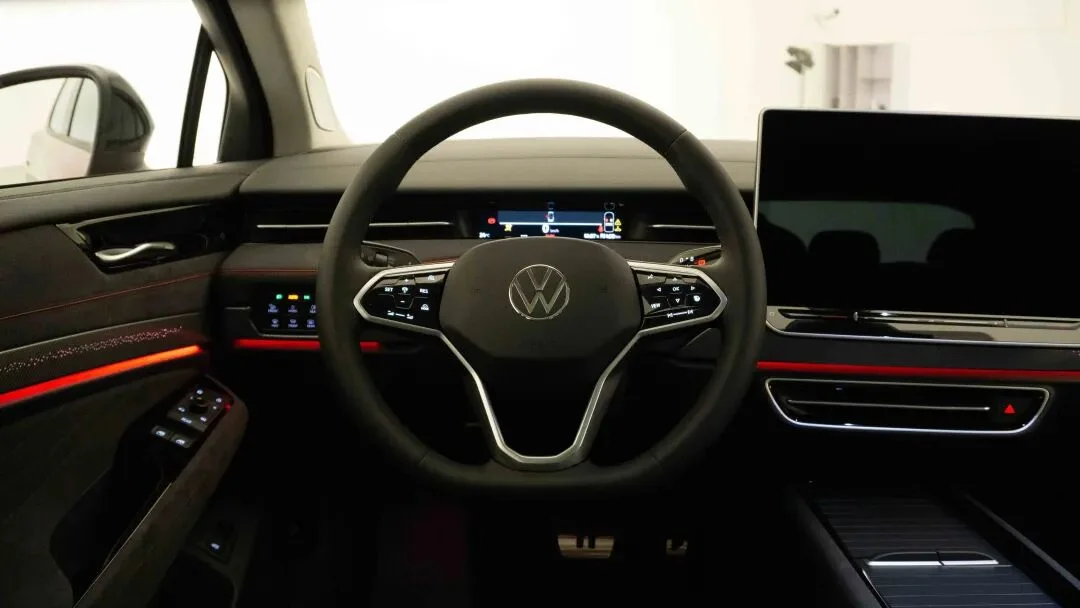
Look closely at the details: on the ID.7, the instrument cluster screen, center console screen, air vents, dashboard layering, and materials have all changed.
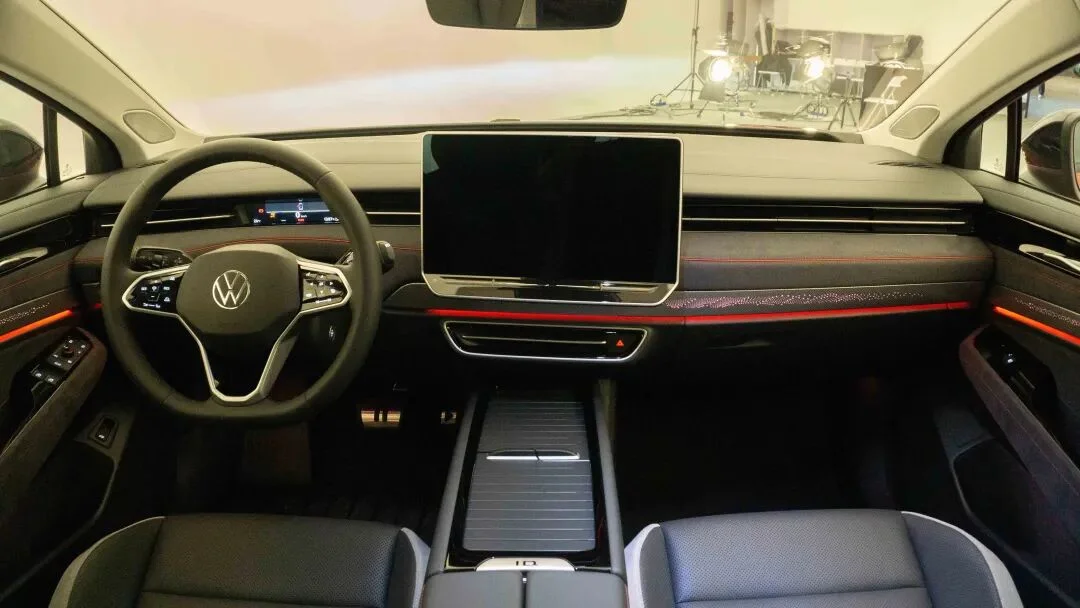
The most significant change in the driver’s area of the center console is that the digital instrument cluster, previously mounted on the steering column, has been integrated into the inner side of the dashboard. This design consolidates the internal space for the instrument display. The small LCD screen embedded within the dashboard handles only driving-related information, such as speed, vehicle status, and remaining range.
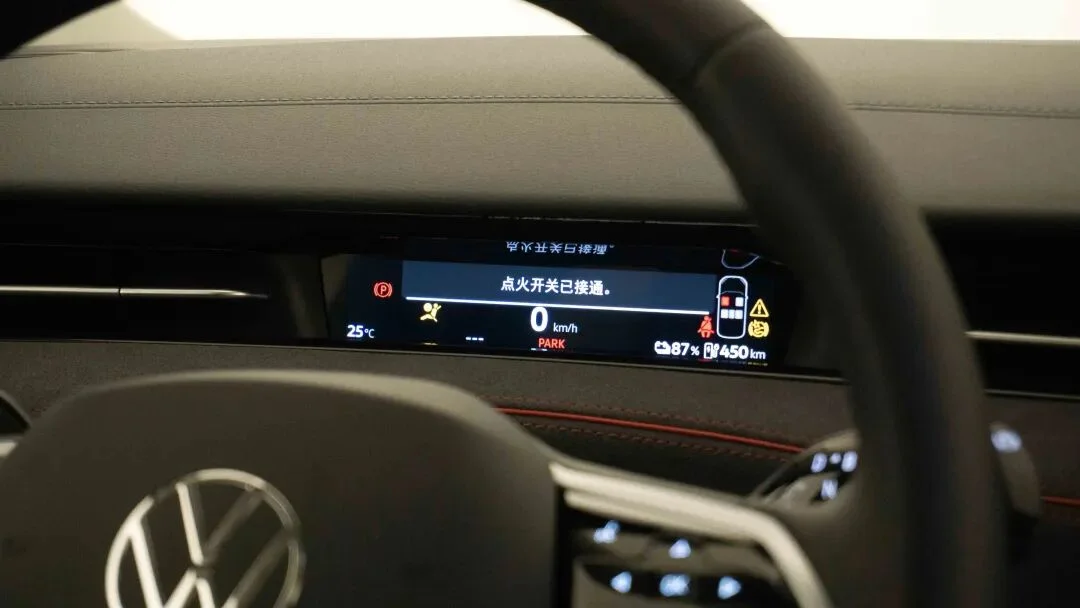
More complex interfaces, including autonomous driving visualization and energy consumption displays, have been moved to the AR-HUD. This setup recalls the interaction method used in the Lixiang L Xilie, which combines a dedicated driving interaction screen with a HUD. However, current information suggests that Volkswagen’s HUD implementation remains relatively simple, essentially mirroring the content from the current ID. series instrument cluster onto the HUD.
The steering wheel design remains unchanged from the current model, but the gear selector behind it has been updated. The shift knob, previously located on the edge of the instrument screen, has been moved to a more traditional position on the steering column, aligning better with user habits.
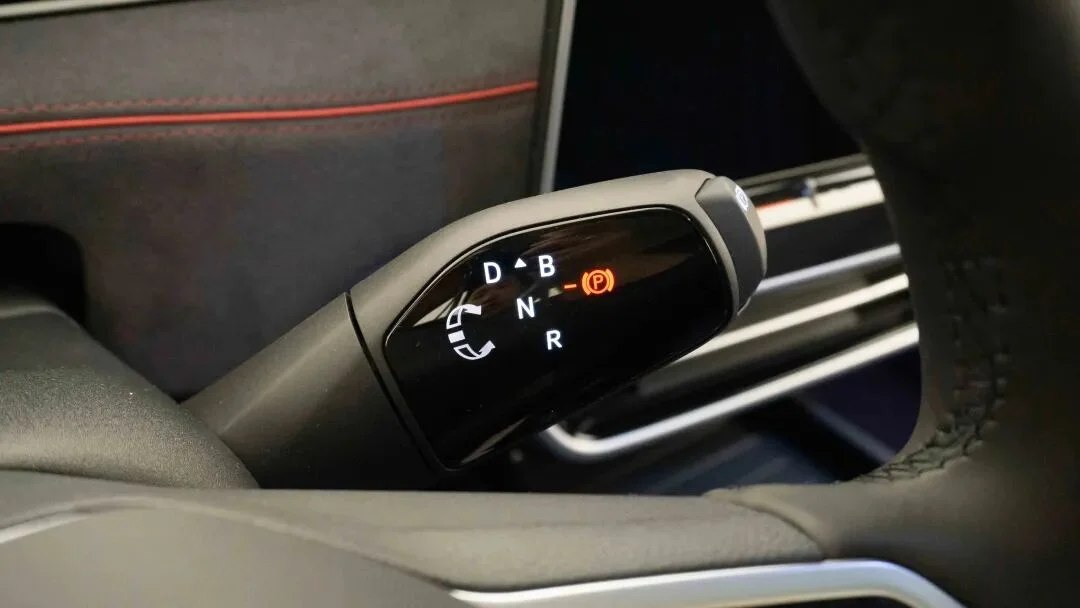
This gear selector was first introduced in the ID.Buzz and is now appearing in the ID.7. It will also be adopted by future ICE models such as the new Tuguan and Pasate, establishing Volkswagen Group’s next-generation cabin interaction standard.
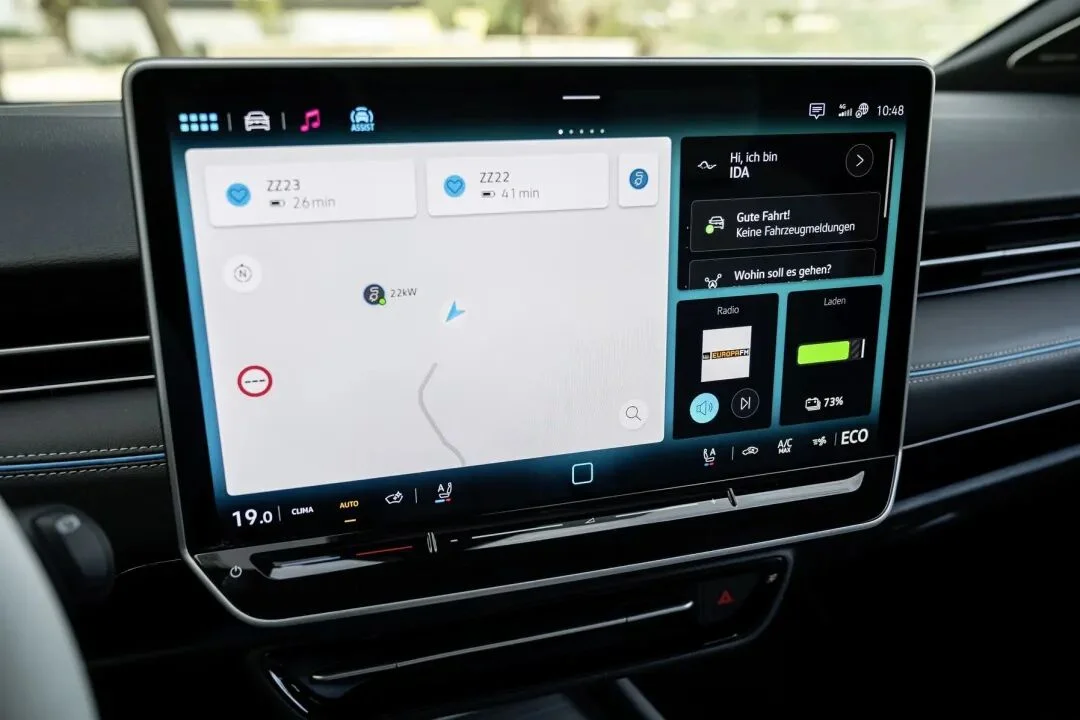
The most significant change in the ID.7 VIZZION’s cabin lies in its infotainment experience. Currently, the infotainment systems in the ID.3, ID.4, and ID.6 are the primary source of user complaints, with poor operational logic, low stability, and weak functionality making it difficult to associate the ID. series with modern intelligence or digitalization. Volkswagen has recognized that lacking intelligent capabilities is unacceptable.
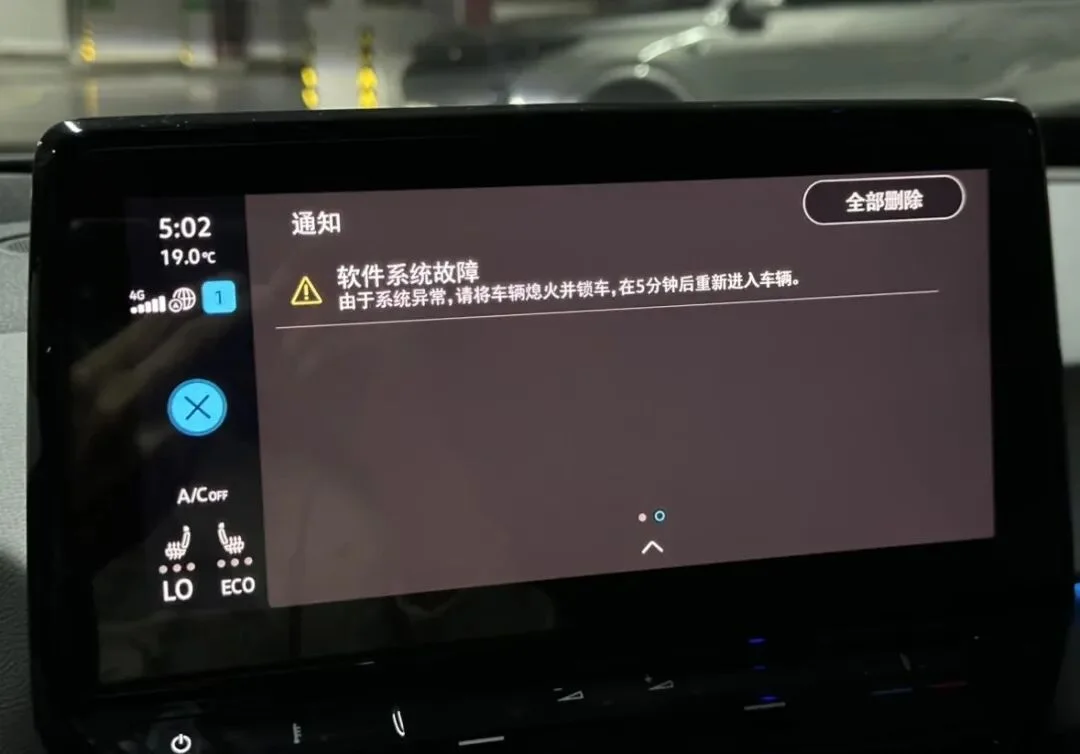
For the ID.7, Volkswagen has introduced a new infotainment system. The central display has been upgraded to a 15-inch screen with a resolution of 2,240 × 1,260 pixels and 16 GB of memory. The system itself has been updated to ID. OS 2.0.
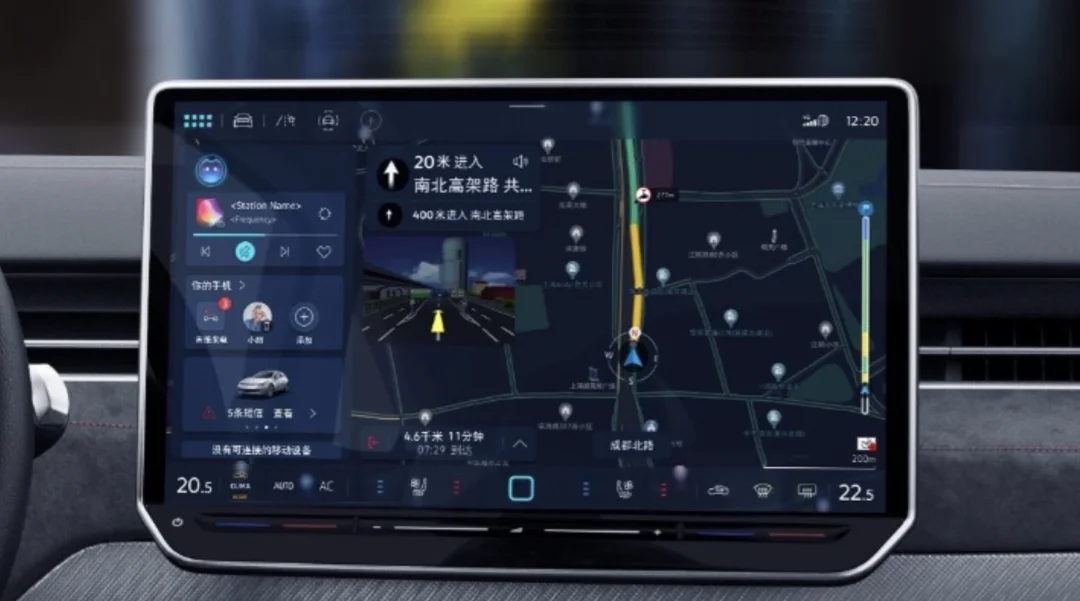
Unlike the systems in the ID.3, ID.4, and ID.6, this version shifts the underlying development leadership from Germany to China. According to official information, the ID.7’s infotainment system features a richer interface, along with substantial improvements in stability, local adaptation, and OTA performance.
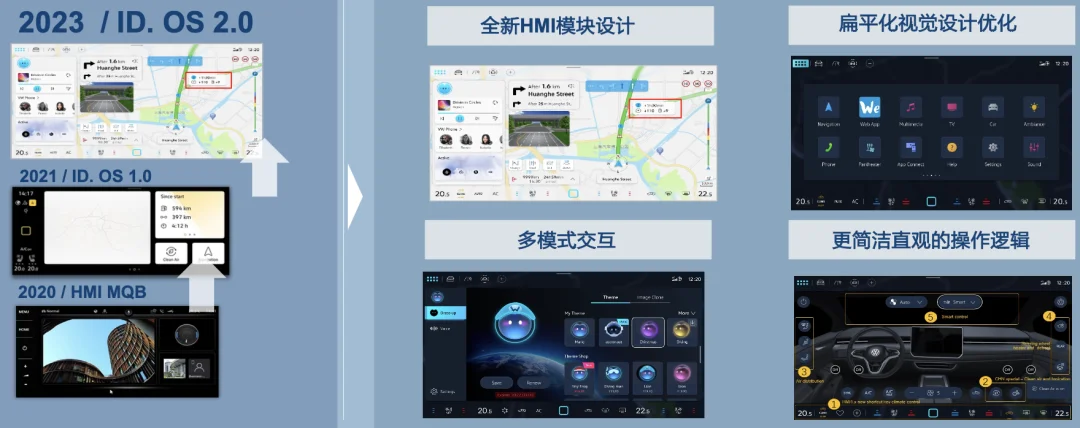
Notably, the “Hello Volkswagen” voice assistant on the ID.7 has received smarter updates. Volkswagen’s voice assistant now includes a virtual avatar named ID Mate, which users can customize. The voice system has also been upgraded to the latest version from Kedaxunfei. While semantic understanding is already supported in overseas versions, this update finally brings the Volkswagen infotainment system closer to intelligent standards.
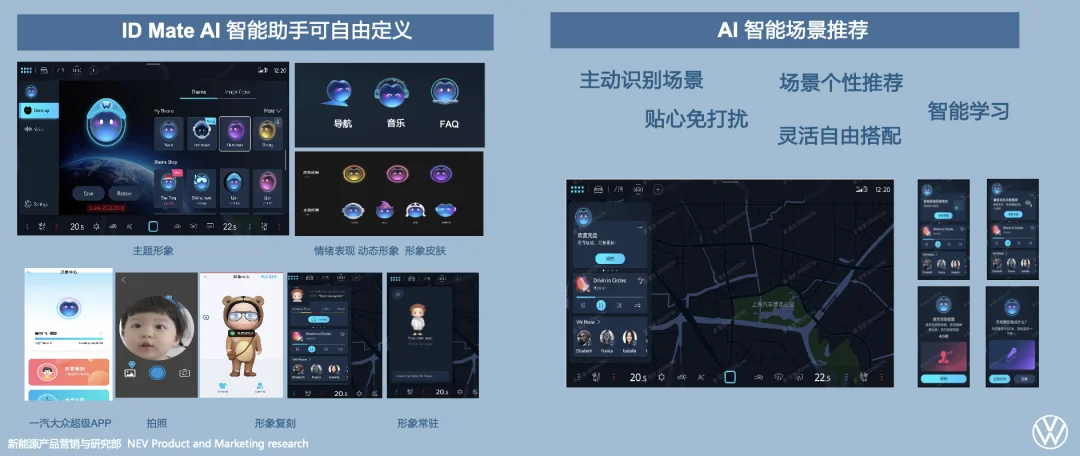
Unfortunately, the infotainment system in the ID.7 was not yet fully refined during this test drive and was not demonstrated publicly. Whether it truly performs as well as claimed will only be clear when we can evaluate it in the third quarter of this year.
For the climate control, the ID.7 features newly designed 'smart air-diffuser vanes,' a feature already common among new-energy vehicle brands; Tesla Model 3 and XPENG P7 adopted similar designs early on. In the ID.7, airflow can be directed toward occupants or automatically adjusted to other directions to improve cabin air circulation, with real-time visualization available on the central touchscreen.
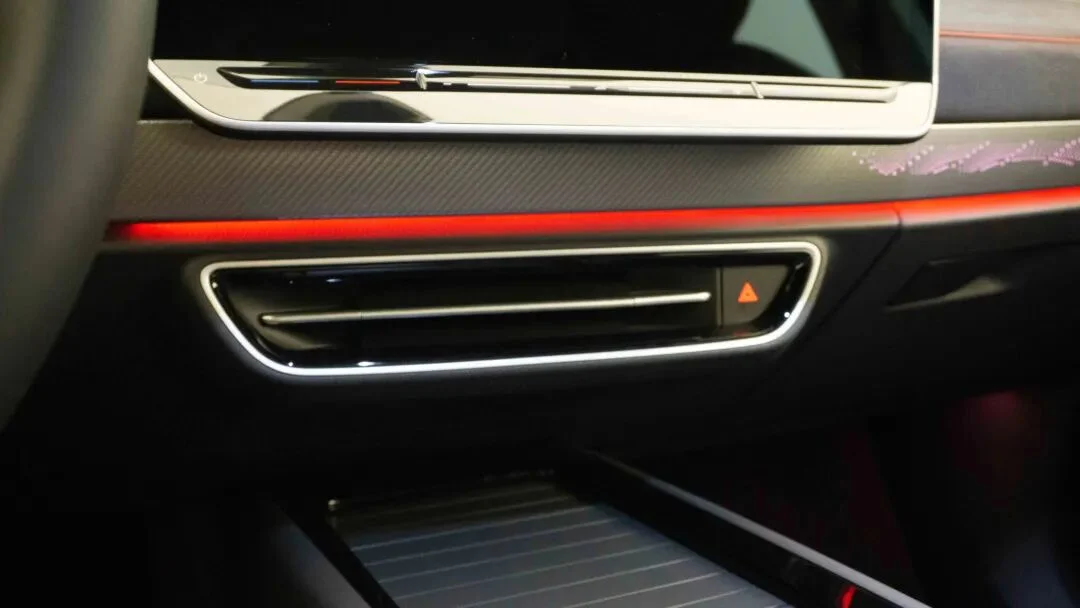
Remarkably, the ID.7's climate system is also equipped with a sun sensor that adjusts airflow volume and temperature based on the sun's position. We will further test this feature once the infotainment system is complete.
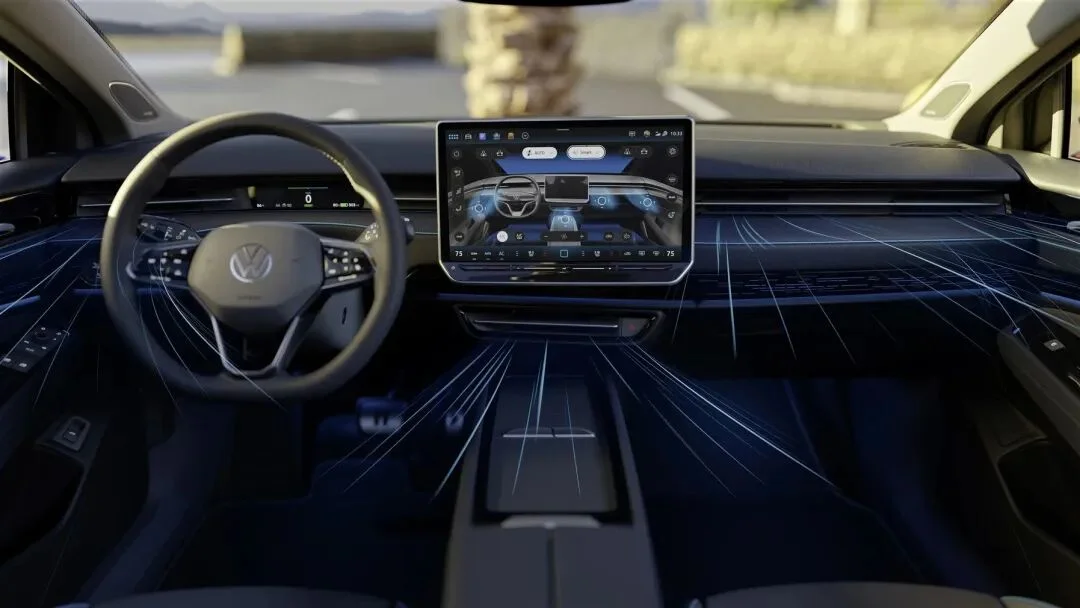
A welcome improvement for long-time owners is the addition of backlit touch controls for climate and volume adjustment on the ID.7.
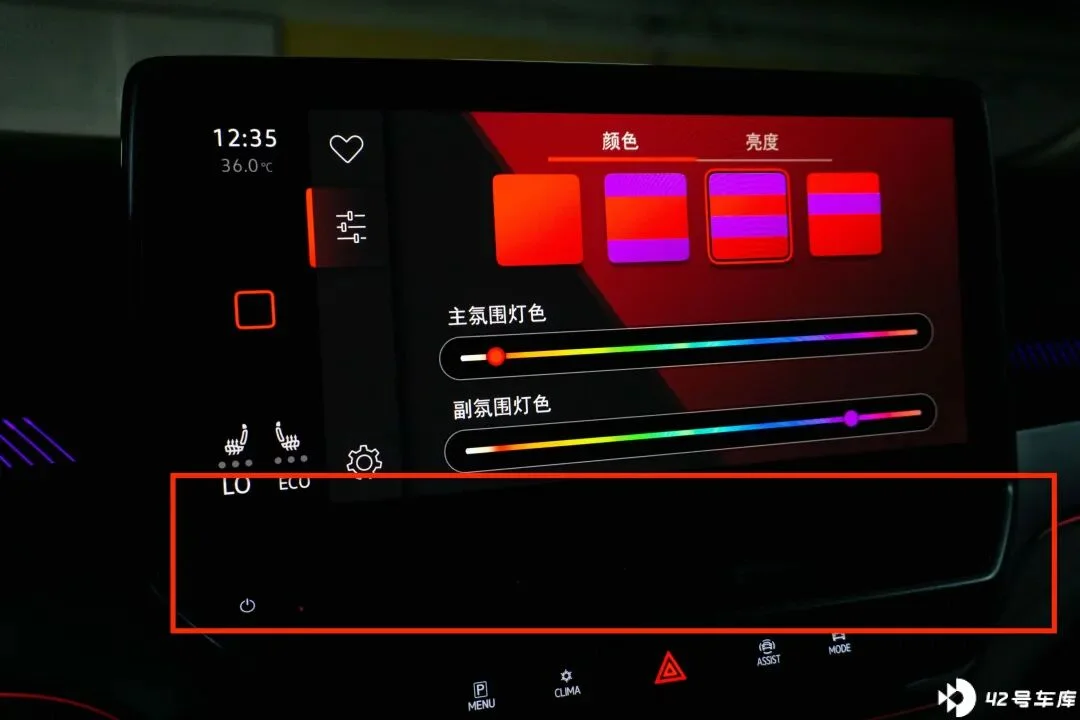
On current ID. series models, the touch-sensitive buttons have an infrared sensing module at their base, which prevents backlighting and makes accidental touches extremely likely. The ID.7 has redesigned the buttons, finally eliminating the need to operate in the dark at night. Based on spy photos exposed some time ago, Volkswagen’s all-new Pasate and the mid-cycle facelift of the eighth-generation Gaoerfu will also add this design.
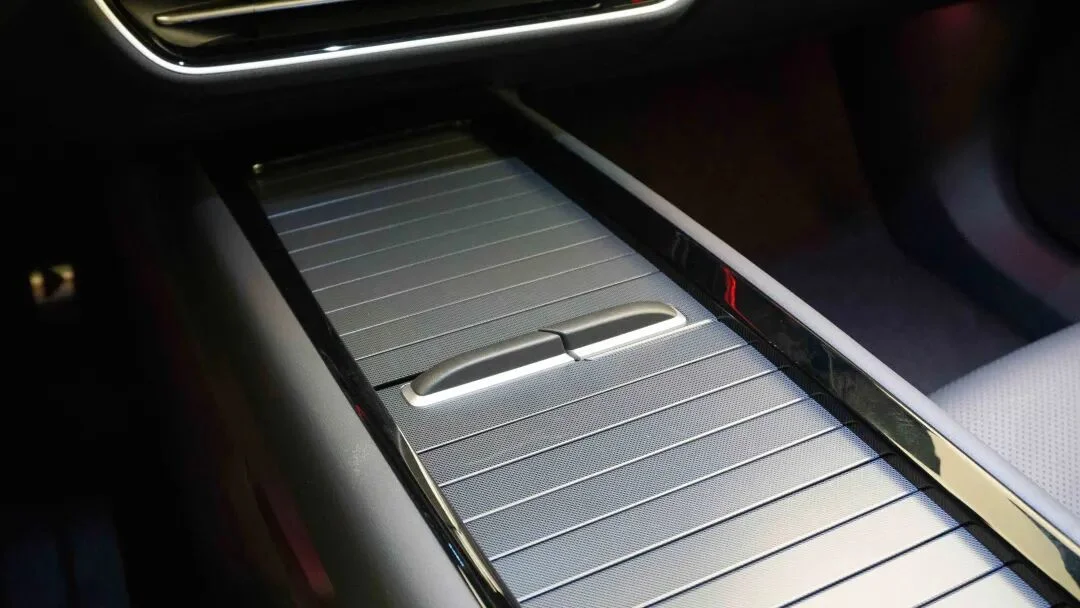
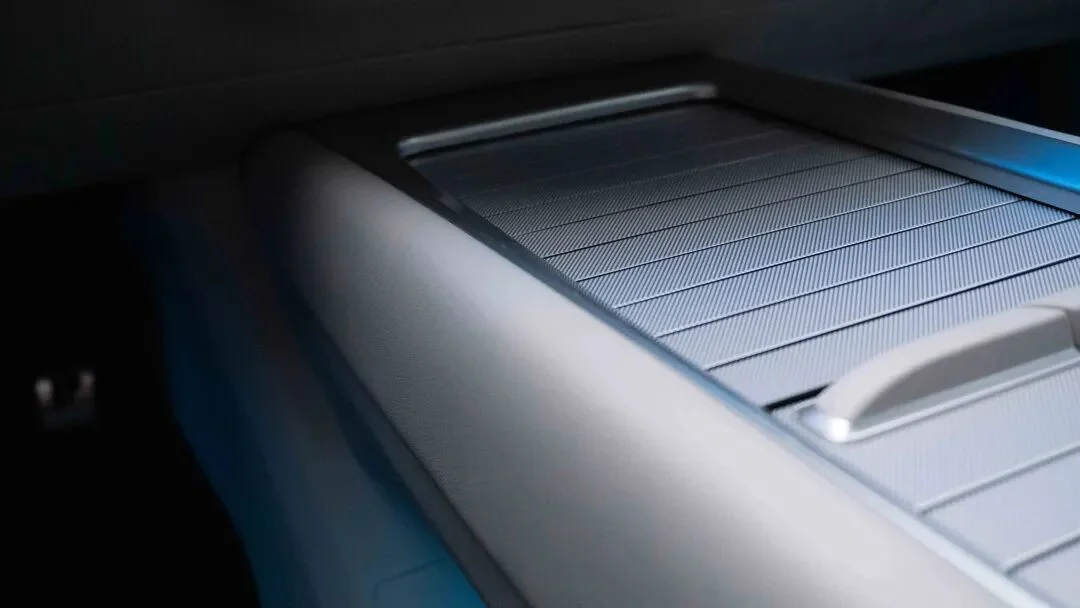
Below the climate control panel are two roller-style center console storage compartments, similar to those found in the ID.6. They feature a non-standard matte finish with a glossy, granular texture, lending a premium feel.
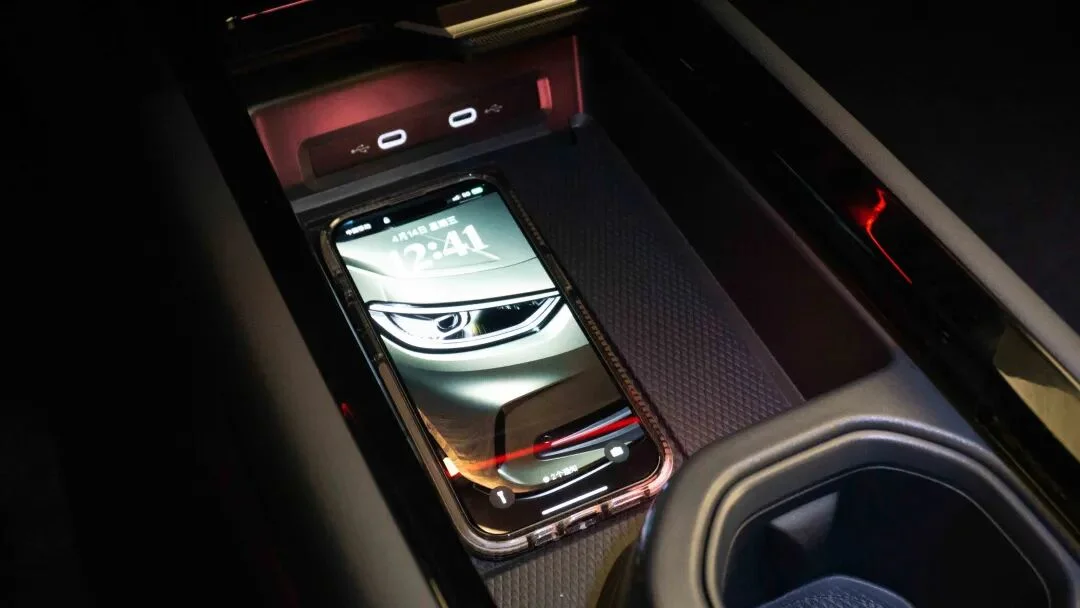
The upper section of the armrest houses a wireless charging pad and two USB-C ports for both data transfer and charging. The charging area is sized to accommodate an iPhone 14 Pro.
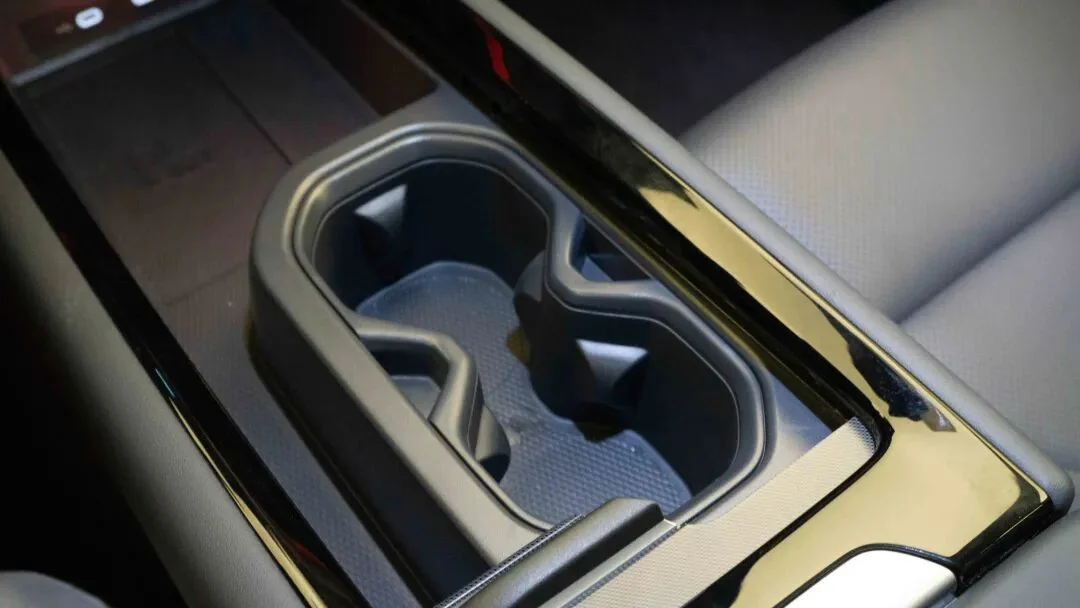
The rear section contains two cup holders, which are surprisingly removable, offering flexible space utilization.
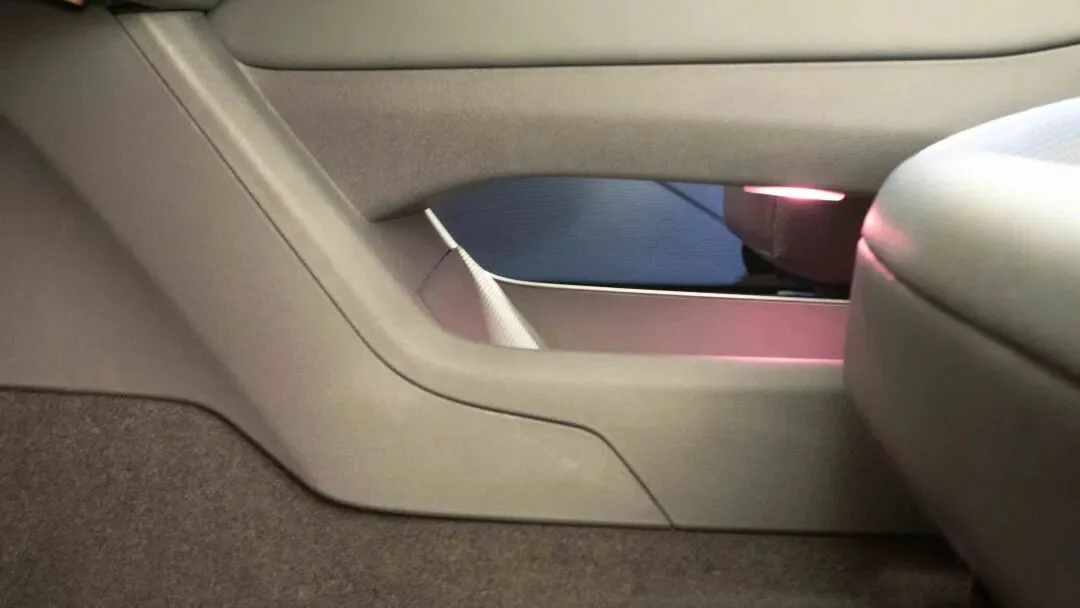
Beneath the center console, there is an open storage compartment with a non-slip mat on the bottom, making it suitable for stowing small items. It is ideal for everyday essentials such as bags, tissue boxes, or small bottles.
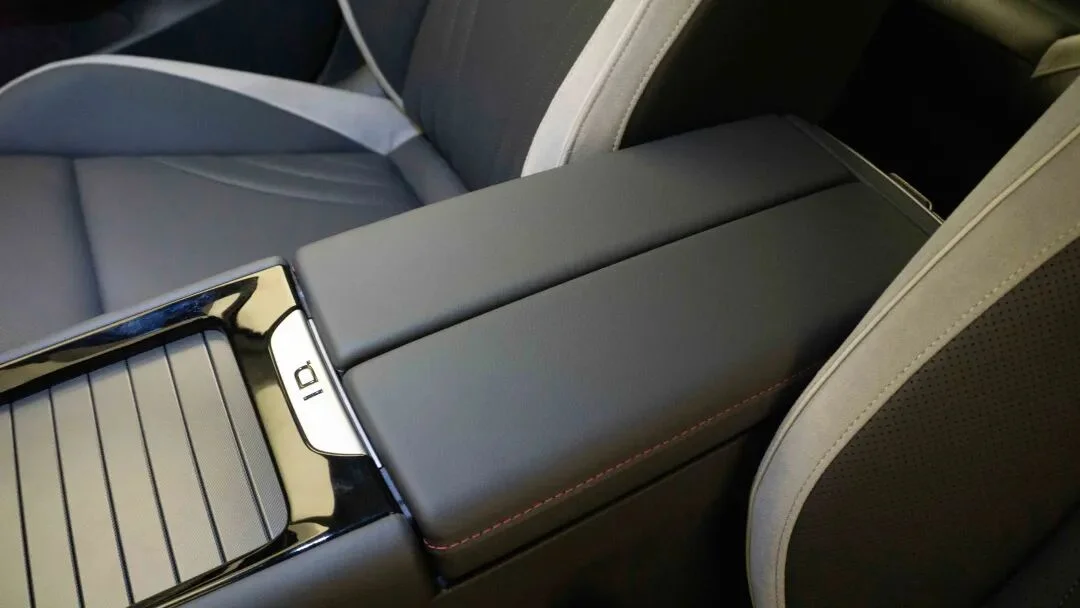
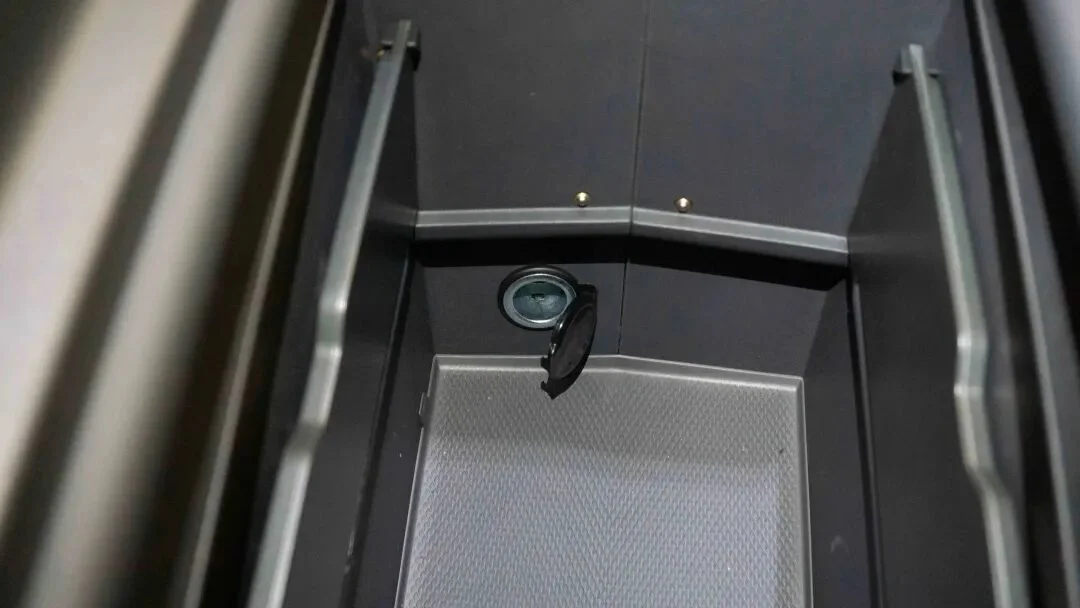
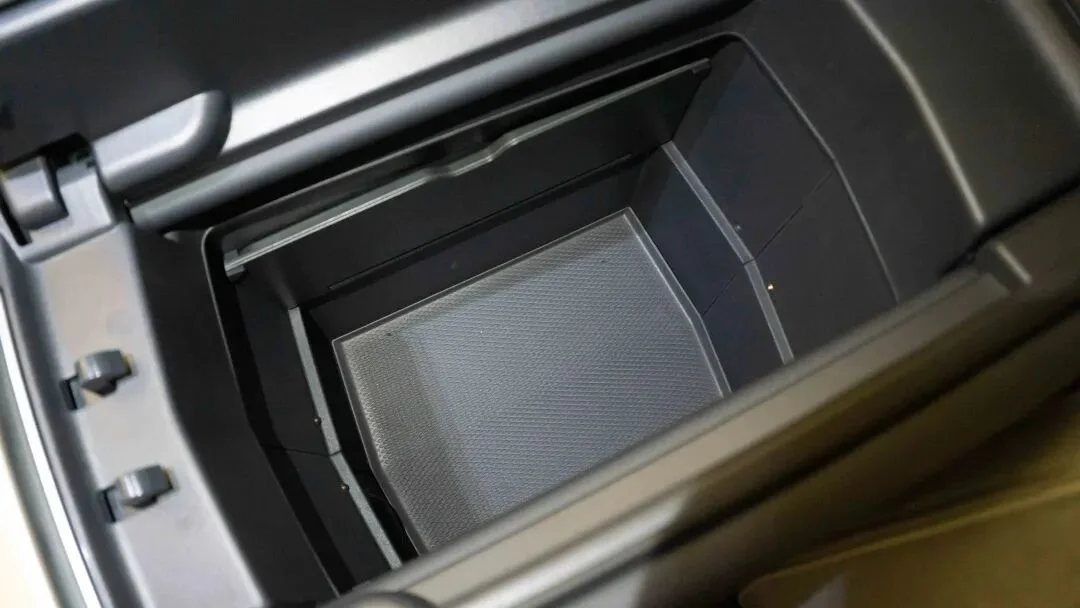
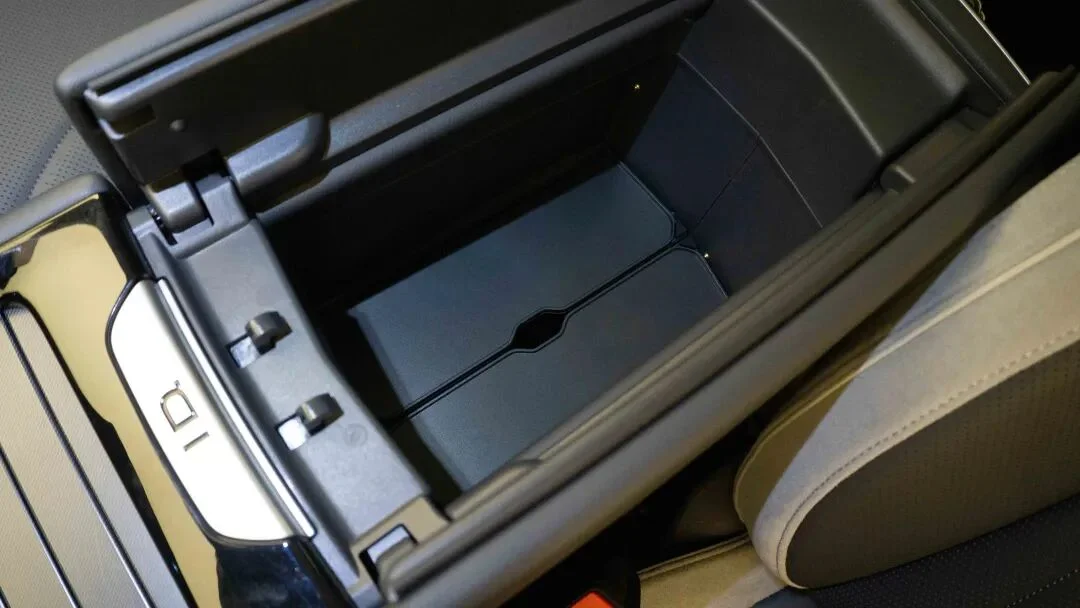
Further back lies the ID.7’s dual-opening center armrest. Upon opening, there is an upper compartment; lifting the double cover in the middle reveals a lower layer, which also houses a 12V power outlet. The ID.7 VIZZION boasts impressive storage capacity.
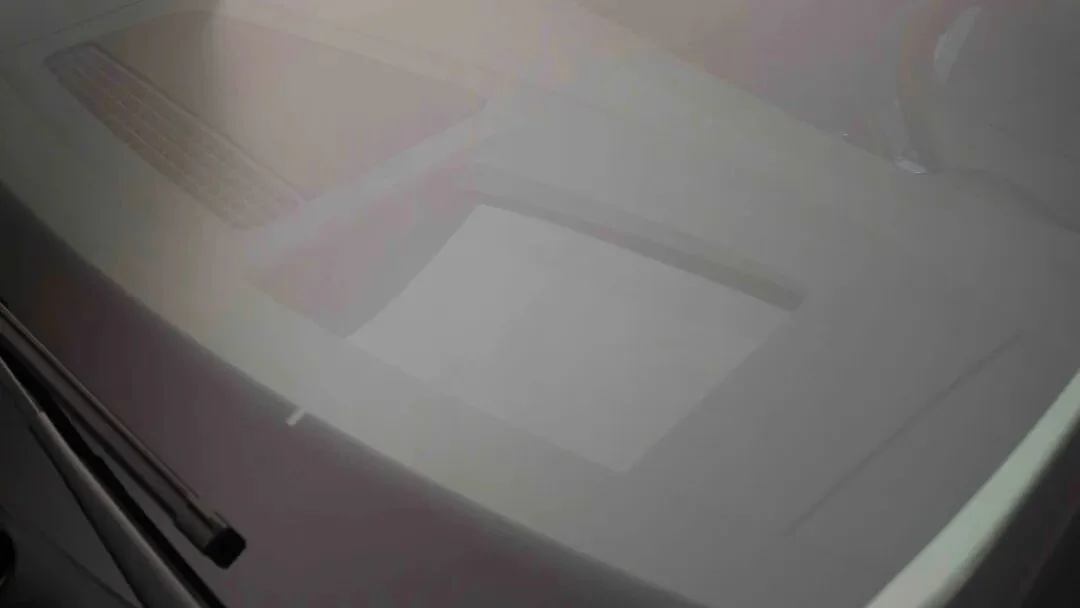
This time, the Volkswagen ID.7 offers a surprise on the roof. The base model comes standard with a panoramic glass roof, with an operable panoramic sunroof available as an option. However, our test unit of the top-trim model came standard with the Sky view Zhinengguanggantianmu.
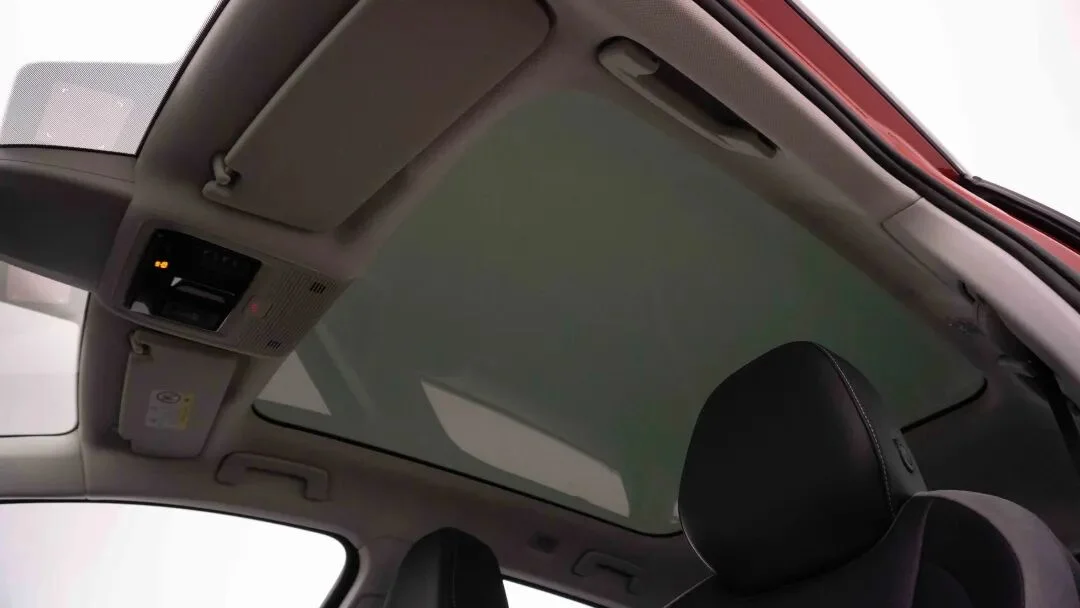
With the light-sensing panoramic roof, heat insulation and UV protection are effective even without sunshades, meeting interior lighting needs while ensuring passenger comfort in extreme weather.
As technology advances, more manufacturers showcase their capabilities in new products to demonstrate cutting-edge tech. Over time, some designs have lost sight of vehicles' practical utility. While Volkswagen's current design approach has strayed from this core function, it is commendable that the brand is listening to user feedback and actively making improvements.
Limited-Edition Interior Features Novel Design
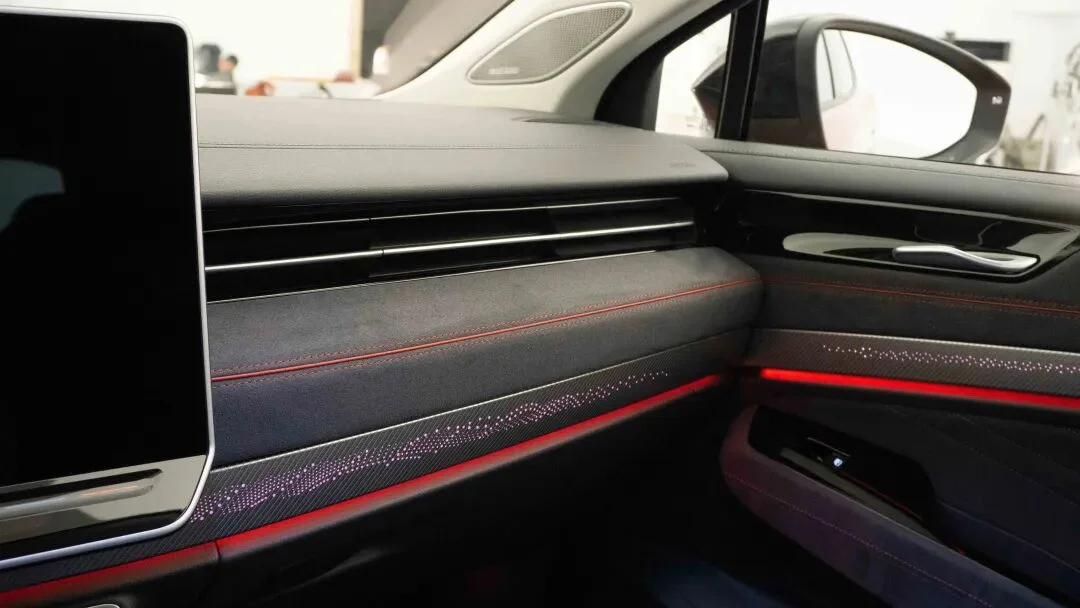
The red PRIME AWD version we photographed features a sporty interior with extensive black microfiber suede accented by red stitching, creating a distinct aggressive vibe that complements the red exterior paint perfectly.
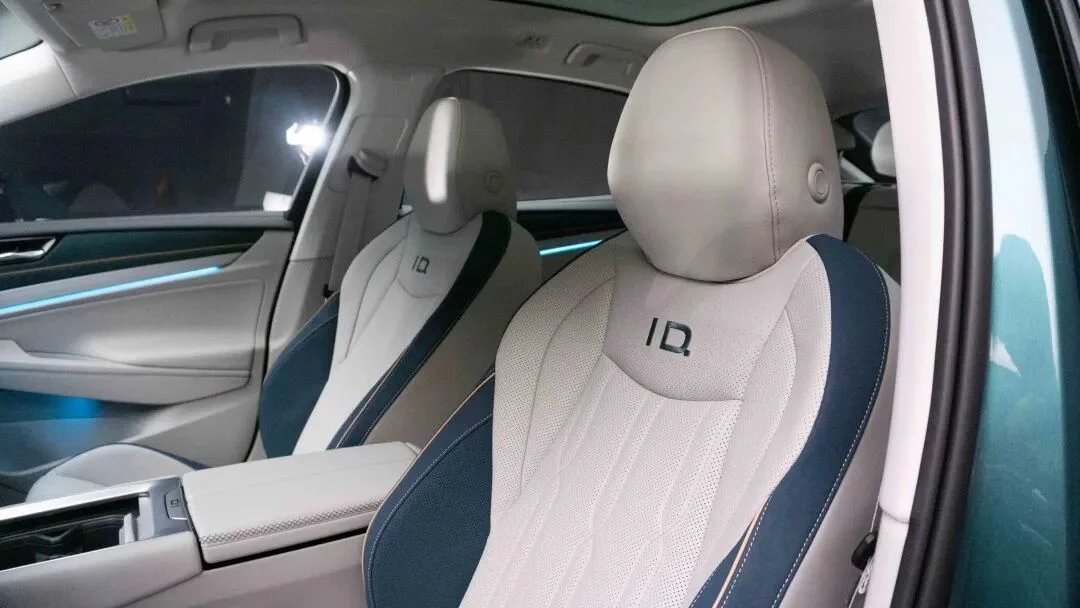
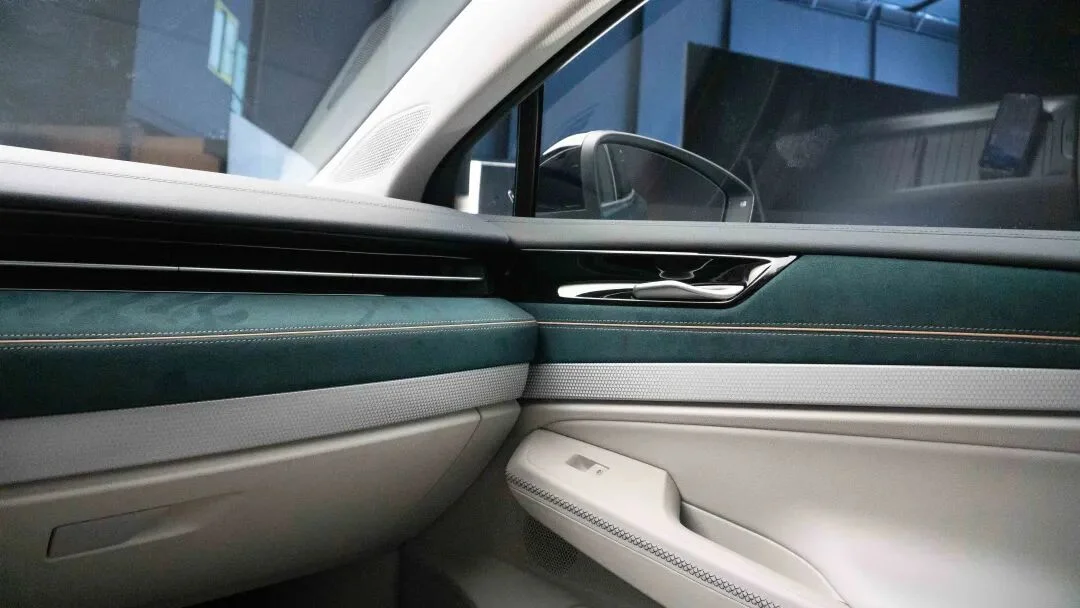
Beyond this interior, Volkswagen also introduced a limited-edition single-motor rear-wheel-drive Pro model finished in emerald green. Before seeing the actual car, I didn't find the color particularly unique and even questioned what other flashy options VW could offer. However, after seeing the white-and-green two-tone limited-edition interior on the ID.7 in person, my view of FAW-Volkswagen's interior design expertise has significantly changed.
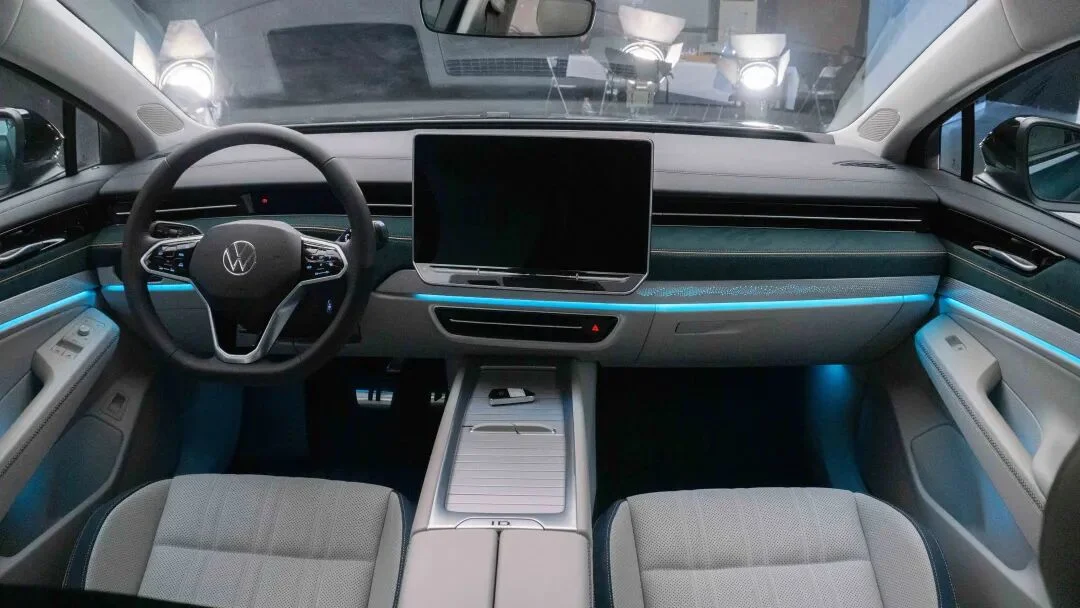
The interior’s primary color is white, creating a particularly clean aesthetic. The areas featuring microfiber material are accented with emerald green, contrasting sharply with the black-gray tones above to establish two distinct stylistic zones. This emerald green, paired with low-saturation orange lines, gives the cabin an exceptionally elegant appearance.
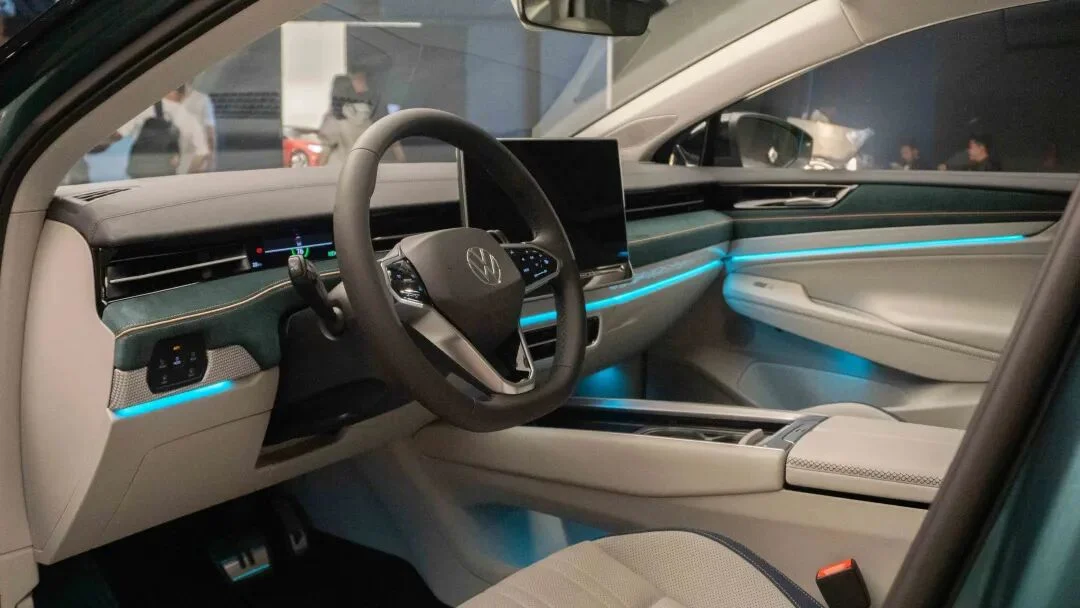
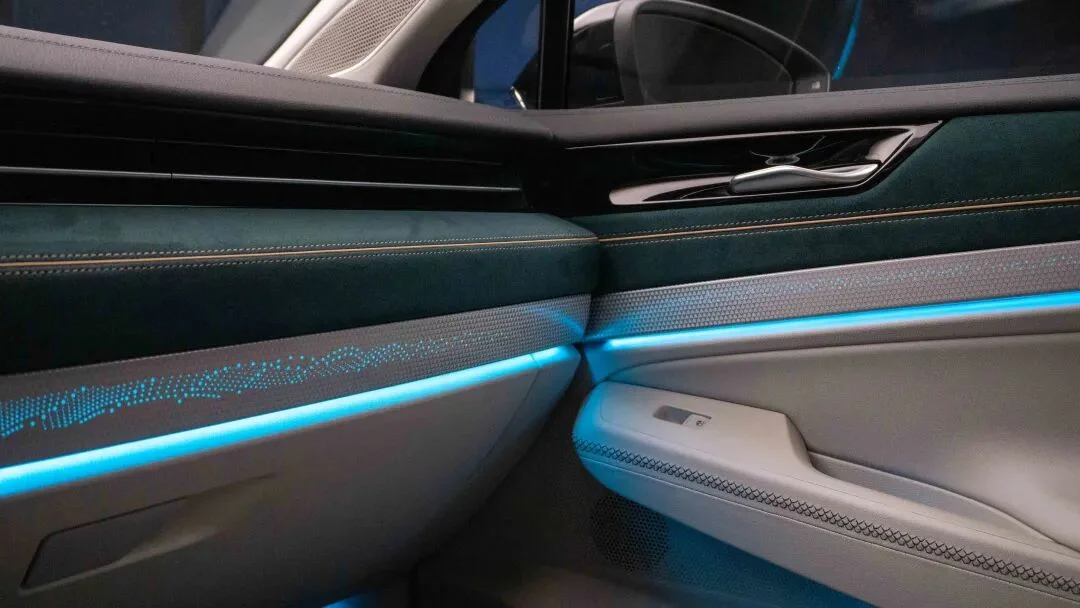
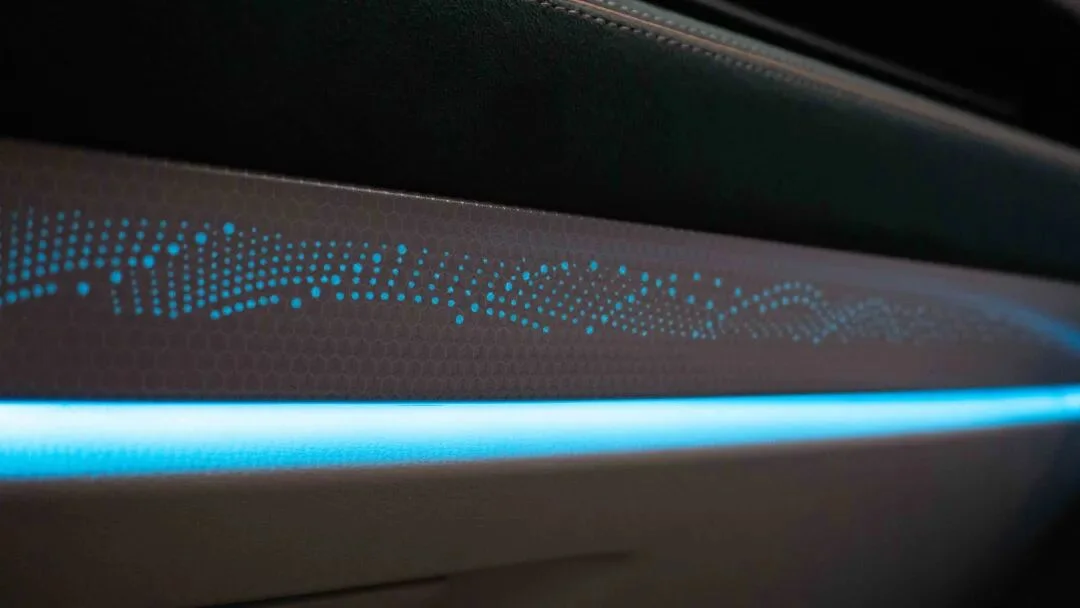
The ambient lighting at the base offers 30 color options. However, the lighting effect is not limited to light strips; it also projects through laser-translucent trim pieces. The texture on the bottom of these trim pieces resembles dragon scales, which complements the fan-shaped patterns emitted by the lasers. The result evokes the refined atmosphere of a Suzhou garden.
On the backrests of the seats, the limited-edition model features exclusive emerald-green embroidery, exuding a sense of classic elegance. The attention to detail in this limited-edition interior demonstrates Volkswagen’s sincerity and underscores the brand’s high regard for the ID.7.
03Ride Comfort: Surprisingly Audi-like?
When it comes to seats, the most important factors are not the embroidery or color design. Instead, ride comfort and interior space—factors directly tied to the user experience—are far more critical.
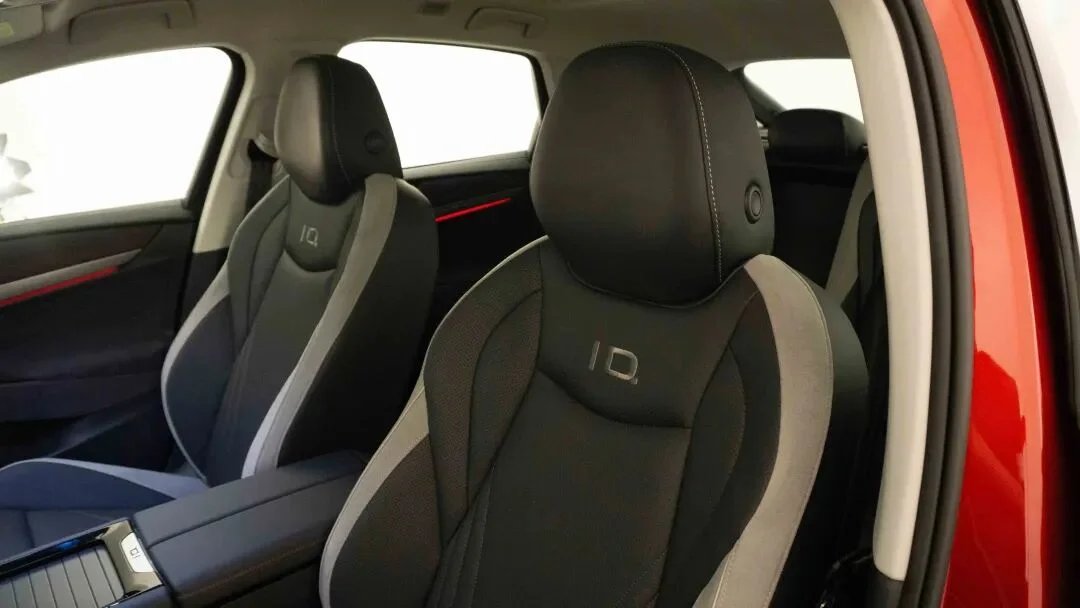
The front seats of the ID.7 VIZZION feature a sporty design, with large, high-angle bolsters on both sides of the seatback and cushion.
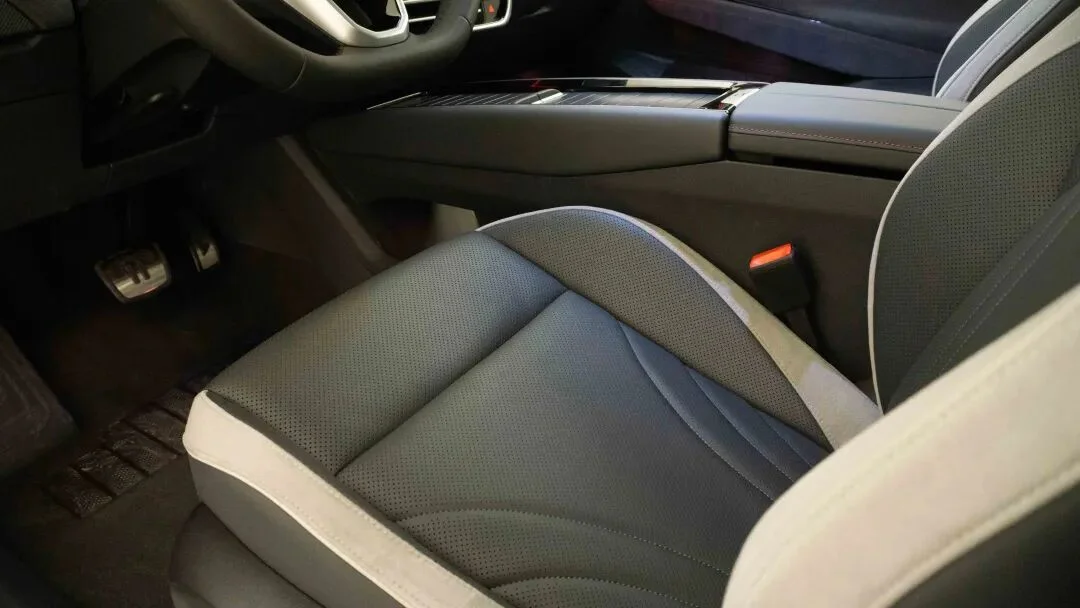
In actual use, the ID.7 VIZZION’s seats offer a wide surface area, while the side bolsters provide good support. This significantly helps stabilize the body during aggressive driving.
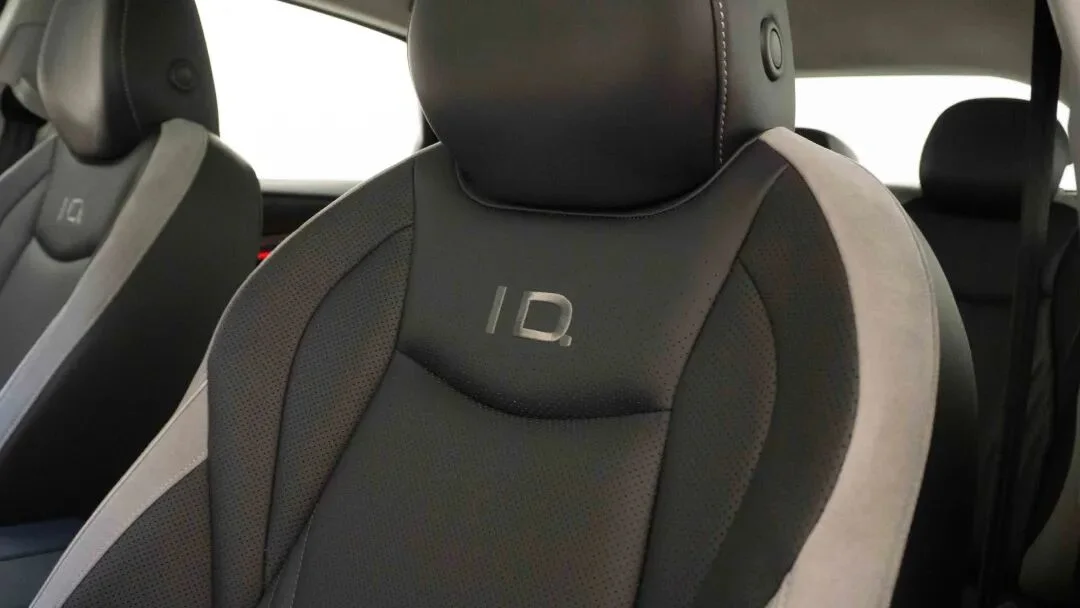
This is not the ergoActive seat used in overseas markets, which was expected. However, the seating experience remains distinctly German. The seat fillings are firm, somewhat reminiscent of Audi’s style, offering excellent back and lumbar contouring and support.
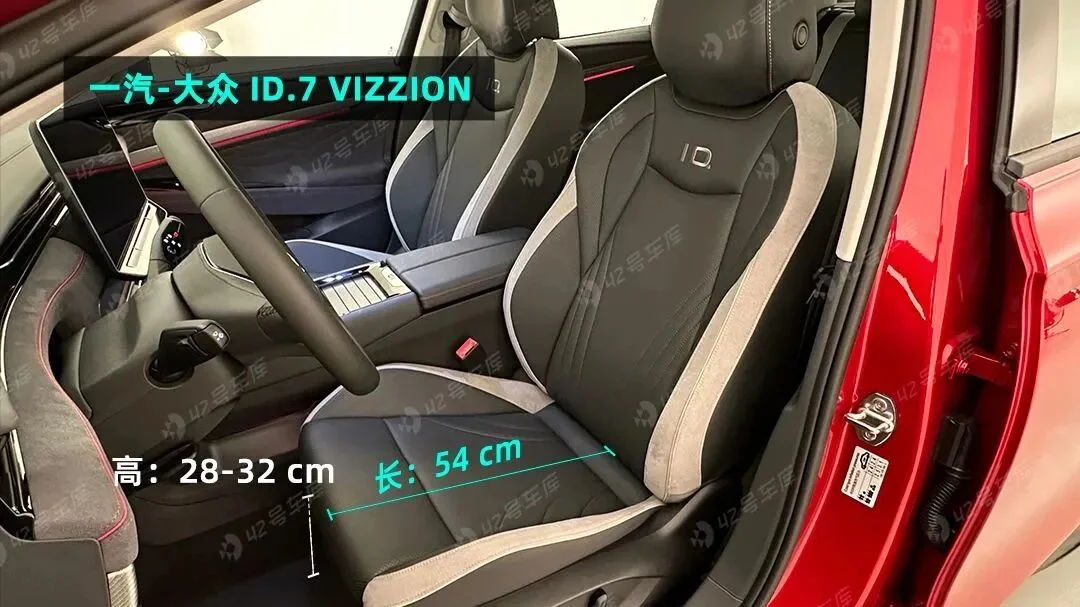
The front seat cushion is 54 cm long, providing good leg support and helping to alleviate fatigue during long drives. The armrest area on the right side is also wrapped in relatively soft leather, which helps reduce fatigue from the sides.
The front seat height adjustment range is 28–32 cm, making it suitable for users of different body types. However, the seat configuration is slightly reduced compared to the 4/6 trim.
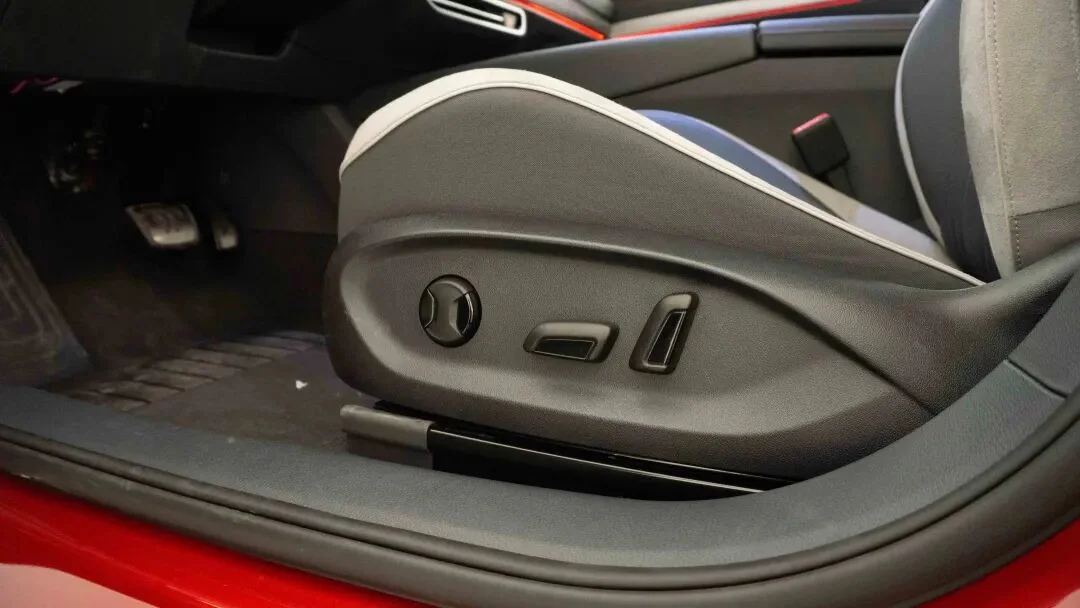
Seat adjustment options are reduced to eight, and both seat memory and seat massage functions have been removed. This means that the combination of cushion and backrest massage available in other domestic models will not be found on the ID.7 VIZZION. It remains to be seen whether the SAIC Volkswagen version will offer this feature, which would be worth looking forward to.
The cabin’s sound insulation on the ID.7 was surprisingly effective. After closing the door with Volkswagen’s signature solid “thud,” the interior space seemed completely isolated from the outside world; external noise vanished entirely, leaving you only able to see people around you moving their mouths without hearing them.
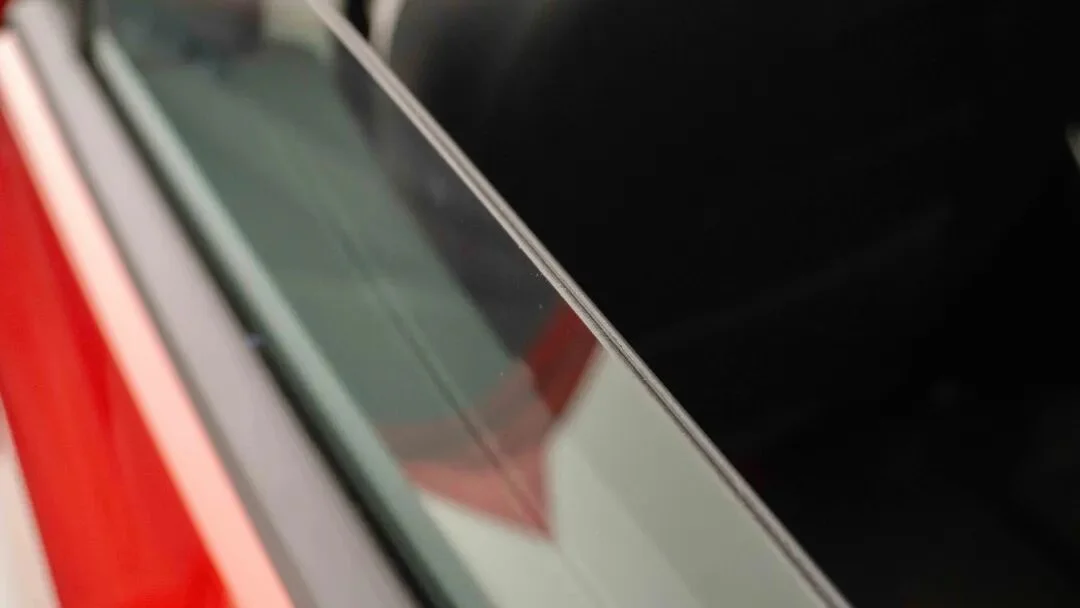
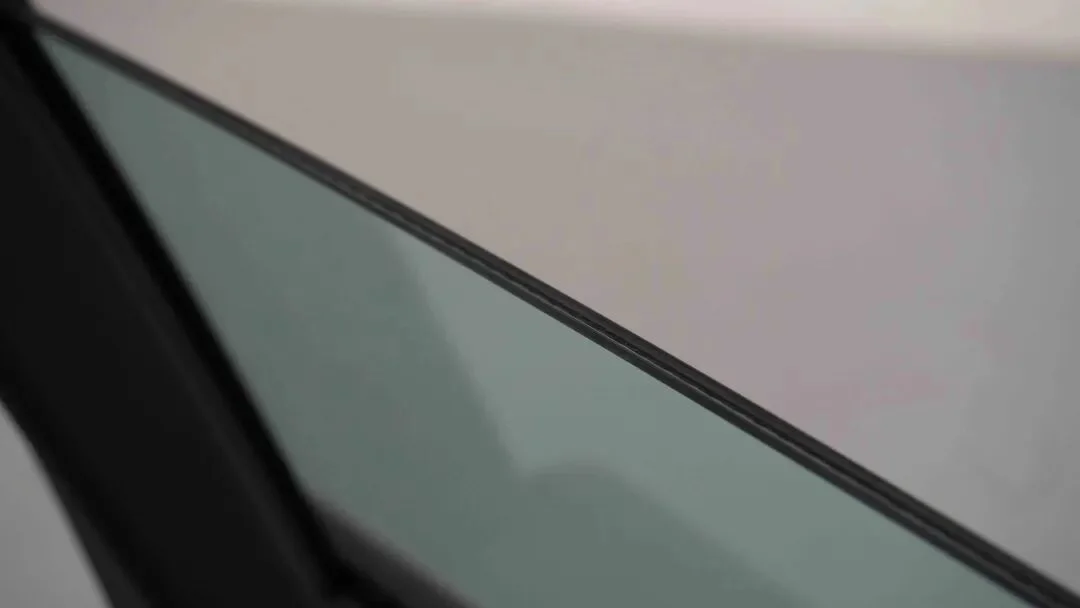
Opening the door reveals that all four doors and windows of the Volkswagen ID.7 are equipped with double-layer laminated glass, a feature that feels uncharacteristic for Volkswagen.
Space Rivals C-Segment Cars
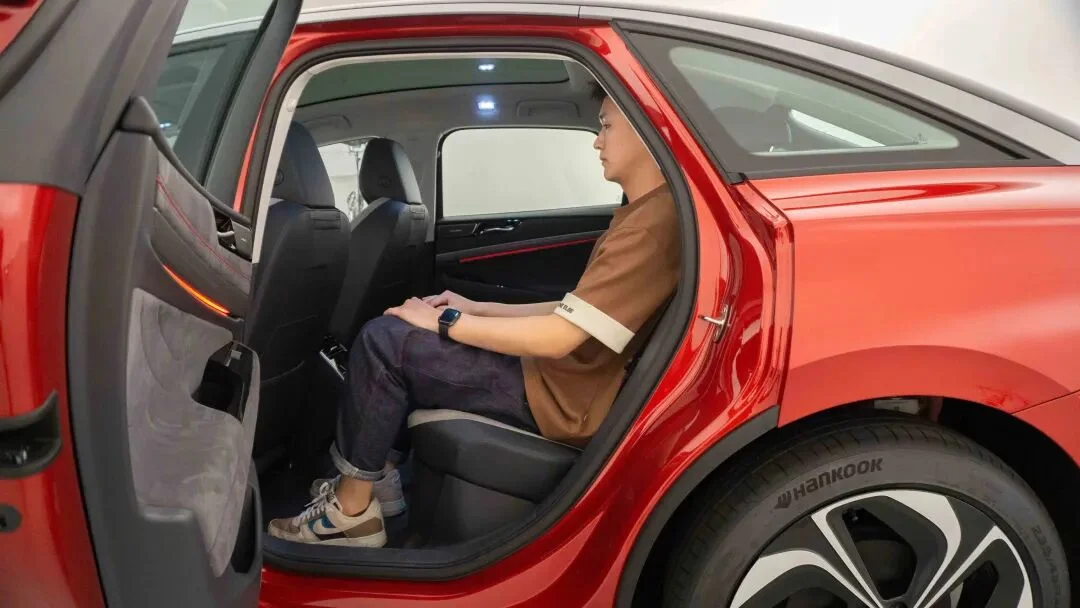
For Volkswagen, which has long specialized in extending wheelbases, creating ample space is hardly a challenge. The Volkswagen ID.7 VIZZION did not extend its wheelbase for the Chinese market; instead, it utilizes the platform of the six- or seven-seat ID.6, achieving a wheelbase of 2,965 mm. This allows us to view the ID.7 as a flattened version of the ID.6 with two seats removed. Consequently, the rear legroom in the ID.7 VIZZION is exceptionally generous.
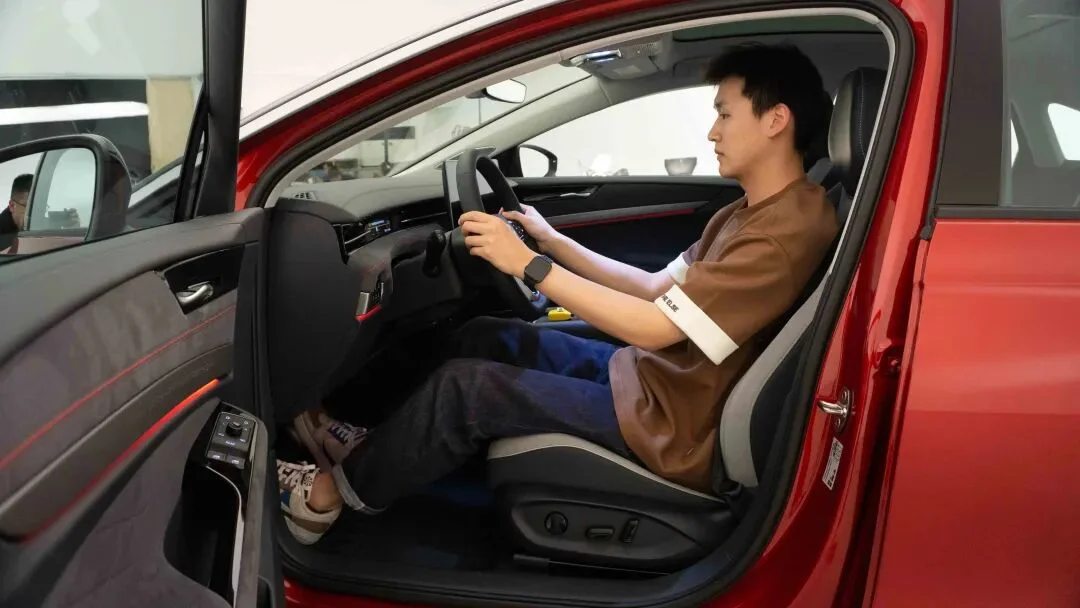
At 175 cm tall and weighing 68 kg, I have established my proper driving position in the front seat. The rear legroom exceeds one hand’s width. Furthermore, the vehicle’s height of 1,538 mm ensures adequate headroom for a normal seated posture, measuring approximately one fist and three fingers in practice.
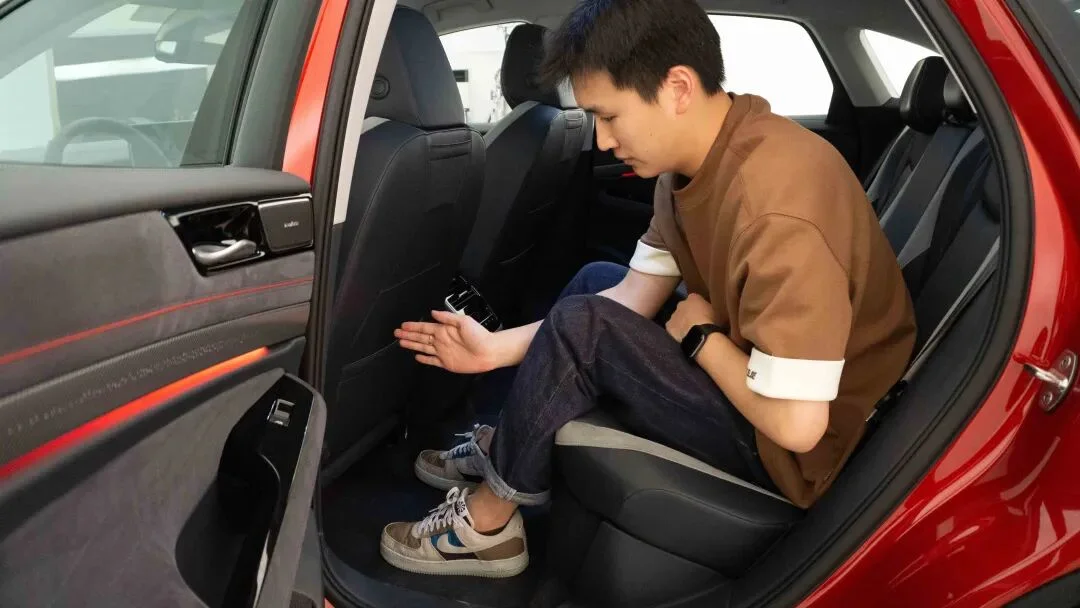


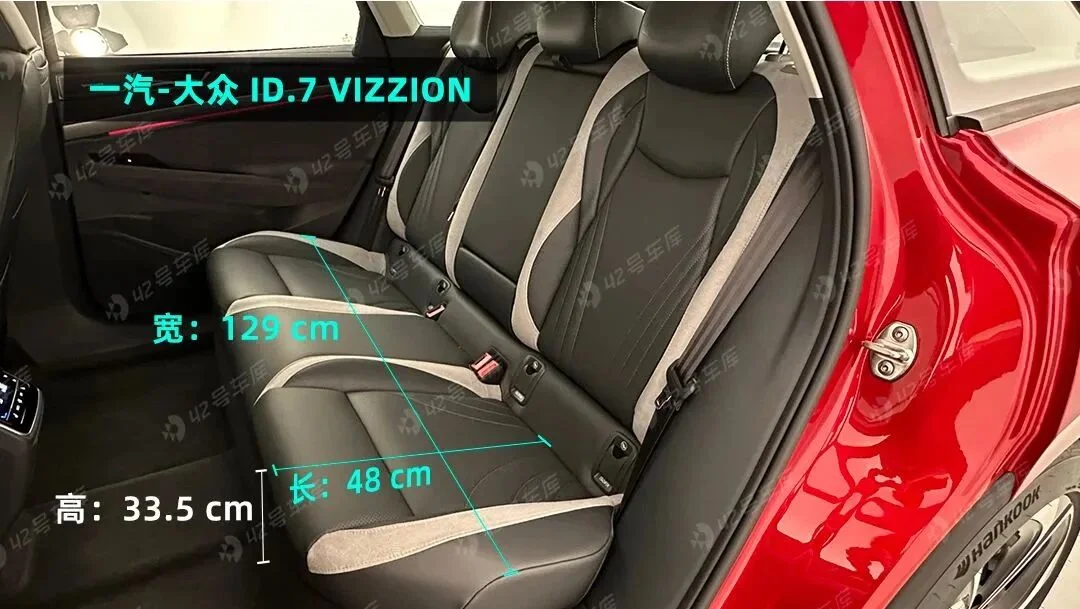
The Volkswagen ID.7 VIZZION features a nearly flat floor, allowing rear passengers to comfortably stretch their legs under the front seats. The rear seat cushion is 33.5 cm high and 48 cm long, with both the cushion tilt angle and backrest angle set precisely; sitting down feels naturally correct.
Based on a static review of the FAW-Volkswagen ID.7 VIZZION, the vehicle demonstrates a highly mature foundational experience. In terms of build quality, ergonomics, space, and ride comfort, the Volkswagen ID.7 meets the standards typical of mainstream joint-venture brands. Building on this foundation, the limited-edition model’s interior and refined detailing lend the ID.7 an elegant atmosphere rarely seen in previous Volkswagen models, indicating clear progress for the brand.
During this review, the absence of the infotainment system left me with a slight regret, as we were unable to assess how much Volkswagen has actually improved in this area. The new model is expected to launch in Q3 this year, giving Volkswagen additional time to refine the software. We look forward to seeing mature and stable performance from the infotainment system once the vehicles are delivered.
04Driver Assistance: Features Improved
The driver assistance system in the FAW-Volkswagen ID.7 VIZZION remains a 1V3R configuration, using a Mobileye EyeQ4 chip for front-facing visual processing, with one millimeter-wave radar on each side of the front and rear bumpers. Its hardware capabilities are identical to those of currently available ID. models. However, its software version aligns with the overseas ID. series, having been upgraded to Travel Assist 3.0.
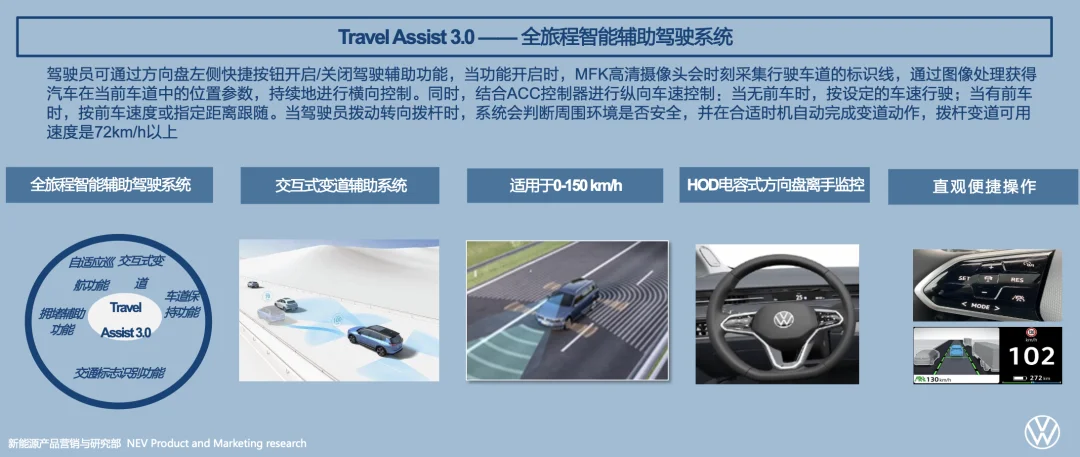
Beyond basic ACC and LCC, the system now includes command-based lane changes. When vehicle speed exceeds 72 km/h, the driver can flick the turn signal stalk, and the system will automatically execute a lane change at an appropriate time, covering most scenarios on elevated roads and highways. Although owners of domestic ID.3, ID.4, and ID.6 models can unlock this feature via software flashing, the results are far less stable than the official implementation.
05Powertrain Configuration: Wait for the New Motor
For powertrain, the entry-level FAW-Volkswagen ID.7 VIZZION is equipped with a single rear-mounted motor (model APP310) producing 150 kW, with a maximum torque of 310 N·m. The base model comes standard with an 84.8 kWh battery pack, offering an estimated CLTC range of over 600 km. The PRIME version features dual motors—a front 80 kW unit and a rear 150 kW unit—delivering a combined maximum output of 230 kW, with an estimated CLTC range exceeding 550 km.
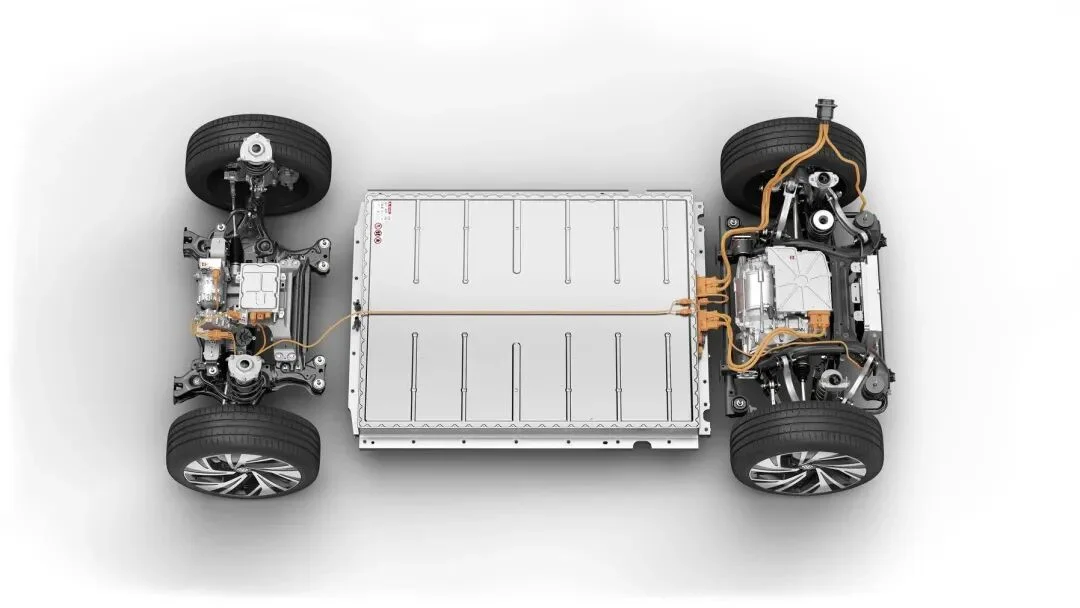
In overseas markets, Volkswagen plans to begin deliveries of the ID.7 equipped with the new APP550 rear motor by the end of this year. This motor delivers a maximum output of 210 kW (286 PS) and a peak torque of 550 N·m. While increasing power, the new motor also optimizes the inverter and thermal management systems, enabling stronger performance without significantly altering energy consumption.
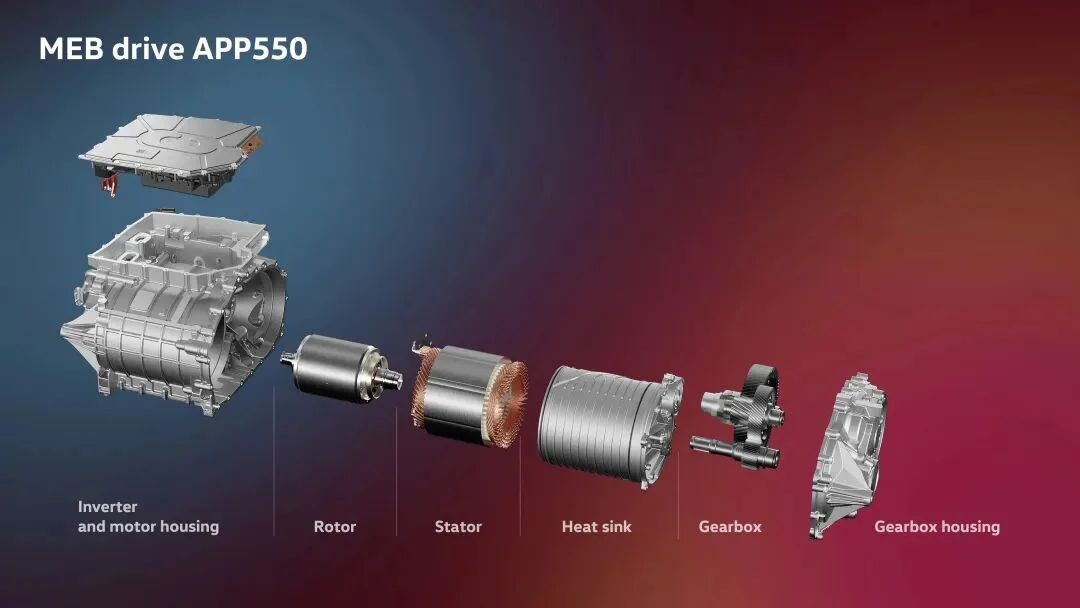
The design foundation of the APP550 motor remains rooted in the MEB platform. Karsten Bennewitz, Head of Powertrain and Energy System Development at Volkswagen, stated: 'To improve efficiency within limited available parameters, we had to develop a new drive unit. This presented a significant challenge for our technology development and component teams. However, the results show that we were able to reduce raw material usage while significantly enhancing vehicle efficiency.'
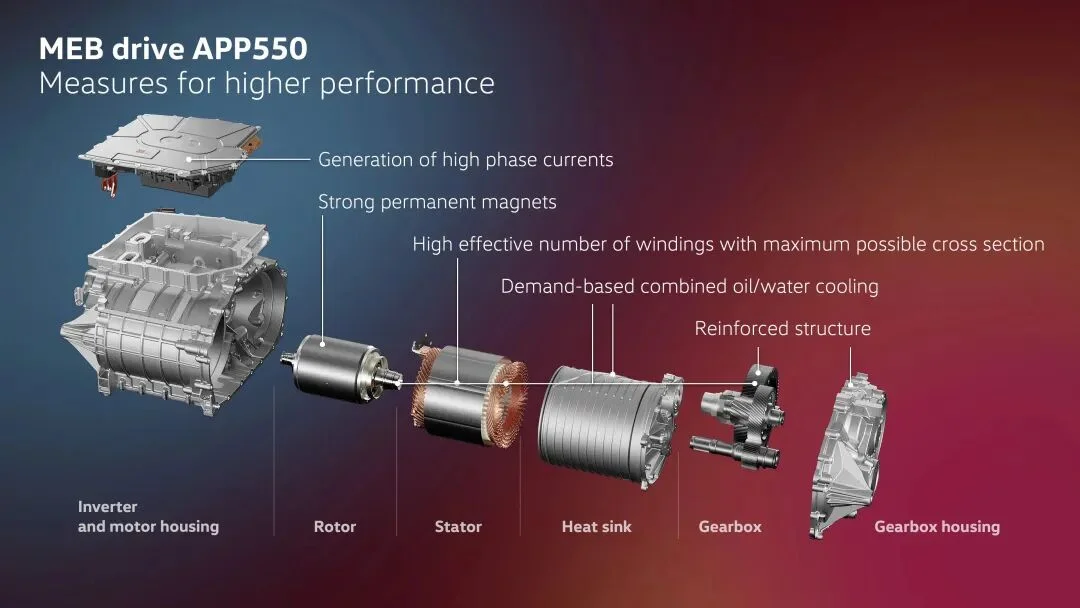
The overseas APP550 motor achieves high torque thanks to an enhanced stator with a higher number of effective windings and larger wire cross-sections. Its corresponding rotor is equipped with stronger permanent magnets, offering higher load capacity. The drive unit is also reinforced to withstand the considerable torque generated.
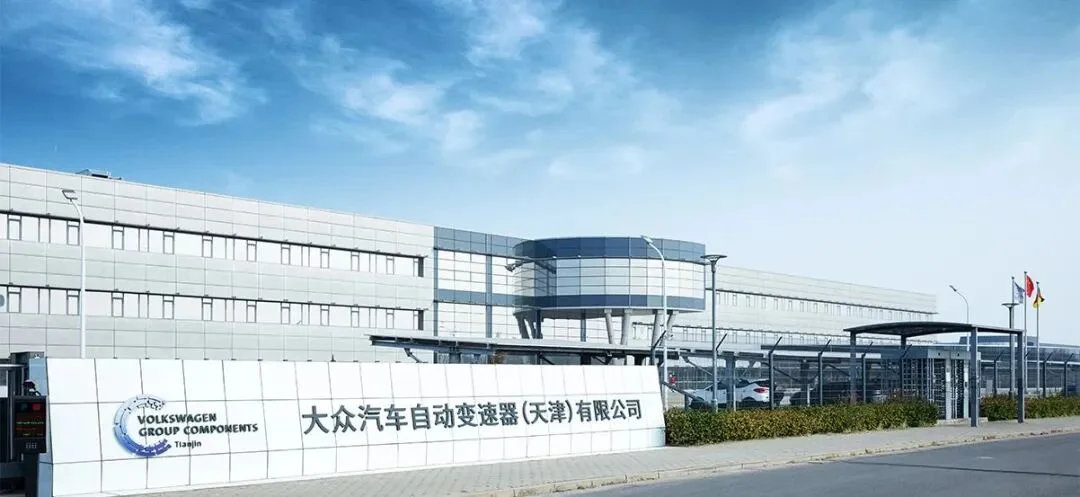
It is regrettable that the domestic version of the ID.7 still uses the main APP310 motor, with a maximum power output of 150 kW, consistent with the currently available models 4 and 6; the more powerful APP550 motor has not yet been released. On a positive note, according to industry rumors, the APP550 motor is about to begin production at FAW-Volkswagen Tianjin and may subsequently be introduced to the domestic ID. family.
06Final Thoughts
Based on the static experience of the current FAW-Volkswagen ID.7 VIZZION, even though the photographed vehicle has only reached the mid-stage of completion, as described by Volkswagen engineers, it already demonstrates very solid craftsmanship and mature qualities in terms of user experience. For FAW-Volkswagen, achieving this is to be expected.
More importantly, the ID.7 has addressed most of the shortcomings present in the current ID. lineup. A more refined interior and a comfortable ride provide users with a strong first impression.
The dynamic performance and infotainment system of the ID.7 still require further refinement. The driving dynamics have already earned a strong reputation among current ID models, but concerns remain regarding the infotainment interface. Fortunately, there is time before the autumn launch for Volkswagen to continue optimizing the system; we look forward to seeing whether the domestically developed infotainment can satisfy Chinese consumers.
The FAW-Volkswagen ID.7 will make its global debut at the Shanghai Auto Show on April 18. This time, the Volkswagen ID.7 has finally corrected previous issues; next, we will see how Volkswagen handles the highly competitive market pricing.
Written by: Jiang Xiaohei Edited by: Jiang Xiaohei