


After Parting Ways with GAC, What Is the Future of Huawei's HI Mode?
Huawei and GAC have officially announced their "divorce," but they have chosen to remain "friends."
On March 27, Guangqijituan issued an announcement stating that due to the allocation of resources among various parties, the AH8 project of its holding subsidiary, Guangqiaianxinnengyuanqichegufenyouxiangongsi, would change from joint development with Huawei to independent development. At the same time, following this change, Huawei will continue to participate in the development and cooperation of the company's self-owned brand models as a key supplier.
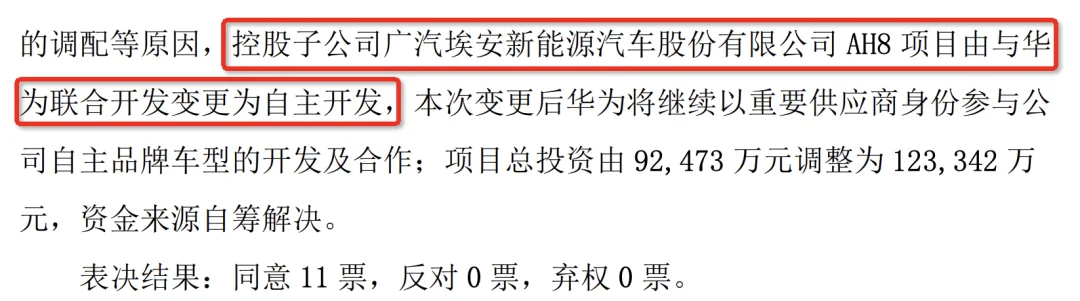
Regarding this change, Guangqijituan told 42HOW Auto that the AH8 is a six-seat model under Haobo, the high-end brand of GAC Aion. Next, Huawei will collaborate with GAC on digital cockpits as a supplier for the AH8.
Notably, regarding this change in cooperation between the two parties, Zeng Qinghong, Chairman of Guangqijituan, also stated during the Guangqijituan earnings conference call on 30 March:
Previously, Guangqijituan planned to jointly develop with Huawei and launch a new brand in 2025, but since GAC already has two new brands, Aion and Haobo, there is no need to launch another one; after friendly consultations, both sides decided to transform Huawei into a supplier through complementary advantages; however, Huawei remains a strategic-level partner supplier.
Huawei's official response was:
After extensive communication and a comprehensive assessment of the actual situation, GAC has decided to transition Aion’s development to an in-house autonomous approach. Following this adjustment, Huawei will continue to participate in the development and cooperation of Guangqijituan's self-owned brand models as a key supplier.
Public statements from both sides indicate that Huawei and GAC are maintaining their cooperative relationship. However, an unavoidable question remains: through this adjustment, Huawei’s carefully crafted HI model, within its collaboration with GAC, has effectively come to an end.
The 'Honeymoon Period' Without Conflicts of Interest
In fact, before the birth of the Huawei HI model, Huawei and GAC had already established a cooperative relationship.
On June 21, 2017, witnessed by Zeng Qinghong, Chairman of Guangqijituan, and Xu Zhijun, Rotating CEO of Huawei, Huawei and Guangqijituan signed a cooperation agreement. Both parties stated they would engage in in-depth cooperation in areas such as enterprise management, cloud computing, big data, internet of vehicles (IoV), intelligent driving, new energy, and international business expansion.
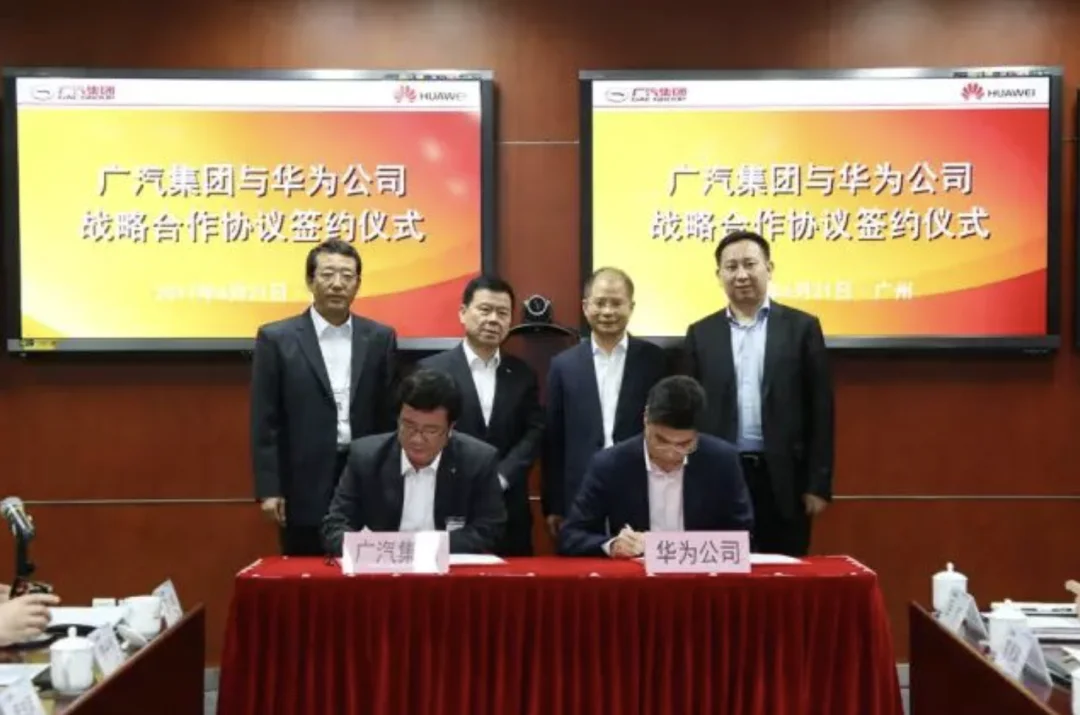
It should be noted that although the cooperation content at the time mentioned IoV and intelligent driving, the focus was actually on peripheral aspects such as enterprise management, cloud computing, big data, and internationalization. This was because Huawei had not yet publicly entered the automotive intelligence sector; it hoped to leverage GAC to promote its own cloud computing business, while GAC sought to empower itself by leveraging Huawei’s advantages in enterprise management and internationalization.
At that time, Huawei appeared to GAC entirely as a cross-industry enabler, and there were no conflicts of interest between the two parties.
By then, the automotive industry was advancing toward electrification, intelligence, and connectivity. Huawei began leveraging its strengths in intelligent technologies to continuously expand its smart electric vehicle business, establishing the Huawei Intelligent Automotive Solutions BU in May 2019.
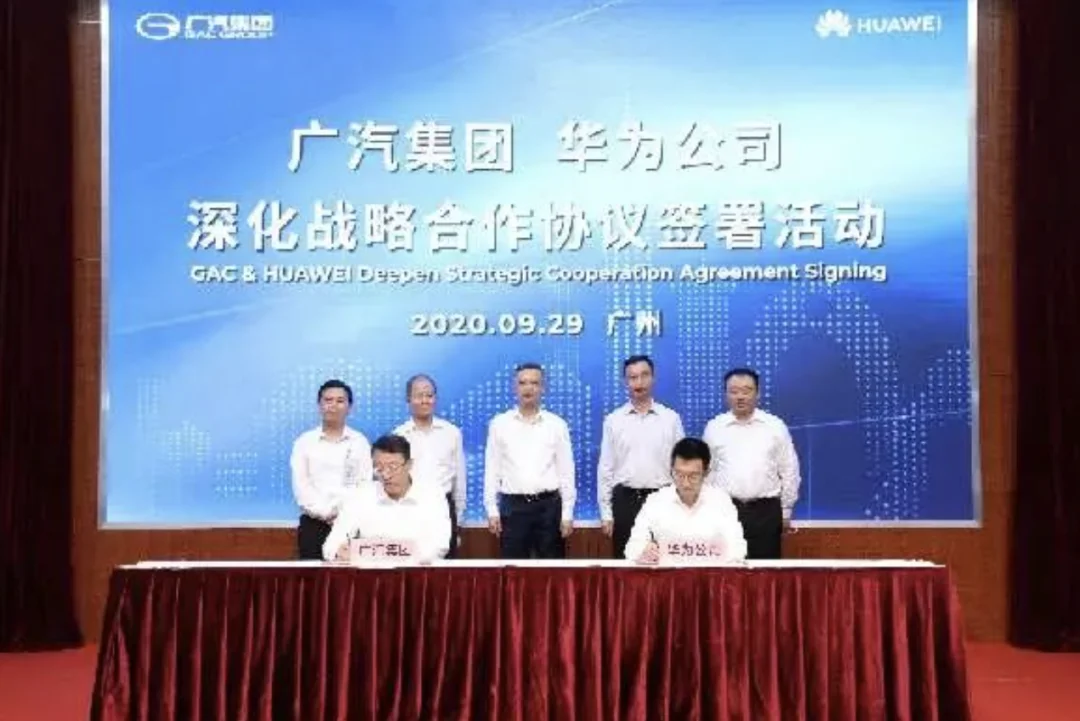
Thus, when GAC and Huawei announced a deepened strategic partnership in September 2020, the signing representative for Huawei was He Liyang, then vice president of the Huawei Intelligent Automotive Solutions BU (He Liyang later left Huawei to join XPENG before departing again in 2022), while Xu Zhijun, Huawei’s rotating chairman, served as the witness.
The agreement defined cooperation in core automotive business areas—focusing on computing and communication architectures to embrace the trend of software-defined vehicles. By integrating research on intelligence, connectivity, and electrification, both parties aimed to jointly build a sustainable, iteratively upgradable digital platform to truly realize software-defined vehicles.
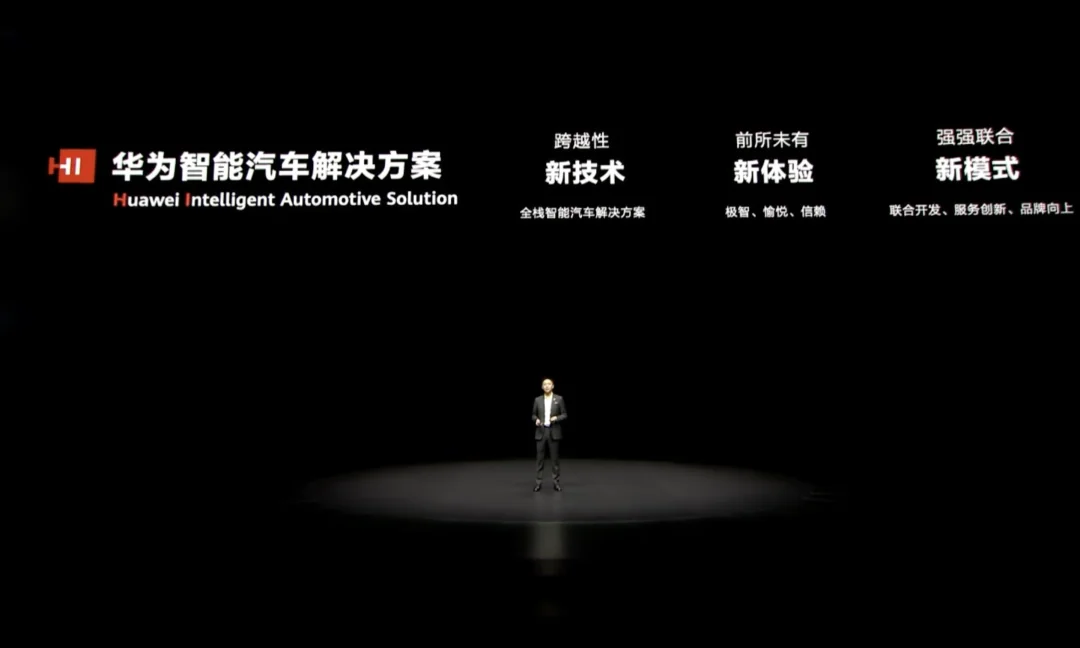
Notably, Huawei officially announced the HI brand only one month after signing this agreement. HI stands for Huawei Intelligent Automotive Solution.
In April 2021, just before the Shanghai Auto Show opened, Xu Zhijun formally declared at the Huawei Analyst Conference that Huawei would not manufacture cars but would instead help automakers build better vehicles. He also revealed that Huawei primarily collaborated with three automakers—BAIC, Changan, and GAC—to create sub-brands in the automotive sector, noting that “such deep collaborations will be limited to few customers.”
Xu Zhijun stated:
We support automakers in building their sub-brands through the ‘Huawei Inside’ approach, empowering select partners to truly deliver future-oriented vehicles… We designed a brand logo called ‘HI’ for the ‘Huawei Inside’ model, representing Huawei Inside. Seeing the HI logo in the future will indicate that the vehicle was co-developed by Huawei and its partner.
Xu Zhijun also emphasized that not all levels of cooperation result in the HI (Huawei Inside) logo being applied; only vehicles utilizing Huawei's autonomous driving solutions are permitted to display this logo.
That same month, Feng Qingya, general manager of Guangqijituan, stated in an interview that the company intended to jointly develop a true L4-level autonomous vehicle with Huawei for production in 2024. He clarified that this model would not be a retrofit of existing products but a new vehicle built on a fresh electronic and electrical architecture specifically designed for autonomous driving, with mass production and launch targeted for 2024. He noted that various R&D activities were proceeding in an orderly manner.
At that time, Huawei and Guangqi appeared to be in a "honeymoon period" regarding their collaboration under the HI model.
Between Two Announcements: An Unresolved Ending
It is worth noting that among the three automakers that finalized the HI model partnership with Huawei, Guangqi’s pace was the slowest from the outset.
For instance, just before the Shanghai Auto Show in 2021, the Jihu Alpha S Huawei HI Edition had already been unveiled. This was the first car to bear the Huawei HI brand identifier and the first mass-produced vehicle fully equipped with Huawei’s smart car solution. It featured Huawei’s ADS high-end autonomous driving full-stack solution, through which Huawei publicly demonstrated the practical experience of its autonomous driving technology for the first time, drawing significant industry attention.
Turning to Changan. After announcing in November 2020 a partnership with Huawei to build a new energy, high-end intelligent automotive brand, Changan’s announcement during the 2021 Shanghai Auto Show was that the products related to its first high-end brand co-developed with Huawei were still being refined; the brand name would be announced soon, and the brand’s first model was expected to be released by the end of this year—subsequently, Changan renamed the Changan-NIO project to AVATR in May 2021.
In contrast, Guangqijituan did not announce its agreement for the wholly owned subsidiary GAC Aion New Energy Vehicle Co., Ltd. to proceed with the Huawei (AH8 model) project until July 2021.
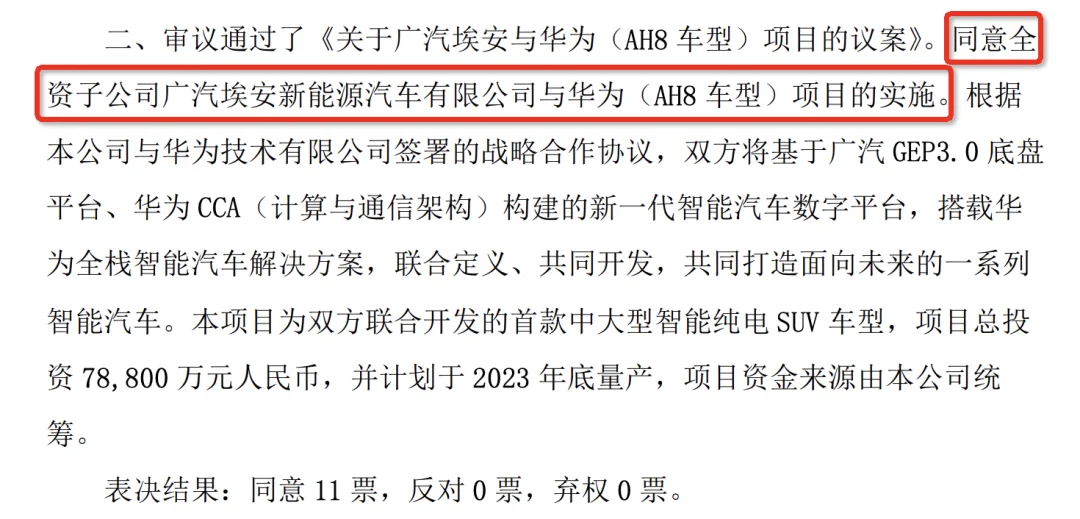
The announcement stated that, based on an agreement signed between the two parties, they would jointly define and develop a new generation of intelligent automotive digital platforms built on GAC’s GEP3.0 chassis platform and Huawei’s CCA (Compute and Communication Architecture). These platforms would be equipped with Huawei’s full-stack intelligent automotive solutions to create a series of future-oriented smart vehicles.
However, for more than a year after that, there were no publicly reported developments in the cooperation between GAC and Huawei. Meanwhile, models adopting the HI mode, such as Jihu and AVATR, made frequent moves. The Jihu Alpha S Huawei HI version was not officially delivered until the first half of 2022; although progress was slow, it continued. AVATR, on the other hand, steadily completed brand launches, unveiled new cars, filed applications with the Ministry of Industry and Information Technology, and officially went on sale in August 2022.
Notably, during this period of over a year, Huawei’s role in the automotive industry underwent significant changes.
Specifically, during the Shanghai Auto Show in April 2021, in addition to launching the HI mode, Huawei collaborated with SERES to introduce the SERES SF5 Huawei Smart Selection Edition, which was displayed and sold in Huawei’s extensive consumer retail stores. This marked the launch of the “Smart Selection” model led by Richard Yu. At that time, Huawei’s HI mode and Smart Selection model were entirely separate initiatives, with neither interfering with the other.
Subsequently, Richard Yu assumed the role of CEO of Huawei’s Intelligent Automotive Solution BU. In late 2021, he launched the AITO brand and the AITO M5 new car, leveraging his influence to drive sales. After its release in 2022, the AITO M5 emerged as a sales dark horse, achieving monthly deliveries exceeding 10,000 units for the first time in August.
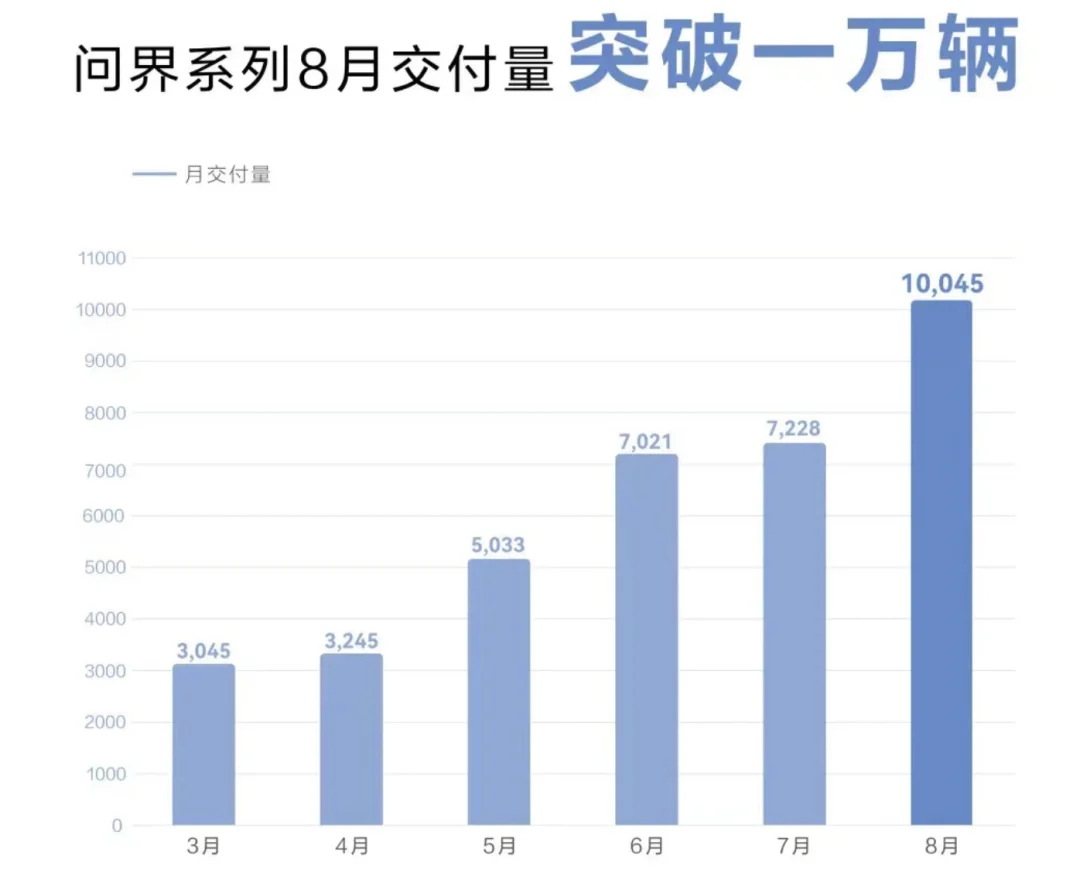
Coincidentally, in the same month that AVATR launched and AITO’s delivery volume surpassed 10,000 units for the first time, cracks emerged in the cooperation between GAC and Huawei.
On August 13, 2022, at the 19th China Automotive Marketing Summit · Hangzhou Conference, Xiao Yong, Deputy General Manager of GAC Aion, publicly criticized Huawei when answering questions about battery issues. He stated that Huawei is a major supplier with high prices that are difficult to control. GAC Aion found that it had virtually no bargaining power when attempting to cooperate with Huawei.
Xiao Yong also emphasized during his speech that automakers should comprehensively consider technological innovation and reasonable costs when developing products.
Later in late August, rumors circulated online claiming that the deep cooperation project between Huawei and GAC Aion had been suspended, reducing their relationship to one of parts supply and procurement. In response, a representative from Aion stated: 'This is untrue; our cooperation projects with Huawei are still proceeding normally.'
However, when GAC Aion launched its new premium brand, Hyper Haobo, in September 2022, no representatives from Huawei were present to support the launch, nor was there any sign of the Huawei HI model.
For the following six months, until March 2023 when Guangqijituan announced adjustments to the AH8 project, no further news regarding their cooperation was released.
Huawei and GAC May Have Lost Interest in Cooperation
Regarding the adjustment in their partnership, GAC cited reasons such as 'the allocation of resources by all parties.'
An insider told 42HOW Auto that GAC’s stance is reasonable. In previous collaborations between Huawei and Jihu and AVATR, Huawei often had to deploy significant staff to the automakers’ sites for joint development. This represents a substantial resource investment in both manpower and finances for Huawei, with a mismatch between cost and return. Given its existing partnerships with Jihu and AVATR, Huawei may be reluctant to make such further investments.
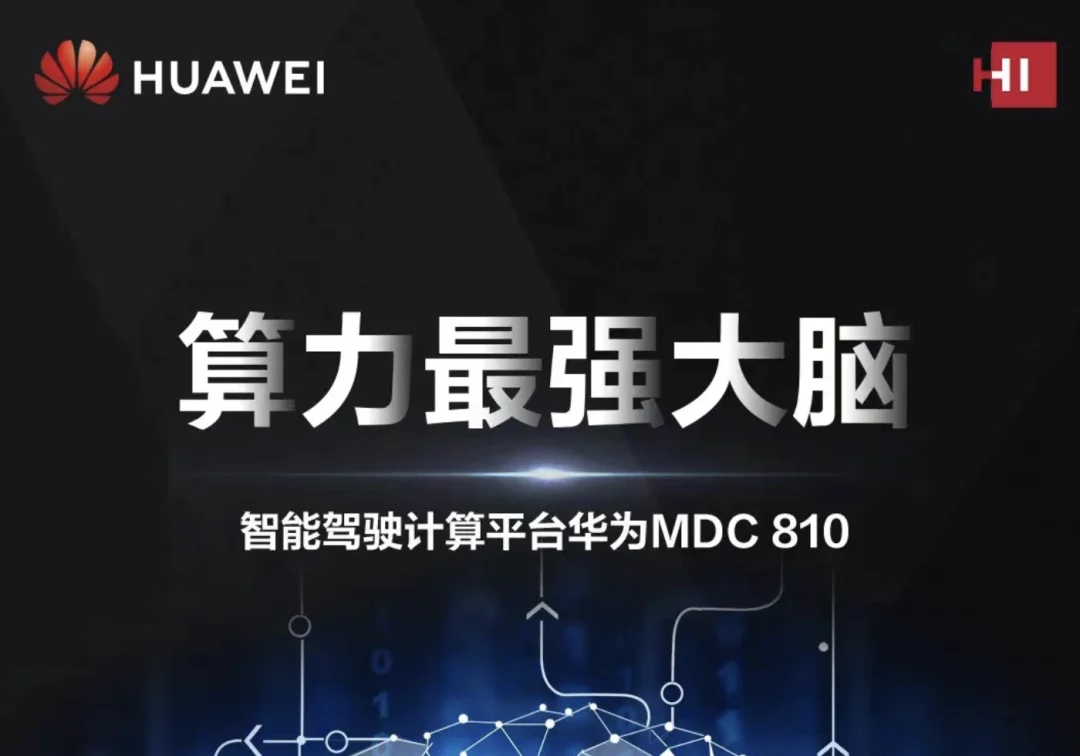
According to internal sources, another potential reason is that the underlying MDC computing platform, which forms the basis of Huawei’s HI mode, is facing chip shortages.
This is understandable. After being sanctioned in mid-2020, Huawei lost the ability to manufacture its self-developed chips. Consequently, the number of chips available for the MDC computing platform is limited, meaning vehicles adopting the HI mode are directly affected at the component level.
Beyond resource allocation, GAC has other reasons for not collaborating with Huawei on development.
An industry analyst told 42HOW Auto that Huawei can indeed be quite assertive in partnerships, but for GAC, the core consideration is whether the HI model provides sufficient added value. From a sales perspective, the Jihu Alpha S Huawei HI version, bolstered by Huawei, did not become a highly sought-after product. The AVATR project also encountered issues requiring alignment and tuning in software and autonomous driving during its development; it was delivered four months after launch, and current sales figures remain weak.
Thus, the HI mode has not effectively demonstrated its additive value to automakers; rather, Huawei has benefited more than the car companies.
The analyst noted that another factor for the three automakers’ deep cooperation with Huawei was building high-end brand positioning. However, because Jihu and AVATR moved faster, they have already leveraged Huawei’s brand advantage in consumers’ minds. For latecomers like GAC, this means Huawei’s high-end brand halo has been partially utilized by competitors and diluted over time, resulting in minimal brand premium.
Furthermore, with the "HUAWEI AITO" brand identity having debuted in March this year, GAC has even less reason to continue leveraging Huawei's brand influence, given that "Huawei itself has entered the market."
Interestingly, another senior industry practitioner told 42HOW Auto that it is not only GAC that is unwilling to cooperate further; Huawei’s own willingness to collaborate with GAC has also diminished.
The reasons behind this are twofold. First, as mentioned above, resources are limited. Huawei naturally prefers to allocate more resources to "HUAWEI AITO" models. Huawei has already announced that the new AITO M5 will be launched with Huawei’s autonomous driving system. Given that components such as the MDC have limited total output, they are naturally reserved for Huawei’s own vehicles rather than being shared externally.
Secondly, following internal personnel adjustments at Huawei in early 2023, Richard Yu has taken full control of both Huawei’s Terminal BU and Huawei’s Intelligent Automotive Solution BU. With the launch of the new AITO M5—which Richard Yu has announced will feature Huawei’s advanced intelligent driving—the two divisions have been integrated. This signifies that Huawei has shifted away from its previous strategy of pursuing both the HI model and the Smart Selection model simultaneously. Instead, it is now concentrating all its advantageous resources to drive sales volume.
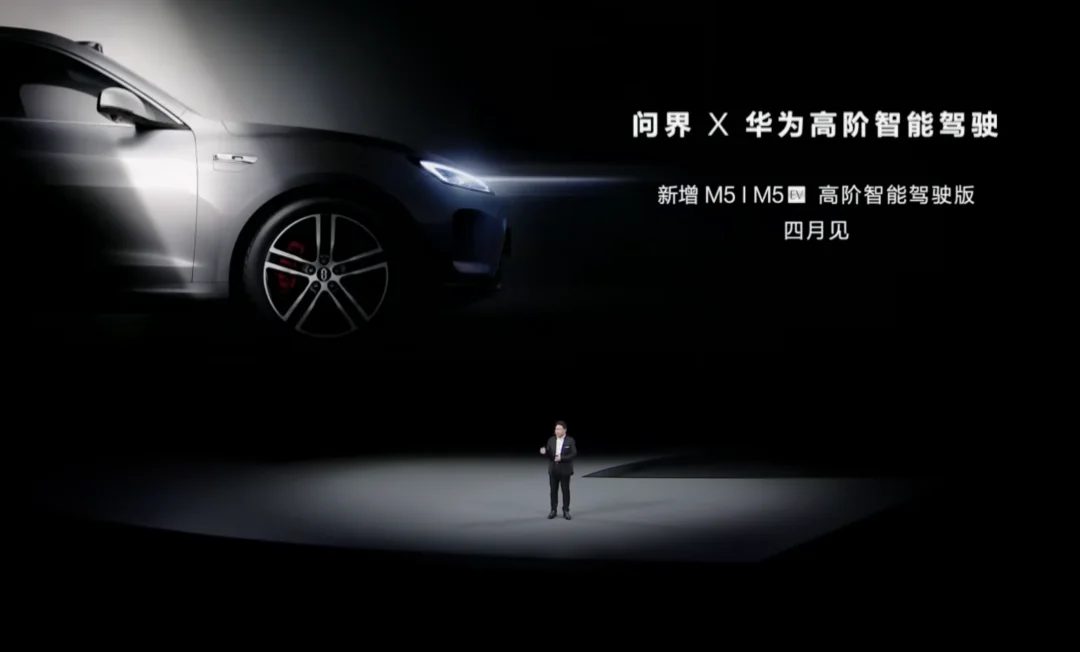
Of course, beyond these factors, Richard Yu faces another challenge: Huawei’s automotive business is under pressure to achieve profitability. In this context, Huawei has even stronger grounds to invest significant core resources into AITO models that generate sales and revenue. Collaborating with automakers like GAC, which pursue independent autonomy and brand elevation, naturally falls lower on Huawei’s priority list.
Therefore, "the breakup between GAC and Huawei should be seen as an inevitable result of both parties losing interest in maintaining the relationship; it was destined," said the practitioner.
What lies ahead for Huawei's HI model?
According to GAC, Huawei will continue to participate in the development and cooperation of the company's independent brand models as a key supplier.
From "joint definition" to "key supplier," Huawei's role in its partnership with GAC has undergone an essential change; for GAC, this means it becomes the absolute leader of this AH8 model, with Huawei merely participating as a supplier without any say in product definition or feature development.
For a carmaker like GAC that emphasizes self-research and self-control, and insists on "keeping its soul in its own hands," such a partnership may be more comfortable.
For Huawei, parting ways with GAC under the HI model is also a turning point.
After all, although Huawei currently continues to play the role of a supplier in the automotive sector, it has undoubtedly become an important participant in the vehicle market that cannot be ignored. With models under the HUAWEI AITO brand, Huawei has essentially formed a direct competitive relationship with other automakers including GAC—although Huawei does not have its own manufacturing plants, from the current perspective, there is no essential difference between it entering the car-making business directly and doing so indirectly.
In this situation, GAC, as a direct competitor, has little reason to continue choosing the Huawei HI model and handing over the "soul" of intelligent driving to Huawei.
Thus, a truly noteworthy question arises:
After GAC's exit, besides existing customers like BAIC and Changan, is there still new room for survival for Huawei's model of empowering other automakers through the HI mode?
By 308 Edited by 308