


Leapmotor Unveils CTC Battery-Chassis Integration, Announces Free Sharing
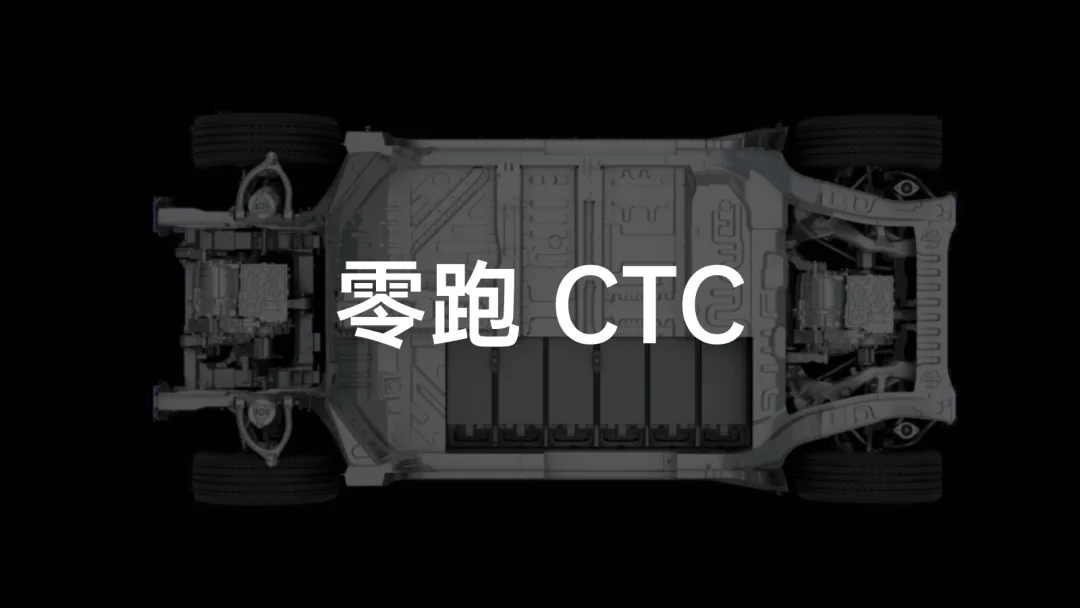
For me, who only started engaging with Leapmotor from the C11 model onward, 'the king of cost-performance' was my first impression of the brand. Although I was aware of Leapmotor's self-research philosophy, I had not paid it much attention.
When Leapmotor's sales figures frequently topped the charts and it began entering the top tier of new energy vehicle startups, I still believed this was merely a victory for its 'cost-performance' strategy.
However, after watching Leapmotor's press conference on its CTC (Cell-to-Chassis) battery-integrated chassis technology, I realized that the story is not just about price.
Compared to traditional solutions, the CTC technology increases battery packaging space by 14.5% and adds 10 mm to the vehicle's vertical clearance;
It also improves body torsional stiffness by 25%, reaching 33,897 Nm/deg;
The Leapmotor C01 will be the world's first mass-produced CTC sedan;
It is compatible with an 800 V platform in the future, supporting 400 kW fast charging;
Leapmotor will make its CTC technology freely available, avoiding the creation of new barriers through proprietary tech.
A company with such high technical aspirations is a far cry from the low-price image often associated with Leapmotor. As the automaker claiming the broadest scope of self-developed technology after Tesla and BYD, it should not be defined solely by its affordable pricing.
So, let’s take a closer look at Leapmotor and its newly unveiled CTC technology.
01Why Develop CTC
The focus today is naturally on the star of the technology launch event: the Cell-to-Chassis (CTC) battery-integrated chassis technology.
However, to understand CTC, we must first start with CTP, or even traditional battery packs.
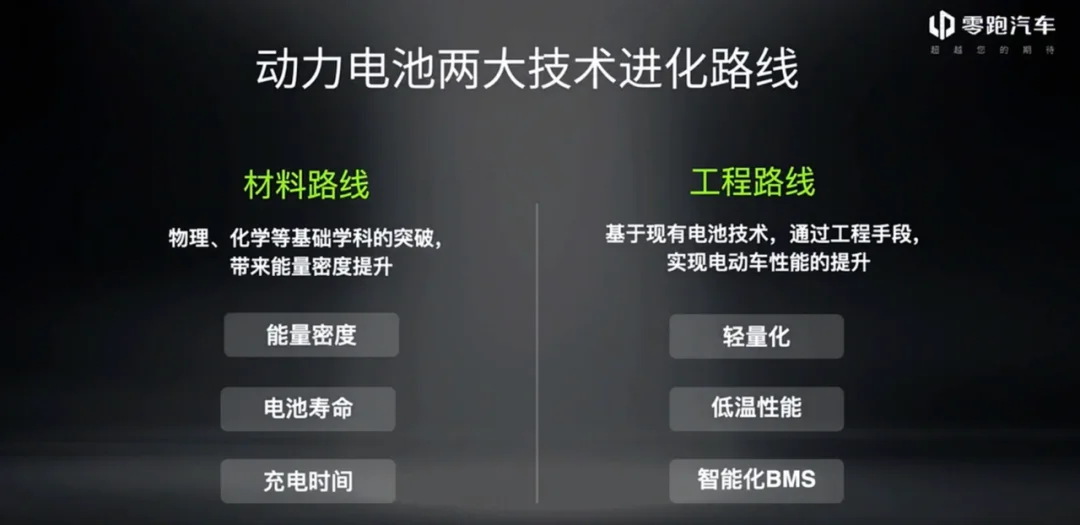
To address the widely concerned issue of driving range, the approach at the power battery level is to enable batteries to "hold" more electrical energy. This breaks down into material science and engineering structure. In the short term, breakthroughs in battery materials are unlikely, making significant gains in energy density difficult; therefore, engineering optimization has become an indispensable starting point for increasing capacity—essentially optimizing space to fit more cells.
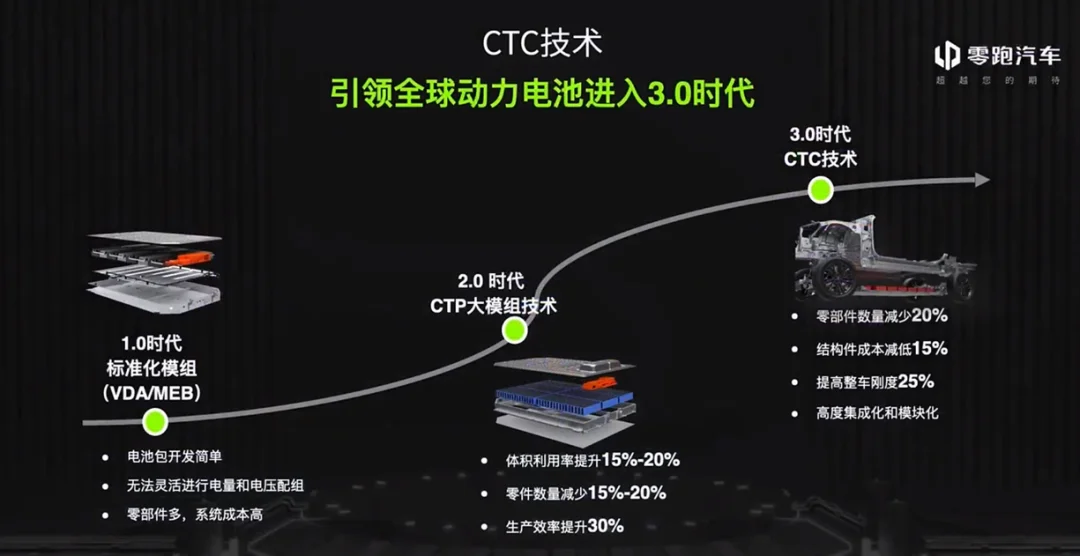
The battery pack format used in the early days of electric vehicle development, and still the mainstream approach today, is the standardized module-based battery pack. A simple analogy is the three-step process of putting an elephant into a refrigerator:
First, assemble individual cells into modules;
Then, combine several modules with an outer casing to form a battery pack;
Finally, install the battery pack onto the vehicle body.
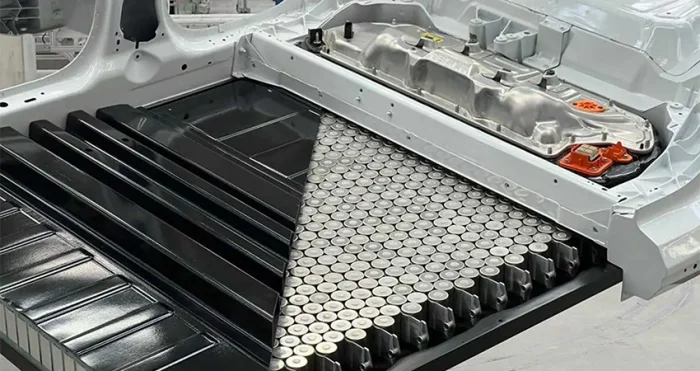
The presence of modules simplifies overall technical requirements and assembly for the battery pack, but its obvious drawback is that modules and casings occupy significant volume, resulting in low space utilization. This led to the development of CTP (Cell To Pack) technology, also known as module-less technology, where cells are integrated directly into the battery pack, reducing or eliminating battery modules, and integrating the battery pack into the vehicle floorpan as part of the overall structural components.
CTP’s advantages include improved volumetric efficiency, reduced component count, and higher production efficiency. The industry is currently transitioning from standard modules to CTP technology. However, drawbacks remain in collision safety, thermal management, and after-sales maintenance. Representative companies adopting CTP technology include BYD, Fengchaoxinnengyuan, and CATL.
Taking CATL as an example, its CTP battery packs achieve a 15%–20% increase in capacity utilization, a 40% reduction in component count, a 50% improvement in production efficiency, and a 10%–15% increase in energy density.
CTC (Cell To Chassis) technology refers to an integrated design approach that combines the battery, chassis, and lower body structure, further simplifying product design and manufacturing processes. By reducing redundant structural designs, it effectively decreases the number of components. This enhances space utilization and system-specific energy density while enabling complementary interactions between the body and battery structures, significantly improving the battery's impact resistance and the body's torsional stiffness.
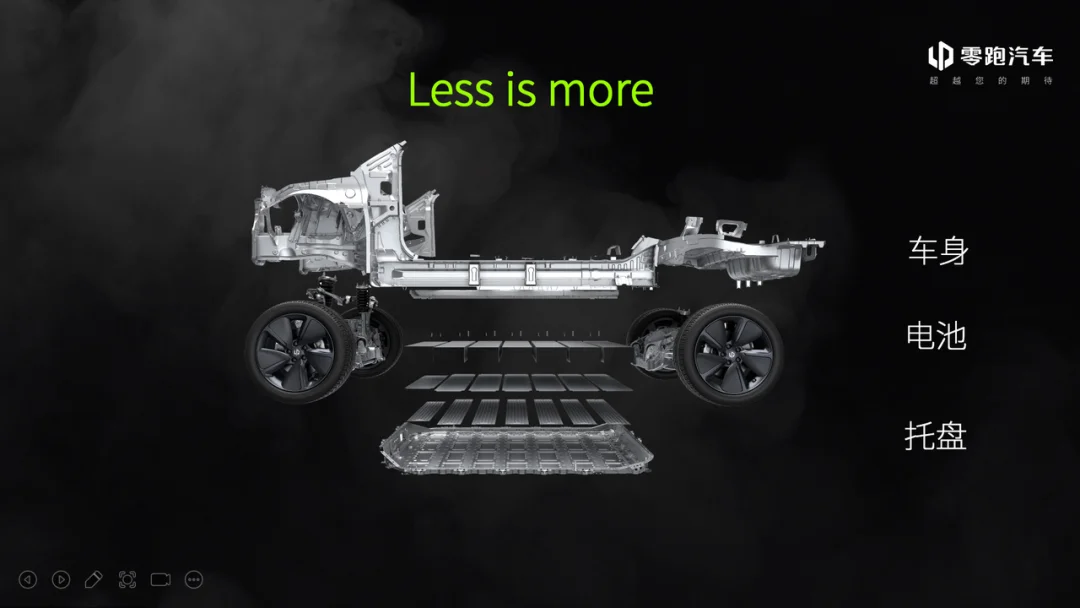
This also means that CTC technology relies heavily on vehicle chassis R&D. Compared with standard modules and CTP, it requires greater R&D capability from the complete vehicle manufacturer and more involvement in battery pack design.
In terms of development progress, Tesla released the 4680 cell and CTC technology at its Battery Day in September 2020, and this April, it officially delivered the Model Y with CTC technology at its Texas factory. In early July 2021, at the strategic development conference hosted by Woerwo and Volkswagen Group, both traditional automotive giants also identified CTC as a key technological route. CATL had previously stated that it would launch CTC technology in 2025.
02What Makes Leapmotor's CTC Strong
Meanwhile, Leapmotor has quietly unveiled its own CTC technology and claimed that the Leapmotor C01 will be the world's first sedan to feature CTC technology, making it a leading force in China's CTC sector.
Technical Challenges
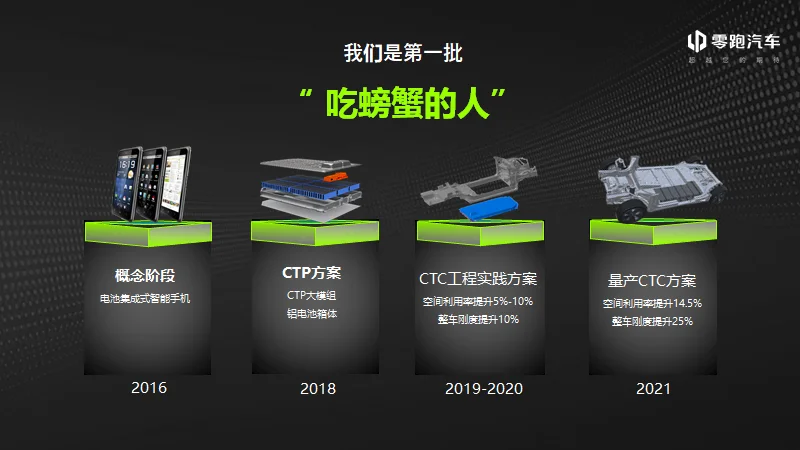
According to the presentation, Leapmotor’s battery integration design was inspired by CEO Zhu Jiangming’s experience with smartphone battery designs in 2016, when he first proposed the concept of integrated design.
It is said that Mr. Zhu established a cross-departmental project team at the time and personally oversaw its progress. After years of R&D accumulation, the team overcame numerous challenges in structure, design, validation, manufacturing processes, and tooling, mastering 32 key technologies. The seeds planted by Leapmotor early on have finally begun to sprout.
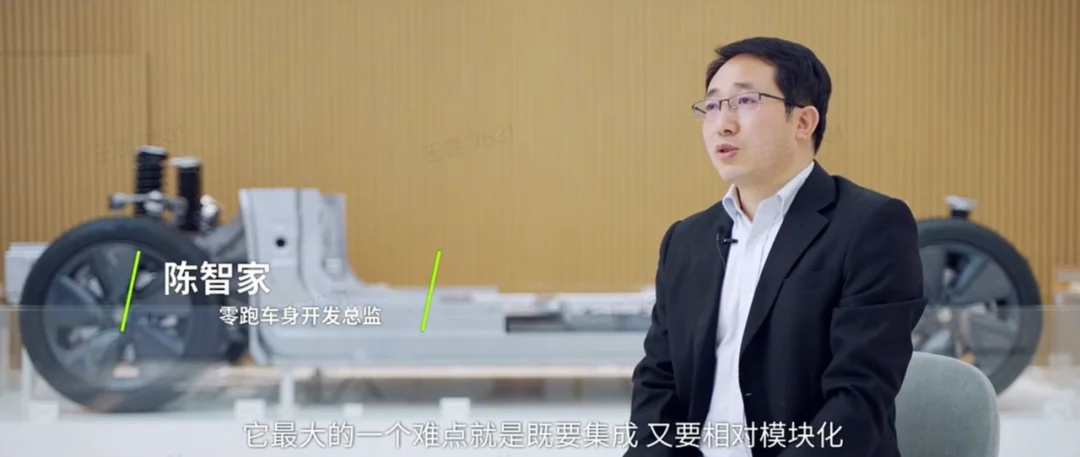
Compared to traditional EV battery packs, CTC technology differs significantly in structure. The greatest challenge lies in achieving both high integration and relative modularity. To resolve this contradiction, Leapmotor’s R&D team proposed an integrated battery-chassis structure that addresses two major technical hurdles:
In terms of structure:
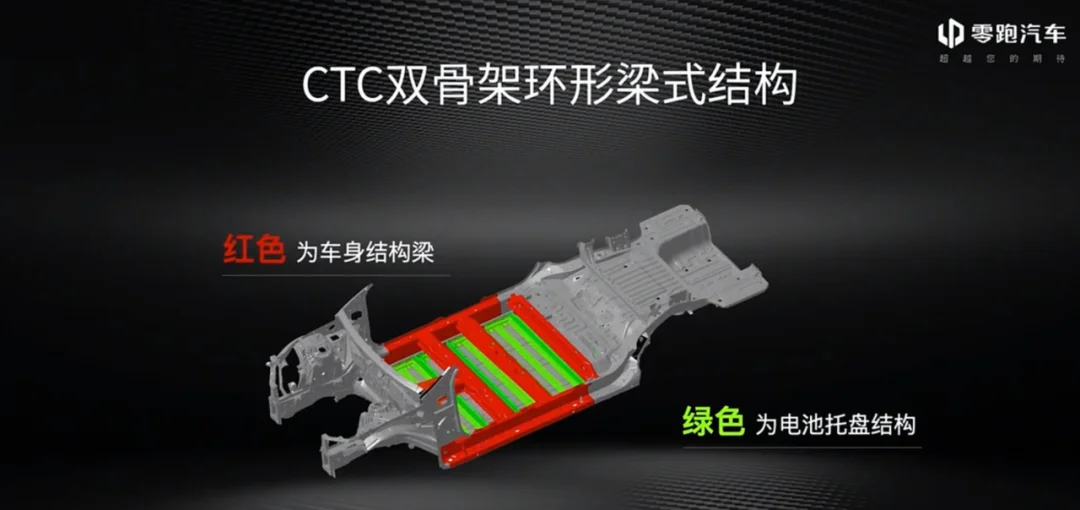
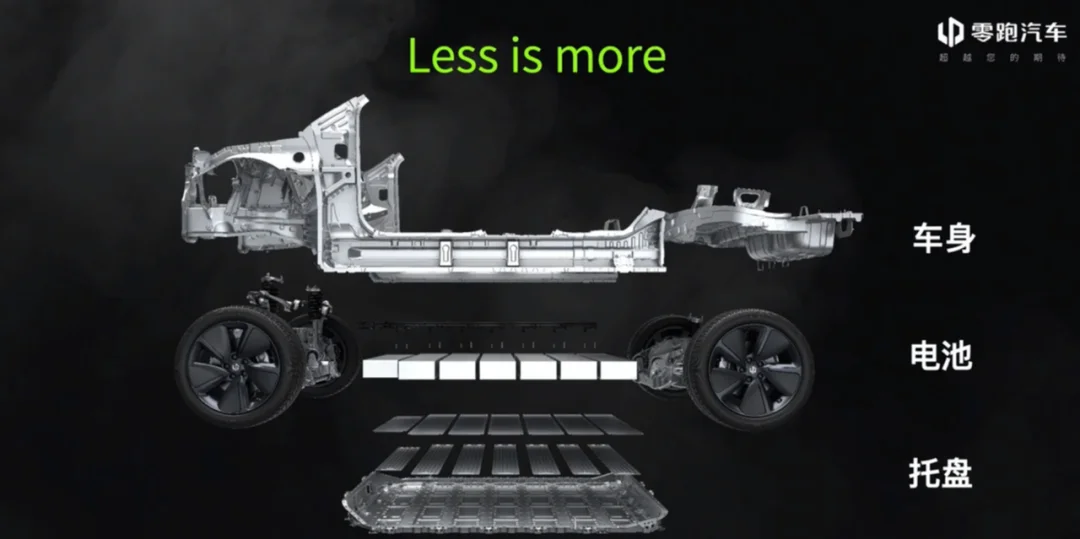
The battery and chassis are designed as a single unit, innovatively applying a CTC dual-skeleton ring-beam structure. This merges the battery skeleton and the vehicle chassis body into one system, serving simultaneously as the structural framework for both the chassis and the battery, thereby improving overall structural efficiency.
In terms of airtightness:
By integrating the battery seal into the body structure, Cell-to-Chassis (CTC) technology leverages the chassis's fundamental framework—utilizing longitudinal and transverse beams to form a complete sealed enclosure. This represents a significant innovation compared to traditional automotive designs.
Technical Benefits
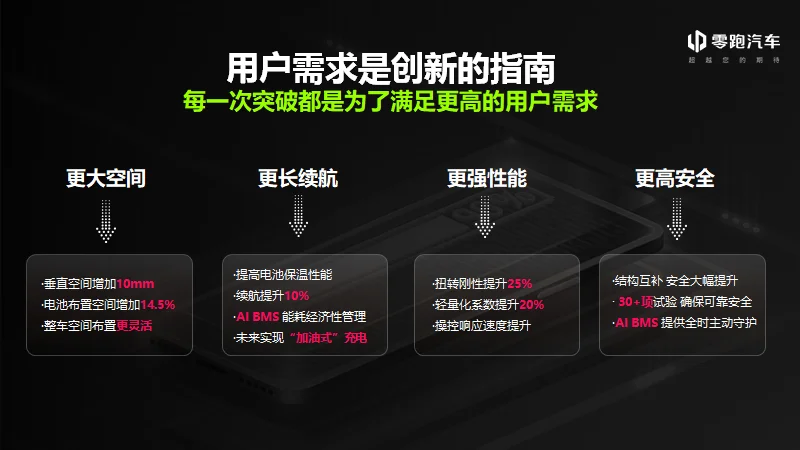
From a technical standpoint, there are clear improvements in space utilization, driving range, performance, and safety.
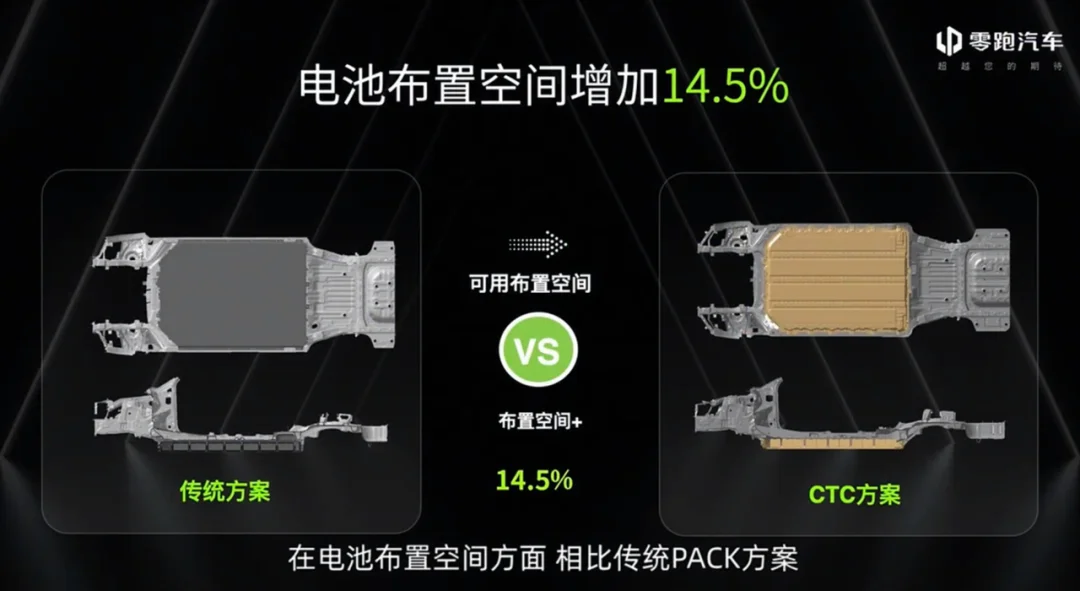
The more integrated battery structure frees up valuable underbody space, increasing overall battery packaging volume by 14.5% and vertical clearance by 10 mm. Do not underestimate this 1 cm gain; for sedans with limited headroom, every millimeter is precious.
Regarding range, the higher battery space utilization not only allows for more batteries to be installed, increasing range by approximately 10%, but also improves thermal insulation. This mitigates winter power loss and further ensures a better winter driving experience.
In terms of body performance, torsional stiffness has increased by 25% to reach 33,897 Nm/deg. This provides better driving dynamics, superior handling, and improved responsiveness. Additionally, higher body stiffness enhances resistance to resonance, resulting in better NVH (Noise, Vibration, and Harshness) performance.
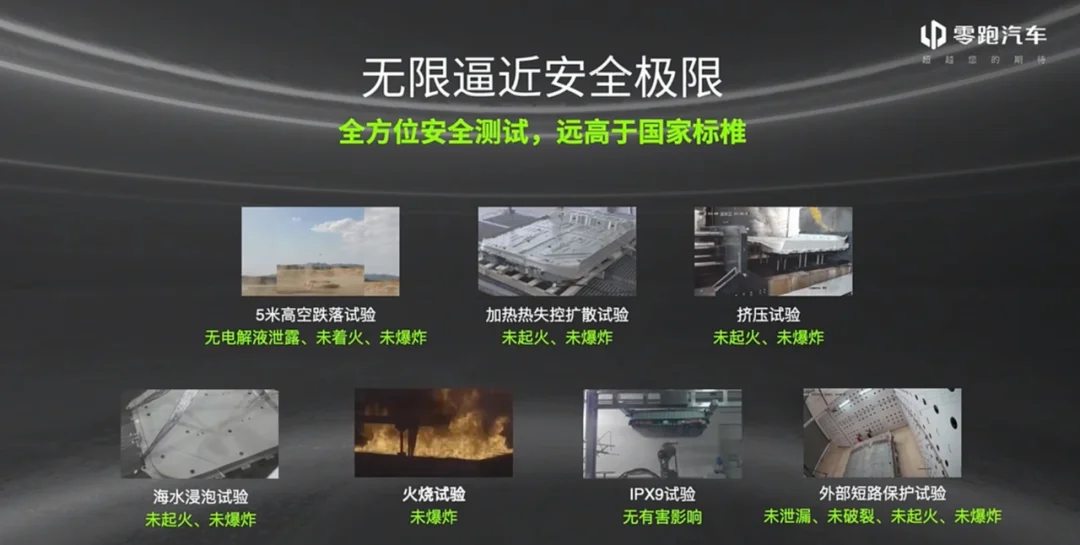
From a software perspective, Leapmotor’s AI BMS combines online and offline capabilities based on its Battery Management System (BMS) and cloud platform. By integrating big data and AI deep learning tools, it enables more proactive protection functions.
Furthermore, Leapmotor’s CTC technology offers excellent compatibility and scalability. It supports rapid, flexible mass production and cross-platform, cross-segment adaptation. In the future, it will also be compatible with 800 V high-voltage platforms, supporting 400 kW super-fast charging.
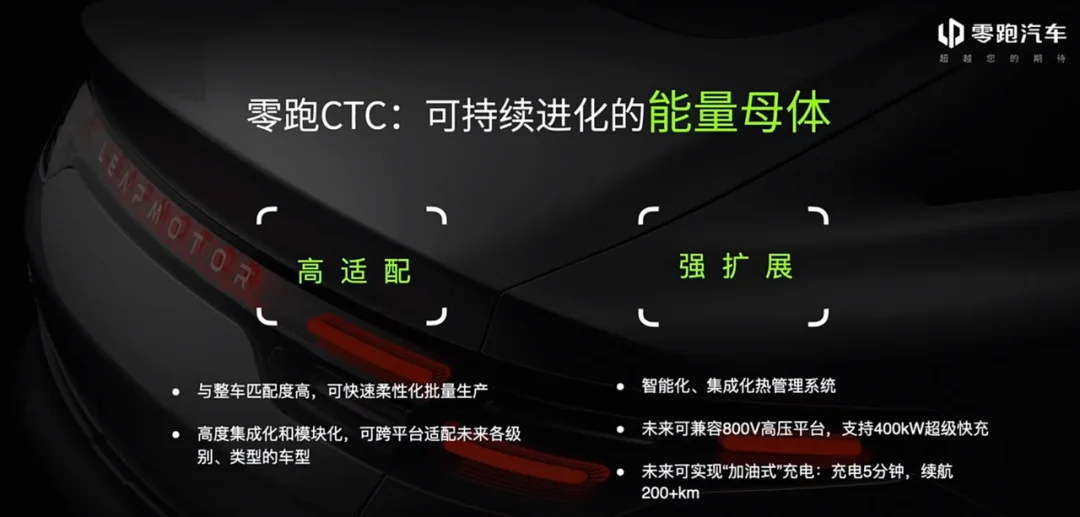
In summary, Leapmotor’s CTC technology was hard-won and deserves recognition.
03The Sentiment Behind Self-Development
If you think the story ends here, with Leapmotor building a technical moat through its CTC technology and seizing market advantage first, then your vision is too narrow. The development of new energy vehicles cannot be done in isolation, nor can industry rise be the work of just one person or company.
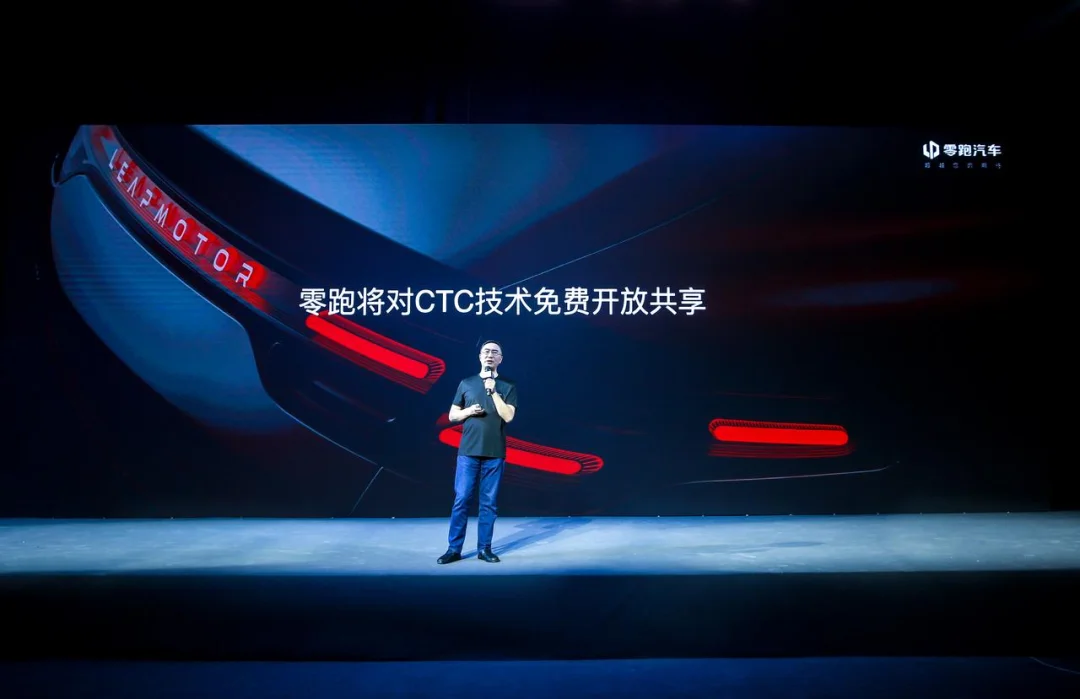
At the launch event, Zhu Jiangming explicitly announced, "Leapmotor will make CTC technology freely available for sharing." A fine sentiment: "New technologies should not be barriers, but rather stepping stones to drive upward breakthroughs across the industry."
The rapid development of electric vehicles has given the Chinese automotive industry a genuine opportunity to overtake on a curve. Behind this opportunity lies not opportunism, but the down-to-earth hard work of countless Chinese engineers across the entire industrial chain. In terms of research and development, Leapmotor has always advocated self-research. Zhu Jiangming stated that Leapmotor has now become the automaker with the broadest scope of self-research, after Tesla and BYD.
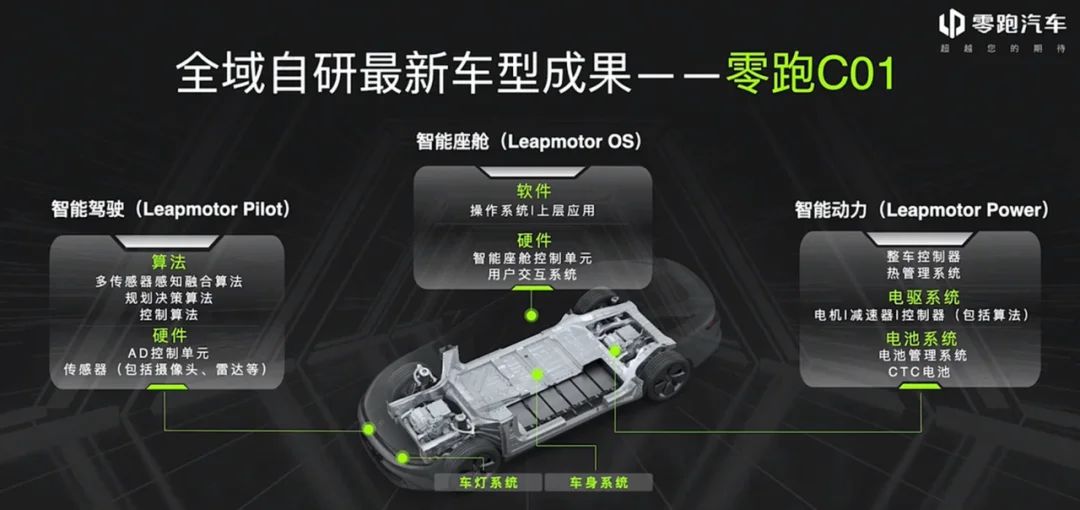
Zhu Jiangming stated matter-of-factly at the press conference, "Everything except the battery cells is self-developed." While this sounds bold, executing it is truly difficult. In an environment where the national level increasingly emphasizes technological autonomy and self-reliance, the difficulties and efforts Leapmotor has endured behind its self-development narrative deserve to be seen.
04Final Thoughts
In my view, Leapmotor is like a hardworking engineer who prefers action over words, much like Leapmotor's founder Zhu Jiangming.
No flashy marketing gimmicks, but a stubborn commitment to technology—even developing its own driver-assistance chips. In today’s automotive landscape, this makes Leapmotor an outlier.
Leapmotor’s self-reliance is not without flaws. Because it handles foundational work in-house from scratch, initial product maturity suffers. Driver assistance remains less than ideal, and high energy consumption draws frequent criticism. Yet if the company persists, these issues will eventually be resolved. Self-developed capability is the key to solving problems and ensuring steady, long-term growth.
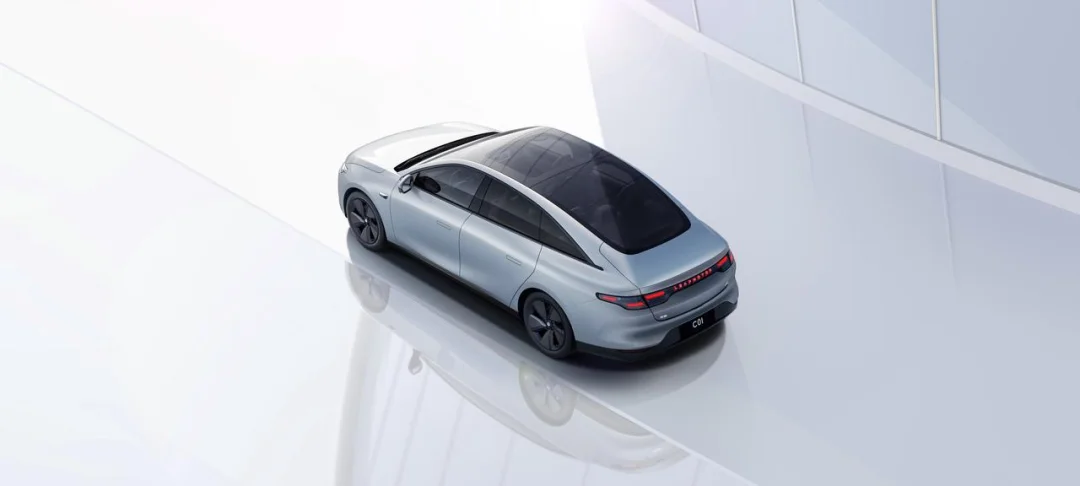
Finally, we look forward to the Leapmotor C01, the first sedan to feature mass-producible CTC (Cell-to-Chassis) technology.
Written by: Pigeon No. 42 Edited by: Reinhardt