


CATL’s EVOGO Battery-Swapping Stations Begin Operations in Xiamen
On April 18, 2022, just 90 days after the official launch of CATL EVOGO battery swapping, the first four EVOGO swap stations in Xiamen officially began operations. In the new energy vehicle industry, where the interval between a new car's announcement and its delivery often stretches to half a year, this speed makes CATL stand out as an exception.
More importantly, with these swap stations now operational, CATL’s battery swapping business has formally moved beyond PowerPoint presentations into real-world execution.
01The "Little Green Ring" in Xiamen
Mass-Produced EVOGO
Before detailing CATL’s layout in Xiamen, let us examine what the actual mass-produced swap station looks like.
Several months ago, on the eve of CATL EVOGO’s official release, an image circulated online depicting the swap station’s design. The structure appeared rather makeshift, resembling a temporary garage built next to a shipping container, which drew considerable ridicule from critics regarding CATL’s swap station concept.
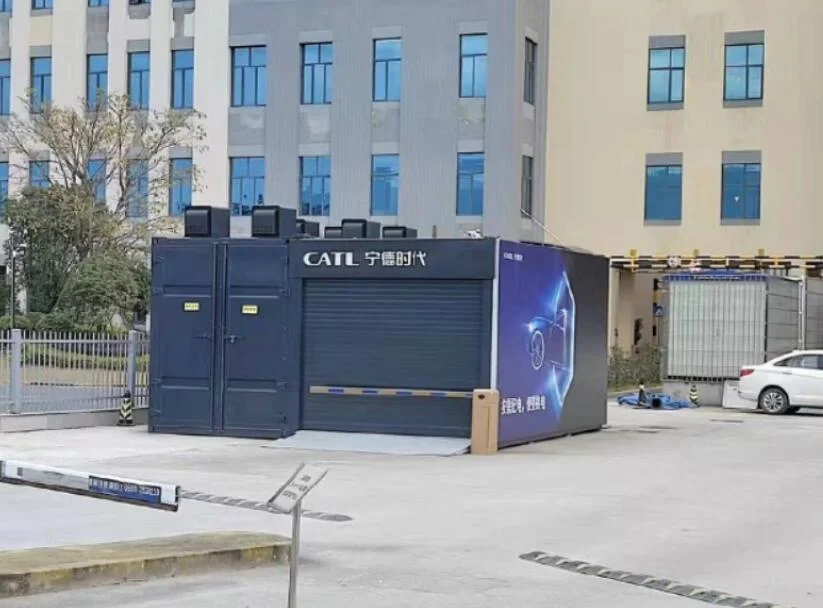
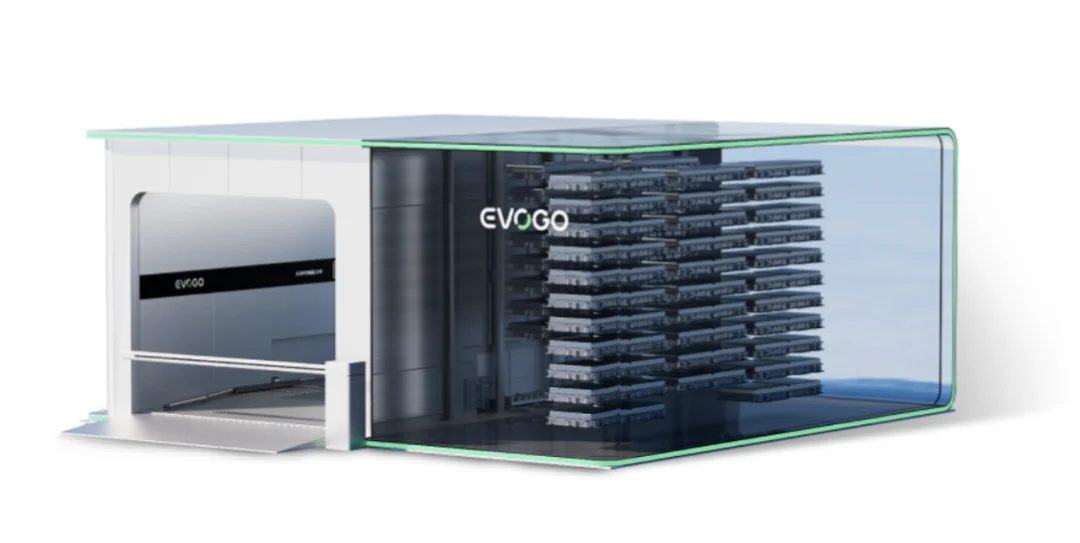
However, CATL officials later debunked the rumor, clarifying that this was not a CATL battery swap station. The official EVOGO swap station was subsequently unveiled at a press conference. The station’s main structure is a silver-gray rectangular building featuring a single swap lane and storage rooms for charging and storing batteries, giving it a distinctive appearance.
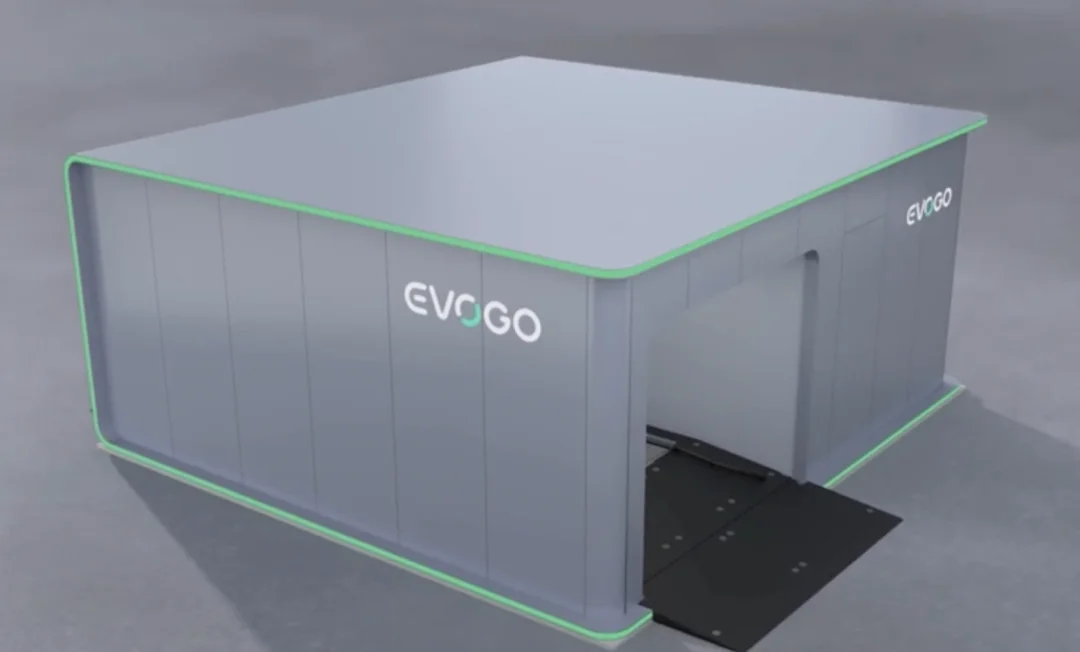
There is a popular saying in the automotive industry: 'Concept cars are as stunning as Lin Ziling, but mass-produced models resemble Luo Yufeng.' So, what does the mass-produced EVOGO actually look like?
Conclusion: 'CATL has not deceived me.' The first batch of physical EVOGO swap stations deployed by CATL in Xiamen closely matches the official renders. The main building’s color scheme, paint finish, and rounded corners align well with the visualizations, conveying a sense of premium quality.
One feature added compared to earlier renders is an automatic barrier gate system at the entrance of the swap lane. When an EVOGO-compatible vehicle approaches the station, cameras on the barrier identify the license plate. Once matched, the barrier lifts, allowing the vehicle to enter the swap lane.
It is worth noting that the automatic barrier exists because EVOGO’s operational model requires no on-site staff; the entire swapping process is highly automated. Upon entering the swap area, users only need to complete a few simple steps via the app. However, since the service is newly launched, many users are still unfamiliar with the process, so staff members remain on-site to guide them.
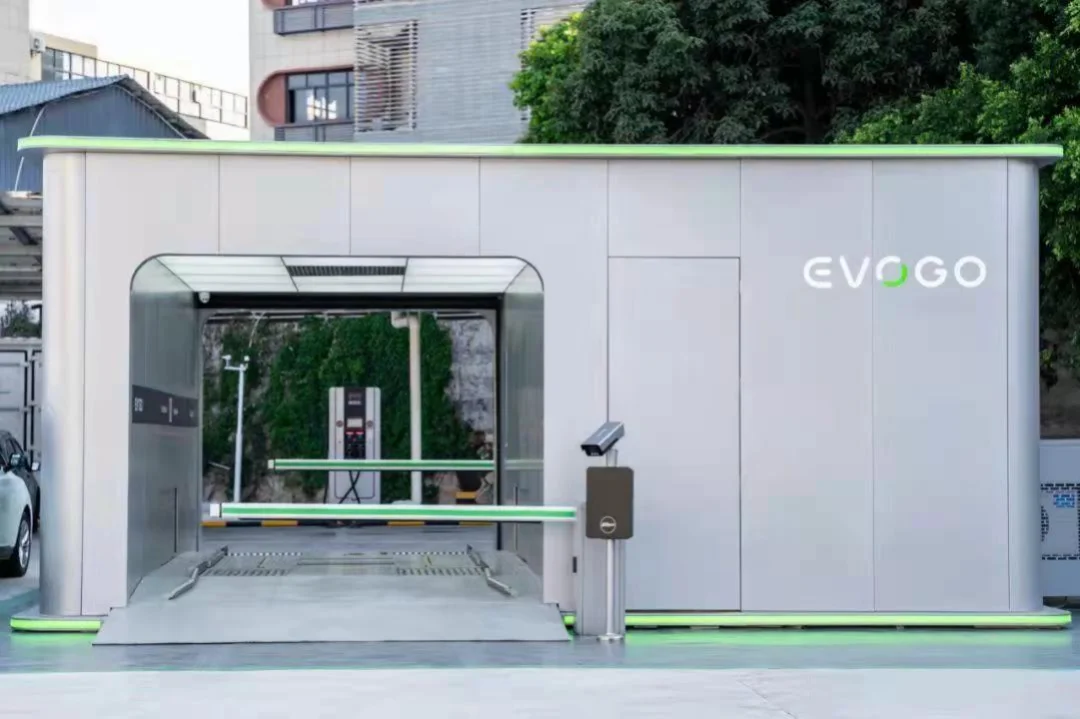
Another obvious yet easily overlooked detail is that the EVOGO swap lane features a one-way through design, with entry on one end and exit on the other. This layout is more efficient for handling high volumes of swap traffic compared to garage-style layouts with a single opening. This routing design highlights CATL’s focus on swap efficiency. Combined with the capacity to store 48 batteries per station, it reflects CATL’s strategy to maximize throughput and operational efficiency at each site.
As another player in battery swapping, CATL’s EVOGO offers a user experience similar to NIO’s. It features a dedicated app that displays real-time information such as station operating status and available battery counts. Users can reserve a swap session via the app before arriving at the station.
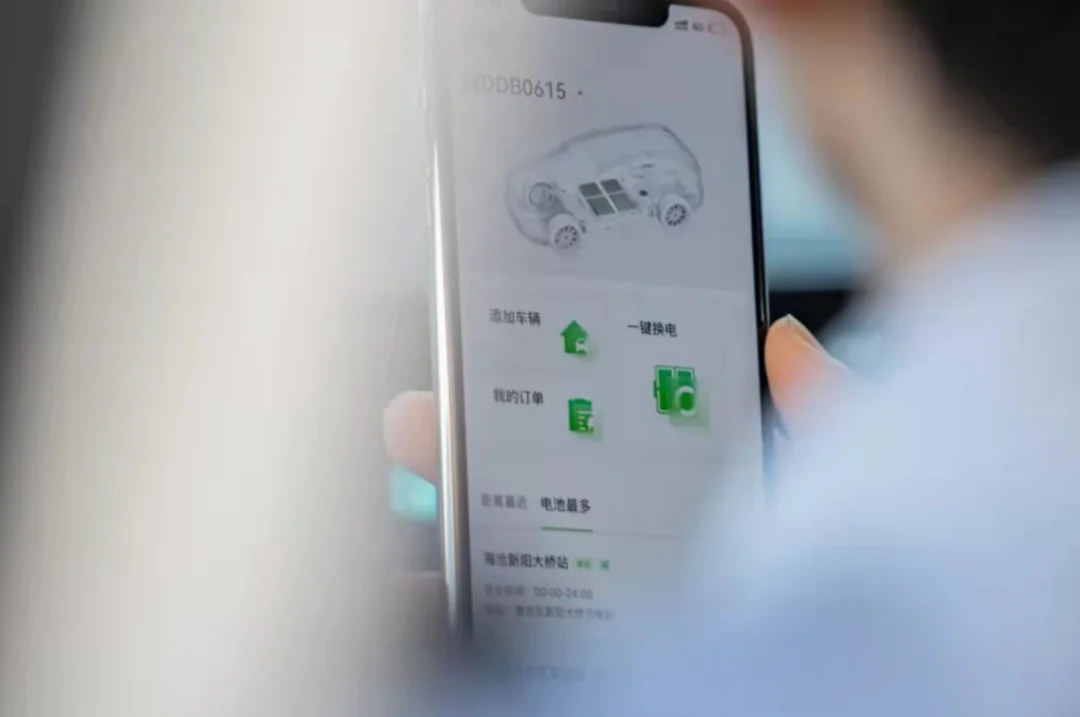
The process is straightforward: users make a reservation through the app, perform a few steps on-site to complete the swap, and settle the energy replenishment fee upon completion. We will now examine EVOGO’s deployment strategy in Xiamen.
3 km per station: Xiamen pilot is critical
On April 18, the day of its official opening announcement, four EVOGO battery swap stations began operations in Xiamen, located in Siming, Huli, and Haicang districts, as shown in the figure.
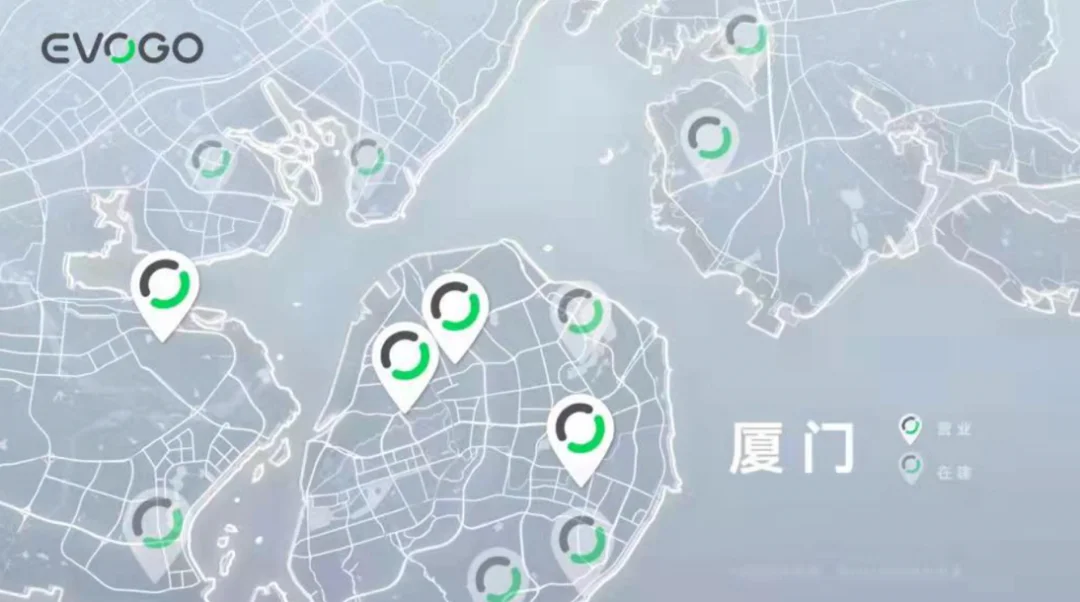
It should be noted that for a city of Xiamen’s scale, these initial four stations are just the beginning. The semi-transparent icons outside the highlighted markers in the map indicate EVOGO stations currently under construction in Xiamen.
For a more concrete understanding, consider the official description: once construction targets are met, there will be one swap station within an average service radius of 3 km across Xiamen Island.
Or, put another way: by the end of this year, EVs in Xiamen’s EVOGO network will be practically free to drive as long as drivers remember to swap batteries before the remaining range drops to 3 km. This density of infrastructure clearly signals CATL’s intent to position Xiamen as a showcase city for EVOGO.
For a giant like CATL, launching a key new business typically requires a secure base. In August 2021, CATL established a wholly owned subsidiary, Shidaidianfu, with EVOGO as one of its core businesses. Shidaidianfu is registered in Xiamen—a detail that holds significant importance for CATL.
CATL does not operate EVOGO battery-swap stations entirely on its own. Its rollout strategy mirrors other charging and swapping infrastructure providers. According to previously published official information, the EVOGO ecosystem currently features two types of partnership models:
Battery-swap station operation partnerships: partners can choose to either co-operate or franchise with Shidaidianfu in the battery-swapping sector.
Vehicle procurement (minimum 100 units): after partners purchase vehicles, Shidaidianfu will build battery-swap stations for them and provide battery-leasing services.
In this initial phase, both EVOGO business lines are primarily targeting B-end clients. The two initiatives complement each other: Shidaidianfu must market EVs equipped with EVOGO swapping capabilities while simultaneously recruiting partners to jointly promote and construct swap stations.
New energy infrastructure and mobility services are regulated sectors requiring approvals, introducing uncertainties during promotion. Early-stage government support would significantly aid development. This consideration likely influenced Shidaidianfu’s decision to launch its first pilot program in its home base, Xiamen.
Leveraging this home-field advantage, EVOGO has adopted an aggressive strategy to deploy 30 stations in Xiamen by year-end. Recognizing that trial-and-error should begin early, Shidaidianfu aims to use this local edge to rapidly achieve scaled battery-swap operations within specific areas, thereby accumulating valuable practical experience and real-world operational data as soon as possible.
Higher station coverage and optimized operational strategies can enhance the appeal of battery swapping for individual consumers, laying the groundwork for EVOGO to enter the personal consumer market. From a communications perspective, EVOGO’s pilot in Xiamen also serves as significant urban advertising for the battery-swapping business.
Beyond urban swap stations, Shidaidianfu has also set its sights on Fujian Province and beyond. On February 22 this year, Shidaidianfu signed a strategic cooperation memorandum with Fujianshenggaosunengyuangongsi. The agreement stipulates that the two parties will establish a joint venture to build a highway battery-swapping network across Fujian Province, advance the construction and operation of swap stations at highway service areas and facilities, and expand related businesses to neighboring provinces when appropriate, thereby accelerating the electrification of vehicles.
Starting from Xiamen, connecting the entire Fujian Province through a highway swapping network, and then expanding further to surrounding regions—this is EVOGO’s step-by-step strategy for building its swapping network. It is only just beginning.
02CATL’s Long and Short History with Battery Swapping
In recent years, as the new energy vehicle industry has flourished and penetration rates have risen steadily, discussions about battery swapping have intensified. NIO, as a benchmark company in this field, has demonstrated the feasibility of the swapping business during this period, while the model of separating vehicle and battery assets has opened up another avenue full of imagination. Now that CATL has entered the arena, this track has become even more lively.
At this juncture, it may be worthwhile to revisit the topic of battery swapping to gain new insights.
What Problems Can Battery Swapping Solve?
The battery-swapping model initially emerged to address one of the biggest pain points of electric vehicles: slow refueling.
The comparison here is not with anyone else, but with internal combustion engine vehicles that humanity has used for over a century. Finding a gas station, filling up, and completing energy replenishment in minutes is an experience everyone takes for granted. It is often said that it is hard to go from luxury to frugality. The driving quality and power experience brought by electric motors are reasons why many people have abandoned fuel cars for electric ones. However, even today, more people are unwilling to sacrifice the convenience of refueling.
In 2021, sales of new energy vehicles (NEVs) in the domestic market exceeded 3.5 million units. The number of charging piles installed alongside these vehicles was 597,000, accounting for only 17% of NEV sales. A significant portion of NEV owners lacked home charging conditions and still relied on public charging piles for energy replenishment.
Although industry charging speeds have been continuously improving, charging remains slower than refueling. As children playing with four-wheel-drive model cars know, swapping batteries allows them to set off with a full charge immediately. Battery swapping is the energy replenishment method for electric vehicles that most closely resembles refueling, and "speed" is its most important value.
When battery packs can be freely separated from and combined with the vehicle body, electric vehicles become modular products that allow for DIY customization and upgrades. One battery can be installed in different vehicles, and one vehicle can accommodate different batteries. Batteries are components that iterate quickly and degrade over time. This represents the second major value of battery swapping: making battery replacement and upgrades for electric vehicles easy and non-destructive.
Furthermore, under the support of separating the vehicle from the battery, battery swapping has created a brand-new "sharing" model for the industry. Shared batteries lower the purchase threshold for consumers while simultaneously reducing the pressure on original equipment manufacturers (OEMs) regarding battery costs.
If we step back from the consumer perspective to look at it from the standpoint of enterprises or even the entire industry, battery swapping successfully separates the two processes of "replenishing energy for the vehicle" and "replenishing energy for the battery." This results in less instantaneous power impact on the grid. Thanks to the inherent energy storage characteristics of batteries, battery swapping stations with multiple stored batteries could potentially serve as temporary energy storage stations, achieving peak shaving and valley filling to feed power back into the grid.
This is the situation with battery swapping. For CATL, which does not produce complete vehicles, Shidaidianfu's EVOGO business has its own unique characteristics.
Revisiting Battery Swapping
After the preceding introduction, skeptical readers familiar with the current landscape of new energy vehicle (NEV) charging infrastructure are likely to ask one question: If battery swapping offers so many advantages, why do so few companies actually adopt it?
There are many possible explanations, but the most fundamental reason is simple: it is too expensive.
In electric vehicles, chassis space is at a premium. The physical dimensions of the battery pack constantly compete with interior cabin volume. Designing a robust swapping mechanism within this constrained space is inherently complex. Such a system must also demonstrate sufficient foresight to remain compatible with different models and even across multiple generations of vehicles.
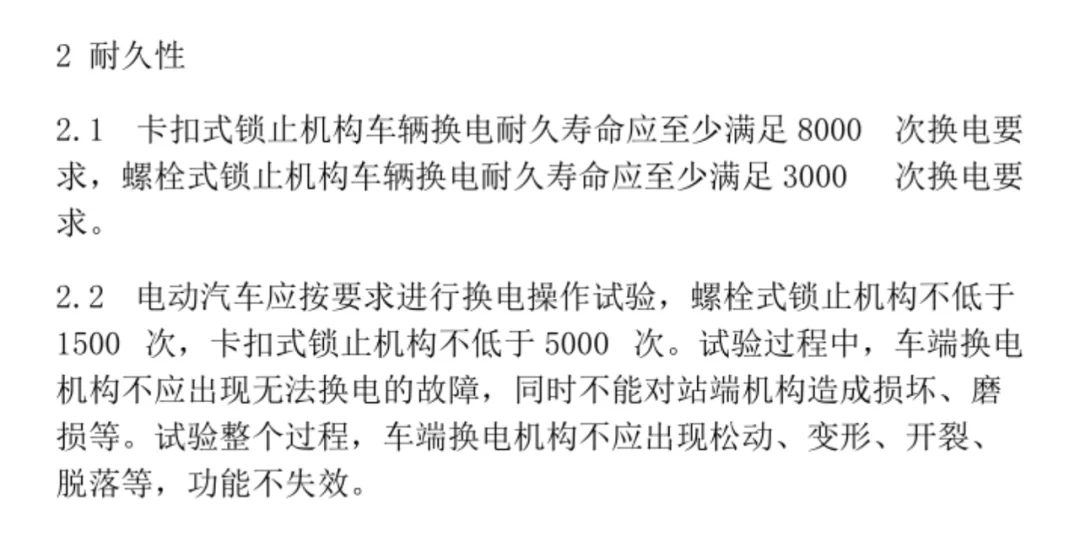
The Chinese government has established stringent durability standards for automotive-grade moving components. For example, CATL’s EVOGO uses a latch-based design that must withstand at least 8,000 swap cycles. Additionally, the mechanism must ensure that no damage or wear occurs to the vehicle-side interface during at least 5,000 swaps.
Once the vehicle-side engineering is resolved, operators must develop a corresponding solution for the swapping stations themselves. This significantly increases the overall engineering workload. For affordable pure electric vehicles, the cost burden of pursuing a battery-swapping strategy is enormous.
Another key factor deterring automakers is that, despite these substantial engineering costs, a swapping network requires massive infrastructure investment. Unlike the charging route, which benefits from extensive public charging pile networks, automakers choosing the swapping path must independently build and operate their own swapping stations.
Battery swapping is nearly as fast as refueling, but the prospect of automakers having to build their own network of swap stations one by one has kept many at bay.
Some may argue that NIO’s self-built swap station network proves otherwise. As a pioneer in battery swapping and a survivor with a halo of success, NIO deserves respect, but it should not be seen as a model for the industry.
As the saying goes, you shouldn’t take on porcelain work without a diamond drill. Remember that NIO has unprecedentedly built a premium domestic brand with an average selling price exceeding RMB 400,000, while also being listed on both the US and Hong Kong stock exchanges. Its product pricing and financial structure can support such a capital-intensive strategy.
In engineering terms, there are certainly more than just NIO among automakers capable of implementing battery swapping, but how many of them can actually sell vehicles priced at RMB 400,000?
Due to differences in chassis designs, battery swapping systems across different brands suffer from what amounts to 'species isolation,' with swap stations incompatible with each other. The industry has yet to establish mandatory unified standards for this.
All these factors combined mean that battery swapping has never achieved industry-scale adoption. This is precisely the significance of CATL entering this track as a supplier.
For automakers, the most daunting issue with battery swapping—the infrastructure investment—is now being addressed by CATL. Under the EVOGO system, CATL serves as the engineering developer of the swap system, the operator of swap stations, and the battery asset company. What was once a 'gas station' that automakers had to build themselves has become a public resource within the EVOGO ecosystem.
Furthermore, a crucial element of the CATL EVOGO system is its modular design. By combining swap blocks from one to three, it adapts to vehicles of different sizes and models. Meeting varying battery capacity requirements has been reduced to simple addition and subtraction.
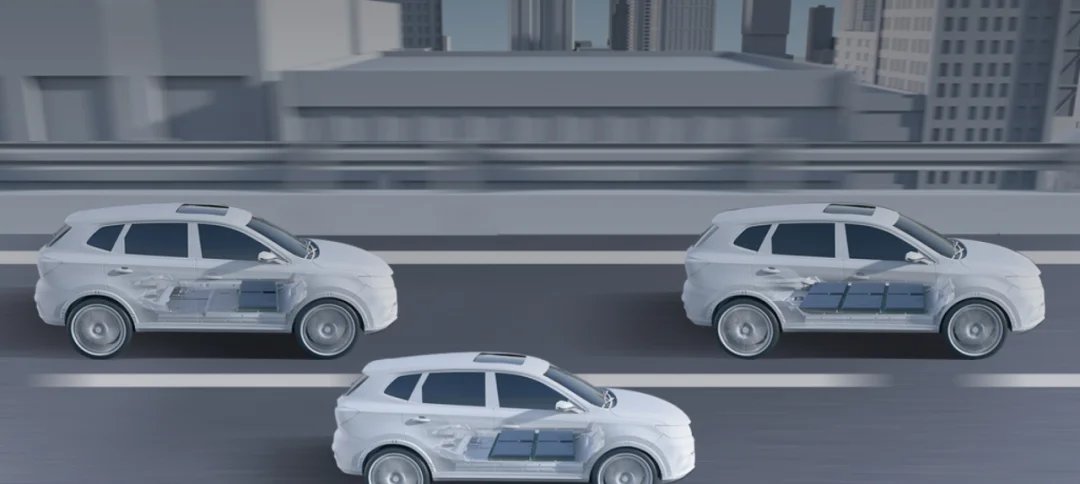
For adaptation, automakers can join the EVOGO ecosystem once they align their existing electric vehicles with CATL’s battery mounting brackets, significantly reducing the cost for original models to implement battery swapping.
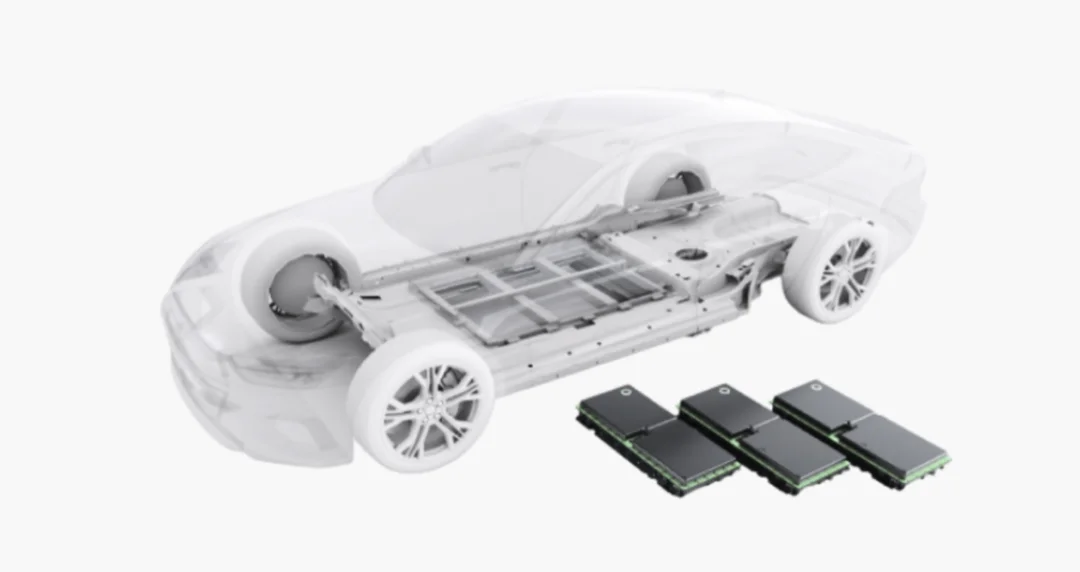
Additionally, with CATL assuming responsibility for battery assets, automakers sell only the "vehicle body," shifting all costs related to batteries to CATL. This isolates automakers from direct impacts caused by battery cost fluctuations. The ultimate benefits for automakers joining EVOGO include: deriving more low-cost, swap-capable models in a more efficient and cost-effective manner, enriching their model lineup, and boosting overall sales.
For CATL, EVOGO revenue comes from battery leasing; the more vehicles join the system, the higher this revenue stream. As a battery giant integrating upstream and downstream operations, the large volume of standardized cells within the swapping system also supports subsequent energy storage, cascading utilization, and battery recycling businesses, further perfecting CATL’s energy ecosystem.
For consumers, the vehicle-battery separation model lowers initial purchase costs. For example, the Yiqi-Benteng NAT swap-capable model launched in Xiamen is approximately RMB 80,000 cheaper under the battery leasing model than the original version, nearly half the price. Regarding used-car value retention, separating the vehicle from the battery excludes battery depreciation, and the lower vehicle price reduces the base for second-hand depreciation. Additionally, on the energy replenishment side, the experience is improved thanks to battery swapping.
This outcome appears to be a win-win-win scenario, but deeper analysis reveals idealistic elements. For CATL, EVOGO swapping still faces objective risks and uncertainties.
Within the EVOGO system, CATL provides an integrated swapping service solution, but the end users paying for this system are purchasing not just the EVOGO swapping service, but also the vehicles within that swapping ecosystem.
To attract more users, CATL must leverage its capabilities in battery swapping station coverage and actual swapping efficiency, while also collaborating with more top-tier enterprises to onboard popular models. This will be a gradual process.
03Conclusion
Operating as a third-party battery-swapping service provider is undoubtedly a significant challenge. On this business line, CATL must exert 100% effort to provide an exceptionally efficient swapping system. However, "CATL opens the door, but sales depend on individual performance." Companies joining EVOGO must deliver outstanding products to convince consumers to pay for them, thereby achieving scale. In this process, CATL’s true competitors are not other swapping networks, but every excellent new energy vehicle capable of convincing buyers to abandon battery swapping altogether.
Roughly speaking, CATL’s EVOGO faces a path where success or failure is absolute. Yet great companies distinguish themselves by accomplishing valuable yet extremely difficult tasks; they dare to lead and possess a thirst for success that far outweighs their fear of failure.
Is it any different for CATL, which has ventured into third-party battery swapping?
Written by: Reinhardt Edited by: Reinhardt