


AVATR 11 Launches, XPENG G9 Pre-Sales Open, Xiaomi Shares Autonomous Driving Demo

01Weekly Index
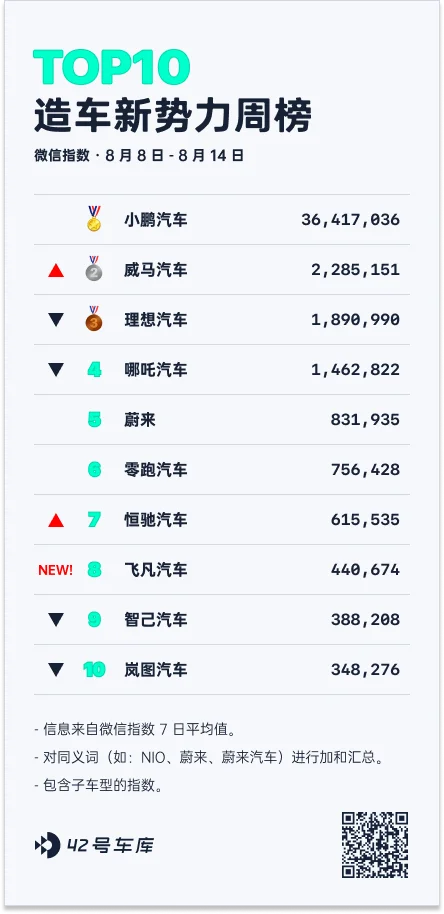
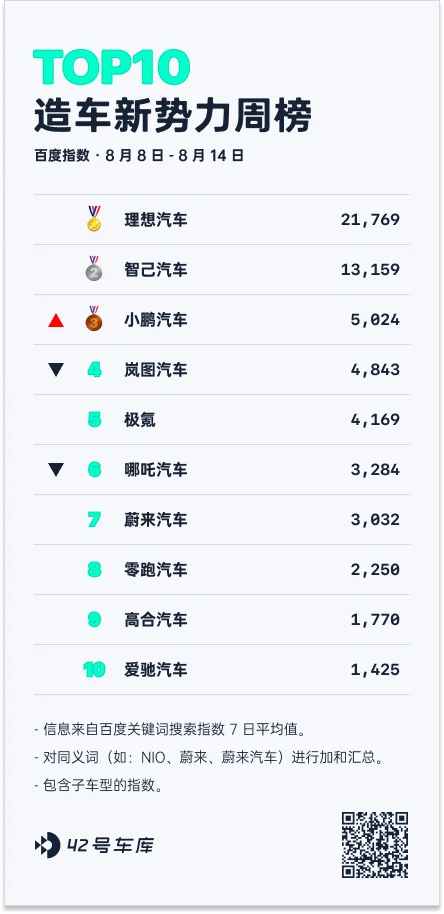
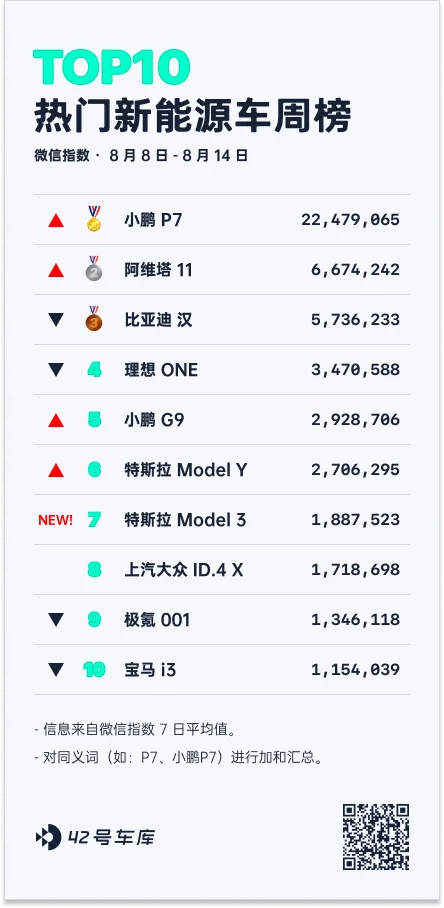
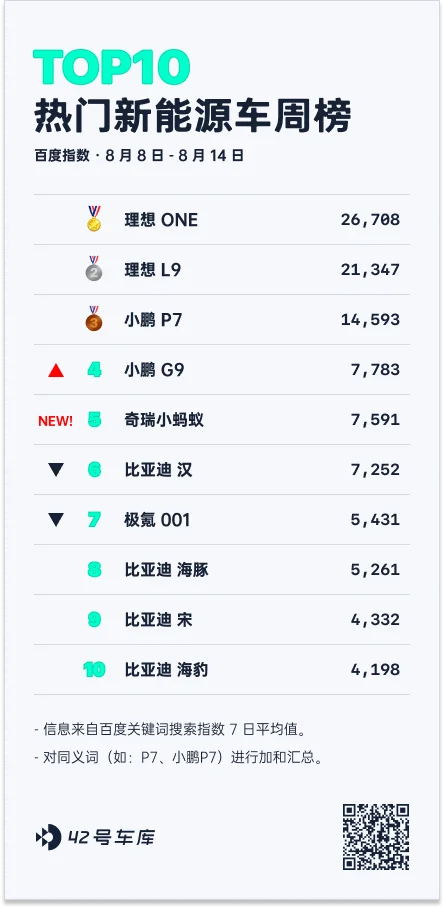
02Weekly News
AVATR 11 Officially Launched
On August 8 at 8 p.m., AVATR 11 was officially launched, and large deposit orders were simultaneously locked.
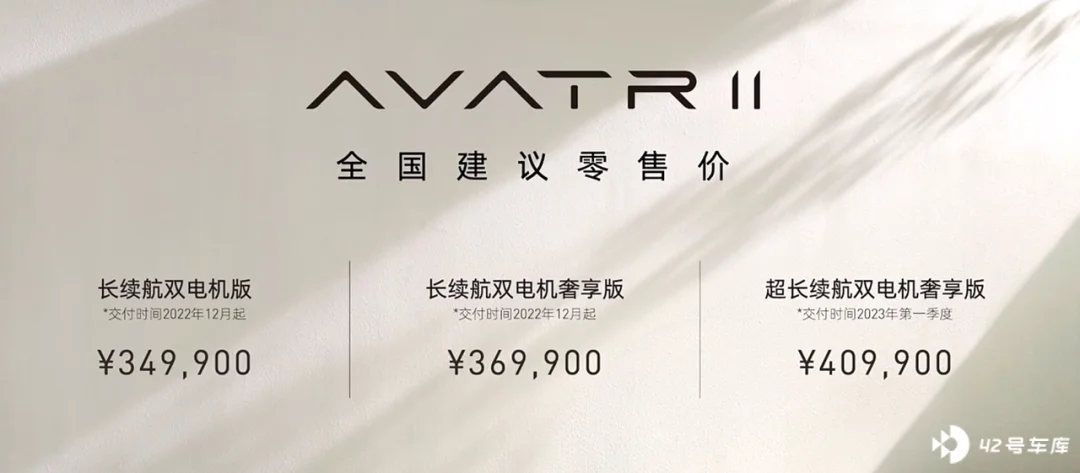
At the launch event, four configurations of the AVATR 11 were announced, with prices ranging from RMB 349,900 to RMB 600,000. The specific configurations are as follows:
Long-Range Dual-Motor Standard Edition: RMB 349,900 (delivery in December this year);
Long-Range Dual-Motor Luxury Edition: RMB 369,900 (delivery in December this year);
Extra-Long-Range Dual-Motor Luxury Edition: RMB 409,900 (delivery in the first quarter of next year);
011 Co-branded Limited Edition: RMB 600,000 (delivery in December this year).
The AVATR 11 measures 4,880 x 1,970 x 1,601 mm and is positioned as a mid-to-large SUV. Its overall visual presence appears quite large, yet it sits low for an SUV, with an exterior styling profile similar to that of the Zeekr 001.
The following is a summary of the main configuration information regarding driver assistance and overall performance:
Huawei ADS autonomous driving, equipped with the MDC810 computing platform, delivers 400 TOPS of computing power;
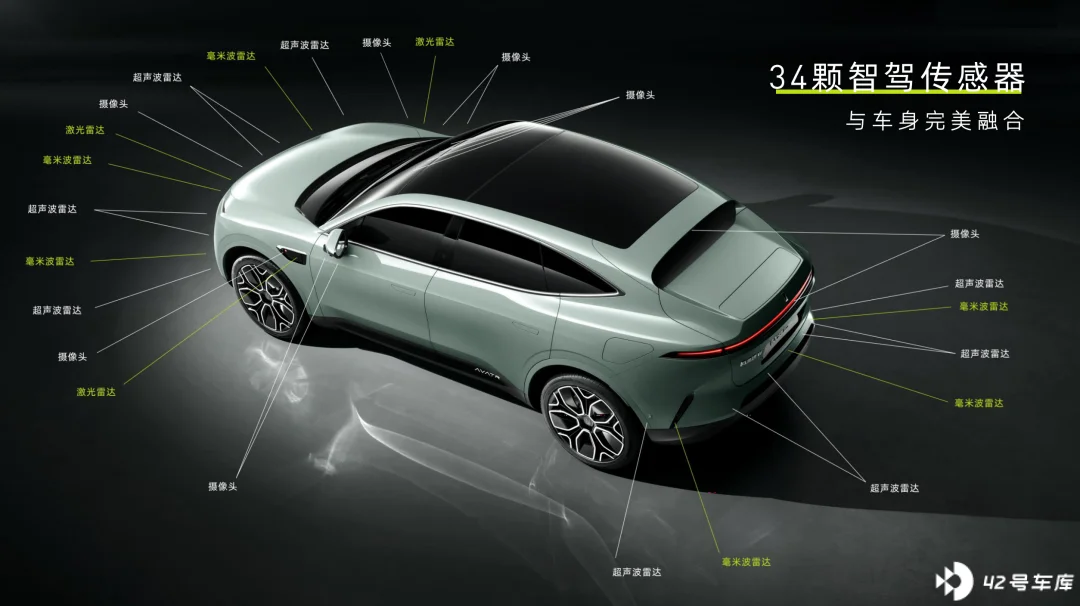
Three 96-line semi-solid-state LiDARs, high-pixel surround-view perception system;
Huawei DriveONE dual-motor all-wheel drive, maximum power 425 kW, zero-to-100 km/h acceleration 3.98 seconds;
CATL CTP 2.0 battery pack, 523 chemistry, capacity of 90/116 kWh;
750 V voltage platform, supporting 240 kW high-voltage fast charging;
RNC active road noise cancellation technology reduces total sound pressure by 3 decibels and peak sound pressure by 13 decibels.
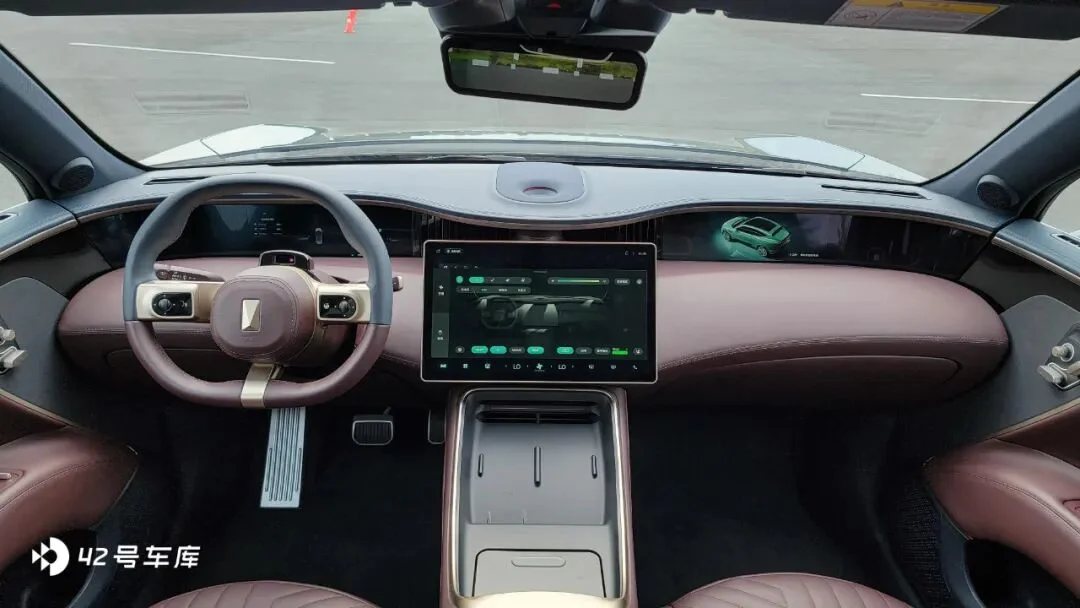
For the interior, the AVATR 11 features a symmetrical design that is relatively rare today. Centered around the central control screen, the instrument cluster and passenger display are seamlessly integrated into the cabin layout. Combined with the overall wraparound center console, this creates a strong sense of luxury for those who enter the vehicle.
Quick Review:
The AVATR 11, from the CHN Pingtai platform, leverages a powerful partnership between Huawei and CATL within the context of traditional automakers. This collaboration addresses the intelligent technology shortcomings that traditional manufacturers often struggle with, while maintaining solid mechanical fundamentals, and results in a highly competitive price point.
The cost-effectiveness of AVATR 11 lies in the fact that while everyone is engaged in an arms race and fiercely competing on vehicle configurations, it not only achieves comprehensiveness at the configuration level but also provides consumers with a more luxurious, design-oriented, and tasteful design compared to its competitors.
However, for brands represented by new forces, service experience has become an indispensable element in moving upmarket in recent years, alongside intense competition on specifications. The first batch of stores will open 12 locations across 10 cities, with plans to reach 110 stores by the end of next year. As users, we expect automakers to provide high-quality, full-lifecycle services ranging from pre-sales and after-sales to online and offline interactions. This can only be truly verified once formal deliveries begin.
Given the AVATR 11’s strong comprehensive capabilities, how well it performs in the market remains to be seen and will ultimately be proven by sales figures.
XPENG G9 Interior Revealed; Pre-sales Begin
On the morning of August 10, XPENG officially released interior images and some key specifications for the G9, simultaneously opening pre-sales.
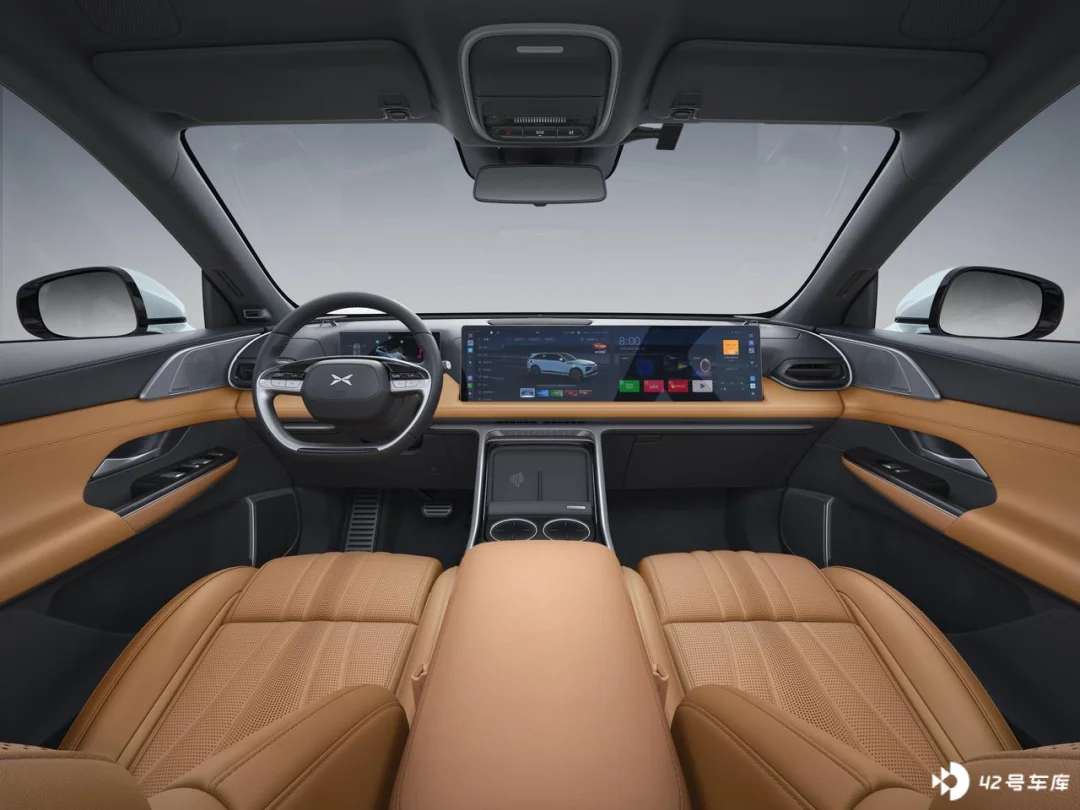
When the XPENG P7 was first launched, it faced significant criticism for its interior lacking a sense of luxury. The G9 has made substantial improvements in this regard compared to the P7, with numerous iterative optimizations to the interior design. Features that were heavily criticized on the P7, such as the steering wheel and wireless phone charging pad, have been redesigned.
G9 Interior
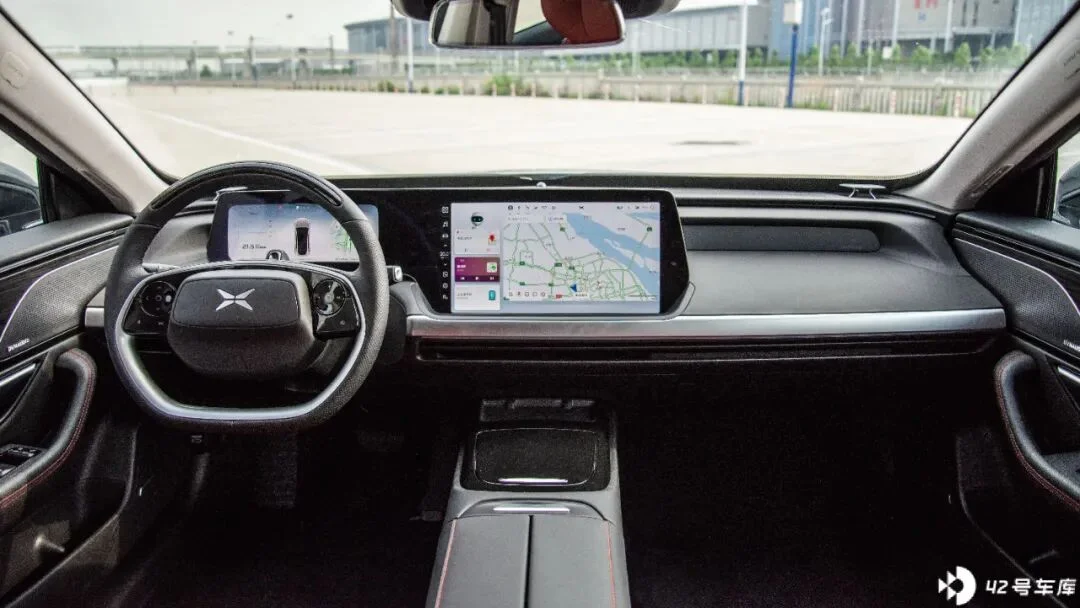
P7 Interior Regarding the infotainment system, the G9 uses the following hardware:
Instrument cluster: 10.25-inch screen, resolution 1920*720
Center screen: 14.96 inches, resolution 2400*1200
Passenger screen: 14.96 inches, resolution 2400×1200
Snapdragon 8155 chip
Regarding voice recognition, XPENG states that the G9’s performance surpasses that of the P7 thanks to the more powerful Snapdragon 8155 chip. It simultaneously supports “rapid dialogue,” “parallel commands,” “local dialogue,” and “four-zone” recognition.
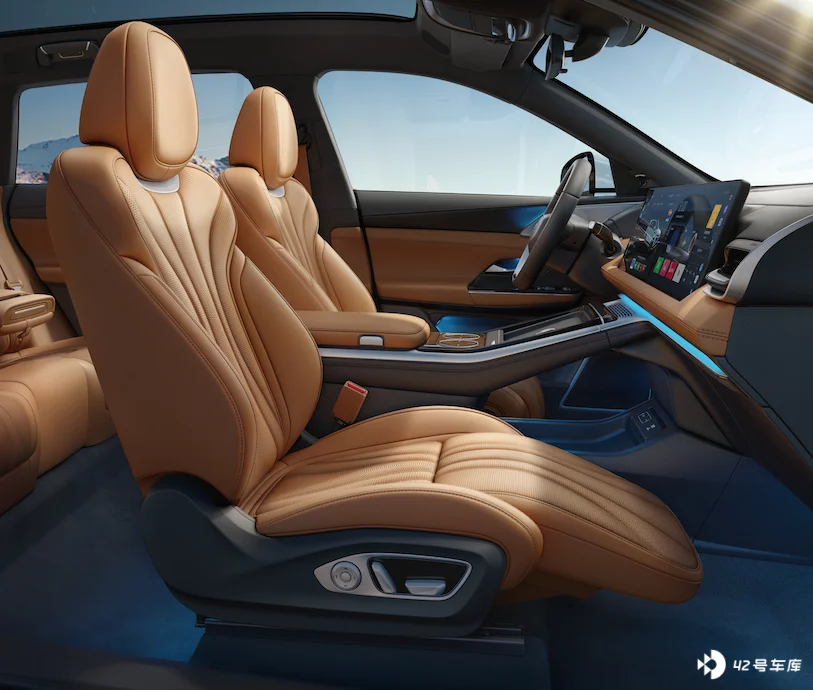
The G9 also features significant improvements in seating. Both front seats support heating, ventilation, massage, and dynamic movement functions. The passenger seat adds a leg rest, bringing its functionality on par with NIO’s Queen Passenger Seat.
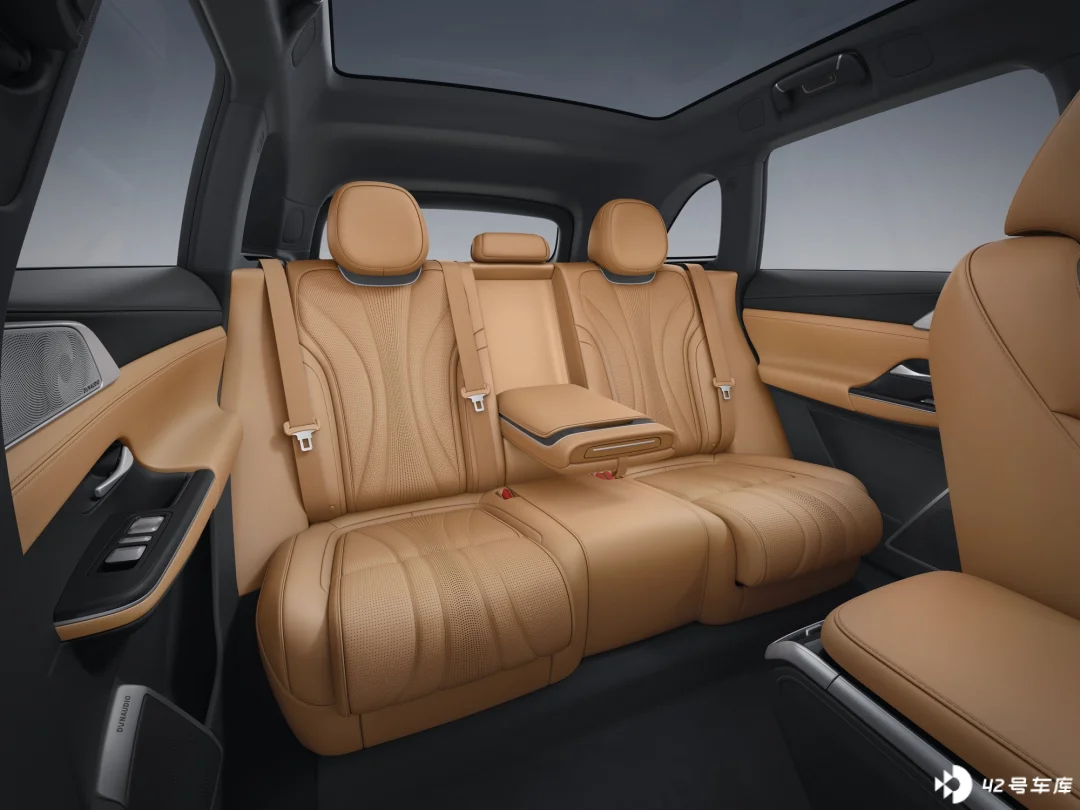
The rear seats also support heating and massage, and feature an added trunk-style thigh support for better leg support for rear passengers. The recline angle is adjustable from 27° to 37°, making these features highly suitable for long-distance travel.
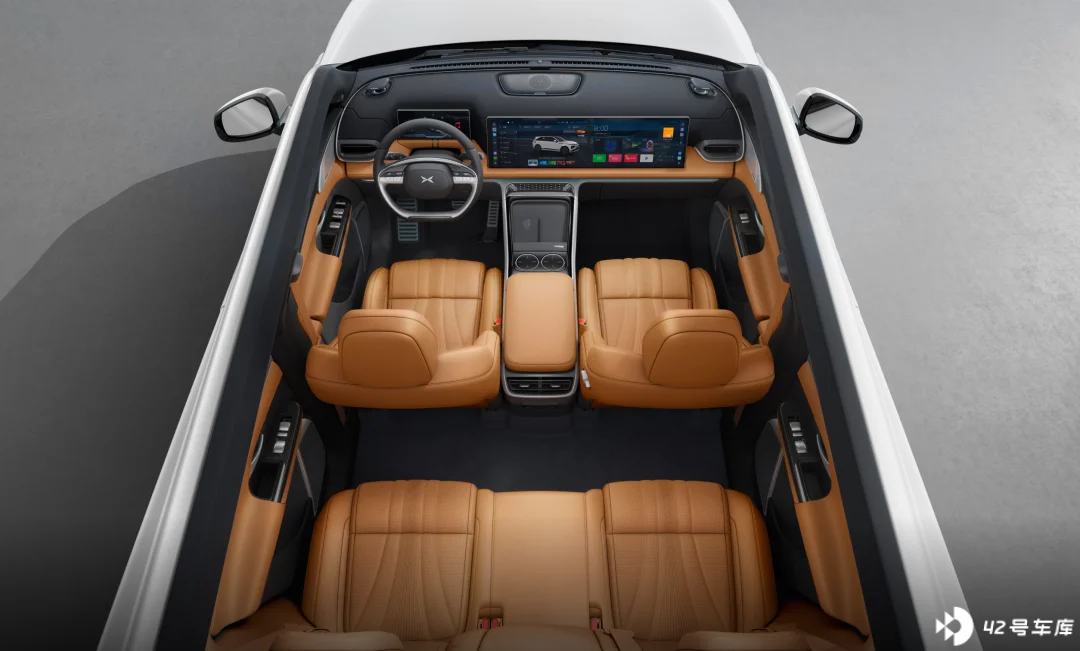
One final point to note is the G9’s audio system, which features a Dynaudio setup with 28 acoustic units, a maximum power output of 2,250 W, support for a 7.1.4 multi-channel music system, and Dolby Atmos technology.
Additionally, XPENG upgraded the G9’s headrest speakers by relocating them to the neck area. The company calls the entire system the “5D Music Cabin.” It can automatically adjust air-conditioning airflow, aromatherapy scent, and seat recline angles based on movie content to deliver a more immersive audio-visual experience.
Quick Review:
With the launches of the Li L9 and NIO ES7, attitudes toward the XPENG G9 have not faded but rather intensified in anticipation of its release.
The reason is simple: the XPENG G9’s arrival is far more than just adding another option to the market. As an automaker that led China’s new-energy startups toward self-researched smart products, we hope the G9 will bring something disruptive.
After the L9 and ES7 have both entered the fray, we urgently want the G9 to bring something new to the industry and offer users fresh choices, much like the P7 did before.
Xiaomi Releases Autonomous Driving Demo Video
On the evening of August 11, Lei Jun delivered his 2022 annual speech at the Xiaomi Autumn New Product Launch Event, sharing the latest progress in Xiaomi’s vehicle manufacturing. Although no details about the actual vehicle were revealed, a demo video of Xiaomi’s autonomous driving was released. After the event, Lei Jun posted the full version of the demo video on Weibo.
The video is divided into two parts: test footage on actual roads in Wuhan and a valet parking demonstration in an underground garage in Beijing.


Xiaomi did not disclose hardware information related to driver assistance. Because its own vehicle is still in the design and development phase, it used vehicles from other companies for testing.
As seen in the video, Xiaomi selected a city road with significant traffic flow for the demonstration, covering common scenarios such as traffic lights, unprotected left and right turns, roundabouts, and urban expressways. The valet parking demonstration was also conducted in the Yizhuang Science Park, an underground garage that is not particularly spacious. This indicates that Xiaomi has considerable confidence in this system.
Finally, Xiaomi made a bold claim to enter the industry’s first tier by 2024. Currently, Xiaomi’s first-phase plan includes 140 test vehicles, which will be deployed for testing nationwide.
Quick Review:
From the entire demonstration video, it is evident that Xiaomi’s autonomous driving R&D progress is very fast. From Lei Jun’s official announcement of car manufacturing to now, less than a year and a half has passed, and the actual R&D time may be less than one year. In these simulated daily normal driving scenarios shown in the video, demonstrating such autonomous driving capabilities means the overall R&D progress is indeed very rapid.
However, the video also reveals shortcomings in the current system. For instance, the following distance at traffic lights is too large and requires gradual adjustment to an appropriate position. Acceleration from a stop is slow, making the vehicle susceptible to being cut off by others. Additionally, the system does not promptly navigate around vehicles obstructing the lane.
As a newcomer, Xiaomi’s demonstrated autonomous driving capability is currently at a medium level, falling short of the industry's top tier. By late 2022, leading automakers were expected to officially open urban navigation-assisted driving features. By 2024, numerous manufacturers will roll out this functionality. We will wait and see what results Xiaomi delivers by then.
Zeekr 009 Appears in MIIT Bulletin
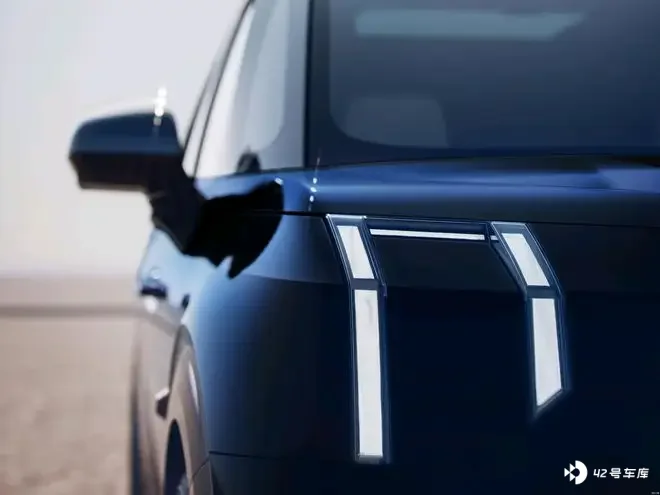
On August 11, Zeekr’s new model, the Zeekr 009, appeared in the 360th batch of the 'Road Motor Vehicle Production Enterprise and Product Announcement' issued by the Ministry of Industry and Information Technology (MIIT). Compared to the dark paint version previously announced by the company, this version lacks the optional glossy grille, resulting in a stronger front-end visual unity. In contrast to many MPVs that mimic Japanese designs, the Zeekr 009 demonstrates significantly higher originality while maintaining distinct road presence.
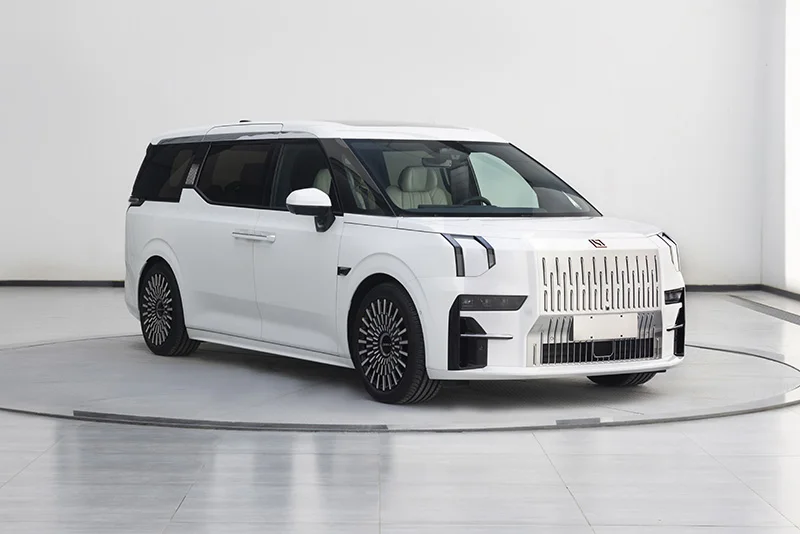
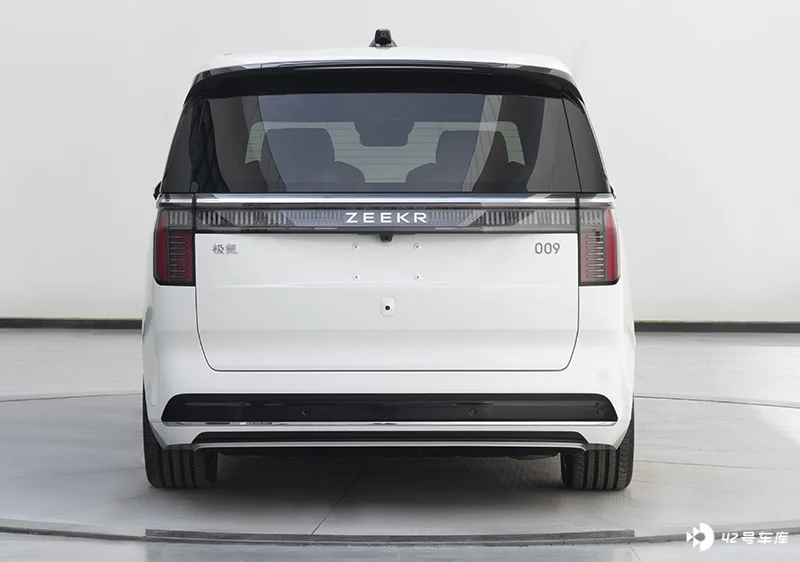
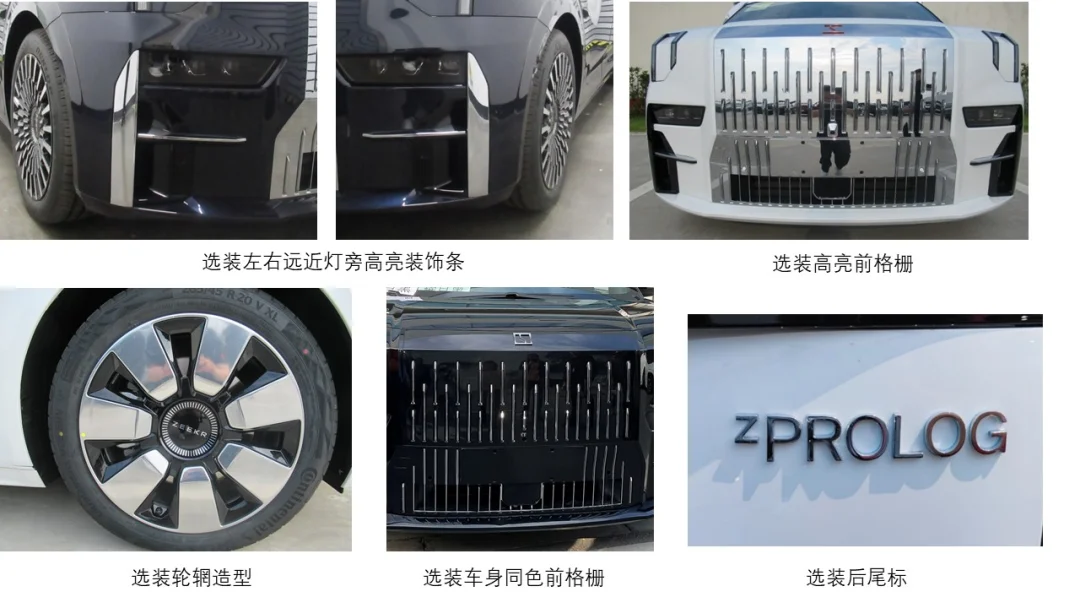
Optional equipment includes air suspension, high-gloss decorative strips beside the headlamps, a high-gloss front grille, and various wheel designs.
The basic specifications of the Zeekr 009 are as follows:
Overall dimensions (mm): Length: 5209; Width: 2024; Height: 1856/1867
Wheelbase (mm): 3205
Curb weight (kg): 2830
Maximum speed (km/h): 190
Tire specifications: 265/45R20
Power (kW): Front 200 / Rear 200
Quick Review:
The Zeekr 009’s overall dimensions exceed those of the MPV veteran Aierfa (4,975/1,850/1,945 mm), suggesting a significant improvement in interior space, particularly for the third row. For an MPV, space and comfort are what potential customers value most.
It also delivers strong performance as an electric vehicle. Even with a 120 kWh battery, it can still achieve acceleration in under four seconds, making high-speed overtaking easier. The most suspenseful aspect currently may be its price. The VOYAH Dreamer is currently priced starting at RMB 369,900; the Zeekr 009 is estimated to have a similar price point, which is also the best-selling price range in the current MPV market.
Written by: JOJO Edited by: Reinhardt