


Tesla Unveils Cybercab and Robovan at 'We, Robot' Event
Is Driverless Autonomous Driving a Tesla Revolution or a Gimmick?
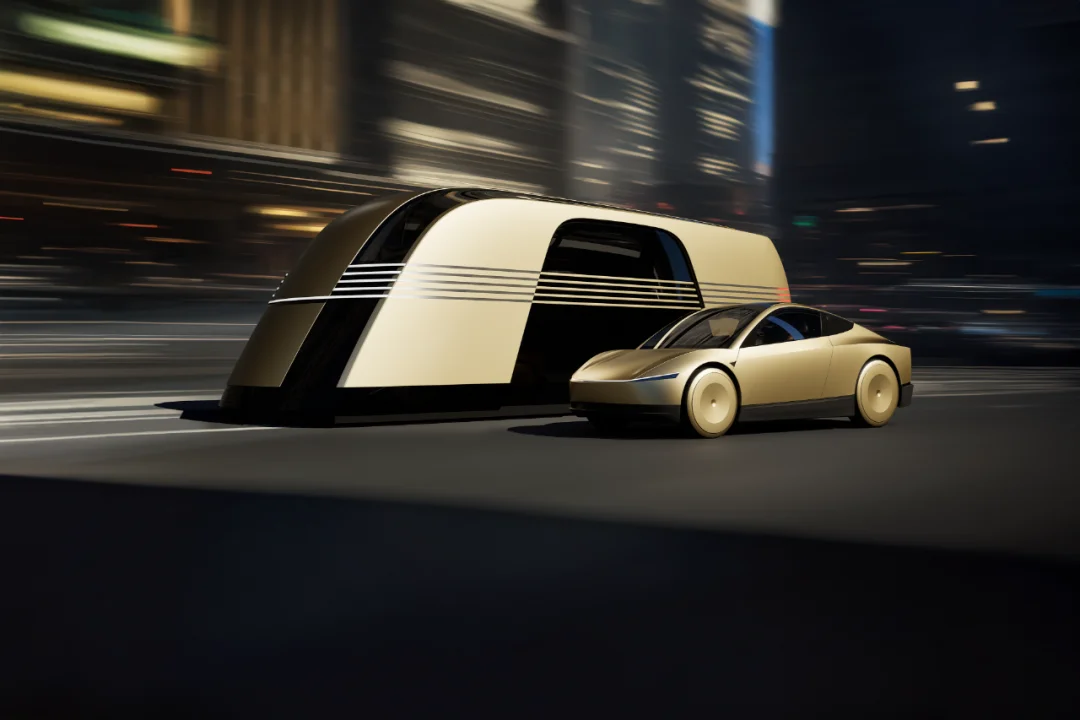
On October 11, Beijing time, Tesla's "WE, ROBOT" event officially took place after an unexpected 50-minute delay. Two new vehicles were unveiled at the event: the driverless taxi Cybercab and the autonomous multi-purpose vehicle Robovan, alongside a Tesla Bot humanoid robot capable of dancing.
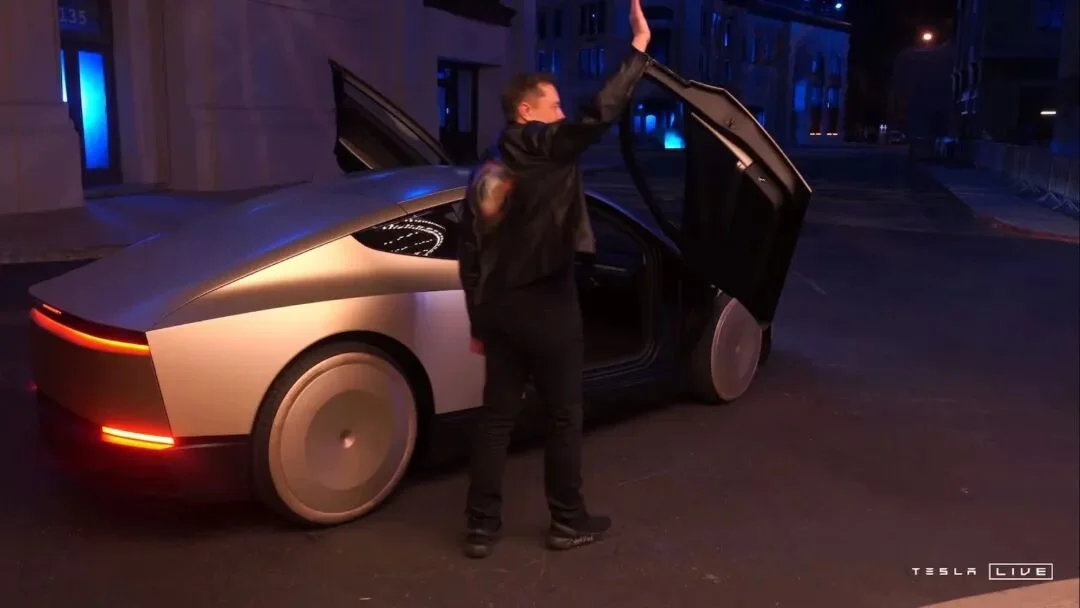
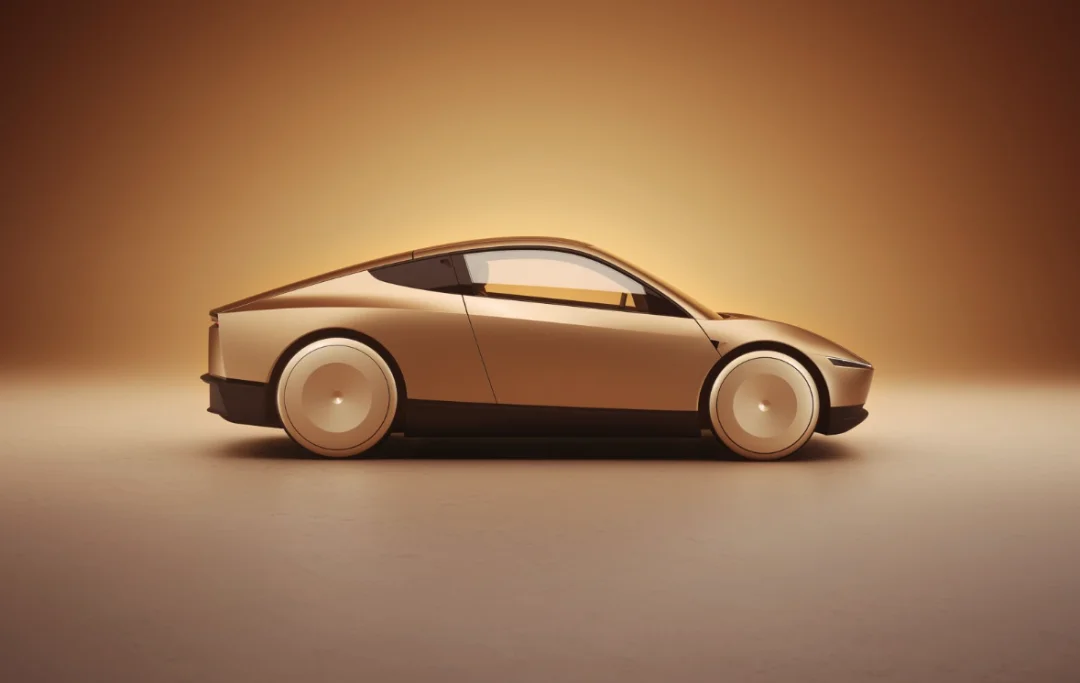
At the start of the event, Elon Musk rode in a Cybercab to the venue. The butterfly doors opened automatically, and he entered a vehicle with no steering wheel or accelerator/brake pedals. The Cybercab drove through several streets before parking next to the stage. This is Tesla's driverless ride-hailing solution: a two-door, two-seat vehicle with a large trunk, costing USD 30,000 and operating at USD 0.2 per mile.
The second driverless vehicle of the day was the Robovan, described as an "American-style highway high-speed rail" capable of carrying 20 people. The cabin features side doors in the middle section, with fourteen seats and six standing spots inside. The finale product of this morning's press conference was the Tesla Bot humanoid robot. This time, it stepped out of the factory; not only could it dance on site, but it is also expected to enter people's homes in the future, and can even be transported by the Robovan for remote rescue operations.
Building on the products mentioned above, Elon Musk painted a series of highly futuristic visions. With the unveiling of these products and the gradual unfolding of these scenarios, images once seen only in science fiction films appear to be drawing closer to reality, and Tesla has once again created moments as thrilling as those during the launches of the Roadster, Model S3XY, and Cybertruck.
However, at this press conference, Elon Musk focused most on grander visions; he still has not provided a clear answer on how to ground these plans in reality.
01Cybercab: Tesla’s Next Big Move
In August 2022, Elon Musk passionately told Tesla executives at a meeting that Robotaxis must be designed cleanly—meaning no steering wheel, no brake or accelerator pedals. He said, "We have to take this risk. If we fail, it’s on me. But let’s not build half-measures. On autonomous driving, we need to go all in."
The results show that the gamble of that year has indeed paid off with the impressive debut of Tesla’s Robotaxi—the Cybercab.
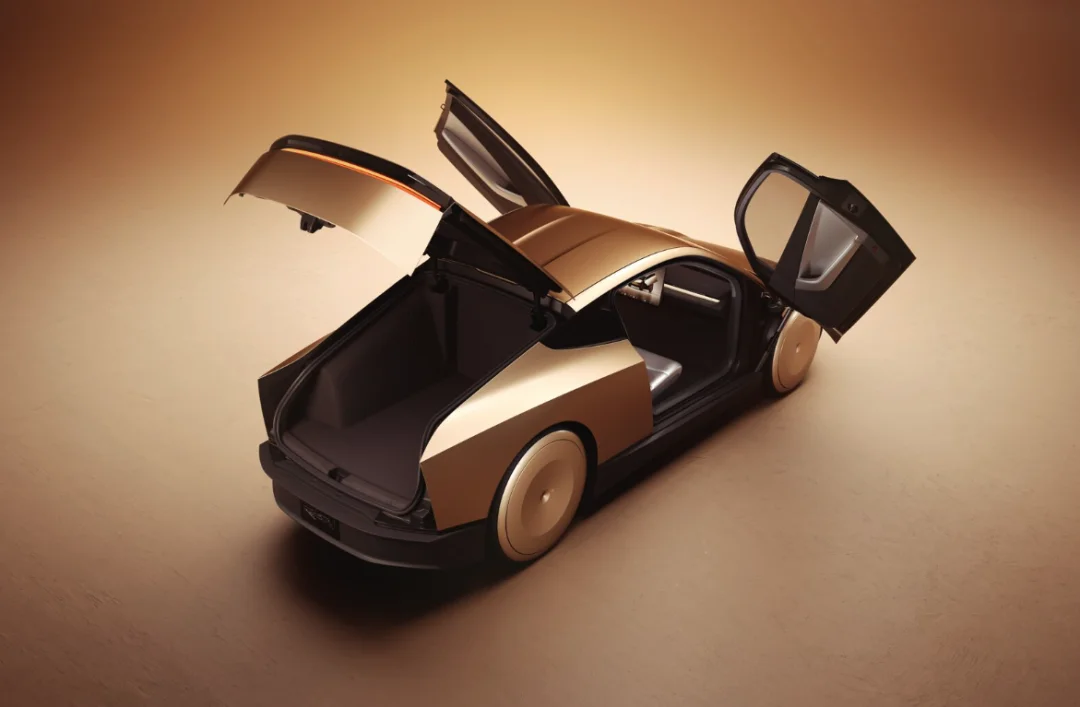
In terms of product form, the Cybercab is a two-door, two-seater with a fastback silhouette. Its lines are extremely minimalist, similar to the Cybertruck, especially at the rear. The doors use a butterfly-style design, which looks particularly cool. Additionally, regarding energy replenishment, Elon Musk stated that it supports wireless inductive charging.
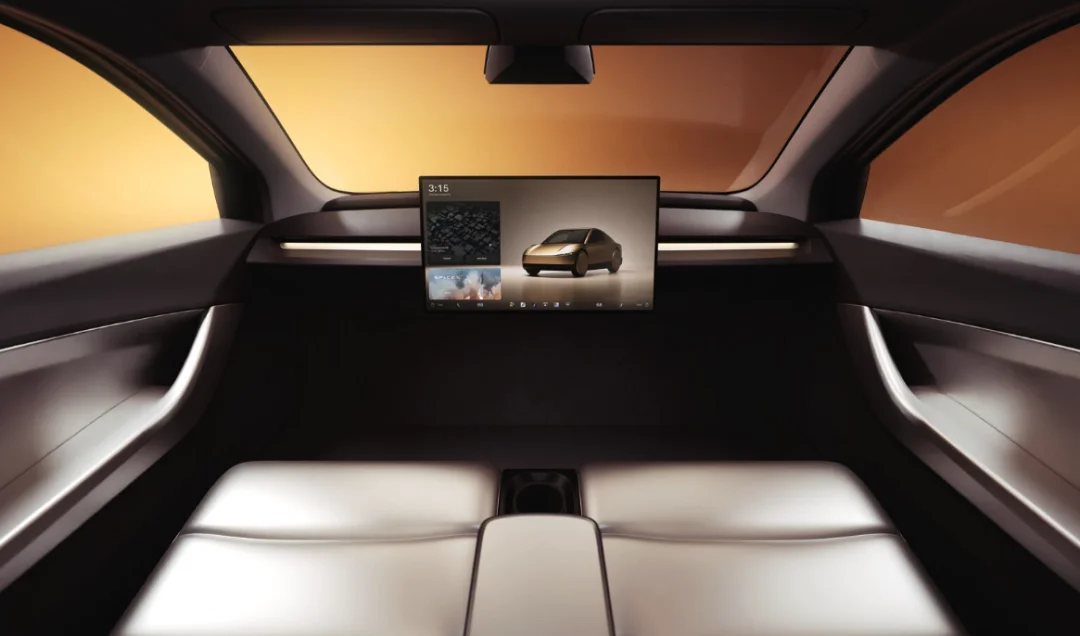
More importantly, on the Cybercab, Tesla has truly implemented what Elon Musk said in August 2022: removing the steering wheel and brake/accelerator pedals. The entire dashboard features only a central control screen.
Because Tesla boldly removed the steering wheel and brake/accelerator pedals from the Cybercab, the vehicle may face significant risks in its initial market entry phase. For example, during the presentation, Elon Musk himself mentioned challenges related to government regulation.
Generally, technological development precedes legal frameworks. As a result, the highly aggressive Cybercab must contend with lagging regulatory frameworks as it moves toward deployment.
Elon Musk stated that Tesla is first engaging with U.S. regulators, while also monitoring regulatory developments in other countries outside the United States.
Beyond regulatory hurdles, gaining user trust in the Cybercab's capabilities remains a significant challenge.
After all, the Cybercab is a product designed to be driven by Tesla's full self-driving technology, and its traffic efficiency, safety, and other aspects still require long-term validation. This not only requires Tesla to achieve genuine full self-driving capabilities but also demands gradual user acceptance and trust through communication.
Tesla is currently accelerating R&D for full self-driving capabilities. According to Elon Musk, full self-driving will first become available in Texas and California next year.
A key reason for pursuing such high-risk development of the Cybercab lies in the substantial commercial opportunity Elon Musk sees in it.
Elon Musk indicated that the vehicle cost for the Cybercab would be around USD 30,000 (approximately RMB 210,000), while user usage costs would gradually drop to USD 0.2 per mile (approximately RMB 1.4). In terms of operations, he compared managing a large fleet of Cybercabs to one person herding a flock of sheep.
Notably, Elon Musk also highlighted the significance of Cybercab in terms of computing power.
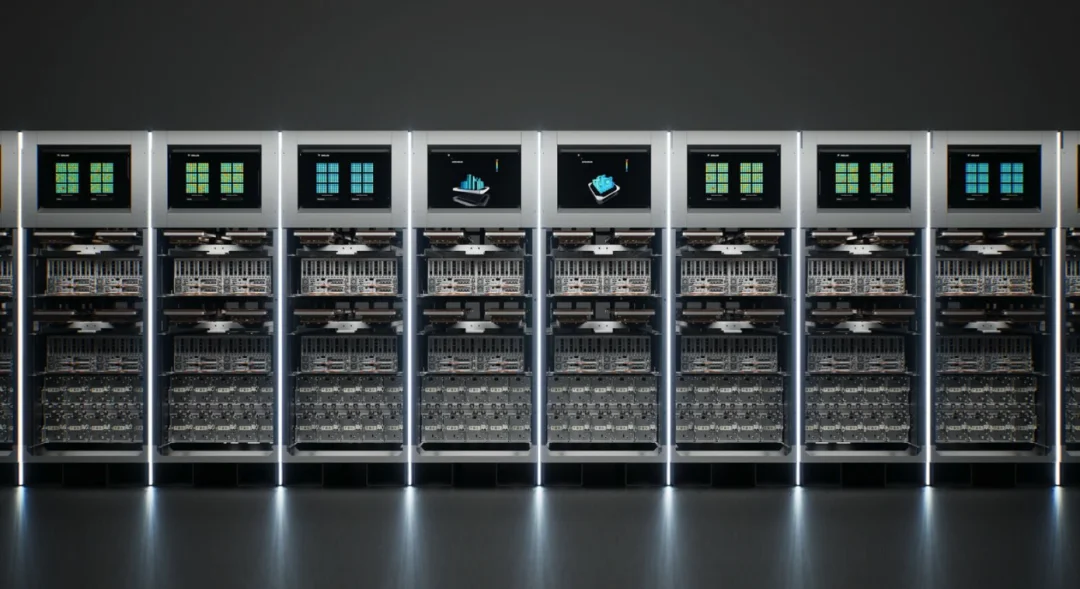
Elon Musk stated that Cybercab will be equipped with Tesla's AI5, providing 1 kW of inference computing power per vehicle. If each vehicle operates for 50 to 60 hours a week, the remaining time can be utilized as distributed inference resources. Assuming there are 100 million vehicles, this would aggregate to 100 GW of computing capacity, representing a massive resource.
In addition to directly operating Cybercab, Elon Musk encouraged Tesla owners to share their vehicles.
Elon Musk noted that while owning a car involves numerous expenses such as purchase price, insurance, and parking, the average usage frequency is only 10 to 100 hours per week. For most of the time, the vehicle remains idle. With full autonomous driving, owners could increase utilization by sharing their cars, extending weekly usage beyond 100 hours, potentially reaching 160 hours. This would enhance the value experience by five to six times compared to previous levels.
Considering factors such as user needs, vehicle costs, user usage costs, and management expenses, Elon Musk believes that Cybercab and full autonomous driving will help Tesla establish a new business model.
Beyond business models, Elon Musk painted a future scenario enabled by full autonomous driving: idle vehicles would be fully utilized, and parking lots could eventually transform into parks.
Based on his current vision, Elon Musk is highly optimistic about Cybercab. Regarding future plans, he stated that Tesla will mass-produce Cybercab by 2026. However, he did not provide detailed descriptions of how Tesla will specifically operate Cybercab at that time.
Tesla’s all-in commitment to the Robotaxi market stands in sharp contrast to the mixed views held domestically.
XPENG Chairman He Xiaopeng posted on Weibo that XPENG will launch a highly competitive Robotaxi by 2026. Unlike Tesla, however, XPENG will not operate the service itself but will work with partners to drive the change.
During Li Auto’s Q2 earnings call, co-founder Ma Donghui stated that once L4 autonomous driving is realized, demand for ride-hailing and taxi services would drop significantly, suggesting the Robotaxi market requires more time to fully understand.
NIO Chairman William Li said during a live stream that NIO firmly refuses to enter the Robotaxi business because he finds the idea uninspiring. He argued that intelligent driving should not take jobs away from taxi or ride-hailing drivers, who work long hours for modest earnings.
02Tesla’s Newcomers and Veterans
In addition to the headline Cybercab, Tesla also unveiled its latest driverless vehicle designed for public transit or freight transport: the Robovan. Meanwhile, its humanoid robot, whose name has been changed from Optimus to Tesla Bot, made another appearance.
Let’s start with the Robovan.
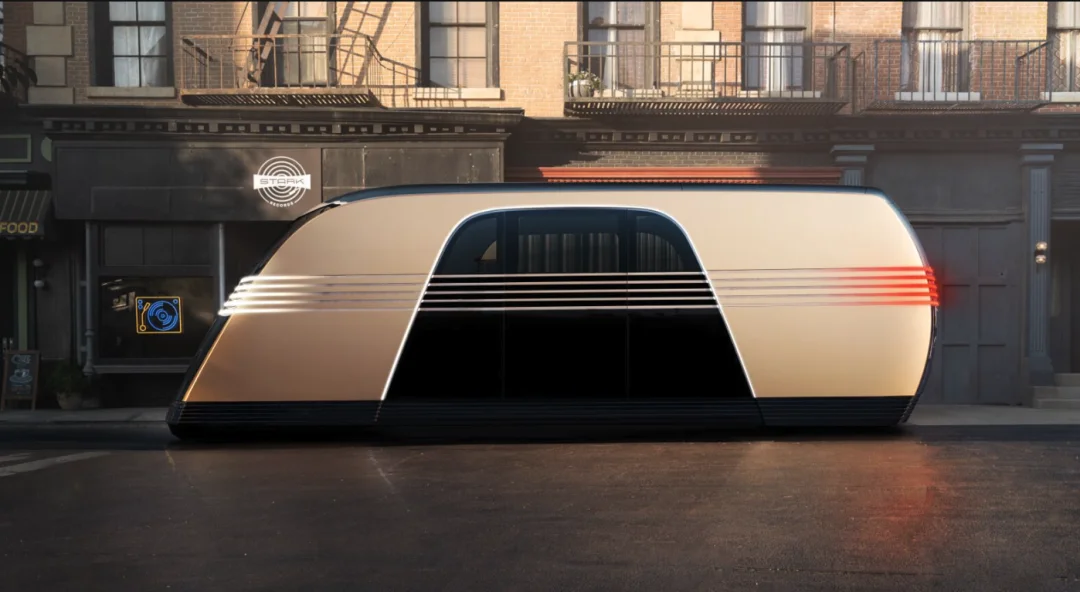
Robovan also features a very sci-fi appearance and a minimalist interior. Its doors open from the middle, and it has 14 seats inside. Elon Musk stated that Robovan can make urban travel more efficient, carrying up to 20 people, with user travel costs of approximately 5-10 cents per mile (currently about RMB 0.35-0.71).
Next, let’s look at the Tesla Bot.
During this presentation, the Tesla Bot demonstrated new capabilities, such as serving beverages to guests and playing rock-paper-scissors with people. Previously, the Tesla Bot had already completed some simple battery production tasks in Tesla factories.
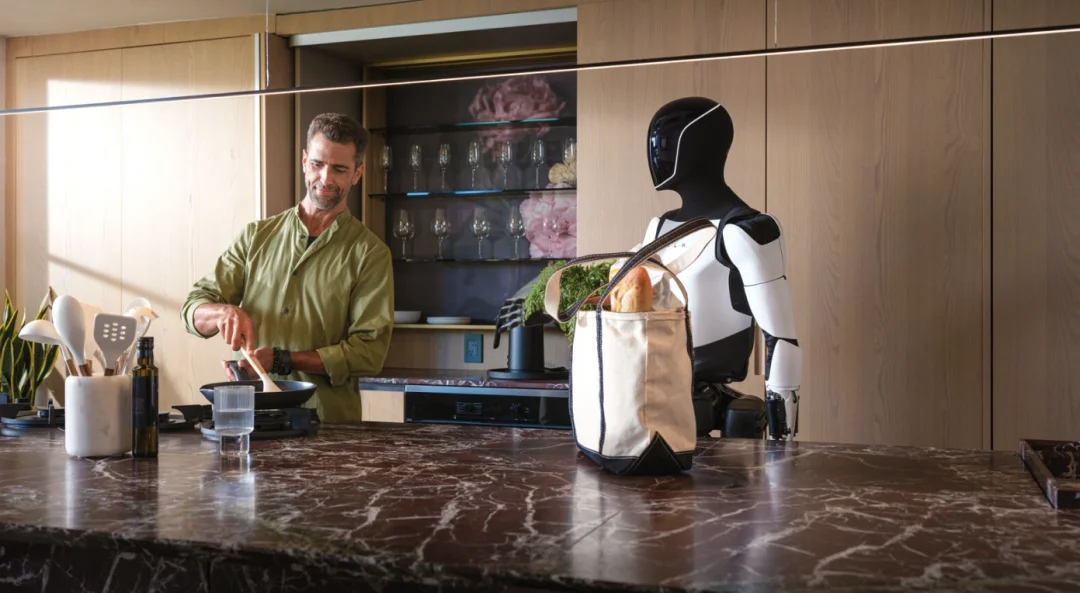
Based on its current performance, the Tesla Bot is evolving rapidly: from initially performing only mechanical routines, to handling relatively mechanical work tasks, and now flexibly serving humans.
For the future application scenarios of the Tesla Bot, Elon Musk is also optimistic. He stated that the Tesla Bot will eventually be able to handle daily household chores, such as grocery shopping, watering plants, and walking dogs. Once mass production scales up, Tesla could provide the Tesla Bot to users at a price of USD 20,000–30,000 (approximately RMB 140,000–210,000).
It should be noted that while Elon Musk believes the Tesla Bot can bring many possibilities, he also acknowledges potential risks. Regarding this aspect, Elon Musk stated that the company must first address 80% of the risks associated with digital superintelligence.
Interestingly, based on the Robovan and the Tesla Bot, Tesla depicted a scenario where a Tesla Bot rides in a Robovan to change a vehicle’s tire. However, beyond this scene, what is more significant is that autonomous driving, the Robovan, and the Tesla Bot not only share substantial overlap in underlying hardware and software technologies but also have interoperable application scenarios, ultimately creating opportunities for greater commercial possibilities.
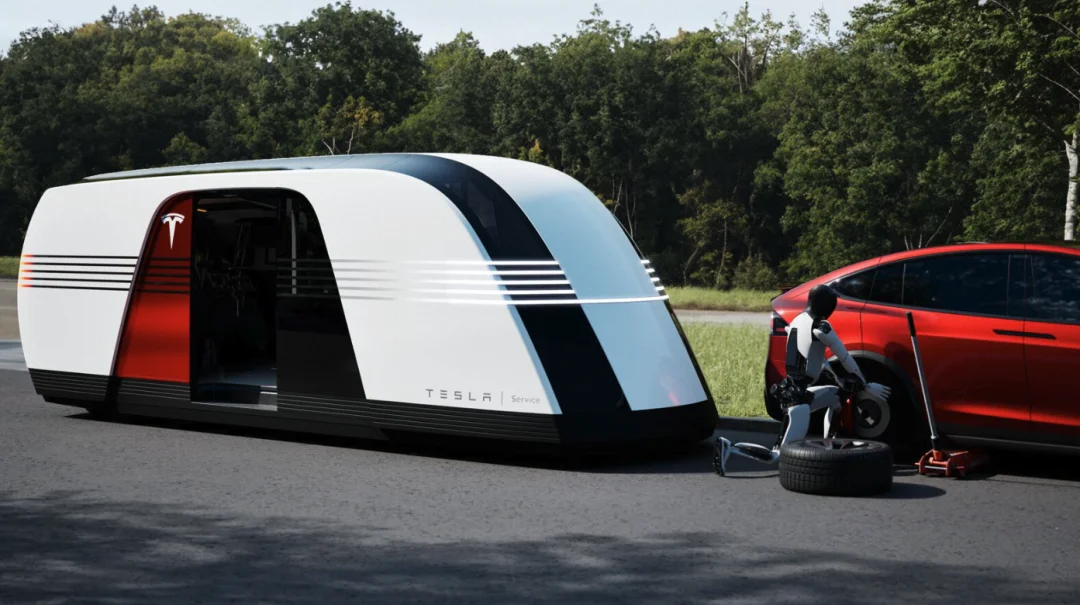
Overall, the innovations stemming from the Robotaxi, Robovan, and Tesla Bot initiatives are both imaginative and grounded. They not only create diverse possibilities for Tesla itself but also open up new prospects for future social life.
During Tesla’s Q2 earnings call, Elon Musk stated that the company was then positioned between two major growth waves: one driven by global expansion starting with the Model 3 and Model Y, and the other fueled by the development of Tesla’s autonomous driving technology and the launch of related new products.
Judging from this "WE, ROBOT" event, Tesla may have already laid the groundwork for its next wave of growth.
03「WE ,ROBOT」
"WE, ROBOT" is a tagline Tesla used to build anticipation for its Robotaxi launch event; it has now been placed in the most prominent position on Tesla’s official website homepage.
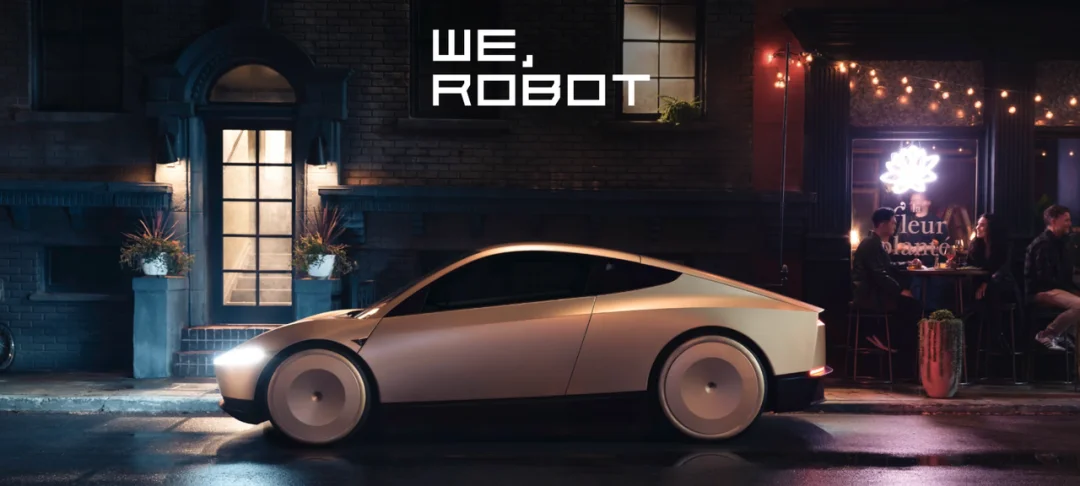
As the phrase "WE ROBOT" suggests, Tesla is increasingly becoming a robotics company deeply rooted in AI, offering products such as vehicle-shaped robots and humanoid robots. This shift serves as the core support for Tesla's market valuation, which far exceeds that of established global automakers like Toyota and Tongyong, even though its current main products on sale remain electric vehicles.
The direction of Tesla’s recent moves reveals a dual strategy. With no new models hitting the market, Elon Musk is crafting more compelling narratives and painting grander visions to keep Tesla exciting, thereby sustaining its market capitalization and influence.
On the other hand, Musk is orchestrating a larger strategic move for Tesla—aggressively investing in AI and autonomous driving to spawn new business models and build an immense commercial empire, with ambitions to even change the world.
Undoubtedly, executing such a grand strategy requires Tesla to navigate risks from both internal and external fronts, including passenger safety, technological maturity, legal frameworks, and the clarification of business models. However, for Elon Musk, who thrives on adventure and drama, these challenges may well be part of the appeal.
At present, whether Tesla’s Robotaxi initiative represents a genuine revolution or merely a gimmick remains to be seen through continued observation.
However, it is undeniable that as Tesla continuously enhances its autonomous driving capabilities and steadily advances the entry of FSD into China, domestic automakers are sharpening their tools and preparing for battle. A fierce competition of comprehensive strength, sparked by Tesla and centered on AI and autonomous driving, appears to be drawing closer.
Written by: Isaiah | Edited by: James