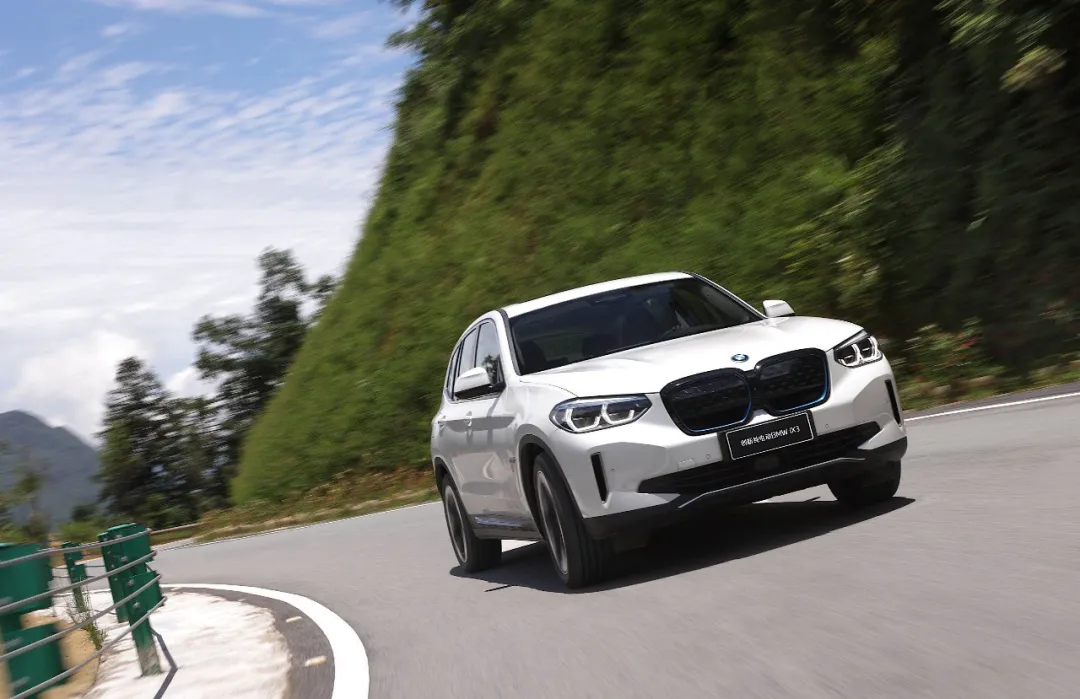
Introduction:
As a newly launched car, BMW iX3 has achieved remarkable results, which is not easy. It is believed that with more and more users receiving the product, and as its strength becomes more deeply entrenched in people’s hearts, BMW iX3’s performance will be even more outstanding.
During the 2021 BMW iX3 Expedition Tour event, senior executives of BMW Brilliance emphasized that since its official launch at the end of last year, innovative BMW iX3s have maintained steady sales growth, with sales in recent months exceeding 1,000 units, showing remarkable development momentum.
Due to the continuous tracking of BMW iX3’s market performance, the senior executive’s remarks immediately resonated with me.
According to the insurance data, from March to May this year, the insurance number of BMW iX3 has exceeded 1,000 units. Why do we call it a significant number?
It is because before the launch of BMW iX3, other traditional luxury brand electric cars had extremely poor performances, selling few, ranging from a few to a few hundred units per month, never exceeding 1,000 units. Therefore, BMW iX3’s monthly sales exceeding 1,000 units for three consecutive months is indeed a remarkable achievement.
To investigate further, we conducted an offline survey, and according to Sales Consultant Cai Chenlei of Shanghai Qibao BMW 4S Store, they sell about 150 vehicles per month, and BMW iX3 accounts for twenty to thirty vehicles, showing a great demand for the model.
As a newly launched car, BMW iX3’s remarkable achievements are not easy, and as it gains more popularity among users, its outstanding product power will become even more deeply ingrained in people’s minds.
At a time when new and old forces are competing in the field of electric cars, BMW iX3’s success is worth the industry’s attention. Why is BMW iX3, the latest to arrive, the best-performing traditional luxury brand electric car? Is its success accidental, or is it inevitable?
Also, will the success of BMW iX3 be a signal of counterattack for traditional luxury brand electric cars?
Cai Chenlei believes that “As a luxury car brand with a history spanning over 100 years, BMW’s accumulated advantage in the automotive field will greatly benefit itself. Every employee of BMW has confidence in the brand, and they firmly believe that BMW will eventually become the true leader in the field of electric cars.”
Regardless of fuel cars or electric cars, the essence of luxury cars remains unchanged
In fact, if we disregard the talk of new and old forces and focus on the product angle, the issue becomes much simpler.
Luxury cars, whether fuel or electric, have never changed their definition; they are outstanding products. For electric cars, how to make their product power more prominent is achieved through early planning, meticulous construction, but not a temporary patchwork.
The accumulation of experience is the key to satisfying luxury’s definition.Therefore, we can see that the well-performing car models are carefully crafted premium vehicles designed for the market, while the electric car models solely created for earning points are quite miserable.
In such a natural law and development logic, the competition between luxury electric car brands is much clearer, explaining why some brands underperform while others thrive.
From January to May, the cumulative number of BMW iX3 insurance policies reached 5245, ranking 9th in all pure electric SUV sales rankings and being the only traditional luxury brand electric car on the list.
In a forgotten track of traditional luxury brands, BMW iX3 has broken through on its own, bringing comfort to those who are struggling and issuing warning signals to the newcomers.
Yes, why is it that BMW iX3 is the first traditional luxury electric car to achieve a breakthrough? Why not the Mercedes-Benz EQC? Why not the Lexus UX 300e?
Many people do not know that in the past decade, BMW has been one of the top three new energy brands globally and the best-performing traditional luxury brand.
According to EVS’s annual sales rankings for new energy car companies, BMW has basically remained in the top 3, becoming one of the top 5 and only two luxury brands with Tesla. At that time, BMW’s two iconic new energy car models were the famous i8 and i3.
In terms of the accumulation of core technologies for new energy, BMW has already established itself as a leading company, while other brands had to purchase them temporarily to cope with the market. On one hand, they persist in self-research, on the other hand, they have fruitful achievements, such as being one of the few companies that develop battery cells, while the electric propulsion technology has also evolved to the fifth generation.
From the explosion to the settlement of the Chinese new energy market, as well as the uniqueness of BMW iX3, it tells us that the development of things has its own laws, and it is impossible to succeed without thick accumulation.
iX3– A True Luxury Electric Car
The technical skills of BMW are evident in the iX3.
The eDrive electric drive technology employed in the BMW iX3 has now evolved to the fifth generation, which is unmatched by all other luxury brands.
Here is a funny story. An engineer in the electric drive field once pointed to the electric drives of the Mercedes-Benz EQC (purchased from ZF) and BMW iX3 (self-developed) and asked me, “Is the Mercedes-Benz EQC considered a luxury electric car?”The BMW iX3 is the first in the industry to adopt an excitation motor, which has higher power (up to an astonishing 210 kW for a single motor) and lower weight compared to the more commonly used permanent magnet synchronous motors in current electric vehicles.
Thanks to this highly efficient driving efficiency, the BMW iX3 weighs only 2.2 tons among mid-size pure electric SUVs, and its overall energy consumption reaches a super low level of 16.7 kW per hundred kilometers.
Let’s take a look at the actual test results.
In terms of driving methods, like many electric vehicle test drives, the BMW iX3 test drive also included energy consumption testing. However, unlike in the past, this test was a real-world driving scenario that covered various road conditions including highways, city roads, and mountain roads. The test required completing the whole journey within a certain amount of time, so driving at a slow pace was not an option.
After discussing with the accompanying teacher Cui Zhiqiang, we decided to drive normally, accelerating when necessary and turning on the air conditioning when needed. We did not deliberately try to save power consumption so that the results could be of reference value to ordinary consumers and BMW brand owners who need to know real-world data.
BMW iX3 exudes such confidence.
Regarding the data, we drove a total of 303.6 kilometers in one day, with an average power consumption of 17.6 kWh per hundred kilometers and an average speed of 63.1 kilometers per hour.
This energy consumption is exceptionally excellent not only among mid-size pure electric SUVs, but also considering the fact that we mostly drove on highways and mountain roads, where electric vehicles consume a lot of energy.
To be more specific, during the first half of the highway section, I even achieved an ultra-low energy consumption level of 16.1 kWh per hundred kilometers.
As for other teachers who tried to drive as economically as possible, the lowest power consumption reached 4.9 kWh per hundred kilometers, which may seem unbelievable at first glance since normal A00-class cars consume around 10 kWh per hundred kilometers. How could a mid-size SUV like the BMW iX3 consume less power?
But actually, the BMW iX3 can achieve significant energy savings under special downhill road conditions, and the displayed range can increase a lot due to energy recovery.
As for the range, the BMW iX3’s 500-kilometer range is average among vehicles in its class, but the most impressive thing about it is that it feels real.
On a highway and mountain road route covering a total of 120 kilometers, the displayed range decreased by 117 kilometers. Regarding the range of the BMW iX3, BMW test driving coach Jiang Ping said, “Real-time and precise calculation eliminates range anxiety.”
In any case, whether it’s the innovative excitation motor or the efficient driving and energy recovery system, the BMW iX3’s technological level is outstanding.# More importantly, the century-old BMW’s car manufacturing experience endows the BMW iX3 with safety and quality that the younger new energy brands, which have been criticized for their safety and quality, cannot match. All of these make it a truly luxurious electric vehicle.
Some may ask, what about comparing Tesla’s electric cars with BMW’s? Both brands have been involved in the development, technology, and products of new energy vehicles for more than ten years.
From my understanding of both brands, I think both are leading new energy brands, but Tesla may be more suitable for new users who want to experience electric cars for the first time. High-end users who pursue product quality may be more interested in BMW.
Luxury without connotation is not true luxury.
In recent years, the Chinese auto market has welcomed a number of high-end new players, including Tesla, Nio, Ideal, and even Xpeng, which is actively pushing forward.
At the Fourth National Youth Entrepreneurship Summit, Li Bin, the founder, chairman, and CEO of Nio, stated that “the average selling price of Nio cars is RMB 434,700, higher than the Audi and BMW average selling price and tens of thousands more expensive than the average selling price of Tesla in China. We have initially established a high-end brand.”
In a narrow definition, the average selling price is indeed a necessary condition for measuring whether a brand is high-end.
However, in a more generalized sense, this is not the case. The average selling price is only one of the factors for measuring a high-end brand. More importantly, it is the connotation that a brand resonates with consumers. For example, although the price of BYD Han EV has exceeded RMB 200,000, its brand tone still cannot be recognized by consumers.
In the view of frontline salespeople such as Cai Chenlei: “For a century-old brand like BMW, whether it’s a fuel car or a new energy car, everyone knows that it represents sportiness, performance, safety, and reliability. But for new energy brands such as Tesla and Nio, it’s not the case. People only know that they are young new energy brands. There are still huge doubts about whether their products are reliable and whether there is after-sales support.”
Cai Chenlei’s perspective is reasonable. Manufacturing experience and brand trust are indeed the biggest gap between new and old brands, which is not accomplished overnight and requires years of tempering.
For these young new energy brands, what I am more concerned about is not to pursue high-end positioning blindly. The cost of new energy cars is already not low, and it is too easy to make a high price. High-priced electric cars without brand connotation have no soul.
Therefore, whether it is a new strength brand or a traditional brand, when facing the brand new new energy market, it is not suitable to focus only on high prices for high-end brands. Instead, we should look for the connotation behind the brand, which is the long-term development.
So, what is the connotation of electric cars?
It’s environmental protection and sustainable development.
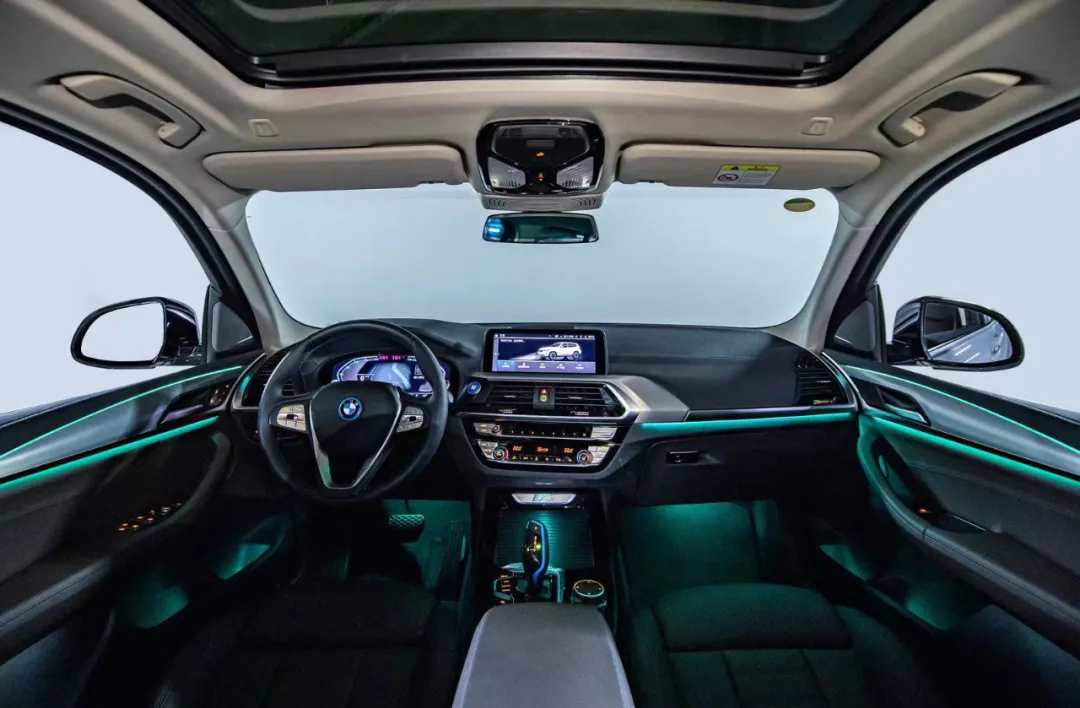
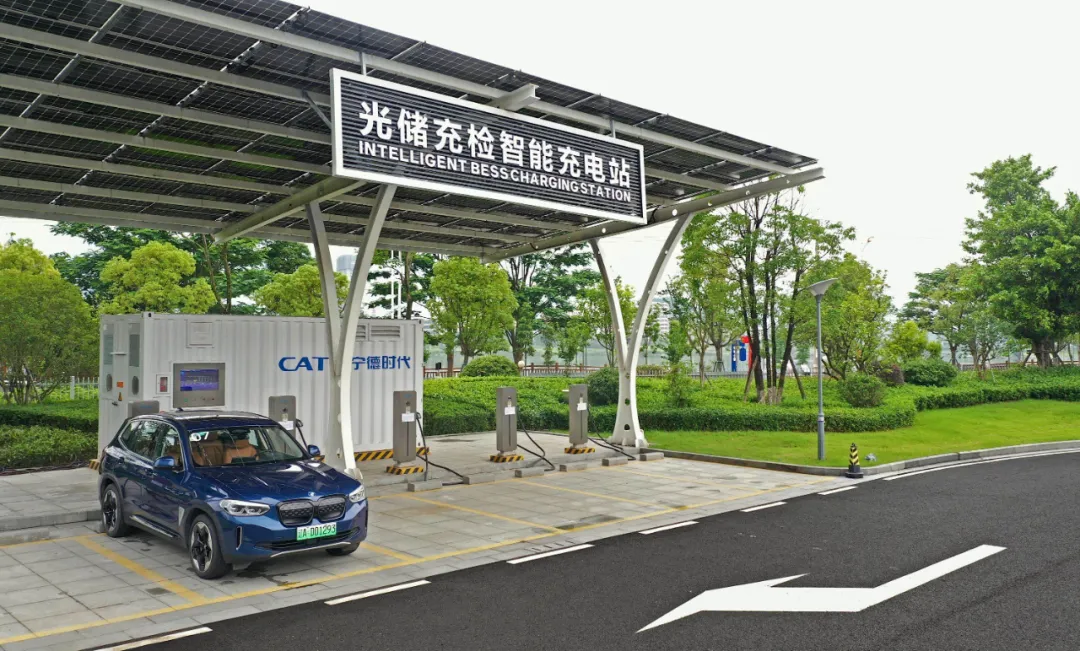
Actually, in the era of smart electric vehicles, traditional concepts such as sports, technology, and services are difficult to establish.
For example, due to the inherent explosive power of electric motors, the difference in sports performance of electric vehicles will become smaller and smaller. In terms of technology, the intelligent B-side is actually technology, making it a pseudo-proposition. As for services, simpler structure of electric vehicles means that services are just a temporary label.
Therefore, environmental protection is the only direction that can be long-term efforts.
Many people choose new energy vehicles mainly because of environmental awareness. Speaking on a larger scale, environmental protection is not only an important basis for phasing out traditional fuel vehicles, but also a critical resonance of the times and a key to the welfare of all mankind in the future.
Sustainability is the true luxury of electric vehicles.
Sustainability: The Highest Level of Luxury
In the past, when we talked about BMW, it was always about sports. However, as we enter the new era of electric vehicles, the environmentally friendly aspect has already become an inherent characteristic of BMW vehicles.
Of course, the essential characteristic of BMW – sports, is still present. Take the BMW iX3, BMW’s first electric vehicle, as an example, its athletic appeal is still intact. During a test drive, BMW arranged a segment of winding mountain road for me. As someone who has owned many electric vehicles, the smoothness and fluidity of the BMW iX3 came as a great surprise. In fact, I even wrote a paragraph for my social media.
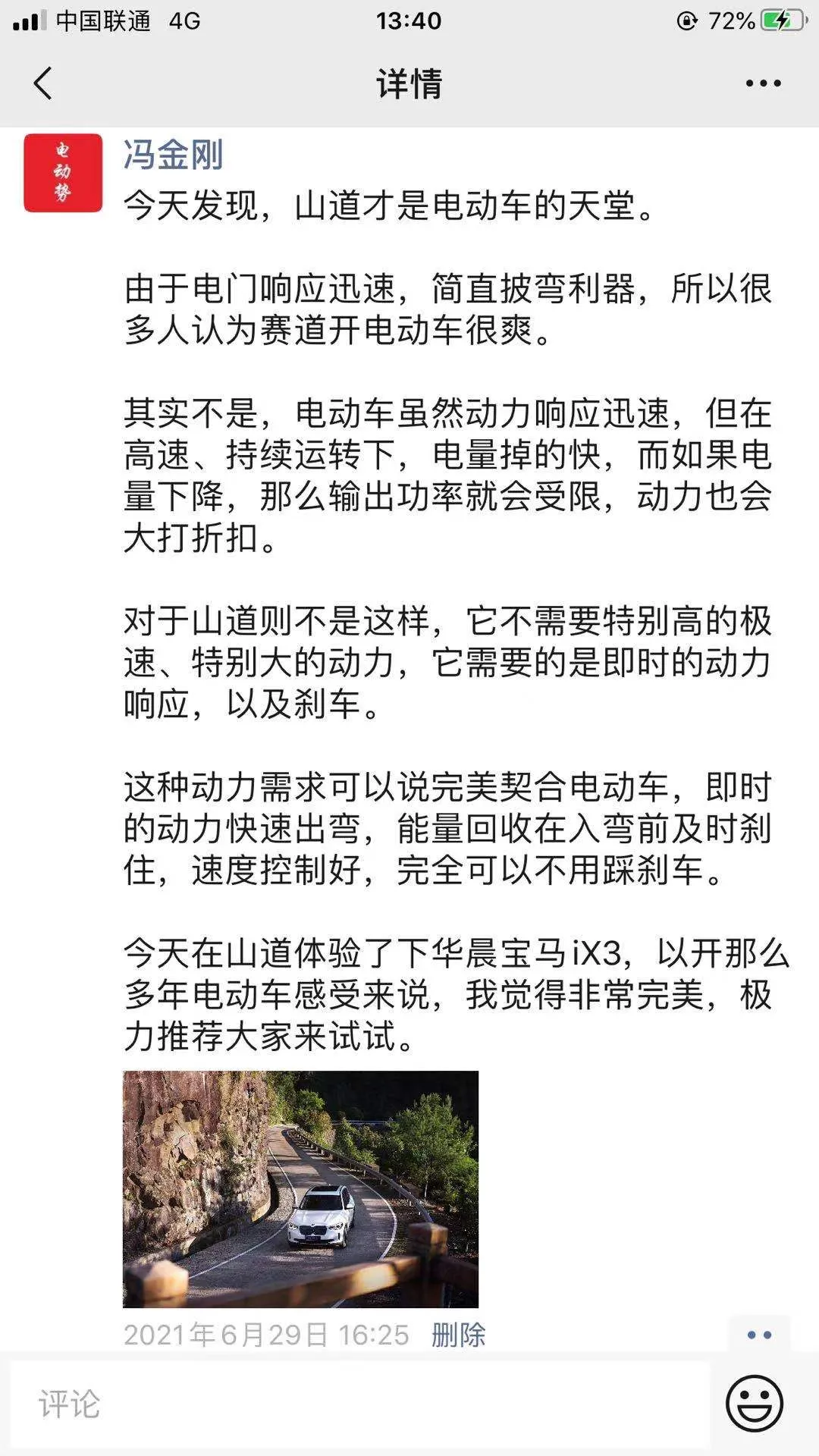
Globally, environmental protection and sustainability have become the guidelines for all of BMW’s operations. At the First Chinese BMW Sustainable Development Summit with the theme of “Leading Green Travel Revolution”, BMW Group’s Chairman Zipse said in a video message, “In the model of global economic growth previously, environmental damage was a common practice. Today, sustainable development has become a common topic worldwide. BMW Group hopes to achieve economic growth, social prosperity, and sustainable development simultaneously through continuous innovation and green technology.”
In fact, sustainability has already been embedded in BMW’s genes. Under the global developing trend of new energy vehicles, while some brands seek to seize opportunities in electrification and some brands are forced to transform, BMW has fully considered how to approach electric vehicles from a sustainable development perspective.
Dr. Andreas Wendt, BMW Board Member responsible for Purchasing and Supplier Network, stated that “Our goal is to ensure the most sustainable supplier network in the entire industry.”
On the first electric car of the BMW brand, the BMW iX3, the electric motor does not contain permanent magnets, which eliminates the dependence on rare earth resources and achieves sustainable development.
In addition to the procurement of Ningde era batteries, in line with the attitude of “sustainable development” and responsibility for the environment, BMW delves into the source of the battery supply chain and directly purchases important raw materials such as cobalt and lithium to ensure that the extraction and processing of raw materials meet all environmental standards.
It is evident that BMW is committed to creating luxury electric vehicles with the concept of sustainable development throughout the entire value chain for the emerging electric car market.
As a centennial brand, BMW is waving its sleeves and writing the future in green, integrating sustainability into its development plan and binding its fate with that of humanity to create true luxury.
This article is a translation by ChatGPT of a Chinese report from 42HOW. If you have any questions about it, please email bd@42how.com.