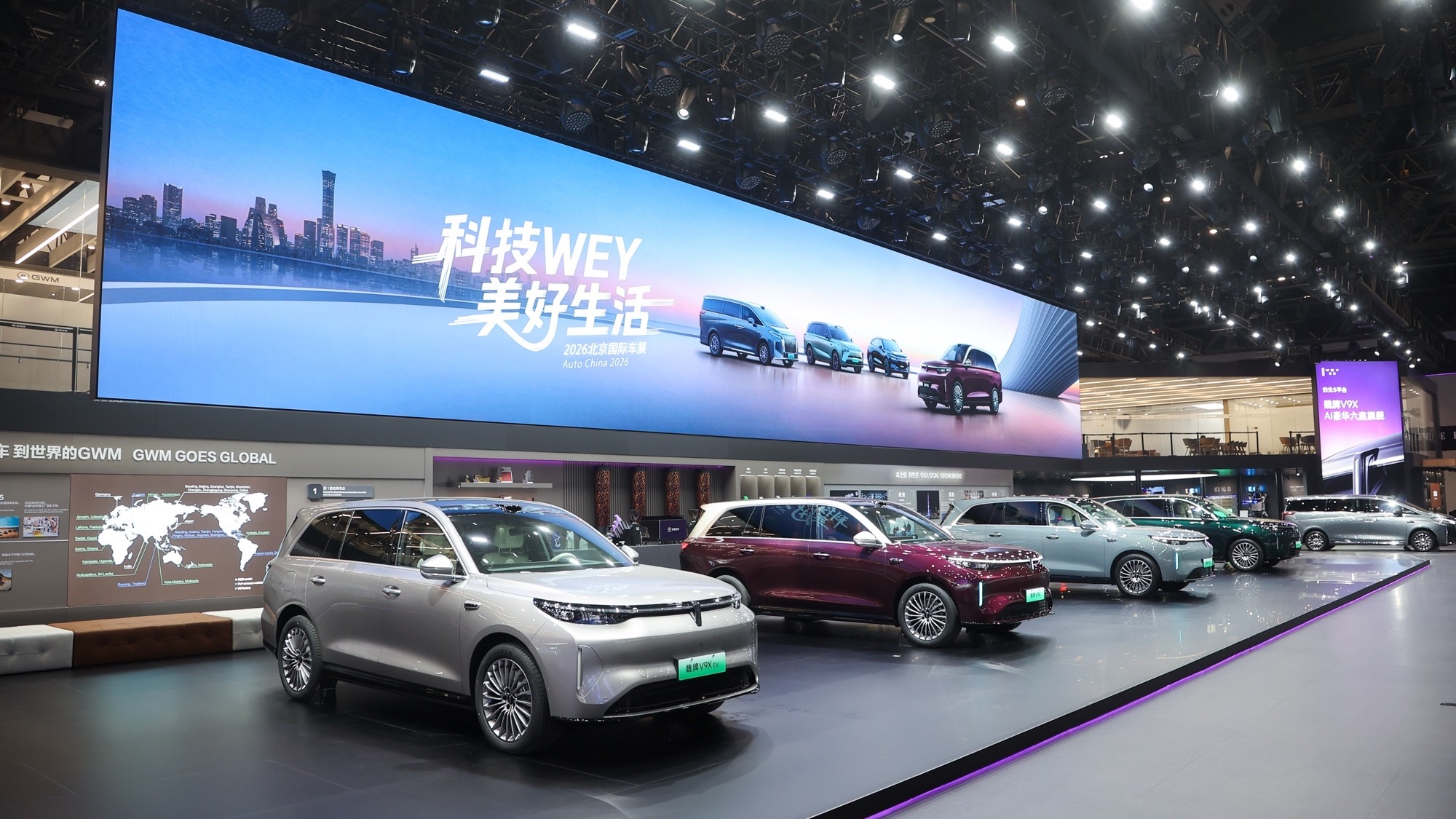
At the highly concentrated and fast-paced stage of the 2026 Beijing Auto Show, new car launches and technology concepts appear almost at a “daily update” speed. Keywords like large six-seat SUVs, intelligent driving, and hybrid systems are repeatedly mentioned at different brand conferences. Combined with price wars and traffic competition, the entire industry is under unprecedented high pressure.
Amidst this backdrop, WEY introduced its flagship SUV, the WEY V9X. On the first day of the 2026 Beijing Auto Show, multiple media outlets, including 42 Garage, jointly interviewed WEY CEO Zhao Yongpo and WEY CTO Tan Jian at the Great Wall booth. Rather than simply outputting parameters and selling points, this interaction provided a deeper discourse: Why launch such a car at this time? What does the platform philosophy of “one car, multiple powertrains” truly signify? And, in a market increasingly focused on speed and volume, why does WEY choose what seems to be a more restrained approach?
Addressing these questions, Zhao Yongpo and Tan Jian gradually outlined a more comprehensive thought process—this is not just the launch of a new car, but a concentrated expression of product methodology, brand articulation, and long-term competitive strategies.
Returning to Essence: The Systematic Capability Behind One Car, Multiple Powertrains
The essence of the WEY V9X lies not only in the product itself but also in the Essence S Platform behind it.
Tan Jian believes that the model of “one car, multiple powertrains, one car, multiple versions” is fundamentally a response to the current market changes—as the Chinese automotive market matures, the logic of a single blockbuster is failing, with user demand shifting toward diversity and balance. “You can have outstanding strengths, but you cannot have obvious weaknesses.”
The prerequisite for this capability is the mastery of the entire industry chain. Whether in powertrain, chassis, or intelligent systems, WEY emphasizes the collaborative ability of “full-stack self-research” to achieve unified development and calibration among different powertrain forms. This is also why they believe the Essence concept is not something every company can execute.
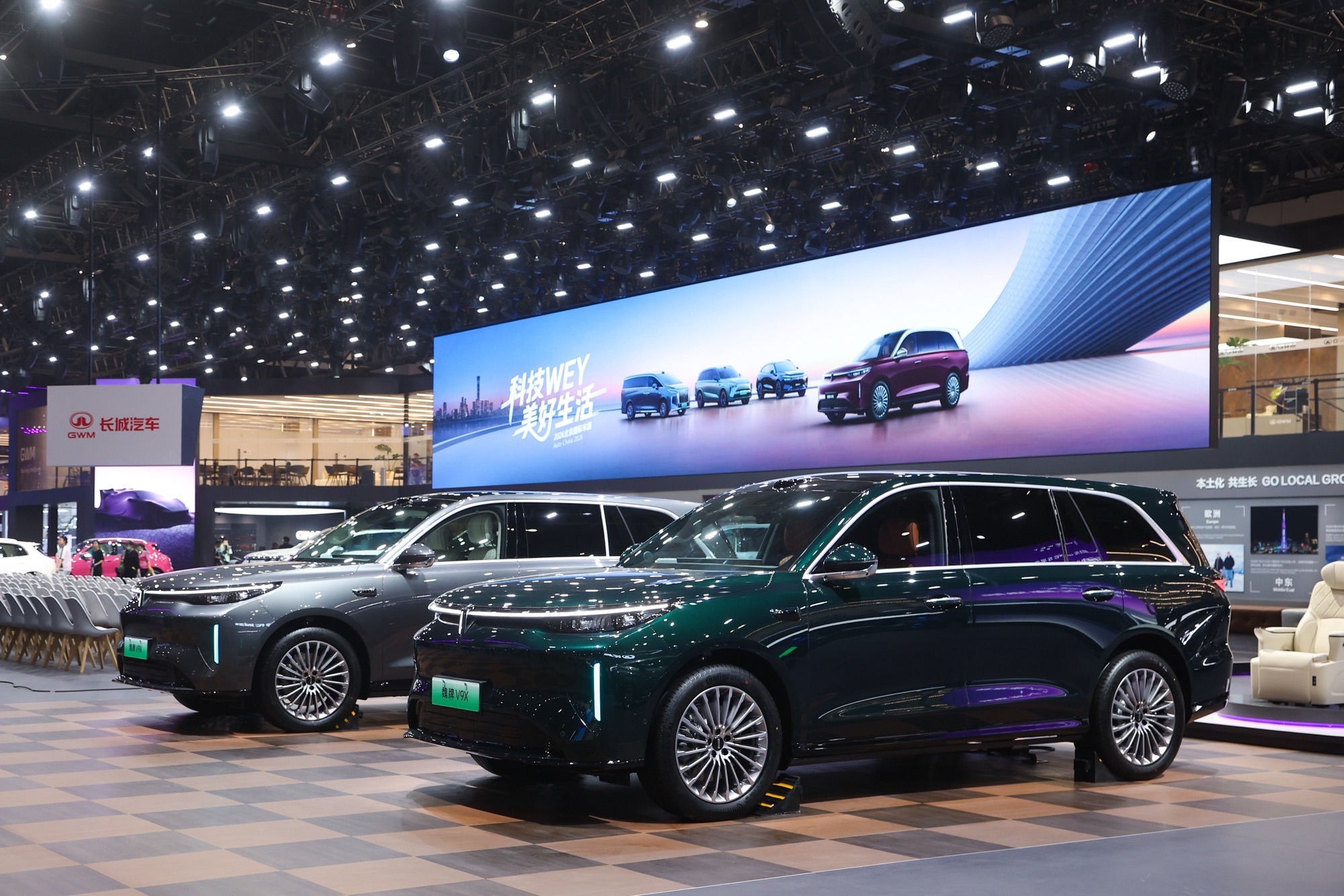
On the user level, the value of this platform is defined in two dimensions: firstly, the short-term experience balance—power, comfort, intelligence, and safety without bias; secondly, long-term value—including reliability, durability, and resale value retention.
Tan Jian specifically mentioned that in the current competitive environment, “users are becoming less sensitive to the purchase cost, but more sensitive to the long-term ownership cost.” This explains why WEY invests heavily in unseen durability testing, component sharing, and quality consistency.
Aggressive R&D and Restrained Communication
Faced with the current price and technology wars, WEY’s stance is not aggressive.
Zhao Yongpo candidly stated that market competition cannot be changed, and can only be addressed in the three dimensions of “product, communication, and service.” However, unlike the industry’s generally high-profile approach, WEY opts for a relatively reserved expression method.
This restraint is primarily reflected in technology application. Tan Jian emphasizes that “R&D can be aggressive, but implementation must be conservative.” For example, Great Wall had laid out plans for steer-by-wire as early as ten years ago, but it wasn’t gradually promoted until safety redundancy and regulatory environments were mature. In their view, any new technology must undergo long-term reliability validation rather than being a highlight at a press conference.### Reflections on the Communication Aspect
Zhao Yongpo candidly admitted that the weakness of WEY lies in being “inwardly refined” — the product’s advantages are more evident in dimensions such as power quality, NVH, and reliability, which are difficult to express straightforwardly, rather than simple parameters. “We can create luxury, but we are not so good at communicating luxury.”
Tan Jian further pointed out two past communication issues: an overemphasis on exposure at the expense of product strength and a failure to keep up with changes in user content consumption habits — traditional advertising expressions are losing effectiveness.
“Users now seek scenarios and emotional value, not hard advertising,” he said.
Behind this reflection is a brand value that emphasizes sincerity. Whether it’s the cautious attitude towards L3 autonomous driving or the unwillingness to excessively package technical capabilities, WEY is trying to differentiate itself from the industry’s exaggerated communication.
Changes in User Structure: From Northern Markets to First-Tier Cities
An unexpected change for WEY V9X’s user structure.
According to Tan Jian, the high-end version priced at 410,000 yuan has become the mainstay, with orders primarily from first-tier cities in the south such as Guangdong and Shanghai. This contrasts sharply with WEY’s previous user base in northern markets at the 300,000-yuan price range.
Further research shows that these users are mostly internet professionals, business people, or highly educated groups, typical high-net-worth individuals. Internally, WEY defines them as “Successors” — the generation who has completed the original accumulation, and the new generation entering higher-level city development.
Meanwhile, about 30% of users still concentrate on the 370,000-yuan version, mainly distributed in traditional strength areas. This dual structure indicates that WEY is reaching two types of users simultaneously: those who value brand elevation and product strength and those who continue the Great Wall’s reputation, valuing quality and reliability.
Yet there are clear issues too — in regions like the Pearl River Delta and Yangtze River Delta, the conversion rate post-test drive is not low; the real bottleneck is that “users haven’t walked into the stores.”
Therefore, WEY has started to increase its direct sales channels and communication investment in these areas, including increasing the number of stores, enhancing local exposure, and trying content marketing that is closer to life scenarios.
Conclusion
In an industry dominated by fast pace and high volume, WEY has chosen a less opportunistic path: emphasizing system capability, long-term reliability, and relatively restrained expression.
The risk of this path lies in its difficulty in creating an explosive perception in the short term; however, its advantage is that once a reputation is established, the lifecycle may be longer.
As Tan Jian stated, the Chinese automotive industry is still in a long development cycle, and living longer is more important than temporary leadership.
Appendix: Full Dialogue
Q: Whether a car is high-end or not, the gold content of a platform determines the gold content of the car. Regarding the development logic of Chinese automobiles, this car has multiple power options. What is the impact or top-level architecture logic for future development for this platform?
Tan Jian: The WEY V9X was born from the GUIYuan S platform, primarily reflecting GUIYuan philosophy. On the pre-sale day of the WEY V9X, Mr. Wei conducted an over one-hour GUIYuan technology exploration. During internal meetings, communications at various levels, and lots of internal communication and co-creation were also made. The core is understanding the “GUIYuan” philosophy and how we act in the current competitive environment. We must return to the market and users. Competitively, China’s automotive industry has to become global. Previously, we strived to go a little further, but now if not for overseas and globalization, the Chinese market leaves no room for more exploits. With over 20 million vehicle capacity, China ranks first in the world. Especially with over a decade of new energy development, Chinese automotive users’ mindset towards choosing vehicles has fundamentally changed. Whether it’s six-seaters, five-seaters, sedans, SUVs, MPVs, and various power options emerging, users now choose between a one-size-fits-all product or diverse products, and their choices are transitioning.Based on these shifts in user preferences and market dynamics, Great Wall Automobile developed the EVERUS concept several years ago. We created multi-power and multi-version vehicles within this context. In truth, not everyone can conceive the EVERUS idea. It is founded on the complete automotive industry chain’s support capabilities. In instances where your mastery of software and hardware is fragmented, and some companies rely on purchasing parts, the EVERUS concept cannot be achieved. We believe that EVERUS stands out from a global moat differentiation perspective and reflects the changing focus and choice perspectives of users in China amidst the current new energy competition. Thus, we implemented the EVERUS concept, leading the industry. More companies will begin learning this approach, though it will require time and investment. In the short-term, this advantage allows Great Wall to stay ahead for quite some time.
Q: You’ve transitioned from Haval to the WEY series over the past six months, moving from a mass brand to a high-end, reputable one, setting a higher standard for yourself. Where do you see WEY’s branding challenges, and how does it fare in terms of user perception and brand building?
Zhao Yongpo: WEY is a line of Great Wall Automobile, characterized by its subtlety. As discussed in the release, it is an understated vehicle with inherent substance. Our target audience reflects this mindset—unassuming and seeking timelessness. This notion is embodied in vehicle design, which is tailored for the comfort of drivers and passengers, with user-centric features. However, such elements are challenging to convey in promotions. For instance, while we pride ourselves on our power, particularly in China, outside of mere parameters, the excellence in energy efficiency, quality, or NVH silence must be felt through test drives, reinforcing a strong reputation and deeper understanding over time. WEY’s narrative naturally faces hurdles because many qualities are internal and hard to articulate. Our intelligence systems are also outstanding. China’s market education by new forces may mislead consumer perceptions. A car’s quality isn’t about being “new” or “traditional” but in its experience. New forces excel in branding, but does that mean better cabin experience? In our view, not necessarily, as our driving logic and cabin comfort levels are truly exceptional.“`markdown
Q: What are your own impressions and experiences?
Zhao Yongpo: To me, it’s far superior to Haval. Haval’s coverage is relatively limited in terms of technology. However, WEY brand uses top-notch technologies; comparing with the industry or even ourselves, we employ leading-edge technologies. With both products and technology, the narrative becomes compelling.
Tan Jian: Our ability to capture the luxury tone is a challenge that Great Wall Automobile faces internally as well.
Zhao Yongpo: While we can create luxury products, articulating a luxury narrative is where we’re lacking. Great Wall’s traditional communication culture and values have gaps in promotion, in my view. To convey a compelling story, we need to tell the stories of our products, users, and company effectively. Stories are not necessarily fabricated; they need to be uncovered. There are many stories. During the development of the 2.0T high-capacity plug-in hybrids, and small WEY intelligent all-stack self-developed control collaborative work, there are stories to be told. But we haven’t explored these well, which is our shortfall. We don’t lack user stories; some users travel the world in our cars, driving hundreds of thousands of kilometers without issues, confidently and calmly. We have many user stories to tell and will continue to explore them in the future.
Q: We’ve tried your products; they are impressive. This year’s market is fiercely competitive, particularly in this vehicle segment. What are your thoughts on the market?
Tan Jian: We feel the competitiveness of this market acutely, probably more than you do. You’re attending one launch today, another tomorrow, and yet another the next day, making it difficult to schedule meetings—it requires a week in advance. Our data shows there are dozens of large six-seat SUVs. Regardless of whether it’s luxury, mid-tier, or high-value segments, all are struggling financially, consistently engaging in price wars. Currently, only large six-seat models are profitable, which changes once dozens more hit the market, intensifying competition.
Tan Jian: The trends you see today were predicted two years ago.
Zhao Yongpo: The competition is fierce, so the approach is to compete on products, communication, and service since we can’t change the market environment. I have no particular views on this competition.
Q: You mentioned several directions—how do you plan to address them?
Zhao Yongpo: We have several advantages.
First, we have full-stack self-developed technology. This brings a better experience. So always believe in the experience of a Great Wall vehicle. Our vehicle experience includes power, handling, intelligence, and comfort—these are our strengths that we hope users will discover.
Second, future service will also be an important competitive point, which is why we’ve adopted a direct sales model. The benefit of direct sales is uniform service and pricing. If you look at the dealer channels in the market, prices are chaotic, irrespective of the car segment. Many manufacturers are selling zero-mileage used cars, disrupting the sales channels. The chaos leads to declined service experiences due to the price wars between manufacturers and dealers. Future service will be our core competitiveness, though this takes time to establish. The direct sales channel allows for consistent pricing and service amid today’s competitive market. Providing efficient, personalized, and high-quality services becomes our future edge. In this competitive environment, distinguishing success will take time, not just in a year or two. Over a couple of years, things will gradually return to normal.
Q: What does it mean to distinguish between high and low?

Zhao Yongpo: It means that some brands will exit the market.

Tan Jian: Building on Zhao's point, I'd like to add a perspective. There are dozens of products in this category, with differentiation and positioning within it. All are large six-seaters, priced below 200,000, at 200,000, 250,000, 350,000, 400,000. We admire others who can sell large six-seaters at 500,000, and we aim to learn from them. We believe that the more competitive the environment, the more our company must cultivate a sincere service philosophy, authentic products, and genuine values. This environment allows us to thrive. Market competition pressure is certainly high, and every segment will feel the pressure—if the pressure is high domestically, we will look overseas. In such scenarios, the consumers' minds must remain undistracted. Media is bombarded with massive amounts of information daily, to the point where press conferences can be overwhelming. Under these circumstances, can a company differentiate itself from others? Hence, our sincerity philosophy, whether in products, services, or communication, must be genuine.

President Wei talked about contract values at the Beijing Auto Show, and we hope to establish differentiation and uniqueness from other companies through this. We aim for long-lasting products, not products that break down after one or two years and need to be replaced. We want users to have a longer ownership cycle, requiring honest investment from the company, based on our genuine values. Thus, cutting through the competitive market is normal. If we carve out a unique path, we can survive longer. We don't claim to outlive others exceptionally well, but at least we aim for longevity—this is the perspective I wish to add.

Q: The Wey V9X is very formidable. What is its core advantage compared to other vehicles?

Zhao Yongpo: What do you think it is? If you don't know, it means we haven't communicated well.

Q: I think its quality is the best.

Zhao Yongpo: Our core values are safety and quality, and we never compromise on safety. Every era has its safety requirements and definitions. Ten years ago, crash safety defined luxury and safety. Five years ago, we introduced the concept of active safety, such as AEB and AES, and recently, anti-burst tires, all part of the active safety concept. We have invested heavily in technology for active safety by producing self-developed suspensions, steering systems, and engines, all for better coordination and improved active safety. In the new era of automation, privacy security has become a focal point. With intelligent agents that can interact and remember, how do we ensure privacy security? Great Wall Automobile must lead in automotive privacy security.

For instance, our encryption system is a synergy of software and hardware, not just software encryption. Software encryption requires the implementation of dongles and algorithms at the software level. For hardware, we employ sintered encryption algorithms within our controllers. Through laser sintering, the encryption algorithm is embedded into the hardware in our chip and controller production. As long as the hardware remains unaltered or undamaged, the encryption is unbreakable, as it utilizes laser sintering to embed a key within.
markdown
Because it is difficult to clearly explain encryption to users, you must always trust Great Wall Automobile’s investment and dedication to security. In every era, we must be pioneers in safety.
I also want to talk about steer-by-wire. Now many models use steer-by-wire and chassis-by-wire to create a high-end concept. In fact, Great Wall Automobile laid out plans for steer-by-wire and chassis-by-wire ten years ago. But why haven’t we put it in cars? In 2008, I was a member of the standards committee for vehicular network dynamics. I remember co-hosting China’s first steer-by-wire conference with the president of the Automotive Research Institute in 2008, where we conducted a preliminary analysis of the steer-by-wire roadmap. From a safety standpoint, while everyone is talking about steer-by-wire and autonomous driving, it must coordinate with laws and regulations. When you implement steer-by-wire, what happens if a controller fails? Is there another controller to take over? If a power supply fails, is there a backup power supply? When subject to electromagnetic interference, is there another system to take over? This requires redundancy, sometimes more than one backup is needed, but two or three. If these things aren’t addressed, a failure of one system could lead to safety issues.
Therefore, Great Wall Automobile is very aggressive in technical R&D but very conservative in application and even more restrained in publicity. This aligns with the company’s philosophy. I believe the proliferation of steer-by-wire systems will inevitably lead to changes in autonomous driving and regulatory oversight.
Tan Jian: Our controllers have significant physical hardware isolation, one module is enough, but now we’ve implemented two in our controllers. This is a backup for specific situations with high-voltage interference, but it’s not something that adds value for the user. It may only be needed once in a lifetime. If we say it’s great, users find it hard to understand. So, although we have steer-by-wire technology, previously we held back on it until reliability was fully addressed, and national standards needed time to mature. Many companies are now talking about L3 or even L4. I think there’s a good saying in the industry: Is there something that’s infinitely close to L3? There isn’t. Infinite L3 is a deliberate avoidance of regulations. The country is piloting L3, and its core issue is who holds the choice and responsibility. If this is unclear, how can L3 be justified? Many companies find ways around it, but Great Wall doesn’t want to. Some say Great Wall is foolish, but our communication philosophy genuinely differs from other automakers.
Q: Who are the target customers for the WEY V9X? It seems the price has gone up, and the car is larger, but how do you define its user demographic?
Tan Jian: Your insight is accurate. Before launching this model, we debated internally many times about the user tags. After we conducted pre-orders, we felt significantly more relaxed. We released three configurations for pre-sale: two long-wheelbase and one standard wheelbase. The focus is on the long-wheelbase, which has two versions: a super hybrid version with ultra-fast charging at 411,800 RMB, and a version with weaker power and shorter pure electric range at 371,800 RMB. These two configurations attracted different user groups. Internally, we wondered if, after selling Mount Everest Blue and Mount Everest Green at the 300,000 RMB range, the WEY brand could sell at 400,000 RMB? Could we pre-sell at a price of 400,000 RMB? This led to two weeks of internal debate. Ultimately, we decided to take a chance; the brand must escalate, and flagship products must ascend. So, we set the price at 411,800 RMB. Surprisingly, the 411,800 RMB model was highly popular, with high order proportions, and many orders from southern cities, Guangdong Province ranking first and Shanghai second. This differed from our earlier assumptions. We thought more customers would choose the 370,000 RMB version. Historically, Mount Everest Blue and Green owners were mainly from the four mountain-province regions and from north of the Yangtze River. Moreover, many interested in Mount Everest models were willing to spend more on the WEY V9X, which exceeded our expectations.
“`Frankly speaking, 30% of the share remains with the 370,000 CNY version, with users mostly distributed in Great Wall Automobile’s traditional strong markets, primarily in the four provinces of Shanhe. Unlike before, the sales share in Xi’an, Beijing, and Tianjin is substantial, reflecting a large order proportion. We previously thought Baoding would rank first, but it didn’t. We considered Zhengzhou and Jinan as strong markets, but this time they aren’t. Post the VV9X product launch, our user demographics have significantly changed. Who are these people? We’ve researched this. Many people in high-end internet and business sectors in Shanghai and Guangzhou chose us. We aim to engage these individuals from a communication perspective, but frankly, our communication tone still has room for improvement. However, we are grateful for our users’ choice and plan to communicate deeply with them in these two cities.
Entry-level buyers value our quality and power and highly recognize Great Wall’s reputation and reliability. The VV9X users are now bifurcated, unlike before. In terms of user profiles, we aim to attract high-end users. We have a concrete label, “Successor of Progress,” whose parents have provided a certain economic foundation in provincial capitals, like property. The next generation moves to higher-tier cities for business, internet, or high-tech industries like university professors. We aim to attract relatively high net-worth individuals. Currently, high-tier city demographics lean towards this, but 30% of users go for the 370,000 CNY configuration. We need to highlight our product’s pinnacle in intelligence and power. We believe safety and quality are foundational, offering a definite advantage, though it’s challenging to appeal to high-end users solely on this point. To put it bluntly, that’s our current reality.
Q: How have pre-sale volumes been since the launch?
Tan Jian: Detailed order numbers can’t be disclosed. The first night’s orders exceeded our expectations. We debated whether to announce it. The company noted, in the current competitive market, stating numbers can be tricky. Some firms claim tens of thousands in minutes, so we opted not to tout a 10,000 order within 10 minutes. Upon deliberation, we chose to refrain from revealing order numbers. Only when actual delivery begins, can industry experts see delivery and production volumes. We think, amidst today’s competitive environment, this approach is better.
Q: In real usage scenarios, what unique value does the EVERSUN platform bring to users, or what pain points does it address?
Tan Jian: Let me first address user needs. The market is increasingly competitive; a one-hit-wonder doesn’t suffice in today’s environment. With an industry penetration rate at about 60%, monthly sales remain consistent. Both China’s new energy and automotive industries have entered a new phase. No longer can you rely solely on a standout product for consumer purchases; that phase has passed. According to this development and user demand curve, maturity has been reached. In maturity, users desire distinct advantages in certain areas, without weaknesses in others. While your intelligent driving might excel, power, performance, luxury, and intelligence must also meet standards.For the concept of Guiyuan and the WEY V9X, we aim to excel in every dimension of product capability. In terms of safety and power, we strive for upward progress. Through these aspects, we aim to establish recognition for the WEY V9X. We believe that there are two key points of value that the platform brings to users.
First, the cost of purchasing a car is no longer the primary concern for users. As long as a user’s budget allows for it, regardless of financing or other means, they will proceed with the purchase. Thus, we believe that users aren’t overly concerned with the initial purchase cost. What truly matters is the long-term ownership cost of the vehicle. Amid fierce price competition, users hope to buy a car that can be retained for a longer period, with a higher second-hand resale value, so that when it’s time to sell, the car’s quality is recognized, allowing for a higher selling price.
Guiyuan integrates and standardizes many core components, which enhances quality and reliability. Our investment in testing and R&D has not been reduced according to a scaling factor; instead, we have extended our test mileage and frequency. In the current competitive environment, users are highly concerned with the long-term retention of their vehicles. Therefore, vehicle reliability and second-hand value are our focus areas.
The second point is that insurance costs within the ownership cost are of great concern to users. However, China’s insurance industry is constrained by various factors and cannot achieve linear fluctuations in premiums, as they depend on price rather than the vehicle itself, which is an industry-wide issue. Under the Guiyuan concept, Great Wall is making an effort to reduce the damage rate during vehicle usage, regardless of the insurance company’s stance on premiums. This ensures even if insurance is claimed, repair costs remain low. We have discussed this with insurance companies, who recognize our research direction and our conceptual focus. Though regulatory requirements limit the appearance of premium linearity in the short term, they recognize Great Wall’s long-term commitment to reducing ownership costs, marking a unique path in the industry.
Thus, what value does Guiyuan bring to users? Great product experience in the short term, and superb reliability, durability, and second-hand value over the long term. This is my response from two dimensions. I’ll add some data: media professionals in the driving industry have experienced this. Many cars reach a breakpoint at 10,000 km, and some at 30,000 km. Having driven so many cars, certain brands might boast excellent products upon release, and we are eagerly learning from them. However, upon reaching 10,000 km, the vehicle faces rougher conditions, as not every day offers smooth roads. The looseness and reliability of a vehicle may diminish confidence.
Yet, I’ve tested Great Wall cars, and whether at 10,000 km, 20,000 km, 30,000 km, or even 110,000 km as seen in users of the Lanshan models, the depreciation in driving experience is comparably minimal. During vehicle purchases, can these facts be communicated amid today’s noisy public discourse? Not likely. However, Great Wall holds on to sincere principles and values, continuing this path with a sense of mission. In the long term, we believe this commitment will bring users tangible benefits.Q: Previously, it was said that technical research should be aggressive while technology application should be conservative. Now the competition is intense, and technology updates are swift. Why does Great Wall Automobile have a conservative mindset when everyone wants to attract attention through faster technological iterations?
Tan Jian: How fast you are depends on what aspect you focus on. Many look at China’s mobile phone industry, where numerous brands once existed, but now only a few remain. Brands used to boast having the largest screens or the best chips or the highest camera pixels. I think this phenomenon is very similar to the current car industry, where many car brands highlight one or two outstanding features at their product launches. However, in the practical user experience, especially in intelligent driving, is where the true authority lies in the automotive industry. Many car companies claim their intelligent driving is superb, some boasting zero intervention. Numerous media also conduct industry evaluations, praising certain brands’ experiences. However, when it comes to actual user experiences, which car has the higher accident rate? Some media may be unaware of data that I recently discussed with industry professionals about intelligent driving insurance and premiums. One company quoted us a premium price, which is a third-party coverage of 100 yuan per car for accidents caused by intelligent driving. They gave Great Wall Automobile their quotation, and I said, do not measure us by industry standards. Upon viewing last year’s intelligent driving data from Great Wall, their quotation for us was 65% lower than the industry average. Although we haven’t publicly boasted about our intelligent driving capabilities, data shows that Great Wall’s intelligent driving experience is undoubtedly top-tier.
Consider intelligent driving as an example: Chief Zhao once asked if having more lidar is better? Not necessarily. Our aggressiveness lies in our investment strategies. We invest in all technical paths, be it VLA, end-to-end, or world models. Opting for one or two intelligent driving routes requires research funds in the hundreds of millions; we are aggressive in this sense.
However, applying technology to vehicles involves safety and reliability concerns. Can it remain issue-free for one year, two years, three years, or reduce the probability of issues in the fourth year, thereby building a lasting product reputation? This is our focus. We are indeed conservative in applying new technologies; we do not claim to be the industry’s best. Our values don’t allow for such claims. We believe in restraint in communication. Restraint is a label we give ourselves because we don’t want to be overly aggressive, and our values don’t permit such behavior. At the very least, we cannot deceive. We believe the industry has too much dishonesty. I’ve been with Great Wall for over a decade; if I worked with a brand for three years then switched, I could engage in aggressive marketing. But can you be true to the company, to a brand you’ve served for over a decade, with millions of users? Do you have a conscience? That’s why we exercise restraint in communication. Internally, our leadership challenges us to maintain sincerity and honesty, ensuring each Great Wall employee carries this in their hearts. Externally, we use the term “restraint,” but internally, it’s about whether your conscience and sincerity are intact.Q: You mentioned that the performance of the Wei brand V9X in the Pearl River Delta exceeded expectations. It also surpassed my expectations when I heard this. I’m curious if you have any subsequent plans to strengthen the Southern market or the Pearl River Delta area, such as through stores or marketing.
Tan Jian: Deepening the markets in the Pearl River Delta and the Yangtze River Delta is a long-term strategy for Great Wall Automobile. The emergence of the Wei brand V9X is something we’re pleased about internally. However, the key question is how long this can be sustained. We’ve placed emphasis on this key matter since December of last year, primarily because the Guangzhou Auto Show was in November. We made biased investments in the Guangzhou area, as our previous investments were nationwide. With the current logic of internet targeting what you’re interested in, we realized this approach wasn’t ideal. We needed to step outside this framework and focus on Guangzhou. Our investments in Guangzhou included both product and channel investments. In terms of channel quantity, we previously opened direct-operated stores in high-tier cities like Beijing, Shanghai, Guangzhou, and Shenzhen, usually 8 to 10 stores. When analyzing the operations, we found that building more stores without boosting sales leads to losses. So, do we invest further? We decided to invest by establishing 15 to 20 stores in Guangzhou and Shenzhen, thus expanding channel touchpoints. Additionally, we increased our media exposure in these areas.
In terms of corporate communication events and activities, we’re also focusing more on these aspects. Interestingly, in these regions, once customers visit our stores for a test drive, their conversion rates align with other cities nationwide. The issue is that users aren’t coming for test drives, even when invited by phone, citing brand awareness and trust as barriers. Therefore, our problem occurs in the initial stages. The post-test drive conversion rate remains high, indicating there’s no issue with our product or service in-store. The challenge lies in increasing exposure and interest, areas in which we need to invest more, both in communication and outlet channels. The company aims to manage its focus strategically while discussing special local partnerships.
Q: Are these stores all direct-operated?
Tan Jian: Yes.
Q: Is the current model a mix of direct operation and agency?
Tan Jian: We primarily focus on direct operations, while we used a portion of the agency model for Haoshan and Lanshan. We noted that a purely operational model leads to price chaos. Our hybrid model of direct and agency sales channels led to natural conflicts between the channels. Instead, we built a model primarily based on direct operations, supplemented by the agency model. Under this framework, agency locations only display the vehicles, while delivery is managed by direct stores. We consider the delivery phase critical for user experience and contains complexities that require transparency and brand control. Price negotiations happen at pre-sale points, but delivery transparency must remain within the brand’s control, hence using direct outlets. This strategy for Haoshan and Lanshan, with the agency as a complement, ensures price transparency, service transparency, and management transparency.The original intention of adopting a direct sales model should remain unchanged — high-end service. If dealers are to make investments, especially in top-tier cities, they are often reluctant, as seen in Guangzhou. Therefore, it is up to the brand to make targeted investments. Thus, the channel model varies with different market stages and requires diverse combinations. However, offering sincere service, ensuring transparency, upholding values, and remaining committed to our investments are unwavering principles.
Q: Director Tan, the issues you mentioned in the Pearl River Delta were not with the latter part, but the first part. So how do you address the issues in the first part?
Tan Jian: Resolving the first part involves broadcasting and exposure. Without addressing these aspects, the initial problems cannot be solved.
Q: We should have Director Zhao join the discussion on this matter. From my perspective, your marketing is exhaustive, though not necessarily perfect. For the Wei brand, it’s about increasing natural product exposure. Generating traffic is straightforward, essentially a matter of spending money, whether for Wei, Great Wall, or BYD. Suppose Great Wall allocates 1 billion annually for this brand’s exposure; logically, it’s a hefty investment—a major push. Under such intense spotlight conditions, with no exposure issues, have you gained any natural appeal experience for defining a flagship product, in terms of design and positioning?
Tan Jian: With fewer people now, I must speak truthfully. We accept Mr. Wei’s criticism willingly. Upon reviewing our process, taking the Wei V9X as an example, including other pinnacle models, we’ve realized that high volume efforts weren’t aligned with product strength. This is an internal acknowledgment. Our goal of large exposure via online channels has entered a vicious cycle, one that many companies experience. If what we express isn’t groundbreaking in our industry, there’s little attention. Additionally, if our product stories are still ad-like, the audience won’t engage. Users have changed—they now seek content-driven engagement and want to see if a product aligns with their lives. Such content generates better viewership. Great Wall strives to highlight product strengths, but we often mistime it. When the industry recognizes excellence, we hesitate. Then, when confident, as soon as we speak up about genuine product strengths, user perception on the internet has already shifted. Hence, our communication hasn’t hit the right rhythm. We invest considerably in this, yet the results are less than ideal.
Reflecting upon this, we must ensure that outreach and awareness efforts are target-driven and aligned with products, or it’s wasted expenditure. While product branding is a distinct issue, its impact on product conversion and sales is crucial. We must discard ad-styled product communication and integrate emotional value. These are the two primary areas where we need profound reflection and improvement in our communication strategy going forward.
Q: The Wei brand has evolved across premium new energy, intelligent luxury, family SUVs, and flagship MPVs — multiple adjustments. What role do we aim to play within the Great Wall system? Is it to continue scaling new heights, or to focus on becoming a new energy To B brand?Tan Jian: At the current stage, as each company faces different competitive environments at different stages, alongside their own business strategies, positioning will change. At the current stage, and for a long time to come, we believe that the WEY brand will be relatively high-end within the Great Wall Automobile system. Differentiating itself within the automotive industry from other brands and companies, our direction is to be a brand embodying sincerity and trustworthiness. Our products include SUVs, MPVs, and other categories, which you will see soon, but I can’t reveal yet. We are committed to a multi-category layout and a direct sales and agency model coexisting system for channels.
Regarding Great Wall Automobile’s investment in the WEY brand, to be straightforward, since it bears the surname “Wei,” if I don’t perform well, they can directly hold me accountable. In terms of resource allocation, they give us the liberty to act, so our high-end positioning for the WEY brand internally remains unchanged. We have also discovered new opportunities, where the WEY brand’s outcomes in exports and globalization have been unprecedented. Take the MPV market for instance, such as the Alpine; we never expected it to gain traction in Southeast Asia and Brazil. It is now on pre-sale in many Southeast Asian countries, with orders far surpassing our expectations. Is it feasible to try sending the six-seater Lushan overseas? Internal analysis suggested there was no market as overseas regions typically do not favor large cars. Nonetheless, the boss insisted on bringing Lushan abroad. I brought it to Brazil, and there, its monthly sales reached 600 to 800 units during one of its best months, simply because it was the only six-seater product available. This serves as an example of overseas market potential.
As Great Wall’s high-end brand, can WEY outperform others in expanding overseas markets, thanks to the support of the Great Wall system? Many high-end emerging brands face difficulties overseas due to lack of distribution channels, which is a major hurdle. Furthermore, advertising single model campaigns can be financially unsustainable, while after-sales service struggles without a developed supply chain. Without strong financial backing and supply chain advantages, single emerging brands struggle to establish themselves abroad. Therefore, in overseas high-end markets, WEY, backed by Great Wall Automobile, is expected to carve out a unique presence. It’s crucial for Great Wall Automobile to adhere steadfastly to WEY’s balanced mid-to-high-end image, with a focus on global outreach. Whether domestically or internationally, investments in channels and services cannot be reduced.
From 2016 to now, marking nearly a decade for the WEY brand, it has endured ups and downs; I have felt anxious at times. Much like personal lives: it’s not always smooth sailing — ups and downs are the norm. When I joined Great Wall, I was quite anxious. But, considering the Chinese automotive industry, how many years has it been developing? Within this industrial cycle, we are still immature. What is a decade? In essence, nothing. The ability to persist for ten, twenty, even thirty years is crucial for Chinese automotive brands and the industry. Decamping after finding things tough for a couple of years, and dismissing employees is irresponsible to users. In 40 years, China’s economic development has surpassed 300 years of overseas progress. In three to four decades, covering the distance of three to four centuries means experiencing tenfold or even twentyfold competition pressure. Without this pressure, you won’t keep up — especially in the automotive industry. How long has the automotive sector been advancing? 20 years ago, China’s annual automotive sales were in the millions scale; today, it’s about 24 million, just for passenger vehicles, with a global annual volume of around 17.4 million. The road for China’s automotive industry is still long; perspectives must be broadened with long-term views. Real estate has evolved for several years, but the concept of wealth is newer in China, and now we find ourselves in precarious situations. China’s rapid progress in automation and intelligence means the automotive industry, still in its infancy in this lengthy cycle, has ample opportunities for action. Industry media and automotive brands in our field can strive for 30 years of continual employment. By considering this perspective, the automotive industry can flourish.Many media outlets, especially self-media, feel that they can work for one year and then stop, believing they can earn two to three years’ worth of income in one year, giving you a superficial boost and then quitting. That would be disastrous, as it would hinder the development of China’s automotive industry. Therefore, companies must adopt a long-term mindset, which tests a company’s resilience and management capabilities. Earning 30 billion this year, losing 20 billion next year, and another 10 billion the following year — Chinese companies must achieve sustainable profitability. They cannot feast on lavish meals today and then not even afford porridge tomorrow. China’s economic development is still in its infancy within the global economy, and there is much to learn. However, we must not magnify these one or two years of internal competition to proclaim the downfall of China’s automobile industry or brands. I believe that the more people think this way, the more it may indeed lead to failure.
This article is a translation by AI of a Chinese report from 42HOW. If you have any questions about it, please email bd@42how.com.