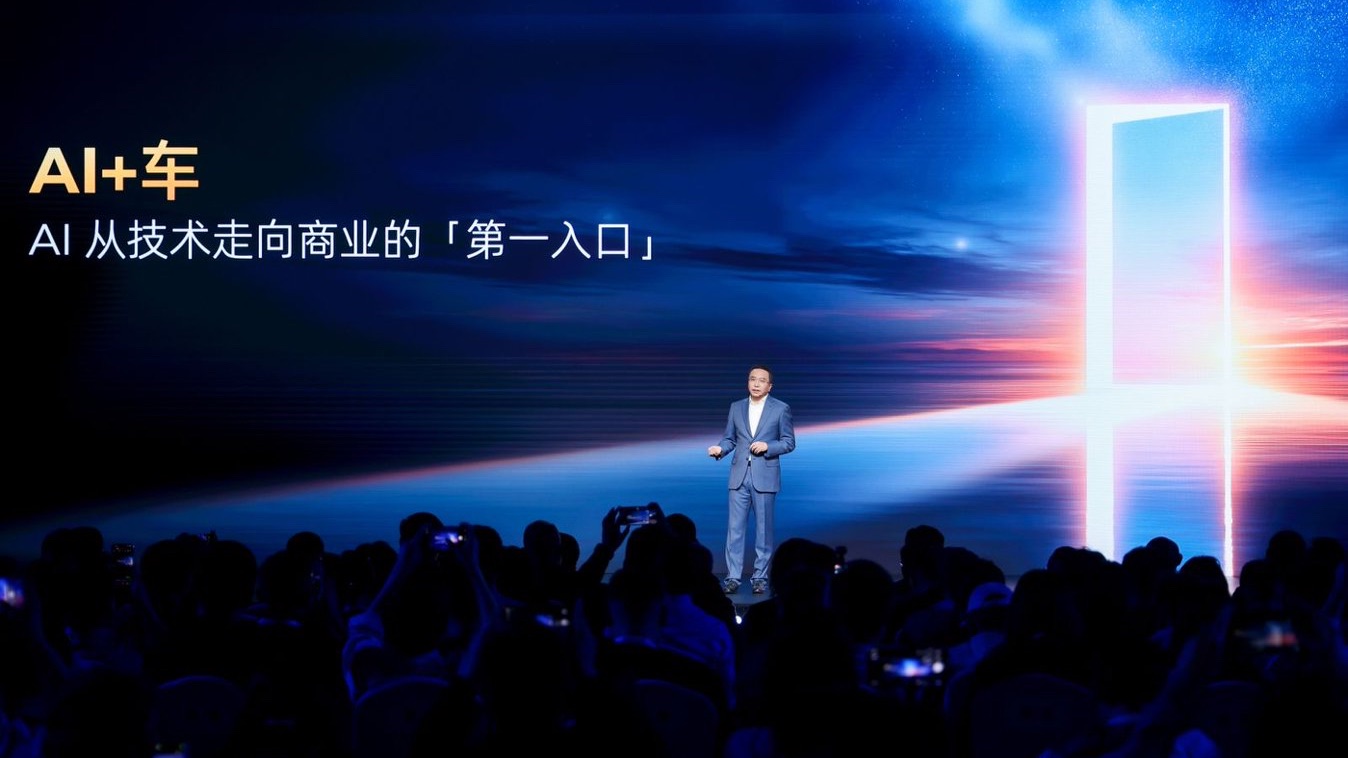
On April 22, as a newcomer in the intelligent driving field, Qianli Technology held an AI strategy and product launch event in Beijing, unveiling its roadmap in the autonomous driving mobility service sector.
Notably, this launch was also the first public appearance of Zhao Ming, a former high-level executive from Huawei and former CEO of Honor, who joined the automotive circle in March this year. At this event, he appeared as the Co-Chairman of Qianli Technology.
“AI is the field I want to devote myself to for the next 10, 20 years,” stated Zhao Ming. He noted that the current wave of AI technology is overwhelming, integrating all industries and reshaping value. Although he could have stayed inactive, numerous conversations over the past year, especially with Inchi, Chairman of Qianli Technology, motivated his interest in AI and destiny with Qianli Technology.
He stated that he decided to embrace AI and fight for another 10 or 20 years.
AI + Car, HarmonyOS’s Old Friend and New Rival
Qianli Technology, formerly known as Lifan Technology, a pioneering private company in the A-share passenger car market, was founded in 1992. In 2019, due to poor management, Lifan Technology faced a debt crisis, leading to a bankruptcy restructuring coordinated by Geely Group and Chongqing Liangjiang Fund. In February 2025, Lifan Technology was rebranded to Qianli Technology, announcing a focus on the “AI + Car” strategy and transforming into an intelligent mobility technology company, positioning itself as a smart driving solutions provider.
In June 2025, Qianli Technology, along with major shareholders Geely and Megvii Technology, integrated the smart driving team from Geely’s ZEEKR, Geely Research Institute, and Megvii’s smart driving brand Machinex, launching a new smart driving brand – Qianli Smart Drive. Besides Qianli Smart Drive, Qianli Technology also introduced Qianli Smart Cabin and Qianli Smart Mobility segments, focusing on intelligent cockpits and services like ride-hailing and Robotaxi.
At this strategic launch, Zhao Ming systematically disclosed Qianli Technology’s strategic framework, technical routes, business goals, and ecosystem layout for the first time.
By the end of March, Qianli Smart Drive had been installed in 460,000 vehicles across 17 models, with an activation rate of 92% for assisted driving. The backend recorded an average of 320,000 risk avoidance instances per month.
Based on the on-site vehicle display, current mass-produced models featuring Qianli Smart Drive include Geely’s significant models ZEEKR 8X and 9X, with the newly launched ZEEKR 8X being the first to feature Qianli Smart Drive ASD 4.0.
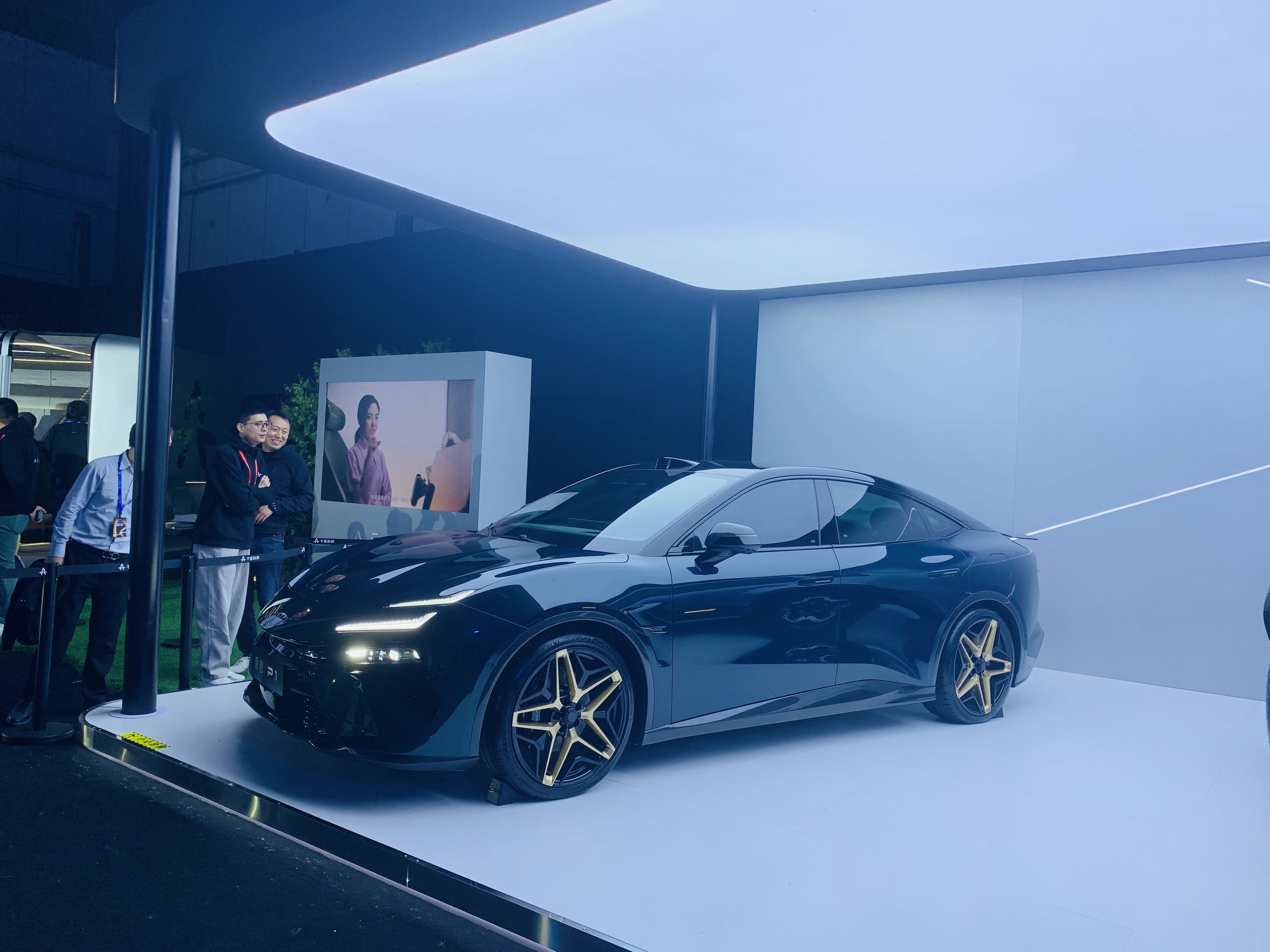
At the event, Zhao Ming also presented a video demonstrating him personally driving the ZEEKR 8X on a real-world road test in Shanghai, showcasing Qianli Smart Drive ASD 4.0’s capabilities in handling complex scenarios like abrupt pedestrian appearances, narrow roads, mixed traffic of people and vehicles, uncharted underground parking, dead-end turnarounds, and interactive features like gesture summoning.
Due to confidence in their technology, Zhao Ming anticipates that by the end of this year, Qianli Smart Drive will reach an installation volume of 1 to 1.3 million vehicles, eventually reaching 2.7 to 3.3 million vehicles by 2027 and further aiming for 8 million vehicles by 2028.When discussing his former employer and current competitor Huawei, he stated, “We are also looking forward to Hongmeng Zhixing doing better and surpassing this figure. I am convinced they can achieve it.”
Similar to Huawei’s Hongmeng Zhixing branding strategy of “five realms” and “two states,” Qianli Technology announced at the press conference that it will collaborate with users to launch a new AI car brand: Youxin / PALLADE. Zhao Ming explained that the brand name is derived from Zhuangzi’s “Free and Easy Traveling,” intending to convey a product spirit of freedom, wisdom, and being undefined. The new brand is set to launch a sedan and an SUV, priced between 200,000 and 400,000 yuan.
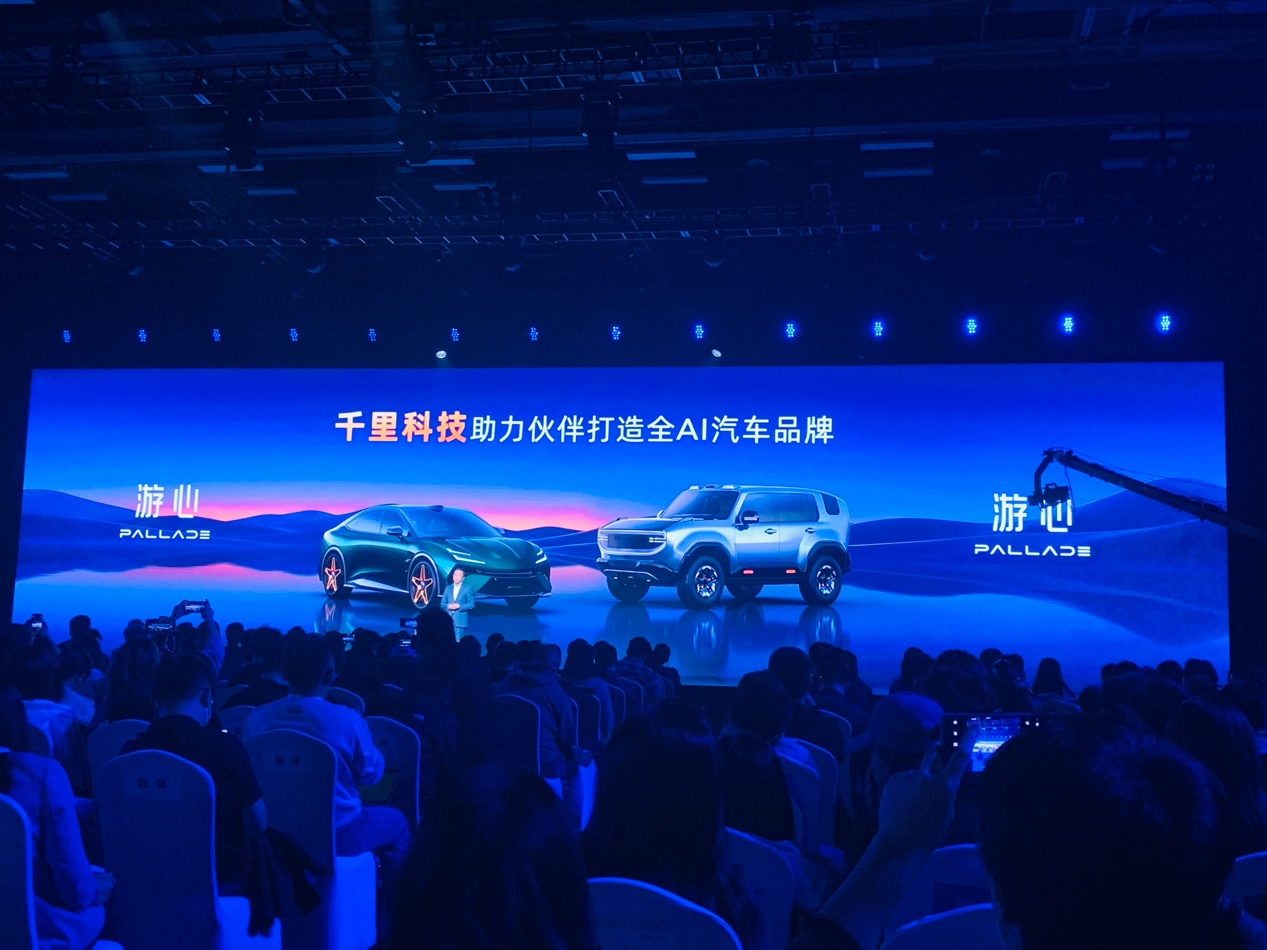
However, Qianli Technology did not disclose specific information about its partners. Zhao Ming only revealed in a post-conference interview that Youxin is a new brand for existing customers and will fully integrate Qianli Technology’s automotive solutions and manufacturing plans, as it is still in the early stages of development and testing.
Additionally, Qianli Technology plans to introduce a comprehensive Robotaxi solution to the market by 2027. Zhao Ming stated that this plan is an extension of Qianli Technology’s L4-level unified technical architecture and mass production capabilities, and the upcoming Robotaxi solution will be a full-stack service package comprising the vehicle platform, L4-level autonomous driving software and hardware systems, cloud data platform, and remote safety monitoring.
Notably, Qianli Technology’s L4-level autonomous driving system is not an independent laboratory project but is based on the same architecture as the current large-scale mass-produced ASD system. This implies that from L2 to L4, Qianli Technology’s underlying technologies and algorithms connect seamlessly, with the current mass-produced L2 system ultimately serving L4, and mutual feedback and interaction between the two will occur.
Qianli Technology’s market target is to have over 300,000 Robotaxis worldwide equipped with its solutions by 2030.
Honing Internal Skills, Expanding the Ecosystem, Becoming a Bosch in Intelligent Driving
“AI+ Cars is the first entry point for AI technology to commercialization,” Zhao Ming pointed out at the press conference, as it possesses all the necessary conditions such as ample computing power, sufficient energy, and high-frequency user interaction with daily continual training. This judgment aligns with Yin Qi, who stated on site that the landing of robots is too distant; the leap from L2 to L4 intelligent driving technology is a more realistic AI commercial scenario.
In terms of technology roadmap, Qianli Technology adopts a world model + foundational large model + end-to-end approach. In an interview following the conference, Yin Qi highlighted that world models and VLA are the two core pillar elements for future intelligent driving. What intelligent driving companies need to do is compete based on these two pillars in two fundamental skills: AI full-chain deployment ability centered on data, algorithms, and computing power, and engineering implementation capability.He described it as an open-book exam. The development model and underlying architecture are open, and the route is ready-made. The key is how to achieve it through systematic capabilities. He cited that while every player at the table knows the three elements: data, algorithms, and computing power, each element represents significant accumulation. Even with the same data, computing power, and algorithms, the results vary greatly across different companies.
Ultimately, companies that succeed in the smart driving race must possess two critical elements: business models and organizational capability.
Yinqi believes Qianli Technology’s advantage lies in its early, clear commercial path choice, which is to create vehicles and solutions in an embodied intelligence manner. This path supports the team in developing faster with AI-native and engineering-driven technical solutions. Since the car itself is a type of robot, we can enjoy the convenience it provides for mobility while studying and observing its intelligent evolution.
Regarding the implementation of intelligent driving capabilities from L2 to L4, Yinqi believes that the gradual technical evolution route still holds reference value. Tesla talks about L4 because their technology level has reached L3, but currently, no domestic company can truly achieve L3, so it is impossible to achieve it in one step. He further compared Waymo and Tesla, stating that only Tesla’s model can truly achieve L4.
For top AI players, the ultimate model capability is 100% equivalent to data capability. Yinqi pointed out that you must first be an outstanding technical expert and have more and better data, which must come from real scenarios. From this perspective, as a robot or embodied intelligence, cars inherently have many incomparable advantages over other categories.
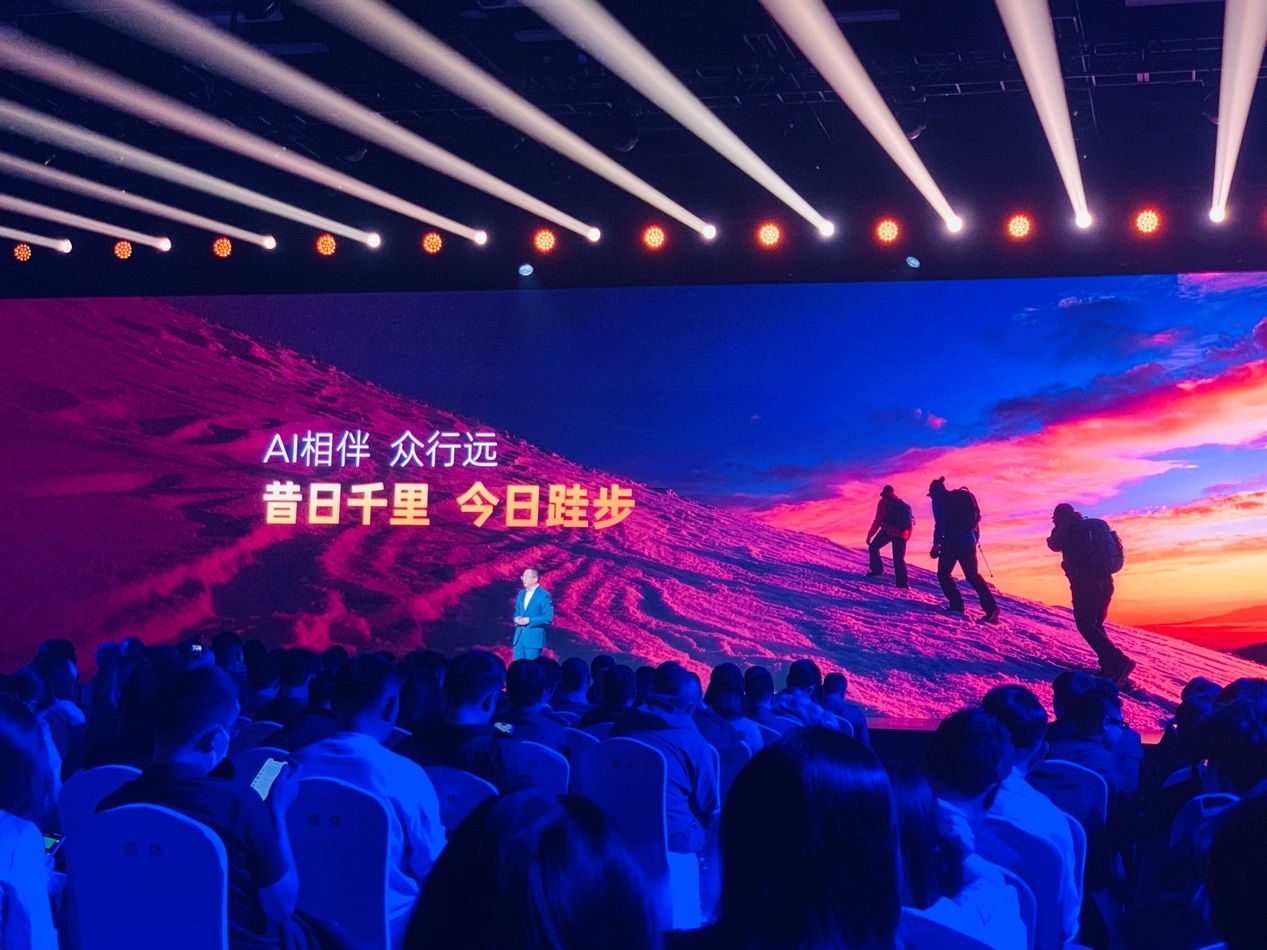
Regarding engineering capabilities, Qianli Technology is also gradually aligning with leading companies. Yinqi stated, “I highly emphasize engineering capabilities. We are a system driven by engineer culture. The truly integrated soft and hardware engineering capabilities are crucial. I find companies like Huawei particularly respectable. Huawei’s integrated software engineering capability is exceptionally strong, which is something every company should learn from.”
Besides honing internal skills, Qianli Technology is also focused on building a complete AI ecosystem. At this conference, Qianli Technology officially announced its partnership with Gradient Evolution to jointly create a native intelligent driving base model, enhancing the upper limit of intelligent driving models. Gradient Evolution is a new prominent representative in the domestic general large-model field, collectively referred to as the “Six AI Tigers” along with Zhipu AI, MiniMax, Dark Moon, Baichuan Intelligence, and Zero One Everything.
On the topic of the soul of intelligent driving, Yinqi believes this is not the most important point currently. At present, OEMs need to focus more on overall vehicle integration and brand building. The entire industry chain can enhance collaboration to bring the best experience to C-end users. His judgment is that unlike the cabin, intelligent driving is a safety key and must be stable and reliable. Therefore, a Tier 1 company similar to Bosch will emerge in the future smart driving field.Based on the judgment of the final phase of intelligent driving, Inchi pointed out that in the future, intelligent driving players who cannot achieve a global vehicle installation volume of tens of millions will find it difficult to survive, as the future will undoubtedly depend on a business model of small profits and quick returns, winning through scale.
In order to achieve large-scale mass production, Qianli Technology is also attempting to shed the Geely label and integrate more broadly into the automotive circle.
In December last year, Qianli Technology announced it had received strategic investment from Benz. According to the cooperation framework signed by both parties, Benz’s Digital Technology Company in the Shanghai R&D center acquired a 3% stake in Qianli Technology for a total transaction price of 342 million yuan, becoming the fifth largest shareholder and gaining a board seat. As planned, the two parties will conduct in-depth cooperation in multiple fields, such as intelligent driving and intelligent cockpits.
For Qianli Technology, the year 2026 will mark the beginning of a new game.
This article is a translation by AI of a Chinese report from 42HOW. If you have any questions about it, please email bd@42how.com.