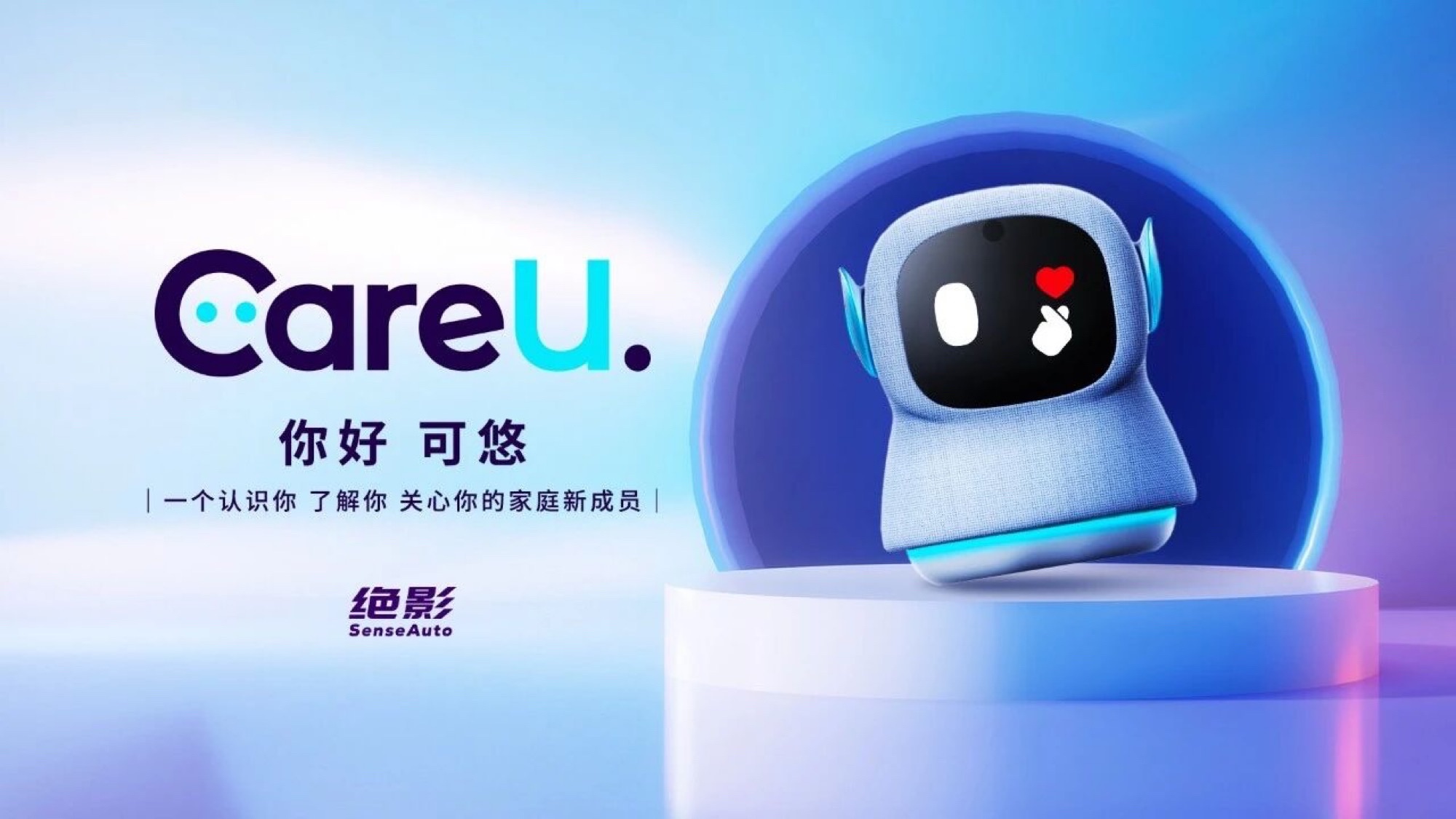
On April 8th, SenseTime’s Jueying formally launched the home AI terminal “Care U,” attempting to extend intelligent agents from in-car cockpits to more life scenarios such as home and office. The product is positioned with the core of “knowing you, understanding you, caring for you,” emphasizing cross-device collaboration and continuous evolution, marking the company’s further expansion beyond smart cockpits.
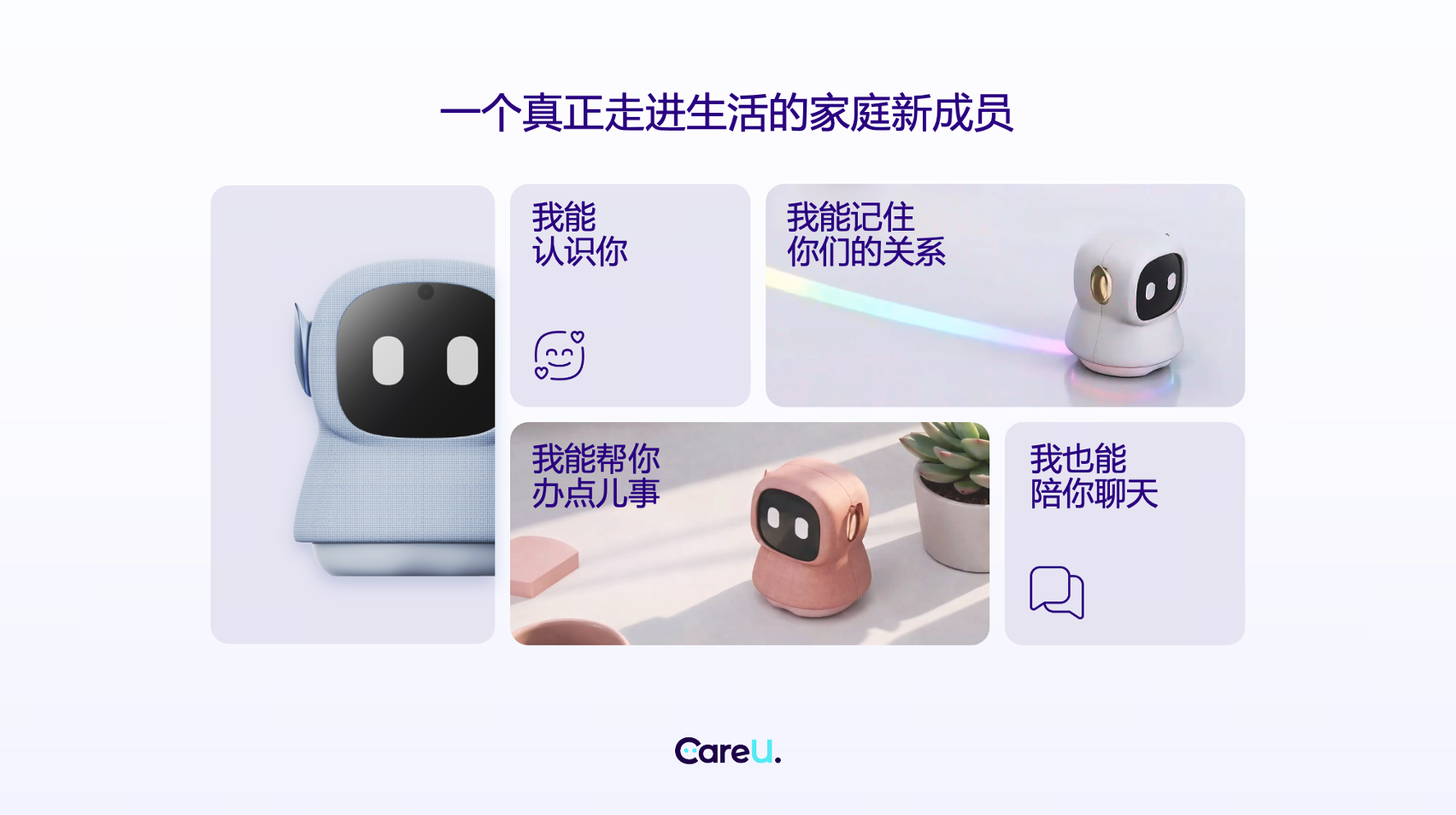
In terms of product form, Care U is no longer limited to traditional voice assistants but achieves seamless task continuation across different terminals through multi-device linkage. For instance, a user can plan an itinerary at home, continue discussions in the car, and complete organization in the office, with related information and task progress automatically synced to reduce repetitive operations. This is supported by SenseTime Jueying’s “full-scene multi-device intelligent agent collaboration system,” which connects car systems, home hardware, and personal devices through unified memory and connectivity mechanisms.
On the interaction and perception level, Care U is equipped with a multi-modal system: the auditory side uses a dual-microphone array supporting 180° sound pickup and up to 50 voiceprint recognitions; the visual side features a 2-megapixel camera capable of recognizing faces, gestures, and objects; the posture end uses a six-axis sensor for high-frequency spatial perception. These capabilities together support comprehensive judgments of user identity, environment, and behavior. Meanwhile, the device-cloud collaborative architecture allows for low-latency responses on the device side (less than 3 seconds), while the cloud handles complex semantic understanding and task planning.
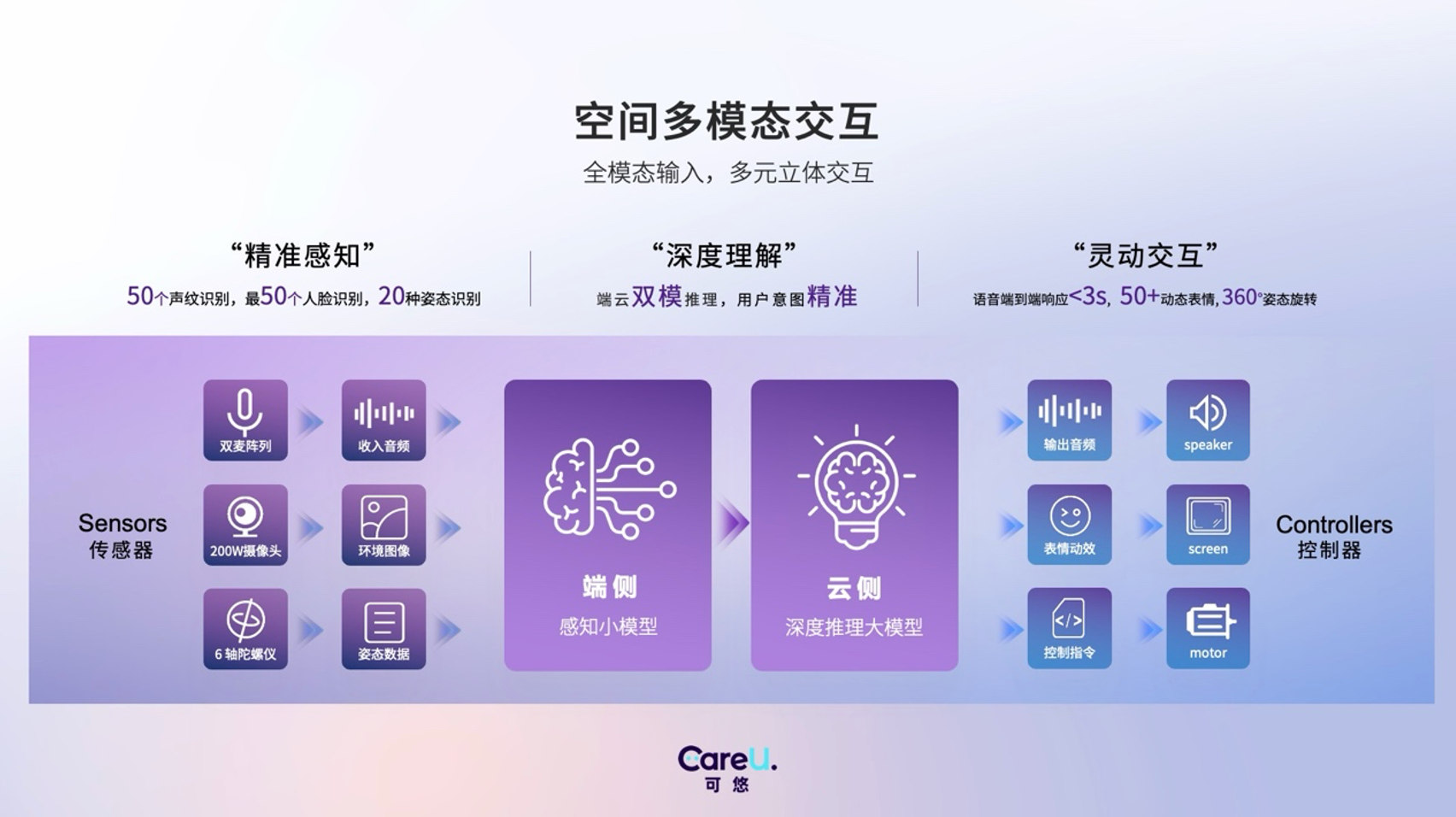
As for display and interaction forms, Care U has a 1.75-inch OLED screen capable of displaying various dynamic expressions and supports multi-tone voice feedback and 360° action interaction, enhancing the emotional connection between humans and devices.
Notably, Care U introduces the “growth-oriented family cognitive memory framework,” extending from individual user memory to the family dimension. The system continuously records and abstracts user behavior, forming a multi-layer structure including perceptual memory, factual memory, and cognitive memory, achieving long-term learning and dynamic updates of family members’ habits and relationships.
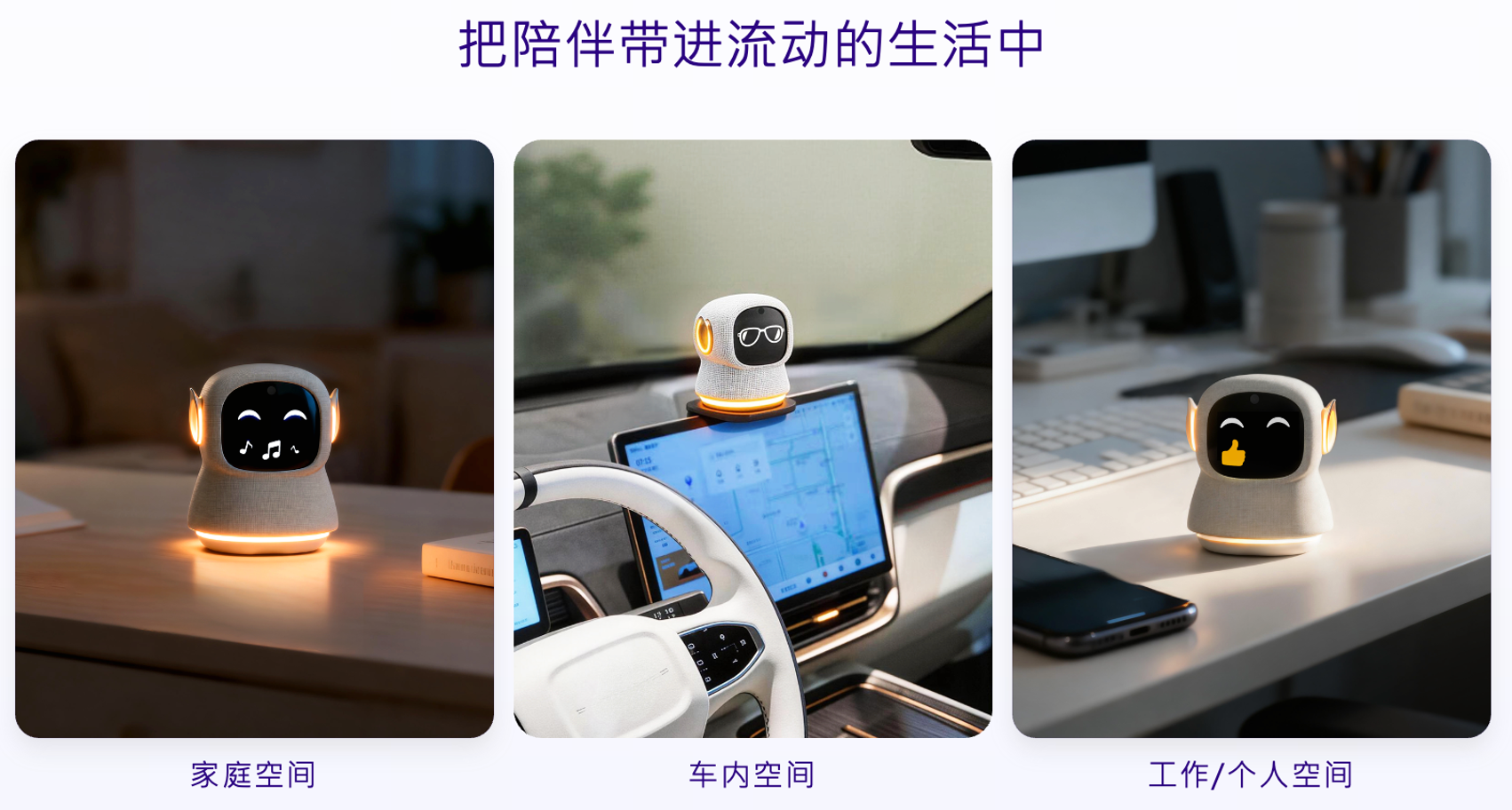
In the future, Care U will further integrate with IoT devices, local life, and content services ecosystems, serving as a unified entry point connecting home, car, and office scenarios. From an industry trend perspective, the emergence of such products reflects AI’s evolution from single-point conversational tools to service-oriented intelligent agents coordinating across scenarios and devices.
This article is a translation by AI of a Chinese report from 42HOW. If you have any questions about it, please email bd@42how.com.