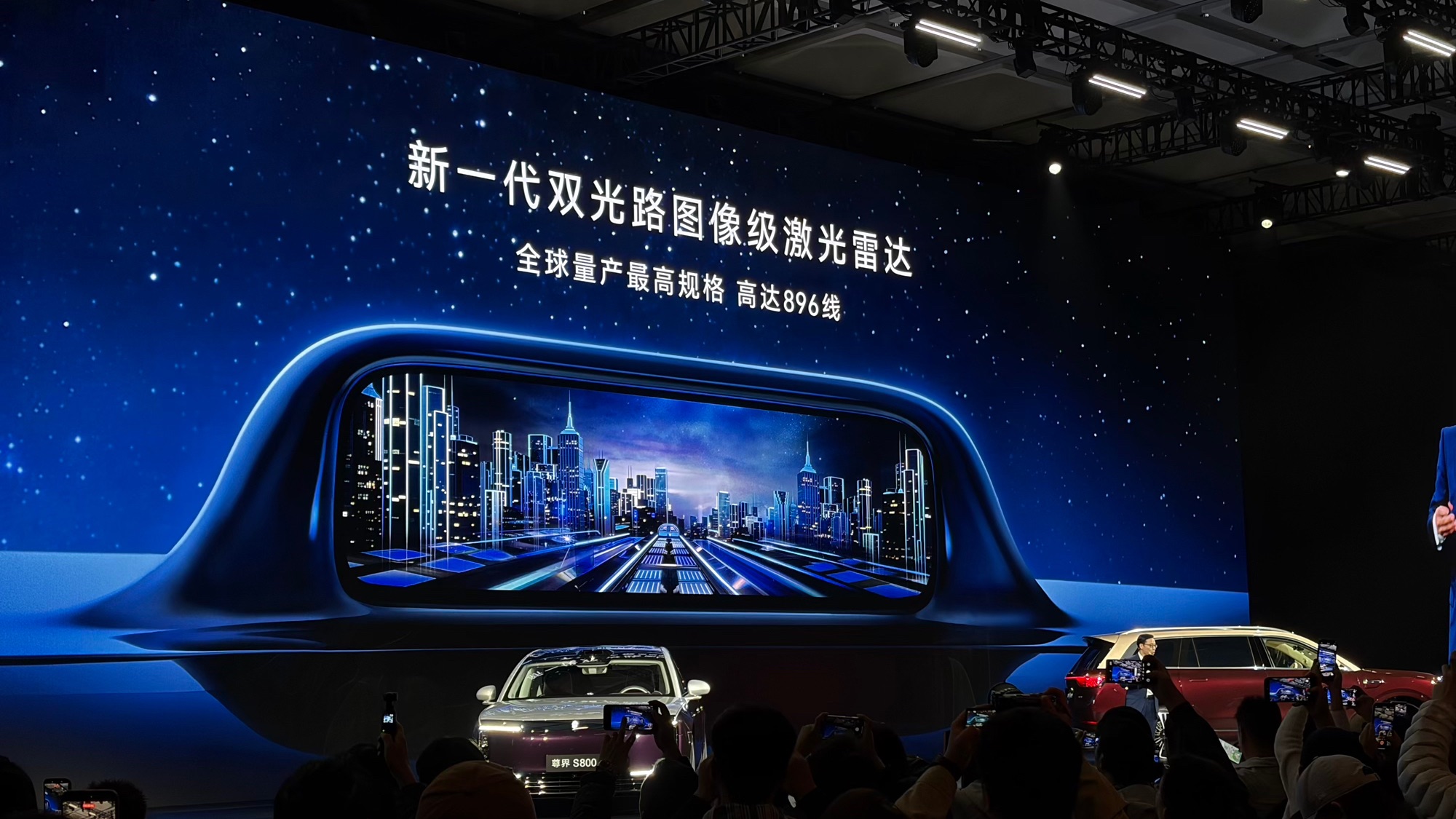
“The development of this lidar has been ongoing since I became the CEO of the car BU, and now, after 4 or 5 years, it has finally been launched,” said Yu Chengdong excitedly at the formal release of the 896-line lidar.
The first models to feature this 896-line dual-optical-path image-level lidar are the Honjia S800 and the AITO M9. Compared to models equipped with 192-line lidar, their prices have increased by 20,000 yuan and 10,000 yuan, respectively. The Honjia S800 with the 896-line lidar starts at 728,000 yuan, while the AITO M9 starts at 479,000 yuan.
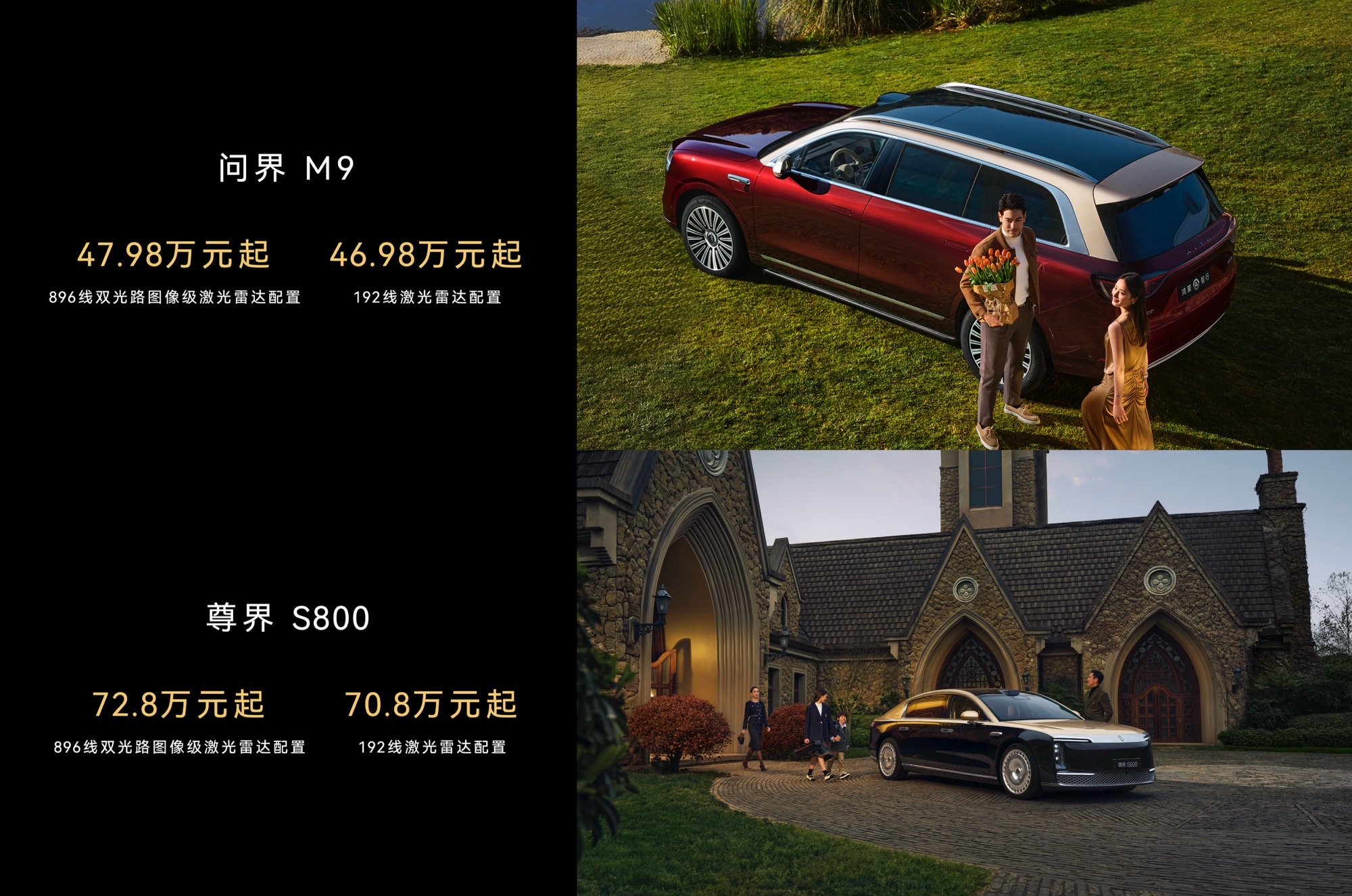
For buyers of the Honjia S800 and AITO M9, the additional cost of 10,000-20,000 yuan for this option is not expensive, though it remains discreet and almost indistinguishable in appearance, unlike paint or interior upgrades that are immediately noticeable. So, is the dual-optical-path image-level lidar worth choosing?
At this afternoon’s launch, Huawei explained this thoroughly.
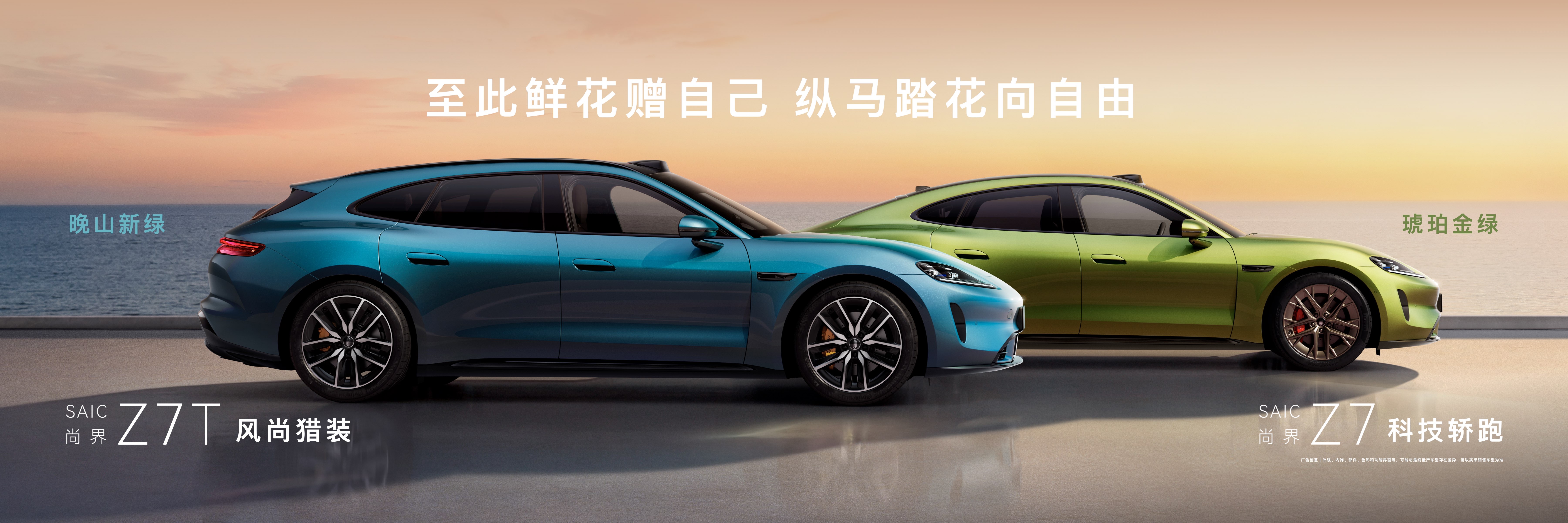
At the same time, the new models from the HarmonyOS Intelligent Vehicle Lineup, the Shangjie Z7 and the Z7T Shooting Brake Edition, were also unveiled at today’s launch. According to the plan, these two models will be officially released by the end of this month.
The Bottleneck of Lidar is at the Receiver
Currently, most vehicles on the market with lidar are equipped with only one main radar, opting to have a wider field of view rather than seeing farther. However, due to the limited number of lines and particularly the bottleneck in receiver capabilities, lidar still struggles to detect small objects.
At today’s presentation, Huawei’s CEO of the Intelligent Automotive Solution BU, Jin Yuzhi, demonstrated the difference between the 192-line and 896-line lidars in the same scenario.
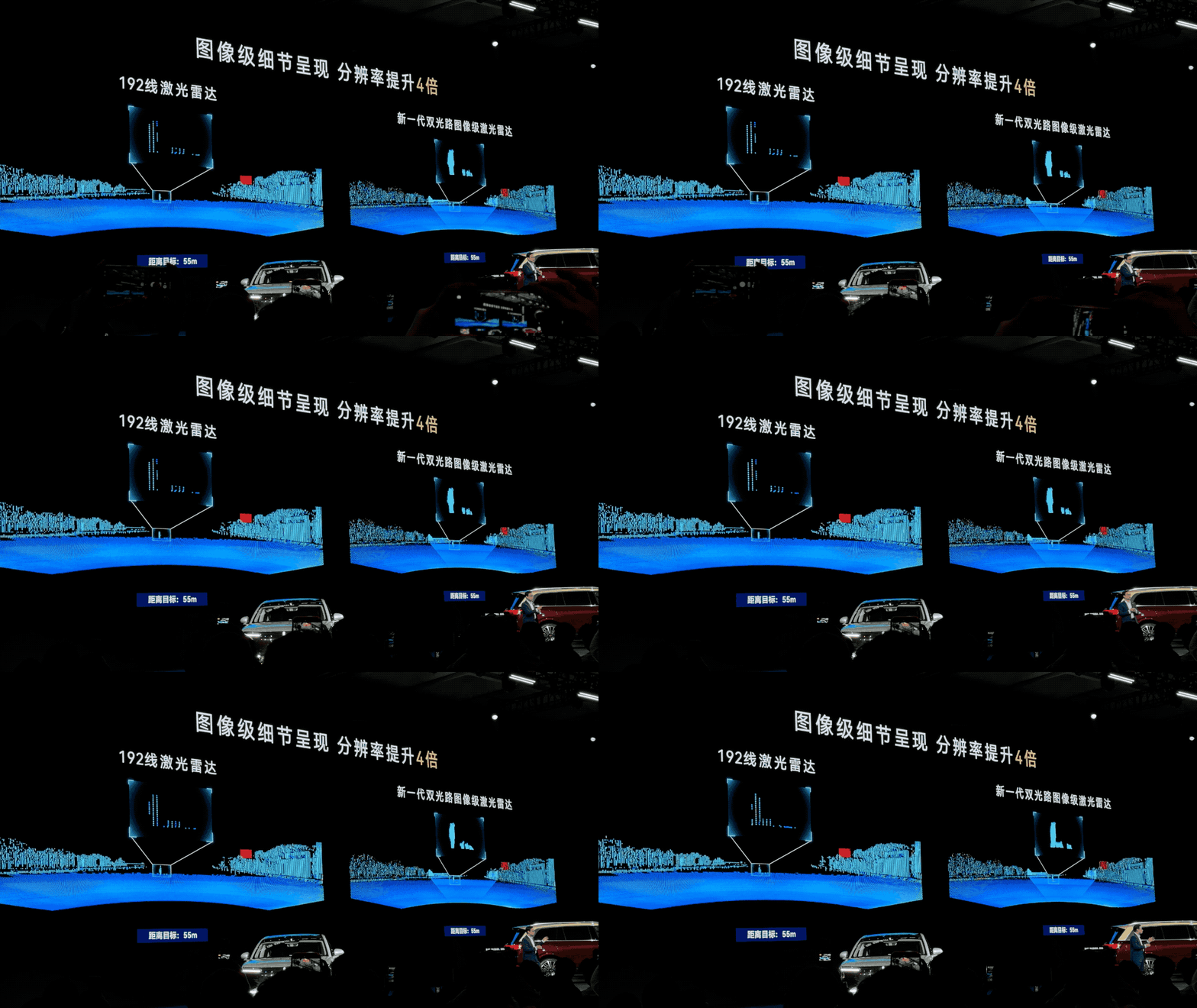
At a distance of 55 meters, the mass-produced 192-line lidar can see distant obstacles, but only as a lattice, unable to discern what the obstacle is. However, through the eyes of the new dual-optical-path image-level lidar, it is clear to see a person walking three dogs, even capturing the detail of the dogs wagging their tails.
According to official data, in night-time no-light scenarios, at a vehicle speed of 120 km/h, it can recognize small obstacles with a height of 14 cm from 120 m away (such as a cardboard box or a fallen tire), allowing for a comfortable bypass or stoppage. For obstacles of 30 cm height, it can be recognized from 162 m away, allowing for a comfortable bypass or stoppage.
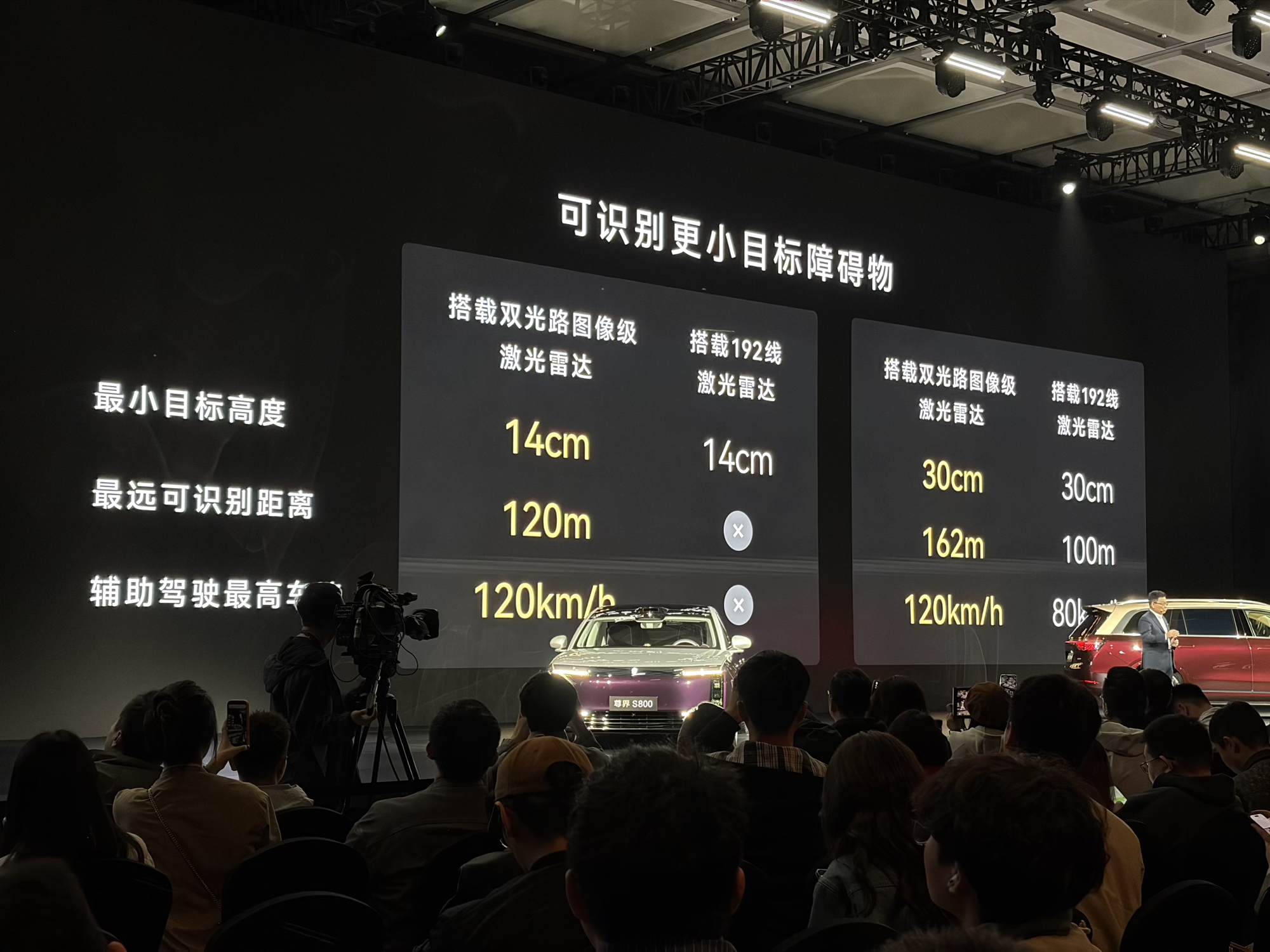 Compared to the already mass-produced 192-line LiDAR, it cannot identify small target obstacles at a height of 14 cm. If recognizing obstacles of 30 cm in height, the recognition distance is 100 m, allowing it to stop or avoid at a speed of 80 km/h. In this comparison, there is a significant difference in capabilities between the new and old LiDAR.
In our real tests, the AITO M9 equipped with 896-line LiDAR was able to continuously avoid small targets and low reflectivity obstacles at speeds of 120 km/h.
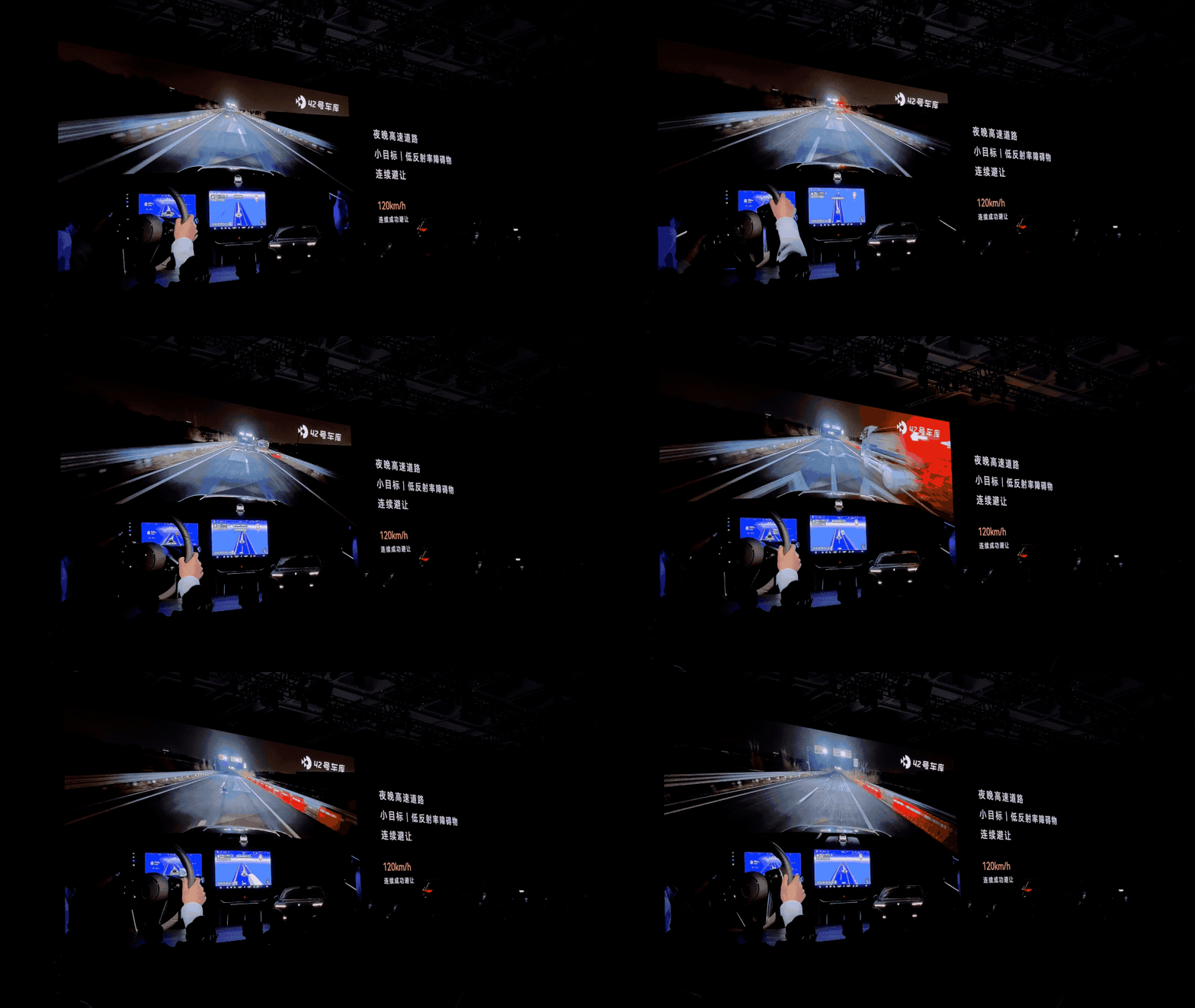
Is the new 896-line LiDAR only about increased line count? In fact, there’s more to it than that.
Externally, the Huawei 896-line dual optical path image-level LiDAR is wider and shorter compared to the 192-line LiDAR. Structurally, the 896-line LiDAR features one laser emission unit and two receiving units.
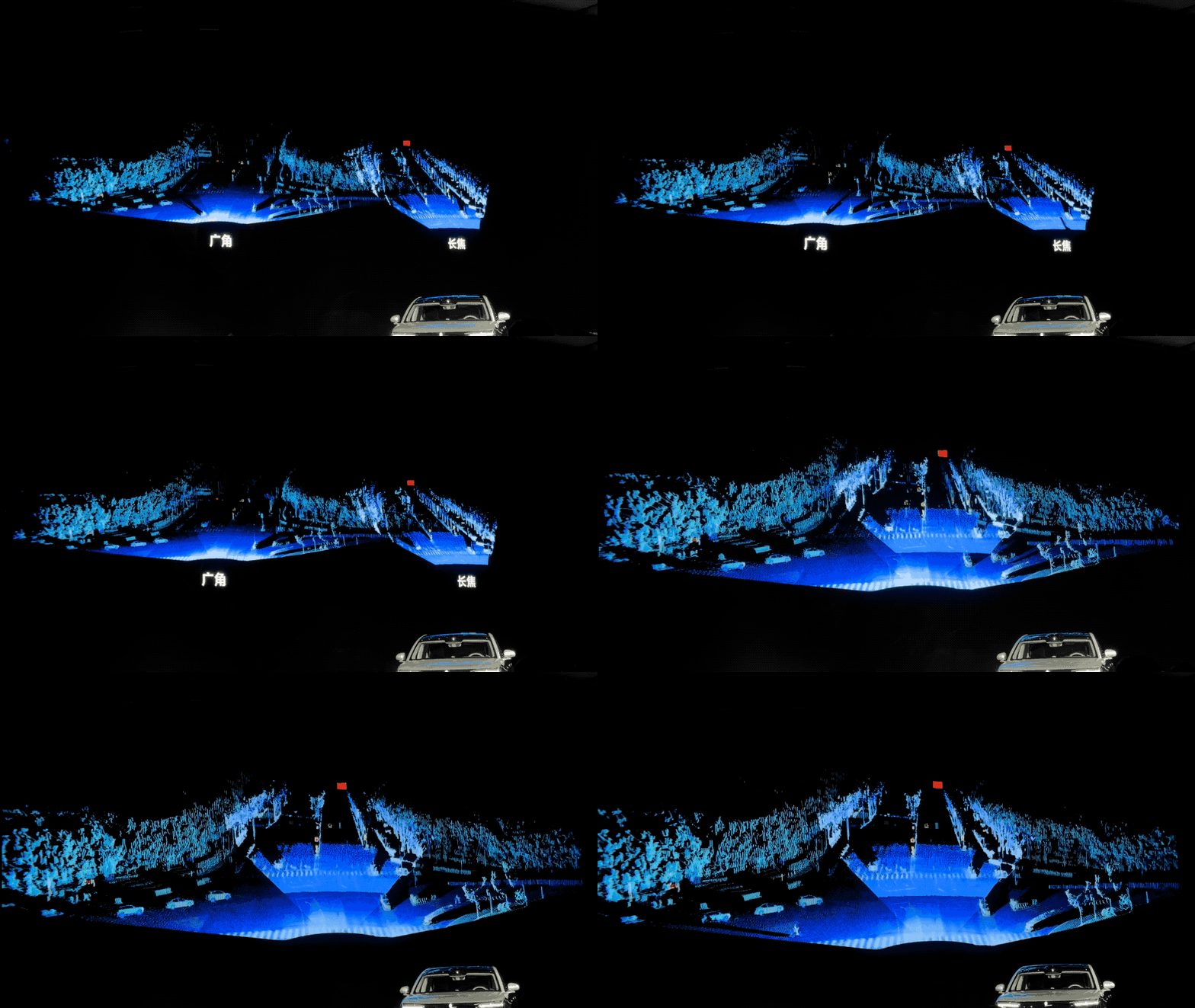
One of the receiving units is identical to the current 192-line LiDAR, with a 120-degree horizontal field of view, offering a wider view. The other receiving unit has a 30-degree field of view, dedicated to sensing distant objects. Coupled with forward cameras also at 120 degrees and 30 degrees, LiDAR and visual perception can be better integrated.
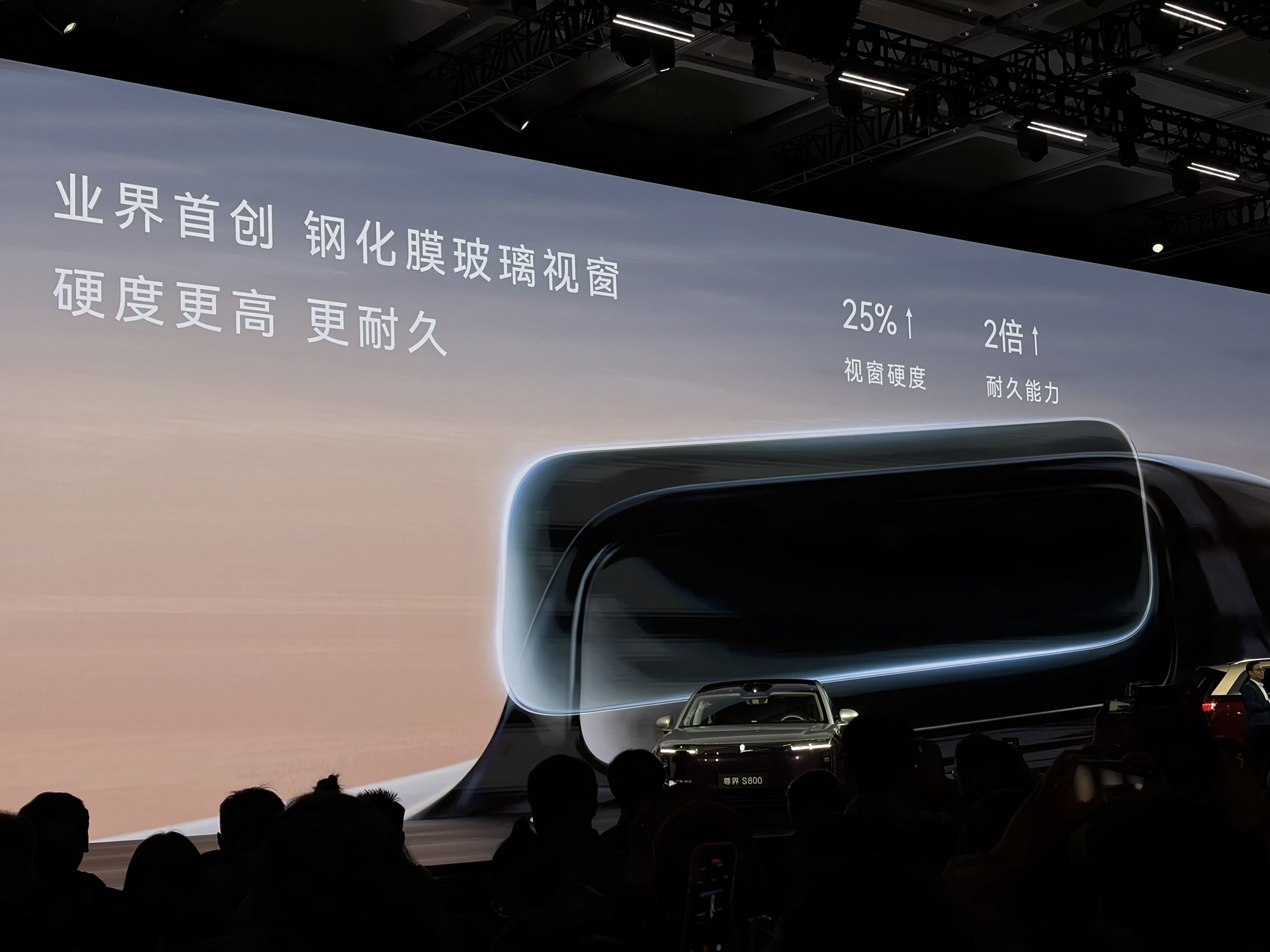
Additionally, according to the information, the internal design of Huawei’s 896-line LiDAR also enhances reliability. The LiDAR window uses tempered glass film, ensuring it won’t be scratched even when driving in sandy environments.
As one of the most understated options for the entire vehicle, the 896-line LiDAR costs an additional 20,000 yuan on the Zunjie S800 and 10,000 yuan on the AITO M9. For everyday driving, most users may not perceive the functional difference. However, in extreme scenarios, the proactive safety capability demonstrated by the 896-line LiDAR is clearly superior.
Shangjie Z7 models to be released at the end of the month
At today’s press conference, the finale was the upcoming official release of the Shangjie Z7 and the shooting brake version Z7T. Yu Chengdong announced that both models will be officially released at the end of this month.
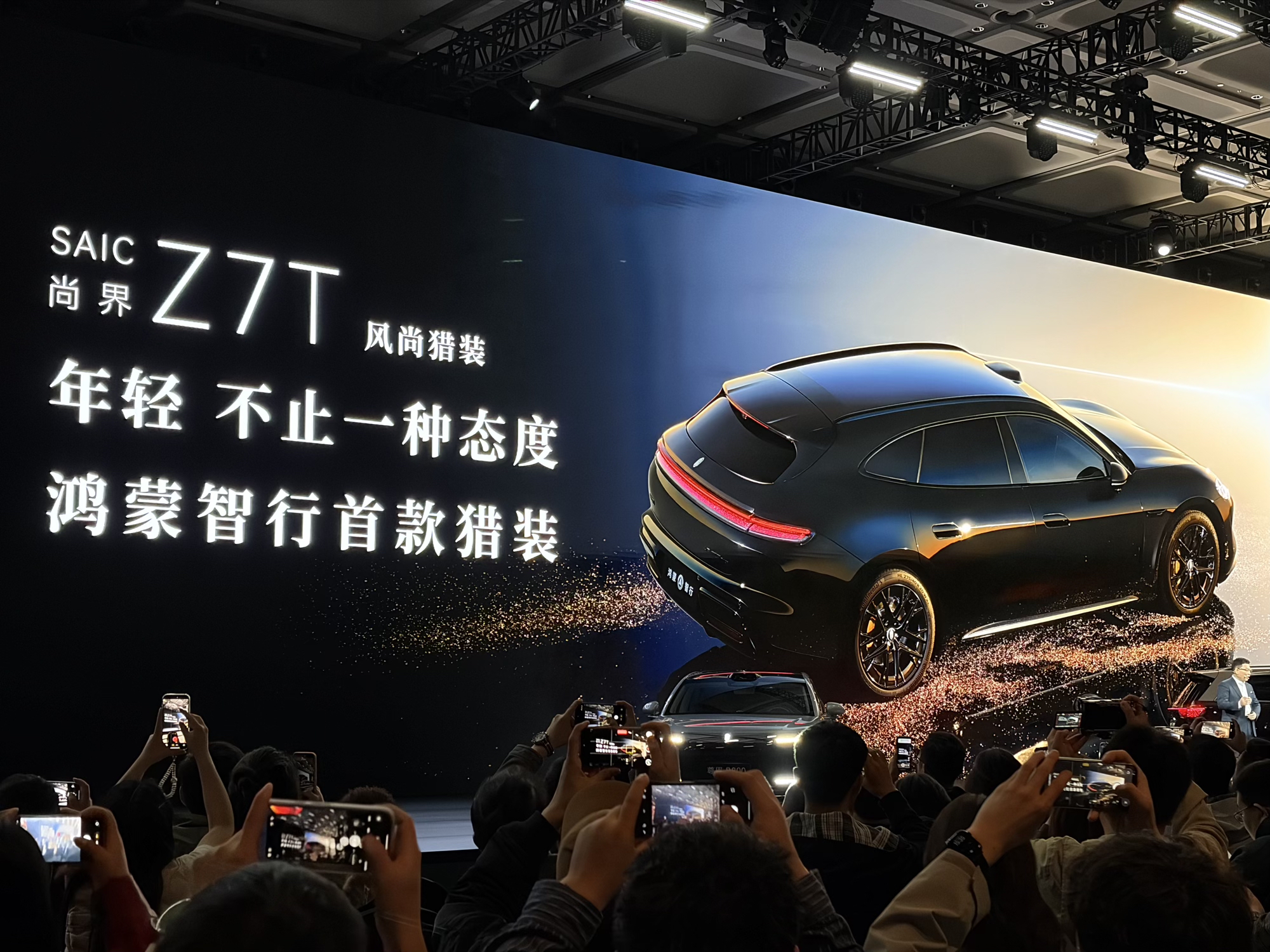
Aside from the previously unveiled blue exterior, the Shangjie Z7 also showcased two new colors: Electro Light Violet Pink and Amber Gold Green. These colors are not the traditional black, white, and gray, and the bolder body colors are expected to attract the attention of many young users.At the same time, the Shangjie Z7T also made its debut this afternoon. As the first shooting brake from HarmonyOS Smart Mobility, the design of the Z7T also adopts a sporty style, with muscular lines at the rear.
Entering the vehicle’s interior, the central control screen can even move. Similar to Xpeng P7, the screen of Shangjie Z7 will automatically swivel towards the speaking passenger inside the vehicle based on voice commands, providing a more intimate experience for the user.
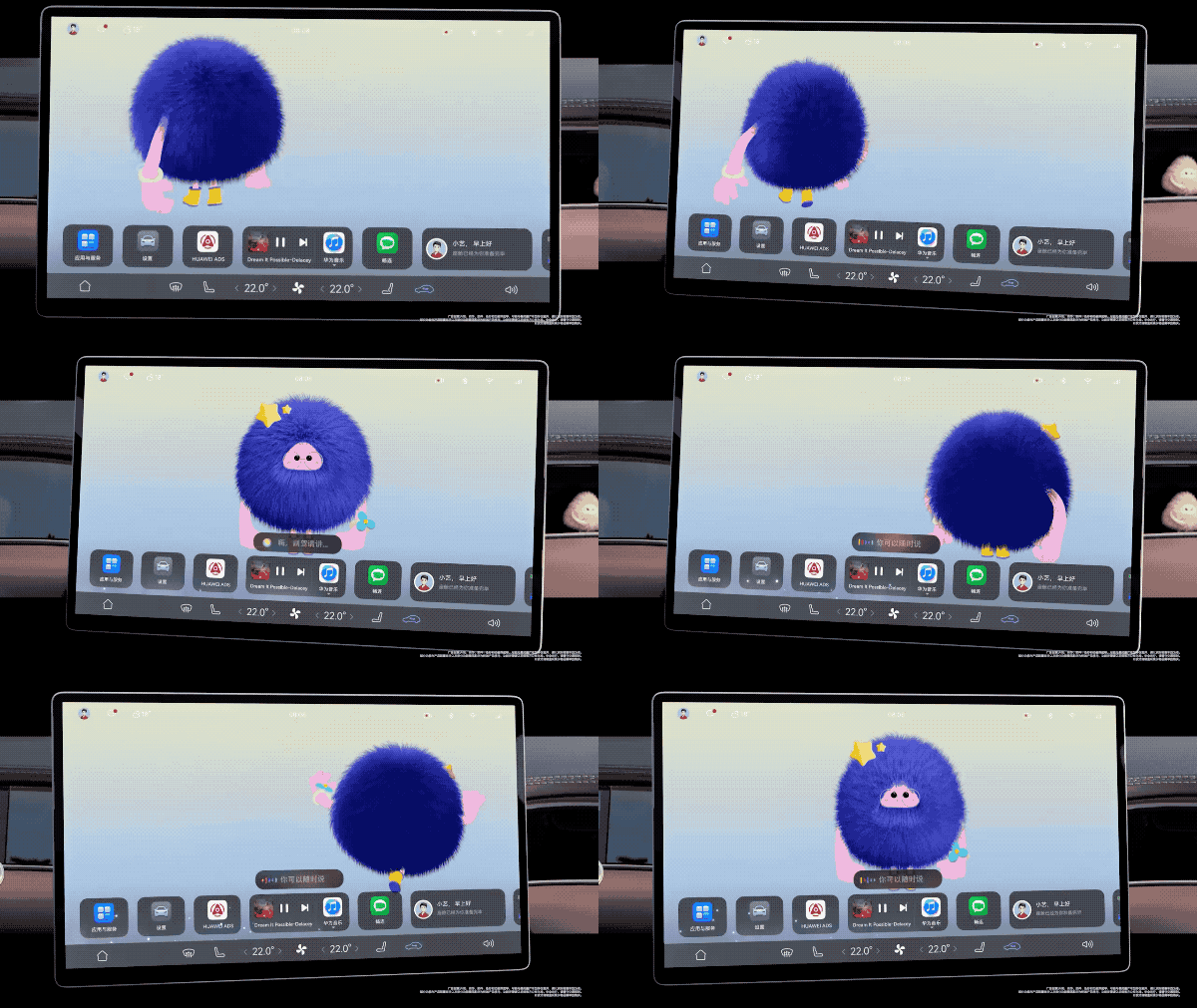
Additionally, this time the Shangjie Z7 comes equipped with a small co-driver’s display. Although the screen is not large, it allows customization of some widgets, or even housing a virtual pet. This ensures that the passenger seat won’t be boring during trips.
In terms of exterior design, both the Shangjie Z7 and Z7T feature elements of classic cars alongside plenty of original style. With such exterior and interior design, combined with Huawei’s assisted driving and smart cockpit technology, will more young people choose these two models?
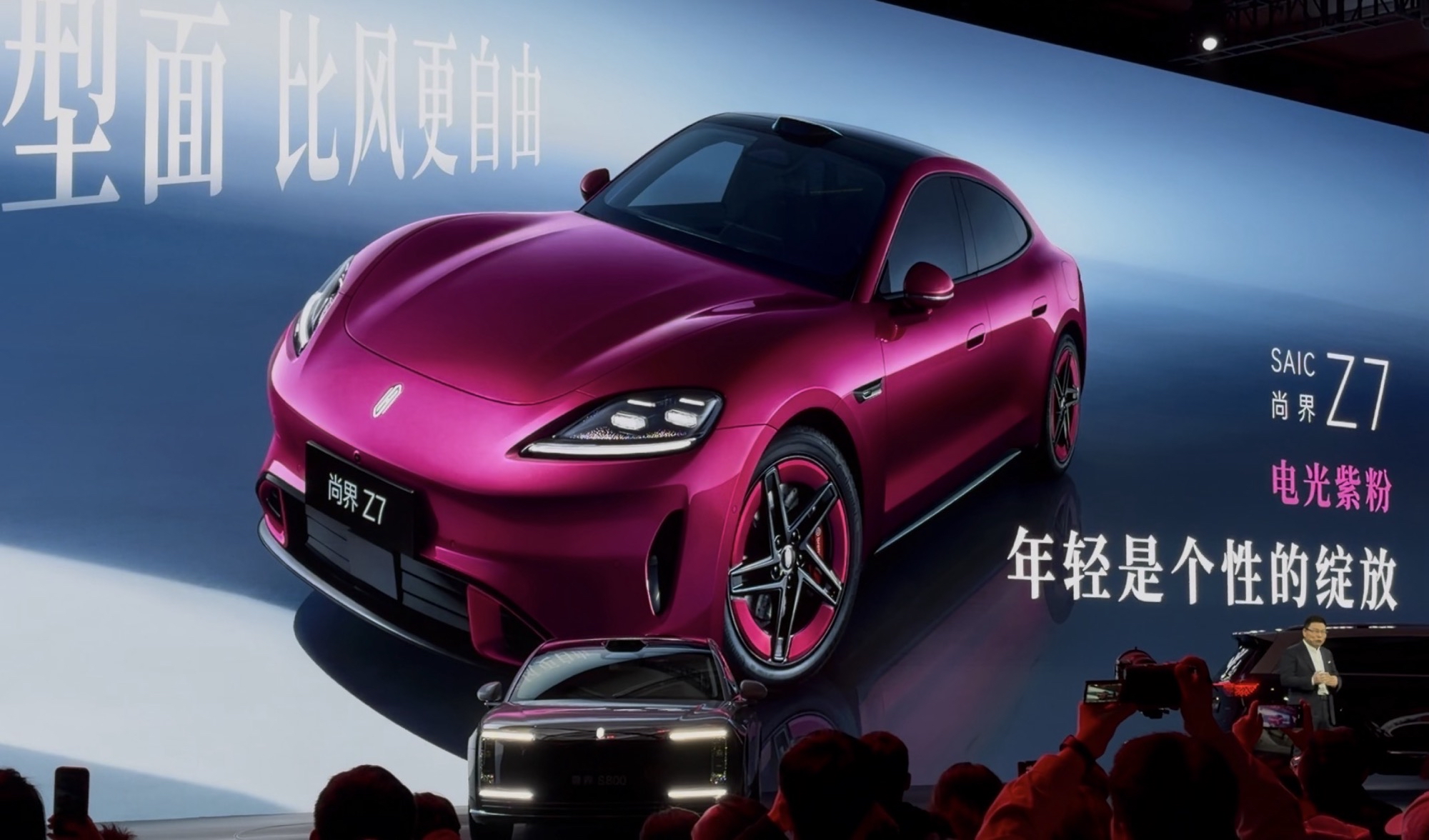
At the start of 2026, Huawei has already made a slight impact on the intelligent automotive industry. On one hand, the new dual-optical-path image-level LiDAR boosts the vehicle’s active safety capabilities, discreetly available as an option yet overtly prioritizing safety. On the other hand, HarmonyOS Smart Mobility is trying to appeal to younger buyers through design, body color, and interior features.
Faced with the intense competition in the 2026 automotive industry, Huawei has strategically positioned several key models within the flagship and 200,000-tier segments.
This article is a translation by AI of a Chinese report from 42HOW. If you have any questions about it, please email bd@42how.com.