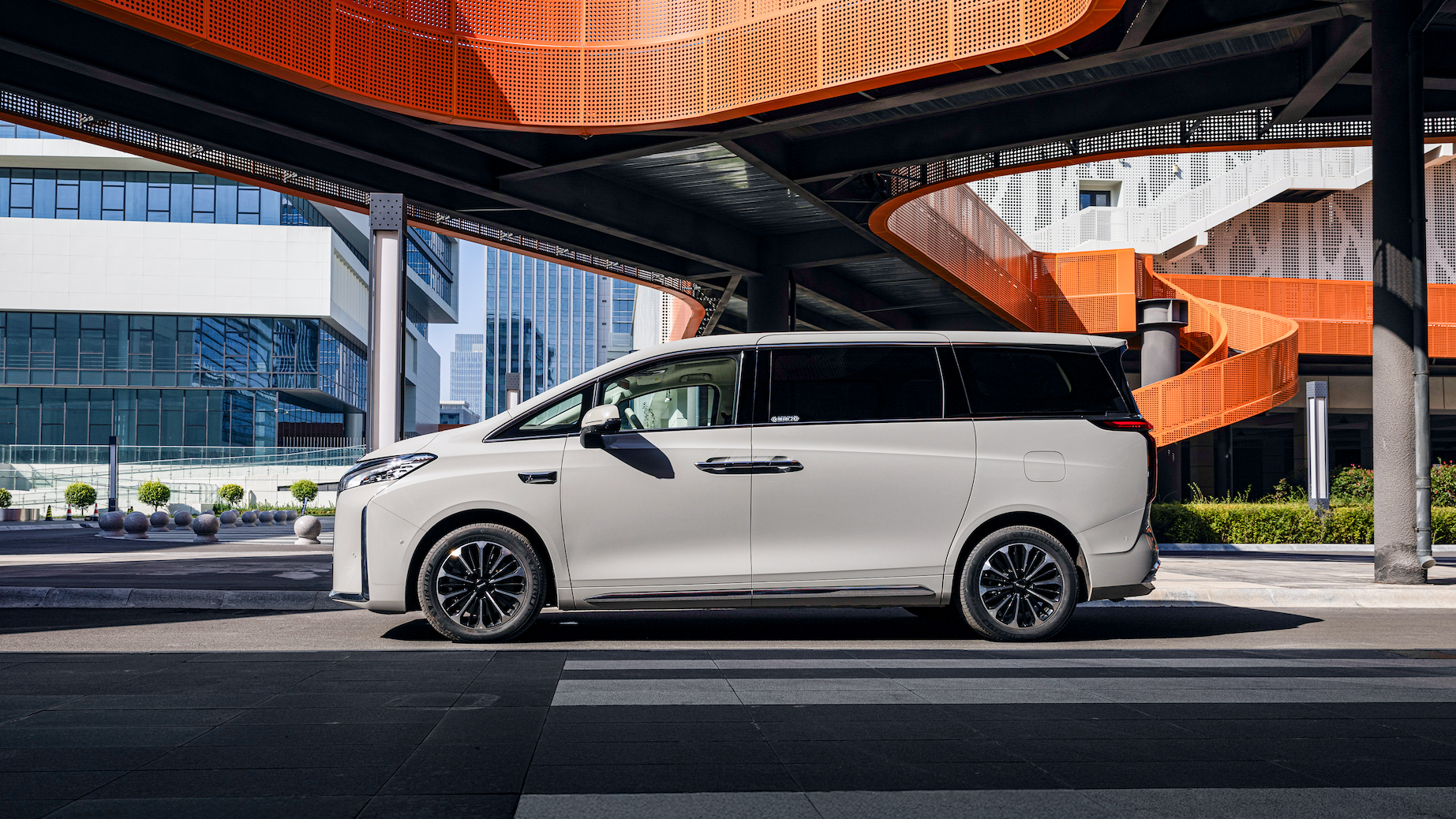
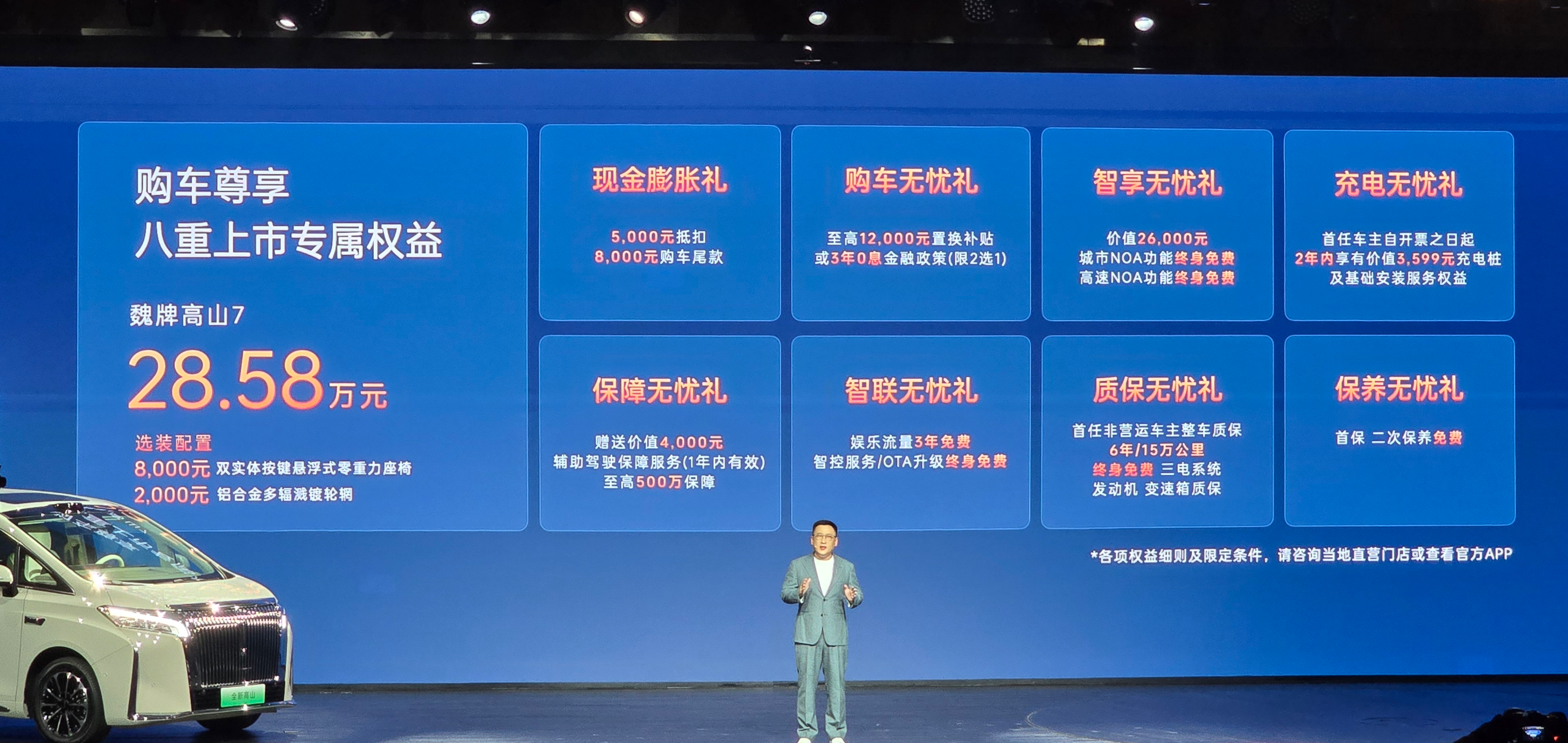
Today, the Wei Pai Gaoshan 7 was officially launched, available in a single version priced at 285,800 yuan. Optional features include the 8,000 yuan dual-physical-button suspension zero-gravity seats and the 2,000 yuan multi-spoke aluminum alloy splash-plated rims.
This is a mid-to-large plug-in hybrid MPV, and it’s the lowest-priced and smallest in the new Gaoshan family.
Initially planned to debut alongside the Gaoshan 8 and 9 in May, the Gaoshan 7 was delayed due to configuration adjustments but finally took the stage today. Compared to the more business-oriented models already launched, the Gaoshan 7 is tailored more for family users.
According to recent data released by the China Car Consumer Research & Evaluation (CCRT), in the first half of 2025, total sales in China’s MPV market approached 500,000 units, an increase of about 13%. Within this total, the penetration rate of new energy MPVs has exceeded 66.5%. In other words, in the MPV segment, new energy is no longer a rarity but is becoming one of the mainstream options.
At the same time, consumer demands for MPVs are changing. With the diversification of lifestyles, many users want new energy MPVs to balance commuting, holiday travel, and mixed scenarios of daily urban passenger and cargo transport.
These changes also bring new challenges: range anxiety must be addressed, power needs to keep up, intelligent cabins should be user-friendly, and driver assistance must be reliable. If an MPV falls short in these crucial aspects, it will struggle to stand out in a competitive market with similar products.
Now, after much refinement, the Gaoshan 7 finally steps into the spotlight. Can it meet these escalating expectations?
A “Mobile Living Room” Where Everyone Has a Good Spot
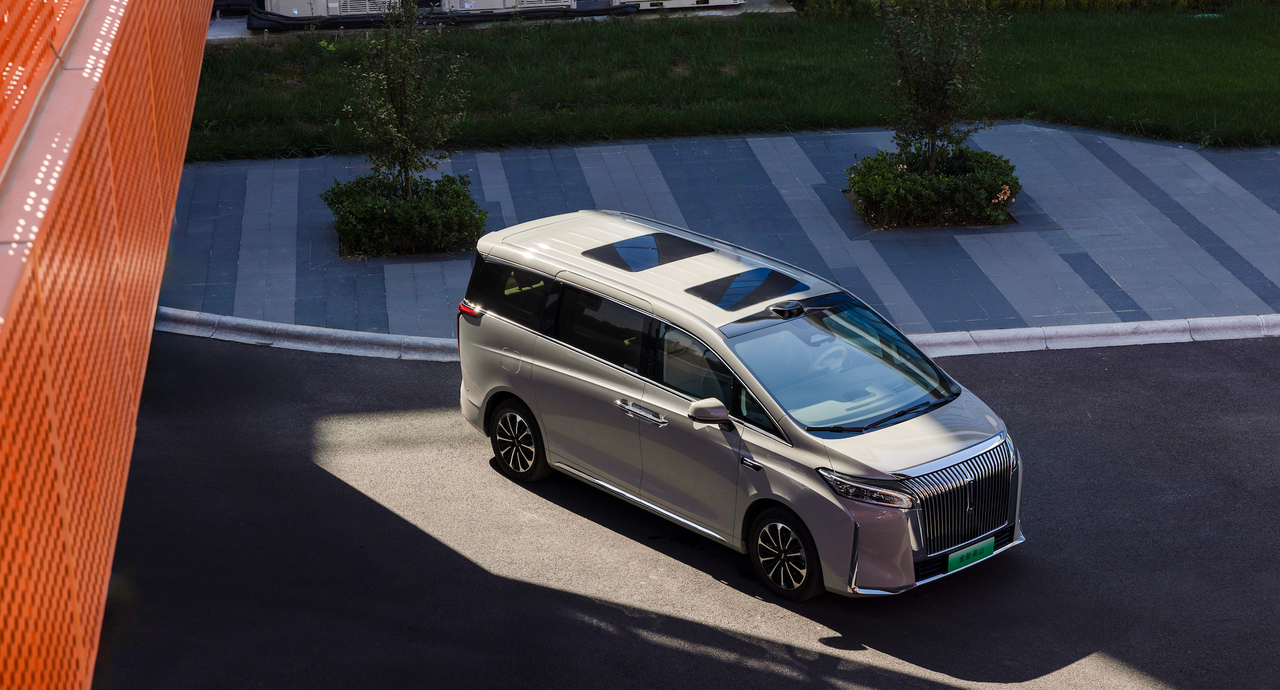
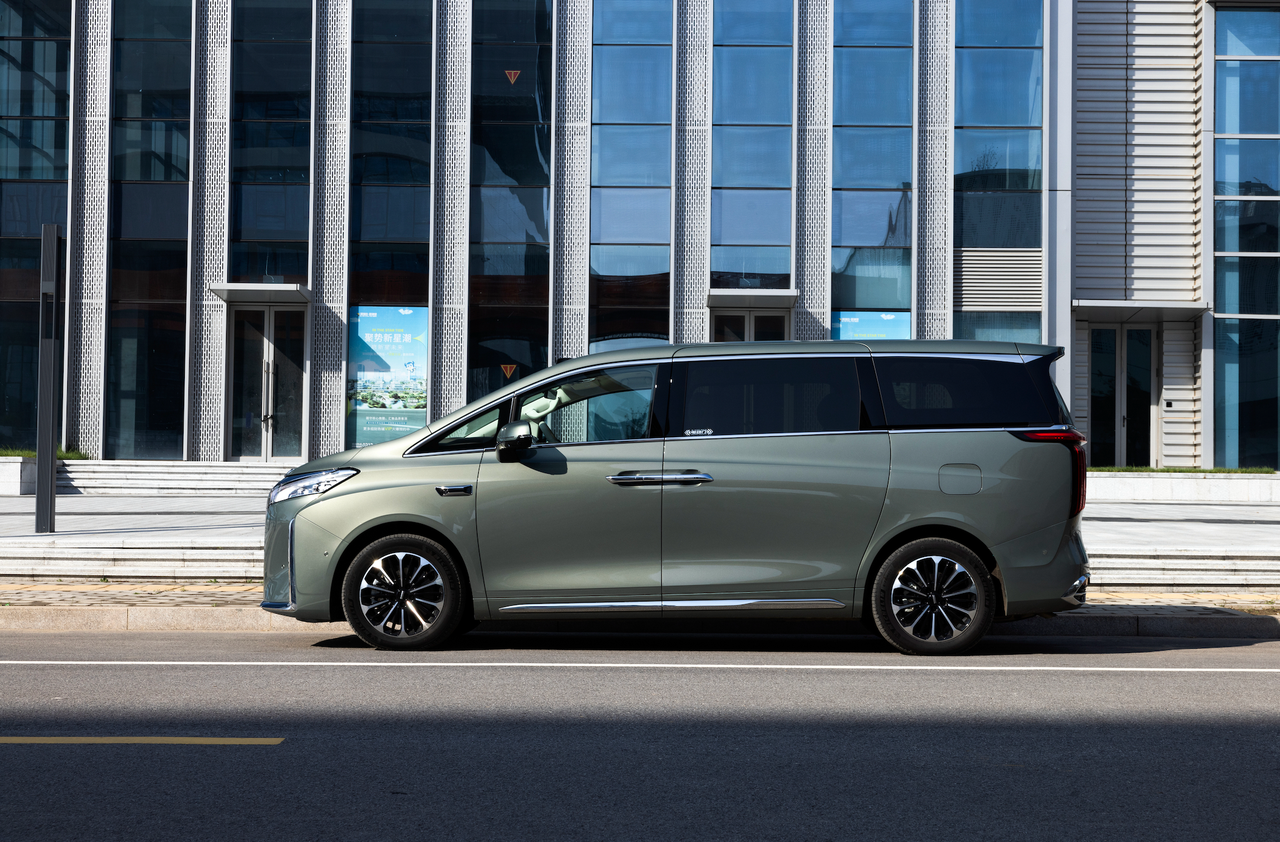
The exterior design of the Gaoshan 7 continues the distinctive style language of the Gaoshan family, with a large straight waterfall chrome grille and straight roof lines, giving it high recognition. It is not just a scaled-down version of the Gaoshan 9 but is instead clearly positioned for family return through proportion adjustments and refined details.
At today’s launch, Wei Pai CEO Feng Fuzhi explained the distinctions among the Gaoshan trio: the Gaoshan 9 is the flagship dual-purpose model for business and family, Gaoshan 8 is made for large families, and today’s Gaoshan 7 targets more young families. “The relationship between Gaoshan 7 and 8 is akin to that of the iPhone Pro and Max, similar core functions but different sizes.”
In terms of dimensions, the Gaoshan 7 measures 5,045/1,960/1,900 mm with a wheelbase of 3,085 mm, featuring a 2+2+3 seven-seat layout. The Gaoshan 7 is 230 mm shorter in length than the Gaoshan 8, but the wheelbase is only slightly reduced by 60 mm, maintaining spacious interior room while enhancing maneuverability for urban commutes.“`markdown
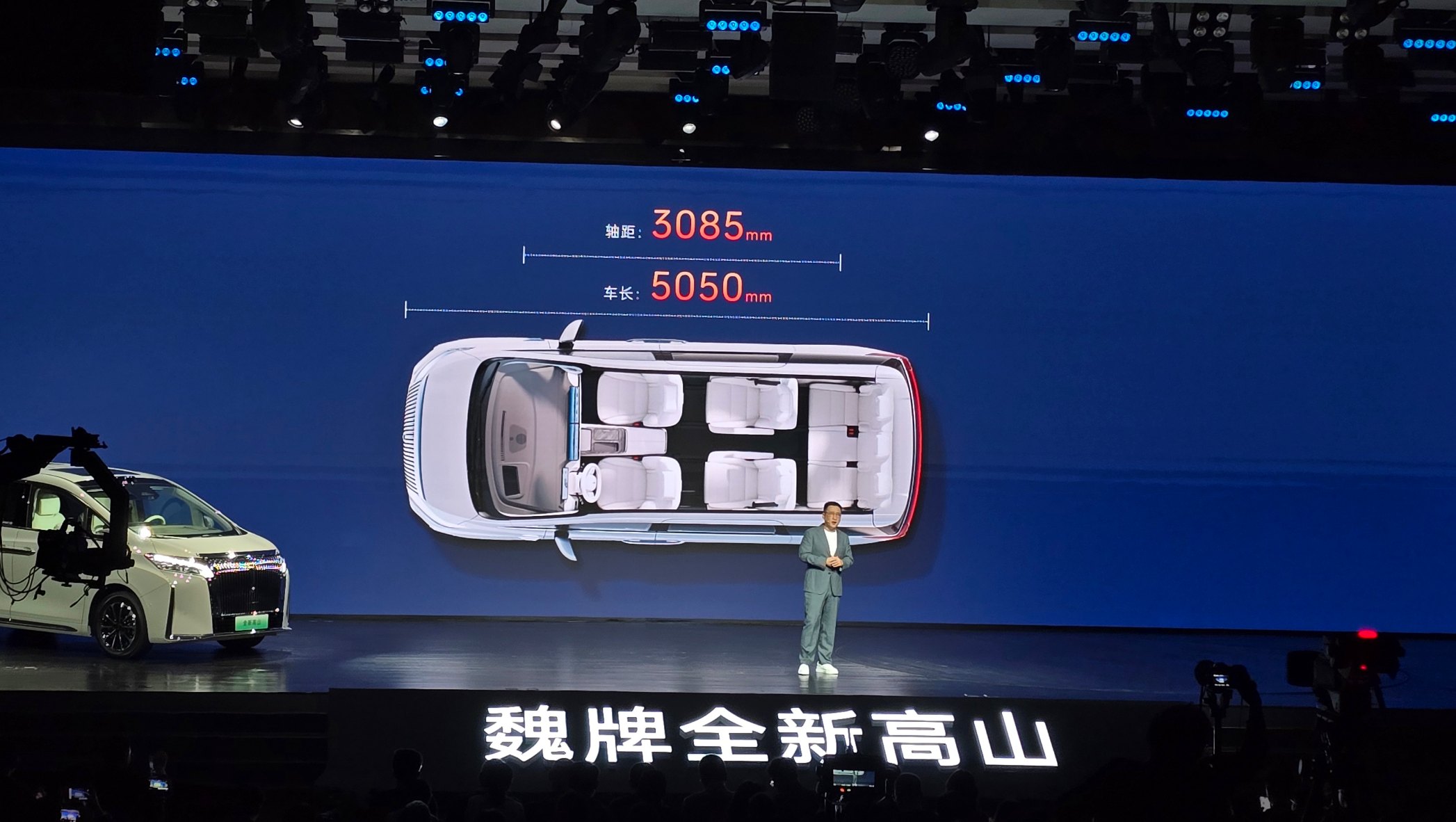
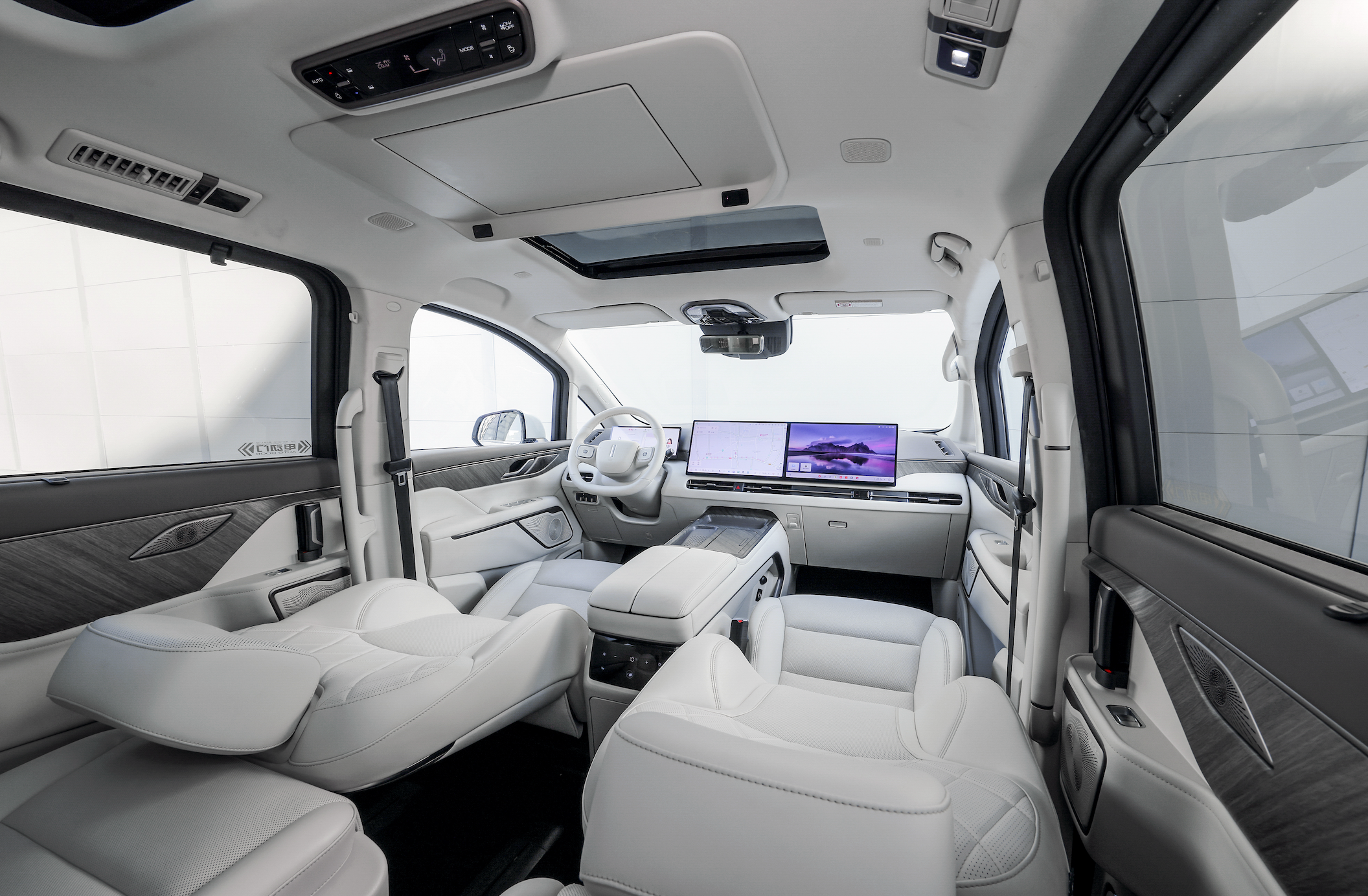
The Gaoshan 7 is designed with young families in mind, aiming to create a “mobile grand lounge” where “everyone has a good seat.” Thus, much effort has been placed on spatial comfort.
In terms of spatial performance, the Gaoshan 7 boasts a wheelbase proportion of 61.1%. Its flat floor and front-rear sliding rail design allow the second and third-row seats to move flexibly, with the track length up to 1.84 meters. The third row can be folded down with one touch to expand trunk space. The maximum legroom in the third row can reach 1,285 mm, offering a seating posture more akin to the front row, avoiding the awkwardness of knees hitting the seat. The second row features double independent seats, supporting electric leg rests, ventilation and heating, with optional zero-gravity massage seats, also equipped with dual adjustable armrests.
Another detail is the third row equipped with large side windows, uncommon in this class, with a single side window area of 0.365㎡, enhancing the view and reducing the sense of oppression for rear passengers.
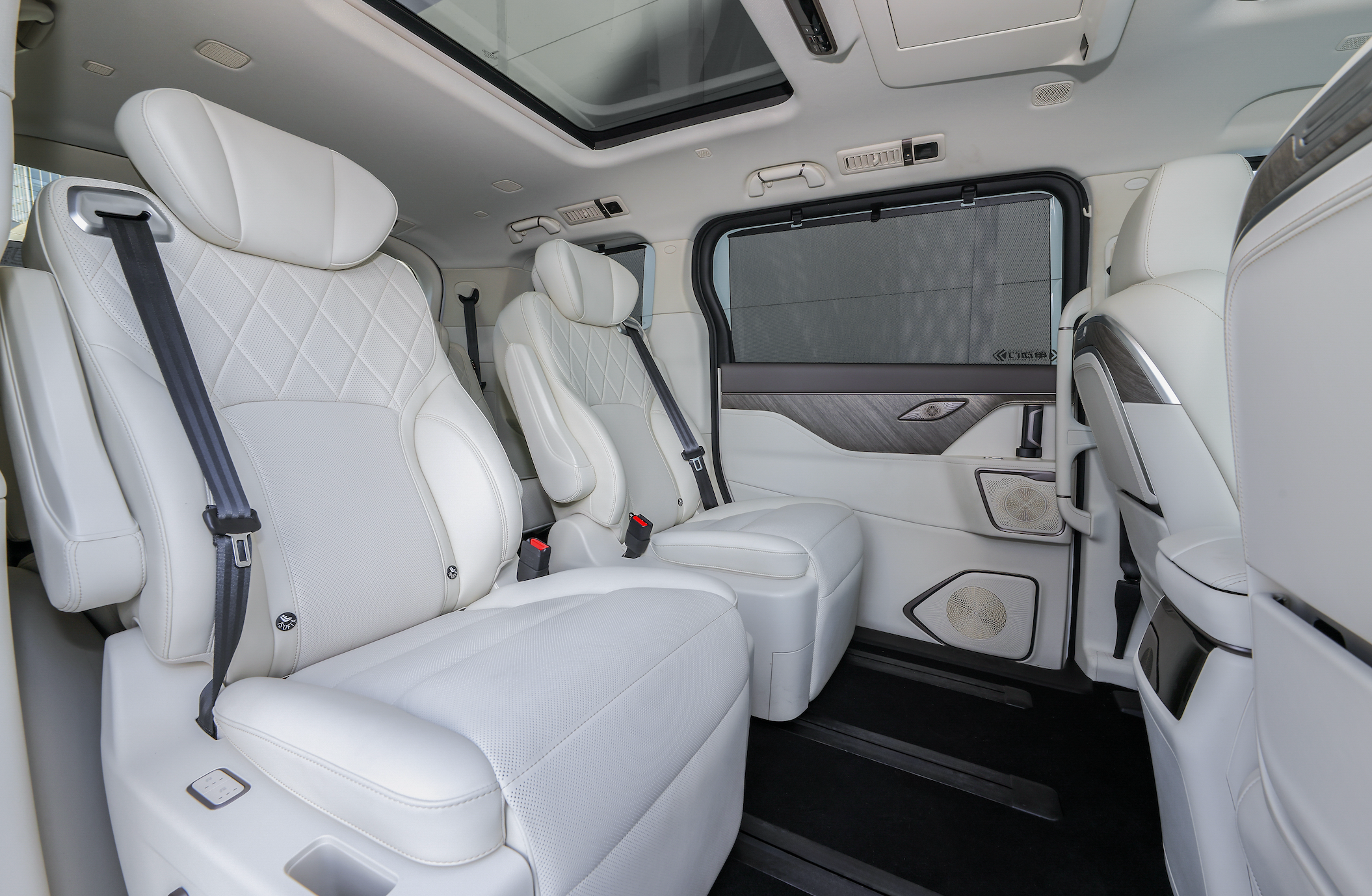
In terms of comfort features, the Gaoshan 7 maintains a high standard: a standard configuration of 23 speakers (including driver’s headrest speakers), a 12.5 L onboard compressor refrigerator (adjustable range 0-50℃), sunshades for second and third rows, triple-zone automatic air conditioning, and negative ion air purification. The refrigerator features an upper and lower layer design, capable of holding over a dozen beverages, meeting the usage needs of all passengers during long journeys; all speakers use strong rare earth magnets with a peak power of 2,440 W, consistent with Gaoshan 8 and 9.
Can an MPV Also Offer Agile Maneuverability?
MPVs are often stereotyped as bulky, slow to turn, and difficult to park, especially when viewed through the lens of urban commuting, narrow roads, or new drivers. However, Gaoshan 7 seeks to remove the notion of agility being a drawback for MPVs by utilizing a full suite of chassis and electric configurations.
Starting with the electric architecture, Gaoshan 7 features the super Hi4 all-wheel-drive electric hybrid technology, with a powertrain delivering a maximum output of 337 kW and a peak torque of 644 N·m, equivalent to the power specs of a V8 engine in fuel vehicles. The 0 to 100 km/h acceleration time is 5.7 seconds when fully charged and can reach 5.8 seconds in a discharged state, which is already a high level among MPV models.
“`This power output translates into quick starts and decisive lane changes during real driving. Even when fully loaded, it remains responsive on undulating roads and during high-speed overtakes. To make this over 5-meter vehicle easier to maneuver, the Gaoshan 7 is equipped with a lightweight, corrosion-resistant all-aluminum suspension. Additionally, the control of the turning radius is a standout feature. The Gaoshan 7 boasts a turning radius of just 5.6 m and a steering angle of 34.6°. Furthermore, the Gaoshan 7 features an agile steering function. At the press event, Feng Fuzhi explained that this function equates to gently braking the inside wheel.
In terms of range, it aims to capture both pure electric commuting and long-distance travel: equipped with a 44.28 kWh battery, it offers a WLTC pure electric range of 172 km, sufficient for a week of commuting without recharging. The WLTC combined fuel and electric range extends to 945 km, covering various scenarios from city commuting, client reception, to family road trips.
Regarding safety, the Wei brand Gaoshan 7’s body comprises 81.96% high-strength steel, with A and B pillars integrating 2,000 MPa high-strength steel. The roof can withstand a pressure of 12 tons, providing superior protection for the passenger cabin during rollovers. The Gaoshan 7’s battery pack has passed 89 tests, including crush, impact, vibration, bottom ball strike, thermal runaway, and overcharge/discharge, preemptively meeting the new standards to be enforced in 2026.
Additionally, the Gaoshan 7 features a side curtain airbag with a length of 3,107 mm and a volume exceeding 110 L, maintaining pressure for 6 seconds, offering extended protection time for passengers. Overall, the new Gaoshan 7 delivers a very straightforward product proposition: strong power, long range, more agile turning, and the feel of driving an SUV, along with a comprehensive set of full-scene safety configurations. Its target users are not only traditional home MPV users but also families and business clients who value driving experience and wish for versatile use.
Laser Radar Enhanced, Uncompromised Intelligence
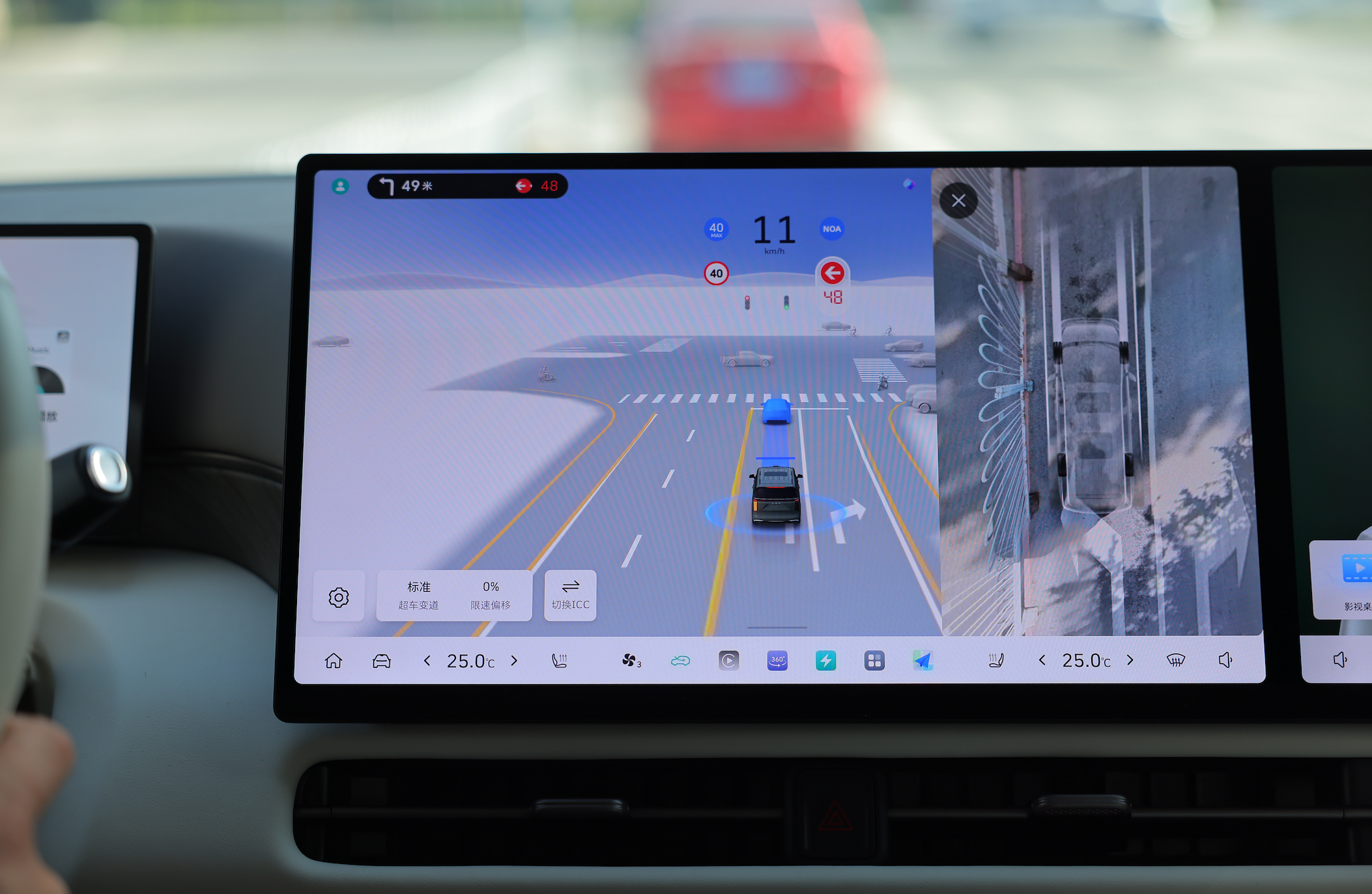
The intelligent configuration of the Gaoshan 7 follows the Gaoshan family’s style, addressing many of the past MPV shortcomings in intelligent experiences. For intelligent driving, the Gaoshan 7 comes standard with 27 driver assistance sensors, including laser radar, enabling point-to-point autonomous driving assistance functionality. This, combined with the agile steering function, significantly enhances the driving convenience of the MPV.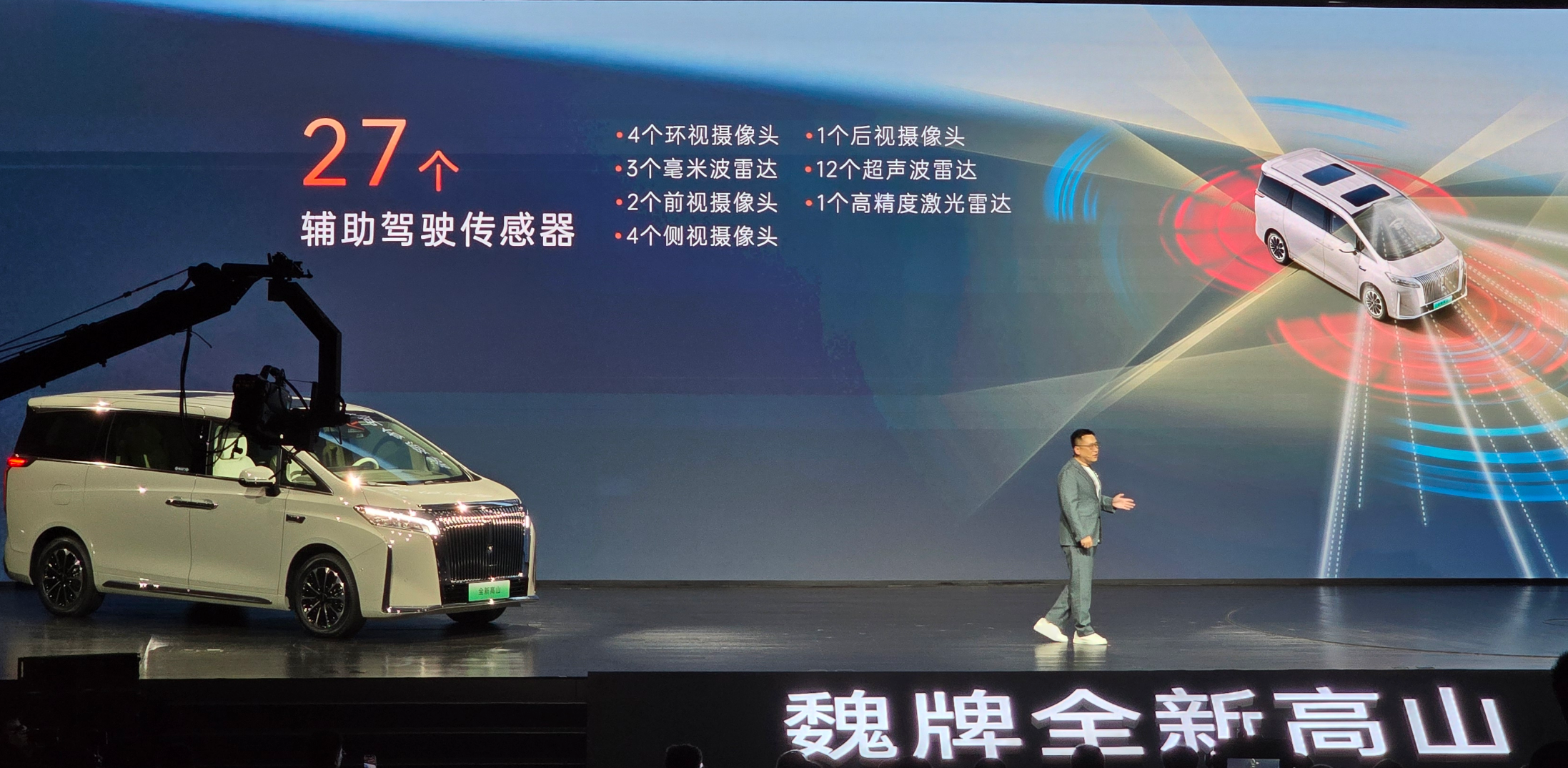
Additionally, the new Weipai New Energy High Mountain 7’s parking assistance feature supports over 200 types of parking spots and custom parking. The parking space recognition success rate has reached 96%, with assisted parking success at 95%. This greatly addresses the challenge of parking for MPVs over 5 meters in length and with a wheelbase nearing 3.1 meters.
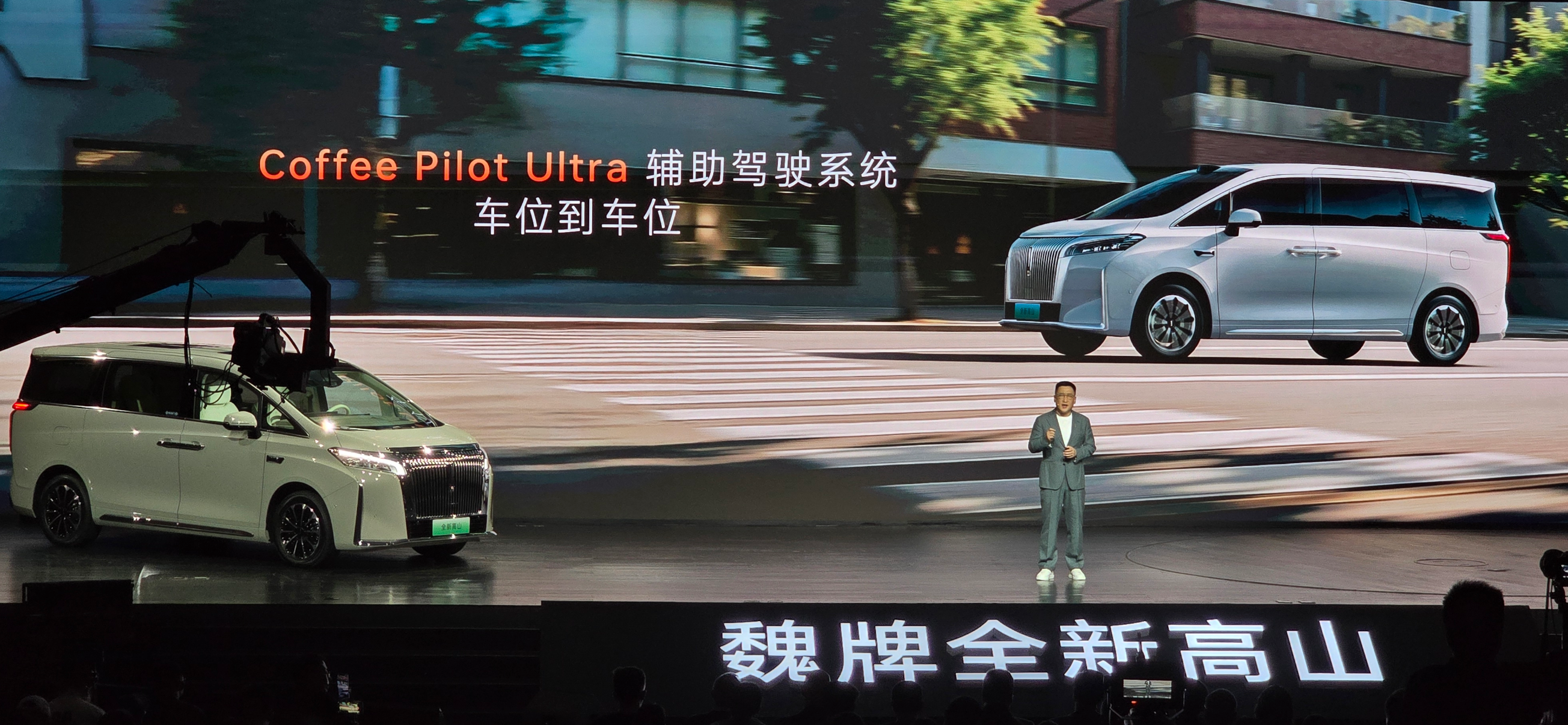
Compared to traditional MPVs, the High Mountain 7’s voice and parking systems have enhanced the user experience considerably. They now offer significant practicality and no longer simply exist for show.
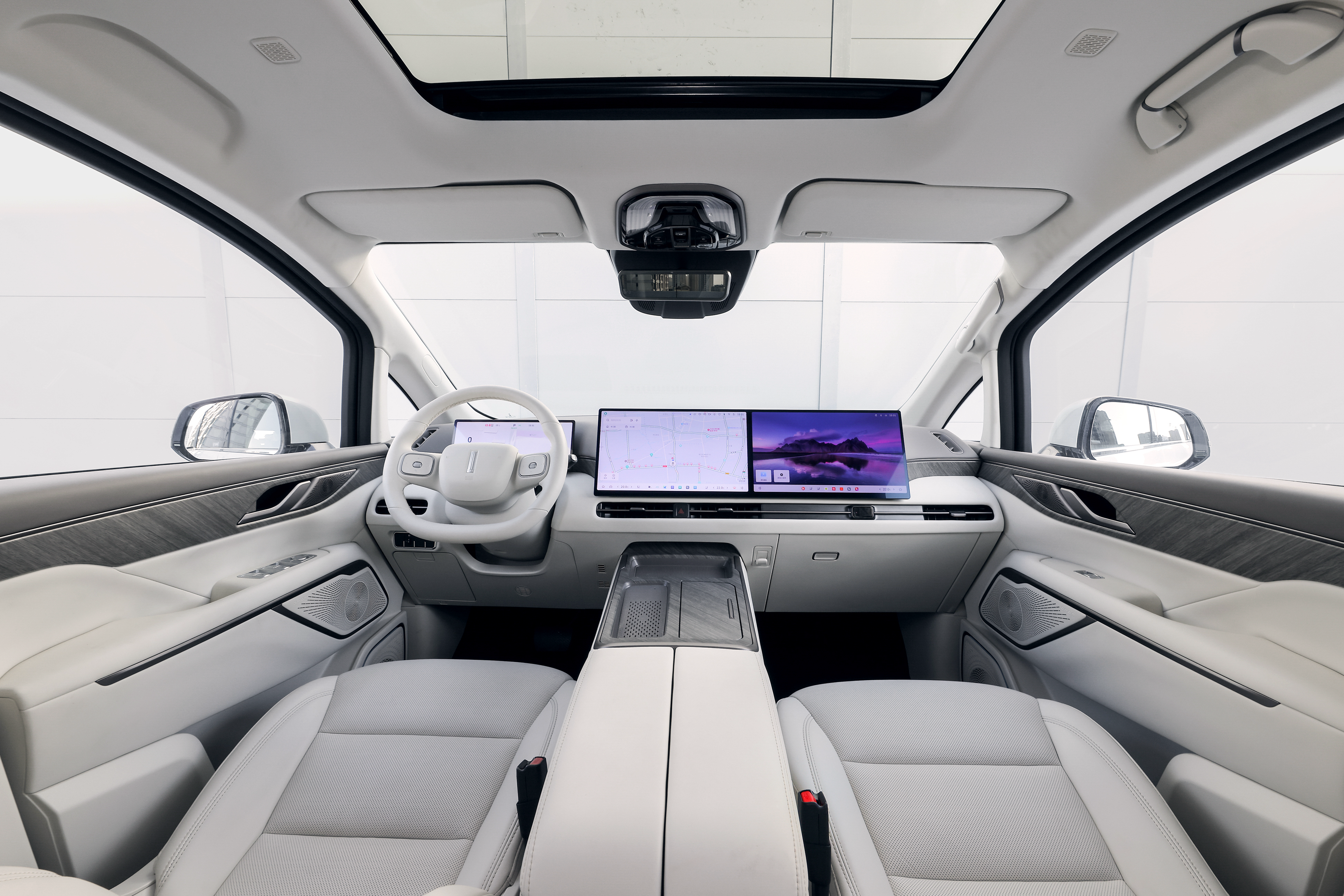
The interaction logic within the High Mountain has also seen improvements. The High Mountain 7 features a 15.6-inch 2.5K screen for both the central control and the passenger, with a standard 17.3-inch 3K resolution screen in the rear. This is a rarity in MPVs priced around 300,000 yuan.
Regarding the display of driving information, High Mountain 7 continues to follow Weipai’s meticulous approach. The LCD instrument panel measures 12.3 inches with a 2K resolution, and a reflectivity of only 2%, ensuring clear visibility of critical information even under direct sunlight.
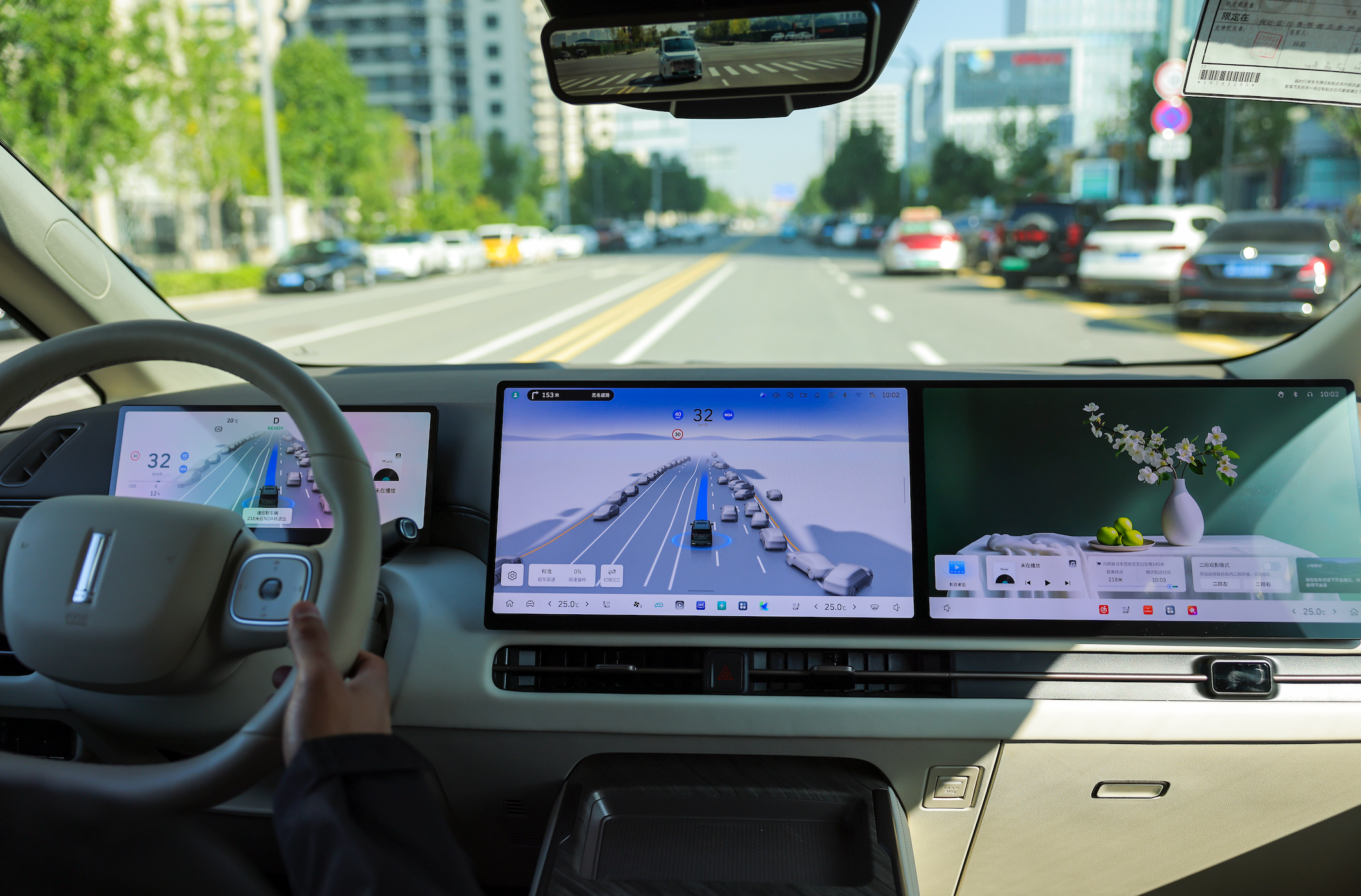
The HUD employs Great Wall’s self-developed Coffee SR-HUD technology, boasting a 26-inch imaging size and a projection distance of 4 meters, with a resolution of 1,440×480. Besides basic navigation, vehicle speed, and ADAS status information, it supports various display modes, including minimal, map, environment, and comprehensive information. Drivers can toggle according to personal preference. Beyond driving, the system offers cinema and lyric modes, blending daily driving with entertainment and relaxation, transitioning seamlessly on a single screen.
Overall, addressing shortcomings from the user’s perspective marks the most significant shift in product definition for the new High Mountain family.
As the smallest and most affordable model in the High Mountain family, the High Mountain 7 does not compromise on core configurations. It leads its class in intelligence, comfort, and safety, making it highly adaptable for family users, commuting scenarios, and the younger generation of consumers seeking intelligent features in MPVs.Moreover, since Great Wall proclaimed the slogan “Changing for the user” in May, yet beyond core configurations, the WEY brand has also made considerable efforts in refining its service system. For instance, in May, WEY promised to establish a western service support line. As of now, WEY has established 35 support stations along the Qinghai-Tibet Line, the Sichuan-Tibet Line, and the Qinghai-Gansu loop, having served 3,135 users and provided 617 instances of road assistance.
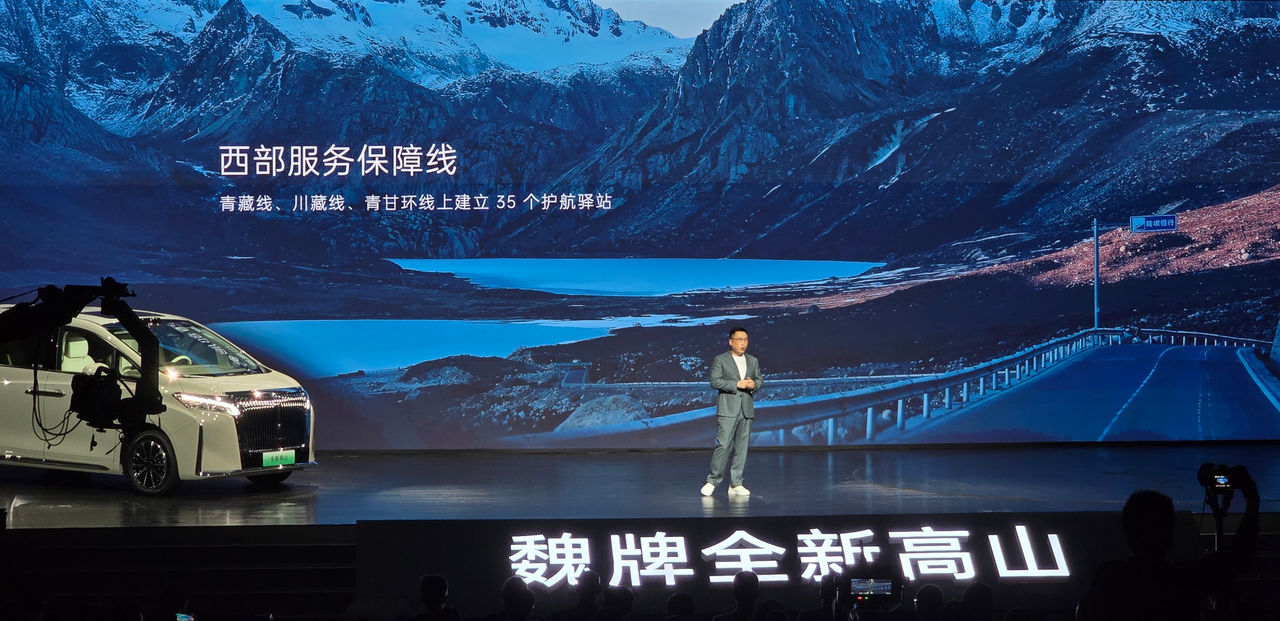
WEY also promises to arrive on major urban roads within 2 hours, and no later than 6 hours in more remote locations.
From pricing structures and user experience to service outlets, these actions still await market validation, but it is evident that WEY is striving to enhance its MPV segment layout by adopting a more user-centric approach, step by step building trust with users.
This article is a translation by AI of a Chinese report from 42HOW. If you have any questions about it, please email bd@42how.com.