Jia Haonan posted from the Vice Driver Temple.
Reference for Intelligent Cars | Official Account AI4Auto.
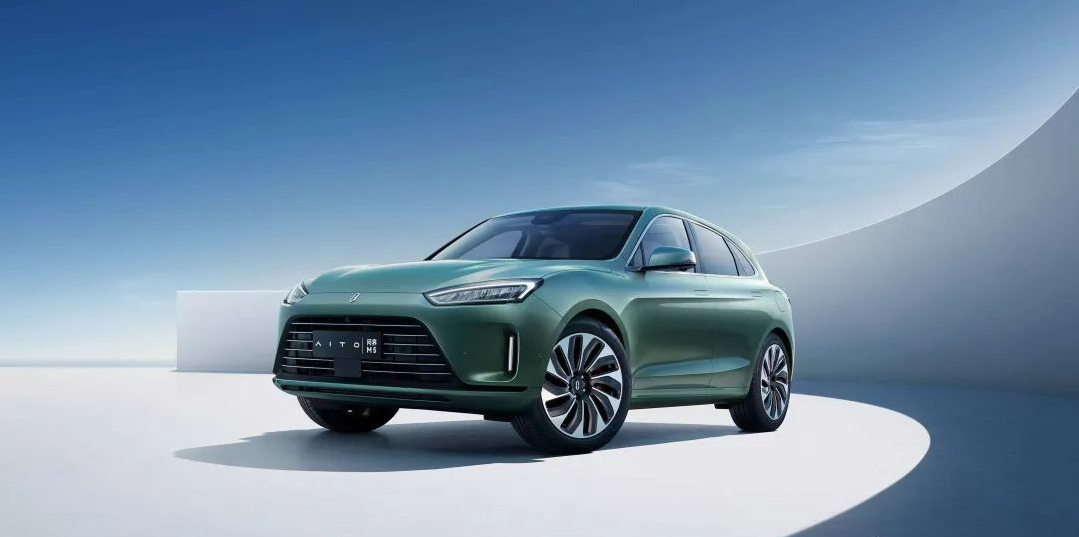
The first Hongmeng car, the WENJIE M5, has taken off.
It has been on the market for less than a hundred days and over ten thousand have been delivered.
It has broken the record for the fastest delivery of a single model in China.
This achievement is not only a new record for the brand, Cyrus, but also a new record since Huawei entered the automobile industry, it is a triumphant comeback.
Why do we say this?
Previously, the Cyrus SF5, also under the “Huawei” label, received little response after being on the market for 9 months, and was discontinued. Another model, the Beiqi Hu Jia alpha S, sold only several hundred units per month.
The poor reputation and sales of these models led to skepticism from the public about Huawei’s entry into the automobile industry: Do they really understand cars? Can they sell cars?
The initial success of the WENJIE M5 has cemented Huawei’s reputation, and it is a fact that as long as you listen to Huawei, sales will not be poor.
What achievements have been made by WENJIE?
Accurately speaking, WENJIE M5 has been on the market for 87 days and delivered 11,296 units.
Such a performance is unprecedented for Cyrus, which worked with Huawei in-depth on this project.
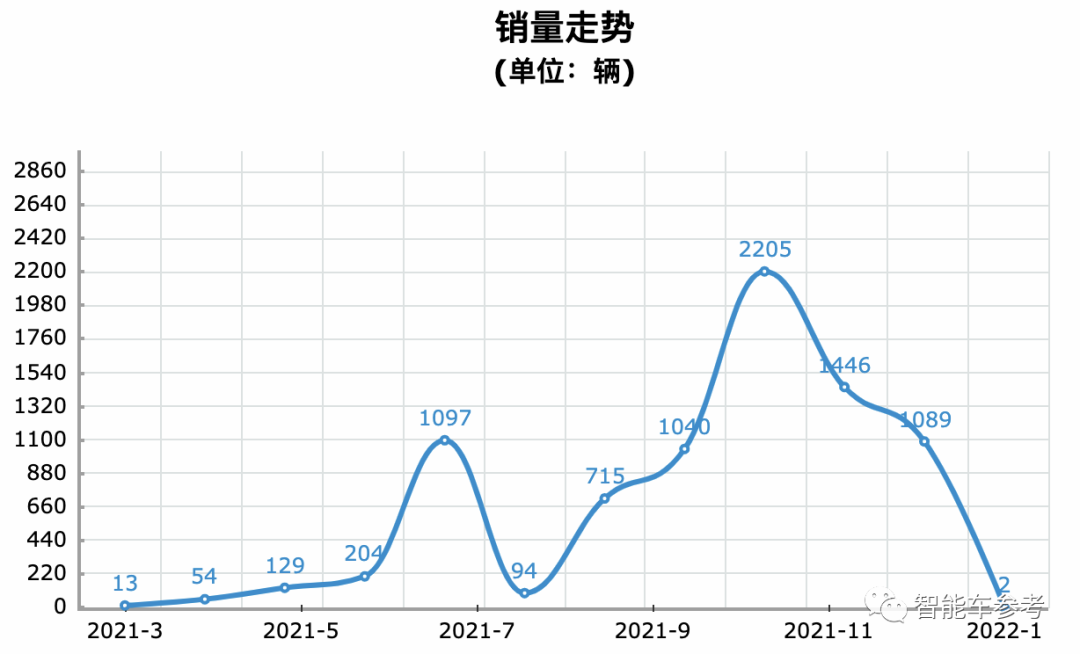
The highest monthly sales of the SF5 was only over 2,000 units. The total sales volume in 2021 was only 8083, less than the sales volume of WENJIE M5 in the first quarter.
Before collaborating deeply with Huawei to build cars, Cyrus only had two concept cars that were not formally launched.
In the industry, the achievement of delivering over 10,000 units of WENJIE M5 within a hundred days is also unprecedented.
For example, if we compare it to the Ideals, which also focuses on range extension, Ideals ONE was officially launched in April 2019 and it took 21 months to accumulate 10,000 deliveries from 0.
Using the same standard, XPeng achieved more than 10,000 cumulative deliveries in over 1 year, and NIO achieved it in 6 months.
Therefore, the performance of WENJIE M5 has naturally received positive feedback.
Since the news was released, Cyrus’ parent company, Xiaokang Shares, has had two consecutive days of gains of 10%, and its market value has increased by nearly RMB 8 billion.
It was the success stories of Sitech Racing and Xpeng that rocked the industry but essentially, no one can deny recognition of Huawei’s automotive business.
Moreover, the HI M5 is the first victory that Huawei has achieved in the smart car era since over a year ago.
Huawei’s car development made a huge commotion initially, with intense expectations from the public. At the 2019 Shanghai auto show, Huawei’s exhibit received more attention than other automakers. Rotating chairman Xu Zhijun repeatedly emphasized that Huawei was not building cars but like Bosch, the company was a critical partner for automakers in crafting flawless vehicles.
Yu Chengdong, the bigwig of Huawei has vigorously touted Huawei’s leading position in three-electric technology, intelligent driving, and the Hongmeng cockpit on numerous occasions afterward.
This led the public to look forward to Huawei’s entry into the automotive industry and confidently anticipate a revolutionary product. After all, Huawei’s stunning rise in another field of consumer products shocked the world.
It seemed that only a story line that was in line with Huawei’s image and its contemporary eminence would suffice.
However, over a period of two years, the company’s actions and market performance failed to live up to the user’s expectancy.
The first car that truly bears the “Huawei” trademark is the Seres SF5. It made a big splash when it was first launched, with the Huawei label tied to it and available for sale in Huawei outlets.
However, the market response to the car was dismal, as mentioned earlier.
Huawei lent its name to the second car, with a sleek design. Beiqi’s new pure-electric brand, Arcfox αS , launched the Huawei’s self-developed full-stack intelligent driving system.
On this car, whether it was Huawei’s self-developed autonomous driving algorithm, Huawei’s lidar, or Hongmeng’s smart cockpit, each aspect was talked about in greater circulation.
In fact, αS boasted of the highest amount of “containing Huawei” and Huawei did exert a tremendous amount of effort on this car.
Every single ditty on this car was noteworthy, and αS was even billed as the Great Wall Motor’s flagship ADAS model.
However, over the next year in the market, the αS which didn’t come with any real assistance from Huawei sold even less than the already wretched SF5. 500 units sold per month was the norm, and in some months only double-digit sales were reported. Brand awareness, buzz, and product reputation were non-existent.
Consumers and the public began to lose patience and expectations regarding Huawei and Arcfox αS as waiting dragged on endlessly. The temperature of the market also cooled.
In addition, Huawei has cooperated with car manufacturers such as BYD and SAIC. However, these collaborations involve Huawei as an ordinary supplier, providing scattered functions such as NFC car keys. No one thinks that these models are “Huawei” cars.
So in fact, Huawei’s first two attempts to enter the automotive industry were unsuccessful.
Why not successful? Huawei’s official explanation has actually been given.
At the Guangdong-Hong Kong-Macau Greater Bay Area Auto Show a few days ago, Yu Chengdong for the first time sorted out and elaborated on Huawei’s exploration process and mode change in the automotive business.
The first car SF5 co-produced by Huawei and Seres employs the mode of a common automotive industry supplier. Just like when it aimed to become the second Bosch, Huawei acts as a provider of a certain component or technology.
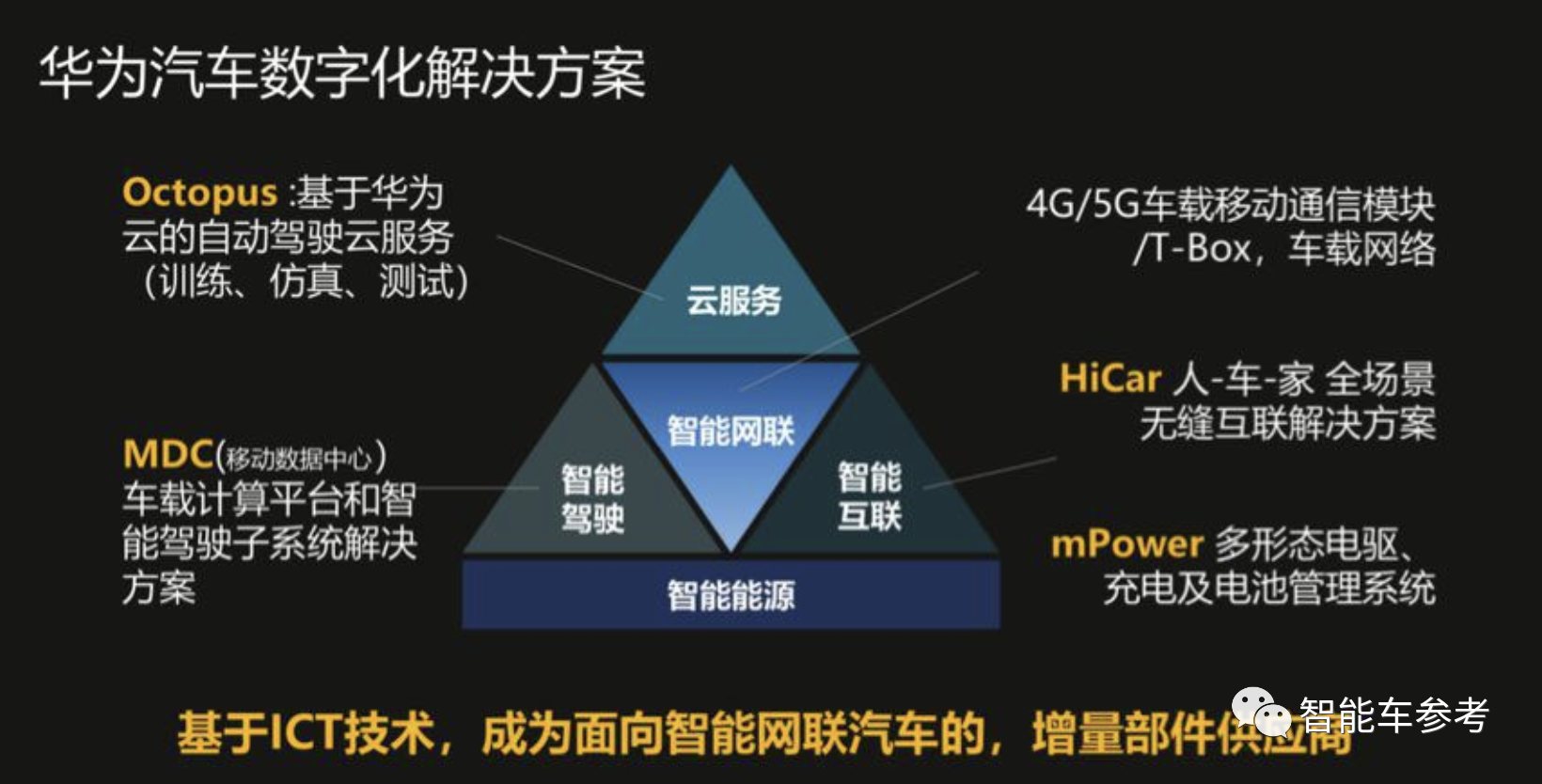
On the SF5, Huawei’s elements are only reflected in the motor and electric control technology. The design, manufacturing, and experience of the whole car are still the responsibilities of Seres.
Under this mode, Huawei does not have a high degree of leadership and control over the final product.
The Beiqi Jinghu αS went further, proposing the “Huawei Inside” mode, which provides a full-vehicle intelligent solution: intelligent driving, intelligent cabin scheme packaged and delivered to Beiqi.
Under this mode, Huawei has a certain degree of initiative in the core technology module, but the operation, OTA, and experience design after the product delivery are still dominated by Jinghu.
Yu Chengdong did not hesitate to criticize this mode as “useless.”
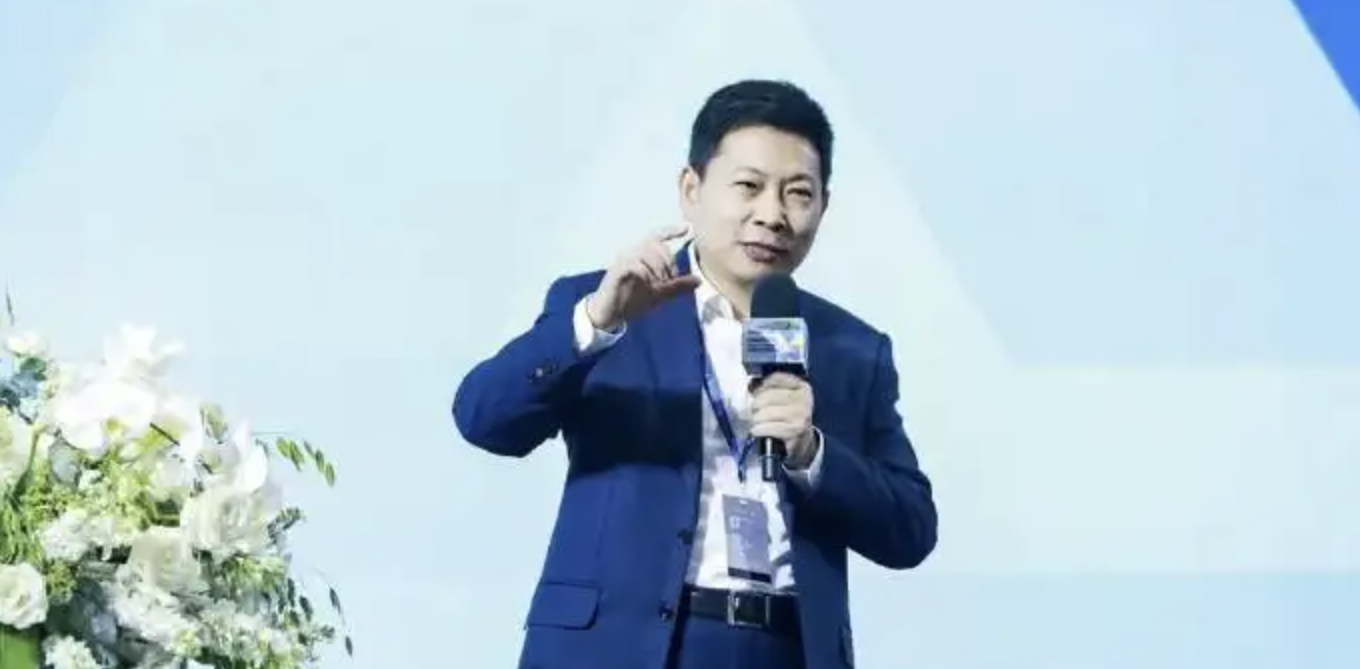
He believes that traditional car companies are difficult to change fundamentally. They have low efficiency, high cost, poor user experience, and anti-human design.
“If the car cannot be sold, they will come back to blame us”…
Therefore, in the automotive industry, Huawei has embarked on a new mode of cooperation: Huawei Smart Selection.
Huawei provides a complete set of solutions from core intelligent technology, application function definition, user experience design, and sales channels after listing, and even includes quality supervision.
Seres only needs to produce the car and does not need to worry about any other tasks.
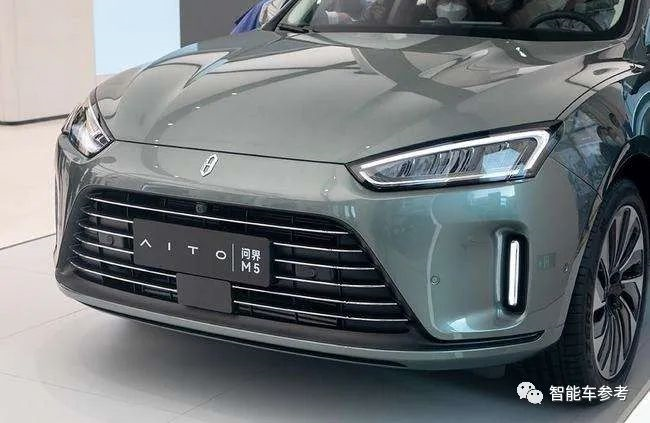
The so-called “selection” does not mean that car manufacturers choose what services they want, but that Huawei “self-selects” which links to undertake.Yucheng Dong proudly said that the Intelligent Selection Mode is the result of Huawei’s To C team leveraging years of experience in exterior design, interior design, and industrial design optimization for automobiles, as well as user experience design.
In other words, Huawei has the final say on the final product of a car’s appearance, and a car that is all Huawei genes except for the Huawei logo has become a hit as soon as it hits the market, sweeping away previous doubts about Huawei.
From the perspective of the Seres Motors, the main reason for the success of the SF5 in the battle against WM Motor’s ENOVATE ME5 was “to listen to Huawei.”
Listen to Huawei to Ensure High Sales
What changes has the SF5 undergone after Seres listened to Huawei?
Visibly, the overall design of the car’s appearance and interior has become more refined, and the technology has been more fully developed:
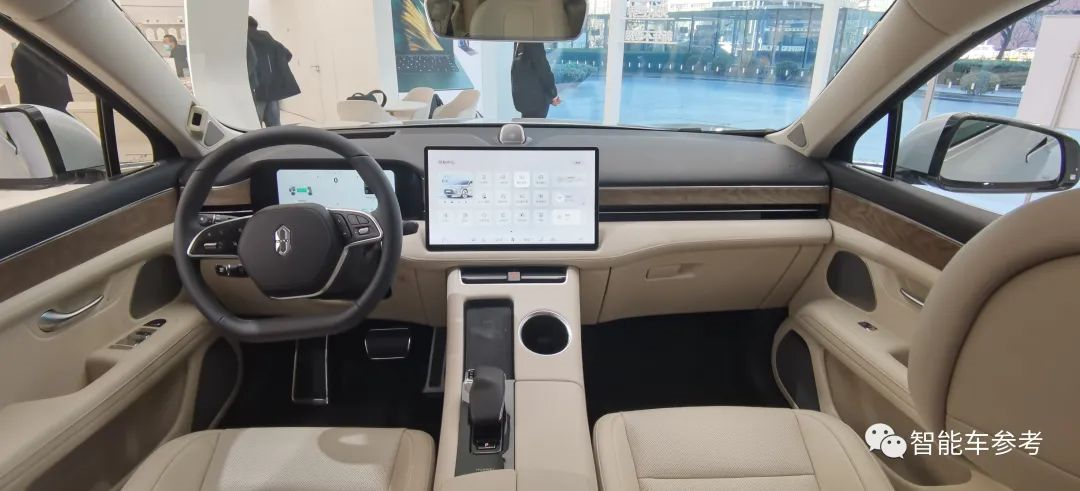
Furthermore, on the intelligent underlying architecture, Huawei has made a complete update for the SF5.
The underlying functional core modules are more centralized, integrating dozens of different parts on traditional cars into several parts. This not only better supports the operation of HarmonyOS at the technical level, but also significantly improves the efficiency of bidding, procurement, and management at the operational level.
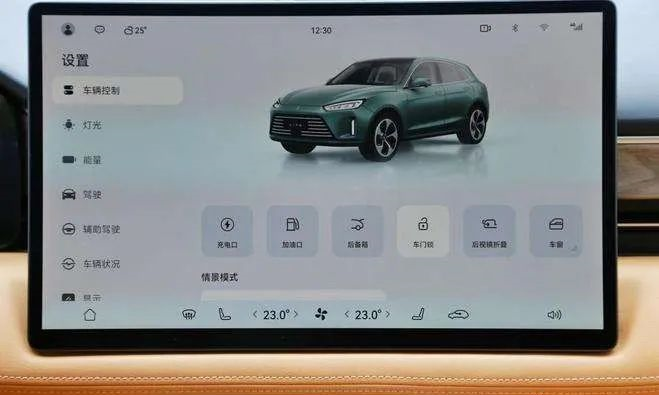
HarmonyOS on the new SF5 is not just a car screen that interacts directly with users. HarmonyOS for car OS is essentially a framework and nerve that connects the execution level of car hardware and the software control level, supporting the operation of all applications on the car.

It can communicate with computing platforms and autonomous driving algorithms, and provide support for in-car applications and smart cockpit chips.
Therefore, the biggest difference between the SF5 and the previous M5 is that the latter is an intelligent car, and it is a distinctively Huawei intelligent car.
The introduction of HarmonyOS means that Huawei has completely grasped the dominant right to define an intelligent car. In addition to the HarmonyOS smart cockpit, the foundation for Huawei’s future autonomous driving system has also been laid.
Therefore, Huawei’s “word” is a call for automakers to embrace the smart transformation of cars.
At the level of intelligent driving, the starting point can be low, but there must be OTA capabilities and a sense of continuous operation.
In terms of smart cockpit, the experience needs to be optimized like a smartphone, enabling users to experience the innovation of “mobile space.”
In terms of underlying architecture, integrated and streamlined design is the way forward without question.Management and operation
In terms of bidding, procurement, manufacturing process, quality management and other aspects, traditional approaches must be abandoned in the pursuit of significantly higher efficiency-to-cost ratios.
The phrase “listen to Huawei” couldn’t be any clearer, which means fully accepting Huawei’s understanding of smart cars and without reservation, believing that Huawei is right.
What the car manufacturers need to do next is to accept Huawei’s arrangements without question, and then prepare for a surge in performance and stock price.
This model has been validated, with both positive and negative case studies available.
In addition, the cooperation between Saic Motor and Huawei has demonstrated that both parties are willing to accept this mode and have praised each other’s efforts. This is a stark contrast to the previous complaints about Huawei.
Therefore, this “listen-to-Huawei” pattern has also been validated for its sustainability.
Only by listening to Huawei’s advice can car manufacturers achieve an increase in sales and performance, but the loss of self-definition and leadership in the intelligent car industry is also evident.
Saic Motor explained it more bluntly: “By cooperating with Huawei, I become the body, and it becomes the soul.”
Brand and style have always been important in the automotive industry, and this will not change in the era of smart cars. While the Huawei strategy can facilitate rapid brand promotion in the short term, the manufacturer’s own issues will still not be solved in the long run.
The choices before car manufacturers are either willingly bind with Huawei, effectively becoming a subcontractor, with nothing but the logo being their own, or to explore once again brand and technology after surviving the transformation stage. However, by then, it is difficult to say how much space and strength they would have for free operation.
This model would not be accepted by most car manufacturers.
Competent and eminent manufacturers will not give up the core leadership in the intelligent car industry to Huawei, and risk becoming a mere “subcontractor.”
Even struggling manufacturers such as BAIC expect to thrive through their own efforts rather than cling onto Huawei’s thighs and finally become vassals.
Furthermore, from Yu Chengdong’s statement at the Greater Bay Area Auto Show, Huawei does not look favorably on the transformation of these traditional car manufacturers, bluntly stating that many manufacturers will die, like Nokia.So far, for “HUAWEI HiCar,” it can only be implemented in car companies like Sylphy with a shallow industry foundation, short history, and less influence but with certain car manufacturing basics. Of course, such enterprises also have to meet the condition of “not having too many ideas and burdens.” In this way, although the “HUAWEI HiCar” model is currently successful, it will be challenging to expand in the future: how many car companies like Sylphy, which meet all the conditions and are willing to supply HUAWEI with “self-selected” cars on the “shelf,” will there be?
This article is a translation by ChatGPT of a Chinese report from 42HOW. If you have any questions about it, please email bd@42how.com.