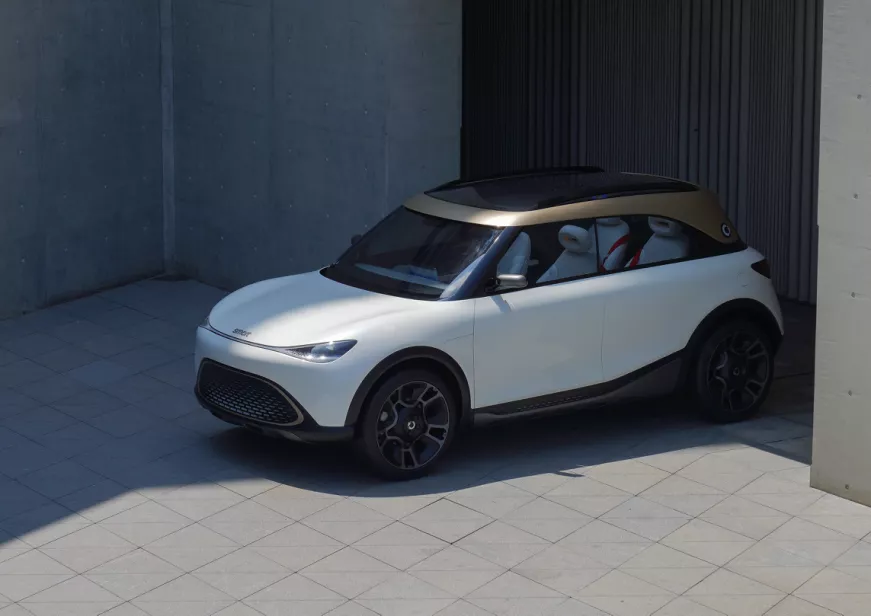
*This article is reproduced from the autocarweekly official account
Author: Hooknows
Just by looking at the name of (Concept) #1, you can feel how much influence Geely has on Smart. Lynk & Co is 01/02/03… Polesar is 1/2… Geometry is A/B/C… Geely’s sub-brands in the era of electrification have become number counting maniacs from 1 to 4.
With significant historical significance, this is a Sino-foreign joint venture brand car, where the domestic side led the technology instead of the German side, but the joint venture partner is an international giant, Daimler.
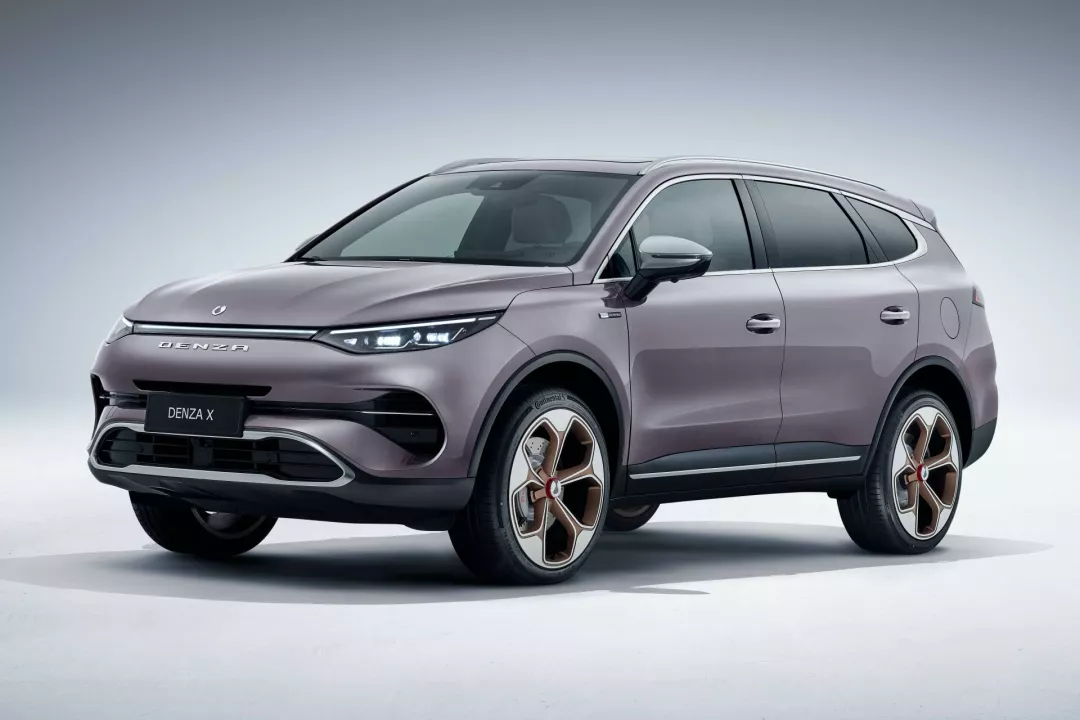
Sorry, wrong picture…
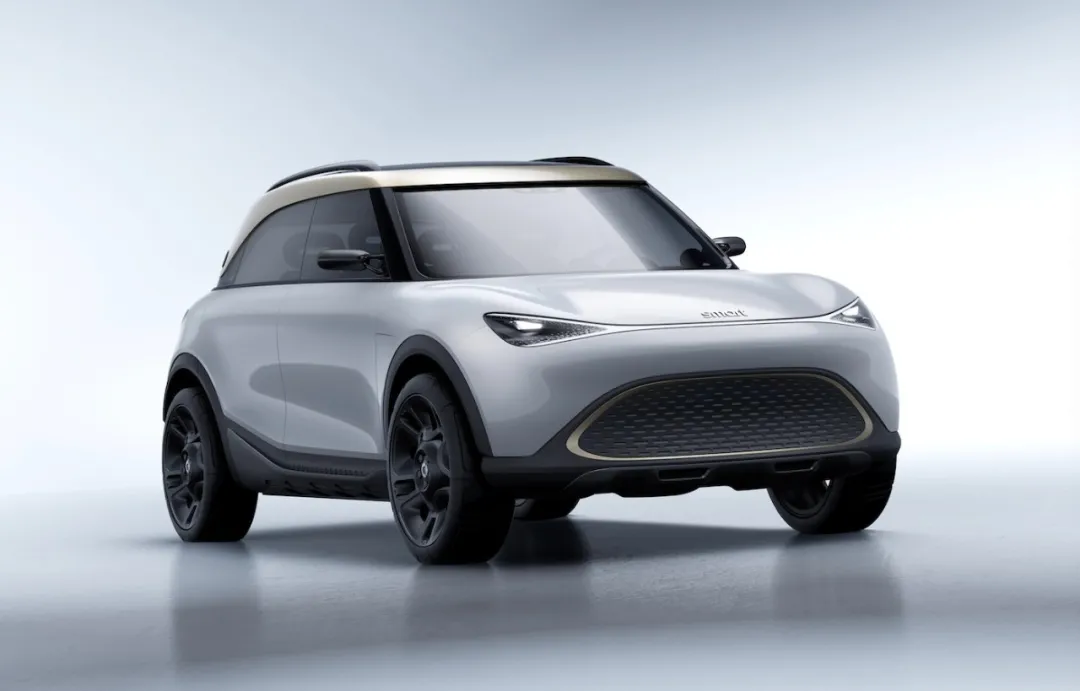
With Geely Group’s 50% stake, the electrified Smart brand has entered a new historical stage. Although the original fortwo was unique and received many positive reviews, it was ultimately proven not to be a good business in a broad market. The world of small cars is already shrinking, let alone a “micro car” like the Smart fortwo.
Therefore, like many other small cars, Smart has taken the route of “the biggest SUV that can still be called a ‘small car’.” Smart #1 is 4.29 meters long, which is in the market range of MINI Countryman and Audi Q2, and smaller than X1, Q3, and Mercedes’ own GLA.
However, the wheelbase is an astonishing 2.75 meters, comparable to the lengthened X1 long-axis version on BMW’s side (which is one and a half sizes larger), and longer than the standard wheelbase of GLA and Q3. Relative to the 4.29-meter car length, the wheelbase ratio reaches an incredible 64.1%. In the past, only professional taxis could achieve such a wheelbase ratio, such as the London taxi (61.3%), which is also owned by Geely, and the D1, which is a collaboration between Byton and Didi (63.8%).
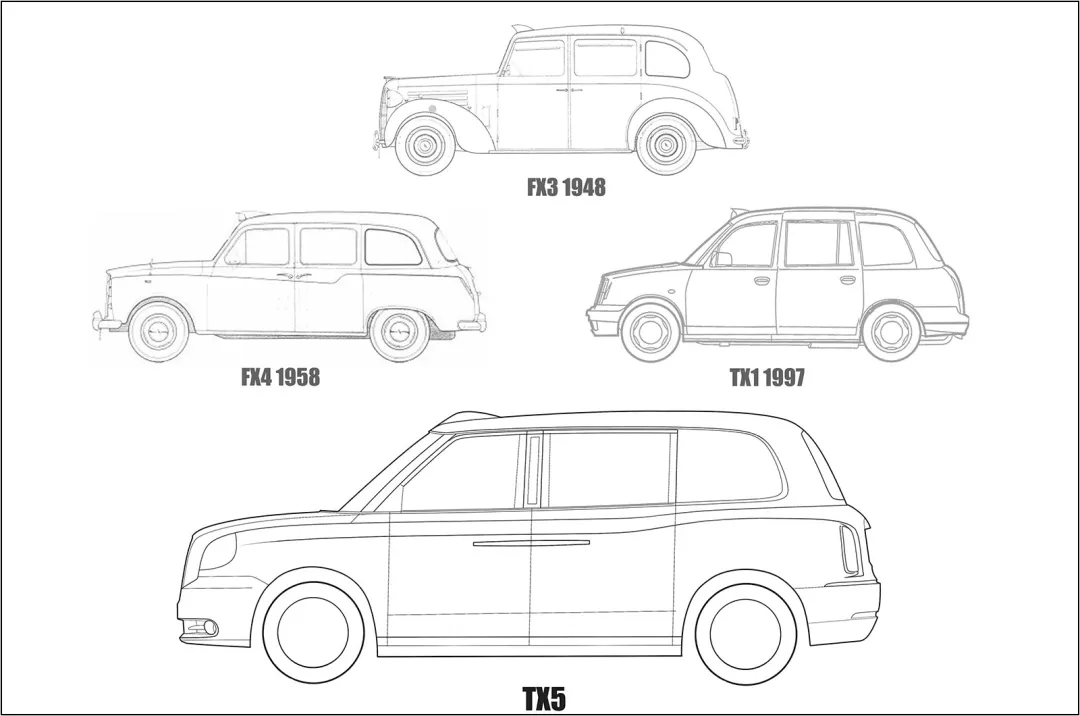
What does it mean to have four wheels close to the corners of the car and an ultra-long wheelbase ratio? Of course, it means interior space. Even if we ignore the doorless design and four-seat layout that only exist in concept cars, such a spatial performance is unimaginable for small SUVs of the same size as MINI Countryman.
The “overstepping” spatial performance of the Smart #1 concept car was released on the same day as the EQE by Mercedes-Benz. The fundamental reason is the new platform specially developed for pure electric vehicles, which allows the front and rear axles to move significantly towards both ends thanks to the compact power unit of the electric car.
Based on its large spatial capacity, the interior of the Smart #1 concept car is very luxurious. However, aside from the magnificent decorations and numerous charming blue lights, the overall design is actually very close to mass production status. Interestingly, the wide arc-shaped integrated central control panel is reminiscent of the Mercedes-Benz style, while the round and plump elliptical air outlet has some auspicious shadows.
In turn, the long wheelbase also brings benefits to pure electric vehicles: the volume of the battery pack placed between the front and rear axles can be larger. The data of the concept car is a 70 kWh battery pack, corresponding to a range of about 430 km. For a concept car, the specific range number is not important because the weight, power, and other factors are bound to differ from the final mass-produced car, which may offer multiple range versions for customers to choose from.
However, 70 kWh is likely conveyed as the maximum capacity for such a small car, which is quite impressive, corresponding to a range of 400-500 km. Don’t forget that the standard version of the Model 3 only has a 60 kWh battery pack, while NIO still offers a 70 kWh one. For a small car of a size similar to Eulai, having a range comparable to or even better than the standard version of the Model 3 is another meaning of the long wheelbase.
Smart stated that the #1 is developed based on the SEA architecture of Geely Group, which is the brand-new pure electric architecture used by GeometryAuto A+. Therefore, it is easy for some people to misunderstand that the Smart #1 comes from the same origin and platform as GeometryAuto A+. However, as introduced in the article “Don’t Take ‘Platform Architecture’ as Mystical,” the SEA architecture is not a traditional car platform but includes several (4-5) car platforms. The so-called “covering wheelbase ranges from 1800 mm to 3300 mm” does not magically cover the entire passenger car world with one platform, but rather unifies the multiple platforms that cover almost all vehicle types under the SEA architecture.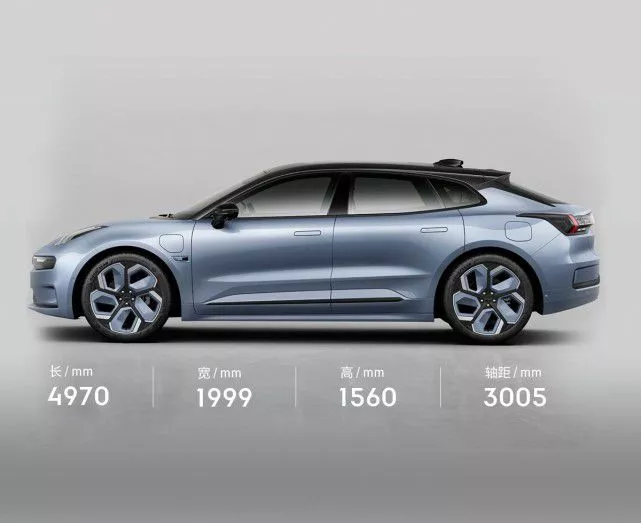
It’s like how Toyota YARiS and Lexus LC belong to the same TNGA architecture, but you wouldn’t really think they have much in common. In fact, YARiS is based on the GA-B platform under TNGA architecture, while LC is based on the GA-L platform exclusive to Lexus and Toyota’s high-end rear-wheel-drive models. Toyota simply thinks that they are developed based on the same “philosophy” and therefore categorizes these platforms and models under the TNGA architecture.
SEA used to be Geely’s long-developed pure electric vehicle platform PMA. According to Geely’s plan for the SEA architecture, the PMA platform later split into two vehicle platforms (or perhaps another new pure electric platform “joined” PMA): PMA-1, now renamed SEA-1, used for medium and large-sized cars such as GEELY’s JiKe 001; PMA-2, now renamed SEA-2, used for small to medium-sized cars such as Smart #1.
The SEA-1 platform used by JiKe 001 has done a lot of foundational work for vehicle performance. The front axle uses Volvo SPA platform-style double-wishbone front suspension, while the rear axle is an integral link trapezoidal multi-link rear suspension that takes the SPA platform further and has a unique multi-link structure that is different from the SPA platform.
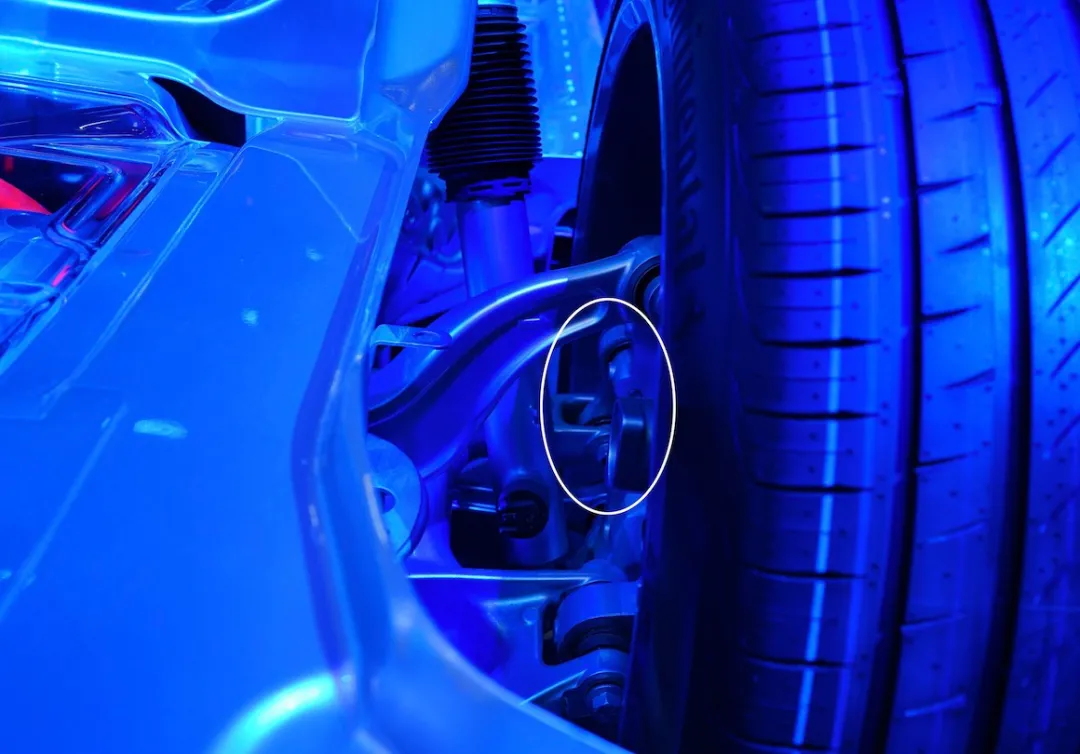
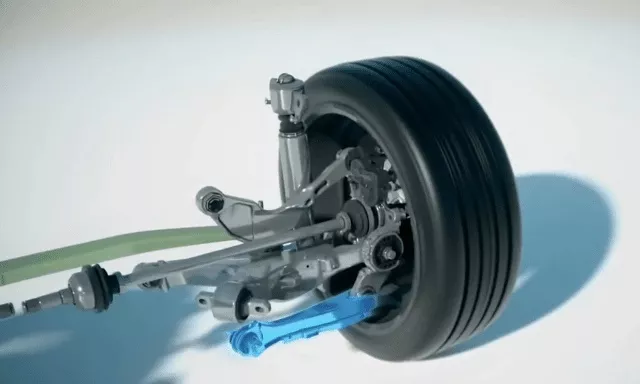
Obviously, none of this is necessary on Smart #1. According to the currently known information, the production version of #1 should have a common front MacPherson and rear multi-link suspension for small cars (it is not clear which kind of multi-link it is). As a direct competitor of Volkswagen’s MEB platform, SEA-2 will mainly be rear-wheel drive with a four-wheel drive version for #1.# Smart #1 is likely one of the smallest members in the SEA-2 platform. The smaller city cars will be assigned to the dedicated SEA-E platform, which covers the “people” responsible for the 1800mm wheelbase. The Volvo and extreme hybrid new cars, also based on SEA-2, will come after Smart #1, possibly with Polestar and Lotus not too far behind.
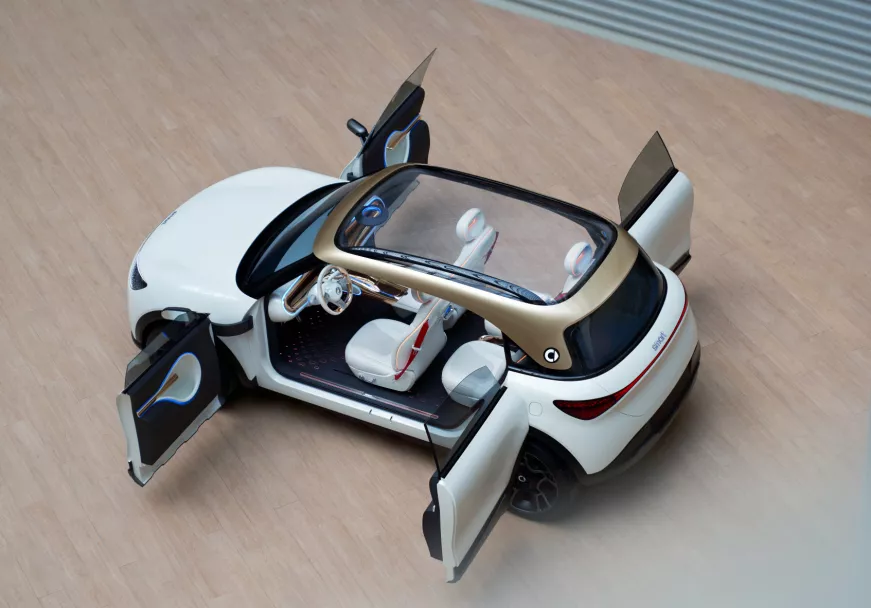
For small car brands like Smart and MINI, a small SUV of just over 4 meters is probably the smallest model that can ensure sales. But MINI needs a traditional three-door MINI to maintain its heritage, while Smart prioritizes slightly larger small SUVs over three-door MINIs, and electrification truly gives it the magic performance of “small car big space”.
Today’s pure electric market does not lack large cars, performance cars or luxury cars, but it is almost impossible to find a premium small car based on a pure electric platform. What’s missing is small and beautiful, not big and all-encompassing. When the streets are filled with 5-meter-long large cars and SUVs, agile little guys can’t be bought no matter how much money they have.
The good news is that Smart #1 will be in mass production as early as next year, and it will be domestically produced. The second piece of good news is that although its gull-wing doors are almost certain to be scrapped, referring to the approach taken by extreme hybrid, the frameless doors of Smart #1 will most likely be retained.
This article is a translation by ChatGPT of a Chinese report from 42HOW. If you have any questions about it, please email bd@42how.com.