*Author: Chris Zheng
On the morning of March 2, 2021, William Li, CEO of NIO, attended the Q4 and Full-Year 2020 Earnings Conference Call.
Prior to this, NIO had already announced the highest-ever quarterly sales of 17,353 units and the completion of a $1.5 billion convertible bond issuance. To some extent, NIO’s positive financial results were expected.
So, rather than the financial results, we are more concerned about how William Li defines NIO’s 2021, 2022 and even long-term strategies. Let’s take a look together.
Entering Europe and Exploring North America
This year, we will begin sales and services in Europe. Our team is currently building the necessary infrastructure and preparations are being made in all aspects, including products, sales and service networks, and teams. Entering international markets is a long-term effort, and we have enough patience.
NIO has finally announced its plans to enter overseas markets and has publicly disclosed specific entry times.
How can a new luxury car brand achieve sustainable growth?
During NIO Day 2020 on January 9, William Li was repeatedly asked this question. His answer was that NIO prefers to achieve sustainable growth by entering international markets rather than exploring lower-end product positioning.
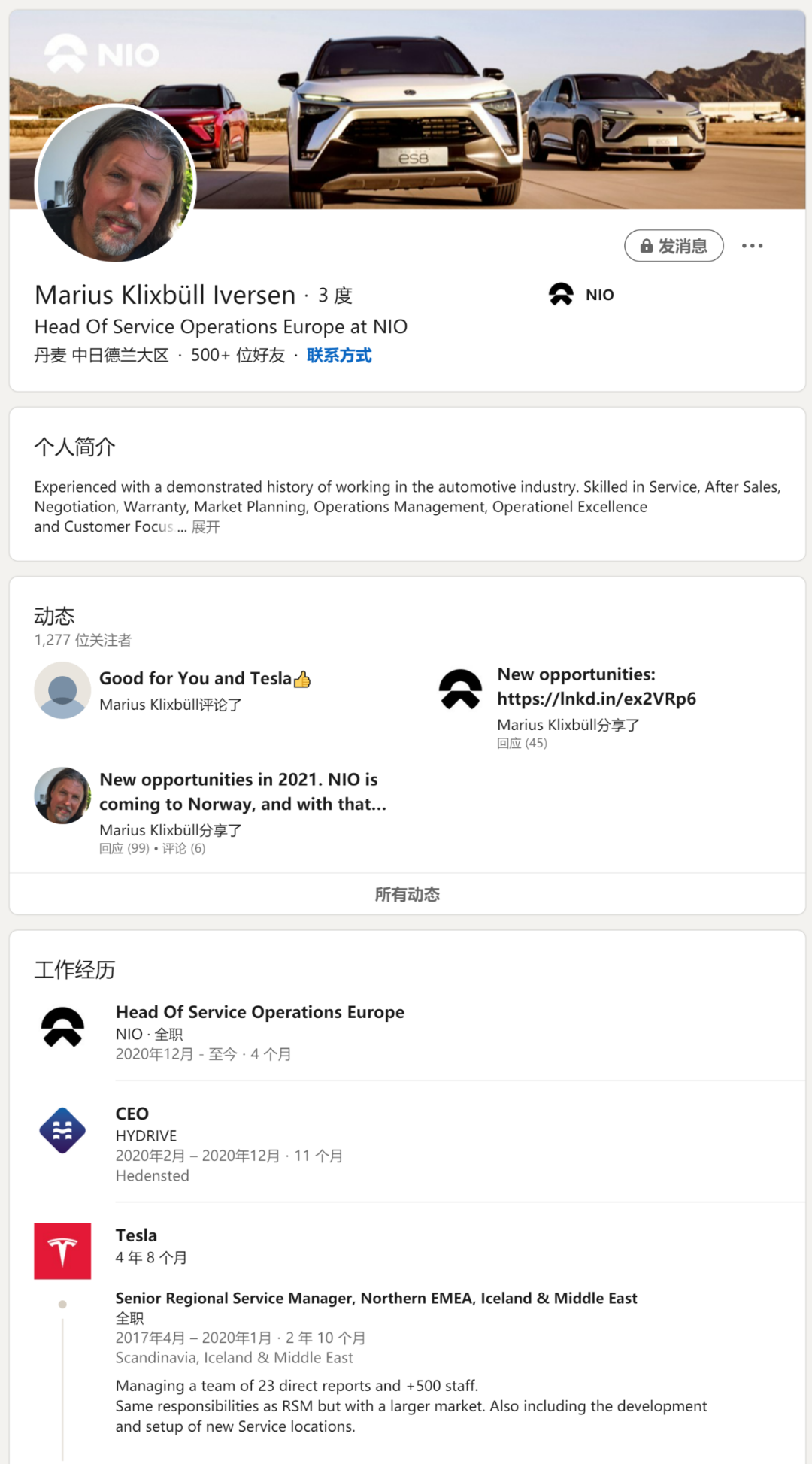
A month before that, Marius Klixbüll Iversen, a former Senior Manager of Tesla EMEA and Iceland Operations, joined NIO as the Head of European Operations. Marius had worked at Tesla for nearly five years and managed a multinational service team of over 500 people, bringing extensive experience in automotive aftersales and service operations.
At the same time, foreign media outlet CNEVPOST discovered an Easter egg on the control screen of the NIO ET7. From the image, it can be seen that the blue cursor is located on Karl Johans gate in Oslo, Norway.
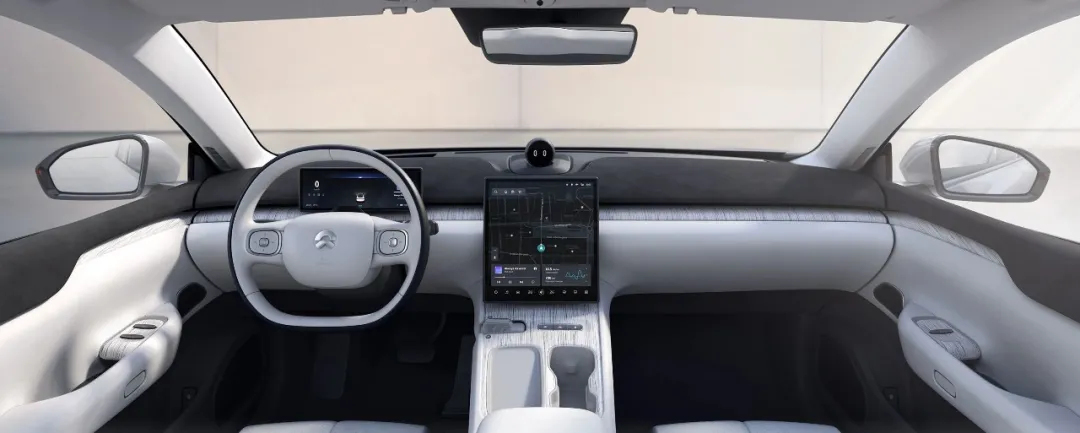
Combined with Marius’ joining and the large number of Oslo service positions posted by NIO Europe, it is easy to predict that the first NIO House in Europe will be located in Oslo, Norway.
In addition, William Li also talked about his views on the U.S. market:
In fact, we have been studying the U.S. market for a long time. We are still exploring and researching various possibilities for our business model. Of course, we will definitely enter the U.S. market and we will be very patient in doing so.
Today, on the homefront of intelligent electric vehicles (if they count), General Motors’ Bolt and Ford’s Mach-E are struggling against the Silicon Valley giant, Tesla.
What will NIO’s performance be when it lands in America? Let’s wait and see.
Control Risk, Steady Growth
The impact of chips on the supply chain is huge, and it had some impact on our Q2. But as it stands, we are still able to deliver based on our normal plan…though satisfying our needs has high risk.
On February 25th, Bloomberg reported that the Tesla Fremont factory had shut down. Elon Musk responded that it was caused by a shortage of some components and that production would resume soon. Later, news indicated that Texas Instruments’ power IC supply affected Tesla’s vehicle production.
It’s another car electronics chip, and the Tesla factory is just a microcosm of the global automotive industry shutdown since 2021.
Li Bin stated that NIO’s Hefei plant has already reached a production capacity of 10,000 units per month through partial-two-shift production lines, but supply chain capacity limits for chips and batteries will restrict NIO’s production capacity to 7,500 per month in Q2.
According to NIO’s estimates, the entire supply chain capacity will not return to an improvement state until July. By early 2022, NIO’s Hefei plant will achieve a production capacity of 150,000 units in a single shift and 300,000 units in a double shift.
Once we have the cars, the next question is who to sell them to, which is the problem of demand.
For any automaker, Q1 is not a good quarter, except for NIO.
Against the backdrop of the seasonally low sales period, delivery during the Spring Festival, and logistical interruptions with the year’s highest season of sales in Q4, this made NIO’s Q1 sales guidance of over 20,000 units stand out:
We expect to deliver a total of 20,000 to 20,500 vehicles in Q1 of 2021.
That being said, Q1 is more than half over. So what is NIO’s long-term sales growth strategy for Q2, even mentioning their competitor, Tesla, in their financial report meeting?
In January of this year, the Model Y disclosed its domestic price, which should be good for short-term plans. Tesla often creates news and harvests a batch of orders at once. We (NIO) usually focus on long-term and steady growth. We are not pulse-like. We will not get many orders by lowering prices.
We will not become a pulse-like sales entity. We will continue to increase orders incrementally through our service network, improved customer experience, and user reputation. To date, our strategy is not to lower prices.In terms of execution, NIO will open 20 new NIO Houses and 120 NIO Spaces in 2021. William Li, the founder and CEO of NIO, stated that NIO’s basic strategy is to cover all cities that are covered by Mercedes-Benz, BMW, and Audi 4S stores.
In addition, in the entire service system, NIO’s second-generation battery swap stations will be deployed starting in Q2 2021, with a target of reaching 500 battery swap stations by the end of this year, compared to the current 191.
Regarding the charging network, as of now, NIO has 127 supercharging stations and more than 1,700 destination charging piles. The company aims to achieve a cumulative growth of 600 supercharging stations and 15,000 destination charging piles by the end of 2021.
If we compare this to the war of running a network of energy replenishment, Tesla China was the first to launch in 2019. Then, car companies with self-operated energy replenishment networks such as XPeng and Volkswagen announced aggressive expansion plans. As a key aspect of the electric vehicle user experience, NIO will naturally not lag behind.
Star of Tomorrow – ET7
In the context of various indicators such as sales volume, revenue, gross profit margin, and cash reserves all improving, NIO’s stock price turned from rise to fall after-hours because the net loss in Q4 exceeded the market’s expectations.
After NIO bottomed out and rebounded in the second half of last year, Li Bin, the founder and CEO of NIO, once again increased R&D investment. Specifically, in Q4 2020, NIO’s R&D investment reached 829 million yuan, a growth of over 40% compared to Q3, though it did not reach its peak in 2019.
Moreover, at the financial report meeting, Li Bin further stated that R&D investment in 2021 is expected to double to around 5 billion yuan.
Combining NIO’s statement that it will not reduce the gross profit margin of the entire vehicle, this is more like a clear signal that NIO’s management transmitted to Wall Street: in the current fierce market competition, NIO does not intend to pay too much attention to the financial losses. Based on ensuring business operating indicators such as gross profit margin, cash flow, etc., NIO will significantly increase R&D investment.
Furthermore, this operating strategy also meets the expectations of Wall Street for emerging companies.
In Li Bin’s words, the 5 billion in R&D investment is “especially for AD (Autonomous Driving), we need to carry out sufficient testing and development.”
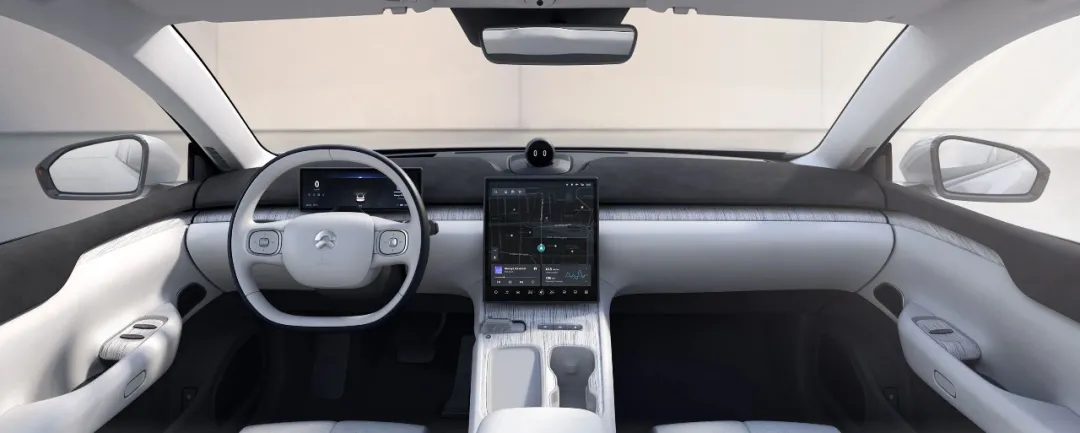
On NIO Day on January 9th, the first production sedan, the ET7, created a buzz.
Most people were shocked by the NIO Aquila sensing system and Adam computing platform, which were first launched on the ET7.No matter it is Adam with 4 NVIDIA Orin chips that provide computing power up to 1016 Tops, or NIO’s automatic driving NAD hardware capability that features 11 8-megapixel cameras and a 500-meter-range 300-line LIDAR, NIO’s automatic driving hardware capability is ranked first in the world.
However, what’s more important, maybe, is the completely different product logic of ET7 compared to NIO’s previous models:
As NIO’s flagship sedan, ET7 did not adopt the all-aluminum body of ES8 era, not to mention the excessive engineering design of some details; Based on the advantage of the same platform development, ET7 can be produced in-line with ES8, ES6, and EC6.
On the other hand, NIO significantly increased the resource allocation of ET7 in the field of automatic driving, making ET7 the first model in the industry with leading hardware capability.
The key factor that makes ET7 truly ahead of the industry is the extremely forward-looking business model designed by NIO. As an example, for NAD automatic driving capability and super-long-lasting solid-state battery (150kWh), according to Li Bin, NIO does not intend to provide these two capabilities for lifelong buyouts.
All users can only enjoy these two services through subscription payments. This fundamentally changes NIO’s business model. As Li Bin said in the financial report conference, “If we compare all the charging models, this (AD as a Service) is definitely a better growth engine.”
However, whether it is NIO, Tesla, or other subsequent car companies, the foundation of promoting software as a service (SaaS) is high-quality user experience supported by full stack self-developed technical capabilities. Otherwise, cost-conscious users will quickly abandon software services.
If we take a look at NIO’s research and development today, there is still a long way to go before supporting SaaS, whether it is NAD or solid-state batteries.
Therefore, this is a self-consistent logical loop. From product design logic, business model design to deployment of R&D resources, ET7 represents NIO’s future.
NIO hopes to interpret the future of the industry with ET7.
This article is a translation by ChatGPT of a Chinese report from 42HOW. If you have any questions about it, please email bd@42how.com.