


Latest from 42HOW
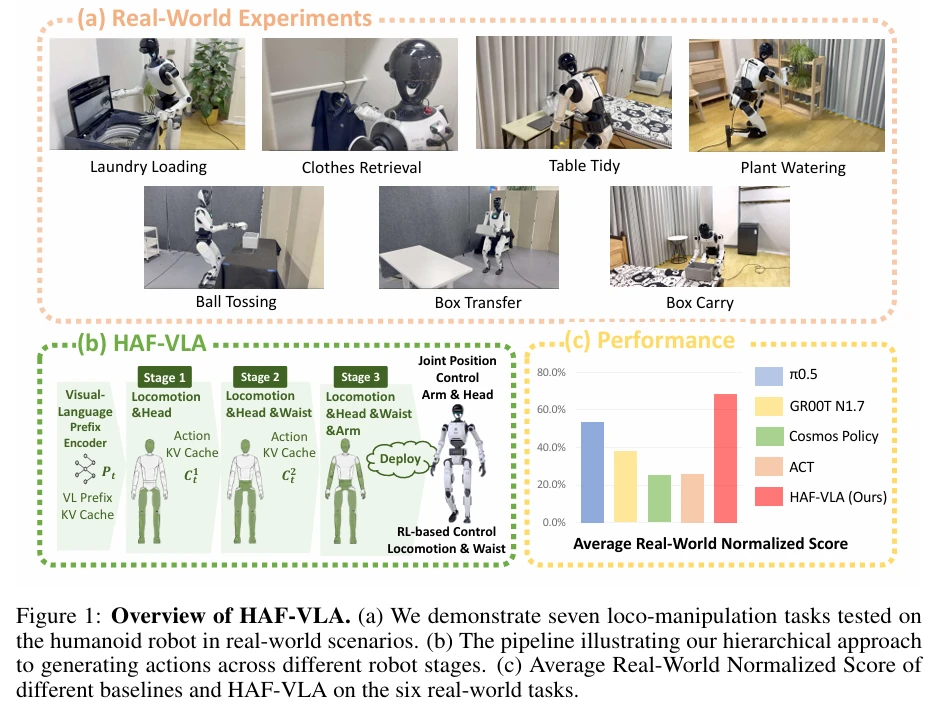
HAF-VLA Enables Hierarchical Generation of Coordinated Full-Body Actions in Humanoid Robots
A joint team from Peking University, Tsinghua University, and other institutions has proposed HAF-VLA, a hierarchical framework that enables humanoid robots to generate coordinated full-body actions by sequentially planning movements along the kinematic chain to avoid compensatory instability.
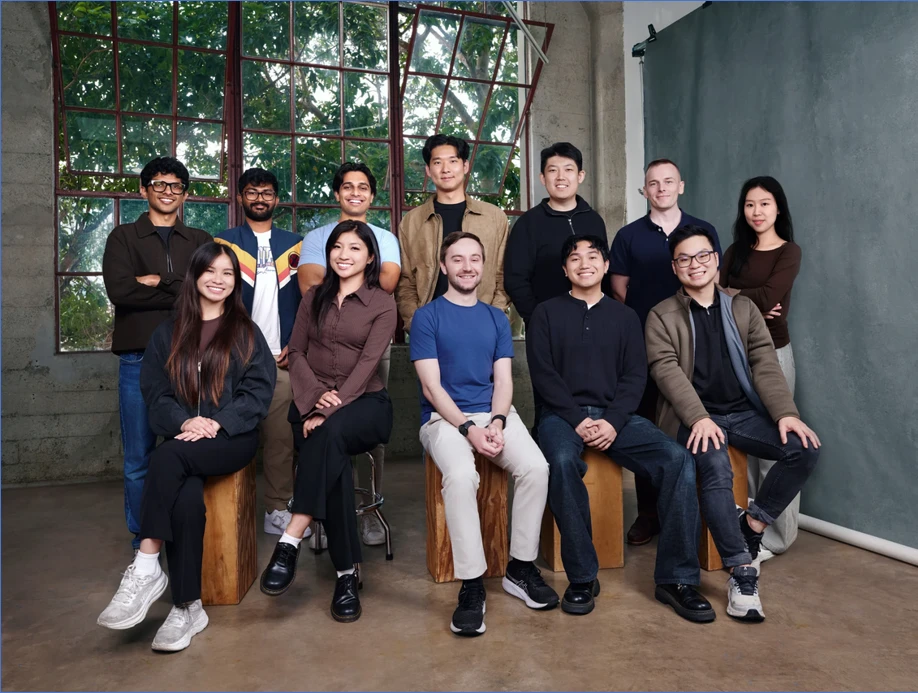
Dream Labs Raises USD 90 Million in Seed Funding, Debuts Robot Foundation Model Dream-1
On October 19, robotics AI startup Dream Labs announced the close of a USD 90 million seed round alongside the launch of its robot foundation model, Dream-1, and a public API.
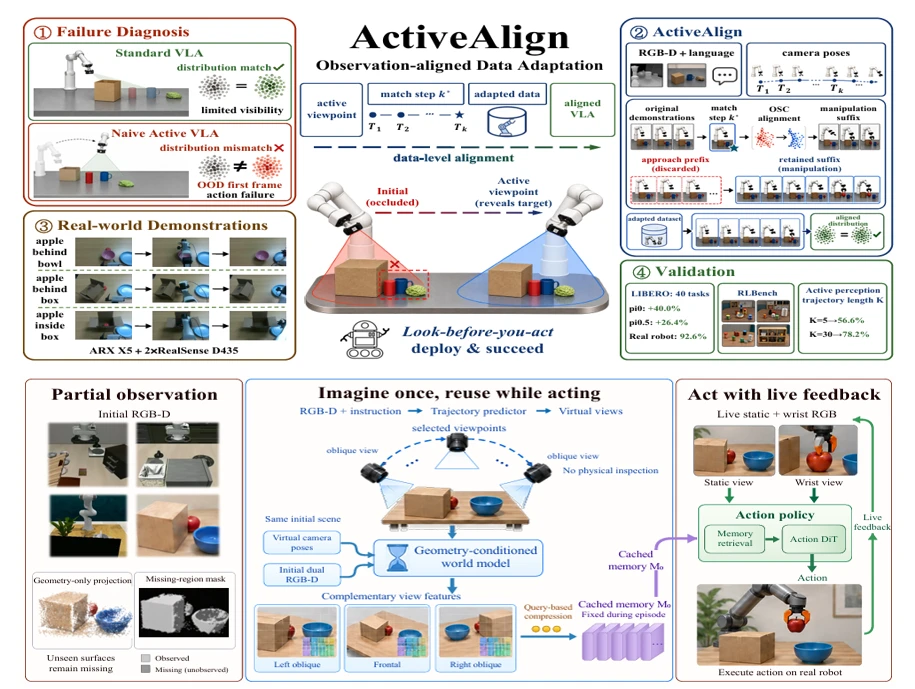
Fudan Team Bridges Active Perception and Vision-Language-Action Models to Overcome Viewpoint Shifts
Two papers from Fudan University introduce ActiveAlign and AWAM, which align training data and representations with active camera movements to prevent distribution shifts in vision-language-action models when robots adjust their viewpoints to overcome occlusions.
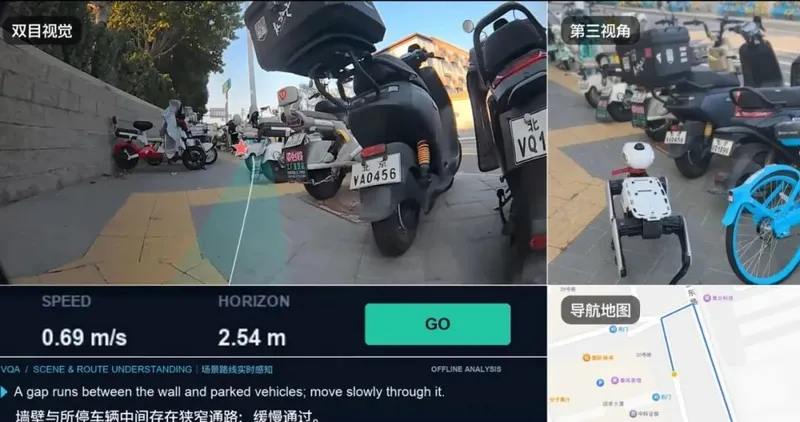
Robots Can Run Marathons, So Why Is It Still So Hard to Reach the Front Desk?
Vita Dynamics introduces VbotNav-0, an asynchronous cloud-edge navigation framework that enables robots to seamlessly transition from outdoor streets to indoor environments using unified route tokens and a three-tier decision architecture.

ACE Robotics Releases ACE-Brain-0.6, Outperforming GPT-6 Astra in Six Spatial Anchoring Tests
ACE Robotics has released the 9B embodied AI model ACE-Brain-0.6, which scored higher than GPT-6 Astra in six of eight visual spatial anchoring benchmarks. The team attributes performance gains to data expansion from 260,000 to approximately one million training samples.

AGIBOT X2 Provides Patient Guidance at Peking University People's Hospital, Logging Over 46,000 Interactions
AgiBot's patient guidance project with Ant A-Fu is operating at Peking University People's Hospital. By September 30, AGIBOT X2 had completed 46,686 interactions over 66 working days.

Li Auto's Chip Unit MHX Technology Signs RMB 1.625 Billion Financing Deal to Expand Beyond Automotive
Shanghai Mahe Xin Technology Co., Ltd., a chip subsidiary of Li Auto, has signed its first-round equity financing agreement worth RMB 1.625 billion. The deal aims to support the external supply of chips and domain controllers, targeting non-automotive markets.

NVIDIA and Semiconductor Leaders Use CUDA-X Libraries to Advance AI-Defined Fabs
At SEMICON West 2026, NVIDIA announced that leading semiconductor companies are adopting its CUDA-X libraries, including the new cuPotential, to build AI agents for atomic simulation and digital twin modeling. These tools aim to optimize manufacturing processes and improve efficiency in the development of AI-defined fabs.

Robota-Embed: Joint Action and Visual Encoding for Robot In-Context Learning
A joint team from NVIDIA, MIT, UC Berkeley, Oxford, and CMU introduces Robota-Embed, a unified VLA embedding that incorporates action data into experience retrieval. The model significantly improves robot in-context learning by matching future behavior logic rather than just visual similarity.

NVIDIA and MIT Researchers Show Long-Context Robotics Requires Autoregressive World Models
A joint paper from NVIDIA, MIT, HKU and UCSD demonstrates that simply extending visual history does not improve robot control; the model must first learn autoregressive prediction to effectively use long contexts. On the RoboCasa GR-1 platform, task success rates rose from 63.3% to 78.7% when context was extended to 19.2 seconds.
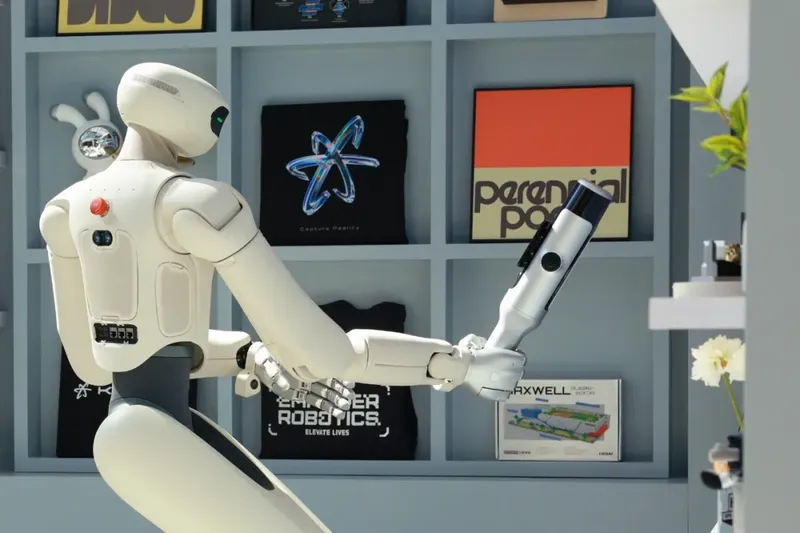
Hesai Launches AI Camera Kosmo to Monetize the Real World as Data
Hesai launched the Kosmo One handheld scanner and Kosmo World platform, enabling robot companies like Sharpa to build high-fidelity simulation environments from real-world scans. The move signals a shift from selling sensors to providing 3D data assets and cloud processing services.

PrimeBot’s Hao Dong: Lowering Post-Training Costs for Home Robots
At IROS 2026, PrimeBot and Peking University hosted a dual-arm manipulation challenge. Chief Scientist Hao Dong discusses how post-training improves reliability in home environments and introduces HIL-UMI to lower data collection costs.

I-BFM: Unsupervised Reinforcement Learning Enables Robust Humanoid Interaction After Falls
Researchers from Tongji University and Tsinghua University introduce I-BFM, a behavior foundation model that uses forward-backward representation to allow humanoid robots to recover from falls and adapt to disturbances without re-planning trajectories.

OmniDex Dataset Scales Dexterous Grasping to 2.6 Million Cluttered Scenes
A team led by Xiaogang Wang and Hongsheng Li publishes OmniDex, a dataset of 2.6 million cluttered scenes and 400 million grasp annotations for dexterous hands, using offline pre-computation and soft winner-take-all learning to enable high-precision grasping without post-inference optimization.

Kui Jia Team's New Work: Enabling World Action Models to Truly Understand 3D Space
A joint team led by Kui Jia has published UNITAS, a world action model that unifies observation, action, and scene changes in a shared metric 3D coordinate system. The 1.7B-parameter model achieves 99.8% task success on the LIBERO benchmark and reduces displacement prediction error by 35% compared to PointWorld.
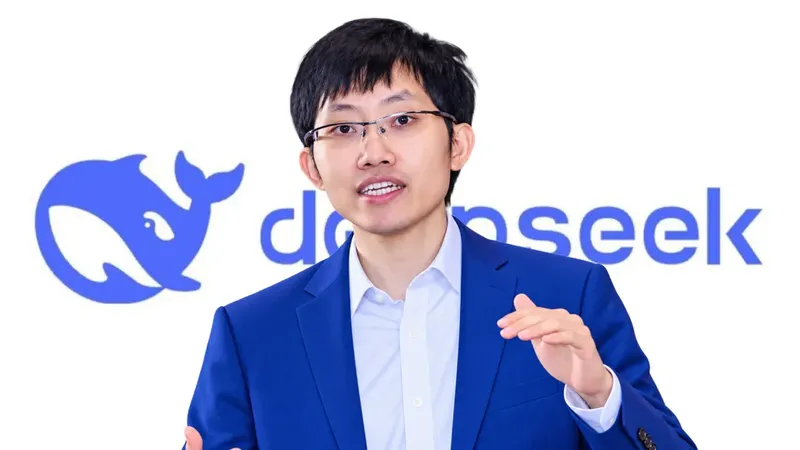
DeepSeek Reportedly Eyes Embodied AI as Chinese and U.S. Foundation-Model Firms Signal Moves
Reports indicate DeepSeek is assessing a move into embodied AI through team building or investment, with plans to lead the seed round for Winverse AI at a post-money valuation of approximately USD 400 million.
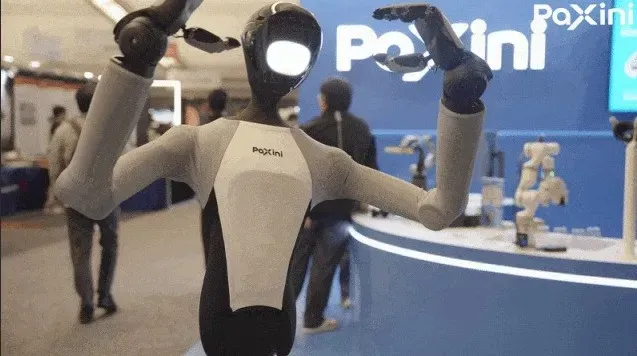
Tactile Sensor Startups Expand Beyond Hardware Into Data and Embodied AI
At IROS 2026, companies like PaXini and Sharpa unveiled full-stack solutions combining tactile sensors with dexterous hands and data platforms, signaling a shift from component suppliers to providers of embodied AI training data.

Yann LeCun’s Latest JEPA Paper: Where Does End-to-End Planning Go Next?
A new paper from Yann LeCun’s team introduces H-JEPA, a hierarchical world model that improves long-horizon planning success rates from approximately 18% to 73%. The architecture separates temporal scales to enhance stability and reduce computational costs in embodied AI tasks.

Zongqing Lu’s Team at BeingBeyond Introduces Being-M0.7 for Humanoid Whole-Body Mobile Manipulation
Being-M0.7 learns joint visual and motion priors from over 10,000 hours of human egocentric video and motion data, then adapts them to robot control. It achieved a 71.1% success rate on the SIMPLE simulation benchmark and matched the strongest baseline in real-world Unitree G1 tests.

Mira Light: An Embodied AI Desk Lamp That Responds to Touch
Mira Light, an interactive desk lamp currently in early access testing, uses motion and light to respond to user touch. The team plans a December release with pricing set at RMB 1,399 domestically and USD 299 overseas.