


WEY Executive Tan Jian: We Know We Are Late to the Pure EV Market
Speaking at the 2026 Guangzhou Auto Show, WEY Executive Deputy General Manager Tan Jian explained that the brand's newly unveiled pure electric SUVs were delayed to allow for extensive battery testing. The V9X EV, WEY's first pure electric flagship, features a Dragon Scale hybrid solid-liquid ultra-fast charging battery, a 900V architecture, and 6C ultra-fast charging.
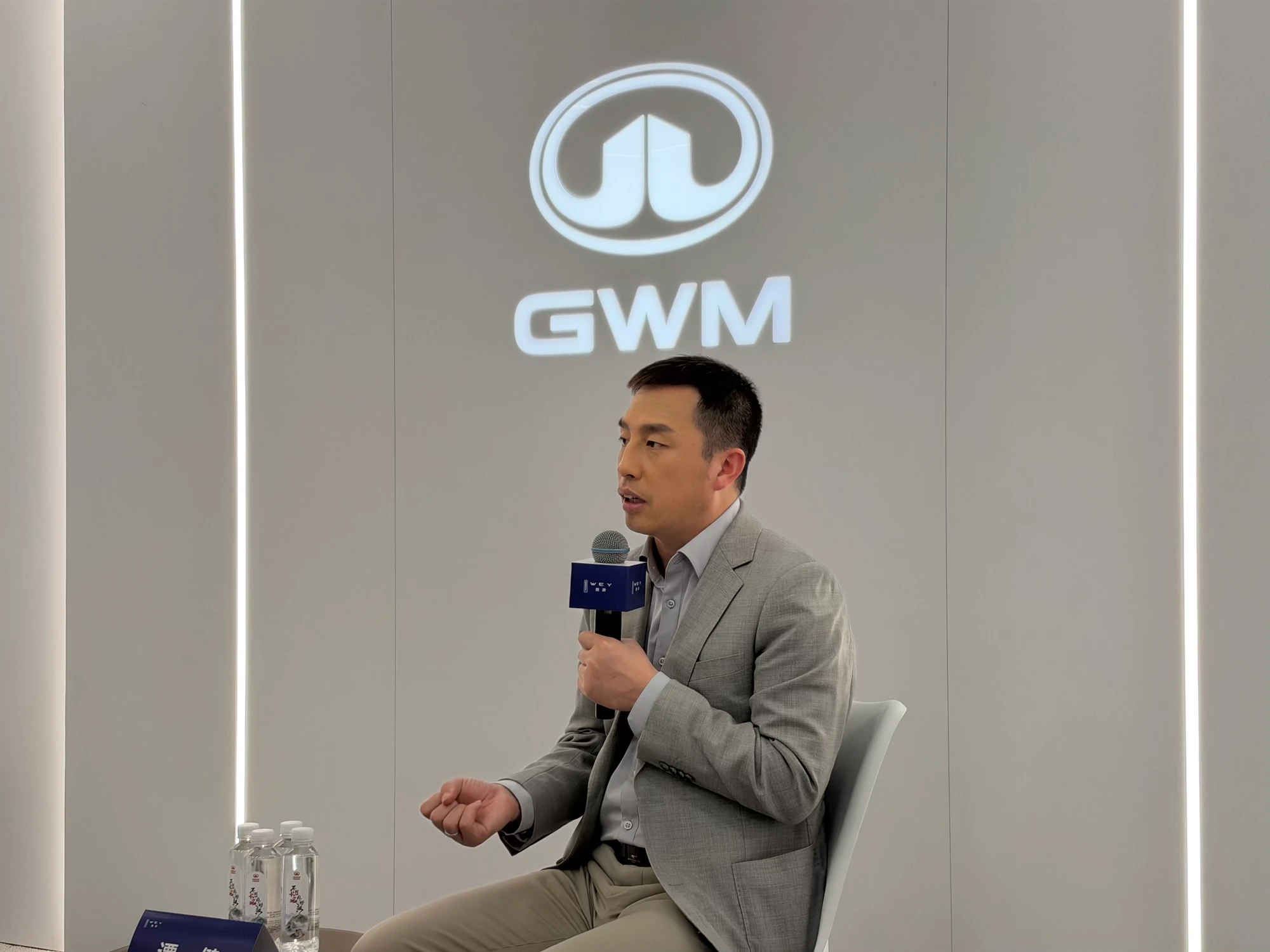
"Those who arrive late should at least show some sincerity for arriving late."
On November 27, at the 2026 Guangzhou Auto Show, Tan Jian, Executive Deputy General Manager of Wey, stated that the pure electric SUV just unveiled by the brand was actually developed quite some time ago. The battery alone had to pass laboratory, vehicle integration, and third-party testing. Wey would not dare to launch it until all testing was completed.
The V9X EV is Wey's first pure electric flagship, equipped with a Dragon Scale hybrid solid-liquid ultra-fast charging battery, supporting a 900V architecture and 6C ultra-fast charging. Both the V9X EV and V8X EV are now open for pre-order at the auto show and are scheduled to go on sale in December.
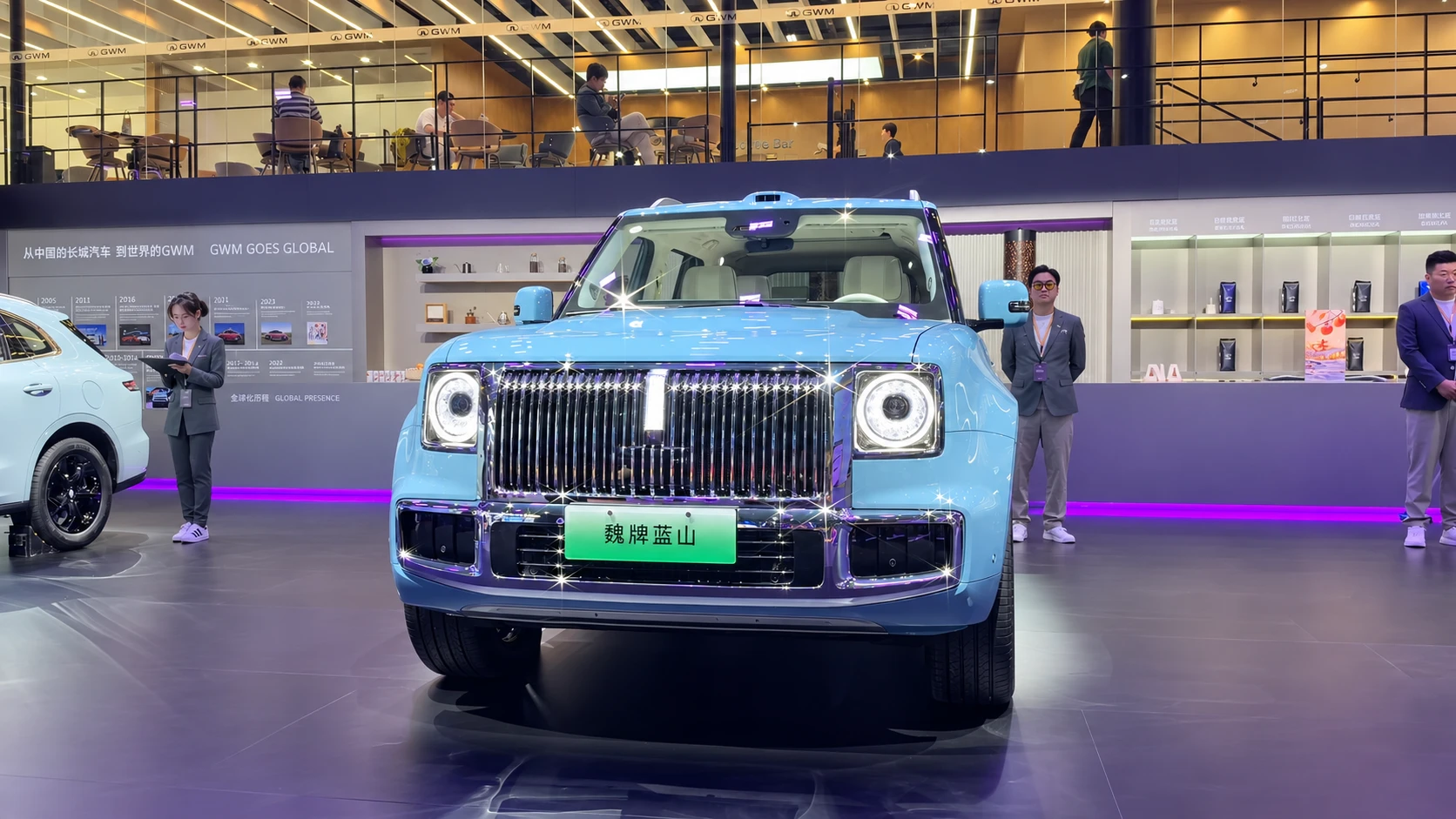
The second-generation Lanshan, which has already begun pre-sales, is scheduled to launch on November 30. It shifts from the city-oriented styling of the first-generation Lanshan to a boxy design, offering five- and six-seat configurations. The Gaoshan 8 HEV, which launched on October 26, was also on display at the event, equipped with Great Wall's Hi-HEV hybrid system and featuring navigation-assisted driving. Wey also announced that the right-hand-drive version of the Gaoshan has entered the Hong Kong, China market and will next expand to Australia and Europe.
On the afternoon of the press conference, Tan Jian, Executive Deputy General Manager of Wey, participated in a joint interview with 42HOW Auto and other industry media at the booth. He noted that cities such as Beijing, Shanghai, Guangzhou, Shenzhen, and Xi'an can drive incremental growth for Wey's pure electric models, while the northern market will remain dominated by plug-in hybrids. He also candidly acknowledged that Wey's brand pull is currently limited, so the company needs to push the Gaoshan, V series, and second-generation Lanshan forward together, relying on its products to build brand recognition in the premium market.
Below is the transcript of the group interview, edited for clarity.
Driving the brand with the Gaoshan, V series, and second-generation Lanshan
Q: Why launch three vehicles at the auto show?
Tan Jian: Our three categories are basically finalized. Gaoshan is an MPV, the V9X and V8X are urban SUVs, and the second-generation Lanshan is a boxy SUV. Over the past two years, Gaoshan and the first-generation Lanshan have driven up sales, and the direct-sales system is also developing. North of the Yangtze River, Great Wall's reputation provides some endorsement for WEY's high-end products. In the south, many users are still unaware of our reputation for safety and reliability.
The V9X EV, the new Gaoshan 9, and the second-generation Lanshan have all been improved in terms of smart features and performance. Looking solely at the product experience, we feel we can already compete with the leading new forces, but there is still a significant gap in brand awareness among users. It is currently difficult for WEY to drive product sales through brand power alone; we must first use the products to elevate the brand. Space, safety, and reliability are our foundation, and smart features are what we need users to understand more about going forward.
All three categories need to be pushed forward. By the end of the year, we still want to push for higher sales, and we also hope to see a significant improvement in our operating performance compared to last year. The profitability of the direct-sales system has already improved compared to last year.
Question: How did Dong Mingzhu evaluate the V9X EV after her test ride?
Tan Jian: Her first impression was that the car is quite large, and she asked President Wei how much it costs. The price of the pure electric version had not been announced at the time, and President Wei said it would be around the 400,000 yuan level. Sitting in the second row, she felt the space was spacious, the seats were comfortable, and some of the detailed designs were also nice. She experienced the driver assistance on the campus and on public roads, which gave her some new insights into a traditional manufacturing enterprise like Great Wall pursuing smart technologies.
President Wei's visit to Gree, like the previous visit to Pangdonglai, was more about learning and exchange. Both the home appliance and retail industries have experienced the survival of the fittest among brands. There is much we can learn from Gree about how to manage quality and how to apply capabilities to new categories. President Dong even suggested we build tractors. As for talent development, several companies are thinking about how to maintain the stability of the team's echelon, promote people with ideas to important positions, and give them a free hand to execute their visions.
Question: WEY has reached its tenth year. How do you view "fast-tracked cars"?
Tan Jian: Ten years is a long time, but compared to building a century-old enterprise, ten years might be nothing. Look at those enterprises that have been operating for a long time; they have always been upholding product quality, service, and reputation. For WEY to evolve from Great Wall's high-end brand to a high-end brand among China's independent automakers, and then to stand firm in the global automotive market, this is a process of testing and breaking through step by step.
A few years ago, I spoke about the quality issues Chinese motorcycles faced in Southeast Asia, and at the time, I said we must not let this happen in the Chinese auto industry. Earning trust for Chinese car brands overseas requires long-term accumulation. There may be sales in the first year or two, but by the third year and beyond, things could revert to their original state. Our generation might leave the auto industry down the line, but the company still needs to survive.
Q: Wey has relatively low brand awareness in southern China. How do you plan to address this?
Tan Jian: Regional factors play a role, as there are many local automakers in the south. We also had some misconceptions about southern users. Initially, we assumed that users in Guangzhou and Shenzhen were particularly eager for new technologies. Later, we discovered that some joint-venture brands in Guangdong are still selling quite well today, relying on the reputation built on reliability, durability, and after-sales service. Some want to try new technologies, while others value reliability and safety more.
There is another reason: our marketing has indeed fallen short, and President Wei has criticized us for it. We are gathering feedback from our dealer channels, users, and the media to determine whether we need to develop products specifically for the southern market or find more effective communication strategies. At least so far this year, we have not yet seen effective results.
Q: Great Wall already has quite a few boxy SUVs. Why is the second-generation Lanshan also adopting this boxy design?
Tan Jian: Originally, we assumed the first-generation Lanshan would be used primarily in the city, but we later realized we were mistaken. Many owners take it on long road trips to the northwest and southwest, including Xinjiang and Tibet. They are satisfied with the driving dynamics and space, and they have also provided feedback, hoping we would take the Lanshan's long-distance capabilities a step further.
The first-generation Lanshan featured a more city-oriented design, which users also accepted. However, the V9X and V8X are already city SUVs. When developing the second-generation Lanshan, we thought that since users have a need for long-distance travel, could we differentiate these two categories?
Gaoshan launches with hybrid first, V series pure electric targets higher-tier cities
Q: What is the market feedback for the Gaoshan HEV?
Tan Jian: Great Wall has been producing HEVs with smaller battery capacities for a long time, and the Gaoshan also has such a version for overseas markets. We believe that in the past, HEVs were difficult to penetrate the domestic market, partly because smart features lagged behind. We have surveyed Toyota owners, and they also want smart features, though some prefer to see how others use them first.
Following the launch of the Gaoshan HEV, we observed at locations near Toyota dealerships that some customers were comparing vehicles from both brands side by side. These customers already have a demand for smart cockpits and driver assistance, but there were few options available in the past. Next, we will also introduce large-battery HEVs for the V8X and V9X. Integrating smart cockpits and driver assistance into an HEV might seem as simple as just connecting it to a power source, but in reality, it requires overhauling the vehicle's entire network architecture and investing in extensive testing to cover various usage scenarios. We want blue-plate cars to offer a smart experience close to that of pure electric vehicles, along with power performance comparable to plug-in hybrids.
Let me add a few words about pure electric vehicles. We have been developing pure electric vehicles for a long time, but the hybrid solid-liquid battery still requires laboratory testing, vehicle integration testing, and third-party validation. Previously, we focused more on integrating smart features into plug-in hybrids, but we have also conducted extensive testing on how the powertrain and cockpit of a pure electric vehicle interact. Every test drive reveals some issues. If we rush to launch and then release an OTA update three months later, that upgrade is essentially just patching problems that were identified before launch. Since we are already late to the market, we would rather get these things right before moving forward.
Q: The proposed inclusion of "two winters and one summer" in the validation process—will it affect the pace of new vehicle launches next year?
Tan Jian: We have always hoped the MIIT would clarify this matter. Great Wall conducts "two winters and two summers" of testing for its vehicles; after completing the laboratory tests, they still undergo real-world testing. I believe this approach is responsible to both our users and the Chinese automotive industry. Nowadays, new models are released and prices are cut shortly after a car is purchased. Some vehicles cannot even last a few months before the company has to move on to the next one—how can they provide long-term service to users?
We are still rolling out OTA updates for the first-generation Macchiato and Latte. I remember a Wey owner who drove his VV6 for seven or eight years, covering 400,000 kilometers. The car was discontinued, and when he asked how to get replacement parts, we had to find a way to source them for him. Customers are happy when they buy a car, but if the manufacturer is gone two years later, how can they provide continuous service? It is the same for Chinese automakers going overseas; if there are product quality issues, it affects more than just a single company.
Q: Compared to the new forces, what sets Wey apart?
Tan Jian: Li Auto and NIO positioned themselves as high-end brands from the very beginning, accumulating users from the internet and tech circles and building their own reputation for technology. Users' previous perception of Wey was largely based on Great Wall's traditional independent brand. It is more difficult for us to move upmarket from this foundation.
Over the past two years, we have caught up quickly in intelligent features, space, and cabin configurations. For components like battery systems and powertrains, we design, develop, and manufacture many of them in-house. The current competition is about whether a company can integrate the entire supply chain, which is an advantage Great Wall has accumulated over the years. To better understand high-end users, we need to learn from the new forces, while also maintaining quality and reliability.
Q: What will help Gaoshan establish a firm foothold in the MPV market?
Tan Jian: We believe word-of-mouth is especially critical for MPVs. They are often multi-passenger vehicles, and every occupant has their own evaluation of the car, meaning the eventual buyer hears more opinions. If the feedback from passengers is relatively consistent, the buyer will feel more confident. There are significantly more MPV models now than last year, and the hype around some new models fades after just a month or two. In this segment, reputation must be built gradually.
Q: Will Gaoshan offer a fully electric version?
Tan Jian: We definitely will, but not in the short term. We see two main types of users for pure electric MPVs, though this analysis may not be exhaustive. One type is fleet and rental operators, for whom pure electric vehicles offer low operating costs. The other is family users. For example, with the Li Auto MEGA, we believe its product experience and the innovations it has made in high-end family MPVs are worth learning from. At this stage, Gaoshan will first consolidate its foundation with PHEVs and HEVs before moving on to pure electric models.
Q: How will the Wey 9X EV and hybrid models be differentiated?
Tan Jian: Due to the existing perception of the brand, it is harder for us to sell pure electric vehicles than PHEVs. Some users from higher-tier cities came to test drive and said they had never even heard of the V9X, or even Wey, but they thought the car was quite good after driving it. In cities like Beijing, Shanghai, Guangzhou, Shenzhen, and Xi'an, users have a foundational awareness of pure electric vehicles, so pure electric models will bring some incremental growth.
We expect the majority of WEY's sales to still come from the north, where PHEVs and HEVs are better suited to the climate, with PHEVs remaining the mainstay. These three powertrains will have different regional sales focuses, and I believe their sales will complement each other, making internal cannibalization unlikely.
Extending powertrain, cabin, and driving integration to the outdoors
Q: What can users experience from the integration of the powertrain, chassis, and intelligent features?
Tan Jian: What we call 'powertrain, cabin, and driving integration' is about merging the powertrain, driving, and cabin systems into one cohesive unit. For instance, the response time of our in-house developed chassis controller during braking and steering is tens of milliseconds faster than our previous solutions. When combined with the signal transmission and actuation response of ADAS, the synergy among the various systems becomes more apparent in high-speed driving conditions. On ordinary city roads, the difference might not be as noticeable.
We are also implementing cross-system computing power allocation. For example, when the cabin system is under high load and its response slows down, we can tap into the computing power from the ADAS side. Conversely, during driving, if the driving system requires more computing power, it can also draw on resources from the cabin side.
Take the second-generation Lanshan, for example. If a wheel slips while off-roading, the infotainment system will indicate which wheel it might be and ask if you want to engage the differential lock, activate the four-wheel-drive function, or switch to snow mode. Cameras and sensors will also display the terrain around the vehicle on the screen, such as whether there are potholes underneath or large rocks nearby. Tank and HAVAL have accumulated extensive data on off-road scenarios, and we want to extend the intelligent experience from the city to the outdoors.
Q: What are the advantages of Hi-HEV, and which models will it be used in?
Tan Jian: We plan to introduce a large-battery Hi-HEV version across the entire WEY model lineup. Our goal is to reduce engine start-up time, making the driving experience of blue-plate vehicles closer to that of PHEVs or even BEVs, while allowing owners to access intelligent features similar to those in BEVs. For short trips, BEVs and PHEVs have an energy efficiency advantage. However, in long-distance scenarios, the energy efficiency advantage of HEVs becomes more apparent.
Q: The four-speed four-wheel-drive system for PHEVs adds to the cost. In what scenarios is it useful?
Tan Jian: In flat cities, the investment in the four-speed four-wheel-drive system might not be obvious. But on continuous winding mountain roads like those in the Taihang Mountains, especially when the battery charge is low, you will realize its value. During continuous climbing, if the electricity generated by the engine cannot meet the climbing demand, some extended-range models may experience power fade. We introduced the four-speed four-wheel-drive Hi4 system hoping that under such low state of charge conditions, power delivery can still keep pace.
The costs are indeed higher. Great Wall relies on in-house R&D and supply chain integration to drive down costs, and we haven't priced the four-speed four-wheel-drive system separately at a premium. Drive it once on roads like this, and you'll know if the money was well spent.
Accelerating global expansion in 2027
Q: Which overseas markets will Gaoshan enter next?
Tan Jian: The Gaoshan is scheduled to launch in Europe at the end of this year or early next year. Recently, some media outlets drove the Gaoshan to Europe and the feedback was quite positive. We are also selling in markets like Southeast Asia, Central Asia, and Russia, and next we will introduce the Gaoshan to Mexico and South America.
Q: What about the global expansion plans for the Wey series and the second-generation Lanshan?
Tan Jian: The PHEV version of the Wey 9X launched in Russia last month. It is planned to launch in the Middle East in February next year, followed by Australia, Mexico, Brazil, and other markets. The second-generation Lanshan is scheduled to go overseas in April and May next year. 2027 will be the year Wey fully expands its global footprint.
To sustain our overseas business in the long term, we must build out our channels, sales networks, and after-sales service. We look to Toyota's service system as a benchmark to learn from. Once our products go overseas, our services must keep pace.