


Jeep Unveils New Product Lineup to Bring Professional SUVs to a Broader Audience
As domestic SUV retail sales reached 8.335 million units in the first ten months of 2026, accounting for approximately 55.6% of narrow passenger vehicle sales, the Chinese market faces an overwhelming array of new energy vehicle choices. Jeep aims to provide a definitive answer for family buyers by expanding its product lineup with professional off-road engineering across entry-level, mainstream, and luxury segments.

How much opportunity remains for an all-new new energy SUV in the Chinese market?
Data from the Passenger Car Association shows that in the first ten months of 2026, domestic SUV retail sales reached 8.335 million units, accounting for approximately 55.6% of total narrow passenger car retail sales during the same period. Yet, with so many new models launched each year, the list of choices keeps growing. Should it be sporty or boxy, hybrid or pure electric? Is there a definitive answer when choosing a car?
Meanwhile, the pain points of vehicle ownership persist: recharging and range for new energy vehicles remain an issue, with slow charging and reduced range in winter becoming even more pronounced recently. On the intelligent front, users still lack full trust in driver assistance systems, and the large in-car screen can still feel somewhat unresponsive. These are challenges faced by all automakers, leaving them seemingly back at the same starting line.
Against this industry backdrop, Jeep has unveiled an entirely new product lineup. Over the next three years, Jeep will introduce multiple all-new new energy products, spanning price segments from entry-level and mainstream to luxury. Combined with Jeep's imported models, the product portfolio will be even more comprehensive.
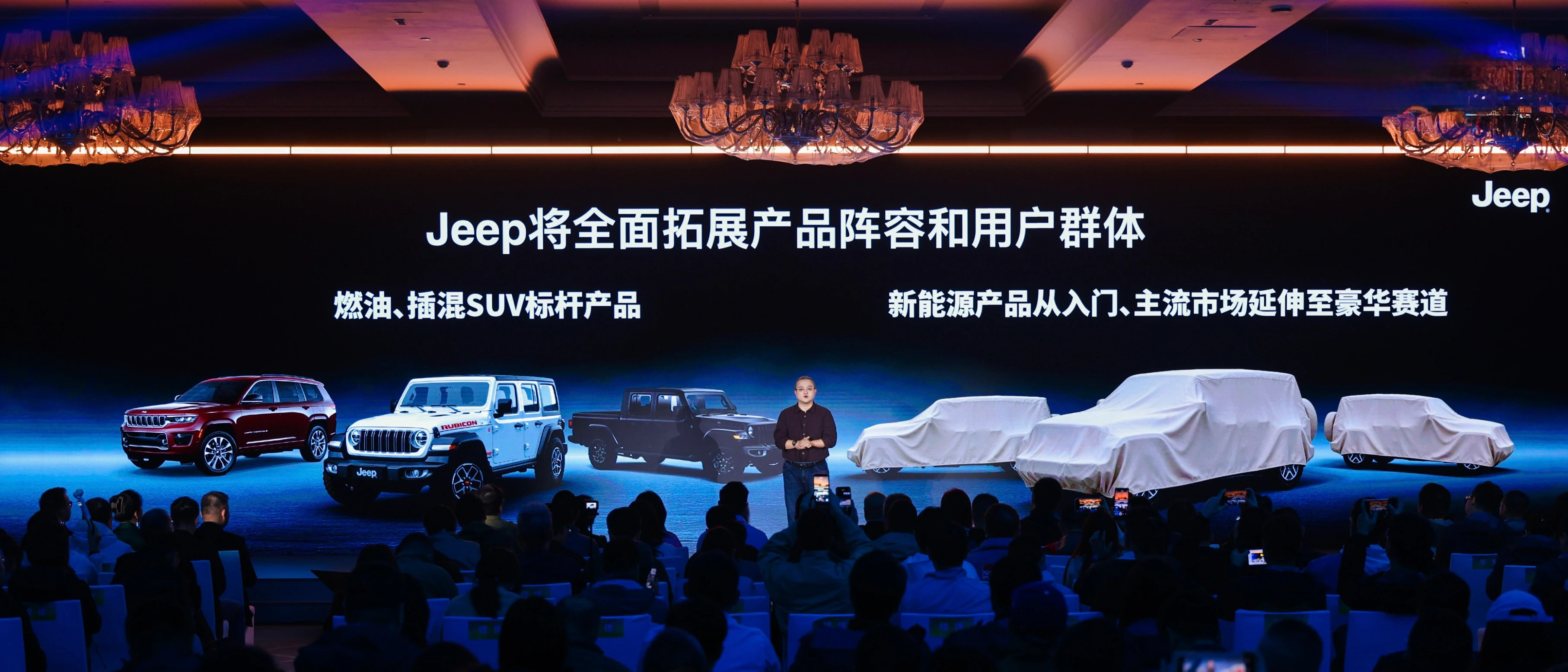
Looking ahead to the domestic auto market in 2027, Jeep’s all-new models bring its core competencies to the forefront. Leveraging Jeep’s global R&D network, the brand integrates its long-standing expertise in four-wheel drive, all-terrain capability, and professional engineering—epitomized by the Trail Rated program—into these new vehicles. So, can Jeep’s new cars meet the expectations of family buyers?
1. The New Jeep+ Plan
Just ahead of the opening of the 2026 Guangzhou Auto Show, Jeep launched a new strategy in China called Jeep+. Starting with a new generation of intelligent new energy products, the strategy combines professional exploration, crossover experiences, and long-term customer service to form Jeep’s core competitiveness for the future.
Today, buying a family SUV often means buyers want it all. For the daily commute, the vehicle needs to be agile and easy to drive, efficient on both fuel and electricity, while offering ample seating and cargo space. For long holiday road trips, rear-seat comfort and recharging convenience also significantly impact the travel experience. And when venturing onto unpaved off-road terrain, the ability to easily handle and confidently navigate unfamiliar trails is equally important to SUV buyers.
Jeep's Jeep+ ecosystem strategy for the Chinese market presents an opportunity to better meet the needs of Chinese family users.
Jeep+ is Jeep's comprehensive plan in China, spanning from new vehicle development to owner services, designed to better serve Chinese users across three dimensions: product and technology, network and service, and culture and lifestyle.
At the product and technology level, imported models such as the Wrangler are positioned for professional off-roading, while Jeep will also develop all-new models specifically for the Chinese market. Over the next three years, Jeep will launch multiple new energy SUVs, covering entry-level, mainstream, and luxury price segments.
In the field of intelligent driving, Jeep has announced a partnership with Momenta. The two parties will jointly calibrate advanced intelligent driving systems and work together to promote the practical application of intelligent driving technology in off-road scenarios.
The new vehicles will be built for Chinese families and positioned as 'capable in both the city and the wild.' Therefore, Jeep's new models will cater to daily commuting, long-distance family trips, and the unpaved roads encountered during outdoor recreation.
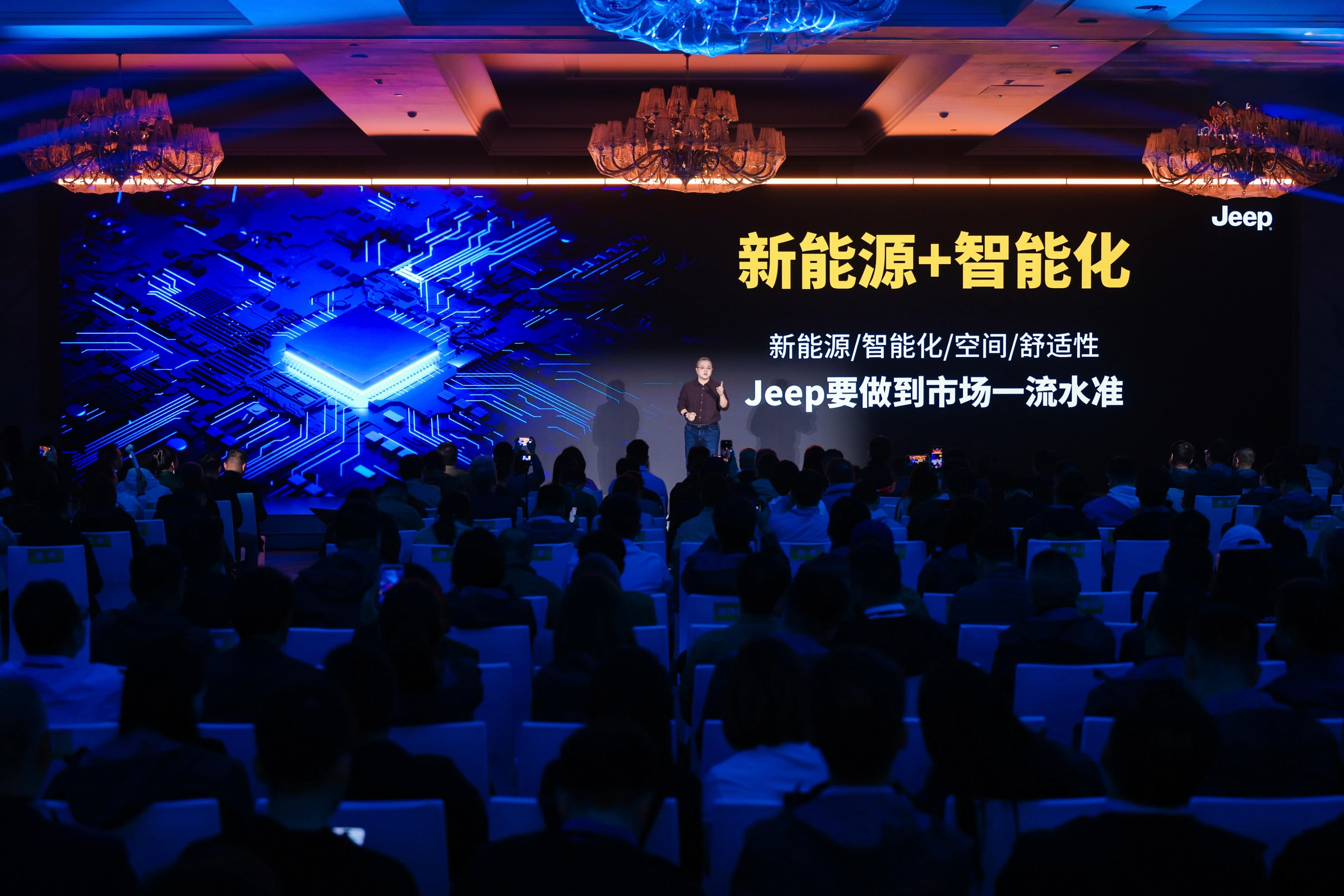
As a result, Jeep's product lineup will simultaneously feature both internal combustion and new energy vehicles, offering more choices for users with different driving habits.
In terms of sales network and after-sales service, Jeep also aims to extend its professional capabilities closer to more users.
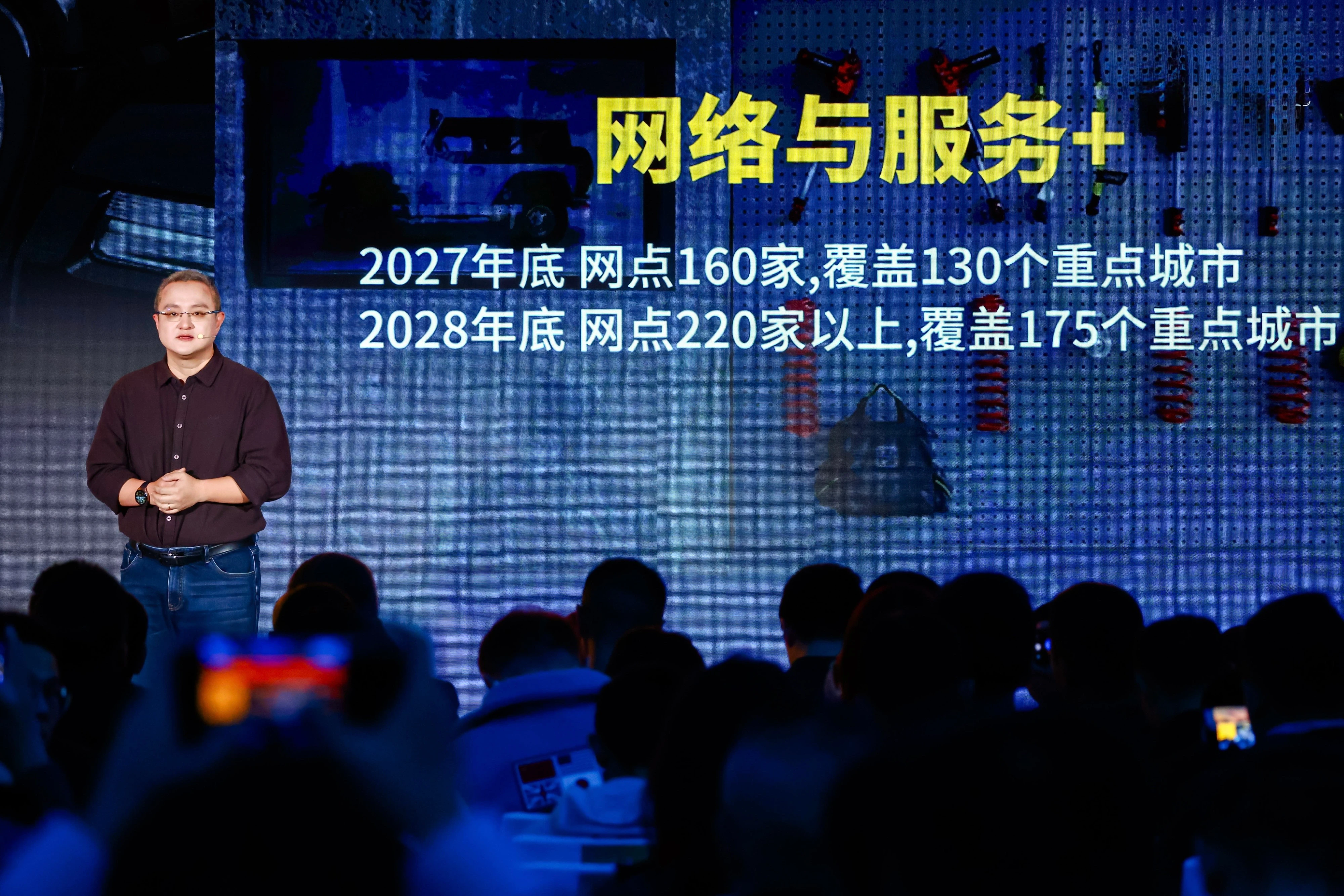
According to the plan, by the end of 2027, the total number of Jeep outlets will exceed 160, covering 130 key cities. By the end of 2028, Jeep plans to further increase the number of outlets to over 220.
Jeep's new network includes city showrooms, satellite stores, and independent service centers, making it convenient for customers to view vehicles, take test drives, and get basic maintenance nearby. Currently, the first new-image flagship store has opened in Qingdao.
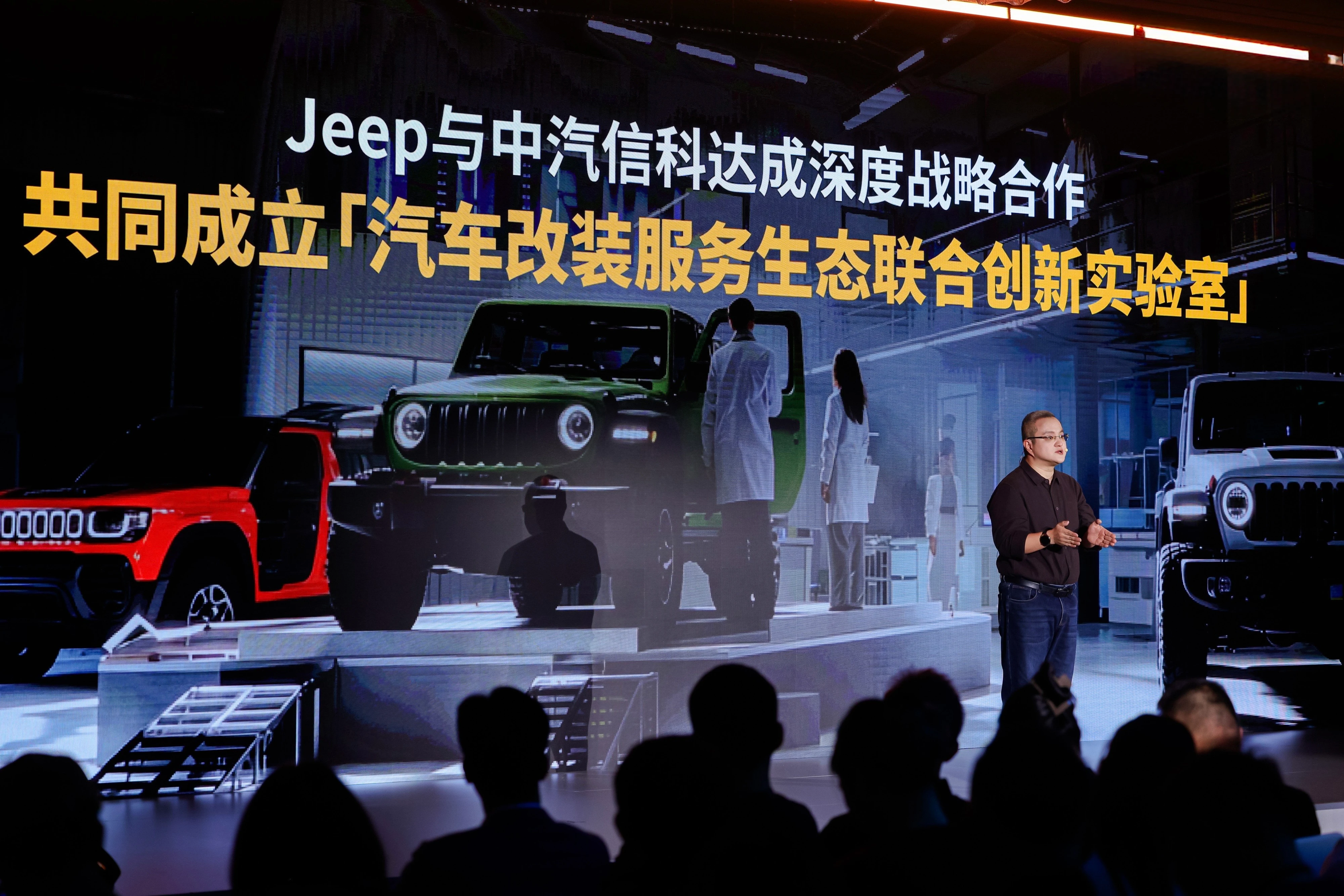
Jeep+ also aims to bring more of Jeep's culture and lifestyle to the market. As planned, Jeep will enter into a strategic partnership with China Automotive Information and Technology to jointly establish a joint laboratory for research on modification service capabilities, exploring the construction of a modification service system and professional standards. Through modification competitions and subsequent events, professional capabilities will be better integrated with users' personalized needs.
In addition, Jeep has partnered with celebrities and major IPs in fields such as sports, film, and television. For users with diverse interests, there is always a way to get involved.
For Jeep, off-road capability and controllability in complex road conditions have always been its core strengths. As for the new vehicles, if daily comfort, storage, and energy replenishment are also executed well, more families will have a reason to test-drive a Jeep when shopping for an SUV.
However, competition in today's auto market is fierce, and winning a spec-sheet comparison does not guarantee a consumer's final decision. For Jeep, users will naturally have even higher expectations. Does the all-new new energy SUV still deliver the true Jeep character in terms of driving and daily use?
II. A Different Jeep, Still Jeep
Practicality and recreational appeal have always been Jeep's forte in the SUV segment. The Trail Rated system, in particular, reflects the brand's professional engineering expertise. For the development of its next-generation new energy SUVs, Jeep will continue to uphold this system's rigorous off-road capability requirements.
The phrase 'drives like a Jeep' means that when encountering difficult terrain, the vehicle must allow the driver to navigate it at their own pace. To understand where this confidence comes from, we need to break down the vehicle's performance across different terrains step by step.
Jeep uses the Trail Rated certification to evaluate a vehicle's off-road capability, focusing primarily on traction, water fording, maneuverability, articulation, and ground clearance.

When driving through mud and the tires start to slip, the driver immediately realizes how important traction is. Only when the tires grip the ground can the power be put to good use. On unpaved roads, standing water is also a very common scenario, which tests the vehicle's water fording capability. The placement of body openings and the sealing of key components both affect the vehicle's maximum fording depth.
Whether in the city or the countryside, navigating narrow roads in a large vehicle is a major headache for drivers. Good maneuverability allows the vehicle to navigate tight corners and easily avoid obstacles in the middle of the road. During high-speed driving, the ability to effortlessly accelerate, overtake, and change lanes is a reflection of the vehicle's articulation.
Finally, the basic requirement for tackling unpaved roads is excellent clearance, with the approach angle, departure angle, and ground clearance being critical metrics.
For some models, meeting just one or two of these five metrics is enough to demonstrate their "off-road" character. However, for Jeep, all five capabilities must be fully realized to deliver true off-road performance.
A specification sheet can list parameters such as power and torque, but the Trail Rated certification focuses on whether these capabilities work together in real-world conditions.

In the electric vehicle era, this professional development system must also address new questions.
On slippery roads, if the motor delivers too much torque, the tires are prone to slipping. Pedal response, power distribution, and braking must be well coordinated for the driver to experience the vehicle as easy to handle. When climbing long inclines with a full load, the battery and electric drive system generate continuous heat; only with adequate thermal management can the vehicle maintain its power output.
Underbody protection and durability represent another major challenge for new energy SUVs. If the battery pack is mounted beneath the vehicle, the skid plates and underbody structure must work together to protect the battery from impacts. After prolonged use on rough roads, suspension linkages, wiring harnesses, and seals must withstand repeated vibrations. These capabilities determine not only how well the vehicle handles difficult terrain but also its long-term reliability after years of use.
Turning to daily driving, electrification must deliver lower energy consumption, more convenient recharging, and enhanced everyday safety. As for intelligent features, they require a deep understanding of users' driving habits to develop smart applications tailored specifically to Chinese consumers.
Jeep's new energy models are already addressing these user needs.
It can be said that Jeep in the new energy era remains true to its identity, sustained by the brand's continued commitment to overall vehicle quality.
With the introduction of localized new energy products, Jeep's product lineup in China will become more comprehensive. For family buyers choosing a new energy SUV for daily use, professional capability can serve as a compelling reason to choose Jeep. This is the new answer Jeep aims to provide to the Chinese market.