


Apple Unveils Deep CarPlay Integration at WWDC, Targeting Traditional Automakers

Apple's annual WWDC is typically a period of intense activity for the tech world. Last night, as expected, we saw numerous pre-event teasers for Apple's early-morning keynote. With no new digital devices on our immediate replacement list, we rationally chose to skip the late-night viewing just days after returning to work.
However, upon opening our phones in the morning, we were surprised to find that the biggest highlight of this year's Apple WWDC was neither the M2 chip nor new Mac products, but cars.
Or more precisely, Carplay.
01Apple's Plan to Dominate In-Car Infotainment
This sudden hotspot began at the thirty-seven-minute and fifty-second mark of the keynote, immediately following the conclusion of the Apple Home segment, when the Carpaly icon appeared on the main screen.
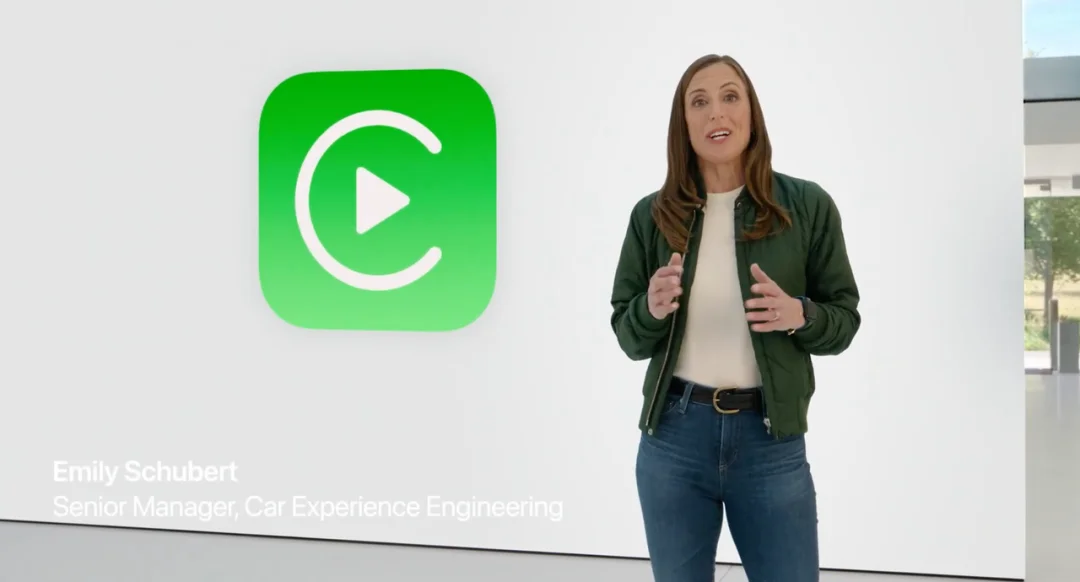
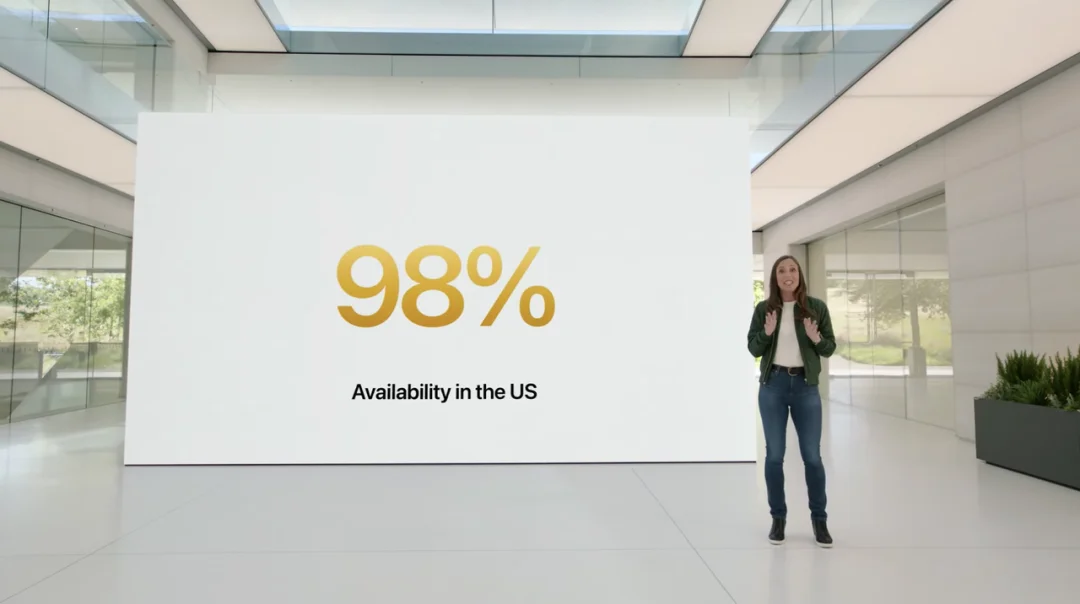
Emily Schubert, Senior Manager of Automotive Experience Engineering at Apple, who presented the new segment, then revealed striking data: more than 98% of vehicles in the United States support Apple Carplay.
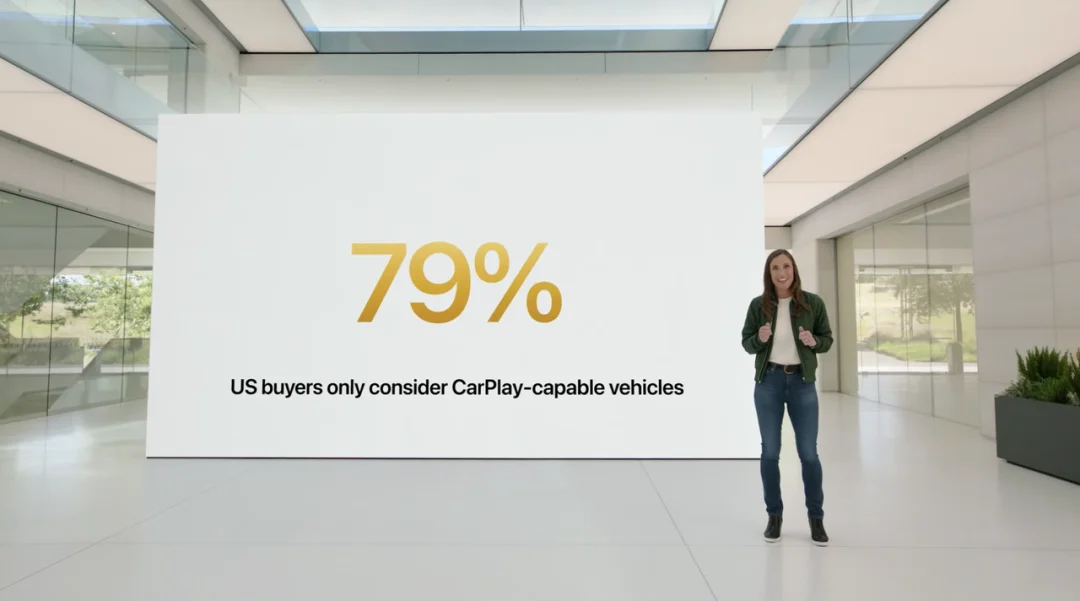
What’s even more striking is the following statement: More than 79% of car buyers in the United States will only consider purchasing a vehicle equipped with Apple CarPlay. Interpreted inversely, this means that if automakers refuse to adopt CarPlay, they risk losing nearly eight out of ten American car consumers.
After getting straight to the point, Emily went on to outline the changes in the new generation of CarPlay. The trend toward increasingly numerous and larger screens in automotive design provides CarPlay with more opportunities to shine, making “bigger” the most significant change in the new version.
The key highlights from the introduction are as follows:
Delivering content across all screens for a unified, premium experience;
Deeper integration with vehicle hardware, allowing drivers to adjust functions such as air conditioning without exiting the CarPlay interface;
An expanded suite of widgets that display rich information across various screens.
The new CarPlay "drives" the vehicle instrument cluster, displaying all vehicle information;
Adapts to various special screen shapes and display methods with customized instrument panel styles;
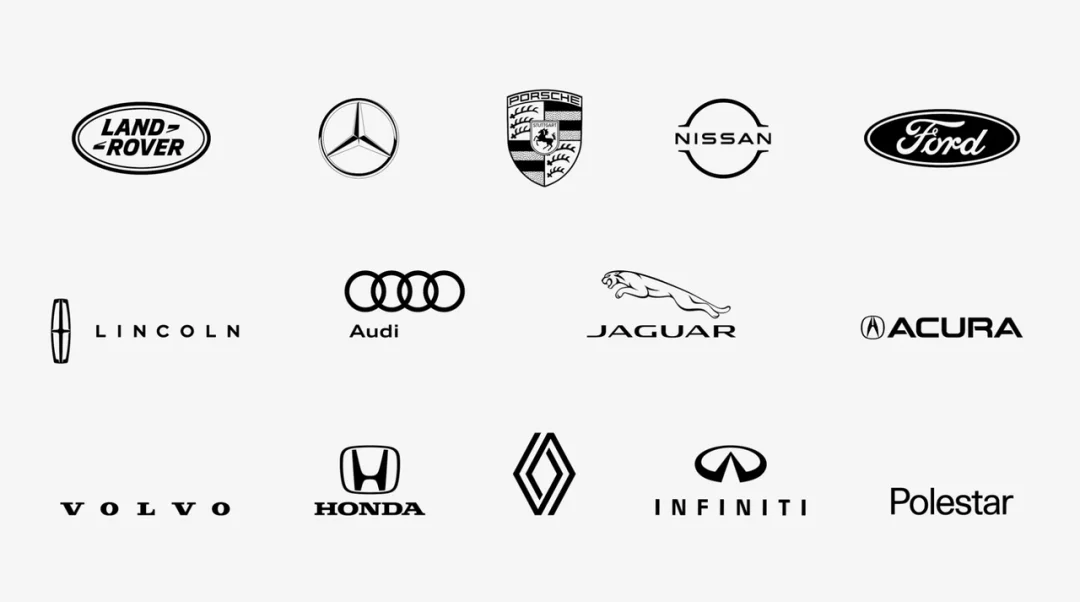
Automakers have been eagerly awaiting it, with models featuring the new CarPlay expected to be released later next year.

In fact, these highlights can be summarized in three aspects: user experience, working mode, and data integration.
From Shared to Exclusive Use
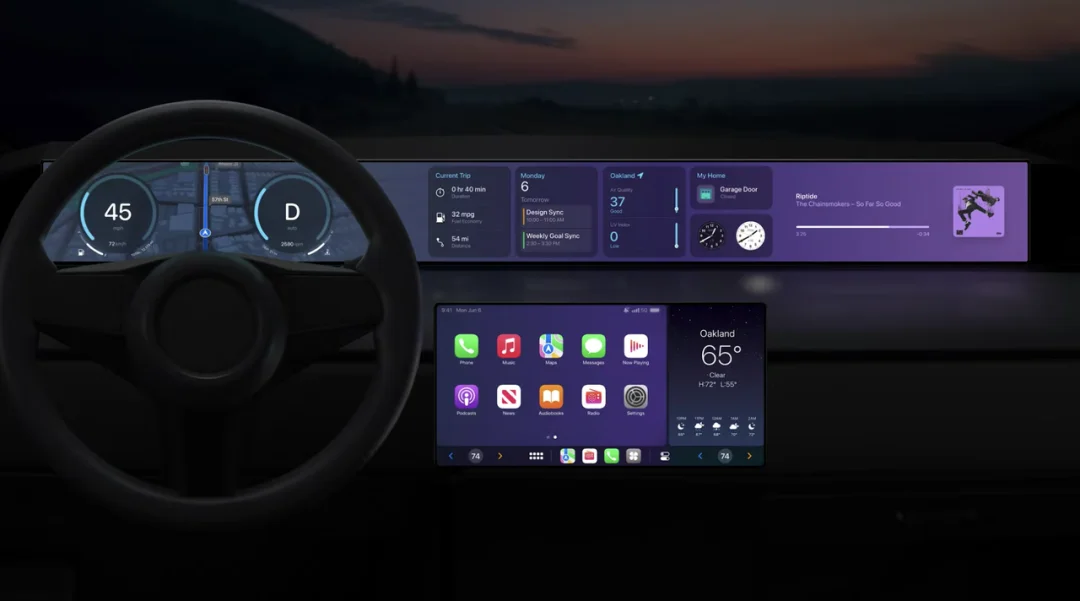
The most intuitive change is that CarPlay has evolved from an application attached to the car's head unit into the main body of the head unit. If previously it shared the head unit with other applications (like a co-tenant), it now exclusively occupies it (like a sole tenant), controlling the entire head unit interface. This brings the benefit of a more complete and unified user experience, as CarPlay can support all screens inside the vehicle.
Specifically, the user experience improvements from a full integration are reflected in three areas: interface design, personalized display customization, and functional experience.

As demonstrated at the launch event, CarPlay has fully adopted the current iOS design language. From icons to widgets and the overall interface, it integrates iOS’s signature minimalist, smooth aesthetic with visually pleasing colors.
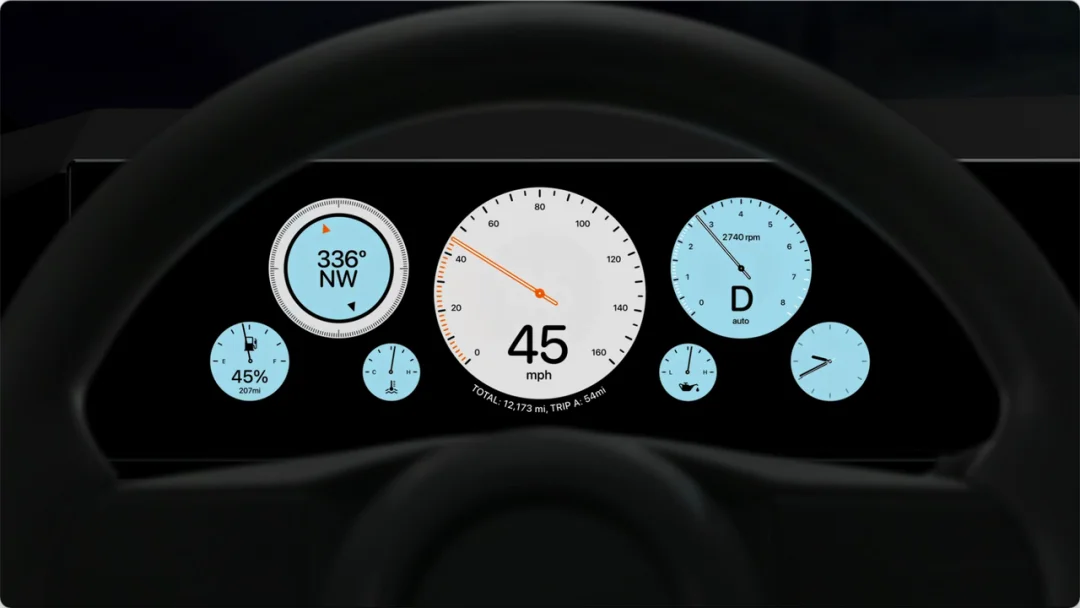
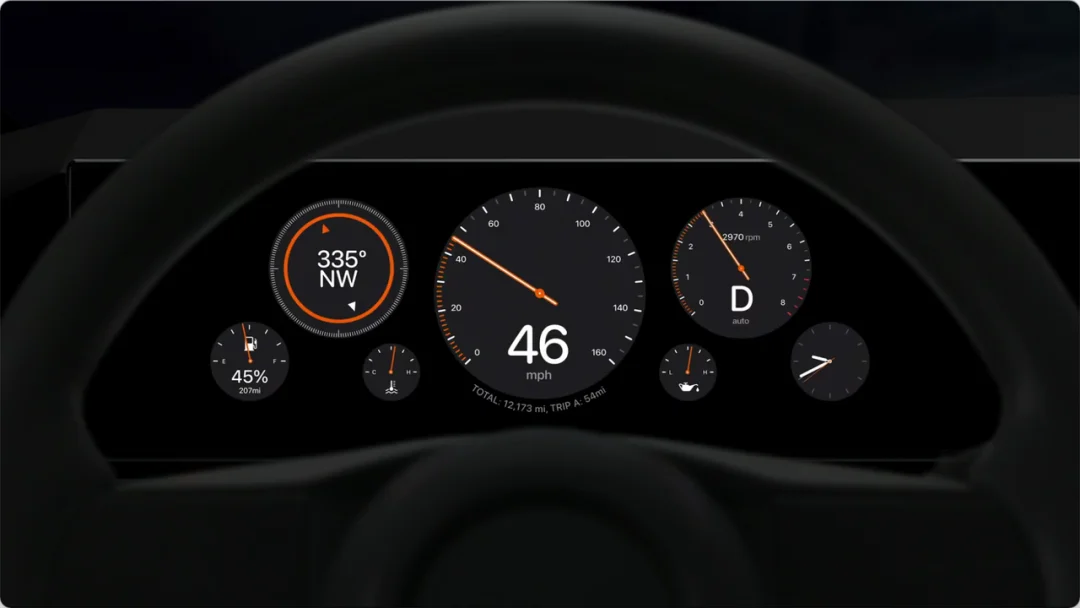
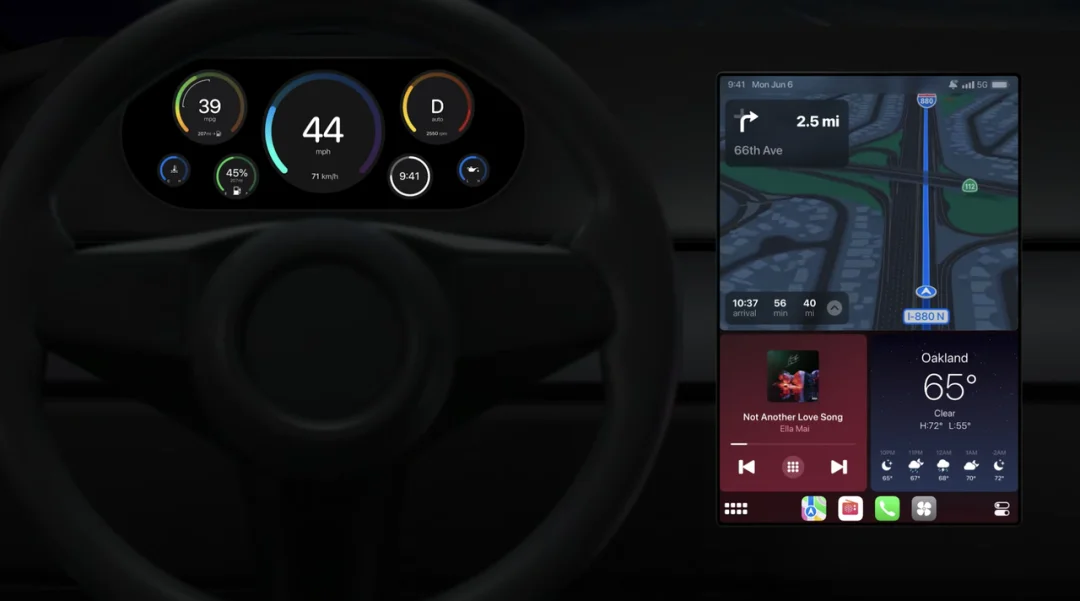
Regardless of how poor the in-vehicle UI design is for most traditional automakers today, even when compared to the currently outstanding Teliweipeng, the gap in aesthetics remains significant.
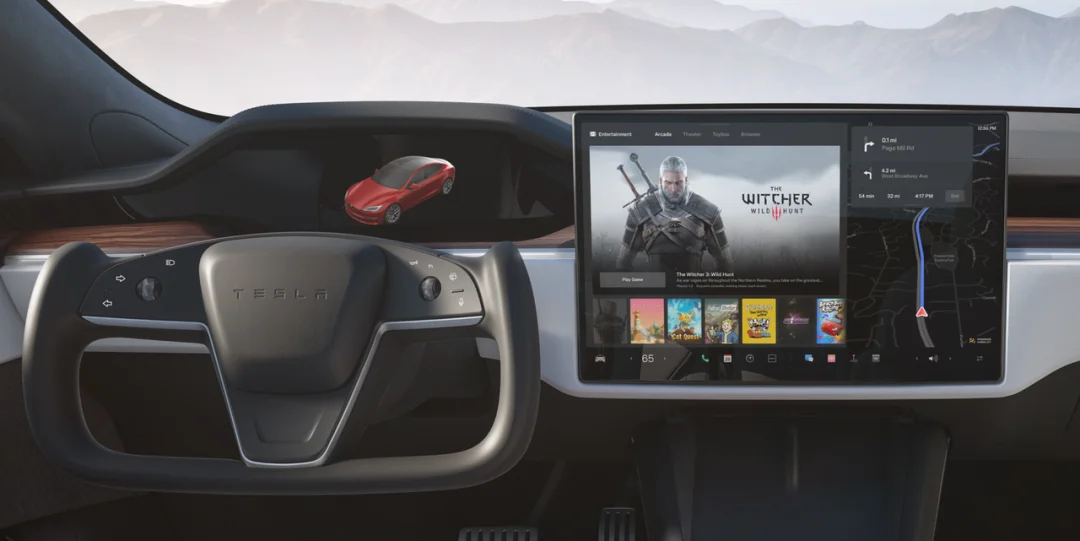
Model S In terms of personalized customization display, the new CarPlay offers a rich array of widget functions. The combination of abundant information and high customizability hits an irresistible itch for tech enthusiasts, delivering an experience of total information "control."
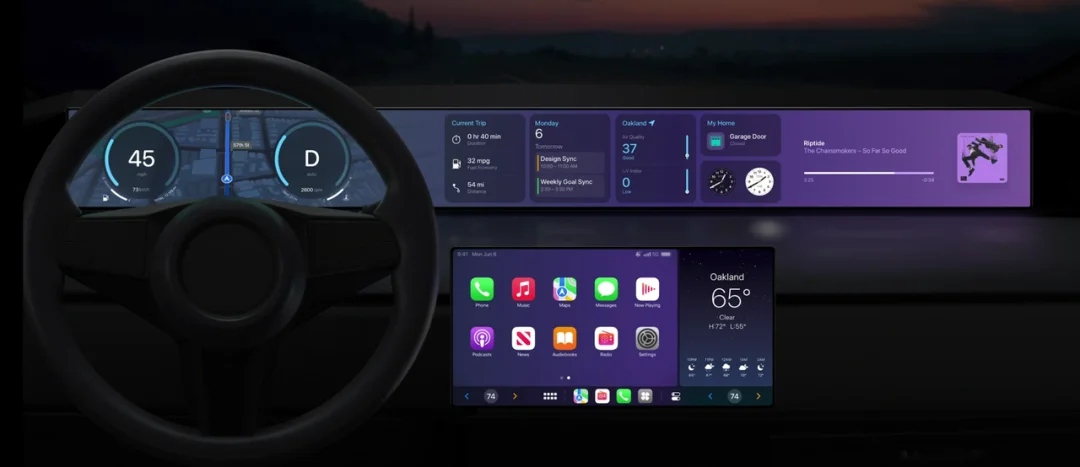
CarPlay While current vehicle infotainment systems generally support switching between different information cards on the instrument cluster screen, Apple’s ability to customize widgets with such high freedom on a full-size large screen is unprecedented.
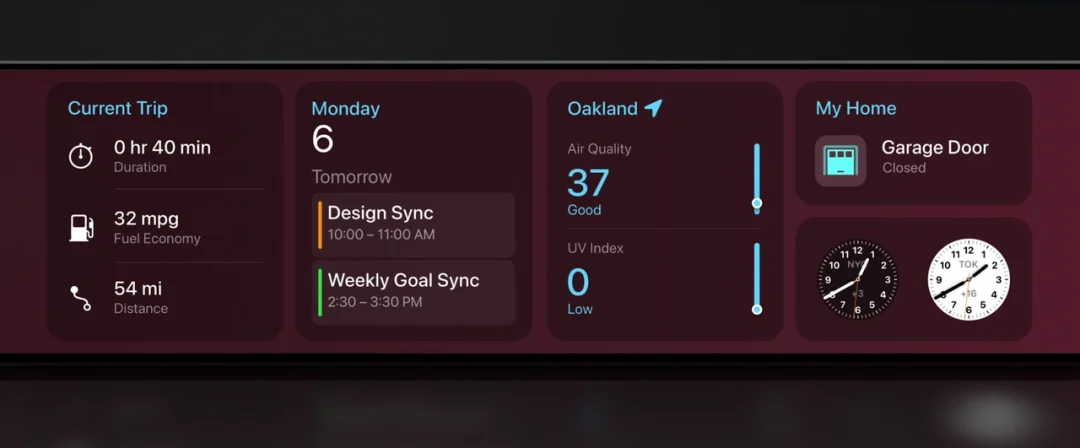
The high degree of "ecosystem integration" in the widget functionality is also evident. There is no need to elaborate on music and navigation; the demonstration shows schedules, weather, and other information synced from the iPhone, allowing one to anticipate a seamless linkage experience between the new CarPlay and HomeKit in the future.
Furthermore, theoretically, all apps on the iPhone can seamlessly integrate into CarPlay, enabling their use within the vehicle. This means that no apps need to be installed on the car's head unit; users can simply utilize the apps already on their phones to achieve smooth and fluid functionality.
Considering the highly creative third-party developers within the Apple ecosystem, much like those who created countless classic iOS apps, the imaginative possibilities for innovative automotive applications are vast.
I can't help but recall the fervent enthusiasm people once had for "Fruit Ninja," "Angry Birds," and "Talking Tom." Perhaps the next wave of app popularity in the automotive world is about to be ushered in by the new CarPlay.

What kind of hit apps will CarPlay spawn? Of course, the specific difficulty of software development and adaptation is still unknown, but for software companies, adapting different car systems via iPhone should be more of a one-time solution than having each Android system currently adapt apps individually.
From Central Console to Vehicle Control
The functional experience of the interface design is ultimately superficial; in fact, the biggest highlight of this new CarPlay showcase lies in its operating mode.
The current version of CarPlay essentially mirrors the phone screen onto the car's display, handling only audio and video output. Controlling vehicle functions through this interface is highly unfriendly. For example, on some vehicles, you must exit the CarPlay interface to adjust the air conditioning temperature on the screen, which disrupts the consistency of the user experience.
In other words, the relationship between the smartphone and the car's infotainment system in existing CarPlay functionality is akin to that of a TV set-top box and a television. When using a set-top box, the TV's native operating system takes a back seat.
The all-new CarPlay transforms the iPhone from a "TV box" into a "computer." The iPhone now processes vehicle data—including speed, engine RPM, fuel level, and air conditioning status—and transmits this processed information to the car's infotainment screen for display. This enables deeper interaction between the iPhone and the vehicle, moving beyond simple screen mirroring.
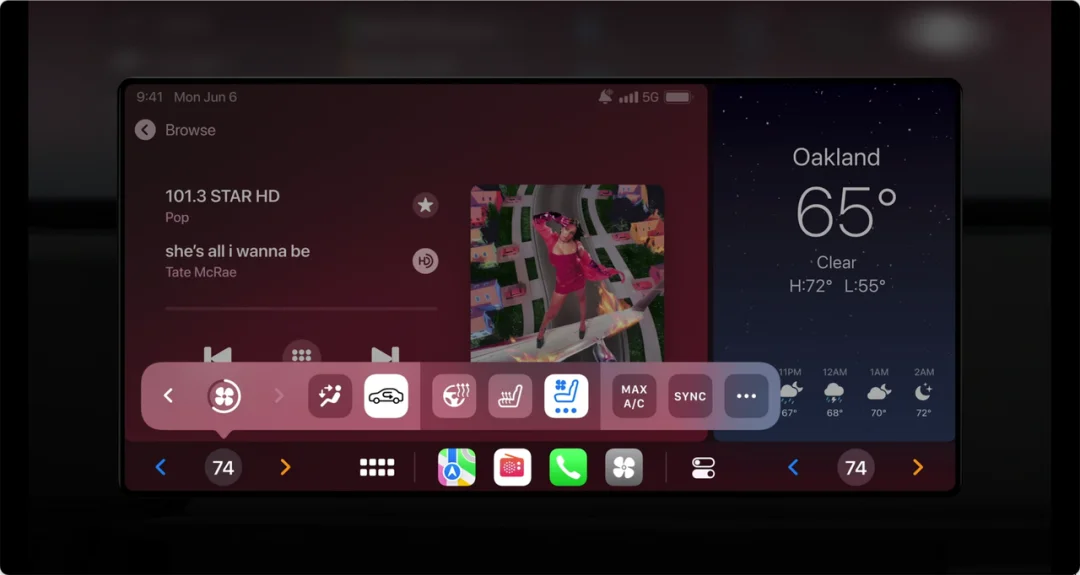
Apple describes the new CarPlay as "driving" the vehicle's instrument cluster, with the iPhone serving as the device-side interface that interacts in real time with the vehicle's system to display all vehicle information. In simpler terms, the iPhone functions like an external OBD dongle: it reads vehicle data and displays it on the car's infotainment screen while also enabling vehicle control.
This solves a major problem: in an era where both vehicle hardware and software evolve rapidly, models no longer require hardware upgrades after leaving the factory to support continuously updating software applications. As long as your iPhone is recent and has sufficient computing power, the system remains current.
You may have heard that some manufacturers are now offering aftermarket upgrades for the Qualcomm 8155 chip. With the new CarPlay, this concern disappears. CarPlay places relatively low demands on head unit hardware; the performance available at the time of manufacture can generally support the entire lifecycle of the vehicle. Regardless of how much computing power any given application requires, that burden is offloaded to the user's iPhone, which is far easier to replace than upgrading the car's internal hardware.
Blurring Boundaries: Collaboration or Penetration?
The partnership between Apple and automakers must deepen under the new CarPlay due to two key changes: the proliferation of diverse screen layouts and Apple's need to access a wider range of vehicle data.
Traditional head units typically feature a single main screen, making CarPlay integration relatively straightforward. However, automotive interior design is increasingly favoring large, multi-screen setups. The new CarPlay aims to adapt to every screen in the vehicle—long, short, large, small—all connected. This presents a significant workload.
The extent to which automakers are willing to share vehicle data, and the depth of information they provide, remains a challenge for CarPlay. CarPlay has evolved from a delivery driver who drops off food and leaves into a chef who comes in to cook. While the service is valuable, automakers may hesitate to let an outsider into their home.
In today's landscape, where data value is emphasized and data is recognized as a critical production factor, the word "data" is nearly synonymous with "sensitive." Currently, Apple requests basic data such as speed, RPM, fuel consumption, and air conditioning status. What will it demand next? How deeply will it integrate with advanced driver assistance systems? Industry boundaries are becoming increasingly blurred, especially given the persistent rumors that Apple is building its own car. Tomorrow, Apple could become a competitor.
All the answers will be revealed in the second half of next year, when models featuring the new CarPlay will be launched. Readers can guess which brand's product roadmap will debut first.
02The Shifting Dynamics with the New CarPlay
The new CarPlay brings a fresh breeze to the current automotive infotainment landscape. Honestly, when I saw that CarPlay could display RPM (revolutions per minute), I was taken aback; electric vehicles have long since eliminated engine speed information, so I initially thought this demonstration contained an error. It then occurred to me that the new CarPlay is not limited to electric vehicles alone.
As a media outlet focused on new energy vehicles, we pay daily attention to EVs and have grown accustomed to the decent infotainment systems used by leading new forces, often overlooking the infotainment systems of internal combustion engine vehicles, which still dominate the automotive market.
It is well known that there are too many car manufacturers whose infotainment systems are subpar. This is precisely where the new CarPlay aims to make its beachhead.
It is foreseeable that the launch of the new CarPlay will have a significant impact on competition in the smart cockpit experience. It is a major boon for traditional automakers but potentially a setback for new forces.
Looking back at the rise of new forces, given their relatively mediocre vehicle engineering quality, intelligent experience has arguably been their strongest selling point. Investments in intelligence made them appear fashionable and modern among traditional automakers, attracting a large number of trend-conscious early adopters. Traditional automakers excel at manufacturing cars, but their software capabilities are often lacking, especially regarding infotainment, which has historically been treated as an "optional extra," resulting in very limited investment.
For many conservative car buyers, the choice over the past two years has been a dilemma: either purchase a new-energy vehicle (NEV) with superior intelligent experiences and abandon their long-held 'faith' in traditional brands, or stick to their preference for traditional automakers and sacrifice better smart features. It is common to hear stories of friends who cannot accept NEV brands and instead choose established traditional automakers.
However, the all-new CarPlay may have just kicked this dilemma away. With its support, traditional automakers instantly gain an excellent smart cockpit experience. Combined with their traditional manufacturing expertise, their appeal to consumers increases significantly.
For NEV makers that have invested heavily in their own infotainment systems, the leading advantage they built over many years is now nearly caught up by CarPlay overnight. Although they hold advantages in overall vehicle control and holistic experience integration, how many consumers actually need more than a beautiful UI, music, and navigation? And who knows what Apple will do next?
If NEV makers also integrate the all-new CarPlay, what position will their self-developed infotainment systems occupy? The pressure shifts to the NEV side.
03Conclusion
My current gasoline car was purchased five years ago. As a base model, it only featured a small 4.2-inch screen. Back then, upgrading to an 8-inch factory screen would have cost over RMB 6,000 from aftermarket shops. To add CarPlay support, I would have needed to spend another RMB 4,000 on a module. At that time, CarPlay was quite 'premium'.
Five years have passed. After experiencing various NEVs, I can hardly remember using CarPlay; in fact, I have been 'spoiled' by the infotainment systems of these vehicles. If not for work convenience, my expectations for infotainment would likely align with most gasoline car owners: limited to listening to music and radio, too lazy to even use the navigation system.
But times have changed. In today's digital age, where applications permeate every corner of life, an excellent infotainment system is a configuration that greatly enhances the driving experience. For the majority of automakers that want large or multi-screen setups but lack software capabilities, the all-new CarPlay is a savior. Apple's prowess in UI design is sufficient to elevate the visual quality and aesthetic of any traditional automaker adopting the new CarPlay.
Combined with Apple’s vast ecosystem, further optimizing CarPlay for mobile app integration in vehicles would create a massive advantage in the sheer volume of available applications. This process would attract more developers to the Apple ecosystem, ultimately replicating the App Store model from smartphones and erecting barriers that competitors find difficult to surmount.
Whether targeting traditional automakers or new EV startups, Apple’s strategy strikes at the root by leveraging user stickiness.
The Godfather’s most ruthless tactic is offering terms others cannot refuse. After years of building an iPhone-centric ecosystem that has permeated every aspect of users’ lives worldwide, Apple is now expanding its presence in the automotive sector as cars enter the intelligent era. Users increasingly expect the seamless connectivity experience they enjoy on their phones, and Apple’s penetration into the car market is evolving beyond the simple "iPhone + phone mount" paradigm.
CarPlay’s debut in vehicles in 2014 was just the first step. Eight years later, its ambitions have grown significantly. Now standing beside OEMs, CarPlay serves as Apple’s weapon. With quiet confidence, Apple cites figures showing it holds 98% of the installed base market share in the U.S., while 79% of U.S. consumers choose only vehicles equipped with CarPlay. For OEMs with little progress in smart technology, the contrast between their own infotainment systems and the demands of iPhone users calling for CarPlay integration makes the outcome seem inevitable.
A new landscape for the infotainment era may have been defined within the three minutes of WWDC.
Written by: 42Haogezi Edited by: Reinhardt