


The Hidden Cost of EV 'Battery Locks': How Manufacturers Shift Risk to Owners
More than four years have passed since Apple's "throttling scandal," and it is rare for major smartphone manufacturers to secretly degrade user device performance through system updates.

Apple secretly throttled the performance of older iPhones, drawing accusations that it was effectively coercing users into upgrading to new devices. Yet similar incidents occur daily in the increasingly popular electric vehicle market.
01"Battery Locking" and "Power Limiting": Beware of OTA Updates Becoming a "Tightening Spell"
Nowadays, if an electric vehicle doesn't support OTA updates, it's hardly worth announcing its arrival.
From the consumer perspective, each system update brings more features and a better experience, such as Tesla's "Sentry Mode" and "Dog Mode." Buyers also consider a manufacturer's software R&D capabilities when purchasing a vehicle and are willing to pay a premium for it.
However, it is very likely that after an OTA update, your car will be subjected to "battery locking" or "power locking." "Battery locking" reduces the maximum voltage of individual cells via the Battery Management System (BMS), resulting in reduced usable battery capacity and significantly decreased range. "Power locking" lowers the motor's output power through the motor controller; for example, a vehicle originally equipped with a 2.0 T engine might effectively become a weak 1.5 T equivalent after manufacturer adjustments. Additionally, this often comes with a "bonus package" that includes reduced charging speeds.
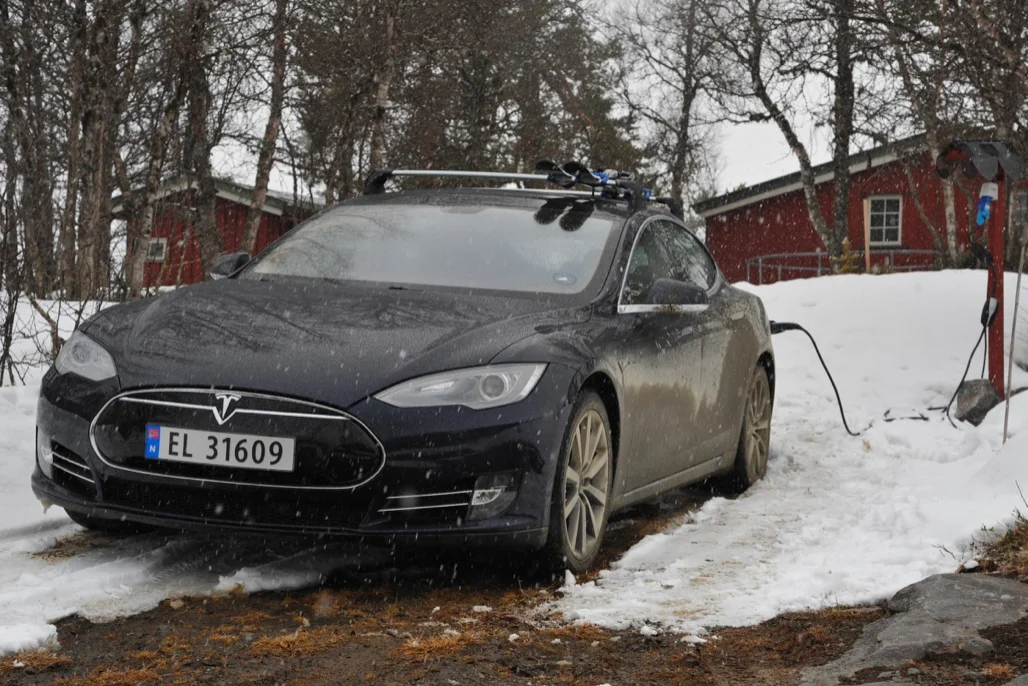
Norway currently has the highest penetration rate for new energy vehicles, where Tesla is very common. As a pioneer in the new energy vehicle industry, Tesla has been complained about multiple times for "battery locking." The most recent case occurred in 2019, when it was ordered to pay each of the 30 Model S owners who filed suit USD 16,000. These users had all purchased models from the 2013–2015 years. After a software update in 2019, these owners found that their vehicles' range had dropped significantly, with some decreasing by as much as 11 percent, and charging speeds also noticeably slowed. Tesla's explanation was identical to Apple's: "To protect the battery and extend its lifespan."
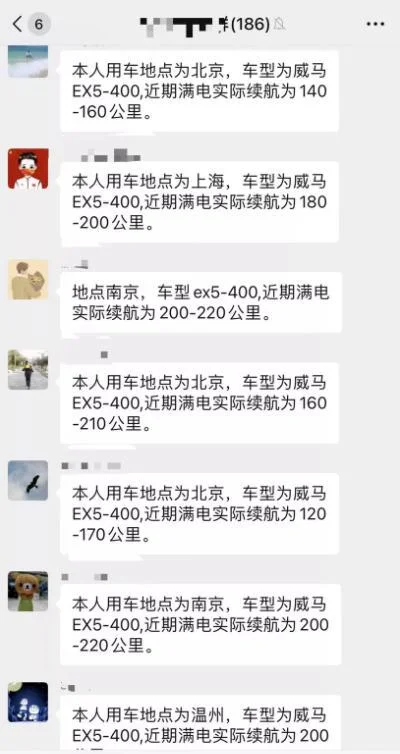
Owners in the WM Motor owner groups are discussing vehicle range. Such examples are even more common in China. In January this year, 173 WM Motor owners jointly sent a lawyer's letter to Weimaqiche, questioning whether the company had "locked" battery capacity without informing owners. One owner stated that their model, which was advertised with a 400 km range and previously delivered about 250 km of actual range, could now travel less than 200 km after completing an officially notified free maintenance service. Another new EV maker, XPENG, saw some of its initial 670 owners complain that their 80.3 kWh batteries were only charging to 70 kWh, resulting in a significant drop in range. However, XPENG has officially denied claims of "locking" battery capacity.
"Battery locking" is by no means exclusive to new energy vehicle startups. A GAC Toyota iA5 owner reported noticeable declines in both range and power; after visiting a 4S dealership for inspection, the work order stated: "Charging saturation not detected. Full charge should be 58.5 kWh, but actual full charge was 50.5 kWh." The GAC Toyota iA5 can be considered a rebadged version of the Guangqichuanqi AION S. Guangqichuanqi's own AION S and LX models have also received similar complaints.
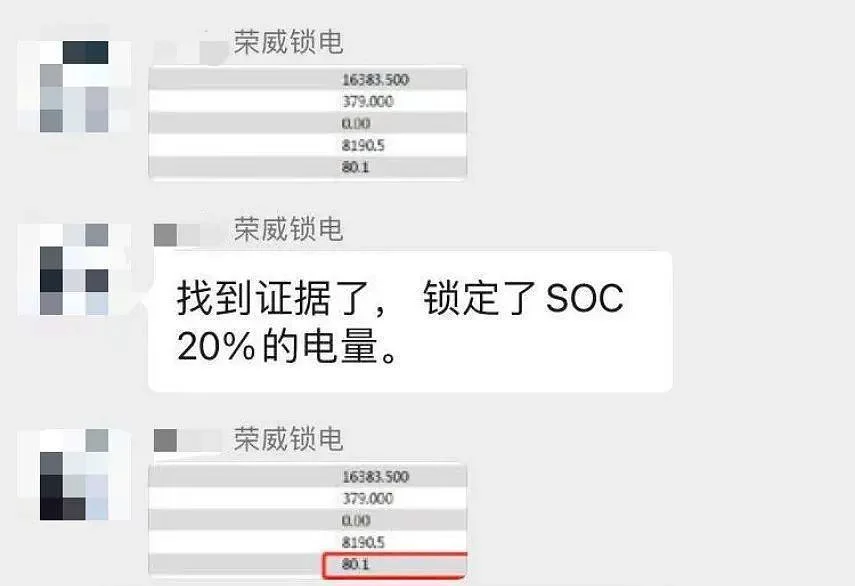
A car owner discovered that their Roewe new energy vehicle had its battery locked at 20% charge. Additionally, there have been complaints about 'battery locking' for models such as the Shangqirongwei ERX5 and Changchengoula IQ, suggesting this has become an unspoken practice among automakers. Ultimately, Changchengoula IQ issued a recall.
So why do automakers risk user complaints by forcibly "locking" battery capacity? The answer is not complex: it is about "shifting risk." In recent years, incidents of new energy vehicles spontaneously combusting have become increasingly common. On one hand, this has caused significant damage to manufacturers' reputations, directly impacting product sales; on the other hand, under immense pressure, manufacturers may be forced to issue recalls, which represents a massive financial burden.
02Two Original Sins of Automakers' "Battery Locking": Excessive Depth of Discharge and Insufficient Battery Management Capability
As mentioned above, the main purpose of automakers "locking battery capacity" is to prevent vehicle fires and avoid negative media coverage or costly recalls. So why does "locking battery capacity" help mitigate fire risks?
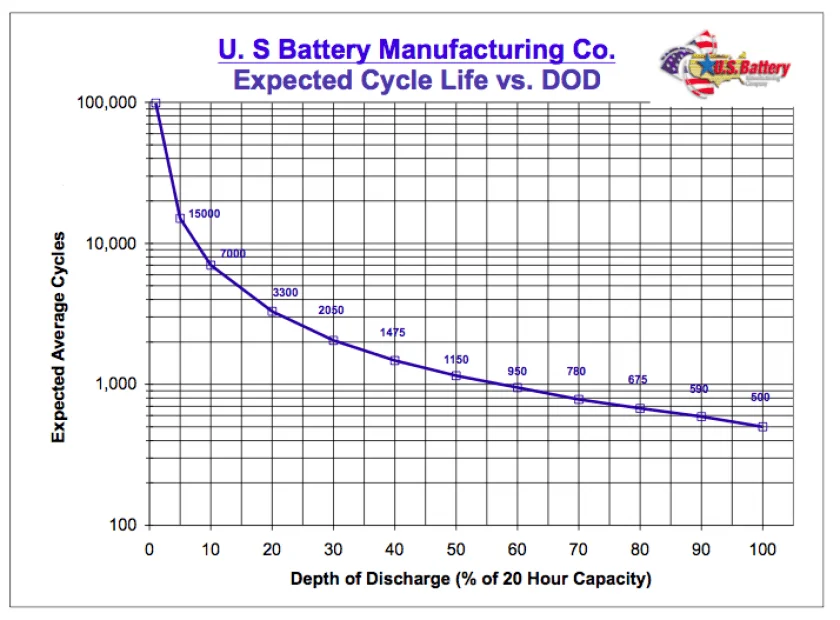
The higher the depth of discharge, the shorter the battery life. This introduces the concept of "Depth of Discharge" (DOD), which refers to the percentage of the battery's discharged capacity relative to its rated capacity. The higher this proportion, the shorter the battery's lifespan and the greater the risk of fire or spontaneous combustion.
This is actually easy to understand. Imagine you are a martial arts master with extraordinary skills. Even if your internal energy reserves are vast (high rated capacity), you wouldn't unleash an ultimate super move (a discharge depth approaching 100%) against every minor thug. Using smaller moves (low discharge depth) in daily practice helps prolong your lifespan, while constantly using ultimate moves would inevitably lead to qi deviation (thermal runaway and spontaneous combustion).
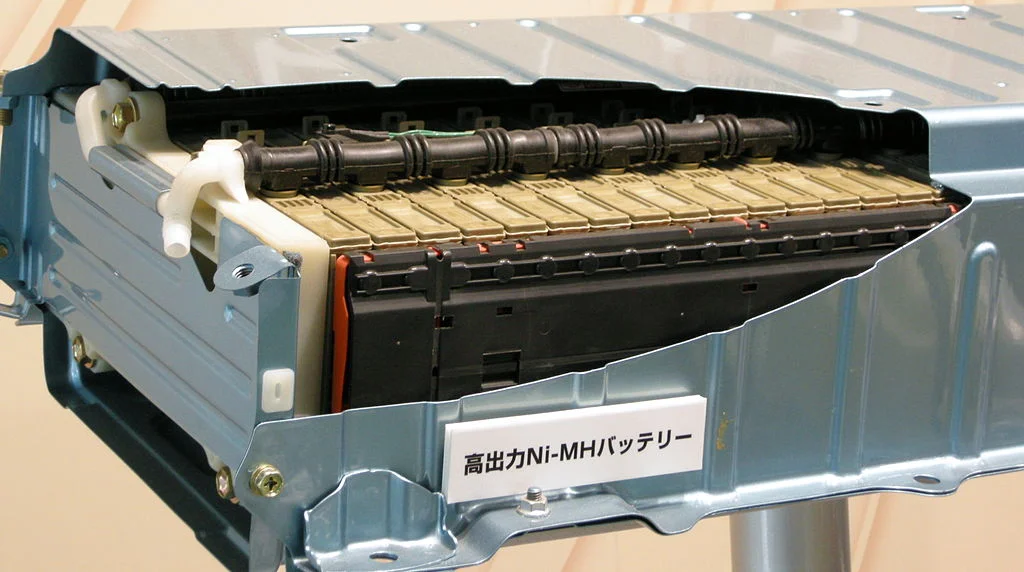
Toyota's nickel-metal hydride batteries: The vast majority of HEV batteries on the market have a depth of discharge within 50%. This explains why Toyota's THS HEV battery, despite its small capacity and constant charge-discharge cycles, has a lifespan that is very likely longer than that of pure electric vehicles, because the depth of discharge is only 40%, with the SOC always maintained in the 40%–80% range.
For pure electric vehicles, range is the core competitive factor. Since batteries are the most expensive component in the car, the depth of discharge typically exceeds 80%. However, whether it is set at 80%, 90%, or even above 95% varies significantly among automakers' strategies.
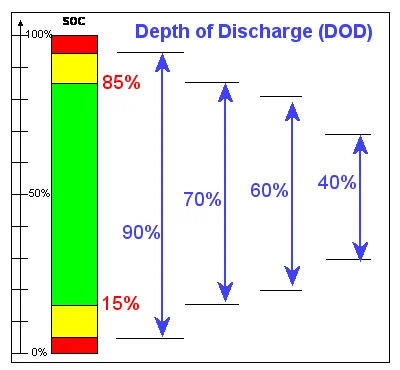
The configured depth of discharge at the factory varies by manufacturer. Some automakers are "conservatives," calibrating a lower depth of discharge for batteries upon leaving the factory, which extends battery life and reduces the risk of spontaneous combustion, but results in higher costs and shorter driving range; another faction is "radical," with a very "greedy" calibration of the battery's depth of discharge upon leaving the factory. To control costs while promoting longer driving ranges to users, they typically set the depth of discharge above 90 percent. It is understood that some new energy vehicle brands dare to set the depth of discharge even above 95 percent.
This outcome means that after the vehicle is sold, the risk of spontaneous combustion remains extremely high, and battery degradation accelerates rapidly. In such a scenario, manufacturers can implement "battery locking" to significantly reduce the depth of discharge, thereby avoiding headlines about their own models catching fire and sidestepping massive recall costs.
For consumers, this means spending money on a product with design flaws that were exaggerated in the automaker's early marketing. After the vehicle leaves the factory, both "recalls" and "battery capacity restrictions" are merely remedial measures. The latter shifts the entire loss to the consumer and can be executed so quietly as to go unnoticed.
In addition to excessive depth of discharge, poor battery management capability is another major sin behind automakers' "battery locking" practices.
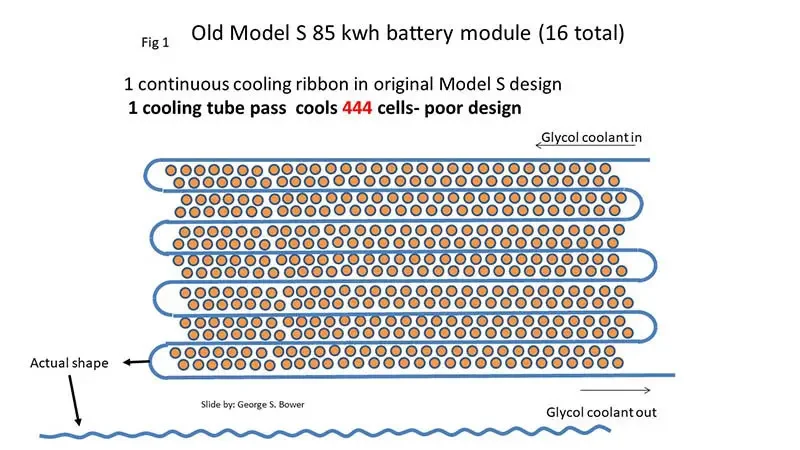
Tesla's Battery Cooling Solution Lithium-ion batteries offer advantages such as high energy density, strong high-power tolerance, and no memory effect, but they are highly sensitive to environmental conditions, particularly temperature. As for high temperatures, it goes without saying that all manufacturers employ every possible measure to cool the batteries. Most ternary lithium batteries today utilize efficient methods like "liquid cooling" and "direct cooling." For instance, Tesla employs a design where cooling plates are inserted between its cylindrical cells. Although this structural design is challenging, it delivers relatively efficient cooling performance.
Even though automakers place great emphasis on battery thermal management, electric vehicle spontaneous combustion incidents remain relatively common each summer. In such cases, some manufacturers have resorted to a questionable tactic: further reducing the discharge depth through "battery locking."
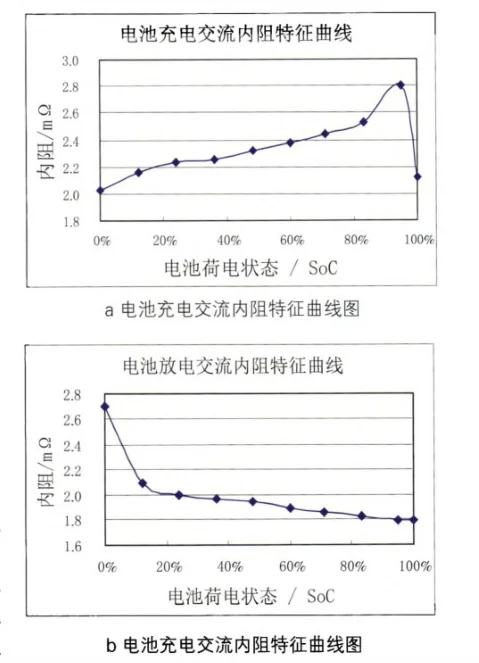
When charging, the state of charge is too high; when discharging, it is too low, causing the battery's internal resistance to increase significantly. This occurs because when the state of charge (SOC) of a power battery falls below 20%, its internal resistance begins to rise sharply. If the current remains unchanged during this period, the generated heat increases dramatically. In such cases, if automakers "lock" the lower SOC range, they can significantly reduce internal battery heating at low charge levels. Meanwhile, we observe that many vehicle spontaneous combustion incidents occur during charging. This is partly due to inadequate battery charging management capabilities and also because when the battery's SOC exceeds 80% during charging, its internal resistance rises noticeably. Consequently, automakers may further "lock" the upper SOC range. By locking both the upper and lower portions, the usable capacity of the battery decreases substantially, leading to poor driving range.
High temperatures are not the only threat to power batteries; low temperatures are equally dangerous.
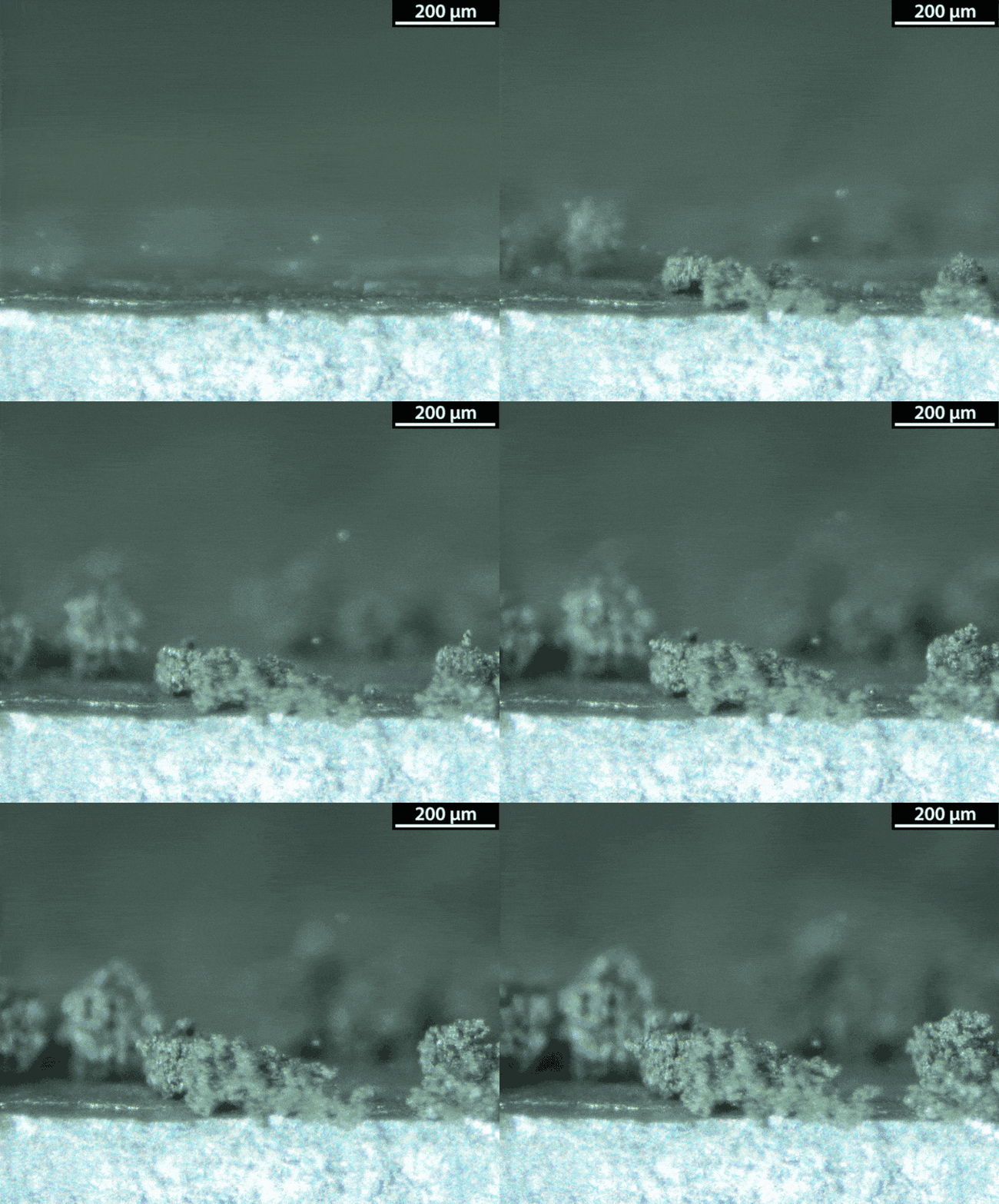
Lithium dendrites represent an irreversible loss for batteries. In low-temperature environments, molecular mobility decreases significantly, making the transport of lithium ions/lithium atoms between the cathode lattice and the interlayer spaces of graphite (anode) within the battery sluggish. If the depth and rate of charge/discharge remain the same as at normal temperatures, a large amount of lithium will accumulate on the electrodes and electrolyte, forming metallic lithium. Metallic lithium is highly reactive and prone to irreversible reactions with the electrolyte, while also greatly exacerbating the accumulation of lithium dendrites at the anode. These all become "dead lithium," causing permanent capacity loss. If lithium ions crowd on the surface of the cathode lattice, it can easily cause cracking of the cathode.
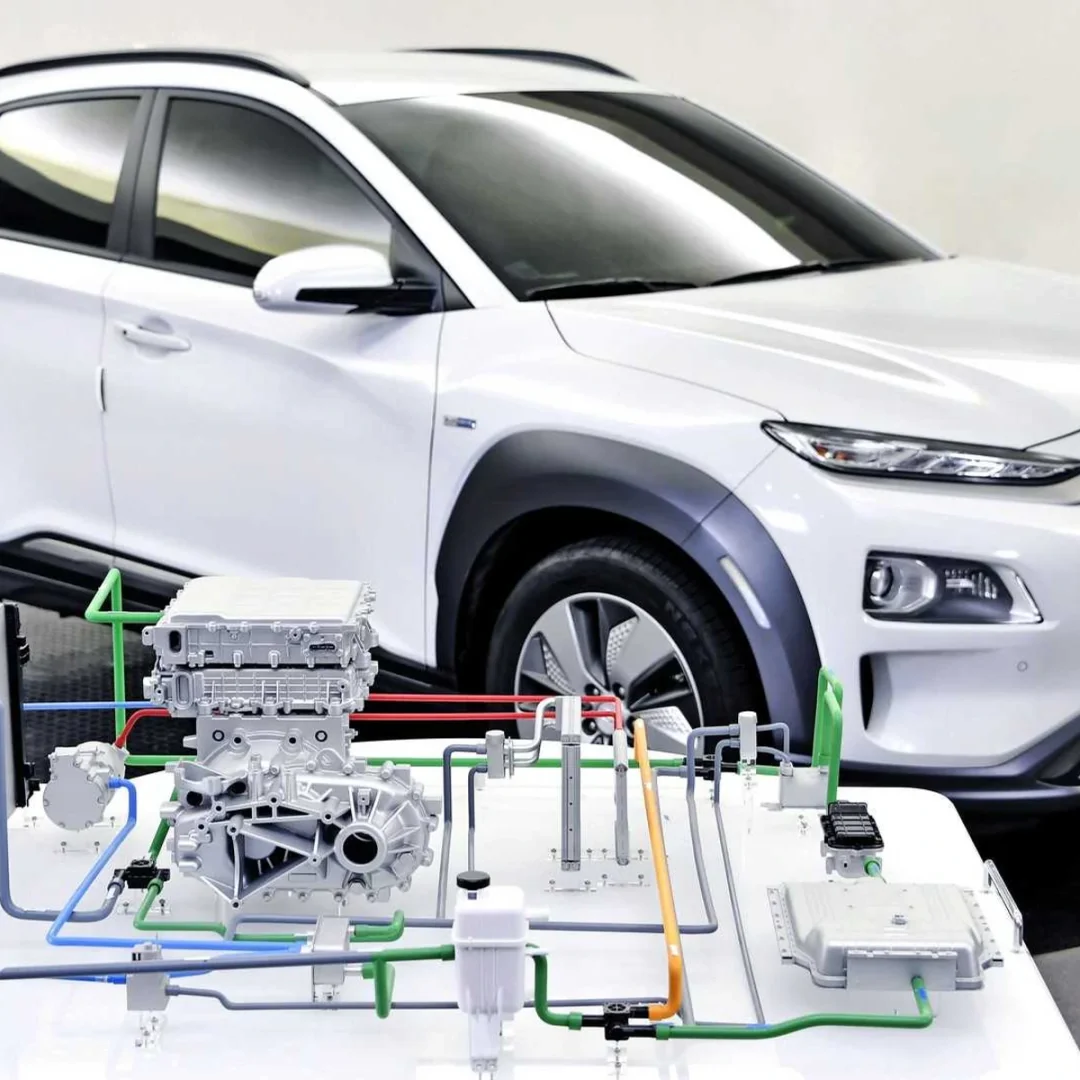
More and more electric vehicles are equipped with heat pump air conditioners. Therefore, both automakers and battery manufacturers place great emphasis on creating a "greenhouse" environment for batteries in low temperatures. In addition to conventional PTC heaters, heat pump air conditioners are becoming increasingly common, with some automakers even adopting "diesel heating" external packages. If automakers cannot ensure battery temperature in low-temperature conditions, they may consider locking the battery's discharge depth and reducing charge/discharge power, resulting in the "triple gift pack" of reduced range, weakened performance, and slower charging speed.
Whether the issue stems from excessive initial discharge depth at factory settings or insufficient battery management capability, it is fundamentally a manufacturer's problem. Transferring these losses to consumers via OTA-based "battery locking" or "power limiting" is particularly problematic because these measures are often hidden. Consumers typically discover the issue late and have little recourse against the manufacturer.
03Difficulties in Rights Protection: How to Self-Check for "Battery Locking"
Compared with traditional vehicles, new energy vehicles (NEVs) place greater emphasis on intelligence, involving more advanced technologies such as electronic and electrical architectures, batteries, smart cockpits, and autonomous driving. On one hand, users often lack a deep understanding of these new technologies; on the other, key technical data is almost entirely controlled by automakers. It is difficult for ordinary people to detect if manufacturers conceal or alter relevant parameters, and even if they do, gathering evidence is challenging. Under current civil law principles, the burden of proof lies with the claimant: "he who asserts must prove." Failure to provide evidence results in the risk of losing the lawsuit.
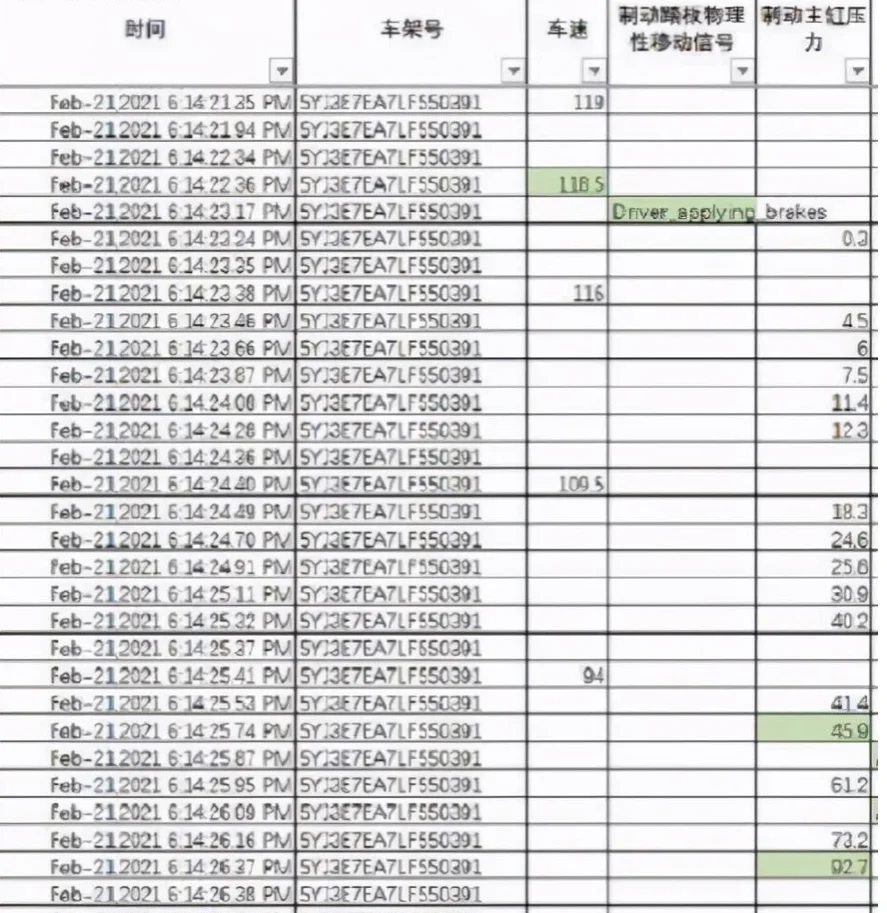
Tesla finally provided some relevant data under the intervention of regulatory authorities Over several months last year, Tesla’s "brake door" controversy generated significant public attention. Although the issue gradually faded from view, Tesla’s attitude remained notably rigid. Only after strong intervention by regulatory authorities did Tesla release a dataset that was incomplete.
So, how can ordinary consumers self-check whether their vehicles have undergone "battery locking," given the dominant position held by automakers?
First, most "battery locking" operations are currently executed via Over-The-Air (OTA) software updates. When receiving an OTA update, carefully review the associated terms. Pay close attention to any content related to battery management. If you encounter unclear provisions, consult manufacturer personnel.
Second, if you notice a significant decline in your vehicle’s range, motor output power, or charging speed under similar conditions, promptly communicate with owners in car enthusiast groups to exchange information and verify observations.
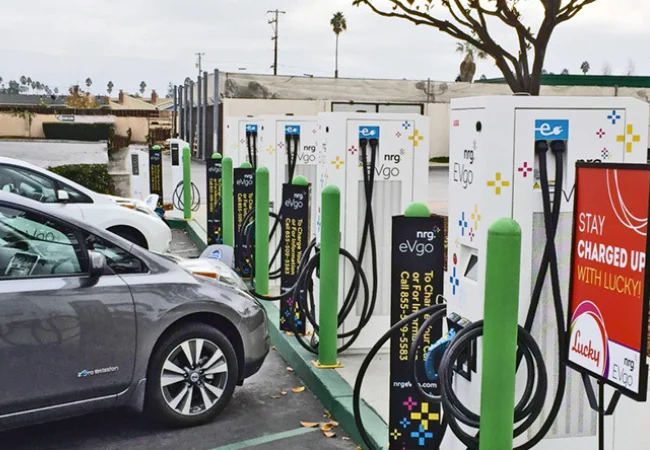
Charging data doesn't lie Third, because automakers can manipulate the range and battery level displayed on the vehicle, the charging energy recorded by the charging station is more trustworthy. It is advisable to regularly record charging conditions, including temperature, charging power, charging station brand, and duration. If the required charging energy drops significantly under similar conditions compared to previous sessions, you may have been affected by "battery locking."
To completely prevent automakers from secretly implementing "battery locking," national legislation is necessary. In August last year, Gongxinbu issued the Opinions on Strengthening the Management of Access for Intelligent Connected Vehicle Manufacturers and Products, which regulated requirements for over-the-air (OTA) software updates. However, it primarily emphasized that "without approval, new or updated autonomous driving functions cannot be added or updated via OTA." Regarding OTA updates related to "battery locking," the process remains largely based on filing records.
Therefore, until relevant regulations are fully perfected, the relationship between new energy vehicle owners and manufacturers is not always harmonious; a battle of wits remains a central theme.
Finally, do you think automakers' "battery locking" practices will be exposed at this year's 315 Consumer Rights Day?
Written by: Wu Gangxing Edited by: Liu Guangding