


XPENG, Li Auto, NIO January Deliveries; Tesla Removes 'Rolling Stop' from FSD Beta 10.10; Volvo and Northvolt to Build Battery Plant
01Weekly Index
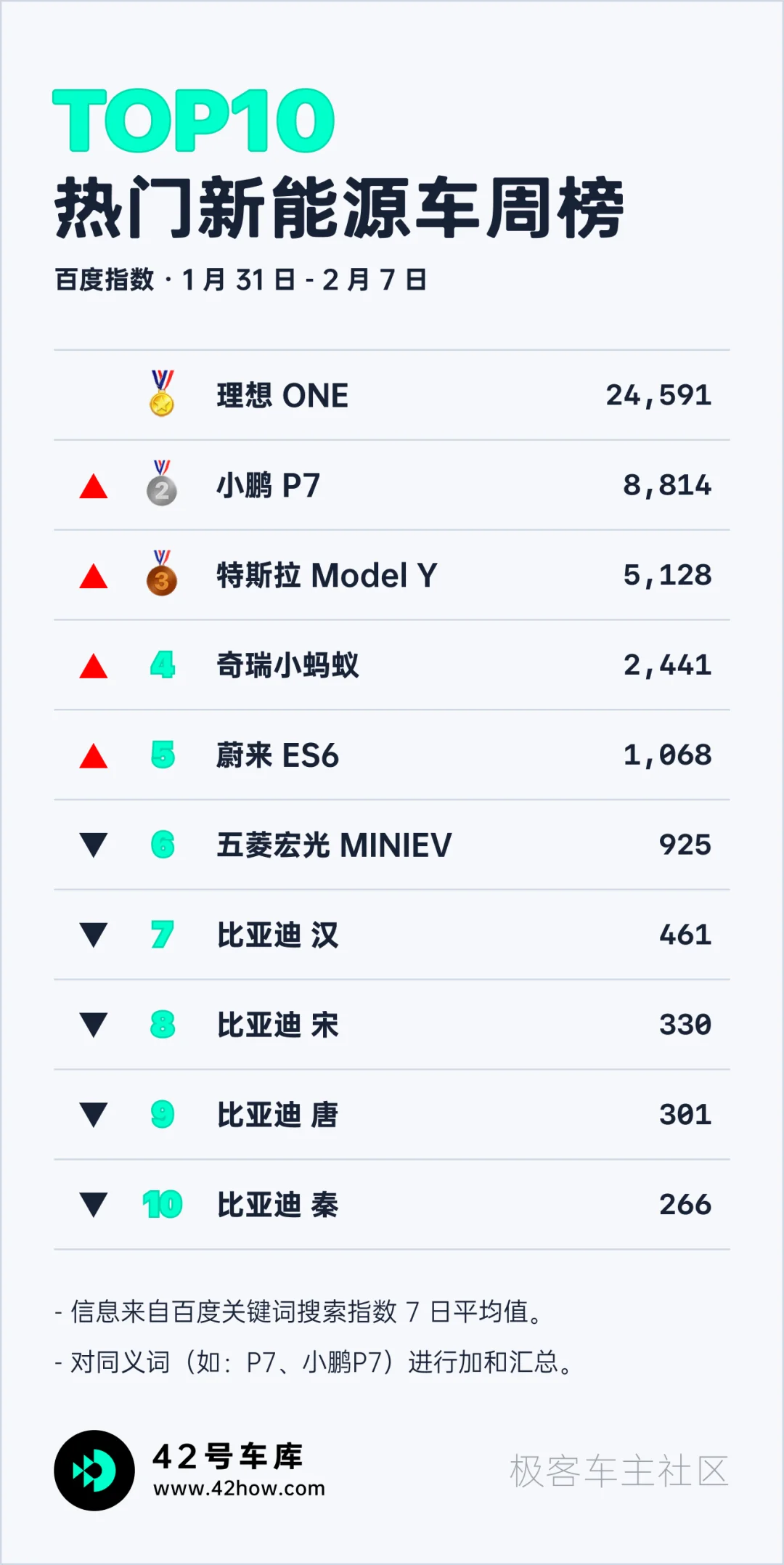
02Weekly Highlights
New Energy Vehicle Startups January Sales Review
On February 1, the first day of the Chinese Lunar New Year, automakers greeted the public with their January sales figures. The top-tier group saw a decline compared to December, while the second tier showed strong catching-up momentum.
XPENG
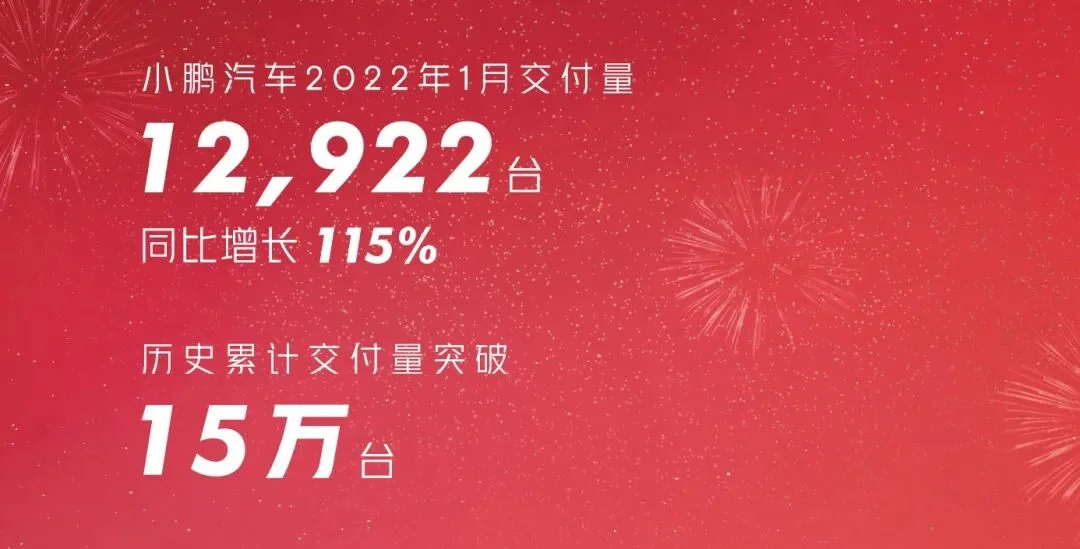
In January, XPENG delivered 12,922 vehicles, a year-over-year increase of 115%, down from 16,000 units in December.
Delivery performance by model was as follows:
XPENG P7: 6,707 units
XPENG P5: 4,029 units
XPENG G3 Series: 2,186 units
As of the end of January 2022, cumulative historical deliveries of the XPENG P7 exceeded 80,000 units, and XPENG's total cumulative historical deliveries exceeded one hundred fifty thousand units. In addition, XPENG will carry out technical upgrades at its Zhaoqing base during the Spring Festival production halt from late January to early February 2022. After the upgrades are completed, backlog orders are expected to be delivered at an accelerated pace.
Li Auto
Li Auto delivered 12,268 vehicles in January 2022, a year-over-year increase of 128.1%, with a slight month-over-month decline compared to December.
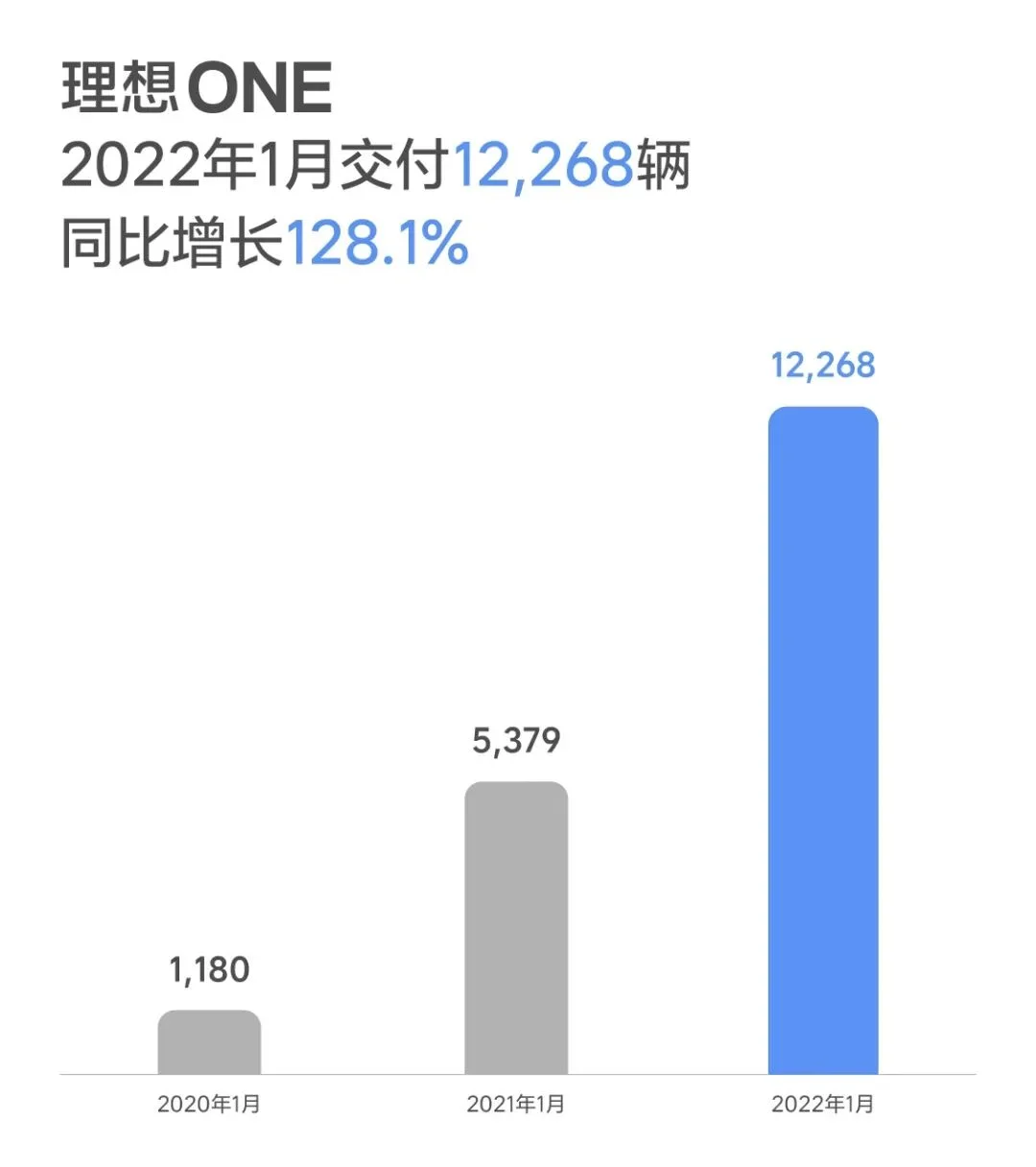
The Li ONE has recorded three consecutive months of deliveries exceeding 10,000 since November last year, with cumulative deliveries reaching 136,356 units to date.
Regarding new products, Li Auto will release the all-new flagship model codenamed X01 in Q2 this year, with projected 2022 deliveries expected to grow by more than fifty percent year-over-year.
NIO
In January, NIO delivered 9,652 units, representing a 33.6% year-over-year increase, though this was slightly lower than the 10,489 units delivered in December last year. Delivery figures by model were as follows:
NIO ES8: 1,531 units;
NIO ES6: 5,247 units;
NIO EC6: 2,874 units.
By the end of January 2022, NIO had cumulatively delivered 176,722 new vehicles.
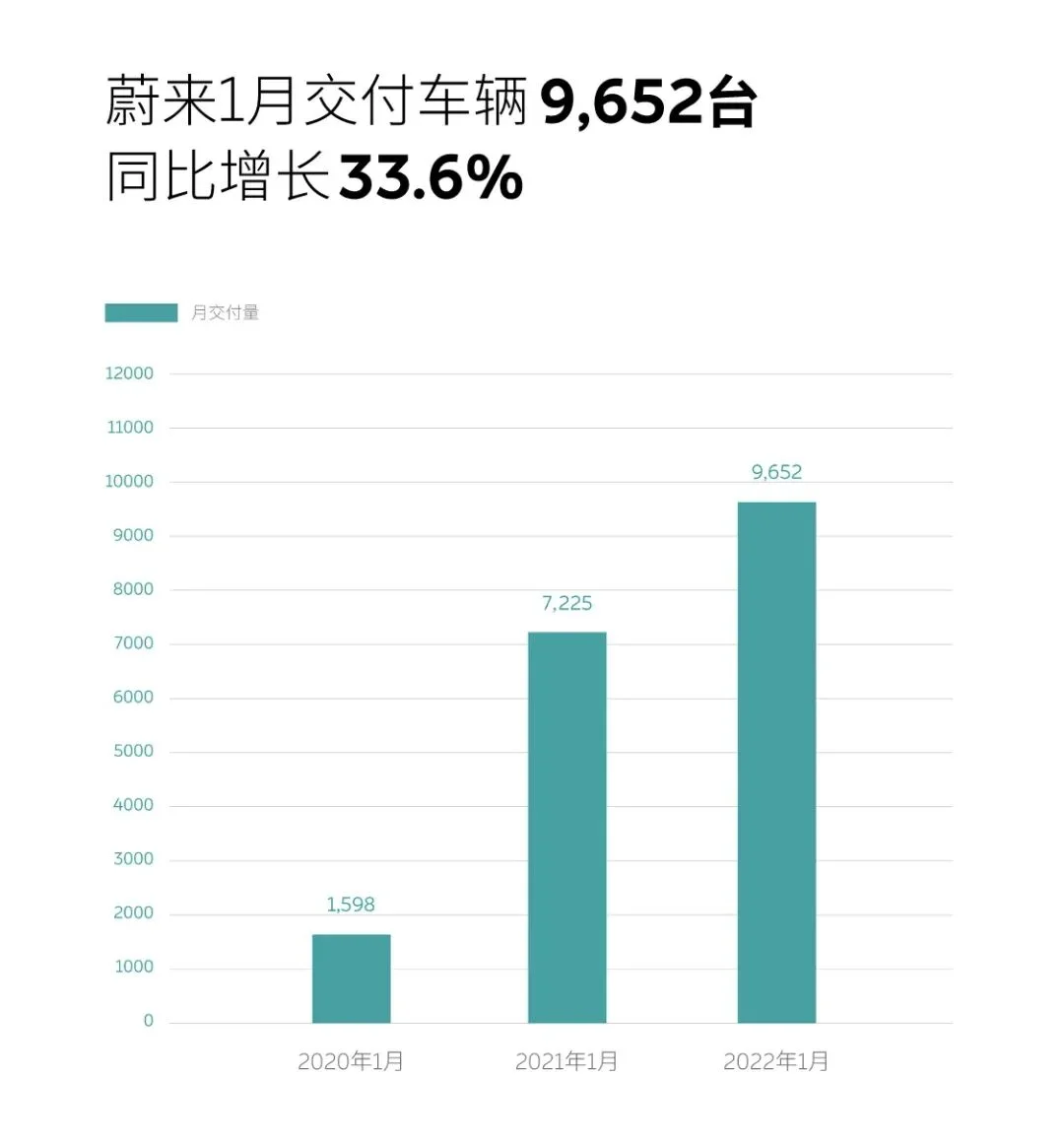
NIO has three new models scheduled for this year: the ET7 and ET5, which have been announced, and the ES7, which remains under wraps. The ET7 is expected to begin deliveries in late March, while the ET5 will arrive in the third quarter. The ES7, built on the same platform as the ET5, is likely to launch around the same time. With these three new models entering the market, NIO’s sales performance in 2022 is expected to reach a new level.
Zeekr
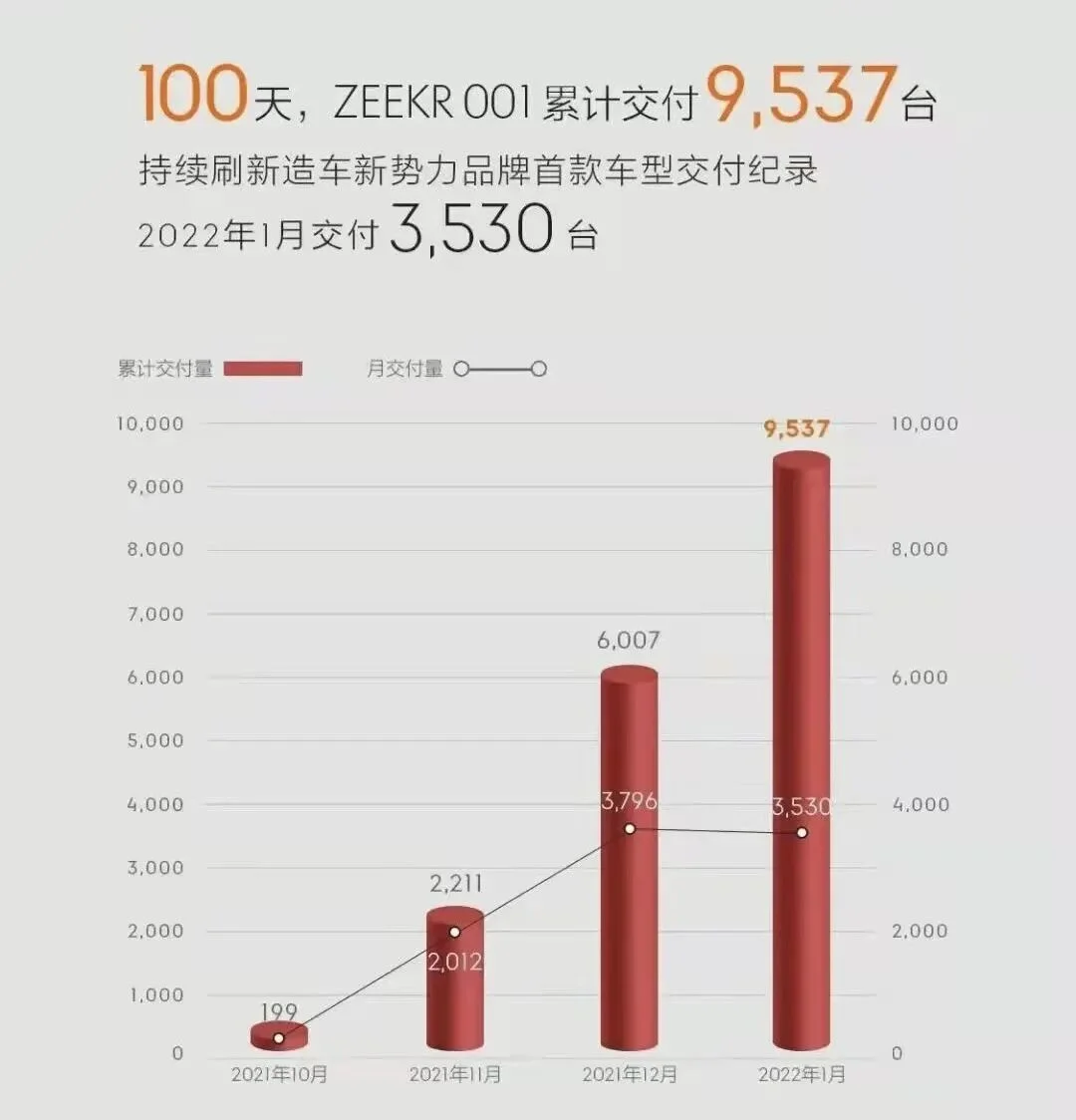
In January, Zeekr 001 deliveries totaled 3,530 units, a slight decrease compared to the 3,796 units delivered in December 2021.
Since deliveries began in October last year, cumulative Zeekr 001 deliveries have reached 9,537 units, with sales of over 10,000 imminent.
Leapmotor
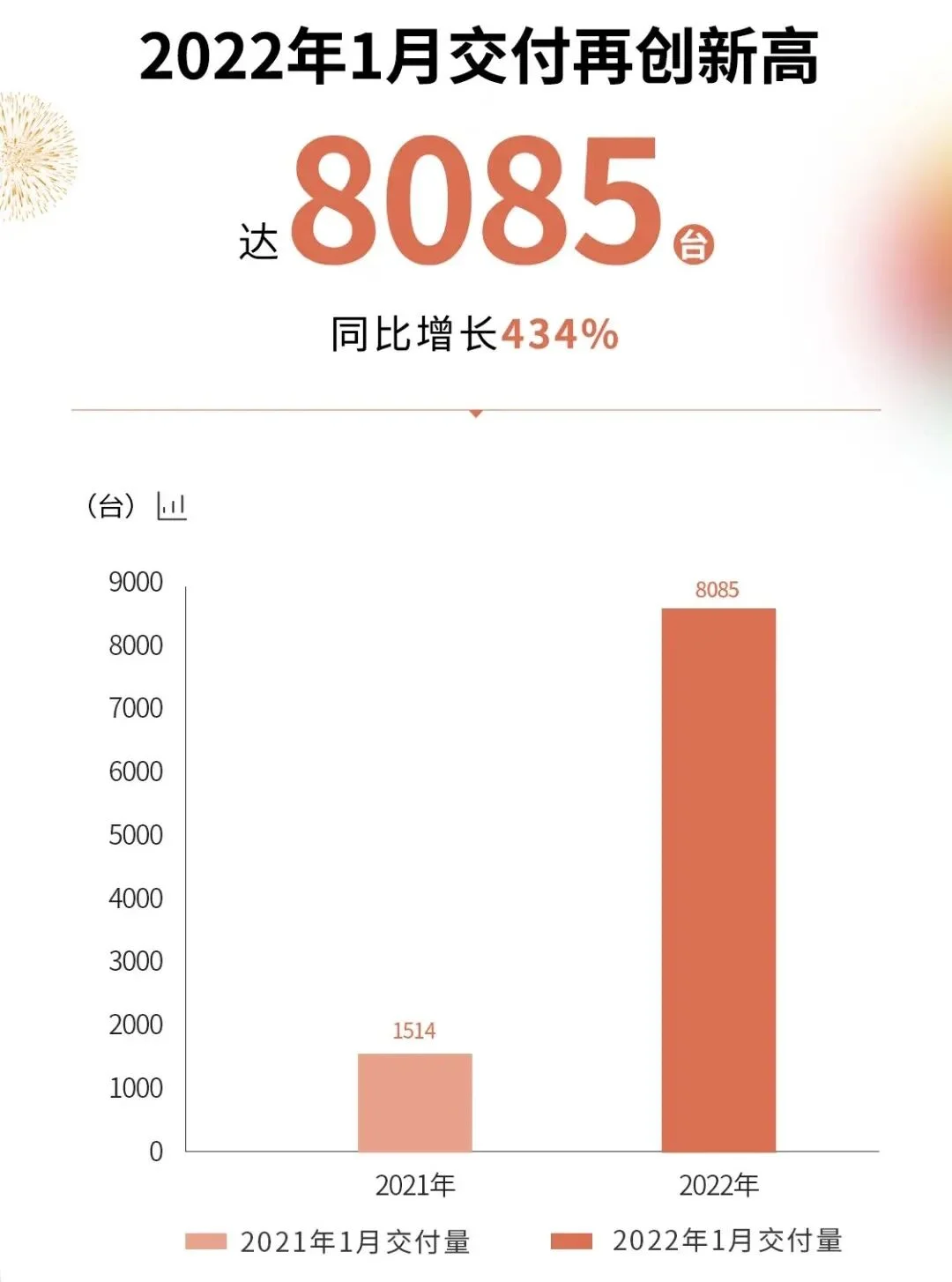
In January, Leapmotor delivered 8,085 vehicles, surpassing the 7,807 units delivered in December of the previous year and representing a year-over-year increase of 434%.
By January, Leapmotor had achieved year-over-year growth of more than 200% for ten consecutive months, showing solid performance.
In the past year of 2021, Leapmotor T03 achieved cumulative annual deliveries of 38,463 units; Leapmotor C11 began deliveries in October last year and recorded cumulative deliveries of 4,021 units for 2021.
Neta
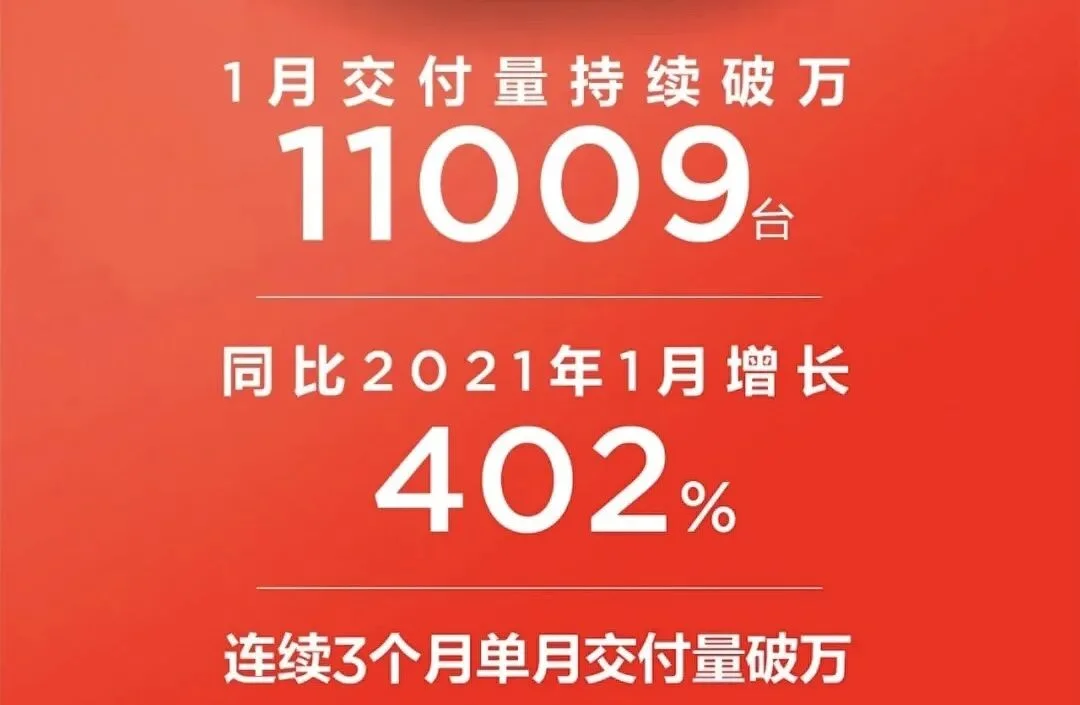
In January, Nezhaqiche delivered 11,009 vehicles, a year-over-year increase of 402%. This marks the third consecutive month with monthly sales exceeding ten thousand units, providing a strong start to the year.
From January to December last year, Nezhaqiche delivered a total of 69,674 vehicles.
Nezhaqiche's currently available models are priced mainly below 200,000 yuan. We look forward to seeing the performance of the Nezha S launched this year.
Editorial Comment:
Overall, the delivery figures reported by several brands were solid. The timing in January is particularly notable; influenced by the phase-out of 2022 new energy vehicle subsidies and the approaching Spring Festival holiday, many automakers reported year-over-year growth but month-over-month declines, with deliveries falling short of December levels. The Spring Festival break is expected to significantly impact February delivery volumes.
Competition among brands for top delivery positions has intensified. XPENG and Li Auto posted comparable figures, each exceeding 12,000 units. Nezha emerged as a dark horse, surpassing the 11,000-unit mark. NIO saw a slight dip compared to December, finishing just under 10,000 units. Leapmotor delivered over 8,000 units in January, showing promising potential. As new models enter production and delivery, these five brands are expected to maintain or achieve monthly delivery capabilities exceeding 10,000 units in the coming months.
Tesla Launches FSD Beta 10.10; 'Rolling Parking' Feature Ordered Removed
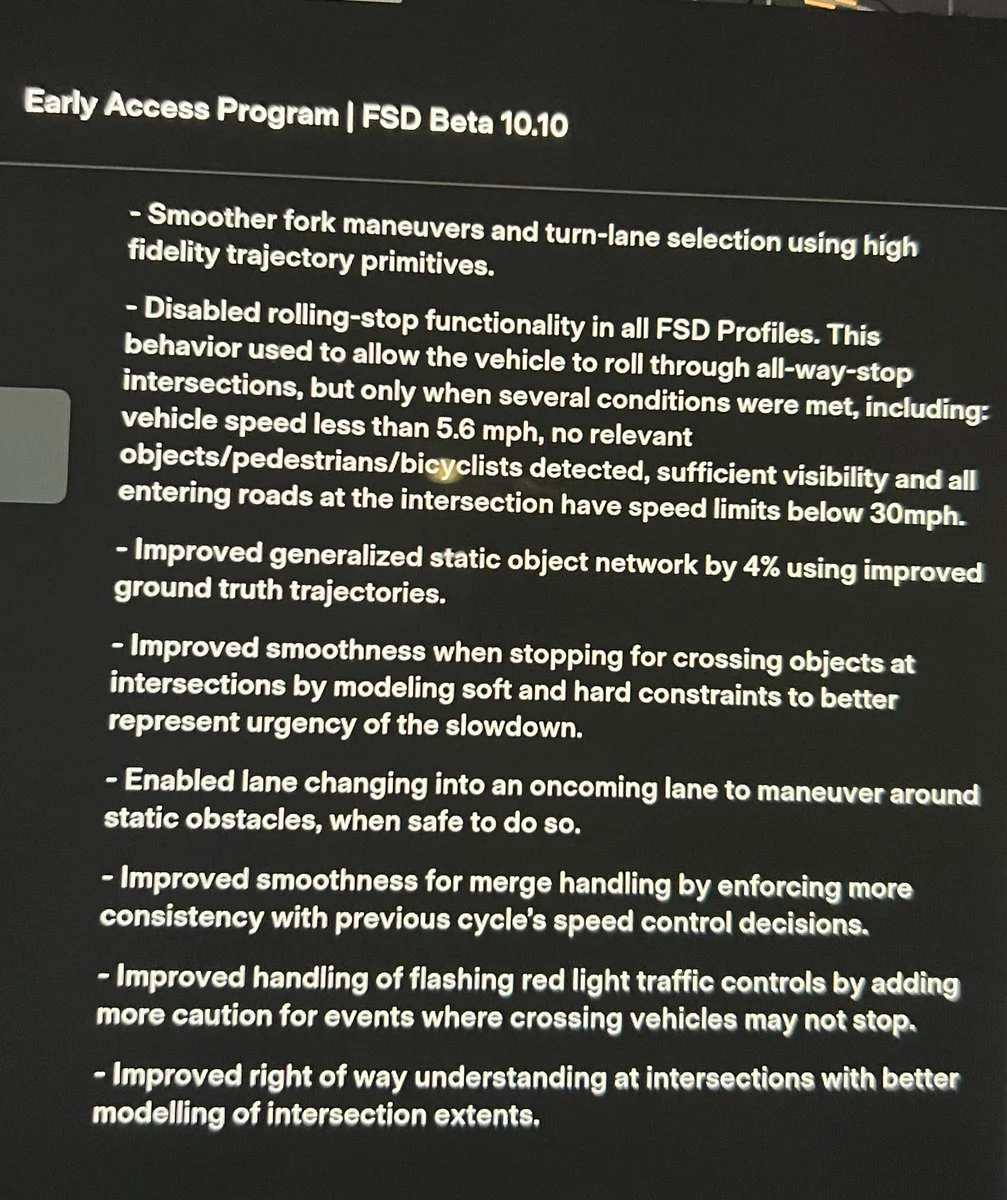
On February 2, the update log for Tesla FSD Beta 10.10 was revealed, showing software version 2021.44.30.15. The update primarily focuses on stability improvements but removes the "rolling stop" feature.
The "rolling stop" function allows a vehicle to slowly proceed through an intersection marked with a STOP sign when no other vehicles or pedestrians are present. The National Highway Traffic Safety Administration (NHTSA) deemed this feature a safety hazard and ordered a recall. The recall covers Model S/3/X/Y vehicles equipped with this feature, totaling 53,822 units. Consequently, in the latest software version, Tesla removed this feature at the request of the NHTSA.
Editorial Comment:
The remaining updates in FSD Beta 10.10 are routine upgrades focused on stability and user experience. Notably, according to leaks from Twitter users, FSD Beta may be rolled out to Canadian users this month. As FSD Beta expands beyond the United States, when will the beta version be launched in China?
Woerwo and Battery Manufacturer Northvolt to Build Battery Plant in Gothenburg
Foreign media reported on February 4 that Woerwo and battery manufacturer Northvolt will build their joint battery plant in Gothenburg, in western Sweden.
Woerwo stated that the new 50 GWh factory will create up to 3,000 jobs and produce batteries specifically developed for pure electric Woerwo and Polestar cars, with production set to begin in 2025.
The two companies will invest a total of approximately SEK 30 billion (USD 3.3 billion), which includes building a gigafactory and a research and development center. Adrian Clarke, a former Tesla executive, has been appointed to lead the battery production company.
Editorial Comment:
Northvolt CEO Peter Carlsson stated that the company gained valuable experience from Tesla, including insights on how to construct such battery plants. However, he also noted that construction of the new facility remains challenging due to global supply chain issues, semiconductor shortages, and the impact of the coronavirus pandemic. Volkswagen is Northvolt’s largest shareholder. To date, it has secured contracts worth more than USD 30 billion from customers including BMW, Fluence, Sikanniya, Volkswagen, Woerwo, and Polestar.
Woerwo aims to have 50% of its sales be pure electric vehicles by 2025 and to sell only fully electric vehicles by 2030. To achieve this goal, Woerwo is not only investing SEK 30 billion in a battery plant but also an additional SEK 10 billion in a new vehicle assembly plant; both facilities will play a key role in Woerwo’s transformation.
Jianghuai Partnership Boosts Annual EV Production Target of 1 Million Units in China
Volkswagen Passenger Cars’ CEO stated that with the combined capacity of joint ventures with Yiqi, Shangqi, and Jianghuai, the company will achieve an annual production target of 1 million electric vehicles in China by 2023.
In 2019, Volkswagen first announced the establishment of a joint venture with Anhui-based Jianghuai Automobile Company, pledging an investment of over RMB 20 billion to build a new MEB platform factory. Production is expected to begin in 2023, with an annual output of 350,000 to 400,000 units.
Editorial Comment:
Affected by supply chain disruptions, chip shortages, and the pandemic, Volkswagen sold 70,625 electric vehicles in China last year, missing its sales target of 80,000 to 100,000 units. Stephen Wollstein, head of Volkswagen China, reported in Beijing in January that Volkswagen aims to double ID. series sales in 2022, but semiconductor supply constraints may hinder this plan.
With the backing of Jianghuai Volkswagen and the signing with Guoxuangaoke, Volkswagen continues to invest in the Chinese market, hoping to maintain its advantageous position in the country during the electric vehicle era. However, to achieve the goal of 1 million electric vehicles, Volkswagen still needs to make greater efforts in more areas.
Ford to Follow Tesla's Lead with Irregular Upgrades for the Mustang Mach-E
Ford has recently clarified that it will adjust the product strategy for its all-electric Mustang Mach-E according to its own needs. This adjustment aims to further increase profits through irregular software and hardware upgrades for the vehicle.
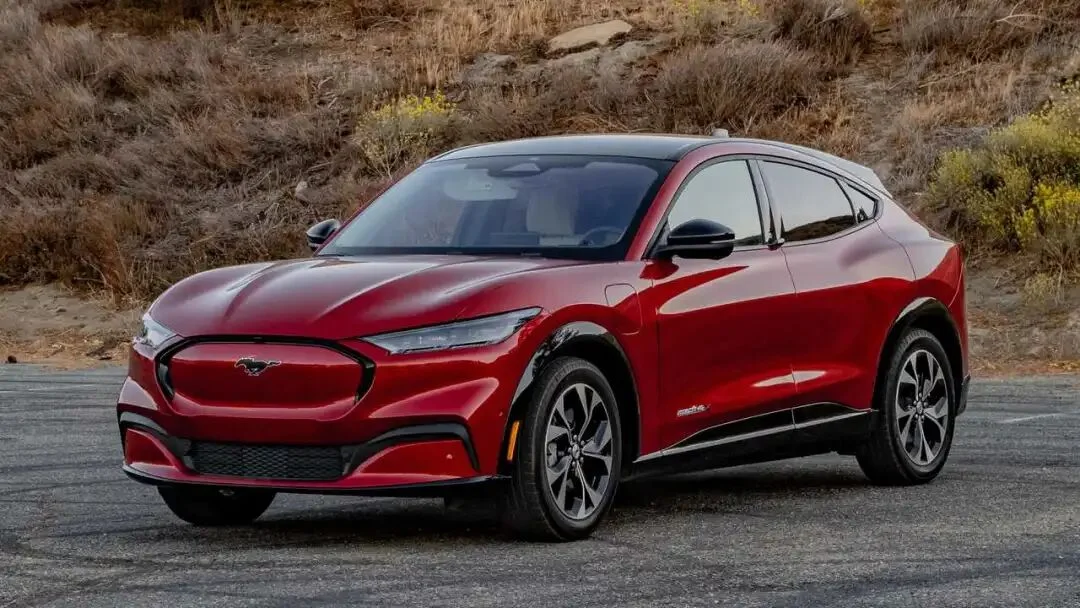
Previously, Ford CEO Jim Farley told analysts that Ford does not plan to update software and hardware in annual model years based on tradition. Instead, Ford will push out software updates irregularly and continuously redesign vehicle hardware to reduce costs. These new iterations of software and hardware will no longer wait for the annual model launch; they will be installed directly when the timing is right. Meanwhile, accumulated experience will also be applied to the F-150 Lightning.
Quick Review:
This approach differs significantly from that of most traditional automakers today, but it will define Ford's future operating model. Jim Farley noted that Tesla has always operated this way, with both software updates and hardware modifications creating additional profit opportunities.

Jim Farley found that Ford still faces integration challenges when comparing its Mustang Mach-E to Tesla's products. While the cooling system and motor in the Mach-E have adopted a more integrated design compared to previous all-electric vehicles, there is still significant room for improvement. Farley recognized that fewer parts would lead to higher profits, prompting Ford to shift from its traditional iteration model to further boost profitability. This suggests that Ford's future vehicle iteration strategy will become more interesting.
Written by: Jiang Xiaohei Edited by: Liu Guangding