


Feifan CEO Wu Bing: First Launch Is Not the Decisive Battle, Long-Termism Drives Hits
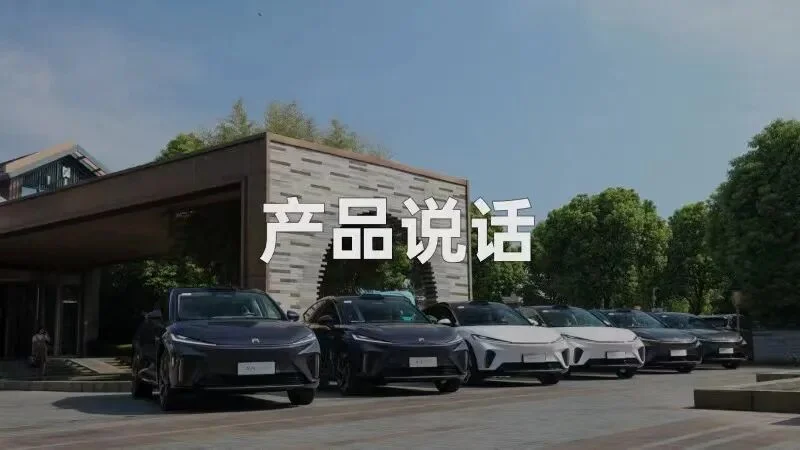
I recently had the opportunity to participate in a media test drive of the Feifan R7. After a full day behind the wheel, the R7 felt distinctly different from previous Shangqijituan vehicles, particularly in its software and user interface. For instance:
In terms of the infotainment system’s UI design and information display logic, the R7 is very similar to new-energy startups;
The single-pedal mode calibration is very close to that of Tesla.
The voice system executes commands with high efficiency; actions begin immediately after the system recognizes the instruction and provides a response.
Additionally, when we opened the lower panel of the R7’s trunk, we discovered the vehicle’s autonomous driving computing hardware: two Orin-X chips. The accessible location, neat design, and modular appearance led us to speculate whether the R7 will have the capability for future hardware upgrades.
Objectively speaking, perhaps because the pandemic disrupted the launch schedule, this pure electric SUV built on Shangqijituan’s next-generation platform and architecture did not receive online attention commensurate with its specifications.
What is Feifan’s product planning strategy, and what are the strengths of its lineup? Driven by these questions and the impressions formed during the test drive, I attended a media group interview with Feifan at the Chengdu Auto Show. The guest interviewed was:
Wu Bing, CEO of Feifan;
Liu Chen, General Manager of the User Development Center at Feifan;
Hu Xiaofan, Chief Product Officer of the Feifan Intelligent Driving Co-Creation Center.
Here is a summary of the key highlights from this interview:
The R7 will be delivered by the end of October, with highway navigation assist enabled upon delivery.
The launch schedule was delayed partly due to the pandemic. The team’s primary goal is to deliver a complete and high-quality product to users; validation and testing are still ongoing.
Feifan currently operates 141 brand-owned fast-charging stations and has over 1,000 partner stations offering priority charging benefits.
Feifan holds bolt-type battery swap patents. During the testing phase, a battery swap can be completed in two and a half minutes. The vehicle supports charging, swapping, and upgrading.
The two Orin-X chips in the R7 are mounted on the first floor below the trunk; the vehicle's design incorporated the capability for future upgrades to intelligent driving chips from the outset.
Feifan's infotainment software does not use the Banma system but was entirely developed by the Zero Sum team.
In terms of market positioning, the R7 targets the leading player in its niche segment (the Model Y), while offering sufficient differentiation in product details.
The front-end R&D team for intelligent driving comprises approximately 500 people, and the intelligent driving system adopted in the R7 has been under development for two and a half years.
Feifan positions itself as a provider of high-level smart pure electric vehicles, with 'high-level' referring to high computing power, high-grade hardware, and high quality. The three primary factors considered in selecting intelligent driving hardware are performance, stability, and user experience.
The R7 has two versions of intelligent driving hardware, with luminar LiDAR as an optional extra. Both versions share the same fully fused architecture, will both adopt Caiaifu's 4D imaging millimeter-wave radar, and receive full OTA software updates.
01R7 Product Discussion
Positioning and Product Strengths
Q1: In comparisons with competitors, what are the advantages of the Feifan R7? Why has its launch been delayed for so long? Feifan is positioned as a mid-to-high-end brand within SAIC Motor, which also includes Zhiji. How does Feifan define its positioning, and does the company intend to elevate its brand image through the Feifan R7?
Liu Chen: The primary reason for the R7’s delay was our desire to deliver a more complete, higher-quality product. The team has not stopped verifying the product up to this point. We did not want to hand over a 'futures' vehicle to customers; therefore, the R7 will feature highway navigation assist upon delivery, with high-level automatic parking capabilities to be added via OTA in the following months.
From a product positioning perspective, the Feifan R7 is classified as a mid-to-large SUV. Regarding the specific positioning of the Feifan R7 itself, we define it as an intelligent high-level pure electric SUV. 'Intelligent' refers to autonomous driving and smart cabin capabilities, while 'high-level' denotes high computing power, premium hardware, and superior quality.
Many recent observers have noted that the R7’s first impression is attractive, resembling a larger Model Y. However, the R7 was originally positioned to target the leading player in its specific market segment. There are distinct differences between the R7 and the Model Y in terms of product details and strategy.
The R7 features the largest 43-inch wide triple-screen setup among Chinese brands, covered by a global top-tier AGC Xuxiaozi Longji glass integration. This glass is six times stronger than standard soda-lime glass. The central control screen is a 15.05-inch OLED display with a pixel density of 200 PPI and a refresh rate of 60 Hz, ensuring smooth touch response.
The 10.25-inch instrument cluster and the 12.3-inch passenger screen both use MiniLED technology, enabling finer regional light adjustment. This effectively improves screen brightness and contrast while controlling dark areas, better addressing the pain point of insufficient screen visibility under strong side-light conditions.
The R7 also features Huawei’s globally mass-produced visual enhancement AR-HUD (Head-Up Display), boasting the industry’s largest field of view at 13° × 5° and the highest resolution of 1,920 × 730. After projection, it is equivalent to a 70-inch screen located 7.5 meters away.
The R7 is also the first globally to be equipped with a luminar 1550 nm LiDAR. We have also integrated Caiaifu 4D imaging radar and 8-megapixel ADAS cameras, all of which are highly advanced. Furthermore, maximizing the potential of this hardware relies primarily on software algorithms. We were the first to propose the concept of 'full fusion,' which we believe represents a new trend for the industry.
Wu Bing: The current Chinese new energy vehicle market is in a stage where product definition drives brand identity. Traditional automakers are already mature, so their brand value naturally transfers to their products. In contrast, Chinese NEV brands have existed for no more than five years. Therefore, we believe the R7 can represent Feifan’s future brand positioning and the perception it conveys to customers.
From Feifan’s perspective, we have not adjusted our brand positioning. Our focus has always been on 'high-level intelligent pure electric,' which is our core characteristic. We do not describe ourselves as high-end or mid-to-high-end; instead, we emphasize high-level intelligence, which serves as our differentiated competitive advantage.
First, starting with the R7, we will plan our products around the six-character principle of 'high-level, intelligent, pure electric.'
Second, we believe a brand consists of four elements: the brand itself, products, channels, and experience. Today, you see our product, but I hope that through offline brand communication, interactions with offline channels, online engagement, and your overall experience, you can feel that Feifan is a brand defined by high-level intelligence.
Third, Shangqijituan has many brands. We believe that over the next 10–15 years, new energy intelligent vehicles will enter a period of rapid growth. We aim to use multiple brands to address different consumers and target audiences. Therefore, through the R7, along with our brand building, channel construction, and operational experience, we want consumers to perceive the unique brand value of the Feifan R7.
As for what the final positioning looks like, and how it differs from higher or lower tiers, it ultimately comes down to using the product to establish brand positioning, as mentioned earlier. There are significant opportunities for all new brands entering the market in the future.
Additionally, hit models do not appear every day. Companies must maintain correct values. Only companies committed to long-term value creation are more likely to produce hit models, and those hits will last longer. The first battle is important, but it is not the decisive one.
Single-Pedal Mode
Q2: Let’s start with a question about the test drive. I am a heavy user of single-pedal driving. After driving the R7 that day, I can say without exaggeration that its single-pedal mode is currently the best among domestic brands. When the speed drops below 10 km/h, motor braking transitions to mechanical braking until the vehicle stops. This involves three continuous actions: motor braking coupling to mechanical braking, followed by mechanical braking engaging the handbrake. On the R7, you barely feel the transition point between motor and mechanical braking. How did you achieve this?
Liu Chen: We considered this issue during product development. Our goal was to return the choice to users by providing an on/off switch for single-pedal mode. Single-pedal driving offers many benefits, including reduced brake pad wear, improved energy efficiency, and faster switching speeds.
The most important aspect is respecting user choice and providing diverse, personalized product extensions, which aligns with our philosophy on intelligent driving. Many manufacturers are now simplifying features for users, but do users really need these simplifications? I believe today’s consumers are increasingly knowledgeable and value products deeply. They have already done their homework online and through search engines, often understanding product concepts more profoundly than we do. Therefore, it is worth considering how to uncover user needs from the perspective of C-end co-creation and scenario-based design. The single-pedal mode you noticed is just the tip of the iceberg; it is one of the user experience scenarios we built starting from actual user situations.
Returning to our car-making philosophy, SAIC has a solid reputation in the traditional internal combustion engine era, particularly in ride quality and pedal calibration as you mentioned. Now, in the electrification era, we must maintain that solid foundation. Truly good technology should be both robust and refined.
Can Intelligent Driving Chips Support Upgrades
Q3: When we opened the engineering vehicle’s trunk, we saw the Orin-X module inside. Did you place it in this specific position to consider the possibility of future hardware replacement and iteration?
Hu Xiaofan: You noticed the details. Beyond software, hardware, and algorithm design, we also considered the entire vehicle. Two years ago, when we designed this solution, we anticipated significant advancements in autonomous driving. Chips, computing power, and modules would evolve at different depths. In our vehicle architecture, we left ample room in terms of location, space, and overall design to accommodate future developments. Whether it’s module upgrades or computing power enhancements, we reserved sufficient flexibility. So, the answer is yes.
Considerations Behind the R7’s Intelligent Driving Hardware Configuration
Q4: What was the rationale behind equipping the R7 with high-spec hardware such as LiDAR? Was it intended to address specific scenarios?
Hu Xiaofan: When selecting hardware, Mr. Wu made a statement at the press conference. While 'software defines the car' is a widely known concept, he emphasized that hardware sets the ceiling for software. During software process upgrades, we aim to use the best possible hardware. We believe in providing users with sufficient sincerity rather than focusing on cost considerations; instead, we should prioritize hardware and sensors to achieve the following:
First, performance;
Second, stability;
Third, to bring a better experience to users.
After that, we must use the best software to fully unlock the hardware's performance. From the start, when setting up this solution, we decided to use a fully fused high-level quality solution. Here we used 4D imaging radar, with a perception distance of 350 m, whereas conventional millimeter-wave radar is 210 m.
Imaging radar can detect object height with higher accuracy than conventional millimeter-wave radar. It also synchronously outputs data of both the immediate surroundings and target objects through imaging. Combined with machine learning, it provides better detection capability and precision in scenarios involving static objects, gates, and traffic passages.
Here are a few examples of the advantages of our hardware in special scenarios:
First, ramp navigation. We employ a full-domain, multi-scenario recognition system. Beyond road lines, the system identifies curbs using not only vision but also imaging radar. By leveraging LiDAR to construct an imaging concept and build three-dimensional contours, the system can identify surrounding traffic conditions in real time during ramp entry—such as the driving status and trends of vehicles ahead and behind—enabling lane changes within a safe range while merging into the ramp alongside those vehicles.
Second, perception of static obstacles. On highways and at construction sites, where static objects are prevalent, our solution achieves comprehensive perception fusion. This enables active lane changes for recognition, detection, and functionality. Not every obstacle requires braking, as sudden braking can be dangerous due to vehicles approaching from behind. When the system determines that the adjacent lane is clear and speed permits, it automatically changes lanes to bypass the obstacle. Furthermore, across different sensors, the system outperforms human vision in adverse weather (rain, snow, fog) and beyond-line-of-sight scenarios using photoelectric technology. Through fully fused algorithms, the sensors provide clearer visibility when human eyes cannot see clearly.
Third, identifying difficult-to-detect vehicles such as trucks. The separation of dynamic and static objects and real-time recognition offer advantages over many current intelligent driving solutions. This is precisely why we are launching this fully fused solution today.
R7 Intelligent Driving Configurations
Q5: The R7 features high-end investments in autonomous driving hardware, with top-tier components throughout. Will this configuration be available in mid- or low-spec trims, or is it standard across all models and exclusive to the top trim?
Hu Xiaofan: As stated at today’s product launch event, the LiDAR on the R7 is optional. Another version uses imaging millimeter-wave radar, four enhanced long-range point cloud corner radars, and twelve cameras. Both versions utilize the same fully fused algorithm.
This solution was independently developed by our intelligent driving team. A key feature of our fully fused algorithm is its use of a multi-task, multi-feature neural network to output detection results, followed by independent detection outputs from multiple sensors for comprehensive evaluation. It then implements full-element fusion combining both full fusion and post-fusion approaches. In this context, the configuration with LiDAR performs slightly worse than the one without.
Even in the fully integrated configuration, both imaging radar and point millimeter-wave radar provide full point cloud output, covering 360 degrees. Additionally, the visual output from the entire camera system is identical across both configurations. At this stage, LiDAR plays a more significant role in scene perception. Although the post-fusion approach involves one fewer sensor, it does not impact the overall algorithm; we have already accounted for scenarios with either an additional or a missing sensor in our algorithms. OTA updates will be correspondingly adjusted to ensure that users receive essentially full-feature pushes.
To ensure better synchronization of perception information between the user and the vehicle, we designed scenario reconstruction in the instrument cluster and central control screen (commonly referred to as environmental visualization display in our 42Mark). This represents the full-element output of the perception fusion system, allowing users to see all recognition and detection results for vehicles, pedestrians, and lane lines. When driving, if approaching vehicles appear from behind or ahead, or targets emerge during turns indicating a certain level of risk, the instrument cluster and central control screen will turn yellow and then red to alert the user.
02Brand, R&D, and Charging Infrastructure
Autonomous Driving R&D Team
Q6: Feifan’s autonomous driving R&D is now called the Co-Creation Center for Intelligent Driving. What does 'co-creation' mean? The description mentions a team of over 1,000 people. I understand that XPENG currently has the largest fully self-developed autonomous driving team in China, with approximately 800 people, including those working on high-definition map evolution. How is your team allocated?
Hu Xiaofan: Regarding the numbers you mentioned, I will answer honestly. Wu Bing stated at the press conference that there are more than 500 core team members. The figure of over 1,000 includes testers deployed across various cities.
Algorithms are led by Chief Scientist Dr. Jin, who has extensive experience in algorithm research and mass production both domestically and internationally. Additionally, Dr. Yu, an expert responsible for user experience, has worked in Germany and China for many years, serving various consumer business units focused on user experience research. Therefore, we hold in-depth technical strategy discussions among these experts to consider user experience comprehensively.
Wu Bing: Our complete fusion advanced intelligent driving system, from hardware selection to software development and algorithm model formation, is entirely developed by Feifan.
We have actually done a great deal, though we speak less about it. Our team has gathered top-tier industry hardware and software resources. It was not easy to complete the complete fusion advanced intelligent driving system in just over two years. During the pandemic, more than 100 members of the autonomous driving team did not go home in the second quarter, facing challenges that were not only technical but also physical and mental. We regard the intelligent cockpit and intelligent driving as the two core advantages and core assets of our future ultra-smart strategy, continuously investing, accumulating, and developing them. This is the key point I want to emphasize.
High-level autonomous driving is available with or without LiDAR, but this does not affect its overall application on the Feifan R7. So please rest assured: we are not going to spend so much money only to sell a few hundred cars for advertising purposes. If that were the case, I would just invest directly in advertising.
Charging and Energy Replenishment Planning and Philosophy
Q7: What are Feifan’s plans and strategies regarding energy replenishment?
Liu Chen: In the early stages of the brand, energy replenishment is not merely a service; it should also be an important part of the overall product definition. Given current industry technology, there are diverse choices for energy replenishment. Feifan has chosen the battery swap route based on our judgment of product value, user demands, and industry trends, because we believe battery swapping will become one of the inevitable trends.
We have not yet disclosed detailed information about our smart electric vehicle technology, but I can say that all our current products are designed with the capability for battery swapping. Currently, only a few companies in the industry can achieve this level of battery swapping, and we have applied for many exclusive patents for our system.
As you know, consumers in the industry currently both embrace and feel anxious about battery swapping. The anxiety stems from concerns over whether the safety and reliability of the large battery pack remain intact during the repeated process of loosening and tightening screws for removal and installation. Therefore, the core point of our patented technology is how to accomplish these tasks within a very short timeframe. Current tests show that a single battery swap takes approximately two and a half minutes.
However, in terms of smart electric technology, the core objective is not to pursue extreme speed. To be honest, whether it takes two and a half minutes or three minutes, consumers can accept it. The viewpoint remains what was mentioned earlier: we strive to make the technology solid and ensure the reliability of the entire product. We are very confident in our patents in this regard.
Wu Bing: Let me add a couple of points. Since the R7 is Feifan’s first flagship model, we aim to give consumers as many choices as possible. For autonomous driving, users can customize settings, and for energy replenishment, we have provided ample choice. As Liu Chen mentioned, the system will support battery swapping in the future. At the same time, we also support fast charging. Thus, our energy replenishment strategy is described as chargeable, swappable, and upgradable.
To date, Feifan has deployed 114 brand charging stations nationwide and over 1,000 equity charging stations (with priority reservation for charging). Before the launch of the R7, we had fully prepared both the rollout of these locations and their operational readiness.
The battery pack can also feature upgradeable capabilities, allowing users to choose between different batteries. We emphasize this point because, in our technology roadmap—particularly for the R7—we aim to give users more choice. Although this approach may bring additional challenges, we have selected "chargeable, swappable, and upgradeable" as the core technical strategy for Feifan's energy replenishment and swapping services to ensure a better customer experience.
We will continue to communicate with everyone in the future. As Feifan's first model, the R7 carries many of our brand-new technologies, including global and industry-leading innovations, as well as the first operational integration by Shangqijituan shareholders. Therefore, we believe the R7 is capable of fulfilling its positioning as Feifan's first flagship SUV.
03Final Thoughts
The Feifan R7 was actually unveiled as early as last year, initially under the code name ES33. Its core promotional message at the time focused on autonomous driving. Beyond that, the R7 features Shangqijituan’s latest technology in its cabin, battery-electric-motor-electronic-control systems, and vehicle platform. For the Feifan brand, the R7 is the first model to undergo a complete overhaul from the inside out, encompassing both software and hardware.
The pandemic and the explosive growth of new energy vehicle products in the market this year have brought significant challenges to the Feifan brand. Once the window for first-mover advantage is lost, marketing resistance becomes much greater. Facing pressure from both new EV startups and Tesla, the Feifan R7 actually possesses solid product capabilities and has established its own distinctiveness. However, based on the current situation, Feifan's biggest problem lies in how to make this car known to more people and how to build consumer trust and a sense of security in the brand. In recent years, SAIC Motor has suffered considerable setbacks in this regard.
For example, the flat-wire Hair-pin motors that many OEMs have recently begun promoting were actually already used in the ER6 two years ago, and at that time it was an 8-layer winding motor. Another example is the Feifan R7's rear axle, which uses a direct-flow oil-cooled permanent magnet motor with a power output of 250 kW, tying with Huawei DriveONE's current flagship motor for first place among independent brands.
But the reality is that few people know about these efforts by SAIC. The reason lies in SAIC's relatively weak C-end reputation accumulation in the new energy vehicle market, with very few car owners stepping forward to help spread the word. In the past, its legacy architecture models lacked sufficient appeal in blue-ocean markets, failing to secure the first pot of gold in terms of market reputation. Meanwhile, its all-new pure electric products only began rolling out this year, by which time the new energy vehicle market was already fiercely competitive, with even technical routes and configurations entering a homogenized spiral of internal competition.
It is undeniable that Feifan’s parent company, Shangqijituan, provides substantial resources, including both technology and financial backing. However, regarding brand influence, Feifan must still build its reputation from scratch.
During the communication session, the Feifan team displayed a rational attitude toward this situation. Fully aware of their current stage, they have pinned their primary hopes on product quality.
When introducing the intelligent driving team, Wu Bing remarked: 'Look around—how many other companies have spent two years building a 500-person intelligent driving team without making a fuss about it? If our counterparts at the opposite booth were in charge, they would be shouting it from the rooftops. Our philosophy is to create products that consumers love, rather than designing them solely for investors. Ultimately, success depends on products and word-of-mouth, not slogans.'
Looking back at several brands that have grown significantly in recent years, they all align with Wu Bing’s earlier statement: 'The Chinese new energy market is still in a phase where products define brands.'
However, as product capabilities rise collectively and price wars intensify, the threshold for shaping a brand through product strength is becoming increasingly high. To succeed, a company needs not only excellent products but also fast delivery and competitive pricing.
For any enterprise, including Feifan, this path is more arduous than marketing and communication, yet it represents the most effective practice of long-termism.
Written by: Lai Yinhate Edited by: Lai Yinhate