


Li ONE: High Sales, Controversy, and the User Survey Behind Its Success
Delivered in late 2019, the Li ONE became China’s best-selling single-model new-energy SUV of 2020 and was the fastest new-force model to surpass 30,000 deliveries. This impressive record belongs to the Li ONE.
As sales climbed, fault issues repeatedly thrust the Li ONE into the center of public debate, making it the most controversial vehicle of 2020. To understand the real user feedback on the Li ONE, we surveyed nearly 1,000 registered Li ONE owners through 42HOW Auto.
This article shares selected data from that survey to reconstruct a realistic picture of the Li ONE across four dimensions: market competitiveness, service and ownership costs, intelligent features feedback, and quality and reliability.
01Market Competitiveness – Who Buys the Li ONE?
The image of the Li ONE owner as a middle-aged father is supported by our survey data: 70.5% of respondents were aged 30 to 45, 96.3% were male, and 87.6% came from families with children.
A relatively small share of owners use the Li ONE as their family’s only car; 72.7% of households also own other vehicles.
We also focused on which models buyers compared when purchasing. 74.2% of owners said they considered other models before buying. Those who chose the Li ONE as their first family car were even more cautious: 81.6% had weighed other options at the time of purchase.
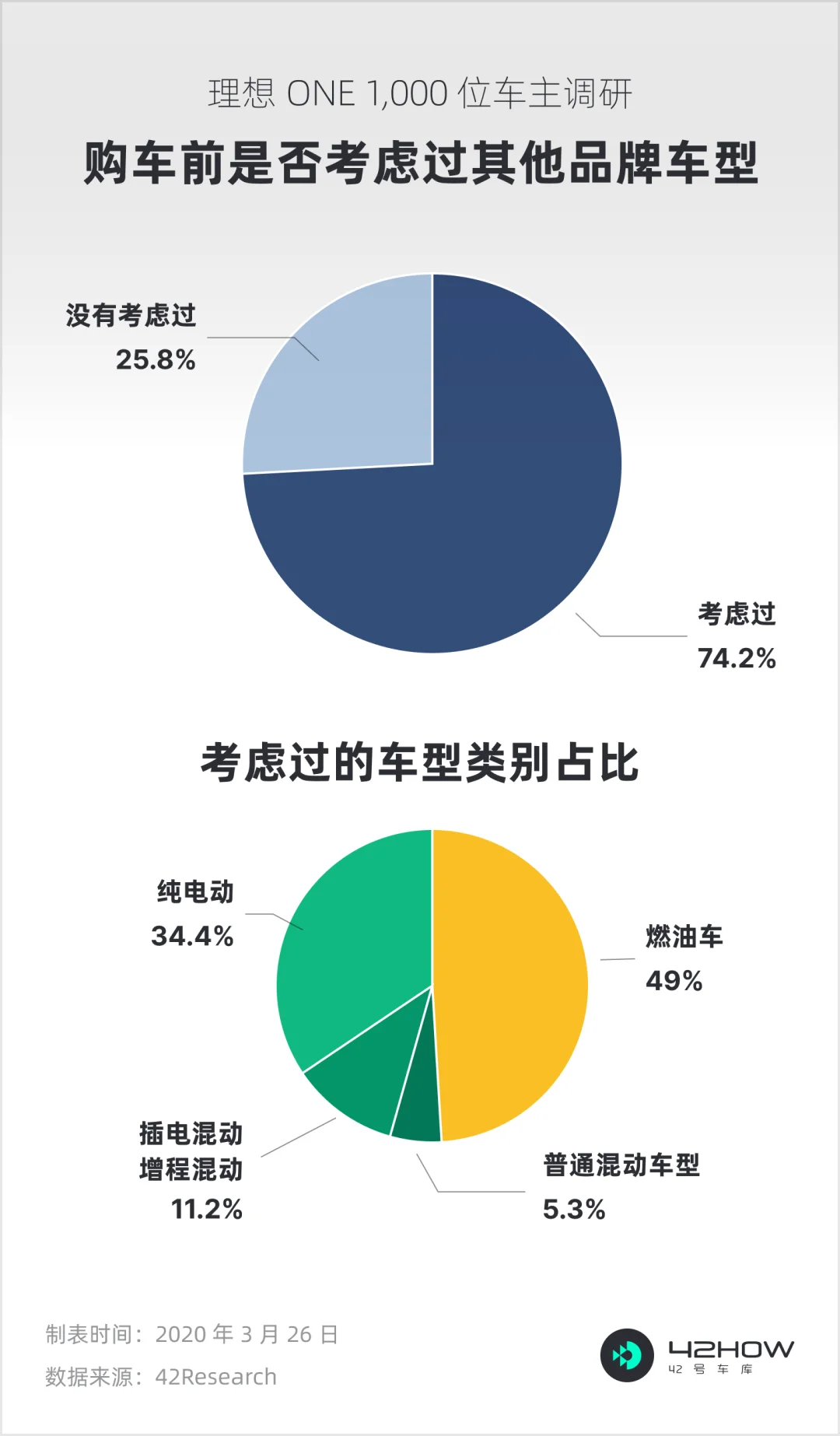
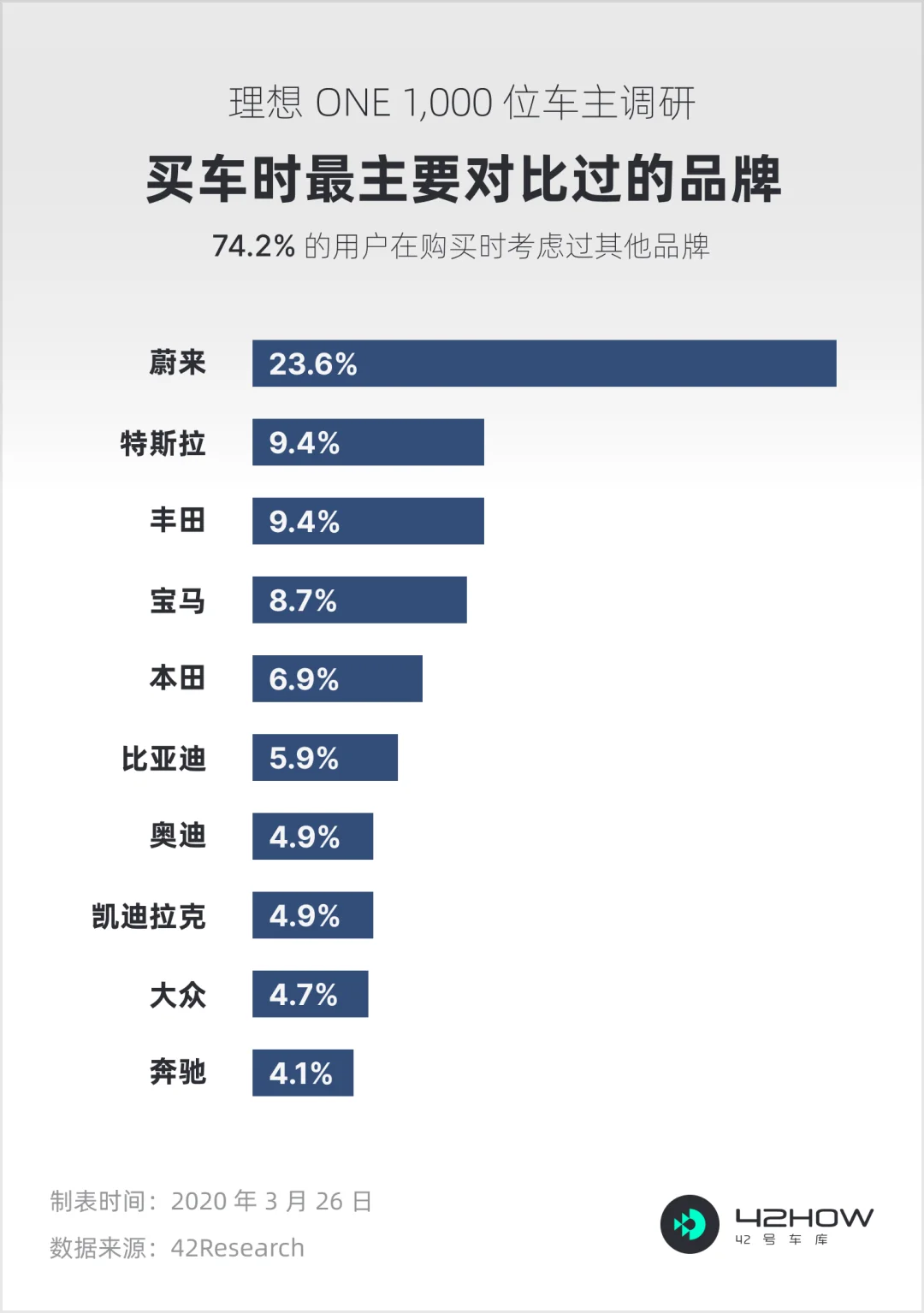
Users who considered other models when purchasing their vehicle mostly compared internal combustion engine (ICE) vehicles and battery electric vehicles (BEVs). The NIO ES8 was the most frequently compared model, with nearly 10% of owners having considered it at the time of purchase. When including the NIO ES6 and EC6, this proportion rises to 23.6%. We extracted and compared the insured vehicle volume data for NIO and Li Auto from the second half of 2020 to the present. Despite such a high overlap in user demographics between these two brands, their insured volume correlation coefficient stands at 0.94, indicating a significant positive correlation. This suggests that Li Auto is not cannibalizing NIO’s market share; rather, both are growing together and expanding the overall new energy vehicle (NEV) market.
We also analyzed the factors influencing users’ final decision to choose the Li ONE over competing models. Among owners who had considered ICE vehicles, 52.76% of those who ultimately selected the Li ONE were located in cities with license plate restrictions, showing a strong correlation. Additionally, among owners who had considered five-seater models like the Tesla Model 3 before choosing the Li ONE, 69.8% were married with children, and 25.53% belonged to families with two children. Furthermore, 84.7% of Li ONE owners reported being satisfied with the vehicle’s interior space. These data indicate that the Li ONE’s spacious cabin, which meets family transportation needs, is a core factor influencing consumer purchase decisions.
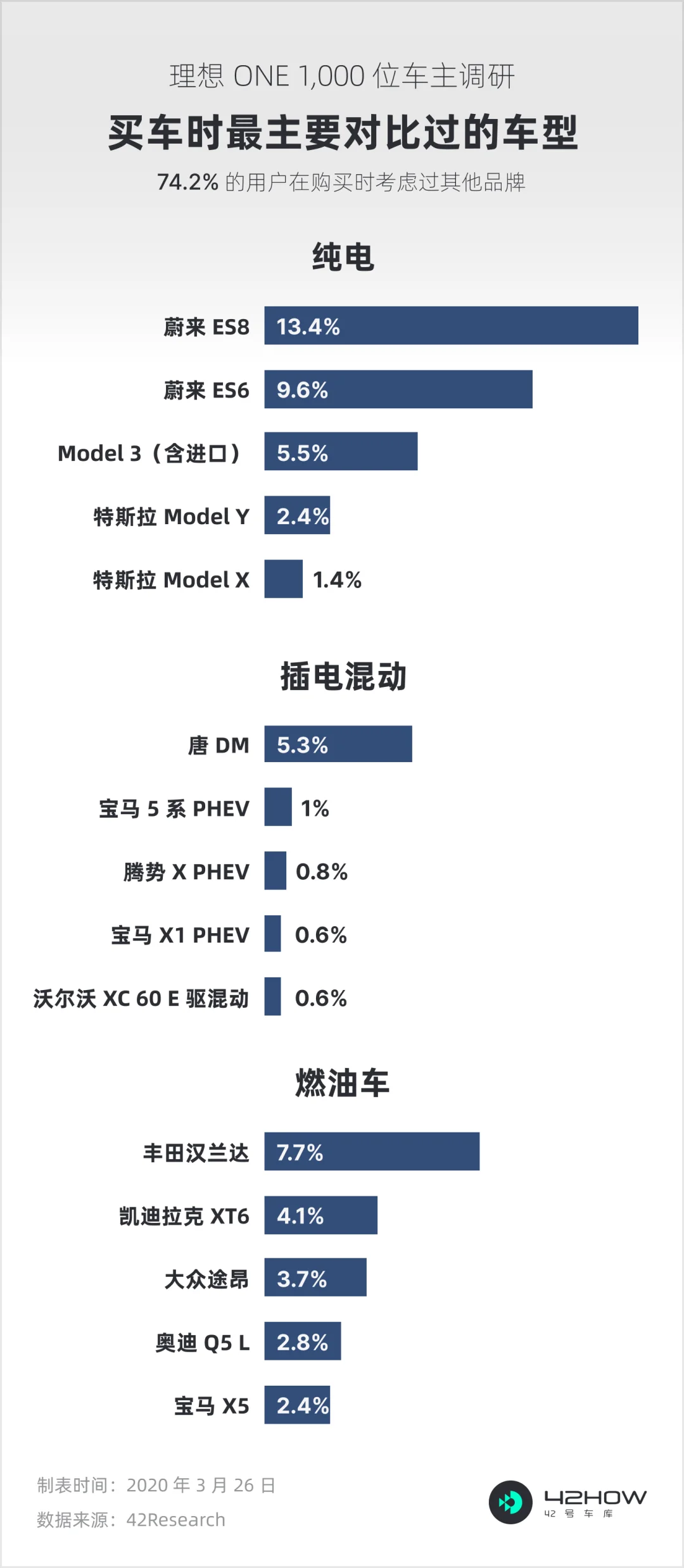
Among owners who had considered NEVs before ultimately choosing the Li ONE, 76.6% have a habit of driving for weekend trips, and 60.5% engage in long-distance self-driving tours. As an extended-range electric SUV (EREV), the Li ONE offers convenient refueling capabilities and eliminates range anxiety, which are its core advantages. This provides a superior choice for owners seeking freedom and engaging in road trips, compared to pure BEV options.
Reviewing the models owners considered during their purchase process reveals that choices within the six- or seven-seat plug-in hybrid electric SUV (PHEV) segment are limited. Narrowing the field further to EREVs, which offer better fuel efficiency, leaves the Li ONE as the only viable option. By entering an underserved niche market and delivering core advantages on product attributes most critical to potential users in that segment, the Li ONE achieved significant sales breakthroughs and reversed earlier trends.
02Service and Ownership Costs – What Is the Experience of Owning a Li ONE?
85.1% of Li ONE owners are satisfied with the delivery and pickup process. Furthermore, the vast majority of users reported that they could understand the instrument cluster status, master the infotainment system functions, and proficiently activate driver assistance features after taking delivery, indicating that staff provided comprehensive functional training during handover.
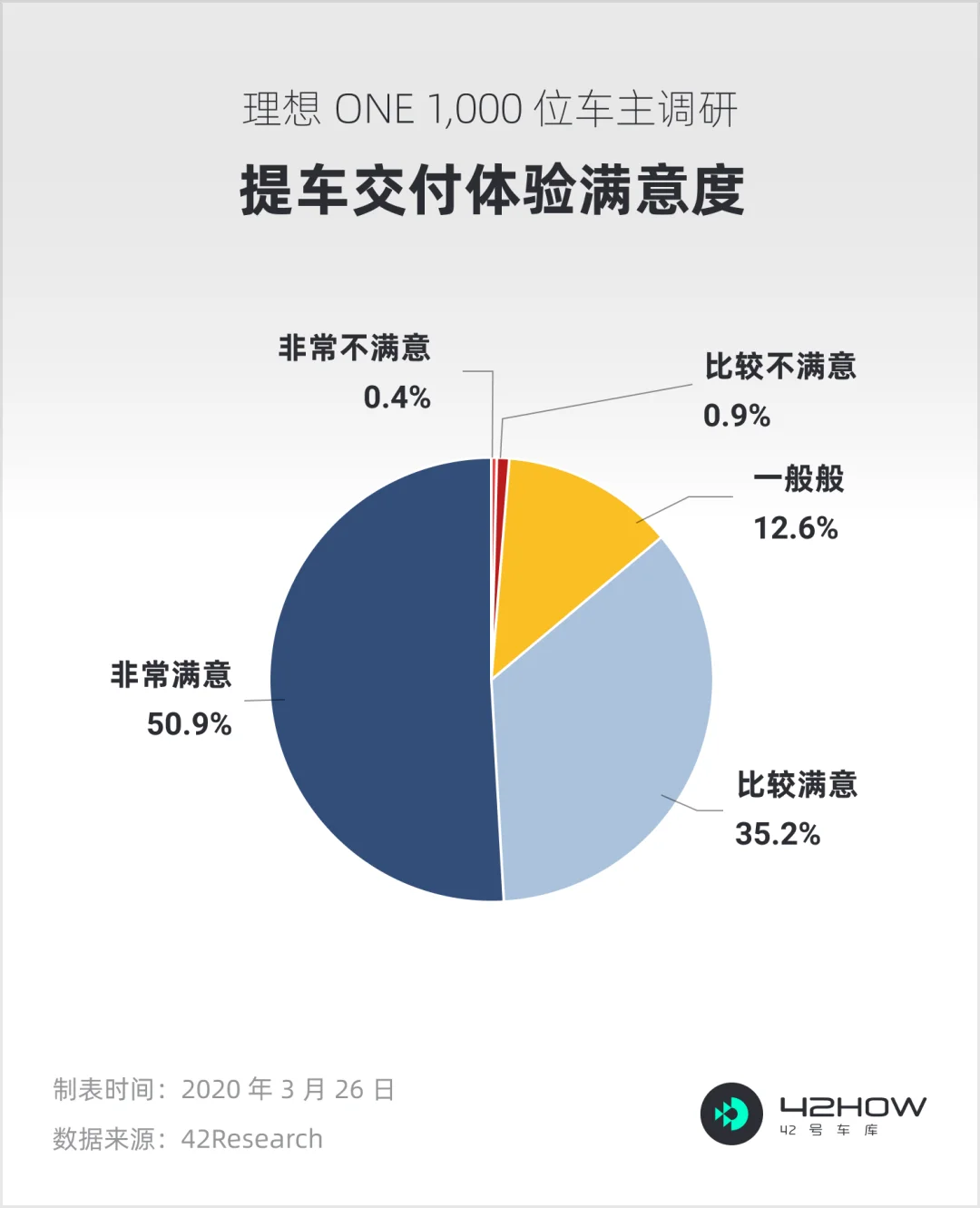
In contrast to traditional dealership networks that operate on a "one-off sale" model, new energy vehicle brands maintain close relationships with owners even after vehicle delivery. According to the survey, 61.6% of Li ONE respondents felt that their after-sales service experience was consistent with pre-sales service; 9.9% noted a slight improvement in after-sales service compared to pre-sales; and 19.3% stated that the service experience from Li Auto staff had improved. This sustained high-quality owner service fosters stronger emotional connections between users and the brand, thereby increasing owners' tolerance for the vehicle's shortcomings.
The survey revealed that 56.2% of owners encountered some usage issues, including abnormal noises, within the first month of ownership. However, among these owners, 92.1% expressed high satisfaction with the Li ONE and would recommend it to friends and family, while 92.2% indicated they would choose Li Auto products again in the future. This highlights the user loyalty driven by superior service.
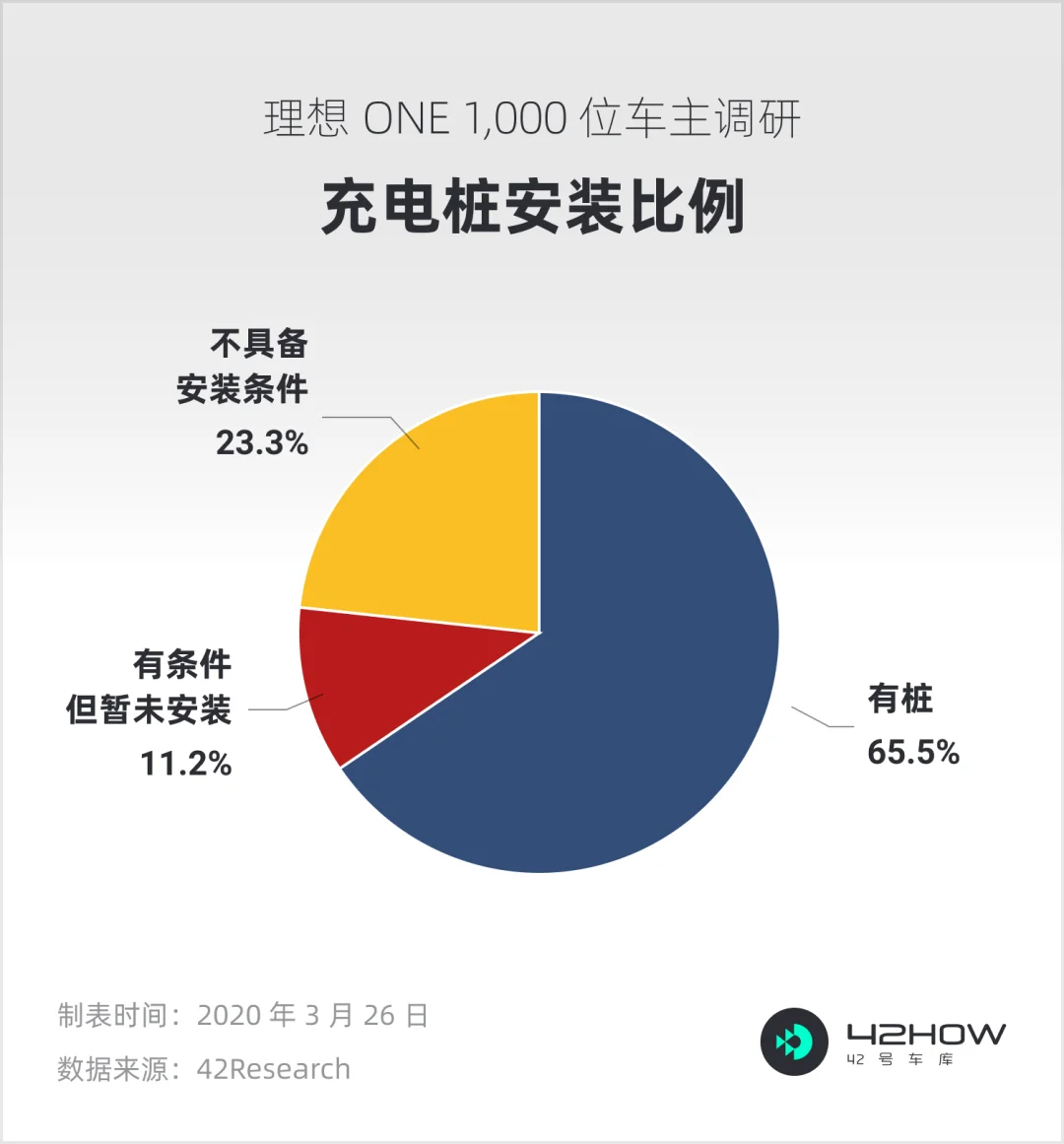
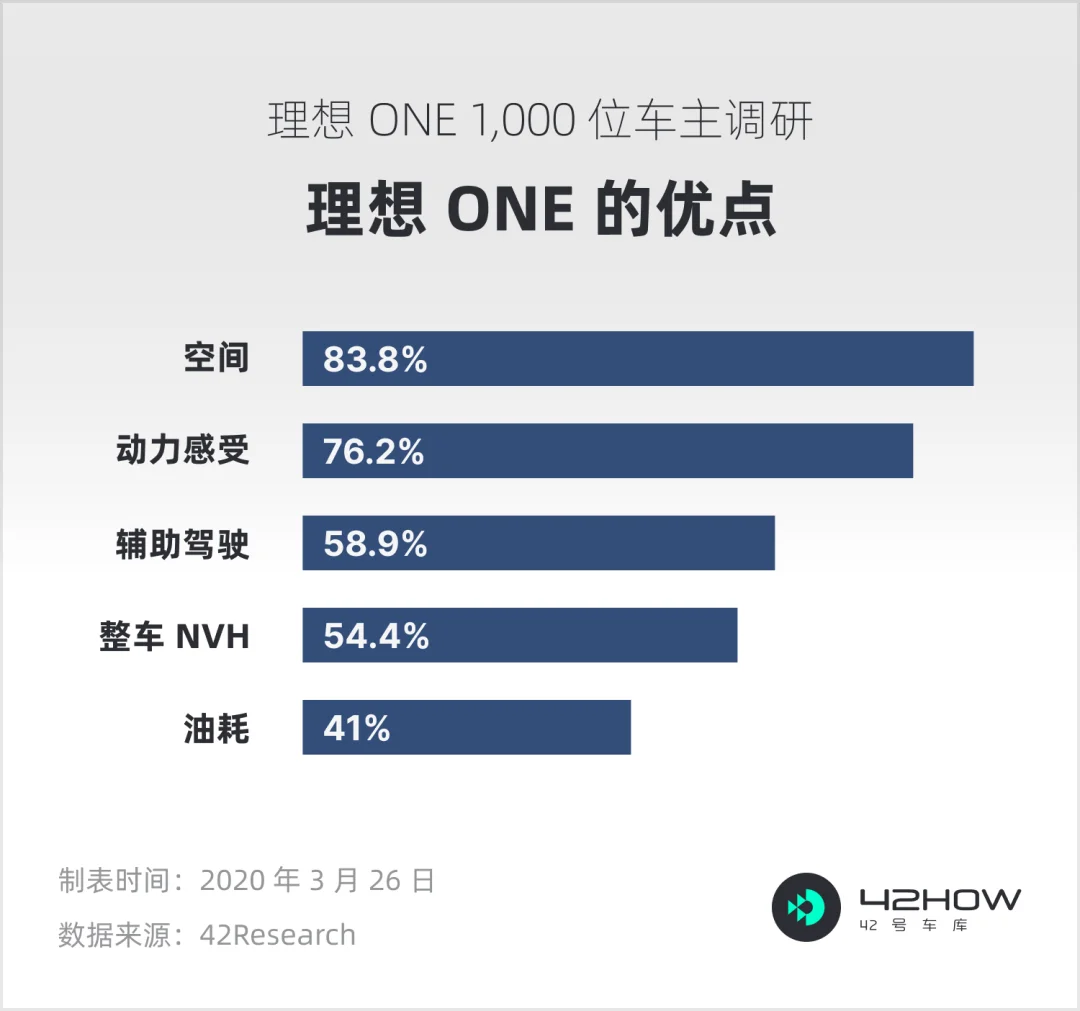
Regarding operating costs, the average fuel consumption across all sample vehicles was 8.38 L per 100 km, with 41.8% of owners satisfied with their vehicle's fuel efficiency. Data also shows that 65.5% of owners possess home charging piles, and 82% primarily use pure electric mode in daily driving. The most frequently reported actual pure electric range was 120 km. For a plug-in hybrid, this range is considerable; however, 41.2% of users still desire a longer pure electric range.
03Smart Features User Feedback – Is the Li ONE Smart Enough?
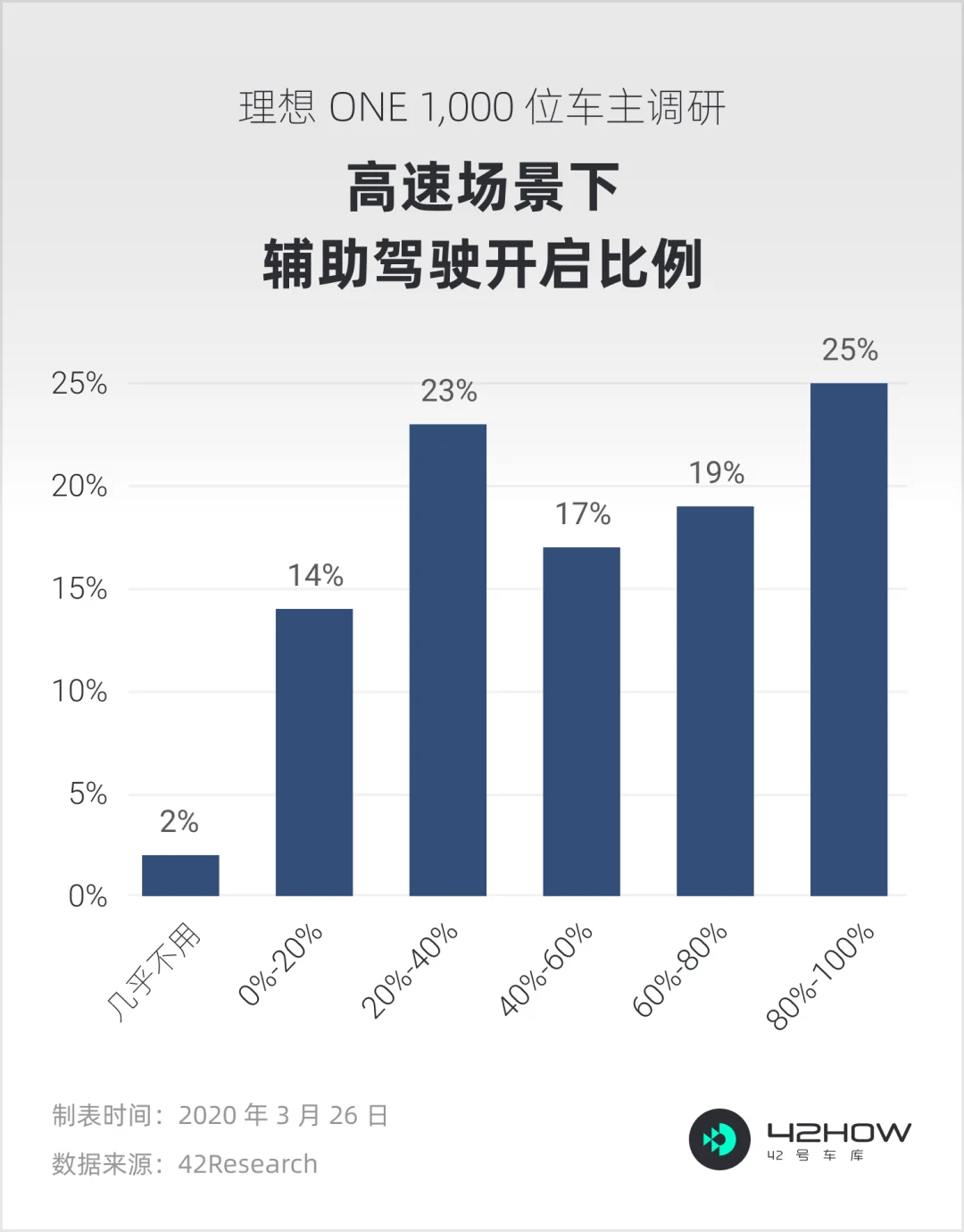
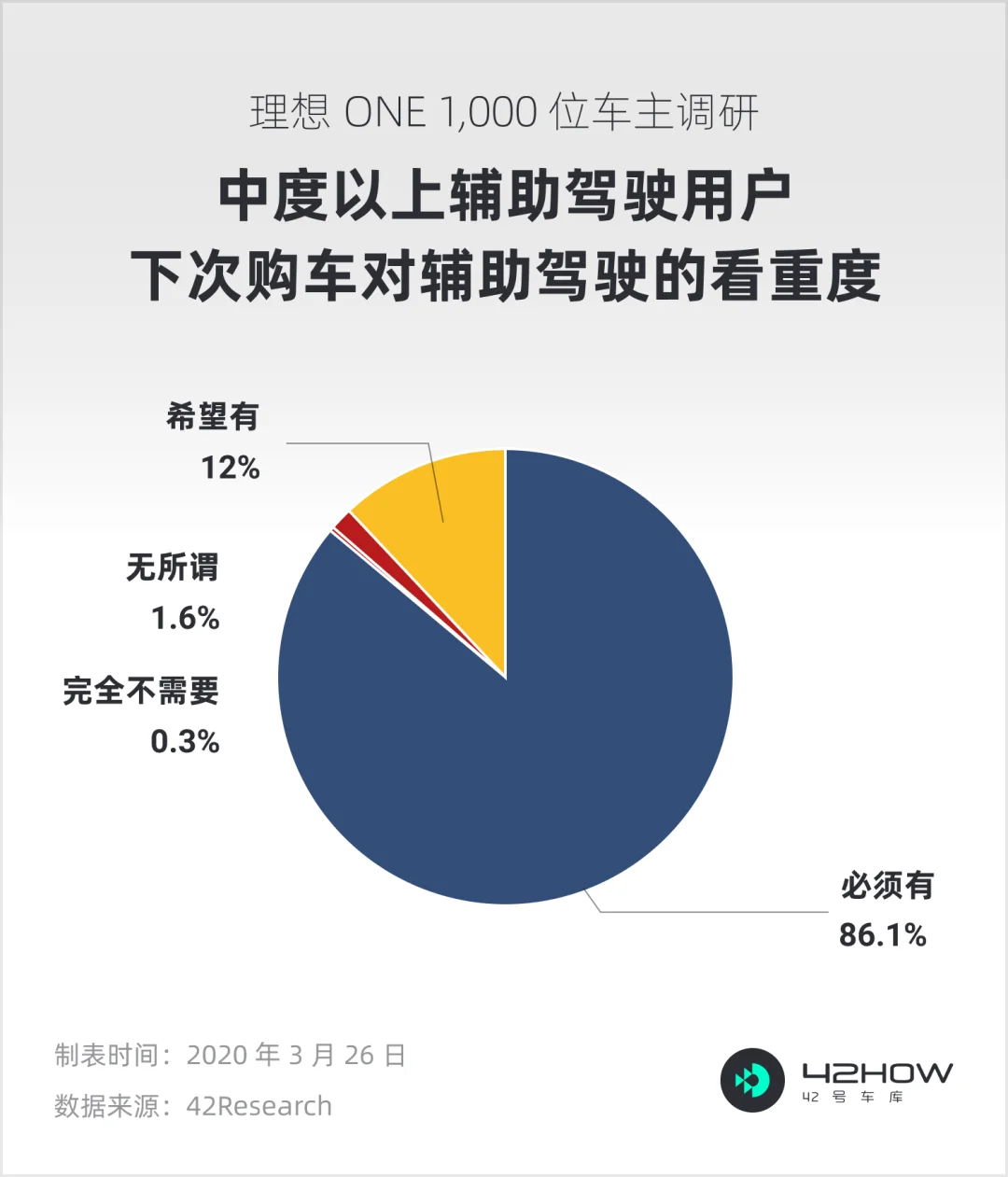
Among the features owners rated as satisfactory, the driver assistance system ranked second only to space and power performance, achieving an overall satisfaction rate of 58.8%. In terms of usage frequency, 53.6% of owners are moderate-to-high users of driver assistance systems, employing them in more than 50% of highway scenarios. Among these users, 97% stated they would definitely consider vehicles equipped with advanced driver assistance systems for their next purchase, demonstrating strong approval of the Li ONE’s driver assistance capabilities.
The most prominent attribute of the Li ONE’s driver assistance system, as conveyed to owners, is safety. 30.2% of respondents reported that the system helped them avoid accidents, with the most frequent feedback citing forward emergency braking scenarios where the Automatic Emergency Braking (AEB) successfully brought the vehicle to a stop.
Conversely, 19.5% of owners reported inconveniences while using the Li ONE’s driver assistance system. Analysis of their detailed accounts reveals that the most common issues occurred at intersections with missing or incomplete lane markings, where the system misjudged the situation and required timely intervention by the driver. Additionally, the vehicle failed to recognize traffic cones and triangular warning signs.
Many of the hazardous scenarios encountered by users—such as driving on roads with irregular or absent lane markings, and failing to identify cones and warning signs—were already cautioned against in the Li ONE user manual. The fact that users still engaged these features in such conditions and encountered problems indicates that Li Auto has not clearly communicated the operational boundaries of its current driver assistance version to consumers. This is an industry-wide issue, not unique to Li Auto. To ensure safe usage of driver assistance functions, automakers should invest more in education and public outreach, helping users understand the capabilities and limitations of each software version so they can use the systems appropriately.
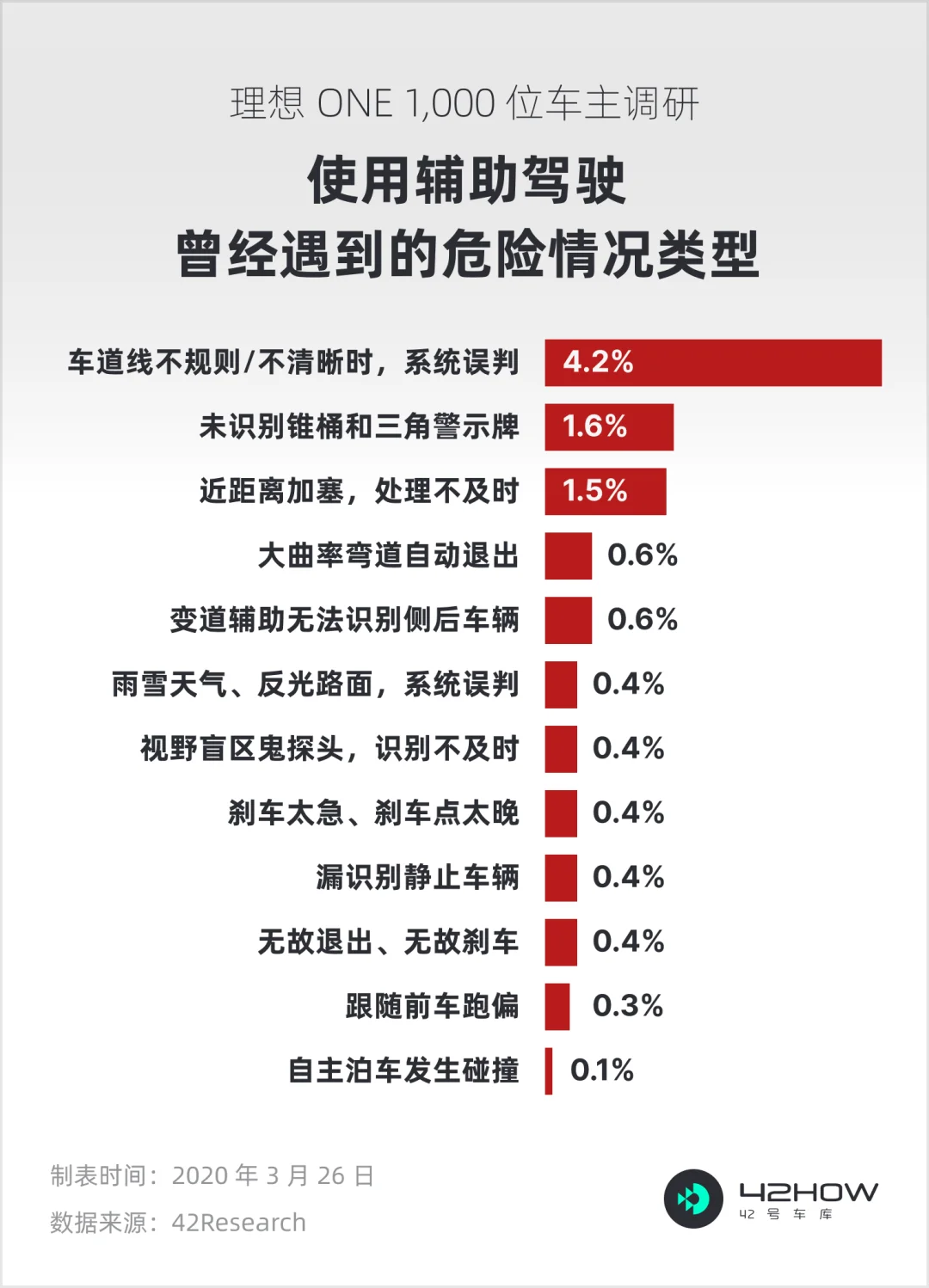
This also highlights that these scenarios represent genuine user needs. Owners frequently rely on these functions but find them unavailable, or experience inconvenience due to improper operation, suggesting that these capabilities are indeed necessary. Features such as path-following through intersections on urban roads, recognition of traffic cones and warning signs, flexible handling of close-range cut-ins, and navigation through high-curvature curves should be prioritized for improvement in future iterations of the driver assistance system.
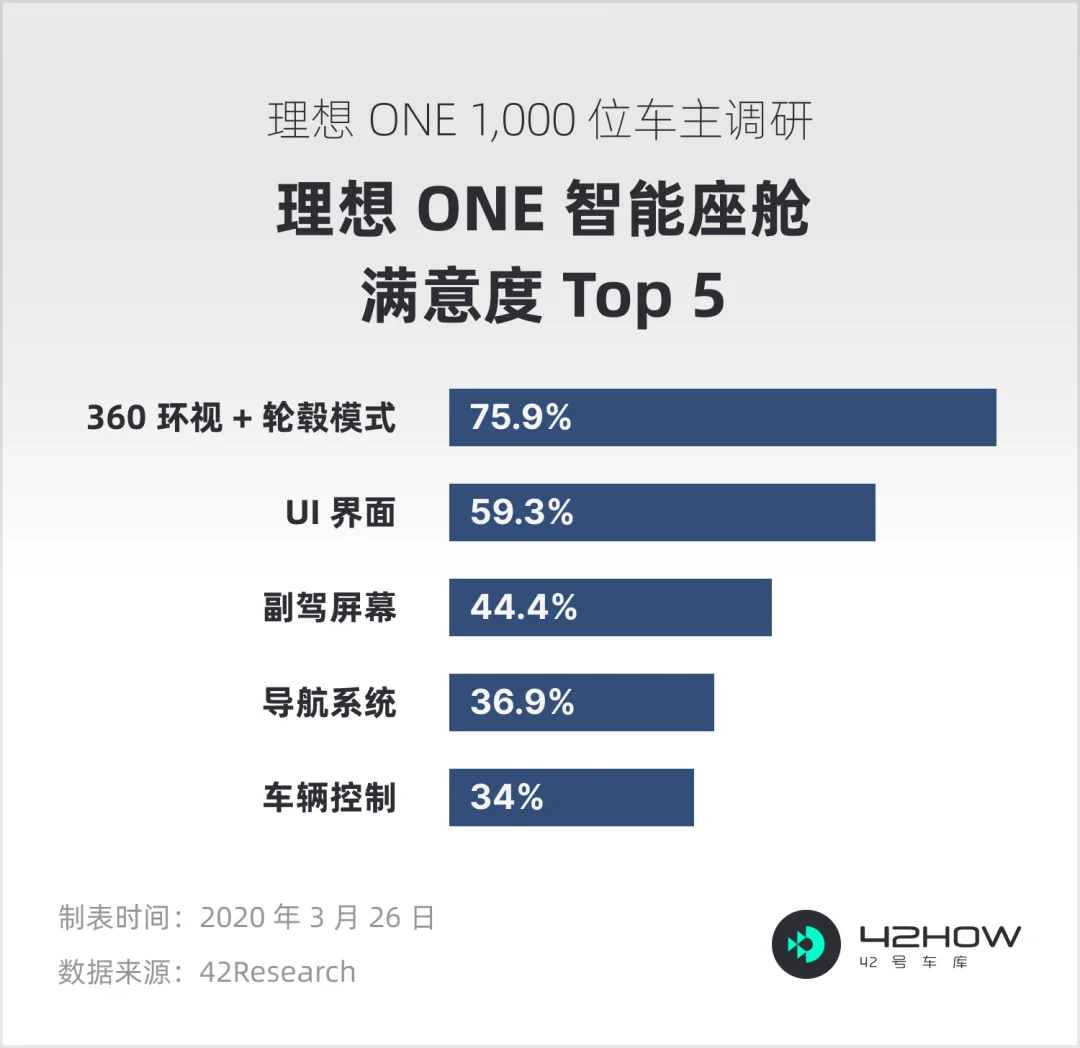
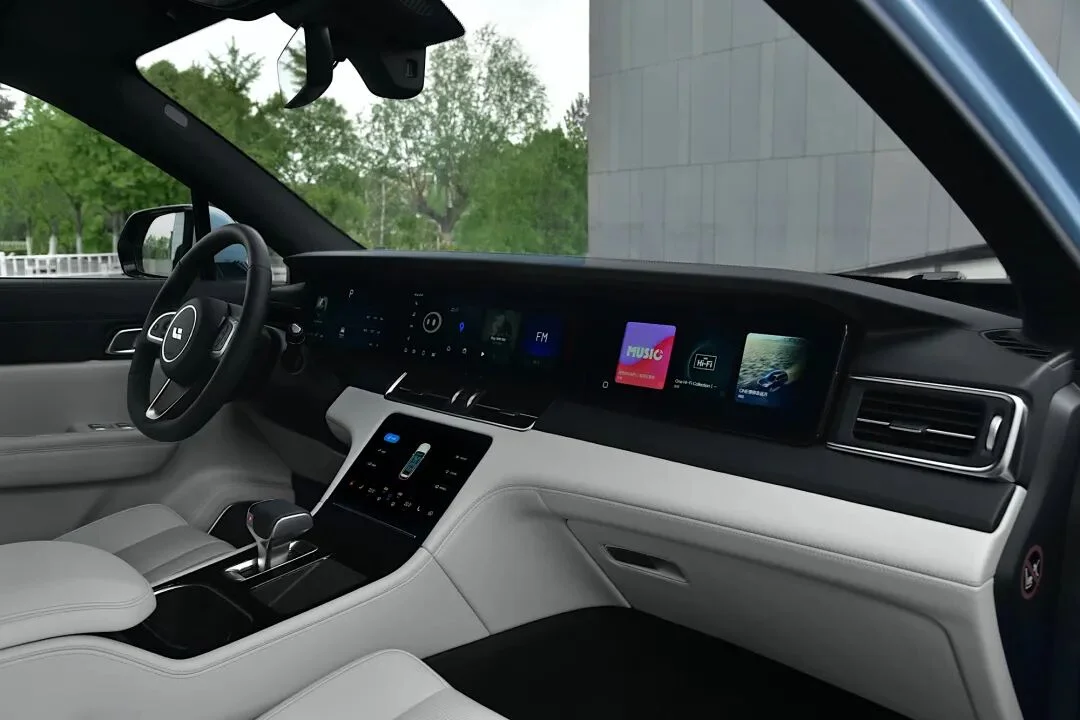
Regarding the smart cockpit, users are most satisfied with the 360-degree surround-view camera, wheel mode, the UI interface, and the passenger-screen display. The Li ONE is the first domestic vehicle to feature a passenger screen; 44.8% of owners cited it as their favorite feature, indicating that it effectively meets many drivers' needs and represents a sound design choice. Smart voice interaction remains an area for improvement for Li Auto: 44.1% of users expressed further expectations for the current version of "Lixiangtongxue."
04Quality and Comfort – Is the Li ONE Reliable?
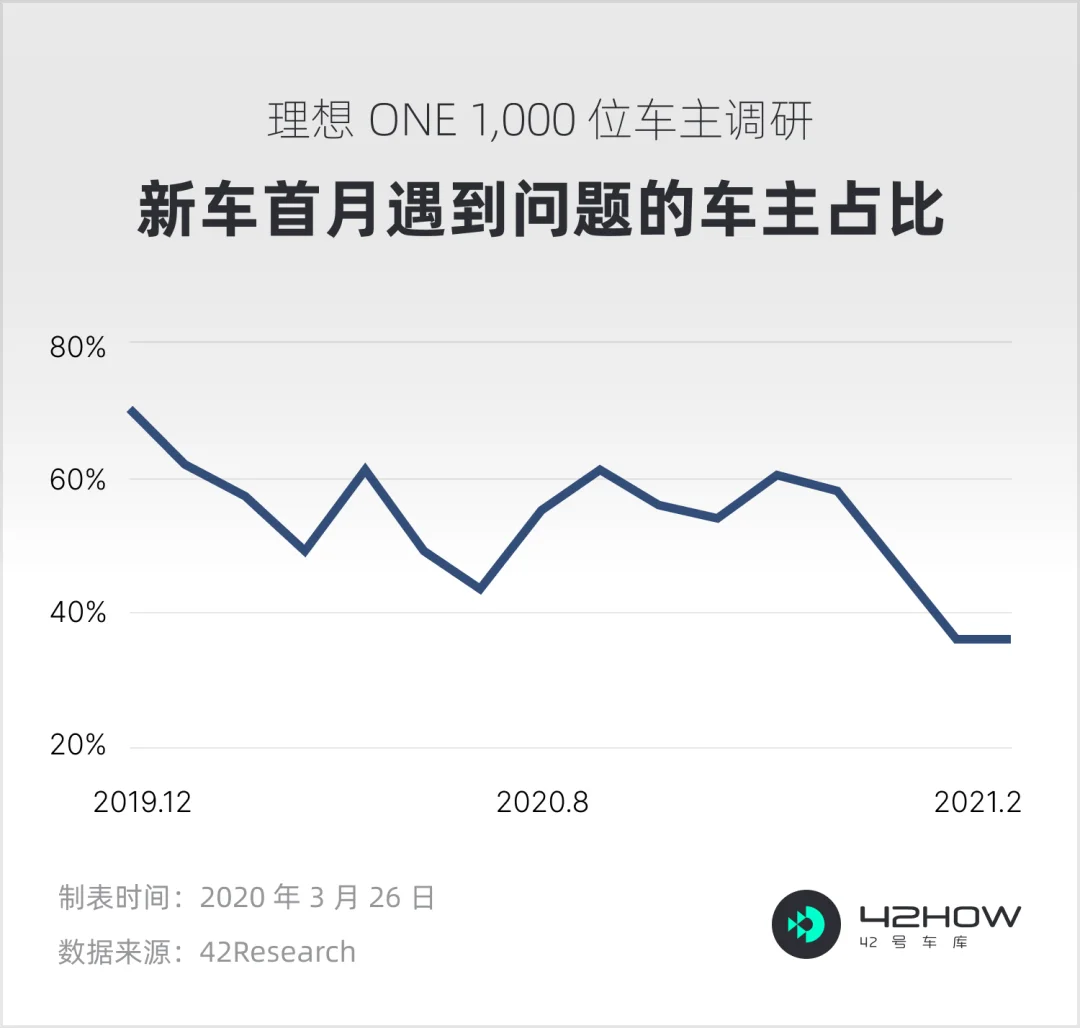
26% of owners reported hearing vehicle noises within the first month after taking delivery. However, longitudinal comparison by delivery date shows that the proportion of owners experiencing noises in the first month has gradually declined, reflecting continuous improvements in the Li ONE's build quality.
Additionally, owners expressed dissatisfaction with headlight brightness, suspension tuning, the voice assistant, seat comfort, and the range-extender’s NVH (noise, vibration, and harshness).
Regarding the range-extender’s NVH—a key concern—the share of dissatisfied owners is not high. Most owners noted that noticeable vibration and noise occur primarily during stationary idling. Many compare the Li ONE’s range-extender NVH with that of pure electric vehicles, but it is nearly impossible to make the range extender completely imperceptible. Based on feedback from the majority of owners, the Li ONE’s range-extender NVH falls within an acceptable range and is unlikely to deter purchases.
05Owners Show Greater Tolerance for Vehicles Supporting OTA Updates
Half of owners encountered various degrees of unpleasant vehicle issues within the first month of taking delivery, yet as many as 92.2% stated they would purchase Li Auto products again. This phenomenon is unimaginable in the traditional automotive consumer market we are familiar with. Understanding this 'unimaginable' aspect is key to understanding the controversies surrounding the Li ONE.
Survey data reveals high owner satisfaction with the Li ONE in areas such as autonomous driving, space, operating costs, and flexible energy replenishment. Meanwhile, Li Auto is actively conveying confidence in product optimization through quality control measures. However, these data points alone are insufficient to explain this phenomenon. Therefore, we conducted in-depth interviews with multiple Li ONE owners to uncover the reasons behind their 'painful but happy' loyalty to Li Auto.
Although interviewed owners also experienced issues such as vehicle noises and infotainment system bugs during their use, they maintained high satisfaction with the Li ONE and actively recommended it to friends and family. The primary reasons can be summarized as follows: unparalleled cost-effectiveness, excellent after-sales service, and continuous OTA updates that have increased owners' tolerance for the current state of the product.
"I am willing to give domestic new-energy startups room to make mistakes, but the way, speed, and attitude toward resolving issues are crucial. Li Auto has given me great confidence in this regard," one respondent said. Many interviewed owners own other new-energy models and traditional internal combustion engine vehicles alongside the Li ONE. They generally exhibit higher tolerance for startup-built brands. One owner noted that among debut models from new-energy startups, the Li ONE boasts the highest level of completion and the most proactive problem-solving approach, which he greatly appreciates about Li Auto, making him willing to introduce friends and relatives to buy the Li ONE.
Why do owners show greater tolerance for the Li ONE?
The model's support for continuous OTA iteration and optimization is the main reason. All interviewed owners stated that the multiple OTA upgrades of the Li ONE genuinely improved the user experience. The ability of the vehicle to continuously optimize via OTA builds a belief among owners that "the vehicle's experience will only get better," raising expectations for future usage. This, to some extent, enhances owners' tolerance for minor flaws in the vehicle at present.
Exceeding expectations in after-sales service is another plus. Many Li ONE owners indicated that while Li Auto does not boast excessively about its service quality, the actual experience surpasses expectations. Fast response times, effective problem resolution, and providing courtesy cars when necessary meet the basic after-sales needs of owners. Furthermore, when service staff demonstrate sufficient attention and a good attitude, it significantly adds to the positive experience.
Additionally, some owners noted that after comparing multiple models during the purchasing process, Li ONE offered the best value for money. Compared to internal combustion engine vehicles, acquiring equivalent features—such as interior space and power—would cost significantly more. Meanwhile, relative to pure electric vehicles, Li ONE eliminates range anxiety, meets most owners' needs, and lacks obvious weaknesses, making it the sole choice after consideration.
Final Thoughts
As a new automotive entrant, combined with users' ability to clearly perceive how multiple OTA updates improved their driving experience, owners have shown greater tolerance for Li ONE. When issues arise, owners receive prompt responses from the after-sales team, which strengthens trust in the brand. With satisfactory performance across core elements—including space, comfort, intelligence, power, and operating costs—and no significant shortcomings despite having standout strengths, Li ONE delivers exceptional product value. This has resulted in high owner satisfaction and contributed to its rising sales figures.
We can also see that OTA capabilities significantly influence purchasing decisions. For vehicles supporting full-vehicle OTA, where users can tangibly perceive continuous improvements in their driving experience through these updates, owners demonstrate higher tolerance. This effectively allows users to compare a vehicle's future product strength against competitors' current offerings—a 'cross-dimensional comparison' where the advantages are clear.
Written by: Bai Yang | Edited by: Daji