


In Beijing, just finished driving the iX

Yesterday afternoon, I took the BMW iX for a spirited drive in Beijing at 10°C. Upon arriving at my destination, the dashboard displayed an average energy consumption of 21 kWh/100 km, which seemed acceptable.
However, the accompanying instructor informed me that this figure did not reflect my actual trip consumption. After opening the energy menu, I saw the system’s recorded true data: 18.5 kWh/100 km.
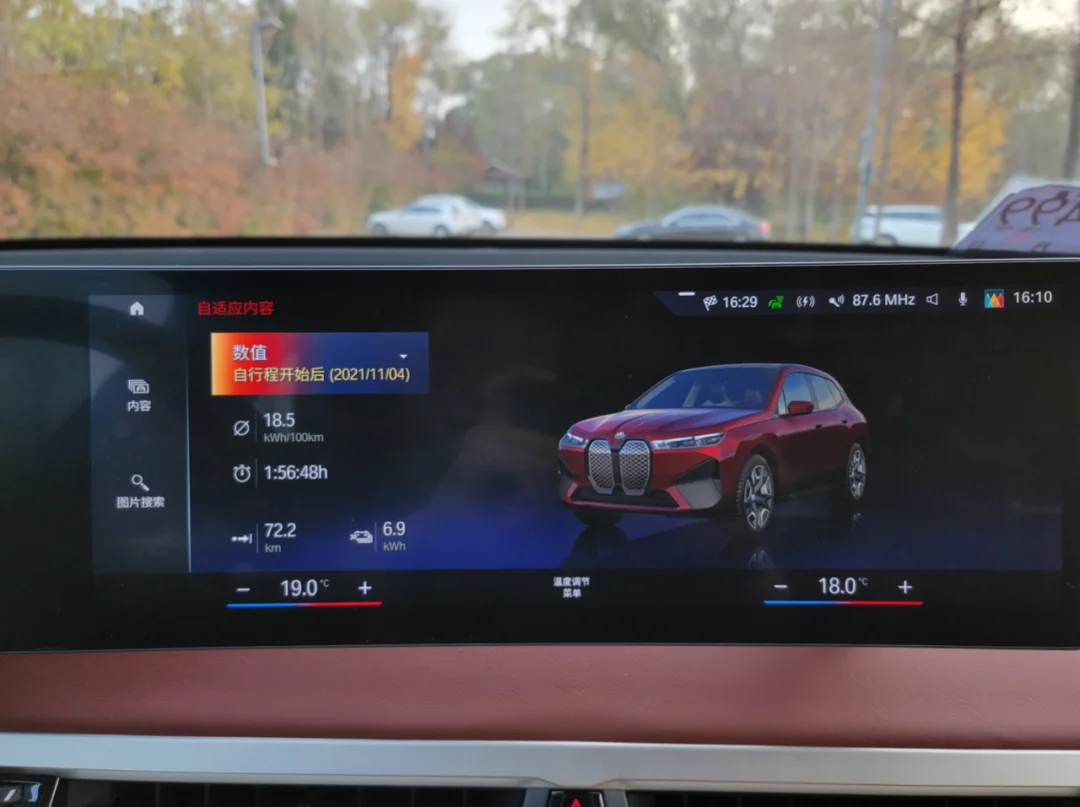
Considering this is a mid-to-large SUV with dimensions of 4,953 × 1,967 × 1,695 mm and a wheelbase of 3,000 mm, equipped with dual motors producing a combined maximum power of 523 hp, accelerating from zero to 100 km/h in 4.6 seconds, weighing over 2.5 tons, and fitted with four 22-inch tires (275 mm wide) that are highly unfavorable for energy efficiency, such consumption performance is quite impressive.
Reviewing the overall experience of test-driving the iX throughout the day, aside from the infotainment interface, there seemed to be little else worth criticizing. I continued to ponder: given its announcement at the Guangzhou Auto Show, the iX is likely to become the only comparable product in its class in the domestic market following the launch of the facelifted Model X next year.
Therefore, this car deserves a thorough discussion.
01Design: A Complete Overhaul
Let's take a look at the vehicle below.
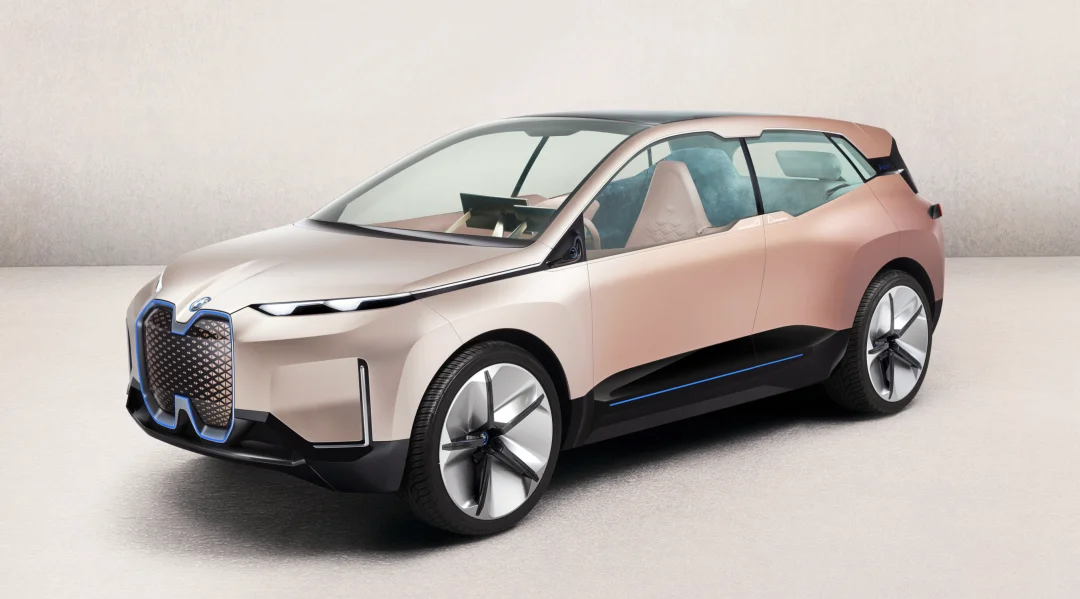
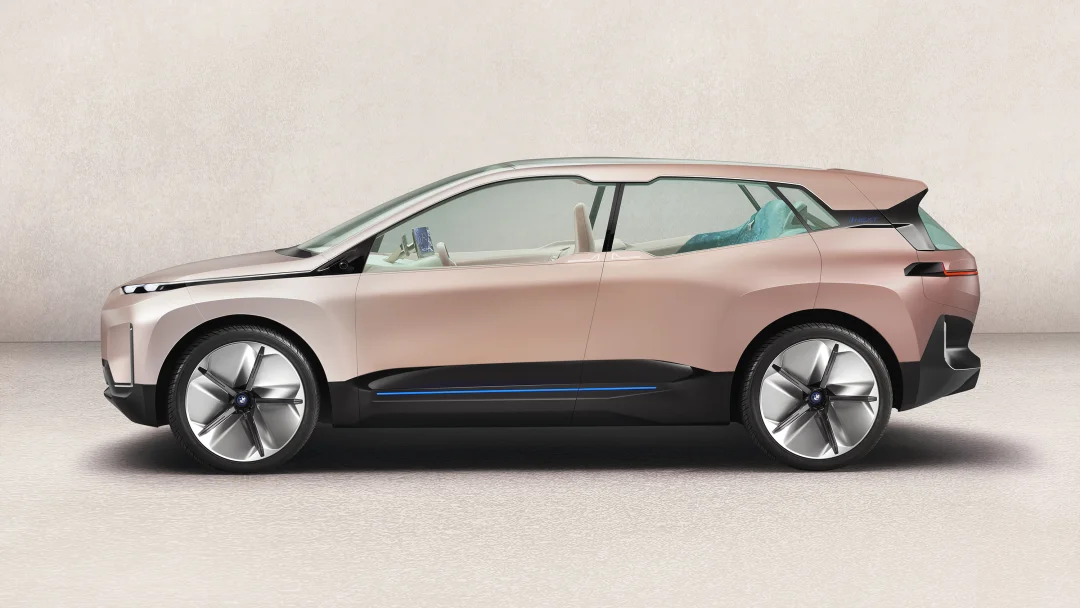
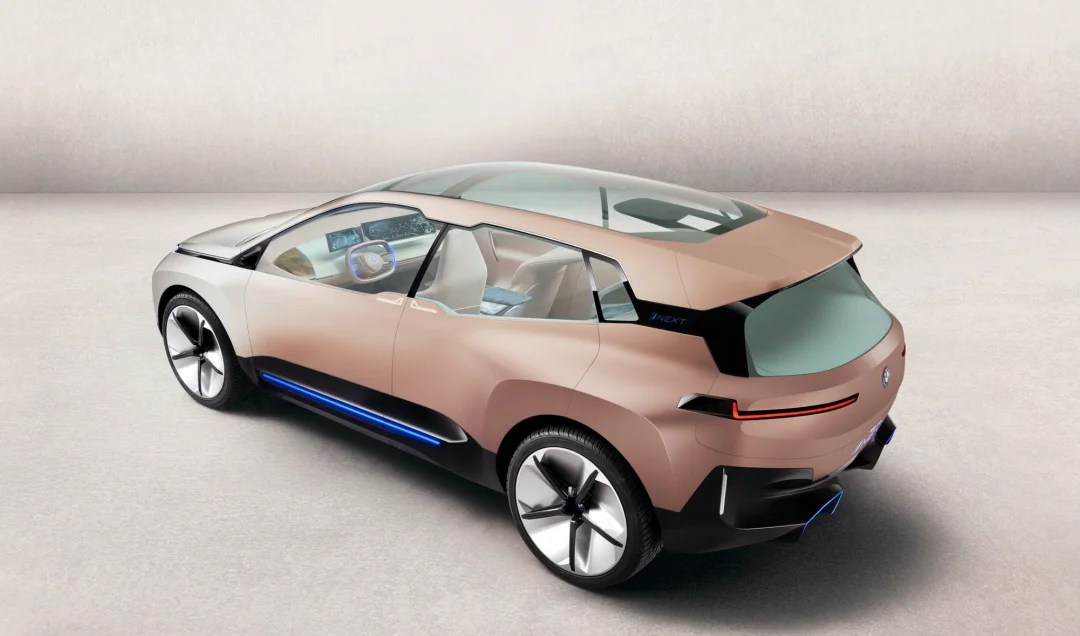
This is the Vision iNEXT concept car, unveiled by BMW at the 2018 Paris Motor Show in November, representing the brand's vision for the future of pure electric vehicles.
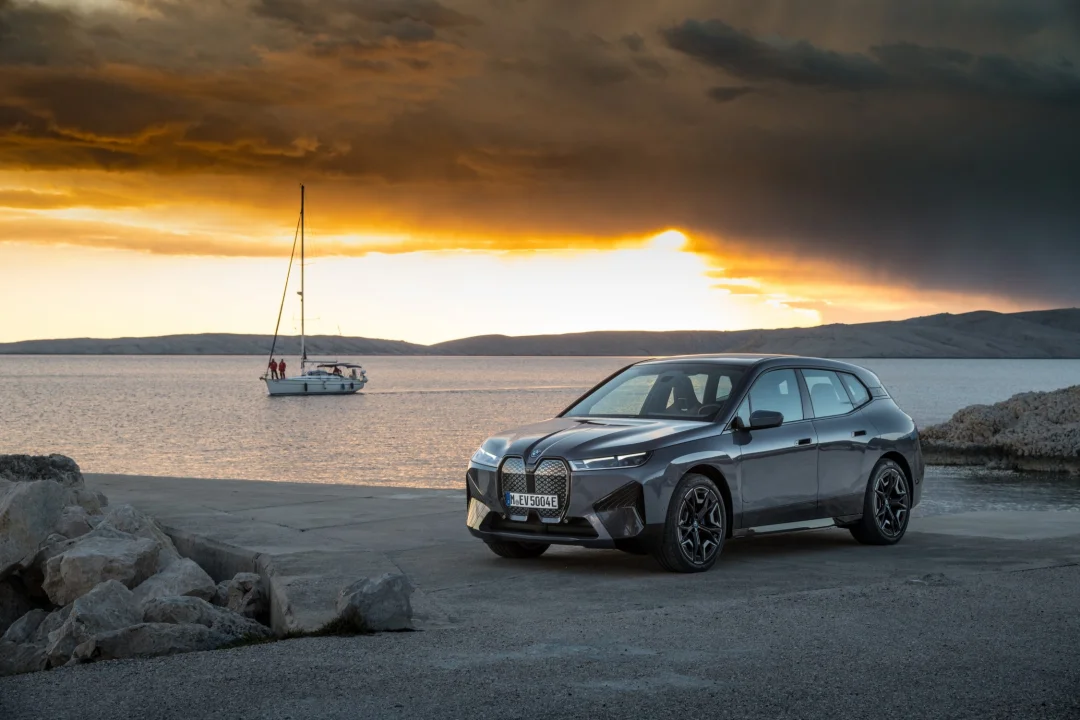
Three years later, in October 2020, the production version of the iNEXT concept was officially launched as the iX. It is BMW's first SUV built on a dedicated electric platform, positioned as a pure electric model in the X6 class.
The Emergence of New Things
However, it must be said that as the production version of iNEXT, the iX bears only a superficial resemblance to the concept car, with many details modified. Additionally, as a BMW model applying its new design language, the iX has made bold innovative attempts from exterior to interior.
Feedback on social media suggests that the public is not entirely accepting of this new design language, with criticism primarily focused on the front fascia.
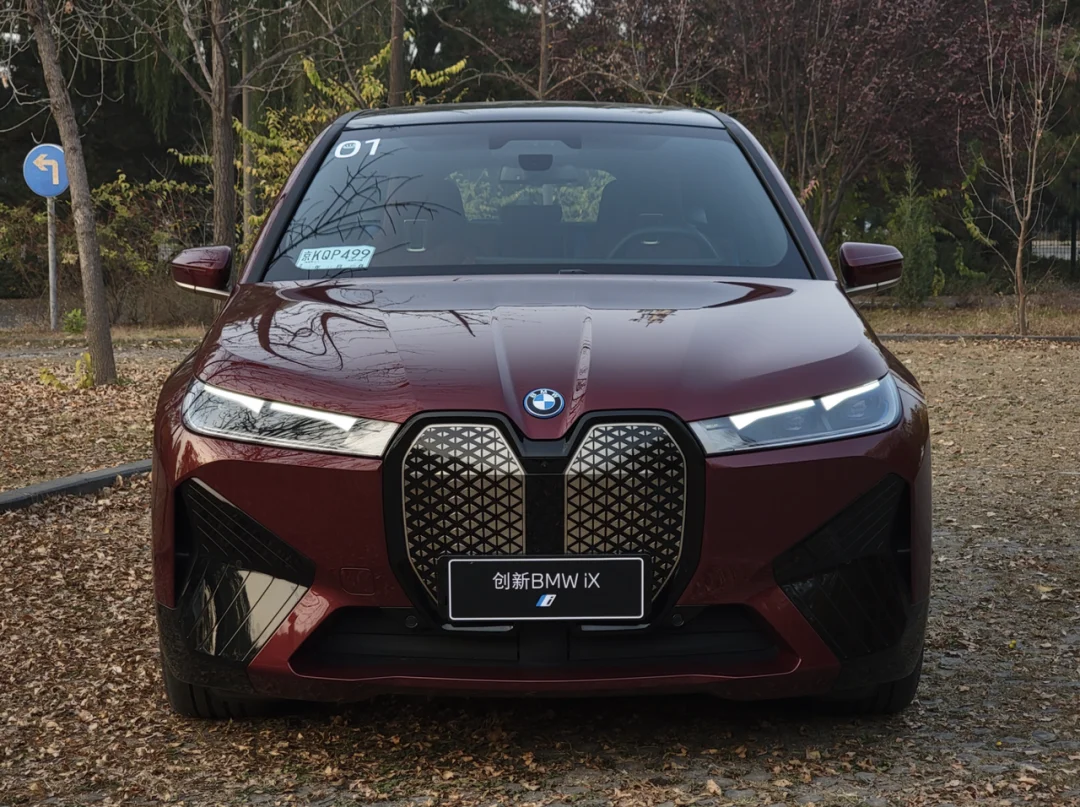
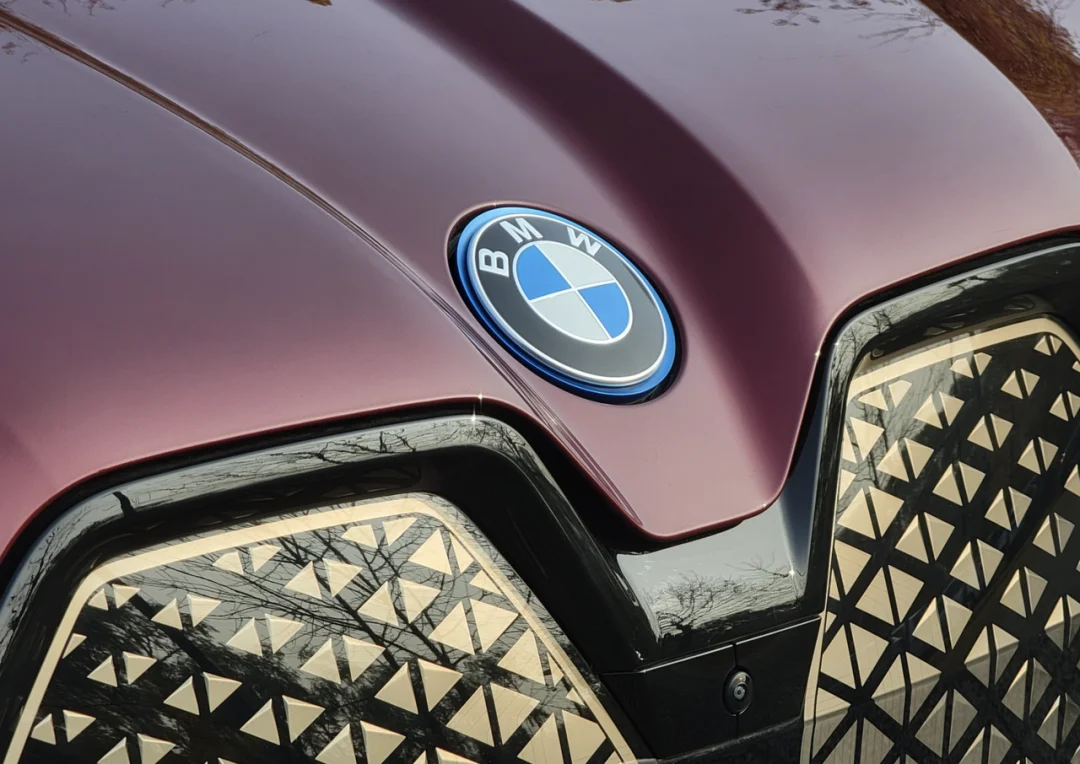
Looking at the actual vehicle tested today, the iX’s front end hardly looks like a traditional BMW. The entire hood profile is boxy and angular; the vertical kidney grille, paired with a striking black-and-gold pattern, stands out prominently. It no longer possesses the understated and gentle demeanor typical of previous mid-to-large luxury SUVs, resembling instead a model stepping off a fashion week runway—exuding an overt sense of coldness and extravagance.
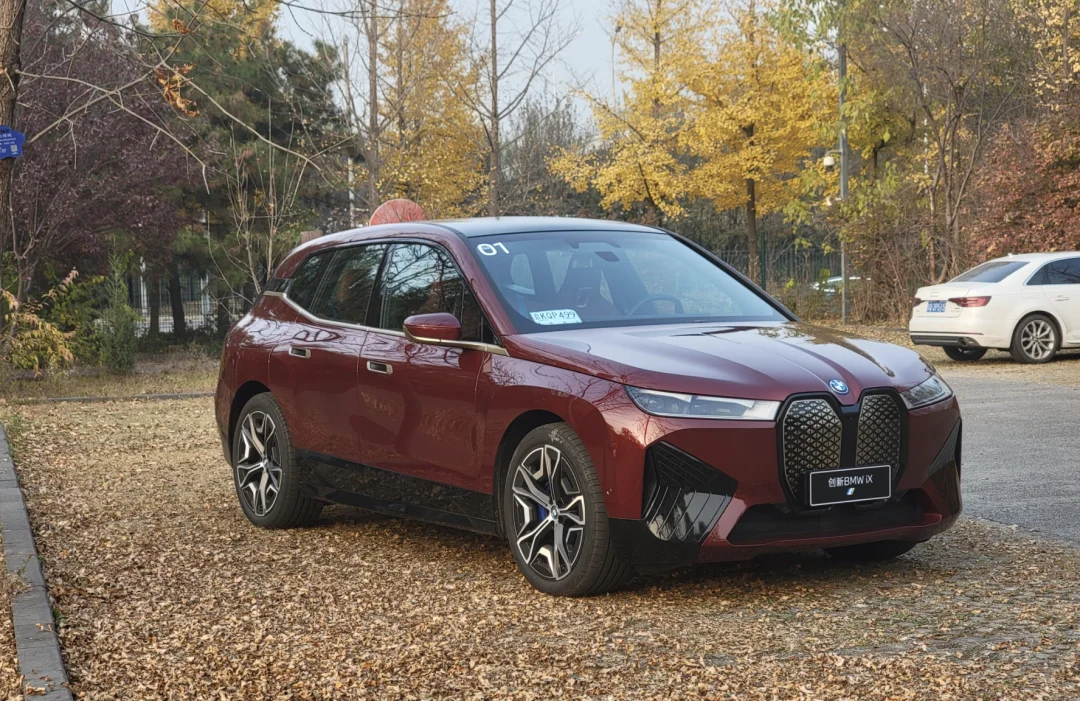
Viewed from the side, the windward face of the front grille area extends almost straight forward—a design approach that almost no one except Laosilaisi has used, though the left and right sides of the iX bend back slightly at an angle.
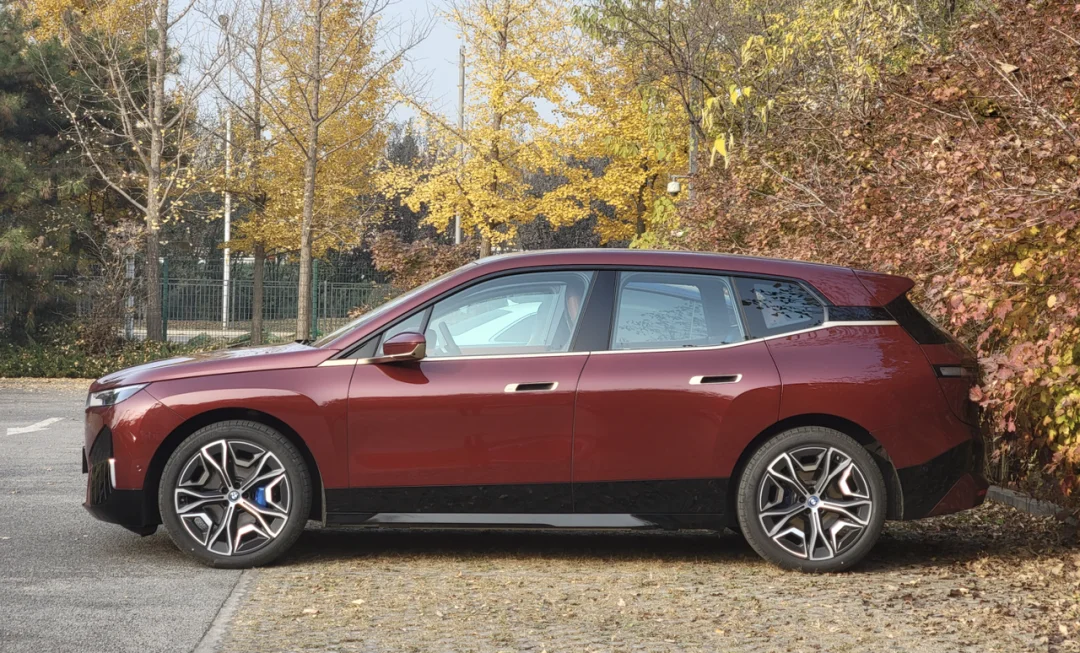
For those accustomed to the beauty of streamlined curves, encountering the iX’s front end might feel like a sudden shift from a piano concerto to electronic music—a jarring impact under heavy electric bass that leaves the brain reeling, requiring a moment to adjust before one can appreciate such novel aesthetics.
However, for me, who enjoys electronic music, I prefer the new design elements on the iX far more than I dislike them, with one exception: the Guan Dao-shaped headlights.
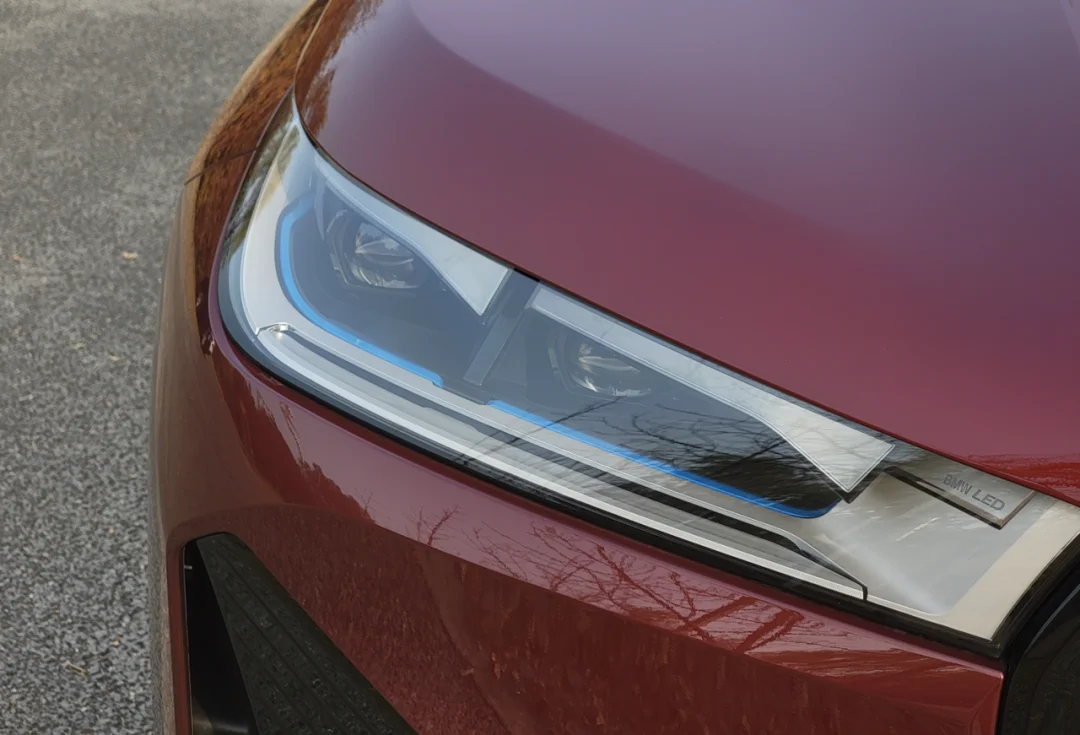
In my view, the headlight housing, resembling a 'Guan Dao' (a traditional Chinese polearm), is a critical design element that softens the aggressive and sharp lines on the iX's front fascia. The headlights I had envisioned for the iX should have featured long, straight lines paired with laser headlights, similar to the concept car.
Beyond the headlights, other elements of the iX's front end that appeal to me include the high-gloss black conical lower bumper, the 22-inch multi-spoke wheels, and the color scheme combining Portimao Red with high-gloss black and champagne gold accents.
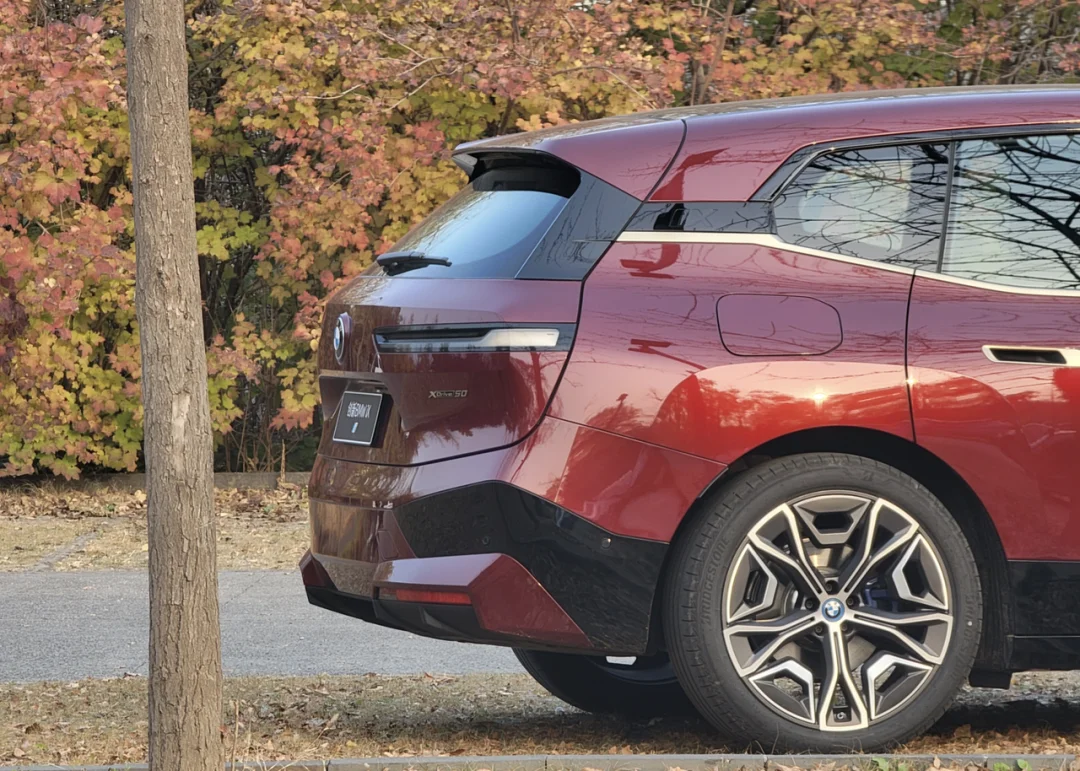
Compared to the controversial front design, the iX's side profile appears much more harmonious. The rear wheels are not pushed excessively backward to achieve a four-wheel-at-the-corners stance, as seen in some pure electric vehicles. Additionally, the iX's ride height is 8 cm lower than that of the X5, giving it a sleeker appearance and a well-balanced visual center of gravity along the side.
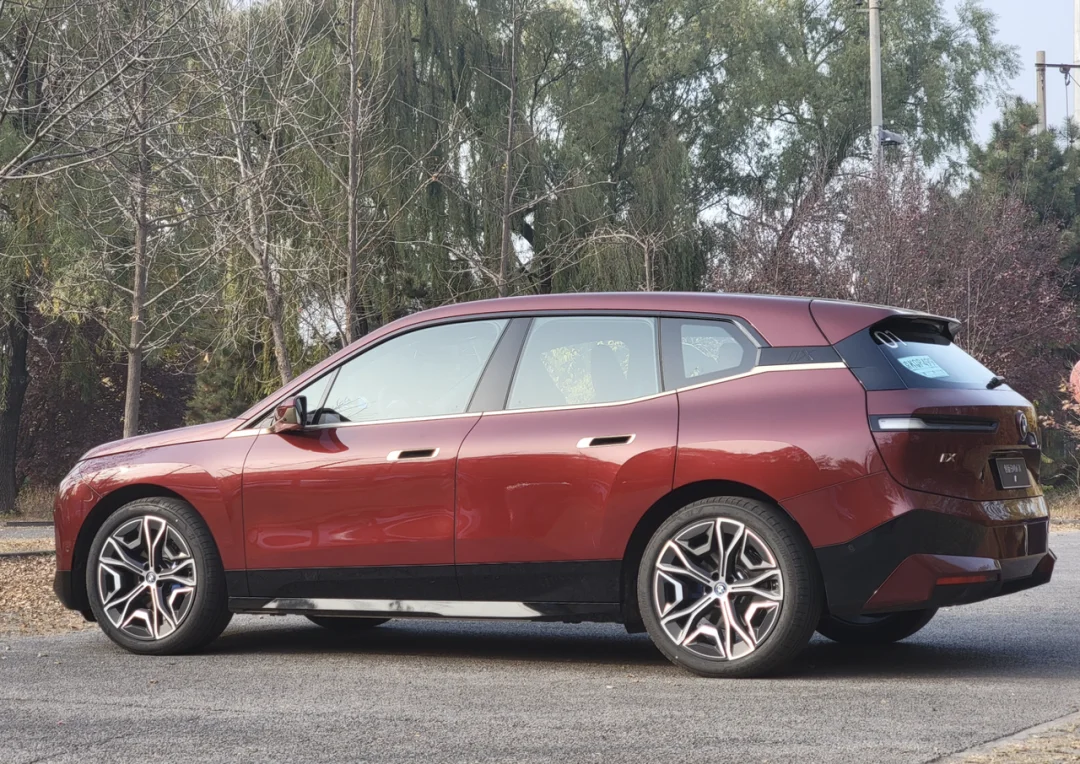
The most futuristic perspective of the entire iX is its rear. The shape, which narrows at the top and widens at the bottom, with lines that taper inward and then sweep upward, gives the iX a highly dynamic stance. Its already low-slung visual proportions, combined with the significant negative camber of the rear wheels, make it look like a car with a very substantial and sporty foundation. Instead of the common split-taillight design—where one segment sits on the tailgate and another on the side body—the thick, linear taillights are entirely integrated into the tailgate, a detail sure to satisfy even the most meticulous enthusiasts.
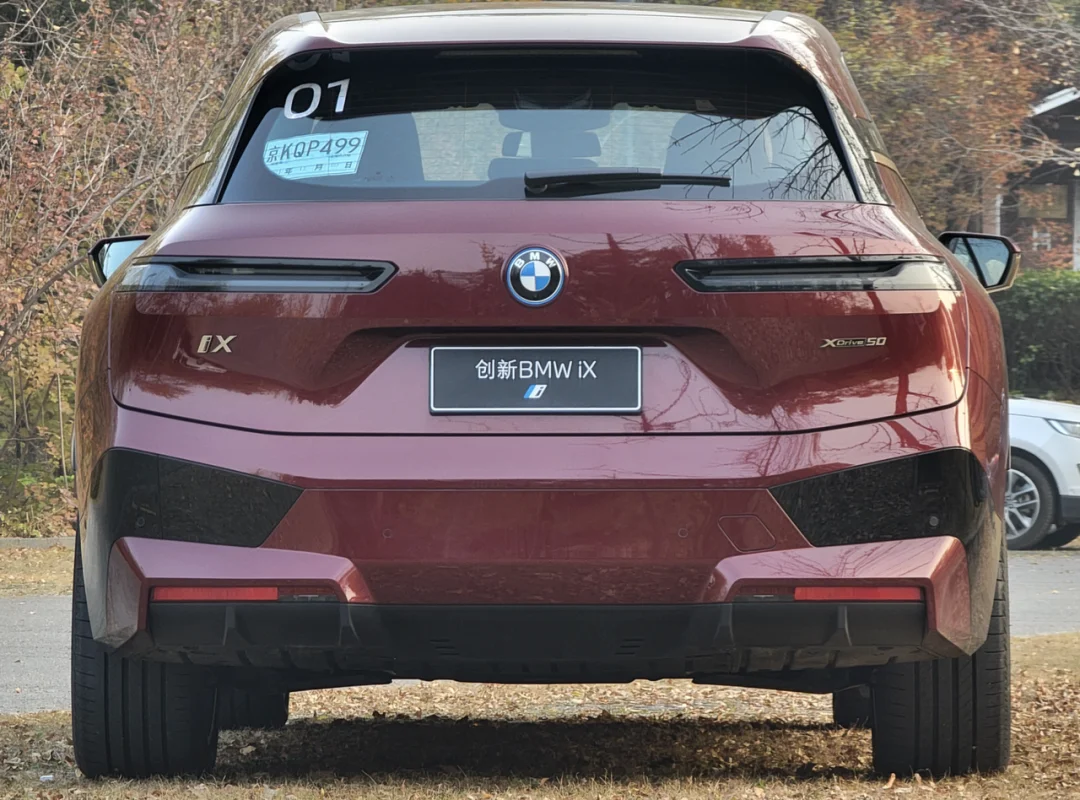
But the best detail of the iX’s rear lies in the edge: when the taillights illuminate, there is a beautiful gradient effect from red to white, moving from the inside out. It resembles white fog being frozen by amber in the instant it merges with red liquid—hazy yet transparent.
The black "BMW" lettering on the light bar stands out clearly against the white background. Up close, it is striking; from a distance, it remains subtle. This restraint reveals exquisite craftsmanship.
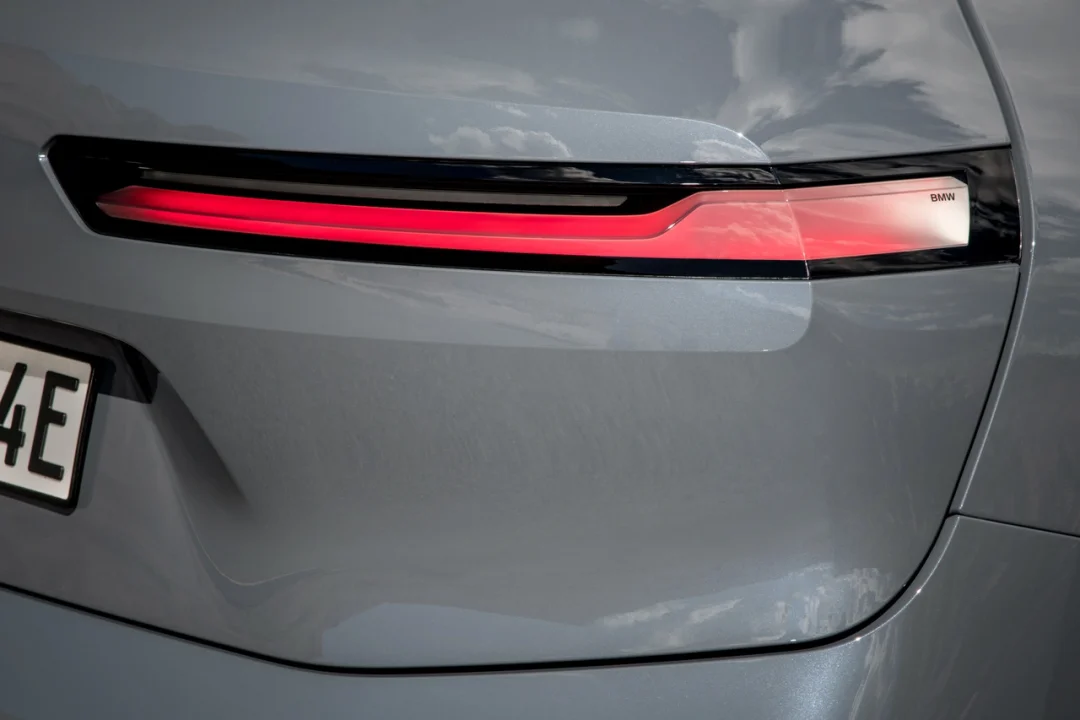
If you have the opportunity to see the car in person, I believe everyone can more intuitively feel the appeal demonstrated by these details of iX.
This Interior Is Very French
Moving to the interior, the changes in the iX compared to previous BMW models are greater than those on the exterior, completely breaking my preconceived notions of what "German" design entails.
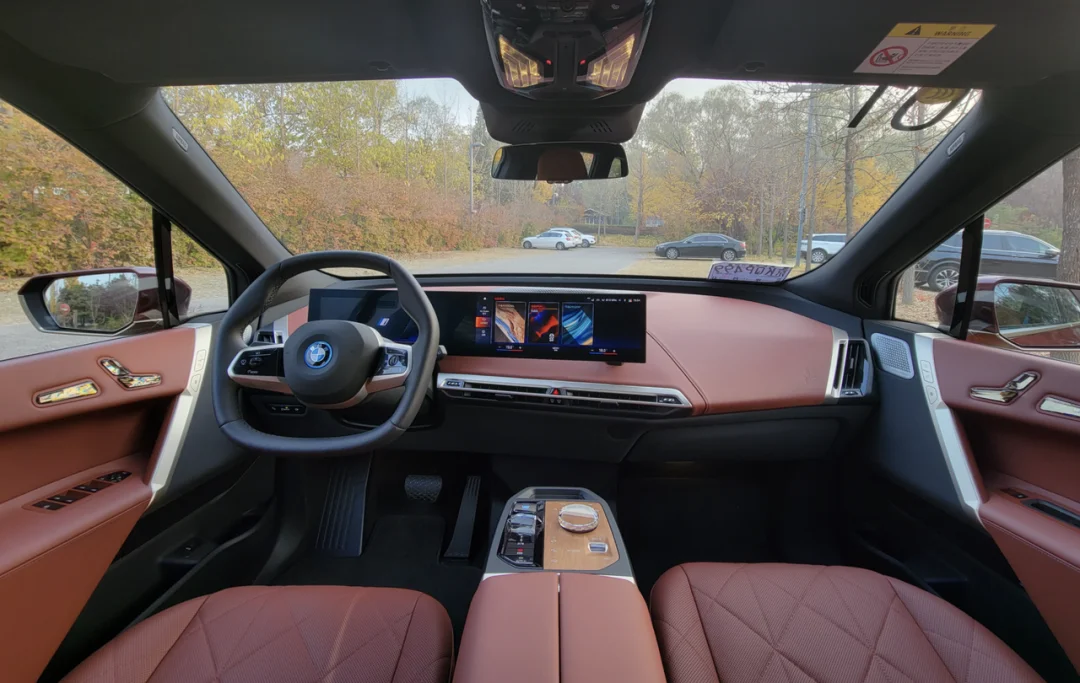
The bold and daring color scheme, combined with the mix of various materials, creates an atmosphere reminiscent of modern interior design; for a moment, I felt as though I had stepped into a flagship French luxury vehicle.
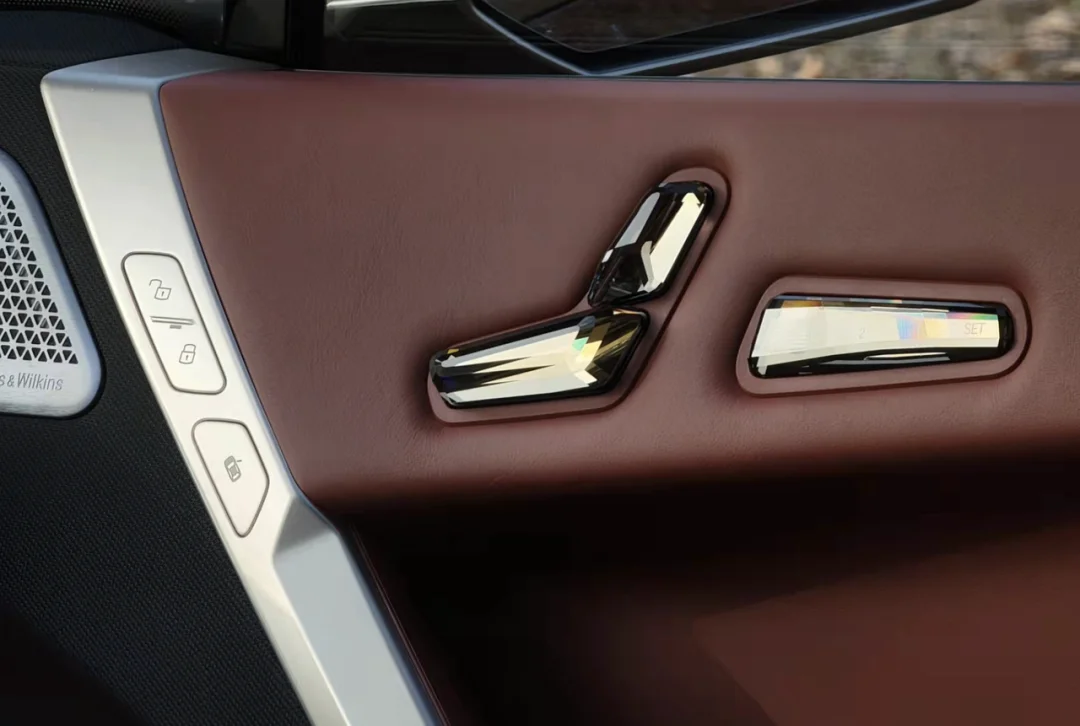
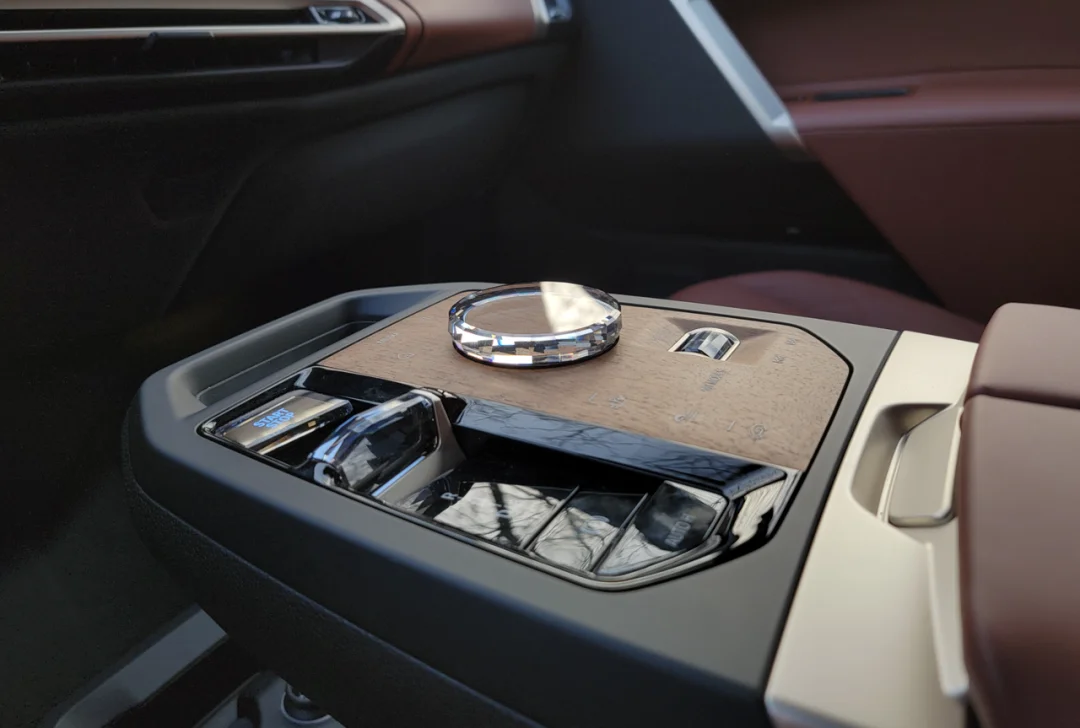
The seat adjustment controls on the door, along with the start button, gear selector, volume knob, and iDrive controller in the center armrest, are crafted from crystal glass. The wood-trimmed area features backlit white buttons that blend premium texture with a contemporary aesthetic.
The second-row seats feature a striking red herringbone pattern paired with blue seatbelts, offering a fresh and sophisticated sense of style. As expected for a dedicated electric platform model, the iX boasts a completely flat rear floor. The rear seat cushions are generously padded, and the soft leather material extends up to the door frames for enhanced comfort. To facilitate easier entry and exit, the sides of the seats are rounded, and the seat-folding release buttons are positioned under the seats, accessible upon opening the door.
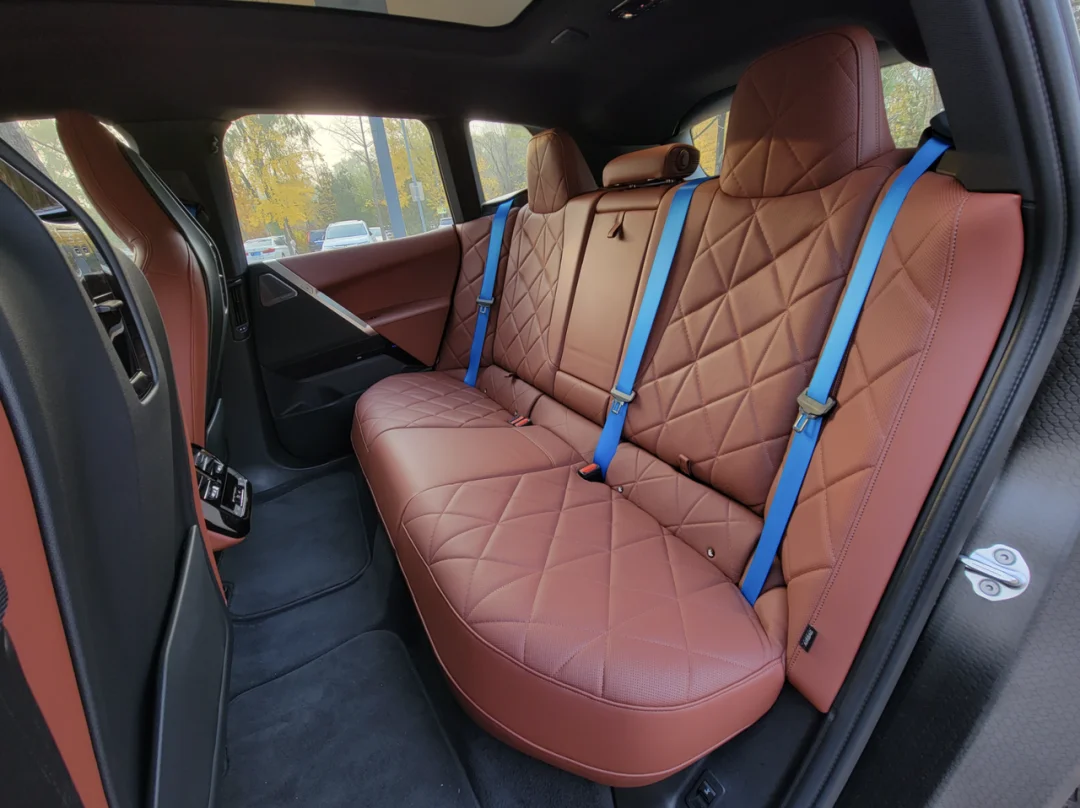
While there may be some debate surrounding the exterior design of the iX, its interior represents a comprehensive leap forward in visual appeal, tactile quality, taste, and overall presence.
However, next we must address the iX’s most significant weakness: its infotainment system.
02Software Is Better Without That 'German' Flavor
The iX is the first model in BMW’s lineup to feature the ID8 infotainment system. BMW held a global online launch event specifically for this release, highlighting that ID8 adopts a new UI design. The home screen of the central console features more shortcut cards, and the rendering of various icons within the system echoes the iX’s overall design language. Details throughout make use of the iX’s advertising theme color, champagne gold.
Another key focus was the brand-new voice control system. This system features a new visual identity resembling glowing bubbles of varying sizes. During the launch event, the system’s capabilities were portrayed as powerful, incorporating numerous artificial intelligence and personalized settings.
In short, the launch event generated high expectations. However, reality proved that one should not hold overly high expectations for German infotainment systems at this stage.
The Screen Is Good, But the Infotainment System Is Only Average
Compared with the ID7 system experienced in other BMW models previously, the ID8 in the iX does feel like an improvement. However, this progress stems mainly from the new dual-screen setup. This dual-screen combination boasts resolution and contrast comparable to mobile electronic devices, placing it among the top tier for car screens. The visual experience is excellent, and touch response speed is very fast.
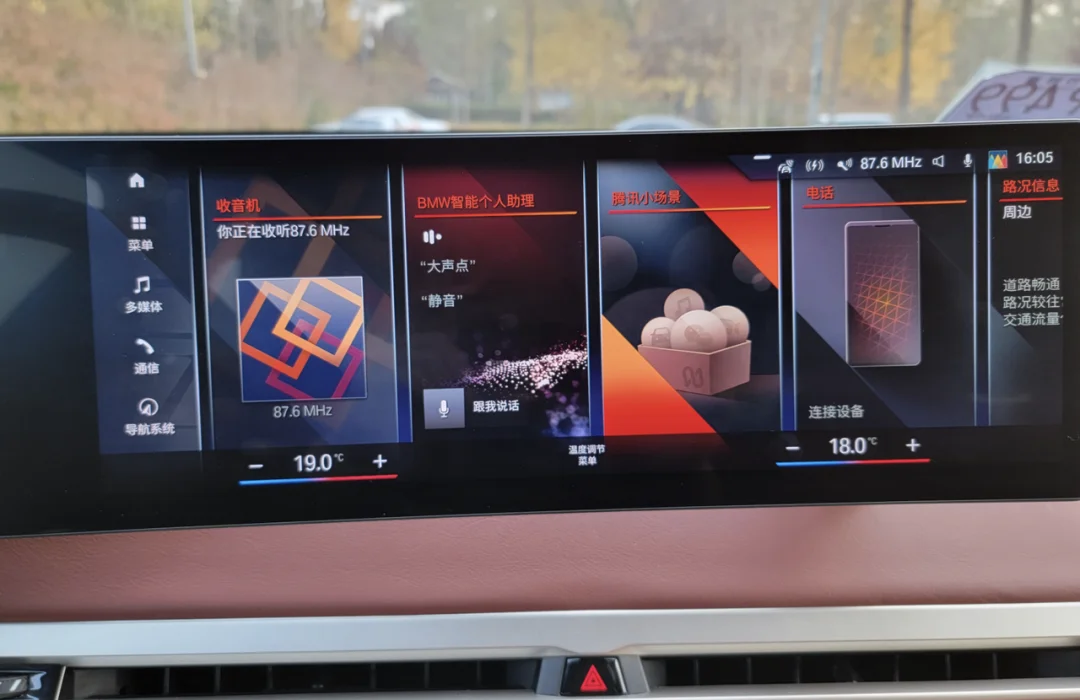
The larger central control screen makes touch-screen interactions more convenient than the original smaller one, and the home page features more quick-access cards. Swiping right reveals additional cards, giving me a sense reminiscent of Lixiang’s infotainment system.
However, once you enter the settings menu, an old problem immediately surfaces: excessive menu hierarchy.
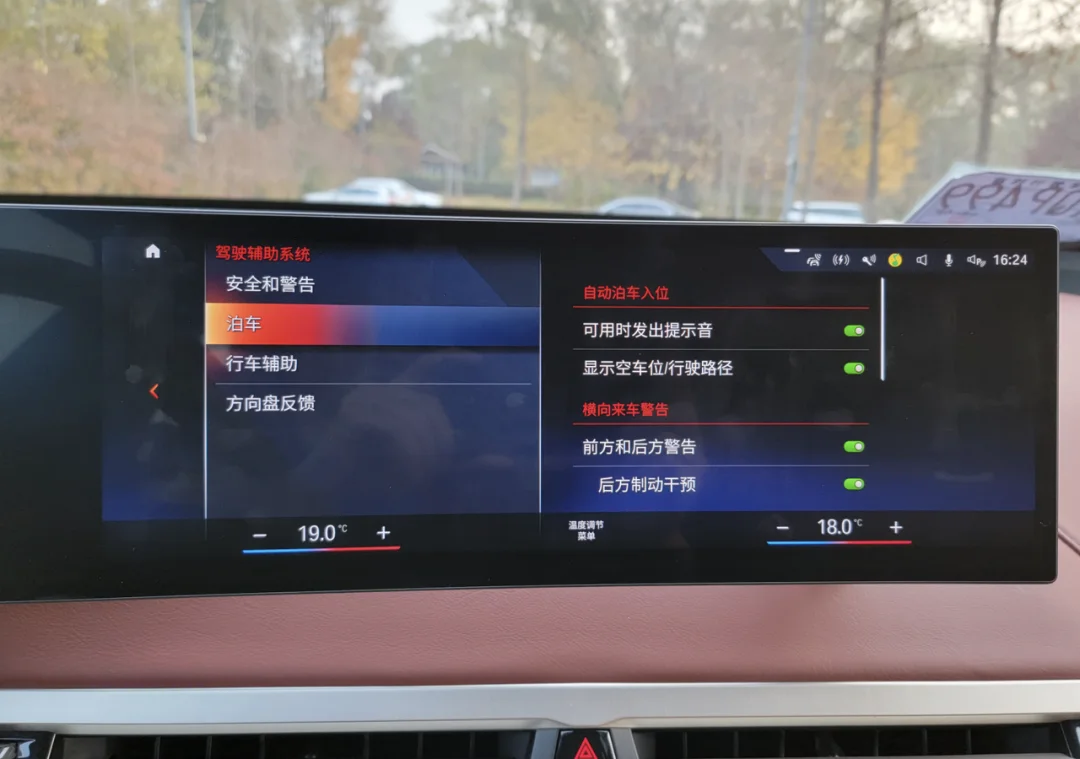
For instance, to change the vehicle's regenerative braking setting, I must first tap 'Menu' on the left side of the home screen, open the full-screen app drawer, locate the corresponding settings application, and then navigate through one or two additional levels to reach the regenerative braking page.
This multi-layered menu structure results in too many operation steps. The menus are often displayed in full screen, obscuring the navigation path ('the way back'). In my usage, I frequently forget previously configured paths when I need them again, creating a feeling akin to entering search mode where I have to hunt around to find where a function is hidden.
Next, let's address the second issue: visual presentation quality.
I had just praised the iX's dual-screen color gamut and resolution, but its dynamic display smoothness was mediocre. Whether swiping left or right on the home page or up and down within menus, noticeable motion blur was evident. It remains unclear whether this stems from insufficient frame rates in the rendering animations or inadequate refresh rates of the screen itself.
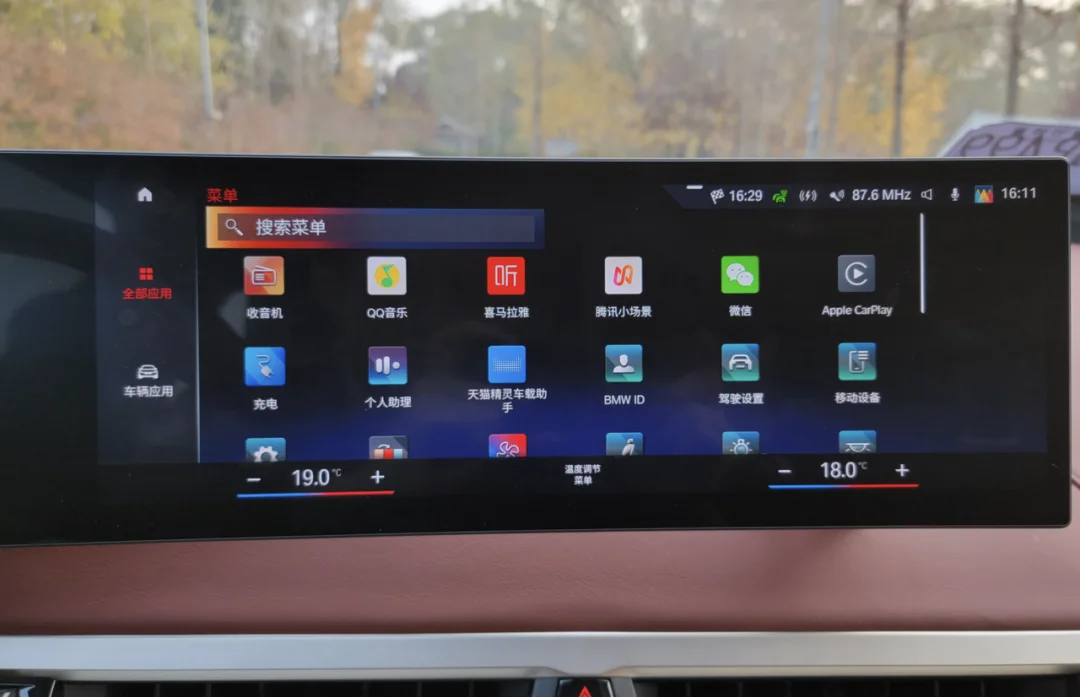
Beyond that, the lack of visual polish is evident in the UI's inconsistent styling: the home screen quick-access cards follow one aesthetic, while entering the menu immediately feels like a step backward to an earlier internet era; switching to localized apps like Tencent Mini Programs introduces yet another style. Aside from some color and detail echoes across menus, the system lacks a cohesive overall feel.
The font design used throughout the iX’s infotainment system also appears somewhat monotonous and dated by 2021 standards.
The third issue lies with the voice system. Perhaps because the test vehicle was not running the final software version, which still requires optimization, the experience with ID8’s new voice system did not represent a generational leap over ID7. Voice commands cannot open the tailgate or switch driving modes. To open the driver’s side window, the system requires a follow-up question—“Which side?”—to confirm. Yet, in the front row of the iX, I noticed partitioned beamforming microphones for both the driver and front passenger located near the vanity mirrors.
The voice assistant’s wake-up response time is good, but after waking, there is a several-second delay before a confirmation tone sounds. If awakened by the driver, the assistant’s animation appears on the HUD rather than the central display. Consequently, when I first tried various voice commands while parked, I kept staring at the central screen without seeing the animation. Combined with the delayed wake-up tone, I repeatedly assumed the wake-up had failed.
Shortcomings, but “falling short compared to the best”
That concludes the critique of the iX’s infotainment system. It should be noted that if comparing only among BBA (BMW, Mercedes-Benz, Audi), BMW’s iDrive is actually performing relatively well, offering more advanced logic at the system level and a hybrid interaction approach combining physical controls and touchscreens than its rivals.
However, my assessment of the iX’s shortcomings is benchmarked against today’s best offerings from new EV makers. These competitors have indeed achieved world-class levels in infotainment interaction, information display, and voice control. In comparison, the iX shows a clear gap in these areas.
After addressing the iX’s most significant weakness, it is time to discuss what makes this vehicle truly memorable.
03BMW: It Must Be Driven
If I had to pick the most outstanding aspect of the iX, it would undoubtedly be its driving dynamics.
Before discussing the iX's driving feel, I want to emphasize one more thing: even in the electric vehicle segment, throttle response and linearity are relative to internal combustion engine vehicles. The gap between excellent calibration and poor calibration across different models is vast, and the same applies to driving experience.
Here is my conclusion on the iX's driving feel: a mid-size SUV that clearly surpasses the X5, with excellence in multiple aspects that defies common sense.
Magical Visibility
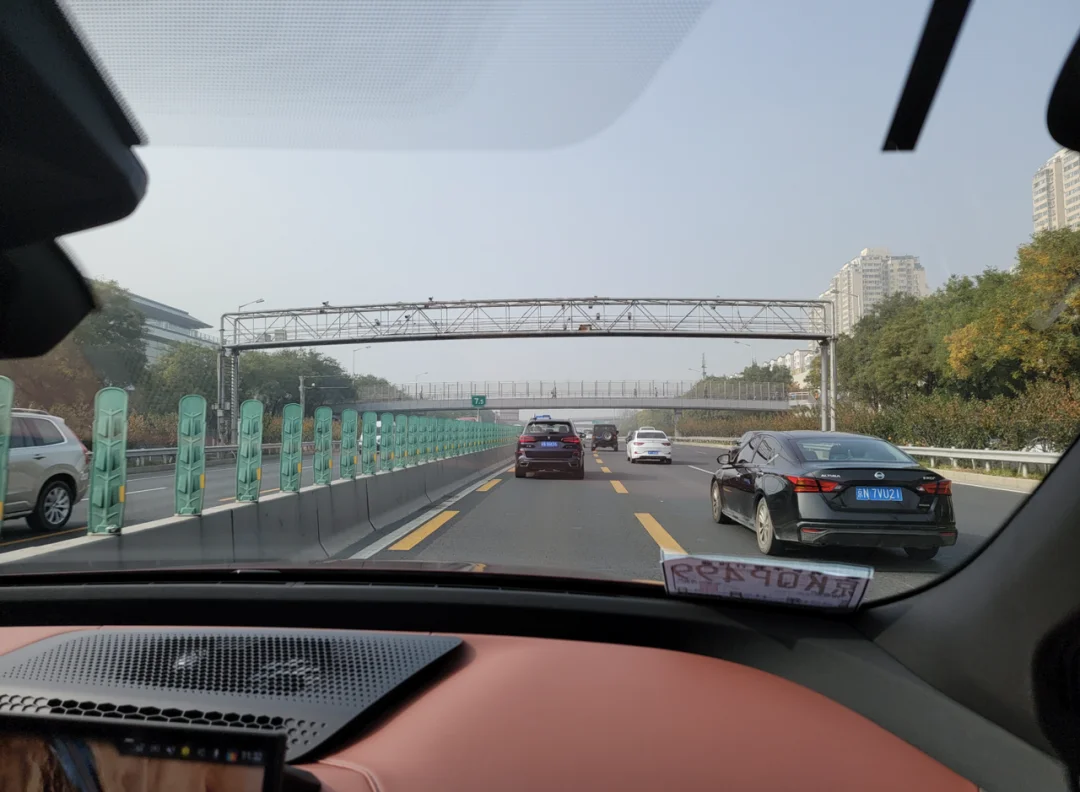
Let’s first review the iX’s dimensions: 4,953 × 1,967 × 1,695 mm. This is a mid-size SUV with a length close to 5 meters, yet when I sit in the front seat of the iX, the visibility feels remarkably open.
I’ve included a photo taken from the passenger seat at eye level for you to get a sense of it.
This is a wide-angle shot taken from the same position.
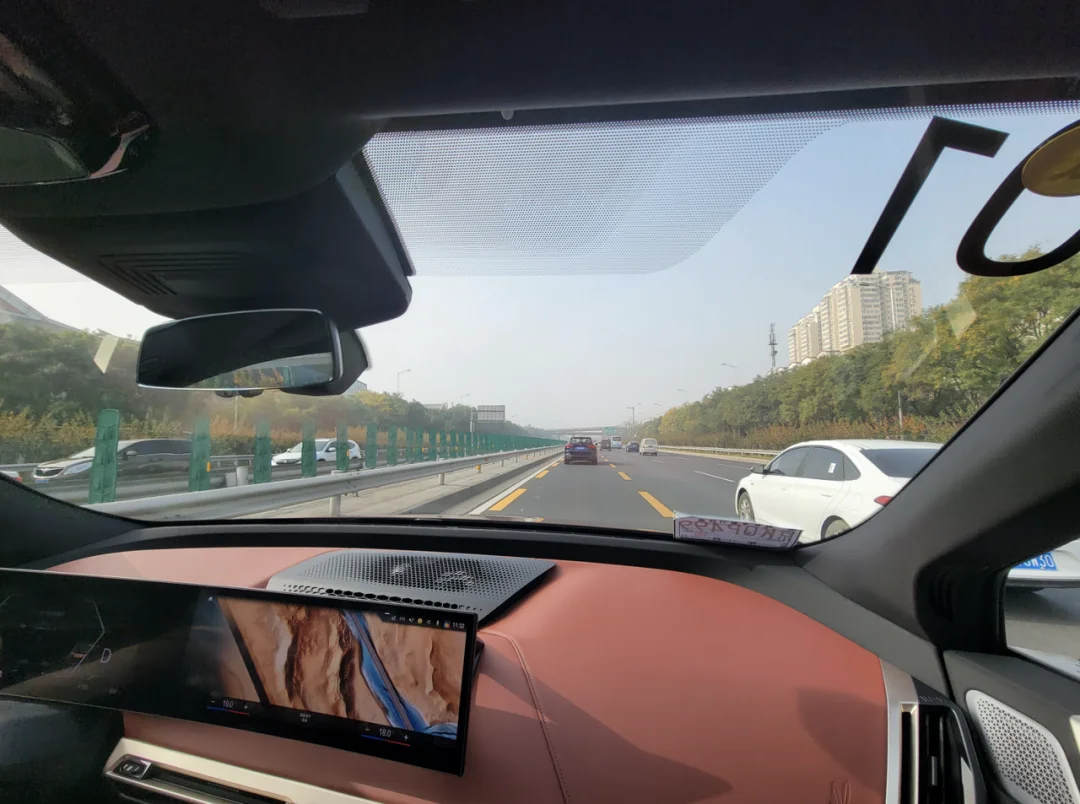
The expansive field of view stems from several factors. First, the iX’s front dashboard is positioned very low; in a normal driving posture, it sits below my chest, providing an excellent downward line of sight.
Second, the iX’s hood features a sweeping, downward-sloping curve that aligns closely with my forward line of sight. The hood does not obstruct the view directly ahead, creating a sensation similar to that of Tesla’s SUV models. Even more impressive is the curved profile of the hood when viewed from inside: the front-left and front-right corners appear to tuck inward toward the cabin, enhancing the sense of openness.
The iX also boasts a large windshield with a long extension toward the roof, minimizing upward obstruction in peripheral vision. The A-pillars are sufficiently raked and positioned precisely to avoid blind spots during sharp turns.
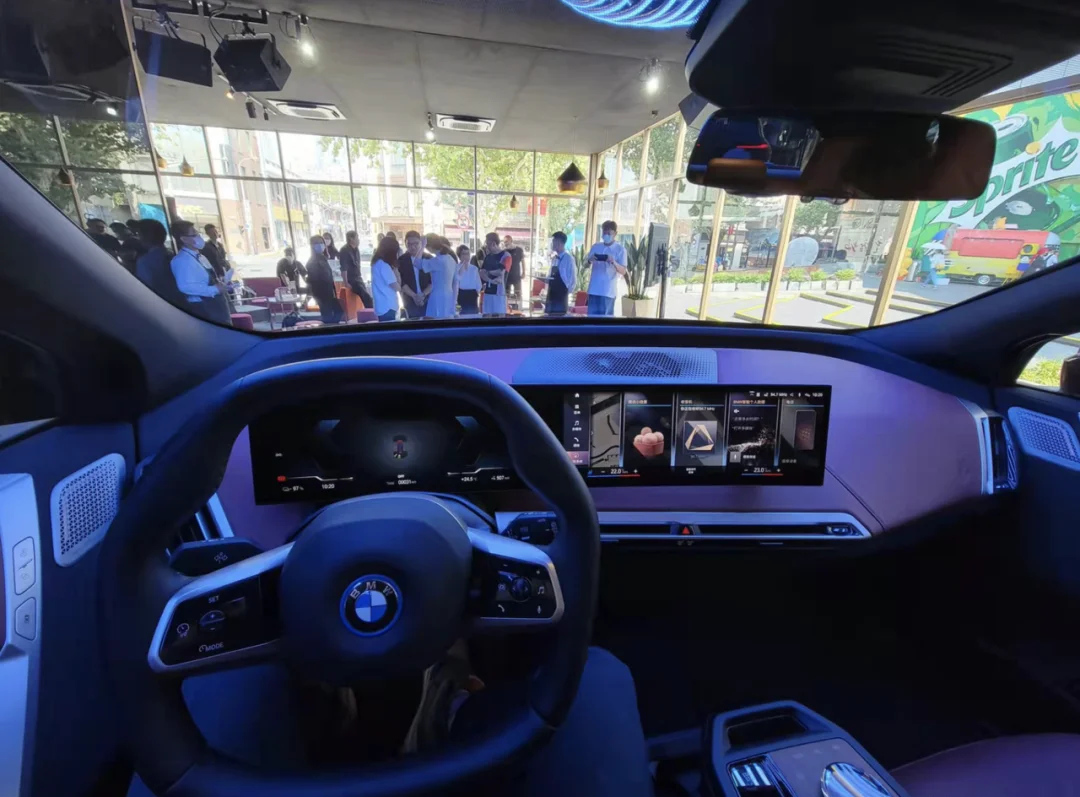
Combined with this broad visibility, the curved interior design of the front cabin cleverly reduces the perceived width and bulk of the iX’s nose, significantly alleviating the imposing presence typically associated with large vehicles. Throughout the day’s test drive—navigating tight paths in underground garages and executing close-quarters lane changes and parallel maneuvers in congested traffic—the iX felt remarkably reassuring for a first-time driver.
However, this confidence is not solely attributable to visibility.
When Top-Tier Ingredients Meet a Master Chef
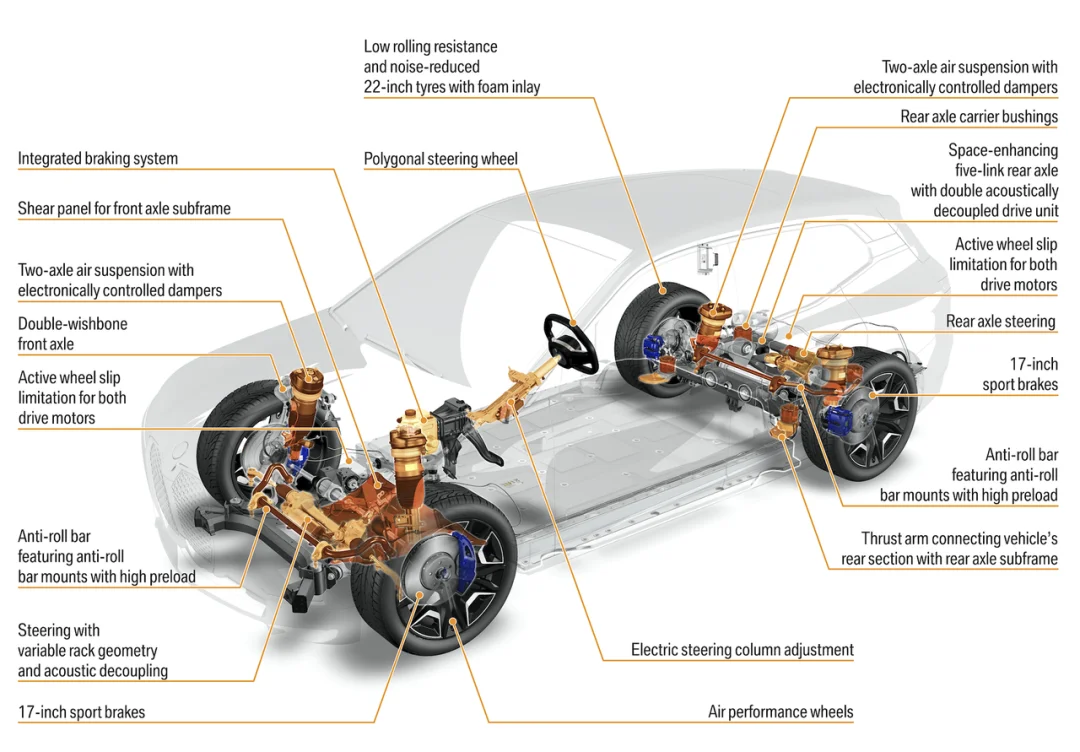
The iX’s mechanical specifications live up to its flagship status. Here is a brief overview of the key configurations shown in the images: front double wishbones and rear five-link suspension, dual-chamber electronically controlled air suspension for both axles, variable steering ratio, high-preload anti-roll bars front and rear, limited-slip electric drive systems front and rear, 17-inch brake discs, and 22-inch low rolling resistance tires with sound-deadening foam.
Following the chassis is the body structure. The iX employs the now-popular steel-aluminum hybrid construction, with the lower body consisting primarily of cast aluminum components and the A- and B-pillars made from ultra-high-strength hot-formed steel. BMW’s long-standing use of carbon fiber body structures is taken to an even more extreme level on the iX: a Carbon Cage, or "carbon cage," which integrates the roof, A-pillars, B-pillars, and the entire side door frame into a single connected carbon fiber structure.
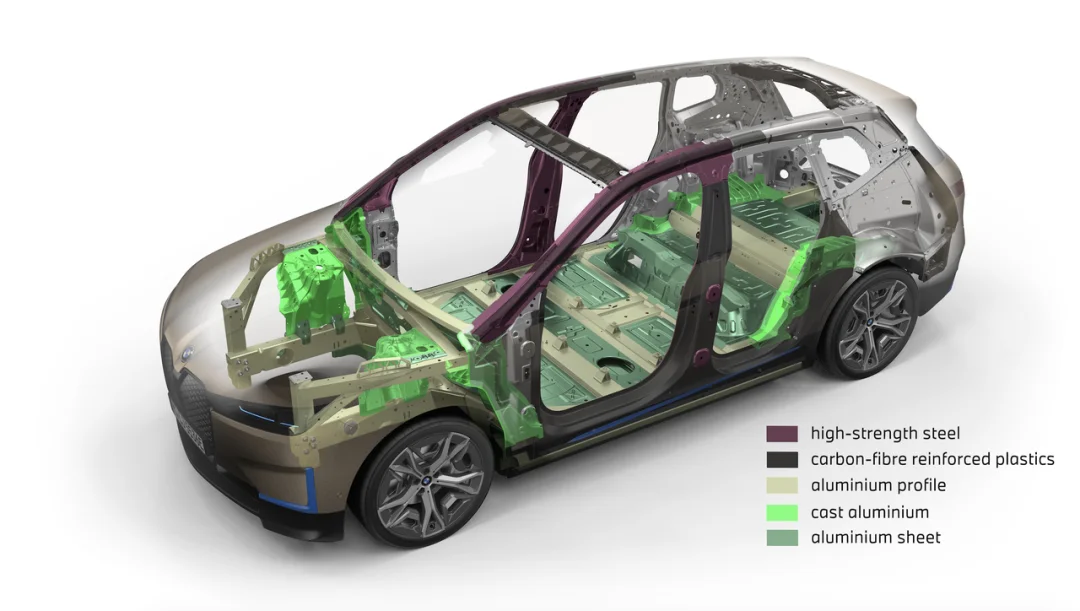
After this "paper talk," the actual driving experience reveals that the iX, with its exceptionally high mechanical specification, feels as if it has been enchanted under BMW’s tuning. It almost completely overturns my previous perceptions of the driving dynamics of large luxury SUVs.
Put simply, without looking at the data, I would not have guessed that the iX weighs 2.5 tons. Moreover, it does not feel like an SUV, nor does it feel like an SUV with a 3-meter wheelbase. In Eco mode, the steering damping is minimal, making operation very light. Thanks to the rear-axle steering system, its turning radius is noticeably smaller than what one might expect from a 3-meter wheelbase. Combined with a relatively small number of steering lock-to-lock turns, sharp U-turns and navigating underground garage roundabouts pose no challenge at low speeds.
In this state, the iX’s air suspension remains supple, diligently absorbing various road imperfections during travel. What is particularly rare is that the vehicle body exhibits very little pitch (up-and-down or fore-and-aft motion) resulting from this compliance. Furthermore, body roll during high-speed cornering does not resemble the behavior typical of Comfort mode; the vehicle’s roll amplitude is highly restrained, setting it apart from the vast majority of competitors in its class.
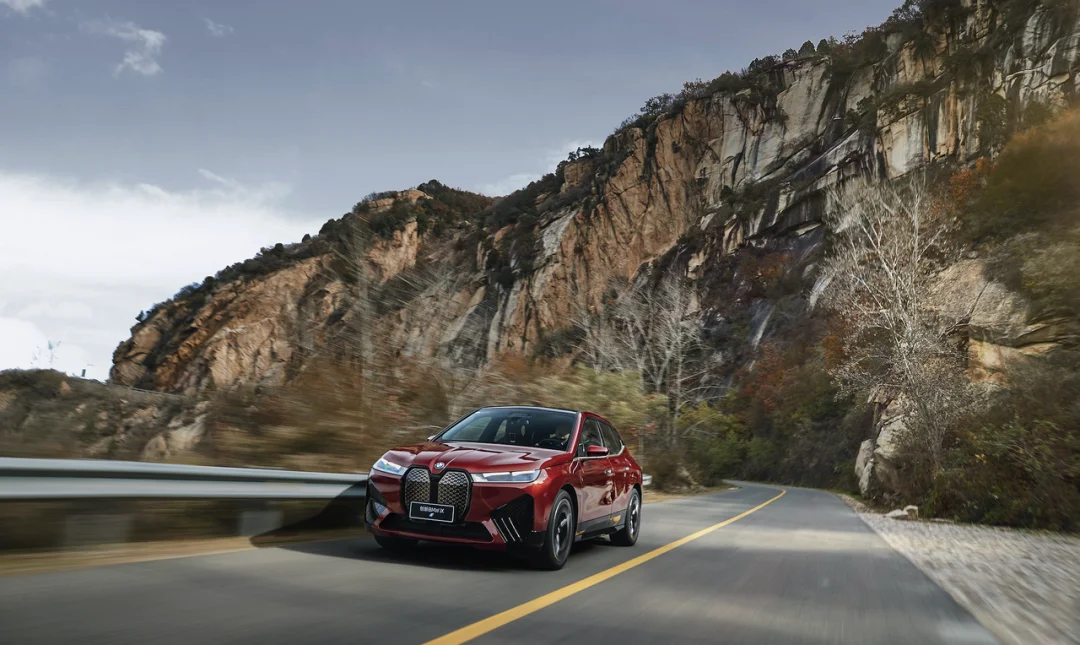
With the accelerator pressed, the iX’s power delivery remains among the best-calibrated experiences in electric vehicles. When high regenerative braking is engaged, speed control feels as immediate and responsive as its smaller sibling, the iX3. Acceleration response has minimal delay and offers linear power output; lifting off the pedal triggers regeneration with equally low latency and a linear increase proportional to pedal travel. I call this setup an EV-specific 'bidirectional low-latency linear calibration for acceleration and deceleration.' Although I have not yet driven the Taycan, among all other EVs I have tested so far, only BMW—alongside Tesla—achieves this level of refinement.
Switching to Sport mode changes the infotainment theme to a more aggressive red. The simulated sound waves, specially composed by Hans Zimmer for the iX and evoking the atmospheric score of Dune, begin playing through the cabin.
Flooring the accelerator, the nose lifts less than expected. There is no tire squeal and no torque steer. The 523 horsepower propels the car forward rapidly through four 275mm-wide tires. As speed climbs, there is no high-frequency whine from the electric motors; the increase in road and wind noise is disproportionately low compared to the gain in velocity. Instead, the pitch of the simulated sound rises gradually, while the low frequencies in the reverb grow deeper, even causing the seats to vibrate in resonance.
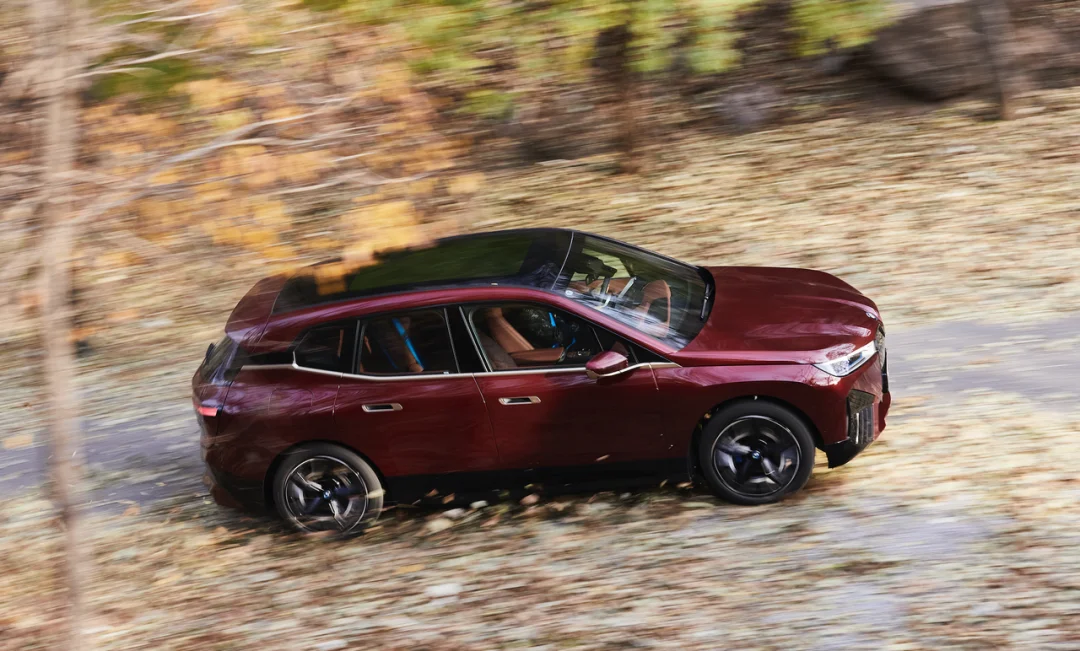
The sensation resembles being in a cinema with physical motion effects. Excellent NVH (Noise, Vibration, and Harshness) and immersive surround sound completely isolate external noise, creating a focused atmosphere where objects rushing past become almost surreal. It is only when the HUD displays a speeding warning at 120 km/h that I snap back to reality, leaving this brief 'virtual world.'
In an era where sub-3-second electric cars are available for around RMB 300,000, the iX’s 4.6-second 0–100 km/h time may not seem exceptional. However, what deserves appreciation is the iX’s composure, silence, and atmospheric quality during acceleration.
Due to limited test time and venue, I did not explore the iX’s cornering limits. In Sport mode, however, several high-speed lane changes demonstrated commendable handling. As soon as the steering wheel turns, the front end responds accordingly, requiring little anticipatory input. After straightening the wheel, the rear end tucks in quickly, with no disconnect between steering inputs and chassis execution.
Returning to the opening sentence of this section: regarding dynamic driving, the iX has almost completely overturned my preconceptions about large luxury SUVs. While maintaining high standards of comfort and quietness, BMW has concealed the vehicle’s large dimensions, long wheelbase, and heavy weight with remarkable skill; both its stance and dynamic execution are benchmark-worthy.
BMW's Most Advanced Driver Assistance Configuration
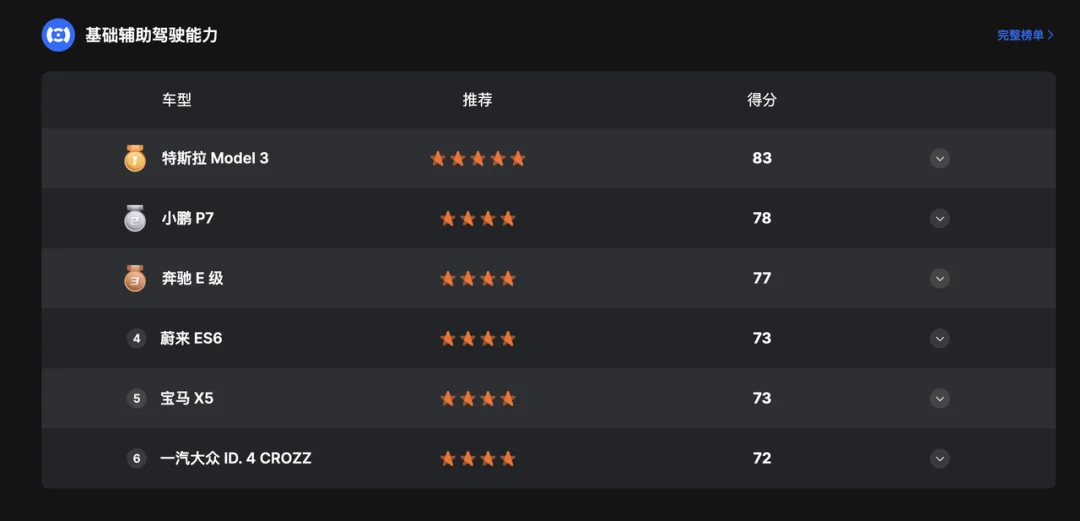
The X5, which ranked fifth in 42Mark’s testing, showcased BMW’s current ADAS capabilities. For the iX, BMW has introduced new perception hardware, including an 8-megapixel stereo front-facing camera and surround-view cameras for parking.
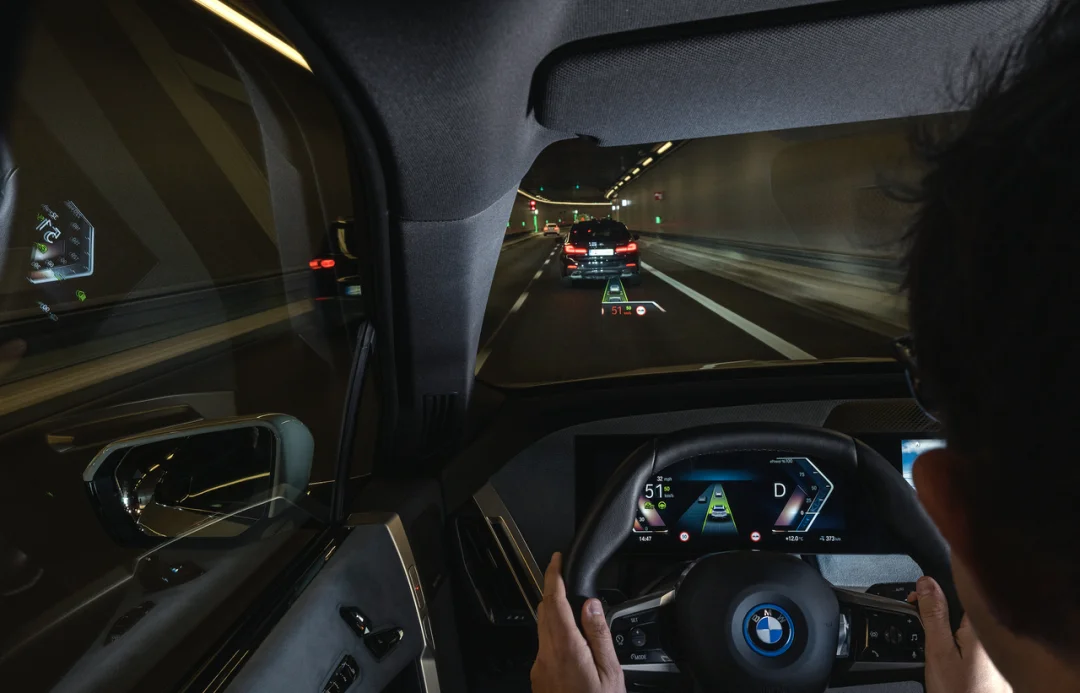
In real-world use, the iX’s basic driver assistance experience remains excellent as always, with lane-keeping and adaptive cruise control setting a benchmark even when compared to new-energy vehicle brands. The response and execution speed of automatic lane changes upon signaling are comparable to those of the X5 and iX3, reflecting features that were already well-developed. Notably, the activation speed for this function on the iX has been lowered from the previous 70 km/h to 30 km/h, significantly expanding available scenarios.
For interaction, the iX continues to use BMW’s new visual interface for driver assistance, achieving good "human-machine alignment" in road environment perception. Additionally, this display content can be projected onto the HUD.
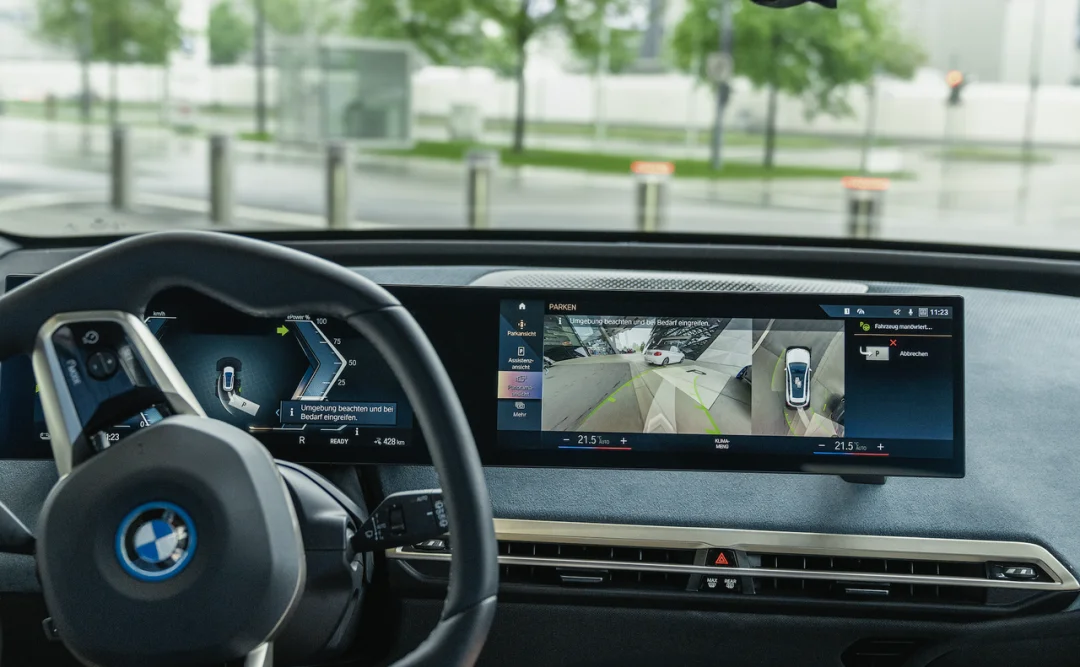
The visual automatic parking feature, which I had high hopes for, did not appear to be fully polished during the test drive. Performance in underground garages was underwhelming, with the main issues lying in interface interaction: recognized parking spaces lacked intuitive overhead-view markers. Although AR-projected path lines appeared during the actual maneuvering process, several minor hiccups occurred, leaving me somewhat disappointed and hopeful that future OTA updates will bring improvements.
04Changes and Constants on the iX
Returning to the energy consumption topic mentioned at the start, the iX battery has a total capacity of 111.5 kWh and an usable capacity of 105.2 kWh. The maximum charging power is 195 kW, and the maximum regenerative braking power reaches 208 kW at speeds of 200 km/h.
In terms of range—a key metric for electric vehicles—the iX achieves a WLTP range of 630 km. For comparison, the NIO ES8 equipped with a 100 kWh battery pack has a WLTP range of 500 km and a NEDC range of 580 km.
The dual-motor long-range version of the Tesla Model Y has a WLTP range of 507 km and a NEDC range of 594 km.
Based on the conversion ratio from WLTP to NEDC observed in these two models, the NEDC range for the BMW iX xDrive50 (dual-motor) would be approximately 730 km.
Even under conditions of mild aggressive driving with two passengers, air conditioning set to 19°C, and an ambient temperature of 10°C, an energy consumption rate of 18.5 kWh/100 km would allow the iX to travel 568 km.
This range capability positions the iX to directly compete with the reigning champion of large pure-electric SUVs: the Tesla Model X.
We’ve already experienced this kind of real-world range in the iX3. The iX brings a delightful sense of luxury ambiance and retains the excellent mechanical quality we expect, but it doesn’t come as a surprise.
BMW has always excelled at delivering on these traditional automotive attributes. By comparison, the software performance in the BMW iX is also not particularly unexpected. It has indeed improved, but it remains firmly within typical BMW standards.
So what might feel less like a traditional BMW in the iX is its bold new design language. On a flagship SUV, it expresses ideas of artistry, extravagance, and breakthrough thinking so directly.
In my view, the success of a generational design change isn’t determined by whether the first impression of the new car is attractive. Rather, it’s about whether you can clearly perceive that the old model has aged when placed side by side with its successor.
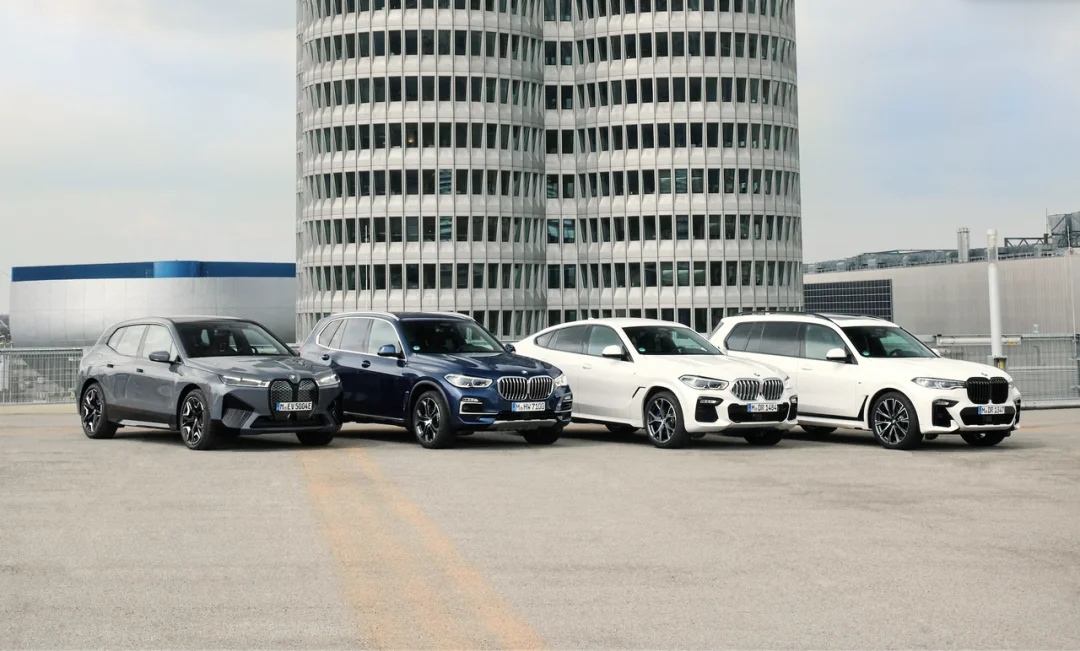
I believe most readers will have formed their own answer after seeing the images.
Final Thoughts
The iX is an impressive product. In a long time, no vehicle from a traditional automaker has offered such a refreshing experience inside and out while maintaining strong product competitiveness.
Yes, the iX's infotainment system remains its weak point. However, BMW still commands a substantial user base, indicating that the vehicle's other charms are sufficient to justify the purchase for its target audience.
Before heading to the airport after the test drive, I opened the iX's media library, set the 4D vibration to maximum, cranked the surround sound effect to its strongest setting, and played "Heart Wants to Be Wild" by the band Foamy Shark.
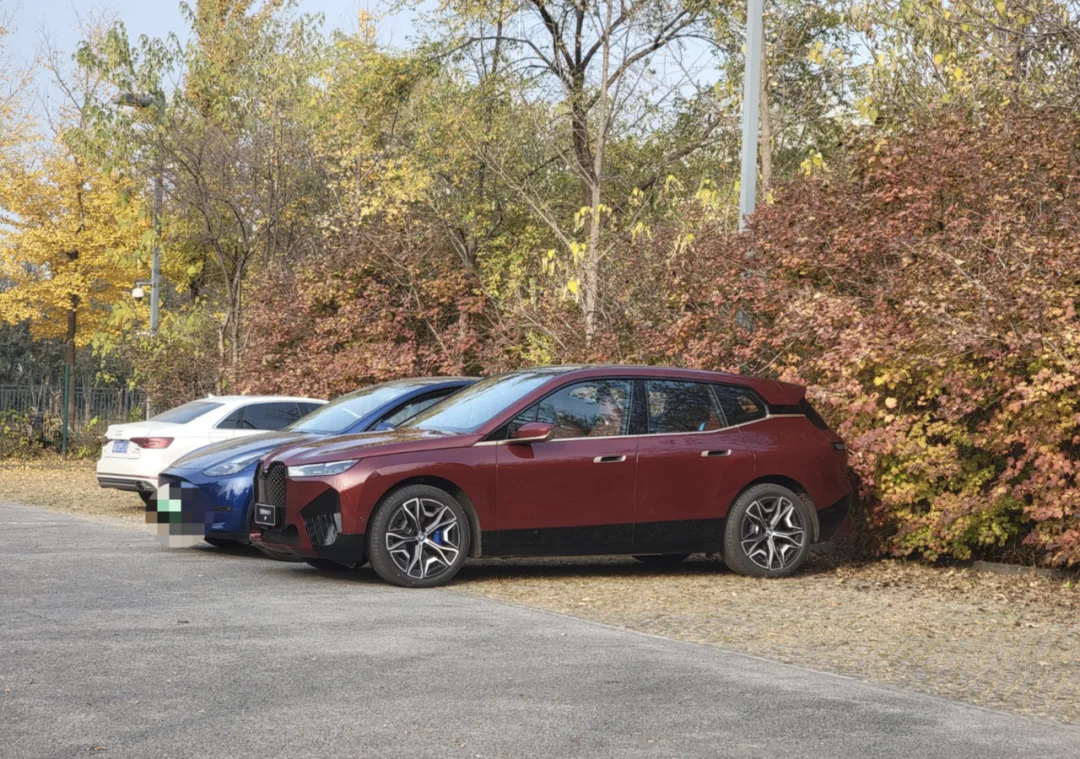
During this time, a Model Y owner in the parking lot walked over, inspected the iX from various angles, and then stood outside the driver's side window, staring at the center console screen. I don't know what was going through his mind, but I could feel my vanity mixing with the pleasure of the music, spreading across my face. This might be one of the iX's competitive advantages beyond its product specifications.
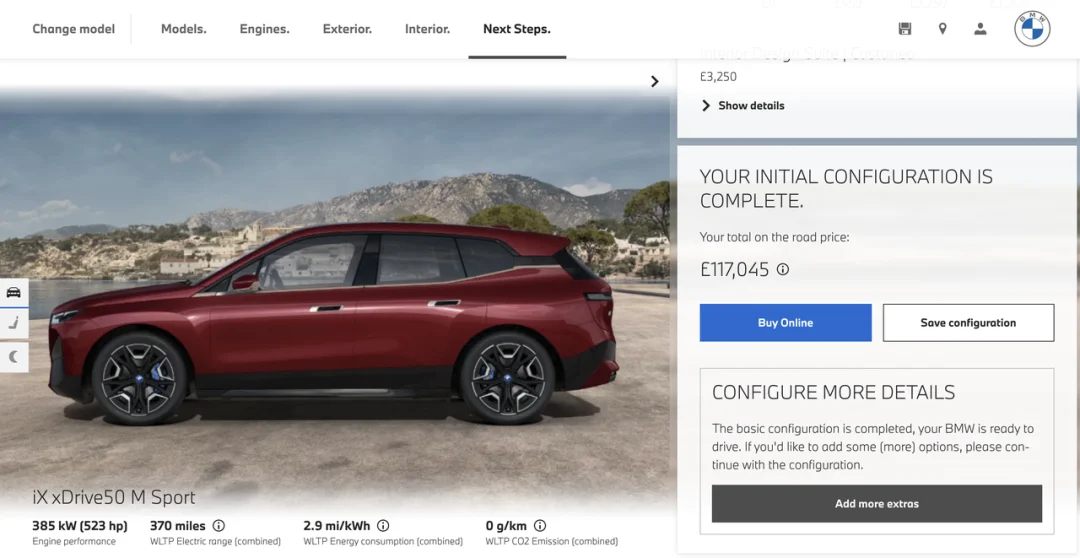
By the way, I just configured a top-tier iX with identical specs on BMW's UK website. The price is £117,045, which converts to RMB 1.007 million.
In comparison, the starting price for the Model X Plaid in the UK is €121,990, equivalent to about RMB 900,000.
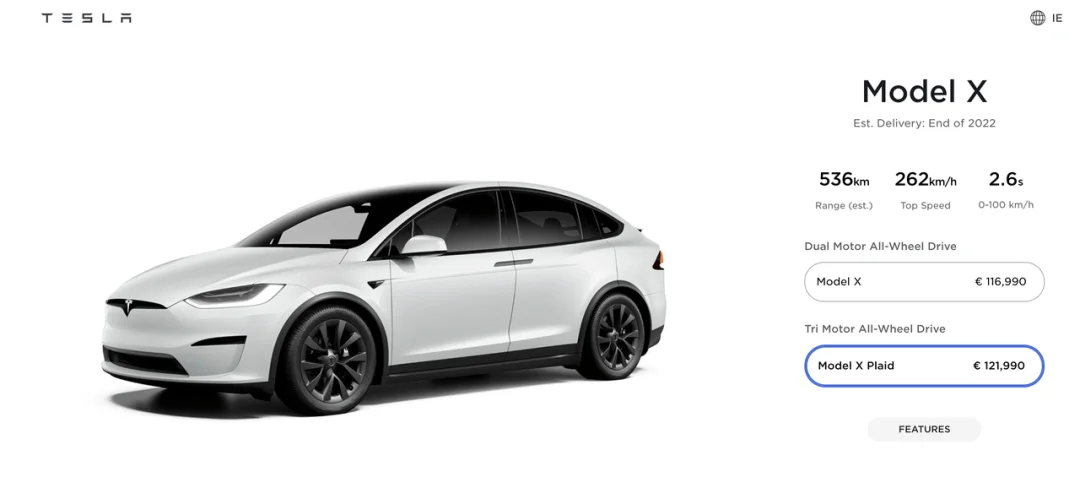
So the price of such joy might be forgoing a Model X Plaid with optional wheels and interior trim in China. As for how many people will make that choice, we'll know once both cars are delivered.
Written by: Reinhardt Edited by: Reinhardt