


Gaoheqiche CEO Ding Lei: HiPhi Z Remains a Flagship, No Compromise on Scale
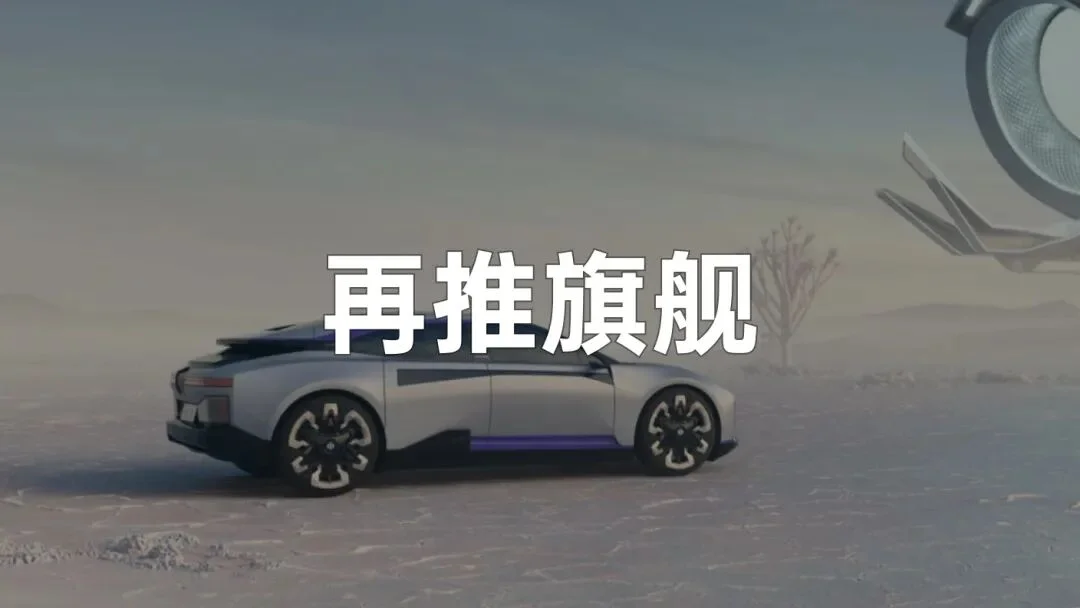
There is a car brand whose electric vehicles are positioned as luxurious and distinctive, making large-scale sales difficult. When this model appears on the street, it attracts an absurdly high number of head-turns; one of its key labels is "a toy bought by the wealthy." That's right, the brand I'm referring to is HiPhi.
Compared with other new energy vehicle brands, HiPhi's presence is not particularly high. Coupled with the brand's relatively low marketing intensity, this has led many to mistakenly believe that "this brand is on the verge of collapse."
01Shocking! HiPhi Sales Outpace Porsche
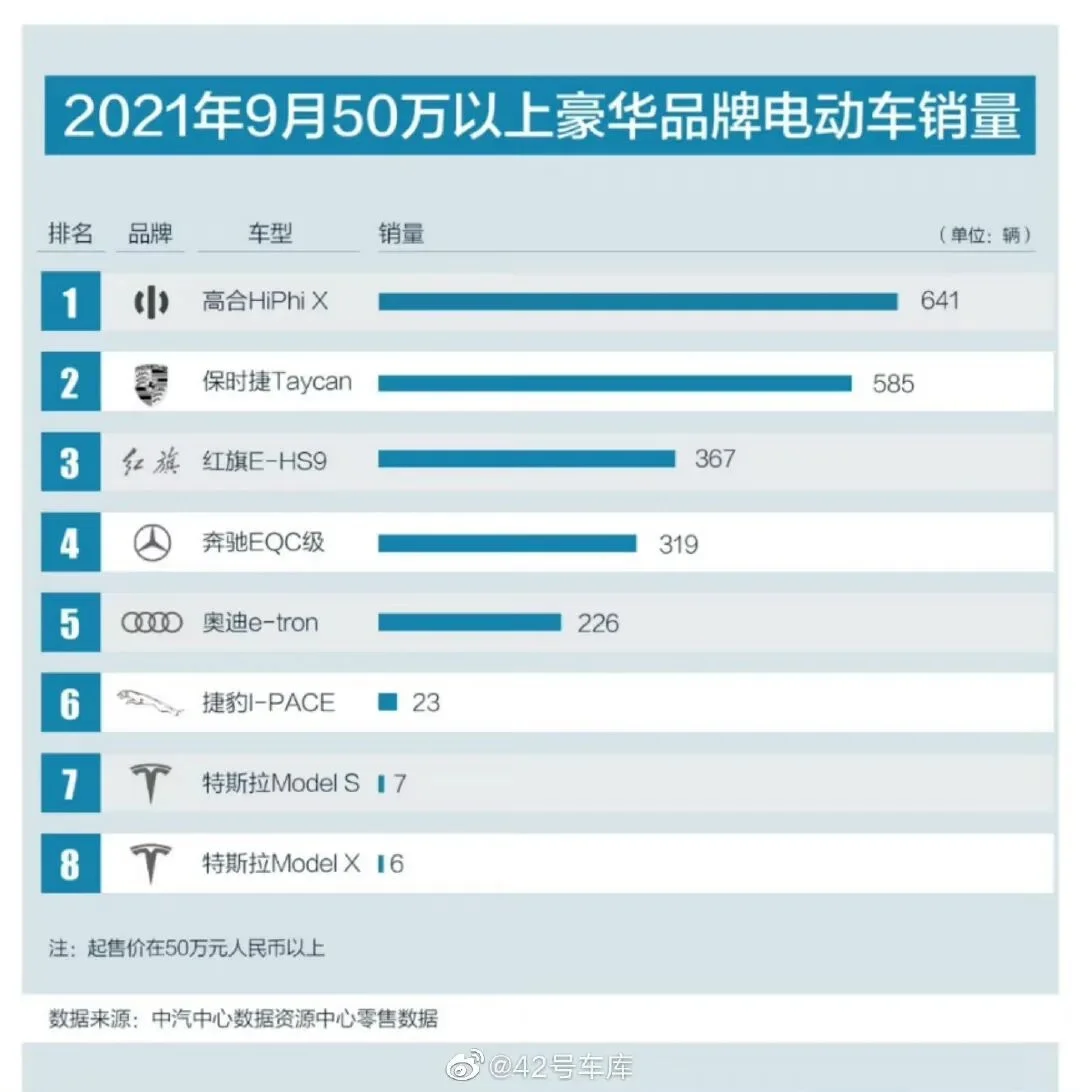
In fact, HiPhi's sales performance over the past few months has been quite decent within its sub-segment. In September this year, HiPhi sold 641 units of the HiPhi X, surpassing the Porsche Taycan to take the top spot on the sales ranking for luxury brand electric vehicles priced above RMB 500,000. Notably, Audi sold 226 units of the e-tron that month, and Mercedes-Benz sold a total of 319 units of the EQC; combined, these two models still did not match HiPhi's volume.
Although the total volume is not large, the market segment occupied by the HiPhi X is undeniably a luxury consumer market. For consumers with cash in hand to abandon Porsche, BMW, and Mercedes-Benz and spend several hundred thousand yuan in real money to purchase the HiPhi, a brand with relatively modest influence, this brand must truly have something special. This makes me even more eager for their second model.
Generally, if a company's first flagship model doesn't go bankrupt and even establishes a certain level of brand awareness, it is common industry practice to subsequently launch more affordable products that can achieve scale. Imagine if HiPhi had built a smaller version of the HiPhi X and priced it in the RMB 300,000–500,000 range; wouldn't that be quite competitive?
After watching Ding Lei’s solo show—a film with no plot, relying entirely on visual effects—my expectations were dashed. As the credits rolled and the car from the movie drove into the venue, I fully understood that HiPhi was not eager to harvest the market early; instead, it wanted to keep playing its high-end card.
02Mass Production of a Concept Car Again
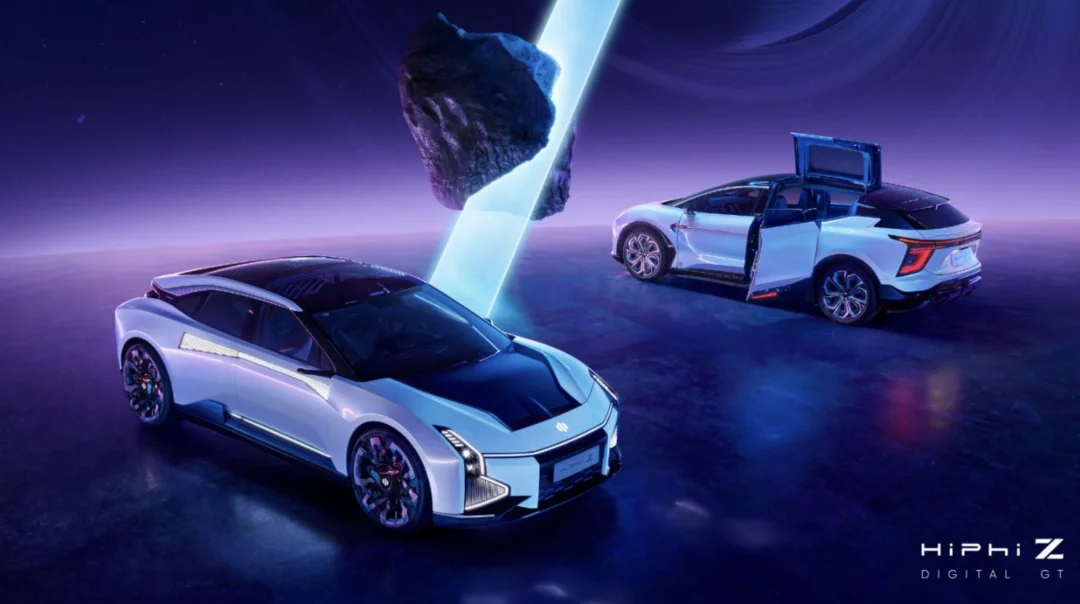
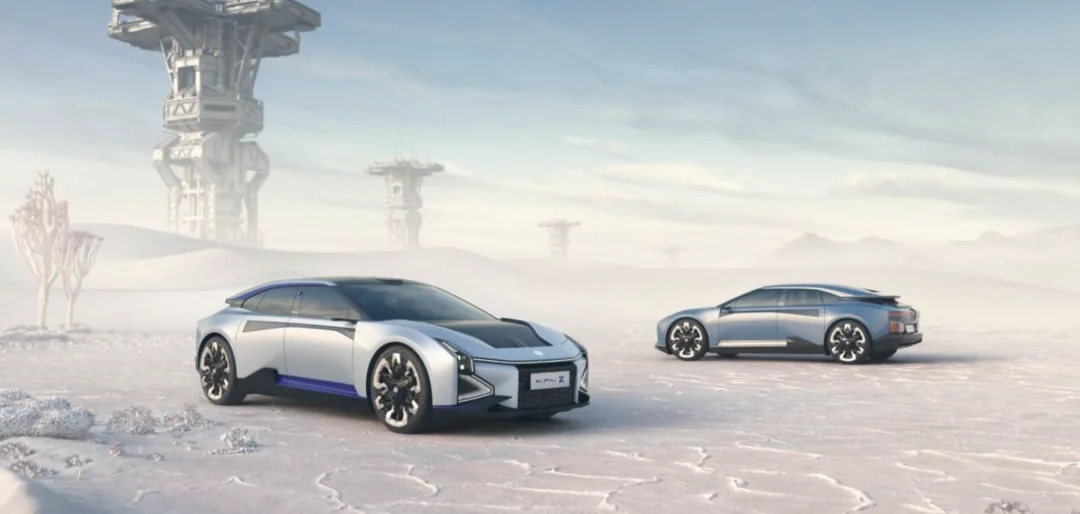
As the HiPhi Z slowly drove to the center of the venue, I believe all the guests present were unable to hold back their desire to take out their phones for photos. However, due to confidentiality requirements, their phones had been tightly wrapped before entering the venue. The excitement stemmed from the fact that the real vehicle was almost identical to the patent application images leaked online in July. Ding Lei stated that 95% of the HiPhi Z is ready for mass production, and they are still striving to make the remaining 5% a reality.
From an exterior perspective, the HiPhi Z’s length and width are similar to those of the HiPhi X, but the most obvious difference is that the HiPhi Z is a fastback GT model. Limited by its body height, HiPhi’s signature wing doors did not appear on the HiPhi Z. However, it still adopted a suicide-door design, which is sufficiently striking. Additionally, a digital light strip runs along the side of the body, spanning both front and rear doors. It can display the vehicle’s current status and interact with pedestrians outside the car.
Maintaining a conceptual look has always been HiPhi’s style. The HiPhi X has already tasted some success in terms of design, but its performance in intelligence was indeed disappointing. As a model themed around time travel from “2041” and HiPhi’s flagship vehicle targeting the market for the next three to five years, what kind of imagination does the HiPhi Z offer in terms of intelligence?
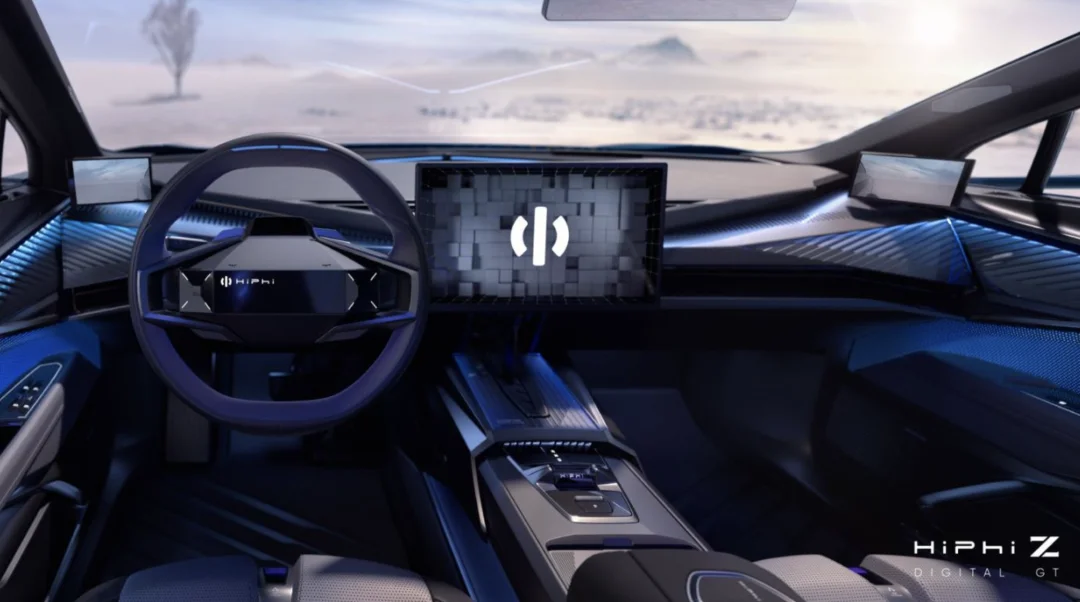
Regarding intelligence and interaction, HiPhi also spent a considerable amount of time introducing its new smart product debuting on the HiPhi Z—the HiPhi Bot.
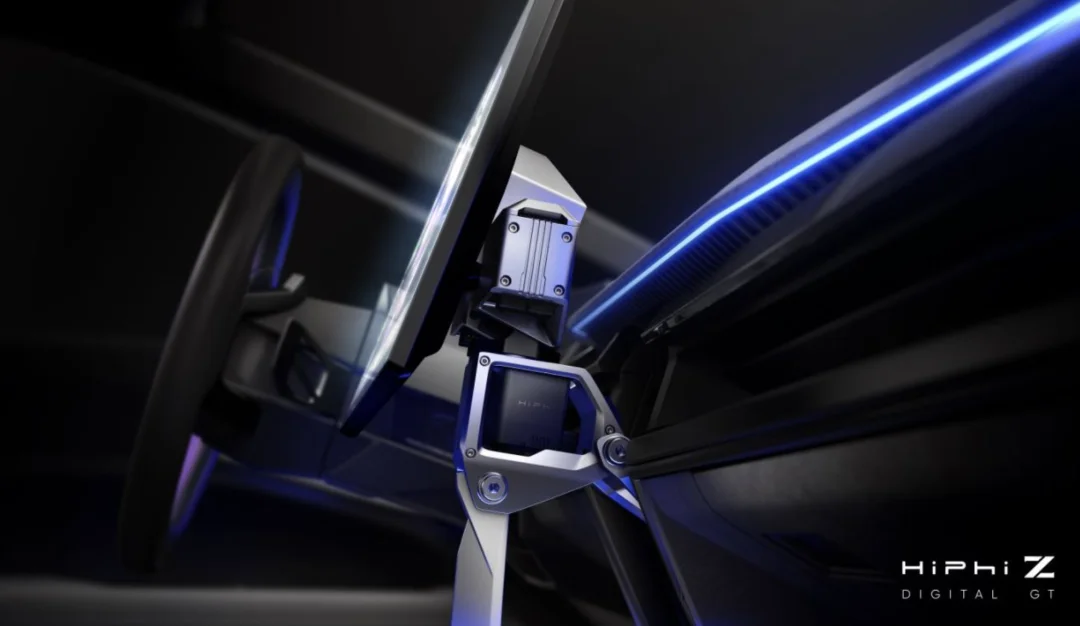
HiPhi Bot is not a humanoid robot; it is an AI assistant integrated into the vehicle, representing an upgraded version of the current HiPhi Go system. If NIO’s Nomi small robot gives Nomi a sense of life, HiPhi Bot’s presence is more straightforward and masculine. This is because the HiPhi Z center console has eliminated the triple-screen setup in favor of a rotating screen design. This screen features multi-dimensional rotation: it can rotate 90 degrees horizontally and uses sound localization to tilt toward the source of interaction. However, this multi-dimensional movement has a clear drawback: the mechanical arm structure behind the screen is fully exposed and visible, posing certain safety risks.
Functionally, based on the live demonstration, HiPhi Bot should possess basic voice interaction capabilities, including at least continuous dialogue and multi-directional interaction, allowing it to easily execute commands from both the driver and front passenger seats.
Additionally, the HiPhi Z comes preset with various modes. For example, the "Rocket Mode" demonstrated on-site displays a racetrack on the center console screen and instantly "ignites" all interior and exterior lights, creating a unique interactive experience. Combined with the vehicle's dynamic power output, the HiPhi Z showcases its most distinctive personality and strongest performance in a short time. This sounds similar to the "adrenaline mode" of some supercars, but while supercars attract attention through engine noise, the HiPhi Z expresses its personality through lighting effects.
Of course, as a model aimed at the future market, relying solely on such "gimmicks" without substantial intelligent configuration will hardly attract today's knowledgeable consumers.
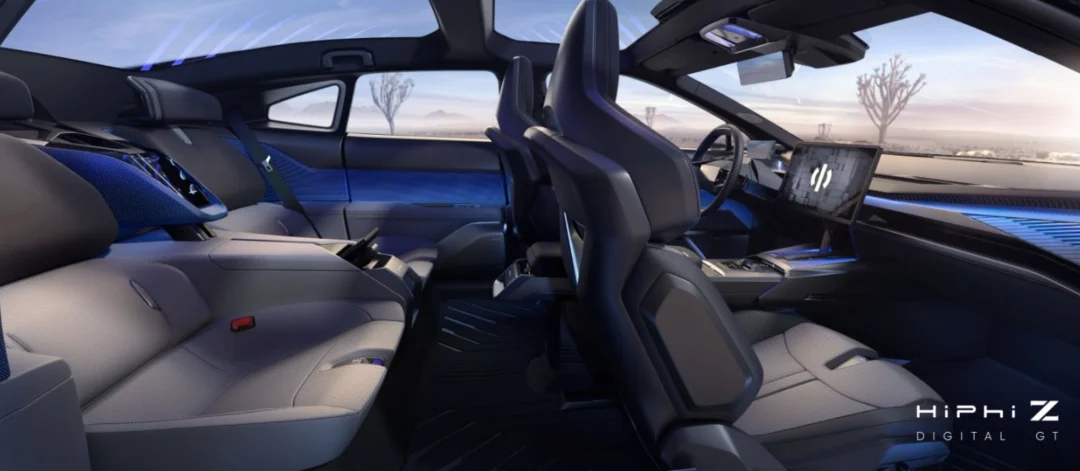
Ding Lei also announced on-site that the HiPhi Z’s intelligent hardware consists of mainstream, top-tier products currently available on the market. For instance, for the cabin interaction chip, they selected the Qualcomm Snapdragon 8155.
For driver assistance, the HiPhi Z will use two 8-megapixel cameras to build a forward-facing binocular perception system, powered by the NVIDIA Orin X chip, which offers the highest computing power currently purchasable on the market.
So, hardware is definitely not the issue. Whether the experience is good depends on HiPhi's software R&D capabilities.
By the way, we have already stated that the HiPhi Z is a GT model, but Gaohe has named it the Digital GT.
From the naming perspective, Ding Lei appears to be betting on intelligence. The HiPhi Z holds significance for the brand not only as a more youthful flagship model but also as a vehicle that genuinely embodies "intelligence," reflecting Ding Lei's personal obsession.
03Suffocating for a Dream
Why is Ding Lei so obsessed with digitalization? This is also related to his personal experience.
Although Ding Lei, CEO of Gaoheqiche, has spent most of his life in the automotive industry, he studied physics during his student years and regards the renowned physicist Albert Einstein as his idol. Ding Lei also hopes to become an outstanding physicist like his idol, using his research to help more ordinary people gain a deeper understanding of "time." Thus, even while building cars, he still harbors a dream of science.
In his view, while physical things cannot achieve immortality, thought and time can. Therefore, he integrated the concepts of intelligence and digitalization into the design of the HiPhi Z. The screen features multi-axis, multi-dimensional layouts, inspired by the concept of digital immortality, branching out like life itself. Ding Lei, a physicist, hopes to realize his passion for physics through digitalization.
Hearing this, I felt as though I had been transported back to my high school classroom and nearly fell asleep. Ultimately, I don't care about other people's dreams; I only want to know if HiPhi can sustain its lofty posture while operating at a loss, how long its funds will last, and what the rationale is for pursuing a dual-flagship strategy. As expected, most of the guests in the audience were as pragmatic as I was, showing greater interest in questions regarding capital.
Ding Lei stated plainly that he is not currently considering scale. He dislikes the term "volume sales," noting that during his time in the traditional auto industry, many products were launched to meet volume targets without being fully refined.
While the automotive industry requires scale, Ding Lei does not prioritize price and volume first. When asked about funding, he sidestepped the question, saying only that HiPhi’s capital utilization rate is extremely high and there is no need for excessive concern.
He now prefers to build cars that users like. Before the HiPhi Z project began, HiPhi conducted a survey finding that 66% of users wanted the brand to continue making avant-garde, innovative vehicles.
Everything people do is driven by some force—whether money, love, or, in Ding Lei’s case with the HiPhi Z, the power of dreams.
HiPhi’s dual-flagship strategy resembles Tesla’s, even sharing similar suffix letters in model names. However, while Tesla has achieved significant global scale with the Model 3, HiPhi still needs more time.
For a domestic Chinese brand, however, HiPhi has taken a crucial step: from zero to one. The challenge now is how to go from one to two, and how to grow into a thriving enterprise. The pressure remains on Ding Lei.
Written by Bobo Edited by Liusan