


Is NIO's new battery pack with just 5 kWh more capacity a joke?
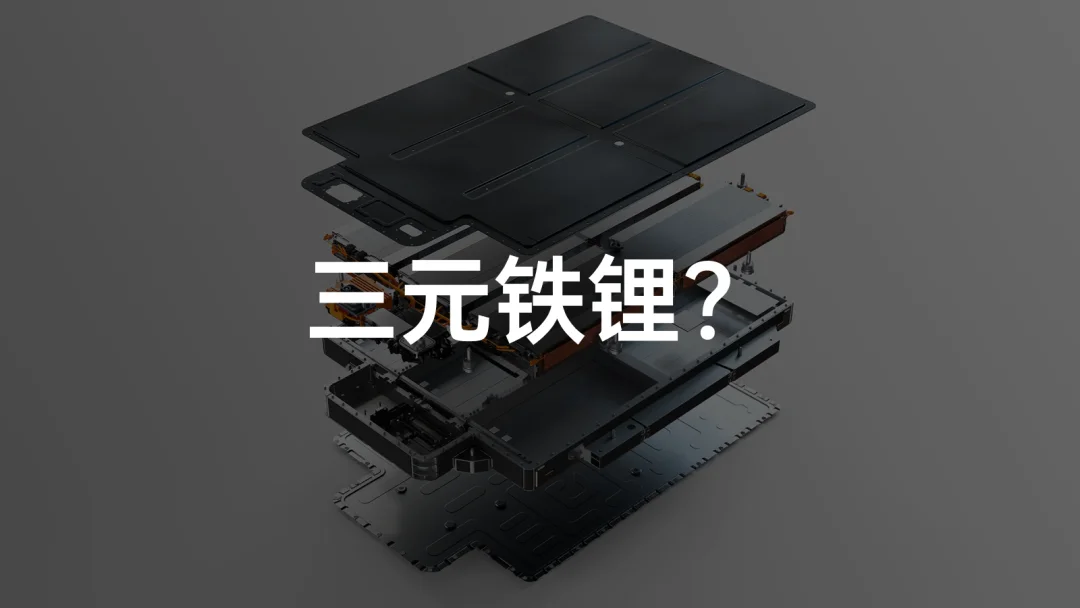
01The legendary AB battery is here!
Just now at 2 p.m., NIO officially released the 75 kWh ternary iron lithium battery, which was quite sudden.
According to official information, starting today, new buyers can choose between a ternary iron-lithium standard-range battery pack (75 kWh) or a ternary lithium long-range battery pack (100 kWh). Models equipped with the 75 kWh battery pack maintain the same pricing and BaaS pricing as the original models with the 70 kWh ternary lithium battery pack.
This effectively signals the discontinuation of the 70 kWh ternary lithium battery, but it will continue to serve in swap stations as the "standard range battery pack".
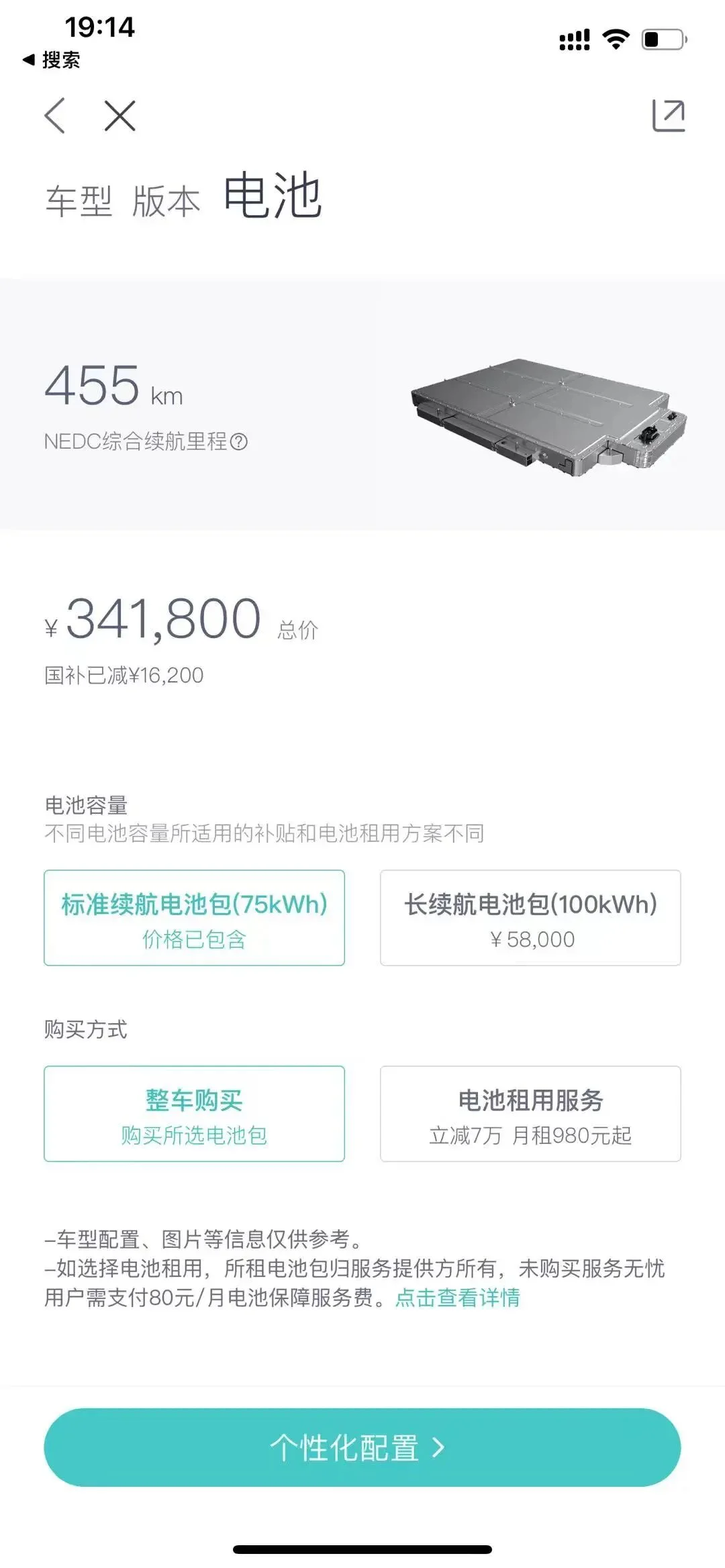
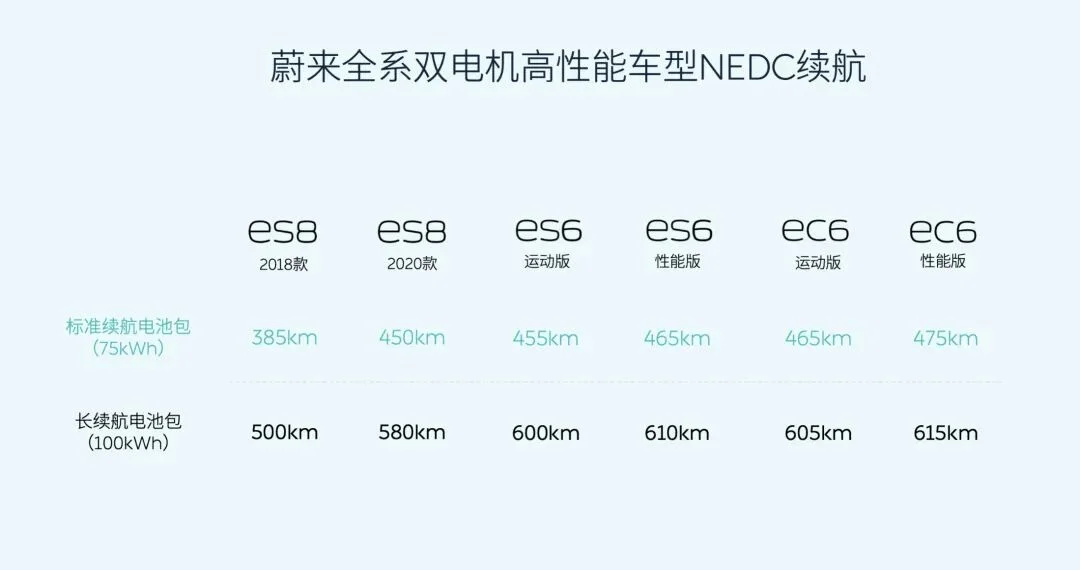
What? What on earth is ternary iron lithium? Is adding just 5 kWh of capacity a joke? Before we get into this new term, let's first look at how much additional range this new battery brings:
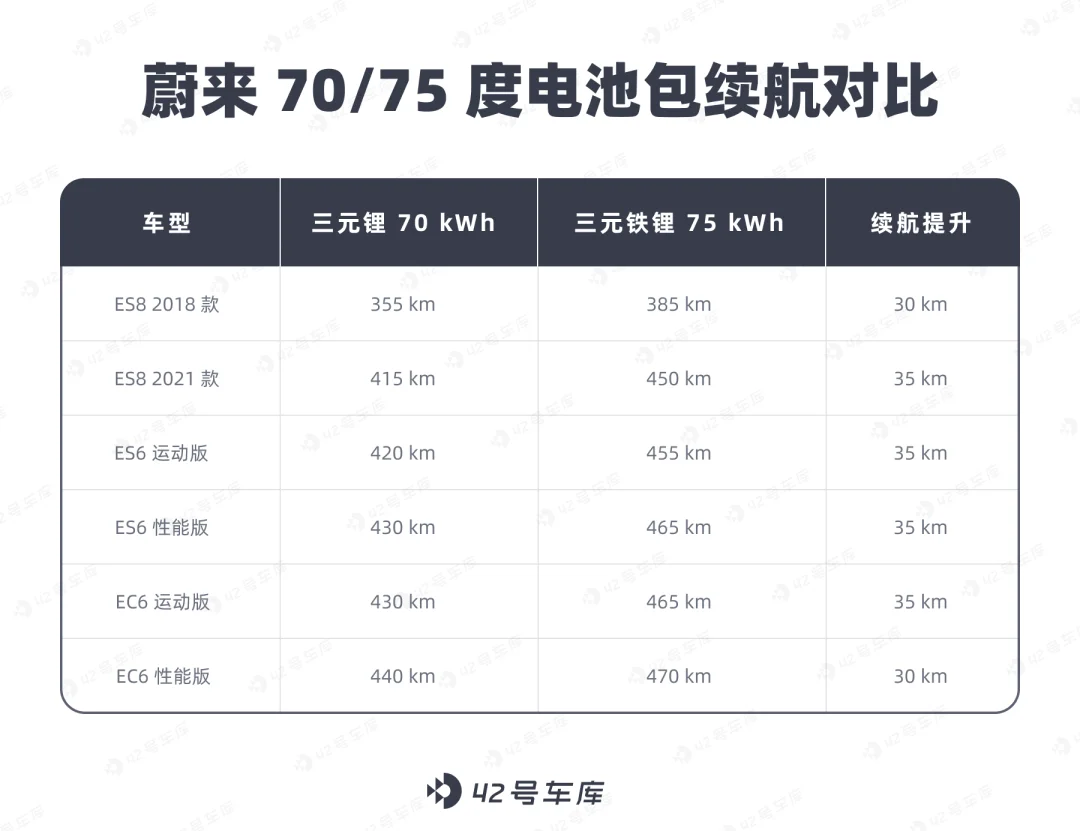
You might think the range increase of just 30–35 km isn’t that impressive. But this is actually the first ternary iron lithium battery pack on the market.
Ternary iron lithium is not a new battery chemistry; it is a technology that mixes ternary lithium and lithium iron phosphate cells within a single battery pack. It may seem simple, but the challenges are significant.
BYD focuses on its Blade Battery (also lithium iron phosphate); Tesla and XPENG have both adopted lithium iron phosphate batteries in the base models of their main vehicles. NIO, however, refused to go with pure lithium iron phosphate. In fact, a previous lithium iron phosphate pack with an actual capacity of 68 kWh was rejected by Bin for reasons including poor winter range.
Perhaps driven by this commitment to user experience, NIO has today become the world’s first automaker to mass-produce battery packs using mixed ternary lithium and lithium iron phosphate cells. Let’s take a look at what makes this new battery pack special, the challenges it faced, and how it reached mass production.
02Understanding Cell Materials

Before explaining why NIO chose a mixed-cell battery pack, let’s first look at the differences between the two types of cell materials.
The cathode material, as the core component, directly determines the naming convention and charge-discharge performance of the cell. Ternary lithium batteries and lithium iron phosphate batteries represent the two most mainstream routes. The term 'ternary' in the former refers to nickel, cobalt, and manganese (or aluminum), abbreviated as NCM or NCA.
Ternary Lithium
The primary advantage of ternary lithium batteries is their higher energy density in both volume and mass compared to LFP (lithium iron phosphate) batteries. This means that for the same driving range, a ternary lithium battery pack is lighter and more compact.
As long as range anxiety exists, the pursuit of higher energy density will never cease. The key to increasing energy density lies in raising the proportion of nickel.
However, doing so makes the chemical properties of the battery less stable. First, it affects the battery's lifespan. Second, oxygen released from the cells can lead to thermal runaway, potentially causing fires or explosions.
Furthermore, for mass-produced vehicles, cost is a critical factor: ternary lithium batteries are more expensive to produce.
Lithium Iron Phosphate (LFP)
The main advantages of LFP batteries are safety and low cost.
The P-O bonds within the LFP crystal structure are strong, allowing them to withstand temperatures approximately twice as high as those tolerated by ternary lithium batteries. Even if decomposition occurs, they do not release oxygen, resulting in a lower risk of spontaneous combustion.
Better chemical stability also allows lithium iron phosphate batteries to achieve more charge-discharge cycles. Additionally, lithium iron phosphate does not contain cobalt, an element whose price has risen significantly in recent years; this absence is the primary reason for the cost difference.
But its shortcomings are also prominent: the energy density of lithium iron phosphate cells is relatively low, only about 3/4 that of ternary lithium batteries. And the battery degradation at low temperatures is quite severe.
Finally, because the voltage change during the discharge process of a lithium iron phosphate battery from full to empty is minimal, estimating its State of Charge (SoC) is highly difficult. In plain terms, you can never be quite sure how much battery life remains.
03Crab sticks that taste better than crab meat?
Save money, but keep the experience good
For NIO, the more lithium iron phosphate used in this ternary-lithium-and-phosphate battery pack, the lower the cost will be accordingly. Data shows that the 75 kWh battery replaces the previous 70 kWh version, offering increased capacity without an increase in price.
If saving money were the sole objective, installing lithium iron phosphate cells equivalent to 75 kWh within NIO’s existing pack would not be particularly difficult. The real challenge lies in how NIO can maintain user experience using lithium iron phosphate batteries.
From a data perspective, replacing the previously standard 70 kWh ternary lithium battery with a 5 kWh increment is reasonable. However, as some users commented on the NIO app, if 70 grams of crab meat are replaced by 75 grams of crab sticks at the same price, it is putting the cart before the horse. This is because, as everyone knows, crab sticks are made of fish meat.
Of course, this analogy isn't entirely apt. First, the battery pack still contains "crab meat" (ternary lithium). Second, NIO has used various strategies to make this "crab stick" taste better than the crab meat itself.
In fact, the role of the NCM cells in this battery is more like a golden supporting actor.
The NCM Cells Are Actually a Winter Warmth
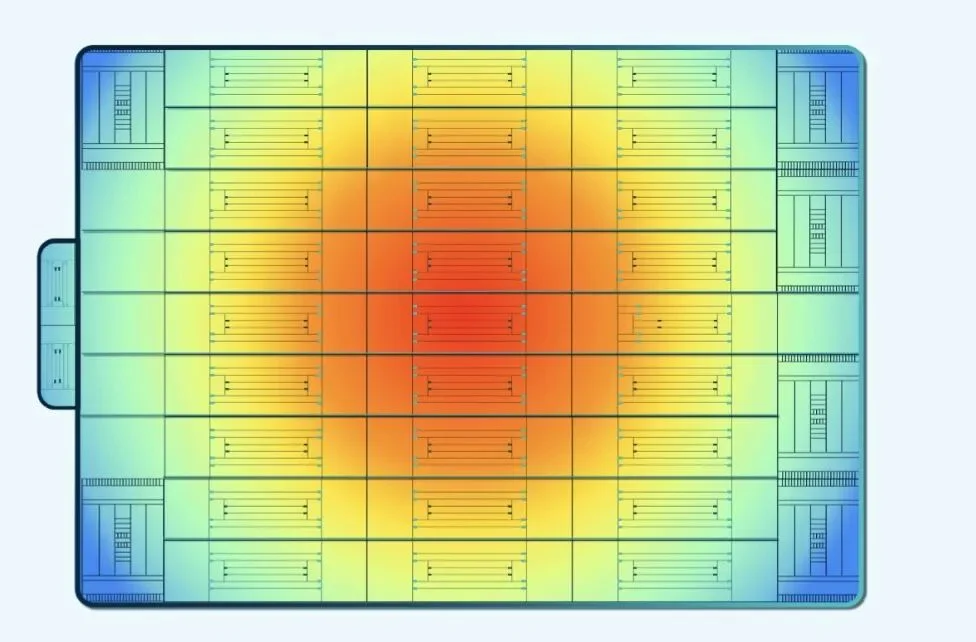
The edges of the battery pack, especially the four corners where two sides meet, have significantly better heat dissipation than the center of the pack, which is surrounded by cells on all sides. Additionally, because the battery pack casing is made of aluminum alloy and NIO vehicles use battery swapping—which leaves gaps around the pack—heat from the perimeter is more easily lost during winter.
This is a fatal blow to the poor low-temperature performance of LFP batteries. In such conditions, a mere 5 kWh increase in capacity seems insignificant.
NIO had previously considered adding thermal insulation material to the four corners of its original LFP solution to improve winter range, but doing so would have wasted both space and weight.
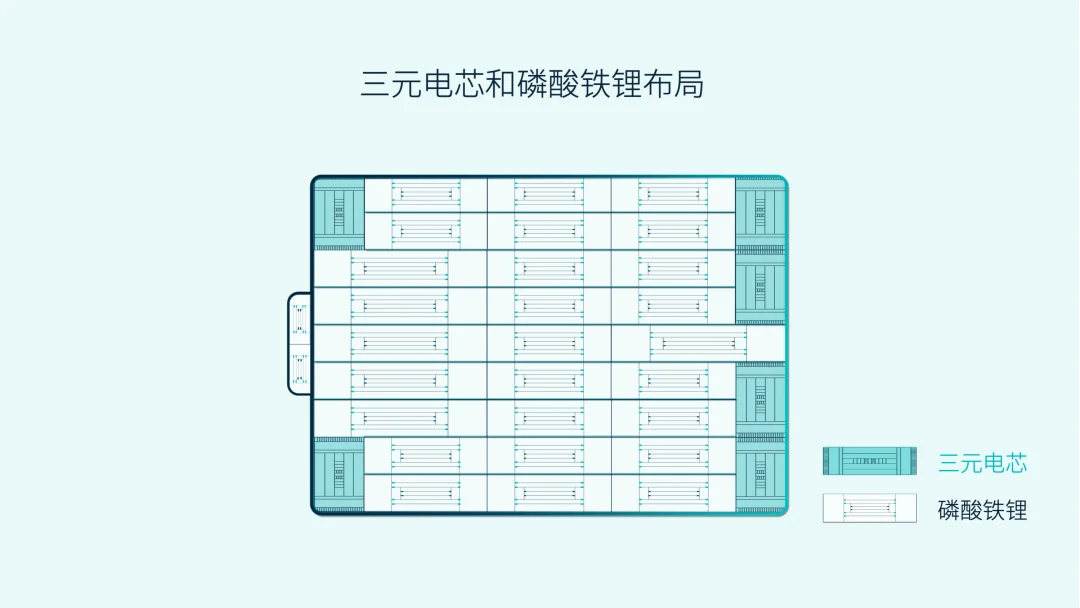
Looking at this image, I feel like NIO's battery engineers were thinking exactly this:
Isn't ternary lithium better for low-temperature performance? So wouldn't it be great to place it in the coldest area? It would even provide insulation!
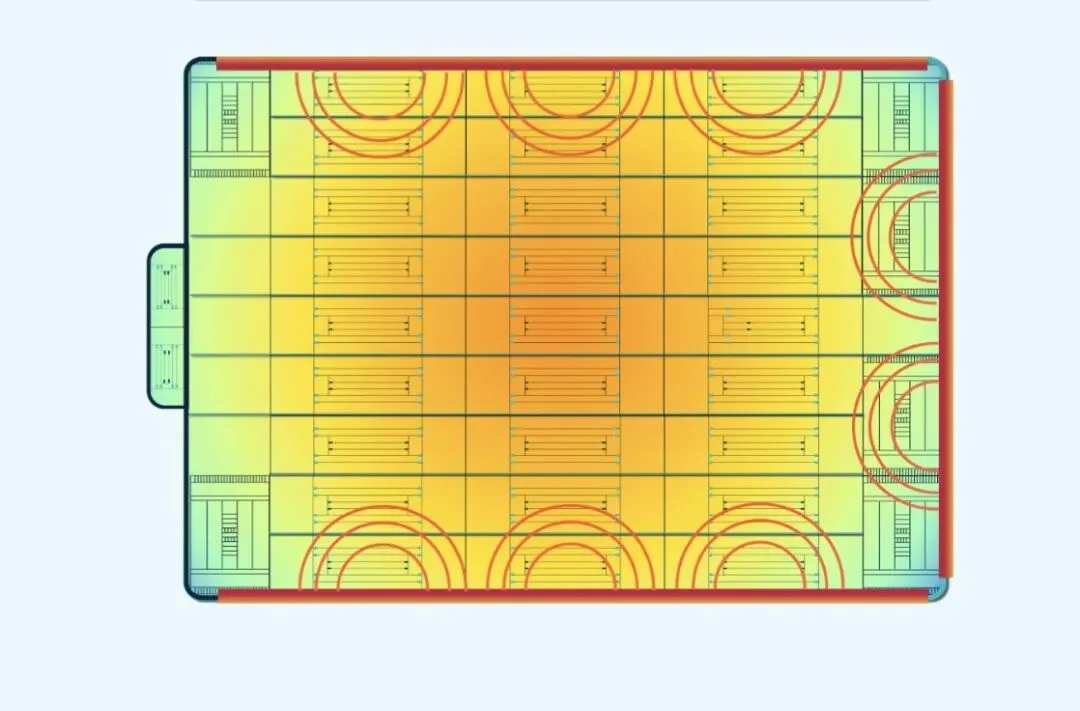
Using a minimal amount of ternary lithium cells effectively insulates the lithium iron phosphate (LFP) cells. Combined with radiative active thermal compensation, the new 75 kWh battery pack improved temperature uniformity by 60% and raised the minimum battery temperature by 40% compared to previous products after 12 hours in extreme cold.
Interestingly, Zeng Shizhe also mentioned that through radiative active thermal compensation, they control the battery pack's resting temperature at around -5°C. Why this specific number? Because if it's higher, energy consumption is too high and not cost-effective; if it's lower, the loss is too significant and also not worth it.
The final result is a 25% reduction in low-temperature range loss compared to pure LFP batteries.
Ternary Lithium as a Ruler
However, since LFP makes up the majority of this ternary-LFP hybrid battery, it still faces a severe challenge: estimating the State of Charge (SoC) for the LFP portion (i.e., how much electricity remains in the battery).
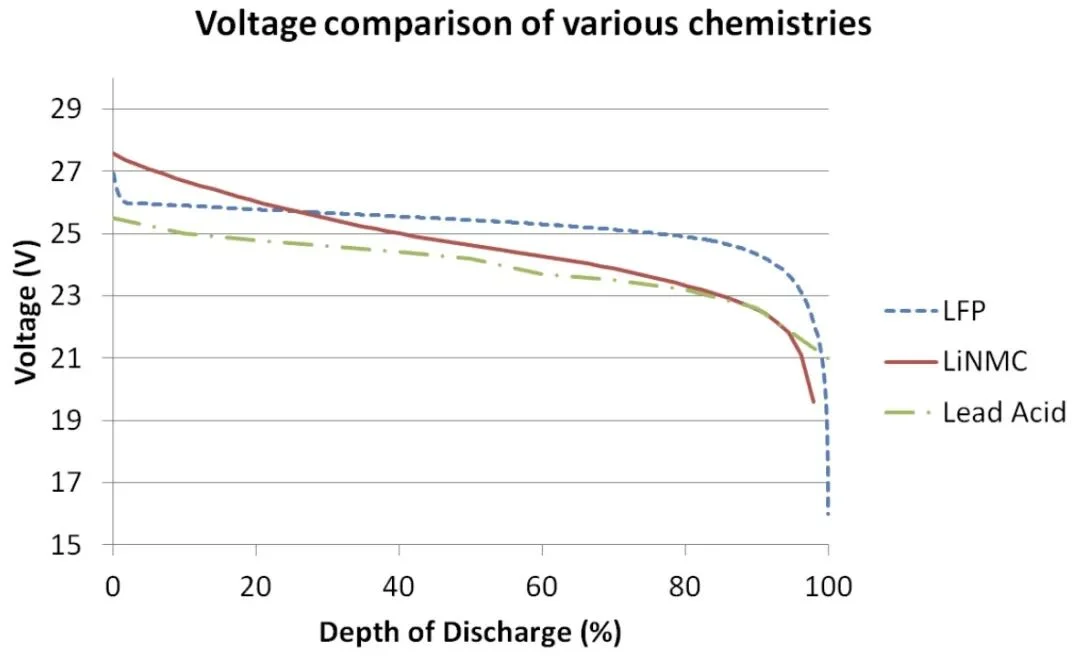
The image above shows the discharge curves for three different battery types: lithium iron phosphate (blue), ternary lithium (red), and lead-acid batteries (green).
The reason lithium iron phosphate (LFP) batteries are difficult to calculate State of Charge (SoC) for is that their discharge curve is excessively flat. In plain terms, as the energy in the battery decreases, the voltage drops only slightly, making it hard to determine how much charge remains based on voltage alone, until the battery suddenly dies.
Lithium iron phosphate is like a new colleague with low alcohol tolerance: when he first joins, he can't refuse the boss's pressure to drink, and before long, he ends up vomiting everywhere (though I certainly don't recommend this kind of drinking culture).
But ternary lithium batteries are different. They're the straightforward "boys" who wear their emotions on their sleeves, and they're also prone to getting angry and exploding (hopefully not).
Except at the extremes, the voltage of ternary lithium batteries decreases linearly as the state of charge drops, which facilitates more accurate estimation of the battery pack's State of Charge (SoC). Compared to the notoriously difficult-to-model behavior of lithium iron phosphate (LFP) batteries, estimating remaining capacity based on the voltage curve of ternary lithium chemistry is significantly simpler.

The Black Brothers' Key served as Obama's "angry translator." Thus, pairing LFP with NMC batteries is like Obama, who could only express his anger through passive-aggressive remarks, using his expressive "angry translator" to convey his true feelings.
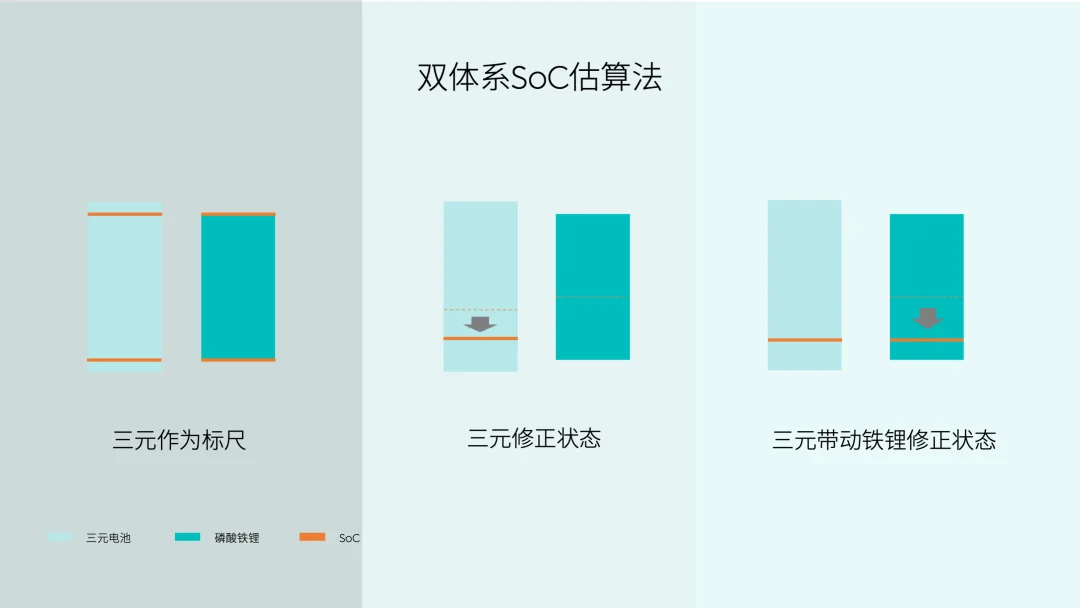
The principle of using ternary lithium batteries as a benchmark to estimate the state of charge for lithium iron phosphate (LFP) batteries is actually quite simple.
Ternary lithium cells have a higher actual capacity than LFP cells. This design allows the 10% to 90% remaining capacity range of the ternary battery to serve as the reference scale, since the accuracy at the beginning and end of the discharge curve is not particularly high.
To put it bluntly, 90% of the ternary battery’s capacity corresponds to 100% of the LFP battery’s capacity, while 10% of the ternary battery’s charge corresponds to 0% of the LFP battery’s charge. The intermediate range is roughly calculated like solving a linear equation (though the real-world scenario is more complex), with values mapped proportionally.
Regarding the final accuracy of the State of Charge (SoC) estimation, NIO states that its ternary-LFP hybrid battery pack achieves precision comparable to pure ternary lithium packs, with an error margin reduced to within 3%.
Details Are Also Impressive
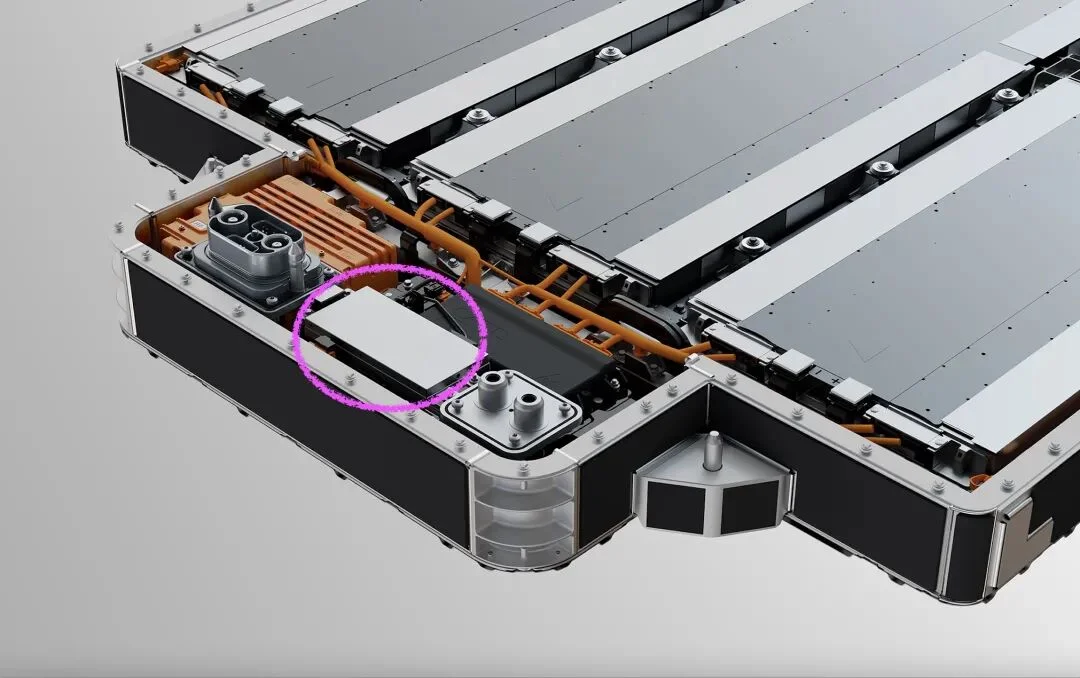
The component marked in the image is a newly added DC-DC converter, which enables fast and dynamic charge calibration. This minimizes adverse effects caused by variations among series-connected cells and allows the vehicle to perform self-checks upon shutdown without relying on the small auxiliary battery. As DC-DC technology matures, there is no reason to rule out installing this component in the 100 kWh battery pack in the future.
In terms of passive safety, in addition to the added longitudinal beams within the battery pack area and the physical barriers that provide waterproofing, the fuse located at the front of the battery pack has been moved to the rear, further enhancing reliability during a collision.
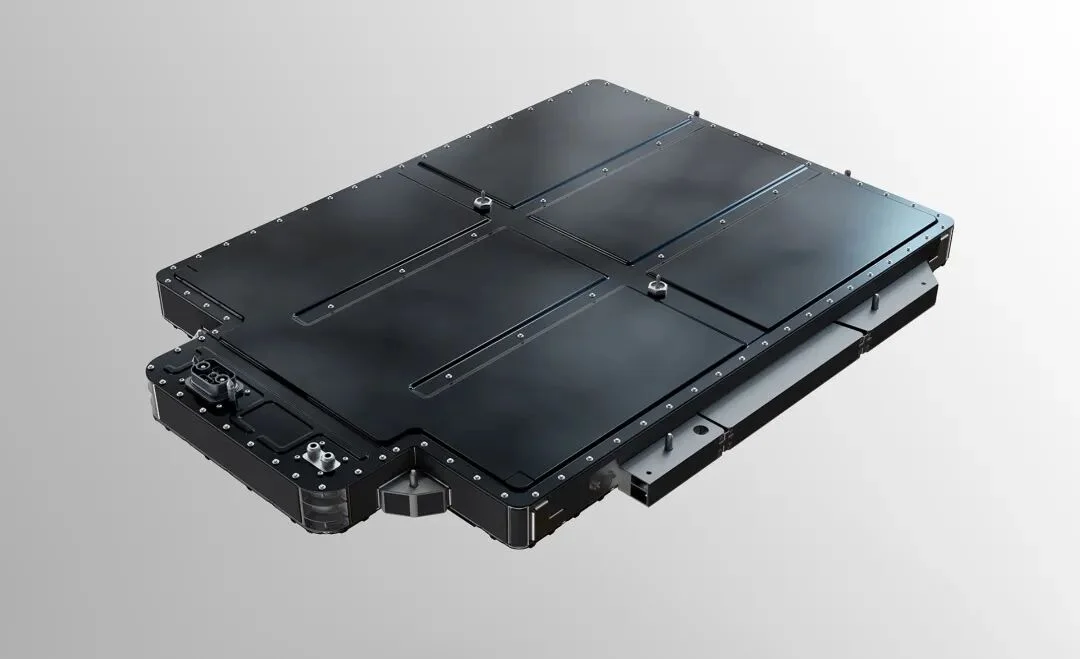
If you look closely, you will notice two new cuts have been made to the crush zones on both sides of the battery pack. These are designed to reduce heat conduction from the sides, ensuring better range performance in winter. Rest assured, these openings do not negatively impact energy absorption capabilities.
04User Experience Speaks for Itself
Through these efforts, the 75 kWh battery pack utilizing CTP technology has seen a 10% simplification in manufacturing and assembly; a 5% increase in volume utilization; and a 14% improvement in energy density, reaching 142 Wh/kg.
Regarding weight, as a battery pack primarily based on lithium iron phosphate chemistry, it has only increased by approximately 15 kg, eliminating the need for recalibration of the suspension tuning. Similarly, according to Zeng Shizhe, the vehicle is equipped with four different BMS strategies, so there will be no mismatch issues when swapping to the new 75 kWh battery pack at a swap station.
In fact, this hybrid cell battery pack does indeed involve significant input from CATL, and there is no guarantee that other manufacturers will not adopt similar solutions.
Or we can be confident that other manufacturers will follow this fresher approach. After all, an LFP cell costs about five mao each, while a ternary lithium cell costs about nine mao. Every bit saved is profit.
Regardless, the expansion of LFP applications is a fact. As charging infrastructure improves—especially for NIO, which offers battery swapping—the role of battery capacity in product evaluation will become more rational, reflecting a deeper understanding of usage scenarios.
Zeng Shizhe made it clear: while the hardware of this battery pack can indeed be copied or imitated, creating a truly good product hinges on algorithms and data. From State of Charge (SoC) estimation to dynamic thermal management adjustments that optimize performance and energy consumption...
This kind of in-house development is not only NIO’s pursuit as a user-centric company but also a critical competitive barrier for a leading new-energy vehicle maker.
Of course, with more swap stations popping up, my confidence in conquering winter grows stronger. I hope to have the opportunity to personally test the performance of this ternary-LFP hybrid battery in the harsh winters of Inner Mongolia or Northeast China.
But first, let me take this chance to express a thought:
It turns out that ternary lithium is what makes LFP appealing...
Written by: A Fan Da Edited by: 63