


NIO Offers Paid Seat Adjustments After Months of User Complaints
In early April, a community group within the NIO app called the "Seat Voice Group" was established. The group formed after one NIO owner posted online about developing a herniated disc following a long-distance road trip, drawing significant responses from other users.
Three main issues gained consensus within the seat group. First, the angle between the NIO seat and backrest prevents drivers from sitting upright, contributing to herniated discs. Second, an angle between the headrest and the seat leaves the neck unsupported, potentially causing cervical spondylosis. Third, the thigh support is fixed at a 45-degree angle and cannot be adjusted; prolonged driving can lead to compression of the thighs, restricting blood circulation.

The group initially had a modest size, numbering around 300 people as of April 14. However, shortly thereafter, William Li joined the group, amplifying its influence within the community. By April 16, membership had approached 1,000. Within just two days, seat comfort became the highest-priority user complaint within NIO.
To address the seat issue, NIO established a brand-new seat team and recruited Wang Qiong, former CTO of Fojiya. On May 16, it invited a small group of users to experience the first improved design; user feedback remained dissatisfied. Consequently, in late May and late June, NIO launched two additional improvement plans, inviting select users to test them at city service centers and battery swap stations. By this time, the scale of the primary seat group had reached 2,000 people, and the secondary seat group had grown to more than 600 members.
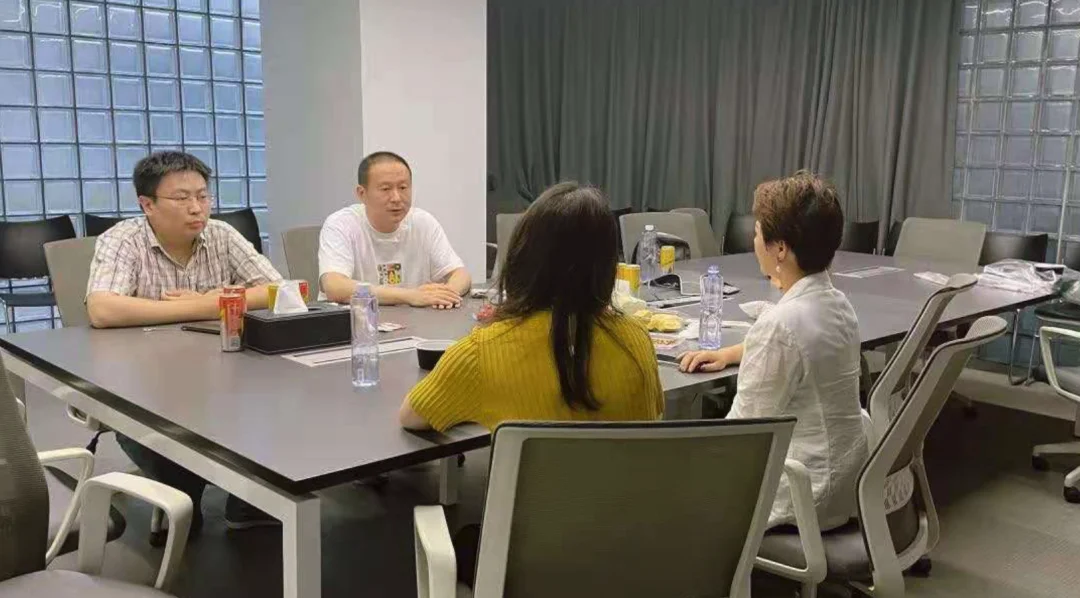
Three months have passed since NIO formally prioritized the seat issue on April 16. After multiple rounds of user testing and product validation, NIO has finalized an internal improvement plan. Before public release, the company sought to organize 50 users from the 2,000-member group to travel to Hefei for a discussion meeting. This proposal sparked intense debate within the group: some viewed it as a publicity stunt by NIO, others suspected an attempt to co-opt these 50 individuals, while many argued that sending only 50 people to Hefei was meaningless and unrepresentative.
At this point, NIO had no room to argue, but it ultimately went ahead with the user event despite the awkwardness.
01What exactly is going on
At the seat experience event, it was very clear that NIO placed great emphasis on this. During the test drive activity for experiencing the new seats, I even observed a 1:2 ratio of some "key" users to staff, with two staff members assigned.
What was particularly interesting was that a user riding with me mentioned to the staff, "Actually, I think your seats are fine; they're just a bit firm when sitting." The staff member replied, "No, no, please don't say that. We have issues, and we're working on fixing them." From this exchange—characterized by one party being assertive and the other deferential—it's clear that the staff member was in a state of 'high alert.'
Of course, the face-to-face meeting with William Li the next day was the highlight of the event, but this should be the most difficult user interaction in William Li's history.
Personalized Solutions
"We ask everyone to understand that NIO will never make decisions based on money or whether the media is hostile; those are not factors we consider. We have also communicated with Zhijianzongju regarding this matter. The seat issue is indeed not a recall event, as some users claim, nor is it a quality problem. However, there is an issue with comfort experience, which is what we focus on." The theoretical basis for William Li's statements comes from data obtained through a survey conducted within the community in April targeting all users regarding the seat issue.
Based on a survey of 29,304 respondents, the proportion of users dissatisfied with the seats was 13% for ES8 owners, 21% for ES6 owners, and 19% for EC6 owners. At first glance, these figures do not appear low. However, considering the psychology behind surveys, individuals with complaints about seats are more motivated to participate. If data were collected from all 120,000 NIO users, I believe the proportions would likely shift. This suggests that the incentive of 100 points for completing a survey may not be compelling enough.
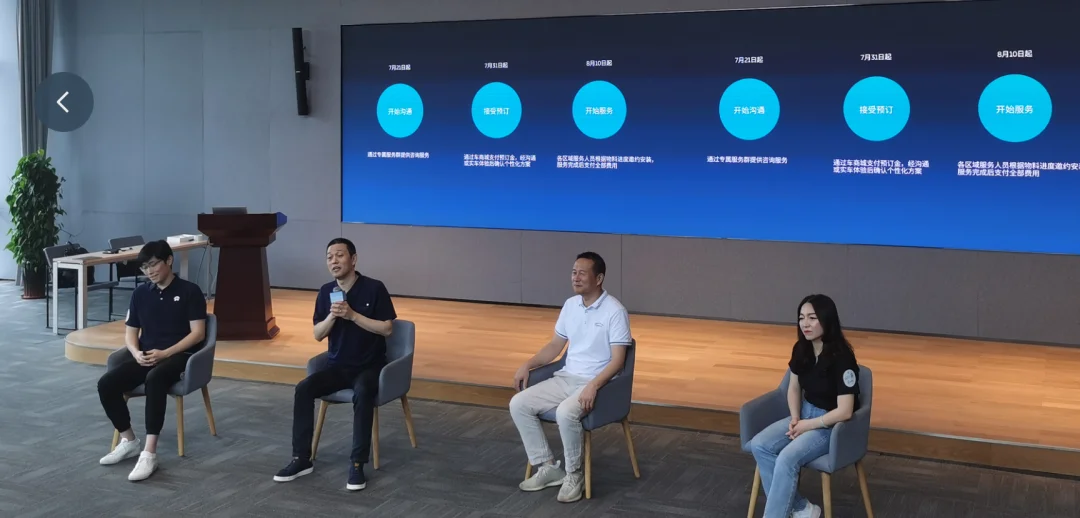
However, the phrasing of the "seat personalization options" at the event sparked dissatisfaction among many users, with some asking William Li to clarify how he defined "personalization." William Li responded, "What we offer is called a personalization option; we do not simply view this as a matter of individual preference."
William Li's point is that 20 percent of users in the community believe there are issues with the seats. If this 20 percent proportion is applied to a base of 100,000, it amounts to more than twenty thousand people—a significant number, so this is certainly not an issue of individuality. However, eighty percent of users feel the seats are fine. Moreover, within that twenty percent group, not everyone requires a comprehensive modification of the seat; some only wish to adjust the seat angle, while others want softer seats. There are still differences in needs among them, which leads to the term "personalized solutions."
Caring Too Much About Sportiness
Regarding the origins of the seat issue, William Li explained: "I believe that in the long term, particularly for SUVs, we will consider equipping most cars with two types of seats. It's similar to Porsche: standard comfort seats with optional sport seats, which allows me to increase gross margin a bit more. Currently, we have sport seats as standard. This does indeed result in a smaller addressable audience compared to comfort seats; that is a fact." In less than three hours at the meet-and-greet, William Li repeated nearly the same points no fewer than three times, his tone growing increasingly assertive each time.
However, it seemed that users' emotional venting had not yet been fully satisfied. After multiple rounds of intense questioning, William Li finally remarked, 'If I could do it all over again, I would definitely prioritize seat comfort higher up. We suffered from this oversight, and for our second-generation product, we must certainly take comfort into account. It is a fact that we did not consider it enough in the first generation.' Shortly after saying this, William Li hurried back to Shanghai to attend his next meeting. At that moment, I felt that the NIO model is truly quite demanding on its founders. If possible, we should 'develop' more William Lis.
But back to the point, I share this view. At NIO Day in 2017, to carry forward the track heritage of the EP9, NIO also pushed a "performance card" for the ES8. However, I believe this was a choice with hell-level difficulty, because the old ES8's range only achieved the "heart-moving" NEDC figure of 355 kilometers. This is the first problem exposed by the product definition oriented toward sports performance.
First, the previous ES8 adopted performance-oriented components in areas such as tires, brakes, and motors, aside from the seats. The choices of tires and motors were among the factors that significantly impacted range. Specifically, the 20-inch MC6, 21-inch P Zero, and 19-inch Hantai Ventus S1 evo2 SUV are all tire models that lean towards grip within their respective brands. Undeniably, the heavier overall weight of the previous ES8 did require tires with better grip and brakes with stronger braking force to match. I believe this point is not a major issue.
But the two induction motors on the old ES8 delivered a 4.4-second acceleration time, which looks very impressive from a parameter perspective. However, for a large SUV that is over 5 meters long and has seven seats, shouldn't range be a more essential requirement compared to the performance results of the 01?
After range issues became apparent, NIO switched to permanent magnet synchronous motors for the ES6 and EC6 models to improve efficiency. Yet, the brand still wanted to maintain its sporty image, emphasizing seat bolstering at the expense of comfort. This trade-off is reflected in user feedback: the ES6 and EC6 report higher rates of seat-related complaints, with the ES6 slightly higher than the EC6. I attribute this difference to the pre-facelift ES6’s lychee-grain leather, which is tighter and less elastic than the EC6’s synthetic leather and fabric combination, resulting in a firmer seating experience.
Design Flaw?
I would like to address the calls for a recall due to alleged seat design defects raised by users in the "Seat Voice Group." In my view, safety must take precedence over sporty or comfort-oriented styling during seat design and development. Examples include headrest protection for the head in low-speed collisions and seat angle support for the chest in high-speed scenarios.
The EC6’s crash test results at Zhongbaoyan last year were widely recognized. Frankly, if a seat meets safety standards, labeling it as having a "design flaw" solely because different users have varying comfort preferences seems unreasonable.
However, the seat controversy raises a broader question: pleasing everyone is impossible, but every dissatisfied user remains a customer. For NIO, which aims to be a "user enterprise," how should it balance these competing interests when facing future issues? After the discussion, I spoke with Li Tianshu, the "No. 0001" owner and NIO’s Head of Product Experience, about this.
He stated, "We hope to consider user needs more comprehensively in the future, using more universal solutions to satisfy 95% of users, while addressing the remaining users with personalized options." He hopes to achieve a ratio of 4% for the personalized segment, aiming for 99% total user satisfaction through this two-tier approach.
Solutions
Therefore, NIO's final solution for the seats allows ES8 owners to flexibly choose from the following options:
Driver seat pan angle adjustment, for users who feel pressure on the front of their thighs. Cost: RMB 200.
Driver seat cushion adjustment, for users who feel strong pressure on the back of their calves or find the rear of the cushion too low. Cost: RMB 200.
Front row headrest adjustment, for users who find the headrests too hard or pressing against their heads. Cost: RMB 200 each for the driver and front passenger.
Seat softening, for users who find the seats too firm. Cost: RMB 500 each for the driver and front passenger; RMB 1,000 for the second-row seats.
For ES6 and EC6 owners, the second option (cushion adjustment) is removed compared to the ES8 package, replaced by a second-row seat angle adjustment, also costing RMB 200. The fees above include vehicle pickup and delivery, materials, and labor. NIO users can pay with cash or points.
It is important to note that all adjustments are irreversible except for the headrest adjustment. Therefore, we recommend considering this carefully before deciding to proceed.
Given the context mentioned earlier, NIO has handled the seat issue in a proactive and positive manner. So why does it still cause significant dissatisfaction among users in the seat discussion groups? I believe this escalation was partly driven by comments from certain users within the NIO community regarding the seat group discussions.
02Community Impact Intensifies
As the seat controversy gained momentum within the community, more users joined the discussion. Some owners who believed the seats were fine shared their sharp opinions, angering those who had reported issues and sparking heated arguments among users. New slang terms even emerged in the seat-focused groups, such as "wzx".

By the mid-to-late stages of the NIO seat incident, users in these groups shifted focus from merely complaining about the seats themselves to criticizing the culture of the NIO community, which became a relatively popular topic.
Consequently, users in the seat groups expressed widespread dissatisfaction with the term "personalized solutions." They did not want to be labeled as an "alternative" group, nor did they believe that voicing complaints or suggestions about NIO should be considered deviant behavior within the community.
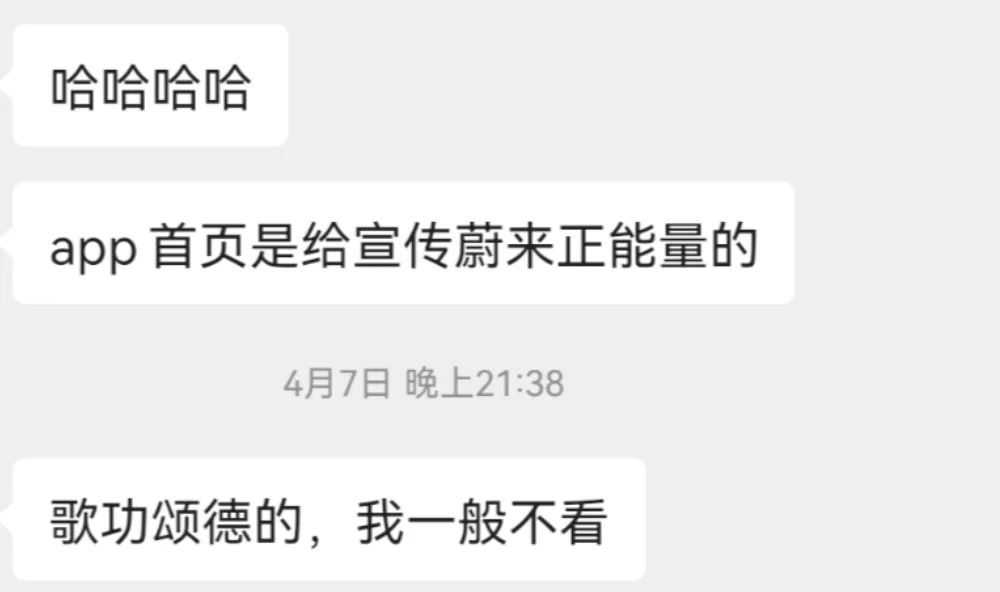
This issue was not limited to the seat groups. In the BN user community, which was established earlier and is larger in scale, many users also voiced criticisms regarding NIO App's operational mechanisms.
03Or Is It Still an Experience Issue?
After discussing so much, I’d like to share my perspective on the seats. I recently completed a 5,000-kilometer self-driving trip in Inner Mongolia at the end of April. To give you some context on my driving position: I set both the seat and steering wheel to their lowest settings, resulting in a relatively reclined posture. My hands rest naturally on the armrests. While the overall seat firmness is on the harder side, it is not as exaggerated as some users describe it—"hard as stone." Overall, I don’t find any major issues with the seats, partly because this is similar to the seating positions I’ve used before.
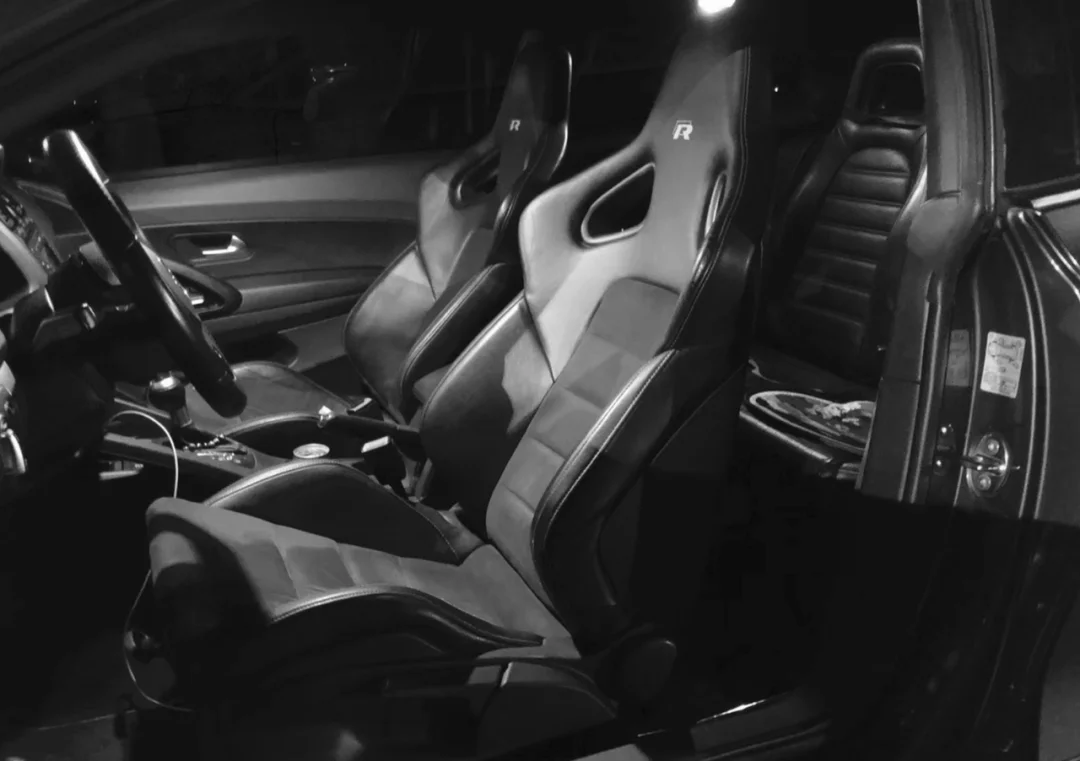
That said, these Recaro seats have nothing to do with comfort. Many car enthusiasts around me experienced a mix of pain and pleasure during their ownership. Some friends, unable to tolerate such sporty seats after long-term use, eventually sold them at a high price. This was certainly not a quality issue but rather an experience mismatch.
However, when buying a NIO compact electric SUV, what should one expect more: sporty performance or comfortable space? Given that it is an SUV, I believe the latter is far more important.
Final Thoughts
I’ve already written nearly 4,000 words, but I still have something to say. In my initial understanding, the NIO seat controversy shouldn’t have escalated to such a heated level.
First, to NIO users who believe the seats are fine: I suggest adopting a more open-minded attitude toward those criticizing the seats. They are not "smearing" NIO; they are simply sharing their user experience. NIO no longer lacks praise and applause. The NIO community needs this continuous feedback to drive improvement.
Second, to users in the Seat Voice Group: Ergonomics and product definition are challenging endeavors, especially for new automakers. It is inevitable that early-stage manufacturers lack sufficient experience. Looking at how NIO handled the seat incident, I believe they demonstrated responsibility by facing the issue and working to resolve it. What NIO hopes for most is your understanding.
Finally, I also want to say to NIO: The fact that the EP9 achieved excellent results on various tracks is an objective reality. However, whether this track DNA should be transplanted into ordinary SUVs and sedans is a matter of considerable debate. I believe in the law that 'brands seek audiences, and audiences define brands.' From the daily details of the community and user segments at each NIO Day, it is not difficult to see that the NIO brand defined by NIO users actually resembles a luxury, comfort-oriented, and service-focused brand image. This is also a fact.
Written by: Huang Laoban Edited by: Daji