


Great Software Needs Great Talent: Volkswagen CARIAD China Arrives
In its Accelerate plan released in March 2021, Volkswagen declared its ambition to become a "software-driven mobility provider."
Following this strategy, the importance of its software division was rapidly elevated within Volkswagen's aggressive transformation roadmap over the course of a year:
On June 28, 2021, Di Si announced his resignation as Chairman of the Supervisory Board of Sikeda and Xiyate to devote himself entirely to software development;
On December 7, 2021, Di Si successfully retained his position as CEO of the Volkswagen Group, and from this year onwards, he will take full responsibility for the software division CARIAD.
Di Si believed that "by 2030, software-supported sales, built upon BEV (battery electric vehicle) and ICE (internal combustion engine) sales, will expand the entire mobility market from approximately EUR 2 trillion today to EUR 5 trillion."
On April 28, Volkswagen held the "CARIAD China Strategy Launch Event" in China, marking the first time the company publicly showcased the work and operations of its CARIAD China subsidiary.
01What is CARIAD?
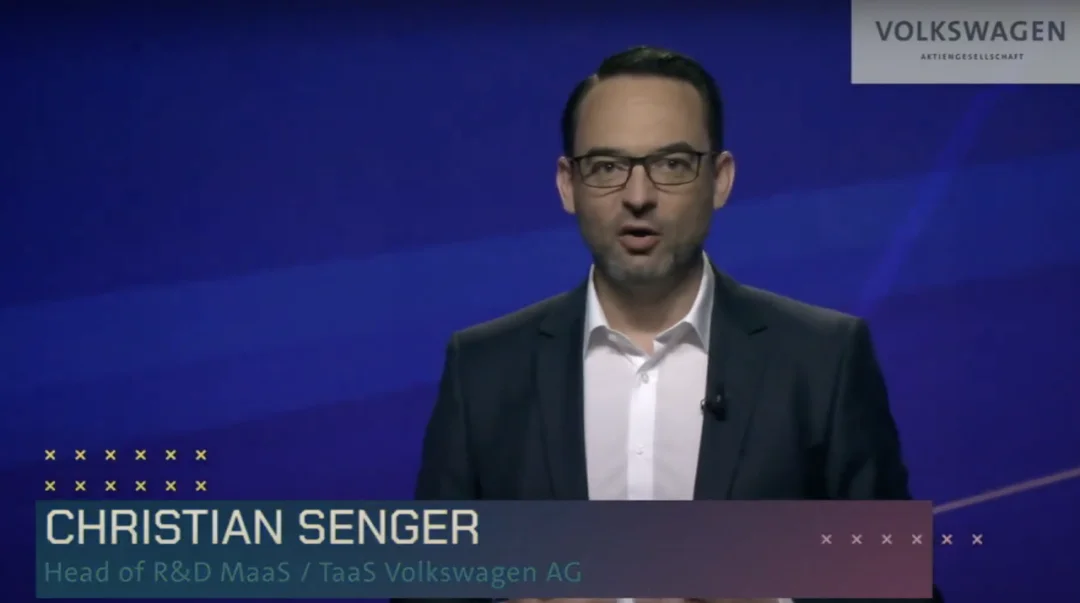
In fact, Di Si began laying the groundwork for the software division as early as February 2019. He established a software department named "Digital Car & Service" and appointed Christian Senger—a former BMW colleague known for his resemblance to Mr. Bean—to lead the entire division.
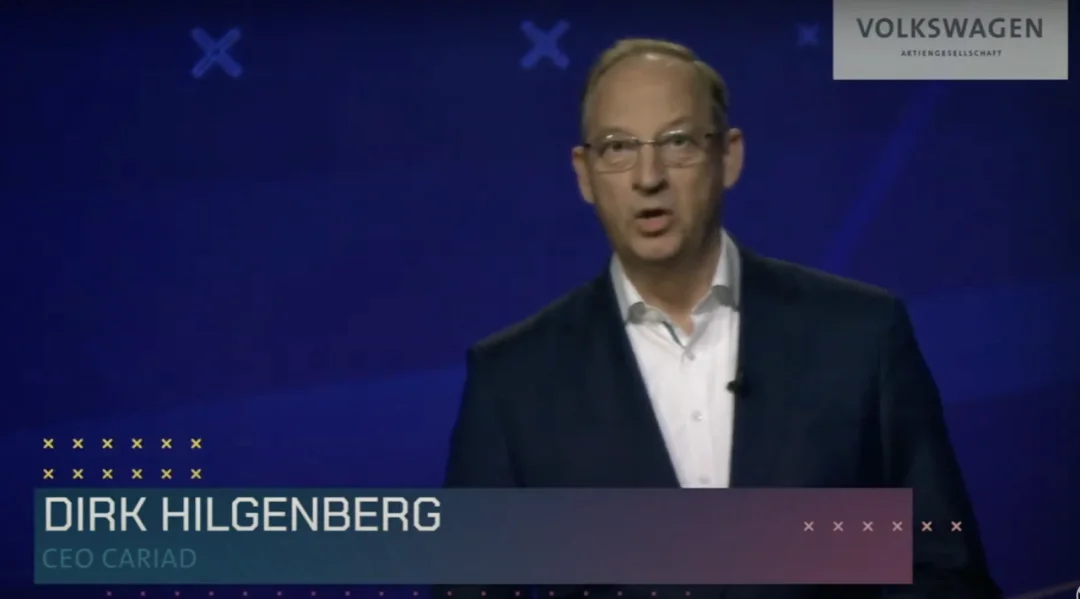
After surviving multiple internal power struggles, the department, due to its radical reform efforts, faced pressure from union factions. It eventually spun off into an independent company, CARIAD, with Dirk Hilgenberg, also from BMW’s IT technology background, taking over as head.
As the software arm of the Volkswagen Group, CARIAD houses the group’s top IT talent and oversees the development of underlying software for all brands. Its authority and status are higher than those of traditional functional departments. CARIAD’s business scope is clearly defined: "Developing a unified, scalable new software platform, advanced driver assistance systems (ADAS), autonomous driving, and next-generation intelligent connectivity features." In my understanding, this primarily encompasses two major pillars: the E³ electrical/electronic architecture (including VW.OS) and VW.AC.
E³
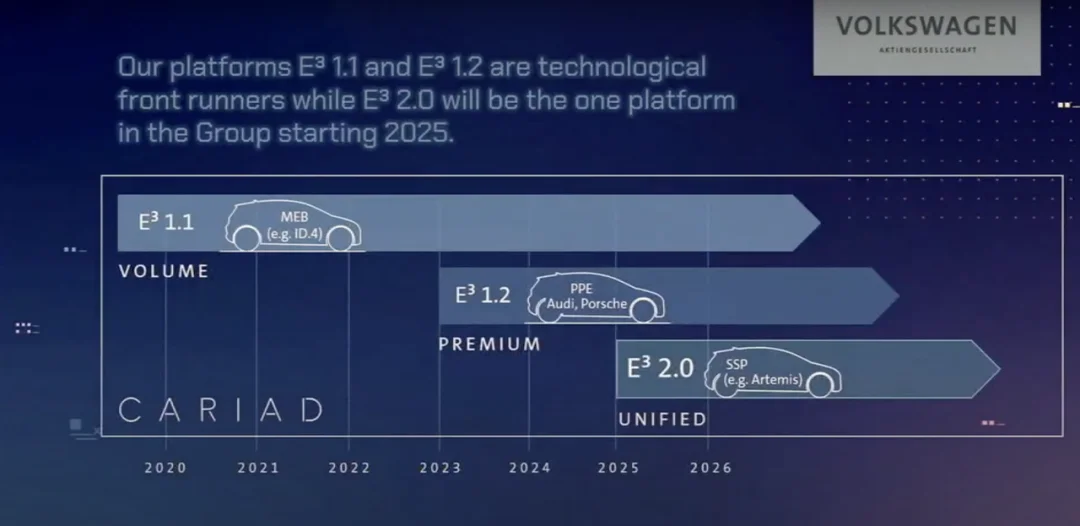
The E³ 1.1 version is already in use, for example in the Volkswagen ID.4, Sikeda Enyaq, or CUPRA Born. This version allows OTA updates for the MEB product lineup.
The E³ 1.2 version will launch in 2023, featuring an infotainment system built on Android with a third-party app store to diversify software options. A key focus is support for VW.AC (Volkswagen.Cloud), which will migrate vehicle data to the cloud.
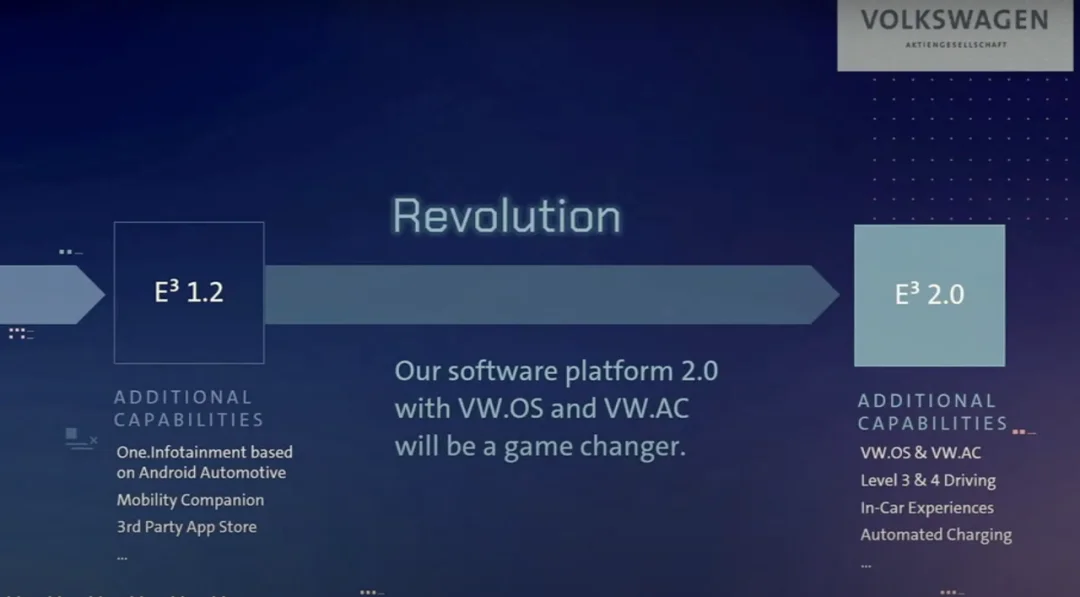
In 2025, the E³ 2.0 version will be released, described by Hilgenberg as a "game changer." It will introduce VW.OS to a new era, standardizing the system across all Volkswagen Group models to maximize synergies while maintaining brand differentiation and user experience, according to Volkswagen.
Audi’s Artemis project will showcase E³ 2.0 for the first time in 2025, alongside Volkswagen’s fully autonomous driving capabilities and SSP platform features. By 2026, these technological benefits will trickle down to Volkswagen’s Trinity project. Volkswagen optimistically predicts that by 2030, 40 million vehicles from the group will be on roads worldwide, making software one of the most significant profit pools.
VW.AC
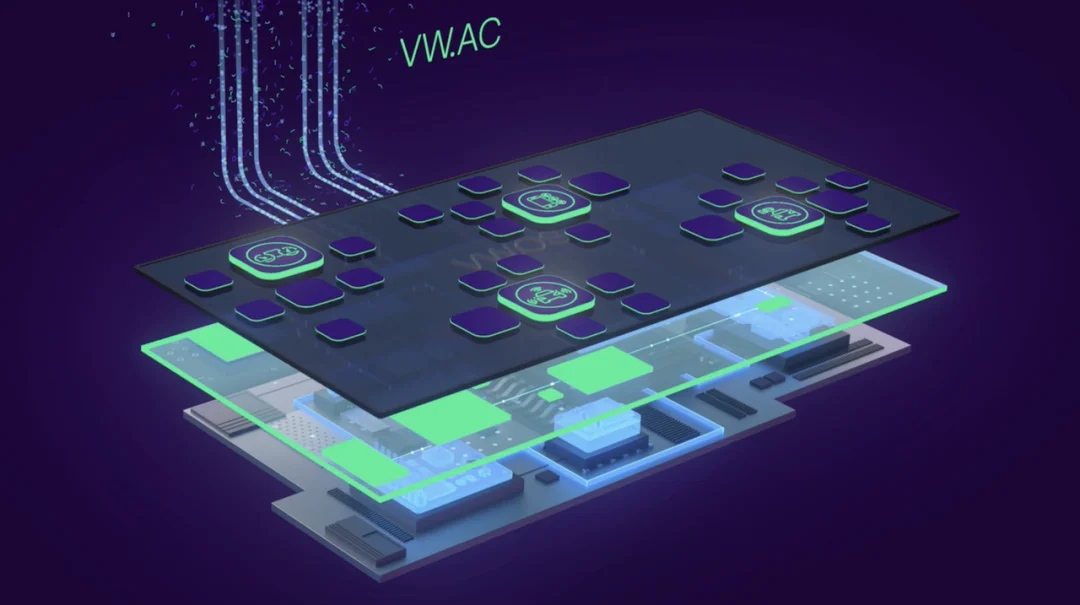
The endpoint of increasingly centralized domain controller architectures is the "cloud." Volkswagen has chosen Microsoft as a strategic partner; Di Si even referred to Microsoft as a "key factor" in transforming Volkswagen into a software-driven mobility service provider.
Beyond cloud-based data management for private vehicles, OTA updates, and crucial AI computing, I believe another significant role of VW.AC is its contribution to the commercial operation of Volkswagen’s autonomous driving fleets.
CARIAD’s ultimate goal is to have its technology stack run on more than 40 million vehicles across the group by 2030. To achieve this, Volkswagen set an ambitious talent plan early in the software division’s planning phase: recruit 10,000 IT professionals. So far, CARIAD has about 5,000 IT staff, completing half of that target. CARIAD’s European headquarters lacks a strong internet culture and faces a severe shortage of IT talent, so CARIAD must "go global."
02CARIAD China Subsidiary
CARIAD chose China as its first stop. China is not only Volkswagen’s largest single market with a complete and mature industrial system, but also possesses abundant software talent and resources.
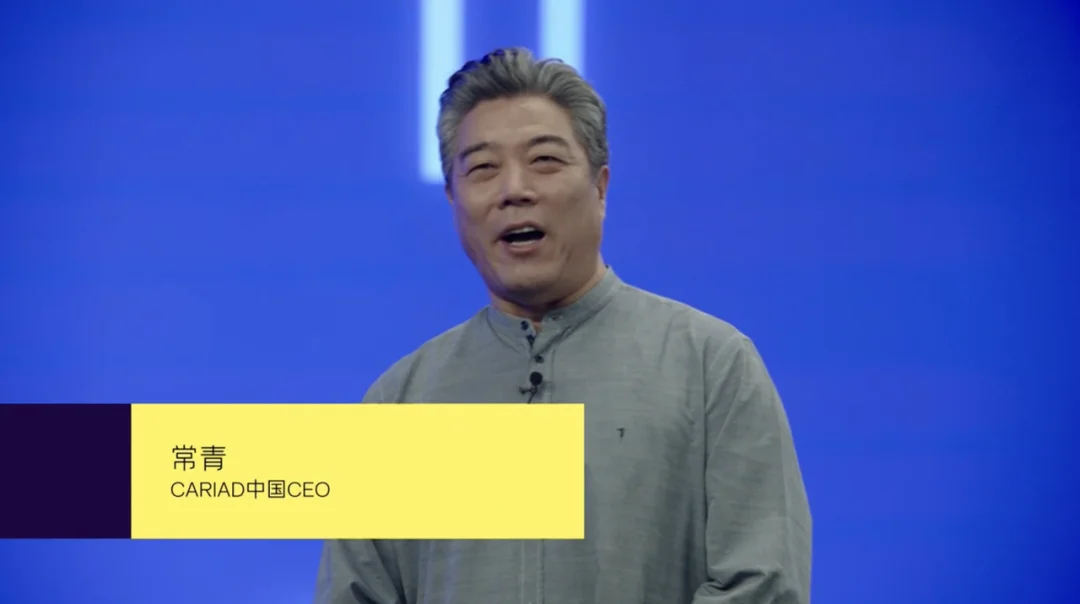
The earliest formation of CARIAD China took place in 2021. Chang Qing, one of CARIAD’s co-founders, serves as CEO of the China subsidiary. Chang Qing is a "veteran Volkswagen employee," having joined the company in 1990. Since 2018, he has been responsible for planning and establishing the product sequence for the group’s unified scalable electronic and electrical architecture.
In less than a year, CARIAD China has assembled a team of 600 people and expects to double its headcount by the end of 2023, with over 90% being local software talent. Meanwhile, CARIAD China is building R&D capabilities in Beijing, Shanghai, Chengdu, and Hefei, aiming to construct a nationwide distributed R&D network.
Volkswagen currently has two pure electric platforms. CARIAD matches different software to each platform. The task of CARIAD China is software development and adaptation for these different platforms:
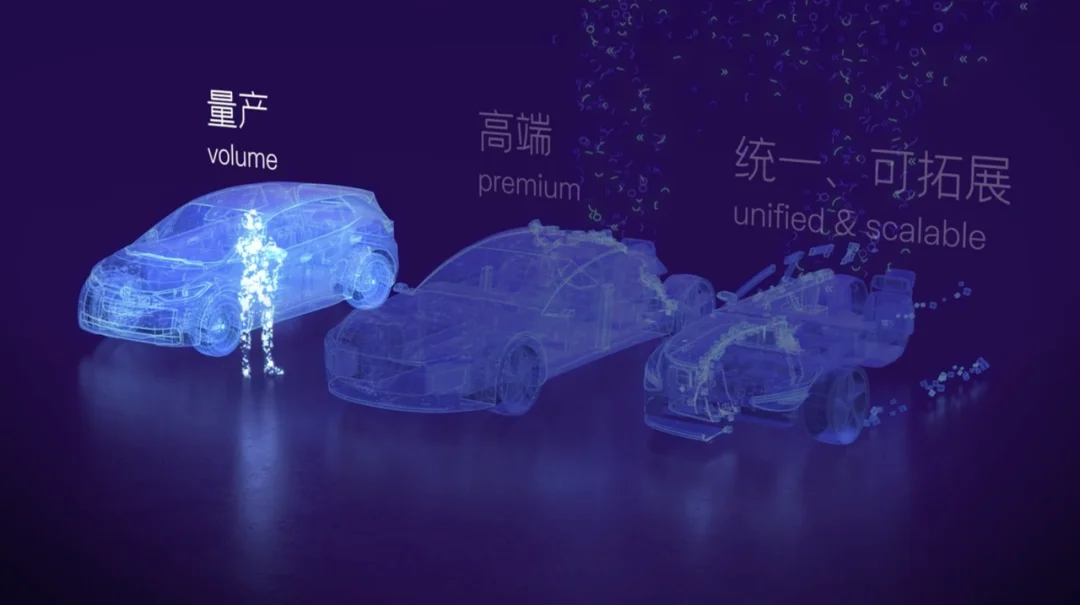
"The volume software platform, designed for MEB-based vehicles, will enable over-the-air (OTA) updates on specific models. The China team will lead the implementation of OTA for the ID. family in China. The first update is expected to roll out in the second half of 2022."
"The premium software platform, intended for the PPE architecture, is planned for launch within the next two years. It will support advanced infotainment systems based on Android Open Source Project (AOSP) and advanced driver assistance systems (ADAS), enabling remote online updates for select Audi and Porsche models."
"The China team is leading the development of China-specific applications for these two major systems."
"The new unified and scalable software platform will serve all brands under the group, supporting Volkswagen’s proprietary VW.OS operating system and connecting to the Volkswagen Automotive Cloud (VW.AC). This can be understood as the dedicated software for Volkswagen’s SSP platform, scheduled for release around 2025 and pre-equipped with Level 4 autonomous driving technology."
"The China team will lead and participate in 70% of the R&D work for the technical stack and product lines of this new software platform, including local R&D and adaptation. Additionally, the team will develop a data backend compliant with local data regulations—namely, the Volkswagen Automotive Cloud (VW.AC)—and deliver a suite of connected services."
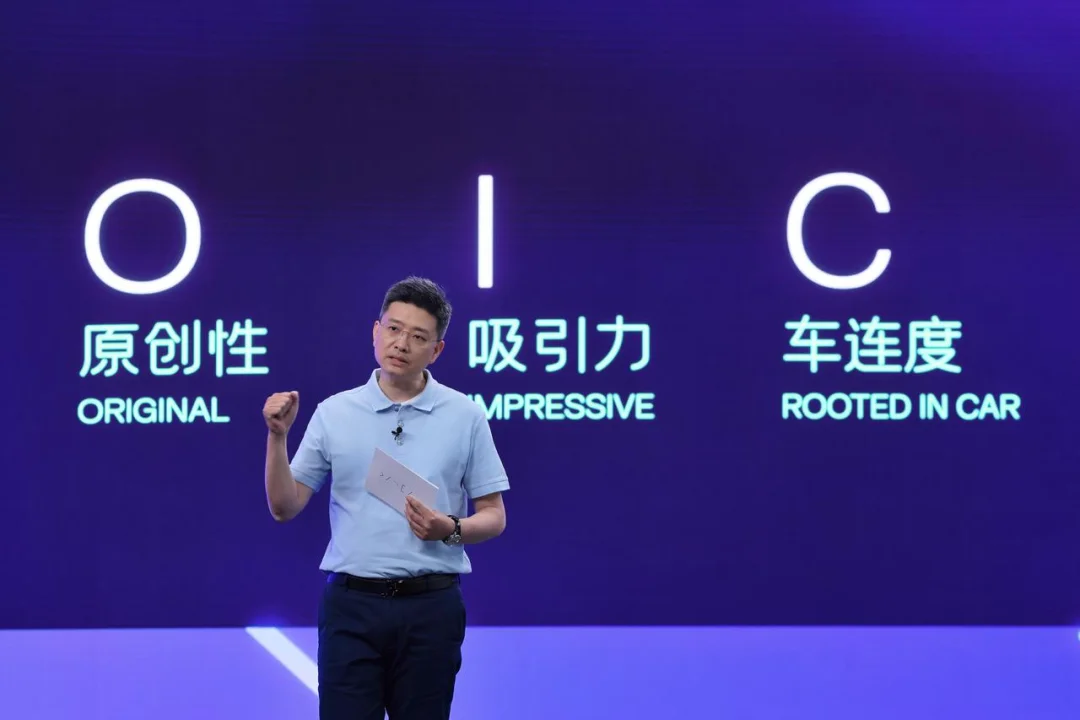
"Sun Wei serves as the CTO of CARIAD China. He joined Volkswagen in 2017 as Senior Director of Intelligent Mobility R&D. He quickly assembled a software engineering team of over 150 people, providing intelligent connectivity software systems for multiple Volkswagen China entities and delivering several intelligent mobility software projects for the Volkswagen Group. Notable achievements include developing a charging service mobile app for CAMS (CAMS) and piloting an autonomous ride-hailing service platform in Hefei. Prior to joining Volkswagen, Dr. Sun spent 16 years at IBM Zhongguoyanjiuyuan, accumulating extensive experience in software R&D and intelligent mobility."
"Currently, the China team has focused primarily on 'optimization' in less than a year. Those familiar with software development will understand the critical importance of optimization to the entire software system."
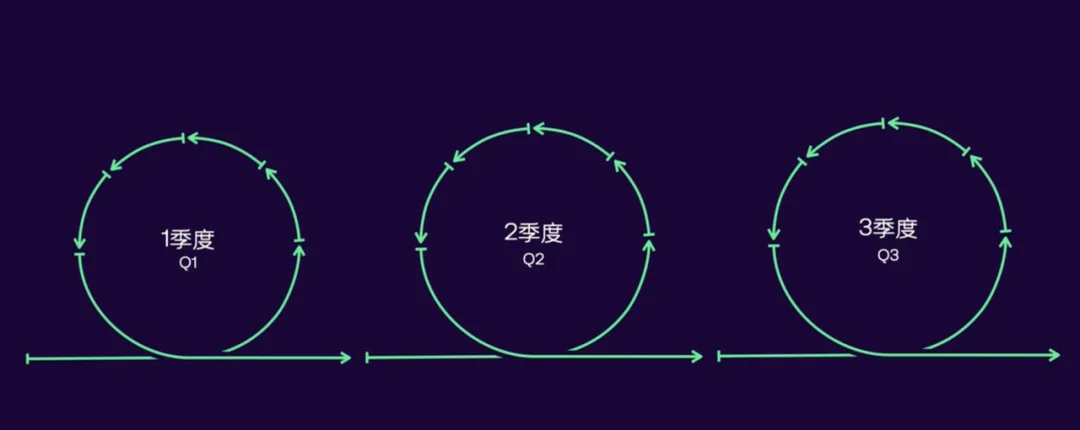
To accelerate the iteration speed of its R&D results, CARIAD China launched an innovation initiative called "Forward," which uses quarterly cycles to rapidly roll out product innovation plans and development methods. This quarterly target requires the integration of tools.
The Rainbow Composer
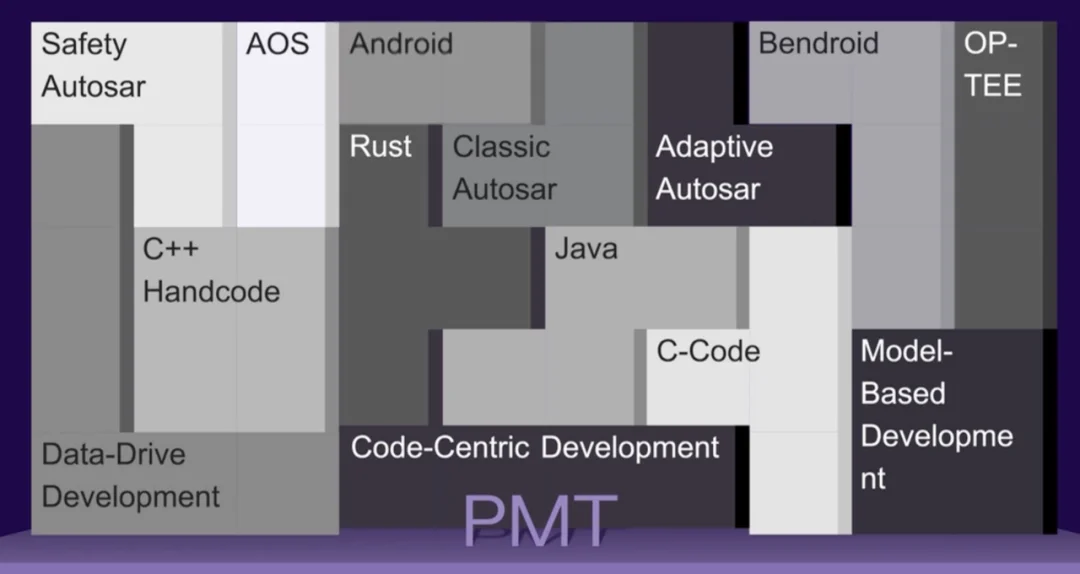
PMT (Process Methodology Tools) is a comprehensive platform integrating development processes, methodologies, and tools. It enables engineers to seamlessly switch between automotive operating system platform development, in-vehicle application development, and cloud service development using more than 50 customized and self-developed tools, while achieving a degree of automation to enhance efficiency.
In the first phase of "Forward" in Q1 2022, CARIAD China proposed over 80 innovative ideas, selected six applications covering areas such as advanced driver assistance, smart cockpits, remote services, and infrastructure, and will further develop them over the next three to six months.
At the launch event, CARIAD China demonstrated one of these features: Outfit of the Day (OOTD). In simple terms, it uses the in-car camera to capture the color of the driver's clothing, then matches the ambient lighting, greeting messages, and UI theme accordingly.
Yes, it may seem somewhat gimmicky and not particularly stunning. However, the software development tool showcased by CARIAD China—the Rainbow Composer—is the real focus.
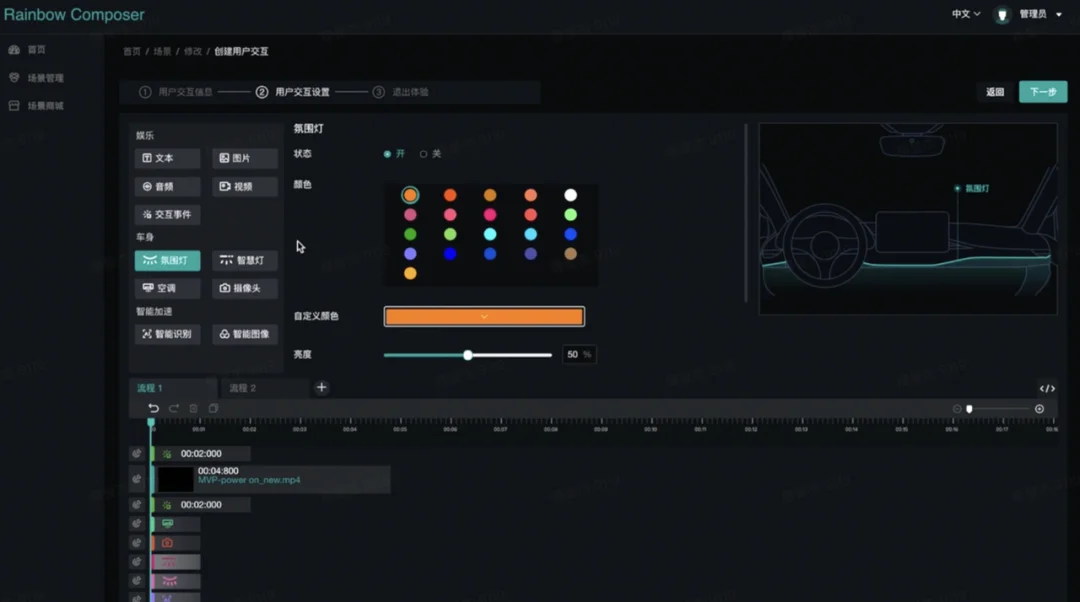
Take a closer look: the toolbox displayed on this interface includes a range of vehicle-related features, such as ambient lighting, climate control, seat settings, artificial intelligence, and entertainment information services. Developers can use this tool to quickly customize new customer experiences for specific scenarios and create personalized user touchpoints within the cabin.
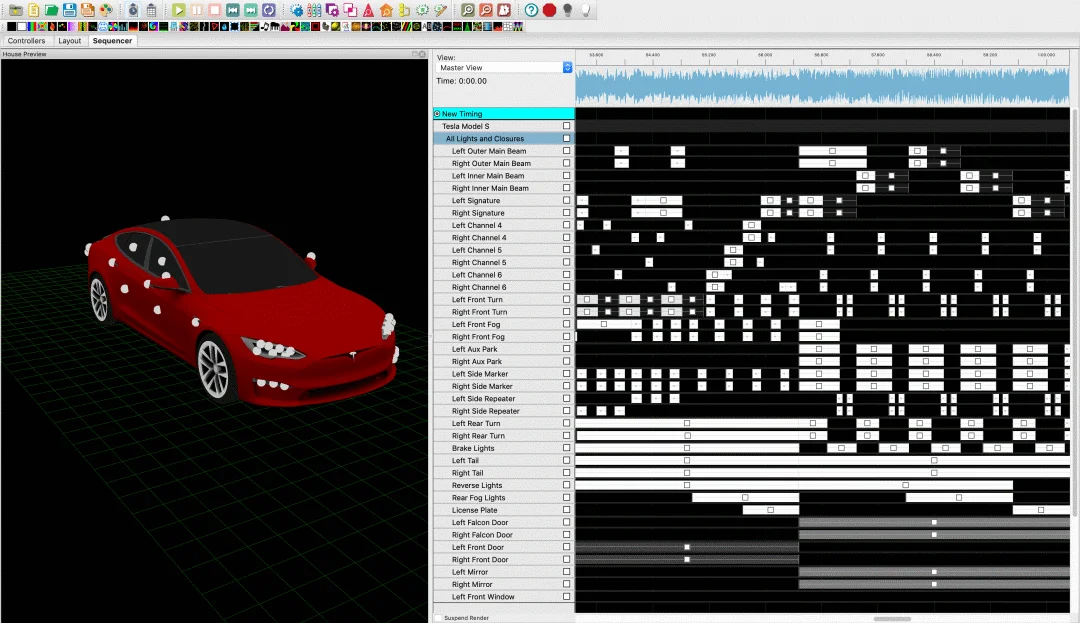
To be honest, the information presented on this interface is not as complex as Tesla’s 'Light Show,' and it is entirely in Chinese. I am confident that I could customize the entire system myself. While Tesla’s open-source tutorial for its 'Light Show' once topped GitHub’s daily rankings, I wonder if this DIY appeal is too niche; feel free to share your thoughts in the comments. However, CARIAD China may indeed open this feature to consumers.
Many domestic new-energy automakers are pursuing similar initiatives, which represents a promising direction for the practical implementation of Service-Oriented Architecture (SOA). Yet, the ultimate ceiling for this functionality lies in the limits of decoupling vehicle hardware and software.
V2X
Another highlight of the press conference was the intelligent connectivity solution led by CARIAD China—V2X. It comprises three features, all of which have been deployed in the latest Audi models available in the Chinese market:
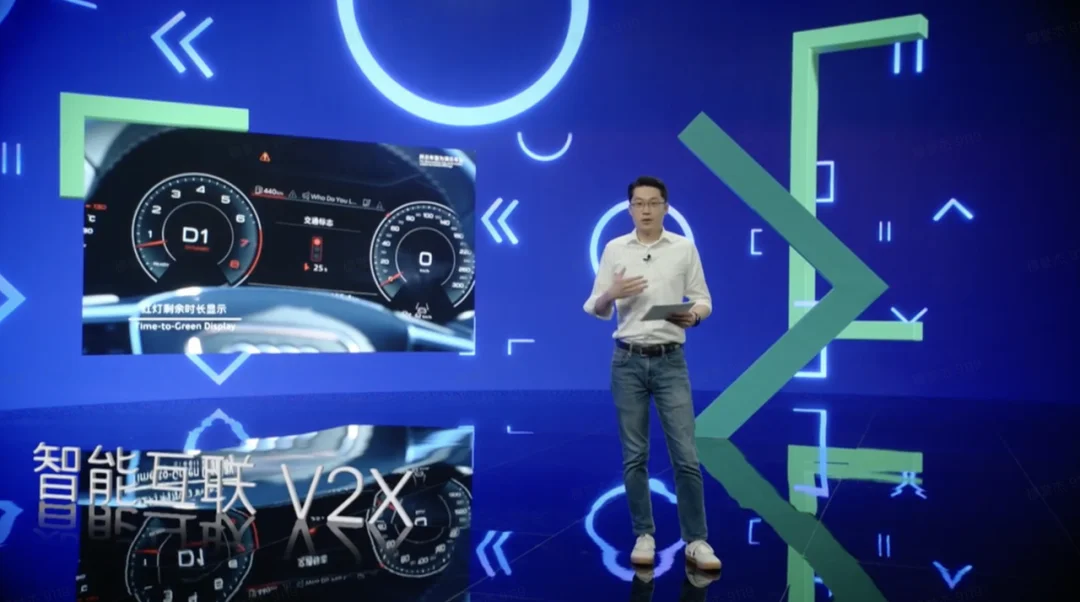
Traffic Light Information (TLI)
This feature provides drivers with second-by-second traffic light data for the road ahead and suggests optimal speeds to ensure smooth passage through intersections. Some Audi owners can already access real-time traffic light information for all signals in the city.
Hazard Warning (LHW)
The Hazard Warning function, powered by C-V2X connectivity technology, has been integrated into six distinct use cases. For example, in an 'accident warning' scenario, when a vehicle equipped with this feature encounters a traffic accident, it broadcasts relevant alerts via the C-V2X protocol to surrounding vehicles, providing beyond-line-of-sight warnings to traffic behind.
Hazard Notification (LHI)
The Hazard Notification function uses connected technology to deliver more specific and timely information about nearby road hazards. Traffic danger data is immediately captured by all vehicles on the road equipped with this feature and systematically distributed to their instrument displays, alerting customers to real-time hazardous traffic events up to 40 kilometers away.
These V2X-based features will be integrated with ADAS in the future.
03Conclusion
Volkswagen employs 660,000 people across its entire group. This workforce includes factory workers, software engineers, and tens of thousands of middle managers. About half of them are still engaged in traditional automotive manufacturing.
Di Si’s transformation has shifted from hardware to software. As the vanguard of Volkswagen’s software overhaul, CARIAD receives annual funding of EUR 2.5 billion to EUR 3 billion from Volkswagen.
In this reform, retraining employees for internal combustion engine (ICE) roles to adapt to software development is clearly unfeasible. Moreover, the supply of IT talent in Europe cannot meet Volkswagen’s ambitions for intelligent vehicle technologies. Taking the first step outward, Volkswagen’s CARIAD China subsidiary has already delivered substantial functional outputs in less than a year.
However, such top-down transformation requires time to translate into actual over-the-air (OTA) updates for consumers’ vehicles. We will wait and see, especially since CARIAD China is still expanding its headcount.
Written by: Liu Guangding Edited by: Liu Guangding