


How to Identify True User Operations Among New Energy Vehicle Startups
Editor's Note: The 'New Energy Pitfall Avoidance Guide' is a spring-limited column launched by 42HOW Auto. This series reviews the development history of new-energy vehicles, primarily focusing on new-force brands, from marketing and operational perspectives. It analyzes and discusses the underlying logic of various strategies and models, aiming to present the profound changes that new forces and new energy have brought to the automotive industry beyond products and technology. This column updates every Wednesday.
Special Contributor Bluehyper has over ten years of experience in automotive industry marketing and was deeply involved in building the operational systems of new-force brands.
As the market share of new-energy vehicles and new-force brands continues to rise, the concept of 'user operations' in the automotive industry has become increasingly prevalent. In fact, user operations are not a new concept in the internet sector. According to Baidu Baike, user operations refer to centering activities and rules around users, following their needs, formulating operational strategies and goals, strictly controlling the implementation process and results, and achieving the expected operational objectives and tasks.
Internet companies' user operations mainly revolve around the user's entire lifecycle, with 'acquisition, retention, activation, and conversion' as the core.
'Acquisition' refers to finding new users and establishing contact with them, such as through registration or app downloads;
'Retention' means keeping users continuously engaged with the product, at least preventing uninstallation;
'Activation' involves promoting user activity levels, encouraging visits or usage within specific time periods;
Conversion focuses more on user payment, driving consumers to complete purchasing behaviors.
Compared with internet companies that concentrate on online products, user operations in the automotive industry are far more complex.
The rise of user operations in the automotive sector stems from specific historical contexts, driven by changes in two key areas:
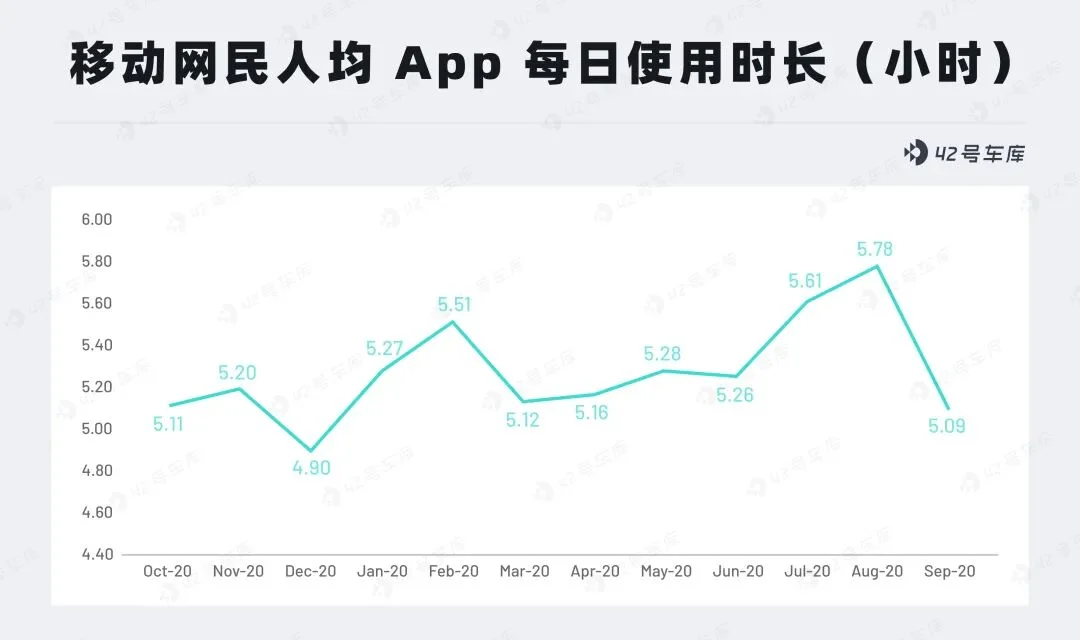
Data from CNNIC shows that Chinese netizens' daily online time has peaked, and the dividend period of rapid growth in internet traffic is over.
01High Costs Drive Demand for Refined Operations
The automotive industry was previously an incremental market. A long-standing situation where supply fell short of demand led automakers to pay insufficient attention to users.
After obtaining user information and contact details, these Leads are generally dispatched directly to stores for phone follow-up. The follow-up period is at most around 3 months; store sales staff will regularly invite customers via phone to visit the store and test drive within this 3-month window. If no sale is completed after 3 months, they are directly abandoned.
However, as media resources and traffic have hit a development bottleneck, users no longer have surplus online time to spare.
The cost of traffic naturally continues to rise, and traditional sales methods result in significant resource waste.
The decline in first-time buyers with rigid demand has greatly extended the vehicle purchase decision cycle. Users' decisions are no longer limited to price, and periodic communication via sales calls no longer meets their need for in-depth, multi-faceted product experiences.
Therefore, the ability to maintain long-term user relationships and enable deeper engagement with products and services has become a business imperative for automakers.
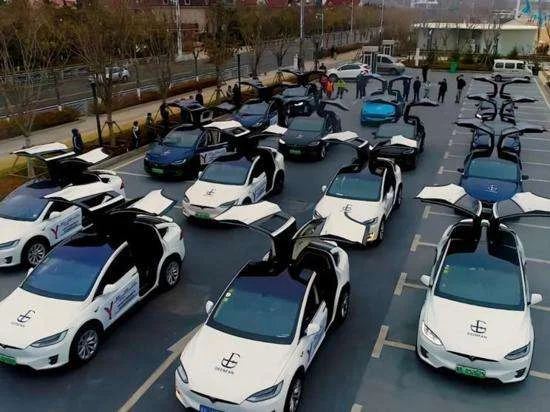
Early Tesla owner operations resembled self-driven initiatives.
02Unique Attributes of New Energy and New Brand Users
In the early stages of the new energy market, products lacked the long-standing recognition accumulated by internal combustion engine vehicles. Both the vehicles themselves and related policies carried high learning costs; the same applied to new brands. Users harbored numerous doubts regarding product quality and after-sales support, necessitating deeper communication from automakers to build trust and complete sales. Early users also required more interaction and discussion to better understand products and companies before purchasing, and to find value alignment with each other afterward. Given the high costs of communication and education, peer-to-peer exchange and recommendations became crucial conversion channels.
For new automotive entrants that are both new energy vehicle (NEV) brands and newly established manufacturers, user operations is an inherent gene. These companies understand that without long-standing brand heritage and product accumulation, they can only achieve sales through effective user communication, and build a brand by delivering superior service.
As new forces gradually emerged from the brutal market slump of 2019, accompanied by rising stock prices and sales volumes, traditional automakers preparing to launch NEV models began to show keen interest. They hoped to achieve dual growth in sales and reputation through "user operations." Although many traditional automakers have made bold attempts, their efforts often invite ridicule from users for being clumsy imitations. Let us examine what the core of user operations truly is.
03User Operations as a Reconstruction of Organizational Philosophy
User operations has never been merely a simple marketing method or tactic; it is a philosophy regarding how to treat users.
When traditional automakers engage in user operations, they most commonly reduce it to just three actions:
Restructuring the existing Customer Relationship Management (CRM) department into a user operations department;
Creating an app to consolidate all original consumer-facing (C-end) business functions;
Developing a community section within the app and hiring advertising agencies to fill it with content.
The approach of these traditional automakers demonstrates that they only see the surface of user operations, without understanding its core. In reality, it functions more like a large-scale collaborative organization, acting as a unified entity responsible for all communication and relationship maintenance with users, extracting service capabilities from the backend to deliver directly to customers.
For example, before a model is launched, the product and brand departments must rely on the rich and accurate information provided by the user operations department;
After listing, the sales department must act on comprehensive and timely market feedback from the user operations team;
After delivery, the after-sales department must respond to user needs provided by the user operations team quickly and comprehensively.
In simple terms, it can be described as "user-centric operations."
If the user operations department is merely an independent organization without the ability to mobilize resources vertically and horizontally, then "operations" itself becomes a pseudo-concept. Therefore, user operations actually requires the implementation of a "user-centric" philosophy throughout the entire organization.
04User operations require a sustainable strategy
User operations also require a strategic definition: what is the purpose of user operations, and how should operational strategies be formulated based on that? For new automotive entrants, the key to operations lies in building initial word-of-mouth; for traditional automakers, the focus is more on viral user referrals. However, in most cases, word-of-mouth and sales volume are mutually causal.
The practices of seeking quick success and instant benefit, as well as draining the pond to catch all the fish, are often unsustainable. Traditional automakers' excessive pursuit of KPIs for user numbers and conversion rates often leads to users being overly disturbed without their recognition, thereby distancing them from the brand. User operations emerged against the backdrop of a longer car purchase conversion cycle and higher user expectations for experience; they cannot simply be reduced to tools for sales conversion. Otherwise, their significance would converge with that of traditional CRM departments. Focusing on long-term returns, paying attention to user word-of-mouth, and addressing the needs of potential customers are the key priorities of operations.
At the same time, the definition of a sustainable strategy must be developed in alignment with the company's growth, brand philosophy, and product positioning. This ensures that the user operations team knows which users to engage, how to communicate with them, and what incentive methods to adopt.
05User operations are a shared responsibility across the organization
As previously stated, user operations is never the responsibility of a single department. Therefore, neither KPIs nor OKRs should be borne solely by the user operations team. User growth depends on whether brand PR and media placement departments communicate effectively; community engagement hinges on how well IT delivers product experience; sales conversion is closely tied to the service provided by frontline consultants; and user satisfaction is strongly correlated with product quality and after-sales support.
If the user operations department alone bears the pressure of performance metrics, it inevitably leads to distorted operational tactics. User operations can rapidly accumulate a large number of users with no genuine intent through short-term incentives, or fill content with numerous fake accounts to create an illusion of a "prosperous era" in terms of reputation. In doing so, user operations loses its fundamental purpose.
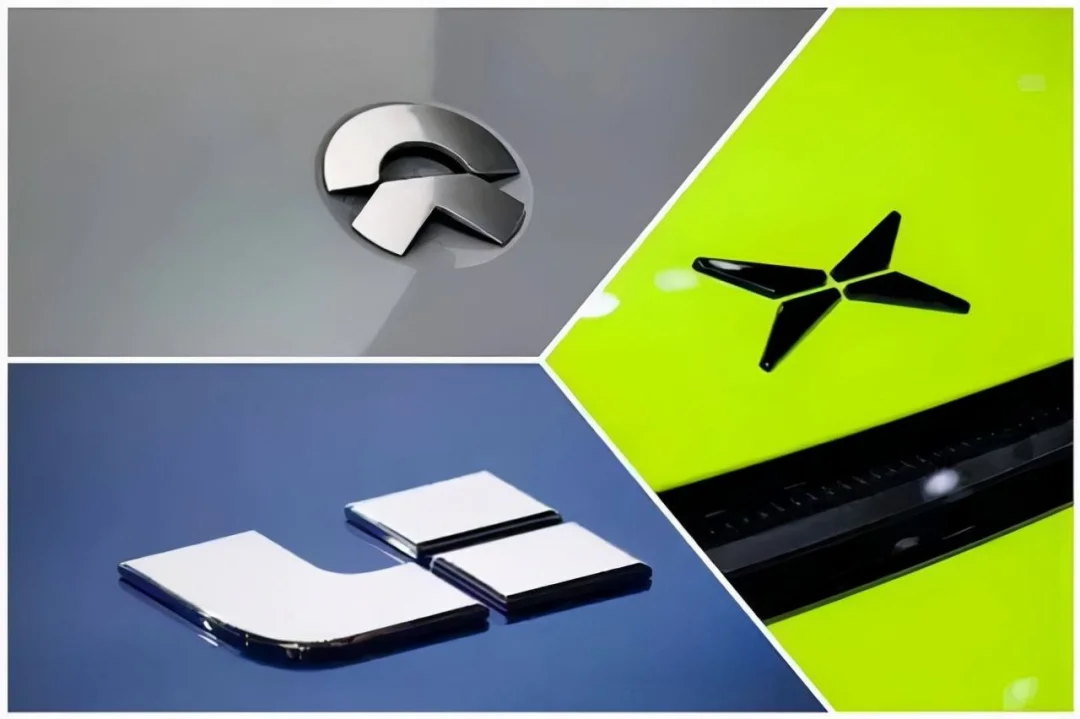
Although NIO's operations are more prominent, the high rate of user referrals indicates that NIO, XPENG, and Lixiang merely differ in their investment directions. This shows that for automakers' user operations, it is not simply a matter of the concepts of "public domain traffic" and "private domain traffic." NIO's user operations are often cited as a typical case because NIO emphasizes service capabilities, making its operations more explicit; while Lixiang's product definition based on family users and XPENG's intelligent experience are both reflections of their understanding of user needs, which are closely related to user operations.
No operation is achieved overnight, and the resource costs incurred are actually not low, nor is the feedback on results swift. Traditional automakers' heavy reliance on external suppliers, such as advertising agencies and consulting firms, for operations often yields poor results due to conflicts of interest between short-term contracts and long-term strategies. Additionally, traditional automakers frequently fall into misconceptions and encounter common problems.
06The Success of New Forces Cannot Be Replicated
Whether joint-venture or domestic brands, all have attempted to emulate the operational models of new forces in their user operations, particularly companies like NIO, which is renowned for its service and community engagement. However, the past success of these new forces holds little replicable value or possibility for traditional automakers. This is due to several key reasons:
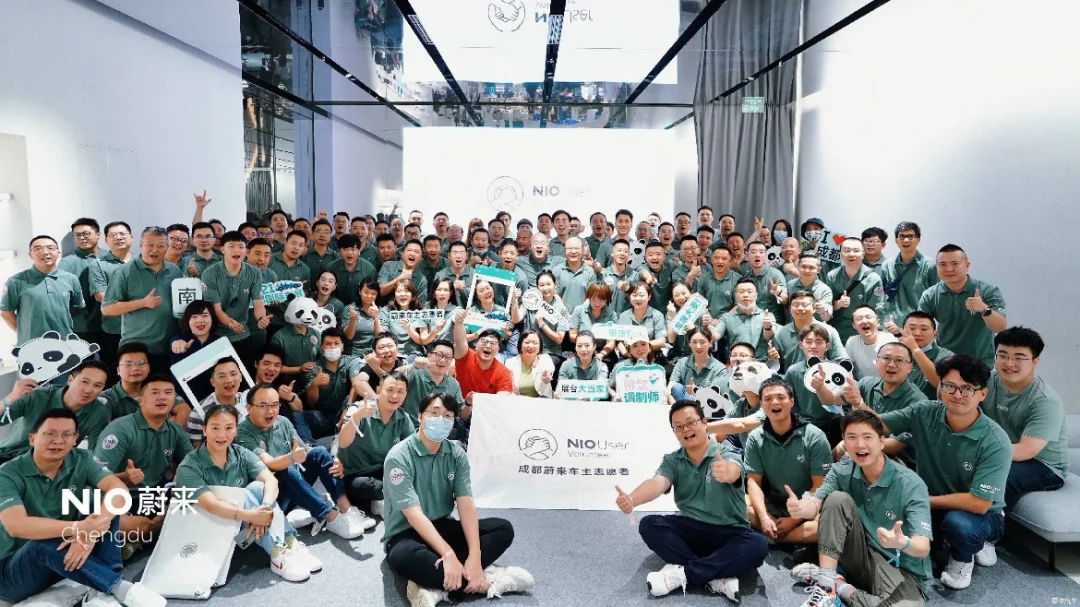
The ability to have owners help sell cars stems from recognition earned through long-term service.
System Construction
New forces typically developed from scratch, allowing them to build their structures with high flexibility. Their user operations departments could be established as top-priority initiatives from the outset, reporting directly to the founders. Similarly, founders wield significant decision-making power, often engaging directly with users, thereby creating a direct link between the company and its customers. In contrast, traditional automakers are constrained by existing internal architectures. Their department heads are usually professional managers, and their internal management and decision-making processes are far more complex. Consequently, they cannot communicate efficiently with users, and many operational strategies carry risks that far outweigh potential benefits. While traditional automakers previously emphasized their systemic advantages when facing new forces, the gap in system capabilities and advantages established by new forces in user operations has widened significantly to this day.
Demographic Shifts
Previously, new forces targeted early adopters of new energy vehicles (NEVs). These pioneering users, driven by a desire to try new things, possess an adventurous spirit and are more willing to share their discoveries to gain recognition from peers. As a result, user interaction was highly active during the new forces' operational phases, making it easier to forge emotional bonds and establish solid relationships with the brand. However, as NEV market penetration rates have exceeded 20%, and even reached 25%, the proportion of pioneering users has steadily declined while the share of traditional customer segments has risen. These conventional users, accustomed to silence, care more about the product experience itself. They are less inclined to share or interact and are therefore harder to engage through operational strategies.
Budget Allocation
Contrary to common perception, new energy vehicle brands typically allocate budgets for user operations that are significantly higher than those of traditional automakers—often by an order of magnitude. This disparity stems from differing strategic priorities and the emphasis placed on user engagement. Depending on their specific strategic positioning and internal capability integration, investments in user operations by these new entrants often reach the hundred-million level. Without elevating user operations to a strategic priority, traditional automakers' expenditures of merely a few million yuan usually result only in superficial, form-driven initiatives.
07Internet-era methods cannot be simply copied
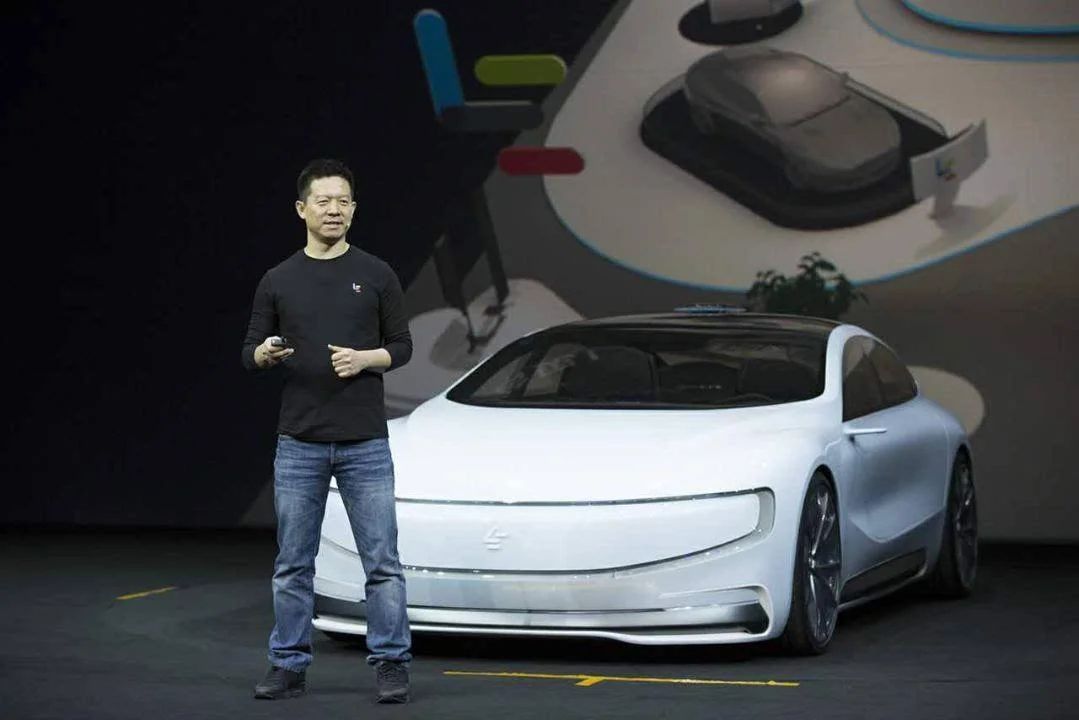
From being called "internet car-making" to "new forces in car-making," the change in terminology also reflects differences in methodology. Besides copying the success methods of new forces, blindly replicating internet models is also the most common problem traditional automakers face in user operations. Whether it's directly adopting internet-style operational methods or failing to properly select an operational team from internet companies, various cases of maladaptation arise, mainly due to the following reasons:
Category Attributes
Cars occupy a unique position among consumer goods, characterized by high value and product complexity. Compared to the simple business models and direct user experiences typical of internet companies, both the sales process and the product experience of automobiles are orders of magnitude more complex. While most internet company products rely primarily on online experiences, automobiles depend heavily on offline interactions.
Online and offline channels, product branding, and quality after-sales service are all indispensable; without them, a complete operational loop cannot be formed.
Conversion Cycle
Internet products convert rapidly, often generating transactions and consumption from new users shortly after acquisition. In contrast, the automotive decision-making cycle is longer and continues to lengthen. Consequently, the processes of user acquisition, retention, and engagement are both complex and protracted before conversion occurs. For instance, while the internet and fast-moving consumer goods (FMCG) sectors can accelerate user conversion through promotional incentives like coupons, this approach is ineffective in the automotive industry. Small discounts have a negligible impact on user decisions, whereas large discounts risk triggering rights protection actions from existing owners.
The frequent use of 'futures-style' marketing strategies by new energy brands further confounds internet operation theories that prioritize speed.
Purchase Frequency
Due to the long usage cycle and low repurchase rate of automobiles, there is no massive base of loyal users available for repeated conversions. Therefore, methods used in traditional internet and FMCG sectors to incentivize repurchases are not applicable. Operations must persist through continuous user acquisition and long-cycle management; the absence of any single link may lead to failure. Furthermore, user referrals cannot be incentivized simply through discounts but require diffusion based on accumulated word-of-mouth.
Indeed, while the success of new forces and internet companies in user operations offers some reference value, it is far from as simple as building a comprehensive app or organizing high-profile owner events. Blindly copying or replicating these models is neither advisable nor viable. Only by aligning with the company's specific characteristics, formulating realistic strategies, and driving the core with a user-centric philosophy can such efforts succeed.
Finally, we address the question posed at the beginning: What exactly does user operations manage? In an era where the slogan 'user-centric enterprise' is ubiquitous, user operations actually manages the entire system and capability of the enterprise facing its users.
Written by: Bluehyper Edited by: Daji