


This Test Drive: Half the Time in a Parking Lot
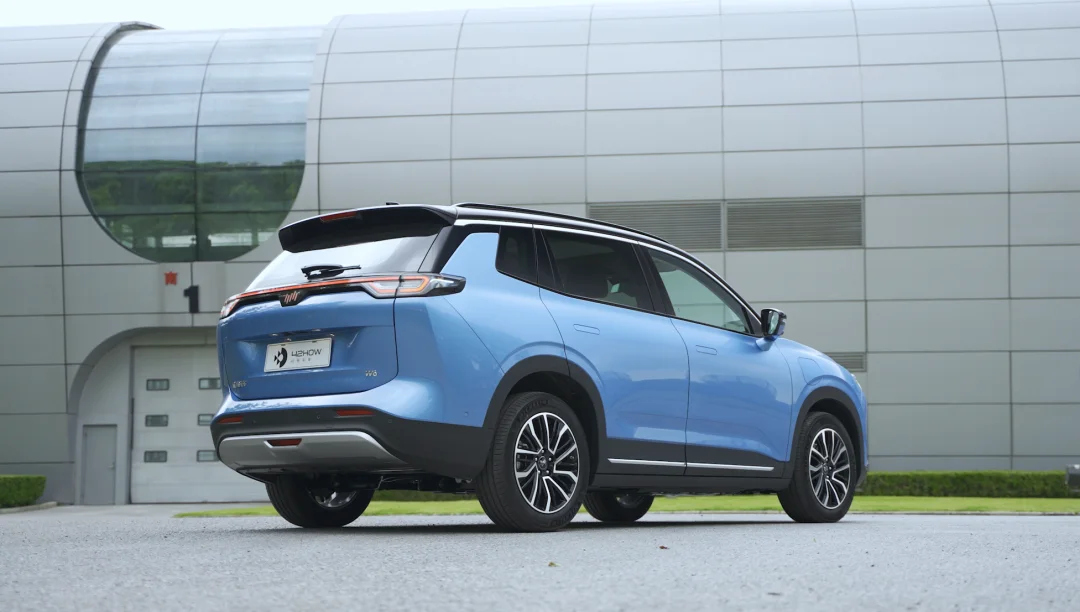
Weima W6 arrived at the company last month. Because the timing coincided with the Shanghai Auto Show, I had only given it a few appreciative glances in the parking lot and had not yet taken the time to thoroughly experience the vehicle.
To be honest, I didn't have much desire to drive this front-wheel-drive grocery-getter with 160 kW of power. However, having seen several promotional videos online of the W6 AVP parking system in action, I was somewhat curious about how it would perform.
So when I got the keys a few days ago, my first reaction was to find a parking lot.
01The First Half of the Test Drive: Me in the Parking Lot
Notable New Key
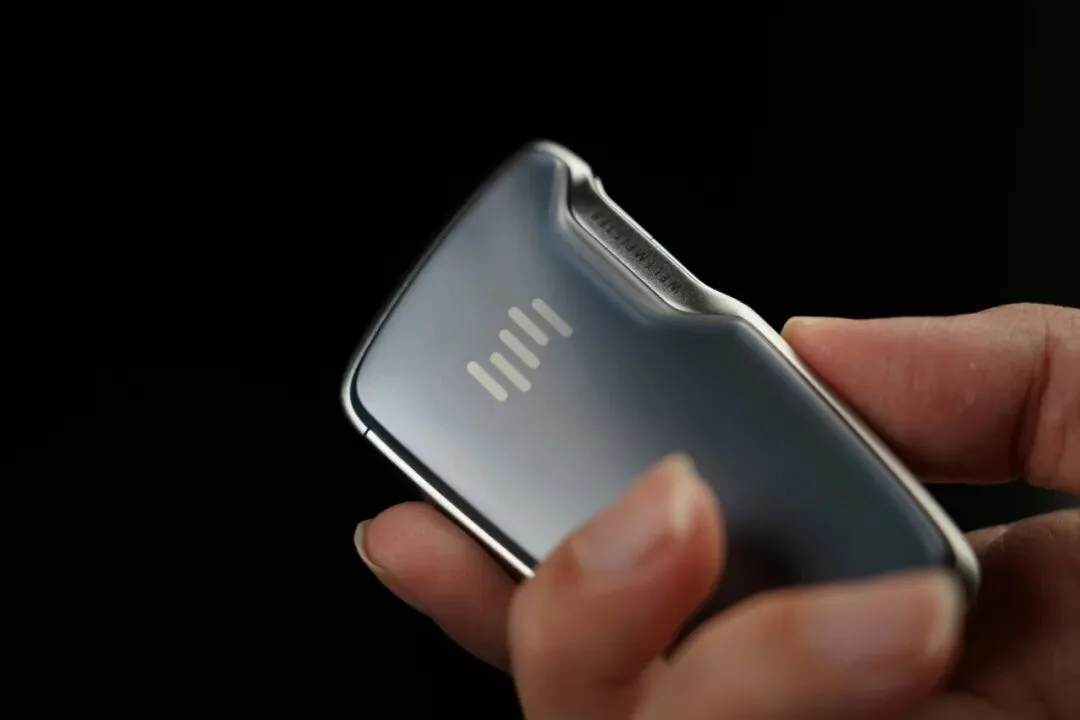
Before getting into the car, Weima W6's key fob gave me a slight surprise. The W6's key bears some resemblance to BMW's current blade-style key, with its top and bottom surfaces finished in a blue-gray matte texture that feels similar to the AG frosted glass popular in the smartphone industry today. It offers a smooth touch and is relatively resistant to fingerprints.
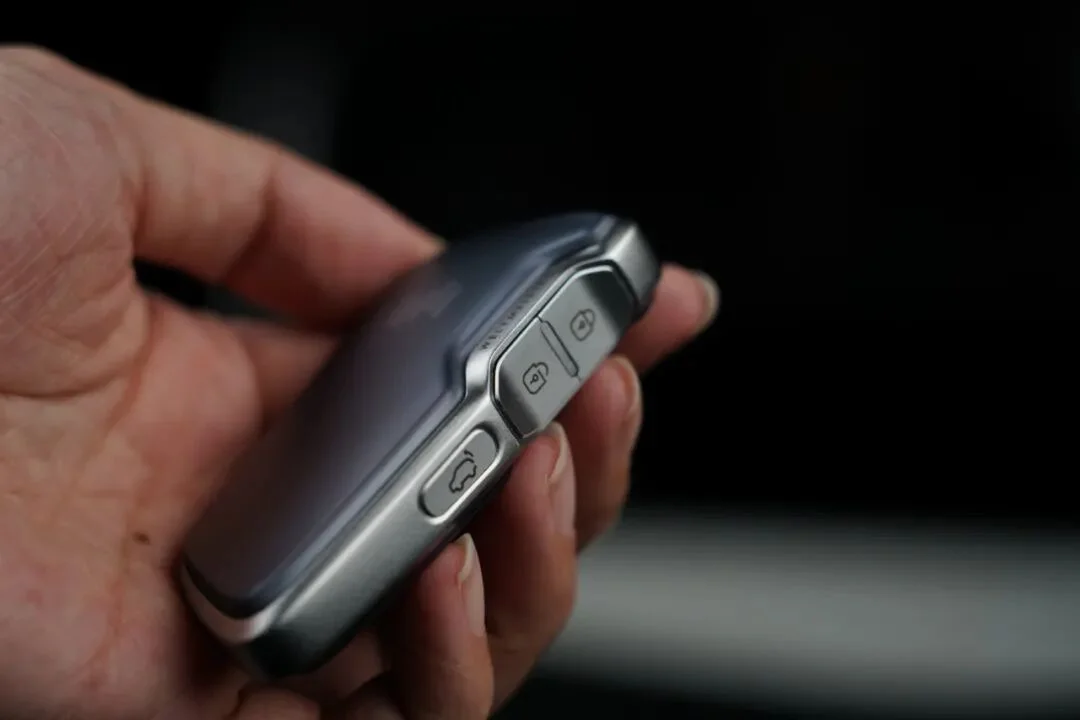
The silver center frame of the key integrates three buttons: lock, unlock, and tailgate release. Pressing any button illuminates the Weima logo with a subtle gradient effect transitioning from pale pink to white to gray-blue from top to bottom.
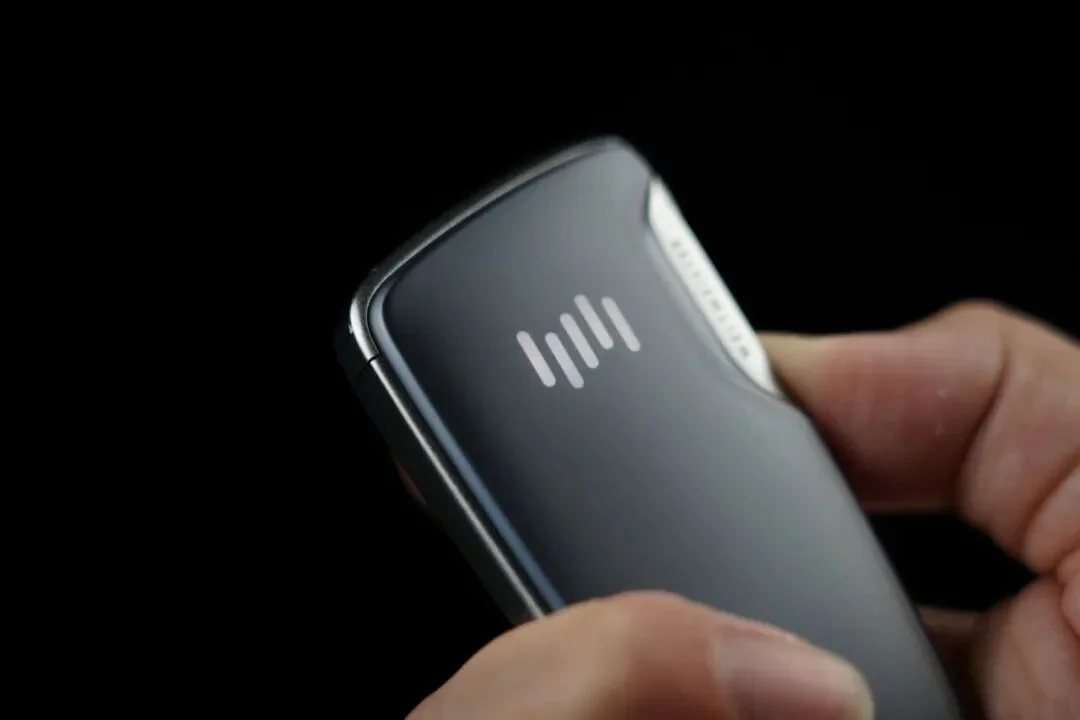
The illuminated logo upon button press
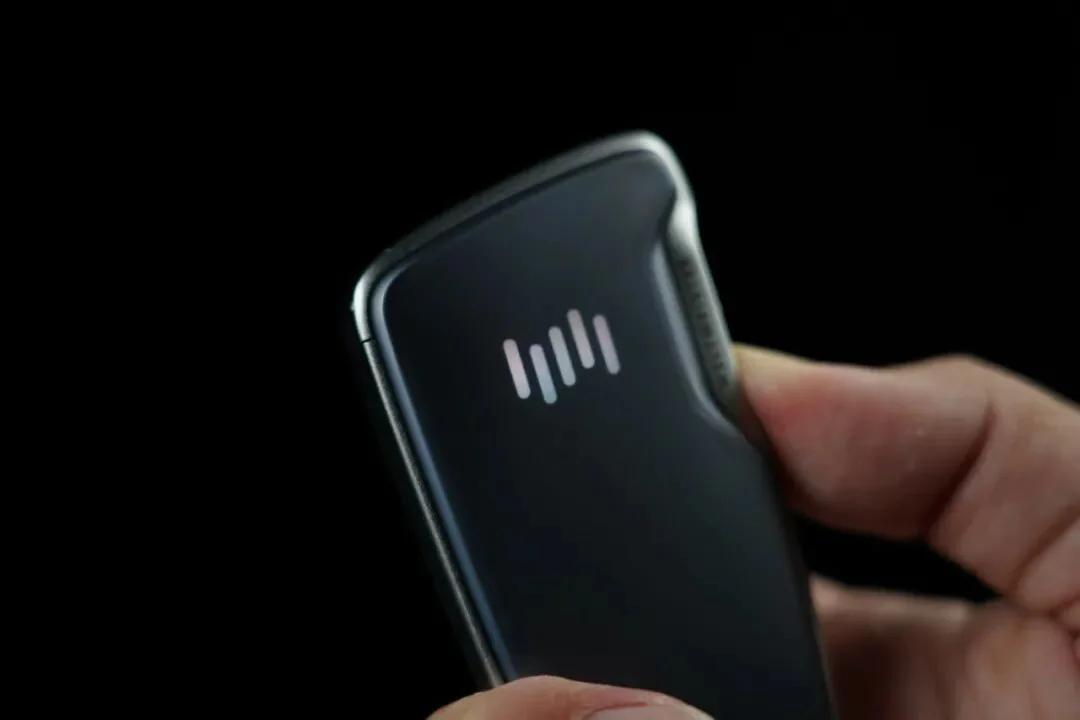
Compared to the black plastic capsule-style key of the previous EX5, the new W6 key shows significant improvements in both design and texture.
Approaching the vehicle triggers the light welcome sequence, automatic unlocking, and deployment of the hidden door handles, completing the standard hands-free entry process before you get inside.
The interior is different, but not that "different"
Sitting in the car, I quickly noticed that the interior layout of this vehicle has undergone significant changes compared to Weima's previous models.
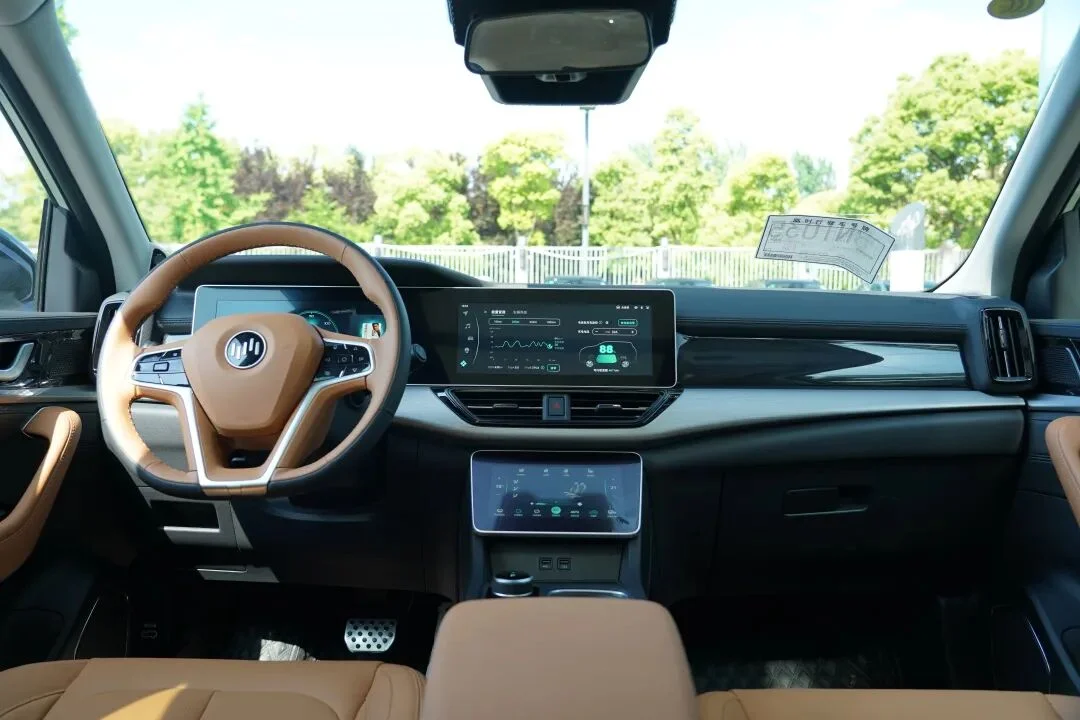
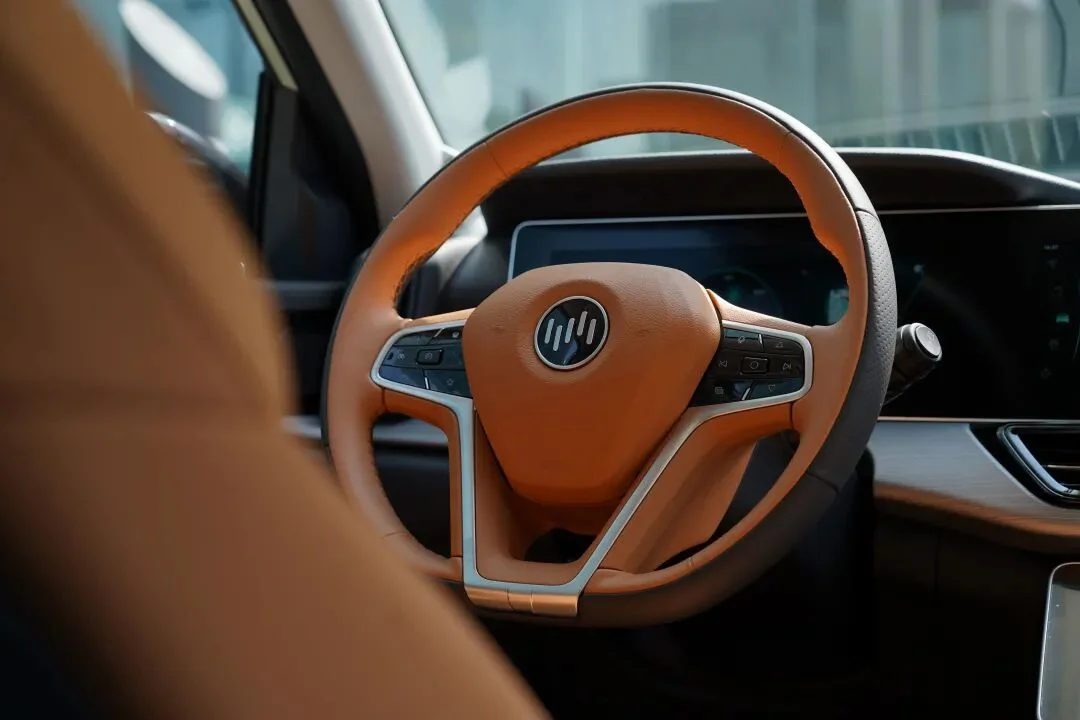
The two-tone yellow and black steering wheel stands out at first glance. The same color scheme is reflected on elements such as the door handles, making the cabin feel less somber than a pure black interior during the day.
Unlike the instrument cluster combined with a large vertical central screen found in the EX5, the W6 adopts the dual-screen design that has become an industry "standard template" in recent years.
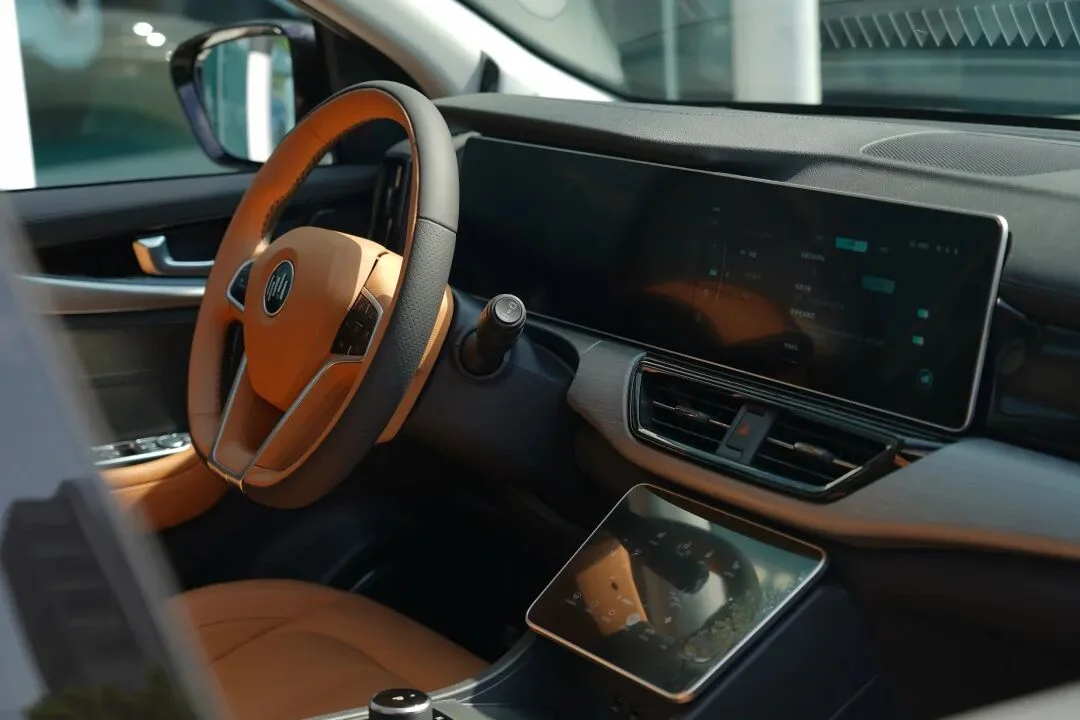
The W6 features a common dual-screen center console setup. Additionally, a separate full-vehicle control screen, similar to that in Li ONE, is added below the central display, integrating many frequently used settings into this single panel.
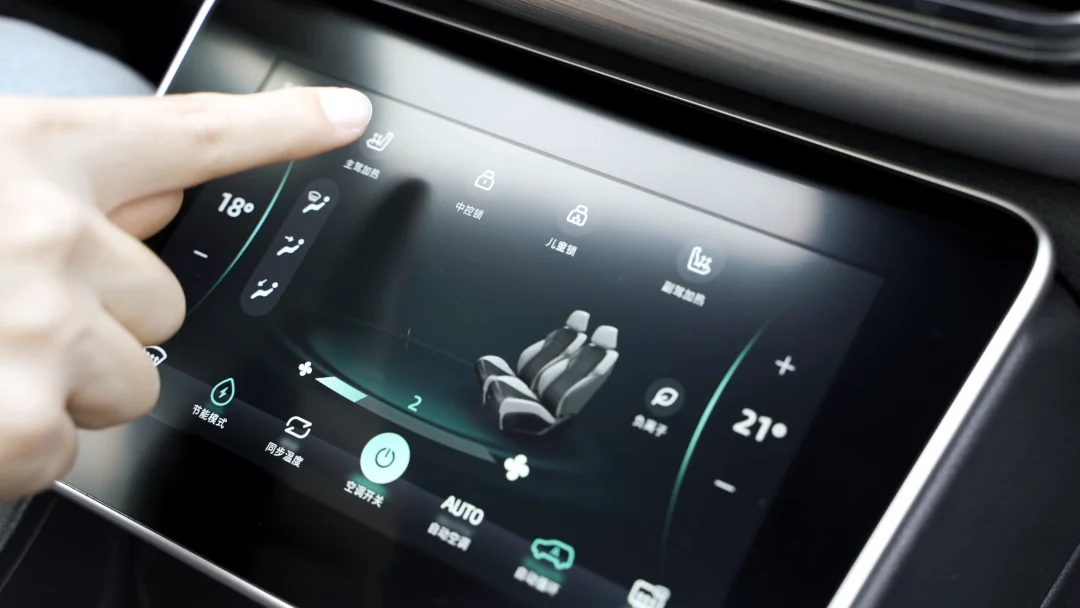
Swiping horizontally on this screen quickly adjusts the air conditioning fan speed, while swiping vertically adjusts the temperature; the operation is intuitive and requires virtually no learning curve.
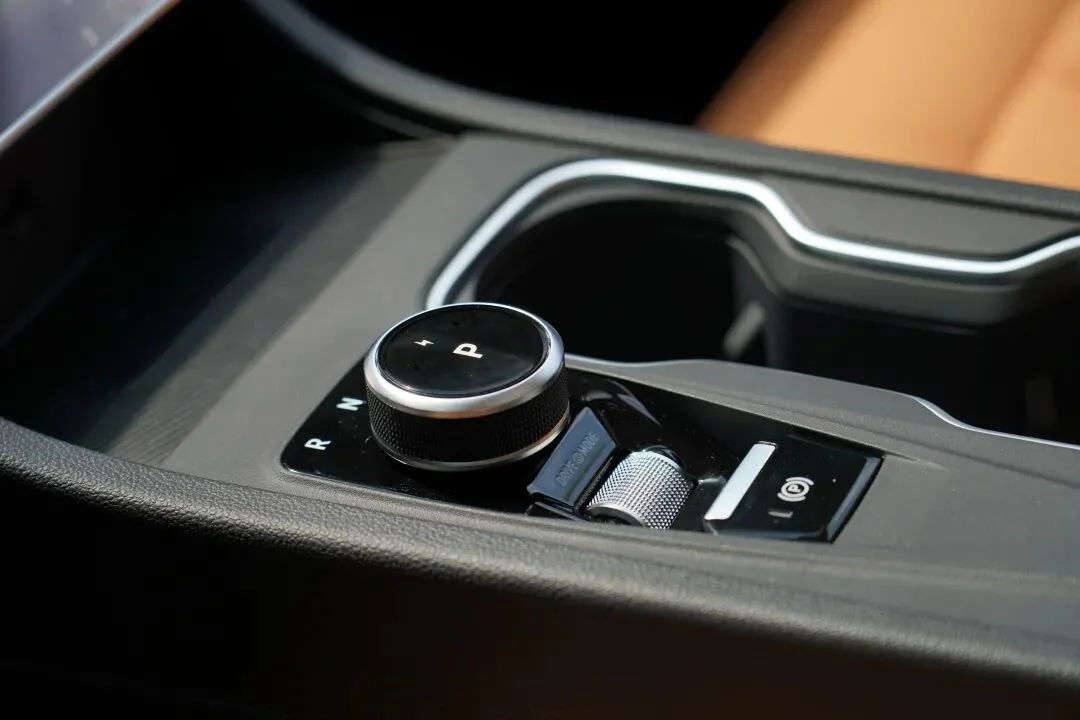
The interior design, updated in a new style, retains only a few elements reminiscent of Weima's past designs—such as the gear selector knob on the center console. However, most of the design fails to establish sufficient differentiation in an industry plagued by homogenization, leaving the new interior lacking that refreshing, standout quality.
By contrast, the W6’s infotainment system pleasantly surprised me.
A Fast Infotainment System Is Good, But Speed Isn't Everything
Regarding the initial impression: within the first thirty seconds of use, I clearly noticed that the W6’s infotainment system responds well. The UI features numerous animation effects for menu switching and various settings, resulting in a smooth operational experience. Among new cars released this year, this level of fluidity ranks among the top tier.
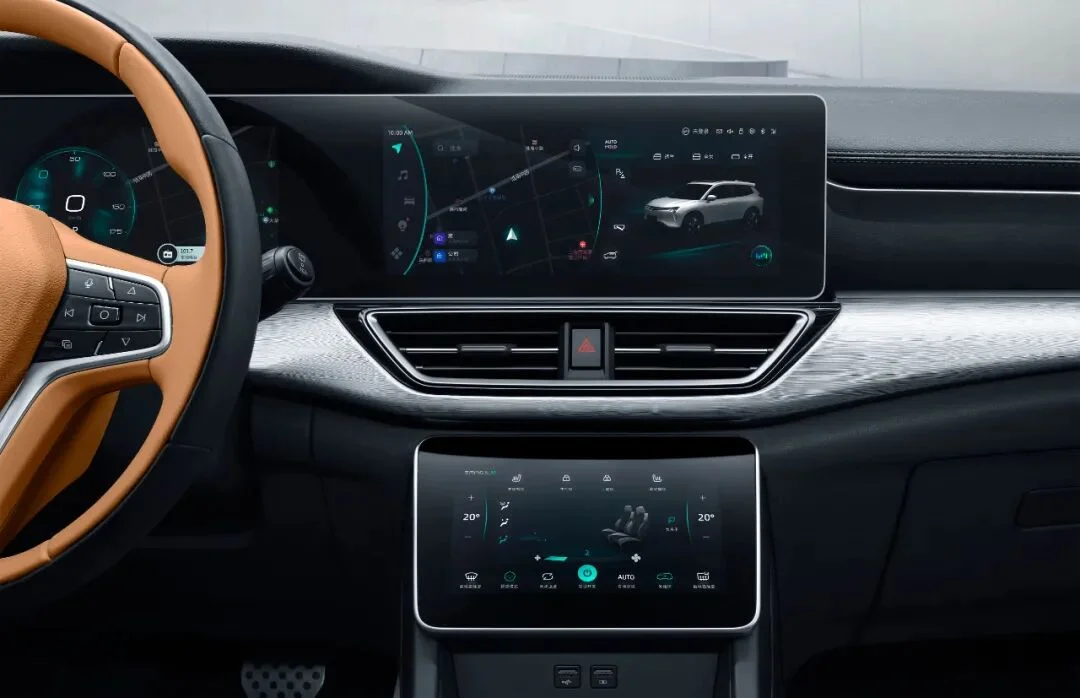
Later, I specifically checked the specifications. The W6 uses the Xiaolong SA8155 chip (the automotive-grade version of the Snapdragon 855) for its infotainment system. In terms of performance, it is three times faster than the 820A chip, placing it at the forefront among currently mass-produced infotainment chips. Additionally, its screen refresh rate is 60 Hz—a specification not commonly found in car screens in the RMB 200,000 segment. In terms of hardware configuration, there are no shortcomings.
Next is the in-car infotainment interaction experience. The strong point here is that the menu hierarchy logic is clear. The central control screen display content is divided into three sections:
On the right side, there is a refined 3D vehicle model showing the vehicle status, alongside quick-access buttons for low-frequency functions such as door locks and all-window operation;
The middle section defaults to displaying the map, while becoming the main menu screen in settings and application interfaces;
The permanent sidebar on the far left of the central control screen contains major categories such as navigation, music, vehicle settings, and applications, making it convenient to switch between different needs.
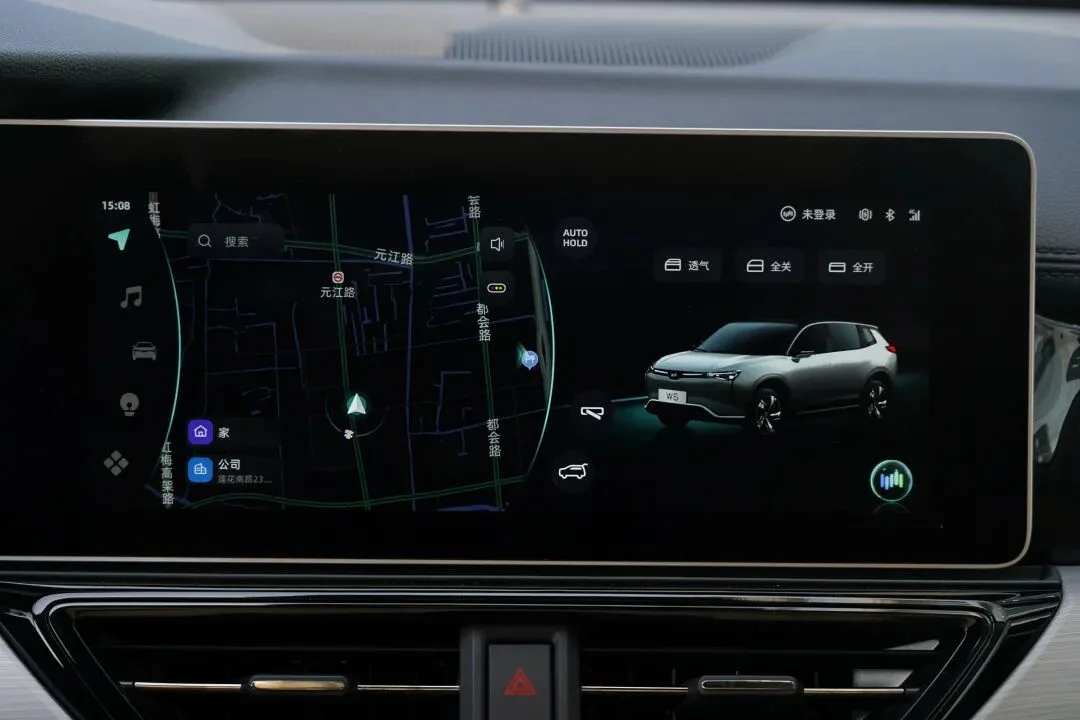
Three-zone information display on the central control screen In terms of overall layout and hierarchy—factors affecting basic interaction experience—the W6's infotainment system achieves sufficient intuitiveness. Intuitive, habitual operations can basically locate the corresponding functions, representing significant progress compared to previous models. Zooming in on features and application levels, this infotainment system has two highlights: one is the customizable in-car scene card 'Weimakuaijie', and the other is the phone-integrated connectivity application.
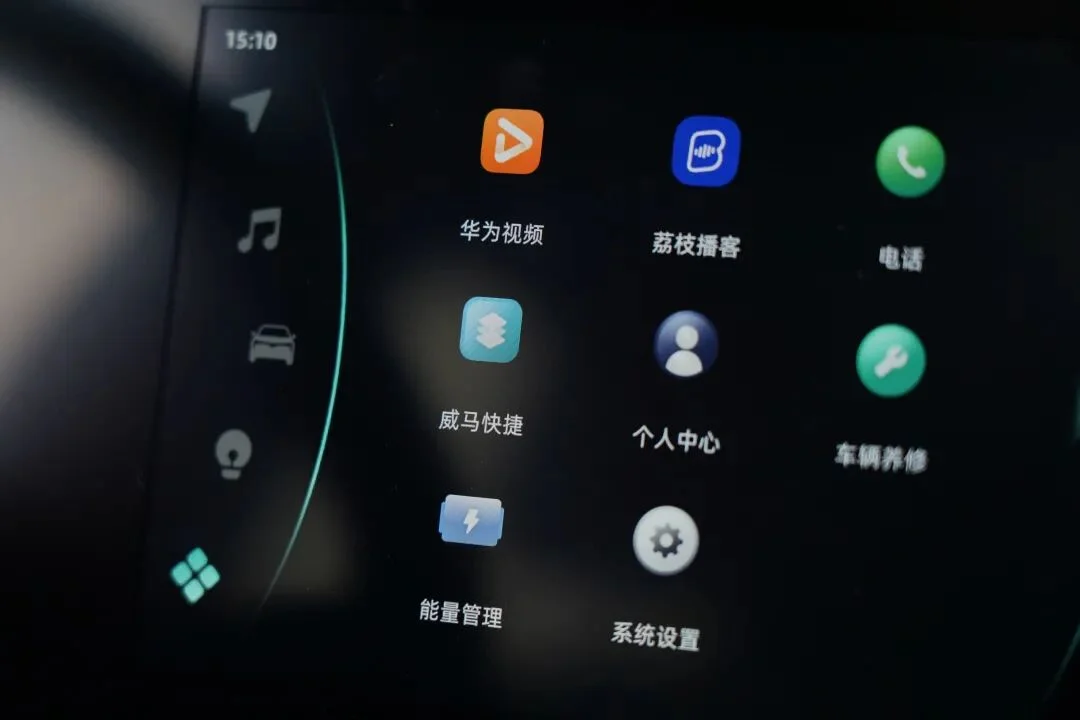
Weimakuaijie in the App Center There is a feature I really liked on the Li ONE called 'Nap Mode'. Once activated, the vehicle adjusts the front seats to the most reclined position, dims the interior screens significantly, and switches to a snow mountain wallpaper. This serves as a specific example of an in-car scene.
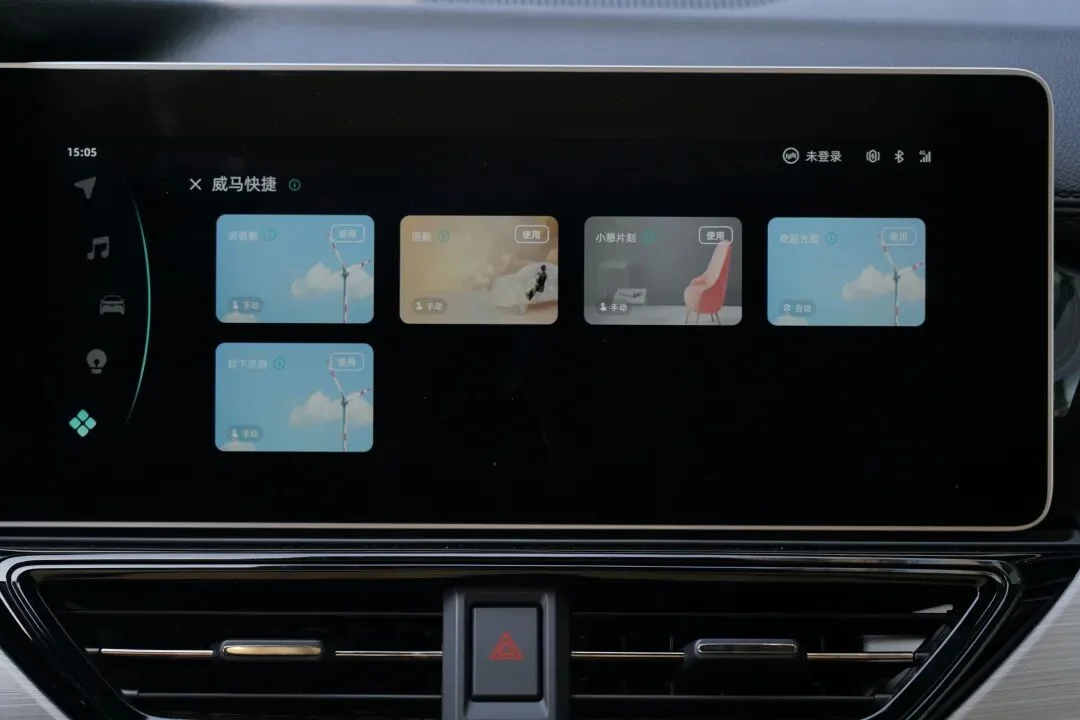
Customizable Scenario Cards The Weima W6 allows users to customize numerous scenarios based on their needs. Settings include air conditioning temperature, fan speed, window position, ambient lighting color, and whether to play music, among others.
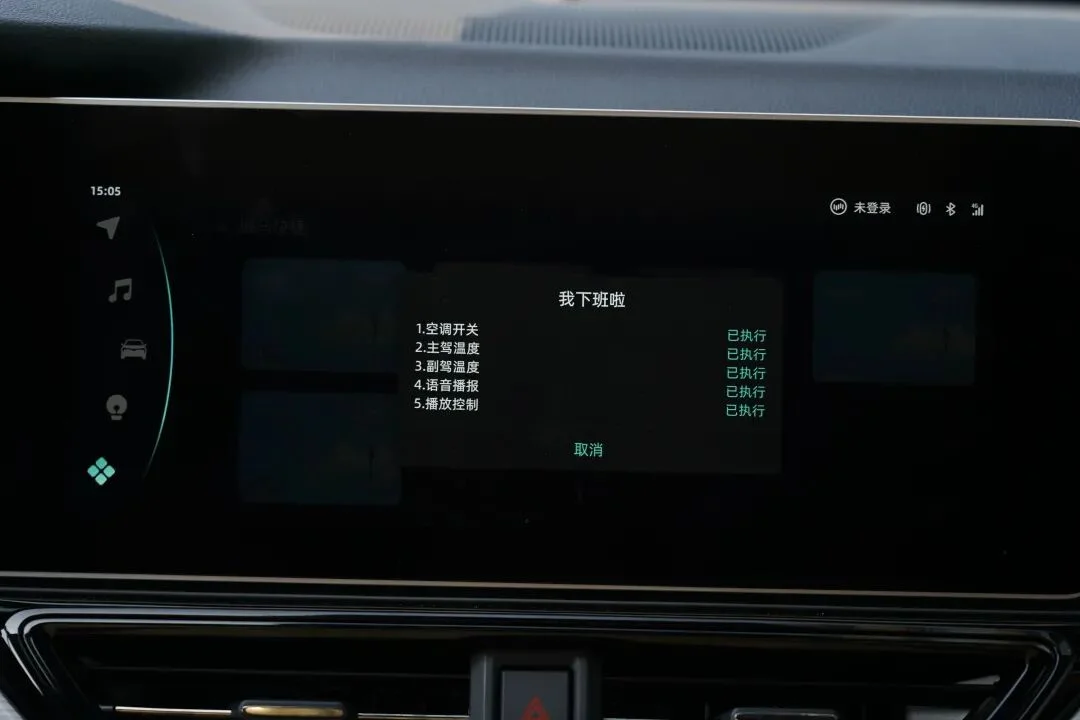
One-Tap Activation for Small Scenarios For example, when getting into the car in summer, I typically set the air conditioning to its lowest temperature, the fan to maximum, and open all windows to cool down quickly. On the W6, this combination can be saved as a scenario card, allowing for one-tap activation upon entering the vehicle.
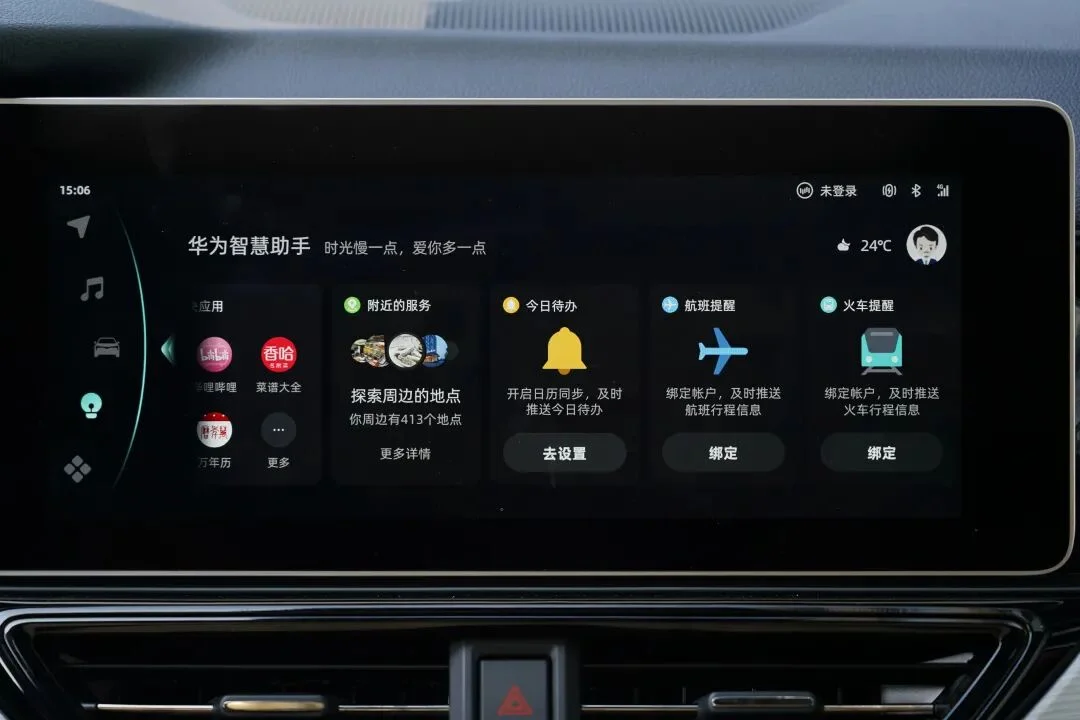
Feature-Rich Huawei Smart Assistant The central console features a built-in Huawei Smart Assistant with various commonly used apps, some of which are integrated with the smartphone ecosystem.
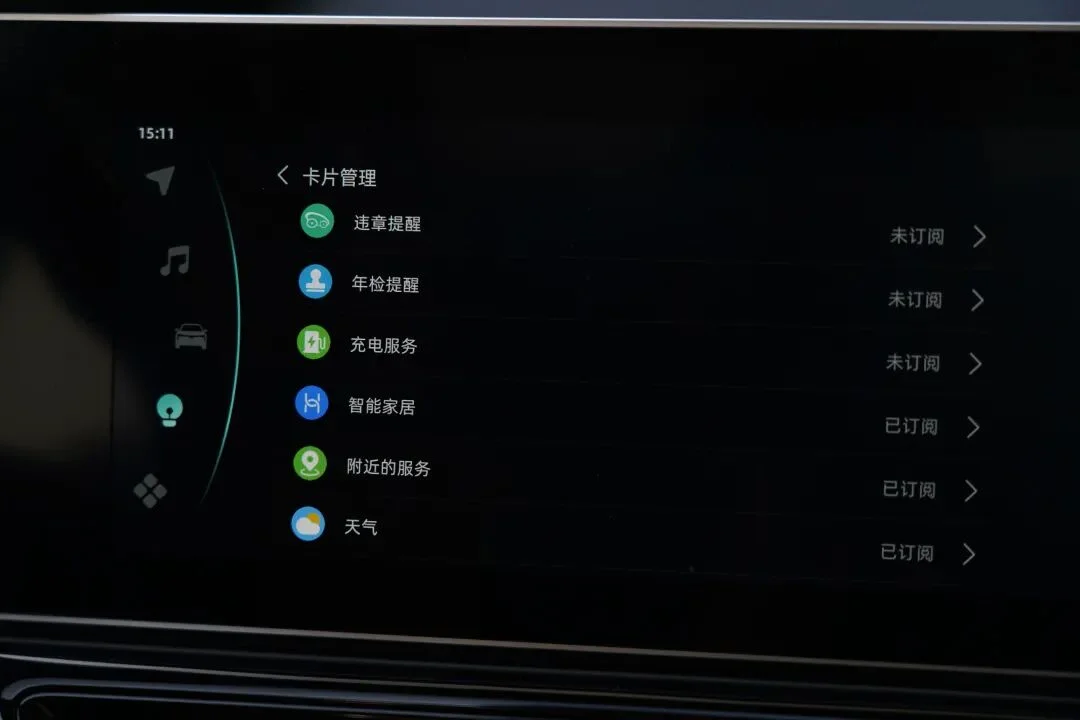
Numerous Huawei Smart Assistant Cards, Including Violation Inquiry and Smart Home Control Among the many cards, I find the most practical feature with diverse applications to be the synchronization of phone navigation with the car system. After scanning a QR code on the car screen to bind the device, users can send addresses from their phone to the car’s native navigation system.
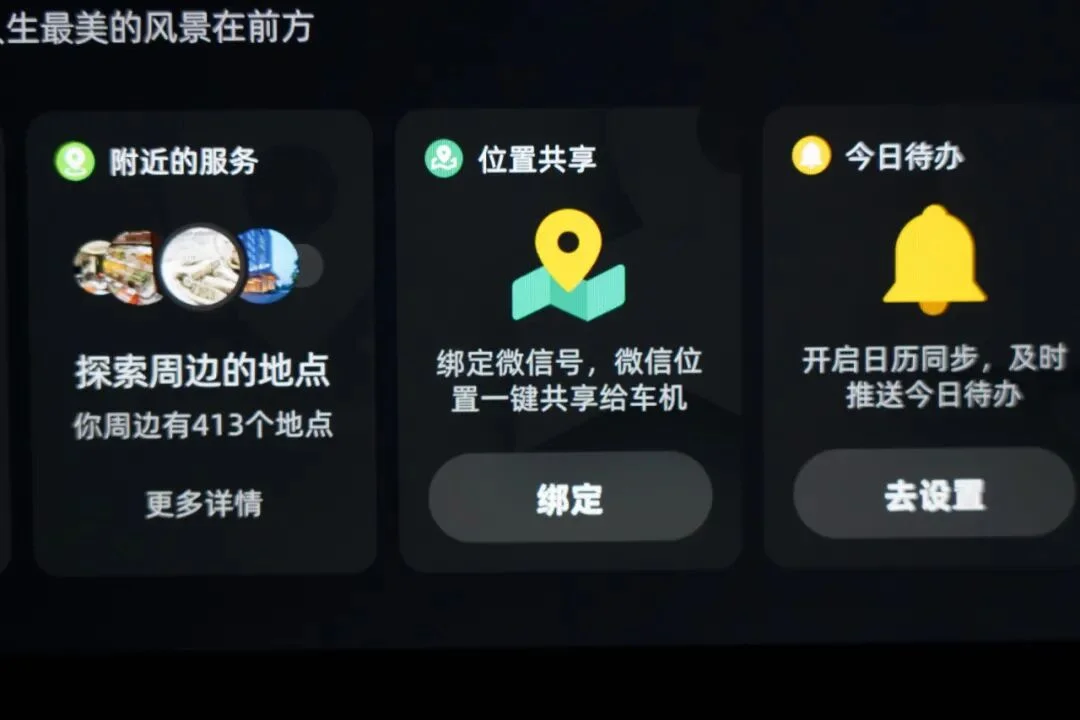
Location sharing via phone
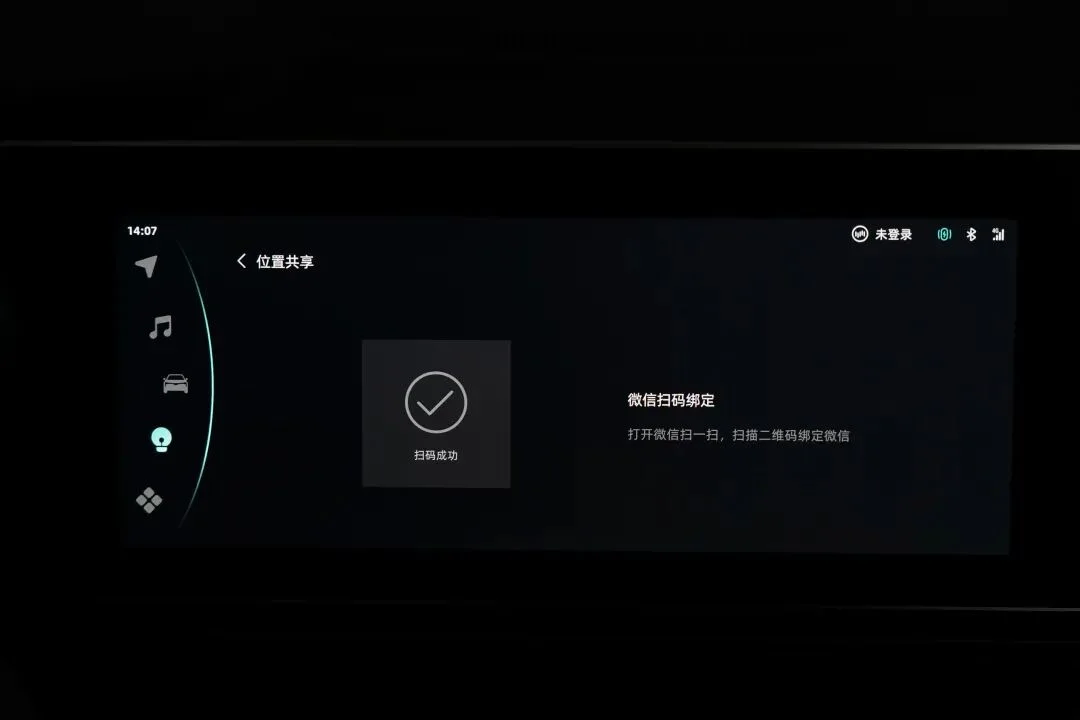
Scan QR code to bind via phone
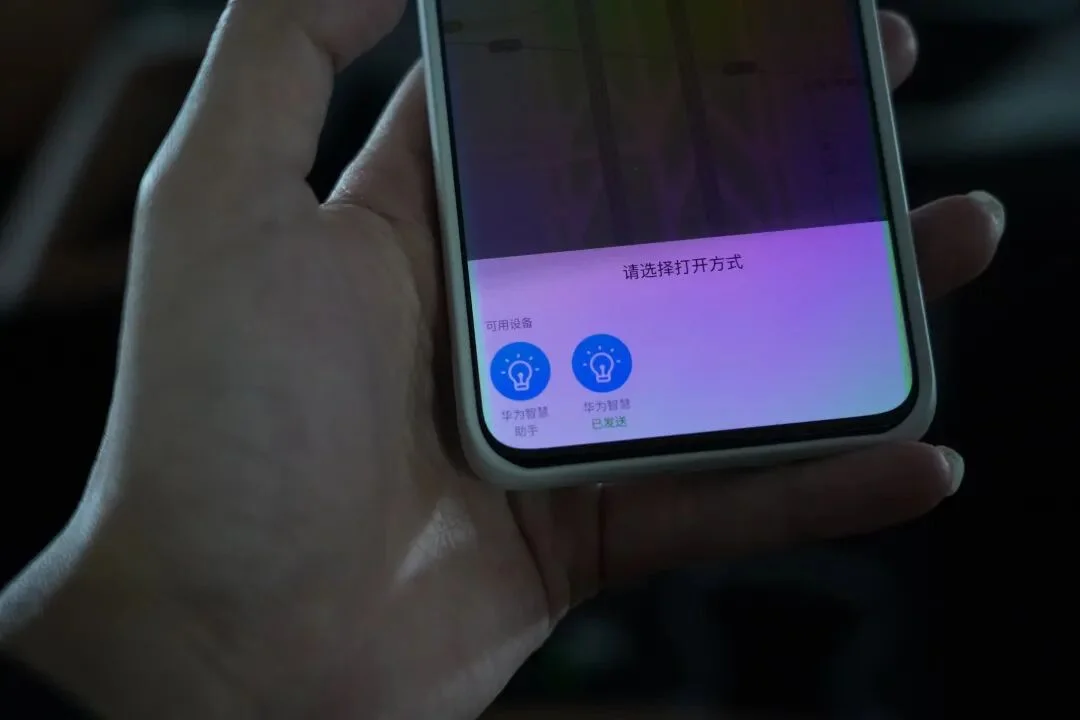
Share location from mobile device
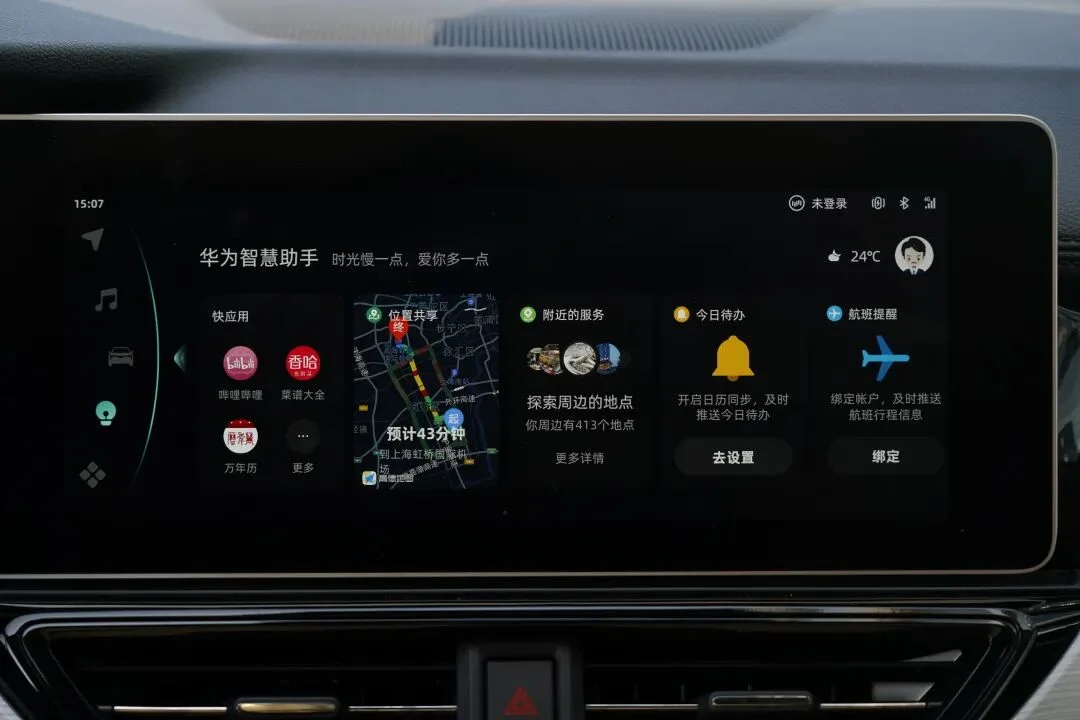
Vehicle head unit receives the location; tap directly to navigate The voice interaction segment sits slightly above the mainstream benchmark for smart EVs. It supports a wide range of controls, with separate zone recognition for both driver and front passenger, as well as continuous dialogue capabilities.
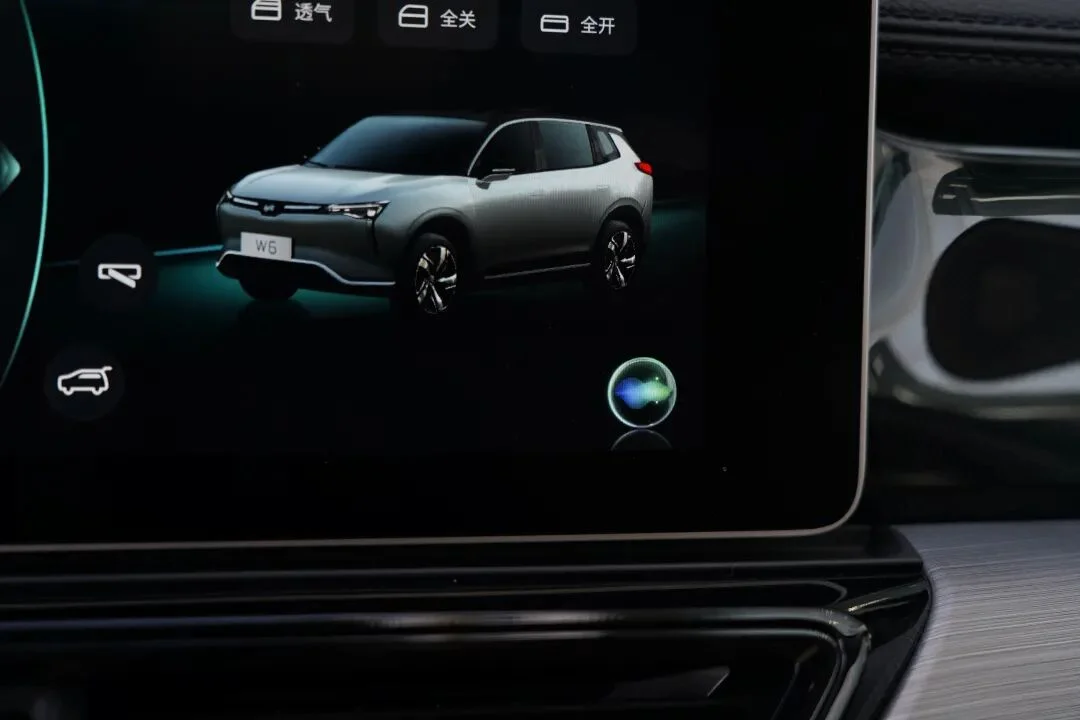
Voice Assistant at Bottom Right
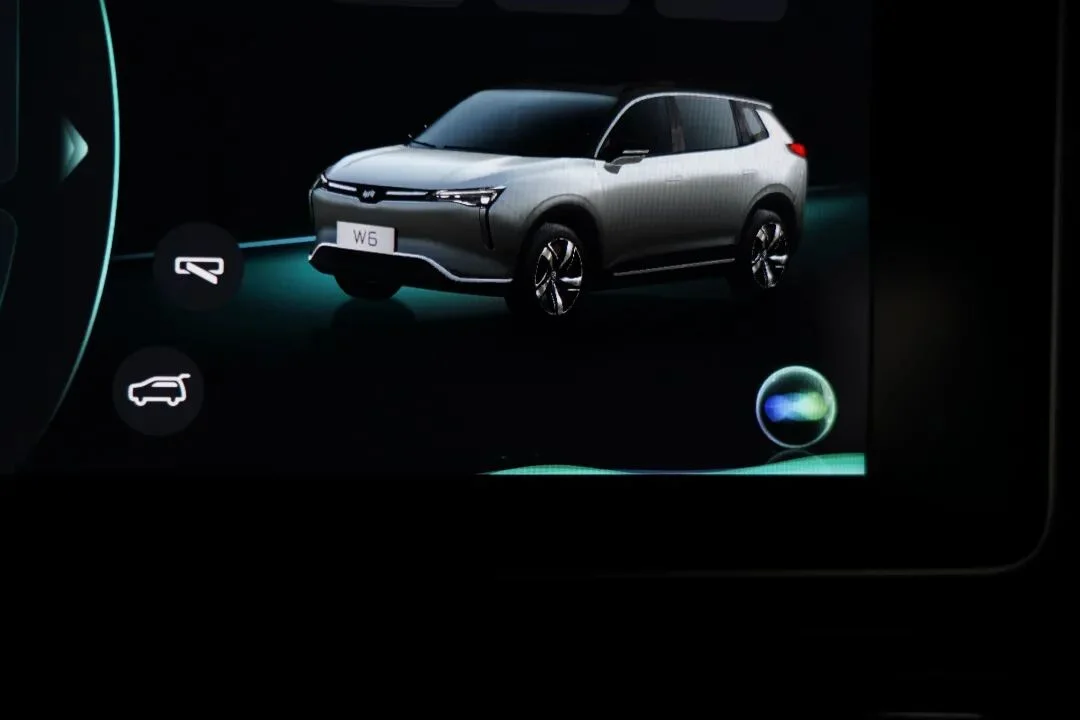
The voice assistant triggers a wave animation upon wake-up. I appreciate this feature, as it shares the same wave-shaped visual effect with the P7 after voice activation.
I have some complaints about the UI color scheme. If not for the smooth animations and fluidity, the black background with green borders would look rather dated. Additionally, the curved patterns on the edges of the UI layers clash slightly with the rectangular central screen. However, since the W6 excels in the most critical aspects of infotainment—interaction and information display—I believe it still deserves a positive overall rating.
After spending nearly half an hour exploring the infotainment system, I moved on to the parking features, which were my primary interest.
Automated Parking, Plus 'Unmanned' Capability
My curiosity regarding the W6's parking capabilities stems mainly from its AVP (Automated Valet Parking) function. Weima officially promotes L4 autonomy specifically within this parking scenario.
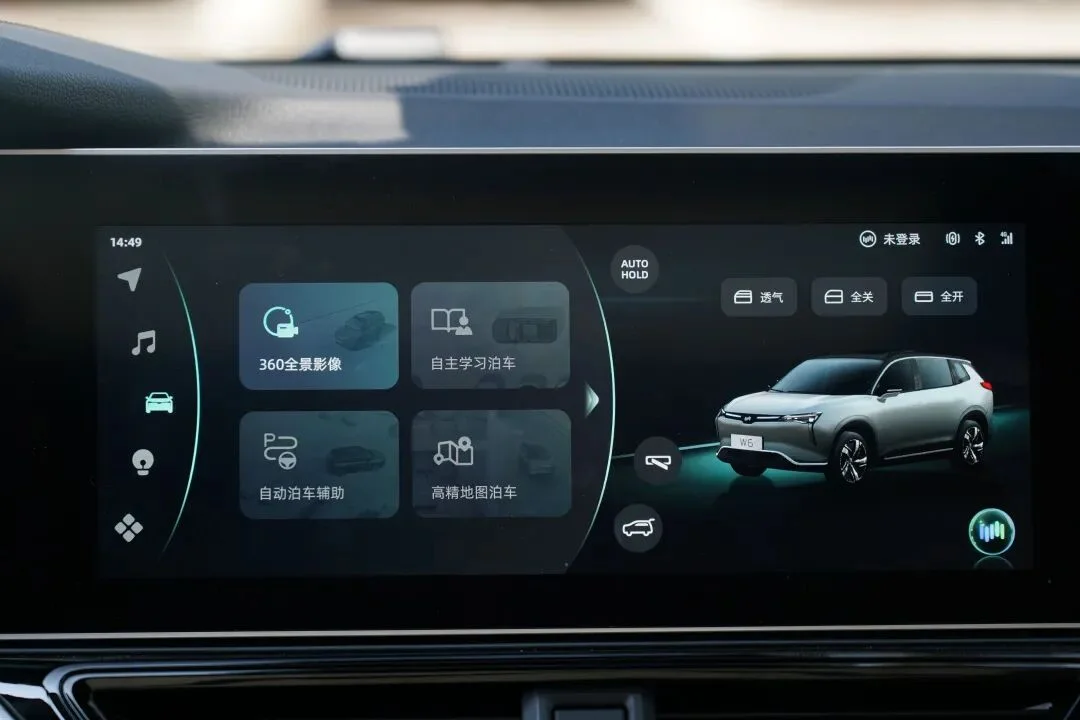
W6 Parking Feature Menu After accessing the parking feature page in the infotainment system, several parking options are available. The most advanced is High-Definition Map Unmanned Parking. According to official descriptions, once you enter a zone covered by HD map data, you no longer need to intervene; the vehicle can autonomously navigate across levels within the mapped parking area to find a spot and complete the parking maneuver.
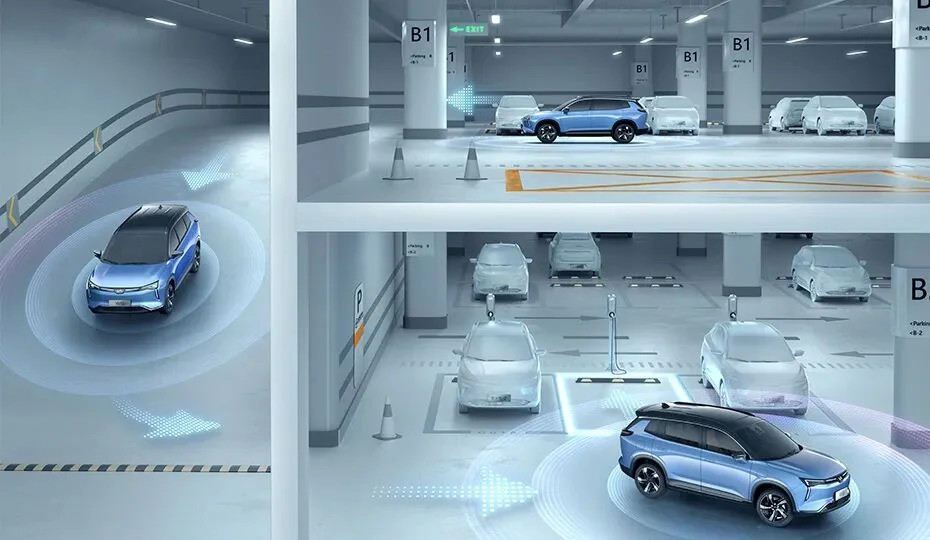
Unfortunately, the parking lot where I was testing did not have HD map data coverage. Therefore, on that day, I tried another feature: Unmanned Autonomous Learning Parking.
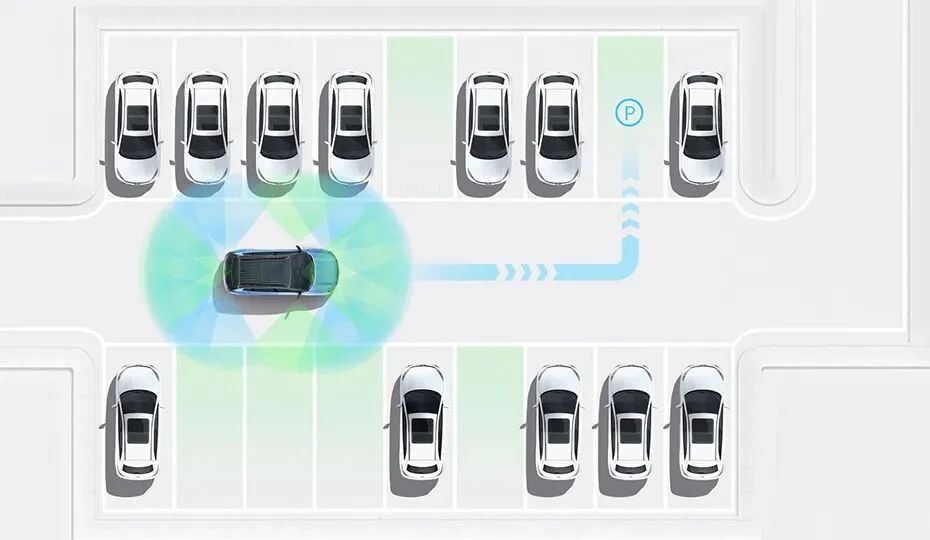
The word "learning" implies that you must teach the car how to park. However, before teaching it, I had to learn how to do the teaching myself. Fortunately, the infotainment system includes an instructional video. The general process shown in the video is as follows: first, set a starting point within a 100-meter path; then, manually drive to a parking space and complete one parking maneuver. After parking, set an ending point, click save, and the system will record the environment around the path and plan a route from the start to the end point for parking.
I followed the procedure and parked in a challenging spot. My position was a perpendicular (head-in) parking space. Directly opposite this space, along the driving lane, there was a row of parallel (side) parking spaces, all fully occupied. Consequently, the width available for reversing into the space was only about one and a half car lengths. If I did not approach the space closely enough during the reverse maneuver, the front corners of the vehicle would easily scrape against the cars parked in the adjacent side spaces.
On the first attempt, after I manually parked the car, the system took approximately eight minutes to save the data, subsequently generating a custom card for Unmanned Valet Parking (AVP). I then manually drove the car back to the vicinity of the starting point I had originally set. I located the saved card and initiated the AVP function. After confirming the parking command, the vehicle started its autonomous operation.
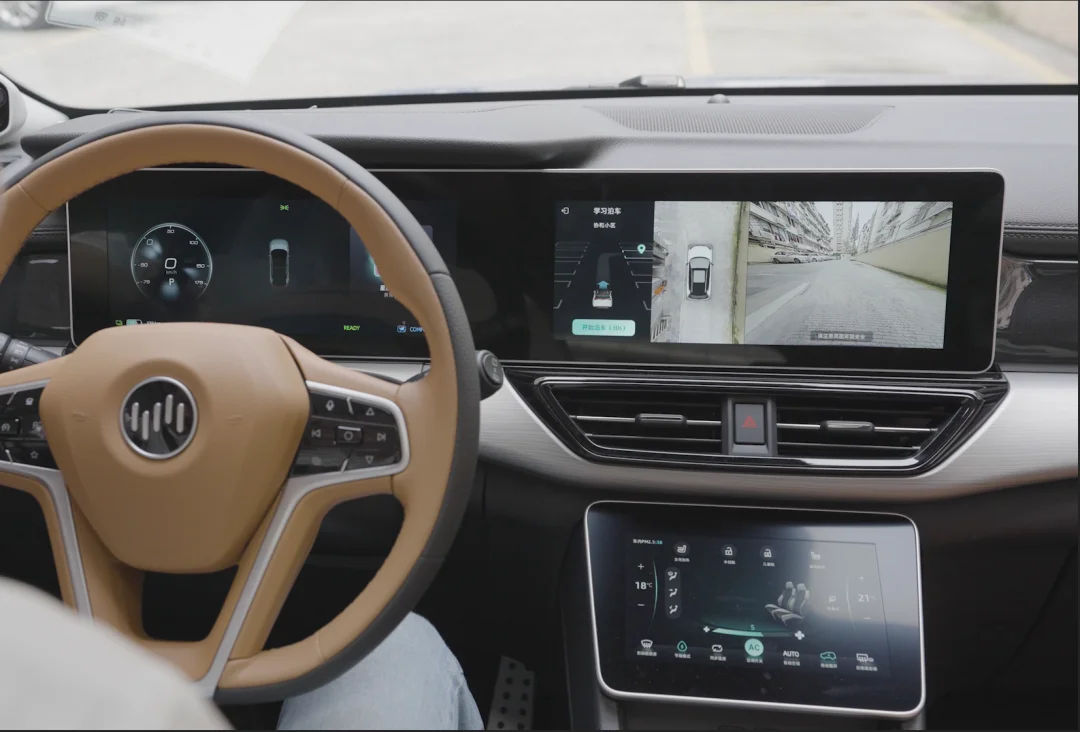
Start Autonomous Learning Parking I then noticed that the vehicle’s path differed from the one I would take when parking manually. After completing its learning phase, the car executed a cleaner trajectory with less frequent steering adjustments than I typically do. Its choice of position for the initial reverse maneuver was also reasonable.
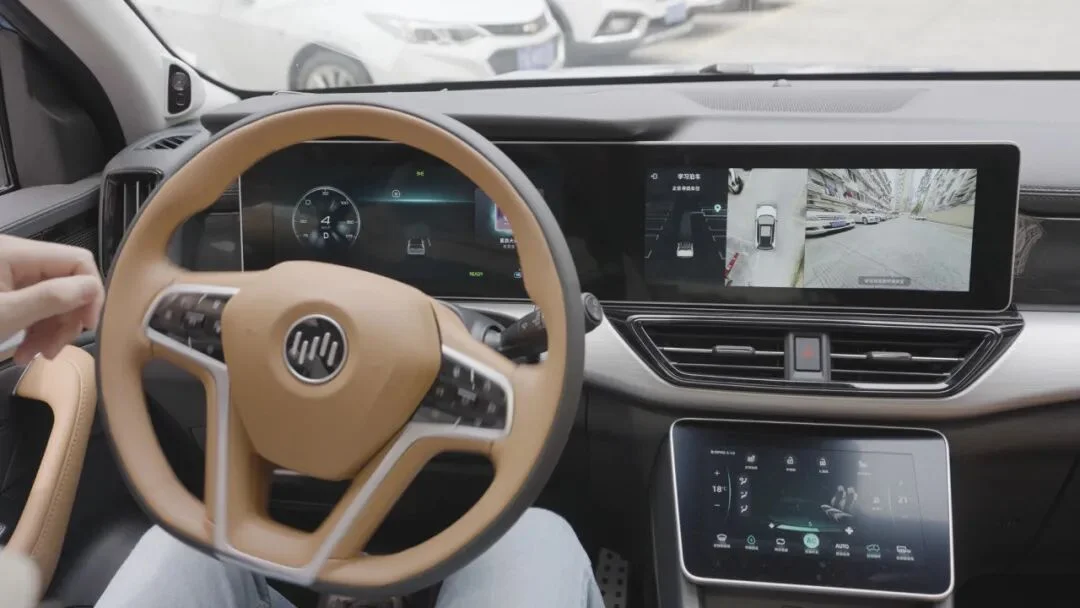
Like most automatic parking systems, the W6 required only two maneuvers to complete the parallel parking job. During the second forward movement, I felt a bit anxious, worried about scraping against vehicles parked along the curb. The W6 moved forward quite aggressively, stopping only when the front of the vehicle turned red in the panoramic camera view.
It should be noted, however, that the vehicle maintained good speed control during this forward segment. Despite the tight clearance, I ultimately did not need to intervene.
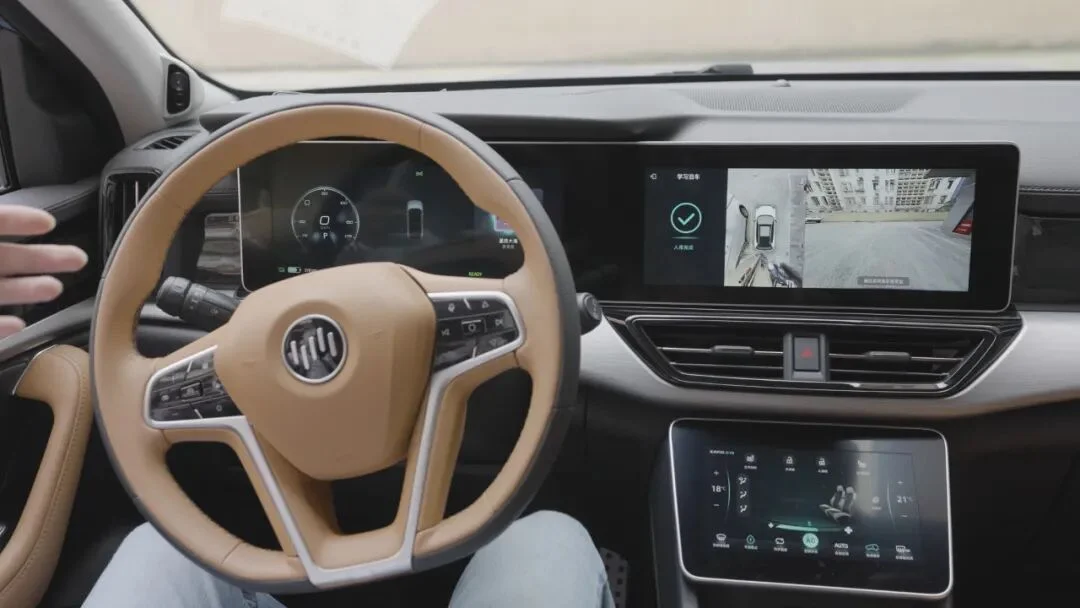
The final parking posture was remarkably neat: the space remaining on either side of the car was nearly equal, and the rear wheels aligned precisely with the limit line. When I park manually, I rarely pay attention to such details, and my car often ends up slightly angled.
I was pleasantly surprised by this performance. I then tested several other parking spots, which were less challenging, and successfully parked in all of them.
After an hour of testing the W6’s autonomous learning parking, its performance met my expectations, though there were two drawbacks.
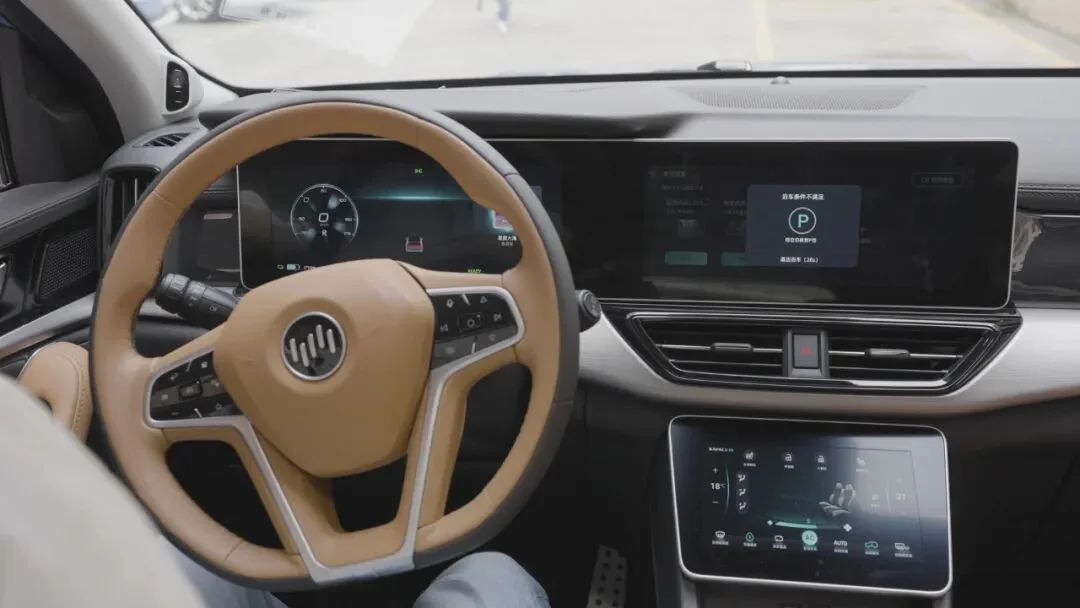
First, the system retains the manually taught route for too long. Second, initiating parking from the starting position near the origin didn't always match correctly; on several occasions, after I pressed start, the vehicle remained stationary, displayed an 'unknown error,' and terminated valet parking automatically. However, after retrying a few times, the vehicle started normally, and all subsequent parking attempts succeeded that day.
I believe this feature is highly usable for drivers with fixed parking spots: you can drive to your designated spot, get out, and use your phone to remotely park the car. You can also set up a card for exiting the spot. The system allows saving five parking cards—four for home and work (one in, one out each)—leaving one slot for another frequently used location.
Having experienced the autonomous learning parking, I now have higher expectations for high-definition map-based autonomous parking, which theoretically offers better performance. If I find a parking lot with HD map data available, I will definitely test it again.
With the parking lot portion of the test drive complete, I drove the W6 home and evaluated its dynamic performance on the road.
02The Second Half of the Test Drive: A Slightly Ordinary Experience
Normal Power Delivery, Regenerative Braking Worth Discussing
In terms of powertrain configuration, the W6 features a front-wheel-drive single-motor setup with a maximum power output of 160 kW and a peak torque of 225 N·m. These figures suggest a very family-oriented setting for this vehicle, which proves true in actual driving.
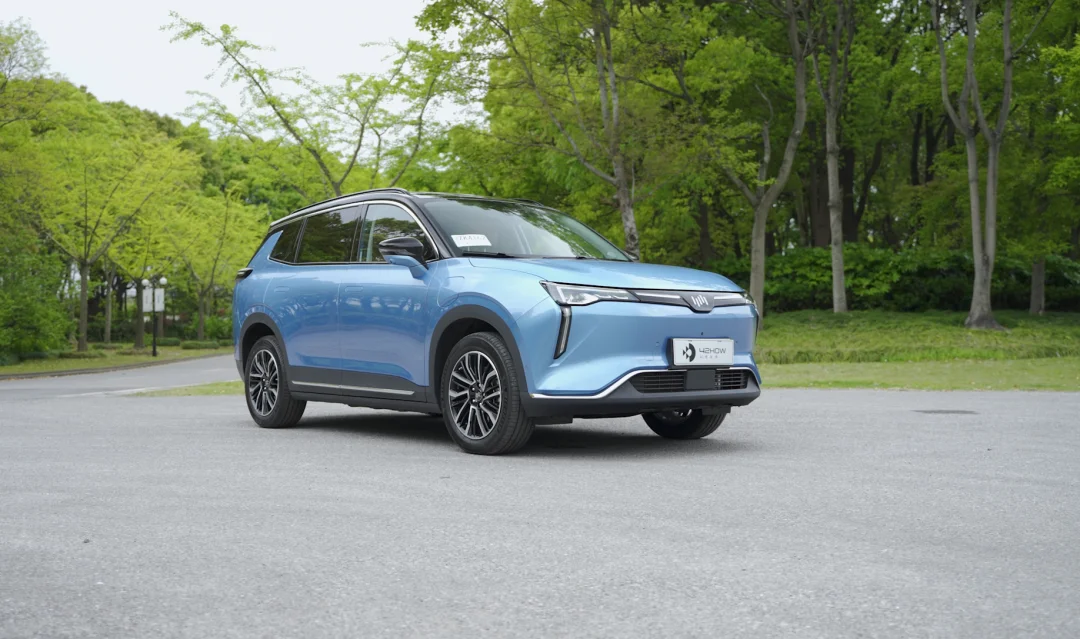
The W6's powertrain configuration and driving experience are typical of standard family cars. Our test car has an official 0–100 km/h acceleration time of 7.9 seconds. While full-throttle acceleration does not deliver a particularly strong push-back sensation, it remains within the normal range for SUVs in its class.
At a standstill, flooring the accelerator in a front-wheel-drive electric vehicle almost inevitably causes tire spin, and the W6 is no exception. Fortunately, the W6 shows improvement over the EX5 in terms of throttle linearity. Under low-speed full-throttle conditions, the front-wheel tire noise is relatively restrained, and vehicle pitch-up and directional deviation caused by front-wheel slip are much more controlled compared to the EX5.
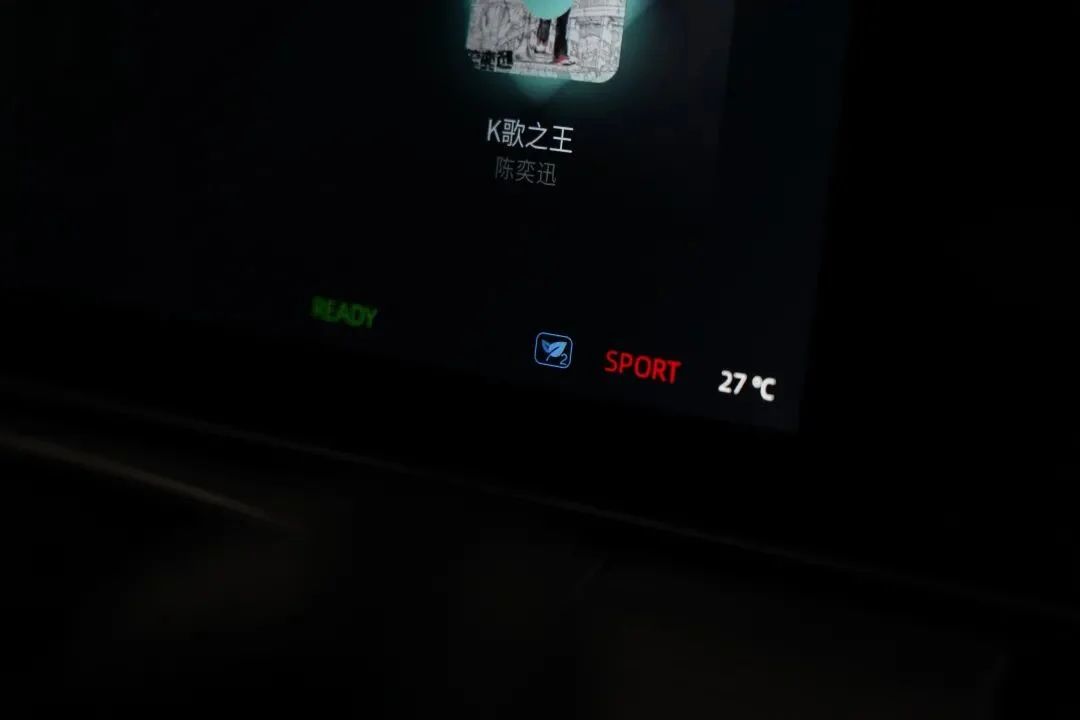
The leaf icon indicates the regenerative braking status; different gear levels correspond to different colors and numbers on the right. Regenerative braking in the Weima W6 is adjustable across three levels. The lowest setting effectively turns the system off, making it user-friendly for drivers transitioning from internal combustion engine vehicles who are not accustomed to regeneration. The strongest setting provides deceleration roughly equivalent to Tesla’s 'Easy' regenerative braking mode.
Another setting, likely designed with driving comfort in mind, is a fixed delay before regenerative braking engages upon releasing the accelerator. I have mixed feelings about this feature.
The reason I like it is that with this delay, even when the vehicle is in a regenerative braking gear and you release the accelerator, there is still a short period of coasting. In certain scenarios, such as following traffic where it is unclear whether the vehicle in the adjacent lane intends to change lanes, maintaining speed while keeping some reaction margin for braking can be beneficial. At this time, if you control the rhythm and apply quick, intermittent throttle inputs, the gap between the two throttle applications will not trigger regenerative braking, and the vehicle will not decelerate due to regeneration. This aligns with my operational intent as a driver.
The reason I dislike it is that in scenarios where regenerative braking alone would suffice for deceleration, the extended coasting distance often necessitates an additional brake application. At low speeds, this setting gives the impression that regenerative braking is not engaged aggressively enough.
I did not perform full emergency braking on the W6 during this test drive. The brake pedal feel is at a good level; the correlation between braking force and pedal feedback is well-calibrated, making it easier to adapt to and more relaxed to use than the brakes on our company's P7 or EC6.
Suspension Configuration Is Modest, But How Does It Feel?
The W6’s suspension configuration is relatively basic, featuring a front MacPherson strut and rear torsion beam setup—a combination that is uncommon today. As mentioned earlier regarding powertrain, the W6 offers little sporty character, so I did not attempt aggressive driving to explore its cornering limits. Instead, I focused on what a potential buyer might care about: as a daily family hauler, is it comfortable and soft to drive?
This is actually one point where I can give the W6 high marks. Switching from the Model Y to the ID.4 CROZZ, I felt ride comfort improved by a significant notch; moving to the W6, I felt it improved by another small step.
On the ID.4 CROZZ, I could sense that while the chassis prioritized comfort, it still tried hard to maintain dynamic support—the spring’s initial stage was relatively stiff, causing some harshness over speed bumps at low speeds. The W6 has fewer such reservations. With a powertrain and suspension setup unrelated to sportiness, the entire chassis tuning leans heavily toward comfort.
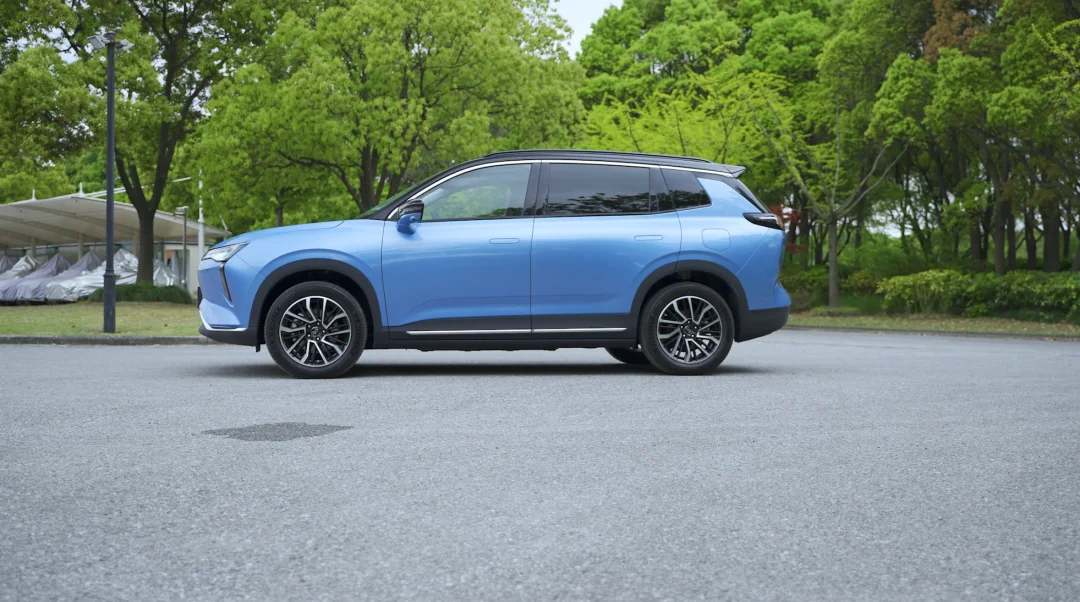
The W6’s suspension is tuned in a purely comfortable and soft style, offering good vibration filtering. Whether driving at 80 km/h on an elevated highway or under 10 km/h in a residential community, the vehicle handles bumps and irregularities with adequate buffering. Hitting a few small potholes does not instantly jolt you awake. For someone who usually pursues sporty driving, my trip home in the W6 may have been the most Zen and relaxed drive I’ve had in recent months.
Driver Assistance: Strengths and Weaknesses
I also tested the W6’s driver assistance system on an elevated highway. Activating it requires a two-step process: pressing the steering wheel button twice to navigate through "Set" and then "Enable." I personally dislike this two-step logic compared to a one-touch activation. Once enabled, the instrument cluster displays a visual UI of the road environment with a high frame rate for the animation.
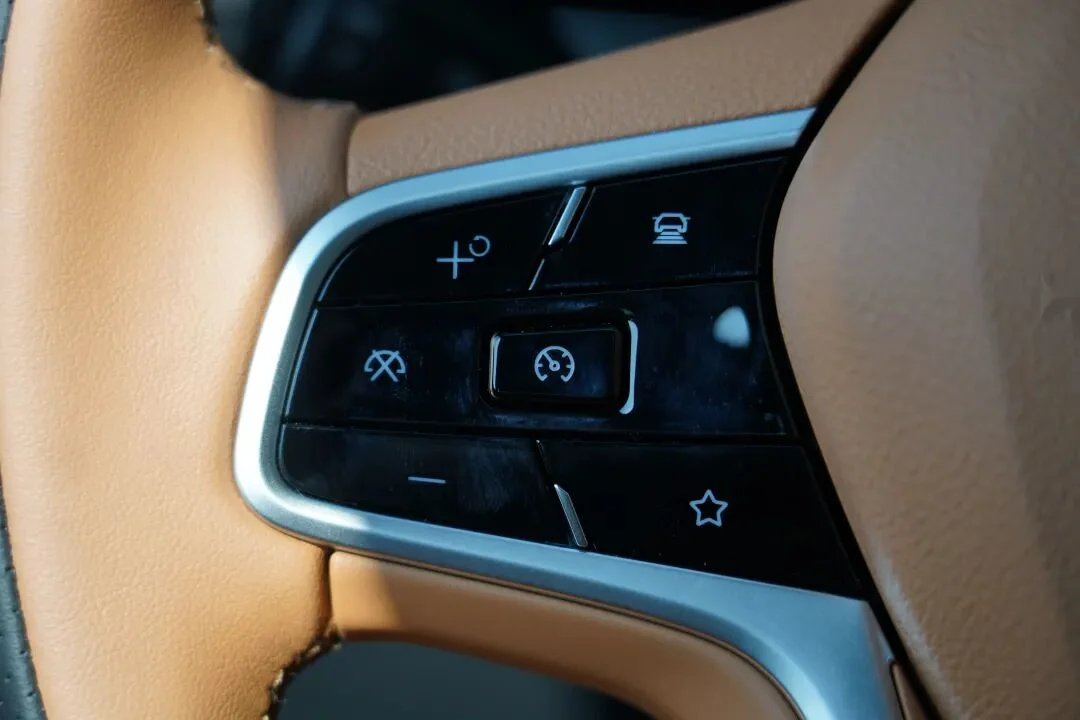
Enabling assisted driving requires pressing the cruise control button twice. Regarding the actual ADAS experience, the vehicle's adaptive cruise control performs well, with smooth acceleration and deceleration control. Additionally, in stationary traffic jams, the vehicle follows the car ahead when it starts moving.
This feature is now common among vehicles equipped with Traffic Jam Assist. On the W6, I particularly appreciated two aspects: first, the response when following the car ahead after it starts moving was good; second, in heavy traffic, once the vehicle stops, the instrument cluster provides a prompt informing the driver that the car will follow the vehicle ahead when it moves. If the stop lasts too long, there is also a prompt indicating that the follow-start function has been canceled. Compared to some models where drivers must time the start themselves by guessing, the W6’s proactive notification approach is significantly more intuitive.
Let me share my complaints. First, the W6’s lane-keeping capability is mediocre; its centering is not stable. When navigating curves on an elevated highway, the W6 can handle tighter turns but struggles with wider ones. As a result, I proactively take over control before entering a curve on the highway and only manually re-enable driver assistance once back on a straight section.
Second, there is a logical issue. The W6 we tested did not have the automatic lane-change feature triggered by turn signals. Typically, vehicles with lane keeping but without auto lane change will automatically disengage lane keeping when the turn signal is activated, facilitating the driver’s lane change.
However, with the W6’s lane keeping engaged, activating the turn signal does nothing to affect the lane-keeping state. Therefore, every time I want to change lanes using the turn signal, I have to fight against the vehicle’s lane-keeping system. In my view, this is a logic flaw that urgently needs optimization.
After driving the W6 for a few days, I found its road availability to be somewhat low due to shortcomings in lane-keeping capability. At higher speeds, particularly in areas with many curves or heavy traffic on both sides, the vehicle struggled to maintain a stable position within the lane. This performance was slightly disappointing and shows a clear gap compared to current market leaders.
03Reflections After the Test Drive
That concludes my experience with the W6. Within the limited time available, I did my best to identify the highlights and shortcomings that a driver would notice. Normally, this would mark the end of the article.
However, before starting to write this piece, I pondered several other questions regarding the W6 that I believe are worth sharing.
My first question was: Has Weima made progress after driving the W6?
From a product standpoint, the answer is yes. Compared to the EX5 delivered three years ago, the latest W6 offers longer range, higher specifications, significantly improved infotainment interaction, much more usable voice control, and unprecedented AVP (Automated Valet Parking) capabilities.
Considering the vehicle's size and its 520 km NEDC range, the unit we tested was priced at just under RMB 210,000—a price that is certainly not expensive.
Next, I asked myself a second question: Do you think this car will sell well?
Faced with this question, I fell into deep thought. Memories of Weima and China’s smart EV industry over the past few years began to play in reverse.
Three Years Ago and Three Years Later
On September 28, 2018, the Weima EX5 officially began deliveries—a milestone worth remembering for both Weima and the Chinese smart EV industry at that time.
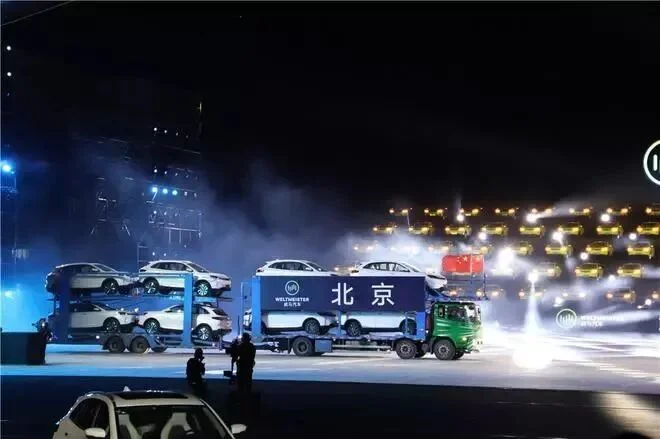
EX5 Initial Delivery Event Readers who only recently started following the EV sector may not fully appreciate how inspiring it was that a compact pure-electric SUV like the EX5 had a starting price of just RMB 112,300 three years ago. In short, the EX5 could be described as the Xiaomi of the EV world at that time.
And that car was actually delivered. At a time when new automakers were largely perceived as raising funds through PowerPoint presentations, the EX5 and Weima stood out for their pragmatism. Early market feedback on the EX5 was also relatively positive, and its sales figures were decent by the standards of the day.
But today, Weima has lost much of its former luster. Amid the 2021 new energy vehicle boom, the W6 emerged as one of the more obscure models.
Throughout these three years, Weima failed to secure a prominent position in consumers’ minds during the fierce battle for brand placement in the NEV segment. The “cost-effectiveness” label established by the EX5 has gradually been forgotten by consumers.
For the W6, Weima aims to highlight its intelligent features. The product strategy focuses on "concentrating efforts on strengths," investing significant effort into parking assistance and the infotainment system. The final results in these areas are indeed above average.
However, as the saying goes, "if Yu exists, why must Liang?" After two generations of products from G3 and P7, XPENG has claimed the most eye-catching label for intelligence in the market. Without achieving comprehensive superiority in capabilities, the W6 struggles to attract close consumer attention in this regard.
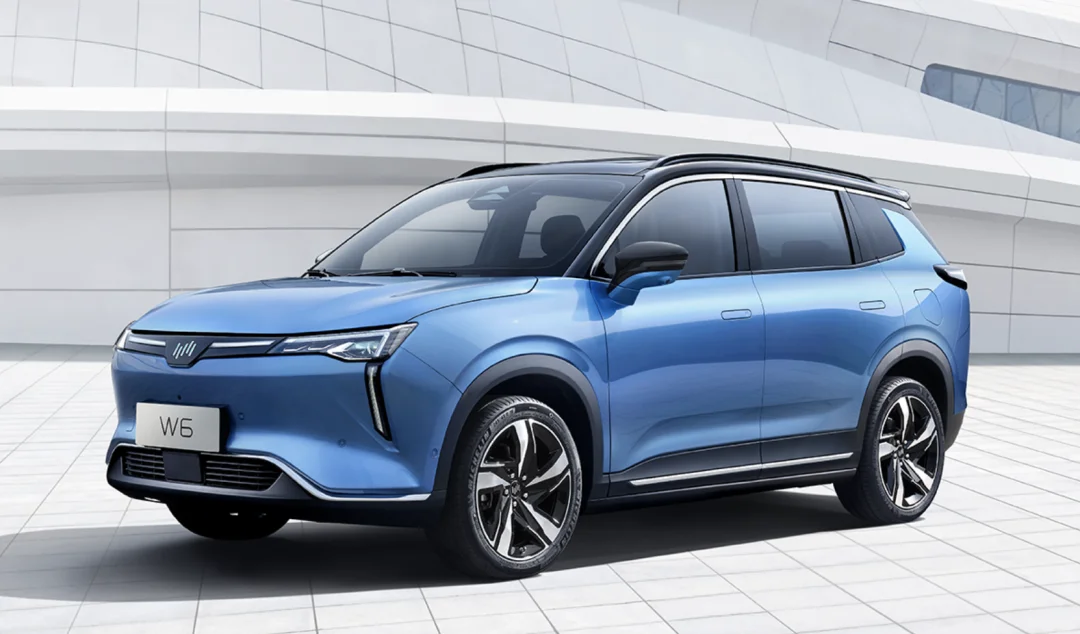
When it comes to parking and intelligence, consumers may not immediately think of the W6. In an era where new energy vehicles are emerging en masse, consumers remember the first mover best. If their perception does not associate parking and intelligence with Weima, the W6 is unlikely to be the first model that comes to mind when they need to buy such a vehicle. This poses a significant challenge for the W6.
Final Thoughts
The W6, which entered the market in 2021, offers a standard performance in terms of space and driving experience—neither particularly surprising nor problematic. Comfort and range offer good value for money at this price point.
After several days of test drives, however, I could not form a clear image of its target audience. Much like the W6's exterior, it looks decent and has some distinctive features, but lacks a memorable impression among those features.
If you have no concept of electric vehicles and no brand awareness, focusing solely on the product, buying a W6 for family use is fine. But such consumers seem increasingly rare today.
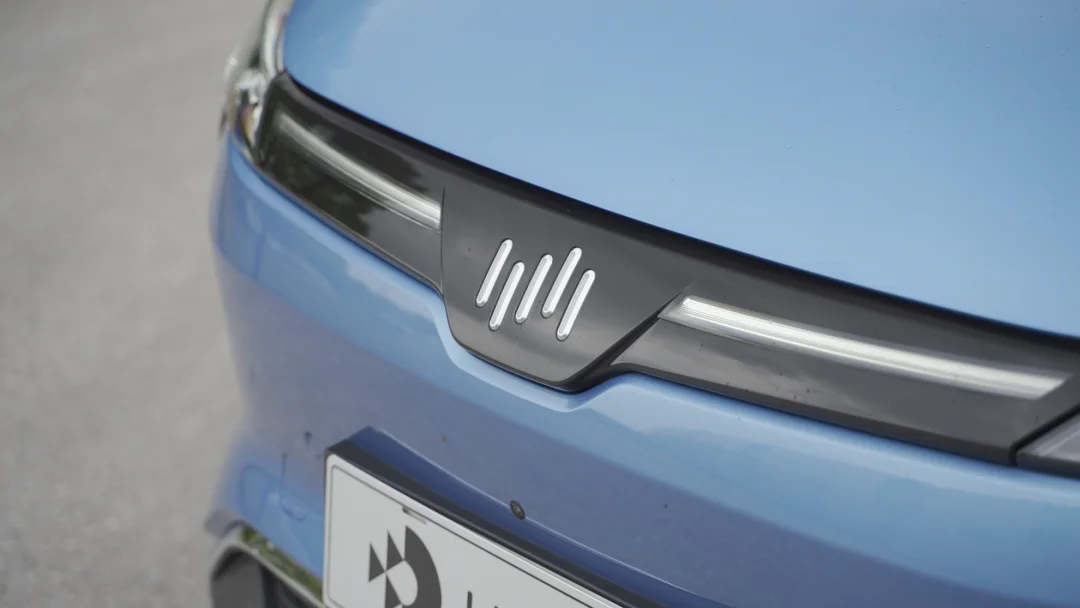
When the W6 found its own parking spot and parked itself, I felt a genuine sense of excitement. For Weima, this AVP (Automated Valet Parking) system is not just a concept; it has been realized and implemented in mass production. In a way, it evokes the same feeling of "we actually did it" as when the EX5, priced at RMB 112,300, began deliveries three years ago. However, compared to that earlier milestone, the consumer appeal of AVP is clearly less thrilling than a Xiaomi-style price point.
From a long-term perspective, I return to the first question I posed: After driving the W6, do you think Weima has made progress?
I now believe that this progress must be relative. In an industry characterized by rapid development and iteration, being better than your past self is insufficient. To become a benchmark, you must advance faster than the industry itself.
Given the current circumstances, Weima’s most pressing task may be to leverage the traffic and attention surrounding its competitors to highlight the intelligent features of the W6, thereby attracting more potential users.
Written by: Laiyinharte Fanlao Edited by: Daji