


Feifanqiche: Sustained Investment in the Right Things
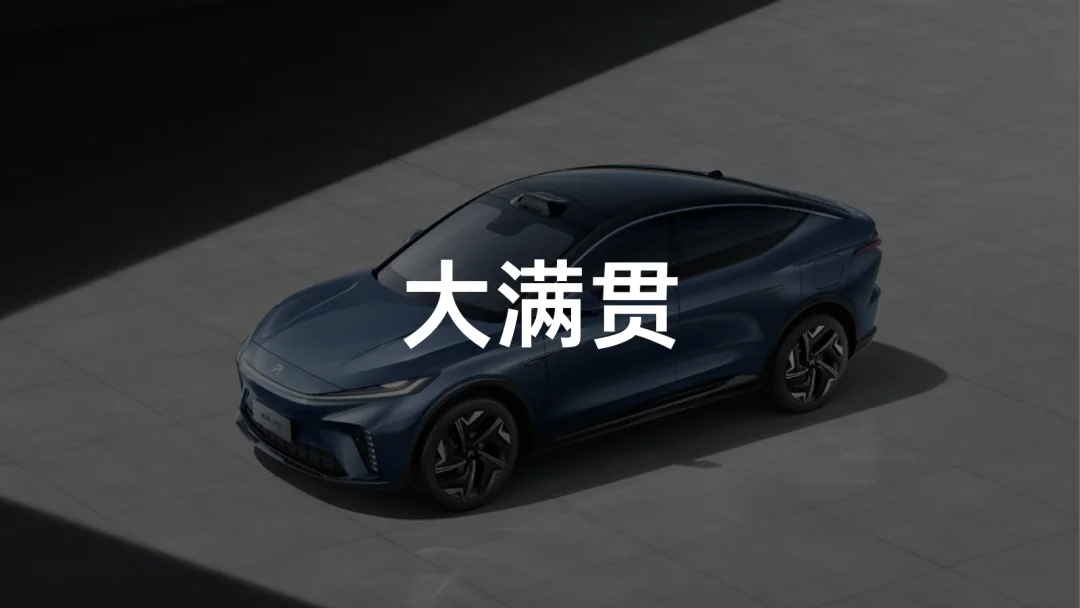
In October last year, Feifanqiche officially began independent operations. The concept car ES33 evolved into the brand's flagship model, the R7, and stepped forward.
At a media co-creation exchange meeting on February 24 this year, Wu Bing, the new CEO of Feifanqiche, stated that Feifan aims to sell 10,000 units of its new R7 model in 2022. If counting from the Beijing Auto Show, achieving a monthly sales volume of 1,300 units over the remaining eight months would be sufficient to meet this target.
This figure appears quite pragmatic. We must consider that this is a pure electric SUV priced at less than RMB 400,000; the difficulty of the task immediately becomes apparent: in the current domestic market, competitors in this price segment are all formidable contenders. By 2022, keywords such as high performance, intelligence, design, luxury, cost-effectiveness, service, and charging infrastructure had become mandatory courses for pure electric SUVs.
Beyond intense product competitiveness, brand identity is becoming an increasingly significant factor in consumers' purchasing decisions.
So the question is, what makes the Feifan R7 stand out?
01PP-CEM™ Perception 'Grand Slam'
PP-CEM™ is a self-developed high-level intelligent driving solution by Feifanqiche based on pixel-level point cloud fusion, and it stands for Pixel Point Cloud (multi-source perception system) and Comprehensive Environment Model (multi-dimensional environment model). This solution is equipped with 33 diverse types of perception sensors, enabling a six-fold perception fusion scheme that covers all weather conditions, all scenarios, beyond-line-of-sight visibility, and multiple dimensions.
As the first model to feature this system, the most "cutting-edge" combination on the Feifan R7 is undoubtedly the LiDAR and 4D imaging radar. This may be the world's earliest mass-produced vehicle equipped with a LiDAR + 4D imaging radar + 8-million-pixel camera + Orin X chip, achieving a "grand slam" in perception hardware. It is also highly likely the current intelligent driving solution with the highest precision, highest cost, greatest redundancy, and highest demands on fusion algorithms.
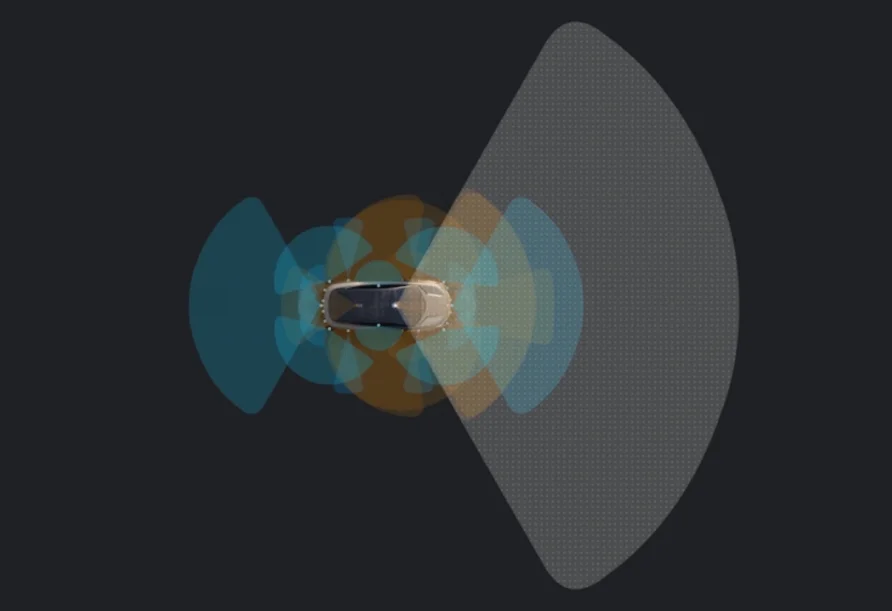
Multi-Sensor Fusion Perception System The core reason why the Feifan R7 incurs such high costs to implement multiple safety redundancies with advanced hardware is the need for complete perception of corner cases (extreme scenarios). Currently, in the selection and configuration of autonomous driving perception hardware, OEMs generally regard cameras as the most critical perception component. However, when facing certain corner cases, due to the "lack of experience" of cameras, they are unable to accurately identify all information on the road surface, which leads to recognition errors and subsequently causes dangers. For example, we often see cases of assisted driving accidents where the system mistakenly identifies a white truck as the sky.
Additionally, cameras struggle to function effectively in extreme weather conditions. For instance, in heavy fog or sandstorm conditions that are difficult for the human eye to penetrate, current driver assistance systems are largely unusable.
To address these scenarios, we need to increase safety redundancy. One option is to endlessly expand corner cases and train cameras accordingly—this is Tesla's "pure vision" approach. However, in terms of final perception performance, Tesla reaches the 3D signals that LiDAR and 4D imaging radar can directly obtain by "feeding" neural networks tens of millions of images along with a series of complex algorithms.
Another mainstream approach to addressing the perception limits of cameras is to expand the upper bounds of perception hardware capabilities, which requires adding various types of sensors. LiDAR and 4D imaging radar have become the unified choice for multi-sensor fusion vendors.
This LiDAR is quite formidable
Among all perception hardware, LiDAR has attracted the most attention in recent years. Almost all high-end smart vehicles are equipped with LiDAR. However, unlike industrial LiDARs that have long existed for obstacle avoidance and mapping, automotive-grade LiDAR requires redefinition and reconstruction. As a result, very few models have successfully reached mass production. This is not solely due to cost issues; there is much debate surrounding performance, lifespan, and safety. After all, everyone wants to be the first to taste the crab, but they also want to do it right.
Luminar’s flagship LiDAR, named lris, is a high-performance unit that truly meets automotive-grade requirements in every sense. As a scanning-mirror LiDAR, it offers a field of view of 120° x 26°. At a reflectivity rate of 10%, its maximum detection range reaches 250 meters.
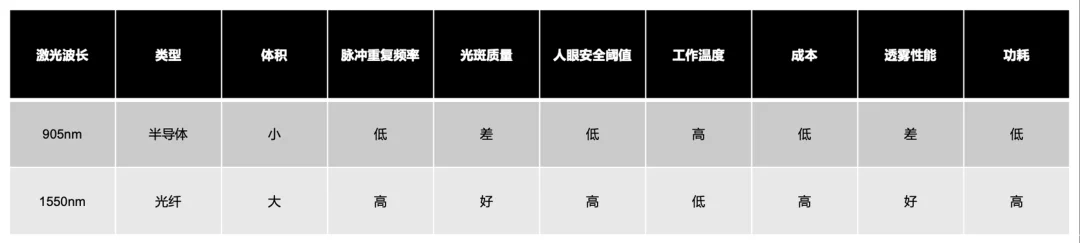
Currently, products from mainstream LiDAR manufacturers—such as DJI domestically and VLDR and Faleiao internationally—primarily use a wavelength of 905 nm. In contrast, lris operates at a 1,550 nm wavelength, providing stronger penetration capabilities. It outperforms 905 nm systems in spot quality and repetition frequency, while also being more eye-safe.
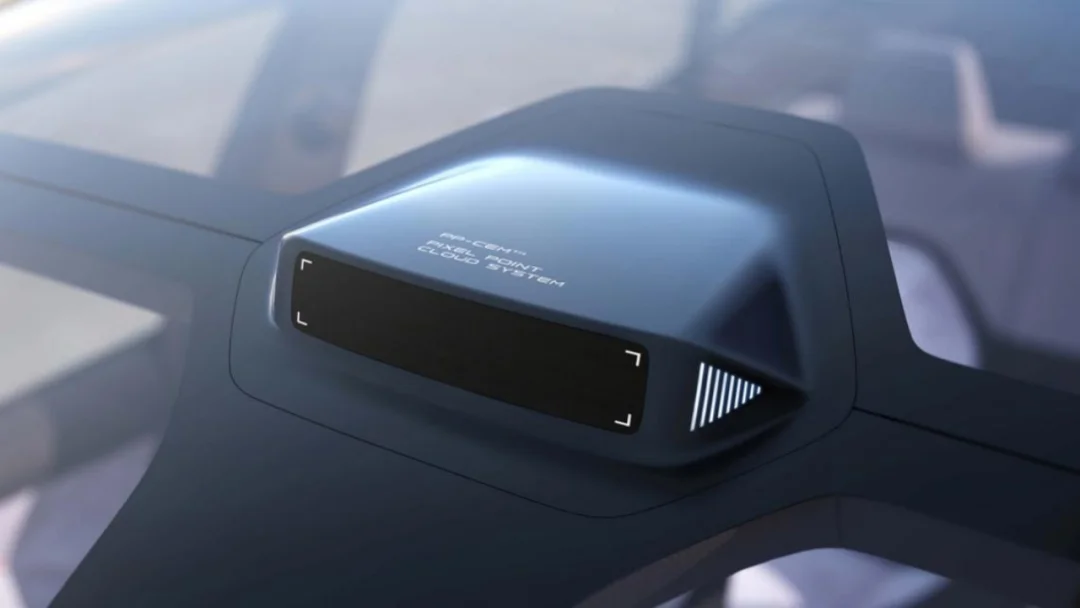
Additionally, Luminar’s radar features a flat, compact form factor that integrates seamlessly into vehicle bodies without significantly impacting overall design. Its smaller size also reduces the likelihood of severe damage in minor collisions or scrapes.
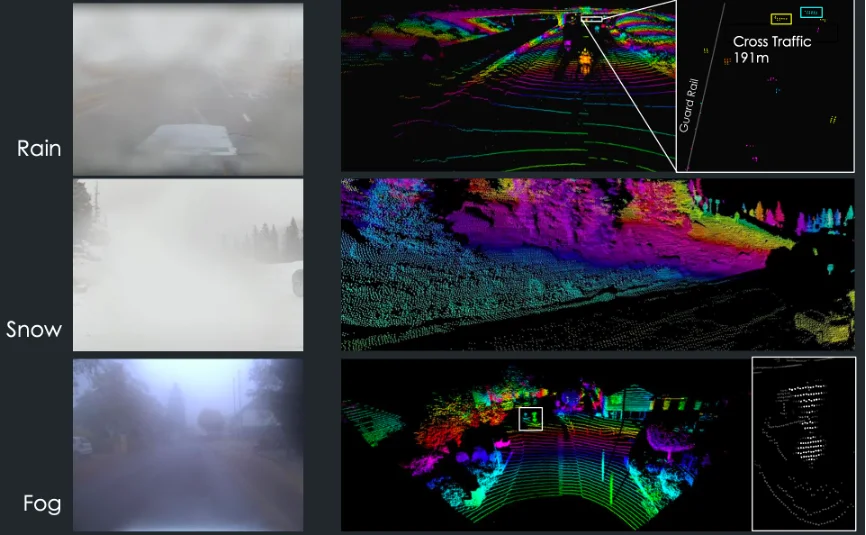
This is Luminar demonstrating the performance of lris in extreme weather. As can be seen, the information from the camera on the left has become almost unusable, but the LiDAR has already scanned 3D information from hundreds of meters away, without being significantly affected by rain and snow.
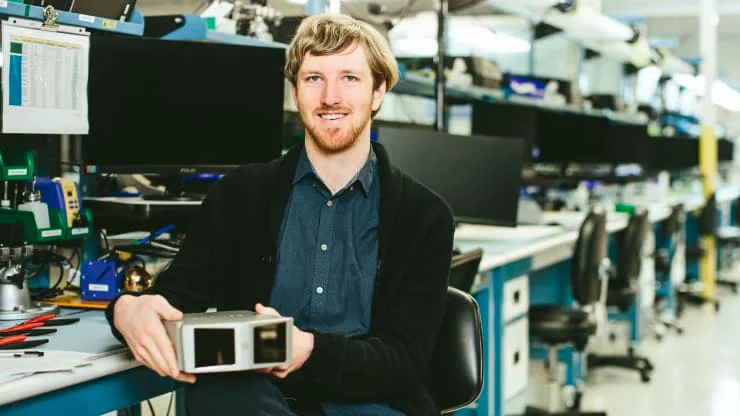
Driven by 95-born prodigy Austin Russell, Luminar not only went public in late 2020 but also acquired Black Forest Engineering, a company specializing in indium-gallium-arsenide (InGaAs) receivers, and developed its own ASIC chips. This strategy successfully addressed the cost issues of InGaAs in receiving sensors and eliminated supply chain bottlenecks. By taking control of production, Luminar can better meet the manufacturing needs of automotive clients.
As a tech upstart, Luminar has always been very cautious when selecting partners. Its current client list includes industry giants such as Mercedes-Benz and Airbus. However, barring any unexpected changes, the Feifan R7 will be the first mass-produced vehicle to feature the Luminar lris LiDAR, which is something I am particularly looking forward to.
Feifan and Luminar's partnership is a "mutual selection." Feifan was drawn to the superior performance of the Luminar lris, while Luminar believes that within Feifan's R7 PPCEM™ solution, the LiDAR can perform at its peak. Supported by Shangqi's global supply chain, rapid mass production can be achieved.
Not in a hurry: The rise of 4D imaging radar
Tesla cut the millimeter-wave radars from the North American Model 3/Y in June last year, shifting to a pure vision-based perception system.
This move is closely tied to the inherent limitations of millimeter-wave radars, which cannot detect height information and have low longitudinal resolution, making them unreliable as a reference. Consequently, when facing stationary objects, millimeter-wave radars often struggle—for instance, vehicles using a camera-and-millimeter-wave hybrid perception system may experience "phantom braking" when passing under gantries or bridge piers. Another reason for Tesla's decision is cost savings; removing millimeter-wave radars significantly reduces expenses given their massive sales volume.
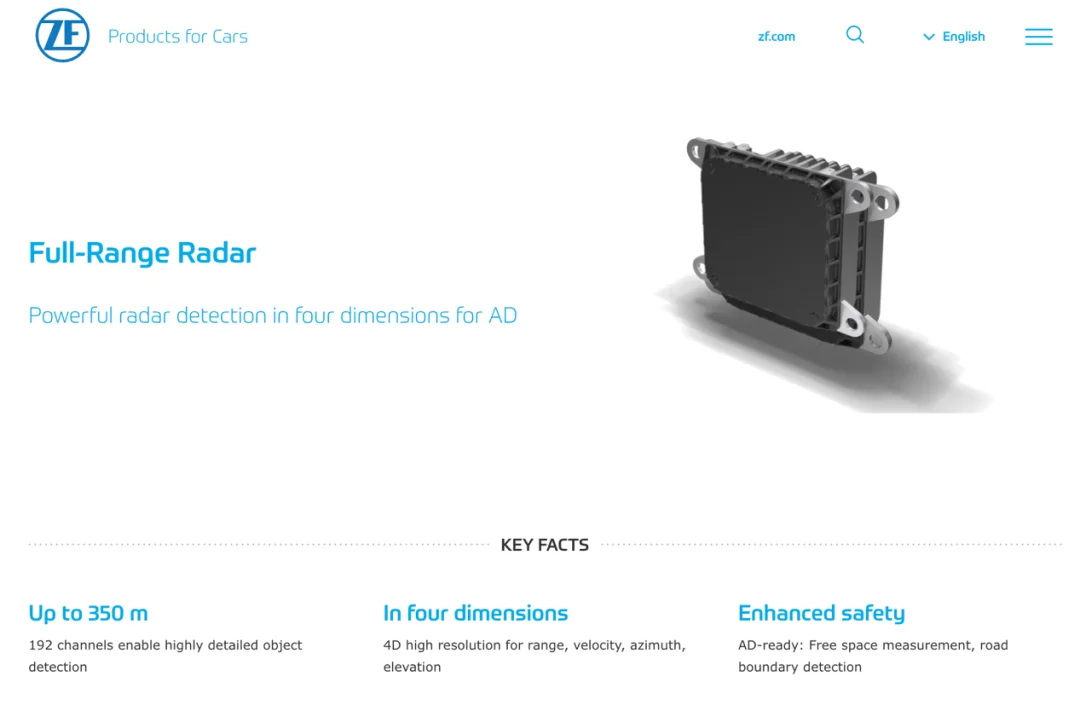
4D imaging radar not only provides vertical height recognition capabilities but also offers overall resolution far surpassing that of millimeter-wave radar. Theoretically, 4D imaging radar enables more precise identification in scenarios such as passing under gantries or bridge piers; moreover, due to the improved resolution, 4D imaging radar can directly identify objects such as traffic cones, road signs, and stationary vehicles. Of course, because it emits electromagnetic wave signals, the working performance of 4D imaging radar remains excellent in rainy, snowy, and dusty weather, which compensates for the decline in recognition capability of cameras and LiDARs in severe weather.
The Caiaifu Premium 4D Chengxiangleida, first featured on the Feifan R7, not only offers the aforementioned advantages but also achieves a detection range of up to 350 meters, whereas standard millimeter-wave radars typically have a detection range of less than 250 meters. LiDAR already provides significant perception redundancy for the entire sensor suite; the addition of 4D imaging radar further deepens this safety margin.
NVIDIA Orin X Chip: Global Mass Production Pioneer
In short, the comprehensive supplementation of perception hardware by 4D imaging radar and LiDAR has pushed the Feifan R7’s sensor capabilities to the peak of imagination. However, this complex array of perception hardware generates massive amounts of data in real time, necessitating a powerful computing platform for the Feifan R7.
The Feifan R7 opts for the most powerful autonomous driving chip available: the NVIDIA Orin X. Each chip delivers 254 TOPS of computing power, representing a sevenfold increase in performance compared to the previous-generation Xavier chip, while keeping power consumption below 55 W. The Feifan R7 is equipped with up to two of these chips, providing a total computing power of 508 TOPS.
Zooming out to the broader intelligent electric vehicle industry: previously, Feifan products were indeed somewhat constrained by electronic and electrical architectures and hardware in the smart technology race. Now, with the Feifan R7, the brand has completely caught up to, and even surpassed, new energy vehicle startups in terms of hardware.
Of course, for an intelligent driving system, possessing high-performance hardware alone is insufficient without matching excellent algorithmic software support; achieving a superior user experience remains difficult. It is akin to a muscular individual lacking a sharp mind—hardly a master. Therefore, we can look forward to the actual experience delivered by this "grand slam" of perception hardware on the Feifan R7.
02Configurations Pushed to the Limit?
As Feifan Brand’s most significant product of the year, the Feifan R7 features top-tier perception hardware. Additionally, it is the first model built on Shangqi’s latest three-electric technology platform. Other configurations have also benefited from substantial resource allocation from the Shangqi Group, including new technologies such as high-density batteries, oil-cooled electric drives, and flat-wire motors.
Battery, Motor and Electronic Control
Feifan officially refers to its battery, electric motor and electronic control systems as the "RISING POWER" energy solution. For the battery, the Feifan R7 uses NCM 523 cells, which offer a more stable and safer chemical formulation compared to NCM 811. The energy density has been increased to 195 Wh/kg, supporting a driving range of over 600 km for the R7.
Through a dual-layer transverse cell layout, Feifan reduces the vertical thickness of the battery pack. This design not only improves energy density but also facilitates cabin space utilization. Additionally, it minimizes the contact area between cells, reducing heat propagation. Combined with five core thermal management systems, including aerospace-grade aerogel insulation, the battery achieves an L0 safety level with no thermal propagation.
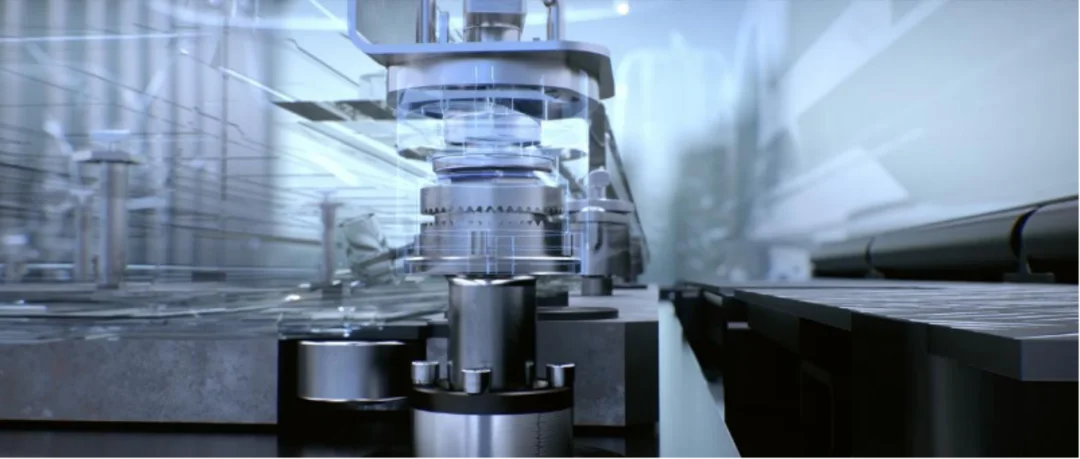
Furthermore, the Feifan R7 features the QUICK CLICK patented rapid-swap mechanism, enabling battery swapping and upgrades. Official data states that the entire swap process can be completed in as little as 2.5 minutes and supports up to 5,000 swaps, three times the national standard requirement. As battery technology advances, the system will support swapping batteries with different energy densities.
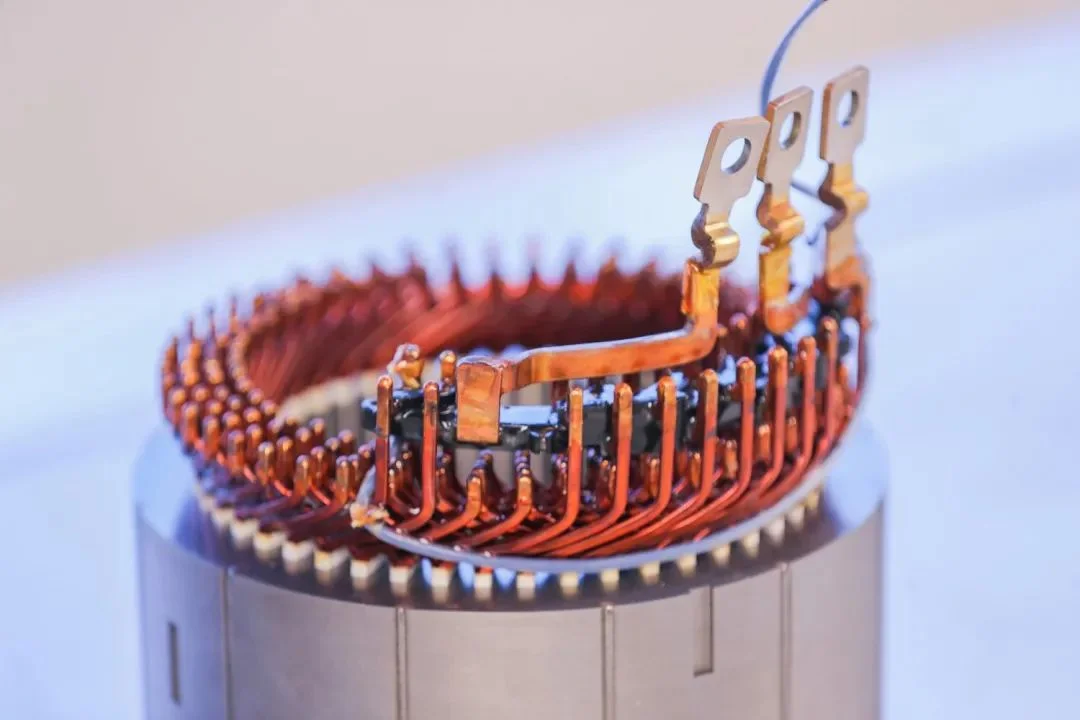
The battery's capability for charging, swapping, and upgrading ensures range assurance. Meanwhile, the efficiency and performance of the electric motor are key highlights of the Feifan R7.
The Feifan R7 employs a new 8-layer Hair-pin motor. In simple terms, higher current in the windings delivers stronger power, while lower resistance yields higher efficiency. To improve power density and reduce energy consumption, all motor manufacturers strive to fit as much copper wire as possible into limited spaces.
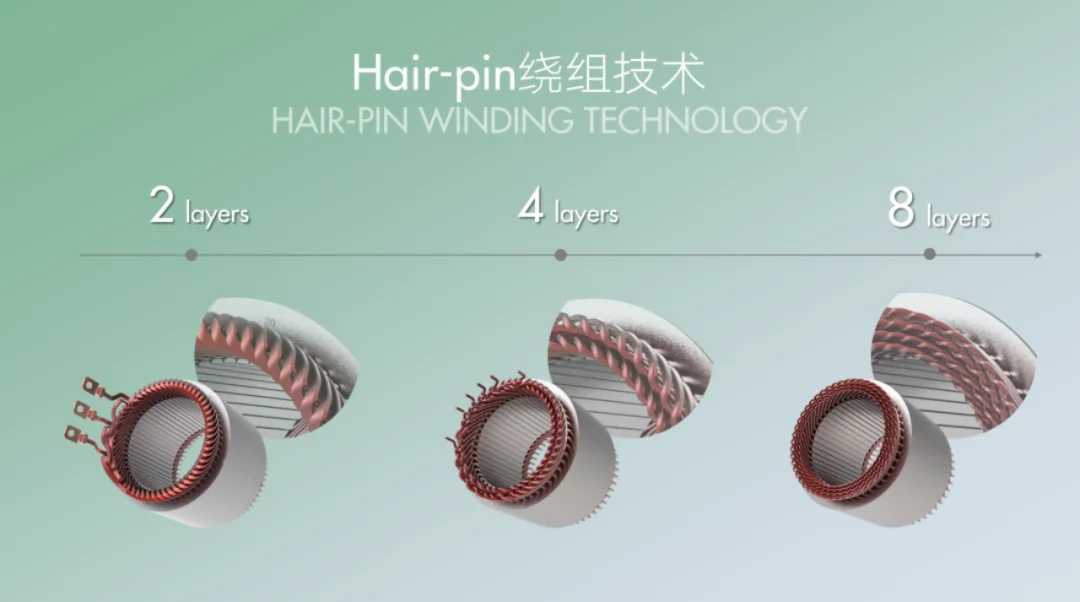
The Hair-pin stator, commonly known as the 'hairpin' design, uses flat-wire windings to pack more copper into the motor. Shangqi’s eight-layer Hair-pin configuration increases the surface area of the windings, which directly translates to simultaneous gains in efficiency and performance.
It is currently known that the Feifan R7 will be offered with both single-motor and dual-motor all-wheel-drive variants. The AWD version delivers a peak power output of 400 kW and a peak torque of 700 N·m, enabling 0–100 km/h acceleration in the 4-second range. Additionally, the motors will feature vertical oil-cooling technology for superior heat dissipation, sustaining peak performance for longer periods. In daily driving scenarios, this means drivers can perform repeated hard accelerations or maintain high-speed cruising without worrying about power reduction due to motor overheating. This makes me eager to see how the car performs on a track.
The Third Space
While progress in intelligent driving has been prominent, recent attention has shifted toward intelligence within the cabin. Guided by the concept of the 'Third Space,' the Feifan R7’s smart cockpit features are just as impressive as its autonomous driving capabilities:
A 43-inch true-color triple-screen spanning the cabin
OLED display panels are becoming the standard for vehicle infotainment systems. The Feifan R7’s center console utilizes an OLED panel measuring 15.05 inches. It offers a resolution of 2.5K (2,560 × 1,600, PPI 201), covers 100% of the NTSC color gamut, achieves a contrast ratio of 1,000,000:1, and supports a refresh rate of 60 Hz. These specifications effectively replicate those of high-end desktop monitors within the vehicle cabin.
A large AR-HUD head-up display system
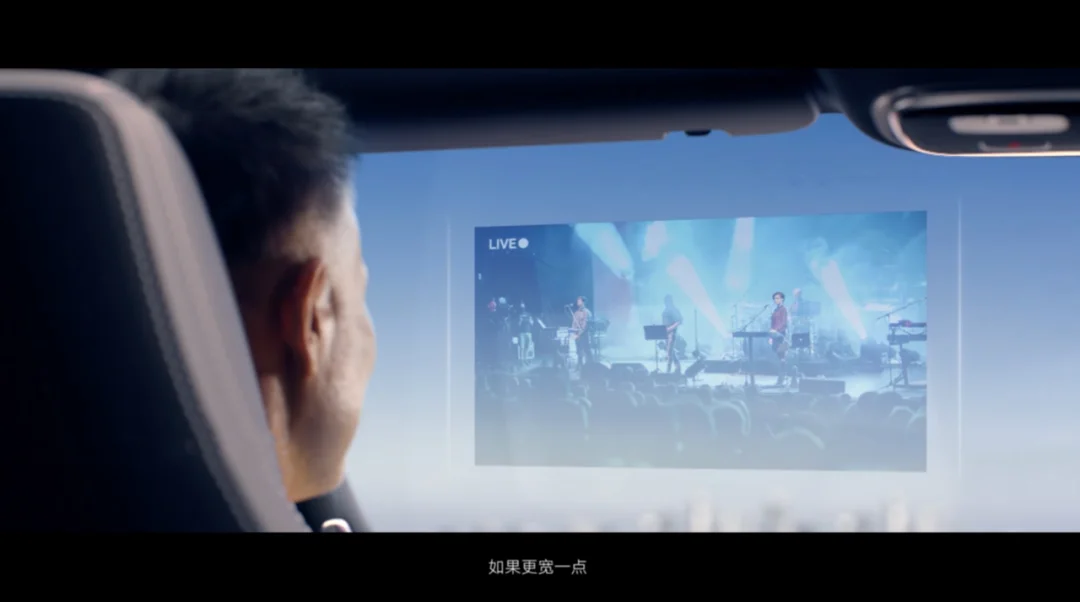
The AR-HUD system in the Feifan R7 is a Huawei optical product, offering a large field of view of 13° x 5°. It projects a massive display area at a distance of 7.5 meters ahead, while occupying only 10 liters in volume. The significant improvement in area and display quality enables this AR-HUD to support many functions. In addition to basic vehicle information and navigation projection, it can directly project movies. Here, "AR" stands for augmented reality, and I am also looking forward to seeing what creative features the Feifan team will develop with this AR-HUD.
Gaotongxiaolong8155 chip
This is currently the most mainstream flagship automotive chip. The chip uses a 7 nm process, with an NPU capable of 8 TOPS of computing power and 16 GB of memory. Its overall performance is three times that of the 820A.
In the "third space" arena, hardware configurations and underlying architectures are the biggest stumbling blocks to realizing ambitious features. On the Feifan R7, these foundational issues rooted in hardware and architecture have already been resolved. The next challenge for Feifan is to build genuine SOA-based services on top of this hardware foundation and achieve an overtaking maneuver against the "new forces." This is the answer Feifan must deliver in its next phase.
03Final Thoughts
To put it mildly, the Feifan R7 is equipped with a wide array of "cutting-edge" hardware components commonly featured in news reports. Whether it's the variety and performance of its sensor suite or the specifications of its battery, electric motor, and electronic control systems as well as its cabin features, the Feifan R7 clearly demonstrates sincerity in its hardware configuration.
Just recently, Feifanqiche and Shangqijituanchuangxinyanjiukaifazongyuan unveiled the Feifan Design Co-Creation Center and the Feifan Autonomous Driving Co-Creation Center. This clearly shows that Feifan, as well as the entire Shangqi Group, places great importance on the Feifan R7.
This makes me look forward to the pricing of the Feifan R7 and the software performance of the production version. I believe that by now, readers share my anticipation.
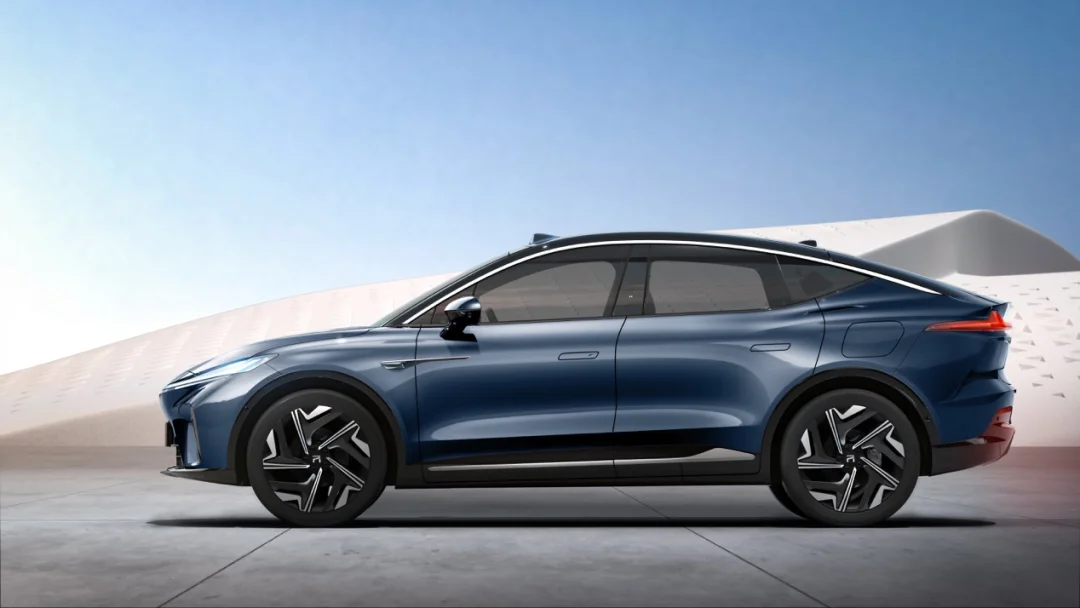
My expectations for Feifan may well be exactly what Feifan has been seeking. With the arrival of the Feifan R7, consumer unfamiliarity with the brand is gradually diminishing.
Continuous investment in the right things is a necessary condition for Feifan R7 and the broader Shangqi group to succeed in the second half of the competitive landscape. As for the sufficient conditions for success, the answer will become clear once the Feifan R7 goes on sale.
Written by: Liu Guangding Edited by: Liu Guangding