


NIO Unveils NIO Power 2025 Plan; AITO M7 Launches; Yu Kai Says Reducing Chip Costs Requires Differentiated Competition | E-Week Highlights
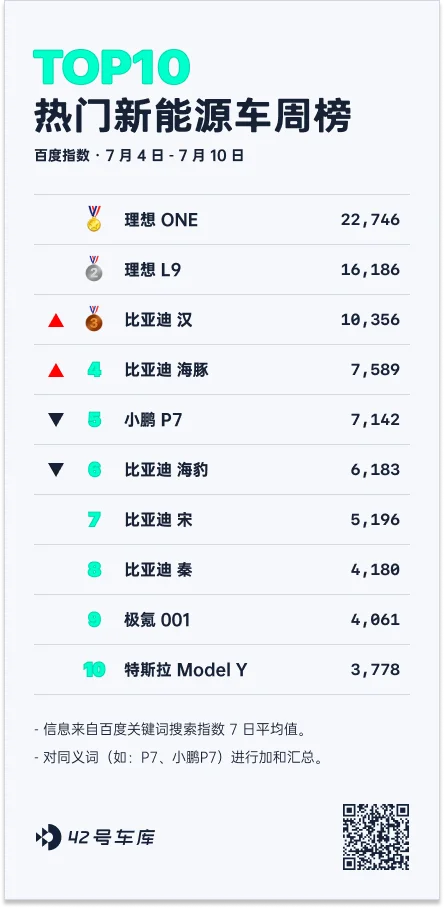
01Weekly Index
02Weekly Highlights
NIO Announces NIO Power 2025 Plan
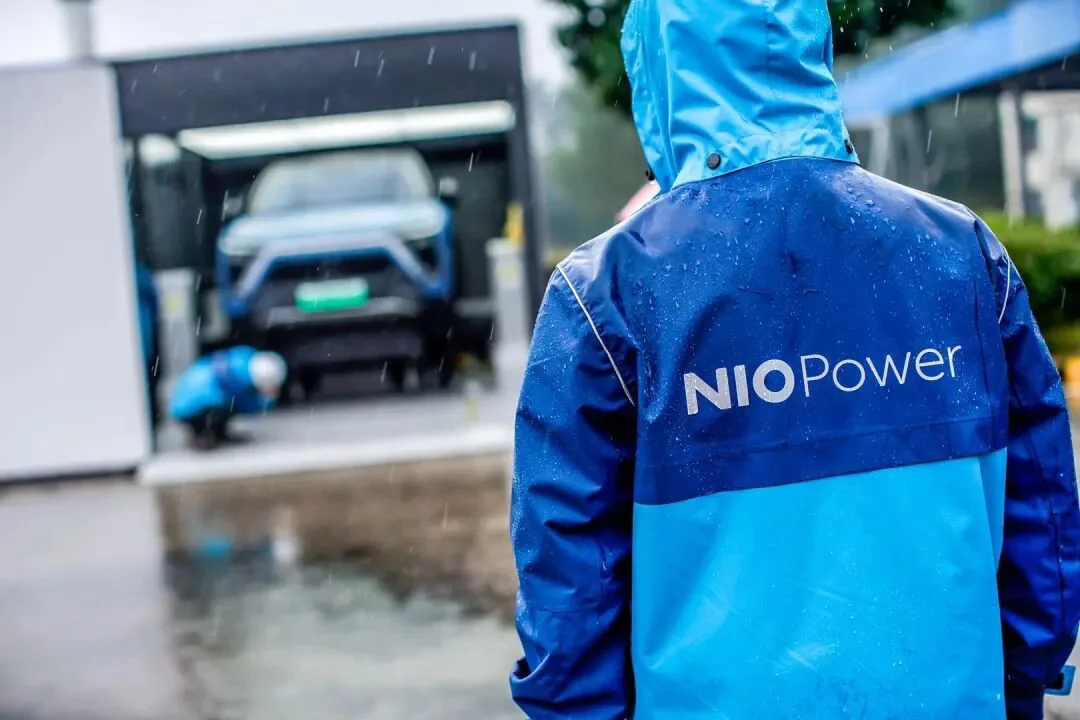
On July 6, 2022, the NIO battery swap station on Cijuelin Avenue in Lhasa, Tibet, went into operation. This was NIO's 1,000th battery swap station. Meanwhile, on July 6, 11 additional battery swap stations were put into operation, bringing the national cumulative total of built battery swap stations to 1,011.
At a milestone moment of reaching 1,000 battery swap stations, NIO held the NIO Power Day 2022 briefing. During the event, NIO not only shared its thoughts on building the energy replenishment system but also revealed future plans for NIO Power. As is customary, at the opening of NIO Power Day 2022, Qin Lihong introduced and reviewed the achievements NIO Power has made over these four years.
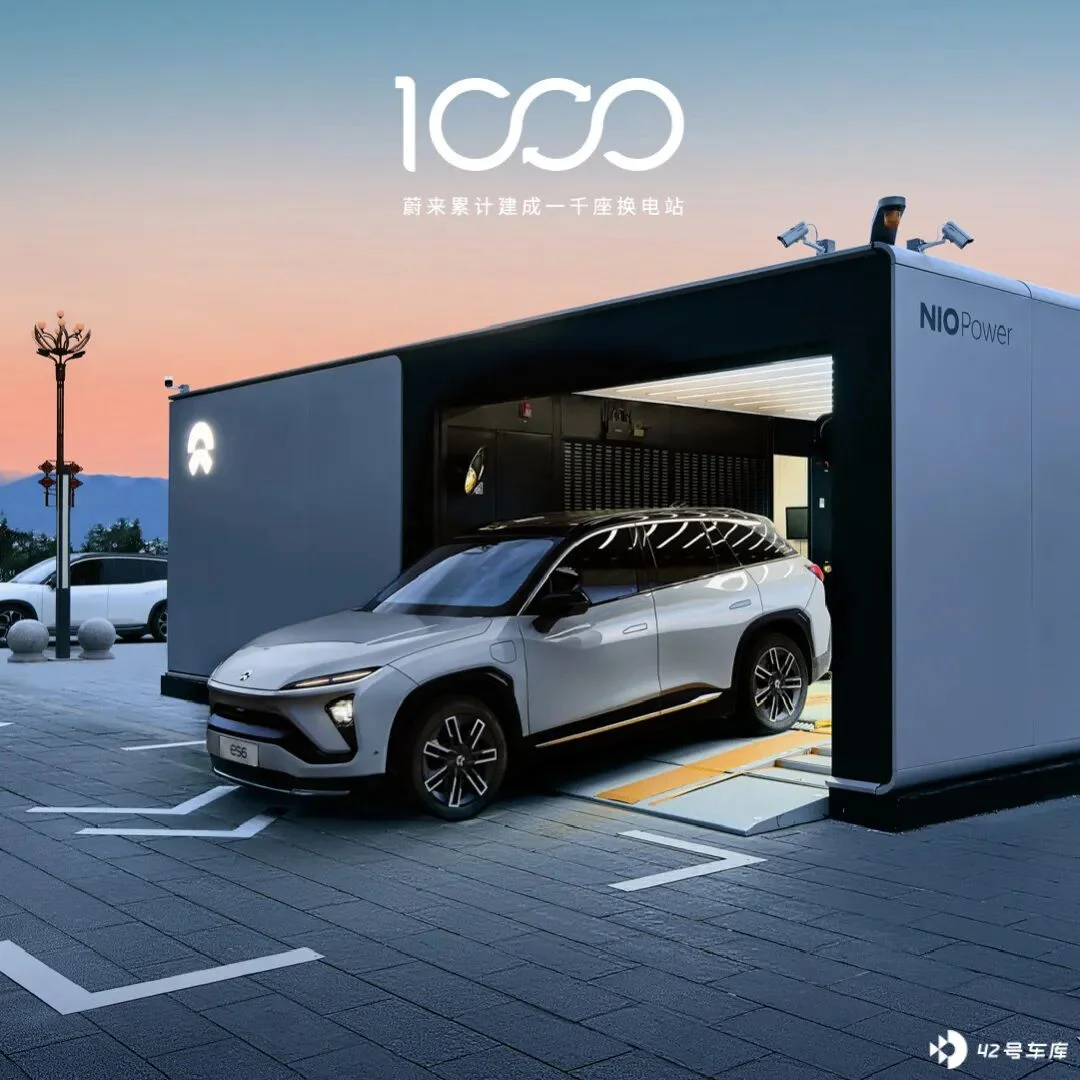
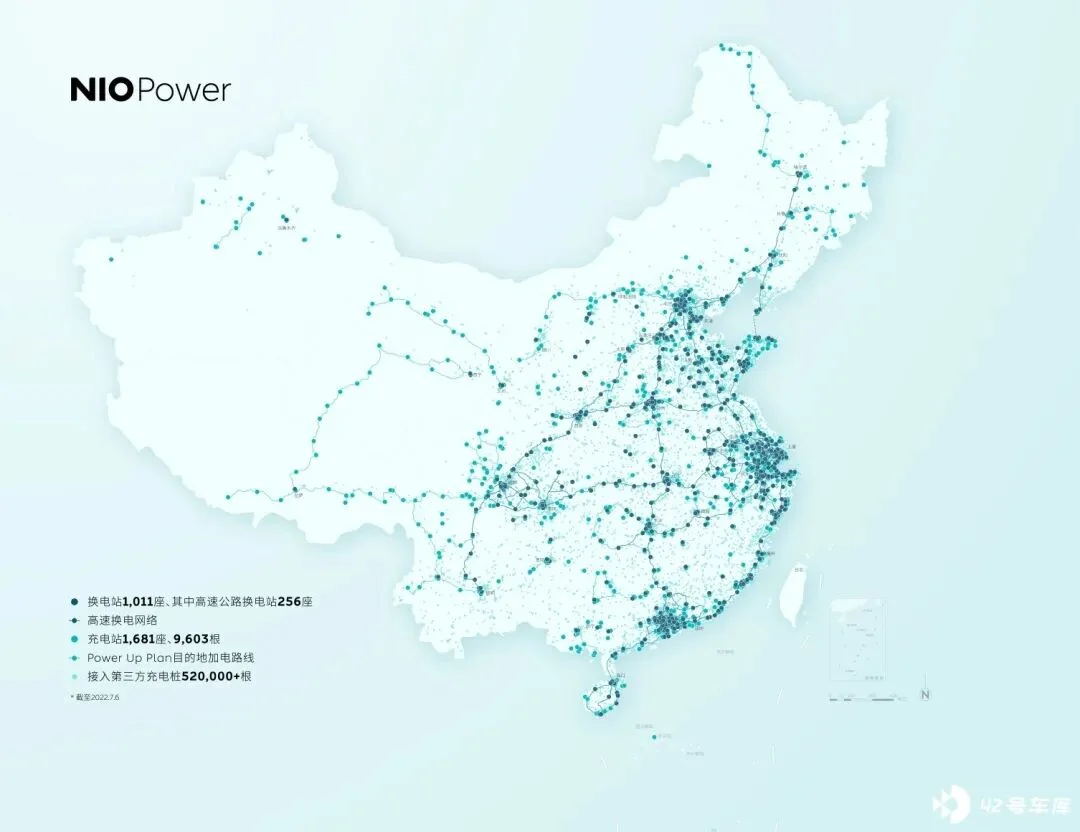
As of July 6, 2022, NIO had built 1,011 battery swap stations. These more than 1,000 stations cover all provincial-level administrative regions in mainland China. The daily average number of battery swaps is 30,000, with a cumulative total of over 10,049,462 swaps completed. The national coverage rate of "battery zone properties" has reached 62.1%. One-click power replenishment was used 821,350 times. The number of installed home charging piles is 127,528, and the total number of NIO's open-to-public charging piles is 9,603.
To better serve owners and make efficient use of resources, NIO today also showcased the NIO Power Cloud and further launched the "Power Journey" feature in the NIO App.
Finally, at the NIO Power Day 2022, there was an additional product teaser. The first new product is the NIO second-generation multi-functional mobile service vehicle, which has already been put into use.
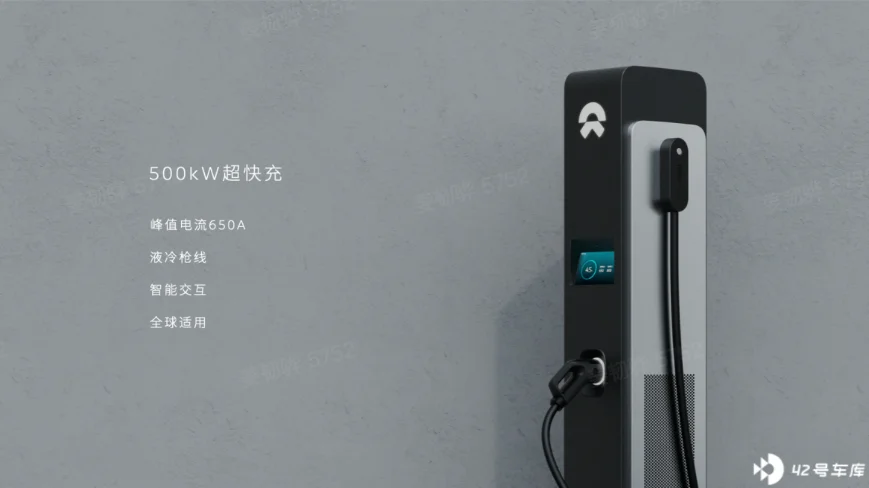
The second new product is NIO's next-generation ultra-fast charger, with a maximum power output of 500 kW and a peak current of 650 A. It adopts a high-current solution similar to Tesla's Supercharger stations. Deployment will begin in both the domestic Chinese and European markets by the end of this year.
The third new product is the third-generation battery swap station and 800 V battery technology. Deployment will begin later this year or early next year. It was revealed that R&D for the third-generation stations is nearing completion, with prototype testing currently underway. Compared to the second-generation stations, the third-generation stations will offer greater capacity, higher efficiency, more flexible layouts, and compatibility with a wider range of vehicle models and battery types.
Editorial Comment:
As time progresses, NIO Power’s capabilities continue to expand. Since 2019, electric vehicles have gradually exceeded a driving range of 500 km. Against this backdrop, consumer anxiety has shifted primarily to the “recharging” phase.
At present, EVs are constrained by charging speeds. Third-party charging brands struggle to achieve profitability through electricity sales alone. Without a viable commercial loop, such businesses find it difficult to sustain themselves. While automakers entering this space inevitably require substantial capital investment, if doing so helps them sell more cars, it becomes a worthwhile endeavor.
In the foreseeable future, neither battery technology nor charging speeds are likely to undergo disruptive changes. In an environment where all manufacturers are transitioning to electrification, NIO Power’s competitive advantage will only grow.
Finally, at the briefing, Qin Lihong called out: “Although electric vehicle brands compete fiercely in the market, strategically we remain part of the same family. The better the experience for all EV users, the healthier the entire EV category becomes. We are not yet at a stage where one step forward by us requires another step back by you. Therefore, we urge all EV brands to invest in operating their own charging and swapping facilities to provide convenience to users. We also call on all car brands with their own charging piles to open them up, providing service to EVs of all brands.”
Huawei's 'Empowerment' and the AITO M7 Launch
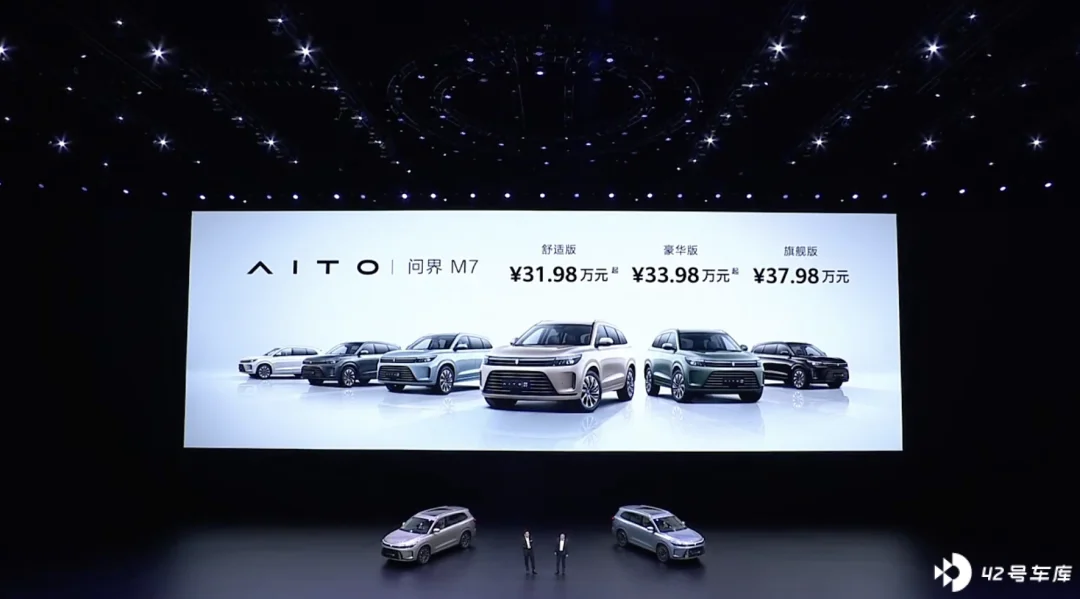
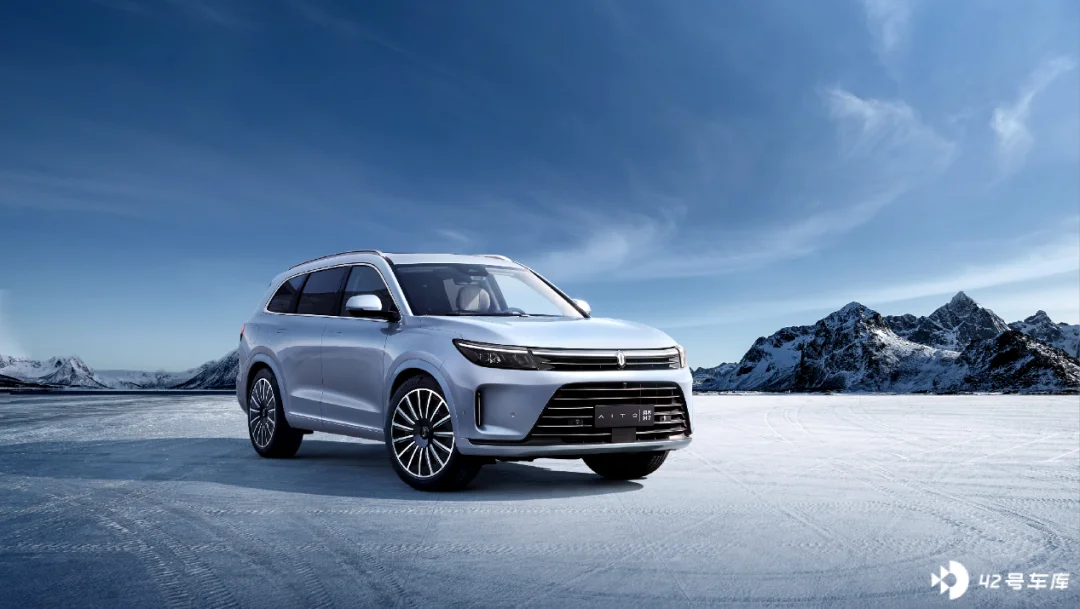
On July 6, 2022, the AITO M7 officially launched with a price range of RMB 319,800 to RMB 379,800. The vehicle measures five thousand twenty millimeters in length, one thousand nine hundred forty-five millimeters in width, and one thousand seven hundred seventy-five millimeters in height, with a wheelbase of two thousand eight hundred twenty millimeters. Positioned as a six-seat mid-to-large SUV, its length is comparable to that of the Li ONE, but its wheelbase is ten centimeters shorter.
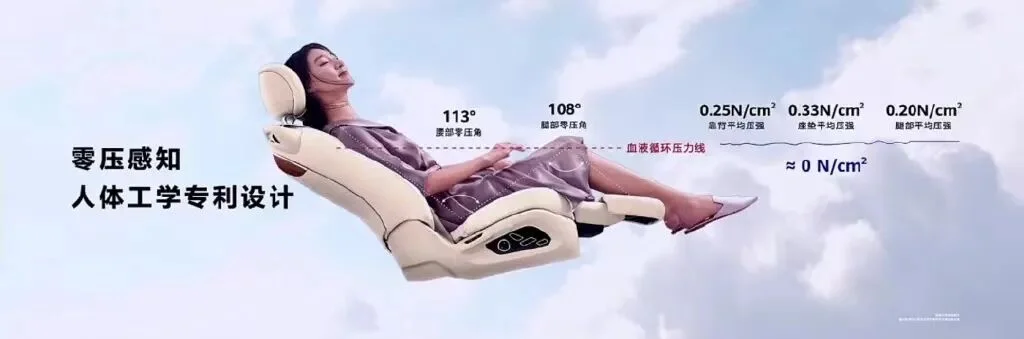
As an SUV with three rows of seats, the second and third rows are key to this vehicle. Richard Yu stated that the AITO M7’s second-row zero-gravity seats offer enhanced functionality compared to standard seats; they can recline backward, lift one side of the cushion, and automatically deploy footrests. Additionally, the third-row seats support a maximum adjustment angle of 33 degrees.
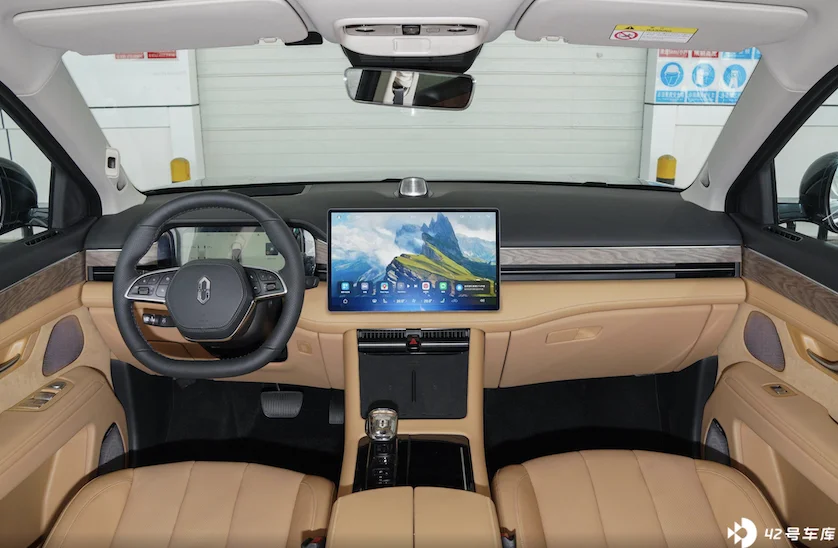
Of course, the AITO M7's biggest selling point remains the HarmonyOS cockpit. The vehicle's visualization consists of a 15.6-inch 2K HDR central control screen and a 10.4-inch instrument cluster screen, powered by the Kirin 990A chip. Features such as 'what you see is what you say,' continuous dialogue, and multi-zone voice recognition are basic capabilities of the HarmonyOS cockpit, offering an experience that does not fall short of Li ONE, NIO, or XPeng.
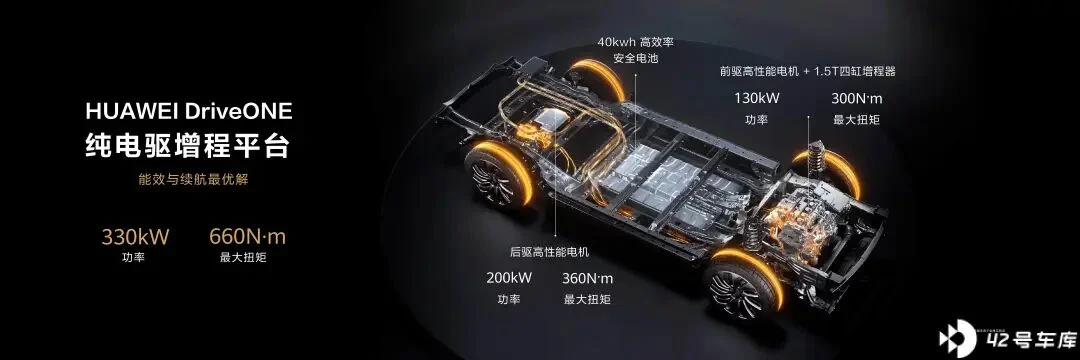
For powertrain, the AITO M7 uses Huawei’s DriveONE pure electric drive extended-range platform. This system consists of a 40.06 kWh battery pack, a 1.5-liter turbocharged four-cylinder range extender, and an electric motor. The rear-wheel-drive model is equipped with one 200 kW permanent magnet synchronous motor, achieving a CLTC pure electric range of 230 km and a combined range of 1,220 km. The all-wheel-drive version adds one 130 kW front permanent magnet synchronous motor to the 200 kW rear motor. Under CLTC conditions, its pure electric range is 200 km, and its combined range reaches 1,100 km.
Editorial Comment:
We have analyzed the product strengths of the AITO M7. At this current juncture, its competitive edge is debatable; however, it offers distinct advantages over conventional internal combustion engine vehicles. Underpinned by these product fundamentals, the critical factor enabling the AITO M7 to surpass 10,000 orders within two hours of launch was Huawei.
A compelling data point comes from the AITO M5. In June, sales for the AITO M5 exceeded 7,000 units. More strikingly, confirmed orders in June surpassed 10,000. Regardless of one’s stance on the AITO M7, the order volume speaks for itself. The vehicle’s performance metrics following the start of large-scale deliveries in September will serve as the most direct testament to its market reception.
For the broader automotive industry, such developments are cause for optimism. Huawei’s massive traffic and brand influence have propelled range-extended electric vehicles (EREVs), smart cockpits, and autonomous driving technologies into the spotlight. The widespread adoption of EREVs is helping more users adapt to an electrified lifestyle centered around charging. Meanwhile, the HarmonyOS smart cockpit not only educates consumers on next-generation in-car interfaces but also elevates the entire industry’s benchmarks for cockpit evaluation.
Huawei, which has entered the automotive sector through its Huawei Inside (HI) model and the Smart Selection car model, claims it does not manufacture cars. Nevertheless, since 2022, it has left an indelible mark on China’s automotive landscape.
Dipingxian J5 Delivers Twice the Results with Half the Effort Compared to Orin
On July 7, the 14th China Automotive Blue Book Forum (CABF2022), themed "Refresh," opened at the China Auto Valley in Wuhan.
As a speaker at the main forum on the first day, Shan Jizhang, founder and CEO of Heizhimazhineng, delivered a keynote speech titled "High-Compute Chips Open a New Era for Chinese Automobiles," exploring how chips are "refreshing" the evolution pace of the automotive industry. At the start of his presentation, Shan Jizhang shared: "I have a personal dream: I hope that the core chips in Chinese smart vehicles will be made by Chinese companies."
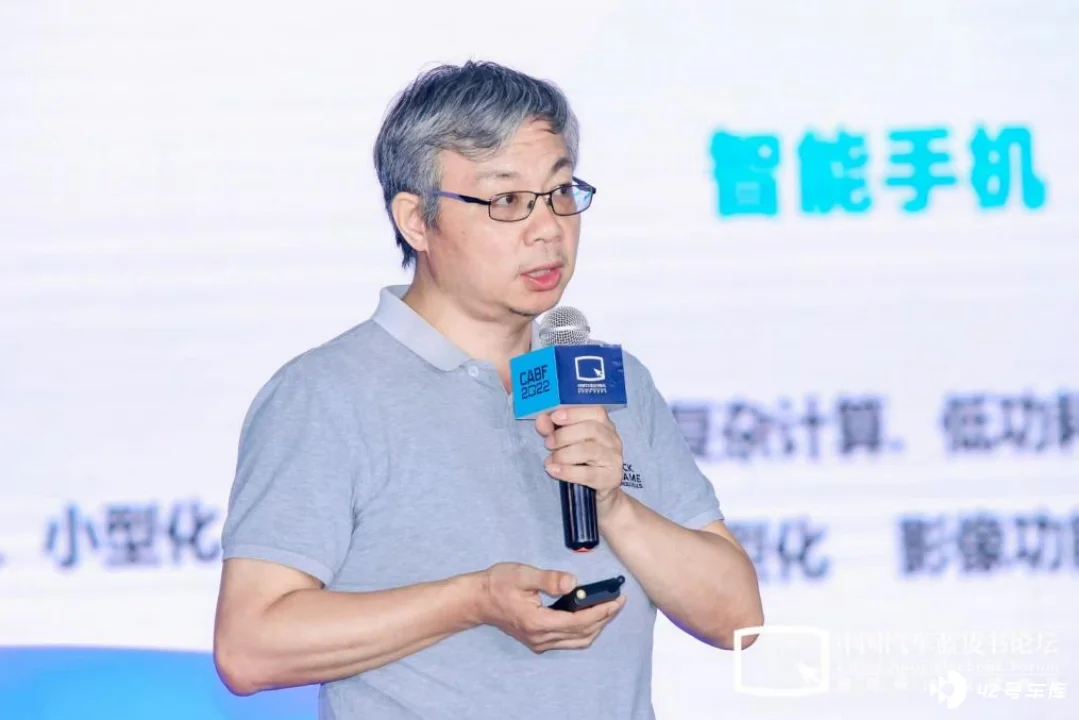
The new wave of intelligent vehicles, combined with the rise of Chinese automakers, has created rapid development opportunities for local supply chain enterprises, including autonomous driving chip manufacturers. Shan Jizhang specifically discussed industry ecology and the local supply chain: "We believe that ecology means everyone doing what they do best to achieve excellence. In the field of smart electric vehicles, Chinese automakers' development speed leads globally, and the local supply chain system is key to supporting the rapid technological iteration of Chinese independent brands."
On July 8, Yu Kai, founder and chief scientist of Dipingxian, also mentioned the watershed moment in Dipingxian's development around 2020 during his solo morning speech, and once again called for the importance of building a software ecosystem.
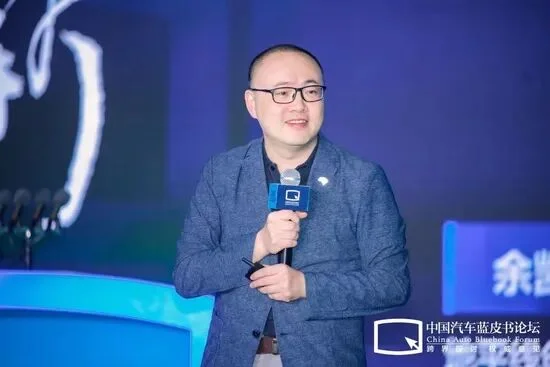
Yu Kai stated that in the highly difficult technological field of chips, differentiated thinking is essential for competition. Therefore, achieving efficient computing with lower compute power means improving cost-effectiveness. Yu Kai cited Orin and Dipingxian's own J5 as examples: although the price and cost of the J5 are less than half that of Orin, performance can be comparable or even better through neural networks.
Editorial Comment:
As the automotive industry shifts toward intelligence and electrification, the global landscape is evolving, with Chinese companies increasingly taking center stage.
According to CleanTechnica statistics, global new energy passenger vehicle cumulative sales from January to May 2022 reached 3.21 million units. China accounted for 1.9 million of these, holding a 59% global market share, surpassing Europe’s 820,000 units and North America’s 410,000 units. Among the top 20 global new energy brands by sales volume in January–May 2022, ten were Chinese brands, occupying half the market; among the top 20 global new energy model sales rankings, Chinese brand models accounted for 70%.
Zhongjingongsi research indicates that the penetration rate of high-level autonomous driving will reach 65.5% by 2025, with China’s smart driving chip market demand hitting 13.83 million units. Over the next three to five years, the sector will enter a rapid growth phase, presenting significant opportunities for the automotive industry. The evolution of smart driving technology relies on high-compute chips; only those mastering core intellectual property can achieve rapid chip iterations.
HiPhi Z Launches
On July 5, HiPhi announced via online channels that the HiPhi Z’s price range is RMB 600,000–800,000. Detailed pricing and full specifications will be unveiled at the Chengdu Auto Show in August. Starting July 6, an 11-city tour also launched simultaneously.
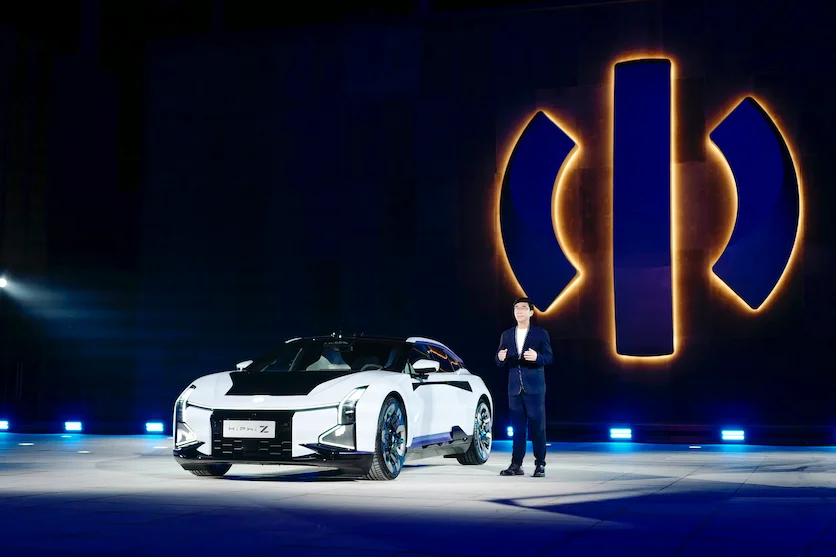
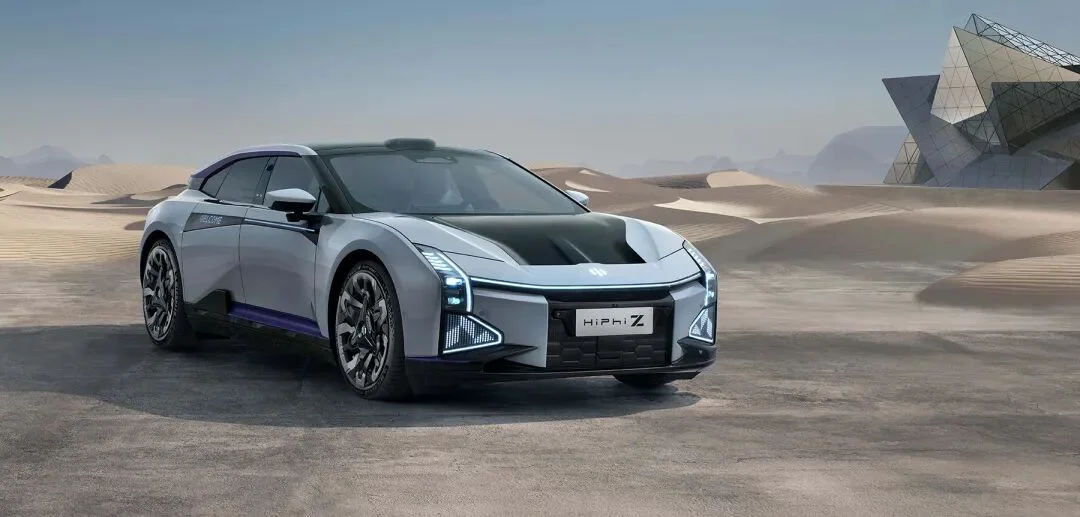
The HiPhi Z measures 5,036 mm in length, 2,018 mm in width, and 1,439 mm in height, with a wheelbase of 3,150 mm. By comparison, the previous coupe-style SUV, HiPhi X, measured 5,200 mm long, 2,062 mm wide, and 1,618 mm tall, sharing the same 3,150 mm wheelbase. The significant reduction in height aligns with its sedan positioning, while the identical wheelbase suggests both models likely share the same platform.
HiPhi has carried over the signature NT wing doors from the HiPhi X to the HiPhi Z. However, due to the lower vehicle height, the rear doors do not feature the split upper-lower design seen on the HiPhi X.
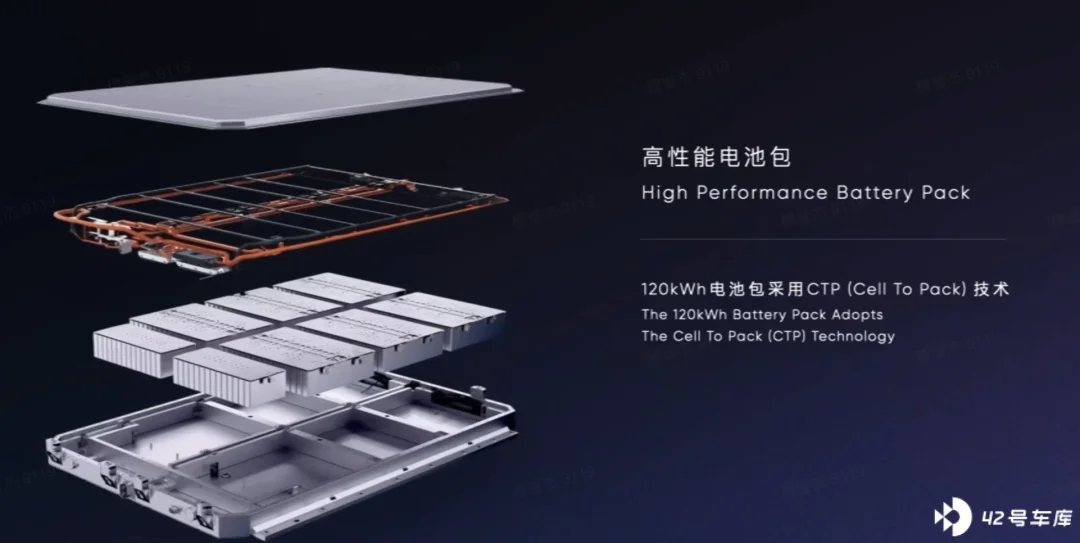
On the chassis, the HiPhi Z comes standard with an all-aluminum front double-wishbone and rear five-link suspension, along with air springs, CDC dampers, and rear-wheel steering. The body integrates CTP (Cell to Pack) technology, featuring a 120 kWh battery pack that provides a CLTC range of 705 km.
There are also several standout features. First is the HiPhi Bot, which supports automatic angle adjustment. Its underlying mechanical structure is an eight-way adjustable, four-degree-of-freedom mechanical bracket. As the core interaction hub, the HiPhi Bot supports sound localization.
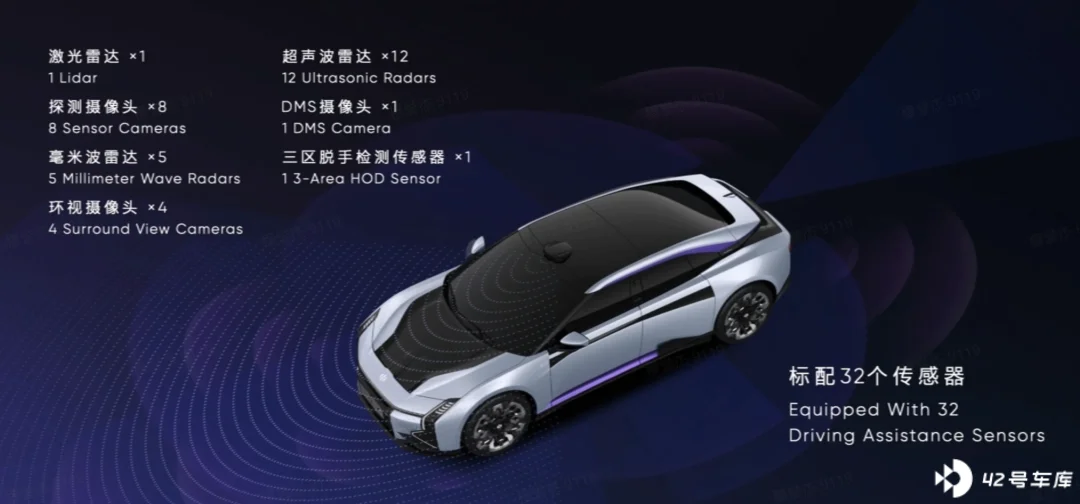
Secondly, regarding driver assistance, the HiPhi Z’s perception hardware follows mainstream configurations, equipped with a total of 32 sensors, an Orin-X computing platform, and one LiDAR unit.
Editorial Comment:
HiPhi's second car is still a flagship. Ding Lei did not take the top-down approach like NIO and Tesla to capture the relatively low-priced market segment. Looking closely, the upper limit of HiPhi Z's pricing range is the same as HiPhi X, both at 80, while the lower limit is about 100,000 higher. The pricing of these two flagships overlaps significantly. This strategy is quite puzzling. Why does HiPhi do this?
The reason is straightforward: HiPhi has already built significant brand appeal in the premium pure-electric segment, and it represents a blue ocean. Consider carefully: at this price point, which products are strong direct competitors to HiPhi?
Tesla Monthly Sales Break Records Again
In the latest June sales data released by the China Passenger Car Association (CPCA), Tesla’s domestic deliveries reached a record high of 77,938 units, a year-on-year increase of 177%.
Despite severe challenges posed by the pandemic earlier, Tesla’s Shanghai Gigafactory rebounded after resuming production, surpassing its pre-pandemic historical monthly sales records. The Model Y led with 52,557 units delivered, becoming the top-selling single model domestically for the month, representing a 2.5-fold year-on-year growth—a remarkable achievement.
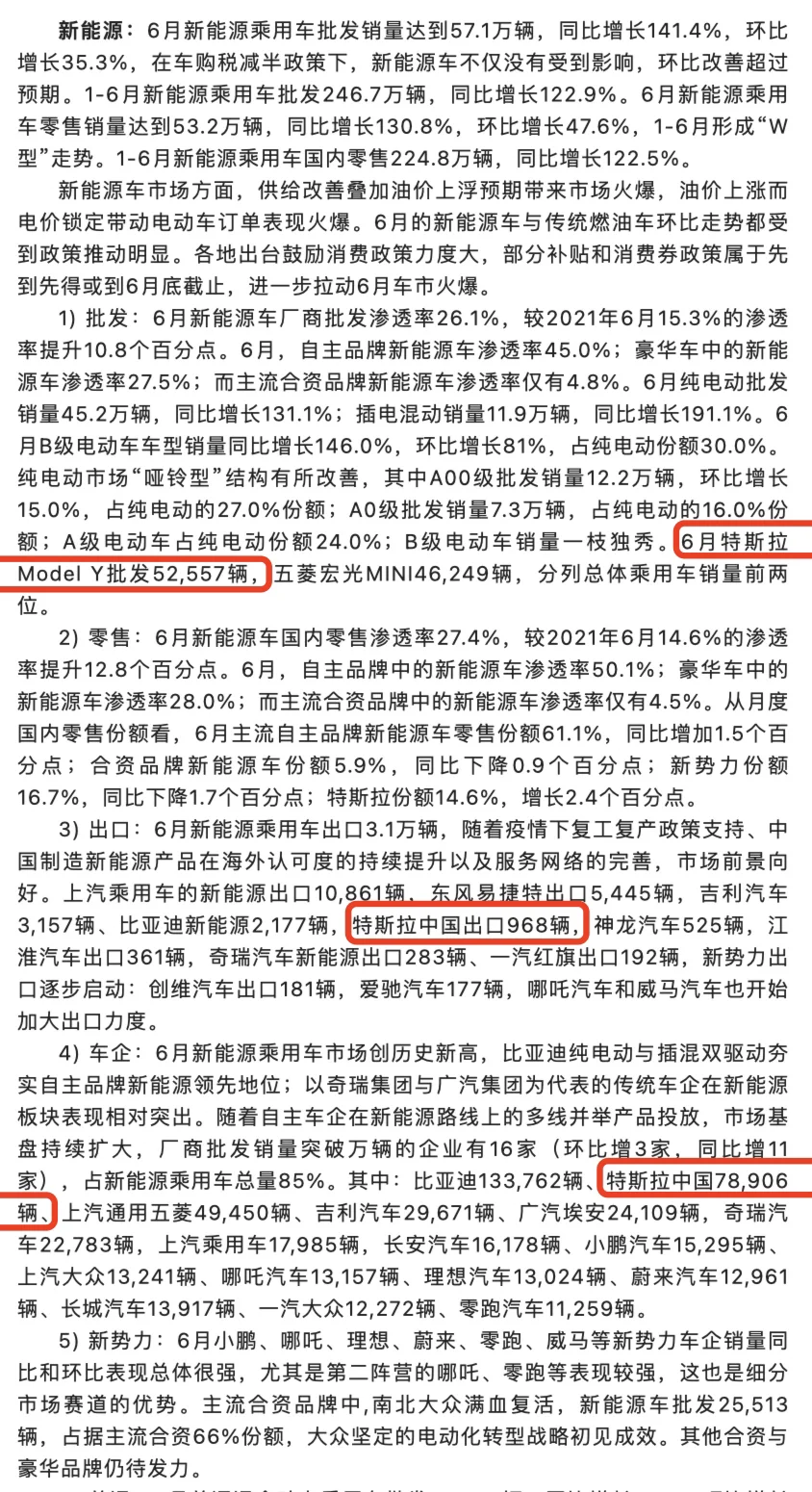
In the first half of 2022, Tesla’s Shanghai Gigafactory produced nearly 300,000 vehicles. Its semi-annual delivery volume accounted for more than six-tenths of Tesla’s total deliveries for all of 2021, including nearly 100,000 units delivered overseas. Despite dual pressures from the pandemic and global supply chain crises this year, Tesla still achieved global deliveries of 565,000 units in the first half of 2022, up 46.3% year on year.
Editorial Comment:
Tesla’s entry into China has also promoted the improvement of the new energy vehicle industry ecosystem. To date, Tesla has achieved a localization rate of over 90% for its components, establishing a “4-hour circle” within the Yangtze River Delta region. Additionally, Tesla has opened more than 300 patents related to pure electric vehicles.
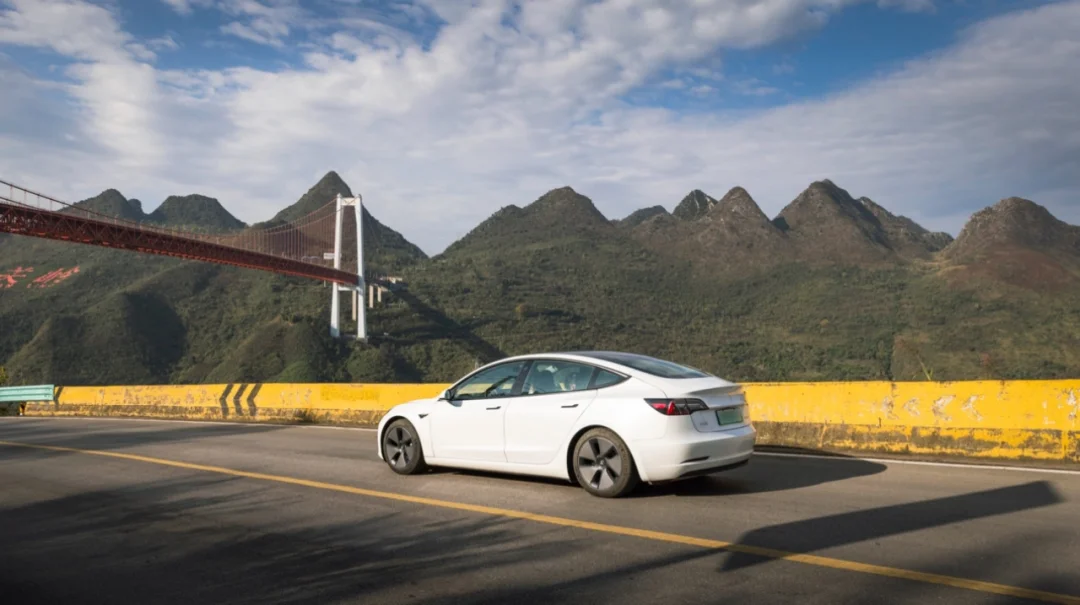
Building on a mature supply chain, numerous auto parts manufacturers have formed large-scale industrial clusters. Taking the Lingang Special Area as an example, driven by Tesla, the area has built an industrial ecosystem covering automotive chips, autonomous driving systems, interior trim, body structures, new materials, and precision machining, becoming the first industry cluster to reach a value of RMB 100 billion.
By 2025, the scale of the intelligent new energy vehicle industry in the special area is expected to exceed RMB 300 billion, establishing it as a globally influential hub for intelligent new energy vehicles.
Written by: Jiang Xiaohei Edited by: Liu Guangding