


Tesla AI Day: FSD Vector Space and Conflict-Avoidance Algorithms
During the three-hour AI Day livestream, half an hour consisted of music with no visuals. This is Tesla, this is Elon Musk; we anticipated that the presentation would start late.
The remaining two and a half hours were dedicated to FSD, Dojo, the Tesla Bot robot, and in-depth Q&A sessions.
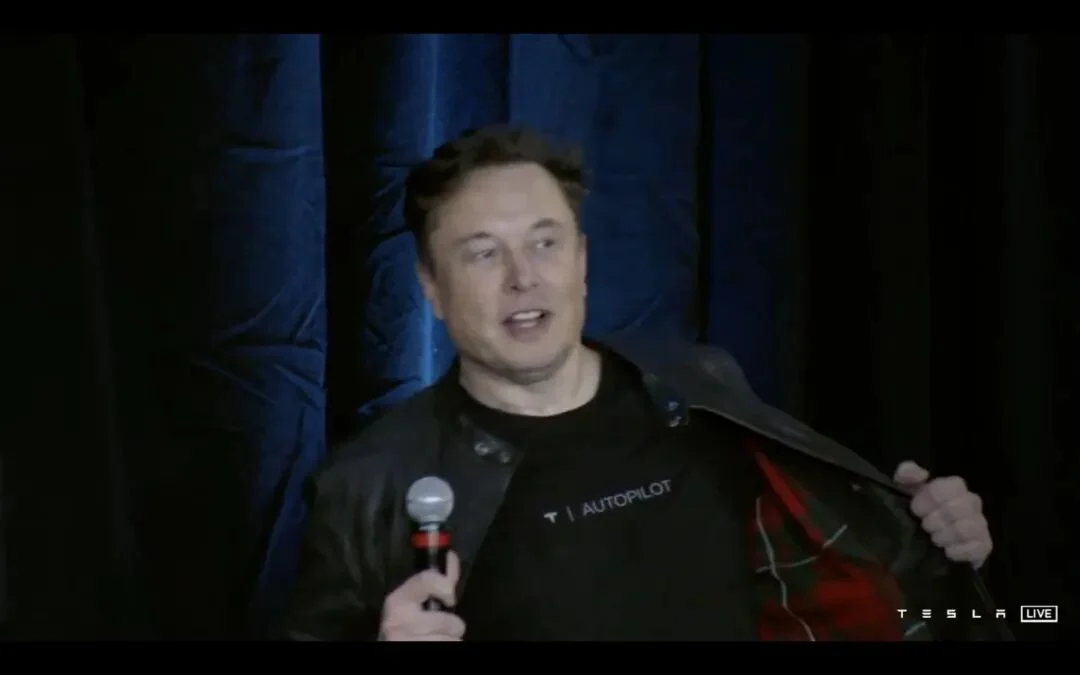
If I had to recall one specific moment from the broadcast, there is only one vivid image in my mind. At 2 hours and 53 minutes into the AI Day livestream, Elon Musk casually lifted his jacket while responding to a reporter's question, saying:
If you wear a T-shirt with a stop sign, the car will stop.
His point was that if you wear clothing featuring a 'parking by instruction' road sign, Tesla’s system will recognize it as a real sign and come to a stop.

Drawing from this statement, along with a recent car accident involving a certain brand and the content of Tesla's AI Day presentation, I have summarized two key takeaways.
At this stage, all so-called 'autonomous driving' systems available to ordinary consumers for purchase and road use are actually driver assistance systems. You must remember that you are solely responsible for your own safety.
The human brain excels at recognizing semantic information, while computers excel at precise, repetitive calculations and target tracking.
01Is There a Metaverse in Tesla's Infotainment System?
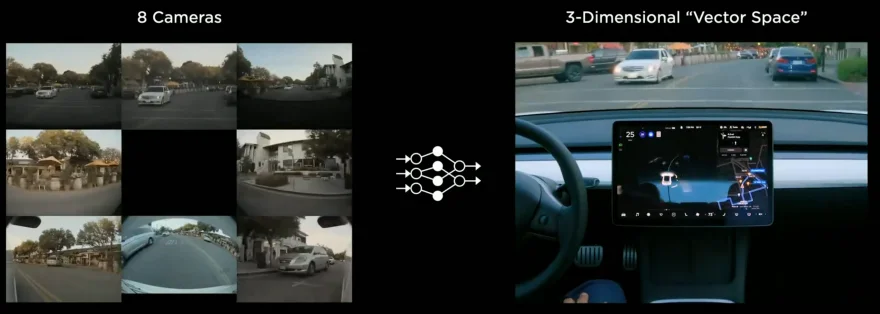
Most readers are likely already aware that Tesla currently employs a pure vision-based perception solution. Relying solely on eight 1.3-megapixel cameras has indeed elevated its sensing capabilities to a new level. Traditional perception algorithms draw bounding boxes around relevant objects in each frame from these eight cameras to assess distance information and output steering and control results.
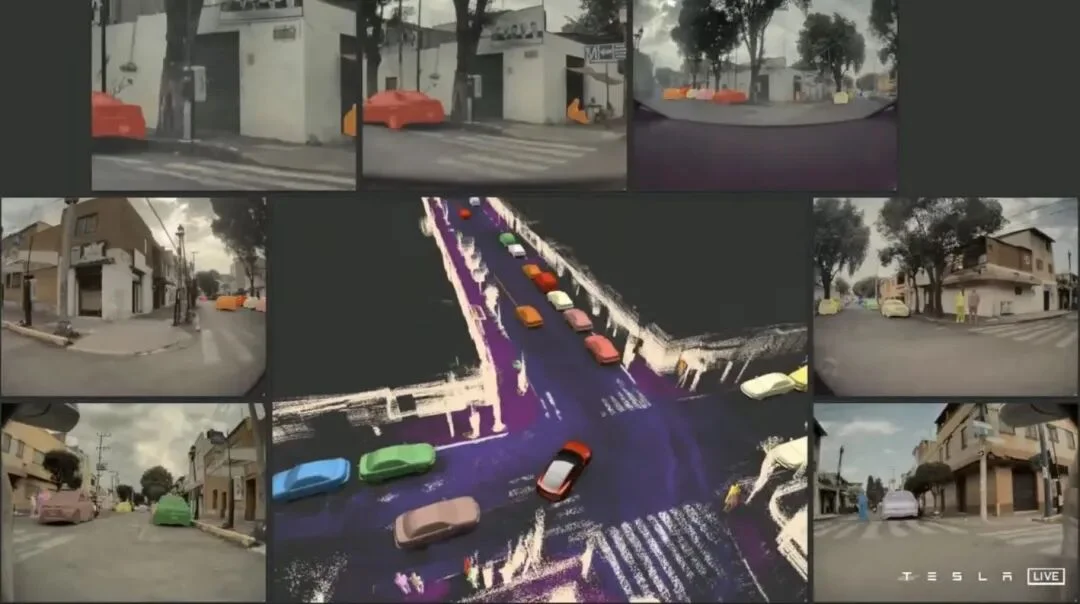
However, the latest FSD beta utilizes a technology called 'Vector Space.' This effectively stitches together the video streams from the eight cameras into a unified whole, generating a consistent physical model as the foundation for route planning. To put it plainly, Tesla has created a sandbox within the vehicle that simulates the real-world environment, allowing it to simulate and test its maneuvers within that space.
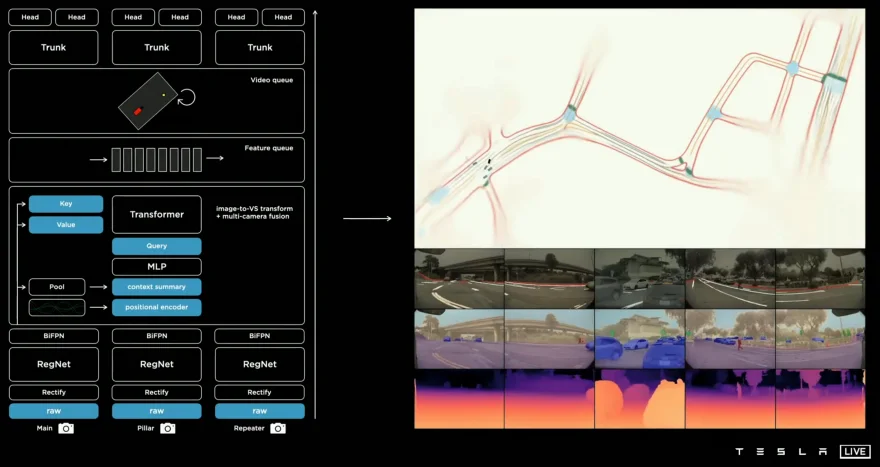
Vector Space is four-dimensional. By "4D," we mean the three spatial dimensions of length, width, and height, plus time. Therefore, this simulation is a 3D model with a temporal dimension, offering significantly more information and precision than traditional 2D perception.
Tesla AI Director Andrej Karpathy said:
We are developing a synthetic animal from the ground up.
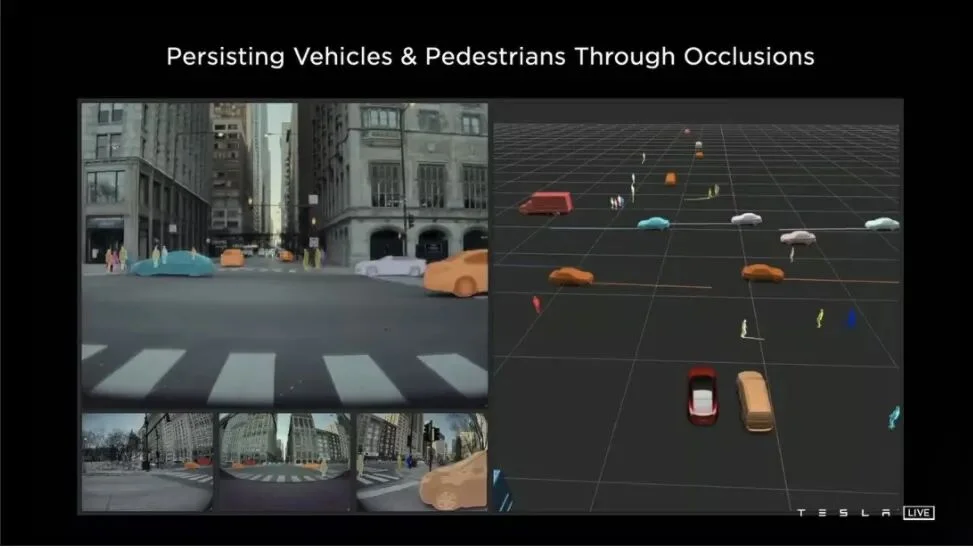
This essentially highlights the difference between "automation" and "intelligence." FSD aims to move beyond rigid, rule-based reactions to specific visual cues, instead making judgments that better fit the "context" by understanding the overall space and the objects within it. Through spatiotemporal memory, Tesla FSD can not only remember and predict occluded pedestrians but also dynamically adjust its detour routes.
02Three Goals of Intelligent Driving
To be honest, much of the content at AI Day was difficult for me to fully grasp, as I am primarily interested in the final results. However, I noticed that their R&D goals for autonomous driving are indeed experience-driven.
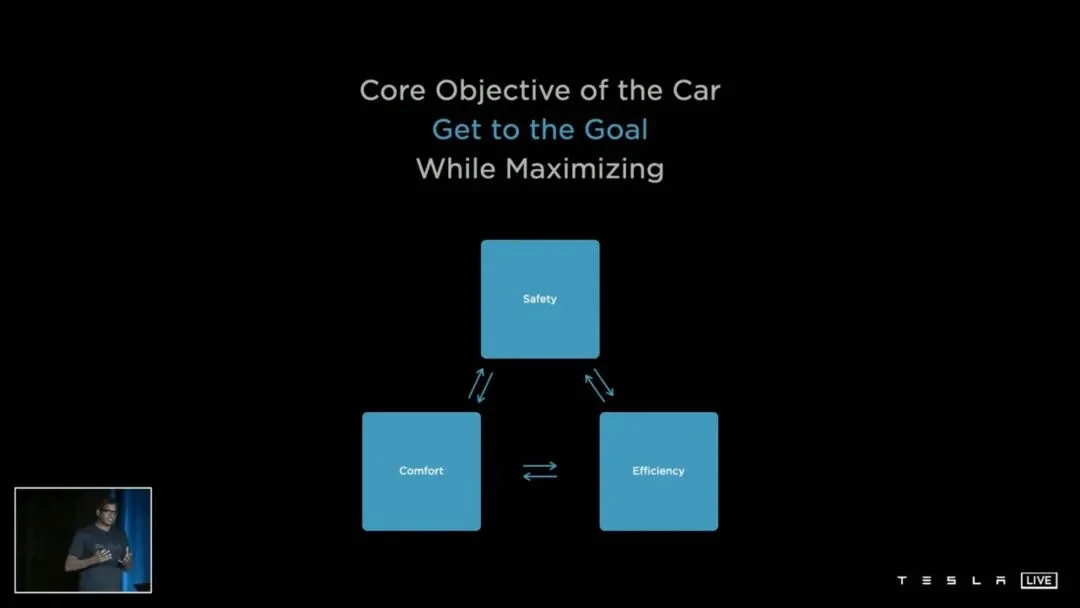
By first principles, a car is fundamentally a vehicle for transporting people from point A to point B. A qualified autonomous driving vehicle must not only reach its destination but also optimize efficiency, comfort, and safety.
In plain terms, Tesla aims to make your journey fast, smooth, and reassuring—what the company calls 'smoothness.'
The planning and control segment of this AI Day was presented by Ashok Elluswamy, a veteran of Tesla's autonomous driving team who graduated from Carnegie Mellon University, a renowned institution in the field, and serves as the software lead for AP.
03Smooth Driving Comes from Rational Planning
Elluswamy stated that path planning faces two main challenges: non-convexity and high dimensionality.
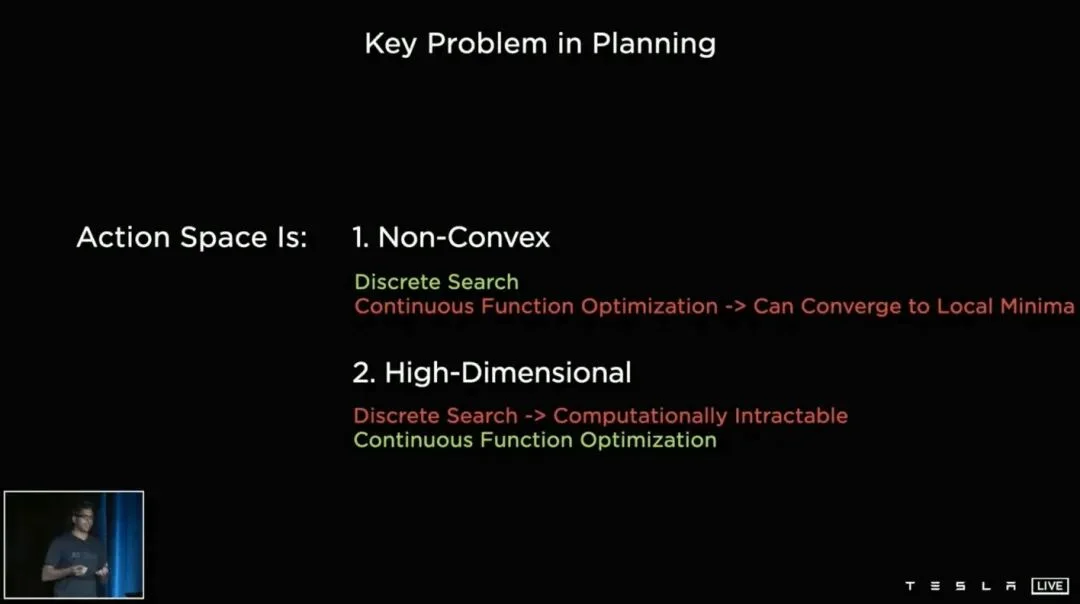
Non-convexity refers to functions with multiple local extrema, such as the one shown on the right in the diagram below, rather than having a single extremum like the convex function shown on the left.
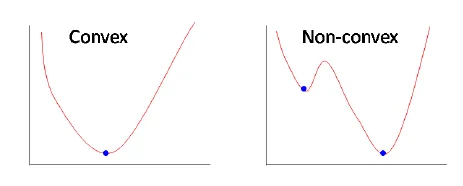
This type of problem is better suited for Discrete Search rather than Continuous Function Optimization. The former involves searching through discrete options, while the latter can be understood as finding extrema using differential calculus. If one were to use differential equations to solve the non-convex function shown on the right side of the diagram above, it could lead to an incorrect answer.
High dimensionality implies that the problem involves numerous parameters. Unlike non-convex problems, high-dimensional scenarios are more suitable for continuous optimization.
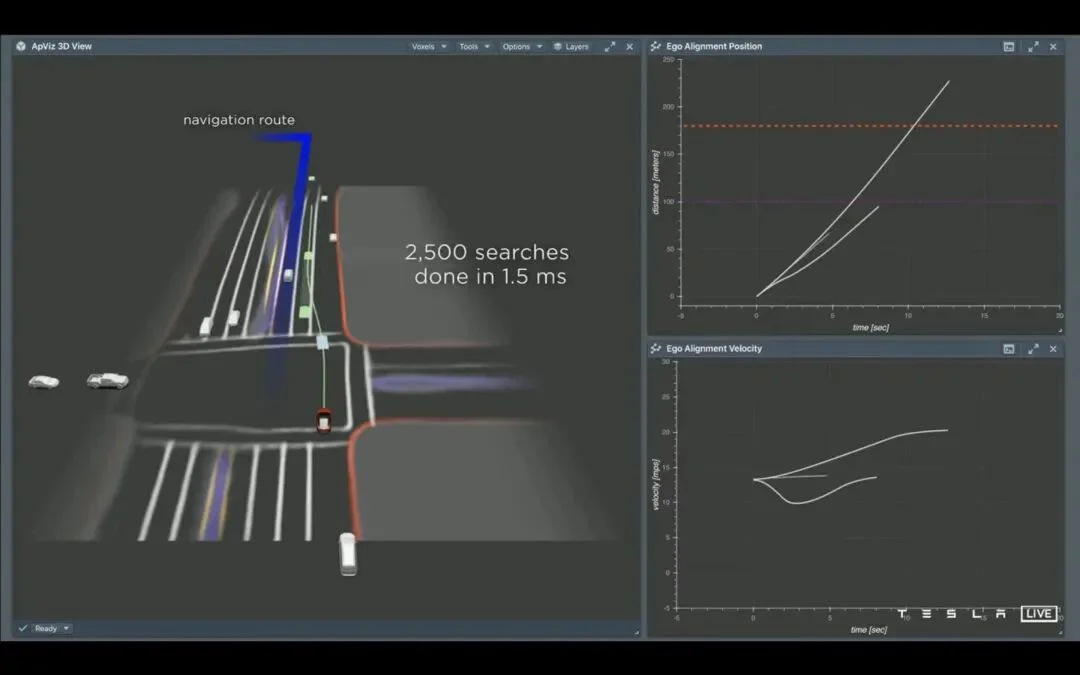
In fact, whenever faced with such decisions, Tesla can perform 2,500 simulations within 1.5 milliseconds. Compared to the human brain, these scenarios appear static to a computer.
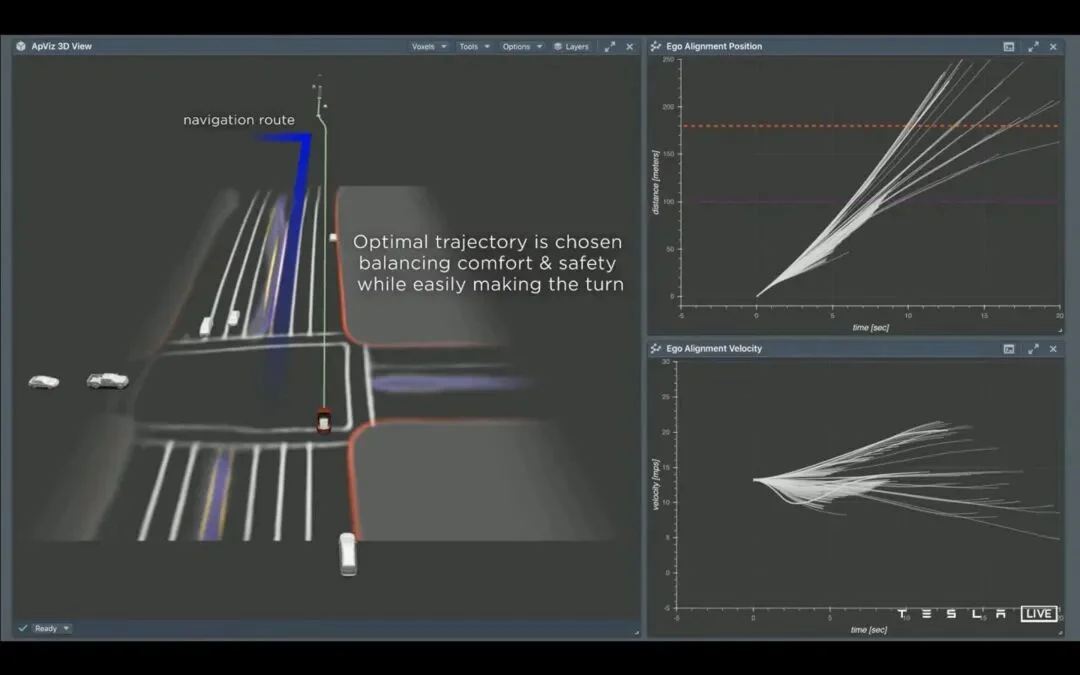
In the diagram above, the vehicle needs to complete two consecutive left lane changes before turning left at the next intersection. If it chooses to slot in between two nearby vehicles, abrupt braking becomes inevitable. However, accelerating to the front to avoid other cars risks missing the turn. FSD can select from the multiple solutions shown on the right side of the image (each line representing a different action command) the result that offers relatively stable acceleration (related to comfort) and a shorter path (related to efficiency).
04Considering Others
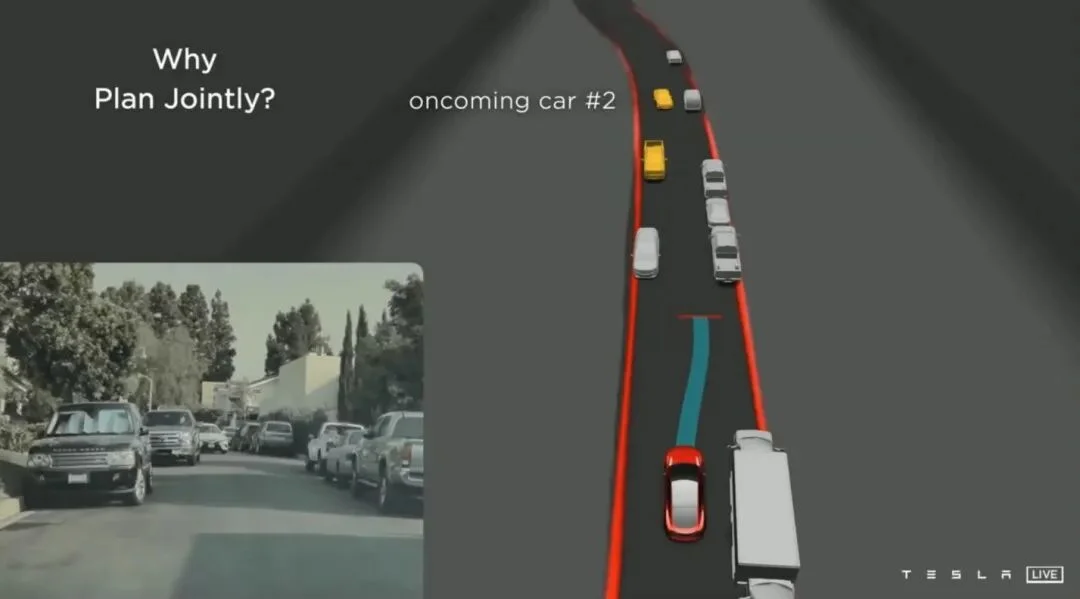
We all dislike conflict, and machines do too. Conflict implies that at least one party will be harmed, and mutual damage is not uncommon. The efficiency loss ranges from traffic accidents to minor traffic jams. In fact, all of these are caused by conflicts of various sizes.
The road in the image above is a two-way street in a residential area, but excessive on-street parking has narrowed it to a single lane. If you are a risk-taking driver, you might hope the other vehicle yields; if you are a cautious driver, you might pull over at a wider spot to let the other go first. Regardless, you need to anticipate the other driver's actions to inform your decision-making. Otherwise, if you wait there passively and they do the same, both highly conservative autonomous driving systems could fall into an infinite deadlock.
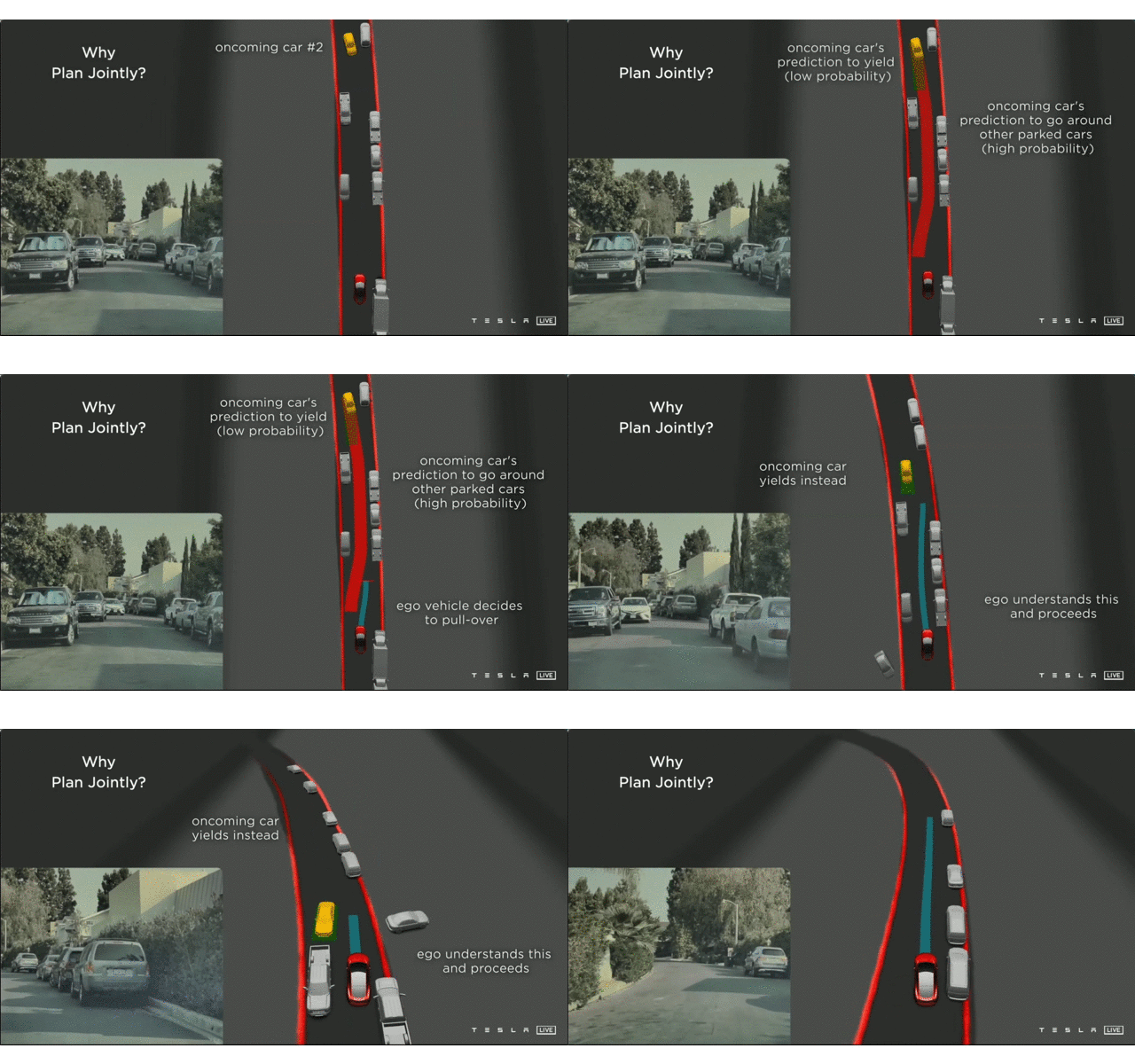
At this point, Tesla's FSD algorithm behaves like a human driver, assessing the path of oncoming vehicles based on factors such as speed, acceleration, angular velocity, and angular acceleration (the green line represents an evasive trajectory, though it is less likely). Based on this assessment, the ego vehicle adopts an evasive strategy with a lower probability of conflict.
Just then, unexpectedly, the oncoming vehicle also backed down. Faced with this situation, the ego vehicle quickly responds to the new scenario and decisively switches to a proactive passing strategy. Therefore, planning routes for other vehicles is not a waste of computing power; rather, it reduces conflicts and improves efficiency. Ultimately, altruism benefits oneself.
05Reduce Search Frequency
For example, in parking scenarios, different problem-solving logics and algorithms can have a significant impact on the computational load of path calculation.
The following content is sourced from Wikipedia, providing explanations of two algorithms: A* and Monte Carlo Tree Search.
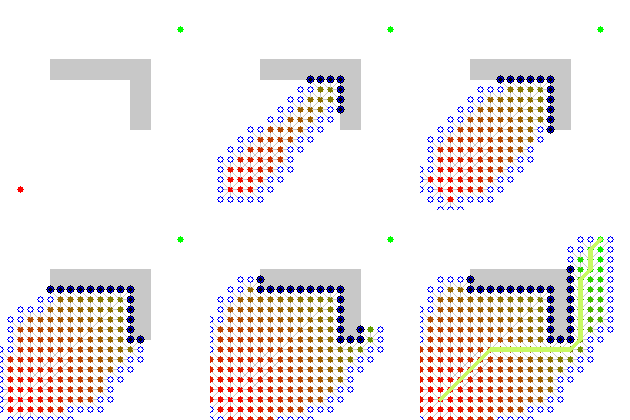
A* Search The A* search algorithm is a pathfinding algorithm that calculates the lowest cost path across a graph with multiple nodes. It is commonly used for movement calculations of NPCs (non-player characters) in games or bots in online games.
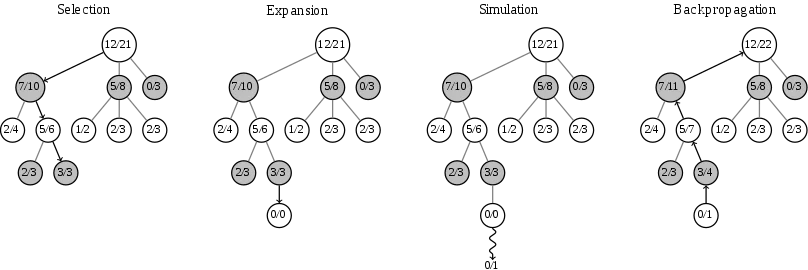
Monte Carlo Tree Search Google's AlphaGo also utilizes Monte Carlo Tree Search, which is a heuristic search algorithm designed for certain decision-making processes. Each iteration consists of four steps:
Selection: Starting from the root node R, continuously select child nodes down to a leaf node L. The method described below for selecting child nodes allows the game tree to expand toward the optimal direction, which is the essence of Monte Carlo Tree Search.
Expansion: Unless the game ends at L due to a win or loss by either party, create one or more child nodes and select one as node C.
Simulation: Starting from node C, play out the game using a random strategy, also known as playout or rollout.
Backpropagation: Uses the results of random games to update node information along the path from C to R.
*Each node’s content represents the number of wins divided by the number of games played.
Elluswamy stated that they compared A* search (Euclidean distance algorithm), A* search enhanced with semantic navigation information, and Monte Carlo Tree Search (MCTS) based on neural network policy and value functions.
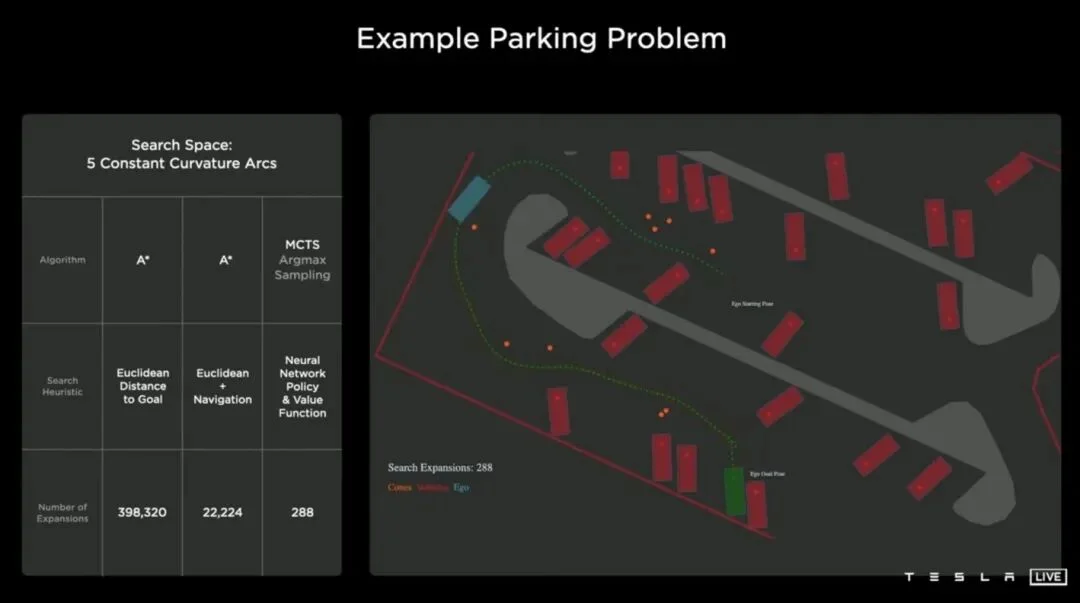
Under these three different algorithmic strategies, it took 398,320, 22,224, and 288 searches respectively to find a suitable path into the parking space. The most efficient was MCTS.
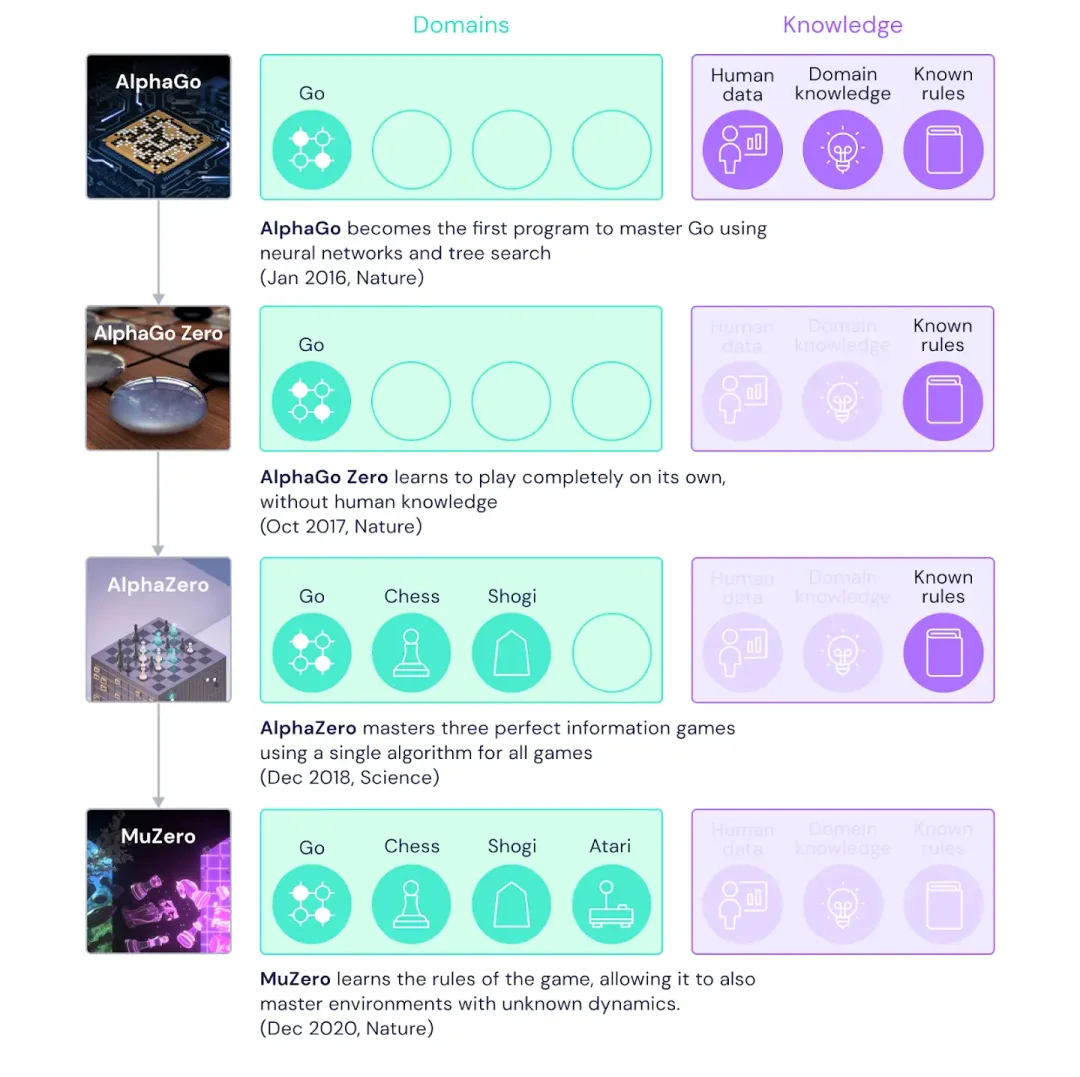
To understand the importance of Monte Carlo Tree Search for AI technology, one only needs to look at the iterative history of AlphaGo. The latest version, MuZero, can not only play Go, chess, Japanese shogi, and Atari games, but also learn gameplay and rules through extensive observation in completely unknown environments, thereby defeating human players. This result offers significant imaginative space for the future generalization of AI capabilities, signaling that an era where machines possess learning abilities is inevitably approaching.
06You’re Still the Boss
In fact, Tesla has not yet started using the aforementioned parking strategy. And many of the above features can only be fully realized when the D1 Xinpian is mass-produced and Dojo is truly deployed.
It is undeniable that while competitors are still debating whether to use LiDAR and millimeter-wave radar, Tesla’s pure vision approach has already shifted the competition from perception hardware to perception and planning algorithms, focusing on how to more efficiently leverage the massive amount of data generated by users to train its neural network models.
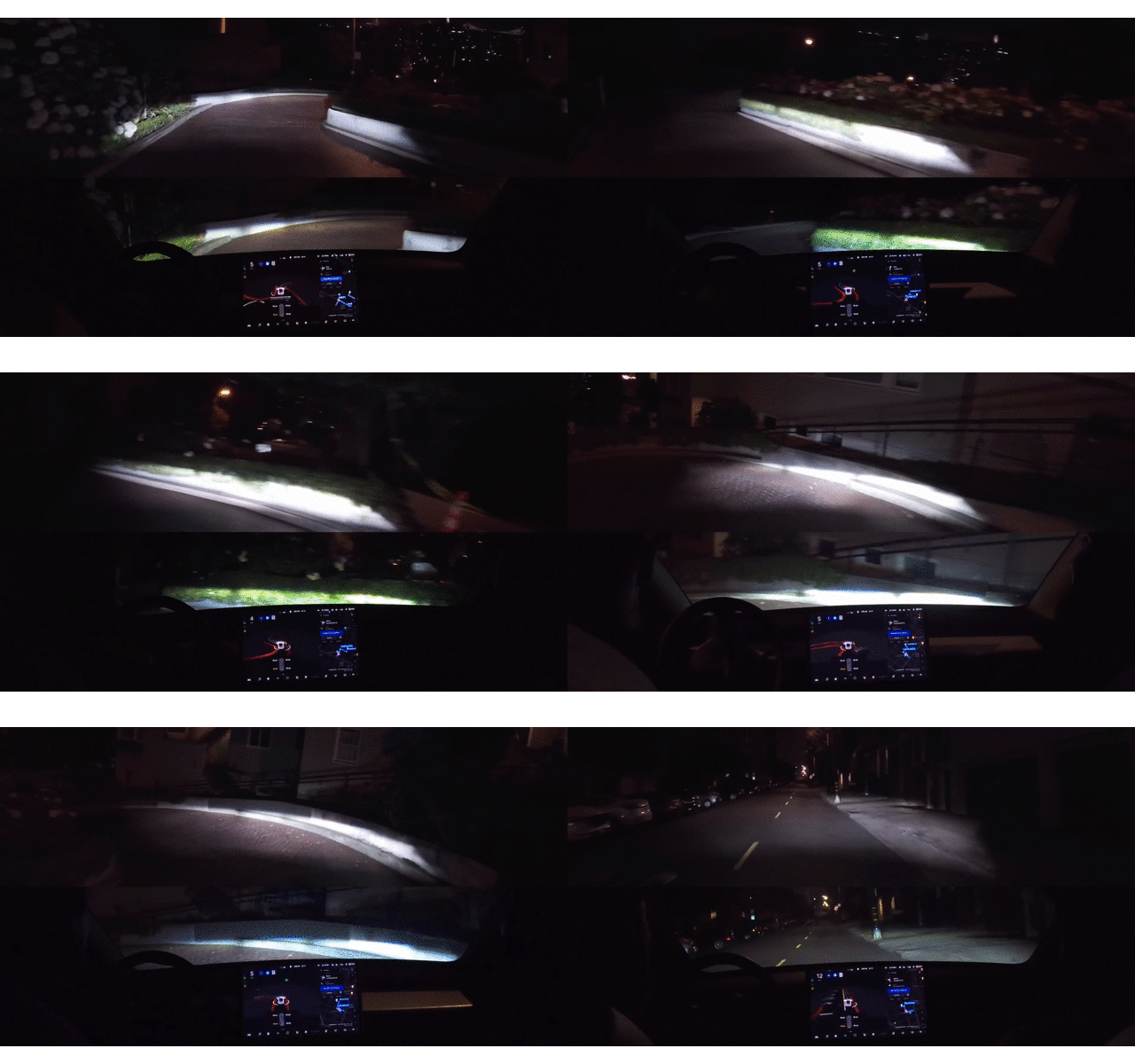
Recently, FSD Beta V10 was released. Successfully navigating Lombard Street with zero driver interventions under nighttime lighting conditions marks another new milestone.
In this model training process, Tesla has become the company with the richest real-world autonomous driving data feedback loop and remains the only one capable of independently overcoming the high barriers to developing its own autonomous driving chips and supercomputing centers—a feat made possible by its sufficiently high product sales volume. Although Tesla’s CEO is known for his promotional rhetoric and broken promises, and despite the company’s reluctance to wait for LiDAR mass production, Tesla is indeed 2–3 years ahead of the industry in its layout of autonomous driving technology.
Tesla calculates complex interactions with oncoming traffic to improve efficiency; uses intense computation to find the smoothest, most energy-efficient, and safest path planning; generates a three-dimensional spatial map from camera image outputs; and maintains dynamic memory of surrounding vehicles and pedestrians. Its distance to true autonomous driving may be closer than you imagine.
Written by: Avatar Edited by: Reinhardt