


Haomozhixing Unveils City NOH, MANA Data Intelligence Upgrades at AI DAY
Since last year, Haomozhixing has held a quarterly brand day to share its technological progress with the public. However, starting in the fourth quarter, Haomozhixing officially renamed this event AI DAY, and this name will be retained going forward.
Globally, among companies that hold sharing sessions under the name AI DAY, only Tesla across the ocean joins Haomozhixing. To see what genuine technology Haomozhixing possesses, we look directly at the presentation content.
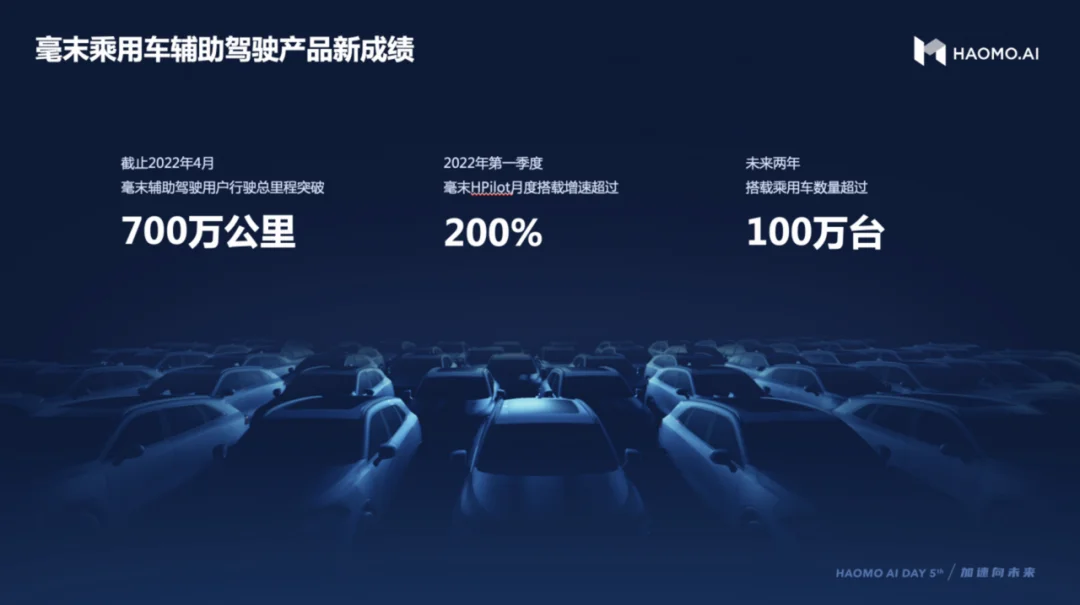
As is customary, the presentation began by reviewing past achievements and outlining future outlooks.
Since the launch of the WEY Mocha, the first model equipped with Haomozhixing’s HWA (Highway Navigation Assist) system, in May 2021, Haomozhixing’s intelligent driving products have been installed in five models, including the TANK 300 City Edition and the HAVAL Shenxiao.
In November last year, Haomozhixing officially launched Highway NOH. The WEY Mocha equipped with Haomozhixing’s NOH system became the world’s first fuel-powered vehicle featuring pilot intelligent driving capabilities.
By April this year, the total mileage driven by users equipped with Haomozhixing’s highway intelligent driving system had exceeded 7 million kilometers. Haomozhixing’s long-term goal is to pre-install its systems in 1 million vehicles within the next three years.
01Three Major Campaigns
The Battle for Data Intelligence Technology
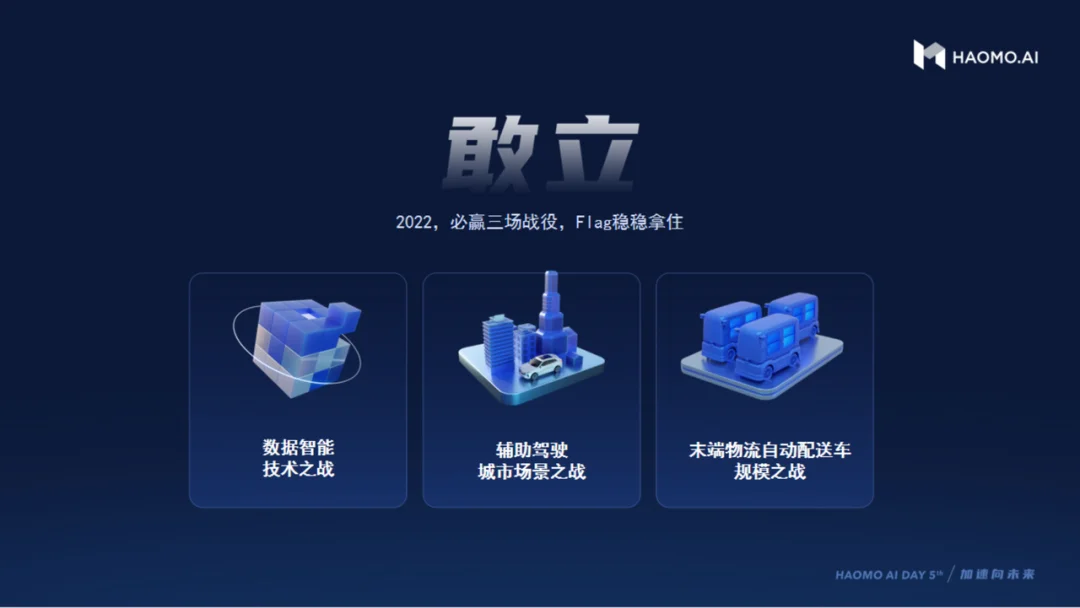
At today’s AI DAY, Haomozhixing Chairman Zhang Kai stated that in 2022, Haomozhixing would launch three major campaigns: a technological battle for data intelligence, a scenario-based battle for autonomous driving, and a scale battle for last-mile logistics autonomous delivery vehicles.
Regarding data, Haomozhixing officially launched the MANA data intelligence system at its AI DAY event late last year. MANA is a comprehensive data processing toolset built on massive datasets by Haomozhixing, encompassing algorithmic models, testing and verification systems, simulation tools, and computing hardware. In simple terms, the MANA system transforms data into knowledge to ultimately optimize product performance.
Here, we briefly review the introduction of the MANA intelligent data system from last year’s AI DAY.
The Origin of MANA
To excel in autonomous driving, accumulating vast amounts of data is essential. For Haomozhixing, data accumulation is not the problem; the challenge lies in effectively leveraging this data.
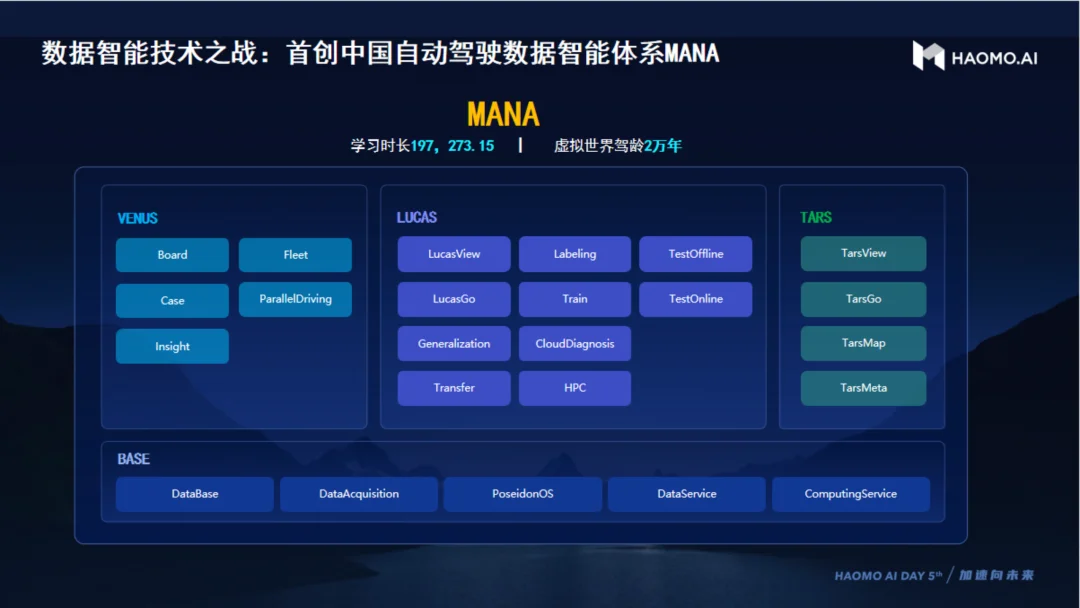
MANA comprises four components: the BASE underlying system, the TARS data prototype system, the LUCAS data generalization system, and the VENUS data visualization platform.
The BASE underlying system handles data storage, transmission, computing, analysis, and services. TARS focuses on core algorithm prototypes for perception, cognition, vehicle-side mapping, and validation. LUCAS applies algorithms to practical scenarios, covering high-performance computing, diagnostics, verification, and conversion into core capabilities. The VENUS visualization platform enables scenario reconstruction and data insights.
These technical terms are indeed dense and require significant effort to understand. Gu Weihao of Haomozhixing summarized the philosophy behind data intelligence as an 'ideological stamp': iterating products with lower costs and greater speed to deliver safe, user-friendly solutions to customers.
Three months later, Haomozhixing’s MANA perception capabilities have seen substantial improvements. Driven by geometric growth in chip computing power, the emergence of Transformer cross-modal models, and rapid increases in camera resolution, hardware advancements are fueling software enhancements.
All technology development aims to solve real-world driving scenarios.
The Evolution of Perception
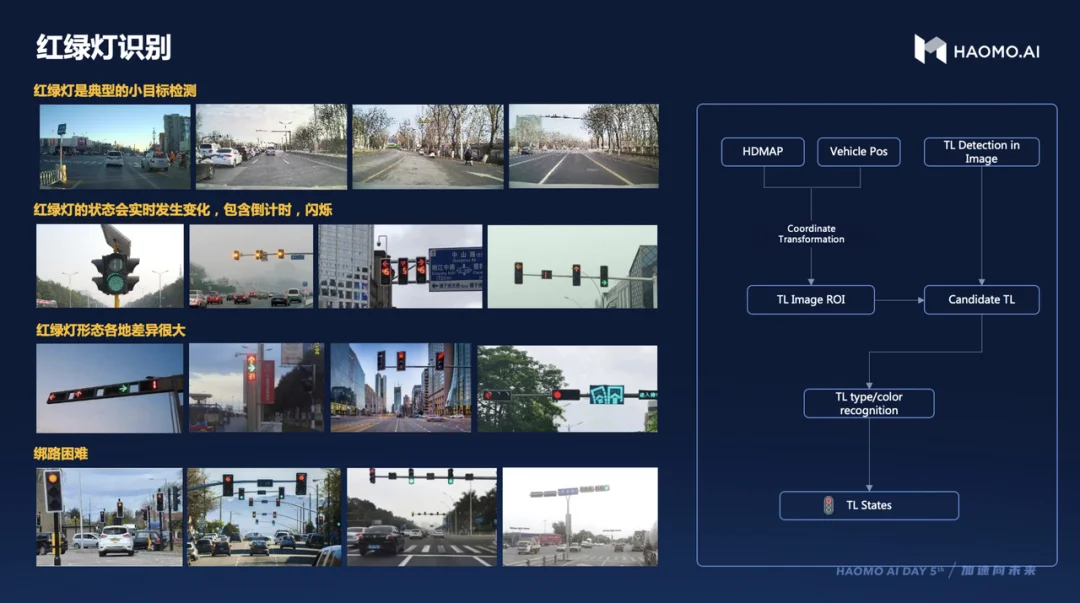
At intersections with traffic lights—the most common scenario on urban roads—the primary challenges include detecting small targets, handling state changes (such as flickering), and accounting for regional variations in traffic light shapes. The most complex issue is 'lane binding,' where each signal must correspond to the correct lane; even human drivers may hesitate in special situations, let alone machines.
To address this scenario, Haomozhixing employs extensive data training, utilizing image synthesis and transfer learning to accelerate technological updates.
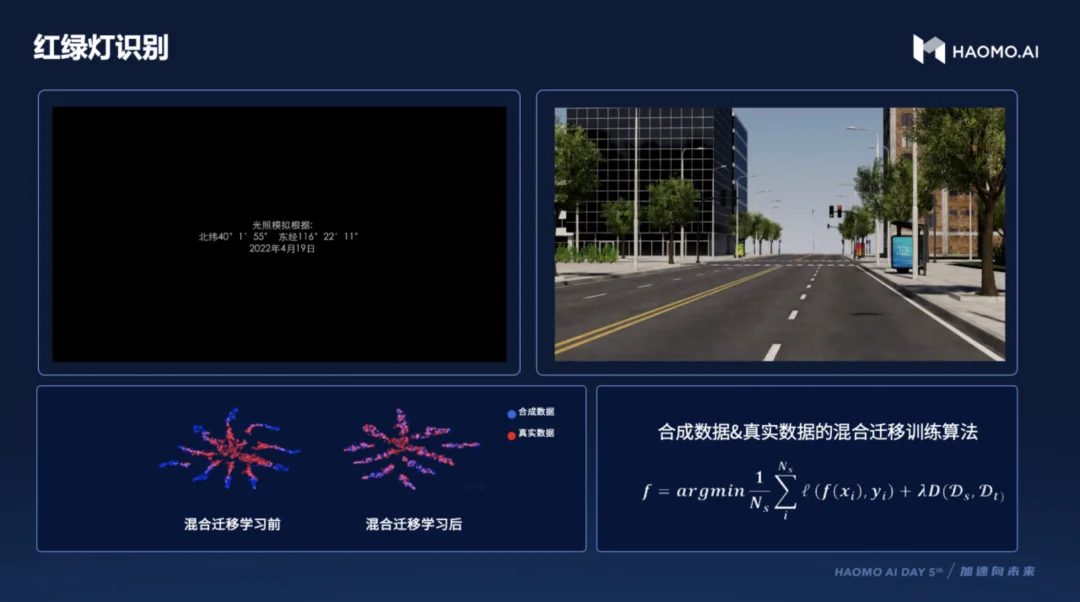
To expand the sample size, Haomozhixing uses large-scale simulation environments to compensate for the insufficient volume of real-world scene data.
Synthetic images present two main problems: first, features lack realism. For instance, outdoor traffic lights endure heavy rain and sun exposure over time, leading to damage and dust accumulation, which are common occurrences. Even if synthetic images perfectly mimic reality, their distribution probabilities may still not match actual conditions. Therefore, Haomozhixing researchers maximize the use of synthetic data to minimize the error between synthetic and real data.
Mixed transfer learning refers to Haomozhixing's strategy of using synthetic data to specifically fill gaps in real data, while continuously adjusting training strategies to reduce the probability distribution differences between the two types of data.
With a sufficient amount of data acquired, Haomozhixing began attempting recognition tests on real-world traffic lights.
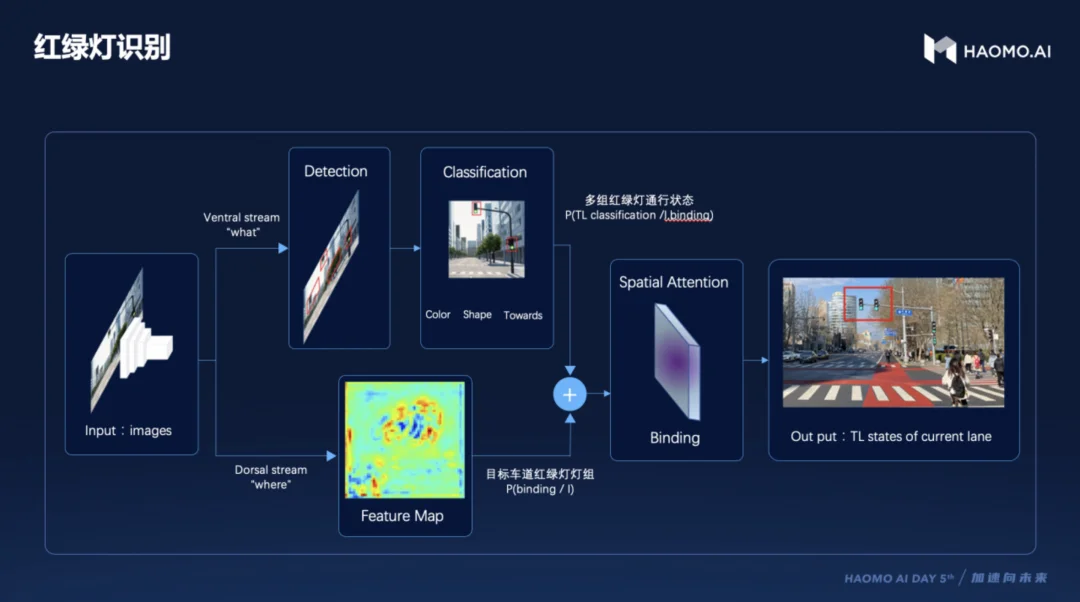
To address this, Haomozhixing has designed a proprietary "dual-stream" perception model that decomposes traffic light detection and lane-binding issues into two separate channels. In plain terms, the model features two pathways: one dedicated to identifying objects (what they are), and the other focused on understanding spatial relationships and positions (where they are).
The "what" channel is primarily responsible for traffic light recognition, including detection of the traffic light housing and classification of the signal type. It outputs information on the color, shape, and orientation of the traffic lights. The "where" channel is primarily responsible for mapping traffic lights to lanes, i.e., outputting the traffic light groups associated with the target lane.
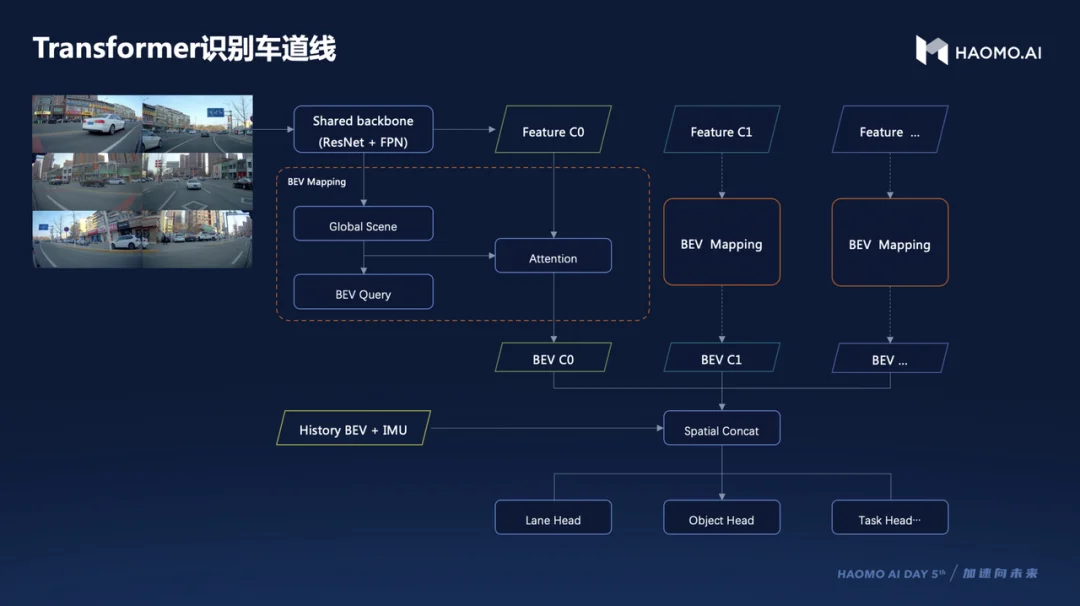
Currently, the vast majority of driver assistance systems rely on lane-line tracking. Haomozhixing utilizes a BEV Transformer to identify lane lines. After cameras distributed across the vehicle body capture image data of the surroundings, the 2D images are first processed using ResNet + FPN. This is followed by BEV Mapping, or Bird's-Eye-View mapping, which uses Cross Attention to dynamically determine the position of content from a specific frame within the camera's corresponding bird's-eye-view spatial domain. Through multiple Cross Attention operations, a complete BEV space is ultimately constructed.
However, at this stage, the perception information lacks "contextual association" capabilities. It is necessary to incorporate time-related features such as historical bird's-eye-view imagery on top of this foundation, enabling the system to establish temporal correlations and further enhance perception accuracy.
MANA's Cognitive Evolution
Before discussing the evolution of cognition, I will first provide a plain-language explanation of what "cognition" means.
Perception is easy to understand: what the vehicle sees is what it perceives, which relies on hardware quality. 'Cognition,' on the other hand, depends on engineers' code.
Cognition is not an "objective fact," but a "convention."
Gu Weihao used a scenario here to explain the importance of cognitive evolution.
When we want to make a left turn at an intersection, we need to wait for the vehicle ahead that is making a U-turn while observing oncoming traffic. In the past, engineers had to write extensive rule-based scenario judgments and parameter settings for such situations, resulting in bloated code.
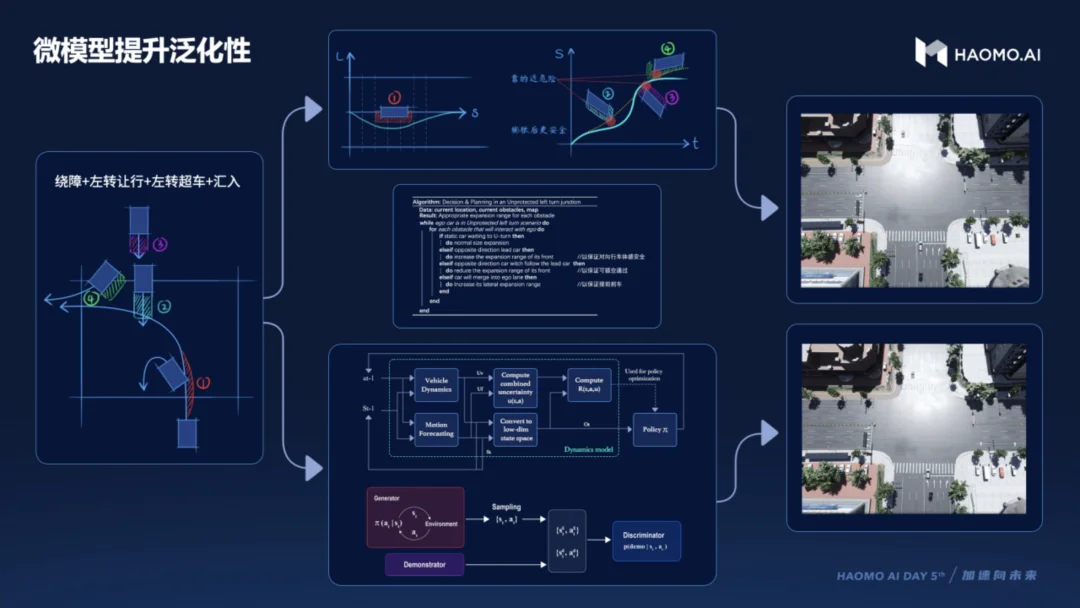
However, Haomozhixing has now replaced hand-written rules and parameters with machine learning models by conducting more data research on similar scenarios, achieving broader applicability.
Issues of consistency and interpretability in driving strategies still exist within the realm of cognition.
Haomozhixing selected Alibaba as its partner, bringing Alibaba's M6 large model—originally applied to natural language processing, text auto-generation, and text and image classification—to the autonomous driving field first.
The Battle of Scenario Implementation
Autonomous driving is a competitive arena where product success hinges on scenario implementation.
Zhang Kai, chairman of Haomozhixing, stated that the company has completed the full functional development of its City NOH system. In urban environments, it can perform automatic lane changes and overtaking, traffic light recognition and vehicle control, navigation through complex intersections, and unprotected left and right turns. According to recently released test videos, Haomozhixing's City NOH achieved fully hands-off driving on roads with moderate traffic volume, demonstrating considerable capability.
Haomozhixing stated that its City NOH system is currently undergoing deep scenario refinement in cities such as Beijing and Baoding. Vehicles equipped with Haomozhixing's City NOH system will enter mass production soon.
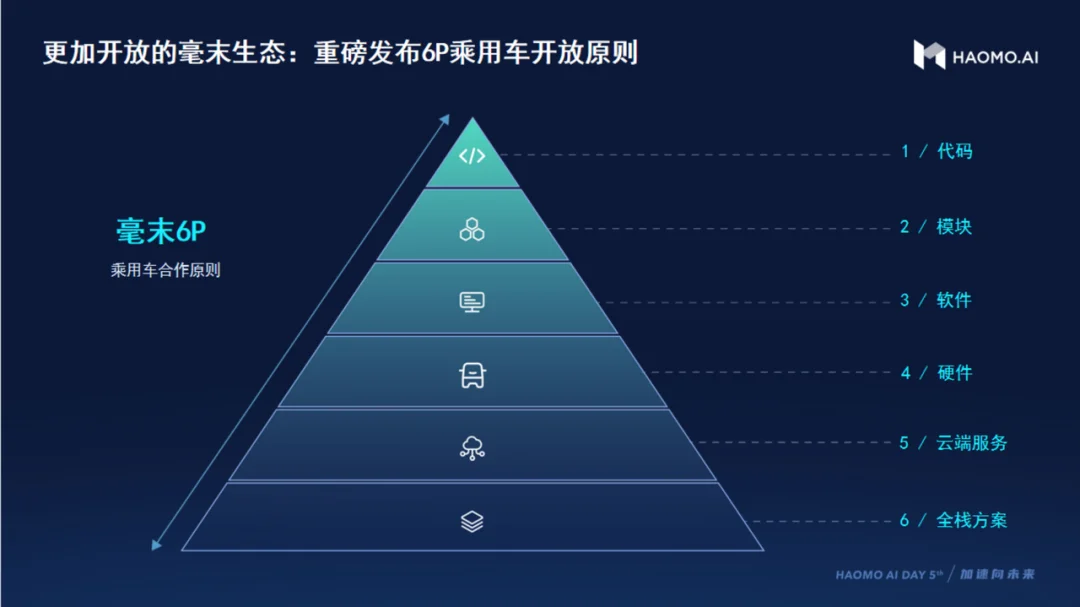
Additionally, Haomozhixing announced an extremely open cooperation model—the 6P Open Cooperation Model.
Autonomous driving is an extremely complex systemic engineering project that requires the integration of diverse disciplines across different fields and industries. Today, most players have chosen a cooperative model characterized by "mutual support" and "co-creation."
As a technology company, Haomozhixing can act as a supplier, providing solutions to other companies lacking self-research capabilities, while also co-developing with partners. Collaborators can choose to adopt Haomozhixing's full-stack technical solution, cooperate with Haomozhixing at the data intelligence cloud service level, or collaborate on software and hardware levels.
This business model is similar to that of Dipingxian; both are companies with capabilities in both hardware and software R&D.
Last-Mile Logistics Delivery Battle
In the field of last-mile autonomous delivery, Haomozhixing has comprehensively upgraded its production base for last-mile logistics vehicles this year. The expanded workshop covers 10,000 square meters and targets an annual production capacity of 10,000 unmanned delivery units.
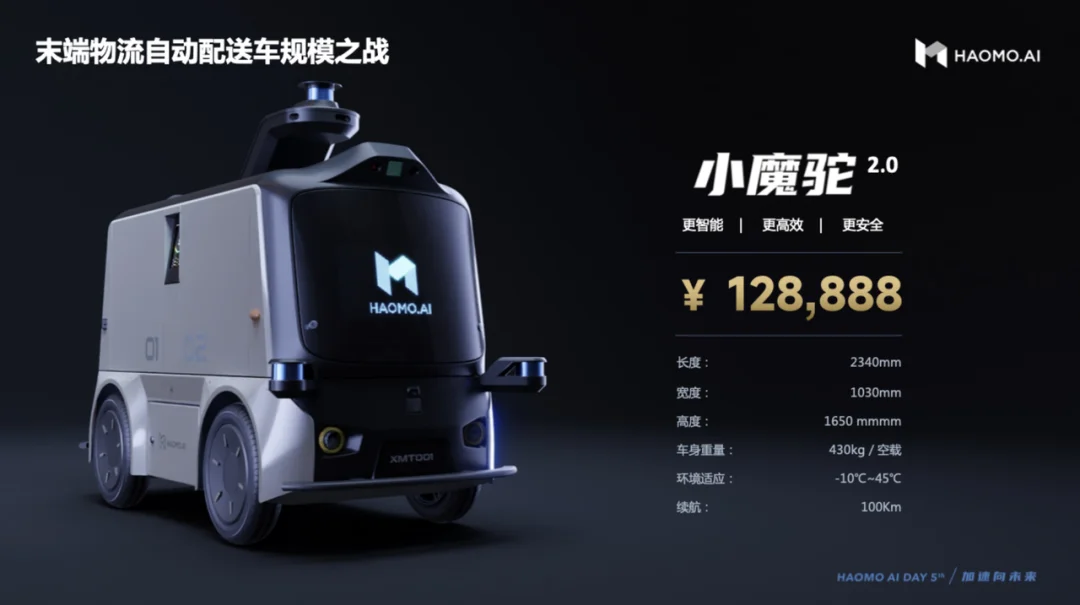
At today’s AI DAY event, Haomozhixing officially unveiled the second-generation last-mile autonomous delivery vehicle, Xiaomotuo 2.0, with a final price set at RMB 128,800.
Xiaomotuo 2.0 is equipped with the ICU 3.0 high-compute platform, offers a customizable cargo box with a volume of 600 liters, and supports interaction methods such as intelligent voice commands and touch controls.
Urban NOH
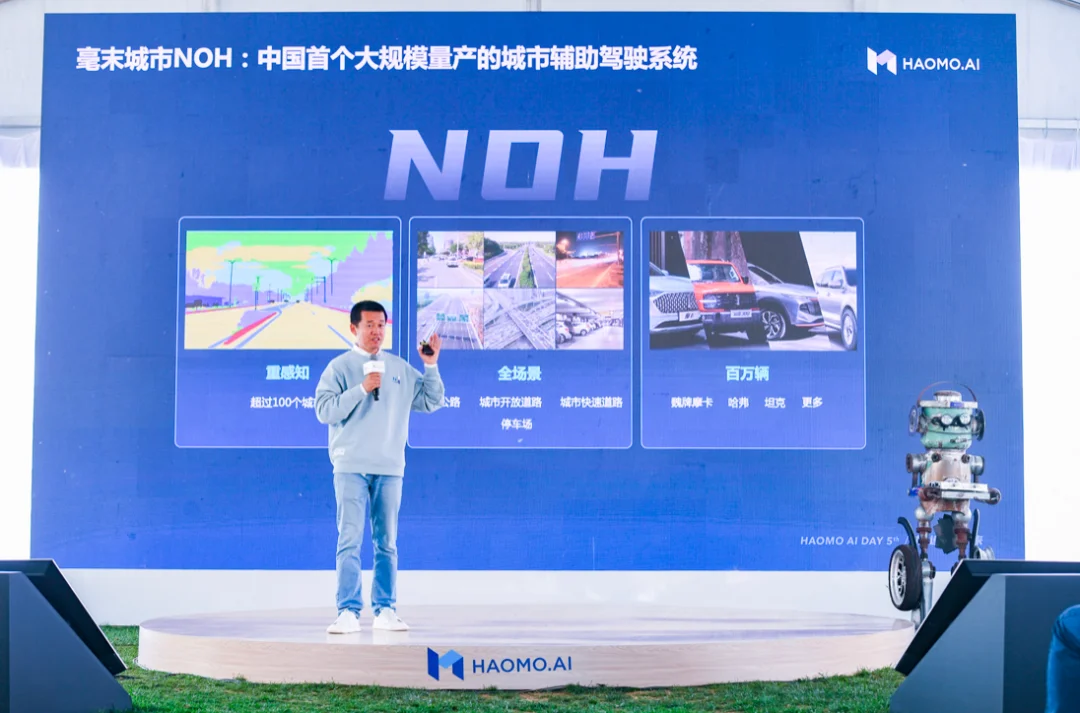
During last year’s AI DAY, Haomozhixing showcased demo videos of its Urban NOH system. Just three months later, this feature has reached the threshold of mass production.
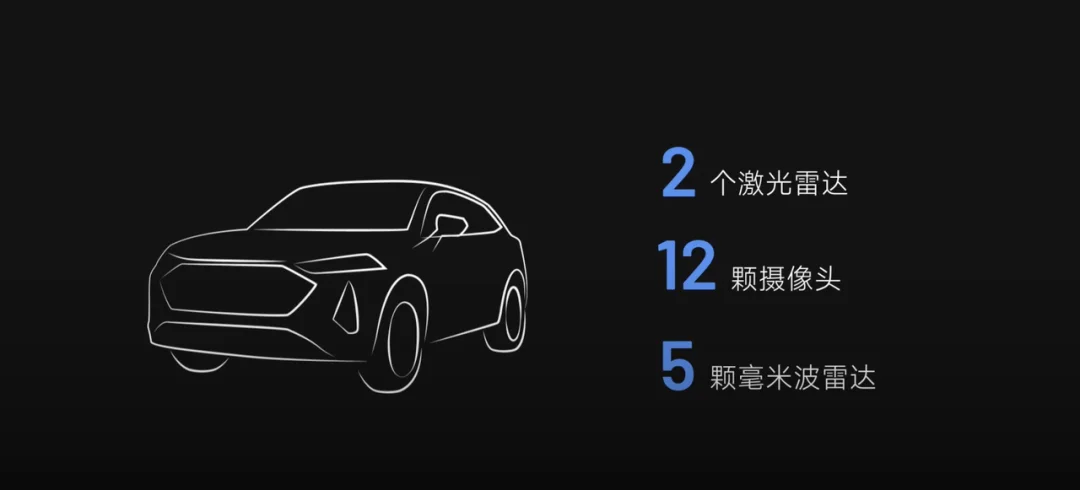
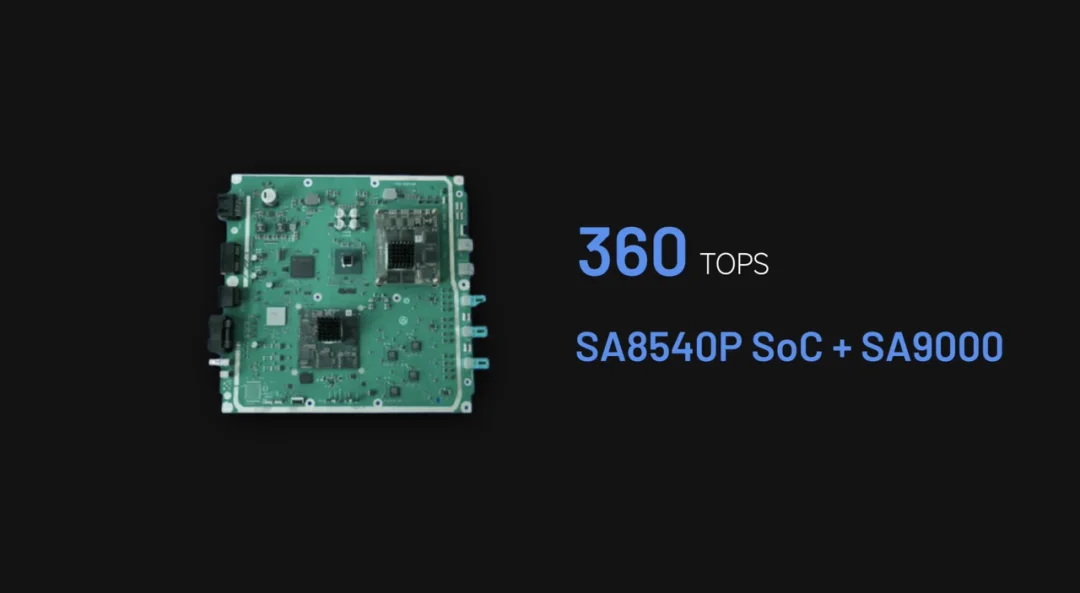
At the hardware level, the HPilot 3.0 system is equipped with Qualcomm’s Snapdragon Ride platform (combining the 8540 and 9000 chips), delivering 360 TOPS of computing power. It also includes two LiDAR units, 12 cameras, and five millimeter-wave radar sensors.
Haomozhixing has set a goal to equip more than 100 vehicles with its technology and deploy it in over 100 cities within the next three years, achieving comprehensive coverage across China’s first- and second-tier cities.
According to Haomozhixing’s plan, its City NOH will begin mass production installation in June. Not coincidentally, XPENG recently stated during an earnings call that it will officially roll out City NGP by the end of the second quarter, pending regulatory approval. This presents an opportunity to compare which entity will achieve mass production of city navigation-assisted driving first: the new-energy automaker XPENG or the autonomous-driving-focused tech company Haomozhixing.
02Haomozhixing’s To-Do List
Haomozhixing’s 2022 objectives are clear yet challenging.
The company plans to complete deliveries for 34 vehicle models and 78 projects in 2022. This ambition tests not only Haomozhixing’s R&D capabilities but also its organizational agility and talent recruitment efforts.
Additionally, Haomozhixing will open its cooperation model, positioning itself as a "qualified" Tier-1 supplier. Judging by the current collaboration with Great Wall, this partnership is mutually beneficial. Haomozhixing can provide Great Wall with highly competitive driver assistance capabilities, while extensive front-of-line vehicle integration accelerates the development of the MANA platform.
For Haomozhixing, achieving mass production of urban NOH seems to be merely a step from 0 to 1. Beyond that, the company aims to expand its network of partners, deepen R&D efforts, and build out its talent infrastructure.
Having started strong in 2022, Haomozhixing still has many battles to fight.
Written by: Bobo Edited by: Liusan