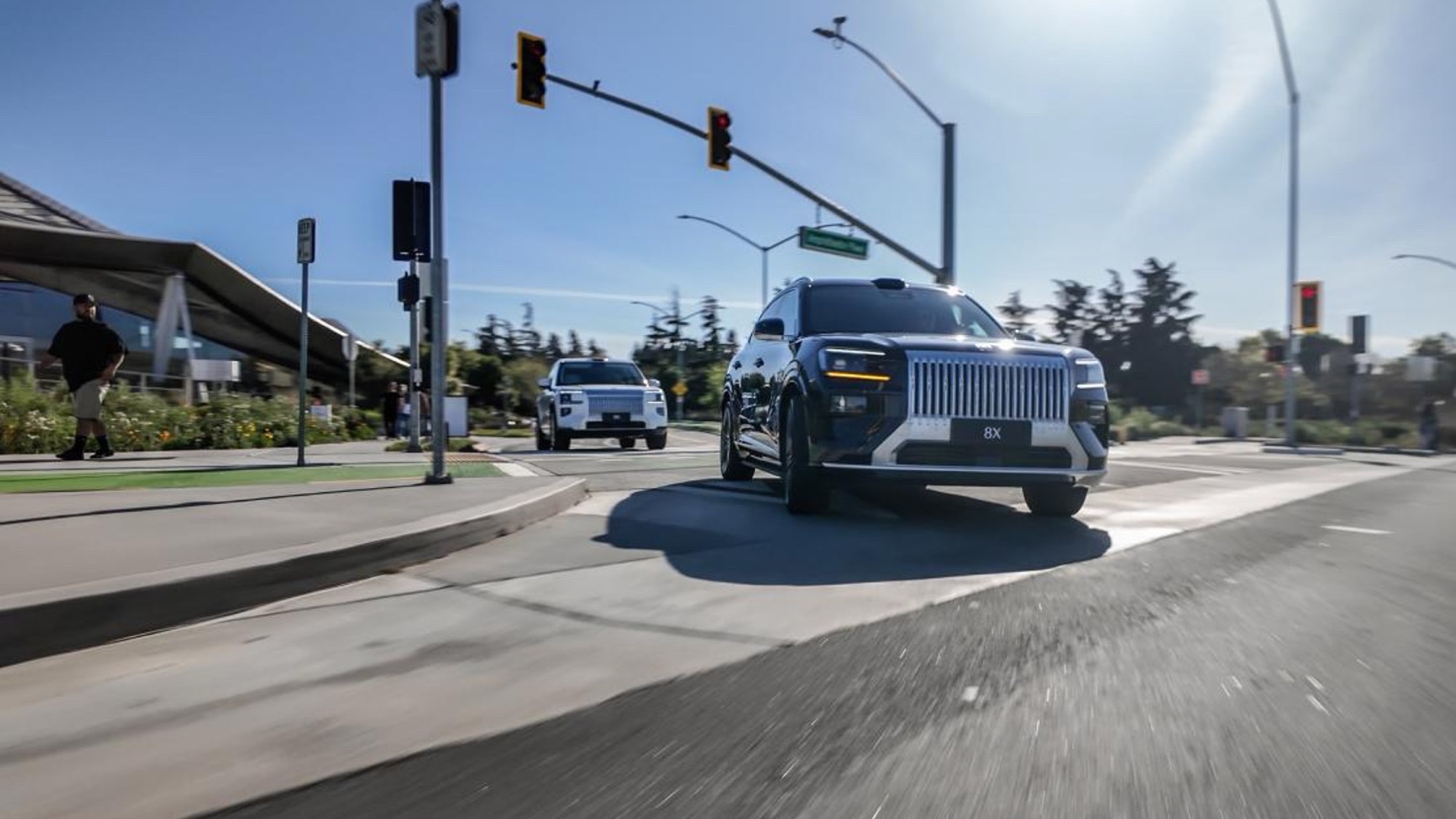
At NVIDIA GTC 2026, Geely advanced its AI roadmap once again.
On March 17, Geely Auto Group CTO Li Chuanhai announced that Geely will deepen its strategic AI collaboration with NVIDIA, expanding from previous intelligent driving to cover three major areas: physical AI, enterprise AI, and industrial AI. This collaboration aims to establish an intelligent foundation across the entire vehicle, enterprise, and manufacturing systems.
This essentially signifies Geely’s reaffirmation of its “AI Automotive” path: not just creating a smarter car but embedding AI into every phase from R&D to production to user experience.
From “Intelligent Driving Collaboration” to “AI Full-Stack Coordination”
The most notable change in this collaboration is the elevation of the partnership.
In the intelligent driving realm, Geely’s Qinli Haohan G-ASD will further integrate NVIDIA’s Alpamayo, Cosmos, and NuRec capabilities for model training, simulation, and validation, while advancing Robotaxi development based on the DRIVE AGX Hyperion architecture.
More importantly, the partnership is no longer confined to the vehicle.
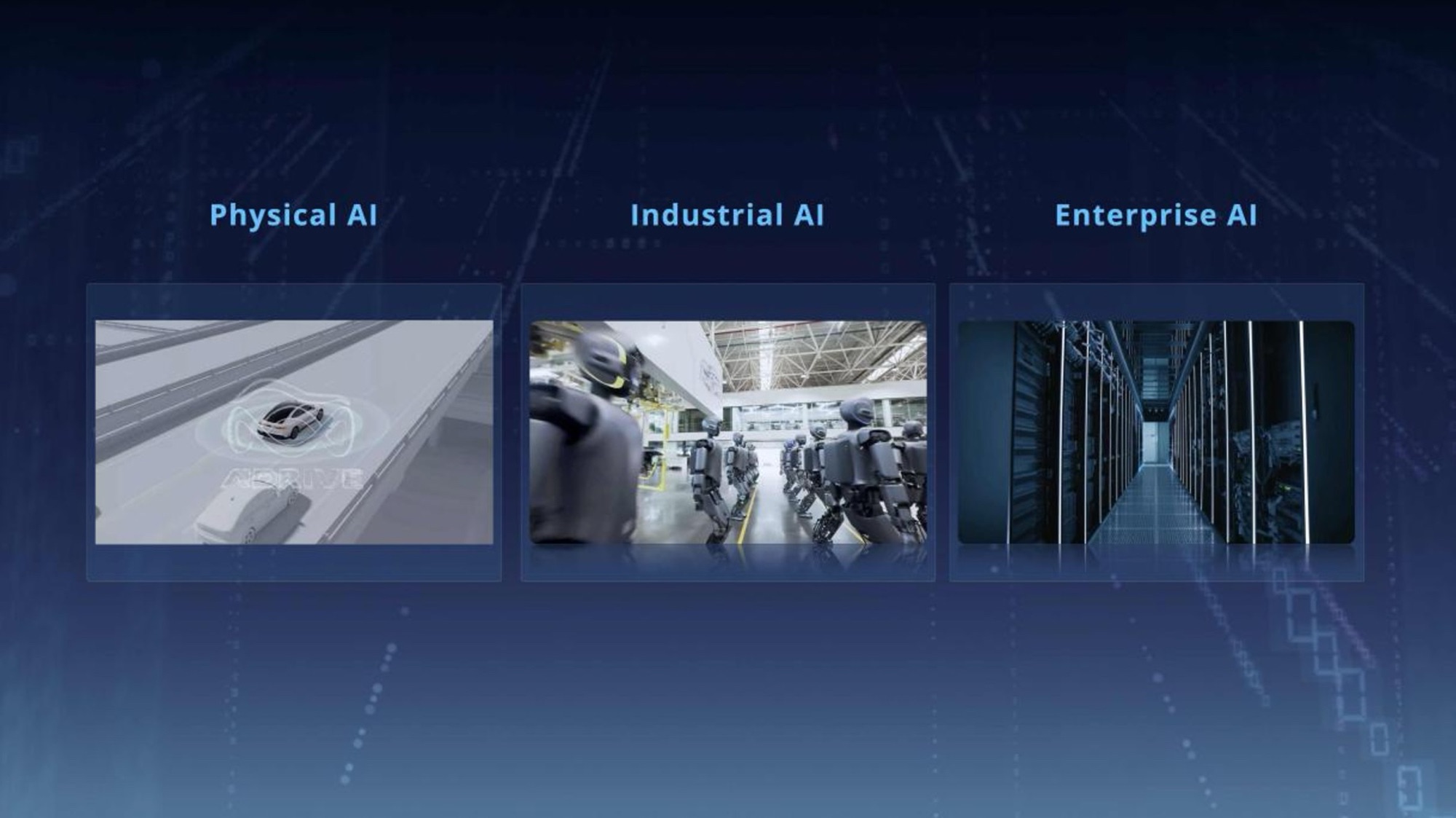
In the cloud, Geely will incorporate NVIDIA AI supercomputing platform, Nemotron large models, NeMo framework, and AI Enterprise suite for data processing in R&D and enterprise decision-making. In manufacturing, they will promote automation and digital design through Omniverse and Vision AI.
In simple terms, Geely is attempting to transform “AI capabilities” from isolated functions into a comprehensive infrastructure.
A Key Variable: WAM World Action Model
At the core of this system is Geely’s proposed WAM (World Action Model).
Compared to traditional perception+rule-based autonomous driving logic, WAM emphasizes “world understanding” and “behavior prediction,” endowing vehicles with human-like decision-making abilities. Geely refers to it as the “entire vehicle brain,” and has already applied this model to multiple domains like intelligent driving and the cockpit.
This is why Geely has defined this collaboration as the landing of “physical AI”—not just recognizing the world, but participating in and altering it.
The Real Focus: Cabin-Driving Integrated “Super Intelligence”
If the previous sections were about technical narratives, the product-level answer is two words: integration.
Geely’s solution is the “Super Eva + Qinli Haohan G-ASD 4.0.”
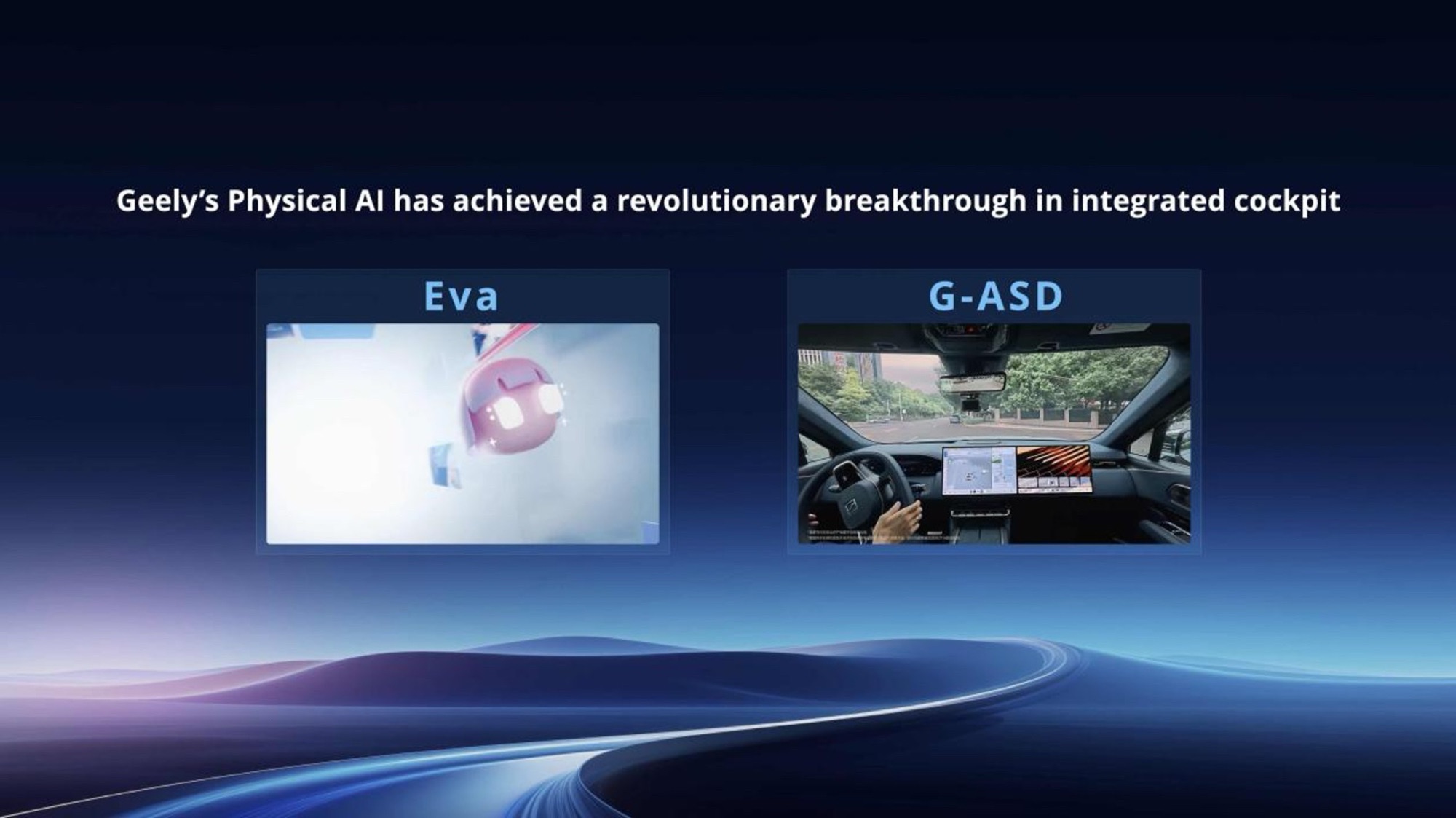
Eva is responsible for understanding and decision-making, serving as the vehicle’s intelligent agent; G-ASD is responsible for execution, acting as the intelligent driving system. Both work in tandem based on the same WAM model, bridging the cockpit and driving.This brings a transformation not only in making voice assistants smarter but also in reconstructing interaction methods:
Users no longer need to issue commands one by one; instead, they can accomplish complex tasks with a single vague expression.
For instance, with a phrase like “Pick up the kids, stop by McDonald’s on the way, and arrive before 5,” the system will automatically complete the entire set of actions including route planning, assisted driving, interim stops, and parking.
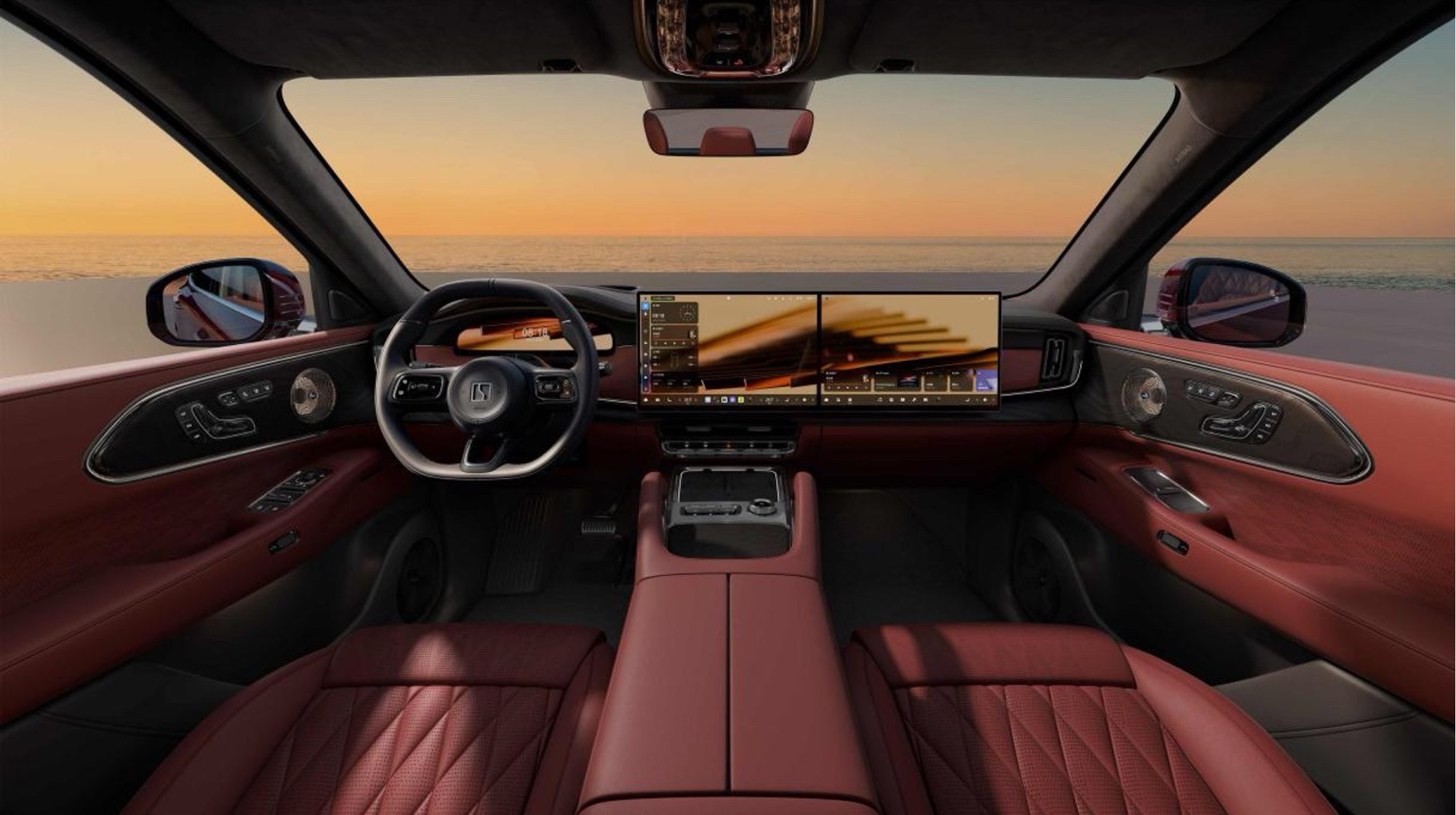
This capability will be first launched with the ZEEKR 8X.
Beyond Parameters, A Realistic Significance
From data scale to hardware configuration, Geely is strengthening the robustness of this system.
Behind the Qianli Haohan G-ASD are 100 billion model parameters, data from 8.5 million vehicles, and safety data including the VOLVO accident database; on the hardware side, the high-end solution uses dual NVIDIA Thor chips (1400 TOPS) and 5 LiDAR sensors.
But more crucial than these parameters is one key thing:
Geely is striving to transform the concept of “integrated cockpit and driving” into a mass-producible product form.
This article is a translation by AI of a Chinese report from 42HOW. If you have any questions about it, please email bd@42how.com.