“Nine Verticals, Nine Horizontals, and Nineteen Major Urban Clusters”
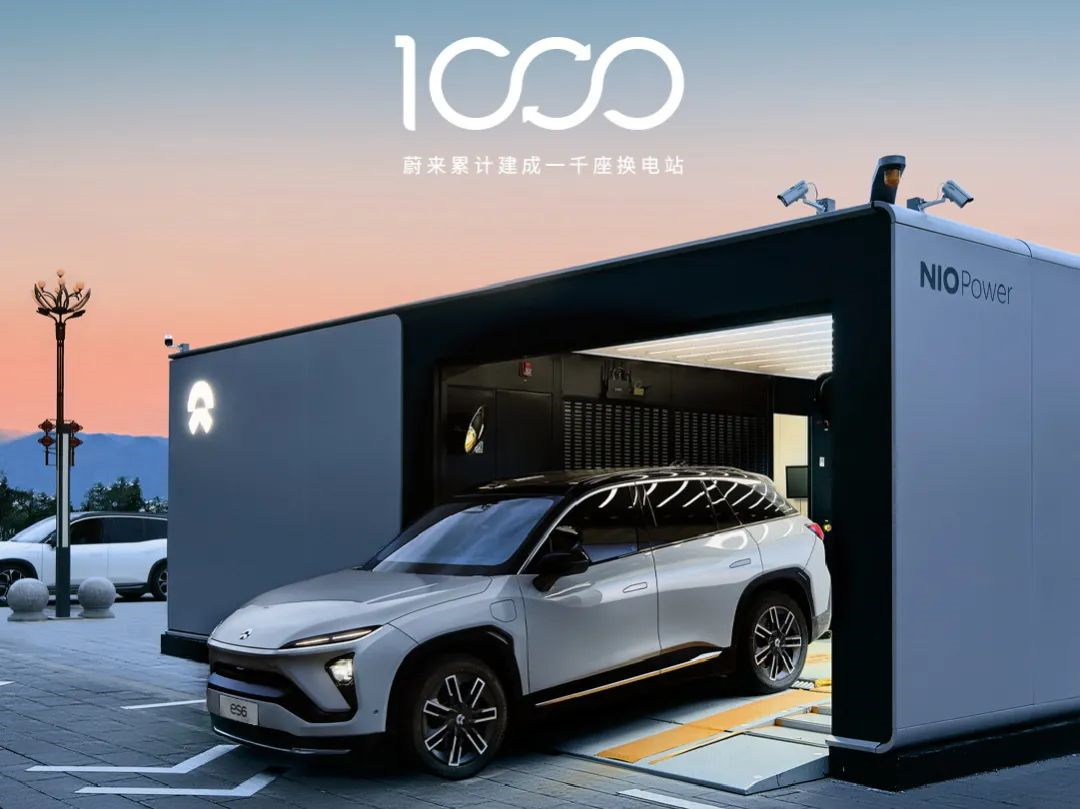
On July 6th, 2022, NIO Power Day 2022 was held in Shanghai, and the following five pieces of information are worth noting.
NIO announced that by 2025, it will connect the “Nine Verticals, Nine Horizontals, and Nineteen Major Urban Clusters” high-speed battery swap network, essentially realizing battery swapping stations every 150 kilometers in both directions.
After successful completion, China’s major densely populated areas would have no problem with high-speed commuting.
Other automakers have not released detailed plans for high-speed super charging because the total number of service areas is limited, and automakers who make preemptive plans will have an early mover advantage.
Call for All Automakers to Open Up Their Own Super-Charging Stations
At the conference, NIO’s CEO, William Li, called on all automakers to open up their own super-charging stations and stated that all of NIO’s battery swapping stations and super-charging stations will be open to the public.
At present, there is still a distance to go before new energy vehicles enter fair competitions with gasoline cars. From a perspective of mutual benefit, cooperation between new energy vehicle companies to compete in the gasoline car market first makes sense.
In addition, NIO revealed that over 80% of the charging volume for NIO’s super-charging stations was being used by non-NIO brand drivers, and NIO’s super-charging stations are contributing more to the entire new energy vehicle industry.
However, other automakers are not yet opening up their super-charging stations to the public. This is not because they lack resources compared to NIO, but because of issues related to their business model.
Other automakers could consider opening up their own super-charging stations if they have extra capacity after meeting the recharge needs of their own car owners.
Currently, unless owned by Tesla, other automakers’ super-charging stations that are open to the public will face the risk of significantly longer waiting times for their own car owners in core areas.
Tesla, on the other hand, has better chances not to worry about this problem because they have more charging stations, and charging fees are higher. Many users would prefer to use cheaper third-party charging stations.
Unlike Tesla, NIO’s mainstream way to recharge is battery swapping. Although NIO opened its battery swapping to the public, no other car can swap batteries through NIO’s swapping stations. Therefore, even if NIO’s super-charging stations are open to the public, NIO’s car owners’ recharge experiences will not be affected.
In the process of using NIO’s super-charging stations to recharge their cars, other car owners will find it more convenient to charge their cars, improve their users’ experience with new energy vehicles, and also promote NIO through word-of-mouth.
In addition, the construction requirements for super-charging stations are lower than those for battery swapping stations, and super-charging stations are a suitable choice for areas where it is difficult to build battery swapping stations but has high demand from their users.Nio has always regarded the user experience throughout the entire car usage cycle as a crucial factor when selecting its business model. Therefore, it is necessary for Nio to build a considerable number of charging stations. In this process, Nio possesses extra resources that can indeed contribute to the entire industry while also benefiting itself.
Free service has more appeal than convenience
During the meeting, two sets of data were announced. One set is that Nio has installed 127,528 home chargers for users, and as of June 2022, Nio has delivered a total of 217,897 vehicles. It can be seen that about 58.5% of users have home chargers installed.
The other set shows that in June, 52.3% of Nio users opted for battery swapping, while 24.2% chose to charge their cars using the home chargers.
It can be inferred that due to the free service offered by Nio in the early stages, most users preferred to go to more inconvenient places to swap batteries. Another perspective is that the ease of battery swapping has resulted in a significant number of users with home chargers to opt for swapping as well.
Coverage rate for charging zones in residential buildings is 62.1%
During the meeting, it was announced that the coverage rate for charging zones in residential buildings reached 62.1%.
Charging zones in residential buildings refer to homes or offices within three kilometers of battery swapping stations. Within this zone range, the charging experience is guaranteed to be no worse than refueling a gasoline-powered car.
The coverage rate for charging zones in residential buildings was only around 30% at the same time last year. Nio plans to raise the coverage rate to over 90% by 2025.
This will greatly expand Nio’s potential user base. Several Nio car owners have provided feedback to PhotonTravel, stating that they still prefer Nio’s battery swapping service over other car companies’ charging services due to the former’s convenience.
At present, other car manufacturers’ 800V high-voltage charging stations are slowly expanding. It can be expected that Nio’s battery swapping advantage will remain significant until 2025.
Product teasers
At the meeting, Nio briefly introduced several forthcoming products:
- The second-generation multifunction service vehicle will be able to charge, repair, and maintain cars, which previously required two different cars. It will optimize investment efficiency and is already in operation.
- The 500kW ultra fast-charging station has a peak current of 650A and is more user-friendly as the charging gun is half the weight of its predecessors. It will be applied on a large scale and is expected to be deployed at the end of the year.
- The third-generation battery swapping station is close to the end of its development phase and will start testing. It will have a greater capacity, better efficiency, and more relaxed installation conditions, and can be operated in tandem with 500kW ultra fast-charging stations. It is expected to be officially released around the turn of the year and will be deployed immediately.
This article is a translation by ChatGPT of a Chinese report from 42HOW. If you have any questions about it, please email bd@42how.com.